#WCEU2026 - WordPress Education Programmes Explained by Mary Hubbard
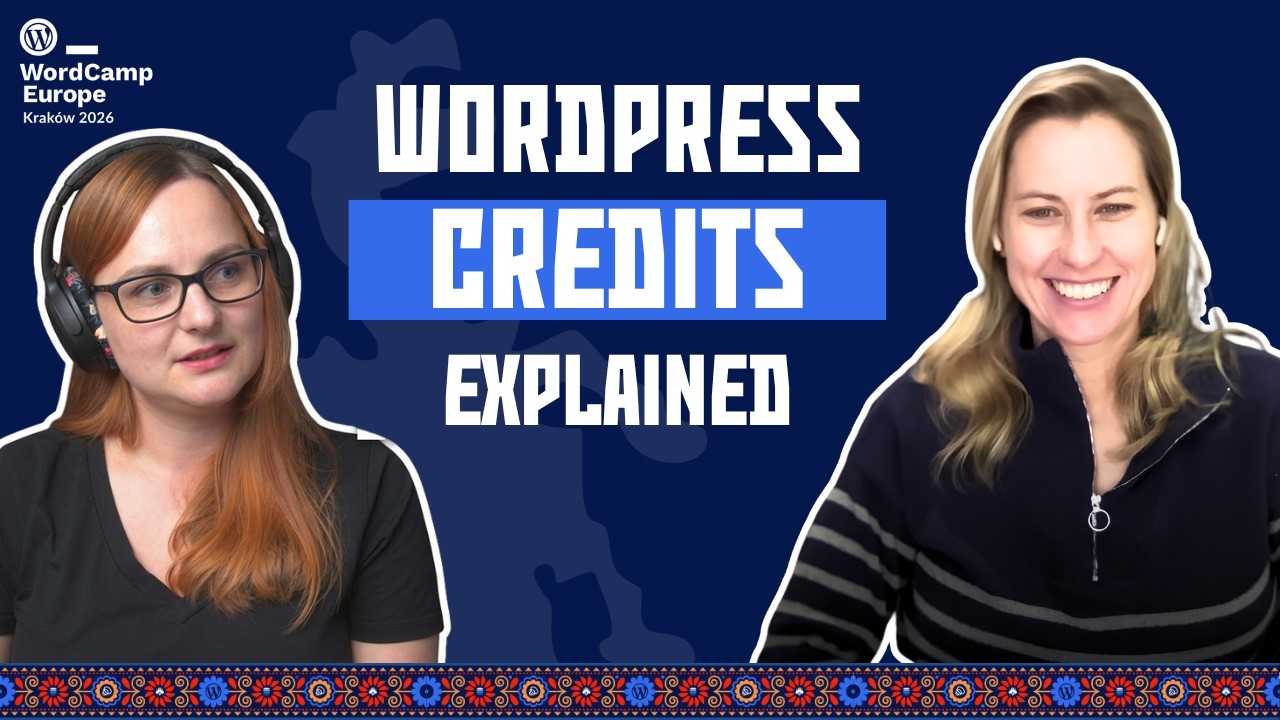
🔗 **Source:** [#WCEU2026 - WordPress Education Programmes Explained by Mary Hubbard](https://www.youtube.com/watch?v=9eljkpqCI_U)
> [!note]+ Document Notes
> tags: #wordpress-education #campus-connect #mentoring #community-engagement #ai-certification
> author: WordPress Insights Podcast
> source: YouTube
> reference: https://www.youtube.com/watch?v=9eljkpqCI_U
> date created: 2024-12-28 15:45
>
> # 🏷️ Title: #WCEU2026 - WordPress education programmes explained by Mary Hubbard
>
<!-- deep-read:sections start -->
## 🧰 Action Inbox
- [H1] Explore WordPress Credits curriculum integration — university partnership opportunities #wordpress-education
- [H2] Join as WordPress mentor for students — low barrier entry, team knowledge required #mentoring
- [H3] Consolidate Slack instances for better community connection — reduce silos and fragmentation #community-engagement
## 🧭 Table of Contents
- [[#📝 Summary]]
- [[#📖 Main Content]]
- [[#🗒️ Notes]]
- [[#📚 References]]
- [[#🗣️ Paraphrase]]
- [[#📰 Newsletter]]
- [[#✅ Action Items]]
- [[#🧪 Hypotheses]]
- [[#📊 Methodology]]
- [[#❓ Questions]]
- [[#🔮 Future Research]]
- [[#💡 Implications]]
- [[#🧠 Learning Styles Assessment]]
- [[#📊 Accessibility Assessment]]
- [[#🌍 DEIB Assessment]]
- [[#✅ Logical Validity]]
- [[#🛡️ DARVO Analysis]]
- [[#🎯 Conclusion]]
### 🔗 References
- [WordPress Credits](https://learn.wordpress.org)
- [Campus Connect](https://wordpress.org/news/)
## 📝 Summary
- WordPress has launched two major educational initiatives: WordPress Credits (curriculum-based) and Campus Connect (event-driven workshops)
- Over 20 institutions actively participating with 300+ engaged students in pilot programs
- 60+ mentors supporting students with low-barrier entry requirements
- Major structural changes planned including Slack consolidation and improved onboarding pathways
- Focus on AI integration, micro-credentials, and professional certification standards
## 📖 Main Content
WordPress Executive Director Mary Hubbard discusses two complementary educational programs transforming WordPress community engagement. WordPress Credits integrates contribution work into university curricula where students earn academic credit, while Campus Connect provides flexible, event-based workshops and hands-on learning opportunities. The programs address different points in the educational pipeline but feed into each other as part of an "educational flywheel."
The initiative has grown organically with over 20 institutions participating and strong community response. Key challenges include overwhelming onboarding experiences for students and fragmented communication across multiple Slack instances. Solutions include developing clear learning pathways, gamified student dashboards, and consolidating communication channels.
## 🗒️ Notes
#### ⏱️ [00:00](https://youtu.be/9eljkpqCI_U?t=0) — [H1] Introduction to WordPress education programs
- Key idea: Two new educational programs launching for 2026
- Evidence: "WordPress credits and campus connect solve two different problems in the same pipeline"
#### ⏱️ [02:15](https://youtu.be/9eljkpqCI_U?t=135) — [H2] WordPress Credits explained
- Key idea: Curriculum-based program embedded in university coursework
- Evidence: "Students will actually earn academic credit... it's structured, curriculum based, and tied to the institution"
#### ⏱️ [03:45](https://youtu.be/9eljkpqCI_U?t=225) — [H2] Campus Connect overview
- Key idea: Event-driven workshops with low barrier to entry
- Evidence: "It's event driven. It's workshops, it's speakers, it's hands-on... very low barrier, more flexible"
#### ⏱️ [05:30](https://youtu.be/9eljkpqCI_U?t=330) — [H3] Educational flywheel concept
- Key idea: Programs designed to feed into each other and build community
- Evidence: "It's an educational flywheel... they're designed to feed into each other"
#### ⏱️ [07:45](https://youtu.be/9eljkpqCI_U?t=465) — [H2] Current participation numbers
- Key idea: Strong early adoption across educational institutions
- Evidence: "Over 20 institutions that are actively participating... 300 that are actively engaged"
#### ⏱️ [09:20](https://youtu.be/9eljkpqCI_U?t=560) — [H3] University recruitment process
- Key idea: Proactive outreach welcomed from community members
- Evidence: "Everybody in the community should go and do this. It's such a low barrier"
#### ⏱️ [11:10](https://youtu.be/9eljkpqCI_U?t=670) — [H2] Mentor program structure
- Key idea: 60+ mentors with low barrier entry requirements
- Evidence: "Around 60 mentors... just understand at least one team... be willing to help these students connect"
#### ⏱️ [13:40](https://youtu.be/9eljkpqCI_U?t=820) — [H3] Student club emergence
- Key idea: Natural growth of student-led WordPress learning groups
- Evidence: "Student clubs formed independently and grew massively... learning week over week"
#### ⏱️ [16:25](https://youtu.be/9eljkpqCI_U?t=985) — [H2] Certification and credentialing vision
- Key idea: Standardized WordPress credentials for global recognition
- Evidence: "We should be providing clean and clear off-ramps... holds a standard and holds a bar globally"
#### ⏱️ [19:50](https://youtu.be/9eljkpqCI_U?t=1190) — [H1] Onboarding challenges identified
- Key idea: Students and mentors overwhelmed by fragmented resources
- Evidence: "We didn't prepare students for onboarding... too much of the teacher"
#### ⏱️ [22:15](https://youtu.be/9eljkpqCI_U?t=1335) — [H2] Pathways solution development
- Key idea: Clean learning pathways to reduce complexity
- Evidence: "Clean and clear pathway and a good first issue... feel recognition for that completion"
#### ⏱️ [25:30](https://youtu.be/9eljkpqCI_U?t=1530) — [H1] Slack consolidation initiative
- Key idea: Moving from fragmented communication to unified Slack instance
- Evidence: "Bring in a more connected system... reduce silos, bring back transparency"
#### ⏱️ [28:45](https://youtu.be/9eljkpqCI_U?t=1725) — [H3] AI integration focus
- Key idea: Personal and organizational commitment to AI advancement
- Evidence: "Throwing myself in to all things AI... learning AI deeply, learning to co-work to code"
## 📚 References
- [WordPress Learn](https://learn.wordpress.org/)
- [WordPress Developer Resources](https://developer.wordpress.org/)
- [WordCamp Europe 2026](https://europe.wordcamp.org/)
## 🗣️ Paraphrase
- WordPress has created two educational programs that work together: WordPress Credits integrates contribution work into university classes for academic credit, while Campus Connect offers flexible workshops and events for hands-on learning
- The programs have strong early adoption with over 20 institutions and 300+ students participating, supported by 60+ volunteer mentors who help bridge the gap between newcomers and the WordPress community
- Key challenges include overwhelming onboarding experiences and fragmented communication channels, which are being addressed through streamlined learning pathways and Slack consolidation efforts
## 📰 Newsletter
**WordPress Education Programs Expand Community Reach**
WordPress is transforming how we bring new contributors into our community with two complementary education initiatives. WordPress Credits embeds contribution work directly into university curricula, while Campus Connect provides accessible workshops for hands-on learning. With over 20 institutions already participating and 300+ engaged students, these programs are creating clear pathways from education to community involvement.
The initiative welcomes more mentors and university partners. If you're experienced with any WordPress team or know educators interested in WordPress, these programs offer low-barrier ways to get involved and expand our community's reach.
**Resources:** [Learn WordPress](https://learn.wordpress.org/), [Developer Docs](https://developer.wordpress.org/), [WP-CLI](https://wp-cli.org/)
## ✅ Action Items
#### WordPress
- Community: Expand mentor recruitment for WordPress Credits and Campus Connect programs
- Core Program Team: Develop student dashboard with gamification and progress tracking
- Community: Consolidate Slack instances to reduce communication fragmentation
- Training: Create streamlined onboarding pathways for student contributors
- Documentation: Refresh team handbooks for student-friendly contribution guides
- Community: Establish standardized WordPress certification and credentialing system
- Training: Develop AI micro-credentials for community skill development
## 🧪 Hypotheses
- Educational programs will increase long-term WordPress contributor retention compared to traditional onboarding
- Streamlined learning pathways will reduce student dropout rates during contribution onboarding
- Unified Slack communication will improve mentor-student interaction success rates
- Gamified student dashboards will increase engagement and completion rates in contribution activities
### 📊 Methodology
- Track student retention rates from WordPress Credits cohorts over 6-12 month periods
- A/B test streamlined pathways vs traditional onboarding for completion metrics
- Monitor Slack response times and interaction quality before/after consolidation
- Measure dashboard engagement metrics and correlation with contribution activity
### ❓ Questions
- How can WordPress scale mentor support while maintaining quality guidance for growing student populations?
- What specific competencies should WordPress micro-credentials certify to maximize employer recognition?
- How might AI integration change the skill requirements and teaching approaches for WordPress education programs?
### 🔮 Future Research
- Analyze optimal university partnership models for sustainable WordPress education integration
- Investigate gamification strategies that translate to real contribution motivation beyond educational settings
- Explore multilingual education program adaptation for global WordPress community growth
### 💡 Implications
- Practice: Educational programs create new contributor pipeline requiring mentor support infrastructure
- Policy: Standardized credentials may influence hiring practices across WordPress ecosystem
- Education: Integration with formal education systems legitimizes open source contribution as career skill
- Community: Program growth demands scalable communication and onboarding systems
### 🧠 Learning Styles Assessment
Reading level estimate: 8th grade (conversational podcast format)
#### 👀 Visual learners
- Present: None identified in audio content
- Improve: Program flow diagrams, student journey maps, organizational charts
#### 🔊 Aural learners
- Present: Full podcast interview with detailed explanations
- Improve: Chapter markers, key concept summaries
#### 🗣️ Verbal learners
- Present: Conversational explanations, analogies like "educational flywheel"
- Improve: Glossary of WordPress contribution terminology
#### 🧩 Kinesthetic learners
- Present: Hands-on contribution work, issue resolution
- Improve: Step-by-step contribution guides, practice repositories
#### 🧠 Logical learners
- Present: Clear program structure, problem-solution mapping
- Improve: Flowcharts showing pathways, decision trees for program selection
#### 🧑🤝🧑 Social learners
- Present: Mentor-student relationships, community integration
- Improve: Peer learning cohorts, collaborative project frameworks
#### 🧘♀️ Solitary learners
- Present: Self-directed contribution work
- Improve: Individual learning modules, self-assessment tools
#### 🌿 Naturalistic learners
- Present: Organic program growth, natural community evolution
- Improve: Ecosystem thinking, sustainable community development concepts
### 📊 Accessibility Assessment
#### Screen reader semantics
- Present: Audio-first content naturally accessible
- Improve: Transcript with proper heading structure, speaker identification
#### Keyboard navigation
- Present: Standard YouTube player controls
- Improve: Chapter navigation, transcript linking
#### Contrast and readability
- Present: N/A for audio content
- Improve: High contrast transcript design
#### Text resizing and reflow
- Present: N/A for audio content
- Improve: Responsive transcript layout
#### Media and captions
- Present: Auto-generated captions available
- Improve: Professional captions, downloadable transcript
#### Forms and interactions
- Present: Basic YouTube interface
- Improve: Enhanced chapter markers, note-taking features
### 🌍 DEIB Assessment
#### Cultural breadth
- Present: Global WordPress community perspective, multiple regions mentioned
- Improve: More diverse institutional examples, non-English program examples
#### Inclusive language
- Present: Generally inclusive, self-corrects "kids" to "students"
- Improve: Consistent terminology around educational levels
#### Neurodiversity support
- Present: Multiple learning modalities (audio, hands-on, mentorship)
- Improve: Explicit accommodations discussion
#### Representation
- Present: Focus on accessibility and global reach
- Improve: Diverse mentor/student success stories
#### Psychological safety
- Present: Low-barrier messaging, encouragement to participate
- Improve: Explicit anti-discrimination policies
### ✅ Logical Validity
#### Strong reasoning
- Deductive strength: Programs address identified contributor pipeline issues through structured education
- Inductive strength: Early adoption success suggests broader scalability potential
- Causal reasoning: Links educational structure to increased community engagement
- Analogical strength: "Educational flywheel" effectively explains program synergy
#### Fallacies
- Survivorship bias: Focus on successful participants may overlook dropout analysis
- Appeal to novelty: Emphasis on "new ideas" without comparative evaluation
#### Tone of voice
- Overall tone: Enthusiastic, encouraging, community-focused with practical optimism
### 🛡️ DARVO Analysis
- No defensive patterns identified
- Collaborative tone acknowledges challenges openly
- Takes responsibility for onboarding difficulties
## 🎯 Conclusion
WordPress's educational initiatives represent a significant shift toward structured community onboarding through formal education partnerships. The dual approach of curriculum-based WordPress Credits and event-driven Campus Connect creates multiple entry points for new contributors while addressing different institutional needs.
Success depends on solving identified challenges: streamlined onboarding, unified communication, and scalable mentor support. The vision of standardized WordPress credentials could significantly impact professional development across the ecosystem, making these programs valuable for both individual career growth and community sustainability.
## 🧱 Refactor Appendix
### 📚 Literature Split Pad
### [H1] WordPress educational programs create structured contributor pipeline
> [!quote] #WCEU2026 - WordPress education programmes explained by Mary Hubbard via WordPress Insights Podcast. Published 2024. Accessed 2024-12-28.
> "WordPress credits and campus connect solve two different problems in the same pipeline."
Educational programs address contributor onboarding through formal partnerships.
[view highlight](https://youtu.be/9eljkpqCI_U?t=135#H1) #xref #articleseed ID:rw_wp_edu_pipeline
### [H2] Low-barrier mentorship supports student WordPress contribution
> [!quote] #WCEU2026 - WordPress education programmes explained
> "Around 60 mentors... barrier is low... understand at least one team."
Community members can easily become mentors with basic team knowledge.
[view highlight](https://youtu.be/9eljkpqCI_U?t=670#H2) #xref ID:rw_wp_mentor_access
---
### 🔖 Atomic Split Pad (Zettel Candidates)
#### [Z1] Educational flywheels accelerate community growth
- When programs feed into each other systematically
- Referenced at 5:30 timestamp
- Links: [[Community-Building]] [[Educational-Design]]
#### [Z2] Fragmented communication hinders contributor onboarding
- Multiple Slack instances create connection barriers
- Referenced at 25:30 timestamp
- Links: [[Communication-Systems]] [[Onboarding-Experience]]
---
### ✏️ Fleeting Queue
- [F1] Investigate WordPress Jobs board integration with credentials — https://youtu.be/9eljkpqCI_U?t=1000 #fleeting #inbox
- [F2] Research gamification in open source contribution — student dashboard concept #fleeting #inbox
- [F3] Follow up on WordCamp Europe education panel — Benjamin organizing #fleeting #inbox
---
## Full Transcript
[00:00] Hello and welcome to the WordPress<br>[00:02] insights podcast. We're in the WordPress<br>[00:04] dragons series. It is inspired by the<br>[00:07] Krakos mascot. It's a Vavvel dragon who<br>[00:10] is a mythical beast beast. It's a Slavic<br>[00:13] beast. So you cannot expect him to be<br>[00:16] too polite or know anything about<br>[00:17] WordPress community. And my name is<br>[00:20] Kashayanoska. I am Word Camp Europe<br>[00:23] organizer. And my very special guest<br>[00:26] today is<br>[00:26] >> I'm Mary Hubard. I'm the WordPress<br>[00:28] executive director.<br>[00:30] >> Hi, Mary.<br>[00:31] >> Hello.<br>[00:32] >> So, today's questions will be inspired<br>[00:34] by the dragon. So, there might be a<br>[00:37] little bit hard, they might be a little<br>[00:38] bit rude, but please do not hesitate to<br>[00:42] tell him, "Dragon, back off."<br>[00:45] >> Nice.<br>[00:47] So you're an executive director of<br>[00:49] WordPress and you're involved amongst<br>[00:53] others in educational changes within the<br>[00:56] WordPress ecosystem. So I wanted to<br>[01:00] talk more about that because for me 2026<br>[01:03] is definitely education year for<br>[01:06] WordPress. So I know that we have at<br>[01:09] least two new programs. It's WordPress<br>[01:12] credits and campus connect, right?<br>[01:15] >> Yes. Yes. Could you like briefly explain<br>[01:18] what's the difference between them for<br>[01:20] people who have never heard of them<br>[01:22] before?<br>[01:23] >> Yeah, sure. So, WordPress, we actually<br>[01:25] hear this a lot with WordPress credits<br>[01:26] and then and Campus Connect, but they<br>[01:28] solve two different problems in the same<br>[01:31] pipeline. So, I also believe that it's<br>[01:33] the word the the year of education and I<br>[01:36] hope that education continues way down<br>[01:38] these paths. I think we have great ideas<br>[01:40] that are coming from the community of<br>[01:41] how we could take it forward. But<br>[01:42] WordPress I always say that WordPress<br>[01:44] credits is in the curriculum. It's<br>[01:46] embedded in the education. So<br>[01:48] universities and some high schools<br>[01:50] integrate with WordPress contribution<br>[01:51] into coursework. Student students will<br>[01:54] actually earn academic credit. I know<br>[01:56] that globally there's different<br>[01:57] vernacular. So like in the United States<br>[02:00] when we talk about WordPress credits, it<br>[02:01] might be very different than what we<br>[02:02] talk about in Europe with WordPress<br>[02:04] credits, but the program is embedded<br>[02:06] education. It's structured, curriculum<br>[02:08] based, and it's tied to the institution,<br>[02:10] or we like to just say like the<br>[02:12] educational, like any educational<br>[02:14] institution. It doesn't necessarily need<br>[02:16] to be a university.<br>[02:18] >> Campus Connect is really access. So,<br>[02:21] it's event driven. It's workshops, it's<br>[02:24] speakers, it's hands-on. You've heard me<br>[02:25] talk about the year of the meetup and<br>[02:28] like how we think about getting hands-on<br>[02:30] work, solving an issue, doing a bug, but<br>[02:33] it's actually a very low barrier. It's<br>[02:35] more flexible and it's a really good<br>[02:37] first entry point to any of our<br>[02:39] educational initiatives. So it's it's<br>[02:42] kind of a breakdown event-based<br>[02:44] WordPress campus connect curriculum<br>[02:46] based uh WordPress credits.<br>[02:49] >> Yeah. So I could guess that connect<br>[02:52] could inspire the university to start<br>[02:56] with the bigger WordPress credits<br>[02:58] program.<br>[02:59] >> Yes. Especially when we see that<br>[03:01] happening. So like I think about it as<br>[03:03] like an educational flywheel. We also<br>[03:05] saw natural student clubs come, right?<br>[03:08] >> But when you have an event based in in<br>[03:12] the school or like on the campus itself,<br>[03:14] it really garners a lot of attention.<br>[03:15] And usually there's an advocate within<br>[03:17] the school system who's either already<br>[03:19] using WordPress or teaching WordPress.<br>[03:21] And so I think it's a really good way to<br>[03:23] marry those those types of initiatives<br>[03:25] together, but they're designed to feed<br>[03:28] feed into each other. I think that<br>[03:29] that's what the the best part about it<br>[03:31] is. And it's fun, right? Like it's an<br>[03:34] interesting thing to do. Students like<br>[03:35] it, teachers like it, and then anybody<br>[03:38] is stepping into to hold one of these<br>[03:40] courses. And so that's what I think is<br>[03:42] so great, too. Like we see a ton of<br>[03:43] people in the community like this is I<br>[03:45] my alma mater. I want to be involved and<br>[03:48] they're teaching kids like hands-on<br>[03:50] work. And I'd love to see what starts to<br>[03:52] come of this long term when you think<br>[03:54] about the not just the WordPress<br>[03:56] exposure or the importance of community<br>[03:58] like a WordPress campus connect event is<br>[04:00] very much communitydriven. How we can<br>[04:02] invite them into something like Word<br>[04:04] Camp or how we can invite them into more<br>[04:06] of that community feeling? What new<br>[04:09] ideas are they going to bring? How are<br>[04:10] they going to make us very<br>[04:12] uncomfortable, right? make us challenge<br>[04:14] challenge our our our ideals or maybe<br>[04:17] shift values or how are they going to<br>[04:20] contribute with AI right like with the<br>[04:24] rise of AI and how it's being taught and<br>[04:26] and how it's being taught in schools how<br>[04:28] are they implementing these things<br>[04:29] within the project I think is going to<br>[04:30] be so intriguing um and it starts with<br>[04:33] education<br>[04:34] >> so how many universities or other<br>[04:37] educational<br>[04:38] places joined already do you know is it<br>[04:41] a lot<br>[04:41] >> it's a lot well it's a lot for for where<br>[04:43] we are. I mean, you think about how far<br>[04:45] we've come. We have over 20 institutions<br>[04:47] that are actively participating or even<br>[04:49] piloting. And so, the amount of engaged<br>[04:52] students continues to rise and repeat.<br>[04:54] So, I think we have 300 that are<br>[04:56] actively engaged and each university<br>[04:58] decides what type of program they're<br>[05:00] going in. And so, we really do meet the<br>[05:02] university or the I should say the<br>[05:04] institution at their need. So, some<br>[05:07] institutions are like, "Hey, well, we<br>[05:08] have a mandated internship at 50 hours.<br>[05:11] want we want WordPress credits to<br>[05:13] fulfill this or no actually we're doing<br>[05:15] it across six months like across a<br>[05:16] semester we're going to do 150 hours so<br>[05:19] the the cohorts are adjusted and shifted<br>[05:24] it's you know we're taking it we're<br>[05:26] treating it as a pilot like we're<br>[05:27] treating it as we should welcoming the<br>[05:30] feedback and adjusting as necessary<br>[05:32] >> so who decides who takes parts in this<br>[05:35] pilot like can the universities raise<br>[05:37] their hand and me I want to join<br>[05:40] >> yeah I mean that's exactly how it's<br>[05:41] working proactively. I think there's<br>[05:43] only one or two people who are actively<br>[05:46] going out and trying to get WordPress<br>[05:48] credits inside institutions. So, I<br>[05:50] welcome everybody in the community to go<br>[05:51] and do this. It's such a low barrier.<br>[05:54] It's essentially like, hey, we want to<br>[05:56] partner with you. We have all of the<br>[05:58] learning material back on WordPress.org.<br>[06:00] So, there's such a massive opportunity<br>[06:02] to increase universities that I really<br>[06:04] hope we get there. But, it's basically<br>[06:06] try this. Let's try it. And a lot of<br>[06:08] these universities are already working<br>[06:11] word with WordPress or there's there's<br>[06:13] classes that are about WordPress and<br>[06:15] they just don't tie in that community<br>[06:17] aspect and if we really want to engage<br>[06:21] at that level we do want them to<br>[06:23] contribute. We want them to feel<br>[06:24] empowered to do so. Um and so that's<br>[06:27] that's yeah I mean everybody everybody<br>[06:29] get involved. Let's do it.<br>[06:32] >> So there are also mentors in word camp<br>[06:34] credits. How to become a mentor? where<br>[06:37] to go to do that.<br>[06:39] >> So that's actually pretty<br>[06:40] straightforward. I think we have around<br>[06:41] 60.<br>[06:43] >> But again, the barrier is low for this<br>[06:45] as well. It's really just understand at<br>[06:48] least one team. So you you want to<br>[06:50] whatever team that you're actively<br>[06:51] involved in, understand that team deeply<br>[06:53] so you can actively mentor or at least<br>[06:55] proactively mentor and be willing to<br>[06:57] join. I think that there's no just like<br>[06:59] the values of the project itself.<br>[07:01] There's no rigid hierarchy. There's no<br>[07:03] real formal levels. There's no real<br>[07:05] system that hasn't been produced. It's<br>[07:07] basically like, hey, I'm willing to help<br>[07:08] these students connect because some of<br>[07:11] the the biggest hurdles which mentors<br>[07:13] solve and frankly they're carrying a lot<br>[07:16] of load, right? They're they are working<br>[07:18] putting them a tremendous amount of work<br>[07:19] on their shoulders to do this. But it is<br>[07:21] the connection. When you come to<br>[07:23] WordPress.org as a student, it could be<br>[07:26] very overwhelming. So that mentor ties<br>[07:30] them, right? Maybe responds in the<br>[07:31] public Slack channel to get them<br>[07:33] comfortable. I mean, you know, when you<br>[07:35] hit the first Slack channel that it was<br>[07:36] nerve-wracking to send a ping to, you<br>[07:38] know, a hundred people, you know, there<br>[07:41] some of these Slack channels have 50,000<br>[07:42] people in them. And so, like,<br>[07:44] >> we want those mentors to just, hey, this<br>[07:46] is where you go. This is how you do it.<br>[07:48] And kind of, you know, guide that and<br>[07:51] guide that coordination. There's been a<br>[07:53] lot of feedback I've heard, you know, oh<br>[07:55] well, my PR, it just sits there forever.<br>[07:57] My Slack ping goes unnoticed. So, those<br>[08:00] mentors are there to help kind of bridge<br>[08:02] those gaps.<br>[08:03] um and continue the encouragement as<br>[08:06] well as we know that community actually<br>[08:09] keeps people around. So maybe<br>[08:10] encouraging them to show up to an event,<br>[08:12] a local event, a a massive event. Sure,<br>[08:15] we have tons of scholarships that can<br>[08:16] help get people to some of these larger<br>[08:19] ones. But that's really what they're<br>[08:21] there to do and the barrier is very low<br>[08:22] low. So please come and join if you'd<br>[08:25] like.<br>[08:26] >> Hop in.<br>[08:27] >> Hop in. And do mentors get money for<br>[08:30] their work or are they supported<br>[08:32] otherwise?<br>[08:34] >> Well, so the mentors are contributors as<br>[08:36] well, right? And so it really depends on<br>[08:39] if they're sponsored or non-sponsored,<br>[08:41] I'm unsure. I think that there are some<br>[08:42] that are sponsored specifically to<br>[08:44] mentor students. There's been a lot of<br>[08:46] companies that have jumped directly into<br>[08:47] this initiative. And so I am aware that<br>[08:50] there are a few. And then others are no,<br>[08:52] they're doing it out of out of passion<br>[08:53] for the project or they might actually<br>[08:55] be in a school. with so many people<br>[08:57] which is interesting are exed educators<br>[09:00] and I I found that to be very<br>[09:01] interesting that it's like oh I was a<br>[09:03] you were a teacher yeah I was a teacher<br>[09:04] before I became a WordPresser before I<br>[09:06] started my agency I was a professor and<br>[09:09] it's like my jaw drops so those types<br>[09:11] it's it's crazy the the talent that we<br>[09:13] have in the community already<br>[09:15] >> yay open source community and everyone<br>[09:18] want to just help<br>[09:21] >> so uh I also noticed there are you you<br>[09:24] already mentioned a little that there<br>[09:26] are some other initiatives that simply<br>[09:29] popped from the idea from the top let's<br>[09:32] say I saw that there is this new thing<br>[09:35] students club but that already went to<br>[09:38] the official WordPress education page so<br>[09:41] I guess it's encouraged with more of<br>[09:44] that uh and there was also a initiative<br>[09:48] in KCO for high school students there<br>[09:52] were almost 60 people who finished the<br>[09:54] of course and they are making their<br>[09:57] schools websites now and so on so on.<br>[10:00] >> Do you think that's a direction to go to<br>[10:02] to go to even younger people?<br>[10:05] >> Yes. So there's a few things I'll say<br>[10:07] first student clubs formed independently<br>[10:09] and grew massively but we have to<br>[10:10] remember that WordPress campus connect<br>[10:12] grew naturally. The WPPCC was something<br>[10:15] that was started and brought to my<br>[10:17] attention and we tried to amplify it<br>[10:19] with many of the ideas. I think that's<br>[10:23] one of the things I I really like to<br>[10:24] connect with in the project. Good ideas<br>[10:26] come from anywhere. We have to stop<br>[10:28] gatekeeping. Move these projects. Move<br>[10:30] them through. Um and do them. I I<br>[10:33] encourage everybody to just try and to<br>[10:34] just do if if you need ping me, ping<br>[10:38] Matt, ping whomever. If you if you feel<br>[10:40] this is a great idea, do it and look at<br>[10:42] what has come. And what's great to see<br>[10:44] with student clubs as well is the<br>[10:45] reoccurring thing isn't just a<br>[10:48] generalized meetup. But I think<br>[10:49] globally, you know, we've heard a lot of<br>[10:51] feedback that the meetups have become<br>[10:53] more just social based, right? These<br>[10:56] student clubs are really coming in and<br>[10:58] learning. They are coming into week over<br>[11:01] week or month over month when they show<br>[11:02] back up. They're learning something new.<br>[11:03] And I think that that's great. Keep it<br>[11:05] going. And then the local meetups we're<br>[11:07] starting to see turn into learning hubs.<br>[11:09] There was a lot of folks that had really<br>[11:11] strong communities that were doing<br>[11:12] learning regardless of of these types of<br>[11:15] initiatives, but we're also getting<br>[11:16] feedback that these local meetups are<br>[11:18] now having like a reinvigorated crowd<br>[11:21] because you're seeing more of of of hey,<br>[11:23] I want to solve this issue or I want to<br>[11:24] fix this or you know the infamous help<br>[11:26] desk part of a of a local word camp. Um,<br>[11:30] but I think now going back to the<br>[11:32] younger educational pieces, I have been<br>[11:34] speaking a lot in the United States to<br>[11:37] school boards and to high schools and<br>[11:39] institutions to actually promote<br>[11:42] WordPress and education at the younger<br>[11:44] levels. I think that there is a time and<br>[11:46] a place for to introduce WordPress. um<br>[11:49] our AI micro credential that we<br>[11:51] partnered with. I I would love to see<br>[11:53] that go younger and we should be<br>[11:54] providing clean and clear off-ramps to<br>[11:56] communities that don't necessarily want<br>[11:59] to you know continue down a path but<br>[12:01] we're like hey this is clean and clear<br>[12:03] you've learned this or you've learned<br>[12:05] this and move that through high school<br>[12:07] um and high school globally is very<br>[12:09] different as well. So like and then the<br>[12:12] types of school that you're in. So we<br>[12:13] should be getting real-time curriculum<br>[12:16] at the strongest level for those age<br>[12:19] groups and push it forward and we should<br>[12:21] provide offramps for students that might<br>[12:23] end in a micro credential or some sort<br>[12:25] of certification that actually holds a<br>[12:27] standard and holds a bar globally.<br>[12:30] >> So then that way when these students go<br>[12:31] off into the world or even contributors<br>[12:34] that we have today um we're setting a<br>[12:37] standard. We are a massive community and<br>[12:40] so imagine if we set a standard and an<br>[12:42] employer looked at that and understood<br>[12:44] what that standard was. It becomes a re<br>[12:48] like a reinforcing like actually this<br>[12:50] person does have this skill set. They<br>[12:51] took the AI micro credential. The AI<br>[12:53] micro credential maps to this and so we<br>[12:55] need to be thinking about these things<br>[12:57] and there are a ton of WordPress<br>[13:00] credentials out there like um companies<br>[13:02] and initiatives that are done within<br>[13:03] schools. We should be thinking about how<br>[13:05] this is done to help our community rise.<br>[13:07] Yeah, honestly even if I think about<br>[13:10] myself and looking for help in like<br>[13:12] teeny tiny companies, I do not have HR<br>[13:15] people to check on the skills of the<br>[13:17] people that I want to hire. It would be<br>[13:19] so cool to have like<br>[13:20] >> so cool<br>[13:21] >> unified certificates.<br>[13:22] >> Yes. And have you seen like the the some<br>[13:24] of this stuff? Right. I'd love to see<br>[13:26] tied to WordPress jobs. Right.<br>[13:29] >> So then you can actually see you can see<br>[13:31] your profile. These are the skills that<br>[13:32] this person has. It's validated. It has<br>[13:34] social proof, right? like we we need to<br>[13:37] be thinking about these things for our<br>[13:38] next iteration when all things and you<br>[13:40] could you know you could amplify and you<br>[13:42] could push your workout X with AI what<br>[13:44] does that truly mean right like how are<br>[13:47] we working with it so I I do think it's<br>[13:49] it's great opportunity in front of us<br>[13:51] that community members should pick up<br>[13:53] and drive I don't think that just<br>[13:55] because these are ideas doesn't mean<br>[13:56] they're going to be implemented this<br>[13:57] week right I think if ideas come we<br>[14:00] should all as a community say let's try<br>[14:01] it and if it doesn't work it doesn't<br>[14:03] work<br>[14:04] >> move on So you already mentioned that<br>[14:08] there are more and more initiatives that<br>[14:10] there are the meetups with educational<br>[14:12] content and some workshops and so on.<br>[14:14] Are there any other initiatives that<br>[14:16] came to you that you already know there<br>[14:18] are ideas that are in motion and they<br>[14:21] are interesting besides the two that are<br>[14:23] already on the blog?<br>[14:25] >> Yeah. So this this uh the reframing of<br>[14:28] the jobs the jobs board I think is a is<br>[14:31] really interesting um because the work<br>[14:34] is being done it's live right some of it<br>[14:36] is live but you could see kind of how<br>[14:38] it's it's interconnected<br>[14:39] >> and then we're doing kind of this this<br>[14:43] we're doing this thinking now everything<br>[14:45] is coming through like you have Philip<br>[14:47] uh Felipe looking at the the contributor<br>[14:49] dashboard you have Yanni looking at five<br>[14:51] for the future and you have these pages<br>[14:53] and it's really if you took a step back<br>[14:55] and looked at all of them together, you<br>[14:57] can start seeing how they map<br>[14:59] >> and I think that those those ideas that<br>[15:01] are coming<br>[15:03] where they are today are not where<br>[15:04] they're going to land just like WPCC and<br>[15:07] student clubs, right? So, I think<br>[15:09] getting active and in sharing those<br>[15:10] ideas and understanding these pathways I<br>[15:13] think will be even more strong. That's<br>[15:14] actually I just dropped the word<br>[15:16] pathways. It's one of the the key<br>[15:18] reasons we have pathways today is<br>[15:19] because people are getting lost.<br>[15:21] >> And so we're we're figuring it out. And<br>[15:23] I think those are some of the new ideas<br>[15:25] that I think are promising that I really<br>[15:27] am excited to see how this is going to<br>[15:28] happen. That ties ties another idea back<br>[15:30] together because recently someone<br>[15:33] someone was speaking to me about mentors<br>[15:34] and mentees and how we can better um<br>[15:38] better highlight that with our WordPress<br>[15:40] profiles. And so if you're looking for a<br>[15:42] mentor, you really need one or you're<br>[15:44] willing to be a mentor and how those<br>[15:45] things come together through tooling and<br>[15:47] structure. Um and we can really start to<br>[15:50] to make our make ourselves more<br>[15:52] transparent and and and make it clearer.<br>[15:54] So these types of ideas are coming<br>[15:56] everywhere and people are running with<br>[15:57] them.<br>[15:58] >> Yeah, very much so. I encourage<br>[15:59] encourage it all.<br>[16:01] >> So cool. So those initiatives like they<br>[16:05] work work not only at someone's head but<br>[16:08] they actually work for almost a year at<br>[16:10] least. So there is a lot of feedback and<br>[16:13] so on. Did they meet your expectations<br>[16:16] or did they surprise you either<br>[16:18] positively or negatively in any way?<br>[16:21] >> I think the way the way they took off<br>[16:25] like the PCC specifically the way it<br>[16:27] took off surprised me. I think that that<br>[16:30] was that was one of the most interesting<br>[16:31] pieces because it actually had been<br>[16:33] going on for quite some time before we<br>[16:35] amplified it. And so I I do think that<br>[16:37] that surprised me because it was people<br>[16:39] grabbed onto that as if it was like this<br>[16:41] is something that is so significantly<br>[16:42] needed. And then the [clears throat]<br>[16:44] other piece that really surprised me was<br>[16:46] how much the current contributor base<br>[16:47] and our community really want to be<br>[16:49] educated themselves. like you knew you<br>[16:51] knew it from people attending word camps<br>[16:54] and like being involved. But how much<br>[16:56] when we start talking about offramps or<br>[16:58] we start talking about um how we can<br>[17:00] certify or do certifications or do even<br>[17:02] credentiing so many contributors want to<br>[17:04] be upskilled because people are thinking<br>[17:07] about AI and they're thinking about how<br>[17:09] AI in our community is going to affect<br>[17:11] our agencies, how it's going to affect<br>[17:13] their businesses, plugins, all of it.<br>[17:15] and how many of them have reached out to<br>[17:17] me asking what type of learning what<br>[17:19] type of learning is going to come<br>[17:21] through WordPress. And so that that<br>[17:23] really surprised me considering this is<br>[17:25] the this is the base like open source<br>[17:27] this is the base of that that project<br>[17:30] and so I think when things when the<br>[17:32] meetup started turning back to training<br>[17:34] and then people are started to like oh<br>[17:36] okay let's get back to training<br>[17:38] that was great to see I would love to<br>[17:40] see these training based things like<br>[17:41] VPCC that that is happening actively<br>[17:44] we're excited but I'd love to keep the<br>[17:47] trajectory to where we know that not<br>[17:49] just for students let's expand this<br>[17:51] let's make sure that we know that people<br>[17:53] all people want new skills at all<br>[17:56] different levels. So even you could be<br>[17:58] the best WordPresser out there. Can you<br>[18:01] train like can you can you help your<br>[18:03] other folks? Like can you help others in<br>[18:04] the community? Can you host a meetup<br>[18:06] that that solves an issue? Like pick<br>[18:08] something from Git and just say this is<br>[18:09] the issue we're working on. It would be<br>[18:11] so cool to see.<br>[18:13] >> Yes.<br>[18:13] >> So that that surprised me. I'd love to<br>[18:15] see that um that kind of shift happen.<br>[18:19] Teeny tiny contributor days.<br>[18:22] >> Yeah, right. The contributor days big<br>[18:24] time little meetup contributors, little<br>[18:26] meet contributor days. Yeah,<br>[18:30] >> I took part in one campus connect<br>[18:32] session as a speaker. Uh, and I used<br>[18:35] this opportunity to talk to students and<br>[18:38] to get some of their feedback because<br>[18:40] they al also were in the WordPress<br>[18:43] credits program. So they kind of mixed<br>[18:45] there and I get some feedback and I also<br>[18:47] asked some of my friends who are mentors<br>[18:50] in the WordPress credits program<br>[18:53] >> and I have some feedback. I got themes<br>[18:56] out of it. So first of all both groups<br>[18:59] were super super excited that the<br>[19:02] program is not just online lectures but<br>[19:05] this is like handson project that you<br>[19:08] can actually do something and finally<br>[19:11] understand this. Students told me even<br>[19:13] that they had WordPress before but it<br>[19:15] was like me how can we use it was it<br>[19:18] what is it for? And now they finally<br>[19:21] understand how they can use it and<br>[19:24] mentors told me well this is a nice<br>[19:27] funnel. A lot of students signed up and<br>[19:30] only those who are engaged stay. Besides<br>[19:33] they also shared some uh different<br>[19:37] feedback. You already talked about that<br>[19:39] a little bit that they kind of felt<br>[19:42] overwhelmed at the beginning like both<br>[19:45] mentors and the students that there was<br>[19:49] so much materials, so much handbooks to<br>[19:52] look at and so much information to to<br>[19:55] like<br>[19:57] put into one pile of something<br>[19:59] structured.<br>[20:00] >> And honestly, to me, this sounds like a<br>[20:03] beginning of any project. Literally any<br>[20:06] project. And I guess you have much more<br>[20:08] of such feedback. So what are the next<br>[20:13] steps for mentoring the mentors? You<br>[20:16] know,<br>[20:16] >> mentoring the mentors. So the first<br>[20:18] first thing, if I could do it all over<br>[20:20] again, when we went from alpha to beta<br>[20:22] and now we're in this like rough pilot<br>[20:24] period preparing for scale, we didn't<br>[20:27] prepare students for onboarding.<br>[20:29] >> We expected too much of the teacher and<br>[20:31] then we somewhat shifted to<br>[20:34] WordPressers. So it's like word pressors<br>[20:35] who are already in like and understood.<br>[20:37] So like how they can interact but we<br>[20:40] really need to fix onboarding.<br>[20:43] >> Students are different even though<br>[20:45] they're mandated to be here. It is that<br>[20:47] like you had just said it's it's how you<br>[20:49] keep them how you keep them right that<br>[20:52] matters. This is what this the idea I<br>[20:55] took that the problem to the community<br>[20:56] and then how they came back was the<br>[20:59] pathways. So a clean and clear pathway<br>[21:02] and a good first issue because people<br>[21:05] want to feel like they have completed<br>[21:06] something right out the gate. Like if<br>[21:08] you think about onboarding, we want to<br>[21:11] get in, understand, complete and then<br>[21:14] feel recognition for that completion.<br>[21:16] And so some of the ideas for the<br>[21:18] pathways are interesting. There are some<br>[21:20] that are just clean and clear. Hey, I'm<br>[21:22] going to go solve this issue. There are<br>[21:23] some that are like somewhat more project<br>[21:25] based to where the student can come in<br>[21:28] can upskill real quickly on what to do,<br>[21:30] but it's very pointed. It's not you're<br>[21:33] not dropping them into the<br>[21:35] >> community and saying, "Well, go talk to<br>[21:37] this, go say hello in this Slack." And<br>[21:40] you know, so you pair pathways with a<br>[21:43] mentor and hopefully it reduces some of<br>[21:45] that concern, that fear, but also gives<br>[21:48] students a point, like a very directed<br>[21:51] point of of this is what I'm doing and<br>[21:53] this is what I've completed because a<br>[21:57] lot of that fragmentation really hurts<br>[21:58] us and we don't realize it because we're<br>[22:00] in it every single day, right? And<br>[22:03] that's a real risk to the program<br>[22:06] success. And so I I I<br>[22:09] think at the beginning of the year I was<br>[22:10] asking teams to, you know, refresh their<br>[22:12] handbooks and prepare for that so we can<br>[22:15] get students in. And I think that<br>[22:17] pathways can help, but we're going to<br>[22:19] need to get very clean flows for these<br>[22:23] kids, for these students. I shouldn't<br>[22:24] call them kids, for these students. And<br>[22:26] then making sure that at each level of<br>[22:29] completion, they feel something<br>[22:33] >> like your first commit, right? your<br>[22:35] first response, what is that? And I and<br>[22:38] originally I know Phipe was looking at<br>[22:40] this because we were looking at the<br>[22:41] tiers of contributors. So like what<br>[22:44] brings somebody in, what keeps them<br>[22:46] here? And so those were going to tie<br>[22:48] together like the student a student<br>[22:49] dashboard with where professors can see<br>[22:51] it and we can all interact in a better<br>[22:54] way. So I'd still love to see that<br>[22:56] coming. I've seen the first iteration of<br>[22:58] it which is great but understanding that<br>[23:00] and then having leaderboards<br>[23:02] gamification of it like we could spin<br>[23:04] all this up AI you know like we could<br>[23:07] spin up a student dashboard quickly that<br>[23:10] you can compete just with your class<br>[23:12] I've done this many contributions like<br>[23:15] there's a ton of cool stuff we could do<br>[23:16] with a student dashboard and I've seen<br>[23:17] the first version it's great but there's<br>[23:19] more to do and I think that that will<br>[23:20] keep people around too<br>[23:23] >> and if those students are anything like<br>[23:25] me I have my own watch which gives me<br>[23:28] all kinds of colorful budges in my<br>[23:30] profile and I have more steps and more<br>[23:33] jumps and more biking. So yeah, I would<br>[23:36] do this.<br>[23:36] >> Awesome. Awesome. Awesome.<br>[23:39] >> Yeah. Another thing that students also<br>[23:41] told me that was specifically painful to<br>[23:45] them was the fact that they were pointed<br>[23:48] to Slack channel and they were told by<br>[23:51] their mentor right there share your<br>[23:54] problems<br>[23:56] and it was silent. No one answered<br>[23:59] >> and I was like, "Yeah, because you<br>[24:01] should have written in this slack and<br>[24:03] not that slack." And I already heard<br>[24:07] there is this new something. Matt wrote,<br>[24:10] "Uh, I've heard flagship word camps have<br>[24:14] separate Slack groups rather than using<br>[24:16] channels with the main or group. Let's<br>[24:19] move everything over." I think this was<br>[24:21] done because there was too much friction<br>[24:23] in making the channels. Totally fine to<br>[24:25] create public channels for big events<br>[24:27] and private ones for planning. Let's<br>[24:29] deputize a dozen people to be able to<br>[24:32] spin up channels or admin them. So<br>[24:36] you're closer to Matt than I am. Do you<br>[24:38] know anything yet?<br>[24:40] >> Well, so a lot of these some of them<br>[24:41] have already stopped. So I think uh Word<br>[24:44] Camp US or Yes. So WC US, WC Asia are<br>[24:48] migrating over. But in general, if you<br>[24:50] take a step back, what we're trying to<br>[24:51] fix is is a structural problem. Mhm.<br>[24:54] >> Right. Um it's been there for years and<br>[24:56] what we want to avoid is something<br>[24:58] that's a small issue that we think we in<br>[25:01] the moment we came up with a good solve.<br>[25:03] I don't think that necessarily it's<br>[25:04] still the right solve. Um and WordPress<br>[25:07] is incredibly global and our<br>[25:09] communication isn't. And there were a<br>[25:11] lot of hurdles to that too. Like<br>[25:12] originally there wasn't there wasn't the<br>[25:14] ability to open up specific Slack<br>[25:16] channels. There wasn't multilingual,<br>[25:18] right? We've had dozens of separate<br>[25:20] Slack instances with local communities,<br>[25:22] regional groups, language groups, and<br>[25:24] they were all doing great work. So,<br>[25:25] they're doing them in isolation and we<br>[25:27] want to bring them together. I think<br>[25:29] yesterday I actually had an issue. I was<br>[25:31] trying to connect two groups of folks.<br>[25:35] >> One, you know, I was contacted by a<br>[25:37] community member around a great<br>[25:39] initiative that that has started.<br>[25:42] I think it's the girl girls in tech very<br>[25:44] similar to girls in tech ladies in tech<br>[25:46] school girls school and I said well you<br>[25:49] should be connected with the community<br>[25:51] members from this region they have a<br>[25:54] great community they're they're doing a<br>[25:56] massive word camp this year let's<br>[25:57] connect these dots and they weren't in<br>[26:00] the same Slack so they were in one Slack<br>[26:02] instance to go into the next Slack<br>[26:04] instance and this is just a great<br>[26:05] example of how quickly we can pull<br>[26:06] people together in one Slack instance um<br>[26:10] and get the correct tech channel. So<br>[26:12] year after year after year, if we have<br>[26:15] word campus US public and private in<br>[26:18] main Slack, it's it's just a generalized<br>[26:21] Slack channel people can jump in and out<br>[26:23] of as they see fit, but it's public and<br>[26:25] understood. [clears throat] So I'm<br>[26:26] excited about a lot of that's happening<br>[26:28] because what we're what we need to do is<br>[26:29] bring in a more connected system and<br>[26:32] refresh this like let's let's reduce<br>[26:35] silos. Let's re let's bring back this<br>[26:37] transparency. Let's let's drive with,<br>[26:39] you know, I've said it for the last<br>[26:41] couple of years that I've been here a<br>[26:42] year and a half. Let's drive forward<br>[26:44] with let's try. Let's try. Let's try.<br>[26:47] And if you want that team to work, go<br>[26:50] start that team. Don't don't look at the<br>[26:52] structure first.<br>[26:55] >> And I think that we we've gotten to the<br>[26:57] point to where sometimes we talk talk<br>[26:59] about the structural problem or what is<br>[27:00] preventing us from going forward instead<br>[27:02] of hey, this is the issue. I'm going to<br>[27:04] do this. And then once you get momentum<br>[27:06] behind that, people come around and<br>[27:09] start driving it and like I keep saying<br>[27:10] amplifying it and people jump. And so<br>[27:13] that that's really what uh what I'm<br>[27:15] hoping for with the Slack instances with<br>[27:17] these programs and with all of the<br>[27:19] community members. This is a it's a new<br>[27:21] day. Come and do come and do.<br>[27:23] >> So hope hopefully next time the student<br>[27:26] asks asks question, it will be in this<br>[27:28] one slack where everyone is and someone<br>[27:32] will quickly answer.<br>[27:33] >> Yes. and like and and I'm hoping that<br>[27:36] the mentors and then the team leads when<br>[27:38] they start to see when they start to see<br>[27:41] more support for the work that they're<br>[27:42] doing, right? I think that it's kind of<br>[27:44] a chicken and the egg situation when we<br>[27:46] have people who want to contribute and<br>[27:48] our maintainers and our our longtime<br>[27:51] contributors are here and they're<br>[27:52] struggling with their workload, they<br>[27:54] don't necessarily have the time,<br>[27:56] >> right? Because a lot of the times, you<br>[27:57] know, it's that infamous just I'll just<br>[27:59] do it. I'll just do it, right? And so we<br>[28:01] we need to take the time and and help.<br>[28:03] And I think as more people come in,<br>[28:05] that'll give them the headsp space and<br>[28:06] the ability to start answering more of<br>[28:08] those difficult questions versus the<br>[28:11] kind of the admin stuff. How can we plug<br>[28:12] in AI to help with the admin and then<br>[28:14] allow that space for them.<br>[28:16] >> But again, more ideas to to for people<br>[28:19] to pick up and and try.<br>[28:20] >> As you probably noticed, I focused more<br>[28:22] with my questions on mentors, lecturers,<br>[28:26] organizers, and this group. that there<br>[28:29] will be a discussion panel during World<br>[28:31] Camp Europe in which you are and I<br>[28:34] believe it will be more connected to<br>[28:37] contributors themselves like more of a<br>[28:40] student side probably<br>[28:43] >> am I am I right who should come to this<br>[28:45] panel who should listen to it<br>[28:47] >> so I'm a guest on this panel this is<br>[28:49] actually led by Benjamin<br>[28:52] ultimately ultimately I believe that<br>[28:54] it's it is how WordPress is changing<br>[28:59] AI is very fast. So, if you're<br>[29:01] interested in understanding how AI is<br>[29:03] going to connect um and then what a<br>[29:05] professional certification<br>[29:08] or what a micro credential could look<br>[29:11] like and how that would be powerful.<br>[29:13] Yes, I'm just a guest on his on his<br>[29:16] panel to answer questions or help<br>[29:18] support the initiative for sure. But<br>[29:19] reach out to to Benjamin I think Klouse<br>[29:23] um there.<br>[29:25] Is there another person? I think there's<br>[29:27] two other people in the panel.<br>[29:29] >> Yeah.<br>[29:29] >> But yes, come and join.<br>[29:31] >> Quite some people in this panel. I am<br>[29:33] personally very curious about this<br>[29:36] conversation.<br>[29:37] >> Um, is there anything else you would<br>[29:40] like to share or like tell about the<br>[29:44] educational initiatives that we haven't<br>[29:46] covered here in this episode?<br>[29:49] >> Oh, I think we did a wide range. But I<br>[29:51] think I think in general um I I think we<br>[29:55] need to do a better job like closing the<br>[29:56] gap between showing up intervening and<br>[29:59] what this means and I'm very interested<br>[30:01] in feedback and I'm very interested in<br>[30:02] what individual local teams are doing it<br>[30:04] to help support these students or how<br>[30:06] we're thinking about growing it. At the<br>[30:08] end of our episodes I usually ask guests<br>[30:11] what they do outside of organizing Word<br>[30:14] Camp and is it anyhow connected to<br>[30:16] WordPress? But well to you this question<br>[30:19] would be silly. So, I have another one.<br>[30:21] >> Oh, okay. A curveball. Let's hear it.<br>[30:24] >> Do you have any current small goal<br>[30:27] either personal or WordPress connected<br>[30:30] that you are especially excited about<br>[30:32] right now?<br>[30:34] >> So, I don't want to be too cliche. I am<br>[30:37] throwing myself in to all things AI.<br>[30:40] Mhm.<br>[30:41] >> So a lot of my smaller goals like I'm<br>[30:47] learning AI deeply I'm learning to<br>[30:50] co-work to code and so that is what I am<br>[30:53] focusing on and that's more of like my<br>[30:56] my work stuff my personal life I think<br>[30:58] my goal is to actually have a great<br>[31:00] summer that's kids are off of school and<br>[31:03] I usually pivot to you know my three<br>[31:06] four hours of nighttime just hanging out<br>[31:08] outside with them. So that's my personal<br>[31:11] goal every year, making sure that I use<br>[31:14] that time effectively.<br>[31:15] >> That's a super nice goal. Remember to<br>[31:17] have life outside work.<br>[31:20] >> Life. And that's what that's what all of<br>[31:22] this automation is for. Like what's the<br>[31:24] point of automation if you don't get to<br>[31:26] spend more time with those you love?<br>[31:29] >> So thank you super very much for<br>[31:31] answering to all my questions. See you<br>[31:34] at Words Camp Europe and hopefully also<br>[31:37] to you the listener or watcher. See you<br>[31:40] at Words Camp Europe. If you do not have<br>[31:43] your tickets yet, please do buy them<br>[31:45] because there is time running out. We<br>[31:48] are meeting on June 4th. So<br>[31:52] >> speaking.<br>[31:53] Thank you so
<!-- deep-read:sections end -->
📄 **Full text:** ![[Full Document Contents/Articles/#WCEU2026 - WordPress Education Programmes Explained by Mary Hubbard.md|#WCEU2026 - WordPress Education Programmes Explained by Mary Hubbard by YouTube]]
## Highlights
- when we see that happening. I think about it as like an educational flywheel. We also saw natural student clubs come, right? um But when you have an event based in the school or like on the campus itself, it really garners a lot of attention. And usually there's an advocate within the school system who's either already using WordPress or teaching WordPress. And so I think it's a really good way to marry those types of initiatives together. But they're designed to feed into each other. I think that that's what the best part about it is. ([View Highlight](https://read.readwise.io/read/01krnsz363qa1cp2j6mx85a2e0))
- Tags: 👻 ai highlighted
- And it's fun, right? Like it's an interesting thing to do. Students like it, teachers like it, and then anybody is stepping in to hold one of these courses. And so that's what I think is so great too. Like we see a ton of people in the community like, is my alma mater, I want to be involved. And they're teaching kids like hands-on work. And I'd love to see what starts to come of this long-term. When you think about the, not just the WordPress exposure or the importance of community, like a WordPress campus connect event is very much community driven. ([View Highlight](https://read.readwise.io/read/01krnsz36cw0p0q4ya5380sjhm))
- Tags: 👻 ai highlighted
- And I found that to be very interesting that it's like, I was a teacher. You were a teacher. I was a teacher before I became a WordPresser. Before I started my agency, I was a professor and it's like my jaw drops. So those types, it's crazy. The talent that we have in the community already. Yeah. Community. uh So I also noticed there are, you already mentioned a little bit, that there are some other initiatives that simply popped from the idea from the top, let's say. ([View Highlight](https://read.readwise.io/read/01krnsz371pbj4yq88s3dntjzr))
- Tags: 👻 ai highlighted
- But I think now going back to the younger educational pieces, I have been speaking a lot in the United States to school boards and to high schools and to institutions to actually promote WordPress and education at the younger levels. I think that there is a time and a place to introduce WordPress, our AI microcredential that we've partnered with. I would love to see that go younger and we should be providing clean and clear off ramps to communities that don't necessarily want to continue down a path, but we're like, hey, ([View Highlight](https://read.readwise.io/read/01krnsz37nwhee001mjjp7vk4j))
- Tags: 👻 ai highlighted
- And so I think when the meetup started turning back to training and then people are starting to like, oh, okay, let's get back to training, That was great to see. I would love to see these training-based things like WPCC that is happening actively. We're excited, but I'd love to keep the trajectory to where we know that not just for students, let's expand this, let's make sure that we know that people, all people want new skills at all different levels. So even you could be the best WordPresser out there. ([View Highlight](https://read.readwise.io/read/01krnsz38qej9864nw86dqmhe5))
- Tags: 👻 ai highlighted
- And then we somewhat shifted to wordpressers. So it's like wordpressers who are already in, like an understood, so like how they can interact. But we really need to fix onboarding. uh Students are different, even though they're mandated to be here. It is that, like you had just said, it's how you keep them, how you cave them, right? That matters. This is what this, the idea, I took that, the problem to the community and then how they came back was the pathways. ([View Highlight](https://read.readwise.io/read/01krw63jp8zdr3bq8c0819jb95))
- Tags: 👻 ai highlighted