144: First Week as VP
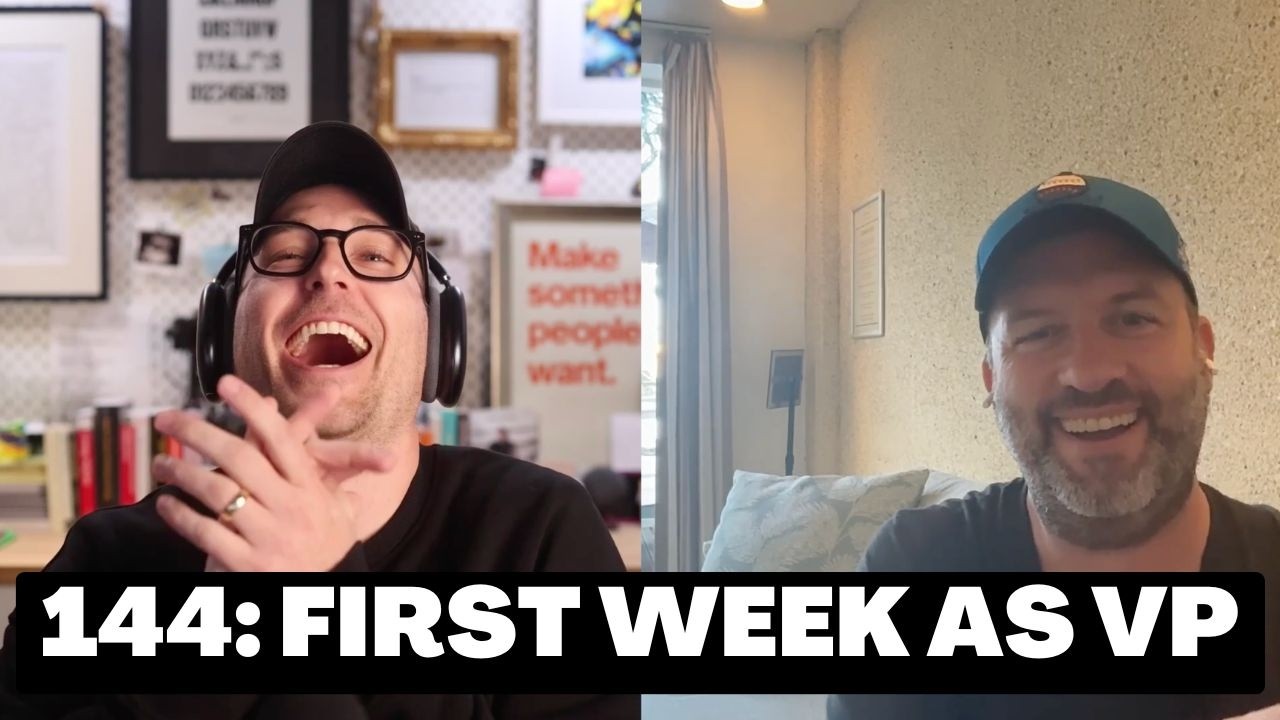
🔗 **Source:** [144: First Week as VP](https://www.youtube.com/watch?v=DfUZOPmdghU)
> [!note]+ Document Notes
> tags: [workplace-onboarding, notion-critique, one-on-one-meetings, ai-assisted-writing, remote-team-culture]
> author: [MISSING]
> source: Mostly Technical
> reference: https://www.youtube.com/watch?v=DfUZOPmdghU
> date created: 2026-08-11
>
> > [!info] Generated analysis — not the author's words. Sections below are machine-written
> > from the captured source. Only text inside `> [!quote]` blocks is verbatim from the author.
> > Do not quote or attribute any other line to the named author.
>
> # 🏷️ Title: 144: First Week as VP
>
<!-- deep-read:sections start -->
## 🧭 Table of Contents
- [📝 Summary](#-summary)
- [📖 Main Content](#-main-content)
- [🗒️ Notes](#️-notes)
- [📚 References](#-references)
- [🗣️ Paraphrase](#️-paraphrase)
- [📰 Newsletter](#-newsletter)
- [✅ Action Items](#-action-items)
- [🧪 Hypotheses](#-hypotheses)
- [📊 Methodology](#-methodology)
- [❓ Questions](#-questions)
- [🔮 Future Research](#-future-research)
- [💡 Implications](#-implications)
- [🧠 Learning Styles Assessment](#-learning-styles-assessment)
- [📊 Accessibility Assessment](#-accessibility-assessment)
- [🌍 DEIB Assessment](#-deib-assessment)
- [✅ Logical Validity](#-logical-validity)
- [🛡️ DARVO Analysis](#-darvo-analysis)
- [🎯 Conclusion](#-conclusion)
### 🔗 References
- [Rands in Repose — "The Update, the Vent, and the Disaster"](https://randsinrepose.com/) (referenced by title, no URL given in transcript)
- tokentown.com (mentioned as a for-sale asset, no live site referenced)
## 📝 Summary
- Aaron Francis, recording from a cabana on a Florida family vacation, and Ian recap Mostly Technical's three-year anniversary and formally retire their AI-focused spinoff show, Token Town, in favor of occasional "Hot Take Friday" live specials under the main brand.
- The bulk of the episode is Aaron's debrief on week one as VP of Marketing at Laravel: mapping where work lives across Notion, Linear, Slack, and Google Drive; aggressively archiving dead Notion dashboards; and publishing a run of internal "manifesto" memos to reset how his team communicates.
- Both hosts converge on a shared critique of Notion (and heavyweight PKM tooling generally) as prone to accumulating "dead branches" nobody prunes, and pitch a lighter-weight, AI-searchable "memo culture" as the replacement.
- Aaron also lays out his personal doctrine on two recurring management artifacts — the one-on-one and AI-assisted writing — both organized around the same idea: the tool should serve the person, not perform the process.
- Bottom line: the episode is a working case study in applying "simplify first, add process only where it earns its keep" to a new leadership role, delivered as casual co-host banter rather than a formal framework.
## 📖 Main Content
Aaron opens the episode literally in a cabana, phone-only internet, kicking off a lighthearted cold open about the Mostly Technical podcast's three-year anniversary. The two use the milestone to announce they're sunsetting Token Town, the AI-focused sister show they spun up with an $8,000 domain purchase (tokentown.com — now "for sale" at $15,000, mostly as a bit). Their reasoning: running two podcasts alongside a new full-time job is too much surface area, and Token Town's audience never expanded meaningfully beyond Mostly Technical's existing AI-curious listeners. In its place, they float "Hot Take Friday" — an occasional live-streamed bonus episode under the Mostly Technical umbrella, reviving what worked about Token Town (live audience interaction, reactive takes on breaking news) without the overhead of a second weekly show.
The episode's center of gravity is Aaron's first week as VP of Marketing at Laravel, a fully remote company north of 100 employees. He frames his own intention going in — not to be the "Kool-Aid Man," bursting through the wall and imposing sweeping change on day one — and immediately admits to failing that goal completely. The bulk of week one was spent doing reconnaissance: figuring out what lives in Notion versus Linear versus Google Drive versus Slack, since there's no shared office where that knowledge would otherwise diffuse informally.
What he found in Notion was a marketing workspace layered with "abandoned civilizations" — dashboards, tracking databases, and process artifacts built by a rotating cast of prior marketing hires, each abandoned when that person moved on and never cleanly replaced. Rather than negotiate keep/kill decisions item by item, Aaron told his team he'd start archiving (not deleting) anything he couldn't identify as currently load-bearing, with an open invitation to restore anything that mattered. His stated principle: Notion should function like "a better or worse Google Docs" — a place for durable reference material, pitches, and decisions — not a place for auto-updating dashboards or granular task tracking. Notably, he got no resistance; his team had already informally stopped using most of the abandoned systems and welcomed the excuse to declare them dead.
Ian offers a matching experience from his own company: they eliminated Notion entirely, suffered no loss, and Ian personally moved to Obsidian specifically so he could point an AI coding assistant at his notes as plain files and have it reorganize freely — something block-based, database-heavy tools resist because their structure fights the model rather than exposing raw content to it. Both hosts extend this into a broader critique of the "second brain" movement, characterizing exhaustive personal tracking systems as a form of procrastination that substitutes system-building for actual output, and pitch an alternative: throw unstructured "memos" into a big bucket and let AI-powered search/summarization do retrieval on demand, rather than hand-maintaining structured dashboards that decay the moment their original maintainer leaves. They reference two real-world data points for this direction — a builder (Ronin Ber, maker of Pages CMS) working on a markdown-first, multiplayer, agent-friendly Notion alternative, and a tweet from "Taylor" claiming an entire company could run on a single three-column Trello board.
Aaron then walks through the string of internal memos ("manifestos") he wrote during week one, publishing them to a repurposed Notion homepage that functions like a running blog: "The System Doesn't Work If You Can't Trust the System" (his core operating thesis — strip tools back to only what's trustworthy, because once a system like Linear balloons to hundreds of untriaged tasks, people quietly abandon it for private tracking), a companion piece on how to use Notion going forward, a piece on his one-on-one philosophy, a "grand unifying theory of marketing," a piece on using AI in writing, and three externally-facing guides for the rest of the company ("you want to write a blog / speak at a conference / go on a podcast, now what?"). He's explicit about staying scoped to the marketing org and deliberately not issuing company-wide mandates, which he sees as leadership overreach outside his lane.
Two of these get expanded on live. His AI-writing doctrine centers on one hard rule — never let AI conquer the blank page for you, because staring at the blank page and figuring out what you're trying to say is the actual work of writing — paired with a specific workflow: dictate rough, looping thoughts into Claude.ai, instruct it explicitly not to expand or change tone, only to clean up and reorder, then hand-edit nearly every sentence before publishing under his own name, with the standard that it must read as if he alone wrote it. His one-on-one doctrine holds that the meeting belongs to the employee, not the manager — status updates are redundant with what the system (Linear, etc.) already shows, so the time is reserved for anything the employee wants: blockers, morale, personal life, or nothing at all, with cancellation always welcomed and the manager's presence unconditional. Practically, he runs this via one continuous Notion doc per direct report (not one page per meeting), so history stays visible without folder-navigation overhead. He credits Rands in Repose's "The Update, the Vent, and the Disaster" as prior art shaping this view. Ian confirms a similar philosophy on his own, smaller team, differing mainly in formality and cadence.
### 🗒️ Notes
- Podcast context: Mostly Technical just passed its three-year anniversary; episode 2 was also recorded from vacation, establishing a light running gag that travel never stops the show.
- Token Town is being formally retired. Cost to launch: $8,000 domain purchase; now jokingly "for sale" at $15,000. Stated reason for killing it: excessive time cost of two podcasts plus a new full-time job, combined with an audience that never grew past Mostly Technical's existing base.
- Proposed replacement format: "Hot Take Friday" — occasional, not weekly, live audio/video reacting to breaking news (e.g., a major Laravel or AI announcement), explicitly kept as a bonus/special rather than a second recurring show, to avoid recreating Token Town's overhead under a new name.
- Origin story callback: the podcast idea originated when Aaron was producing AI-focused content in San Francisco; since then he's built and sold/ended a software product and taken a full-time leadership role — used here to frame how much both hosts' circumstances have shifted across three years.
- Aaron's new role: VP of Marketing at Laravel (fully remote, 100+ person company, no shared office).
- Kool-Aid Man framing: Aaron's explicit pre-job intention was to avoid bursting in and overhauling everything in week one; he self-rates this as a "100% failure."
- Notion findings: no formal shared responsibility model for what Notion is for; workspace showed compounding turnover — each departing marketer left behind unmaintained databases/dashboards that the next hire built on top of rather than replacing, creating structure with "no coherent foundation underneath."
- Action taken: archive-don't-delete sweep across the marketing Notion space only (explicitly not touching engineering, sales, or company-wide spaces), framed to the team as reversible.
- Stated vision for Notion going forward: durable reference docs, pitches, and decisions only — not live dashboards or auto-updating trackers.
- Team reaction: no pushback; the team had already informally abandoned the broken processes and welcomed formal permission to kill them.
- Ian's parallel: fully eliminated Notion at his company with no negative impact; personally uses Obsidian plus a command-line AI assistant specifically because plain files are easier for an AI to reorganize than a block/database-based tool.
- Shared "second brain" critique: framed as "procrastination at scale" — the act of building tracking systems substitutes for doing the underlying work, and the trend has faded from conversation in favor of "agentic operating systems."
- Alternative model floated: bucket everything as unstructured memos; let AI do retrieval/summarization on demand ("what were all the decisions about feature X") rather than manually maintaining structured dashboards.
- Named reference points: Ronin Ber (creator of Pages CMS), building a markdown-first, multiplayer, agent-friendly Notion alternative, met at Big Sky DevCon. "Taylor" (context implies Laravel's Taylor Otwell) reportedly tweeted about running an entire company on a single Trello board (To Do / Doing / Done).
- List of manifestos written in week one, in order: (1) "The System Doesn't Work If You Can't Trust the System," (2) how-to-use-Notion companion piece (same day as #1), (3) one-on-one philosophy (next day), (4) "grand unifying theory of marketing" (day after), (5) using AI in writing (two days after), plus company-facing guides on writing a blog post, speaking at a conference, and going on a podcast.
- Scoping discipline: Aaron treats company-wide mandates as out of bounds for his role; defers those to Tom and Taylor (leadership), keeping his memos scoped to the marketing org.
- Linear example used to illustrate "trust" thesis: once a backlog balloons to hundreds of untriaged items, people rationally stop trusting it and revert to private lists — the antidote is aggressive pruning, not more tooling.
- AI-writing rule #1: never let AI conquer the blank page — the struggle of finding what to say is the point of writing, not a problem to automate away.
- AI-writing workflow: voice-dictate into plain Claude.ai web chat, explicit instruction to clean up organization only (no tone change, no expansion), review and edit nearly every sentence, then publish under his own name as if fully self-authored.
- One-on-one rule #1: the meeting is for the employee, not a manager status check — status is already visible via the system (Linear, etc.), so the human time shouldn't be spent restating it.
- One-on-one format: single continuous Notion doc per direct report (not one doc per meeting), new heading added above each entry so history reads chronologically without page-hopping.
- One-on-one attendance norm: manager always shows up; employee is always free to cancel with no penalty.
- Cited prior art: Rands in Repose, "The Update, the Vent, and the Disaster."
- Cadence comparison: Aaron's team (~12–13 reports), 30-minute one-on-ones, cadence chosen per individual (weekly or fortnightly). Ian's team, roughly 30–60 minutes, every other week.
- Sponsor mentions (verbatim from read): Dropin Blog (headless blog CMS + Laravel SDK, dropinblog.com), Bento (email marketing/CRM for the "AI era," new transactional email pricing from $0.09/1,000), Svix (event-driven webhooks, link.svix.com/mostlytech), Valorin Security (Steven Reese Carter, valorinsecurity.com).
## 📚 References
- [Dropin Blog](https://dropinblog.com) — headless blog CMS with a Laravel SDK, episode sponsor.
- [Bento](https://bentonow.com) — email marketing/CRM platform, episode sponsor (transactional pricing referenced).
- [Svix](https://link.svix.com/mostlytech) — event-driven webhooks infrastructure, episode sponsor.
- [Valorin Security](https://valorinsecurity.com) — security consulting (Steven Reese Carter), episode sponsor.
- tokentown.com — the retired Token Town podcast's domain, referenced as available.
## 🗣️ Paraphrase
- Three years into Mostly Technical, the hosts are killing their AI-focused spinoff Token Town — not because it failed outright, but because it never grew past the existing audience and two shows plus a new full-time job is more content overhead than either wants to carry. In its place, they'd rather bolt an occasional live "hot take" special onto the main show than stand up a second weekly commitment.
- Aaron's real first week at Laravel was not the calm ramp-up he planned. He spent it discovering that the marketing team's Notion workspace was a graveyard of half-finished systems left behind by past hires, and rather than slowly negotiating what to keep, he archived aggressively and told the team why, framing the goal as restoring trust in the tools rather than adding new process.
- Both hosts land on the same diagnosis from different companies: Notion (and similar tools) make it too easy to spin up a dashboard and too hard to guarantee anyone maintains it, and the fix isn't a better dashboard — it's fewer dashboards, backed by durable written memos an AI can search instead of a human maintaining structure by hand.
- Aaron's two concrete doctrines — how he uses AI to write, and how he runs one-on-ones — share a spine: the artifact should serve the person doing the work (the writer's own thinking, the employee's own agenda), not perform an external process for its own sake.
## 📰 Newsletter
Mostly Technical just hit its three-year anniversary — and used the occasion to retire Token Town, its AI spinoff show, in favor of occasional live "Hot Take Friday" specials under the main feed. Worth a listen even if you skip the vacation banter: this episode is a real-time case study in taking over a marketing org's tooling. Aaron Francis's first week as Laravel's new VP of Marketing turned into a Notion archaeology dig — dead dashboards from three generations of past hires, no shared definition of what Notion was even for — and his fix is a clean, exportable idea: treat your wiki like Google Docs (durable reference only), publish a running series of short internal "manifesto" memos instead of meetings, and let AI search unstructured notes instead of hand-maintaining structured trackers. He also shares his actual Claude prompt for turning voice-dictated rambling into a memo without losing his own voice, and a one-on-one philosophy borrowed in part from Rands in Repose that treats the meeting as the employee's time, not a status report. Solid listen for anyone inheriting someone else's tooling mess.
## ✅ Action Items
#### DevRel
- Developer advocacy: none surfaced this episode.
#### OSPO
- none surfaced this episode.
#### Community
- Maintainers: the "one continuous doc per person, archive-don't-delete" pattern Aaron describes is a reusable governance template worth adapting for community wiki/roadmap hygiene.
#### WordPress
- Core Program Team: coordination-ritual angle — Aaron's "trust the system" thesis (a backlog only works if it's pruned to what's actually trustworthy) is directly applicable to Trac/GitHub triage backlogs that balloon past usefulness.
- Documentation: the "how-to guides for the rest of the company" pattern (write a blog post / speak at a conference / go on a podcast) is a low-effort template for HelpHub- or Make-blog-style contributor onboarding guides.
## 🧪 Hypotheses
- H1: Teams that formally archive unmaintained tracking systems (rather than letting them decay silently) see higher voluntary adoption of the tools that remain.
- H2: Single continuous per-person meeting notes (vs. one doc per meeting instance) improve manager recall and reduce redundant status-checking in one-on-ones.
- H3: Explicit "do not expand, do not change tone" instructions to an LLM measurably reduce the stylistic drift between a person's dictated voice and their published writing, compared to open-ended cleanup prompts.
- H4: Backlog size (e.g., open Linear/Trac issues) inversely correlates with team members' self-reported trust that the backlog reflects real priorities.
- H5: New managers who explicitly scope their first-week changes to their own team (vs. issuing org-wide mandates) get faster buy-in from peers outside their reporting line.
### 📊 Methodology
- H1: Before/after survey of tool engagement (login frequency, edits) in teams that run an archive sweep vs. a matched control team that doesn't, over a 60–90 day window.
- H2: A/B two cohorts of manager–report pairs on doc structure (per-person vs. per-meeting), survey both sides on perceived meeting value and manager preparedness after 3 months.
- H3: Blind text-similarity/style analysis (e.g., stylometric distance) comparing a writer's raw dictation to LLM-cleaned output under constrained vs. unconstrained prompts.
- H4: Correlate backlog item count/staleness against pulse-survey trust scores across multiple engineering orgs.
- H5: Track cross-team collaboration requests or friction reports in the 90 days following a new manager's onboarding, comparing scoped vs. broad first-week interventions.
### ❓ Questions
- At what backlog size does a tracking tool tip from "useful" to "actively distrusted" for a given team size?
- Does the "memo bucket + AI retrieval" model actually outperform structured wikis at scale, or does it just defer the organization problem to search quality?
- How do you preserve institutional memory through repeated tooling turnover (the "abandoned civilizations" pattern) without over-formalizing?
- Is the "employee owns the one-on-one" model equally effective for early-career employees who may not yet know what to bring to it?
### 🔮 Future Research
- A structured comparison of markdown/file-based AI-navigable knowledge tools (Obsidian + CLI agent) against block/database PKM tools (Notion) specifically on AI-reorganization tasks.
- Longitudinal tracking of "manifesto culture" (frequent short memos vs. meetings) on decision latency and onboarding speed in fully remote orgs.
### 💡 Implications
- Practice: new managers inheriting a remote team's tooling may get more traction from an early, transparent archive sweep than from cautious incrementalism.
- Policy: documenting an explicit "what goes where" boundary (Slack vs. Linear vs. wiki) early reduces the coordination tax that accumulates as a company scales past ~100 remote employees.
- Education/onboarding: publishing role-specific "now what?" guides (blog/talk/podcast) is a cheap, reusable onboarding artifact that scales past 1:1 mentoring.
- Funding/tooling models: teams burned by abandoned dashboards may be undervaluing lightweight, AI-searchable plain-text systems relative to structured SaaS PKM tools.
### 🧠 Learning Styles Assessment
- Reading level estimate: conversational podcast transcript; Flesch-Kincaid approximation ~7th–8th grade (short sentences, high use of contractions, informal vocabulary, minimal jargon beyond named tools).
#### 👀 Visual learners
- Present: none — audio-only transcript, no diagrams or screenshots referenced.
- Improve: an architecture-style diagram of "what goes where" (Slack/Linear/Notion/Google Drive) would directly visualize Aaron's central first-week deliverable.
#### 🔊 Aural learners
- Present: native format is a podcast; conversational back-and-forth suits aural learners well.
- Improve: a 2–3 minute audio pull-quote of the "trust the system" and one-on-one segments for standalone sharing.
#### 🗣️ Verbal learners
- Present: strong use of analogy (Kool-Aid Man, "dead branches," "paying down tech debt" applied to Notion) makes abstract management ideas concrete.
- Improve: a short glossary translating the podcast's shorthand ("manifesto," "memo culture," "trust the system") into standard management-framework terms for readers unfamiliar with the hosts' vocabulary.
#### 🧩 Kinesthetic learners
- Present: Aaron's described workflow (dictate → constrain the LLM prompt → hand-edit) is inherently a reproducible step-by-step.
- Improve: a checklist version of the archive-sweep process and the AI-dictation workflow for direct reuse.
#### 🧠 Logical learners
- Present: the "trust the system" thesis is causal and testable (clutter → distrust → shadow tracking).
- Improve: a simple decision tree for "keep, archive, or delete" applied during a tooling audit.
#### 🧑🤝🧑 Social learners
- Present: the episode itself models a collaborative debrief format between two peers.
- Improve: discussion prompts for teams doing their own archive sweep, to surface disagreement about what's "dead."
#### 🧘♀️ Solitary learners
- Present: Aaron's one-on-one philosophy explicitly protects individual reflection time.
- Improve: a self-audit worksheet ("what have I kept 'just in case' that I haven't touched in 90 days?").
#### 🌿 Naturalistic learners
- Present: light ecosystem language ("digital real estate," "ecosystem impacts" not present, but "asset" framing for the domain).
- Improve: explicit lifecycle framing for tooling ("sunset," "prune," "compost") could reinforce the archive-not-delete philosophy.
### 📊 Accessibility Assessment
#### Screen reader semantics
- Present: N/A to the source audio; this note applies heading structure for downstream accessibility.
- Improve: ensure any published version retains descriptive headings rather than raw timestamps, since this transcript carries no timestamp markers.
#### Keyboard navigation
- Present: N/A (audio source).
- Improve: N/A.
#### Contrast and readability
- Present: N/A (audio source); this note's prose uses short paragraphs for readability.
- Improve: N/A.
#### Text resizing and reflow
- Present: N/A.
- Improve: N/A.
#### Media and captions
- Present: transcript exists (this document's source), which functions as a caption/transcript equivalent.
- Improve: publish speaker-labeled captions (the raw transcript uses ambiguous ">>" markers without consistent speaker names, which would frustrate a screen-reader user trying to follow turn-taking).
#### Forms and interactions
- Present: N/A.
- Improve: N/A.
#### Standards reference
- Primary gap against WCAG 2.2 AA: 1.2.2 (Captions) is nominally met by the transcript's existence, but speaker identification is inconsistent in the raw source, which affects 1.2.9-adjacent usability for non-visual users following a two-person conversation.
### 🌍 DEIB Assessment
#### Cultural breadth
- Present: single-market, single-language content (U.S. tech/remote-work context); no international examples.
- Improve: no action needed for this content type, but broader listenership could benefit from acknowledging that "Notion is broken" experiences vary by team size/region.
#### Inclusive language
- Present: casual, informal register throughout; no exclusionary language observed.
- Improve: N/A.
#### Neurodiversity support
- Present: episode is unstructured, tangential conversation, which may be harder to follow than a scripted format.
- Improve: chapter markers or a structured outline (like this note's ToC) would materially help neurodivergent listeners track topic shifts.
#### Representation
- Present: two-person, same-role-type conversation (both podcast hosts/tech leaders); narrow representation by design of the format.
- Improve: N/A for this episode type.
#### Psychological safety
- Present: Aaron's one-on-one framing explicitly builds psychological safety into a workplace ritual (unconditional attendance, no forced status reporting).
- Improve: N/A — this is already a strong example.
### ✅ Logical Validity
#### Strong reasoning
- Causal: "if a backlog gets too large and untriaged, people stop trusting it and revert to private tracking" — a plausible, falsifiable causal claim grounded in the concrete Linear example (800 tasks, 200 in progress, 600 backlog).
- Analogical: the "Kool-Aid Man bursting through the wall" analogy for new-leader overreach is effective because it's self-deprecating and concrete, making an abstract management risk (imposing change too fast) memorable.
#### Fallacies
- Hasty generalization (mild): "we killed Notion completely and nothing was lost" is offered as validation of the anti-dashboard thesis without acknowledging team-size or company-stage differences that might make Notion more viable elsewhere. Fix: qualify the claim as team/stage-specific rather than a general indictment of the tool.
#### Tone of voice
- Casual, self-deprecating, and collegial throughout; frequent interruption and riffing signal a low-stakes, peer-to-peer register rather than an authoritative or instructional one — appropriate for an established podcast relationship but worth noting for readers expecting a formal framework.
### 🛡️ DARVO Analysis
- Not applicable. The episode contains no accusation, conflict, or interpersonal dispute to analyze — it is a collegial debrief between two established co-hosts. No deny/attack/reverse-victim-offender pattern is present.
## 🎯 Conclusion
The throughline of the episode is that tooling debt compounds silently in remote organizations, and the fix a new leader can actually execute in week one is subtractive, not additive: archive what nobody trusts, write down decisions as durable memos instead of ephemeral meetings, and protect the few rituals (one-on-ones, writing) that should exist for the person doing the work rather than for the process itself. Practical next step for readers managing a similar handoff: run an explicit, transparent "what's live vs. dead" audit of your team's tools before adding anything new, and consider whether a running per-person document could replace a folder of one-off meeting notes.
## 🔄 Refactor Appendix — 144: First Week as VP
### 📚 Literature Atoms (H3)
#### The system only works if people trust it
> [!quote]
> "The system doesn't work if you can't trust the system."
**Context & use**:
- Mid-episode, framing the first manifesto Aaron wrote on day one at Laravel.
- Central operating thesis for the whole episode — every other tooling decision (Notion archiving, Linear pruning) is downstream of this claim.
**Tags**: #xref
<!-- atomicity: 1 idea ✓ -->
#### Archive don't delete when inheriting someone else's mess
> [!quote]
> "I'm not going to delete anything. I'm going to archive stuff. I may go too far. Please feel free to restore it."
**Context & use**:
- Describes the concrete first-week action Aaron took in the marketing Notion workspace.
- Reversible-by-default is what earned him team buy-in without a negotiation over every artifact.
**Tags**: #xref #addendum
<!-- atomicity: 1 idea ✓ -->
#### Never let AI conquer the blank page for you
> [!quote]
> "Never let AI conquer the blank page for you... that is not a problem of writing. That is the whole goal of writing is to figure out what you're trying to say."
**Context & use**:
- From Aaron's "Using AI in Your Writing" manifesto, explained live on the show.
- Directly reusable as a personal writing principle outside the podcast/work context.
**Tags**: #xref #aphorisms
<!-- atomicity: 1 idea ✓ -->
#### The one-on-one belongs to the employee, not the manager
> [!quote]
> "This is not... tell me what you did this week and I will judge you... It is an opportunity for you to tell me literally anything that's on your mind."
**Context & use**:
- Core of Aaron's one-on-one manifesto; distinguishes status-reporting from the actual purpose of the meeting.
- Explicitly credits Rands in Repose as prior art.
**Tags**: #xref #addendum
<!-- atomicity: 1 idea ✓ -->
### 🧠 Permanent Candidates (H4)
#### A tool earns trust by staying small enough to be true
**Claim** (one sentence, Courtney's voice): A tracking system stays useful only as long as everything in it is actually current, so pruning aggressively protects trust more reliably than adding structure does.
**Evidence pointer**: [[#The system only works if people trust it]]
**Scope & conditions**: Holds for shared team backlogs/wikis where staleness is invisible to any one person (remote, high-turnover, or fast-growing teams). Breaks down for personal reference archives where completeness matters more than currency.
**Links** (≥1 with annotation):
- [[Konik claim-header method]] — because applies-in note-taking practice generally, not just team tooling
**Optional**: —
<!-- atomicity: 1 idea ✓ -->
### ✏️ Fleeting Queue
- [F1] Compare Notion's block/database model against plain-markdown + AI-agent workflows for reorganization tasks — worth a hands-on test in the vault. #xref
- [F2] Look up Ronin Ber / Pages CMS and the "multiplayer markdown-first agent-friendly Notion alternative" mentioned — potential tool worth evaluating. #articleseed
### → Things 3 (max 2 actions)
- [ ] Try the "single continuous per-person doc" format for the next round of 1:1 notes — vault #things
---
## Full Transcript
[00:00] Hello.<br>[00:01] >> Reporting live on location. Are you Are<br>[00:03] you in a cabana?<br>[00:05] >> I'm in a cabana.<br>[00:08] >> In a cabana. [gasps]<br>[00:10] >> Unbelievable.<br>[00:11] >> I wanted to bring the people in, you<br>[00:13] know, let them experience what's going<br>[00:15] on here.<br>[00:16] >> All right. So, your your video is a<br>[00:18] little choppy, but your audio is fine.<br>[00:20] Give us a sense of give us a sense of<br>[00:22] what the hell's going on, cuz you're<br>[00:23] literally in a cabana.<br>[00:25] >> I'm literally in a cabana. I'm here in<br>[00:27] uh Florida catching some rays.<br>[00:31] I got to get have a cabana when I'm on<br>[00:33] vacation. Got the cabana. It's very<br>[00:34] nice. They got some fruit. Got some<br>[00:36] other things. Hopefully the internet<br>[00:37] holds up. I'm on my phone. So, we'll see<br>[00:40] how it goes cuz the Wi-Fi was worse.<br>[00:42] But, uh so you should watch this one on<br>[00:45] YouTube, people, if you want to see my<br>[00:46] cabana or at least pop in. But, um<br>[00:49] >> yeah, we're chilling first day. There<br>[00:52] there's a there's a very small chance<br>[00:54] there's a very small chance that<br>[00:55] whatever the internet problem is is a<br>[00:57] you problem cuz you're at home in your<br>[00:59] like official big boy office and your<br>[01:01] internet goes down. You're in a cabana,<br>[01:03] the internet goes down. So I'm picking<br>[01:05] up on a common thread here.<br>[01:07] >> Ah, too much energy.<br>[01:10] >> Too much energy. That's what [laughter]<br>[01:12] it is.<br>[01:14] [gasps]<br>[01:14] >> All right. So what are we doing? Family<br>[01:16] vacation.<br>[01:17] >> Yes, family vacation. We don't ever<br>[01:19] usually do this type of like go to the<br>[01:21] beach.<br>[01:23] >> There's nothing else to do. There's no<br>[01:24] educational aspect. There's no This is<br>[01:27] just we are on the Gulf Coast of<br>[01:29] Florida. There is white sand. There is<br>[01:32] no waves. It's it's a bathtub out there<br>[01:35] and we're having some drinks and we're<br>[01:38] having some fruit and we're eating<br>[01:39] dinner and that's it. So, it's a little<br>[01:42] different for us, but so far we're<br>[01:43] liking it. Um yeah,<br>[01:45] >> that's my speed of vacation. I don't<br>[01:47] want to go I don't want to go walk<br>[01:49] around a old city. I just want to go<br>[01:52] somewhere and sit and relax. Maybe maybe<br>[01:57] have some fruit. I'm on the bubble<br>[01:58] there, but the drinks in the cabana that<br>[02:00] sound that part sounds awesome.<br>[02:02] >> It's right up your alley. Yeah. So, we<br>[02:04] normally do we do the bigger trips have<br>[02:06] always been walk around Old City. We do<br>[02:08] often do Martha's Vineyard as like our<br>[02:09] beach trip, but the thing about Martha's<br>[02:11] Vineyard is not actually very beachy.<br>[02:12] Like<br>[02:14] it's just not like this. This is just<br>[02:15] like you walk out the hotel door,<br>[02:16] there's a huge beach, the water is super<br>[02:19] calm. Like Martha's Vineyard, the water,<br>[02:20] the waves are pounding you. It's<br>[02:22] freezing cold. Like it's mostly about<br>[02:24] driving on the beach, which is cool, and<br>[02:26] setting up,<br>[02:27] >> but it's a whole different experience<br>[02:28] than this. This is just like you just<br>[02:30] walk out the door at the resort, and<br>[02:31] there's a huge beach, and there's jet<br>[02:33] skis, and there's stuff. So, this is<br>[02:35] like a pure beach vacation. Um, yeah.<br>[02:39] You know, and it's Florida. Florida is<br>[02:40] not like my favorite scene, but it is<br>[02:42] easy to get to from New York and it is<br>[02:44] does have very nice weather. So, so far<br>[02:47] so good, but we'll see at the end of the<br>[02:48] week. You know,<br>[02:50] >> you know, the people were worried with<br>[02:52] me taking a job that the podcast was<br>[02:55] going to come to an end. So, we put that<br>[02:56] fear to bed and now you're on vacation<br>[02:59] and the podcast goes on. There's no<br>[03:02] stopping this.<br>[03:03] >> Nothing stops this podcast. This podcast<br>[03:05] unstoppable. We just hit our<br>[03:08] anniversary. [laughter] Okay. Hold on.<br>[03:09] We got to do with this podcast. Three<br>[03:12] year anniversary MT. Hats off to us.<br>[03:16] >> Yes.<br>[03:17] >> Happy anniversary, Ian.<br>[03:19] >> Our second uh episode I also did from<br>[03:22] vacation.<br>[03:24] Second one. Yeah. So,<br>[03:26] >> um yes, but all good things must come to<br>[03:30] an end. [laughter]<br>[03:33] >> Not this podcast. Don't go anywhere,<br>[03:35] people. Don't unsubscribe from this one.<br>[03:37] >> Yes. Stay tuned to this one. However,<br>[03:39] Token Town, may she rest in peace. So,<br>[03:43] >> out for Token Town.<br>[03:43] >> I did.<br>[03:44] >> Yeah, I did think uh you and I talked<br>[03:46] about this. I thought two podcasts and a<br>[03:49] full-time job feels like a lot of, you<br>[03:52] know, a lot of content time. And this<br>[03:54] one is much more wellestablished. It's<br>[03:58] in the it's in the arena that I have my<br>[04:01] full-time job in. And I don't know. So,<br>[04:04] we felt like doing and Token Town wasn't<br>[04:06] just like a smash success out of the<br>[04:09] gate. It was like the people from Mostly<br>[04:11] Technical that love AI um didn't really<br>[04:14] go much broader than that. And so, we're<br>[04:17] going to we're going to kill off Token<br>[04:18] Town.<br>[04:19] >> We had a good time.<br>[04:21] >> You know, there's nothing better than<br>[04:22] spending $8,000 on a domain for a<br>[04:25] podcast, running that podcast for<br>[04:29] couple months.<br>[04:30] >> That's it though. It was an experiment.<br>[04:32] If you're interested in buying<br>[04:34] tokentown.com,<br>[04:35] >> it's only $15,000.<br>[04:38] So, [laughter]<br>[04:39] get in touch. [gasps]<br>[04:41] >> I love it though. Who knows? Maybe<br>[04:43] someday we'll do something with that<br>[04:45] domain. That'll be fun to consider.<br>[04:47] >> Maybe so. Maybe. So,<br>[04:49] >> we coown a domain and I love co-owning<br>[04:51] things with people that are digital.<br>[04:53] >> It's a It's a asset. It's digital real<br>[04:56] estate. It's not going anywhere.<br>[04:58] >> It's a baby.<br>[04:59] >> It's a dot. It's great. It's, you know,<br>[05:02] it's AI adjacent. That's what you want<br>[05:04] in a in a durable asset. So, thank you<br>[05:07] all for tuning in to that one. I hope<br>[05:09] you'll understand. But this one, this<br>[05:11] one goes on unabated.<br>[05:14] >> What do you think about the idea of<br>[05:16] >> I don't think I'd want to do this every<br>[05:17] time, but occasionally having live MT<br>[05:20] cuz I think the thing that worked best<br>[05:20] in Token Town was<br>[05:22] >> people liked the live. Like we actually<br>[05:24] did get like a thousand listeners or<br>[05:26] whatever you want to call that like<br>[05:27] viewers of the live stream. Um, I don't<br>[05:31] know. But it does create a lot of<br>[05:32] pressure. I don't like the pressure of<br>[05:33] the live stream, but<br>[05:34] >> it does create pressure. Yeah.<br>[05:36] >> Something. It's a totally different<br>[05:37] feeling than this. This is just you and<br>[05:39] me talking. The live stream is like<br>[05:40] people are asking questions and stuff's<br>[05:42] happening and got to be there on time<br>[05:44] and like all<br>[05:45] >> we do. We do. We do.<br>[05:46] >> Maybe specials or something.<br>[05:48] >> I love the idea of doing an occasional<br>[05:52] Friday afternoon<br>[05:54] live live mostly technical. So it<br>[05:56] doesn't replace Yeah. It doesn't replace<br>[05:59] the Monday morning how's your father,<br>[06:01] but it just is a more and we could, you<br>[06:03] know, we could go off the rails even<br>[06:04] more if you could believe it. Um, we<br>[06:06] could go we could go into more AI stuff<br>[06:09] if there's something we wanted to talk<br>[06:10] about,<br>[06:11] >> but not create a discrete property and<br>[06:14] not create like a weekly schedule out of<br>[06:17] it<br>[06:18] >> or well maybe even like uh like I'm<br>[06:20] talking about under the mostly technical<br>[06:22] world here still. Although I guess we<br>[06:23] could do that with Token Town too, but<br>[06:25] like even<br>[06:25] >> No, no, no. I was thinking all of that<br>[06:27] as it relates to mostly technical.<br>[06:29] >> Okay. Yeah, almost technical. Um, so<br>[06:33] I think there are times where we have<br>[06:35] like a hot take of something that just<br>[06:37] occurred. So it could be that we could<br>[06:39] occasionally spin it up for that kind of<br>[06:41] thing too. It just becomes a bonus<br>[06:42] episode on the stream.<br>[06:44] >> We like we jump on for an hour just<br>[06:47] impromptu live stream because something<br>[06:50] big happened. Laravel announces some<br>[06:52] huge thing.<br>[06:53] >> There's some big AI thing that changes<br>[06:55] everything. Whatever. whenever we get<br>[06:57] our, you know, we're in the mood to uh<br>[06:59] vent before uh, you know, Monday comes<br>[07:02] around, then yeah, I think like a Friday<br>[07:04] afternoon could be a cool time or<br>[07:06] >> I I do like I do like like a like a hot<br>[07:08] take Friday or something.<br>[07:10] >> Yeah, that's a spand this one podcast<br>[07:13] into two. One way we just killed the<br>[07:15] other one. [laughter] Let's expand We're<br>[07:17] going to split this one into two. Don't<br>[07:19] worry.<br>[07:19] >> Oh, yeah. Aaron's so busy he can't do<br>[07:22] two podcasts, [laughter] so we'll just<br>[07:23] turn the one [clears throat] into two.<br>[07:25] Yeah, that worked out well. It's called<br>[07:28] technical, so it's fine.<br>[07:29] >> Super well.<br>[07:30] >> Just that we record it twice a week.<br>[07:32] That's all.<br>[07:32] >> That is very on brand for me. Get rid of<br>[07:34] one thing and add two more. Perfect.<br>[07:37] >> But I do like this idea. I do like this<br>[07:39] idea. Maybe not every week, but the No,<br>[07:41] definitely. There's something here.<br>[07:42] There's something here where like we<br>[07:44] could steal some of the good stuff we<br>[07:45] had on Token Town, I think, and<br>[07:47] integrate.<br>[07:48] >> Yeah.<br>[07:48] >> Um especially the live part where people<br>[07:51] want to chat, that kind of thing.<br>[07:53] >> Yeah. I like the expansion of the mostly<br>[07:56] technical universe. Like we've got we've<br>[07:58] got the weekly show, we've got the<br>[08:00] occasional Sweet Hang, which we need to<br>[08:02] pepper in a few more of those. And then<br>[08:04] we could have a we could have a hot take<br>[08:06] Friday. Um where we just do a live show.<br>[08:09] >> I like I like that idea. Let's go deeper<br>[08:12] deeper on the one brand instead of doing<br>[08:14] two.<br>[08:15] >> I like that. That was a whole different<br>[08:17] world. You know, think about when we<br>[08:18] started Token Town. When the idea first<br>[08:20] came up, you were doing content for AI<br>[08:24] people.<br>[08:24] >> I know.<br>[08:25] >> That was when the idea first came up.<br>[08:26] >> And we were in San Francisco.<br>[08:28] >> We were you and I both.<br>[08:30] >> Yes. We were together in person. And<br>[08:32] then<br>[08:33] >> then you built a software product.<br>[08:35] >> Now you got a job. Stuff's happening.<br>[08:37] Things that things change and we have to<br>[08:39] adapt.<br>[08:40] >> Speaking of speaking of three years, can<br>[08:42] you can you imagine the things that have<br>[08:44] changed in three years? I mean, on on my<br>[08:47] side, you've Larabel nude 42 times. I've<br>[08:50] actually<br>[08:51] >> I've lost jobs. I've gotten jobs. I've<br>[08:54] been depressed. I've been happy. It's<br>[08:56] just we're all over.<br>[08:58] >> You're through your arc. I'm telling<br>[09:00] you,<br>[09:01] >> I h I have a talent. Okay. If I may pat<br>[09:04] myself on the back,<br>[09:04] >> you may<br>[09:05] >> I am able I feel like I have an eye for<br>[09:08] talent. Okay. You do.<br>[09:09] >> And I've I've identified some people<br>[09:10] over the years and I feel like I have a<br>[09:12] pretty good track record.<br>[09:13] >> Yep. I identified to Aaron Francis as<br>[09:16] this guy's gonna be a good podcast<br>[09:17] co-host.<br>[09:18] >> Great podcast co-host. I'm like, I'm<br>[09:21] boring and this guy's got new every<br>[09:24] week to talk about. That's what I need.<br>[09:26] I'm I'm just going to do the same thing<br>[09:27] every week. This guy's going to have<br>[09:29] crazy every week to talk about. And<br>[09:31] you do. It's fantastic. It's great. Um,<br>[09:35] right. You are.<br>[09:36] >> You had just had the second set of twins<br>[09:38] before we started. Oh, I was pre-second<br>[09:40] set.<br>[09:42] I was in between there working at Planet<br>[09:45] Scale and I had two.<br>[09:47] >> Wow.<br>[09:48] >> Yes.<br>[09:49] >> You were pregnant though. You were<br>[09:50] pregnant, but you weren't didn't have a<br>[09:52] kid. Wow. Yes. You had children. You've<br>[09:55] had multiple jobs. You've had multiple<br>[09:57] businesses.<br>[09:58] >> Oh, yeah.<br>[09:59] >> You've had multiple podcasts.<br>[10:01] >> Oh, yeah.<br>[10:02] >> I don't know. Now, well, you know, this<br>[10:04] is we've talked about this before. like<br>[10:06] you are not a guy<br>[10:08] who likes to chill. So, I'm excited to<br>[10:10] see how this goes with your marketing<br>[10:12] gig. How you going to keep it fresh?<br>[10:14] It's like a marriage. This is going to<br>[10:16] be a little more of a marriage for you<br>[10:17] than you're used to in your professional<br>[10:18] life, I feel like. So, like<br>[10:20] >> Well, so far, we can talk about my first<br>[10:22] week, but so far I've accidentally had<br>[10:25] zero chill. Even in my even in my, you<br>[10:28] know, chill W2 job, I've had zero chill.<br>[10:32] >> I [laughter] wouldn't expect the chill<br>[10:33] to happen yet. You know, it is,<br>[10:34] >> you know, let's maybe let's thank the<br>[10:36] sponsors first. But I I decided I<br>[10:38] decided I was not going to burst through<br>[10:40] the wall like the Kool-Aid Man on my<br>[10:42] first week.<br>[10:44] >> That didn't [laughter] happen. So stay<br>[10:46] tuned for that.<br>[10:47] >> All right. Well, they know what they<br>[10:48] were buying, you know? I mean, I feel<br>[10:50] like that's fair. Um, all right. This<br>[10:52] week brought to you by our super good<br>[10:54] friends at Dropin Blog. A headless blog<br>[10:57] CMS and a first class Laravel SDK. Your<br>[11:00] domain, your design, your stack.<br>[11:03] dropinblog.com<br>[11:06] and Bento, the email marketing and CRM<br>[11:09] platform built for the AI era. Send your<br>[11:11] product marketing and transactional<br>[11:13] email with Bento. And check out their<br>[11:15] new transactional email pricing with<br>[11:16] rates as low as 9 cents per thousand.<br>[11:21] Thanks so much to those guys. Big fans<br>[11:23] of the show. Big supporters of the show.<br>[11:26] Truly appreciate it.<br>[11:29] Okay.<br>[11:31] Um, let me see where we are. Okay. So,<br>[11:33] first week you were just going to like<br>[11:35] have some calls. You were just going to<br>[11:38] make some friends. Uh you were going to<br>[11:40] write a blog post. Maybe<br>[11:42] >> maybe just one.<br>[11:43] >> Maybe. I mean uh my understanding the<br>[11:46] Laravel sort of uh community inside<br>[11:49] Laravel Inc. because they like to add<br>[11:50] emojis. So maybe you're going to add a<br>[11:52] couple emojis.<br>[11:53] >> Maybe. Maybe.<br>[11:54] >> But uh you know you were just going to<br>[11:55] have a chill week. So what happened?<br>[11:57] Tell us about your first week. Everybody<br>[11:59] wants to know. So, you remember the old<br>[12:01] Kool-Aid commercials, right?<br>[12:03] >> I do. I love those. Yes.<br>[12:04] >> There's like a peaceful family sitting<br>[12:07] in a kitchen. Everyone's just kind of<br>[12:09] happy<br>[12:10] >> and then this giant destructive picture<br>[12:14] of Kool-Aid explodes through the wall<br>[12:18] >> and is suddenly standing in your<br>[12:21] kitchen,<br>[12:22] >> I guess, pouring pouring himself out as<br>[12:24] a drink offering. That that part Yeah. I<br>[12:27] get a little lost in the actual<br>[12:29] functioning of it all,<br>[12:31] >> but I told myself before I before I<br>[12:34] started this job,<br>[12:36] >> I'm not going to do that. I'm not going<br>[12:38] to burst through the wall like the<br>[12:40] Kool-Aid Man. There's a chance that I<br>[12:44] completely failed at that. [laughter]<br>[12:46] Like 100% failed at that.<br>[12:48] >> Man, I wish you were taking bets on this<br>[12:50] cuz I would have loved to take that,<br>[12:51] >> dude. 100% failure rate.<br>[12:54] >> Yeah.<br>[12:54] >> Um,<br>[12:56] okay. So, first impressions of first<br>[12:58] week uh at a big boy job.<br>[13:01] >> Yeah.<br>[13:01] >> Um<br>[13:02] >> Laravel is a big company. 100 people or<br>[13:05] however many it is. I think it's maybe<br>[13:07] just north of 100. That's a lot of<br>[13:09] people.<br>[13:09] >> You're not the HR guy. You don't know.<br>[13:10] It doesn't matter.<br>[13:11] >> I don't know. What am I supposed to<br>[13:12] know? Um that's a lot of people. That's<br>[13:15] That was my first reaction.<br>[13:17] >> You can't even know everybody. It's too<br>[13:18] bad.<br>[13:19] >> You can't even know anybody. That's past<br>[13:20] Dunar. Maybe. Uh I think Dunbar is maybe<br>[13:22] 200, but I have a hundred other friends,<br>[13:24] so I can't squeeze all those into my<br>[13:26] head, you know.<br>[13:27] >> Um so<br>[13:30] that's a lot of people<br>[13:31] >> in a not not only like remote first,<br>[13:34] remote only,<br>[13:36] >> right,<br>[13:36] >> situation. There are some clusters, but<br>[13:38] nobody like actually works together in<br>[13:40] an office. And so one of the interesting<br>[13:42] things that um I'm trying to get my head<br>[13:45] around is like what are the processes<br>[13:49] for communication and like tracking work<br>[13:51] and talking to each other and how does<br>[13:53] how does all of this stuff work? Where<br>[13:55] does anything live?<br>[13:56] >> Yeah.<br>[13:56] >> Um and so that was a lot of what I spent<br>[13:59] my first week doing was like figuring<br>[14:03] out what's in Notion, what's in linear,<br>[14:06] what's in Google Drive, what's in Slack.<br>[14:10] kind of like where all of these things<br>[14:12] live. Um, and that's when I just kind of<br>[14:15] started going ham. [laughter]<br>[14:17] That's where<br>[14:18] >> from the outside the big big impression<br>[14:21] of the first week is like you and Notion<br>[14:23] going to war. Like that's where I would<br>[14:25] say we saw a lot of that.<br>[14:27] >> There are a lot of um<br>[14:29] >> there are a lot of like higherups at<br>[14:32] Notion that are very public on Twitter<br>[14:34] that I very much like. And so I'm trying<br>[14:36] to be I'm trying to be careful because<br>[14:39] there are a lot of very smart people<br>[14:40] there that I have a lot of respect for.<br>[14:42] >> Sure.<br>[14:43] >> I've never used Notion.<br>[14:45] >> And we'll just say that the takeaway is<br>[14:47] I don't like notion. [laughter]<br>[14:50] >> That's my takeaway so far.<br>[14:52] >> Yeah.<br>[14:52] >> Um<br>[14:54] >> I think there is a shared<br>[14:55] responsibility. Um, you know, like when<br>[14:58] you talk about, let's say, database<br>[15:00] hosting,<br>[15:01] >> usually like you go to planet scale and<br>[15:02] they're like the shared responsibility.<br>[15:04] We handle this, but you need to make<br>[15:05] sure that this and we handle that and<br>[15:07] you need to make sure.<br>[15:08] >> I feel like notion has a shared<br>[15:10] responsibility that's not published or<br>[15:12] like uh surfaced or enumerated very<br>[15:14] well.<br>[15:15] >> Um, so there's there's a possibility<br>[15:19] that people just use people use notion<br>[15:22] very poorly. I also think Notion is not<br>[15:26] the tightest of products and it's<br>[15:28] getting looser every day.<br>[15:30] >> Oh, that's it's getting looser every<br>[15:32] day. This is why I had<br>[15:34] >> They're just shoving stuff everywhere<br>[15:36] and it's like, man, I don't know. Linear<br>[15:38] does this, too.<br>[15:39] >> Correct.<br>[15:40] >> But I feel like it's slightly more<br>[15:41] successful. Although, it's also<br>[15:43] >> I don't love it, but it's like you could<br>[15:46] kind of ignore some of the crazy<br>[15:47] and just use the issues and kind of get<br>[15:49] by.<br>[15:49] >> Yeah.<br>[15:50] >> But Notion is just like, man, there's<br>[15:51] just stuff everywhere. It's crazy.<br>[15:53] >> There's stuff There's stuff everywhere.<br>[15:55] And it like<br>[15:57] >> the product represents the fracture of<br>[16:00] the team. Not our team, the notion team.<br>[16:03] Like some people are like AI maxis, some<br>[16:06] are database automation maxis. Some<br>[16:09] >> apparently no one is like a long form<br>[16:11] writing maxi cuz [laughter] that<br>[16:12] experience that experience is awful.<br>[16:15] >> Um Dave, don't clip any of this. I don't<br>[16:17] want I don't I'm not trying I'm not<br>[16:20] trying to like do a hot notion take. I'm<br>[16:22] just recounting my first experiences and<br>[16:25] I don't want to hurt the feelings of my<br>[16:27] friends that work at notion.<br>[16:29] >> Yeah.<br>[16:30] >> So this is meant to be constructive<br>[16:33] which now gives me cover to say<br>[16:35] everything else I want to say. So there<br>[16:36] you [laughter] go.<br>[16:37] >> I con I construct you notion be<br>[16:40] constructed. However it sucks. Um,<br>[16:42] >> yeah.<br>[16:43] >> So, what I what I found was um and I<br>[16:46] think this is common I think this is<br>[16:48] common to long lived notion workspaces.<br>[16:51] >> Mhm.<br>[16:52] >> I found a lot of um abandoned<br>[16:57] systems or processes, right?<br>[17:00] >> So, I found a lot of like let's make<br>[17:03] this let's make this database. Let's<br>[17:06] make this tracking dashboard. Let's make<br>[17:09] this thing. And then I come into it and<br>[17:11] it's like this hasn't been touched in<br>[17:13] six months,<br>[17:14] >> right?<br>[17:15] >> And [clears throat] so then as a new<br>[17:17] person, as a new person, I have a hard<br>[17:19] time being like, what's active, what's<br>[17:22] not active, what's real, what's not. And<br>[17:24] I didn't I didn't look outside of the<br>[17:26] marketing space at all. So this is not<br>[17:28] this is not a Laravelwide team space<br>[17:31] thing. This is like the marketing space.<br>[17:33] Um, and of course<br>[17:35] >> we all know there's been a lot of like a<br>[17:37] lot of turnover in the Laravel marketing<br>[17:40] side. And so I think that's part of it<br>[17:42] is like one person would set up a system<br>[17:45] and then they would kind of phase out<br>[17:46] and then a new person would set up a<br>[17:48] system and they would phase out. And so<br>[17:50] all of the remnants of these former<br>[17:52] civilizations are like being built upon<br>[17:55] each other with no like coherent<br>[17:57] foundation underneath it. So that was<br>[18:00] that was what I found a lot of inside of<br>[18:03] inside of notion. And I just like I I<br>[18:07] told I I did try to be gentle about it,<br>[18:10] but like I told my team, "Hey guys, I<br>[18:13] don't really understand what's like<br>[18:15] what's living and what's dead. I'm just<br>[18:17] going to start kind of like archiving<br>[18:19] stuff. I'm not going to delete anything.<br>[18:21] >> I'm going to archive stuff. I may go too<br>[18:23] far. Please feel free to restore it."<br>[18:25] And then my forwardlooking guidance was<br>[18:29] let's simplify all of this. We don't<br>[18:32] need we don't need dashboards with<br>[18:34] databases that have a million emojis<br>[18:36] that autoupdate if you look the wrong<br>[18:38] way. Like I just I don't I don't want<br>[18:40] that.<br>[18:41] >> I don't think that we're being served<br>[18:43] well by that.<br>[18:44] >> Right.<br>[18:44] >> And my like my<br>[18:46] >> you know I try I try to never just<br>[18:48] institute rules without like vision or<br>[18:51] reason. And the vision or reason on this<br>[18:54] was if we can if we can just treat<br>[18:57] notion as like a better or worse Google<br>[19:00] Docs<br>[19:01] >> where we keep durable long lived uh<br>[19:05] reference documents um pitches decisions<br>[19:09] that sort of thing. I think this is this<br>[19:12] is my vision. I think everybody's life<br>[19:14] will get calmer because we're not like<br>[19:17] tracking this random stuff in random<br>[19:19] places. So life will get calmer and like<br>[19:23] execution speed will go up because I<br>[19:25] felt like it was a lot of<br>[19:28] >> uh process for the sake of process.<br>[19:31] >> Yeah.<br>[19:31] >> And to to my team's great credit, they<br>[19:33] had all abandoned the stupid processes.<br>[19:36] >> They were like, "Yeah, okay. Well, that<br>[19:38] that process driver is gone. That<br>[19:40] process didn't serve serve us, so we're<br>[19:42] going to abandon it." So, I didn't get a<br>[19:44] lot of resistance from my team because I<br>[19:46] think they felt the same overwhelm that<br>[19:49] I was feeling. They just didn't really<br>[19:51] >> they didn't really have like the desire<br>[19:54] or the power to be like, "F it. We're<br>[19:56] going to scrap it all."<br>[19:57] >> Well, Kool-Aid Man can say, Kool-Aid Man<br>[20:00] can say, "F it." So, I think the the<br>[20:03] feedback I've gotten so far is they're<br>[20:06] all glad that it's like, "Let's just<br>[20:08] strip this back to bare bones." Um,<br>[20:11] >> and so we're we're trying to define what<br>[20:14] goes in Slack, what goes in linear, what<br>[20:16] goes in notion with clear boundaries so<br>[20:19] that we can spend less time on the<br>[20:21] process of work and more time on the<br>[20:23] work of work without also continually<br>[20:27] bothering each other for like, hey,<br>[20:29] where's this or where's that or did we<br>[20:31] make a decision on this?<br>[20:32] >> So that's kind of like my holistic<br>[20:34] thought process. What's what's your take<br>[20:36] and what's your experience with notion<br>[20:38] been in that regard?<br>[20:39] >> Yeah. No, same thing. I feel like notion<br>[20:40] is just like every notion I've ever been<br>[20:42] in is like a bunch of dead branches.<br>[20:44] It's like maybe there's a couple live<br>[20:45] branches in there, but like I don't know<br>[20:47] how you're supposed to find them. Uh,<br>[20:49] you know, it's like all yes, you could<br>[20:51] do anything sort of, but that's like<br>[20:52] terrible because like who knows where<br>[20:54] things are linked from and two and<br>[20:56] there's all that stuff and now there's<br>[20:57] AI in it everywhere, but it's not like<br>[20:59] as good as like I ended up moving to<br>[21:00] Obsidian because I was like I just want<br>[21:02] to have Claude<br>[21:03] >> on the command line and it can just do<br>[21:05] anything.<br>[21:06] >> Great. Reorganize this whole thing. It's<br>[21:08] goddang files. That's great.<br>[21:10] >> Exactly. That's what's great in the AI<br>[21:12] era. That's the thing where like this is<br>[21:14] actually a very interesting thing too of<br>[21:16] like things that are document based that<br>[21:18] are trying to do AI and like how that's<br>[21:20] it's kind of limiting if they're not set<br>[21:22] up right, you know, and like they're<br>[21:23] trying to shove it everywhere, but it<br>[21:24] doesn't really work in the same way of<br>[21:26] if just it's files and the AI can just<br>[21:28] root around. Um, so<br>[21:31] >> anyway, yeah, so our notion was just<br>[21:33] dead branches of crap, so we got rid of<br>[21:35] notion completely and like nothing's<br>[21:37] changed. Uh,<br>[21:38] >> and nothing was lost.<br>[21:39] >> Yeah. And like nothing was lost. And<br>[21:42] >> because there just I feel like you need<br>[21:44] certain tools for certain things and<br>[21:46] you're better off with that approach.<br>[21:46] Like we had a bunch of like<br>[21:47] documentation stuff for like policies<br>[21:50] and things as we were working towards<br>[21:51] sock 2 stuff. A first pass of sock 2.<br>[21:53] Now we're in a second pass of sock 2 and<br>[21:55] that stuff just lives in this sock 2<br>[21:57] application that's going to make our<br>[21:59] sock 2 dashboard that customers are<br>[22:01] going to use. You know Laravel cloud has<br>[22:03] this whatever. Like so there is an a<br>[22:05] special place for that. that special<br>[22:06] place makes sense for it. It's not just<br>[22:08] like you're trying to make a million<br>[22:09] folders and like inside there somewhere<br>[22:12] is all this, you know, paperwork<br>[22:14] basically. But um yeah. No, so I think<br>[22:16] you I totally think you're doing the<br>[22:18] right thing. Clear that out. If I feel<br>[22:20] like if you add a dashboard that should<br>[22:22] be like an organizationalwide<br>[22:25] commitment that like we agree this is<br>[22:27] this is a dashboard. We are all on board<br>[22:29] with this dashboard and we are going to<br>[22:31] maintain this dashboard. There's one<br>[22:32] dashboard or there's two dashboard.<br>[22:33] These are super important. every meeting<br>[22:35] we talk about the dashboard. Like if<br>[22:37] it's just somebody, hey Sally, go off<br>[22:39] and build the dashboard. That like<br>[22:40] literally will never work because like<br>[22:41] Sally builds it and then nobody ever<br>[22:44] looks at it ever again and Sally's<br>[22:45] wasting her time update his dashboard<br>[22:47] for a year and then stops.<br>[22:48] >> It it it has to carry that<br>[22:50] organizational weight behind it for it<br>[22:53] to be valuable. Yeah.<br>[22:54] >> And I think maybe maybe that's the<br>[22:57] that's the failure case of notion is<br>[22:59] like it makes it so easy to build<br>[23:02] dashboards that it becomes<br>[23:05] >> it almost becomes like procrastination<br>[23:08] to just continually this is my whole<br>[23:10] problem with the second brain thing<br>[23:12] which I'm sure that we've covered on<br>[23:13] here. This is outside of organizations<br>[23:15] and into human behavior. I feel like the<br>[23:18] second brain wave that has kind of<br>[23:21] crested. I feel like we don't hear a lot<br>[23:22] about second brains anymore cuz we only<br>[23:25] talk about agentic operating systems or<br>[23:27] whatever which uh you know Pam Beasley<br>[23:30] they're the same picture. So you know be<br>[23:33] beyond that<br>[23:35] >> I feel like the second brain uh mania<br>[23:38] was was basically like procrastination<br>[23:41] at scale. It was like what if what if I<br>[23:44] track literally everything about my<br>[23:46] entire life and you're like what is your<br>[23:48] life then? all you're doing is like<br>[23:50] inventing these things to track and then<br>[23:53] you live by this like<br>[23:55] >> notion dashboard that has pretty emojis<br>[23:57] in it. And so I've always been pretty<br>[24:00] negative on the over uh<br>[24:04] dashboardification of notion and<br>[24:07] fortunately I think the whole marketing<br>[24:10] team is pretty negative on that too. So<br>[24:11] I didn't I didn't run into a brick wall<br>[24:13] of people being like no we love the<br>[24:15] dashboards. I ran into a very paper wall<br>[24:17] that was like, I don't know what these<br>[24:19] dashboards are for. Well, and this is<br>[24:21] what we and me talked about this a<br>[24:22] little bit off air, but like um or you<br>[24:25] know another day, but like I feel like<br>[24:27] and this is a product I said to you I've<br>[24:28] wanted to build forever and I'm not<br>[24:30] going to have time to do it, but like<br>[24:32] and you're kind of constructing notion<br>[24:34] in this way of like AI makes it the<br>[24:36] perfect era for just sending memos back<br>[24:38] and forth and like, oh, we had a<br>[24:40] meeting, here's a memo about the<br>[24:42] meeting, we made a decision, here's a<br>[24:45] memo about the decision,<br>[24:46] >> like all that kind of stuff. Throw it<br>[24:48] all into a big bucket. which is kind of<br>[24:50] what the second brain people talked<br>[24:51] about, but they also involved a lot of<br>[24:53] organization. Screw the organization.<br>[24:55] Throw it all into the big bucket<br>[24:56] somewhere. And then the AI could sort<br>[24:58] out. Hey, what was the decisions? What<br>[25:00] are the 10 me what are all the memos<br>[25:01] about feature X? Oh, here they are. And<br>[25:04] like summarize it for me. Great. Here it<br>[25:06] is. Like all that kind of stuff. So<br>[25:08] that's where I think where you're going<br>[25:09] with like let's do long form. Let's<br>[25:11] write down our decisions. let's focus<br>[25:13] more on that angle instead of like how<br>[25:15] do we extract things and have a real-<br>[25:18] time dashboard that shows us just the<br>[25:20] decision like you don't need any of that<br>[25:21] like the AI<br>[25:21] >> don't need any of it<br>[25:22] >> I mean if the notion AI is good enough<br>[25:24] to do this which I assume it is but uh<br>[25:26] the AI should be able to go through it<br>[25:28] all and be like hey here's every time we<br>[25:30] talked about company X what do we want<br>[25:32] to do with that or whatever and uh yeah<br>[25:35] so<br>[25:35] >> that's so there are there are several<br>[25:37] people trying to attack this I met one<br>[25:39] at um Big [clears throat] Sky DevCon his<br>[25:42] name is Ronin Ronin Ber um and he<br>[25:46] created uh pages CMS. He's written a<br>[25:50] couple of other written a couple of<br>[25:52] other things but at Big Sky he showed me<br>[25:55] basically like<br>[25:57] >> the multiplayer markdown first<br>[26:00] agentfriendly version of notion he's<br>[26:02] building. Um he's got a lot of links in<br>[26:05] his uh Twitter so I can't find it right<br>[26:08] now but I think I think that is<br>[26:11] >> yeah that's that's more directionally<br>[26:13] correct um than this blockbased editor<br>[26:17] where they just continue to bolt stuff<br>[26:19] on.<br>[26:20] >> Um at least at least for me I I have to<br>[26:23] believe that there are they have notion<br>[26:26] customers using all of these features. I<br>[26:28] don't think that the the creators of<br>[26:30] notion are dumb. I just wonder if it<br>[26:33] works for the way that I work. And I<br>[26:35] think the answer so far is no.<br>[26:37] >> I think I want like a memo. I want<br>[26:40] Twitter but for long form memos so you<br>[26:43] can see what's going on in the recent<br>[26:45] past, right? And then with like really<br>[26:46] good search AI that creates things<br>[26:50] dynamic. I I want a dashboard of every<br>[26:51] time we advertised on Google and what<br>[26:54] happened. Okay.<br>[26:56] Right. and two minutes later it's like<br>[26:57] here's our dashboard of like<br>[26:59] >> time things we tried things that work<br>[27:01] things that didn't work<br>[27:03] >> whatever like cuz people dumped it into<br>[27:05] memos along the way so y<br>[27:07] >> if anybody wants to build this with me<br>[27:08] where I do nothing but have the idea and<br>[27:11] a little bit of money come see<br>[27:14] >> I think I think one one Taylor might uh<br>[27:17] want to take you up on that [laughter]<br>[27:18] because<br>[27:19] >> I'd love to go in business with Taylor<br>[27:20] that's<br>[27:21] >> you you saw him you saw him tweet and I<br>[27:23] will only disclose public information<br>[27:25] you saw him tweet He It was like perfect<br>[27:29] project management and it was Trello<br>[27:31] to-do, doing done. That was it. That was<br>[27:34] it. That was all. He was like, I could<br>[27:35] run a whole company. I could get to an<br>[27:37] IPO on this.<br>[27:38] >> Yeah.<br>[27:39] >> Um, so I have turned it into a memo<br>[27:42] board just like you're talking about.<br>[27:43] And I've written a few manifestos.<br>[27:46] >> I love a manifesto. Give us whatever<br>[27:48] manifestos you can share. Share them. We<br>[27:50] need to hear about so many manifestos<br>[27:53] which does not does not help my Kool-Aid<br>[27:56] situation down the ivory tower. You're<br>[27:58] just fire down memos like throwing meos.<br>[28:02] Yeah, exactly. The poor the poor Laravel<br>[28:07] Incorporated employees. Before I tell<br>[28:09] you what the memos are, let me tell you<br>[28:11] about<br>[28:14] >> is uh your ability to never get paged<br>[28:17] again from a broken web hook. You can<br>[28:19] become eventdriven with Svix. So check<br>[28:23] out Svix at link.svix.com/mostlytech<br>[28:28] and that's svix.<br>[28:32] So they got a 4 character domain but<br>[28:34] check out link.svix.com/mostly<br>[28:37] and by our friendly neighborhood hacker<br>[28:40] and Laravel community member Valerin<br>[28:44] Security. AI doesn't just help you ship<br>[28:47] code faster. It helps attackers build<br>[28:49] tools and find vulnerabilities faster,<br>[28:52] too. That's why you want a friendly<br>[28:54] hacker like Steven Reese Carter on your<br>[28:57] side, catching the holes before they do.<br>[28:59] You can check him out at<br>[29:01] valerinssecurity.com.<br>[29:03] That's v a l o r i nsecurity.com.<br>[29:08] Member of goodstanding in the Laravel<br>[29:10] community for many, many, many years.<br>[29:13] So, he's not a he's not a white hat uh<br>[29:15] pretender who's going to come and hack<br>[29:17] your application. He's a real human<br>[29:19] being. You can trust him. I vouch for<br>[29:22] him.<br>[29:22] >> So, my memos, my manifests.<br>[29:25] >> Yes. Give it to us. Give it to us,<br>[29:28] Aaron. What do you got cooking?<br>[29:29] >> So, I tweeted [clears throat] a picture<br>[29:31] of my my notion marketing homepage. Um,<br>[29:34] and one thing I'm trying to be very<br>[29:36] careful about<br>[29:37] >> is um staying in my lane, right?<br>[29:41] I am I'm in the marketing organization.<br>[29:44] I'm not in the engineering organization.<br>[29:46] I'm not in the sales organization. It<br>[29:49] would be very inappropriate of me to<br>[29:51] issue companywide mandates. I feel like<br>[29:54] that's super bad form, not anything I<br>[29:57] want to do. Um, and so everything we're<br>[30:00] talking about is scoped down to the<br>[30:02] marketing organization.<br>[30:04] >> If any of that leaks out, that's great.<br>[30:08] I'm happy. But every every manager,<br>[30:11] every supervisor should run their own<br>[30:13] ship in my opinion<br>[30:15] >> unless it comes from Tom or Taylor who<br>[30:17] set organizationwide behavior, right?<br>[30:20] >> So in my thftdom,<br>[30:23] >> what I have done is uh and you can find<br>[30:25] this on my Twitter, I turned the<br>[30:27] marketing homepage into a sort of like<br>[30:30] basically like a blog. I mean it's like<br>[30:32] the it's like the homepage of a personal<br>[30:35] blog.<br>[30:36] >> Yeah. And so the first the first<br>[30:39] manifesto I wrote um is called the<br>[30:43] system doesn't work if you can't trust<br>[30:45] the system.<br>[30:47] >> And of course the system is capitalized<br>[30:50] in both places. It's a proper noun.<br>[30:51] We're talking about spiritually the<br>[30:54] system.<br>[30:55] >> The man. Yes.<br>[30:57] >> Yes.<br>[30:58] >> And so the thrust of this manifesto,<br>[31:01] this was like my first day. Um, so I<br>[31:03] held off for a cool 4 hours before I did<br>[31:06] anything. [laughter] Um, the thrust of<br>[31:08] this manifesto is like<br>[31:11] I want I want us to be able um to work<br>[31:15] asynchronously<br>[31:17] >> to have um clear like lines of<br>[31:20] communication where people aren't<br>[31:22] chasing each other. I want everybody's<br>[31:24] life to be like calm and pleasant while<br>[31:27] also being able to execute at high<br>[31:30] quality and high speed.<br>[31:32] >> And so some of those things feel<br>[31:34] dichomous, right? Like how can we slow<br>[31:37] down and speed up at the same time?<br>[31:39] Well, my dear friends,<br>[31:41] >> the system is how we do that. The<br>[31:44] processes are how we do that. And so the<br>[31:47] thrust of this this one was like, hey,<br>[31:49] you may have noticed I've gone in and<br>[31:51] just like started rampaging inside of<br>[31:53] notion.<br>[31:55] >> The goal the goal here is to strip back<br>[31:58] all the stuff that we don't care about<br>[32:00] so that anything left is something that<br>[32:02] you care about. This is a problem with<br>[32:05] uh this is a problem with every tool.<br>[32:08] But the like the overarching problem is<br>[32:10] the notification fatigue, right? If<br>[32:12] everything is important, then nothing is<br>[32:14] important. And so the importance just<br>[32:16] completely gets lost. And so my thought<br>[32:18] is strip it all back until only<br>[32:21] important stuff remains and then keep<br>[32:24] your foot on the neck of notion to make<br>[32:26] sure that like everything everything in<br>[32:29] there is valuable<br>[32:30] >> and then we can start to trust notion<br>[32:33] again which means we can use it again<br>[32:36] which means it becomes valuable again.<br>[32:38] But the moment that like<br>[32:39] >> let's take a different one. Let's take<br>[32:41] linear. The moment that linear has like<br>[32:44] 800 tasks in it and two 200 of them are<br>[32:48] in progress and 600 of them are like<br>[32:50] [laughter] weird backlog things. You<br>[32:52] just throw up your hands like<br>[32:55] >> anyone would I can't I cannot possibly<br>[32:58] reason about all of this and therefore<br>[33:01] I'll just keep my own lists of things<br>[33:03] that are actually important. So that was<br>[33:05] the first manifesto is you can't trust<br>[33:08] you can't the system doesn't work if you<br>[33:10] can't trust the system.<br>[33:11] >> Yeah.<br>[33:12] >> Thoughts on that?<br>[33:13] >> Yeah, I think that that's a perfect<br>[33:15] starting place. I think uh<br>[33:19] yeah, I mean I just think that's where<br>[33:21] you have to start almost otherwise it's<br>[33:23] going to be chaos. You can't like I<br>[33:24] think you can't go into like somebody<br>[33:26] else's old systems that like if like the<br>[33:29] if you came in and the systems were<br>[33:30] humming along that's a different story.<br>[33:33] Then you'd be like, "Great. I'm just<br>[33:34] here to keep these systems that are<br>[33:35] already humming. We'll keep them<br>[33:36] humming. You sprinkle my little stuff on<br>[33:39] top and we get we go."<br>[33:40] >> But obviously you got all this dead<br>[33:42] stuff in there.<br>[33:43] >> If the team if like my teammates liked<br>[33:46] the system that existed, I would adapt<br>[33:49] to it. So carry on.<br>[33:50] >> Yes, I would uh Yeah, I don't know if I<br>[33:54] agree totally with that part of it<br>[33:55] necessarily, but I do think they're<br>[33:57] those things probably just inherently go<br>[33:58] together where they would like it a lot<br>[34:00] if it was working. And so, yes. So,<br>[34:04] >> um, yeah. So, I think that makes total<br>[34:06] sense. You got to the first week, that's<br>[34:08] a good time to get in there. We're<br>[34:09] cleaning house. We're setting a new<br>[34:11] foundation.<br>[34:13] This is how we're going to build. I'm<br>[34:14] sure you're going to have to modify it<br>[34:15] over the coming months as you tweak it<br>[34:18] and optimize it and get the rest of the<br>[34:20] team in there more and everything like<br>[34:21] that. But, uh,<br>[34:22] >> yeah,<br>[34:23] >> sounds good. Yeah, I think I think<br>[34:25] keeping it simple allows it to grow<br>[34:28] organically instead of this is this is<br>[34:30] just like a codebase. You start with<br>[34:32] like the simple thing that works and<br>[34:34] then you layer on the appropriate<br>[34:36] abstractions that surface themselves as<br>[34:40] you're building the product. In this<br>[34:42] case, the team is like the organization<br>[34:44] is the product and so we start simple<br>[34:47] and then we'll layer on things that<br>[34:48] emerge organically out of that system. I<br>[34:52] feel like especially for marketing like<br>[34:55] this is going to be a lot of your guys<br>[34:57] output, right? Like this is going to be<br>[34:59] this is like I think it's your codebase<br>[35:01] is like the perfect analogy, right? So<br>[35:03] like<br>[35:04] >> I think you probably need to add some<br>[35:06] quarterly you go back through the whole<br>[35:09] thing and see like what's working,<br>[35:10] what's not or like you know like<br>[35:12] maintenance a maintenance schedule for<br>[35:14] it so it's not like just getting away<br>[35:17] >> paying down the tech debt. Yes.<br>[35:19] >> Pay down the tech debt of the marketing<br>[35:22] notion database every so often so things<br>[35:25] don't get outlined so you can cut back<br>[35:27] things that were you tried and were dumb<br>[35:29] or like whatever like keep it pruned so<br>[35:32] that it keeps running efficiently seemed<br>[35:35] like also kind of an interesting uh<br>[35:36] thing to try but yeah sounds good.<br>[35:39] >> Yeah. So my my like overarching like<br>[35:43] philosophy is and I just continue to be<br>[35:46] grateful that everyone on my team is<br>[35:49] very good at their job.<br>[35:50] >> Yeah.<br>[35:51] >> Right. And so I'm not really having I'm<br>[35:53] not really having to do much of that<br>[35:55] part yet. I'm really just trying to<br>[35:57] strip away all the crap that is not<br>[35:59] their job.<br>[36:00] >> Um and there's just so much of that that<br>[36:03] process. So then the second manifesto<br>[36:05] >> I think the one other thing there with<br>[36:07] that is that like<br>[36:09] >> um the nice thing about this is you it's<br>[36:11] like sort of a startup but not entirely<br>[36:14] and also that even the startupy part of<br>[36:18] Laravel has been now going for a couple<br>[36:20] years. So like the people you have your<br>[36:22] team like they know their day in dayout<br>[36:24] work. They know the things that have to<br>[36:25] be produced. They know the events that<br>[36:27] are coming up. They know whatever I<br>[36:28] don't know the official marketing stuff<br>[36:30] you guys are already doing but whatever<br>[36:31] blog posts and videos that are regularly<br>[36:33] done those will just continue to happen.<br>[36:35] Y<br>[36:36] >> and so you don't have to come in and be<br>[36:37] like there's a bunch of fires. I have to<br>[36:39] set up a team. We don't write anything<br>[36:41] right now. We have to figure out what<br>[36:43] we're going to write.<br>[36:44] You could just take a little bit of time<br>[36:45] on your side to be a little high level<br>[36:47] and not be down in the trenches with<br>[36:49] every little detail yet until you're<br>[36:52] ready to get to that point and things<br>[36:53] are going to keep operating the way they<br>[36:54] are and they're things are going well<br>[36:56] overall. So that's fine and then you can<br>[36:59] you know build consensus and come up<br>[37:02] with new ideas and change directions<br>[37:04] where appropriate. So I think that is<br>[37:06] like an advantage you have here. So<br>[37:07] you're not coming in for like day one of<br>[37:09] a startup and it's like well let's build<br>[37:10] the marketing team. We don't do<br>[37:12] anything. what are we going to do? Like<br>[37:13] you don't have to go through that right<br>[37:14] now. So I think Yeah, that's huge.<br>[37:16] >> No, I I came into every individual<br>[37:19] person doing their job extremely well.<br>[37:23] And my job I think right now is to make<br>[37:27] the team make the the work products and<br>[37:30] work process of the team more<br>[37:32] streamlined and visible. I don't have to<br>[37:35] like tell a person to do their job. I'm<br>[37:38] just trying to surface all of that<br>[37:40] >> coordination, communication<br>[37:43] uh in in progress stuff.<br>[37:45] >> And so that part that part's been<br>[37:47] amazing. Um so I'll run down I'll run<br>[37:50] down the other uh manifestos I've<br>[37:52] written and you can hit you can hit<br>[37:53] anyone you want. So<br>[37:55] >> uh oh looks like I I have them dated.<br>[37:58] Looks like I accidentally did two in one<br>[38:00] day. So sorry to the team.<br>[38:03] So, the system doesn't work if you can't<br>[38:06] trust the system. And how how we use<br>[38:08] notion, those came out on the same day.<br>[38:11] How I think about one-on- ons that came<br>[38:13] out the next day.<br>[38:14] >> The grand unifying theory of marketing,<br>[38:17] that came out the day after.<br>[38:18] >> Using AI in your writing, that came out<br>[38:21] two days after. And then I have um so<br>[38:25] you want to write a blog, now what? So,<br>[38:27] you want to speak at a conference, now<br>[38:29] what? And you want to go on a podcast,<br>[38:31] now what? Those are all for like the<br>[38:33] rest of the company engineers primarily<br>[38:36] like hey you want to help us in<br>[38:37] marketing here's your guidelines like we<br>[38:39] will help you here's the process here's<br>[38:42] what we need from you here's what you<br>[38:43] can expect from us so that's like you<br>[38:45] know maybe five or six manifestos three<br>[38:48] or four guides but we're getting we're<br>[38:51] getting the memo culture in place<br>[38:53] >> I [clears throat] love the memo culture<br>[38:55] and I also think uh I like the idea of<br>[38:57] like marketing creating things for the<br>[38:59] rest of the company that are going to be<br>[39:01] useful to them like how can yeah you<br>[39:03] help them facilitate these things that<br>[39:04] you want them to do and they want to do<br>[39:06] as well and like building that whole<br>[39:07] culture which you talked about last week<br>[39:09] a bit too um of like the other there's<br>[39:12] so much cool stuff happening throughout<br>[39:13] the company just like just surfacing<br>[39:15] that is going to be a huge win totally<br>[39:17] uh just on its own so starting to build<br>[39:19] that foundation of like here's how we<br>[39:21] can help you blah blah blah all that<br>[39:23] stuff so yeah I love that what's the uh<br>[39:25] so I think those are kind of<br>[39:27] self-evident what's the AI writing one<br>[39:28] what's your take on AI writing I'm<br>[39:30] curious about<br>[39:31] Yes. Couple of thoughts on AI writing.<br>[39:34] Um,<br>[39:35] >> the overarching principle is I don't<br>[39:37] want to read eight paragraphs of Claude.<br>[39:40] If I could read one paragraph of your<br>[39:43] thoughts,<br>[39:44] >> like bigger is not better. Um, I don't I<br>[39:48] don't want to read a artificially<br>[39:50] expanded version of your main thoughts.<br>[39:52] >> Yeah. That being said, um AI can help<br>[39:56] you like cohhere your thoughts maybe<br>[39:59] better than you feel like you can do<br>[40:02] right now.<br>[40:03] >> Um so my my guidance on that is the very<br>[40:08] first sentence says never let AI conquer<br>[40:11] the blank page for you.<br>[40:13] >> Like part of figuring out what you're<br>[40:15] trying to say is staring at the blank<br>[40:17] page and saying what am I trying to say?<br>[40:20] like that is that is not a problem of<br>[40:23] writing. That is the whole goal of<br>[40:25] writing is to figure out figure out what<br>[40:27] you're trying to say.<br>[40:29] >> Um,<br>[40:30] >> and this is all from my experience, not<br>[40:33] from things I've observed inside the<br>[40:35] company. And so this is like preemptive<br>[40:37] and not like uh corrective.<br>[40:40] >> Um, but I just thought as I'm doing all<br>[40:42] of this writing like how can how can<br>[40:44] this be profitable for other people? So,<br>[40:46] first thing is don't let it conquer the<br>[40:48] blank page for you because writing is<br>[40:51] thinking and that's how you figure out<br>[40:52] what you're actually even trying to say.<br>[40:55] >> Yeah.<br>[40:55] >> But then the way that I have done much<br>[40:58] of my writing and and many of these<br>[41:00] memos is I go to claude.ai. So on the<br>[41:03] web, just totally vanilla plain jane. I<br>[41:07] tell it, I'm going to dictate a memo to<br>[41:09] you and I want you to clean it up, but<br>[41:12] do not change do not change the tone. do<br>[41:15] not change the like the meat of it and<br>[41:18] do not expand on it.<br>[41:20] >> And I feel like those those things help<br>[41:22] like defeat what is a lot of problems<br>[41:26] with AI writing, which is the expansion<br>[41:28] and like the changing of the the<br>[41:30] verbiage and stuff.<br>[41:32] >> And so then I'll dictate for like maybe<br>[41:34] five or 10 minutes and like circle back<br>[41:37] on myself and be like, "Oh, actually<br>[41:39] like, you know, now that I'm thinking<br>[41:41] about it, XYZ."<br>[41:44] And then I, you know, I paste in<br>[41:46] whatever it is, 2,000 characters from uh<br>[41:49] my speech to text tool. And then Claude<br>[41:52] will clean it up into like a cohesive<br>[41:55] like um progressive memo cuz the places<br>[41:58] I double back, it'll take it out and put<br>[42:00] it back in the original section.<br>[42:02] >> So then I take all of the output of<br>[42:05] Claude and I put that into Notion. And<br>[42:08] then I read through every single line.<br>[42:10] Usually there's at least one edit for<br>[42:13] every sentence, if not, you know, one or<br>[42:15] two per paragraph. Um, and then I put my<br>[42:19] name on it. And I think that that's like<br>[42:21] the important philosophical thing is I'm<br>[42:24] going to read this as if you wrote it,<br>[42:26] not as if you and your assistant wrote<br>[42:28] it. And so if it's not exactly what<br>[42:30] you're trying to say,<br>[42:32] >> at the end of the day, that's under your<br>[42:34] banner. And so you need to be pretty<br>[42:36] sure that's exactly what you're trying<br>[42:38] to say. And so in this, you know, this<br>[42:40] is a short, this is like five, six,<br>[42:42] seven paragraphs, but I have um I have a<br>[42:45] screenshot of like my actual Claude<br>[42:47] session.<br>[42:48] >> And so you can see<br>[42:50] >> like the dictation of this actual memo<br>[42:53] >> that gets then turned into this notion<br>[42:56] doc that you're reading. So it's kind of<br>[42:58] self uh referential. But um I do think<br>[43:02] like I wrote, you know, how I think<br>[43:04] about one-on- ons and I published that<br>[43:06] for the whole company to read even<br>[43:08] though it's just it just applies to the<br>[43:10] marketing team. But I do think this memo<br>[43:13] culture of like writing things down and<br>[43:15] making them available is just so<br>[43:18] beneficial for a remote organization<br>[43:21] that I want to give people<br>[43:23] >> like I want to lower the barrier for<br>[43:24] them writing something that could be<br>[43:26] beneficial. And the best and fastest way<br>[43:28] I found to do that is turn on voice<br>[43:31] dictation and just like figure it out as<br>[43:34] you're speaking it out loud and then<br>[43:36] have the gods reorganize it and then you<br>[43:39] can like finalize it. I do think the<br>[43:42] voice dictation is kind of a huge aspect<br>[43:44] to this which I am not good at and have<br>[43:45] not done enough of and I want to do<br>[43:47] more. This is one of the things I want<br>[43:48] to work on more just whenever I'm<br>[43:49] talking to the AI. I I do think you just<br>[43:51] get so much more out of the AI when you<br>[43:53] give it more and it's so much easier to<br>[43:56] speak through those 2,00 characters<br>[43:58] versus type them out. So more likely to<br>[44:00] do it.<br>[44:01] >> Um<br>[44:03] so yeah. So what's your So that was the<br>[44:05] other one I had a question on. What I'm<br>[44:07] a big one-on-one guy. What's your<br>[44:08] one-on-one take?<br>[44:09] >> Oo, love a one-on-one take. All right.<br>[44:12] How I think about one-on- ones. Um, so<br>[44:15] the principle here is the one-on-one is<br>[44:19] for uh the employee, not the manager.<br>[44:23] >> Yes, I agree with that.<br>[44:25] >> Mhm.<br>[44:25] >> So, what I what I've said in here is<br>[44:27] this is not this is not my um tell me<br>[44:31] what you did this week and I will judge<br>[44:33] you uh you know, nice or impish or<br>[44:37] whatever Dwight Shrew says. Um.<br>[44:39] >> Mhm.<br>[44:39] >> But because we have the system, right? I<br>[44:43] should be able to gather what you've<br>[44:44] been doing through the the detritus and<br>[44:47] the metadata of the system. I should be<br>[44:50] able to look in linear and see like what<br>[44:51] was opened, what was closed. And it is a<br>[44:54] waste it is a waste of valuable human<br>[44:56] interaction time for me to get on a call<br>[44:58] and be like, recount to me the discrete<br>[45:01] items that you finished. It's like,<br>[45:03] dude, just go look at the discreet<br>[45:04] items. So,<br>[45:07] um I say that um let's see. It is an<br>[45:12] opportunity for you to tell me literally<br>[45:14] anything that's on your mind. How much<br>[45:15] you love your job, how you're<br>[45:16] frustrated, things that are blocking<br>[45:18] you, hopes and dreams for your work that<br>[45:20] aren't being fulfilled, places you're<br>[45:22] continually stuck, relationships that<br>[45:24] are strained and could use repair, how<br>[45:26] your family is, how your friends are,<br>[45:28] what's going on this weekend. And I say,<br>[45:31] um, I will I will always be like I will<br>[45:34] always show up to our one-on ones, and<br>[45:36] you are always free to cancel. Like, if<br>[45:38] you're having a great week and you're<br>[45:40] busy and work's just moving and you<br>[45:42] don't really have a lot to talk about,<br>[45:44] cancel it. That's totally up to you. I<br>[45:47] will always be there<br>[45:48] >> as a like a safe place for you to come<br>[45:50] and be like, I'm super mad. And I'm<br>[45:53] like, great. Are you mad at work? Are<br>[45:55] you mad at friends? Are you mad at me?<br>[45:58] whatever you want to talk about, let's<br>[45:59] talk about. And so I think in a like in<br>[46:02] a remote organization, I feel like<br>[46:04] that's pretty important, the ability to<br>[46:06] just have somewhere<br>[46:08] >> to go and talk about your wins and<br>[46:10] losses, whether or not they're strictly<br>[46:13] related to your scope of work or not.<br>[46:15] Um, but hopefully to have I think<br>[46:18] there's a so much value in all of life<br>[46:20] of like having something that you can<br>[46:23] count on. This is why I think like uh<br>[46:26] supper clubs or you know weekly<br>[46:29] breakfasts are so important because<br>[46:31] you're like I just know that the guys<br>[46:32] get together on Friday for breakfast.<br>[46:35] Every Friday they're going to be there<br>[46:36] and that's safe and comfortable for me.<br>[46:39] Um that's the same kind of view that I<br>[46:41] put on one-on- ones is like this is your<br>[46:43] space.<br>[46:44] >> I'll always show up. Tell me what's on<br>[46:46] your mind. We'll figure it out together.<br>[46:48] If you don't want to do it, that's<br>[46:49] great. Have fun. and I love a canceled<br>[46:51] meeting, but I'm always I I'm always<br>[46:53] going to be there. Is that directionally<br>[46:55] similar to you?<br>[46:57] >> Yeah, I'd say so. We're a little less<br>[46:58] formalized in I would say, but yeah,<br>[47:00] like it's definitely the place we can<br>[47:02] talk about anything that's going on and<br>[47:04] uh<br>[47:05] work-wise like I rarely bring stuff in<br>[47:08] from my end of like we need to talk<br>[47:10] about X. Like it does happen<br>[47:12] occasionally, but mostly it's the<br>[47:13] employee talking about it. Yeah.<br>[47:15] rarely down in the like this is what I<br>[47:17] did this week. Like it's not like it's<br>[47:19] definitely not like a give me the check<br>[47:20] sheet of a status report, right? Yeah.<br>[47:23] So tends to be more like decisions.<br>[47:26] >> Um so like there's a higher level thing<br>[47:30] we're working on or whatever uh and<br>[47:33] thinking it through or stuff like that<br>[47:34] when it comes to work stuff, but we<br>[47:36] usually have some check-in time of<br>[47:38] nonwork if appropriate and whatnot. So<br>[47:41] yeah, I think it's just like especially<br>[47:43] when remote I feel like having the<br>[47:45] >> just the space to have random<br>[47:47] interactions to some degree or have<br>[47:49] somebody go pull something up like it's<br>[47:50] just like<br>[47:51] >> there's just a lot of stuff that<br>[47:52] nobody's ever going to type in Slack<br>[47:54] that<br>[47:56] >> uh even in a DM, right? It's like like<br>[47:57] they're just not going to type that. So<br>[47:59] it's like having some time to just be in<br>[48:02] person is huge. Um<br>[48:04] >> so yeah, what do you what I've gone<br>[48:06] through different frequencies over the<br>[48:08] years.<br>[48:08] >> Yeah. Where we're at now is um they tend<br>[48:12] to be around an hour, half an hour to an<br>[48:14] hour and every other week is where we're<br>[48:18] currently at um for our current team<br>[48:20] size. But I don't know what what are you<br>[48:21] doing on frequency?<br>[48:23] >> I left that up to uh the individuals and<br>[48:26] some some people chose weekly and some<br>[48:29] chose fortnightly. Um and it doesn't it<br>[48:32] doesn't really matter to me. Um it's<br>[48:34] just whatever is is best for them. And<br>[48:38] >> so far, I think they've all been I think<br>[48:39] we've set them all at at 30 minutes. Um,<br>[48:42] but if I find find that to be<br>[48:44] restrictive, we can move it. Um,<br>[48:46] >> but yeah, it adds up. It's a lot. It's a<br>[48:49] lot of people. It's a lot. It's a lot of<br>[48:50] one-on- ones. Um,<br>[48:52] >> and what do you have? 12 or 13 people<br>[48:54] you have.<br>[48:55] >> Yeah, something like that. Um,<br>[48:58] >> yeah, that's a lot. And I have it I have<br>[49:00] it set up to where again going back to<br>[49:02] as little process as possible. Every<br>[49:06] every individual has um a single notion<br>[49:10] doc, a single doc per individual, not a<br>[49:13] dashboard, not a database.<br>[49:15] >> Um and every every week they can<br>[49:18] throughout the week they can put in<br>[49:20] anything they want to talk about. Um,<br>[49:22] and then like I just had one and I just<br>[49:26] in that doc I wrote notes and then when<br>[49:28] we were done I put a new heading above<br>[49:31] it that says next meeting and so the doc<br>[49:34] just the doc is just going to live<br>[49:36] forever. We'll see. It's just going to<br>[49:38] go.<br>[49:39] >> I think that's a huge thing when you try<br>[49:40] to break these things out into<br>[49:42] individual pages. It gets freaking nuts.<br>[49:44] Like yes, it's a meeting. It's going to<br>[49:47] have a paragraph a week or whatever.<br>[49:49] like just or a couple bullet points or<br>[49:50] whatever comes out of it. You can go<br>[49:52] forever. It's fine.<br>[49:54] >> And then when you're on the next<br>[49:55] meeting, you're looking at the previous<br>[49:57] one.<br>[49:58] >> Just see what's in there. Yes.<br>[50:00] >> And you can be like, "Hey, you mentioned<br>[50:01] you mentioned this two weeks ago. How do<br>[50:03] you feel about that now?" And it's like<br>[50:06] >> I don't have to go and remember how does<br>[50:09] this page nest in this other page and<br>[50:12] roll the action items forward. I don't<br>[50:14] want to roll anything forward database<br>[50:17] of like all the previous meetings and<br>[50:19] can't find yeah all that. So anyway, all<br>[50:21] right enough notion. Sorry. So one I<br>[50:23] don't know I mentioned this guy to you<br>[50:24] before. I think you didn't know him but<br>[50:26] Rans and Repose. Do you know him?<br>[50:27] >> Ah yes. Uh producer Dave linked me to a<br>[50:31] a Ransen oneonone doc.<br>[50:34] >> Yes. He's a hu he's like the godfather<br>[50:36] of one-on-one<br>[50:37] tech.<br>[50:38] >> So he he has a bunch written a bunch of<br>[50:40] stuff over the years about it. more like<br>[50:42] engineering focused, but I think the<br>[50:44] one-on-one stuff is like pretty<br>[50:45] universal. Not really that doesn't<br>[50:48] matter there. So,<br>[50:49] >> yes, we should add that. Um, the title<br>[50:51] of that one is The Update, The Vent, and<br>[50:54] The Disaster from Rans and Repose. So,<br>[50:56] we'll add that show notes.<br>[50:58] >> He's written a bunch of books, too, and<br>[51:00] like<br>[51:01] >> whatever. There's relevant bits in<br>[51:02] there, too. But yeah, Rans is great. Um,<br>[51:05] all right. So, anything else from your<br>[51:06] first week that we didn't hit on? I<br>[51:09] presented the grand unifying theory of<br>[51:10] marketing at the all hands. Just<br>[51:13] straight into the fire. Yeah.<br>[51:14] >> All hands. The whole company.<br>[51:16] >> Company wide. Companywide. All hands.<br>[51:18] >> Okay. Nice.<br>[51:19] >> Um that went well. Lot of lot of good<br>[51:22] feedback. Um not as much critical<br>[51:25] feedback as I was hoping, which is<br>[51:27] either good or bad. Um I don't know if<br>[51:30] everyone agrees or everyone's like I<br>[51:32] can't talk to the new guy about it.<br>[51:34] >> Yeah. There's also an element of like we<br>[51:37] got to let this guy cook for a little<br>[51:38] bit and then we'll see if how he's<br>[51:40] doing, you know, and then I think they<br>[51:42] got to give you a little space to start,<br>[51:43] right? So,<br>[51:44] >> and I did I did get sign off on on it<br>[51:47] from leadership before I like proposed<br>[51:50] it to the whole company.<br>[51:51] >> Sure.<br>[51:51] >> Um and I got I got some good sharpening<br>[51:53] notes there, but all the you know, all<br>[51:56] the engineers read it and nobody was<br>[51:57] like, "You're an idiot." So, I didn't go<br>[52:00] hard enough, I guess. I don't know.<br>[52:02] We'll see.<br>[52:04] Um, but yeah, other than that, it was<br>[52:07] great. Lot of meetings, but<br>[52:09] >> meetings,<br>[52:10] >> you know, when I'm not trying to squeeze<br>[52:13] meetings in around figuring out how to<br>[52:15] put food on my family,<br>[52:17] >> the meetings are not as bad. Like the<br>[52:19] meetings are my job. That's that's what<br>[52:21] I'm here for.<br>[52:22] >> That is going to be a lot of your job.<br>[52:24] Yeah.<br>[52:25] >> So, I there's some sort of like<br>[52:27] emotional break on that where it's like,<br>[52:29] oh, you know what? This isn't taking<br>[52:31] away from my ability to like go record a<br>[52:35] new database school course.<br>[52:37] >> Ah, oh well that feels a lot better.<br>[52:39] This is nice [laughter] then. I like<br>[52:41] talking to people.<br>[52:42] >> Yep. Yep. And I think some of the stuff<br>[52:44] I'm sure like the first meeting has even<br>[52:46] extra meetings as that stuff simmers<br>[52:48] down. I think the one-on- ones will like<br>[52:50] I've gone through so many like we had<br>[52:52] one-on- ones weekly when I had like even<br>[52:54] more employees and then I moved then for<br>[52:56] a while we had like almost none and then<br>[52:58] now we're back to like I feel like every<br>[53:00] other week's kind of worked out but like<br>[53:02] that stuff will probably fluctuate a bit<br>[53:03] too and you'll find natural level with<br>[53:06] each person and like what they need from<br>[53:08] you and all that stuff too. So<br>[53:10] >> all right so first week is a success.<br>[53:13] You're you're having fun so far. They<br>[53:15] didn't fire you.<br>[53:17] >> Not yet. Great.<br>[53:18] >> We live to fight another week. Let's<br>[53:20] talk about Ian Corner.<br>[53:22] >> Oh, Ian Corner. What do I have going on?<br>[53:24] >> Let's Let's move on. Let's move on from<br>[53:26] Aaron Corner. Let's go to Mega AI coding<br>[53:28] week. That's what I want to hear about<br>[53:30] that in there,<br>[53:31] >> man. So, coming out of our team meeting<br>[53:36] uh<br>[53:37] at Larcon,<br>[53:39] I decided to take on and other people<br>[53:42] have taken this on over the years.<br>[53:44] Taylor Otwell took it on at one point.<br>[53:46] Um like lots of people we've been trying<br>[53:48] for many years to redo the HubSpot<br>[53:50] interface and it's just like an<br>[53:53] impossible thing to sort I mean we've<br>[53:54] redesigned it at points like just<br>[53:57] freshened it up but we haven't like<br>[53:59] redone the architecture under it. We<br>[54:01] haven't uh rethought through some of the<br>[54:03] screens and it's just becomes like it's<br>[54:05] just way back in the day it's like<br>[54:07] you're doing it all by hand. It's a huge<br>[54:09] pro project and a huge product and like<br>[54:12] customers want other things. Nobody<br>[54:13] actually really cares about this that<br>[54:15] much. So it's like it's always the back<br>[54:17] burner. So it always gets canceled. So I<br>[54:20] was like I think now I am deep enough in<br>[54:24] the agentic coding. I think I'm ready.<br>[54:26] Like this is why I wanted to build<br>[54:28] outro. This is what I wanted to like<br>[54:30] really understand how to do this. And I<br>[54:33] feel like I'm far enough along. I know<br>[54:34] where the AI is not good. I know where<br>[54:36] it's good. I know how it thinks. So I<br>[54:39] was like I think I want to try this<br>[54:41] again. And we have some other big stuff<br>[54:43] coming out. I've talked about the AI<br>[54:44] features and stuff and it's like some of<br>[54:45] that stuff I would prefer to launch it<br>[54:47] in an updated UI both the technical<br>[54:50] underpinning as well as just the style.<br>[54:53] >> Be careful. This is the air and failure<br>[54:55] mode where you have to do everything<br>[54:56] before you can do anything. So just be<br>[54:59] careful. Just be careful.<br>[55:00] >> This is this is the end failure mode<br>[55:01] with this in that like because<br>[55:03] ultimately it's like you have big<br>[55:04] features you want to ship. If the UI<br>[55:07] change takes too long, you get this big<br>[55:09] divergence. Y<br>[55:10] >> it's just an impossible thing to solve<br>[55:12] for you guys.<br>[55:15] Yeah.<br>[55:16] >> So,<br>[55:17] but now I'm like, "All right, with AI,<br>[55:19] in theory, I should be able to replicate<br>[55:22] what we have on a new foundation pretty<br>[55:25] quickly." And then AI is also pretty<br>[55:28] good at, hey, here's this thing. Like,<br>[55:32] somebody who's working on a new feature<br>[55:33] in the old version, convert it to this<br>[55:36] new version. Like, I feel like this is<br>[55:38] these are both things AI is pretty good<br>[55:39] at. Like,<br>[55:40] >> here's an example. It works.<br>[55:42] >> Just convert it in some way over to<br>[55:44] here. Agree.<br>[55:45] >> And so<br>[55:47] >> pattern.<br>[55:47] >> So I made a whole<br>[55:48] >> That's what they're good at.<br>[55:49] >> They they love that. So it's like I feel<br>[55:50] like it's much harder. Like the start of<br>[55:52] outro was much harder cuz it's like it's<br>[55:54] just open and they're like we'll do<br>[55:56] this. Sure. We'll go do that. And like<br>[55:58] you know they go off over there and it's<br>[55:59] a big disaster.<br>[56:00] >> Especially cuz they started it four<br>[56:02] times. So four four times in a row they<br>[56:04] were like we'll do<br>[56:06] >> restarted it. This is what we we were<br>[56:08] learning. It wasn't for nothing people.<br>[56:10] Larabel knew baby. So all right. So<br>[56:14] basically I built this was going to be<br>[56:17] you know more important and also<br>[56:19] more detail oriented than other stuff uh<br>[56:22] or even with outro where I don't really<br>[56:24] care so much about what's whatever I'm<br>[56:26] fine with the vibey parts of the code<br>[56:28] base for that. But for this I didn't<br>[56:30] want to be quite like that. So built out<br>[56:33] like a whole foundational system which<br>[56:35] took like a week of like the AI is going<br>[56:37] to like write a whole huge test suite of<br>[56:39] browser tests which we don't have we<br>[56:41] don't have like test coverage in that<br>[56:44] way of like the literal every field sort<br>[56:48] of way.<br>[56:48] >> So go through browser test of everything<br>[56:51] that this page does.<br>[56:53] >> You know there's a whole bunch of<br>[56:54] foundational work of course first like<br>[56:55] install the framework stuff and like<br>[56:57] whatever all that. Okay, do that. Then<br>[56:59] every time we do a we're going to do one<br>[57:01] page at a time and that's going to have<br>[57:02] a whole process and it's going to be<br>[57:04] like build the whole test suite and it's<br>[57:06] going to then know it's going to be able<br>[57:08] to rerun that test suite but you got to<br>[57:10] build the test suite in such a way that<br>[57:11] it's a little bit flexible for like we<br>[57:13] want to accomplish the same goal but it<br>[57:15] might happen in a slightly different<br>[57:16] way. It'll be a different UI. So like<br>[57:19] okay so we did all that stuff.<br>[57:20] >> So how how did Wait, stop there. How did<br>[57:22] you even do that? How did you write a<br>[57:23] browser test for things that'll be<br>[57:25] changing in the browser? Well, it's it's<br>[57:28] sort of evolved. So, it started as more<br>[57:30] direct. It's still not going to like the<br>[57:32] actual code, but it's like look for a<br>[57:34] button, you know, with this label and do<br>[57:38] this and that the other thing and then<br>[57:39] it then it did that and then we did a<br>[57:42] few pages like that ultimately and that<br>[57:44] worked well. But then I started<br>[57:46] realizing like while I'm in here which<br>[57:48] is dangerous like there just certain<br>[57:50] things like been there. So I want I the<br>[57:53] first initial vision was like just<br>[57:55] straight replicate just purely replicate<br>[57:58] and that's it. But I decided h like<br>[58:01] while we're in here we're going to<br>[58:02] change a few things. So that's where<br>[58:03] like most of the tests are like it's a<br>[58:06] pure replication but some of them will<br>[58:08] be different and like it's going to have<br>[58:11] to then when it does the final test it's<br>[58:16] adjusting it's seeing the results and<br>[58:19] making an adjustment to make sure on the<br>[58:21] AI now realizes that it's accomplishing<br>[58:24] the same goal<br>[58:26] even though it's happening two different<br>[58:28] ways. So<br>[58:29] >> we're changing we're changing the<br>[58:30] implementations and the tests at the<br>[58:32] same time<br>[58:32] >> a little bit. Yes. For certain things<br>[58:35] for certain [laughter] things<br>[58:36] >> for certain things. So this is where<br>[58:38] though it's one page at a time. So the<br>[58:40] AI is confirming that<br>[58:43] >> we are accomplishing the same goals. So<br>[58:44] this<br>[58:45] >> family in the background is that<br>[58:47] >> family. Yes. Family.<br>[58:49] >> Come on in. Yeah.<br>[58:50] >> Come on in everybody. You want to be in<br>[58:52] the You want to be in the podcast? He<br>[58:53] just wanted to be on the podcast. Hey,<br>[58:56] how was you doing?<br>[58:57] >> The horse girl.<br>[58:58] >> Hi, horse girl. We've heard about all of<br>[59:01] She can't hear a thing.<br>[59:02] >> Yeah.<br>[59:03] >> Oh, no. No, no, no. Don't miss<br>[59:06] grabbing your microphone.<br>[59:07] >> They can hear you.<br>[59:08] >> Hello.<br>[59:09] >> Oh, this is Hi. So nice to see you.<br>[59:11] >> All right. [laughter] Get out of here.<br>[59:13] >> All right. So, you're changing<br>[59:14] implementation on vacation here, man.<br>[59:16] I'm not just like playing vacation.<br>[59:18] >> It's not a green screen.<br>[59:20] >> I agree. I understand what you're<br>[59:21] saying. I was going to go the pure redo,<br>[59:23] but I was like, we're going to have to<br>[59:24] build a bunch of stuff that I don't want<br>[59:25] to build because we're going to make<br>[59:27] some not not crazy changes, but there's<br>[59:28] a few things that are just going to be<br>[59:30] different. So, fine. Um, so I'm on like<br>[59:33] the fourth or fifth page now. It's going<br>[59:36] really well, as you would say. It's<br>[59:38] going very, very well. I'm very happy.<br>[59:42] We're see if we get to the end, but<br>[59:44] we're doing, you know, and every page of<br>[59:46] course is surfacing new things like,<br>[59:48] okay, yeah, I built this settings page,<br>[59:50] but it kind of looks like crap, right?<br>[59:51] So, like,<br>[59:52] >> sure,<br>[59:52] >> we're going to go back through the<br>[59:54] foundational documents because there's a<br>[59:55] series of like documents and skills that<br>[59:58] are working together to produce pages.<br>[60:00] >> So, we go back through the foundational<br>[60:01] bits and like, okay, like when we hit<br>[60:03] this scenario, we're going to do this<br>[60:05] and we're going to have components for<br>[60:06] that and like whatever. So it knows when<br>[60:07] it's<br>[60:08] >> you fix the machine that builds the<br>[60:10] artifacts. The system Aaron system<br>[60:14] capital S system<br>[60:15] >> need a system.<br>[60:16] >> Yes. So the the system is adjusting<br>[60:19] itself on the I mean this what the AI is<br>[60:21] for. The system is adjusting itself as<br>[60:24] we go,<br>[60:26] >> producing better results as we go.<br>[60:29] >> Listen, there's still going to be a<br>[60:30] bunch of human aspects to this in the<br>[60:32] end. I'm quite sure we have to run<br>[60:33] through the whole thing, every little<br>[60:35] corner like before we ship this to<br>[60:36] custom. It's going to be still a lot of<br>[60:38] work, but I feel very good so far that<br>[60:40] like it takes about like I think once I<br>[60:44] get through this phase of like this page<br>[60:46] has something it's never seen before and<br>[60:48] tweaking it. Like there's not that much<br>[60:49] different stuff on HubSpot. So once I do<br>[60:51] that, we're going to be able to do<br>[60:53] several pages a day or maybe more and<br>[60:55] there's like 60 pages or so. There's<br>[60:58] like probably four or five that are real<br>[61:00] hairy ones. So those ones will be<br>[61:02] different. They're going to be a lot of<br>[61:03] work. They're like custom even for<br>[61:04] within HubSpot. It's like like the page<br>[61:06] where you respond to a customer. Like<br>[61:08] there's no other page like that. It's<br>[61:10] just it's a unique page with tons of<br>[61:12] going on. Like so speak like an AI.<br>[61:16] That's a pretty loadbearing page.<br>[61:17] >> That's a big loadbearing page.<br>[61:19] >> That's kind of an important one.<br>[61:20] >> So that's going to have a lot of special<br>[61:22] attention and stuff like that. So, some<br>[61:24] of these pages are going to take longer,<br>[61:25] but some of these pages are going to be<br>[61:27] not long at all because it's like<br>[61:29] there's a probably half the pages in<br>[61:31] HubSpot are settings pages of one type<br>[61:33] or another.<br>[61:34] >> And so once we get that dialed in after<br>[61:36] a couple I mean it might be able to do<br>[61:38] 20 of those in a day because it's just<br>[61:39] like boom, bang these out. It's just<br>[61:41] literally select boxes and check boxes<br>[61:44] and like so that's going to be I think<br>[61:45] pretty straightforward. Um, so yeah. So,<br>[61:50] this is the fir I mean, I really am<br>[61:51] feeling the AI, you know? It's like the<br>[61:53] AI is doing stuff. That's straight magic<br>[61:56] that I've done this already. I've paid<br>[61:58] people to do this multiple times. I've<br>[62:00] done it multiple times. We've never even<br>[62:03] really gotten this far, honestly. Like,<br>[62:05] it's like we things are happening. The<br>[62:08] slop level's pretty low. I'm keeping an<br>[62:10] eye on it. It's all front end stuff,<br>[62:11] which I also feel a little better slop<br>[62:13] wise about that. Um<br>[62:14] >> cuz I just<br>[62:15] >> slop already. It's front end.<br>[62:16] >> Slop already. Exactly. So, I'm kind of<br>[62:19] like, okay, like if the JavaScript<br>[62:20] doesn't look perfect, like I'm not not<br>[62:22] the end of the world. Okay, whatever.<br>[62:24] Um, but I also have like reviews. All<br>[62:27] right, we're keeping that all tight.<br>[62:28] Like, there's lots of instructions. I'm<br>[62:30] spot checking it.<br>[62:31] >> So, so far so good on that. And, uh,<br>[62:34] >> yeah. So, I don't know. Very excited.<br>[62:36] It's only been since Lar, which only a<br>[62:37] week ago, and got a bunch done on it.<br>[62:40] I've been on vacation for part of it.<br>[62:42] But, uh,<br>[62:42] >> so talk me through process. So I<br>[62:44] understand you like set up the you know<br>[62:47] the the system and the guidelines and<br>[62:50] the rules and the browser tests.<br>[62:52] >> So daytoday what does that look like?<br>[62:54] You turn it on soul, you turn it on<br>[62:56] fable, you having it run through one and<br>[62:59] commit or like talk me through some of<br>[63:01] the entries.<br>[63:02] >> Mostly since like uh since open AI is<br>[63:05] giving away the house right now with<br>[63:06] like loads of infinite tokens. I've been<br>[63:09] on soul ultra.<br>[63:10] >> Yes.<br>[63:10] >> Um yeah. Uh, so I've been mostly using<br>[63:12] that.<br>[63:14] >> I did have today is the first time I've<br>[63:16] had Fable review and I've had uh today<br>[63:20] was the first day I used Fable on the<br>[63:22] primary task heavily um this morning.<br>[63:25] >> I immediately ran out of tokens.<br>[63:26] >> Yeah, I literally immediately ran out of<br>[63:28] tokens. So then I just stopped it.<br>[63:30] Actually, I had to go on the show and I<br>[63:31] was like, well, I'll just stop. I reset<br>[63:32] at noon. I'll kick it back off because<br>[63:35] uh for this settings page like Soul,<br>[63:37] it's just the design skills of Soul are<br>[63:39] just not all the way there. And this<br>[63:41] doesn't have to be like the best app<br>[63:42] you've ever seen. I'm not going to win<br>[63:44] any awards, but we're redoing the UI<br>[63:46] here. I want to at least be reasonable.<br>[63:47] And<br>[63:48] >> the OpenAI stuff's just not quite there<br>[63:50] yet on that. So, Fable's first pass at<br>[63:52] it was already like 10 times better than<br>[63:54] Souls. Um, so have Fable in there doing<br>[63:58] componentizing the settings, you know,<br>[64:00] blocks, whatever, that kind of stuff.<br>[64:02] Um, and just building out the whole<br>[64:04] structure and tweaking the design. So,<br>[64:06] yeah. So, still going back and forth,<br>[64:08] but primarily using uh soul right now<br>[64:11] for this to turn out all the work. Cuz<br>[64:12] if I can do it for a couple soul<br>[64:15] accounts, then I'll do it for a couple<br>[64:16] soul accounts. Why pay for the tokens?<br>[64:18] Um<br>[64:18] >> how many ah this is this is a reveal.<br>[64:21] How many soul accounts you got?<br>[64:23] >> Well, so far still just one full I have<br>[64:25] a<br>[64:25] >> Oh, that's not a couple. That's<br>[64:26] >> I got a regular one that's like a a low<br>[64:29] tier one that's like part of the<br>[64:31] business one. Then I have an outside the<br>[64:32] business one<br>[64:32] >> class one. Yeah.<br>[64:34] >> Yeah. And then uh that's what they keep<br>[64:36] giving the resets. So I've reset a few<br>[64:38] times. I'm now out of resets.<br>[64:40] >> So we could be approaching by the end of<br>[64:42] this week. Um we could be approaching<br>[64:45] the need to purchase another one, but<br>[64:47] we'll see. Uh<br>[64:48] >> it's almost like they knew we would get<br>[64:50] addicted and then they would [laughter]<br>[64:51] take it away and now we're yearning for<br>[64:53] the sweet sweet tokens.<br>[64:55] >> Yeah.<br>[64:56] >> Who could have seen that coming?<br>[64:58] >> Um but we'll see. You know, I I'm not I<br>[65:00] don't want to get too ahead of myself<br>[65:01] because I've failed at this many times<br>[65:03] over 20 years. So, it's it's not in the<br>[65:05] bag by any means. It will also force<br>[65:08] part of why this hasn't happened before,<br>[65:10] too, is because it's going to require<br>[65:13] some changes on the customer end, which<br>[65:15] are really good changes<br>[65:17] ultimately, but like they're going to be<br>[65:19] changes and we have customers who've<br>[65:20] been in there a long time, blah blah<br>[65:22] blah. It's we're going to have to walk<br>[65:23] them through it. But these are things<br>[65:24] that just kind of ultimately I think<br>[65:25] have to happen. We've talked about doing<br>[65:27] them for a long time. there are things<br>[65:28] where like right now the customers can<br>[65:30] do things that they probably just<br>[65:31] shouldn't be able to do especially in<br>[65:33] the modern security focused era. So, so<br>[65:37] there's some stuff like that, but I<br>[65:38] think it's also we have a strong case<br>[65:40] now of like listen, it's been a long<br>[65:43] time. It's been decades like we need to<br>[65:45] make some changes to some of this stuff.<br>[65:47] Security-wise, this stuff is very not<br>[65:49] ideal for you as the customer. Um, not<br>[65:52] because we have holes in it, but it's<br>[65:54] just stuff where like the customers can<br>[65:55] like add PHP to things and stuff and<br>[65:57] it's like,<br>[65:59] >> you know, it's just like they could hurt<br>[66:00] themselves. It's a super sharp knife.<br>[66:03] >> Yeah. So there's like a lot of stuff<br>[66:05] like that that's just like in this<br>[66:06] modern era where the AI is going to be<br>[66:07] poking around everything all the time<br>[66:09] just probably not the best thing.<br>[66:11] >> Don't want a PHP escape hatch, you know.<br>[66:14] >> Yeah. So I think there's just some<br>[66:15] things like that that we've been loathed<br>[66:18] to deal with, but I think now is like a<br>[66:20] good time to deal with it where the<br>[66:21] customers will be understanding. There's<br>[66:23] not that many customers that are doing a<br>[66:24] ton of elaborate things with this<br>[66:26] anyway. We can also build better tools<br>[66:28] now. I feel like just even browser<br>[66:30] component-wise, there's, you know, if<br>[66:32] you have a portal and you want to<br>[66:33] customize it, like we could do a lot now<br>[66:36] and make it easy for them to like fully<br>[66:37] customize without them having to like go<br>[66:39] edit the CSS directly and things like<br>[66:41] that. And also again, like from 20 years<br>[66:43] ago, people wanted to do that. Now, like<br>[66:45] nobody wants to do that. So now it's<br>[66:47] like a negative, right? It's like nobody<br>[66:49] >> even even Adam Wavin doesn't want to<br>[66:50] edit [laughter] CSS anymore. He's over<br>[66:52] it. Nobody<br>[66:53] >> wants you tell somebody to you tell<br>[66:54] somebody to go in and edit the CSS,<br>[66:56] they're like, "What are you even talking<br>[66:57] about?" Like, you know? Yeah. And also<br>[66:59] back in the day our customers were more<br>[67:00] like IT managers and they had<br>[67:02] programmers. Now it's like tends to be<br>[67:05] more like department heads who aren't<br>[67:06] necessarily technical. So it's just a<br>[67:08] different world. Um so yeah. So that's<br>[67:11] the thing. That's the mega AI project.<br>[67:12] It's going super well I feel like so<br>[67:14] far. But we will see. It is fun when the<br>[67:16] AI when you just get it dialed in. It's<br>[67:18] really cranking and you got the checks<br>[67:20] of the checkers and it's like<br>[67:22] >> you leave the sessions open. You don't<br>[67:24] know what got you here but you don't<br>[67:26] want to spoil [laughter] a thing. Yes.<br>[67:27] Yes.<br>[67:30] No way.<br>[67:31] >> I normally clear a lot, but I'm like,<br>[67:33] we're cooking in here.<br>[67:35] >> Every page has a full session<br>[67:37] >> and it's going very well. Um,<br>[67:39] >> there's there's some magic token<br>[67:41] somewhere in your context that's keeping<br>[67:43] this thing on the rails and you just let<br>[67:46] her ride, baby. Don't don't reset. I<br>[67:49] found I I I'm very happy so far anyway<br>[67:52] with the balance I've struck of like the<br>[67:54] foundational documents that it reads<br>[67:56] every time and the like kickoff skill<br>[67:58] that spins up a new page. Like I think<br>[68:01] I've gotten those key bits into that. So<br>[68:03] it's like I just but I still run the<br>[68:05] whole page in one session but I can then<br>[68:06] clear it between pages. So it's like new<br>[68:08] page but it seems to be doing a good job<br>[68:11] of like getting back to like okay the<br>[68:12] new page I know the stuff I have to do.<br>[68:14] This is what we're looking for. Build<br>[68:16] the test. Do the other thing. So like<br>[68:18] it's it's good. It's it feels really<br>[68:21] good right now. So we will see if it can<br>[68:22] maintain that. But uh so far so good.<br>[68:25] >> So it's<br>[68:27] >> uh who knows<br>[68:28] >> pretty soon.<br>[68:29] >> Pretty soon really because like we have<br>[68:31] this AI stuff again. I would prefer to<br>[68:33] launch it with this. So that would be in<br>[68:35] the fall. Um but we'll see. The AI stuff<br>[68:39] is ready basically. So it could ship<br>[68:41] before we do the UI. We could do the UI<br>[68:44] separate. So I don't But I would like to<br>[68:45] do like a new major version.<br>[68:47] >> We have some kind of forcing function.<br>[68:49] You're not going to ship the AI until<br>[68:51] the AI ships you. So<br>[68:53] >> this is hurting the outro. We're getting<br>[68:54] close.<br>[68:55] >> This is hurting the outro release.<br>[68:57] >> I am not even asking. We blew past July<br>[69:00] 9th. Are you crazy?<br>[69:02] >> So that's a little tricky.<br>[69:03] >> Today's August 10th.<br>[69:05] >> Yeah.<br>[69:06] >> The guy's on the guy's on vacation.<br>[69:09] >> Yeah, vacation. But<br>[69:10] >> what the hell? This has kind of worked<br>[69:12] out beautifully, too, because like these<br>[69:13] pages are like big projects and I have<br>[69:15] all the documents and stuff. So, it<br>[69:16] pretty much runs on its own. So, it's<br>[69:18] like in the morning, kick it off, you<br>[69:21] come back at night, there's a page done<br>[69:23] >> in the morning, kick it off, invite a<br>[69:25] customer to outro.fm, come back and<br>[69:28] check on, you know, just a thought. It<br>[69:30] was just something I was thinking of.<br>[69:32] Yeah,<br>[69:32] >> I think I'm going to hold on that. But I<br>[69:33] do I do want to do some Outro is going<br>[69:36] to ship. It's going to ship.<br>[69:39] >> We're doing all the things.<br>[69:40] >> You know what? Now that you're a<br>[69:41] corporate man and you're single.<br>[69:44] >> You got to be chaos man.<br>[69:46] >> I am chaos man.<br>[69:47] >> You have to be<br>[69:48] >> interesting.<br>[69:49] >> I can't be chaos man anymore.<br>[69:51] >> This7 counting on me.<br>[69:53] >> Yeah, I might have to be chaos man for<br>[69:55] 2027. This might be it. Might be my<br>[69:57] >> I like it. I would love to see Ian in<br>[69:59] chaos mode. [laughter]<br>[70:01] >> We have chaos to talk about. Nacho Gate.<br>[70:04] >> Nacho Gate. My favorite gate we've ever<br>[70:06] had on here.<br>[70:07] >> It's one of my favorite gates for sure.<br>[70:09] Um, I need to get a voice memo from John<br>[70:12] Oolan because he claims he claims his<br>[70:16] representation on here was far from<br>[70:19] accurate.<br>[70:19] >> Well, we should have got that. We should<br>[70:21] have got that for this week. I would<br>[70:22] love John Oola appearance. We should or<br>[70:23] cut him in for, you know, your five<br>[70:25] minutes on your take.<br>[70:26] >> But it doesn't matter. It's irrelevant<br>[70:28] because the point is whether he was<br>[70:30] bamboozled or not, which he obviously<br>[70:32] was.<br>[70:33] >> You don't put rice on nachos. Everybody<br>[70:35] agrees. Everybody read the comments,<br>[70:37] Aaron.<br>[70:37] >> No. No. Even<br>[70:38] >> there's a couple sickos who don't agree.<br>[70:40] They're sickos. The the best comments I<br>[70:43] got were about whims not being canon. I<br>[70:47] agree. Whims are not canonical. We're<br>[70:49] not making a statement. We're not making<br>[70:52] a decision. We're operating at the whims<br>[70:55] of a 2 a.m. hungry guy. Okay.<br>[70:57] >> Okay.<br>[70:58] >> I also got uh we unsolicited got uh<br>[71:02] pictures from Taylor Den of his friend<br>[71:04] putting [laughter] rice on nachos. We<br>[71:07] did.<br>[71:08] >> So, it's not it's not the only I'm not<br>[71:10] the only No, it looked great. I'm not<br>[71:13] the only one in the world.<br>[71:15] >> Uh, we also got some good feedback that<br>[71:17] goes way back when that the minimum<br>[71:20] viable nacho is chip and melted cheese.<br>[71:23] That's awesome. That is what that is<br>[71:25] what a nacho is definitionally.<br>[71:28] >> Let's just say definitionally.<br>[71:31] >> I disagree with that, but let's just<br>[71:32] even say that's true. I'll even give you<br>[71:34] that. That doesn't mean you can put rice<br>[71:35] on them. Those are unrelated. You can't<br>[71:38] put rice on it. It's disgusting.<br>[71:41] >> Definitely unrelated. I just wanted to<br>[71:43] just wanted to register that win for me.<br>[71:45] Just like six six month year ago call<br>[71:49] back.<br>[71:50] >> Right. I am correct.<br>[71:51] >> Movie theater nachos. Okay. Nobody gives<br>[71:54] a crap about movie theater nachos. You<br>[71:56] can't go into any establishment that<br>[71:58] sells real nachos and get just cheese on<br>[72:00] them. They will laugh you out. Laugh you<br>[72:02] out. Well, I went somewhere and got rice<br>[72:05] and they laughed and I did it. I did it<br>[72:06] anyway. And it was nachos. It was<br>[72:09] nachos.<br>[72:09] >> Understand, dude. That That's I'm trying<br>[72:11] to help you. Help me help you. N<br>[72:13] >> I don't want you to be out there.<br>[72:15] >> I'm not watching I'm not watching your<br>[72:17] movies. I'm not eating your<br>[72:19] >> nachos. Movies.<br>[72:21] >> What about movies?<br>[72:23] >> What about the studio? So, we've talked<br>[72:25] about uh<br>[72:27] >> Yes, we've talked about my looking for a<br>[72:30] commercial lease<br>[72:31] >> that is happening. I'll ask Sam Chavez<br>[72:33] if it's signed or not, but we have the<br>[72:35] lease. It is in a good building. It<br>[72:38] doesn't require construction. Um, so I<br>[72:41] will be moving out of this apartment<br>[72:43] into a commercial lease paid for by<br>[72:46] Tryhard Studios LLC, not Laravel<br>[72:49] Holdings Incorporated. um because I need<br>[72:53] a place to work and this has been a good<br>[72:55] place in here, but um I think there<br>[72:59] there's a more conducive environment for<br>[73:01] working and it's not, you know,<br>[73:03] squirreled away in an apartment. So, and<br>[73:06] this one's a little further from home,<br>[73:07] which I think will be nice because right<br>[73:09] now, right now, I can just pop back home<br>[73:11] or pop to work at any moment.<br>[73:14] >> Um and part of me wants to be a little<br>[73:16] more grown up where I like put on hard<br>[73:18] pants and go to work. um instead of you<br>[73:21] know athletic shorts or joggers. So that<br>[73:24] will be happening. I think the lease<br>[73:26] start date is October 1st. Um and it's<br>[73:29] in this like trendy cool building<br>[73:31] >> time, you know, like I think that's<br>[73:33] nice. Um yeah. So I was going to ask<br>[73:35] about that. So this is no longer like a<br>[73:37] garage situation.<br>[73:38] >> Correct. This is not a contractor<br>[73:40] garage. This is a um it's like 1,000<br>[73:44] square ft in a like 25,000 square ft<br>[73:48] one-story building and there are like<br>[73:51] >> architects, designers<br>[73:54] better for you. I this is 100 times<br>[73:56] better. When you were going to be in a<br>[73:57] strip mall with like a nail place, I was<br>[73:59] like I don't know, man. Like<br>[74:00] >> maybe trying to do the videos was a<br>[74:02] little different. I understand. But<br>[74:04] still,<br>[74:04] >> that was going to be a fun a fun like<br>[74:07] project build. This is more I can move<br>[74:10] in and start working.<br>[74:11] >> That's so much better.<br>[74:12] >> And I can I can, you know,<br>[74:14] >> hang all my art there and that's about<br>[74:16] all I have to do. Um, so that that is<br>[74:19] still that is still happening. October<br>[74:21] 1st, I'll probably have a month of<br>[74:22] crossover so I can like move everything<br>[74:24] out. I, you know, I built a wall so you<br>[74:26] know,<br>[74:26] >> got to undo that.<br>[74:27] >> Mr. Gorbachev, tear down this wall. Um,<br>[74:30] so I have to do that.<br>[74:31] >> The same background or no? Are you going<br>[74:32] new backgrounds? Um, I will keep<br>[74:35] probably most if not all of the<br>[74:37] autraalts, but I will potentially not<br>[74:41] have the cabinets. There's a there's a<br>[74:43] great blank wall in this. So, there's<br>[74:45] like brick on many sides and then<br>[74:47] there's one drywall.<br>[74:49] >> Um, and that drywall sits very close if<br>[74:52] not directly under um a big skylight.<br>[74:55] And so, going to have a lot of good<br>[74:56] lighting there.<br>[74:57] >> So, I may I may switch it up a little<br>[74:59] bit. I've also, and I shared this with<br>[75:01] you privately, I also got my first piece<br>[75:04] of big boy art. So, we might we might<br>[75:06] have a new we might have a new<br>[75:08] centerpiece uh artwork behind me.<br>[75:10] >> Nice.<br>[75:11] >> So, yeah, we'll we'll class it up a<br>[75:14] little bit, but the the same<br>[75:17] >> it's like an actual piece of art. It's a<br>[75:20] it's an Ivan Earl. It's somebody who did<br>[75:23] illustrations for Disney back in the<br>[75:24] day. Um, and so it's not it's not an<br>[75:28] original, but he like he like handcreen<br>[75:31] printed I think 50 copies of this one<br>[75:34] version.<br>[75:35] >> And so I forget what they call that. I<br>[75:36] don't know if it's like a lithograph<br>[75:38] stereograph<br>[75:40] something like that. Yeah.<br>[75:41] >> But it it comes directly from his<br>[75:43] estate. It has a certificate of<br>[75:45] authenticity. It was shipped in like<br>[75:47] these two sandwiched pieces of plywood<br>[75:50] cuz it's like do not bend this thing or<br>[75:52] it will crack. And I'm like, "Oh, shoot.<br>[75:55] Real real real art is different than<br>[75:56] printing a poster off my inkjet." Um,<br>[76:00] but it is uh I I like being art guy.<br>[76:04] Turns out like art art can evoke<br>[76:07] emotion, which is something I discovered<br>[76:09] independently from first time probably<br>[76:11] anyone's ever known that.<br>[76:13] >> Um, [laughter]<br>[76:14] so yes, we're gonna class it up a<br>[76:16] little, but it'll stay it'll stay very<br>[76:17] similarly visually.<br>[76:19] >> I like it. I like I love this. I like<br>[76:21] the brick idea. Uh that sounds like a<br>[76:22] much nicer place to spend some time in a<br>[76:25] strip mall. Is there like stuff around<br>[76:27] by any chance? Like is there<br>[76:28] >> There is stuff around. Um and my<br>[76:31] particular unit doesn't have none of<br>[76:33] them do have um like private bathrooms<br>[76:36] or kitchens, but there's a whole like<br>[76:38] it's set up. It's not like an artist<br>[76:40] colony, but it's like a creative<br>[76:42] workspace. And so there's like full<br>[76:45] kitchen, full bathrooms that are<br>[76:48] maintained by the building and not just<br>[76:50] by me. Um, and so there are some hang<br>[76:54] spaces and so like if we ever wanted to<br>[76:56] do a meetup in Dallas, we've got we've<br>[76:58] got spots. It's going to work.<br>[77:02] >> Francis, let's do this.<br>[77:04] >> Exactly.<br>[77:05] >> Okay.<br>[77:06] >> So, between my own space and the shared<br>[77:08] common spaces. So, there's a shared<br>[77:10] courtyard and then like an internal<br>[77:12] shared like common area<br>[77:13] >> rent or whatever.<br>[77:15] >> So, there's a there's a lot of good a<br>[77:17] lot of good hang space. So maybe I'll<br>[77:19] even have like my local friends, you<br>[77:21] know, come and hot desk. They can come<br>[77:22] and work in my my office for a day,<br>[77:24] which would be a lot of fun. Um,<br>[77:26] >> are you going to have multiple zones in<br>[77:28] your off a th00 that was a fee? I assume<br>[77:30] there's room for a couple setups.<br>[77:32] >> Yep. So I'll take I'll take the<br>[77:33] chalkboard with me. I'll take the couch<br>[77:35] with me. I'll have a nice little sitting<br>[77:37] area. I'll have like a a separate<br>[77:39] working area where I want to just grab<br>[77:41] my laptop and go, you know, issue some<br>[77:44] manifestos. Um, and then I'll have I'll<br>[77:46] have the full dual monitor set up as<br>[77:48] well.<br>[77:49] >> Cool. Well, that sounds great. So, it<br>[77:52] sounds like in the next couple months<br>[77:53] it'll be done.<br>[77:54] >> Yep.<br>[77:55] >> Well, congratulations. Stuff's<br>[77:57] happening. You You still keep change<br>[77:59] going. You're changing things.<br>[78:00] >> Oh, yeah. We never We never take a day<br>[78:03] off, you know. [laughter]<br>[78:04] >> Exactly. All right, let's wrap it up.<br>[78:06] You have one final item.<br>[78:08] >> What is the next great illustrated<br>[78:11] classic that I should buy? So, we're<br>[78:13] almost done with the uh The Adventures<br>[78:16] of Tom Sawyer. So, we've done So, me and<br>[78:18] my 5-year-olds, every night we read a<br>[78:20] chapter of uh a great illustrated<br>[78:22] classic. Great illustrated<br>[78:24] classics.com/default.asp.<br>[78:27] Best website in existence.<br>[78:29] >> Um, we've read Jungle Book. We've read<br>[78:31] Adventures of Tom Sawyer.<br>[78:33] >> My daughter says she wants a book about<br>[78:36] princesses. And my son says he wants a<br>[78:38] book about Spider-Man. So,<br>[78:40] >> okay. very well.<br>[78:41] >> I'm I'm thinking maybe<br>[78:44] like Ann of Green Gables or I don't<br>[78:47] know, A Little Princess. I feel like<br>[78:49] Alice in Wonderland is a little trippy.<br>[78:52] Um<br>[78:52] >> well, but this is the modified version.<br>[78:54] So that has some adventure stuff your<br>[78:56] son might like though, too. And it it<br>[78:58] sort of got<br>[78:59] >> I think I'm going to have to go to I'm<br>[79:00] going to have to go cuz they said I want<br>[79:02] a boy book. I want a girl book. So we'll<br>[79:04] we'll take them in order. Oh, there's<br>[79:05] Cinderella. I could do Cinderella.<br>[79:07] >> Do Robin Hood maybe. Oh, Cinderella.<br>[79:09] Cinderella. Cinderella. What about Robin<br>[79:11] Hood? He's Robin Hood. Spider-Man kind<br>[79:13] of guy.<br>[79:13] >> Yeah, I like Robin Hood. I was thinking<br>[79:15] like um like Robinson Crusoe or Treasure<br>[79:19] Island for the<br>[79:20] >> Treasure Island would be good. Yeah.<br>[79:23] >> Oliver Twist. If you want to get into<br>[79:25] something<br>[79:26] >> Little Mermaid is a good girl book.<br>[79:28] >> That would be<br>[79:29] >> I could do Little Mermaid and Peter Pan.<br>[79:32] Or I could do Cinderella and Peter Pan.<br>[79:34] Peter Pan is such a good one. It's so<br>[79:36] funny to me that my daughter's like, "I<br>[79:38] want a girl book." And my son's like, "I<br>[79:40] want a boy book." I'm like, "Well, you<br>[79:42] know, nature nurture here."<br>[79:44] >> Yeah.<br>[79:45] >> I think maybe<br>[79:47] >> Snow White. I got Snow White.<br>[79:49] >> Okay. So, between Cinderella,<br>[79:51] Snow White, Sleeping Beauty, what's the<br>[79:56] best girl book out of those three? And<br>[79:58] Little Mermaid.<br>[79:58] >> Given what she requested, I would go<br>[80:00] Cinderella.<br>[80:01] >> Cinderella. Okay. So, for boy book, so<br>[80:03] we'll do Cinderella. And what's what's<br>[80:05] the boy book? You think Peter Pan is<br>[80:08] closest to Spider-Man?<br>[80:09] >> Peter Pan would be pretty good. Yeah,<br>[80:11] you got the flying aspects and stuff,<br>[80:13] right? Like so.<br>[80:14] >> Yeah, a little bit of magic.<br>[80:15] >> Little magic. I think that's a good<br>[80:18] call.<br>[80:19] >> And when you go to Disney someday, you<br>[80:20] can do the Peter Pan ride and he'll know<br>[80:22] what it is and that'll be fun.<br>[80:24] >> And uh there are kids movies for both of<br>[80:28] those. So, one thing we we did with<br>[80:29] Jungle Book is we watched the 1960s<br>[80:31] Jungle Book after we finished the the<br>[80:34] the book. Um,<br>[80:35] >> you should have rolled right into The<br>[80:36] Godfather.<br>[80:37] >> Yeah. [laughter] Yeah. I'll I'll I'll<br>[80:39] read them that. We can all we can all<br>[80:41] read it for the first time together.<br>[80:44] >> Um, okay. That's what I want to do. So,<br>[80:46] if you haven't looked at great<br>[80:47] illustrated classics, highly encourage<br>[80:49] it. One picture per every two pages. So,<br>[80:52] one page is text, one is pictures, and<br>[80:55] they are abridged uh kid-friendly<br>[80:57] rewrites of the classic stories. So, I<br>[81:01] will go with Cinderella and Peter Pan.<br>[81:03] Each of them costing $755.<br>[81:08] >> Not a sponsor of the show, but they<br>[81:10] should sponsor the show. If they knew if<br>[81:12] you're out there,<br>[81:13] >> if they knew what podcasts were, they<br>[81:15] might be inclined, but I'm I'm guessing<br>[81:17] because they still have this, you know,<br>[81:19] verified merchant seal on it that their<br>[81:22] SSL is secure. I'm thinking they may not<br>[81:25] be up on the times. But we can we'll<br>[81:27] reach out. Eric Barnes, go ahead and<br>[81:29] reach out to great<br>[81:30] illustratedclassics.com.<br>[81:31] >> Yeah, let's do that.<br>[81:33] >> All right. Wow. I was like, man, this<br>[81:35] might be like a 30 minute one. I'm on<br>[81:37] vacation. We'll keep it tight. No way.<br>[81:39] Bonus. They basically got two episodes.<br>[81:41] We could cut this in two episodes. We do<br>[81:43] that. People love the two episodes.<br>[81:44] >> Oh, they love the two episodes. Give the<br>[81:46] people what they want, man.<br>[81:48] >> Yeah. All right. Thanks everybody.<br>[81:49] Thanks for the sponsors. Thanks<br>[81:51] everybody listening. Check us out<br>[81:52] mostlytechnical.com<br>[81:54] if you're interested in sponsoring the<br>[81:56] show and get in front of the entire<br>[81:57] Laravel community and beyond. Sponsor<br>[82:00] the show over at mostlytechnical.com.<br>[82:03] And uh yeah, we'll be back at it next<br>[82:05] week at our normal locations for now<br>[82:08] anyway. So,<br>[82:09] >> see you on Monday. Not on Thursday. RIP<br>[82:12] Token Town. We love you dearly.<br>[82:14] >> Token Town. RIP. Good domain. But we'll<br>[82:17] find some for it at some point<br>[82:19] >> later. See you.
<!-- deep-read:sections end -->
📄 **Full text:** [[Full Document Contents/Articles/144 First Week as VP.md|144: First Week as VP by YouTube]]
## Highlights
- Docs >> where we keep durable long lived uh reference documents um pitches decisions that sort of thing. I think this is this is my vision. I think everybody's life will get calmer because we're not like tracking this random stuff in random places. So life will get calmer and like execution speed will go up because I felt like it was a lot of >> uh process for the sake of process. ([View Highlight](https://read.readwise.io/read/01kzrjbfagy9bnneehy1t304n3))
- Note: Use a small set of durable reference documents instead of elaborate dashboards that teams stop maintaining.
- Tags: atom/literature/h1, notion-critique
- you care about. This is a problem with uh this is a problem with every tool. But the like the overarching problem is the notification fatigue, right? If everything is important, then nothing is important. And so the importance just completely gets lost. And so my thought is strip it all back until only important stuff remains and then keep your foot on the neck of notion to make sure that like everything everything in there is valuable ([View Highlight](https://read.readwise.io/read/01kzrjbhv0yk70483dj5k7v4bb))
- Note: Notification fatigue destroys trust in shared systems; if everything is important, nothing is.
- Tags: remote-team-culture, atom/literature/h1
- just like a codebase. You start with like the simple thing that works and then you layer on the appropriate abstractions that surface themselves as you're building the product. In this case, the team is like the organization is the product and so we start simple and then we'll layer on things that emerge organically out of that system. I feel like especially for marketing like this is going to be a lot of your guys output, right? Like this is going to be this is like I think it's your codebase ([View Highlight](https://read.readwise.io/read/01kzrjbrs2p74a9hshj5wettrj))
- Note: Start with a simple process that works, then add structure only when real needs surface.
- Tags: atom/literature/h2, workplace-onboarding
- right now. >> Um so my my guidance on that is the very first sentence says never let AI conquer the blank page for you. >> Like part of figuring out what you're trying to say is staring at the blank page and saying what am I trying to say? like that is that is not a problem of writing. That is the whole goal of writing is to figure out figure out what you're trying to say. >> Um, ([View Highlight](https://read.readwise.io/read/01kzrjbm6p5w1m9kj1qdykwh0n))
- Note: AI shouldn’t replace the blank-page thinking needed to discover what you mean.
- Tags: ai-assisted-writing, atom/literature/h2
- it back in the original section. >> So then I take all of the output of Claude and I put that into Notion. And then I read through every single line. Usually there's at least one edit for every sentence, if not, you know, one or two per paragraph. Um, and then I put my name on it. And I think that that's like the important philosophical thing is I'm going to read this as if you wrote it, not as if you and your assistant wrote it. And so if it's not exactly what ([View Highlight](https://read.readwise.io/read/01kzrjbpb6vekpe0z1qh8z19hn))
- Note: AI-assisted drafts still require line-by-line human review because the final words carry the author’s name.
- Tags: atom/literature/h2, ai-assisted-writing
- as little process as possible. Every every individual has um a single notion doc, a single doc per individual, not a dashboard, not a database. >> Um and every every week they can throughout the week they can put in anything they want to talk about. Um, and then like I just had one and I just in that doc I wrote notes and then when we were done I put a new heading above ([View Highlight](https://read.readwise.io/read/01kzrjbdc9tdk8k8j6pseg4ckb))
- Note: A single durable document per person keeps one-on-one context visible without adding a tracking database.
- Tags: atom/literature/h2, one-on-one-meetings
## Links
- [[A Stale Backlog Creates Shadow Systems]] — distilled claim: abandoned shared systems push teams toward private tracking.
- [[AI-Assisted PKM Replaces Synthesis Work With the Appearance of Synthesis Work]] — contrasts: AI retrieval doesn't remove the need to curate what counts as current truth.