A Rabbi Speaks to Christians | Sandra Lawson | TNE Podcasts
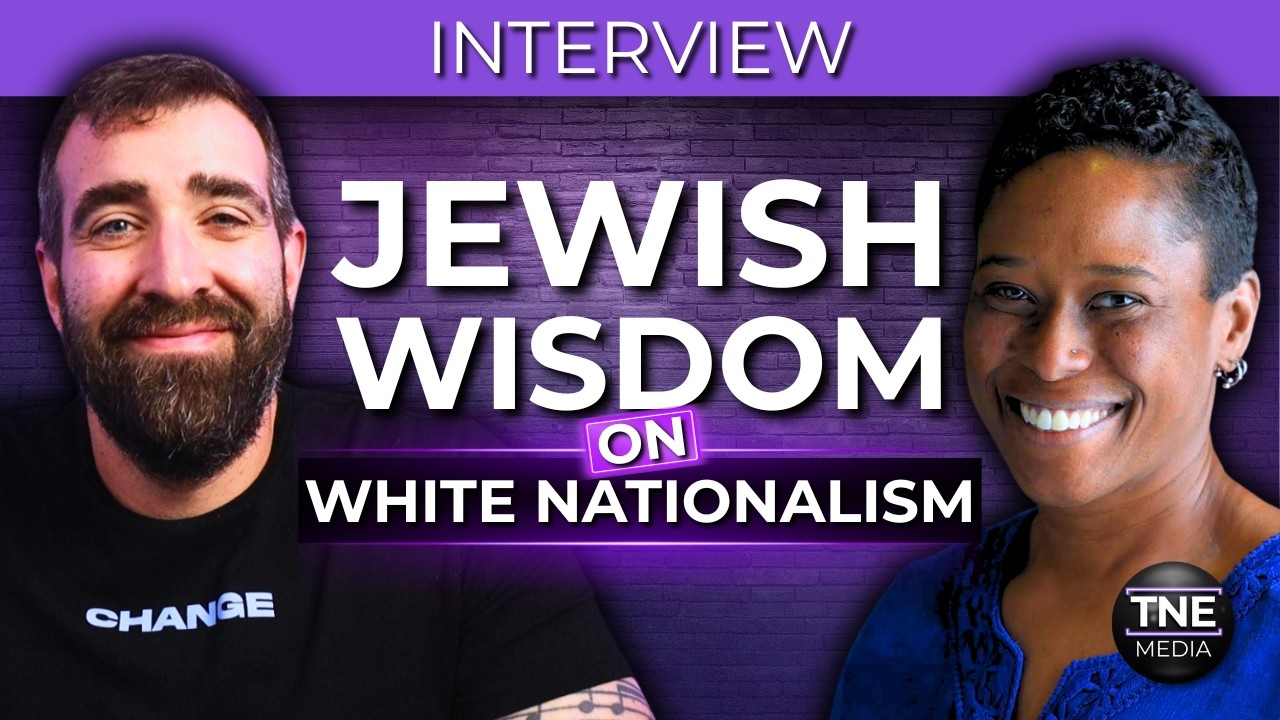
🔗 **Source:** [A Rabbi Speaks to Christians | Sandra Lawson | TNE Podcasts](https://www.youtube.com/watch?v=Me39qmhl2OY)
> [!note]+ Document Notes
> tags: #interfaith-dialogue #coalition-building #anti-semitism #judaism #christian-nationalism
> author: The New Evangelicals Podcast
> source: YouTube
> reference: https://www.youtube.com/watch?v=Me39qmhl2OY
> date created: 2025-01-27 10:30
>
> # 🏷️ Title: A Rabbi Speaks to Christians | Sandra Lawson | TNE Podcasts
>
<!-- deep-read:sections start -->
## 🧰 Action Inbox
- [H1] Read "Judaism for Dummies" to understand Judaism on its own terms — 15:23 #judaism
- [H2] Focus on single-issue coalition building rather than requiring full ideological alignment — 39:47 #coalition-building
- [H3] Practice living out values instead of trying to convince others through debate — 41:33 #interfaith-dialogue
## 🧭 Table of Contents
- [[#📝 Summary]]
- [[#📖 Main Content]]
- [[#🗒️ Notes]]
- [[#📚 References]]
- [[#🗣️ Paraphrase]]
- [[#📰 Newsletter]]
- [[#✅ Action Items]]
- [[#🧪 Hypotheses]]
- [[#📊 Methodology]]
- [[#❓ Questions]]
- [[#🔮 Future Research]]
- [[#💡 Implications]]
- [[#🧠 Learning Styles Assessment]]
- [[#📊 Accessibility Assessment]]
- [[#🌍 DEIB Assessment]]
- [[#✅ Logical Validity]]
- [[#🛡️ DARVO Analysis]]
- [[#🎯 Conclusion]]
### 🔗 References
- [Carolina Jews for Justice](https://carolinajewsforjustice.org)
- [Rabbi Sandra Lawson Website](https://rabbysandralawson.com)
## 📝 Summary
- Rabbi Sandra Lawson discusses Judaism as a people first, religion second, challenging Christian assumptions about Jewish identity and practice
- She emphasizes practical coalition building across ideological divides to combat white Christian nationalism and hate groups
- The conversation explores interfaith partnership strategies, focusing on single issues rather than requiring complete agreement
- Lawson traces the evolution of hate groups from underground to mainstream political power under Trump
- Key takeaway: Effective social change requires understanding others on their own terms and building coalitions around shared values on specific issues
## 📖 Main Content
Rabbi Sandra Lawson, Executive Director of Carolina Jews for Justice, provides essential education for Christians seeking to understand Judaism beyond evangelical assumptions. She explains that Judaism originated as a people (the mixed multitude leaving Egypt) who later received religious law, contrasting with Christianity's deity-centered definition of religion. This foundational difference allows for Jewish atheists and explains why conversion involves joining a people, not just adopting beliefs.
The conversation addresses the rise of white nationalism from underground survival mode to mainstream political power. Lawson notes these groups have always existed but gained unprecedented access to governmental influence, emboldening previously marginalized extremist rhetoric while exploiting economic anxieties through antisemitic scapegoating.
Coalition building emerges as the central strategy for combating hatred. Lawson advocates for single-issue partnerships, citing her work with Catholic priests on LGBTQ+ issues despite disagreeing on abortion. This pragmatic approach recognizes that perfect ideological alignment isn't necessary for effective advocacy.
## 🗒️ Notes
#### ⏱️ [00:00](https://youtu.be/Me39qmhl2OY?t=0) — [H1] Introduction and interfaith dialogue context
- Key idea: TNE explores interfaith partnerships for better paths forward
- Evidence: "We talk a lot about how do we build coalitions to work together to find the better path forward"
#### ⏱️ [02:45](https://youtu.be/Me39qmhl2OY?t=165) — [H2] Rabbi Lawson's background and current work
- Key idea: Lawson leads Carolina Jews for Justice with 1,600 statewide members
- Evidence: "It's a statewide organization that advocates for North Carolinians, but through a Jewish value lens"
#### ⏱️ [05:23](https://youtu.be/Me39qmhl2OY?t=323) — [H1] Five organizational priorities for justice work
- Key idea: Focus areas include voting, immigrant justice, LGBTQIA issues, electoral justice, and religious extremism
- Evidence: "We currently have like five priorities... voting issues, immigrant justice work... LGBTQIA issues, electoral justice, and religious extremism"
#### ⏱️ [08:12](https://youtu.be/Me39qmhl2OY?t=492) — [H1] Understanding Judaism on its own terms, not through Christian lens
- Key idea: Christians must approach Judaism independently from Christian theological assumptions
- Evidence: "If you want to understand Judaism, you have to understand it on its own terms and not through a Christian lens"
#### ⏱️ [12:45](https://youtu.be/Me39qmhl2OY?t=765) — [H1] Judaism for Dummies as essential resource
- Key idea: This book provides the best accessible explanation of Judaism for outsiders
- Evidence: "Judaism for Dummies. It is the best book that I have seen to explain Judaism on its own terms"
#### ⏱️ [15:23](https://youtu.be/Me39qmhl2OY?t=923) — [H1] Judaism as people first, religion second
- Key idea: Jewish identity stems from peoplehood established at Sinai, not religious practice
- Evidence: "We were people first, and then we became a religion. We don't fit neatly into the modern definition of religion because we're a people"
#### ⏱️ [18:34](https://youtu.be/Me39qmhl2OY?t=1114) — [H2] Two paths to Jewish identity: birth or conversion
- Key idea: Jewish identity has nothing to do with deity belief, only maternal lineage or conversion
- Evidence: "There are two ways to be Jewish. None of them have anything to do with a deity. You either have a parent... or you convert in"
#### ⏱️ [22:17](https://youtu.be/Me39qmhl2OY?t=1337) — [H2] Torah vs Talmud distinction
- Key idea: Torah is like a book, Talmud is like a library system of Jewish law and values
- Evidence: "Imagine a library... full of lots of books about how to live, how to eat... it's a whole library system on Jewish values, Jewish laws"
#### ⏱️ [25:48](https://youtu.be/Me39qmhl2OY?t=1548) — [H1] White supremacy groups moved from underground to government
- Key idea: Hate groups always existed but now hold political power rather than survival mode
- Evidence: "The biggest difference now is they are running our government... they are seated in a place of power"
#### ⏱️ [29:12](https://youtu.be/Me39qmhl2OY?t=1752) — [H2] Christian Zionism as inherently antisemitic
- Key idea: Supporting Israel for end-times theology ultimately seeks Jewish conversion or damnation
- Evidence: "Christian Zionism is a problem... the support of Israel is so Jesus can come back and Jews can die"
#### ⏱️ [33:25](https://youtu.be/Me39qmhl2OY?t=2005) — [H1] Coalition work requires Christian partnership in North Carolina
- Key idea: Jewish organizations cannot succeed without Christian partners in the South
- Evidence: "In order for us to do anything, we have to partner with Christians. So most of our partnerships are with Christian organizations"
#### ⏱️ [36:54](https://youtu.be/Me39qmhl2OY?t=2214) — [H2] Voting as essential but insufficient for change
- Key idea: Democratic participation is necessary foundation but requires grassroots engagement
- Evidence: "If people don't actually vote, we can't change anything. But if people actually voted, then we could actually change the system"
#### ⏱️ [39:47](https://youtu.be/Me39qmhl2OY?t=2387) — [H1] Coalition building doesn't require total agreement
- Key idea: Effective partnerships focus on single issues rather than ideological purity
- Evidence: "When it comes to coalition work, people think that we have to agree on everything, and we don't... if I can work with her and her people on one particular issue"
#### ⏱️ [41:33](https://youtu.be/Me39qmhl2OY?t=2493) — [H1] Live values rather than debate to create change
- Key idea: Personal example is more effective than argumentative persuasion
- Evidence: "The best thing that people can do is live out their values... you continue living out your values, and you continue having open, honest conversations"
#### ⏱️ [45:28](https://youtu.be/Me39qmhl2OY?t=2728) — [H2] Three passes needed for perspective change
- Key idea: People typically need multiple exposures to new ideas before changing views
- Evidence: "It often takes three passes for people to change their perspective on anything... the first time... you'd be like, 'Oh, that's ridiculous.' You hear it again... And the third time your view might be changed"
## 📚 References
- [Judaism for Dummies](https://www.wiley.com/en-us/Judaism+For+Dummies%2C+2nd+Edition-p-9781119643074)
- [Carolina Jews for Justice](https://carolinajewsforjustice.org/)
- [Reconstructing Judaism](https://www.reconstructingjudaism.org/)
- [Anti-Defamation League](https://www.adl.org/)
## 🗣️ Paraphrase
- Judaism originated as a people who left Egypt and received Torah at Sinai, only later being categorized as a religion by Christianity's influence
- Hate groups previously operated underground but now hold mainstream political power, using economic anxieties to promote antisemitic scapegoating
- Effective coalition building focuses on single shared issues rather than requiring complete ideological alignment across all topics
## 📰 Newsletter
**Learning from Rabbi Sandra Lawson: Coalition Building Across Faith Lines**
This week's interfaith dialogue offers crucial insights for Christian developers working in diverse communities. Rabbi Lawson's explanation of Judaism as "people first, religion second" challenges common assumptions and provides a framework for understanding identity beyond theological categories.
Her practical approach to coalition building—partnering on single issues without requiring total agreement—offers a model for technical collaborations across ideological divides. Whether advocating for inclusive technology or combating digital hate, these principles apply directly to our work.
Key resources: Check out "Judaism for Dummies" for foundational understanding, and consider how single-issue partnerships might address accessibility, security, or community challenges in your projects.
Resources: [Learn WordPress](https://learn.wordpress.org/), [Developer Docs](https://developer.wordpress.org/), [WP-CLI](https://wp-cli.org/)
## ✅ Action Items
#### Community
- Maintainers: Develop interfaith partnership templates for justice-oriented projects
- Contributors: Create educational resources explaining diverse religious perspectives on technology ethics
- Sponsors: Fund coalition-building initiatives that bridge ideological divides in tech
#### WordPress
- Accessibility: Implement WCAG reviews informed by diverse cultural perspectives on inclusive design
- Community: Support meetup organizers in creating interfaith dialogue sessions at WordCamps
- Documentation: Develop culturally sensitive language guidelines for technical writing
- Polyglots: Prioritize translation support for religious minority communities
#### OSPO
- Community Engagement: Establish interfaith advisory groups for ethical technology development
- Policy & Governance: Create inclusive contribution policies that respect diverse religious perspectives
- Developer Support: Provide cultural competency training for technical teams
#### DevRel
- Developer advocacy: Present talks on building inclusive communities across religious lines
- Education: Develop workshops on cultural sensitivity in technical communication
- Community management: Implement moderation practices that respect religious diversity
## 🧪 Hypotheses
- Single-issue coalition building produces more sustainable partnerships than ideological alignment requirements
- Personal relationship building changes perspectives more effectively than argumentative persuasion
- Understanding religious traditions on their own terms reduces interfaith conflict in collaborative environments
- Grassroots organizing combined with electoral participation creates more systemic change than either approach alone
### 📊 Methodology
- Survey coalition partners on partnership durability across different alliance models
- Interview participants in interfaith technical collaborations about relationship evolution
- Analyze effectiveness metrics from single-issue versus comprehensive partnership agreements
### ❓ Questions
- How can technical communities adapt single-issue coalition principles for open source collaboration?
- What role should religious literacy play in developer relations and community management?
- How might understanding Judaism's peoplehood concept inform approaches to other identity-based communities in tech?
### 🔮 Future Research
- Comparative analysis of coalition building strategies across different religious traditions
- Documentation of successful interfaith partnerships in technology advocacy
- Development of cultural competency frameworks for technical community leaders
### 💡 Implications
- Practice: Interfaith partnership models can improve cross-community collaboration in open source projects
- Policy: Religious literacy should inform community guidelines and moderation practices
- Education: Technical training should include cultural competency and religious diversity awareness
- Community: Understanding identity as multifaceted (people + practice) enhances inclusive community building
### 🧠 Learning Styles Assessment
Reading level estimate: 12th grade
#### 👀 Visual learners
- Present: Podcast format limits visual engagement
- Improve: Create infographics explaining Judaism basics, coalition building flowcharts, interfaith partnership diagrams
#### 🔊 Aural learners
- Present: Full audio conversation with personal anecdotes and examples
- Improve: Add chapter markers, key quote highlights for easier navigation
#### 🗣️ Verbal learners
- Present: Rich definitions, analogies (library vs book for Talmud vs Torah), personal stories
- Improve: Glossary of terms, cultural comparison charts
#### 🧩 Kinesthetic learners
- Present: Minimal hands-on elements in podcast format
- Improve: Action checklists for coalition building, step-by-step interfaith partnership guides
#### 🧠 Logical learners
- Present: Clear historical progression, cause-and-effect relationships in social change
- Improve: Decision trees for coalition building, data on partnership effectiveness
#### 🧑🤝🧑 Social learners
- Present: Dialogue format models respectful cross-cultural conversation
- Improve: Discussion guides for interfaith groups, community conversation starters
#### 🧘♀️ Solitary learners
- Present: Reflection-worthy content on personal assumptions and growth
- Improve: Self-assessment questions on cultural biases, journaling prompts
#### 🌿 Naturalistic learners
- Present: Limited environmental connections
- Improve: Explore ecological stewardship as interfaith common ground
### 📊 Accessibility Assessment
#### Screen reader semantics
- Present: Audio format naturally accessible to screen readers via transcript
- Improve: Structured transcript with clear speaker labels, timestamp navigation
#### Keyboard navigation
- Present: Standard video player controls accessible via keyboard
- Improve: Custom transcript interface with keyboard shortcuts for navigation
#### Contrast and readability
- Present: Video player meets basic contrast requirements
- Improve: High contrast transcript option, customizable text size
#### Text resizing and reflow
- Present: Responsive video player interface
- Improve: Transcript text responsive to 200% zoom without horizontal scrolling
#### Media and captions
- Present: Full transcript provided
- Improve: Synchronized captions with speaker identification, downloadable transcript
#### Forms and interactions
- Present: Basic video controls with clear labels
- Improve: Interactive transcript with search functionality
### 🌍 DEIB Assessment
#### Cultural breadth
- Present: Jewish and Christian perspectives, Southern US context
- Improve: Include additional religious traditions, international coalition examples
#### Inclusive language
- Present: Respectful interfaith terminology, defined religious concepts
- Improve: Expand glossary, avoid Christian-defaulting language
#### Neurodiversity support
- Present: Clear conversational structure, defined concepts
- Improve: Visual conversation outline, key concept summaries
#### Representation
- Present: LGBTQ+ Jewish perspective, diverse religious and political backgrounds
- Improve: Include additional marginalized community voices in coalition examples
#### Psychological safety
- Present: Respectful disagreement modeling, acknowledgment of past harm
- Improve: Content warnings for discussion of antisemitism, hate groups
### ✅ Logical Validity
#### Strong reasoning
- Deductive strength: Clear progression from premises about Jewish peoplehood to conclusions about identity [15:23]
- Inductive strength: Coalition examples supporting generalization about partnership effectiveness [39:47]
- Causal reasoning: Connection between hate group political access and increased antisemitism [25:48]
- Analogical strength: Library vs book comparison effectively illustrates Talmud vs Torah distinction [22:17]
####
---
## Full Transcript
[00:00] Hey, what's up, friends? Welcome back to<br>[00:02] another episode of The New Evangelicals<br>[00:04] Podcast. We are still in the middle of<br>[00:06] interfaith dialogue this month, and this<br>[00:08] is a great conversation. I brought on<br>[00:09] [music] Rabbi Sandra Lawson. She is<br>[00:12] fantastic. She works and is the ED,<br>[00:15] executive director, of Jews for Justice<br>[00:17] in North Carolina. We talk about a lot<br>[00:19] of stuff in this one. We talk a little<br>[00:21] bit about Judaism. She actually gave me<br>[00:23] the easiest way to understand like<br>[00:25] Judaism in a nutshell<br>[00:28] in the best way I've ever heard. So,<br>[00:29] stay tuned for that. We and we talk a<br>[00:31] lot about how do we build coalitions<br>[00:34] >> [music]<br>[00:34] >> to work together to find the better path<br>[00:36] forward. So, I think you're really going<br>[00:37] to enjoy this conversation. It's a<br>[00:38] really solid one. As always, friends,<br>[00:40] thank you so much for being here. Thank<br>[00:41] you for listening to the podcast. Don't<br>[00:42] forget, we have TNE Connect. If you want<br>[00:44] to go deeper on these conversations, if<br>[00:46] you want to get involved with like live<br>[00:49] um webinars and sessions that we do with<br>[00:50] actual scholars like um um Rabbi<br>[00:54] Sandra, please make sure to sign up for<br>[00:56] TNE Connect. It's totally free. We have<br>[00:57] tons of free resources there. Go to<br>[00:59] [music] the the new<br>[01:00] evangelicals.com/connect,<br>[01:02] or at The New Evangelicals, or you can<br>[01:04] download TNE Connect on your iOS or<br>[01:06] Android device. All right, enjoy the<br>[01:08] conversation. See you.<br>[01:15] >> [music]<br>[01:21] [music]<br>[01:29] [music]<br>[01:37] >> Well, Rabbi Sandra Lawson, it is a treat<br>[01:40] to have you on the show. Thank you for<br>[01:41] making time. I really appreciate it.<br>[01:43] >> [music]<br>[01:43] >> Thanks, Tim. It's good to be here. Give<br>[01:45] me a little bit about your backstory. I<br>[01:46] I, you know, this is my first time<br>[01:48] talking to you. I don't know much about<br>[01:49] you, which I do on purpose. I like<br>[01:51] unpacking my guests kind of in the<br>[01:52] moment. Give me your background and your<br>[01:54] story. I'm just so curious.<br>[01:56] Yeah, I'm not sure where to start. Uh my<br>[01:58] name is Sandra. I am a rabbi. I'm<br>[02:00] currently serving as the executive<br>[02:02] director for Carolina Jews for Justice<br>[02:04] in North Carolina. It's a statewide<br>[02:05] organization that advocates for North<br>[02:07] Carolinians, but through a Jewish value<br>[02:10] lens. And we, last count, I don't know,<br>[02:13] have about 1,600 members across the<br>[02:14] state. Wow. Before that, I worked for uh<br>[02:18] national Jewish organization called<br>[02:19] Reconstructing Judaism as as shorthand<br>[02:22] as their as their DEI director,<br>[02:23] diversity rec<br>[02:25] Excuse me. Uh director of racial<br>[02:28] diversity, equity, and inclusion. Um and<br>[02:32] uh before that, I was in rabbinical<br>[02:34] school. And before that, I uh worked for<br>[02:37] the Anti-Defamation League as uh a<br>[02:40] researcher, their investigative<br>[02:41] researcher, on extremist groups in the<br>[02:43] Southeast region. So, I covered like a<br>[02:46] like from DC all the way to Texas. Like<br>[02:49] Wow. That's a that's a big spot.<br>[02:52] Oh my goodness.<br>[02:53] >> I did a bunch of other things and before<br>[02:55] that and then I was in the military. So,<br>[02:56] that's my<br>[02:57] life.<br>[02:58] >> Wow. Okay, that's a that's a lot of<br>[03:00] things. That's amazing. So, talk to me<br>[03:02] more about about the work you do now.<br>[03:03] You said, what was the name of the<br>[03:04] organization again in South in North<br>[03:06] Carolina?<br>[03:07] Carolina Jews for Justice. Yeah. What<br>[03:09] what is that and what are what what is<br>[03:11] the organization focused on?<br>[03:13] So, we're a justice organization, but<br>[03:14] we're a 501c3. So, we don't do like<br>[03:17] whatever 501c4s do, which is, you know,<br>[03:20] more political stuff. I mean, we're<br>[03:22] we're advocates. We we can advocate on<br>[03:24] issues.<br>[03:25] We advocate on stuff that affects North<br>[03:28] North Carolinians. We currently have<br>[03:29] like five priorities. I'm not I don't<br>[03:31] have it in front of me, so I might have<br>[03:32] it messed up for my own organization,<br>[03:34] but we focus on voting issues, immigrant<br>[03:37] justice work because of the climate that<br>[03:39] we're in,<br>[03:40] LGBTQIA issues,<br>[03:43] electoral justice,<br>[03:47] and religious extremism. And and and<br>[03:49] they're they're broader terms that we're<br>[03:51] >> [clears throat]<br>[03:51] >> basically the things that uh there's so<br>[03:54] many things that can fall into those<br>[03:56] categories. But it like particularly on<br>[03:58] immigrant justice work, it allowed us to<br>[04:00] pivot when ICE came to North Carolina<br>[04:04] with Charlotte's Web and came to<br>[04:06] Charlotte<br>[04:07] and Asheville and uh the Triangle region<br>[04:10] where I live. And our staff, um along<br>[04:13] with we we partnered with other<br>[04:15] organizations to figure out how we could<br>[04:16] support our vulnerable our vulnerable<br>[04:18] neighbors.<br>[04:19] Wow. I mean, that's that's powerful.<br>[04:21] I'll be I'll be completely frank with<br>[04:23] you. I grew up evangelical and<br>[04:24] conservative. So, my understanding of<br>[04:26] Judaism was very limited, as you can<br>[04:28] understand, cuz that world, you know, is<br>[04:30] is very much a narrow focus. I'm kind of<br>[04:33] curious like how you<br>[04:34] >> I want to I want I want to say what I<br>[04:36] want to say. I I have learned over the<br>[04:37] years, especially my my online<br>[04:40] conversations, that that many many<br>[04:42] Christians, and and I don't know where<br>[04:44] the line is, but many Christians<br>[04:46] um have a their understanding of Judaism<br>[04:48] is is very limited. It's limited to<br>[04:50] their understanding their particular<br>[04:51] understanding of the Bible. Yes.<br>[04:53] >> Um and that is often not a reflection of<br>[04:56] the reality of Jews. It's not a<br>[04:57] reflection of Judaism itself. But I<br>[05:00] often tell people, if you want to<br>[05:01] understand Judaism, you have to<br>[05:02] understand it on its own terms and not<br>[05:04] through a Christian lens.<br>[05:06] Yeah, which I think is incredibly<br>[05:08] accurate and wise. And I'm kind of<br>[05:10] curious, you know, how you would like<br>[05:12] how would you approach like almost like<br>[05:15] a a brief like introduction into Judaism<br>[05:17] from a non-Western Christianized lens?<br>[05:20] Because, I frankly, right? I mean, I'm<br>[05:21] in the waters I grew up in. I I don't<br>[05:23] want to read the Hebrew Bible through my<br>[05:25] Christian, especially my evangelical,<br>[05:27] lens, right? And so, like, you know, for<br>[05:29] for some Christians like me, it could be<br>[05:31] tough because we want to be, you know,<br>[05:33] genuine and and take the the the text on<br>[05:36] its own terms. But we've also frankly<br>[05:38] been kind of indoctrinated to see things<br>[05:40] a certain way. So, so what would like<br>[05:42] maybe like your like 101 like, "Hey,<br>[05:44] think about it like this." What would<br>[05:45] that explanatory kind of be?<br>[05:47] >> [snorts]<br>[05:47] >> Yeah, so I don't know if you talked to a<br>[05:48] lot of rabbis, but nothing is ever<br>[05:49] explained short in that short<br>[05:51] like I talked to a few. I've learned.<br>[05:54] >> [laughter]<br>[05:55] >> But I can't This is what I'll say, and<br>[05:57] there's there's so many ways to go this,<br>[05:59] and this is the way I'm going to go for<br>[06:00] this conversation right now. The first<br>[06:02] thing I would strongly suggest is a very<br>[06:04] simple book to read. It's one of the<br>[06:05] best books that I've read for people who<br>[06:08] have no understanding at all or very<br>[06:10] limited understanding or have a<br>[06:11] different understanding. And so, it's<br>[06:13] Judaism for Dummies. It is the best book<br>[06:15] that I have seen um to to explain<br>[06:19] Judaism on its own terms. Uh<br>[06:21] and there are other books out there that<br>[06:23] aren't as great or they assume a level<br>[06:25] of knowledge, and it makes it harder for<br>[06:27] people to understand.<br>[06:29] The next thing I would say<br>[06:31] is that Christianity has an origin<br>[06:33] story.<br>[06:35] Judaism has an origin story.<br>[06:37] Um and they're<br>[06:39] for the most part different. They're<br>[06:40] different origin stories. And so, one of<br>[06:42] the biggest differences is, from my<br>[06:45] perspective as a Jew and as a rabbi, is<br>[06:47] that Christian Christianity uses the<br>[06:50] Hebrew Bible shorthandly, you would say<br>[06:53] the Old Testament, although the Old<br>[06:54] Testament has additional books that the<br>[06:55] Hebrew Bible doesn't,<br>[06:57] but the translating the Hebrew Bible or<br>[07:00] the Old Testament to get to a<br>[07:02] come-to-Jesus moment. Yes, that's right.<br>[07:05] >> a come-to-Jesus moment. So,<br>[07:08] um it is So, that is So, everything gets<br>[07:11] filtered through that. Um that's the So,<br>[07:14] there's two ways That's the second way.<br>[07:15] The third way is that we are a people,<br>[07:19] if you read the if you read the Torah,<br>[07:20] we are people who left Mitzrayim, we<br>[07:22] left Egypt. Um that whole Pharaoh story,<br>[07:25] you say trauma has whatever. And we left<br>[07:27] as a mixed multitude of people. That's<br>[07:29] in Exodus.<br>[07:30] Yeah, I book of Exodus. I was trying to<br>[07:31] remember the chapter. Um and we uh<br>[07:34] wandered in the desert. We get to Mount<br>[07:36] Sinai.<br>[07:38] Um and we become a people after<br>[07:39] receiving the Torah, 10 Commandments,<br>[07:41] Revelation. We become a people.<br>[07:44] Um and several centuries later,<br>[07:47] Christianity came came along and defined<br>[07:50] us as a religion. So, we were people<br>[07:52] first, and then we became a religion<br>[07:54] religion. We don't fit neatly into the<br>[07:56] modern definition of religion because<br>[07:58] we're a people. One way I have to<br>[08:00] explain that is that you can be part of<br>[08:02] the people and not practice what people<br>[08:05] consider the religion.<br>[08:07] But you can't be part you can't practice<br>[08:10] the religion without being part of the<br>[08:12] people, which is one of the reasons why<br>[08:14] you can be an atheist. That's again,<br>[08:16] those are Christian terms for the most<br>[08:17] part. You can be an atheist and still be<br>[08:19] Jewish. You cannot practice Judaism and<br>[08:22] still and you cannot you cannot You<br>[08:25] don't have to practice Judaism, whatever<br>[08:27] that means,<br>[08:28] and still be a Jew. And this is the last<br>[08:30] thing I'll say on that<br>[08:33] is that there are two ways to be Jewish.<br>[08:36] None of them have anything to do with a<br>[08:37] deity. You either have a<br>[08:42] uh you you have a parent, and for<br>[08:45] Orthodox Jews and Conservative Jews,<br>[08:47] which is not political, it's just a<br>[08:49] denomination, for Orthodox and<br>[08:51] Conservative Jews, that means you have<br>[08:53] to have a Jewish mother. For everybody<br>[08:55] else, which is the majority of Jews, you<br>[08:57] have to have a Jewish parent.<br>[08:59] Um or you convert in.<br>[09:02] Those are the ways that you become<br>[09:03] Jewish. There's no that doesn't have<br>[09:04] anything to do with a deity. Um<br>[09:08] And if<br>[09:10] um<br>[09:12] if, you know, like let's say a Jewish<br>[09:14] person decides to convert to<br>[09:16] Christianity,<br>[09:18] um by Jewish law, they're still<br>[09:19] technically Jewish, but they become in a<br>[09:21] particular state called an apostate. But<br>[09:24] apostate.<br>[09:27] Um but anyway, apostate. Um<br>[09:31] But if they have a child after that<br>[09:33] conversion, there's a chain that's been<br>[09:36] broken, and so that chain that child is<br>[09:40] no longer Jewish. Now, this is<br>[09:43] There's there These are your gray areas,<br>[09:45] and the people have different things.<br>[09:46] This There's always a path back in for<br>[09:48] the apostate, but for most part, that<br>[09:49] child of somebody who converted after<br>[09:52] that child who converted before the<br>[09:53] child was born, they for the most part<br>[09:56] have to convert in. These are all<br>[09:58] short-handed things to very complex um<br>[10:01] decisions that are made between that<br>[10:03] person and that rabbi. Uh so, yeah, so<br>[10:06] that's it.<br>[10:08] You know, [laughter] I I got to be<br>[10:09] honest with you. I've you really helped<br>[10:11] me understand something that I I've<br>[10:13] interviewed many people in Judaism, but<br>[10:15] I've never gotten a clear answer about<br>[10:16] the people religious thing. And the way<br>[10:18] you explained it that, you know, it's a<br>[10:20] we're a people first and religion was<br>[10:22] kind of added on based on that term<br>[10:24] being very Christianized is a very<br>[10:26] helpful frames. I've often thought I'm<br>[10:27] like, how can someone be Jewish and be<br>[10:30] an atheist? Cuz my only framework, of<br>[10:31] course, is Christian, right? As a<br>[10:32] Christian, there's a deity involved,<br>[10:34] right? Yeah.<br>[10:35] Yeah. That is really helpful. Yeah.<br>[10:38] Yeah, good. I'm glad. I'm glad. No, that<br>[10:40] that's really helpful. It It makes a lot<br>[10:42] of sense for sure. So, so then I I<br>[10:45] understanding that that this can be<br>[10:47] answered in a multitude of different<br>[10:48] ways, I'll ask for you personally and<br>[10:50] maybe<br>[10:52] the tradition of Judaism that you're a<br>[10:53] part of, how do you view the Torah, like<br>[10:55] like religious texts? Like are are they,<br>[10:57] you know, again, as a Christian, right?<br>[10:59] I think about the New Testament, Jesus,<br>[11:00] the words of God, you know, Trinity,<br>[11:02] etc. I'm imagining in Judaism it's quite<br>[11:04] different. So, like how do you view, you<br>[11:06] know, sacred texts?<br>[11:08] I'm not sure how to answer that, but I<br>[11:10] will say we we love our texts.<br>[11:12] Everything is filtered through the<br>[11:13] Torah.<br>[11:14] One thing that the way that that<br>[11:17] that might be able to answer some of<br>[11:20] that, again, complex issues, shorthand.<br>[11:24] Um So, after the second temple was<br>[11:27] destroyed, um we ceased being a<br>[11:30] sacrificial<br>[11:31] religion.<br>[11:33] During that time period, I imagine there<br>[11:35] a bunch of that's how religion would was<br>[11:37] practiced or that's how people practiced<br>[11:39] whatever their traditions<br>[11:40] through sacrifices. And after the second<br>[11:42] temple was destroyed, we had no way of<br>[11:44] doing that. And um<br>[11:48] you know, I'm sure many battles,<br>[11:50] conversations that ensued after that. Um<br>[11:54] Uh Judaism reinvented itself to survive.<br>[11:57] And we became a rabbinic tradition. So,<br>[11:59] we no longer had priests and we no<br>[12:01] longer sacrifice stuff. And so, um today<br>[12:06] we we our laws come from the Talmud. Um<br>[12:11] but our laws are based on the Torah.<br>[12:14] And<br>[12:16] one way I would explain this is if<br>[12:18] anybody who lived in the temple time<br>[12:20] period, including Jesus,<br>[12:22] if they landed on Earth today, many of<br>[12:25] what we practice would be completely<br>[12:27] unrecognizable to them. So, we just had<br>[12:30] Passover, for example. Many I've heard<br>[12:32] many Christians say that they believe<br>[12:34] that the<br>[12:36] uh<br>[12:37] pass the the last supper was a Passover<br>[12:40] seder. Historically, that's inaccurate.<br>[12:42] It's just it can't because the seder was<br>[12:46] a relatively modern invention during the<br>[12:48] Roman era<br>[12:50] um as a way to Now, Jesus did practice<br>[12:54] I did do what the Bible says about the<br>[12:58] about Passover, but Jesus did not have a<br>[12:59] Passover seder because it didn't exist<br>[13:01] during that time period.<br>[13:03] Hm.<br>[13:04] Okay, one more simple question.<br>[13:06] >> meal, but not a seder. I'm sorry if this<br>[13:09] sounds ignorant. What's the difference<br>[13:10] between the Torah and the and and and<br>[13:12] the Talmud?<br>[13:13] Oh, yes. [laughter]<br>[13:15] So, imagine So, you've seen<br>[13:17] Right. So, you've seen a Bible. I don't<br>[13:19] care what Bible it is. It looks like a<br>[13:20] book. Well, imagine a library. Okay.<br>[13:24] >> full of lots of books about um how to<br>[13:27] live, how to eat, what to do when you're<br>[13:30] married,<br>[13:31] um what how to be a good person. Um it's<br>[13:34] a whole library system on Jewish values,<br>[13:38] Jewish laws. So, it's multiple multiple<br>[13:40] books. And if you were to study the<br>[13:42] Talmud the way it should be studied,<br>[13:45] people say it takes them 7 years.<br>[13:48] Wow.<br>[13:49] Mhm. Okay. Okay, that's that's helpful.<br>[13:51] Okay, that's good to know. So,<br>[13:53] [laughter] let's talk about, I guess,<br>[13:54] modern, you know, the modern situation<br>[13:56] that we find ourselves in. And<br>[13:57] obviously, I grew up in the world that<br>[14:00] has given birth to white Christian<br>[14:01] nationalism and Trump and all that<br>[14:03] stuff. And I you know, you you obviously<br>[14:04] have been tracking all kinds of things<br>[14:06] for a long time. You're with the ADL and<br>[14:08] stuff. Have you seen a I mean, you know,<br>[14:11] I'm I'm sure the answer is yes, but I'm<br>[14:12] kind of curious how you've seen a rise<br>[14:15] in in hate groups from Trump kind of on.<br>[14:18] Did you see a huge spike in your work or<br>[14:20] was it kind of always there but under<br>[14:22] the surface? And Trump kind of like<br>[14:24] unleash it? How have you seen white<br>[14:27] nationalist groups either rising or<br>[14:29] falling under the maybe over over the<br>[14:31] past like 10 years, give or take?<br>[14:33] Yeah, so these groups have, as you<br>[14:36] probably know, have always existed. They<br>[14:37] were just sort of underbelly. They they<br>[14:39] had no power. Um I mean, one way to look<br>[14:42] at this is<br>[14:44] um<br>[14:47] white supremacy, white nationalism,<br>[14:50] whatever you want to call it, uh had a<br>[14:52] lot of power back in the day, you know?<br>[14:55] Um and then their their ideology became<br>[14:59] less popular, so they uh became<br>[15:03] moved into survival mode. Let's put it<br>[15:06] that way. So, they no longer had power<br>[15:08] language. They used language about<br>[15:09] survival. So, if you've heard like the<br>[15:11] first 14 words, for example, uh by<br>[15:14] created by David Lane. I I don't even<br>[15:16] know the quote anymore. Uh but<br>[15:18] basically, you know, the exist worried<br>[15:20] about the existence and survival of<br>[15:21] white children or something like that.<br>[15:23] Look, I I know I'm screwing it up, so<br>[15:25] don't come after me.<br>[15:27] >> [laughter]<br>[15:28] >> Cuz I just I but but uh and white and<br>[15:30] David Lane was a man who white<br>[15:33] nationalist idolized, but he was uh he<br>[15:36] died in Pretty sure he he died in prison<br>[15:38] because he was part of<br>[15:41] murdering somebody. Basically, uh I'm<br>[15:43] sorry, like a<br>[15:45] Jewish<br>[15:46] radio host. I don't I don't know all the<br>[15:48] details, but he he him and his friend<br>[15:50] >> Oh, yes. Yes. Yes, there's there's a<br>[15:53] movie there's a movie based on this<br>[15:54] story, actually.<br>[15:55] Yeah, yeah.<br>[15:56] But it wouldn't surprise me. It was<br>[15:58] well known.<br>[16:00] Um<br>[16:01] And so, these So, these folks have<br>[16:03] always existed. The difference now is<br>[16:06] that they have been emboldened. Well,<br>[16:09] the uh biggest difference now is they<br>[16:11] are running our government. Let me put<br>[16:13] it that way.<br>[16:14] They are They are at sitting at the<br>[16:15] seats the seat of power.<br>[16:17] Um and<br>[16:19] uh they seem to be highly influenced.<br>[16:21] But the country I the country which, you<br>[16:23] know, I I think the country is in a very<br>[16:25] different place than it was in the '60s<br>[16:27] when many of these folks had ideology or<br>[16:30] before the '60s where many of these<br>[16:31] folks<br>[16:32] where many of white Americans had<br>[16:34] similar ideology. And the country has<br>[16:36] moved on. And so, many people don't like<br>[16:38] the rhetoric that's coming from this.<br>[16:41] But it also feeds into biases that<br>[16:45] people already have about black people,<br>[16:48] brown people, and other marginalized<br>[16:49] groups.<br>[16:50] Um<br>[16:52] So, yes, this group of these people um<br>[16:55] are, you know, seated in a place of<br>[16:58] power<br>[16:59] um and they are no longer the underbelly<br>[17:03] uh right-wing ideology. They are front<br>[17:05] and center.<br>[17:07] You know, it's so interesting. And<br>[17:08] you're you're probably going to laugh at<br>[17:09] this when I tell you, but I and this is<br>[17:11] a true story. Um growing up, I was<br>[17:13] homeschooled. I grew up very much in<br>[17:15] that conservative Christian world. And I<br>[17:17] I don't recall anything being as overt<br>[17:20] as it is now. However, I was taught<br>[17:23] things that would set the stage for it.<br>[17:24] For example, I was taught that MLK fixed<br>[17:26] racism in the '60s. Like literally, I<br>[17:28] was taught that. I was taught he came<br>[17:29] along, said his speech, we're all good,<br>[17:32] no problem. I I grew up on I grew up on<br>[17:34] on listening to Rush Limbaugh and Sean<br>[17:35] Hannity, right? And they were I would<br>[17:37] say much more coded, but the<br>[17:38] implications were all there. And then I<br>[17:40] think like Trump kind of ripped that<br>[17:42] band-aid off. And a lot of us were like,<br>[17:43] "Whoa, I didn't know that this was<br>[17:45] happening. I have to I have to do a<br>[17:47] deeper dive on what's going on." And<br>[17:49] that's what led me to kind of, you know,<br>[17:50] read actual American history and<br>[17:51] realize, "Oh my god, like my faith<br>[17:53] tradition's been on the wrong side of<br>[17:54] this issue for a very long time and kind<br>[17:57] of responsible for it. Like what do I do<br>[17:59] with that, you know?"<br>[18:01] No, he, you know, used that. I mean, I<br>[18:03] don't you know, I I can't get in Trump's<br>[18:05] head, but he's using all of this. And I<br>[18:08] do think he's using these people, but um<br>[18:12] to his advantage, really. He's He's<br>[18:14] tapped into biases that people already<br>[18:16] have. Uh their frustration on the<br>[18:18] economy, which is why anti-Semitism is<br>[18:20] rising.<br>[18:21] Anti-Semitism one of the roles of<br>[18:23] anti-Semitism in our society is that<br>[18:25] Jews get blamed or Jews get put in the<br>[18:27] middle when there's something wrong.<br>[18:28] They get scapegoated. That's what Hitler<br>[18:30] did. He scape scape blaming Jews<br>[18:33] for the economy after World War I<br>[18:36] instead of blaming themselves for it.<br>[18:38] Right. Um and so, um Jews are, you know,<br>[18:41] there's lots of coded stuff. But right<br>[18:43] now, we're seeing a rise in<br>[18:45] anti-Semitism.<br>[18:47] Um<br>[18:48] you know, and<br>[18:49] blaming blaming Jews for all the<br>[18:53] everything. Like really, like And so,<br>[18:56] the amount of stuff that the Jews are<br>[18:57] getting blamed for right now is just it<br>[18:59] is just it's funny to me. But Well, it's<br>[19:02] it's you know it's fascinating. I grew<br>[19:04] up in a very dispensationalist<br>[19:05] worldview. So, the idea of like the end<br>[19:07] times and the rapture and, you know, we<br>[19:09] need the nation-state of Israel so God<br>[19:10] will come back. But I think like the<br>[19:12] quiet part out loud is that that view's<br>[19:13] inherently anti-Semitic because at the<br>[19:15] end of time, these people believe that<br>[19:17] God will either convert the Jews to<br>[19:19] Christianity<br>[19:20] >> Oh, yeah. or they're going to burn in<br>[19:21] hell forever. Like [laughter] my God,<br>[19:23] this this is not respecting Judaism at<br>[19:25] all, you know?<br>[19:27] Which is one of the reasons why uh<br>[19:29] Christian Zionism Christian Zionism is a<br>[19:31] problem. Like, you know, that My<br>[19:33] understanding of the theo- the theology,<br>[19:35] whatever you want to call it, is the<br>[19:37] support of Israel is so Jesus can come<br>[19:38] back and Jews can die. Um<br>[19:41] Fact-check true. I mean, that that is<br>[19:43] that's a that's an accurate<br>[19:44] summarization of of what they believe<br>[19:46] ultimately. Yeah. Yeah.<br>[19:48] And I think that what I've noticed and I<br>[19:50] again, I'd love your thoughts and just<br>[19:52] kind of what you're seeing. So I want to<br>[19:53] move eventually into kind of interfaith<br>[19:55] work. How do Christians and Jewish folks<br>[19:56] work together to combat this, right?<br>[19:58] Because I think a lot of us are seeing<br>[20:00] what's happening. But I have noticed<br>[20:02] that<br>[20:03] and maybe tell me what you think about<br>[20:04] this, but I've noticed there's been like<br>[20:06] a really a really effective slide of<br>[20:08] hand by some of these like far right<br>[20:10] folks. Like like Tucker Carlson's a good<br>[20:12] example of this. Tucker Carlson has<br>[20:14] rightly called out what's happening in<br>[20:15] Gaza, right? And people go, "Oh, wow,<br>[20:18] Tucker, he's changing his mind." But<br>[20:20] also Tucker platforms people who say<br>[20:22] that maybe it wasn't that bad during<br>[20:24] World War II. You know, maybe the Jews<br>[20:26] are controlling things. Like like he he<br>[20:27] introduces a deeper funnel that I think<br>[20:30] leads down the rabbit hole of true<br>[20:32] anti-Semitism, but he uses Gaza as a<br>[20:34] funnel to get people into that world. I<br>[20:37] think that's just incredibly dangerous<br>[20:38] in my opinion. Mhm.<br>[20:40] Yeah, I don't I'm not I don't listen to<br>[20:42] him that often. If you know, if there's<br>[20:44] an if there's an interviewer that I<br>[20:45] like, I listen to it. Like he was on a<br>[20:47] show once and I was like, "Oh, Tucker<br>[20:48] Carlson." I've never actually paid<br>[20:50] attention to him. You know, but I think<br>[20:51] it is when when you And also this is I<br>[20:54] don't know I don't I don't know much<br>[20:55] about the man.<br>[20:57] And this may not be fair.<br>[21:00] But<br>[21:02] in my opinion, like Tucker Carlson<br>[21:04] didn't actually finish college. Not that<br>[21:06] you have to finish college to be an<br>[21:07] intellectual. I'm not saying that. But<br>[21:09] it's very easy when you have not been<br>[21:12] exposed and and maybe and he has because<br>[21:14] he's been on larger platforms, but<br>[21:18] when we are in our own heads, often it's<br>[21:20] very easy for things to make sense. When<br>[21:21] we don't actually bounce ideas off of<br>[21:23] other people and actually talk to<br>[21:24] affected people. So So basically there's<br>[21:26] a lot of white people out here talking<br>[21:28] about black people, but don't actually<br>[21:30] have any relationships with black<br>[21:31] people, don't know anything about black<br>[21:33] people, and they have added up a bunch<br>[21:36] of numbers and come to instead of one<br>[21:38] and one instead of it being two and one<br>[21:40] it's being 10 because they're they're<br>[21:41] not playing with the same set of facts.<br>[21:43] And<br>[21:45] these are complex issues. And so I'm not<br>[21:47] surprised when someone can find<br>[21:51] a human can find humanity or decency or<br>[21:54] compassion for one issue and it still at<br>[21:56] the same time hold a lot of biases on<br>[21:57] another issue. Yeah, that makes a lot of<br>[22:00] sense. I I a lot of sense. I've noticed<br>[22:02] cuz part of my job is tracking that<br>[22:04] world because you know, it's kind of<br>[22:06] where I come from. So I want to keep it<br>[22:07] up to speed. And over the past I would<br>[22:10] say<br>[22:11] maybe like seven to eight five or six<br>[22:13] years. I've noticed that the the side<br>[22:17] who routinely tries to paint whatever<br>[22:19] they call the left is as inherently<br>[22:20] anti-Semitic is actually the one pushing<br>[22:22] so many of the tropes that we look back<br>[22:24] in history and go, "Guys, we've heard<br>[22:26] this stuff before." And again, for<br>[22:28] someone who's new to this, right? In the<br>[22:29] beginning it was like, "Whoa, I grew up<br>[22:31] in this world. I didn't even notice it."<br>[22:33] But then you discover that Martin Luther<br>[22:34] was anti You know, you just discover<br>[22:35] that your own tradition was kind of rife<br>[22:37] with this stuff, right? And so I think<br>[22:39] that that's kind of like the question is<br>[22:40] like how can you know, you're doing<br>[22:43] amazing work with your organization in<br>[22:45] in in in in the Carolinas. And And so<br>[22:47] the the new evangelicals is committed to<br>[22:49] a better path forward in faith. That's<br>[22:50] kind of like what what we always say.<br>[22:51] How do you see a healthy partnership<br>[22:54] between Jews and Christians to work<br>[22:56] together to combat the national the<br>[22:59] Christian nationalism and other forms of<br>[23:01] hatred that we're seeing now, right?<br>[23:02] Because it is complicated. You're right.<br>[23:04] It It can't be condensed in 160 second<br>[23:06] reel and oh, I have the answer. It's a<br>[23:08] nuance. It takes time. It takes work.<br>[23:10] How I mean, I'm sure I'm sure your<br>[23:12] organization has partnered interfaith<br>[23:13] before. Give me some of those examples<br>[23:15] and kind of how you see it<br>[23:16] working together moving forward.<br>[23:19] Yeah, so I live in North Carolina.<br>[23:21] >> [laughter]<br>[23:22] >> So in order to for us to do anything, we<br>[23:24] have to partner with Christians. So most<br>[23:25] of our partnerships are with Christian<br>[23:27] organizations.<br>[23:28] Um we just provide a Jewish a Jewish<br>[23:31] lens. We do the same work. Most of our<br>[23:33] members are Jewish. We just, you know,<br>[23:35] but we don't you don't have to be Jewish<br>[23:36] to be a part of our organization. But<br>[23:38] we're using instead of a Christian lens,<br>[23:40] we're using a Jewish lens. And um we<br>[23:42] have wonderful faith part We have we<br>[23:44] have um wonderful interfaith partners.<br>[23:46] And in fact, I talked to one of a good<br>[23:48] friend of we're becoming friends, let's<br>[23:50] say it that way. Uh her name is Reverend<br>[23:52] Lisa Garcia um Sampson.<br>[23:54] Um<br>[23:56] and we're going to have coffee next<br>[23:57] week. But I be I became the executive<br>[23:59] director of of this of my organization<br>[24:02] last year. And um<br>[24:05] I'm still getting to know a lot of our<br>[24:06] partners. But most of the people that I<br>[24:08] work with here on a regular basis are<br>[24:11] Christian. I've done some work with<br>[24:12] Reverend Barber. Most people know who<br>[24:13] Reverend Barber is and his team. Um and<br>[24:16] um and many of the the the Christian<br>[24:19] leaders across the state. I also work a<br>[24:20] lot with our rabbis, but most of the<br>[24:22] rabbis in the state are congregational<br>[24:23] rab Excuse me. Congregational rabbis.<br>[24:26] Um so they're not like advocacy. They<br>[24:28] don't run advocacy organizations. They<br>[24:30] run their congregations.<br>[24:31] Um and many of our members come from<br>[24:33] come from these congregations. So um I'm<br>[24:36] saying all that to say is that<br>[24:38] we could not do the work that we do<br>[24:41] without our Christian partners. So we<br>[24:43] need them.<br>[24:44] And they need us, too.<br>[24:46] You know, I I Yes, the answer the answer<br>[24:48] is yes. We we do need you. And I think a<br>[24:51] lot of So you know, a couple years ago<br>[24:52] there was a huge explosion of people<br>[24:54] like me who were like kind of rethinking<br>[24:55] about their faith and what what do they<br>[24:57] do with this? And the analogy I use<br>[24:59] often is that we were in like this<br>[25:00] basement of fundamentalism. We walked up<br>[25:02] the stairs and we're like, "Oh my god,<br>[25:03] there's a whole world up here of like<br>[25:04] different ways of being." And so a lot<br>[25:06] of us I think have to do the necessary<br>[25:09] work of learning how other traditions<br>[25:12] operate and also their nuances. But also<br>[25:15] that we're not that that I think that<br>[25:17] even even in progressive spaces, if I if<br>[25:19] I could be frank, there's still a<br>[25:20] sometimes a very white progressive<br>[25:22] viewpoint that thinks that they are<br>[25:23] still the center of everything.<br>[25:25] That that Okay, now we have new answers.<br>[25:27] Now people have to hear us. Yeah, you<br>[25:28] know, it's again, to me this stuff is<br>[25:29] new. But I'm like, "Oh my god, I don't<br>[25:31] want I don't want to I don't want to<br>[25:32] I don't want to repeat the same level of<br>[25:35] either you know, fundamentalism or white<br>[25:36] savior complexes that I've<br>[25:38] unintentionally committed committed<br>[25:39] before. And so I think it's really<br>[25:41] important that, you know, the work that<br>[25:43] you're doing and others<br>[25:45] people like me need to be listening to<br>[25:47] and be led by by how you navigate so we<br>[25:49] can support the best way that we can if<br>[25:51] that makes sense.<br>[25:53] Yeah, I mean one of the things that's<br>[25:54] interesting is when I've met people<br>[25:56] sometimes when they've always thought of<br>[25:58] certain things being a certain way and<br>[26:00] then they actually talk So in this we'll<br>[26:02] just use a non-religious religious<br>[26:03] example. Sure. Um when when people have<br>[26:07] white people have particular biases or<br>[26:08] ideas about black people, Yeah. um<br>[26:11] instead of changing their perspective,<br>[26:12] they will say I'm somehow different.<br>[26:16] Oh my goodness. Yeah, so<br>[26:18] >> Like oh, you're the exception. You're<br>[26:19] the exception.<br>[26:20] >> Right. Instead of saying you're wrong,<br>[26:22] I'm just, you know, that your your<br>[26:23] viewpoints are wrong. I'm just somehow<br>[26:25] the exception. And so um<br>[26:27] it's<br>[26:28] obviously So like people really need to<br>[26:30] like<br>[26:31] if they're if they're seeing something<br>[26:33] that's counter to what they were always<br>[26:35] taught, um instead of thinking that's<br>[26:37] the exception, just really listen and<br>[26:39] sit down and and just assume that<br>[26:41] they've been wrong about about things<br>[26:43] all the whole time.<br>[26:44] Yeah.<br>[26:45] That's that's sometimes hard to do for<br>[26:47] people, you know? But I think I think<br>[26:48] it's necessary. The The only way I think<br>[26:50] that we can create a better path that is<br>[26:53] committed to the human flourishing of<br>[26:54] all of our neighbors is if in<br>[26:56] particular, I think a lot of white folks<br>[26:58] really start doing the work of like<br>[26:59] decolonization. And that take again,<br>[27:00] this takes time. It's not overnight.<br>[27:02] This is not You don't read a book and<br>[27:03] you're good. It's a journey and it takes<br>[27:05] a lot of humility to do. But I'm just<br>[27:07] convinced more and more that like that<br>[27:08] has to be the path going forward because<br>[27:10] we are so embedded in a nation built on<br>[27:14] white supremacy, right? Built on hatred<br>[27:15] of the other. And even And I think<br>[27:18] >> I would even say I would even say I<br>[27:21] you're not wrong. You're not wrong. But<br>[27:23] I do think I we are in my language we<br>[27:25] are a nation built on one group of<br>[27:29] people having power over another group<br>[27:31] of people. Now, who the the people who<br>[27:34] who<br>[27:35] the people who have power and the people<br>[27:38] who don't have power can fluctuate and<br>[27:40] change over the centuries. But the<br>[27:42] origins of our country is that one group<br>[27:44] of people having power over the other<br>[27:45] group people. So for the sake of<br>[27:46] argument you could say, which is true,<br>[27:49] white people have had dominance and have<br>[27:51] tried to control everything in this<br>[27:52] country. Now, whiteness has changed over<br>[27:54] the years and who's allowed in and who<br>[27:56] hasn't. And<br>[27:57] group who who is and the people who were<br>[28:00] never allowed into whiteness<br>[28:03] don't have any power. But that that is<br>[28:05] also true for other things when it comes<br>[28:06] to sex, when it comes to race, when it<br>[28:08] comes to poverty,<br>[28:09] um and class and everything.<br>[28:12] Do you do you think that<br>[28:14] the change happens on uh is it a<br>[28:18] combination you think of like the<br>[28:19] grassroots in local communities and also<br>[28:21] like, you know, how we vote in politics?<br>[28:23] Or do you think one has more weight than<br>[28:24] the other? Cuz that that's the question<br>[28:26] I always ask myself is like, "Okay, how<br>[28:28] do we change or or change the the world<br>[28:31] and make it into what we want to see?"<br>[28:32] And it seems like that is the million<br>[28:34] dollar question. So I'm kind of curious<br>[28:35] for you what you think has like maybe<br>[28:37] more weight or maybe it's equitable. I'm<br>[28:39] just kind of curious your thoughts to<br>[28:40] how we make that change possible. So<br>[28:42] like here's I mean there's so many<br>[28:43] things. I'm not a politician. So<br>[28:45] >> [laughter]<br>[28:46] >> um and I don't want to be. But you know,<br>[28:48] Same. if if if people don't actually<br>[28:51] vote, Yeah. we can't change anything.<br>[28:53] But if people actually voted, then we<br>[28:55] could actually change the system that we<br>[28:56] have. Our system is is sucky. It it it<br>[28:59] it it is No modern democracy that's<br>[29:02] healthy functions like this. Yeah. Where<br>[29:04] you have like the people can actually<br>[29:07] win the presidency or win elections<br>[29:09] without actually getting the majority of<br>[29:11] people who voted. Never mind the<br>[29:13] majority of people. So uh when people<br>[29:16] complain about not liking a two-party<br>[29:18] system, wanting something better, but<br>[29:20] then you look at our numbers of people<br>[29:22] who actually vote, it's it's it's I<br>[29:24] would say a shanda, which is like<br>[29:26] Yiddish for that's so bad and<br>[29:28] horrible. Um they're disgraceful.<br>[29:32] Uh you know, but if you if if people if<br>[29:35] a majority of people turned out, we<br>[29:39] would actually have better candidates<br>[29:42] um across<br>[29:43] the whole electoral spectrum, not just<br>[29:46] presidents. We would actually have<br>[29:47] better candidates. We could get rid of<br>[29:49] gerrymandering, which is horrible. Um<br>[29:53] And we might even be able to get rid of<br>[29:54] this two-party system.<br>[29:56] And we might actually be able to elect<br>[29:58] people by majority.<br>[30:00] Um but what we could actually have a a<br>[30:02] better better um system that supports<br>[30:05] the people who live in this country over<br>[30:08] the people who hold power.<br>[30:10] Yeah. And how do you think like the<br>[30:12] grassroots can, you know, be part of<br>[30:15] that change? I get asked this question<br>[30:16] all the time. People are like, "Tim,<br>[30:17] what can I do?" Like, "Okay, I voted.<br>[30:19] Now what?" Like, you know, "I'm trying<br>[30:20] to raise my kids. I'm trying to<br>[30:21] survive." You know? Like, what are your<br>[30:22] thoughts on that?<br>[30:24] >> [snorts]<br>[30:24] >> So So people people, you know,<br>[30:26] there's a trajectory of life, you know?<br>[30:28] Like, you go to college, you're trying<br>[30:30] to get a job. You get then you have<br>[30:32] children. And so people only have so<br>[30:33] much time. But if they can commit to<br>[30:36] doing something, I think sometimes it is<br>[30:38] overwhelming cuz people feel like they<br>[30:40] This is so big. I can't deal with it. I<br>[30:42] don't want to do anything. You know? And<br>[30:44] so I work with people who All they can<br>[30:46] do All they can do is to write letters.<br>[30:49] That's fine. They write letters. You<br>[30:50] know, um and some people want to be on<br>[30:53] the streets. Some people don't. Like,<br>[30:54] you just figure out what people can do.<br>[30:56] And if we all do<br>[30:58] the one little thing that we can do,<br>[31:00] sometimes we can do more. That's enough<br>[31:02] I mean, I don't know how many people in<br>[31:03] our country. But can you imagine if<br>[31:04] everybody in our country did one little<br>[31:06] thing to make our democracy better? How<br>[31:09] much power How powerful that is? And I<br>[31:11] think people do get overwhelmed with the<br>[31:16] the burden the the all of the<br>[31:20] Like, it is a lot. It is a lot to deal<br>[31:23] with. And part of it is that, you know,<br>[31:26] I could say, no matter who was the<br>[31:28] president before, I'm saying this as a<br>[31:30] black woman, right? Sure. And whoever I<br>[31:32] mean, I might have liked them, but I<br>[31:34] believed our country was still<br>[31:35] functioning as it should. I'm not so<br>[31:37] sure anymore. Like, it's like I worry<br>[31:40] about like the our health, vaccines. The<br>[31:44] fact that people with very little<br>[31:45] education or<br>[31:47] or are questioning Like, I don't even<br>[31:48] know How do we get to I actually did go<br>[31:50] down the rabbit hole to figure this out.<br>[31:52] How do we get to the fact where where<br>[31:54] where vaccines are not seen as something<br>[31:56] that is needed? I actually did<br>[31:57] >> [laughter]<br>[32:00] >> Um You're reading my head.<br>[32:02] >> [laughter]<br>[32:02] >> Yes.<br>[32:05] Yeah, exactly. Um but like I don't even<br>[32:09] I don't even know like I went to I I<br>[32:10] have wonderful doctors, but I'm just<br>[32:12] like, "Are you guys okay? Like, is this<br>[32:14] good?" Like, is this [laughter] good?<br>[32:16] Can I give you anything? You're just an<br>[32:17] apple. I don't know. I'm thinking about<br>[32:19] you, you know?<br>[32:20] Yeah, [laughter] so<br>[32:22] I do, you know, trust I currently trust<br>[32:24] my medical people, but how long is that<br>[32:27] going to last? Like, I don't know. I<br>[32:30] Yes. I mean, these are things I think<br>[32:32] you know, I and I I'm My lane is not<br>[32:35] really medical expertise or anything<br>[32:36] like that, you know, but I think about<br>[32:38] like, "Wait, so let me get this<br>[32:39] straight. Our government cut Affordable<br>[32:42] Care Act subsidies, cutting off health<br>[32:45] care for millions of people, and our<br>[32:46] health secretary thinks that vaccines<br>[32:48] aren't necessary or in some cases are<br>[32:50] bad, but like take this like green<br>[32:52] protein shake that that no one knows<br>[32:53] what's in it, and also work out in a<br>[32:55] sauna in your jeans, and you'll be just<br>[32:56] fine." Like, what are we doing? What are<br>[32:59] we doing here? Like, I And I think that<br>[33:01] that has been what I also rack my brain<br>[33:04] around is I'm kind of with you where I'm<br>[33:06] like, and again, I was during the the<br>[33:09] Obama<br>[33:10] presidency, I was a conservative. I was<br>[33:12] listening to Rush Limbaugh. I did not<br>[33:13] vote for Obama twice, which I regret<br>[33:15] now. I'm like, "What was I thinking?"<br>[33:16] But I was like 18. I didn't know any<br>[33:18] better, you know? But like I thought<br>[33:19] like, "Okay, we're we're we're we're<br>[33:21] we're alive. Like, we're doing the<br>[33:22] thing."<br>[33:23] And<br>[33:25] Trump's first term was bad enough. An<br>[33:27] insurrection happened. I I keep thinking<br>[33:29] to myself, "How is Like, how are we back<br>[33:33] and like stronger than ever in this<br>[33:35] tradition?" Like like what What forces I<br>[33:37] don't know about are pushing this stuff?<br>[33:39] Because it doesn't make sense. Like,<br>[33:42] there is hell on earth being rained all<br>[33:44] over the place. You've seen it with<br>[33:45] ISIS. We've seen it We could be here all<br>[33:46] day. And I think the only I do have a<br>[33:49] silver lining in some of this. And I<br>[33:51] would like again, just like your<br>[33:52] thoughts. There are two things that do<br>[33:53] bring me some hope that that that we can<br>[33:56] change our future. Number one is Zohran<br>[33:59] Mamdani. I love him. I'm obsessed with<br>[34:01] him. I'm like, "Yes. I love everything<br>[34:03] you're doing. Fill potholes. Pay people<br>[34:05] to shovel. You know, tax the rich." I I<br>[34:08] think that is that he could be a great<br>[34:10] model of what people want and what's<br>[34:11] possible.<br>[34:12] The other thing that I think goes has<br>[34:14] gone underrated, underreported is that<br>[34:16] Viktor Orbán lost his election in<br>[34:19] Hungary. That's a big deal, okay? A huge<br>[34:23] deal. The fact that even through<br>[34:24] gerrymandering, even through having<br>[34:26] essentially a state-run media, enough<br>[34:28] people overcame his election is massive,<br>[34:32] right? So that does give me hope that<br>[34:35] that that that we can follow suit here<br>[34:37] in the midterms in the next election<br>[34:39] that we can push this stuff back, and<br>[34:41] enough people will say, "No." Like,<br>[34:43] absolutely not. We don't need any more<br>[34:45] kids kidnapped. We don't need any more<br>[34:47] dead people. We don't need people who<br>[34:48] aren't vaccinated. We don't We don't<br>[34:49] need more measles outbreaks. We need to<br>[34:51] come back to some level of a maybe<br>[34:54] barely, but a functioning democracy.<br>[34:56] Yeah. Yeah. Yeah.<br>[34:59] Yeah, I mean, you're you're you're<br>[35:00] you're you're absolutely right. Like,<br>[35:02] that So like I I don't live in New York.<br>[35:04] I just I actually I did I did a like a<br>[35:06] scholar in residence rabbi in residence<br>[35:07] in in New York last weekend.<br>[35:10] Um and I think one of the reasons why<br>[35:11] he's so why the right is so afraid of<br>[35:14] him. It shows the power of the people.<br>[35:16] Yes. The man actually campaigned with<br>[35:18] people. He was an underdog, and he<br>[35:20] worked his ass off.<br>[35:22] Um you know, that is a story. Like,<br>[35:24] whether you like him or not, he had he<br>[35:27] obviously ran an amazing campaign. Yeah.<br>[35:29] Um and he's scary for folks because<br>[35:33] uh that because he does speak for the<br>[35:34] people. Although he has a friendship<br>[35:36] with Trump, which I'm not I don't care I<br>[35:38] mean, I think it's hilarious that Trump<br>[35:40] thinks he's a good guy. It's just<br>[35:42] >> Hilarious. It is, yeah.<br>[35:44] >> [laughter]<br>[35:45] >> I'm I'm always short-circuiting. Every<br>[35:47] day I'm like, "What?"<br>[35:49] But whether, you know, even though he<br>[35:50] may not They don't agree with each<br>[35:52] other's politics, and maybe Trump sees<br>[35:54] that that I think Trump respects people<br>[35:57] who are good at what they do. I I don't<br>[35:59] know. But he, you know,<br>[36:02] he did he ran an ran an amazing<br>[36:04] campaign. But also like with<br>[36:06] I think the Viktor Orbán thing just<br>[36:08] shows like that's what I was saying.<br>[36:09] Like, if people actually if everybody<br>[36:11] showed up and voted<br>[36:13] um to get rid of these people,<br>[36:15] we would be better off. We could<br>[36:17] actually<br>[36:17] get rid of them. And also, I think<br>[36:19] sometimes um<br>[36:24] When I When I When I did organizing as a<br>[36:26] late 20s person on a on a campaign<br>[36:29] issue, and I lived in Atlanta,<br>[36:31] we I I did Our coalition partners were<br>[36:35] folks that we didn't agree on<br>[36:36] everything. We just we just came<br>[36:37] together to work on the issue at hand.<br>[36:40] So for example, today,<br>[36:42] um a few years ago, I I had I worked<br>[36:45] with this Catholic priest who is a<br>[36:46] Republican, not a Trump Republican, but,<br>[36:49] you know, he we he said,<br>[36:52] "You know, please, you know, make sure<br>[36:53] everybody understands that I support<br>[36:55] LGBTQ issues. I'm I I'm different than<br>[36:58] the Catholic church on that issue, and I<br>[37:00] want to be an affirming priest." Now, I<br>[37:02] could work with him on those issues. I<br>[37:03] can't work with him on abortion issues,<br>[37:05] and that's okay. I'm saying all that to<br>[37:07] say, I think sometimes when it comes to<br>[37:09] coalition work, people think that we<br>[37:11] have to agree on everything, and we<br>[37:12] don't. Because you're focused on an<br>[37:14] issue, and you you're partnering with<br>[37:16] folks to get that issue done. Doesn't<br>[37:18] mean everything. So<br>[37:20] um<br>[37:22] There's stuff in the news today about<br>[37:25] I don't I don't know. Marjorie Taylor<br>[37:26] Greene and other folks, and you know,<br>[37:28] should we accept them? You know, I don't<br>[37:31] I'm not a fan of Marjorie Taylor Greene.<br>[37:32] But if I can work with her and her<br>[37:33] people on one particular issue, getting<br>[37:35] this man out of office, hell yeah.<br>[37:37] >> [laughter]<br>[37:38] >> Then we'll fight more later.<br>[37:39] >> You want to work with that? Yes. I will<br>[37:41] do that. I will work with you on this,<br>[37:44] and when then we can battle the other<br>[37:45] stuff later. Like, that's If we are on<br>[37:47] that one goal, that's fine.<br>[37:50] Do you find that that view compel Do you<br>[37:54] Do you think that that is what like a<br>[37:55] lot of progressives how how they see it<br>[37:57] as well? Or do you kind of find like<br>[37:58] purity tests sometimes in some of these<br>[38:00] spaces? Like, if you're not you're not<br>[38:01] in everything, you're just you're not<br>[38:02] part of the club. I see I see way too<br>[38:04] many purity tests these days,<br>[38:06] particularly with younger folk. Now,<br>[38:07] that is not that with everybody, of<br>[38:08] course, but I do see<br>[38:10] uh I see way more purity tests in a lot<br>[38:12] of realms.<br>[38:13] Um and I think it it's unhelpful. I<br>[38:15] mean, we don't have to agree on<br>[38:16] everything. And I think we've also we've<br>[38:18] moved into um<br>[38:22] So<br>[38:24] I you know, people say to me, "Well, how<br>[38:25] do I convince so-and-so?" I said, "You<br>[38:28] don't." What you do is you continue<br>[38:30] living out your values, and you you<br>[38:32] continue having open, honest<br>[38:33] conversations, and you never know. You<br>[38:35] might They might actually change just<br>[38:38] from hanging out with you or just from<br>[38:39] learning from you. But you don't If you<br>[38:42] If you approach every conversation with<br>[38:43] your friend, your loved one, or whatever<br>[38:45] is an open debate, all you're going to<br>[38:47] do is push people away. And the best<br>[38:49] thing that people can do is live out<br>[38:50] their values.<br>[38:51] You know, it's so interesting that you<br>[38:52] say this because on Advocacy Hour, our<br>[38:55] other podcast, when Linda Hal and<br>[38:56] Rebecca interviewed Rabbi Joel Simmons,<br>[38:59] and his whole point was coalition<br>[39:02] building. And he said almost word for<br>[39:04] word what you just said. Like, "Look, we<br>[39:05] can we can we can find partnership along<br>[39:08] across great divides on one issue. And<br>[39:10] you know what? When you come to the<br>[39:11] table, you might discover you agree on<br>[39:13] more than just one thing." Yes.<br>[39:15] >> and it was it was I think it's a really<br>[39:17] powerful conversation, but it echoes<br>[39:18] exactly what you said here of like, "If<br>[39:21] we want to be the change, even though<br>[39:22] sometimes compromise can be seen as a<br>[39:24] four-letter word, we have to find the<br>[39:26] common ground wherever we can to make<br>[39:27] the change that we want to see." I mean,<br>[39:29] to Marjorie Taylor Greene's credit, she<br>[39:30] was really against Trump about the<br>[39:32] Epstein files. Like, I had to applaud<br>[39:33] her for that. Like, "Wow, thank you for<br>[39:35] advocating for these victims, right?"<br>[39:37] Even though I disagree with you greatly<br>[39:38] on many other issues, and we'll have to<br>[39:40] to them one at a time. But I I I I do<br>[39:42] wonder<br>[39:44] if cuz I I I'll be honest with you,<br>[39:46] Sandra. I very much can be binary. I'm a<br>[39:48] former former fundamentalist. It's easy<br>[39:50] for me to kind of, you know, slip back<br>[39:51] into the right and wrong. And I I see so<br>[39:54] many issues, you know, our trans<br>[39:55] neighbors, etc. I'm just like, "Oh,<br>[39:56] like, you know, it's all or nothing." At<br>[39:58] the same time, practically, if we can<br>[40:01] get one person to think about one issue<br>[40:03] differently, that could be the crack in<br>[40:05] the door like to get people to think<br>[40:06] about other issues differently as well,<br>[40:07] right?<br>[40:09] And so, that's why I think that's kind<br>[40:10] of like the better path.<br>[40:12] Yeah. No, yeah, we can. And, you know,<br>[40:14] coalition work is is incredibly<br>[40:16] important. And I think so, when I when I<br>[40:18] that that<br>[40:20] uh<br>[40:21] that campaign I mentioned a while ago,<br>[40:24] it was before I was really entertaining<br>[40:26] an idea of becoming a rabbi. And so, I<br>[40:29] was in the room with a bunch of people<br>[40:31] all on the same page, and there was so<br>[40:34] much fighting. It was disgusting. I was<br>[40:35] just like, "Wait, why are we fighting so<br>[40:37] much?" And then I got invited to this<br>[40:39] interfaith thing with a bunch of clergy<br>[40:41] because they wanted more diversity, and<br>[40:43] there weren't a lot of Jews at that time<br>[40:44] doing this this kind of work.<br>[40:47] Um<br>[40:48] and it was the same conversation but<br>[40:49] much healthier. It was a room full of<br>[40:51] clergy who disagreed on everything.<br>[40:54] >> [laughter]<br>[40:54] >> But,<br>[40:55] they all believed they all came<br>[40:57] together. And this was like<br>[40:59] um<br>[41:00] when back in 2004 when the state of<br>[41:02] Georgia was trying to change its<br>[41:03] constitution to not allow people to get<br>[41:04] married. Now, so we have come a long<br>[41:06] long way since then. But, I was in the<br>[41:08] room with a bunch of clergy who knew I<br>[41:09] was going to go to hell either because I<br>[41:11] was gay or because I was Jewish. But,<br>[41:13] that wasn't the reason we were together.<br>[41:15] We were together because we all agreed<br>[41:18] that the common ground was the state had<br>[41:20] no business in our bedroom. That was the<br>[41:22] common ground, and we went with that.<br>[41:25] Um and then through that process, we<br>[41:26] actually gained relationships. And And I<br>[41:29] had I remember I was partnered with this<br>[41:31] dude. I don't know where he is right<br>[41:32] now. His name was Reverend Love. He was<br>[41:34] like a radio evangelist or whatever.<br>[41:37] Okay. He meeting me, you know, again, we<br>[41:40] did not agree on a lot, but we had a lot<br>[41:43] of conversations with young people. But,<br>[41:45] he was sort of<br>[41:46] surprised like, you know, "Well, what<br>[41:48] does Judaism say about you being gay?" I<br>[41:50] said, "Judaism doesn't care. Like, can<br>[41:52] we move on?"<br>[41:53] Really? Cuz [laughter] I was like a<br>[41:54] youngish person. RIGHT. SURE.<br>[41:58] WRONG QUESTION, MY GUY. They don't care,<br>[42:00] you know.<br>[42:00] >> [laughter]<br>[42:01] >> We're not interested in that question,<br>[42:02] you know.<br>[42:03] He's like, "Really?" And so, you know,<br>[42:05] we I wasn't you know<br>[42:07] I I I think I've learned over the years<br>[42:09] and I whether this is accurate or not<br>[42:11] it often takes three passes for people<br>[42:13] to change their perspective on anything.<br>[42:15] So, the first time something somebody<br>[42:16] might bring something up, you'd be like,<br>[42:18] "Oh, that's ridiculous." You hear it<br>[42:19] again, you're like, "Oh, maybe there's<br>[42:20] some validity to this." And the third<br>[42:22] time your your your view might be<br>[42:23] changed or or you might have learned<br>[42:25] something from it. So, it might take<br>[42:26] three passes. So, in that case, let's<br>[42:29] say I was the first pass, he doesn't<br>[42:30] change anything.<br>[42:32] If he's still doing that work, I'm sure<br>[42:34] he's grown on that issue. Or at least he<br>[42:37] can't say anymore that that that that uh<br>[42:42] that Jews and Christians believe that<br>[42:45] homosexuality is an abomination or<br>[42:46] whatever he would say. That's just not<br>[42:48] accurate anymore because too many people<br>[42:49] have told him so. Right. And he met<br>[42:51] someone who is Jewish and gay. And like,<br>[42:54] it breaks the paradigm, right? And<br>[42:55] that's And that's the thing I think is<br>[42:56] so important. And this was part of my<br>[42:58] journey, too, as<br>[42:59] I was taught what all the things that<br>[43:01] you would imagine about homosexuality as<br>[43:02] a kid. But, then I met my first gay<br>[43:04] co-worker at Starbucks, and that quickly<br>[43:06] superseded the dogma I was taught. I'm<br>[43:09] like, "Wait, this guy is nothing like<br>[43:11] what I was taught he would be like."<br>[43:14] He He He's even He was even an atheist.<br>[43:16] I was like, "Oh, double whammy. Atheist<br>[43:17] and he's gay. There's no hope, right?"<br>[43:19] But, sure [laughter] enough, like, he<br>[43:20] volunteered. He was He was a partner of<br>[43:22] He He had one partner. Like, all this<br>[43:24] stuff. And I was like, "Wait a second."<br>[43:25] And we we still keep in touch today,<br>[43:27] right? But, he was the beginning of me<br>[43:28] going,<br>[43:29] "My this reality does not match the<br>[43:32] dogma. I I have to change, you know, one<br>[43:34] of those two things." So.<br>[43:35] Oh, man. Well, listen, I I love what<br>[43:37] you're doing. If folks want to follow<br>[43:39] your work, if they want to get involved<br>[43:40] with your organization, where can they<br>[43:41] find either you personally or the<br>[43:43] organization?<br>[43:44] I don't want to counter that. So, I know<br>[43:45] how to find I I will answer question,<br>[43:47] but I know how to find this thing. I<br>[43:48] want to know how to find you cuz I want<br>[43:50] to follow you also online. That's so<br>[43:52] kind.<br>[43:53] >> [laughter]<br>[43:53] >> But, yeah, so uh I was telling I I I<br>[43:56] tell some of younger rabbis how<br>[43:58] important branding is. And so, um<br>[44:01] so, all of them<br>[44:03] And you can find me on any social media<br>[44:05] platform is Rabbi Sandra. The one the<br>[44:07] two There's two areas are sort of sort<br>[44:10] of different like Well, no, it's not.<br>[44:11] So, uh Facebook, I have a<br>[44:14] Facebook personal profile that says<br>[44:16] Rabbi Sandra, and I have a Facebook<br>[44:17] business page that says Rabbi Sandra<br>[44:19] Lawson. And I was going to say my<br>[44:21] YouTube channel also says Rabbi Sandra<br>[44:22] Lawson, but it doesn't anymore. But,<br>[44:23] everything else says um you can find me<br>[44:26] as Rabbi Sandra, or my website is<br>[44:29] rabbysandralawson.com.<br>[44:31] Great.<br>[44:31] >> So, Facebook, Instagram, Thread, Blue<br>[44:34] Sky, all those places. And if folks are<br>[44:37] in the North Carolina area want to get<br>[44:38] involved with your org, where can they<br>[44:39] find that?<br>[44:41] Yeah, so you can go to our website,<br>[44:42] Carolina Jews Carolina Jews for Justice<br>[44:45] uh dot org. Um if people want to reach<br>[44:48] out to me directly, they can find me at<br>[44:50] sandra@carolinajewsforjustice.<br>[44:53] I love it. Well, Sandra, I appreciate<br>[44:55] you making time and coming on the show<br>[44:56] and talking. It was really good. I<br>[44:58] really enjoyed it. We'll definitely keep<br>[44:59] in touch for sure offline. So, thank<br>[45:01] you. Please, yeah. Yeah, thank you for<br>[45:02] this conversation. Absolutely.
<!-- deep-read:sections end -->
📄 **Full text:** ![[Full Document Contents/Articles/A Rabbi Speaks to Christians Sandra Lawson TNE Podcasts.md|A Rabbi Speaks to Christians | Sandra Lawson | TNE Podcasts by YouTube]]
## Highlights
- Hey, what's up, friends? Welcome back to another episode of The New Evangelicals Podcast. We are still in the middle of interfaith dialogue this month, and this is a great conversation. I brought on [music] Rabbi Sandra Lawson. She is fantastic. She works and is the ED, executive director, of Jews for Justice in North Carolina. We talk about a lot of stuff in this one. We talk a little bit about Judaism. She actually gave me the easiest way to understand like Judaism in a nutshell in the best way I've ever heard. So, stay tuned for that. We and we talk a ([View Highlight](https://read.readwise.io/read/01kq8a63sd9yqrs4d5ed05hv0t))
- Tags: 👻 ai highlighted
- pivot when ICE came to North Carolina with Charlotte's Web and came to Charlotte and Asheville and uh the Triangle region where I live. And our staff, um along with we we partnered with other organizations to figure out how we could support our vulnerable our vulnerable neighbors. Wow. I mean, that's that's powerful. I'll be I'll be completely frank with you. I grew up evangelical and conservative. So, my understanding of Judaism was very limited, as you can understand, cuz that world, you know, is ([View Highlight](https://read.readwise.io/read/01kq8a63sshvyqqanf543rtc4m))
- Tags: 👻 ai highlighted
- is very much a narrow focus. I'm kind of curious like how you >> I want to I want I want to say what I want to say. I I have learned over the years, especially my my online conversations, that that many many Christians, and and I don't know where the line is, but many Christians um have a their understanding of Judaism is is very limited. It's limited to their understanding their particular understanding of the Bible. Yes. >> Um and that is often not a reflection of the reality of Jews. It's not a reflection of Judaism itself. But I ([View Highlight](https://read.readwise.io/read/01kq8a63t7c533zyhxz4nmkcmh))
- Tags: 👻 ai highlighted
- decisions that are made between that person and that rabbi. Uh so, yeah, so that's it. You know, [laughter] I I got to be honest with you. I've you really helped me understand something that I I've interviewed many people in Judaism, but I've never gotten a clear answer about the people religious thing. And the way you explained it that, you know, it's a we're a people first and religion was kind of added on based on that term being very Christianized is a very helpful frames. I've often thought I'm like, how can someone be Jewish and be ([View Highlight](https://read.readwise.io/read/01kq8a63v89mn42e5z4mjcj582))
- Tags: 👻 ai highlighted
- problem. Like, you know, that My understanding of the theo- the theology, whatever you want to call it, is the support of Israel is so Jesus can come back and Jews can die. Um Fact-check true. I mean, that that is that's a that's an accurate summarization of of what they believe ultimately. Yeah. Yeah. And I think that what I've noticed and I again, I'd love your thoughts and just kind of what you're seeing. So I want to move eventually into kind of interfaith work. How do Christians and Jewish folks work together to combat this, right? Because I think a lot of us are seeing what's happening. But I have noticed ([View Highlight](https://read.readwise.io/read/01kq8a63x3excfv3sgeyygdq4z))
- Tags: 👻 ai highlighted
- in this world. I didn't even notice it." But then you discover that Martin Luther was anti You know, you just discover that your own tradition was kind of rife with this stuff, right? And so I think that that's kind of like the question is like how can you know, you're doing amazing work with your organization in in in in in the Carolinas. And And so the the new evangelicals is committed to a better path forward in faith. That's kind of like what what we always say. How do you see a healthy partnership between Jews and Christians to work together to combat the national the Christian nationalism and other forms of ([View Highlight](https://read.readwise.io/read/01kq8a641x3w2k4xrtjtf8c8ef))
- Tags: 👻 ai highlighted
- hatred that we're seeing now, right? Because it is complicated. You're right. It It can't be condensed in 160 second reel and oh, I have the answer. It's a nuance. It takes time. It takes work. How I mean, I'm sure I'm sure your organization has partnered interfaith before. Give me some of those examples and kind of how you see it working together moving forward. Yeah, so I live in North Carolina. >> [laughter] >> So in order to for us to do anything, we have to partner with Christians. So most of our partnerships are with Christian organizations. Um we just provide a Jewish a Jewish ([View Highlight](https://read.readwise.io/read/01kq8a6466h63phmgz8dp6an78))
- Tags: 👻 ai highlighted