AI Is Changing WordPress Agencies Faster Than We Think
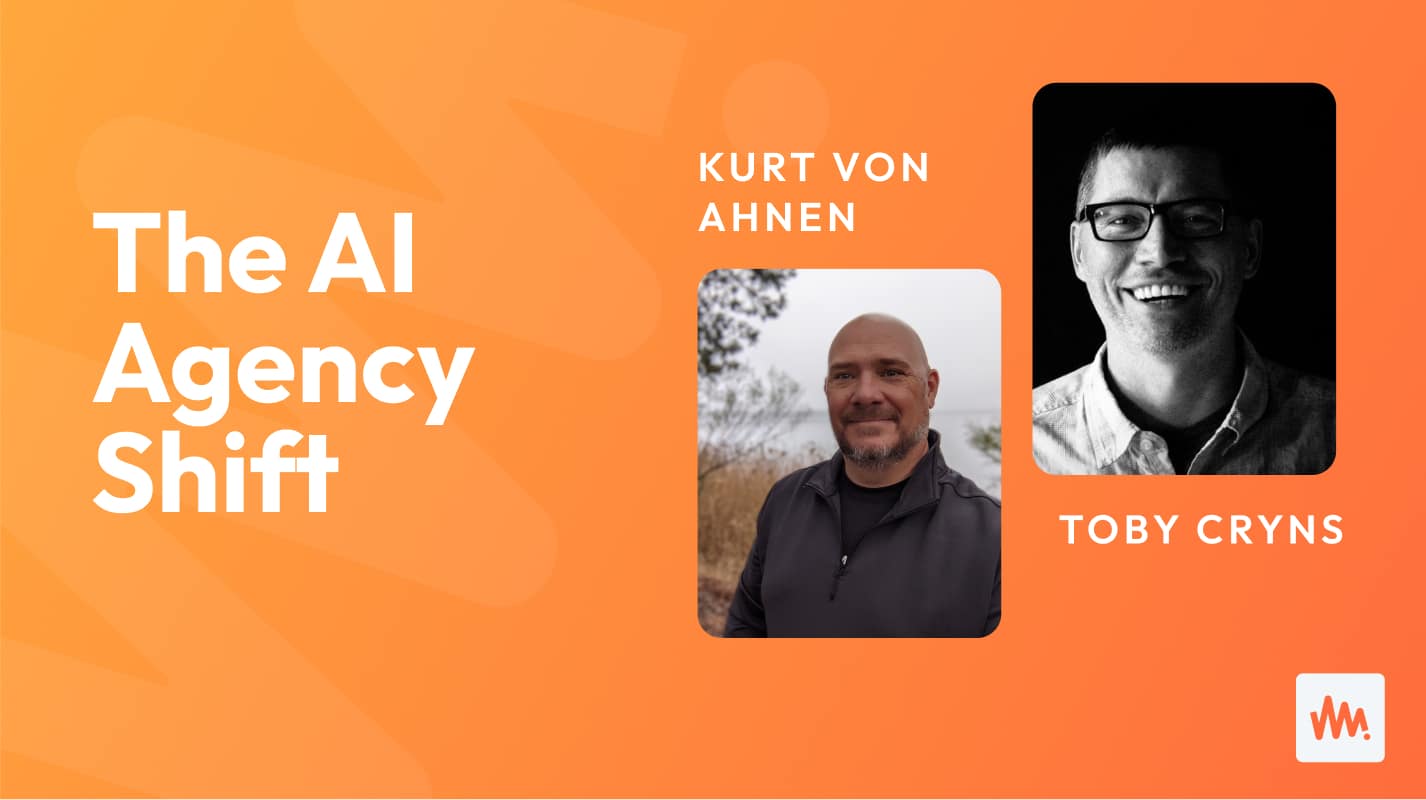
🔗 **Source:** [AI Is Changing WordPress Agencies Faster Than We Think](https://thewpminute.com/ai-is-changing-wordpress-agencies-faster-than-we-think/)
> [!note]+ Document Notes
> tags: [wordpress-agencies, ai-automation, value-based-pricing, agency-hiring, technical-debt]
> author: The WP Minute
> source: The WP Minute
> reference: https://thewpminute.com/ai-is-changing-wordpress-agencies-faster-than-we-think/
> date created: 2026-10-01 13:48
>
> > [!info] Generated analysis — not the author's words. Sections below are machine-written
> > from the captured source. Only text inside `> [!quote]` blocks is verbatim from the author.
> > Do not quote or attribute any other line to the named author.
>
> # 🏷️ Title: AI Is Changing WordPress Agencies Faster Than We Think
>
<!-- deep-read:sections start -->
## 🧭 Table of contents
- [📝 Summary](#-summary)
- [📖 Main content](#-main-content)
- [🗒️ Notes](#️-notes)
- [📚 References](#-references)
- [🗣️ Paraphrase](#️-paraphrase)
- [📰 Newsletter](#-newsletter)
- [✅ Action items](#-action-items)
- [🧪 Hypotheses](#-hypotheses)
- [📊 Methodology](#-methodology)
- [❓ Questions](#-questions)
- [🔮 Future research](#-future-research)
- [💡 Implications](#-implications)
- [🧠 Learning styles assessment](#-learning-styles-assessment)
- [📊 Accessibility assessment](#-accessibility-assessment)
- [🌍 DEIB assessment](#-deib-assessment)
- [✅ Logical validity](#-logical-validity)
- [🛡️ DARVO analysis](#️-darvo-analysis)
- [🎯 Conclusion](#-conclusion)
- [🔄 Refactor appendix](#-refactor-appendix--ai-is-changing-wordpress-agencies-faster-than-we-think)
## 📝 Summary
- **What happened.** The WP Minute (thewpminute.com) published show notes on 2026-09-29 for an episode of its Agency Action podcast, hosted by Toby Cryns and Kurt von Ahnen. The captured text is 233 words: a three-paragraph blurb and ten one-line takeaways.
- **Scope of this analysis.** The captured text is only the show notes. The page embeds the episode as a YouTube video (E4EoTMExhaw, 40:49) and a Transistor player, and neither was captured as text. A separate full analysis of the episode transcript exists as a sibling Reader doc and vault note under the video. This file does not repeat it.
- **The claim.** AI is moving from assistant to producer of the work agencies bill for. The blurb names Claude for rebuilding WordPress sites, shrinking project sizes, and clients building functioning apps themselves.
- **Why it matters.** If delivery time drops from days to hours, hourly billing loses its basis, and the page points to expertise-based and value-based pricing as the response.
- **Key stakeholders.** WordPress agency owners, agency developers, agency clients, and the hosts.
- **Risks and tradeoffs.** The ten takeaways are the publisher's summary, not verified against the audio here. The format is promotional by nature: it exists to get a click on the episode. This is a podcast and commentary page, so its claims are the hosts' opinions as summarized by the publisher.
- **Bottom line.** The page states ten testable positions without evidence in the captured text. Treat them as hypotheses until you check the episode.
## 📖 Main content
**What the page says.** The blurb in ¶1 to ¶3 frames the episode in two halves. The first half covers AI and agency work: Claude used to rebuild WordPress sites, smaller development projects, clients who can build apps themselves, pricing for work AI finishes in minutes, what a WordPress developer brings, and hiring people who "think beyond a task list" (the page's phrasing, paraphrased here). The second half covers agency growth: accountability, hiring, delegation, profitability, and the point where adding people makes the business harder to run.
**The ten takeaways.** ¶5 to ¶14 group into four themes:
- **Delivery speed and pricing.** ¶5 (projects shrink from days to hours), ¶6 (sell expertise, not time), ¶11 (value-based pricing grows in importance).
- **Client expectations.** ¶7 (AI-generated sites are good enough for many clients), ¶10 (consultants gain value as clients face too many AI options).
- **Staffing.** ¶8 (developers become customer-facing problem solvers), ¶12 (hiring for judgment is harder than hiring for technical skill).
- **Operations.** ¶9 (AI adds technical debt via tools and subscriptions), ¶13 (growth adds complexity), ¶14 (clear accountability exposes the right people and processes).
**What is missing.** No numbers, client examples, tool names beyond Claude, or project sizes appear in the captured text. "Days to hours" in ¶5 has no stated baseline project type. "Good enough for many clients" in ¶7 has no definition of good enough. ¶15 ends on "Important Links:" followed by one link.
## 🗒️ Notes
#### 📄 ¶1-¶3 Episode blurb
- ¶1: the episode covers AI doing work agencies have billed for; the show is The WP Minute's Agency Action podcast.
- ¶2: Toby Cryns and Kurt von Ahnen discuss Claude for site rebuilds, shrinking projects, and clients building apps with AI. Three questions follow: pricing work AI does in minutes, what a WordPress developer must bring, and hiring beyond task lists.
- ¶3: the second half turns to accountability, hiring, delegation, profitability, and when more people make the business harder to run.
#### 📄 ¶4-¶9 Takeaways on speed, pricing, and technical debt
- ¶4 is the "Takeaways" label only.
- ¶5 and ¶6 pair a speed claim with a pricing response: faster delivery pushes agencies toward selling expertise.
- ¶7 and ¶8 describe the client and developer sides: AI sites satisfy many clients, so developers need to talk to customers.
- ¶9 is the counterweight: tools and subscriptions create technical debt.
#### 📄 ¶10-¶14 Takeaways on consulting, hiring, and growth
- ¶10 and ¶11 extend the pricing theme: consultants help clients sort AI options, and value-based pricing matters more.
- ¶12 sets hiring for judgment against hiring for technical skill.
- ¶13 and ¶14 close on operations: growth can add complexity, and clear accountability helps identify the right people and processes.
#### 📄 ¶15 Links stub
- ¶15 reads "Important Links:" and the capture shows one link to wpengine.com. No anchor text, sponsor label, or explanation appears in the captured text.
## 📚 References
The captured text is a show-notes page, so most claims point to the episode audio, which was not captured.
- [AI Is Changing WordPress Agencies Faster Than We Think, The WP Minute](https://thewpminute.com/ai-is-changing-wordpress-agencies-faster-than-we-think/) is the source page, published 2026-09-29.
- The page embeds the episode as a YouTube video (E4EoTMExhaw, 40:49) and a Transistor player. Neither was captured as text, so this analysis does not cover the episode itself.
- [wpengine.com](https://wpengine.com/) is the only link in the captured link list. It is a link to wpengine.com whose purpose the captured text does not state. The anchor text is blank in the capture. No sponsor disclosure appears in the captured text, so this analysis does not call it a sponsor link.
- Claim sourcing: ¶5 to ¶14 carry no link in the captured markup. That is all this analysis can say about them.
- Sibling analysis: a full analysis of the episode transcript exists as a Reader doc and vault note titled the same as this page, under the video. It is not linked from here.
## 🗣️ Paraphrase
The WP Minute's Agency Action episode asks what a WordPress agency sells when AI can do in minutes what used to take days. The hosts, Toby Cryns and Kurt von Ahnen, work through Claude-built sites, smaller projects, and clients who build their own apps. The publisher's ten takeaways answer in a consistent direction: price on expertise and outcomes, hire for judgment, expect customer-facing work from developers, watch the tool-subscription pile, and don't assume more headcount means more freedom. The page gives no data behind any of them.
## 📰 Newsletter
**If AI cuts a project from days to hours, what are you billing for?** The WP Minute's Agency Action podcast takes that on with Toby Cryns and Kurt von Ahnen. The show notes list ten takeaways: sell expertise instead of time, lean on value-based pricing, hire for judgment, and expect developers to work directly with customers. One takeaway cuts the other way: AI tools and subscriptions can create technical debt. Notes only here; the claims come from the publisher's summary and I haven't checked them against the audio. Link: [the episode page](https://thewpminute.com/ai-is-changing-wordpress-agencies-faster-than-we-think/).
## ✅ Action items
#### DevRel
- Developer advocacy: ask agency contacts what share of their projects AI shortened, and by how much, before citing "days to hours" (¶5).
- Education: no direct action from this source; nearest relevance: a session on pricing expertise for agency developers.
- Developer experience: no direct action from this source.
- Developer marketing: when quoting this page, say it is a publisher summary, not a finding.
- Community management: no direct action from this source.
- Internal/external: check whether the episode itself gives numbers the notes omit.
#### OSPO
- Policy and governance: no direct action from this source.
- License compliance: no direct action from this source.
- Security management: no direct action from this source.
- Software inventory: ¶9 (tool and subscription sprawl) is the nearest relevance; the same inventory discipline applies to agency tooling.
- Developer support: no direct action from this source.
- Community engagement: no direct action from this source.
- Strategic alignment: no direct action from this source.
#### Community
- Maintainers: no direct action from this source.
- Contributors: no direct action from this source.
- Sponsors: no direct action from this source; note that the page carries a wpengine.com link with no stated purpose.
- Ecosystem: ask agencies in the ecosystem which of the ten takeaways match their year-to-date experience.
#### WordPress
- Core: no action.
- Core Performance: none.
- Core AI: none directly; nearest relevance is client-built apps (¶2).
- **Core Program Team:** none.
- Mobile: none.
- Playground: none.
- Community: agency meetup topic: pricing and hiring when AI shortens projects.
- Training: nearest relevance is ¶8: customer-facing skills for developers.
- Marketing: none.
- Support: none.
- Design: none.
- Documentation: none.
- Photos: none.
- TV: none.
- Polyglots: none.
- Accessibility: none from this source.
- Meta: none.
- CLI: none.
- Hosting: none from this source; the wpengine.com link is unexplained in the captured text.
- Tide: none.
- Openverse: none.
- Themes: none.
- Plugins: none.
#### The WPOCC
- Programs: none directly.
- Projects: none from this source.
- Funding experiments: none from this source.
### FAIR
- Technical independence: no direct action from this source.
- Policies and covenants: no direct action from this source.
- Productized governance artifacts: no direct action from this source.
## 🧪 Hypotheses
1. Among WordPress agencies, projects scoped under 40 hours have shortened more than larger projects since AI tools entered delivery (tests ¶5).
2. Agencies that moved to value-based or fixed-scope pricing report higher margin than hourly agencies on AI-assisted work (tests ¶6 and ¶11).
3. Clients accept AI-generated sites at a measurable rate on brochure-site projects and reject them on e-commerce or membership sites (tests ¶7).
4. Agencies running more than 10 paid AI tools carry higher unplanned monthly spend per developer than agencies running fewer (tests ¶9).
5. Interview structures that test judgment (case-based) predict first-year performance better than skills tests alone (tests ¶12).
## 📊 Methodology
- **H1.** Survey 100 agencies on 3 recent project types with scoped hours before and after AI adoption. Report medians, not self-rated impressions.
- **H2.** Compare gross margin per project for 20 hourly and 20 value-priced agencies over 12 months, controlling for agency size.
- **H3.** Show 30 clients matched site pairs (AI-built and human-built) for the same brief, record acceptance and revision counts by site type.
- **H4.** Collect subscription invoices from 25 agencies for one quarter and count tools and monthly spend per developer.
- **H5.** Track new hires from two interview styles for 12 months against manager ratings set before hire.
- **Controls.** Pre-register thresholds, and keep the episode audio as a check on what the hosts claimed versus what the notes summarize.
## ❓ Questions
- What project types shrank "from days to hours," and what was the baseline?
- What does "good enough for many clients" mean in the episode: visual quality, function, or price?
- Which AI tools beyond Claude do the hosts discuss?
- How do the hosts define "judgment" when hiring, and how do they test it?
- What does the wpengine.com link relate to, and is there a relationship the page doesn't disclose?
- Do the hosts give pricing figures or only principles?
- Which takeaway has the most evidence in the audio?
## 🔮 Future research
- **Project size distributions.** No published data in this source on how AI changed agency project sizes. A multi-agency study could supply one.
- **Value-based pricing adoption.** Which agencies switched, and what happened to win rates.
- **Technical debt from tooling.** The ¶9 claim is about subscriptions and tools, not code, which needs its own measure.
- **Hiring for judgment.** Validated assessments for agency roles are not named in this source.
## 💡 Implications
- **Practice.** Agencies that bill hourly face a mismatch if delivery time falls. The page points to expertise and value-based pricing as the response.
- **Policy.** Agencies need tool-approval rules if ¶9 holds, so each new subscription has an owner and a review date.
- **Security.** No security claim appears in the captured text.
- **Education.** ¶8 implies developer training should include client communication and problem framing.
- **Funding.** If clients build their own apps (¶2), agency revenue shifts toward consulting, which is smaller per engagement than builds.
- **Source literacy.** Show notes are a summary written to promote an episode. Cite the episode, not the notes, for any quoted claim.
## 🧠 Learning styles assessment
- **Reading level estimate.** Flesch-Kincaid Grade Level on the 233-word capture is roughly grade 10, with Flesch Reading Ease near 45 because the blurb sentences run long. The takeaways are one short sentence each.
#### 👀 Visual learners
- Present: the page embeds a YouTube video, which may show visuals. Not captured.
- Improve: no diagram or chart appears in the captured text. A pricing-model comparison would help.
#### 🔊 Aural learners
- Present: the episode is audio and video; a Transistor player is embedded.
- Improve: the notes duplicate none of the audio; an audio summary clip is absent from the capture.
#### 🗣️ Verbal learners
- Present: ten complete-sentence takeaways.
- Improve: no definitions for "value-based pricing" or "judgment" in the captured text.
#### 🧩 Kinesthetic learners
- Present: none in the captured text.
- Improve: add a worked pricing exercise or a checklist for auditing AI tool subscriptions.
#### 🧠 Logical learners
- Present: takeaways read as claims that can be tested.
- Improve: no evidence, numbers, or reasoning chain in the captured text.
#### 🧑🤝🧑 Social learners
- Present: two hosts in conversation; the format is dialogue.
- Improve: no discussion prompt or community link is captured.
#### 🧘♀️ Solitary learners
- Present: ten scannable lines.
- Improve: no reflection question, such as "what do you bill for that AI now does in minutes?"
#### 🌿 Naturalistic learners
- Present: none.
- Improve: none obvious for this topic.
## 📊 Accessibility assessment
#### Screen reader semantics
- What I can see: the capture shows paragraph text and a "Takeaways" label (¶4). Whether it is a real heading or a bold paragraph is not visible in the captured text. The takeaways are short lines, probably a list, which would read well in a screen reader.
- What I cannot see: heading levels, landmarks, and embed titles. Embeds need accessible titles (WCAG 2.2 4.1.2).
#### Keyboard navigation
- Not assessable from captured text. Embedded players need keyboard operation (2.1.1) and no keyboard trap (2.1.2).
#### Contrast and readability
- Contrast is not knowable from text. Sentences are short in the takeaways and longer in the blurb.
#### Text resizing and reflow
- Not assessable from text. Short lines reflow well in principle (1.4.10).
#### Media and captions
- The page embeds a YouTube video (E4EoTMExhaw, 40:49) and a Transistor player. The captured text does not mention captions or a transcript. WCAG 1.2.1 (audio-only) and 1.2.2 (captions) apply to the embeds; whether they are met is not visible here.
#### Forms and interactions
- No forms appear in the captured text.
#### Standards reference
- Items to check on the live page: 1.2.1 and 1.2.2 for the embeds, 4.1.2 for embed names, and 2.4.4 for the wpengine.com link, whose anchor text is blank in the capture. A blank anchor would fail link purpose unless an accessible name exists in the markup.
## 🌍 DEIB assessment
#### Cultural breadth
- Present: the topic spans agencies generally.
- Improve: no regional or non-English agency context appears in the captured text.
#### Inclusive language
- Present: no exclusionary terms in the captured text.
- Improve: "think beyond a task list" is figurative; plain wording may help non-native readers.
#### Neurodiversity support
- Present: short, parallel takeaway lines.
- Improve: the blurb runs three dense paragraphs with no sub-structure.
#### Representation
- Present: two named hosts. No guests are named in the capture.
- Improve: no voices from clients or small agencies appear in the captured text.
#### Psychological safety
- Present: the tone reads as neutral reporting.
- Improve: "AI is changing agencies faster than we think" may raise anxiety. The notes offer no reassurance or next step.
## ✅ Logical validity
#### Strong reasoning
- ¶5 and ¶6 link a cause and a consequence: faster delivery weakens time-based billing. The mechanism is plausible and stated in the notes.
- ¶9 offers a counterweight to the AI-benefit theme, which adds balance.
#### Fallacies
- **Unsupported quantification, ¶5.** "AI is already shrinking some WordPress projects from days to hours." No project type, count, or baseline. Fix: name the project type and give a measured range.
- **Vague universal, ¶7.** "AI-generated websites are good enough for many clients." "Many" and "good enough" are undefined. Fix: define the client segment and the quality bar.
- **Forecast stated as fact, ¶13.** "Agency growth can create more complexity instead of more freedom." The "can" hedges it, so it's not a fallacy, but no evidence supports it in the notes.
- **Check made.** I read all ten takeaways for appeals to authority, false dichotomies, and circularity and found none beyond the missing evidence above. This is a limit of the format, since a summary can't carry an argument.
#### Tone of voice
- Declarative and promotional, in the format of podcast show notes. Takeaways use "may" and "can" in ¶6, ¶9, ¶10, and ¶13, and flat statements in ¶5, ¶7, ¶8, ¶11, ¶12. The tone is commentary and opinion, not research.
## 🛡️ DARVO analysis
Not applicable to this source. DARVO describes a response to accusation, and this page is show notes with no accuser or defensive posture. **Deny:** nothing is denied. **Attack:** no person or group is attacked. **Reverse victim/offender:** no such move appears.
## 🎯 Conclusion
The captured text is 233 words of show notes: a blurb plus ten takeaways from a 40:49 episode of The WP Minute's Agency Action podcast. The positions are coherent: sell expertise, price on value, hire for judgment, watch tool sprawl, and expect growth to add complexity. None carries evidence in the captured text, and the takeaways are the publisher's summary, not verified against the audio here. A separate full analysis of the episode transcript exists as a sibling Reader doc and vault note under the video.
**Next steps for readers:** treat each takeaway as a hypothesis, check the episode for the numbers the notes omit, and find out what the wpengine.com link is for, since the captured text states no purpose and shows no sponsor disclosure.
## 🔄 Refactor Appendix — AI Is Changing WordPress Agencies Faster Than We Think
> Density: 2–5 Literature atoms (H3 pad), 0–3 Permanent candidates (H4 pad).
> Emitted: 3 Literature, 1 Permanent. Light-touch pass on show notes only.
>
> Konik claim-header rules: present tense, declarative, ≤10 words, searchable, unique.
>
> Atomicity: one declarative sentence per atom. "and"/"also" → split.
>
> Tag pool: #bmf · #addendum · #xref · #articleseed · #storystem · #share · #aphorisms
### 📚 Literature Split Pad
#### [H1] Agencies sell expertise instead of time
> [!quote] [¶6]
> Agencies may need to sell expertise instead of time.
**Context & use**:
- ¶6, the publisher's summary of the pricing takeaway.
- Pairs with ¶5 (days to hours) and ¶11 (value-based pricing). Hedged with "may."
**Tags**: #xref #articleseed
<!-- atomicity: 1 idea ✓ -->
#### [H2] AI tooling adds technical debt
> [!quote] [¶9]
> AI can create more technical debt through tools and subscriptions.
**Context & use**:
- ¶9, the one takeaway that cuts against the speed theme.
- Debt here means tools and subscriptions, not code. The notes give no example.
**Tags**: #xref
<!-- atomicity: 1 idea ✓ -->
#### [H3] Judgment is harder to hire than skill
> [!quote] [¶12]
> Hiring for judgment is harder than hiring for technical skills.
**Context & use**:
- ¶12, the hiring takeaway.
- The notes do not say how to assess judgment; the episode may.
**Tags**: #xref #share
<!-- atomicity: 1 idea ✓ -->
### 🧠 Atomic Split Pad
#### [P1] Faster delivery breaks time-based billing
**Claim** (one sentence, Courtney's voice): When AI cuts delivery time, hours stop measuring the value the client receives, so pricing has to move to expertise or outcomes.
**Evidence pointer**: [[#H1]]
**Scope & conditions**: Holds for work AI shortens materially. The captured text gives no data on how much, so treat it as a hypothesis. Does not apply to work AI has not touched.
**Links**:
- [[Value-based pricing]] — because extends
- [[Agency growth and complexity]] — because contrasts on whether scale adds freedom
- [[Client-built apps]] — because applies-in the shrinking-project case
<!-- atomicity: 1 idea ✓ -->
### ✏️ Fleeting Queue
- [F1] Check the episode audio for numbers behind "days to hours" (¶5) — https://thewpminute.com/ai-is-changing-wordpress-agencies-faster-than-we-think/ #fleeting #inbox
- [F2] Find what the wpengine.com link is for; the captured text states no purpose and no sponsor disclosure #fleeting #inbox
- [F3] Open question: how do the hosts define and test "judgment" when hiring (¶12)? #fleeting #inbox
### → Things 3 (max 2 actions)
- [ ] Watch the episode and note the numbers and examples behind the ten takeaways — research, 40 min #things
- [ ] Look up the wpengine.com link's purpose on the live page and note any disclosure — research, 5 min #things
<!-- deep-read:sections end -->
📄 **Full text:** [[Full Document Contents/Articles/AI Is Changing WordPress Agencies Faster Than We Think.md|AI Is Changing WordPress Agencies Faster Than We Think by The WP Minute]]
## Highlights
- - Agencies may need to sell expertise instead of time. ([View Highlight](https://read.readwise.io/read/01m3w9capry7eyjafm1tyxqrjg))
- Note: [H1] Agencies sell expertise instead of time
- Tags: atom/literature/h1
- - AI can create more technical debt through tools and subscriptions. ([View Highlight](https://read.readwise.io/read/01m3w9cdhdj3m8fjhnqh6r39sc))
- Note: [H2] AI tooling adds technical debt
- Tags: atom/literature/h2
- - Hiring for judgment is harder than hiring for technical skills. ([View Highlight](https://read.readwise.io/read/01m3w9cftz3ny6682v2m8qmwt2))
- Note: [H3] Judgment is harder to hire than skill
- Tags: atom/literature/h3