AI: The Impact on Search, Discoverability & Strategy
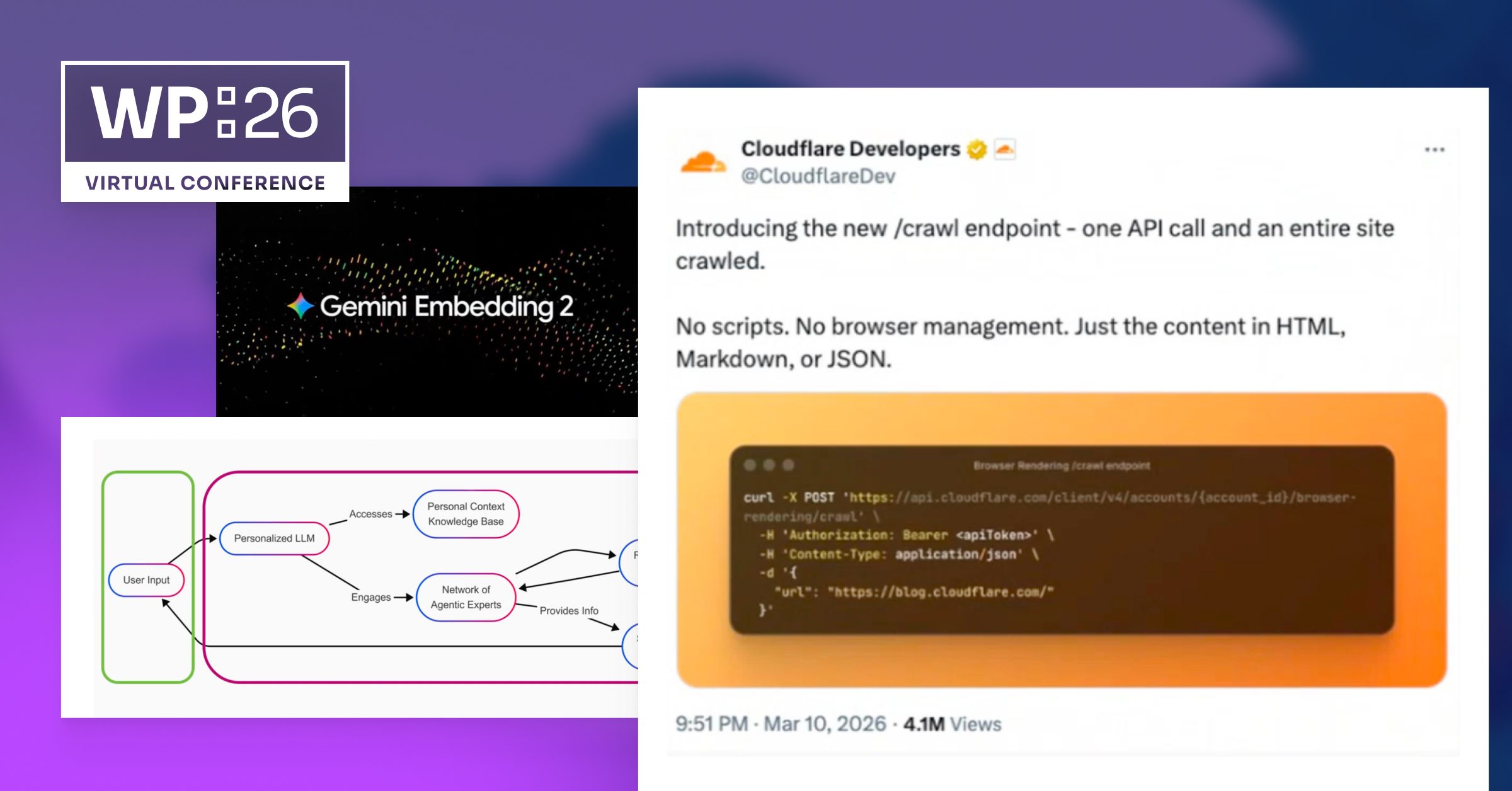
🔗 **Source:** [AI: The Impact on Search, Discoverability & Strategy](https://humanmade.com/ai/ai-the-impact-on-search-discoverability-strategy/)
> [!note]+ Document Notes
> tags: #ai-search #seo #generative-engine-optimization #wordpress #content-strategy
> author: Alex Moss
> source: Human Made
> reference: https://humanmade.com/ai/ai-the-impact-on-search-discoverability-strategy/
> date created: 2024-12-19 08:45
>
> # 🏷️ Title: AI: the impact on search, discoverability & strategy
>
<!-- deep-read:sections start -->
## 🧰 Action Inbox
- [H1] Implement GEO strategies alongside traditional SEO — WP:26 session insights #ai-search
- [H2] Audit content for machine readability and EEAT compliance — Alex Moss recommendations #content-strategy
- [H3] Update success metrics to track brand citations across LLMs — move beyond clicks #analytics
## 🧭 Table of Contents
- [[#📝 Summary]]
- [[#📖 Main Content]]
- [[#🗒️ Notes]]
- [[#📚 References]]
- [[#🗣️ Paraphrase]]
- [[#📰 Newsletter]]
- [[#✅ Action Items]]
- [[#🧪 Hypotheses]]
- [[#📊 Methodology]]
- [[#❓ Questions]]
- [[#🔮 Future Research]]
- [[#💡 Implications]]
- [[#🧠 Learning Styles Assessment]]
- [[#📊 Accessibility Assessment]]
- [[#🌍 DEIB Assessment]]
- [[#✅ Logical Validity]]
- [[#🛡️ DARVO Analysis]]
- [[#🎯 Conclusion]]
### 🔗 References
- [WP:26 Virtual Conference](https://humanmade.com/events/wp26/)
- [Yoast SEO](https://yoast.com/)
## 📝 Summary
- Alex Moss from Yoast presented at WP:26 on how AI is transforming search from link-based results to conversational answers
- The shift introduces GEO (Generative Engine Optimisation) as a new discipline complementing traditional SEO
- Publishers must focus on driving decisions rather than clicks, optimizing for AI agent synthesis
- Four pillars emerge: editorial standards, EEAT framework, data integrity, and updated success metrics
- Good SEO fundamentally remains good GEO, but requires machine-readable structure and clear authority signals
## 📖 Main Content
The search landscape is experiencing a fundamental disruption as Large Language Models transform how users discover and consume content. Alex Moss, Principal SEO at Yoast, outlined this shift during the WP:26 conference, explaining how the traditional "10 blue links" search model is evolving into conversational, contextual answers generated by AI systems.
This transformation introduces Generative Engine Optimisation (GEO), defined as "optimising content for generative AI search environments, like LLM-powered engines to make it discoverable, trustworthy, and authoritative." While GEO builds on SEO foundations, it requires specific adaptations for machine readability and AI agent synthesis.
The presentation emphasized that content must serve dual purposes: remaining valuable for human readers while being structured for AI systems to understand, cite, and recommend. This balance becomes critical as search behavior shifts from seeking links to seeking decisions.
## 🗒️ Notes
#### Article Overview — [H1] The generative shift transforms search behavior
- Key idea: Search evolution moves from click-based to decision-driven interactions
- Evidence: "moving from a list of 10 links to a model of retrieval and generation that delivers conversational, contextual, and increasingly personalised answers"
#### GEO Introduction — [H2] Generative Engine Optimisation emerges as new discipline
- Key idea: GEO complements SEO for AI-powered search environments
- Evidence: "optimising content for generative AI search environments, like LLM-powered engines to make it discoverable, trustworthy, and authoritative"
#### SEO-GEO Relationship — [H3] Traditional SEO principles remain foundational
- Key idea: Core SEO practices translate effectively to GEO requirements
- Evidence: "Good SEO is good GEO, because the core principles correlate"
#### Editorial Standards — [H1] Content quality requirements intensify for AI systems
- Key idea: Mediocre content cannot survive in AI-curated environments
- Evidence: "Mediocre content will not survive. Content must be unique and human-driven, but it must also be machine-readable"
#### EEAT Framework — [H2] Authority signals become critical for AI validation
- Key idea: Experience, expertise, authority, and trust determine AI citation likelihood
- Evidence: "adherence to the EEAT framework...to ensure your brand is validated by the system"
#### Structured Data — [H3] Machine-readable formats gain strategic importance
- Key idea: Structured data enables efficient AI ingestion and reduces hallucinations
- Evidence: "Technologies like Yoast Schema Aggregation and Cloudflare's /crawl endpoints are emerging to allow LLMs to ingest an entire site's structured data at once"
#### Success Metrics — [H1] Discovery replaces clicks as primary measurement
- Key idea: Brand citations and mentions become more valuable than traffic metrics
- Evidence: "Clicks and impressions are becoming less valuable. Discovery is the new valuable metric"
#### Machine Readability — [H2] Clear communication serves both humans and AI
- Key idea: Concise, well-structured content improves AI comprehension and citation accuracy
- Evidence: "Make sure that everything's machine readable and make sure that everything's concise, everything is structured well"
## 📚 References
- [WP:26 Event Replay](https://humanmade.com/events/wp26/)
- [WordPress in 2026 Market Analysis](https://humanmade.com/resources/)
- [Yoast Schema Documentation](https://yoast.com/help/schema/)
## 🗣️ Paraphrase
- Search is evolving from providing lists of links to generating conversational answers through AI, requiring publishers to optimize for AI agent decision-making rather than human clicking behavior
- GEO represents a new optimization discipline that builds on SEO fundamentals while addressing the specific needs of AI systems to understand, validate, and cite content appropriately
- Success in this new landscape requires balancing human-readable quality content with machine-readable structure, proper authority signals, and metrics that measure brand discovery rather than traditional traffic
## 📰 Newsletter
**AI Search Evolution Reshapes WordPress Content Strategy**
The search landscape is transforming rapidly, and Alex Moss from Yoast shared crucial insights at WP:26 about what this means for WordPress publishers. As AI-powered search moves beyond traditional link lists to conversational answers, we need to adapt our content strategy for both human readers and AI systems.
Key takeaway: "Good SEO is good GEO" - your existing optimization efforts translate well to Generative Engine Optimisation, but you'll need to enhance machine readability and authority signals.
**Practical next steps:**
- Audit your content for clear headings, conclusions, and citations
- Implement structured data across your WordPress site
- Focus on EEAT (Experience, Expertise, Authority, Trust) in your content
- Update your analytics to track brand mentions and citations, not just clicks
Resources: [Learn WordPress](https://learn.wordpress.org/), [Developer Docs](https://developer.wordpress.org/), [WP-CLI](https://wp-cli.org/)
## ✅ Action Items
#### WordPress
- Core: Evaluate structured data integration improvements for AI readability
- Plugins: Review Yoast and similar SEO plugins for GEO feature development
- Themes: Ensure default themes support proper heading structure and schema markup
- Documentation: Create guidance on optimizing WordPress content for AI search
- Community: Organize workshops on GEO best practices for WordPress publishers
#### DevRel
- Education: Develop curriculum on AI search optimization for WordPress developers
- Developer experience: Create tools for automated structured data validation
- Community management: Facilitate discussions on GEO implementation strategies
#### OSPO
- Strategic Alignment: Assess how AI search impacts open source content discoverability
- Developer Support: Provide guidance on schema markup and structured data licensing
## 🧪 Hypotheses
- WordPress sites with comprehensive structured data will achieve higher citation rates in AI search results than those without
- Publishers focusing on EEAT signals will maintain better visibility as AI search adoption increases
- Traditional traffic metrics will become less predictive of business outcomes as AI agents intermediate user interactions
- Machine-readable content structure will correlate with both AI citation rates and human engagement metrics
### 📊 Methodology
- A/B testing structured data implementation across WordPress sites to measure AI citation improvements
- Longitudinal analysis of EEAT-optimized content performance in various AI search engines
- Correlation studies between traditional SEO metrics and new GEO performance indicators
### ❓ Questions
- How will WordPress plugins need to evolve to support comprehensive GEO implementation at scale?
- What new analytics frameworks will emerge to measure brand discovery and citation quality?
- How can smaller WordPress publishers compete for AI attention against enterprise content operations?
### 🔮 Future Research
- Development of automated GEO scoring systems for WordPress content
- Integration possibilities between WordPress and AI search indexing protocols
- Impact assessment of conversational search on long-form content strategy
### 💡 Implications
- Practice: Content teams must balance human storytelling with machine-readable structure in daily workflows
- Policy: Publishers need new editorial standards that account for AI system interpretation and citation practices
- Education: SEO training programs require updates to include GEO principles and implementation techniques
- Funding: Investment in structured data infrastructure becomes critical for maintaining search visibility
### 🧠 Learning Styles Assessment
Reading level estimate: 12th grade (technical content with defined terminology)
#### 👀 Visual learners
- Present: Clear section headings and bulleted insights from the conference
- Improve: Diagrams showing AI search flow vs traditional search, before/after content examples
#### 🔊 Aural learners
- Present: Conference session format with speaker quotes and presentation structure
- Improve: Audio recording of Alex Moss presentation, podcast discussion of key points
#### 🗣️ Verbal learners
- Present: Clear definitions of GEO, EEAT framework explained with context
- Improve: Analogies comparing traditional vs AI search, glossary of emerging terms
#### 🧩 Kinesthetic learners
- Present: Four actionable pillars with specific implementation steps
- Improve: WordPress plugin configuration tutorials, schema markup exercises
#### 🧠 Logical learners
- Present: Structured progression from problem identification to strategic response
- Improve: Decision trees for GEO implementation, ROI calculations for structured data
#### 🧑🤝🧑 Social learners
- Present: Conference context with industry expert insights and peer learning
- Improve: Discussion forums for GEO experimentation, collaborative optimization projects
#### 🧘♀️ Solitary learners
- Present: Self-contained strategic framework with independent action items
- Improve: Self-assessment checklists for content optimization, individual learning modules
#### 🌿 Naturalistic learners
- Present: Evolution metaphor for search landscape transformation
- Improve: Ecosystem thinking about content relationships, organic discovery patterns
### 📊 Accessibility Assessment
#### Screen reader semantics
- Present: Clear heading hierarchy and structured content organization
- Improve: Alt text for any future diagrams, enhanced semantic markup
#### Keyboard navigation
- Present: Standard web navigation with logical content flow
- Improve: Skip links for conference session sections, enhanced focus indicators
#### Contrast and readability
- Present: Professional typography with clear content hierarchy
- Improve: Ensure 4.5:1 contrast ratios, test with various reading preferences
#### Text resizing and reflow
- Present: Responsive design supporting standard zoom levels
- Improve: Verify content reflow at 200% zoom, test mobile readability
#### Media and captions
- Present: Text-based content with embedded quotes for emphasis
- Improve: Captions for future video content, audio descriptions for presentations
#### Forms and interactions
- Present: Newsletter signup with clear labeling
- Improve: Enhanced error handling, accessible form validation
### 🌍 DEIB Assessment
#### Cultural breadth
- Present: Focus on WordPress global community through WP:26 conference context
- Improve: Examples from diverse publishing markets, international SEO considerations
#### Inclusive language
- Present: Professional technical communication with defined jargon
- Improve: Plain language alternatives for complex concepts, avoid culturally specific idioms
#### Neurodiversity support
- Present: Clear content structure with logical progression and summary points
- Improve: Shorter paragraphs, consistent formatting, reduced cognitive load
#### Representation
- Present: Expert perspectives from established industry voices
- Improve: Include diverse publisher experiences, multiple industry verticals
#### Psychological safety
- Present: Respectful framing of industry challenges without blame
- Improve: Acknowledgment of varying resource levels, supportive tone for implementation challenges
### ✅ Logical Validity
#### Strong reasoning
- Deductive strength: Premises about AI search evolution logically support GEO necessity conclusions
- Inductive strength: Industry expert observations provide reasonable basis for strategic recommendations
- Causal reasoning: Clear connection established between content optimization and AI citation outcomes
- Analogical strength: SEO-to-GEO comparison effectively illustrates adaptive strategy requirements
#### Fallacies
- Appeal to authority: Reliance on Alex Moss expertise is appropriate given his relevant professional position and platform context
- Hasty generalization: Claims about "good SEO = good GEO" could benefit from more nuanced explanation of differences
#### Tone of voice
- Overall tone: Professional and informative with appropriate urgency about industry changes, maintains balanced perspective on challenges and opportunities
### 🛡️ DARVO Analysis
- Deny: No denial patterns present in straightforward industry analysis
- Attack: No attacks on individuals or competing viewpoints
- Reverse victim/offender: No victim/offender dynamics in technical content discussion
- Emotional cues and rhetoric: Professional tone with appropriate emphasis on urgency without fearmongering
## 🎯 Conclusion
The evolution from traditional search to AI-powered discovery represents a fundamental shift requiring publishers to optimize for both human readers and AI systems. While core SEO principles remain valuable, the emergence of GEO demands enhanced attention to machine readability, structured data, and authority signals. WordPress publishers who adapt their content strategy to include these elements while maintaining quality human experiences will be best positioned for continued discoverability in an AI-mediated search landscape.
## 🧱 Refactor Appendix
### 📚 Literature Split Pad
Purpose: Stage CEE units that become Literature notes.
Split level: H3
### [H1] GEO builds on SEO fundamentals for AI search
> [!quote] [AI: the impact on search, discoverability & strategy](https://humanmade.com/ai/ai-the-impact-on-search-discoverability-strategy/) by [[Alex Moss]] via [[Human Made]]. Published March 16, 2026. Accessed December 19, 2024.
> "Good SEO is good GEO, because the core principles correlate."
Establishes continuity between traditional and AI-optimized search strategies while highlighting need for evolution.
[view highlight](https://humanmade.com/ai/ai-the-impact-on-search-discoverability-strategy/#H1) #xref #articleseed ID:rw_001
### [H2] Machine readability becomes critical for content success
> [!quote] [AI: the impact on search, discoverability & strategy](https://humanmade.com/ai/ai-the-impact-on-search-discoverability-strategy/)
> "Make sure that everything's machine readable and make sure that everything's concise, everything is structured well."
Emphasizes dual audience optimization for human readers and AI systems interpretation.
[view highlight](https://humanmade.com/ai/ai-the-impact-on-search-discoverability-strategy/#H2) #xref ID:rw_002
---
### 🔖 Atomic Split Pad (Zettel Candidates)
Purpose: Promote reusable claims into Atomic notes.
Split level: H4
#### [Z1] Discovery metrics replace traffic metrics in AI search
- Applies to publishers optimizing for AI-mediated discovery
- References Alex Moss WP:26 presentation insights
- Links: [[Search-Evolution]] [[Content-Analytics]]
#### [Z2] Structured data enables efficient AI content ingestion
- Relevant for WordPress sites implementing schema markup
- Connects to Yoast and Cloudflare endpoint technologies
- Links: [[WordPress-SEO]] [[Machine-Readable-Content]]
---
### ✏️ Fleeting Queue
Purpose: Capture quick actions for Fleeting notes.
- [F1] Research Yoast Schema Aggregation features — implementation guide needed #fleeting #inbox
- [F2] Audit current content for EEAT signals — baseline assessment required #fleeting #inbox
- [F3] Test Cloudflare /crawl endpoints — evaluate LLM ingestion efficiency #fleeting #inbox
<!-- deep-read:sections end -->
📄 **Full text:** ![[Full Document Contents/Articles/AI The Impact on Search, Discoverability & Strategy|AI: The Impact on Search, Discoverability & Strategy, humanmade.com]]
## Highlights
- “*If you’re one of those companies where if I go to the about page and read three sentences and I still don’t know what you do, that’s for the human. That’s not for the machine. Make sure that everything’s machine readable and make sure that everything’s concise, everything is structured well.*” – *Alex Moss, Principal SEO at Yoast.* ([View Highlight](https://read.readwise.io/read/01km99ff7h4xg0z80m43abyhvq))
- Tags: 👻 ai highlighted