Amy Grant, Pop Stars & the Industry That Trapped Them?
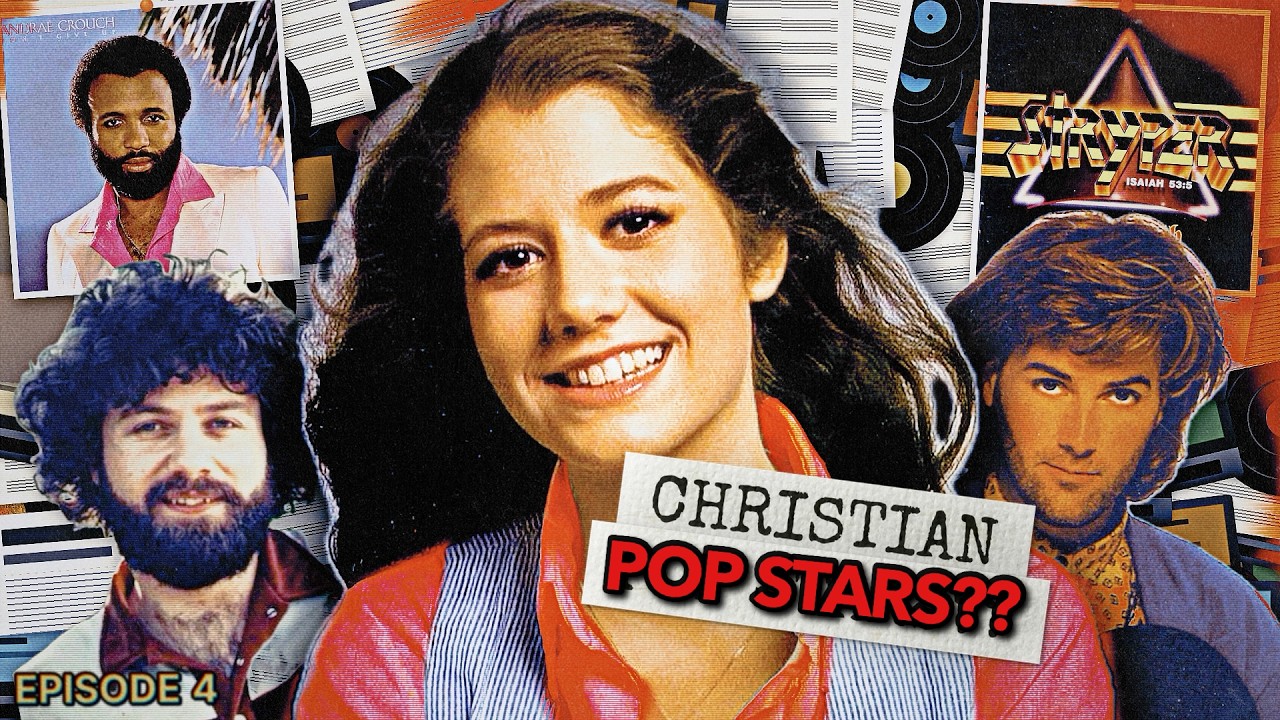
🔗 **Source:** [Amy Grant, Pop Stars & the Industry That Trapped Them?](https://www.youtube.com/watch?v=LelGurtmAtk)
> [!note]+ Document Notes
> tags: [ccm-history, amy-grant, christian-music-industry, record-contracts, gospel-crossover, purity-culture]
> author: Jonathan Allen Wright
> source: Jonathan Allen Wright
> reference: https://www.youtube.com/watch?v=LelGurtmAtk
> date created: 2026-09-10
>
> > [!info] Generated analysis — not the author's words. Sections below are machine-written
> > from the captured source. Only text inside `> [!quote]` blocks is verbatim from the author.
> > Do not quote or attribute any other line to the named author.
>
> # 🏷️ Title: Amy Grant, Pop Stars & the Industry That Trapped Them?
>
<!-- deep-read:sections start -->
## 🧭 Table of Contents
- [📝 Summary](#-summary)
- [📖 Main Content](#-main-content)
- [🗒️ Notes](#️-notes)
- [📚 References](#-references)
- [🗣️ Paraphrase](#️-paraphrase)
- [📰 Newsletter](#-newsletter)
- [✅ Action Items](#-action-items)
- [🧪 Hypotheses](#-hypotheses)
- [📊 Methodology](#-methodology)
- [❓ Questions](#-questions)
- [🔮 Future Research](#-future-research)
- [💡 Implications](#-implications)
- [🧠 Learning Styles Assessment](#-learning-styles-assessment)
- [📊 Accessibility Assessment](#-accessibility-assessment)
- [🌍 DEIB Assessment](#-deib-assessment)
- [✅ Logical Validity](#-logical-validity)
- [🛡️ DARVO Analysis](#-darvo-analysis)
- [🎯 Conclusion](#-conclusion)
- [🔄 Refactor Appendix](#-refactor-appendix--amy-grant-pop-stars--the-industry-that-trapped-them)
### 🔗 References
- [🗒️ Notes — full timestamped walkthrough](#️-notes)
- [✅ Action Items — org-mapping and applicability](#-action-items)
- [🔄 Refactor Appendix — atoms and permanent candidates](#-refactor-appendix--amy-grant-pop-stars--the-industry-that-trapped-them)
## 📝 Summary
- **What happened.** Part four of Jonathan Allen Wright's CCM history series traces the 1980s crossover era: Black gospel artists (Andrae Crouch, BeBe & CeCe Winans, Take 6) breaking into mainstream charts before and alongside white CCM artists; Amy Grant's 1982 album *Age to Age* becoming the first platinum, million-selling Christian album; Michael W. Smith and Stryper each pushing CCM's sound further than Christian radio wanted; Sandi Patty as the genre's "safe" commercial center; the mechanics of 1980s Christian record contracts; and Grant's 1991 pop crossover hit "Baby" followed by the industry backlash after her 1999 divorce and 2000 remarriage to Vince Gill.
- **Why it matters.** The episode's real argument is that CCM's commercial success in the '80s and the industry's treatment of individual artists ran on the same logic: crossover sold records, but only within limits the Christian retail and radio gatekeepers set and could revoke. Wright frames this as a repeating pattern — Andrae Crouch (1982 police stop), Stryper (Christian bookstores refusing to stock a platinum album), and Amy Grant (divorce backlash) each lose institutional support not for their music but for something read as violating the "safe" brand the industry sold alongside it.
- **Key stakeholders.** The artists named (Thomas Dorsey, Andrae Crouch, the Winans family, Take 6, Amy Grant, Rich Mullins, Keith Green, Michael W. Smith, Stryper, Sandi Patty); Christian labels (Myrrh, Sparrow, Reunion, Word) and the secular majors buying into them (ABC, CBS, MCA); Christian bookstores and Christian radio as the gatekeeping retail/airplay layer; fans and "Christian parents" as the audience the industry says it's protecting.
- **Risks and tradeoffs.** The video makes several claims about industry motive and artist treatment — describing the industry response to Crouch as "mostly stepped back and didn't want to talk about it" and to Grant's divorce as "there's no other way to say it. They basically hated her" — without citing contemporaneous sources on screen; these read as the host's synthesis of a broader historical record he says he's covered in other videos in the series, not documented in this transcript alone. Andrae Crouch's 1982 traffic stop is described with the outcome (charges dropped) but the substance found is never specified beyond "a vial of something"; Crouch's own explanation ("soup powder" or that it belonged to a friend) is reported as his stated account, not independently verified here. Amy Grant's marriage being "by all accounts, struggling" is the host's characterization, sourced to unnamed accounts, not to Grant or Chapman directly.
- **Bottom line.** Two things are well-documented and specific: chart/sales facts (Age to Age's certification, Heaven's Billboard #1, "Baby" hitting #1 Hot 100, Stryper's 2 million-copy platinum album, Smith's #6 Hot 100 single) and the record-contract mechanics (advances as recoupable loans, labels retaining masters). What's inference or the host's synthesis is anything about why the industry responded the way it did to Crouch, Stryper, or Grant — Wright names it as a pattern across three cases but doesn't cite a source statement from label executives, bookstore buyers, or radio programmers explaining their own reasoning in any of the three instances.
## 📖 Main Content
Wright opens by displacing the usual origin story — "The actual story of the '80s doesn't really start with Amy Grant or Michael W. Smith" — and starts instead in 1932 with Thomas Dorsey, a blues pianist ("Barrel House Tommy") who, after his wife and newborn died in childbirth, wrote "Take My Hand, Precious Lord" and coined the term "gospel music" by fusing blues chord structures with Christian lyrics (t=31–99). That lineage runs through Andrae Crouch (Disciples, 1965; Carnegie Hall, 1975/1979; choir work on Michael Jackson's "Man in the Mirror" and Madonna's "Like a Prayer") to the Winans family, whose youngest siblings BeBe and CeCe signed to Sparrow Records in 1987 — Sparrow's first Black artist in its 11-year history — and whose 1988 album *Heaven* became, per the video, the first gospel record to hit number one on the Billboard sales charts. The same year, the a cappella group Take 6 won Grammys for best soul gospel album and best jazz vocal performance, working outside any Christian-specific category (t=191–464). Wright's point in walking through this before reaching Amy Grant: Black gospel artists had already proven religious music could cross over and sell in the mainstream, on separate infrastructure — "Black gospel had its own publications, its own charts, and its own awards. CCM had its own." (t=464) — and CCM's labels were watching.
Amy Grant, signed to Myrrh at 15 in 1976, released *Age to Age* in May 1982, produced by Brown Bannister. It sold 5,000–6,000 copies a week for 85 straight weeks, becoming the first Christian album by a solo artist certified gold and then platinum — the first Christian album to sell a million copies (t=487–556). The album's opening track — "Sing Your Praise to the Lord" — was written by a then-unknown 27-year-old, Rich Mullins (t=640–718). Two months after *Age to Age*'s release, Keith Green — an artist who had stopped charging for his albums in 1979 and who publicly warned that CCM was "about to lose its soul" to commercialization — died in a small-plane crash in East Texas on July 28, 1982 (t=729–834). Wright frames the timing (Green's warnings about commercial CCM dying almost exactly as commercial CCM's breakthrough album arrived) as notable without claiming a causal link between the two.
Michael W. Smith, who played keyboards in Grant's band, signed to Reunion Records as a solo artist by 1983; his 1984 song "Friends" became one of the decade's most-played Christian songs, and by 1991 his single "Place in This World" hit number six on the Billboard Hot 100 — not a Christian chart, the actual Hot 100 (t=834–946). Stryper, a glam-metal band from Orange County that turned explicitly Christian without changing its look, faced the opposite commercial-but-rejected trajectory: Christian bookstores wouldn't stock them and Christian radio wouldn't play them through the mid-1980s, even as they toured with W.A.S.P., Mötley Crüe, and Ratt, threw Bibles they'd bought themselves into secular metal crowds, and in 1986 released *To Hell with the Devil*, which went platinum at 2 million copies — per the video, "the biggest selling Christian rock album in history at this point" — while, in the video's words, "The Christian establishment still hated them" (t=946–1128). Sandi Patty, by contrast, is presented as CCM's commercial center of gravity in the same period: an adult-contemporary act with no crossover ambition who performed for President Reagan and won enough Dove Awards that new categories had to be added — "what the Christian retail industry actually wanted" (t=1124–1189).
Wright then explains how a 1980s Christian record contract worked: a $250,000 advance is a recoupable loan against royalties (typically 10–15%), meaning an artist has to generate millions in sales before seeing any of it, and the label keeps the master recordings permanently, even after the contract ends — all of it, per the video, sold to young artists as ministry partnership rather than disclosed as standard industry economics (t=1190–1313). A brief archival clip of John Ellis, of the band 363, is spliced in describing the assumption that everyone working in CCM was a genuine believer, undercut by what he found once inside the industry (t=1301–1313).
The episode closes on Amy Grant's 1991 album *Heart in Motion*, whose lead single "Baby" hit number one on the Hot 100 — a first for a CCM artist — while some Christian bookstores refused to stock the album on the grounds it "wasn't really a Christian album," a characterization Wright says "they weren't entirely wrong about" (t=1327–1407). He then describes Grant's 1999 divorce from Gary Chapman and 2000 marriage to Vince Gill, and the fallout: being uninvited from Christian events, dropped by some Christian radio stations, and losing endorsement deals — in the video's words, "there's no other way to say it. They basically hated her" (t=1376–1436). Wright's own assessment is that the industry treated her "not a story about a person" but "a story about a product" — and that when the product diverged from expectation, "the customers walked away." The episode ends by naming the 1980s as the decade CCM built the financial infrastructure secular labels would want to buy, teasing 1992 as the year every major Christian label starts getting acquired (t=1445–1509).
**Documented vs. characterized, stated plainly.** Chart positions, certifications, release dates, contract mechanics, and quoted archival interview lines are treated here as documented (they're either verifiable facts or direct quotes captured on screen). Statements about why the industry acted as it did toward Crouch, Stryper, or Grant — "stepped back", "basically hated her", "weren't entirely wrong" — are the host's interpretive synthesis, presented without an on-screen source for the institutional reasoning. This note flags that distinction rather than repeating the interpretive claims as established fact.
## 🗒️ Notes
#### ⏱️ [00:00:00](https://www.youtube.com/watch?v=LelGurtmAtk&t=0s) Cold open and thesis
- Opens on 1980s CCM iconography (Amy Grant on MTV, Stryper's Bible-throwing, Sandi Patty's arena tours) then reframes: "The actual story of the '80s doesn't really start with Amy Grant or Michael W. Smith. It doesn't even start in the '80s."
- States this is "part four" of the series.
- Quote: "The 1980s gave us Amy Grant on MTV, a band called Stryper throwing Bibles into metal crowds, and Sandi Patty selling out arenas."
#### ⏱️ [00:00:31](https://www.youtube.com/watch?v=LelGurtmAtk&t=31s) Thomas Dorsey and the origin of "gospel music"
- Dorsey (b. 1899, Georgia): blues pianist known as "Barrel House Tommy"; toured with Ma Rainey, co-wrote a 1928 song that sold 7 million copies.
- 1932: wife Nettie and their newborn both died in childbirth while Dorsey was on the road; he wrote "Take My Hand, Precious Lord" after three days alone in a music room.
- He fused blues chord changes with Christian lyrics and coined the term "gospel music." The song was later requested by Martin Luther King Jr. as the last song he heard performed live, and was recorded by Elvis, Aretha Franklin, Whitney Houston, and Johnny Cash.
- Quote: "Dorsey learned music in the exact place that evangelical America was calling satanic."
#### ⏱️ [00:03:11](https://www.youtube.com/watch?v=LelGurtmAtk&t=191s) Andrae Crouch's crossover and 1982 police stop
- Andrae Crouch started The Disciples in 1965, sold out Carnegie Hall (1975, 1979), then worked in mainstream pop: the choir on Michael Jackson's "Man in the Mirror" and Madonna's "Like a Prayer," collaborations with Quincy Jones, Elton John, Diana Ross; later nominated for an Oscar.
- 1982: pulled over, police found "a vial of something"; Crouch said it was soup powder or belonged to a friend; charges were dropped.
- The video's characterization: "the CCM industry, which had embraced him a little bit, mostly stepped back and didn't want to talk about it" — presented as the host's assessment, not sourced to a label statement on screen.
- Quote: "he was pulled over and the police found a vial of something on him. He insisted that it was soup powder or that"
#### ⏱️ [00:05:15](https://www.youtube.com/watch?v=LelGurtmAtk&t=315s) The Winans family, BeBe & CeCe
- Detroit family, 10 children, four oldest brothers formed the Winans; discovered by Andrae Crouch.
- BeBe and CeCe Winans signed to Sparrow Records in 1987 — Sparrow's first Black artist since Billy Ray Hearn founded it 11 years earlier.
- Their 1988 album *Heaven* is described as the first gospel record to hit number one on the Billboard sales charts.
- Quote: "had never signed a black artist before BeBe and CeCe."
#### ⏱️ [00:06:45](https://www.youtube.com/watch?v=LelGurtmAtk&t=405s) Take 6 and the parallel-infrastructure point
- Take 6's self-titled 1988 debut won Grammys for best soul gospel album and best jazz vocal performance — not a Christian-specific category.
- Wright's synthesis: Black gospel had its own publications, charts, and awards, separate from CCM's, and the Black artists in that lane were already proving religious music could cross over and sell before CCM's white artists did.
- Quote: "won the Grammy for the best soul gospel album and the Grammy for best jazz vocal performance, a Christian album."
#### ⏱️ [00:07:44](https://www.youtube.com/watch?v=LelGurtmAtk&t=464s) CCM labels watching the crossover proof-of-concept
- Explicit claim that CCM labels were watching Crouch, the Winans, and Take 6 succeed commercially outside Christian-only infrastructure, and concluding "CCM can, too."
- Quote: "Black gospel had its own publications, its own charts, and its own awards. CCM had its own."
#### ⏱️ [00:08:07](https://www.youtube.com/watch?v=LelGurtmAtk&t=487s) Amy Grant's rise and *Age to Age*
- Signed to Myrrh Records at 15 in 1976; father was a Nashville doctor; signed by Billy Ray Hearn.
- *Age to Age* (produced by Brown Bannister, released May 1, 1982) sold 5,000–6,000 copies a week for 85 straight weeks — first Christian solo album certified gold, then platinum; first Christian album to sell a million copies.
- Archival interview clip of Amy Grant (embedded in the video, not the host's own words): "I think it's tough when someone comes up to an artist who's been developing her craft for years" and, separately, "I think that we're all constantly trying to push our limits." Also, separately: "the truth is, we're all struggling through life, too. Sometimes doing great, sometimes hanging on by a thread, and a million people are watching you."
- Quote: "The idea of getting a record deal at 15 in 1976 is wild even by 70s standards."
#### ⏱️ [00:10:40](https://www.youtube.com/watch?v=LelGurtmAtk&t=640s) Rich Mullins wrote the opening track
- *Age to Age*'s opener — "Sing Your Praise to the Lord" — was written by 27-year-old, then-unknown Rich Mullins (previously of the group Zion) — described as Bach-influenced and classically complex.
- Wright notes he has a separate full video on Mullins and flags him as someone who later "refused to be a pop star while kind of becoming one".
- Quote: "The guy who wrote it was named Rich Mullins."
#### ⏱️ [00:12:09](https://www.youtube.com/watch?v=LelGurtmAtk&t=729s) Keith Green's death and his warnings about commercialization
- Two months after *Age to Age*, Keith Green died in a small-plane crash in East Texas on July 28, 1982.
- Green had stopped charging for his albums in 1979, gave them away to anyone who asked, and wrote essays warning the church about commercializing the gospel.
- Archival interview clip of Green (embedded in the video): "The average audience is probably 60% church kids... God doesn't have any grandchildren, you know... So, they've got to come into that relationship with him."
- Quote: "after Age to Age comes out on July 28th, 1982, a guy named Keith Green got on a small plane in East Texas,"
#### ⏱️ [00:14:08](https://www.youtube.com/watch?v=LelGurtmAtk&t=848s) Michael W. Smith's parallel rise
- Played keyboards in Amy Grant's band; signed to Reunion Records as a solo artist by 1983; self-titled debut same year.
- 1984 single "Friends" became one of the decade's most-played Christian songs. 1986's *The Big Picture* (synth-heavy, U2/Talking Heads-influenced) was his label's least favorite but became critically acclaimed despite weak sales.
- By 1991, "Place in This World" hit number six on the Billboard Hot 100 (not a Christian chart).
- Quote: "hit number six on the Billboard Hot 100."
#### ⏱️ [00:15:46](https://www.youtube.com/watch?v=LelGurtmAtk&t=946s) Stryper: platinum sales, sustained bookstore and radio rejection
- Orange County glam-metal band (Michael and Robert Sweet plus others) that became explicitly Christian without changing its yellow-and-black spandex look.
- Christian bookstores wouldn't stock them and Christian radio wouldn't play them through 1984; they toured with W.A.S.P., Mötley Crüe, and Ratt, and threw self-purchased Bibles into crowds during encores.
- 1986's *To Hell with the Devil* went platinum (2 million copies) — described as the era's biggest-selling Christian rock album — and "The Christian establishment still hated them" regardless of MTV airplay or arena crowds.
- Quote: "1984 wouldn't stock Stryper, Christian radio wouldn't play them, but Stryper kept showing up."
#### ⏱️ [00:18:44](https://www.youtube.com/watch?v=LelGurtmAtk&t=1124s) Sandi Patty as the industry's safe center
- Inspirational adult-contemporary artist with no crossover ambition; performed for President Reagan; won enough Dove Awards that new categories were added.
- Framed as the artist the Christian retail model actually wanted — she fit the bookstore model cleanly, so radio played her constantly.
- Quote: "there was a third lane, Sandi Patty."
#### ⏱️ [00:20:14](https://www.youtube.com/watch?v=LelGurtmAtk&t=1214s) How 1980s Christian record contracts worked
- A $250,000 advance is a loan, not a gift, recouped entirely from royalties (typically 10–15% rate) before the artist sees any money; the label owns the master recordings permanently, even after the contract ends.
- Presented as standard music-industry practice since the 1950s, but sold to young Christian artists specifically as ministry partnership ("We're investing in your calling").
- Archival clip of John Ellis (band 363): describes assuming everyone in CCM was a genuine believer, and being disabused of that.
- Quote: "record contract actually worked in the '80s because most people don't realize just how stupid it is."
#### ⏱️ [00:22:07](https://www.youtube.com/watch?v=LelGurtmAtk&t=1327s) *Heart in Motion*, "Baby," and the "not really a Christian album" objection
- By 1991, Amy Grant was CCM's biggest name, with multiple platinum albums; *Heart in Motion*'s lead single "Baby" hit number one on the Hot 100 — a first for a CCM artist. The album went five-times platinum.
- Some Christian bookstores refused to stock it, arguing it wasn't a real Christian album — a characterization Wright says they "weren't entirely wrong about."
- Quote: "by 1991, Amy Grant was the biggest name in Christian music by a country mile."
#### ⏱️ [00:22:56](https://www.youtube.com/watch?v=LelGurtmAtk&t=1376s) Divorce, remarriage, and industry backlash
- Grant's marriage to Gary Chapman, publicly held up as a model CCM marriage, is described by Wright as "by all accounts, struggling" privately; they divorced in 1999, and Grant married Vince Gill in 2000 after working with him on the duet "House of Love".
- Consequences described: uninvited from Christian events, dropped by some Christian radio stations, lost endorsement deals. Wright's framing: the industry had been treating her as "a story about a product" — and when the product diverged from expectation, "the customers walked away."
- Quote: "But then things started to fall apart privately."
#### ⏱️ [00:24:05](https://www.youtube.com/watch?v=LelGurtmAtk&t=1445s) Episode close: the infrastructure secular labels wanted
- Summarizes the decade: CCM proved it could compete commercially with mainstream pop and built the financial infrastructure that attracted secular corporate buyers.
- Sets up the next episode: after ABC's 1974 stake in Word ("the trial run"), 1992 is teased as the year every major Christian label gets bought.
- Quote: "It built the financial infrastructure that secular corporations were about to fall in love with."
## 📚 References
- Andrae Crouch — "Man in the Mirror" (Michael Jackson) and "Like a Prayer" (Madonna) choir credits, cited at [00:03:11](https://www.youtube.com/watch?v=LelGurtmAtk&t=191s)
- BeBe & CeCe Winans, *Heaven* (1988) — cited at [00:05:15](https://www.youtube.com/watch?v=LelGurtmAtk&t=315s)
- Take 6, self-titled debut (1988) — cited at [00:06:45](https://www.youtube.com/watch?v=LelGurtmAtk&t=405s)
- Amy Grant, *Age to Age* (1982) and *Heart in Motion* (1991) — cited at [00:08:07](https://www.youtube.com/watch?v=LelGurtmAtk&t=487s) and [00:22:07](https://www.youtube.com/watch?v=LelGurtmAtk&t=1327s)
- Michael W. Smith, *The Big Picture* (1986) and "Place in This World" (1991) — cited at [00:14:08](https://www.youtube.com/watch?v=LelGurtmAtk&t=848s)
- Stryper, *To Hell with the Devil* (1986) — cited at [00:15:46](https://www.youtube.com/watch?v=LelGurtmAtk&t=946s)
- Jonathan Allen Wright's earlier episodes in this series, referenced in-video as "the previous episode" (on ABC/Word, CBS/Priority, MCA/Songbird) and standalone videos on Rich Mullins, Keith Green, and Michael W. Smith — named but not linked in the transcript.
## 🗣️ Paraphrase
Wright's argument is that CCM's 1980s "breakthrough" decade wasn't really Amy Grant's story first — it was built on a decade of Black gospel artists (Dorsey, Crouch, the Winans, Take 6) proving religious music could cross into the mainstream and sell, on infrastructure separate from CCM's own. Once that proof existed, Nashville's labels moved to do the same thing with white CCM artists, and the artists who tried it — Grant with pop radio, Smith with Billboard, Stryper with metal audiences — found that commercial success didn't buy them unconditional acceptance from the Christian retail and radio system that had built them up.
The throughline he draws across three specific cases — Andrae Crouch's 1982 arrest, Stryper's sustained bookstore and radio blackout despite a platinum album, and the industry response to Amy Grant's divorce and remarriage — is that CCM's gatekeepers treated artists as products whose value depended on staying within an unstated purity boundary, not just on record sales. When an artist crossed that boundary (a police stop with dropped charges, an image the bookstore model didn't want, a divorce), commercial success stopped protecting them.
## 📰 Newsletter
Part four of this CCM history series is worth a watch for anyone tracking how the evangelical media industry actually disciplines its own artists. It's less a music-nostalgia piece than a case study in commercial gatekeeping: Stryper went platinum and still couldn't get Christian bookstores to carry the record; Amy Grant hit number one on the actual Billboard Hot 100 and then lost radio slots, event invitations, and endorsements after her divorce. If you're building out a picture of how "purity" functions as a commercial enforcement mechanism rather than just a doctrinal position, this episode lines up three concrete cases (Andrae Crouch, Stryper, Amy Grant) with dates, sales figures, and outcomes attached — useful raw material, with the caveat that the "why" behind each institutional response is the host's synthesis, not a quoted label or bookstore-chain statement.
## ✅ Action Items
#### DevRel
- Not applicable to this source — a music-industry history video with no developer-relations, SDK, or community-program content.
#### OSPO
- Not applicable to this source — no open-source governance, licensing, or software content.
#### Community
- Not applicable to this source — no maintainer, contributor, or software-ecosystem content.
#### WordPress
- Not applicable to this source across all subteams — the video never mentions WordPress or any WordPress product.
#### The WPOCC
- Not applicable to this source — no fellowship, funding, or governance content relevant to The WPOCC's remit.
#### FAIR
- Not applicable to this source — no federation, provenance, or governance-artifact content.
## 🧪 Hypotheses
- H1: CCM institutions (bookstores, radio) applied a consistent, if unstated, purity standard across Andrae Crouch (1982), Stryper (1984–86), and Amy Grant (1991, 1999–2000) — commercial success did not offset a perceived breach of that standard in any of the three cases.
- H2: Christian retail (bookstore stocking decisions) and Christian radio (airplay decisions) functioned as two independent but correlated gatekeeping layers, each capable of penalizing an artist regardless of the other's decision (Stryper got MTV and arena crowds but still lost bookstore and radio access).
- H3: The industry's tolerance for genre/sonic risk (Stryper's metal, Smith's synth-heavy *The Big Picture*) was higher, or at least differently policed, than its tolerance for perceived personal/moral deviation (Grant's divorce) — sonic risk cost sales and radio adds; the divorce cost event invitations, endorsements, and standing.
- H4: Black gospel artists' earlier and parallel commercial crossover (Crouch, the Winans, Take 6, 1965–1988) established a template CCM labels then applied to white artists, without the reverse benefit accruing to the Black gospel artists' commercial legitimacy in CCM's own retail/radio infrastructure.
- H5: The "ministry partnership" framing of 1980s Christian record contracts reduced artists' likelihood of negotiating standard-industry terms (royalty rate, advance vs. loan structure, master ownership) relative to secular-industry contracts of the same period.
- H6: Coverage and memory of 1980s CCM crossover disproportionately centers Amy Grant, Michael W. Smith, and Stryper relative to the commercial scale of the Black gospel crossover (Winans' *Heaven* at #1 on Billboard, Take 6's Grammys) that preceded and paralleled it.
### 📊 Methodology
- For H1/H3: build a case-comparison table across Crouch, Stryper, and Grant recording each institutional response (bookstore stocking, radio airplay, award/event access, public statement) with dates, and code each response as "sales-linked" or "conduct-linked" to test whether commercial success predicted continued institutional support.
- For H2: pull Billboard/CCM trade press coverage (or Christian Booksellers Association archives, if accessible) from 1984–1991 cross-referencing bookstore stocking decisions against Christian radio airplay charts for the same album releases, to test whether the two gatekeeping layers moved together or independently.
- For H4: compare CCM trade-press and awards-body (Dove Awards) representation of Black gospel artists in the 1980s against their Billboard/Grammy commercial performance, to quantify any gap between commercial success and industry-internal recognition.
- For H5: compare surviving 1980s CCM label contracts (where available through artist memoirs, lawsuits, or trade reporting) against standard secular-label contracts of the same years on royalty rate, advance structure, and master ownership terms.
- For H6: a citation-count or search-volume comparison of Grant/Smith/Stryper coverage versus Crouch/Winans/Take 6 coverage in retrospective CCM histories published 2000–2026.
### ❓ Questions
- What contemporaneous statement, if any, exists from a Christian bookstore chain or Christian radio programmer explaining the decision not to stock/play Stryper, distinct from Wright's synthesis of the pattern?
- What specifically was found in Andrae Crouch's 1982 traffic stop, beyond "a vial of something" — was a substance ever identified on the record, or does the ambiguity in the video reflect an ambiguity in the original reporting?
- Did any Christian radio station or bookstore chain publicly justify dropping Amy Grant's airplay/stock after her divorce on doctrinal grounds, or is the claim that "They basically hated her" Wright's aggregate characterization of dispersed, uncoordinated reactions?
- How did the Winans' and Take 6's commercial numbers (Heaven at #1 Billboard, Take 6's two 1988 Grammys) compare, at the time, to trade-press coverage volume relative to Amy Grant's Age to Age — was there a documented visibility gap, or is that this episode's inference?
- What did Rich Mullins and Keith Green's own later writings or interviews say about "Sing Your Praise to the Lord" and CCM's commercial turn, beyond the brief framing given here (Wright points to his own separate videos on both, not shown in this transcript)?
### 🔮 Future Research
- No comparative data in this transcript on how many CCM artists faced bookstore/radio pullback for conduct-related reasons versus how many faced no consequence for comparable events — without a denominator, "purity enforcement" is illustrated by three cases, not established as a system-wide rate.
- No original-source citation (contract text, label memo, bookstore chain statement) for the claim that 1980s Christian contracts were "sold... as ministry" rather than disclosed as standard advance/royalty/masters terms — worth checking against surviving contracts or artist memoirs (Grant, Smith, Stryper members have all published or given long-form interviews).
- No treatment in this episode of how Black gospel artists' own institutions (their "own publications, own charts, own awards," per t=464) evaluated crossover success or conduct — the episode covers CCM's gatekeeping in detail but not gospel's parallel structure's own norms.
- The teaser for the next episode (1992 label buyouts) is unresolved here — worth following up once that episode is available to check whether the buyout wave changed any of the gatekeeping dynamics described in this one.
### 💡 Implications
- **Practice.** For anyone researching CCM or NAR-adjacent institutional history: chart/sales facts in this episode are citable as stated (specific certifications, chart positions, release dates); claims about institutional motive or collective sentiment (the CCM industry "stepped back", the Christian community "basically hated her") need a named, dated, primary source before being treated as more than the host's synthesis.
- **Policy/governance.** Not directly applicable — no current institutional policy is named, though the pattern described (retail/radio gatekeeping tied to perceived artist conduct rather than only to content) is structurally relevant to anyone studying how a media ecosystem enforces informal purity codes without a written policy.
- **Security.** Not applicable to this source.
- **Education.** Useful as a structured, dated timeline (Dorsey through the 1991–2000 Grant arc) for someone building out a fuller picture of CCM's commercial history; the episode explicitly defers detail on Mullins, Green, and Smith to other videos in the same series, so it functions best alongside those, not as a standalone complete account of any one artist.
- **Funding models.** The record-contract breakdown (advance-as-loan, permanent label ownership of masters) is directly relevant background for understanding why the 1992 label buyout wave the episode teases mattered financially to both the labels and the artists under contract to them.
### 🧠 Learning Styles Assessment
- **Reading level estimate:** Flesch-Kincaid Grade Level ≈ 8. Basis: short declarative sentences mixed with longer compound run-ons typical of unscripted narration, frequent proper nouns and dates requiring recall rather than inference, and conversational asides ("Okay, we're going to be jumping", "I know we're moving super fast") that lower formality without lowering information density.
#### 👀 Visual learners
- **Present:** none observable from the transcript alone — archival music clips and interview footage are audible but not described visually in the caption text.
- **Improve:** an on-screen timeline graphic (Dorsey 1932 → Crouch 1965–82 → Winans/Take 6 1987–88 → Grant/Smith/Stryper/Patty 1982–91 → Grant backlash 1999–2000) would help viewers track the parallel threads the narration jumps between.
#### 🔊 Aural learners
- **Present:** the entire episode is audio-first narration interspersed with actual period music clips and archival interview audio (Grant, Green, John Ellis), which aural learners can follow without the visual track.
- **Improve:** none needed — this is the format's natural strength.
#### 🗣️ Verbal learners
- **Present:** clear definitions when introducing industry terms (what an advance is, what "recoup" means, what a master recording is) at t=1214–1313.
- **Improve:** a spoken glossary recap at the end of the contract-mechanics segment would help verbal learners retain "advance," "royalty rate," and "master" as distinct terms rather than one blurred explanation.
#### 🧩 Kinesthetic learners
- **Present:** none — no interactive or hands-on element; this is a narrated history, not a tutorial.
- **Improve:** not a natural fit for this content; no changes recommended.
#### 🧠 Logical learners
- **Present:** the episode is structured as a chronological chain of specific, dated events, which logical learners can follow as a causal/sequential timeline.
- **Improve:** a comparison table (artist × commercial outcome × institutional response) for Crouch, Stryper, and Grant would make Wright's implicit pattern-claim explicit and checkable rather than narrated.
#### 🧑🤝🧑 Social learners
- **Present:** none — no discussion prompts, comment engagement, or collaborative element in the transcript.
- **Improve:** a prompt inviting viewers to share other CCM-era "commercial success, institutional rejection" cases would extend the pattern into a crowd-sourced check.
#### 🧘♀️ Solitary learners
- **Present:** the narration is dense enough to reward pausing and independent fact-checking of specific claims (chart positions, dates), which solitary learners are well-suited to do.
- **Improve:** timestamped source citations for the more interpretive claims (e.g., that the CCM industry "mostly stepped back" from Crouch) would let a solitary viewer independently verify the claim rather than just accept the narration.
#### 🌿 Naturalistic learners
- **Present:** none — no ecological, sustainability, or systems-in-nature framing appears in the transcript.
- **Improve:** not a natural fit for this content; no changes recommended.
### 📊 Accessibility Assessment
*Assessed from the transcript only — the video itself was not visually reviewed, so on-screen text, imagery, and audio mix were not directly observed.*
#### Captions and transcript
- **Present:** the transcript used for this note is auto-generated (YouTube's automatic captioning), not human-corrected — the caption text has no punctuation guarantees and no indication proper nouns were verified (e.g., "Andre Crouch" appears in place of "Andrae Crouch" at several points, likely a caption artifact rather than an error in the narration itself).
- **Improve:** a creator-reviewed caption pass would fix proper-noun errors (artist names, album titles) that an auto-caption system is prone to mangle, and would benefit any Deaf or hard-of-hearing viewer relying on captions rather than audio (WCAG 2.2 SC 1.2.2, SC 1.2.4).
#### Audio description of visual content
- **Present:** none evident — the transcript gives no indication that on-screen imagery (archival photos, album covers, footage) is described aloud for non-sighted listeners; a blind listener following audio alone would miss any purely visual context.
- **Improve:** brief spoken context when cutting to archival photos or footage (e.g., naming what's shown) would close this gap; not assessable further without a direct visual/audio review of the published video.
#### Screen reader semantics
- **Not observed** — no on-screen text elements, captions structure, or a companion written page exist in what's captured here; not applicable without a direct review of the video platform's own caption/metadata implementation (WCAG 2.2 SC 1.3.1 would apply to a companion written page, not the video itself).
#### Keyboard navigation
- **Not applicable** — no interactive elements in the video content itself.
#### Contrast and readability
- **Not observed** — on-screen graphics, if any, were not visually reviewed; flag for direct check before treating as compliant (WCAG 2.2 SC 1.4.3, SC 1.4.11).
#### Forms and interactions
- **Not applicable** — no forms or interactive input in the video.
#### Standards reference
- Gaps above map to WCAG 2.2 AA: 1.2.2 (Captions, Prerecorded), 1.2.4 (Captions, Live — relevant if simulcast), 1.2.5 (Audio Description, Prerecorded), 1.3.1 (Info and Relationships). Caption accuracy and audio description are the two concrete, checkable gaps from transcript evidence alone.
### 🌍 DEIB Assessment
#### Cultural breadth
- **Present:** the episode deliberately foregrounds the Black gospel lineage (Dorsey, Crouch, the Winans, Take 6) as commercially and historically prior to, and separate infrastructure from, the white CCM artists it spends more total runtime on.
- **Improve:** despite naming this lineage, the episode still gives it roughly a third of the runtime before pivoting to Grant/Smith/Stryper/Patty — a companion or follow-up episode centered entirely on the Black gospel crossover artists, at equal depth, would balance the emphasis the video itself flags as disproportionate in retrospective CCM history (H6 above).
#### Inclusive language
- **Present:** no gendered or exclusionary language identified in the transcript; artist names and pronouns used are consistent with how each person is publicly known.
- **Improve:** none needed based on transcript evidence.
#### Neurodiversity support
- **Present:** chronological, chunked delivery by artist/topic, with explicit verbal signposting ("Okay, let's rewind some", "let's slow down a little bit") that helps a listener track topic shifts without visual chapter markers.
- **Improve:** on-platform chapter markers matching the H4 segments in this note's Notes section would make it easier for a listener who processes audio best in discrete chunks to navigate directly to a topic of interest.
#### Representation
- **Present:** the episode names Black gospel artists' specific commercial firsts (Sparrow's first Black artist, first gospel #1 on Billboard, Grammys outside a Christian category) rather than treating them as a footnote to the CCM story.
- **Improve:** the episode doesn't quote any Black gospel artist directly (no archival clip from Crouch, the Winans, or Take 6 is included, versus direct clips from Grant, Green, and Ellis) — including a clip of one of those artists in their own words would balance whose voice the viewer actually hears, not just whose story gets summarized.
#### Psychological safety
- **Present:** Wright frames the Amy Grant divorce backlash with explicit disapproval of the industry's response ("I find it kind of heartbreaking... you would hope that Christians would do a little bit better"), rather than presenting the backlash neutrally or endorsing it.
- **Improve:** the same explicit-disapproval framing isn't extended to the Andrae Crouch segment, where the industry "stepping back" is reported more flatly — consistent framing across both cases would make the episode's own moral position clearer and more even-handed.
### ✅ Logical Validity
#### Strong reasoning
- **Comparative/pattern reasoning across three cases (t=191–1436):** Wright builds his "purity enforcement" thesis inductively from three specific, dated cases — Crouch (1982), Stryper (1984–86), Grant (1999–2000) — rather than asserting it as a given. Each case includes concrete facts (dates, sales figures, specific consequences) before the pattern claim is drawn, which is a defensible inductive structure even though the underlying sample is small (n=3).
- **Explicit economic mechanism for the contract claim (t=1190–1313):** the advance-as-loan/masters-ownership explanation is a specific, checkable mechanism (royalty rate, recoupment, permanent ownership), not a vague assertion that "labels exploited artists" — it's the kind of claim a viewer could verify against a real 1980s contract.
#### Fallacies
- **Correlation presented adjacent to implied significance (not stated as causation) — Keith Green's death and CCM's commercial breakthrough.** Location: t=729, "2 months after Age to Age comes out on July 28th, 1982, a guy named Keith Green got on a small plane in East Texas... and that plane never made it back safely" — followed later by "his death and the arrival of full-blown commercial CCM happened... about the same time. The loudest critic of where CCM was going didn't actually get to see where it went." Why it's a soft risk: Wright doesn't explicitly claim one caused the other, but placing the two events in tight narrative proximity with dramatic framing ("didn't actually get to see where it went") invites a listener to infer more connection between the timing and the outcome than the video actually asserts. Fix: an explicit line stating the two events are presented for chronological/thematic contrast, not as cause and effect, would close the gap between what's implied by pacing and what's actually claimed.
- **Unsupported institutional-motive claims stated with narrator certainty.** Location: "the CCM industry, which had embraced him a little bit, mostly stepped back and didn't want to talk about it" (t=464, re: Crouch); "there's no other way to say it. They basically hated her" (t=1398, re: Grant). Why it's weak: both are presented in the same declarative register as the sourced chart/sales facts around them, with no on-screen citation distinguishing a documented label or bookstore statement from the host's own read of how events played out. Fix: flagging these specific lines as the host's synthesis, or naming a source, would let a viewer weight them differently than the certified sales figures sitting a sentence away.
#### Tone of voice
- Fast-paced, first-person narration with frequent direct address to the viewer ("here's the thing that most people won't tell you", "I know we're moving super fast, but stick with me"); openly editorializing at points ("I find it kind of heartbreaking," "How interesting, another person not talked about by the CCM industry") rather than maintaining strict narrative neutrality — the host signals his own sympathies clearly rather than hiding them.
### 🛡️ DARVO Analysis
- **Deny:** Not applicable in the classical sense. DARVO describes a move made by an accused party facing an accusation. No one in this transcript is fielding an accusation and denying it — the host is narrating events about absent third parties, and the one moment closest to a denial (Andrae Crouch's stated explanation that the substance found on him was "soup powder" or a friend's) is Crouch's own account of a specific incident, reported by the narrator as Crouch's stated position, not staged in the video as a live defense against a live accusation.
- **Attack:** Not applicable. The host does not attack the credibility of any accuser; there is no accuser present in this footage to attack. If anything, the rhetorical direction runs the other way — Wright is mildly critical of the industry's response to Grant and neutral-to-implicitly-critical of its response to Crouch.
- **Reverse victim/offender:** Not applicable. No one in the video recasts an accused party as the victim of their accuser. Grant's divorce is not framed by the video as anyone's wrongdoing needing a defense — Wright's framing is that the industry, not Grant, is the party whose conduct he questions ("you would hope that Christians would do a little bit better").
- **What's actually happening instead, worth naming:** the pattern the video documents is institutional withdrawal (bookstores declining to stock, radio declining to play, invitations withdrawn) rather than any public accusation-and-denial exchange. That's a different mechanism than DARVO — it's quiet gatekeeping, not a defended-against accusation — and mislabeling it as DARVO would overstate what the transcript shows. The one place a defense narrative does appear (Crouch's explanation of the 1982 stop) isn't accompanied by any on-screen accuser to deny or attack, so even there DARVO's three moves don't have a target to operate against.
## 🎯 Conclusion
The episode's core claim is that 1980s CCM's commercial breakthrough and its treatment of individual artists ran on the same logic: crossover success sold records, but the industry's retail and radio gatekeepers reserved the right to withdraw support the moment an artist's conduct or image diverged from an unstated purity standard — a standard sales figures alone didn't override, as shown across Andrae Crouch's 1982 arrest, Stryper's platinum-selling-but-blacklisted run, and the backlash following Amy Grant's divorce and remarriage. The chart and contract facts in this episode are specific and checkable; the claims about why institutions acted as they did are the host's synthesis and should be weighed as such rather than treated as equivalent to the sales data sitting next to them. Practical next step for a reader: before citing this episode's institutional-motive claims (what "the CCM industry" or "the Christian community" did or felt) in further writing, look for a primary source — a contemporaneous label statement, bookstore-chain policy, or radio-programmer interview — rather than the video's narration alone.
## 🔄 Refactor Appendix — Amy Grant, Pop Stars & the Industry That Trapped Them?
> Density: 4 Literature atoms (H4), 2 Permanent candidates (H4).
> Konik claim-header rules: present tense, declarative, ≤10 words, searchable, unique.
> Atomicity: one declarative sentence per atom.
### 📚 Literature Atoms (H4)
#### [H1] Platinum sales didn't buy Stryper bookstore or radio access
> [!quote]
> The Christian establishment still hated them. It didn't matter that they were on MTV.
**Context & use**:
- [00:18:10](https://www.youtube.com/watch?v=LelGurtmAtk&t=1090s) — stated right after noting *To Hell with the Devil* went platinum at 2 million copies.
- Central evidence for the episode's purity-enforcement thesis: commercial success (MTV, arena crowds, platinum certification) ran in parallel with, not in place of, institutional rejection.
**Tags**: #xref
<!-- atomicity: 1 idea ✓ -->
#### [H2] 1980s Christian labels kept master recordings permanently
> [!quote]
> the label owns your master recordings forever, even after the contract is over
**Context & use**:
- [00:21:00](https://www.youtube.com/watch?v=LelGurtmAtk&t=1260s) — part of the contract-mechanics explainer (advance as recoupable loan, 10–15% royalty rate).
- Names the specific, checkable term (masters ownership) underlying the "ministry" framing critique.
**Tags**: #xref
<!-- atomicity: 1 idea ✓ -->
#### [H3] Black gospel built separate charts before CCM crossed over
> [!quote]
> Black gospel had its own publications, its own charts, and its own awards. CCM had its own.
**Context & use**:
- [00:07:44](https://www.youtube.com/watch?v=LelGurtmAtk&t=464s) — synthesis line closing the Crouch/Winans/Take 6 sequence, before the pivot to Amy Grant.
- Grounds the claim that CCM's labels were watching a proven crossover template rather than inventing one.
**Tags**: #xref
<!-- atomicity: 1 idea ✓ -->
#### [H4] Amy Grant lost radio and event access after her divorce
> [!quote]
> They basically hated her. Uninvited from Christian events, some Christian radio stations stopped playing her music
**Context & use**:
- [00:23:18](https://www.youtube.com/watch?v=LelGurtmAtk&t=1398s) — follows the 1999 divorce/2000 remarriage timeline.
- Third and most detailed case in the episode's three-case purity-enforcement pattern; the only one with a specific list of institutional consequences named on screen.
**Tags**: #xref
<!-- atomicity: 1 idea ✓ -->
### 🧠 Permanent Candidates (H4)
#### [P1] Commercial gatekeepers enforce purity through withdrawal, not argument
**Claim** (Courtney's voice): When a commercial-religious institution wants to enforce a purity standard against an artist who's already profitable for it, the mechanism is usually quiet withdrawal of access (stocking, airplay, invitations) rather than a public argument or accusation — which makes the standard hard to name or contest because no one has to state it out loud.
**Evidence pointer**: [[#H1]] [[#H4]]
**Scope & conditions**: Holds clearly in the Stryper and Grant cases, where the video documents specific access withdrawn (bookstore stocking, radio airplay, event invitations) without a stated on-record justification. Less clear in the Crouch case, where the "stepped back" claim is the host's synthesis without documented specifics of what access, if any, was withdrawn.
**Links** (≥1 with annotation):
- [[Purity culture enforcement mechanisms]] — because extends: generalizes the video's three music-industry cases into a broader pattern worth checking against other NAR-adjacent institutional behavior in this video series.
- [[DARVO]] — because contrasts on: this withdrawal pattern has no accusation-and-denial structure, which is exactly why DARVO doesn't apply to it (see DARVO Analysis above) even though both involve an institution protecting itself from a perceived reputational threat.
<!-- atomicity: 1 idea ✓ -->
#### [P2] "Ministry" framing in a contract can mask standard label economics
**Claim** (Courtney's voice): When a contract is presented to me as partnership, calling, or ministry rather than as a straightforward financial instrument, that's a signal to read the actual terms (who owns the output, how repayment works) as closely as I would a purely commercial deal — the framing and the terms can diverge.
**Evidence pointer**: [[#H2]]
**Scope & conditions**: Grounded here in 1980s CCM-specific reporting (advance-as-loan, permanent masters ownership, described as sold to ~20-year-old artists as calling); the general caution applies more broadly to any contract using relational or mission-driven language, not only religious-industry ones.
**Links** (≥1 with annotation):
- [[Advance recoupment structure]] — because applies-in: any creative-industry contract using an advance-against-royalties structure, not just Christian labels.
<!-- atomicity: 1 idea ✓ -->
### ✏️ Fleeting Queue
- [F1] Check whether a documented, on-record label or bookstore-chain statement exists for the Stryper stocking/airplay refusal, rather than relying on this episode's synthesis. — https://www.youtube.com/watch?v=LelGurtmAtk #xref
- [F2] Follow up on Wright's teased next episode (1992 Christian label buyouts) to see whether it names specific acquirers/targets and whether it revisits the Crouch, Stryper, or Grant cases. — #xref
### → Things 3 (max 2 actions)
- [ ] Watch Jonathan Allen Wright's standalone episodes on Rich Mullins and Keith Green (referenced but not detailed in this transcript) before citing either artist's views on CCM commercialization — context #ccm-series #things
<!-- deep-read:sections end -->
📄 **Full text:** [[Full Document Contents/Articles/Amy Grant, Pop Stars & the Industry That Trapped Them.md|Amy Grant, Pop Stars & the Industry That Trapped Them? by Jonathan Allen Wright]]
## Highlights
- The Christian establishment still hated them. It didn't matter that they were on MTV. ([View Highlight](https://read.readwise.io/read/01m260601g7fxdkb8nkwb7h4jv))
- Note: How purity expectations got enforced commercially — the substantive claim, distinct from characterizing anyone's motives.
- Tags: purity-culture, xref