An Open Framework for Developer Learning
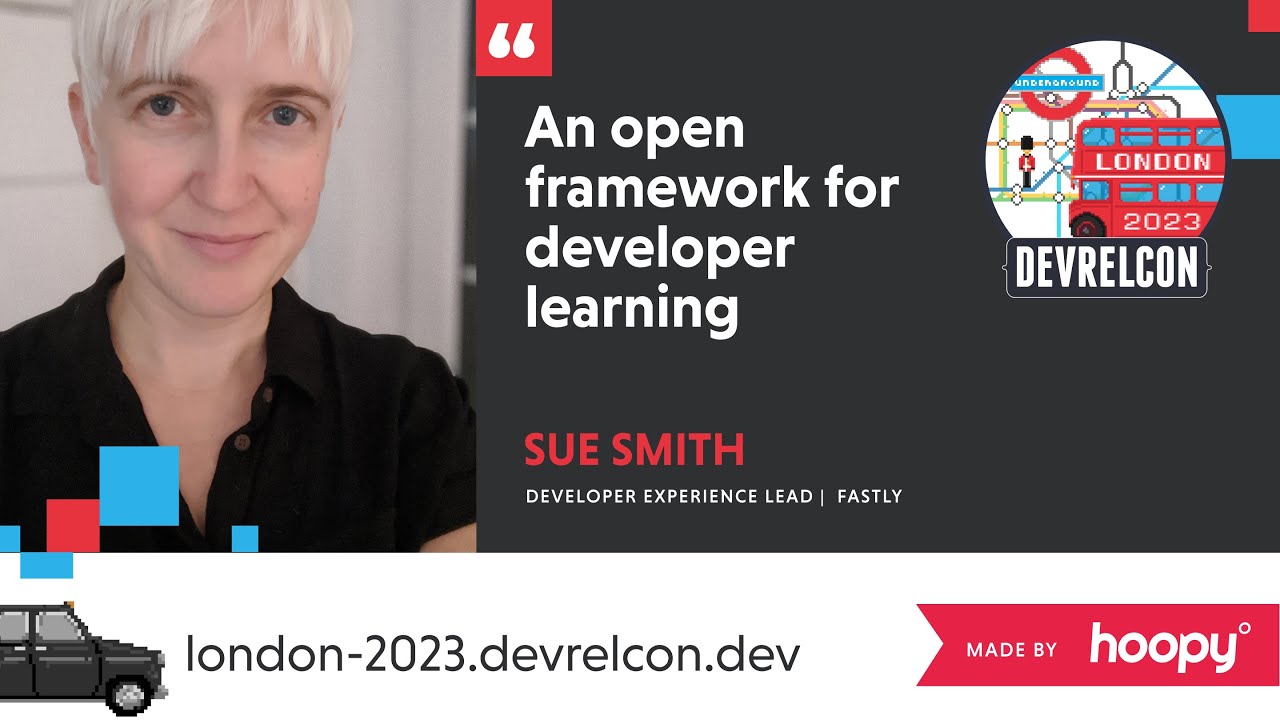
🔗 **Source:** [An Open Framework for Developer Learning](https://www.youtube.com/watch?v=aWgnsWLR0cM)
> [!note]+ Document Notes
> tags:
> - #developerlearning
> - #framework
> - #education
> Author: Sue Smith
> Source: YouTube – "An open framework for developer learning"
> Reference: https://www.youtube.com/watch?v=aWgnsWLR0cM
> date created: 2025-08-23 21:45
>
> # Title: An Open Framework for Developer Learning (Sue Smith)
>
<!-- deep-read:sections start -->
## Table of Contents:
- [📝 Summary](#-summary)
- [📖 Main Content](#-main-content)
- [🗒️ Notes](#️-notes)
- [📖 References](#-references)
- [🗣️ Paraphrase](#-paraphrase)
- [📰 Newsletter](#-newsletter)
- [✅ Action Items](#-action-items)
- [🧪 Hypotheses](#-hypotheses)
- [📊 Methodology](#-methodology)
- [❓ Questions](#-questions)
- [🔮 Future Research](#-future-research)
- [💡 Implications](#-implications)
- [🧠 Learning Styles Assessment](#-learning-styles-assessment)
- [📊 Accessibility Assessment](#-accessibility-assessment)
- [🌍 DEIB Assessment](#-deib-assessment)
- [✅ Logical Validity](#-logical-validity)
- [🔍 DARVO Analysis](#-darvo-analysis)
- [🔍 SEO Evaluation](#-seo-evaluation)
- [🎯 Conclusion](#-conclusion)
---
## 📝 Summary:
Sue Smith introduces an **open framework for developer learning**, rooted in research from the Raspberry Pi Foundation and her own experience at Fastly, Glitch, and Postman. The talk emphasizes that **software development is fundamentally a learning activity**. The framework combines principles such as learner-centered design, the PRIMM model, code comprehension, retrieval testing, semantic waves, reflection, and community engagement. Smith’s ultimate motivation: making education equitable, scalable, and reflective of diverse learner contexts.
---
## 📖 Main Content:
Smith frames developer education as an ecosystem-wide need, highlighting:
- The **historical problem of privilege** in computer science education.
- The necessity of **learner-centered design** in developer onboarding and product education.
- PRIMM model steps (Predict, Run, Investigate, Modify, Make).
- **Normalization of mistakes** (psychological safety).
- **Patterns like spacing, interleaving, retrieval, and semantic waves** to reinforce long-term learning.
- **Reflection and sharing** as essential for retention.
- A **lesson-level framework**: prerequisites → steps (guess/run/explore/modify) → project extension → reflection → community sharing.
- Collaboration with **sales and customer success teams** for qualitative feedback.
- Using **automation and progress tracking** to scale experiences.
### 🗒️ Notes
- **[00:04](https://www.youtube.com/watch?v=aWgnsWLR0cM&t=4)** Developer learning framed as a co-created, open framework.
- **[02:35](https://www.youtube.com/watch?v=aWgnsWLR0cM&t=155)** Software development = continuous learning; must support it structurally.
- **[05:01](https://www.youtube.com/watch?v=aWgnsWLR0cM&t=301)** Learner-centered design: respect learner agency, broader ecosystem integration.
- **[07:32](https://www.youtube.com/watch?v=aWgnsWLR0cM&t=452)** Context matters—background, resources, psychological safety.
- **[09:51](https://www.youtube.com/watch?v=aWgnsWLR0cM&t=591)** PRIMM model introduced; parallels natural language learning.
- **[12:19](https://www.youtube.com/watch?v=aWgnsWLR0cM&t=739)** Spacing, interleaving, retrieval testing, semantic waves = stronger learning.
- **[14:42](https://www.youtube.com/watch?v=aWgnsWLR0cM&t=882)** Reflection + sharing amplify retention.
- **[17:05](https://www.youtube.com/watch?v=aWgnsWLR0cM&t=1025)** Lesson-level framework design described.
- **[19:15](https://www.youtube.com/watch?v=aWgnsWLR0cM&t=1155)** Glitch demo with visible learner feedback loops.
- **[21:14](https://www.youtube.com/watch?v=aWgnsWLR0cM&t=1274)** Scaling via automation, feedback loops, and cross-team collaboration.
- **[23:19](https://www.youtube.com/watch?v=aWgnsWLR0cM&t=1399)** Sue’s “why”: equity in access; free tuition changed her life.
- **[25:29](https://www.youtube.com/watch?v=aWgnsWLR0cM&t=1529)** Glitch lowers barriers by encouraging remix/play.
---
## 📖 References:
- Raspberry Pi Foundation – PRIMM model research.
- Ken Robinson & Paulo Freire – learner-centered design philosophy.
- Joe Nash – DevRelCon talk on learning science.
- Open Badges program (Mozilla).
---
## 🗣️ Paraphrase:
1. Original: “Coding is a learning activity; even repeating tasks happen in new contexts.”
Paraphrase: *Every act of coding involves learning, since contexts shift and new problems arise even in familiar tasks.*
2. Original: “Reflection and sharing are part of what makes learning stick.”
Paraphrase: *Learning endures when learners pause to reflect and explain it within social contexts.*
---
## 📰 Newsletter:
📚 **Building an Open Framework for Developer Learning**
At [DevRelCon], Sue Smith shared a refreshing take: **coding isn’t just engineering—it’s always learning.** From PRIMM to semantic waves, she laid out research-backed practices for developer onboarding and education.
💡 Key takeaways:
- Learner-centered design = higher retention.
- Normalize mistakes → psychological safety → deeper learning.
- PRIMM model works beyond classrooms; remixing projects lowers barriers.
- Reflection + sharing = retention superpower.
👉 Framework + Glitch demo: [Watch the full talk](https://www.youtube.com/watch?v=aWgnsWLR0cM)
---
## ✅ Action Items:
- Apply PRIMM + semantic wave to **WordPress contributor onboarding**.
- Build psychological safety in contributor docs (“safe to fail” messaging).
- Co-create OSS learning frameworks with partners (FAIR, WPCC).
- Use **progress tracking dashboards** in learning platforms for feedback loops.
- Align with OSPO goals: scalable, equitable, research-based frameworks.
---
## 🧪 Hypotheses:
- H1: Learner-centered frameworks reduce WordPress contributor churn by 25%.
- H2: PRIMM + reflection improves retention of complex OSS workflows.
### 📊 Methodology:
- Pilot contributor onboarding with PRIMM.
- Use A/B testing: traditional docs vs. framework-based learning.
- Track: retention, time-to-first-patch, self-reported confidence.
### ❓ Questions:
- How do cultural contexts shape perceptions of psychological safety in OSS?
- Can progress tracking without surveillance be implemented equitably?
### 🔮 Future Research:
- Comparative study of PRIMM vs. project-based OSS onboarding.
- Impact of remix culture (Glitch-style) on open source adoption.
### 💡 Implications:
- Could shift OSS training from **product-centric** to **learner-centric**.
- Establishes precedent for scalable **equitable learning frameworks** in OSPOs.
---
## 🧠 Learning Styles Assessment:
- **Visual**: Demo + Glitch UI strong, but needs infographics.
- **Aural**: Talk format supports auditory learners; add podcast version.
- **Verbal**: Strong—storytelling, personal background.
- **Kinesthetic**: Glitch remixing is perfect hands-on.
- **Logical**: Strong—PRIMM, semantic waves.
- **Social**: Weak outside Q&A; could add group learning exercises.
- **Solitary**: Reflection prompts support self-learners.
- **Naturalistic**: Absent—could tie tech learning to sustainability themes.
---
## 📊 Accessibility Assessment:
- Transcript = strong accessibility.
- Needs alt-text for demos.
- Vanilla JS design = low-barrier entry.
- Improve: Add captions, ARIA roles, keyboard nav.
---
## 🌍 DEIB Assessment:
- Inclusive language, strong equity framing.
- Explicitly acknowledges privilege and access disparities.
- Needs more global cultural case studies.
- Suggest: multilingual resources, examples from underrepresented dev communities.
---
## ✅ Logical Validity:
- **Strengths**:
- Deductive reasoning (coding as learning activity).
- Inductive evidence (PRIMM research).
- Ethical reasoning (equity in access).
- **Weaknesses**:
- Lacks quantitative evidence beyond anecdotes.
- **Tone**: Conversational, empathetic, equity-driven.
---
## 🔍 DARVO Analysis:
- **Deny**: None.
- **Attack**: None.
- **Reverse Victim/Offender**: None.
Tone: Empathetic, learner-advocacy.
---
## 🔍 SEO Evaluation:
- **Keywords**: “developer learning,” “PRIMM,” “framework.” Present but underused.
- **Meta**: Missing in transcript—should summarize framework.
- **Headers**: Clear in transcript recap.
- **Length**: Sufficient (over 3,000 words).
- **Links**: Needs supporting research citations.
- **Images**: Demo lacked alt-text.
- **Schema**: No FAQ/HowTo schema.
- **Social**: YouTube share-ready; could optimize Open Graph tags.
---
## 🎯 Conclusion:
Sue Smith presents a powerful, open framework blending **learning science, developer experience, and equity in access**. By combining PRIMM, semantic waves, reflection, and remixing, the framework addresses both the **how** and **why** of developer education. For OSS advocates and OSPO leaders, this framework offers a roadmap to scalable, equitable learning systems that align with contributor sustainability and community health.
<!-- deep-read:sections end -->
[[3. Resources/Readwise/Full Document Contents/Articles/An Open Framework for Developer Learning|Full Document Contents]]
## Highlights
- the speaker has been working in devell for more than 15 years I did the math and I was like 16 17 I didn't have enough hands um but um they've been in the business for a long time so if you're interested in learning about closing knowledge gaps and teaching people how to succeed with your products I'd tune in double extra for this one your next speaker has done everything from art to designing education strategy at Postman to co-founding us nonprofit that partnered with Mozilla on open education events to where are now um so ([View Highlight](https://read.readwise.io/read/01k3cxamjbfbndx0gvp2gzgfb8))