An Open Letter to WooCommerce and the Woo Community
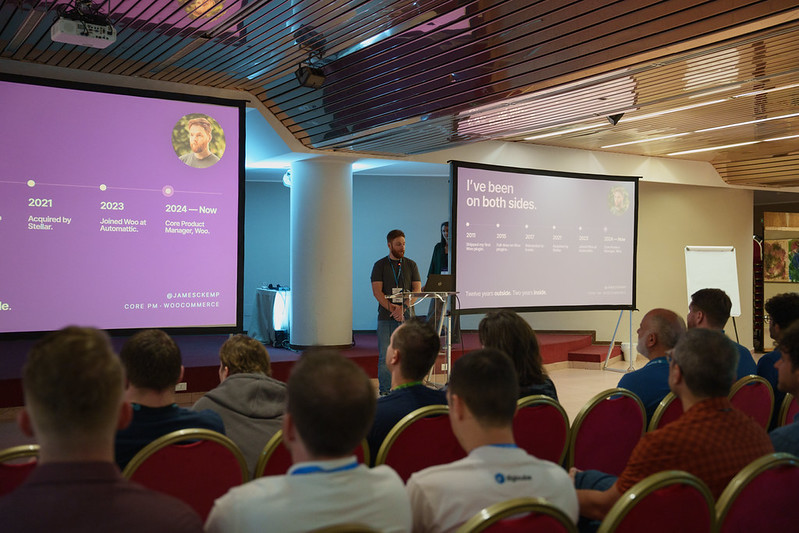
🔗 **Source:** [An Open Letter to WooCommerce and the Woo Community](https://www.businessbloomer.com/open-letter-to-woocommerce/)
> [!note]+ Document Notes
> tags: #woocommerce #community #open-source #ecosystem #wordpress
> author: Rodolfo Melogli
> source: Business Bloomer
> reference: https://www.businessbloomer.com/open-letter-to-woocommerce/
> date created: 2024-12-28 20:15
>
> # 🏷️ Title: An Open Letter to WooCommerce and the Woo Community
>
<!-- deep-read:sections start -->
## 🧰 Action Inbox
- [H1] Organize community feedback workshop with WooCommerce team — addressing realignment and transparency #woocommerce
- [H2] Document and share ecosystem challenges from PHP vs React developers — Gutenberg integration issues #wordpress
- [H3] Support Checkout Summit continuation and WooConf revival — community building initiatives #community
## 🧭 Table of Contents
- [[#📝 Summary]]
- [[#📖 Main Content]]
- [[#🗒️ Notes]]
- [[#📚 References]]
- [[#🗣️ Paraphrase]]
- [[#📰 Newsletter]]
- [[#✅ Action Items]]
- [[#🧪 Hypotheses]]
- [[#📊 Methodology]]
- [[#❓ Questions]]
- [[#🔮 Future Research]]
- [[#💡 Implications]]
- [[#🧠 Learning Styles Assessment]]
- [[#📊 Accessibility Assessment]]
- [[#🌍 DEIB Assessment]]
- [[#✅ Logical Validity]]
- [[#🛡️ DARVO Analysis]]
- [[#🎯 Conclusion]]
### 🔗 References
- [Checkout Summit](URL_MISSING)
- [Business Bloomer](https://www.businessbloomer.com/)
## 📝 Summary
- Long-time WooCommerce expert Rodolfo Melogli calls for better collaboration between WooCommerce and its ecosystem after Checkout Summit 2026
- The community faces challenges from Gutenberg integration, economic pressures, and lack of communication from WooCommerce leadership
- Key asks include: transparent roadmaps, community inclusion in decisions, WooConf revival, and addressing the PHP vs React developer divide
- Despite challenges, WooCommerce remains the world's most-used ecommerce platform with a valuable open-source foundation
- The ecosystem needs realignment through conversation, shared responsibility, and collaborative decision-making
## 📖 Main Content
This open letter from a 14+ year WooCommerce community veteran addresses critical tensions within the WordPress ecommerce ecosystem following Checkout Summit 2026 in Palermo. Melogli argues that WooCommerce's open-source foundation creates unique value through ownership and freedom, but the community faces significant challenges requiring immediate attention.
The letter identifies several core issues: the developer community split between "classic/PHP" and "block/React" approaches following Gutenberg's 2018 integration, low adoption of Cart and Checkout blocks due to third-party plugin incompatibility, economic pressures affecting agencies and merchants, and reduced communication from WooCommerce leadership.
Melogli presents a balanced perspective, acknowledging both WooCommerce's continued market dominance and the legitimate frustrations within the ecosystem. He frames competition as beneficial and emphasizes that recent WordPress community drama has contributed to talent exodus and reduced collaboration.
The letter's primary demand is for increased transparency and community inclusion in WooCommerce's strategic decisions, including published roadmaps, collaborative workshops, and revival of WooConf. It calls for "realignment" through structured conversation rather than fundamental change.
## 🗒️ Notes
#### Article Structure — [H1] Community state assessment and call for collaboration
- Key idea: Checkout Summit revealed ecosystem potential but highlighted communication gaps
- Evidence: "First time since WooConf 2017" people gathered to discuss WooCommerce face-to-face
#### Open Source Foundation — [H2] WooCommerce's competitive advantage through ownership
- Key idea: Open-source creates unique value through merchant and developer ownership
- Evidence: "Merchants own their stores and data. Developers own their code. Agencies own their processes"
#### Technical Challenges — [H2] Gutenberg integration created developer community division
- Key idea: Block-based architecture split community between PHP and React developers
- Evidence: "WooCommerce community split between the 'classic/PHP' developers, and the 'block/React' developers"
#### Market Position — [H3] WooCommerce maintains dominance despite online discourse
- Key idea: Scale and continued adoption prove ecosystem strength beyond social media noise
- Evidence: "WooCommerce remains the ecommerce engine behind an enormous part of the web"
#### Competition Benefits — [H3] Market alternatives strengthen rather than weaken WooCommerce
- Key idea: Competition forces innovation and market clarity
- Evidence: "WooCommerce is like Pepsi and Shopify is like Coke. On average, Pepsi tastes better than Coke during blind tests"
#### Recent Challenges — [H1] Multiple pressures affecting ecosystem health
- Key idea: Economic, technical, and community factors created perfect storm of challenges
- Evidence: "Most WP/Woo founders/builders/agencies are experiencing revenue loss, client churn, increased expenses"
#### Transparency Requests — [H1] Community demands inclusion in strategic decisions
- Key idea: Ecosystem stakeholders want involvement from idea stage, not just launch announcements
- Evidence: "We want to hear when ideas are born, not when something is shipped"
#### Collaborative Future — [H2] Shared responsibility requires active participation
- Key idea: No single entity should define WooCommerce's future alone
- Evidence: "Its future is shaped collectively by everyone contributing to it"
## 📚 References
- [Business Bloomer](https://www.businessbloomer.com/)
- [Checkout Summit 2026](URL_MISSING)
- [WordPress](https://wordpress.org/)
- [WooCommerce](https://woocommerce.com/)
## 🗣️ Paraphrase
- A veteran WooCommerce community member argues the ecosystem needs better collaboration and transparency from leadership following a successful community gathering in Italy
- The community faces technical divisions from Gutenberg integration, economic pressures, and communication gaps that require structured dialogue to resolve
- Despite challenges, WooCommerce's open-source foundation and market position remain strong, but realignment through shared responsibility and regular community events is essential for future growth
## 📰 Newsletter
**Community Leader Calls for WooCommerce Ecosystem Realignment**
After 14+ years in the WooCommerce ecosystem, veteran developer Rodolfo Melogli published an open letter calling for better collaboration between WooCommerce and its community. Following Checkout Summit 2026 in Palermo—the first major WooCommerce gathering since WooConf 2017—Melogli highlights both the ecosystem's strengths and urgent challenges.
**Key Issues Identified:**
- Developer community split between PHP and React approaches since Gutenberg integration
- Low adoption of Cart/Checkout blocks due to third-party compatibility issues
- Economic pressures affecting agencies and merchants
- Lack of transparent roadmaps and community involvement in strategic decisions
**What This Means for You:**
WooCommerce's open-source foundation continues providing unique value through data ownership and customization freedom. However, the ecosystem needs realignment through structured dialogue, not fundamental change.
**Community Asks:**
- Published roadmaps and transparent decision-making
- Revival of WooConf and support for community events
- Collaborative workshops addressing technical divisions
- Better integration between classic PHP and modern block-based development
The letter emphasizes that WooCommerce remains the world's most-used ecommerce platform, with competition from Shopify and others actually strengthening the ecosystem by forcing innovation.
Resources: [WooCommerce](https://woocommerce.com/), [WordPress Developer Handbook](https://developer.wordpress.org/), [WooCommerce Developer Documentation](https://woocommerce.github.io/code-reference/)
## ✅ Action Items
#### WordPress
- Core: Address PHP vs React developer divide through better block registration APIs
- Community: Support WooConf revival and regional WooCommerce events
- Documentation: Improve Gutenberg integration guides for WooCommerce developers
- Marketing: Clarify block-based vs classic development pathways
#### Community
- Maintainers: Organize feedback workshops with WooCommerce team on roadmap transparency
- Contributors: Document third-party plugin compatibility issues with Cart/Checkout blocks
- Sponsors: Support community events bridging technical divisions
- Ecosystem: Establish regular communication channels with WooCommerce leadership
#### OSPO
- Community Engagement: Facilitate structured dialogue between WooCommerce and ecosystem stakeholders
- Strategic Alignment: Help establish transparent roadmapping processes
- Developer Support: Address open-source governance concerns in commercial plugin ecosystems
## 🧪 Hypotheses
- Regular community events like Checkout Summit increase ecosystem cohesion and collaborative problem-solving
- Transparent roadmaps and early community involvement in WooCommerce decisions will reduce developer frustration and talent exodus
- Addressing the PHP vs React developer divide through better tooling will increase Cart/Checkout block adoption
- Economic pressures on agencies and merchants are primarily external factors not directly related to WooCommerce technical decisions
### 📊 Methodology
- Survey WooCommerce developers on primary pain points and communication preferences
- Analyze Cart/Checkout block adoption rates and correlate with third-party plugin compatibility
- Track community sentiment before and after implementing transparency initiatives
- Measure event attendance and post-event collaboration metrics
### ❓ Questions
- What specific governance structure would enable meaningful community input into WooCommerce strategic decisions?
- How can the PHP vs React developer divide be bridged without alienating either group?
- What economic support mechanisms could help agencies and merchants weather current market pressures?
### 🔮 Future Research
- Comparative analysis of open-source ecommerce ecosystem governance models
- Impact assessment of community events on long-term ecosystem health
- Technical feasibility study for seamless PHP/React development workflows in WooCommerce
### 💡 Implications
- Practice: Developers may need to adapt to both PHP and React workflows for complete WooCommerce competency
- Policy: WooCommerce may need formal community advisory processes for major strategic decisions
- Education: Training programs should address both classic and block-based development approaches
- Funding: Community events and transparency initiatives require sustained investment from ecosystem stakeholders
### 🧠 Learning Styles Assessment
Reading level estimate: 12th grade (Flesch-Kincaid)
#### 👀 Visual learners
- Present: Clean article structure with clear headings and sections
- Improve: Add ecosystem relationship diagrams, timeline of major changes, stakeholder mapping visuals
#### 🔊 Aural learners
- Present: None identified
- Improve: Audio version of open letter, podcast discussion with community responses
#### 🗣️ Verbal learners
- Present: Clear analogies (Pepsi vs Coke), defined technical terms, conversational tone
- Improve: Glossary of WooCommerce ecosystem terms, more business analogies
#### 🧩 Kinesthetic learners
- Present: Call-to-action structure, concrete next steps for different stakeholders
- Improve: Workshop templates, collaboration checklists, community engagement frameworks
#### 🧠 Logical learners
- Present: Clear chronological progression, cause-and-effect relationships
- Improve: Decision trees for ecosystem participation, metrics for measuring collaboration success
#### 🧑🤝🧑 Social learners
- Present: Community-focused messaging, emphasis on collective action
- Improve: Discussion guides for local meetups, collaborative response frameworks
#### 🧘♀️ Solitary learners
- Present: Comprehensive analysis allowing individual reflection
- Improve: Self-assessment tools for ecosystem participation, personal action planning guides
#### 🌿 Naturalistic learners
- Present: Ecosystem thinking, organic community growth concepts
- Improve: Sustainability frameworks for community initiatives, ecosystem health indicators
### 📊 Accessibility Assessment
#### Screen reader semantics
- Present: Good heading hierarchy, clear article structure
- Improve: Add landmark roles, improve link descriptions beyond "here"
#### Keyboard navigation
- Present: Standard web navigation, logical tab order
- Improve: Skip links for long content, better focus indicators
#### Contrast and readability
- Present: High contrast text, reasonable font sizing
- Improve: Check color contrast ratios meet WCAG AA standards
#### Text resizing and reflow
- Present: Responsive design accommodates zoom
- Improve: Test at 200% zoom for content clipping
#### Media and captions
- Present: Text-only content, no media accessibility issues
- Improve: N/A for current content
#### Forms and interactions
- Present: Simple comment form with basic labeling
- Improve: Better error handling, field validation feedback
### 🌍 DEIB Assessment
#### Cultural breadth
- Present: Global perspective on open-source community, Italian event location
- Improve: More diverse geographic examples, multilingual community considerations
#### Inclusive language
- Present: Professional, respectful tone throughout
- Improve: Define technical jargon, avoid assumptions about reader experience level
#### Neurodiversity support
- Present: Well-structured content with clear sections
- Improve: Content summaries, more frequent subheadings for better scanning
#### Representation
- Present: Focus on community roles rather than individual identities
- Improve: Acknowledge diverse backgrounds of ecosystem participants
#### Psychological safety
- Present: Constructive criticism rather than personal attacks
- Improve: Clearer content warnings about community tensions
### ✅ Logical Validity
#### Strong reasoning
- Deductive strength: Open-source creates ownership → ownership creates value → WooCommerce provides value
- Inductive strength: Checkout Summit success suggests community appetite for collaboration
- Causal reasoning: Links Gutenberg integration to community division with specific timeline
- Analogical strength: Pepsi/Coke comparison effectively illustrates market dynamics
#### Fallacies
- Appeal to tradition: Suggests WooConf revival based primarily on past success rather than current need analysis
- False dichotomy: Frames choice as "collaborate or fail" without exploring middle-ground options
#### Tone of voice
- Overall tone: Constructively critical, respectful but urgent, community-focused with specific actionable requests
### 🛡️ DARVO Analysis
- Deny: No denial patterns identified—acknowledges community and WooCommerce challenges openly
- Attack: No personal attacks—criticism focuses on processes and communication gaps
- Reverse victim/offender: No victim/offender reversal—maintains collaborative framing throughout
- Emotional cues and rhetoric: Uses inclusive "we" language, emphasizes shared responsibility and mutual benefit
## 🎯 Conclusion
This open letter represents a constructive call for ecosystem realignment rather than fundamental change. Melogli's analysis correctly identifies that WooCommerce's open-source foundation remains valuable, but communication gaps and technical divisions require structured attention. The emphasis on collaborative workshops, transparent roadmaps, and regular community events provides actionable next steps for both WooCommerce leadership and ecosystem participants. Success will depend on willingness from all parties to prioritize long-term ecosystem health over short-term individual interests.
## 🧱 Refactor Appendix
### 📚 Literature Split Pad
### [H1] Open-source ecommerce provides unique ownership value
> [!quote] [An Open Letter to WooCommerce and the Woo Community](https://www.businessbloomer.com/open-letter-to-woocommerce/) by [[Rodolfo Melogli]] via [[Business Bloomer]]. Published 2026. Accessed 2024-12-28.
> "Merchants own their stores and data. Developers own their code. Agencies own their processes."
Argues ownership differentiates WooCommerce from closed platforms in competitive landscape.
[view highlight](https://www.businessbloomer.com/open-letter-to-woocommerce/#H1) #xref #articleseed ID:rw_open_source_ownership
### [H2] Community events essential for ecosystem alignment
> [!quote] [An Open Letter to WooCommerce and the Woo Community](https://www.businessbloomer.com/open-letter-to-woocommerce/)
> "You cannot realign in silence. Alignment requires conversation, disagreement, perspective, and listening."
Emphasizes face-to-face communication necessity for complex ecosystem coordination.
[view highlight](https://www.businessbloomer.com/open-letter-to-woocommerce/#H2) #xref ID:rw_community_alignment
### [H2] Technical divisions threaten ecosystem unity
> [!quote] [An Open Letter to WooCommerce and the Woo Community](https://www.businessbloomer.com/open-letter-to-woocommerce/)
> "WooCommerce community split between the 'classic/PHP' developers, and the 'block/React' developers."
Documents specific impact of Gutenberg integration on developer community cohesion.
[view highlight](https://www.businessbloomer.com/open-letter-to-woocommerce/#H2) #xref ID:rw_technical_divisions
---
### 🔖 Atomic Split Pad (Zettel Candidates)
#### [Z1] Transparency reduces community frustration
- Applies when leadership includes stakeholders in decision processes rather than just announcing results
-
<!-- deep-read:sections end -->
📄 **Full text:** ![[Full Document Contents/Articles/An Open Letter to WooCommerce and the Woo Community.md|An Open Letter to WooCommerce and the Woo Community by businessbloomer.com]]
## Highlights
- Building on open source creates a very different type of ecosystem. It encourages experimentation. It lowers barriers. It allows someone with an idea to build something meaningful **without asking for permission first**. That’s how many businesses in this space were born, mine included. ([View Highlight](https://read.readwise.io/read/01kqcnaz37fvxvdfg3bke56y21))
- Tags: 👻 ai highlighted
- *WooCommerce is like Pepsi and Shopify is like Coke*“. On average, Pepsi tastes better than Coke during blind tests. But also on average, people pick Coke over Pepsi when they are allowed to see the brand first ([View Highlight](https://read.readwise.io/read/01kqcnbrnkte6m4zx81m5409vw))
- We’re in the middle of a revolution (recession?), and most WP/Woo founders/builders/agencies are experiencing revenue loss, client churn, increased expenses, and organic traffic decline. ([View Highlight](https://read.readwise.io/read/01kqcnqgqsrjrn7f1jft7dp5ft))
- When markets move quickly, everyone adjusts in their own direction. That’s natural. But over time, ecosystems benefit from pausing and asking bigger questions. ([View Highlight](https://read.readwise.io/read/01kqcnaz44dqn4nqwtwc13d5xb))
- Tags: 👻 ai highlighted