Are Student Attention Spans Really Shrinking?
🔗 **Source:** [Are Student Attention Spans Really Shrinking?](https://www.edutopia.org/article/are-student-attention-spans-really-shrinking/)
> [!note]+ Document Notes
> tags: [attention-research, learning-science, instructional-design, education-technology, cognitive-load]
> author: Stephen Merrill and Youki Terada
> source: Edutopia (George Lucas Educational Foundation)
> reference: https://www.edutopia.org/article/are-student-attention-spans-really-shrinking/
> date created: 2026-09-01 09:15
>
> > [!info] Generated analysis — not the author's words. Sections below are machine-written
> > from the captured source. Only text inside `> [!quote]` blocks is verbatim from the author.
> > Do not quote or attribute any other line to the named author.
>
> # 🏷️ Title: Are Student Attention Spans Really Shrinking?
>
<!-- deep-read:sections start -->
## 🧭 Table of Contents
- [📝 Summary](#-summary)
- [📖 Main Content](#-main-content)
- [🗒️ Notes](#️-notes)
- [📚 References](#-references)
- [🗣️ Paraphrase](#️-paraphrase)
- [📰 Newsletter](#-newsletter)
- [✅ Action Items](#-action-items)
- [🧪 Hypotheses](#-hypotheses)
- [📊 Methodology](#-methodology)
- [❓ Questions](#-questions)
- [🔮 Future Research](#-future-research)
- [💡 Implications](#-implications)
- [🧠 Learning Styles Assessment](#-learning-styles-assessment)
- [📊 Accessibility Assessment](#-accessibility-assessment)
- [🌍 DEIB Assessment](#-deib-assessment)
- [✅ Logical Validity](#-logical-validity)
- [🛡️ DARVO Analysis](#-darvo-analysis)
- [🎯 Conclusion](#-conclusion)
### 🔗 References
- Source: https://www.edutopia.org/article/are-student-attention-spans-really-shrinking/ (1,855 words, published 2026-08-28, 26 outbound citations)
## 📝 Summary
**The claim.** Attention spans are not shrinking. What has changed is how students *value* the effort attention costs. Edutopia's Stephen Merrill and Youki Terada take the popular "goldfish" narrative apart, then rebuild the classroom problem as a motivational and cultural shift rather than a biological one.
**The debunking.** The 2015 report claiming human attention fell from 12 seconds to 8 — below a goldfish's 9 — is dismissed as "remarkable, vague, insulting to both humans and fish—and almost certainly meaningless." The substantive correction is that *sustained* attention, meaning focus on work that is intellectually demanding, repetitive, or compulsory, was never measured in hours. Historical thresholds land at 8, 10, or 25 minutes and almost never exceed 30. On the d2 test, administered for decades, adults perform about as well as they always have.
**What is actually changing.** Two 2026 studies supply the reframe. One argues that constant notifications, short video, countdown timers and progress bars "heighten temporal salience" — we are not less able to focus, we are more conscious of elapsed time and more impatient. The other argues digital media "may influence cognition mainly by recalibrating how effort is valued and allocated." Daniel Willingham lands it: **"It's not that students can't pay attention, but rather that they more readily choose not to."**
**Why it matters for anyone who teaches.** If the deficit were capacity, the response would be accommodation — shorter everything, forever. If it is valuation, the response is different and more hopeful: make the effort visibly worth its cost, and train flexible attention rather than longer attention. Willingham's line is the payoff — "The changes we're seeing—as dramatic as they may seem—could be undone."
**The one internal crack.** Having spent 1,200 words establishing that attention is not waning, the article introduces its recommendations as "ways to manage and strengthen waning student attention." The frame it dismantles reappears in its own transition sentence.
**Bottom line.** Well-cited, genuinely corrective, and immediately usable — with one contested figure given more platform than the article's own experts support. Take the effort-recalibration reframe; treat the Haidt causal claim as the open question the piece implies it isn't.
## 📖 Main Content
**The myth and the real number.** The article opens on the 2015 report that produced a decade of headlines: attention down by a third since 2000, humans now outperformed by goldfish. It rejects the claim outright. The useful replacement is a distinction the popular story collapses. General attention — movies, chess, poker, comic books — still runs for hours and remains recognizable in today's kids. *Sustained* attention, the effortful kind school requires, has always been a minutes-scale phenomenon. A 2009 study compared a student's in-class concentration curve to "a human operator monitoring automated equipment." Nature reports that lab performance on such tasks "declines in about 10 minutes." None of that is new, and none of it is deterioration.
**Then something is still happening.** The authors are careful not to overcorrect into denial: "what millions of K–12 teachers are saying is almost certainly not an illusion." The evidence they marshal is behavioral rather than neurological. A 2012 tracking study found habitual "quick uses of 30 seconds or less." A 2013 study of 263 students studying at home found they "averaged less than six minutes on task prior to switching," mostly to technology. A 2017 literature review found error rates rise after interruption, particularly past a 15-second threshold smartphones easily clear, and that a within-phone interruption can delay task completion "by up to 400%." A 2021 JAMA Pediatrics study of 5,400 adolescents recorded non-school phone use doubling from 3.8 to 7.7 hours a day across the pandemic.
**The mechanism is not in the hardware.** MRI and related methods "reveal no fundamental changes in critical areas related to attention." Cognitive neuroscientist Nilli Lavie allows that such measurements might in principle detect cohort-level change, but "she doesn't have the data to show that, and no such pattern has shown up in controlled lab studies." This is the article's strongest move: it names the absence of evidence for the mechanism everyone assumes.
**Two better explanations.** *Temporal salience* — a 2026 study proposing that constant exposure to notifications and progress bars makes us more aware of time passing and more impatient to move on. The historical arc is drawn well: newspaper readers waited until morning, television viewers waited for a broadcast, and as technology compressed the gap between event and coverage, expectations adjusted to the pace. *Effort recalibration* — a second 2026 study arguing platforms "engineered for minimal friction and immediate reward can reinforce habit loops that bias cost–benefit computations." Searching a library for hours no longer reads as persistence to a student; it reads as waste.
**Willingham as the anchor.** Ten years of research, and "children's ability to control their attention has not been compromised, or if it has, it's a small effect and would not account for what educators feel they see in the classroom." A cultural shift, not a biological one — and therefore reversible.
**Flexible attention, not longer attention.** Stanford's Adi Korisky, who led a 2024 study on a neuroscience curriculum teaching students how attention works, reframes the target. Learning requires shifting nimbly between teacher, notes, and one's own sense-making while filtering noise. That flexibility — "the ability to move between task demands" — was "the best predictor of learning." Attention trains like a muscle, but the muscle is agility, not endurance.
**Five recommendations.** Teach students how attention works, using experienced limits (the BBC selective-attention video). Work within cognitive limits rather than against them, acknowledging "the theoretical impossibility of perfect sustained attention." Introduce brain breaks. Make effort feel worthwhile — a 2014 study found beyond-the-self purpose helped students resist mind-wandering and persist through tedium. Reduce distractions, supported by a 2025 meta-analysis on phones and recall, a 2022 study on visual noise, and a 2021 study on chatter. Reset expectations gradually, via sustained independent work and the Pomodoro Technique.
### 🗒️ Notes
Not a transcript; segmented by the article's own structure.
#### ¶ Opening — the goldfish claim
2015 report: attention span 12s → 8s over ~13 years from 2000; goldfish at 9s. Dismissed as "almost certainly meaningless."
#### ¶ The distinction that does the work
General attention (movies, chess, comics) runs hours. Sustained attention — "intellectually challenging, repetitive, or compulsory" — has always been minutes.
#### ¶ Historical thresholds
8 / 10 / 25 minutes, almost never past 30. 2009 study likens in-class decline to an operator monitoring automated equipment. Nature: d2 test performance stable across decades; task performance "declines in about 10 minutes."
#### ¶ The concession
No evidence attentional capacity changed — but teachers aren't imagining it. "Students may indeed be less focused in classrooms than ever before."
#### § THE SOCIAL MEDIA EXPLANATION
Haidt introduced as "one of the leading theorists." 2026 TED Talk quote on dopamine "one swipe away" undermining sustained cognitive work. Hedged by "many scientists are more tentative."
#### ¶ Behavioral evidence chain
2012: 30-second checking behavior. 2013: 263 students, <6 min on task. 2017 review: >15s interruptions, 400% within-phone delay. 2021 JAMA: 5,400 adolescents, 3.8 → 7.7 hrs/day across the pandemic.
#### ¶ Mechanism unknown
MRI shows no fundamental change in attention-related areas. Lavie: no data, no pattern in controlled lab studies.
#### § THE SHIFT IN EXPECTATIONS THEORY
2026 study — "heighten temporal salience," more sensitive to delay. Newspaper → TV → instantaneous arc. Second 2026 study — effort revaluation; friction-free platforms "bias cost–benefit computations."
#### ¶ Willingham
Attention control not compromised, or small effect. "It's not that students can't pay attention, but rather that they more readily choose not to." Reversible.
#### § RECLAIMING STUDENT ATTENTION
Korisky 2024: flexible attention — "the ability to move between task demands" — best predictor of learning. Then five strategies: teach attention (2013 multitasking study; BBC video; Beachboard), work within limits (2025 study), brain breaks (Godwin), make effort worthwhile (2014 study), reduce distractions (2025 meta-analysis, 2022 visual noise, 2021 chatter), reset expectations (Pomodoro).
## 📚 References
**Link audit performed programmatically, not assumed.** Extracting every `<a href>` from the stored document HTML returned **26 links**, most pointing to DOIs, journals, or primary sources. This is an unusually well-cited piece of education journalism and no "uncited" finding applies to it.
**Primary research linked by the authors:**
- Sustained-attention definition — sciencedirect.com/topics/psychology/sustained-attention
- 2009 concentration-decline study — journals.sagepub.com/doi/abs/10.1177/1469787408100194
- Nature on attention measurement — nature.com/articles/d41586-026-01407-w (cited twice)
- 2012 smartphone habit study — researchportal.helsinki.fi (Habits make smartphone use more pervasive)
- 2013 study of 263 students — sciencedirect.com/science/article/abs/pii/S0747563212003305
- 2017 interruption review — doi.org/10.3389/fpsyg.2017.00605
- Within-phone interruption / 400% delay — dl.acm.org/doi/abs/10.1145/2371574.2371617
- 2021 adolescent screen-time study (n=5,400) — jamanetwork.com/journals/jamapediatrics/fullarticle/2785686
- 2026 temporal-salience study — doi.org/10.1002/jcpy.70016
- 2026 effort-recalibration study — doi.org/10.1038/s41562-026-02500-w
- Willingham — aft.org/ae/spring2026/willingham
- Korisky 2024 — doi.org/10.1111/mbe.12432
- 2013 multitasking study — doi.org/10.1371/journal.pone.0054402
- 2025 sustained-attention study — doi.org/10.3389/fpsyg.2025.1589411
- 2014 beyond-the-self purpose study — doi.org/10.1037/a0037637
- 2025 phones-and-recall meta-analysis — doi.org/10.1016/j.chb.2024.108432
- 2022 visual-noise study — doi.org/10.1111/mbe.12319
- 2021 classroom-chatter study — doi.org/10.1177/00315125211005935
- The 2015 goldfish claim, cited as the thing being debunked — time.com/3858309/attention-spans-goldfish/
- Haidt 2026 TED Talk — youtube.com/watch?v=DH9L7vJ03DE ("How Screens Stole Childhood — and How to Get It Back")
**Markup defects found in the citations, both verified:**
- The TED Talk href ends `...DH9L7vJ03DE%E2%80%9D` — a URL-encoded curly closing quote captured into the link. **It still resolves**: fetching both the dirty and cleaned URLs returns the same video title, because YouTube reads the first 11 characters as the ID. Cosmetic, not broken — reported as such rather than as a dead link.
- **Two different studies share the link text "2026 study"**, pointing to `10.1002/jcpy.70016` and `10.1038/s41562-026-02500-w` respectively. See the Accessibility Assessment.
**One unresolved discrepancy, flagged rather than asserted.** The text says Nature "came to similar conclusions... in 2025," but the linked DOI stem is `d41586-026-`, which by Nature's own year convention (`-024-`, `-025-`, `-026-`) would indicate 2026. Nature blocked an automated fetch, so I could not confirm the publication date. Recorded as a thing to check, not as a demonstrated error.
## 🗣️ Paraphrase
**The claim that took over.** In 2015 a widely reported study announced that human attention had dropped from about twelve seconds to eight over roughly thirteen years — putting us below the goldfish's nine. The authors' verdict on that claim is blunt: it is remarkable, vague, insulting to humans and fish alike, and almost certainly meaningless.
**What the number should have been about.** People routinely attend for hours — to films, to chess, to comics. That broad kind of attention is still visibly intact in children and adults, even as phones and 90-second video erode slower pastimes. But *sustained* attention — the effortful focus that school and work demand, on material that is hard, repetitive, or required — has always been measured in minutes. Historical studies put the ceiling at eight, ten, or twenty-five minutes and almost never past thirty. A 2009 study compared the classroom concentration curve to that of someone monitoring automated equipment. Nature reports the same horizons: on a decades-old test of focused attention, today's adults score about what they always have, and lab performance falls off after roughly ten minutes.
**So nothing has changed, and yet something has.** There is no clear evidence attentional capacity has moved. But how people allocate attention does seem to be shifting, and the authors refuse to tell teachers they are imagining it — students may genuinely be less focused in classrooms than before.
**The loudest explanation.** Jonathan Haidt argues that being a digital native confers no advantage; it teaches children that a small dopamine reward is always one swipe away, which erodes the capacity for difficult, sustained work like reading a book. The authors note that many scientists are more tentative, while granting that constant access to digital media is a plausible driver.
**What the behavioral record shows.** Habitual half-minute phone checks. Students at home averaging under six minutes on task before switching. Errors climbing after interruptions, especially past fifteen seconds, with one app's interruption stretching another's task by as much as 400%. Adolescent non-school phone use doubling across the pandemic to nearly eight hours a day.
**What it isn't.** Brain imaging shows no fundamental change in the circuitry attention depends on. A cognitive neuroscientist quoted in Nature concedes such measurements could in principle detect generational change, but says she lacks the data and no such pattern has appeared in controlled studies.
**Two better accounts.** First: we have not become less able to focus, we have become more sensitive to delay — notifications, timers and progress bars make time's passage salient and make waiting intolerable. Expectations track the technology, as they did from newspapers to television to now. Second: digital media may be changing what effort feels like it is worth. Frictionless, instantly rewarding platforms retrain the cost-benefit calculation, so demanding work starts to feel like a bad trade. Hours in a library once read as diligence; now it reads as waste.
**Willingham's correction.** A decade of research suggests children's control of attention is not compromised — or if it is, the effect is too small to explain what teachers observe. The change is cultural rather than biological: students are not unable to attend, they more readily choose not to. Which is the hopeful part, because choices can be changed back.
**What to aim at instead.** A Stanford researcher who taught students how attention works found the best predictor of learning was not duration but agility — moving between teacher, notes and one's own thinking while filtering out noise. Train that, not endurance. Then: teach students their own limits, design within cognitive constraints rather than against them, build in breaks, connect the work to purposes beyond the self, cut ambient distraction, and rebuild tolerance for long focus gradually.
## 📰 Newsletter
**Your workshop attendees didn't lose their attention spans. They repriced them.**
Edutopia just [took the goldfish thing apart](https://www.edutopia.org/article/are-student-attention-spans-really-shrinking/), and the conclusion should change how we design WordPress training.
The 2015 stat everyone quotes — humans down to eight seconds, below a goldfish — is junk. But the useful part isn't the debunking, it's the replacement. *Sustained* attention, the effortful kind a Learn WordPress workshop demands, was **always** measured in minutes. Eight, ten, twenty-five, almost never past thirty. Lab performance on focus tasks has declined at around the ten-minute mark for decades. Nobody's slipping. We were always like this, and we built 60-minute conference sessions anyway.
What has actually shifted is the price students put on effort. One 2026 study frames it as heightened temporal salience — countdown timers and progress bars everywhere have made us acutely aware of time passing. Another frames it as effort recalibration: friction-free platforms "bias cost–benefit computations," so hard things start to feel like a bad deal. Daniel Willingham's line is the whole thing in one sentence: *"It's not that students can't pay attention, but rather that they more readily choose not to."*
That distinction matters enormously for what we build. If it were capacity, the fix is accommodation — chop everything into shorts forever. If it's valuation, the fix is making the effort visibly worth paying, which is a **content design problem**, not a runtime problem.
Three things I'd change on the strength of this:
- **Stop treating "make it shorter" as the accessibility answer.** The research says design *within* the limit — the 2025 study literally advises acknowledging "the theoretical impossibility of perfect sustained attention." A 40-minute workshop with real breaks beats the same 40 minutes chopped into eight-minute videos nobody sequences.
- **Train the switch, not the stretch.** Stanford's Adi Korisky found the best predictor of learning wasn't attention *duration* but "the ability to move between task demands" — teacher, to notes, to your own sense-making. That's exactly what a good hands-on tutorial already asks for, and exactly what a talking-head video doesn't.
- **Put the why up front.** A 2014 study found connecting work to beyond-the-self purpose helped people push through genuinely tedious material. "Here's the block API" is tedium. "Here's how you stop shipping inaccessible patterns to 10,000 sites" is purpose. Same content, different price.
Also worth noting for anyone citing Jonathan Haidt in a talk: this piece gives him a prominent platform, then quotes two researchers who contradict his causal claim — Willingham says attention control "has not been compromised," and a cognitive neuroscientist says flatly that no such pattern appears in controlled lab studies. Cite the effort-recalibration studies instead. They're better supported and they point at something you can actually design for.
## ✅ Action Items
#### DevRel
- **#action/h1** — Rebuild talk and workshop structure around the minutes-scale reality: plan a deliberate attention reset every ~10 minutes rather than assuming a 45-minute arc holds. This is a design change, not a length change.
- **#action/h2** — Lead technical content with the beyond-the-self purpose before the API surface; the 2014 study is the citation for why "why this matters" belongs at minute zero, not in the summary slide.
- **#action/h3** — Retire the goldfish statistic from any deck it still appears in, and replace it with the sustained-attention-was-always-minutes framing.
#### OSPO
- **#action/h3** — Contributor onboarding is a high-effort, low-immediate-reward activity competing against friction-free alternatives; the effort-recalibration frame explains drop-off better than "people are busy."
#### Community
- **#action/h2** — Revisit WordCamp session length and break cadence against the 8–30 minute sustained-attention window; the current default block schedule predates any of this evidence.
#### WordPress
- **Core** — **#action/h3** Not applicable.
- **Core Performance** — **#action/h3** Not applicable, though the temporal-salience finding is an interesting frame for why perceived performance diverges from measured performance.
- **Core AI** — **#action/h3** Not applicable.
- **Core Program Team** — **#action/h3** Not applicable.
- **Mobile** — **#action/h3** Not applicable.
- **Playground** — **#action/h2** Playground removes setup friction from learning, which directly lowers the effort cost this research identifies as the binding constraint — worth framing Playground's pedagogical value in exactly those terms.
- **Community** — **#action/h3** See Community above.
- **Training** — **#action/h1** The most actionable item in this whole read. Audit Learn WordPress lesson plans against three findings: design within the ~10-minute sustained-attention window rather than fighting it, train flexible attention (task-switching between demo, notes, and hands-on) rather than duration, and front-load purpose. Korisky's "ability to move between task demands" maps almost exactly onto well-designed hands-on workshop structure.
- **Marketing** — **#action/h3** Not applicable.
- **Support** — **#action/h3** Not applicable.
- **Design** — **#action/h2** The 2022 visual-noise finding transfers to interface design: high visual density measurably degrades comprehension, which is an argument for admin-screen restraint grounded in evidence rather than taste.
- **Documentation** — **#action/h2** Documentation is the canonical high-effort, deferred-reward artifact. Structure long docs for re-entry after interruption — the 2017 review found errors spike when tasks resume — meaning clear section anchors and restated context are accessibility features, not padding.
- **Photos** — **#action/h3** Not applicable.
- **TV** — **#action/h2** Useful counter-evidence to "cut everything into shorts": the article's own conclusion is that capacity hasn't shrunk. Length isn't the problem; unstructured length is.
- **Polyglots** — **#action/h3** Not applicable.
- **Accessibility** — **#action/h2** Cognitive accessibility argument strengthened: designing within attention limits benefits everyone, and the "theoretical impossibility of perfect sustained attention" framing is a useful citation for cognitive-load guidance.
- **Meta** — **#action/h3** Not applicable.
- **CLI** — **#action/h3** Not applicable.
- **Hosting** — **#action/h3** Not applicable.
- **Tide** — **#action/h3** Not applicable.
- **Openverse** — **#action/h3** Not applicable.
- **Themes** — **#action/h3** Not applicable.
- **Plugins** — **#action/h3** Not applicable.
#### The WPOCC
- **#action/h3** — Volunteer contribution is precisely the high-effort/deferred-reward activity being repriced; worth holding as a frame for why recruitment pitches that lead with purpose outperform those that lead with tasks.
### FAIR
- **#action/h3** — Not applicable to this source.
#### Personal / job search
- **#action/h1** — This is Track B material. The effort-recalibration reframe is a strong, current, well-cited talking point for any instructional-design conversation, and it distinguishes a candidate who reads the research from one who repeats the goldfish stat.
## 🧪 Hypotheses
1. **Technical workshops restructured around a ~10-minute reset cadence produce better completion and recall than the same content in a continuous 45-minute block.** Testable by A/B-ing two Learn WordPress cohorts on identical material.
2. **Front-loading beyond-the-self purpose raises completion on tedious technical modules.** Directly derived from the 2014 study; testable on documentation or a contributor-onboarding path.
3. **Perceived difficulty of a task correlates more strongly with available frictionless alternatives than with the task's objective demand.** The effort-recalibration claim, generalized — testable by varying whether an easy alternative is visible.
4. **Attention-training gains will not transfer far.** The "trains like a muscle" framing has a poor record in the brain-training literature; Korisky's flexible-attention curriculum should show near transfer to classroom learning and little to unrelated tasks.
5. **The pandemic confound accounts for a substantial share of the 3.8 → 7.7 hour phone increase**, meaning the figure overstates a secular trend. Testable against 2023–2026 follow-up data.
6. **Removing progress indicators and countdown timers from a learning interface reduces impatience-driven abandonment**, per the temporal-salience mechanism. Directly testable in any LMS.
### 📊 Methodology
**Genre: research-synthesis journalism, and unusually good at it.** Twenty-six citations across roughly 1,855 words, most to DOIs or primary journals rather than to other journalism. The authors distinguish what is measured from what is inferred, and they explicitly name where the mechanism is unknown — "the specific mechanisms are unknown" and "no such pattern has shown up in controlled lab studies" are both concessions most trend pieces would omit.
**The central methodological move is a definitional one, and it is correct.** Separating general attention from *sustained* attention dissolves most of the popular confusion, because the viral claim compares a number about one to intuitions about the other. Anchoring to the d2 test — an instrument administered for decades, allowing genuine cross-cohort comparison — is exactly the right evidentiary standard for a "has X changed over time" question.
**Where the evidence chain is weaker than its presentation.** The behavioral studies establish *correlation between device availability and task-switching*, which the article uses to support a narrative of change over time. Several of those studies are cross-sectional snapshots (2012, 2013) rather than longitudinal comparisons, so they document that switching happens, not that it increased. The 2021 JAMA figure — non-school phone use doubling from 3.8 to 7.7 hours — spans the pandemic, an enormous confound involving school closure and social isolation, and the article reports it without flagging that. It is presented as evidence of a device-driven trend when it is at minimum co-caused.
**Expert weighting is uneven.** Haidt receives a section heading, an introduction as "one of the leading theorists," and a direct causal quote. Willingham and Lavie, whose statements contradict the causal claim, appear later and are not framed as rebutting him. The article hedges once — "many scientists are more tentative" — which understates that Haidt's thesis is actively contested in the literature.
**Verification performed on this analysis.** The 26-link inventory was extracted programmatically because plain-text rendering strips anchors and would have made a heavily-cited article appear uncited. The malformed TED URL was tested against its cleaned form and confirmed to resolve identically. Heading structure, image alt attributes, and duplicate link text were read from the raw markup. The Nature date question could not be resolved because Nature blocked the fetch, and is reported as unverified rather than as an error.
### ❓ Questions
- **What privilege does the effort-recalibration account have over the capacity account, evidentially?** Both 2026 studies are recent; is there longitudinal work, or is this a better-fitting story rather than a better-tested one?
- **How much of the 3.8 → 7.7 hour jump survives past the pandemic?** Without post-2022 data the figure cannot support a claim about a durable trend.
- **Does Korisky's flexible-attention curriculum show far transfer, or only near transfer?** The muscle metaphor invites an expectation the training literature usually disappoints.
- **Is Haidt's causal claim contested in the sources the article itself cites?** The piece quotes two researchers who appear to contradict it without noting the disagreement.
- **What is the actual provenance of the 2015 goldfish statistic?** The article calls it meaningless but does not trace it, and the trace is the most convincing part of the debunking.
- **Was the Nature piece published in 2025 or 2026?** Text and DOI stem disagree; unresolved.
- **Do the classroom recommendations have effect sizes?** Brain breaks, Pomodoro, and purpose-framing are presented as equally weighted advice with no indication of which is best supported.
### 🔮 Future Research
- **Longitudinal cohort work on sustained attention using a stable instrument.** The d2 test is the obvious candidate and the article implies the data may already exist; someone should assemble the cross-decade series explicitly.
- **Separate the pandemic from the device.** Screen-time trends need a design that can distinguish school closure from technology adoption; the 2021 figure cannot.
- **Transfer testing on attention curricula** — near versus far — before "attention trains like a muscle" enters teacher-training materials as settled.
- **Direct test of temporal salience** by manipulating progress indicators and timers in a learning environment and measuring abandonment.
- **Effort-valuation measurement.** If the mechanism is cost-benefit recalibration, it should be measurable as a shifted indifference point between an easy and a hard task, independent of any attention measure.
- **Replication of the 400% within-phone interruption delay**, which is a striking figure from a single 2012 ACM paper and is doing heavy lifting in the popular argument.
### 💡 Implications
**Practice.** For anyone who teaches technical material, this changes the design target from *duration* to *structure and motivation*. Plan for the reset, train task-switching, and lead with purpose. It also retires "make it shorter" as an automatic answer — the article's own conclusion is that capacity is intact.
**Policy.** School phone policies get real support here: the 2025 meta-analysis reports a "statistically significant large negative effect" on recall. But the article's deeper argument cuts against a phones-only policy — if the mechanism is effort valuation rather than capacity damage, removing the device without changing what makes effort feel worthwhile addresses the symptom.
**Security.** Not applicable to this source. The nearest transferable point is that interruption raises error rates and that resumed tasks are error-prone — which matters for any high-stakes procedure performed under interruption, code review and incident response included.
**Education.** The most consequential implication is the reversibility claim. A biological-deficit framing licenses permanent accommodation and lowered expectations; a motivational framing licenses intervention. Willingham's "could be undone" is the difference between a diagnosis and a design brief.
**Funding.** Attention-training curricula are an emerging market with an appealing story and a thin transfer record. The muscle metaphor is exactly the framing that has previously attracted funding to brain-training products whose far-transfer claims did not hold up.
### 🧠 Learning Styles Assessment
**Estimated reading level:** roughly grade 11–12. Sentences are moderately long and clause-rich, and the vocabulary demand is real but supported — the authors define *sustained attention* before relying on it, which is the one term that matters most.
#### 👀 Visual learners
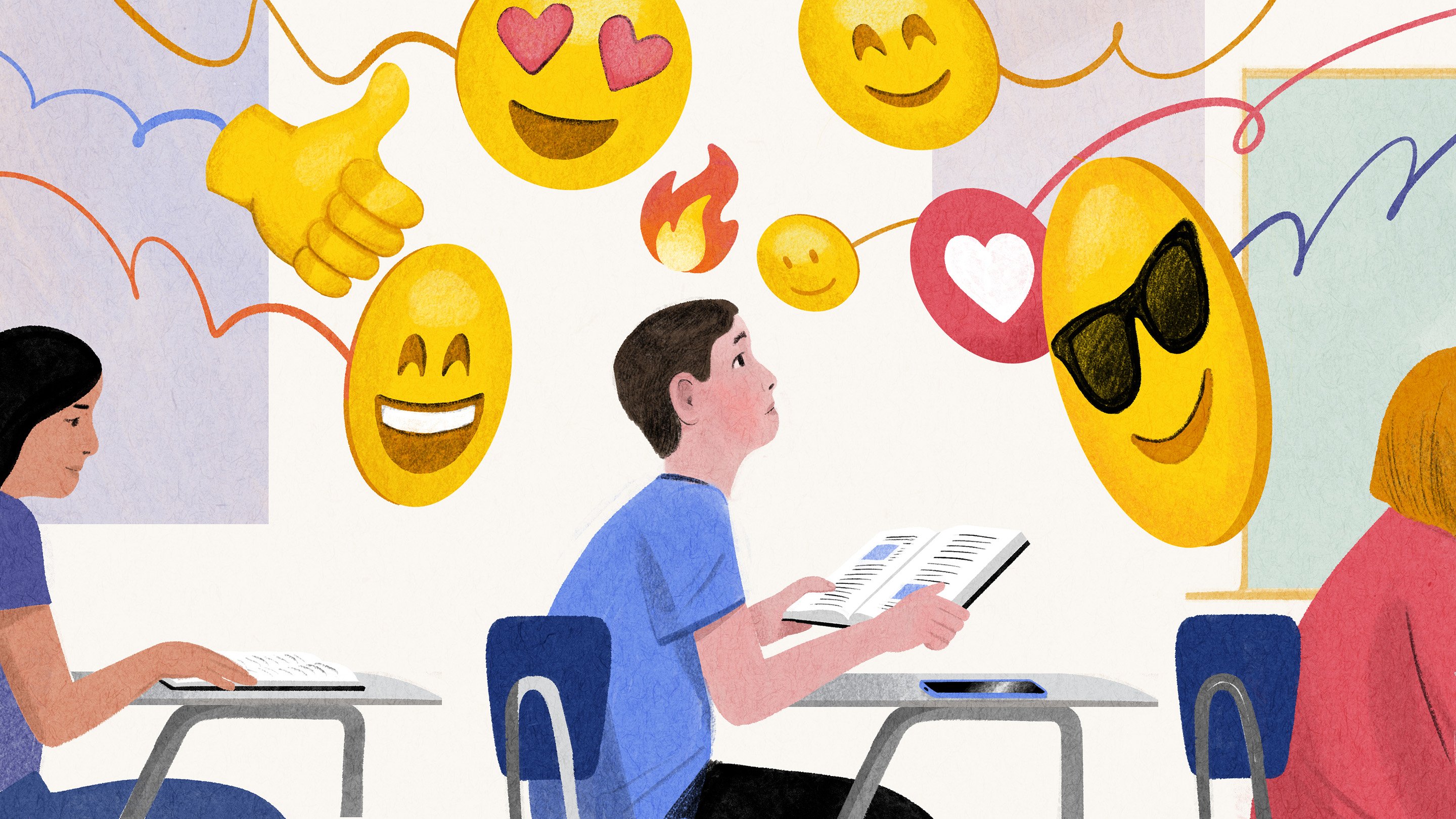
**Moderately served.** A single descriptive hero illustration and three section headings give some structure, but a piece built entirely on numeric thresholds — 8, 10, 25, 30 minutes; 3.8 vs 7.7 hours; 400% — has no chart anywhere. A single timeline of sustained-attention thresholds across studies would carry the argument better than three paragraphs do.
#### 🔊 Aural learners
**Reasonably served.** The prose is quotation-heavy, and the quotes are the memorable units — Willingham's "more readily choose not to," Haidt's "one swipe away." It would read aloud well, though the dense numeric passages would not survive it.
#### 🗣️ Verbal learners
**Very well served — the strongest channel.** The article's whole method is a verbal distinction: general attention versus sustained attention, capacity versus willingness, biological versus cultural. A reader who thinks in definitions gets the entire argument from four contrasts.
#### 🧩 Kinesthetic learners
**Well served, unusually so for a research piece.** The closing section is five concrete, immediately enactable practices with named techniques — Pomodoro, brain breaks, the BBC selective-attention video as a live demonstration. The video suggestion in particular is a participatory exercise rather than a reading.
#### 🧠 Logical learners
**Well served with one irritation.** The argument structure is clean: debunk the claim, concede the observation, eliminate the mechanism, propose two alternatives, land on the expert. The irritation is the unflagged pandemic confound in the 3.8 → 7.7 figure, which a logical reader will spot immediately and which slightly undermines trust in the rest of the evidence chain.
#### 🧑🤝🧑 Social learners
**Moderately served.** Multiple named voices — Haidt, Willingham, Lavie, Korisky, Godwin, Beachboard — including a classroom teacher rather than only researchers, which grounds it. But the voices are arranged rather than in dialogue; the disagreement between Haidt and Willingham is never staged as disagreement.
#### 🧘♀️ Solitary learners
**Well served.** Self-contained, roughly a ten-minute read, with 26 citations for anyone who wants to go deeper alone. Pleasingly, a ten-minute read is exactly the sustained-attention window the article documents.
#### 🌿 Naturalistic learners
**Barely served, and the one opening is squandered.** The goldfish comparison is the only natural-world referent and it exists solely to be dismissed. There is a genuine ecological framing available — attention as a foraging strategy, where information-rich environments rationally favor sampling over depth — that would have strengthened the effort-recalibration argument considerably. It is not made.
### 📊 Accessibility Assessment
Assessed against WCAG 2.2 Level AA, with the raw markup inspected rather than inferred.
#### Screen reader semantics
**One confirmed structural defect.** The heading outline runs `h1` → `h3` with **no `h2` anywhere in the article body** — verified by extracting all headings from the raw HTML. Screen reader users navigating by heading level encounter a skipped level, and the three section headings ("THE SOCIAL MEDIA EXPLANATION," "THE SHIFT IN EXPECTATIONS THEORY," "RECLAIMING STUDENT ATTENTION") are the article's primary structure. This is a **SC 1.3.1 Info and Relationships** issue. The headings are also styled all-caps in source text, which some screen readers spell out letter by letter.
#### Keyboard navigation
**Not assessed.** No custom interactive widgets appear in the article body; a mid-article newsletter signup ("The Intercom") is the one embedded interactive element and would need live testing against **SC 2.1.1** and focus-order requirements.
#### Contrast and readability
**Not assessed** — requires live rendering against **SC 1.4.3**. Flagged as unassessed rather than passed.
#### Text resizing and reflow
**Structurally sound.** All content is real HTML text, satisfying the preconditions for **SC 1.4.4** and **SC 1.4.10**. Not verified at 320 CSS pixels.
#### Media and captions
**Not applicable to the article itself** — it embeds no audio or video. It *links* two videos (the Haidt TED Talk and a BBC selective-attention clip) and offers no indication of caption availability, but linked third-party media is outside the author's conformance obligation.
#### Forms and interactions
**One concern.** The Intercom newsletter signup is injected **between the article's second and third paragraphs** — mid-argument, immediately after the sentence establishing the piece's central distinction. For screen reader and keyboard users this interposes a form in the middle of a sentence-level argument; for readers with attention difficulties it is a mid-flow interruption in an article about mid-flow interruption. That irony is worth noting, but the accessibility point stands independently.
#### Standards reference
WCAG 2.2 Level AA. **Met:** 1.1.1 — all 11 images carry alt attributes, none empty, and the hero alt is genuinely descriptive ("Illustration of a student sitting at a desk in a classroom, looking up"), which is better than most publishers manage. **Failed:** 1.3.1 (skipped heading level, h1→h3). **Degraded:** 2.4.4 Link Purpose — **two different studies share the link text "2026 study"**, resolving to `10.1002/jcpy.70016` and `10.1038/s41562-026-02500-w`; a links-list user cannot distinguish them. **Unassessed:** 1.4.3, 1.4.10, 2.1.1.
### 🌍 DEIB Assessment
#### Cultural breadth
**Narrow, and the narrowness is invisible to the piece.** The research base, classroom examples, and policy assumptions are entirely US and Western. "Students" means American K–12 students with personal smartphones — a globally unrepresentative population — and the entire argument presumes universal device access. The effort-recalibration thesis may hold very differently where connectivity is intermittent or shared, and that boundary is never named.
#### Inclusive language
**Clean and careful.** No deficit framing of students, no generational contempt — notable in a genre that routinely produces both. The authors explicitly validate teachers' perceptions rather than dismissing them ("almost certainly not an illusion"), and Willingham's "choose not to" is presented as a description of incentives, not a character judgment. That restraint is a deliberate editorial achievement.
#### Neurodiversity support
**The most significant gap in the piece.** An article entirely about attention never once mentions ADHD, autism, or any attention-related disability. This is a substantive omission, not a stylistic one: the claim that "children's ability to control their attention has not been compromised" is a population-level statement that reads very differently for students whose attention regulation genuinely differs. Worse, "it's not that students can't pay attention, but rather that they more readily choose not to" is exactly the sentence that gets weaponized against neurodivergent students — the phrasing is accurate about the general population and actively harmful if applied to a student with ADHD. The recommendations are broadly UDL-compatible, so the practical advice does not exclude; the framing does.
#### Representation
**Reasonable within a small set.** Five named experts plus a named classroom teacher. Including Cathleen Beachboard, a middle school teacher, alongside Stanford and Harvard-adjacent researchers is a real inclusion of practitioner expertise, and the two Edutopia authors are credited. No demographic breadth is assessable from six names without speculation.
#### Psychological safety
**Good for teachers, mixed for students.** The article's posture toward educators is validating: it takes their classroom observations as data rather than as bias, which is the opposite of the "teachers are nostalgic" framing this topic often attracts. For students, the safety depends entirely on how the "choose not to" line travels. In context, it is a claim about redesigned incentives; extracted, it is an accusation. The article does nothing to protect against the extraction, and the quote is the most quotable sentence in the piece.
### ✅ Logical Validity
#### Strong reasoning
- **The definitional correction is the argument, and it is sound.** Separating general from sustained attention dissolves the popular confusion at its root rather than merely disputing a number.
- **Anchoring to a decades-stable instrument.** The d2 test is the right kind of evidence for a cross-cohort question, and reaching for it shows genuine methodological literacy.
- **Naming the absent mechanism explicitly.** "The specific mechanisms are unknown" and Lavie's "she doesn't have the data to show that" are concessions that weaken the article's own narrative momentum, and including them is a mark of good faith.
- **Refusing to overcorrect.** Having debunked the myth, the authors decline to tell teachers their observations are illusory — the harder and more honest position.
- **The reversibility conclusion follows from the premises.** If the change is valuational rather than structural, intervention is coherent; the article earns that optimism rather than asserting it.
#### Fallacies
- **Equivocation on "attention," in the article's own transition — #fallacy/equivocation.** After 1,200 words establishing that attentional capacity has not declined, the recommendations are introduced as "ways to manage and strengthen **waning student attention**." The phrase reinstates precisely the framing the piece dismantled. The word does three jobs here — capacity, willingness, and observed classroom behavior — and this sentence silently swaps back to the first. **Fix:** "ways to work with attention's real limits and rebuild students' willingness to spend it."
- **Suppressed disagreement in expert weighting — #fallacy/suppressed-evidence.** Haidt gets a section heading, the framing "one of the leading theorists," and an unrebutted causal claim that digital media "undermines the ability to do difficult or sustained cognitive work." Two later sources contradict exactly that: Willingham ("has not been compromised, or if it has, it's a small effect") and Lavie ("no such pattern has shown up in controlled lab studies"). The article never stages this as disagreement, and hedges only with "many scientists are more tentative," which frames a live dispute as a difference in confidence. **Fix:** one sentence noting that Haidt's causal thesis is contested — the article's own sourcing already supplies the rebuttal.
- **Confounded evidence presented as trend — #fallacy/false-cause.** The 2021 JAMA figure (non-school phone use 3.8 → 7.7 hours/day) is deployed to show task-switching had "become a constant in the lives of young people." The doubling spans the pandemic, with school closure and social isolation as enormous co-causes, and the article reports the number without qualification. **Fix:** name the confound, or use post-pandemic data.
#### Tone of voice
Brisk, confident, lightly wry — the goldfish paragraph is genuinely funny ("insulting to both humans and fish"), and the humor earns trust early. The register is service journalism for practitioners: it respects teachers' observations, avoids both moral panic and dismissiveness, and lands on something actionable. Its characteristic risk is the confident summary sentence that outruns its evidence, which is how both the "waning attention" slip and the unqualified pandemic figure get through — the prose is moving too smoothly for the reader to stop and check.
### 🛡️ DARVO Analysis
**Not applicable to this source.** DARVO (Deny, Attack, Reverse Victim and Offender) describes a defensive pattern from a party facing accusation. This is research-synthesis journalism with no accused party and no self-defense.
- **Deny** — Nothing is denied in the DARVO sense. The article *does* refute a widely held claim, but refutation on cited evidence is argument, not denial, and it concedes the observation ("almost certainly not an illusion") that the claim was invented to explain.
- **Attack** — No person or group is attacked. Students are notably not blamed, teachers are not condescended to, and the 2015 report is criticized as a claim rather than its authors as people.
- **Reverse victim and offender** — Absent. **One line deserves a note, because the surface resemblance is real:** "students... more readily choose not to" could be read as relocating responsibility onto students. In context it is a claim about how incentives have been restructured *around* students by platform design, and the article's remedies are aimed at teachers and environments, not at student character. That is the opposite of victim-blaming — but the sentence is the piece's most extractable, and out of context it inverts. Flagged under DEIB / psychological safety rather than here.
## 🎯 Conclusion
**Bottom line.** The best-cited debunking of the attention-span myth I've read, and its replacement thesis — that students have repriced effort rather than lost capacity — is both better supported and far more useful than the thing it replaces. Take the reframe. Discount the Haidt section.
**What holds up.** The general-versus-sustained distinction. The d2 test as a genuine cross-decade anchor. Explicitly naming that the mechanism is unknown and that no imaging or lab pattern supports the capacity story. Refusing to tell teachers they are imagining it. Twenty-six citations, mostly primary, all verified present. And the conclusion that follows from all of it: if the shift is valuational, it is reversible.
**What does not.** The transition sentence reinstates "waning student attention" after the article spent 1,200 words dismantling it. Haidt receives a section heading and an unrebutted causal claim that two of the article's own sources contradict, with the disagreement never staged. The 3.8 → 7.7 hour figure spans the pandemic and is reported as a device-driven trend without qualification. And an article wholly about attention never mentions ADHD once — which matters, because its most quotable sentence is the one most likely to be turned against neurodivergent students.
**Next steps.**
1. Carry the effort-recalibration frame into Learn WordPress lesson design — design *within* the ~10-minute window, train task-switching rather than duration, front-load purpose.
2. Pull the two 2026 studies directly (`10.1002/jcpy.70016`, `10.1038/s41562-026-02500-w`) before citing the reframe publicly; both are doing heavy lifting here on a single reading each.
3. Retire the goldfish stat from any deck it still occupies, and replace it with "sustained attention was always minutes."
4. When quoting Willingham's "choose not to," always carry the incentive context with it. The sentence inverts when extracted.
## 🔄 Refactor Appendix — Are Student Attention Spans Really Shrinking?
### 📚 Literature Atoms (H3)
#### [H1] The deficit is in willingness, not capacity
> [!quote] ID:rw_01m1egq4srbe529cy62zy26bc6
> "It's not that students can't pay attention," he says, "but rather that they more readily choose not to."
Willingham's line is the article's load-bearing claim and the whole practical difference. A capacity deficit licenses permanent accommodation; a valuation shift licenses design. Carry the incentive context whenever quoting it — extracted, it reads as an accusation rather than a description of restructured incentives.
Tags: `#atom/literature/h1`
#### [H2] Sustained attention was always measured in minutes
> [!quote] ID:rw_01m1egq4srbe529cy62zy26bc6
> "Historical studies of sustained attention place the limits at various thresholds, from eight to 10 to 25 minutes, but almost never more than 30 minutes, and almost always much less."
The number that should have been in the headline. Nothing declined — the popular claim compared a fabricated figure against intuitions about a different kind of attention. Every 45-minute session format was already fighting this.
Tags: `#atom/literature/h2`
#### [H2] Friction-free platforms reprice cognitive effort
> [!quote] ID:rw_01m1egq4srbe529cy62zy26bc6
> "Platforms engineered for minimal friction and immediate reward can reinforce habit loops that bias cost–benefit computations, making low-effort digital activities feel more valuable than cognitively demanding tasks such as focused work."
The mechanism behind the H1 claim. Notably this is a claim about *comparison*, not damage — the hard task didn't get harder, the alternatives got cheaper and more visible.
Tags: `#atom/literature/h2`
#### [H3] Flexible attention predicts learning better than duration
> [!quote] ID:rw_01m1egq4srbe529cy62zy26bc6
> This more flexible form of attention—"the ability to move between task demands"—was ultimately the "best predictor of learning."
Korisky's reframe changes the training target from endurance to agility, and it maps almost exactly onto what a well-structured hands-on workshop already demands. Supporting context; the transfer question remains open.
Tags: `#atom/literature/h3`
### 🧠 Permanent Candidates (H4)
#### [P1] A capacity story and a motivation story license opposite interventions
When a decline is attributed to lost capacity, the rational response is accommodation — reduce the demand, permanently. When the same decline is attributed to changed valuation, the rational response is redesign — change what the effort costs and what it visibly returns. The two diagnoses fit identical observed behavior and are distinguished only by evidence about mechanism, which is exactly the evidence popular accounts skip. Ask which story is being told before accepting the remedy that follows from it.
Links: [[Attention and effort]] · [[Deficit framing in education]] · [[Instructional design]]
Tags: `#atom/zettel/z1`
#### [P2] A task gets harder when its alternatives get cheaper
Perceived difficulty is comparative, not absolute. Nothing about a chemistry problem changed; what changed is that a frictionless, immediately rewarding alternative is now always within reach and always visible. This explains why removing the alternative (phone bans) produces real effects while addressing nothing about the task, and why raising the task's visible payoff works without touching its difficulty. Generalizes past education to any voluntary high-effort activity — open-source contribution, documentation, deep reading.
Links: [[Effort valuation]] · [[Contributor onboarding]] · [[Friction as design]]
Tags: `#atom/zettel/z1`
#### [P3] The most quotable sentence is the one most likely to be weaponized
"Students more readily choose not to" is accurate as a population-level claim about restructured incentives and harmful as a verdict on an individual — particularly a neurodivergent one. A writer's obligation scales with quotability: the sentence that will travel is the sentence that needs its context welded on, because it is the one guaranteed to be extracted. An article about attention that never mentions ADHD has left its most portable line undefended.
Links: [[Testimony vs diagnosis]] · [[Solidarity Is Not Neutrality]] · [[Writing for extraction]]
Tags: `#atom/zettel/z1`
### ✏️ Fleeting Queue
- A ten-minute read about the ten-minute attention limit, with a newsletter signup injected mid-argument. The form interrupts an article about interruption. `#atom/fleeting/f1`
- Attention as foraging — information-rich environments rationally favor sampling over depth. The ecological framing would strengthen the effort-recalibration argument and the article never reaches for it. `#atom/fleeting/f1`
- "Trains like a muscle" is the exact framing that carried brain-training products past a thin far-transfer record. Watch whether attention curricula repeat it. `#atom/fleeting/f1`
- Two different studies both linked as "2026 study." Small a11y defect, good teaching example for link-purpose. `#atom/fleeting/f1`
- Does the effort-recalibration thesis hold where connectivity is intermittent or shared? Entire evidence base assumes personal always-on devices. `#atom/fleeting/f1`
### → Things 3 (max 2 actions)
1. **Audit Learn WordPress lesson plans against the ~10-minute sustained-attention window** — design within the limit, train task-switching over duration, front-load beyond-the-self purpose. `#action/h1`
2. **Pull the two 2026 studies directly (`10.1002/jcpy.70016`, `10.1038/s41562-026-02500-w`) before citing the effort-recalibration reframe publicly** — both carry the argument on a single reading each. `#action/h2`
<!-- deep-read:sections end -->
📄 **Full text:** [[Full Document Contents/Articles/Are Student Attention Spans Really Shrinking.md|Are Student Attention Spans Really Shrinking? by Stephen Merrill and Youki Terada]]
## Highlights
- Historical [studies of sustained attention](https://www.frontiersin.org/journals/psychology/articles/10.3389/fpsyg.2025.1589411/full) place the limits at various thresholds, from eight to 10 to 25 minutes, but almost never more than 30 minutes, and almost always much less. A [2009 study](https://journals.sagepub.com/doi/abs/10.1177/1469787408100194) noted that “students’ concentration during a class declines similarly to that of a human operator monitoring automated equipment, with potentially negative consequences for learning and performance.” The journal [*Nature* came to similar conclusions](https://www.nature.com/articles/d41586-026-01407-w) and proposed similar time horizons, in 2025: Adults who take a widely administered test of focused attention, the d2 test—which has been given for decades and requires participants to sift, tediously, through hundreds of variants of the letter “d” looking for telltale markings—perform about as well as they always have. ([View Highlight](https://read.readwise.io/read/01m1eh3tqjad7bhqe1rjadb9qy))
- Note: The number that should have been the headline: sustained attention was ALWAYS 8–30 minutes. Nothing declined. The d2 test is the strong evidence here — a decades-stable instrument is exactly the right anchor for a "has this changed over time" question, and scores are flat. Every 45-minute session format was already fighting this limit. NOTE: text says Nature concluded this "in 2025" but the DOI stem is d41586-026- (2026 by Nature's convention); Nature blocked my fetch so unverified.
- Tags: atom/literature/h2
- “Being a digital native does not confer an advantage,” Haidt said in a [2026 TED Talk](https://www.youtube.com/watch?v=DH9L7vJ03DE%E2%80%9D). “It teaches [kids] that there’s always a little bit of reward, a little bit of dopamine available, just one swipe away—and that undermines the ability to do difficult or sustained cognitive work like reading a book.” ([View Highlight](https://read.readwise.io/read/01m1eh3yr8k1qjtd36nwncw9fv))
- Note: Haidt gets a section heading, "one of the leading theorists," and an unrebutted causal claim — which TWO of this article's own later sources contradict. Willingham: attention control "has not been compromised, or if it has, it's a small effect." Lavie: "no such pattern has shown up in controlled lab studies." The piece hedges only with "many scientists are more tentative," framing a live dispute as a difference in confidence. Cite the effort-recalibration studies instead, not this.
- Tags: fallacy/suppressed-evidence
- By the 2020s, the devotion to cell phones among teens had become truly alarming, suggesting that rapid “task-switching” behaviors were now a constant in the lives of young people: [A significant study of 5,400 adolescents](https://jamanetwork.com/journals/jamapediatrics/fullarticle/2785686) published in late 2021 found that non-school cell phone use doubled during the pandemic, from 3.8 hours/day pre-pandemic to an astonishing 7.7 hours/day post-pandemic. ([View Highlight](https://read.readwise.io/read/01m1eh41vehf30t84jc2ep1ne7))
- Note: Pandemic confound, unflagged. The doubling spans school closure and social isolation — enormous co-causes — but it's deployed as evidence that device-driven task-switching "had become a constant." At minimum co-caused. Don't repeat this figure as a secular trend without post-2022 data.
- Tags: fallacy/false-cause
- For students, what looks like a diminished capacity for attention may instead reflect a changing willingness to invest effort. “Digital media use may influence cognition mainly by recalibrating how effort is valued and allocated,” researchers explain in another [2026 study](https://doi.org/10.1038/s41562-026-02500-w). Adults may be nostalgic about searching through encyclopedias or visiting the library to research a topic, but when the same information can be retrieved in seconds, spending hours tracking it down doesn’t feel like persistence to students, it feels like wasted effort. ([View Highlight](https://read.readwise.io/read/01m1eh45yef2h6c71rd5pa7mtx))
- Note: The mechanism, and the most transferable idea in the piece. Note what it is NOT claiming: the hard task didn't get harder: the alternatives got cheaper and more visible. Perceived difficulty is comparative. Generalizes straight to open-source contribution, documentation, deep reading — any voluntary high-effort activity competing against frictionless alternatives.
- Tags: atom/literature/h2
- Perhaps, then, it’s a question of motivation and changing values—a cultural shift, not a biological one—Willingham suggests. “It’s not that students can’t pay attention,” he says, “but rather that they more readily choose not to.” ([View Highlight](https://read.readwise.io/read/01m1eh4a7ktn9jvdqwwh7py8f3))
- Note: THE claim, and the whole practical difference: a capacity deficit licenses permanent accommodation, a valuation shift licenses redesign. Which is why Willingham can say the change "could be undone." CAUTION on reuse — this is the most extractable sentence in the article and it inverts out of context. In context it describes restructured incentives; extracted it reads as a verdict on student character, and it's exactly the line that gets weaponized against neurodivergent students. The article never mentions ADHD once. Always carry the incentive context with the quote.
- Tags: atom/literature/h1
- According to the Stanford neuroscientist Adi Korisky, who led a [2024 study](https://doi.org/10.1111/mbe.12432) on a neuroscience curriculum designed to teach students how attention works, attention can be trained like a muscle, but it’s not as simple as increasing attention spans. Effective learning requires students to shift their focus nimbly from the teacher, to their notes, then to their own thoughts as they make sense of what they’ve heard—all while filtering out background noise, visual distractions, and unrelated thoughts. This more flexible form of attention—“the ability to move between task demands”—was ultimately the “best predictor of learning,” Korisky recently told *Edutopia*. ([View Highlight](https://read.readwise.io/read/01m1eh4df883za89dd1kx92e7v))
- Note: Changes the training target from endurance to agility — and "the ability to move between task demands" maps almost exactly onto what a well-structured hands-on workshop already demands (demo → notes → try it yourself). Directly actionable for Learn WordPress. Open question: "trains like a muscle" is the same framing that carried brain-training products past a thin far-transfer record; expect near transfer, be skeptical of far.
- Tags: atom/literature/h3