Automattic vs WP Engine Court UPDATE
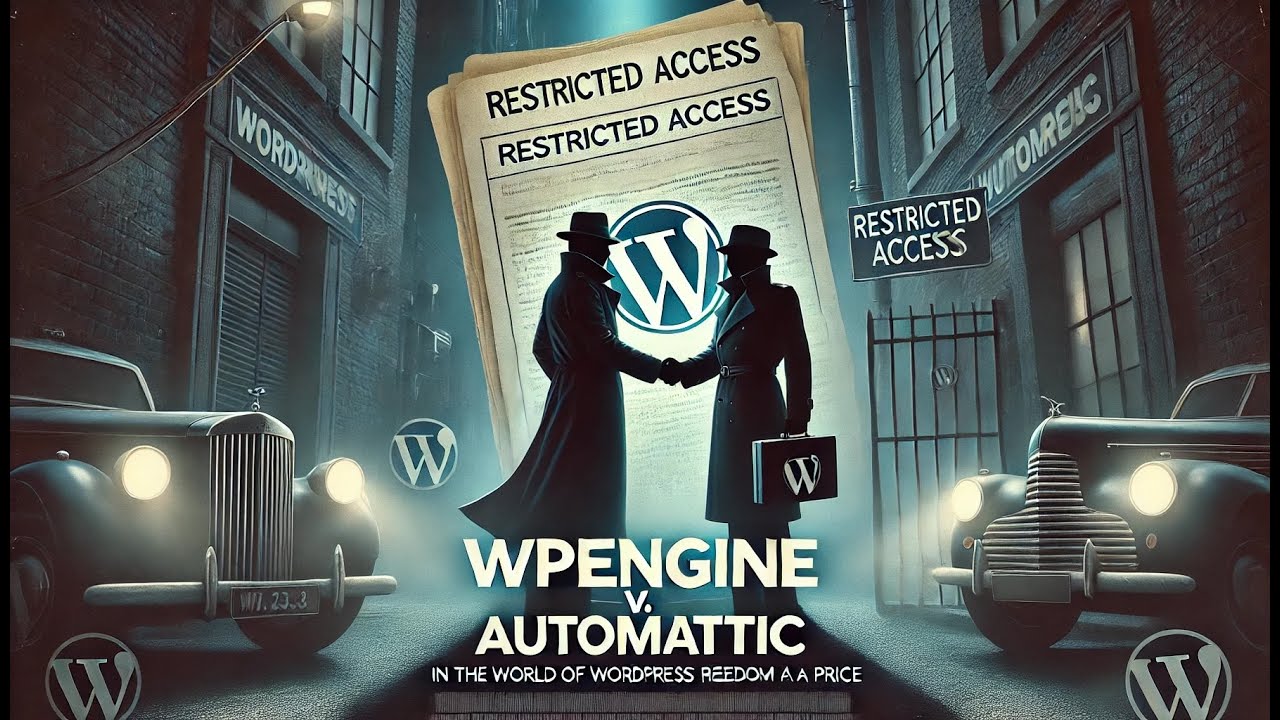
🔗 **Source:** [Automattic vs WP Engine Court UPDATE](https://youtube.com/watch?v=D0ZkisGLUbg&si=bQIUNwlu3A-1OKeU)
> [!note]+ Document Notes
> tags: [#OpenSource, #WordPress, #LegalBattle, #PowerStruggle, #WPengine, #Automattic, #MattMullenweg]
> - #CourtCase
> - #WordPressCommunity
> - #BusinessEthics
> Author: Unknown
> Source: YouTube
> Reference: [Video Link](https://www.youtube.com/watch?v=D0ZkisGLUbg)
> date created: {{date:2024-12-24}} {{time:12:00}}
>
> # Title: Automattic vs WP Engine Court UPDATE
>
<!-- deep-read:sections start -->
## Table of Contents:
- [⚖️ Overview of the Legal Battle](#overview-of-the-legal-battle)
- [💼 The Power Struggle](#the-power-struggle)
- [🔒 WP Engine's Allegations](#wp-engines-allegations)
- [📉 Mullenweg's Counterclaim](#mullenwegs-counterclaim)
- [🧑⚖️ The Court's Ruling](#the-courts-ruling)
- [🔮 Implications for WordPress and the Open-Source Community](#implications-for-wordpress-and-the-open-source-community)
- [📖 References](#references)
### References:
- [YouTube Video](https://www.youtube.com/watch?v=D0ZkisGLUbg)
## 📝 Summary:
This update covers the legal dispute between WP Engine, a major player in WordPress hosting, and Automattic, the parent company of WordPress.com. The case centers around accusations from WP Engine that Automattic, led by co-founder Matt Mullenweg, used its power over the WordPress ecosystem to pressure WP Engine into an unfair licensing agreement. The conflict escalated as Mullenweg allegedly manipulated resources and took control of WP Engine's popular plugin, Advanced Custom Fields (ACF), without consent. A court ruling granted WP Engine an injunction, halting Mullenweg's interference and sparking a broader conversation about power dynamics in open-source projects.
## 📖 Main Content:
This legal case reveals deep tensions between business interests and the open-source community, particularly within WordPress. The conflict started when WP Engine was allegedly pressured by Mullenweg and Automattic to enter a licensing deal that they viewed as extortion. Automattic reportedly demanded that WP Engine either share 8% of its revenue or commit substantial resources to work on WordPress under Automattic's direction.
When WP Engine refused, the situation escalated with public criticisms from Mullenweg and actions that harmed WP Engine’s business, including limiting access to WordPress updates and taking control of their plugin ACF. This prompted WP Engine to file a lawsuit, claiming that Mullenweg's actions amounted to extortion.
Despite Mullenweg's defense that he was acting in the best interests of the WordPress community, the court sided with WP Engine, granting them a preliminary injunction. The ruling effectively prohibited Automattic from continuing its actions and emphasized the importance of transparency and fair play within the open-source space.
### 🗒️ Notes:
- **Overview of the Legal Battle**:
- A dispute between WP Engine and Automattic regarding a licensing agreement.
- WP Engine claims Automattic leveraged its control over WordPress to pressure them into the agreement.
- Matt Mullenweg's dual role as WordPress co-founder and CEO of Automattic complicates the situation.
- **The Power Struggle**:
- WP Engine accused Automattic of abusing its power within the WordPress ecosystem.
- Automattic allegedly demanded 8% of WP Engine's revenue or significant contributions to WordPress under Automattic’s control.
- **WP Engine's Allegations**:
- WP Engine was publicly criticized by Mullenweg at WordCamp US.
- Automattic restricted WP Engine’s access to crucial WordPress resources, such as plugin updates.
- Mullenweg allegedly took control of WP Engine's plugin ACF and renamed it, pushing his version to users without consent.
- **Mullenweg's Counterclaim**:
- Mullenweg argued that his actions were motivated by security concerns regarding WP Engine’s plugins.
- He framed the actions as part of his duty to protect the WordPress community and ensure fair contributions to the open-source project.
- **The Court's Ruling**:
- The court granted WP Engine a preliminary injunction, stopping Mullenweg's interference with their resources and plugins.
- The ruling suggests that Mullenweg’s actions were not in the best interest of the WordPress community but rather served his business interests.
- The decision emphasized the importance of transparency and governance in open-source projects.
- **Implications for WordPress and the Open-Source Community**:
- This case underscores the tension between community-driven projects and the commercial interests of companies involved in the ecosystem.
- The ruling has wider implications for governance in open-source communities, highlighting the need for checks and balances to prevent abuse of power.
- Open-source projects must address power imbalances and establish clearer governance to ensure fair participation from all parties.
## 📖 References:
- [YouTube Video](https://www.youtube.com/watch?v=D0ZkisGLUbg)
## 🗣️ Paraphrase:
1. **Original**: "WP Engine is claiming that Mullenweg, using his control over WordPress, pressured them into a licensing agreement they saw as extortion."
- **Paraphrase**: "WP Engine alleges that Mullenweg used his influence over WordPress to coerce them into an unfair licensing deal."
2. **Original**: "The court granted WP Engine a preliminary injunction, halting Mullenweg’s actions and emphasizing the need for transparency in open-source governance."
- **Paraphrase**: "The court sided with WP Engine, issuing an injunction to stop Mullenweg’s actions and stressing the importance of transparency in managing open-source projects."
## 📰 Newsletter:
**The WordPress Power Struggle: Automattic vs. WP Engine**
In a significant court case, WP Engine has taken on Automattic, the parent company of WordPress, in a battle over power dynamics in the WordPress ecosystem. WP Engine claims that Automattic, led by WordPress co-founder Matt Mullenweg, used its influence to pressure them into an unfair licensing agreement, and even went as far as manipulating resources and taking control of their popular plugin, Advanced Custom Fields. The court sided with WP Engine, granting them a preliminary injunction to stop Automattic’s interference, emphasizing the need for more transparency and checks within open-source governance.
[Watch the full breakdown on YouTube](https://www.youtube.com/watch?v=D0ZkisGLUbg).
## ✅ Action Items:
- **Engage with the Open-Source Community**: Continue advocating for transparency and checks within open-source governance, especially in projects with significant commercial interests.
- **Support Ethical Business Practices**: Promote fair and ethical business practices within the WordPress community and encourage companies to collaborate rather than dominate.
- **Educate on Legal Implications**: Raise awareness about the legal and ethical dimensions of open-source projects to ensure that the community is well-informed and protected.
## 🧪 Hypotheses:
- The conflict between WP Engine and Automattic could set a precedent for future legal disputes within open-source communities, especially those with commercial interests.
- Increased scrutiny on governance and power dynamics in open-source projects might lead to the establishment of clearer regulations and ethical frameworks in the future.
### 📊 Methodology:
- **Surveys**: Conduct surveys to gauge how open-source contributors and businesses view the balance between commercial interests and community-driven development.
- **Case Study Analysis**: Analyze past legal cases involving open-source projects to identify patterns in governance challenges and power struggles.
### ❓ Questions:
- How can open-source communities implement fairer governance structures that prevent abuse of power by influential entities?
- What steps can be taken to balance commercial interests with the principles of open-source collaboration and transparency?
### 🔮 Future Research:
- Explore how power imbalances in open-source projects impact both developers and users, and the long-term effects on community growth and innovation.
- Investigate the role of legal frameworks in resolving conflicts between commercial entities and open-source contributors.
### 💡 Implications:
Future research could lead to the development of clearer guidelines for handling conflicts in open-source projects, promoting better governance, and ensuring fair participation from all stakeholders.
### 🧠 Learning Styles Assessment:
1. **Visual Learners**:
- **Present**: The video format provides visual cues, but the article is text-heavy.
- **Improve**: Add diagrams or flowcharts to visually represent the power dynamics and legal arguments.
2. **Aural Learners**:
- **Present**: The content is presented in a video format, which is suitable for auditory learners.
- **Improve**: Provide audio summaries or podcasts for those who prefer audio formats.
3. **Verbal Learners**:
- **Present**: The language is descriptive and rich in detail.
- **Improve**: Integrate more storytelling techniques or analogies to deepen understanding.
4. **Physical Learners**:
- **Present**: The article doesn't include interactive elements.
- **Improve**: Add hands-on exercises or case studies to engage kinesthetic learners.
5. **Logical Learners**:
- **Present**: The article outlines logical reasoning and a step-by-step analysis of the case.
- **Improve**: Include more data-driven insights or logical breakdowns to appeal to logical learners.
6. **Social Learners**:
- **Present**: The article invites discussion through the ongoing court case and community implications.
- **Improve**: Encourage group discussions or collaborative exercises to foster social learning.
7. **Solitary Learners**:
- **Present**: The article provides individual reflection on the case and its implications.
- **Improve**: Suggest personal reflection activities or journal prompts for solitary learners.
8. **Naturalistic Learners**:
- **Present**: The article doesn't reference nature or the environment.
- **Improve**: Use nature-based analogies or examples to engage naturalistic learners.
### 📊 Accessibility Assessment:
- **Screen Reader Compatibility**: The text is accessible, but adding alt-text to any potential images would improve screen reader compatibility.
- **Improve**: Ensure all images include alt-text descriptions and that interactive elements are fully accessible.
- **Keyboard Navigation**: The content is text-based and can be navigated via keyboard.
- **Improve**: Ensure all interactive elements, such as comments or video links, are easily accessible through keyboard navigation.
- **Contrast and Readability**: The readability is adequate, but high-contrast color schemes could improve accessibility.
- **Improve**: Use high-contrast colors for text and background to aid users with visual impairments.
- **Text Resizing**: The content is responsive to text resizing.
- **Improve**: Test for font scaling to ensure that content remains readable at different sizes.
### 🌍 DEIB (Diversity, Equity, Inclusion, and Belonging) Assessment:
- **Cultural Relevance**: The article does not directly address cultural issues but focuses on business and legal matters.
- **Improve**: Incorporate diverse perspectives on governance and business practices within open-source communities.
- **Inclusive Language**: The language is neutral and accessible.
- **Improve**: Define technical terms to ensure inclusivity for all readers.
- **Neurodiversity Support**: The article is clear but could benefit from shorter paragraphs and more straightforward language.
- **Improve**: Break up long sections and use simpler sentence structures to improve clarity.
- **Representation**: The article does not address a broad range of identities.
- **Improve**: Add case studies or examples that represent various backgrounds to enhance inclusivity.
- **Psychological Safety**: The tone is neutral and respectful, but the conflict itself may feel divisive.
- **Improve**: Promote an environment of respectful discourse, especially regarding controversial topics.
### ✅ Logical validity:
- **Sound Deductive Reasoning**: The argument about the abuse of power is clear and logically supported.
- **Improve**: Provide more detailed examples to solidify the argument and enhance clarity.
- **Logical Fallacies**:
- **Strawman**: The argument that Mullenweg’s actions were solely for security purposes is oversimplified.
- **Improve**: Present a more nuanced argument that considers alternative perspectives on security concerns.
🔍 **DARVO Analysis Prompt**
1. **Deny**: Mullenweg denies that his actions were motivated by business interests and frames them as community-driven.
2. **Attack**: Mullenweg criticizes WP Engine and restricts their access to resources.
3. **Reverse Victim and Offender**: The court sees Mullenweg’s actions as harming a competitor under the guise of protecting the community.
**Structure**: The DARVO elements are evident in Mullenweg’s attempts to justify his actions while undermining WP Engine’s legitimacy.
**Additional Notes**: The tone is generally neutral, but the use of strategic power plays within the court case adds an element of strategic positioning that could influence public perception.
### 🔍 SEO Evaluation:
- **Keywords**: Keywords like "WordPress," "WP Engine," "Matt Mullenweg," and "open-source" are present and well-integrated.
- **Meta Description**: The article could benefit from a concise meta description summarizing the legal conflict and its implications.
- **Title Optimization**: The title is clear but could be slightly more concise for SEO optimization.
- **Header Usage**: The article uses headers effectively but could benefit from keyword-rich subheadings.
- **Content Length**: The content is in-depth and provides detailed analysis.
- **Internal and External Links**: More internal links could enhance SEO.
- **URL Structure**: The URL is SEO-friendly and concise.
- **Image Optimization**: No images present, but if added, ensure alt-text is descriptive.
- **Mobile Optimization**: The content is mobile-friendly and loads quickly.
- **User Engagement**: The content encourages user comments and social sharing.
- **Schema Markup**: Schema markup could enhance search engine visibility.
- **Social Sharing**: Social sharing buttons could help increase reach.
## 🎯 Conclusion:
This case highlights the complexities of balancing business interests with community-driven principles in open-source projects. The legal dispute between WP Engine and Automattic has broader implications for governance, transparency, and ethical business practices in the WordPress ecosystem and open-source projects at large.
<!-- deep-read:sections end -->
📄 **Full text:** ![[Full Document Contents/Articles/Automattic vs WP Engine Court UPDATE|Automattic vs WP Engine Court UPDATE, WP Minute Podcasts]]
## Highlights
- been brewing in the WordPress world yeah it's a big one it's a big one and frankly it's gotten pretty messy yeah it has so we're talking about a court document uh detailing a fight between WP engine huge name in WordPress hosting huge right WP engine and automatic the company behind wordpress.com and of course led by Matt mullenweg the WordPress co-founder right so that adds a whole other layer to this yeah it's ([View Highlight](https://read.readwise.io/read/01jfwrskq9k9yzrvafyztc0s2d))