Breaking Up With WordPress After Two Decades | Yusuf Aytas
🔗 **Source:** [Breaking Up With WordPress After Two Decades | Yusuf Aytas](https://yusufaytas.com/breaking-up-with-wordpress-after-two-decades)
> [!note]+ Document Notes
> tags: #wordpress #static-site-generators #developer-experience #platform-engineering #markdown #migration
> author: Yusuf Aytas
> source: Personal Blog
> reference: https://yusufaytas.com/breaking-up-with-wordpress-after-two-decades
> date created: 2024-12-20 14:30
>
> # 🏷️ Title: Breaking Up With WordPress After Two Decades
>
<!-- deep-read:sections start -->
## 🧰 Action Inbox
- [H1] Evaluate platform costs vs. benefits annually — operational friction #platform-engineering
- [H2] Consider archive-first approach for long-running sites — content management #developer-experience
- [H3] Document hosting reliability requirements — SLA planning #infrastructure
## 🧭 Table of Contents
- [[#📝 Summary]]
- [[#📖 Main Content]]
- [[#🗒️ Notes]]
- [[#📚 References]]
- [[#🗣️ Paraphrase]]
- [[#📰 Newsletter]]
- [[#✅ Action Items]]
- [[#🧪 Hypotheses]]
- [[#📊 Methodology]]
- [[#❓ Questions]]
- [[#🔮 Future Research]]
- [[#💡 Implications]]
- [[#🧠 Learning Styles Assessment]]
- [[#📊 Accessibility Assessment]]
- [[#🌍 DEIB Assessment]]
- [[#✅ Logical Validity]]
- [[#🛡️ DARVO Analysis]]
- [[#🎯 Conclusion]]
### 🔗 References
- [Yapress - Custom Static Site Generator](https://npmjs.com/package/yapress)
- [Next.js Documentation](https://nextjs.org/docs)
## 📝 Summary
- A long-time WordPress user (2007-2024) migrated to a custom static site generator after hosting reliability issues exposed deeper platform misalignment
- The decision was driven by wanting to treat content as an archive rather than a publishing pipeline, enabling better local editing and content relationships
- Built "Yapress" using AI assistance (Codex, Claude, Gemini) as a markdown-first publishing system with WordPress import capabilities
- Trade-offs include losing WordPress's mature admin interface and ecosystem in exchange for direct ownership and better content management workflows
- Reflects broader shift where AI assistance changes the cost-benefit analysis of building custom solutions versus using existing platforms
## 📖 Main Content
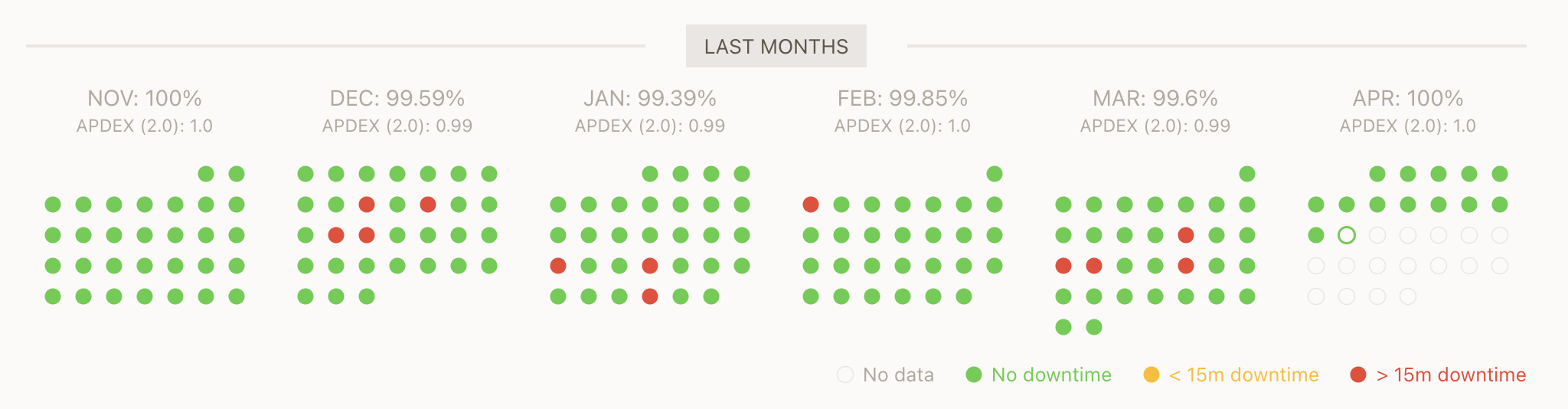
Yusuf Aytas, after nearly two decades with WordPress, migrated his personal blog to a custom static site generator following hosting reliability issues that exposed deeper platform misalignment. The immediate trigger was a move from SiteGround to Bluehost for cost reasons, which resulted in poor uptime and response times despite advertised 99.9% SLA promises.
However, the hosting problems revealed a more fundamental issue: WordPress was optimized for publishing workflows rather than archive management. For a site that had evolved into "mostly an archive" of years of writing across topics and languages, WordPress created friction around local editing, content reorganization, and establishing deliberate connections between posts.
Aytas built "Yapress" (his initials plus "press") using AI assistance from multiple models, creating a markdown-first system that imports WordPress content while supporting taxonomies, series, and static generation. The approach treats the site as data rather than just prose, enabling local search, Git versioning, and editor-based workflows.
The migration represents a broader platform engineering principle: platforms must provide genuinely better paved roads than custom solutions. When AI assistance dramatically reduces the cost of building alternatives, the question shifts from "Can we afford to change?" to "Can we justify not changing?"
## 🗒️ Notes
#### Article-based notes (no timestamps for non-video content)
**Hosting Migration Catalyst**
- Key idea: Cheap hosting becomes expensive when it demands operational attention
- Evidence: "Cheap infrastructure is only cheap while it stays boring. Once it starts demanding attention, the savings get repaid in operational friction."
**WordPress Misalignment**
- Key idea: WordPress optimizes for publishing workflows rather than archive management
- Evidence: "WordPress is good at storing posts. It is less good, at least for how I want to work, at treating the archive as something I can inspect, reorganize, search locally, and reshape with intention."
**Archive-First Approach**
- Key idea: Long-running sites should prioritize content relationships over publishing velocity
- Evidence: "A post from ten years ago may contain the seed of an idea I only developed properly last year. Another may deserve a sequel, a correction, or a narrower follow-up."
**AI-Assisted Development**
- Key idea: AI changes the cost-benefit analysis of custom development versus platform adoption
- Evidence: "AI assistance changed the question from 'Is this worth building?' to 'Is this the right thing to build?'"
**Platform Value Proposition**
- Key idea: Platforms must provide measurably better outcomes than custom solutions
- Evidence: "A platform earns its keep only when it gives users a paved road that is genuinely better than rolling their own: lower friction, lower cognitive load, better defaults, safer operation."
**Workflow Integration**
- Key idea: Content creation should integrate naturally with preferred editing tools
- Evidence: "I was drafting in Google Docs, then copying everything back into WordPress."
**Static Site Benefits**
- Key idea: File-based content enables better local development workflows
- Evidence: "The site now lives in files. I can search everything locally, edit it in a coding editor, version it in Git"
**Trade-offs Acknowledgment**
- Key idea: Custom solutions require accepting responsibility for maintenance and missing ecosystem benefits
- Evidence: "Going static or markdown-first means giving up some of that convenience, especially around comments and subscriptions."
## 📚 References
- [Yapress on NPM](https://npmjs.com/package/yapress)
- [Original Article](https://yusufaytas.com/breaking-up-with-wordpress-after-two-decades)
- [Next.js Framework](https://nextjs.org)
## 🗣️ Paraphrase
- A 20-year WordPress user switched to a custom static site after hosting problems revealed that WordPress wasn't suited for managing content archives versus active publishing
- He built his own system using AI assistance, prioritizing local editing workflows and better content relationship management over WordPress's admin interface conveniences
- The decision reflects how AI development tools are changing the economics of platform adoption versus custom solutions
## 📰 Newsletter
**WordPress User Builds Custom Static Site After 20 Years**
After two decades with WordPress, developer Yusuf Aytas migrated to a custom static site generator, highlighting an interesting trend in how AI-assisted development is changing platform adoption decisions.
The immediate trigger was hosting reliability issues, but the deeper reason was workflow misalignment. For sites that evolve into content archives rather than active publishing pipelines, WordPress's strengths become friction points. Local editing, content relationships, and reorganization all become more difficult than they need to be.
Aytas built "Yapress" using AI assistance (Codex, Claude, and Gemini), creating a markdown-first system with WordPress import capabilities. The result: better local workflows, Git versioning, and content management at the cost of WordPress's mature ecosystem.
**Key takeaway**: As AI reduces custom development costs, the platform value proposition shifts. Platforms must provide genuinely better outcomes, not just convenience, to justify their constraints.
**For WordPress professionals**: This reflects broader questions about when WordPress's complexity serves users versus when simpler, more focused solutions might work better. Consider how your clients actually work with their content over time.
Resources: [WordPress Developer Handbook](https://developer.wordpress.org/), [Static Site Generators](https://jamstack.org/generators/), [Headless WordPress](https://developer.wordpress.org/rest-api/)
## ✅ Action Items
#### DevRel
- Developer advocacy: Document WordPress workflow pain points and alternative solutions, create migration guides
- Education: Workshop on static site generators vs. WordPress for different use cases
- Developer experience: Evaluate WordPress tooling gaps for local development and content management
- Developer marketing: Case studies on when to choose WordPress vs. alternatives
- Community management: Gather feedback on WordPress workflow friction points
#### WordPress
- Core: Evaluate local development experience and content relationship tools
- Core Performance: Compare static site performance benchmarks with WordPress optimization
- Documentation: Create guidance for WordPress vs. static site decision matrix
- Community: Support discussions about WordPress use case evolution and alternatives
- CLI: Improve WordPress-to-static migration tools and export capabilities
#### OSPO
- Strategic Alignment: Monitor platform adoption trends and developer tool ecosystem shifts
- Community Engagement: Track WordPress community sentiment around workflow modernization
- Software Inventory: Evaluate static site generator adoption across organization
## 🧪 Hypotheses
- Long-running WordPress sites increasingly face archive management challenges that static site generators solve better
- AI-assisted development significantly reduces the cost barrier for custom platform alternatives
- Hosting reliability issues often reveal deeper platform misalignment rather than just infrastructure problems
- Developer workflow preferences (local editing, Git versioning) increasingly conflict with traditional CMS approaches
### 📊 Methodology
- Survey long-term WordPress users about workflow pain points and archive management needs
- Cost analysis comparing WordPress hosting/maintenance vs. static site development and deployment
- Performance benchmarking between WordPress sites and equivalent static sites across hosting providers
- Developer productivity studies comparing WordPress admin workflows vs. local file-based editing
### ❓ Questions
- At what point does content volume and complexity make WordPress less suitable than archive-focused alternatives?
- How are AI development tools changing the build-vs-buy decision matrix for content management systems?
- What specific WordPress workflow improvements would address the archive management use case?
### 🔮 Future Research
- Longitudinal study of WordPress site evolution patterns and migration triggers
- Analysis of static site generator adoption trends in relation to AI development tool availability
- Investigation of hybrid approaches that combine WordPress content management with static site delivery
### 💡 Implications
- Practice: WordPress professionals should evaluate client archive management needs alongside publishing requirements
- Policy: WordPress project may need to address local development and content relationship tooling gaps
- Education: Developer training should include platform selection criteria beyond initial setup convenience
- Funding: Investment in WordPress tooling improvements for long-term content management workflows
### 🧠 Learning Styles Assessment
Reading level estimate: Grade 12-13 (technical blog audience)
#### 👀 Visual learners
- Present: Dashboard screenshot showing uptime issues
- Improve: Architecture diagrams comparing WordPress vs. static site workflows, before/after content organization visualizations
#### 🔊 Aural learners
- Present: None available
- Improve: 5-minute podcast summary of migration decision factors and outcomes
#### 🗣️ Verbal learners
- Present: Clear definitions of static site generators, archive management, platform engineering
- Improve: Analogies comparing content management approaches to library organization systems
#### 🧩 Kinesthetic learners
- Present: Specific migration steps and technical implementation details
- Improve: Step-by-step WordPress export and static site setup checklist
#### 🧠 Logical learners
- Present: Clear cost-benefit analysis, hosting performance data, decision timeline
- Improve: Decision matrix for WordPress vs. alternatives, ROI calculations for custom development
#### 🧑🤝🧑 Social learners
- Present: Implicit community discussion through blog format
- Improve: Comment section for sharing similar experiences, links to migration discussion forums
#### 🧘♀️ Solitary learners
- Present: Personal reflection on 20-year platform relationship, individual decision-making process
- Improve: Self-assessment questionnaire for platform alignment, personal workflow audit template
#### 🌿 Naturalistic learners
- Present: Evolution metaphor for site growth and platform adaptation
- Improve: Ecosystem thinking about platform dependencies and long-term sustainability
### 📊 Accessibility Assessment
#### Screen reader semantics
- Present: Clear heading hierarchy, descriptive article structure
- Improve: Alt text for dashboard screenshot, more descriptive section headings
#### Keyboard navigation
- Present: Standard blog navigation, skip links
- Improve: Focus indicators on interactive elements, logical tab order through content
#### Contrast and readability
- Present: Clean typography, adequate contrast
- Improve: Line height verification, color contrast testing on code snippets
#### Text resizing and reflow
- Present: Responsive design accommodates zoom
- Improve: Test content reflow at 200% zoom across devices
#### Media and captions
- Present: Single dashboard image
- Improve: Descriptive caption for uptime dashboard screenshot
#### Forms and interactions
- Present: Newsletter subscription form
- Improve: Accessible form labels, error handling for subscription process
### 🌍 DEIB Assessment
#### Cultural breadth
- Present: Personal perspective from individual developer
- Improve: Examples from different cultural contexts, recognition that hosting and platform needs vary globally
#### Inclusive language
- Present: Technical terms explained clearly, personal narrative accessible
- Improve: Define platform engineering concepts more explicitly, avoid assumptions about reader's technical background
#### Neurodiversity support
- Present: Clear article structure, logical progression
- Improve: Bullet point summaries, consistent section formatting
#### Representation
- Present: Individual male developer perspective
- Improve: Acknowledgment that platform needs vary across different types of users and organizations
#### Psychological safety
- Present: Respectful tone toward WordPress community, acknowledges trade-offs
- Improve: Explicit disclaimer that this approach isn't suitable for all users or contexts
### ✅ Logical Validity
#### Strong reasoning
- Deductive strength: Clear platform selection criteria applied to personal use case
- Inductive strength: Generalizes from hosting issues to broader platform alignment questions
- Causal reasoning: Links hosting problems to workflow examination to platform migration
- Analogical strength: Platform engineering principles applied to personal site management
#### Fallacies
- Survivorship bias: Only presents successful migration outcome, not failed attempts or ongoing challenges
- Hasty generalization: May overextend personal experience to broader WordPress community needs
- False dichotomy: Presents WordPress vs. custom solution without exploring hybrid approaches or WordPress workflow improvements
#### Tone of voice
- Overall tone: Reflective and analytical, respectful toward WordPress while explaining personal decision rationale
### 🛡️ DARVO Analysis
- Deny: No denial patterns present
- Attack: No attacks on WordPress community or platform; maintains respectful tone
- Reverse victim/offender: Not applicable to this technical decision narrative
- Emotional cues and rhetoric: Balanced presentation of trade-offs, acknowledges both benefits and costs of migration
## 🎯 Conclusion
This migration story illustrates how AI-assisted development is changing platform adoption decisions by reducing custom solution costs. For WordPress professionals, it highlights the importance of evaluating whether WordPress's publishing-focused workflows align with clients' long-term content management needs, especially for archive-heavy sites. The key insight is that platforms must provide genuinely superior outcomes, not just convenience, as alternatives become more accessible.
## 🧱 Refactor Appendix
### 📚 Literature Split Pad
### Platform economics change with development tool accessibility
> [!quote] Breaking Up With WordPress After Two Decades by Yusuf Aytas. Published April 15, 2026.
> "AI assistance changed the question from 'Is this worth building?' to 'Is this the right thing to build?'"
Demonstrates how AI tools shift cost-benefit analysis from feasibility to suitability when evaluating custom vs. platform solutions.
[view highlight](https://yusufaytas.com/breaking-up-with-wordpress-after-two-decades#ai-development) #xref #articleseed ID:rw_platform_economics_ai
### Platform value requires demonstrable superiority over alternatives
> [!quote] Breaking Up With WordPress After Two Decades
> "A platform earns its keep only when it gives users a paved road that is genuinely better than rolling their own: lower friction, lower cognitive load, better defaults, safer operation."
Modern platform engineering standard that applies beyond technical infrastructure to content management and development tools.
[view highlight](https://yusufaytas.com/breaking-up-with-wordpress-after-two-decades#platform-value) #xref ID:rw_platform_value_prop
### WordPress optimizes for publishing over archive management
> [!quote] Breaking Up With WordPress After Two Decades
> "WordPress is good at storing posts. It is less good, at least for how I want to work, at treating the archive as something I can inspect, reorganize, search locally, and reshape with intention."
Identifies specific workflow mismatch between WordPress design assumptions and long-term content management needs.
[view highlight](https://yusufaytas.com/breaking-up-with-wordpress-after-two-decades#archive-workflow) #xref ID:rw_wordpress_archive_limits
---
### 🔖 Atomic Split Pad (Zettel Candidates)
#### Operational friction compounds with unreliable infrastructure
- Applies when choosing budget hosting that demands ongoing attention
- Source: hosting migration experience and uptime monitoring
- Links: [[Infrastructure-Reliability]] [[Platform-Economics]]
#### Content archives require different tooling than active publishing
- Scope: long-running sites with significant content history and cross-references
- Source: WordPress workflow analysis and static site comparison
- Links: [[Content-Management]] [[Workflow-Design]] [[Archive-Organization]]
#### AI development tools change build-versus-buy calculations
- Condition: when platforms don't provide clear superiority over custom solutions
- Source: Yapress development experience with AI assistance
- Links: [[Platform-Selection]] [[Development-Economics]] [[AI-Tooling]]
---
<!-- deep-read:sections end -->
📄 **Full text:** ![[Full Document Contents/Articles/Breaking Up With WordPress After Two Decades Yusuf Aytas.md|Breaking Up With WordPress After Two Decades | Yusuf Aytas by yusufaytas.com]]
## Highlights
- Cheap infrastructure is only cheap while it stays boring. Once it starts demanding attention, the savings get repaid in operational friction. ([View Highlight](https://read.readwise.io/read/01kqttkk38s6d8s6zst6hpnm72))
- But my website today is mostly an archive, not a newspaper or a collaborative publication. It is years of writing across topics, languages, moods, eras, and levels of maturity ([View Highlight](https://read.readwise.io/read/01kqttmbhwd8s8faeec6agxs0k))
- WordPress is good at storing posts. It is less good, at least for how I want to work, at treating the archive as something I can inspect, reorganize, search locally, and reshape with intention. ([View Highlight](https://read.readwise.io/read/01kqttmvmeas7mkf6ff9y7d5xx))
- I wanted the site to behave less like a publishing interface and more like a body of work I could actually inspect. A long-running blog [compounds](https://yusufaytas.com/lifes-compounding-effect/), like anything else, but compounding only helps if you can see and use what is the ([View Highlight](https://read.readwise.io/read/01kqttnfqcr3aetpa1f009dzzd))
- I also wanted to link posts more deliberately. Over time, a site like this develops invisible connections. A post from ten years ago may contain the seed of an idea I only developed properly last year. A ([View Highlight](https://read.readwise.io/read/01kqttp9qp9bj3tvner784mjrr))
- . The point is that the site now lives in files. I can search everything locally, edit it in a coding editor, version it in Git, and reorganize it without wrestling with WordPress every time. I even adde ([View Highlight](https://read.readwise.io/read/01kqttq2807yza3m7zpzmmc826))
- at. I would rather run a simpler system I understand than keep outsourcing understanding to a larger system that hides where the problems really are ([View Highlight](https://read.readwise.io/read/01kqttqtmfp1yakhc67egkvcpg))
- . A platform earns its keep only when it gives users a paved road that is genuinely better than rolling their own: lower friction, lower [cognitive load](https://yusufaytas.com/stop-wasting-brainpower/), better defaults, safer operation. That is the modern platform engineering pitch. If the users can build a path that is just as good, or better, the platform is not helping ([View Highlight](https://read.readwise.io/read/01kqttrgkdjmyvf063v3pc4cwh))
- ssistance changed the question from ‘Is this worth building?’ to ‘Is this the right thing to build?’. WordPress was always friction. What changed was the cost of replacing it. Once that drops low enough, the question then becomes not whether you can afford to change it, but whether you can justify not doing it. ([View Highlight](https://read.readwise.io/read/01kqttsaxmj73zvk7axps7wv2q))