CMS Conf Takes You Outside the WordPress Bubble
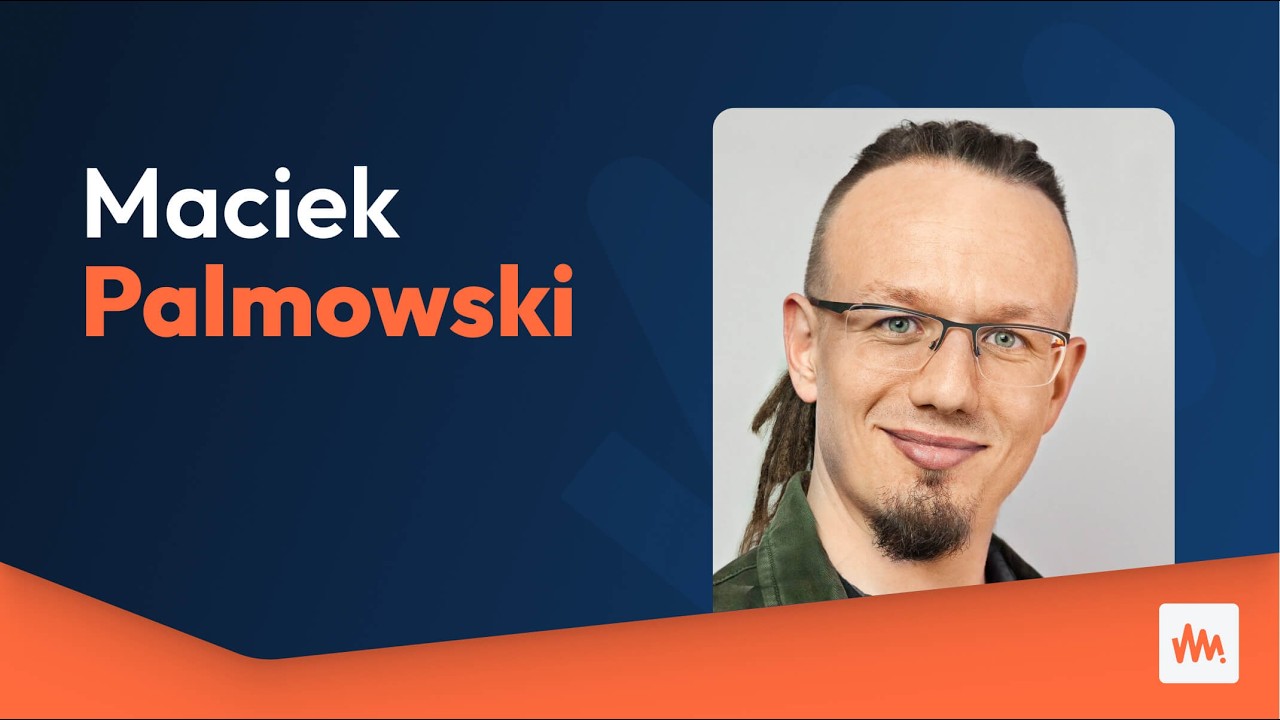
🔗 **Source:** [CMS Conf Takes You Outside the WordPress Bubble](https://www.youtube.com/watch?v=lM3vgUT_Ufw)
> [!note]+ Document Notes
> tags: [cms-landscape, wordpress-community, developer-events, open-source-ecosystem, conference-organizing, astro]
> author: Eric Karkovack
> source: The WP Minute
> reference: https://www.youtube.com/watch?v=lM3vgUT_Ufw
> date created: 2026-08-31 18:00
>
> > [!info] Generated analysis — not the author's words. Sections below are machine-written
> > from the captured source. Only text inside `> [!quote]` blocks is verbatim from the author.
> > Do not quote or attribute any other line to the named author.
>
> # 🏷️ Title: CMS Conf Takes You Outside the WordPress Bubble
>
<!-- deep-read:sections start -->
## 🧭 Table of Contents
- [📝 Summary](#-summary)
- [📖 Main Content](#-main-content)
- [🗒️ Notes](#️-notes)
- [📚 References](#-references)
- [🗣️ Paraphrase](#️-paraphrase)
- [📰 Newsletter](#-newsletter)
- [✅ Action Items](#-action-items)
- [🧪 Hypotheses](#-hypotheses)
- [📊 Methodology](#-methodology)
- [❓ Questions](#-questions)
- [🔮 Future Research](#-future-research)
- [💡 Implications](#-implications)
- [🧠 Learning Styles Assessment](#-learning-styles-assessment)
- [📊 Accessibility Assessment](#-accessibility-assessment)
- [🌍 DEIB Assessment](#-deib-assessment)
- [✅ Logical Validity](#-logical-validity)
- [🛡️ DARVO Analysis](#-darvo-analysis)
- [🎯 Conclusion](#-conclusion)
### 🔗 References
- [The episode under analysis](https://www.youtube.com/watch?v=lM3vgUT_Ufw) — The WP Minute, 31:36, published 2026-08-31
- [CMS Conf 2026](https://cmsconf.com/) — Gdynia, Poland, 12–14 November 2026
- [Maciek Palmowski](https://maciekpalmowski.dev/) — guest and co-organizer
- [EmDash](https://github.com/cloudflare) — Cloudflare's Astro-based CMS, subject of a conference talk
- [Astro](https://astro.build/) and [Statamic](https://statamic.com/) — the two systems he singles out
## 📝 Summary
- **What happened.** Eric Karkovack interviews **Maciek Palmowski** about **CMS Conf**, a new multi-CMS conference he is co-organizing in Gdynia, Poland, 12–14 November 2026. The conversation is really about his "CMS tourist" thesis: that staying inside one platform's community costs you more than you notice, and that the cost runs in both directions — you miss what others solved, and you fail to appreciate what your own community does well.
- **Why it matters.** This is a WordPress-community figure arguing, from inside, that the ecosystem's insularity is a liability — and organizing an event to fix it without Foundation sponsorship. His two concrete critiques land: WordPress is *"a framework that we have to fill out with plugins,"* and every plugin brings its own admin UI so *"it looks like you're going into about 12 different systems."* His counter-observation is the more interesting one: WordPress never won on software, it won on everything around the software.
- **Key stakeholders.** WordPress practitioners who have never attended a non-WordPress event. The Drupal, Joomla, and TYPO3 communities, described here as *"the old tree."* Newer API-first systems — Payload, Hygraph, Statamic, Astro. Cloudflare, whose EmDash CMS gets a talk and a workshop. And anyone weighing whether platform specialization is still the right career bet.
- **Risks and tradeoffs.** The AI claim underneath his thesis — that models lower the cost of breadth enough to make the generalist viable again — is asserted rather than evidenced, and it is doing structural work. The event is unsponsored and self-funded, which keeps it independent and puts the financial risk on the organizers. And the interview never presses on what a WordPress professional would actually give up by generalizing.
- **Bottom line.** A genuinely useful conversation with one large unexamined thread: he praises Astro, then separately mentions Cloudflare's EmDash getting a talk, without noting that **EmDash is built on Astro** — Cloudflare acquired the Astro company earlier in 2026 and shipped an MIT-licensed CMS explicitly positioned as WordPress's *"spiritual successor,"* whose headline feature is sandboxed plugins. His favorite framework became the foundation of the most credible structural answer to the plugin critique he spends the interview making. Neither host connects it.
## 📖 Main Content
**The event, and its positioning.** CMS Conf runs 12–14 November 2026 at the Pomeranian Science and Technology Park in Gdynia, part of Poland's Tri-City (Gdynia, Gdańsk, Sopot) with Gdańsk supplying the airport. Palmowski is candid about the season — *"sadly it will be winter so probably not the best moment to get for a swim"* — and about the money. Tickets are **€150 with all meals included**, against commercial events he prices at €500 where *"if you want dinner, you still have to pay for it."* The event has no Foundation backing: *"we don't have sponsoring from the foundation because we're doing it on our own."* Published materials describe roughly 300 attendees expected, English as the conference language, and a framing that is notably unfashionable — an analysis of architectures, models, and long-term durability rather than a trends showcase.
**The "CMS tourist" origin.** The idea began as a job requirement. Joining Kinsta as the company expanded from WordPress hosting into application hosting, he started attending other communities' conferences and using other systems. What he found was not a single revelation but an accumulation: *"everything has something to offer. Sometimes those are smaller things. Sometimes it's like a bit different approach to thinking about the product development, but everyone has something to offer."*
The framing he lands on is the useful part, because it is symmetrical. Staying in one bubble means *"you're really missing a lot,"* and it also means you cannot see your own community clearly. His example is unhedged praise for WordPress: the community aspect of its events is *"one of the best if not the best in the world."*
**The best line in the interview.** Explaining why WordPress-killer attempts keep failing:
> *"WordPress never became big because of the software. I mean the software was there, it worked, but it was everything around the software that clicked."*
That is a compact and correct account of what actually happened, and it is a warning to anyone building a technically superior competitor. It also sets up a tension the interview never resolves — if community is the moat, then a technically better CMS with a weaker community loses, which is an argument *against* the tourism he is advocating for. He does not address it, though his own answer is implicit: learn the technology, keep the community.
**The AI argument, which is load-bearing and unexamined.** His case for why generalism is newly viable rests on models lowering the learning cost. *"being a specialist like few years ago — that was a very good approach because it was very difficult to learn things. It took a lot of time. And right now AI is making this barrier a bit more easier to pass."*
He contrasts it with the specialist's characteristic failure, and the line is funny because it is recognizable: *"How many workarounds should I use to use my favorite software to build the second Facebook on WordPress?"* That is a real pathology — reaching for the tool you know regardless of fit, and paying for it in accumulated workarounds.
The claim is plausible and entirely unevidenced. It is also doing structural work: without it, the tourist thesis is just "learning more things is good," which nobody disputes and few act on. Whether AI actually lowers the cost of *competence* in a new system, as opposed to the cost of *orientation*, is the question, and it goes unasked.
**The two systems he singles out.**
*Astro* — he moved his blog to it and stayed. His praise is about scope discipline: *"it was doing the thing that it should do. So being this content website framework and it does it in a very good way. That's it. It's not meant to be an e-commerce. It's not meant to be a framework for big SPA applications."* Doing one thing well, as a virtue, in a category where everything drifts toward doing everything badly.
*Statamic* — a Laravel CMS, and his critique here is the sharpest technical content in the episode. What he values is that features are **in core** rather than bolted on, so the product feels like one system. His comparison is careful and generous: he has used Advanced Custom Fields for years and says plainly *"ACF was always great, I love it, I love working with it."* But: *"Statamic had those features built in. And the way how you work with it, you feel it's still the same CMS. It's not a CMS and an add-on."*
**The plugin critique, which is the substantive part.** He states the structural fact without rancor: *"WordPress is kind of a framework that we have to fill out with plugins and that was always our approach. The problem is that you always have to install plugins. You always have to maintain them."*
His running gag is also a data point — he asks at every conference whether anyone runs zero plugins and has found exactly one person: *"I remember there was one guy who said no I don't. And I was like wow."*
Karkovack supplies the user-facing consequence, and it is the most concrete criticism in the episode: *"every plugin can have their own UI in the back end, right? And so it looks like you're going into about 12 different systems. When you go to WooCommerce or you go to ACF or you go to Gravity Forms or whatever it is, they all have their own way of doing things because the standard WordPress UI is pretty basic. So everybody wants to build their own."*
That is a coherent causal account of admin fragmentation: a minimal core UI creates a vacuum, extension authors fill it independently, and the user absorbs the incoherence.
**The connection nobody makes, and it is the important one.** Listing conference talks, Palmowski mentions a presentation and workshop on **EmDash**, *"the new CMS by Cloudflare."* Earlier he spent several minutes praising Astro. These are the same story and neither host says so.
Cloudflare acquired the Astro Technology Company in early 2026 and announced EmDash on 1 April 2026 as an open-source *"spiritual successor"* to WordPress — written in TypeScript, **built on Astro 6**, MIT-licensed, currently in beta. Its headline architectural feature is that **plugins are sandboxed, each running in its own isolate**.
So: his favorite content framework became the foundation of a CMS explicitly positioned against WordPress, whose central design decision is a direct structural answer to the plugin problem he spends this interview describing. The tourist thesis is validated more strongly than the interview realizes — this is precisely the kind of thing you miss from inside one bubble, and it went unremarked *in an episode about not missing things.*
It also connects outward. The plugin-trust question is not academic: the sandboxed-isolate model is aimed squarely at the failure mode where an installed plugin acquires capabilities the installer never reviewed.
**The longevity counterargument.** Karkovack pushes back usefully. Yes, WordPress is old PHP and MySQL, *"but for me personally, I think that the longevity of WordPress is one of the great reasons to use it because I know it's going to be here in five years. Whereas a lot of the newer CMS, I don't know what's going to happen."* Institutional survival as a feature, and a real consideration for anyone choosing a platform for a client who will still exist in a decade.
Palmowski extends it into the conference's most promising panel idea. Joomla, Drupal, and TYPO3 are *"the old tree"* — they know how to persist, and they have hit problems newer systems have not reached yet. His historical framing is precise: when WordPress started, PHP 4 was current and **git did not exist**, so nothing in its architecture assumed distributed collaboration. Systems built later started from different assumptions. *"they knew that they should build in a bit different way to make this collaboration easier."*
**The talks, as a map of the field's current anxieties.** EmDash. Accessibility of CMS backends, framed as *"your next differentiator"* — worth noting as a competitive rather than compliance argument. Content modeling's "missing layer." Astro. *"Do I still need a CMS?"* in the AI era. A talk on the plugin that broke production. And one titled, in effect, that a CMS is nothing without its community — which is Palmowski's own thesis appearing on his own program.
**Growth model.** Free or low-cost local **CMS Confs** twice yearly per location, starting in Vilnius with PTSA as main sponsor, Germany next year, the main event staying in Gdynia. He is explicit about the template: *"we wanted to bring the WordCamp vibe."*
Karkovack's observation here is the one WordPress people should sit with: *"WordPress really built a community on local meetups too. It's not just the big WordCamp events. In America, we had a lot of regional events that have disappeared, but we still have meetups."* Palmowski agrees and describes the two-directional growth — grassroots meetups plus loud flagships — then names the leak: at WordCamp Europe, new attendees regularly say *"I didn't even hear that there are smaller meetups."*
**The closing anecdote is the strongest argument in the episode.** At a PHP UK event he attended a talk on "Drupalisms" — the accumulated quirks and history of Drupal:
> *"if we would just replace some of the words, their history and our history was almost exactly the same. We just picked a bit different technology... in the end, we had the same problems. We had the same bottlenecks."*
And the cost of the silos, stated plainly: *"sometimes you are just one question away and you will learn that someone already did this... but you didn't even know to whom to ask."*
He then undercuts himself with a genuinely funny concession — that people prefer learning from their own experience anyway, like children ignoring a parent's warning. It is self-aware in a way that improves the argument rather than weakening it.
**Contested and uncertain.** Twenty-one views at capture, published the same day. The AI-lowers-the-barrier premise is unevidenced. No one asks what specialization actually buys, or what a WordPress professional loses by diluting it. Auto-captions mangle nearly every proper noun — the guest, the event, both systems he recommends, and the host — which matters for a discovery-oriented episode.
### 🗒️ Notes
#### ⏱️ [00:01](https://www.youtube.com/watch?v=lM3vgUT_Ufw&t=1) The event
- **CMS Conf: 12–14 November 2026, Gdynia, Poland** (Pomeranian Science and Technology Park). Tri-City = Gdynia + Gdańsk + Sopot; Gdańsk has the airport.
- Published materials: ~300 attendees expected, English is the conference language, positioned as architecture and durability rather than a trends showcase.
- Host: **Eric Karkovack** (captions: "Eric Caravac"). Guest: **Maciek Palmowski** (captions: "Mach Pomolski," "Machek," "Matak").
#### ⏱️ [02:00](https://www.youtube.com/watch?v=lM3vgUT_Ufw&t=120) The "CMS tourist" origin
- Began as a job requirement at **Kinsta**, when the company expanded from WordPress hosting into application hosting.
- Not one revelation but accumulation: *"everything has something to offer... sometimes it's a bit different approach to thinking about the product development."*
#### ⏱️ [03:04](https://www.youtube.com/watch?v=lM3vgUT_Ufw&t=184) The symmetry, and the best line
- Staying in a bubble costs you both ways — you miss what others solved, **and** you cannot see your own community clearly.
- Unhedged praise: WordPress event community is *"one of the best if not the best in the world."*
- ⭐ *"WordPress never became big because of the software. I mean the software was there, it worked, but it was everything around the software that clicked."*
- Unresolved tension: if community is the moat, a technically better CMS with a weaker community still loses — an argument against the tourism being advocated. His implicit answer: take the technology, keep the community.
#### ⏱️ [05:00](https://www.youtube.com/watch?v=lM3vgUT_Ufw&t=300) The AI premise — load-bearing, unevidenced
- *"being a specialist like few years ago — that was a very good approach because it was very difficult to learn things... right now AI is making this barrier a bit more easier to pass."*
- The specialist's pathology, well put: *"How many workarounds should I use to use my favorite software to build the second Facebook on WordPress?"*
- ⚠️ Without this premise the thesis reduces to "learning more is good." Whether AI lowers the cost of **competence** or only of **orientation** is never asked.
#### ⏱️ [06:24](https://www.youtube.com/watch?v=lM3vgUT_Ufw&t=384) Astro
- Moved his blog to it. Praise is about scope discipline: *"it was doing the thing that it should do... It's not meant to be an e-commerce. It's not meant to be a framework for big SPA applications."*
#### ⏱️ [09:00](https://www.youtube.com/watch?v=lM3vgUT_Ufw&t=540) Statamic — the sharpest technical content
- Laravel CMS. Value is features **in core** rather than bolted on.
- Generous comparison: *"ACF was always great, I love it, I love working with it"* — but *"Statamic had those features built in... you feel it's still the same CMS. It's not a CMS and an add-on."*
#### ⏱️ [10:04](https://www.youtube.com/watch?v=lM3vgUT_Ufw&t=604) The plugin critique
- Stated without rancor: *"WordPress is kind of a framework that we have to fill out with plugins... The problem is that you always have to install plugins. You always have to maintain them."*
- His running data point: asks at every conference who runs zero plugins; has found **exactly one person**.
- ⭐ **Karkovack supplies the user-facing consequence:** *"every plugin can have their own UI in the back end... it looks like you're going into about 12 different systems"* (WooCommerce, ACF, Gravity Forms) *"because the standard WordPress UI is pretty basic. So everybody wants to build their own."*
- A coherent causal account of admin fragmentation: minimal core UI → vacuum → independent extension UIs → user absorbs the incoherence.
#### ⏱️ [13:22](https://www.youtube.com/watch?v=lM3vgUT_Ufw&t=802) Longevity, and "the old tree"
- Karkovack's counterargument: old PHP/MySQL is a **feature** — *"I know it's going to be here in five years. Whereas a lot of the newer CMS, I don't know what's going to happen."*
- Joomla, Drupal, TYPO3 as *"the old tree"* — they know how to persist and have hit problems newer systems haven't reached.
- Precise historical framing: when WordPress started, **PHP 4 was current and git did not exist**, so nothing in its architecture assumed distributed collaboration. Later systems started from different assumptions.
#### ⏱️ [16:41](https://www.youtube.com/watch?v=lM3vgUT_Ufw&t=1001) The talks — a map of the field's anxieties
- **EmDash**, *"the new CMS by Cloudflare"* — presentation **and** workshop.
- **Accessibility of CMS backends** — framed as *"your next differentiator."* A competitive argument, not a compliance one. Worth stealing.
- "The missing layer in content modeling."
- Astro.
- *"Do I still need a CMS?"* — the AI-era question.
- The plugin that broke production.
- A CMS is nothing without the community — his own thesis, on his own program.
#### ⭐ The connection neither host makes
- He praises **Astro** at 06:24 and mentions **EmDash** at 16:41 as separate items. They are the same story.
- Cloudflare acquired the Astro Technology Company in early 2026; **EmDash** was announced 2026-04-01 as an open-source *"spiritual successor"* to WordPress — TypeScript, **built on Astro 6**, MIT-licensed, beta.
- Its headline architectural feature: **plugins are sandboxed, each in its own isolate** — a direct structural answer to the plugin critique he spends the interview making.
- **The tourist thesis is validated harder than the episode realizes:** this is exactly what you miss from inside one bubble, and it went unremarked in an episode about not missing things.
- Connects to the plugin-trust problem generally — sandboxed isolates target the failure where an installed plugin acquires capability the installer never reviewed.
#### ⏱️ [20:06](https://www.youtube.com/watch?v=lM3vgUT_Ufw&t=1206) What he wants attendees to leave with
- Break the bubble; embrace the touristic approach.
- *"never lose this happiness in learning new things rather than just learning some stuff right now and maybe even forgetting about it later."*
- Karkovack on the ecosystem: *"sometimes we get a little too tribal about it."*
#### ⏱️ [23:23](https://www.youtube.com/watch?v=lM3vgUT_Ufw&t=1403) Growth model
- Free/low-cost local **CMS Confs**, twice yearly per location. **Vilnius** first (PTSA as main sponsor), **Germany** next year, main event stays in Gdynia.
- Speculative: *"maybe in five six years there will be CMS Americas."*
#### ⏱️ [26:57](https://www.youtube.com/watch?v=lM3vgUT_Ufw&t=1617) Economics and the WordCamp template
- **€150, all food included**, against commercial events at ~€500 where dinner costs extra.
- *"we don't have sponsoring from the foundation because we're doing it on our own."* Independence, and the financial risk sits with the organizers.
- *"we wanted to bring the WordCamp vibe"* — openness and affordability as explicit design goals.
- Co-organizer **Mario** insists everyone leaves well fed.
- ⭐ Karkovack: *"WordPress really built a community on local meetups too... In America, we had a lot of regional events that have disappeared, but we still have meetups."*
- The leak Palmowski names: at WordCamp Europe, new attendees say *"I didn't even hear that there are smaller meetups."*
#### ⏱️ [29:00](https://www.youtube.com/watch?v=lM3vgUT_Ufw&t=1740) ⭐ The Drupalisms anecdote — the strongest argument here
- At a PHP UK event, a talk on "Drupalisms": *"if we would just replace some of the words, their history and our history was almost exactly the same. We just picked a bit different technology... in the end, we had the same problems. We had the same bottlenecks."*
- The cost of silos: *"sometimes you are just one question away and you will learn that someone already did this... but you didn't even know to whom to ask."*
- Self-aware close: people prefer learning from their own experience anyway, like children ignoring a parent's warning. Improves the argument rather than weakening it.
#### Practicalities
- Website **cmsconf.com** (captions: "cmscom.com"). 25% discount code promised in the show notes.
- WP Minute: thewpminute.com/subscribe.
- ⚠️ **21 views at capture**, published same day.
## 📚 References
- [Eric Karkovack, "CMS Conf Takes You Outside the WordPress Bubble," The WP Minute, 2026-08-31](https://www.youtube.com/watch?v=lM3vgUT_Ufw) — the source under analysis
- [CMS Conf 2026](https://cmsconf.com/) — 12–14 November 2026, Gdynia; [call for papers](https://sessionize.com/cms-conf-2026/)
- [Maciek Palmowski](https://maciekpalmowski.dev/) — guest, co-organizer, author of the "CMS tourist" post referenced in the episode
- [TYPO3 at CMS Conf](https://news.typo3.com/event/20261112-cms-conf) — independent confirmation that the "old tree" communities are attending
- [Astro](https://astro.build/) — the content framework he moved his blog to
- [Statamic](https://statamic.com/) — the Laravel CMS whose baked-in features he contrasts with WordPress plugins
- [EmDash](https://www.phoronix.com/news/Cloudflare-EmDash) — Cloudflare's MIT-licensed, Astro-based CMS, announced 2026-04-01, with sandboxed plugin isolates
- [Advanced Custom Fields](https://www.advancedcustomfields.com/) — the plugin he praises while using it to illustrate the add-on problem
## 🗣️ Paraphrase
- **Introduction.** The episode is about leaving the WordPress bubble and exploring the wider CMS landscape, prompted by a guest organizing an event designed to bring several CMS communities together, WordPress included.
- **The event.** CMS Conf runs 12–14 November in Gdynia, part of Poland's Tri-City alongside Gdańsk and Sopot, with Gdańsk providing the airport and easy local transport. It is on the Polish seaside, though November rules out swimming and guarantees wind instead of heat.
- **Origins.** The touristic habit began with a job at Kinsta as the company moved beyond WordPress hosting into application hosting. Attending other communities' conferences and using other systems revealed that everyone has something to offer, sometimes small, sometimes a different way of thinking about product development.
- **Both directions.** Staying inside one community means missing a great deal that is only a plane ticket away, and it also obscures what your own community does well. WordPress events, for instance, are among the best in the world for community, which is worth spreading — and which explains why attempted WordPress killers fail, since WordPress grew not because the software was remarkable but because everything around it worked.
- **Specialists and generalists.** Deep specialization made sense when learning was slow and difficult, but AI lowers that barrier, making it easier to learn and adopt other tools rather than piling workarounds onto a familiar system to make it do things it was never meant to do.
- **Astro.** Begun as a static site builder and now a fuller framework, it remains excellent for content sites because it does exactly what it should and no more — not e-commerce, not large single-page applications.
- **Statamic.** A Laravel CMS admired for the completeness of its core. Where WordPress requires plugins for content modelling and forms, and where Advanced Custom Fields — though genuinely good — always feels like an add-on, Statamic's equivalents are built in and feel like part of the same product.
- **The plugin problem.** WordPress is effectively a framework filled out with plugins, which must be installed and maintained, and which often feel separate from the core product. Because the standard admin interface is basic, each major plugin builds its own, so using several feels like moving between a dozen different systems.
- **Longevity.** Age is not only a weakness: an established platform is very likely still to exist in five years, whereas newer systems depend on communities that may not sustain them. Older systems like Joomla, Drupal and TYPO3 know how to endure and have encountered problems newer projects have not yet met. When WordPress began, PHP 4 was current and git did not exist, so later systems could assume collaborative workflows from the start.
- **Programme.** Talks include Cloudflare's new CMS EmDash with an accompanying workshop, accessibility of CMS back ends as a competitive differentiator, a session on the missing layer in content modelling, Astro, whether a CMS is still needed in the age of AI, a case study of a plugin that broke production, and an argument that a CMS is nothing without its community.
- **Hopes for attendees.** Chiefly that people leave their bubble and keep the pleasure of learning new things, whether through a technical insight or simply the realisation that other approaches exist.
- **Growth.** Smaller free events are planned twice yearly in several countries, beginning in Lithuania with German editions to follow, while the main conference stays on the Polish coast, with an American edition imagined some years out.
- **Economics.** Tickets cost €150 including all meals, against commercial events charging far more with food extra. There is no foundation sponsorship, and the WordCamp atmosphere — open and affordable — is the deliberate model, with one organiser insisting attendees are always well fed.
- **Closing anecdote.** A talk about Drupal's history at a PHP event proved nearly interchangeable with WordPress's own, the same problems and bottlenecks under different technology. Communities are often a single question away from an answer someone else already found, but do not know whom to ask — though people generally prefer learning from their own mistakes regardless.
## 📰 Newsletter
**A WordPress person built a conference to get WordPress people out of the room.**
Maciek Palmowski is co-organizing **CMS Conf** — 12–14 November in Gdynia, Poland, €150 with all meals, no Foundation sponsorship, organized on their own dime. The pitch is that our ecosystem's insularity costs us more than we notice, and he makes the case well.
The line I'd put on a wall:
> **"WordPress never became big because of the software. I mean the software was there, it worked, but it was everything around the software that clicked."**
That is the most compact explanation of the last twenty years I've heard, and it's a warning to everyone building a technically superior WordPress killer. It's also, quietly, an argument *against* his own thesis — if community is the moat, better technology loses. He doesn't address that, though his implicit answer is fine: take the technology, keep the community.
**The critique that will land hardest with us**, and Eric Karkovack says it rather than the guest: *"every plugin can have their own UI in the back end, and so it looks like you're going into about 12 different systems."* WooCommerce, ACF, Gravity Forms — each with its own conventions, because core's admin UI is minimal enough that everyone builds their own. That's a real causal account of admin fragmentation, and the user eats the incoherence.
Palmowski's version is structural: WordPress is *"a framework that we have to fill out with plugins."* His running joke is also a finding — he asks at every conference whether anyone runs zero plugins and has found exactly one person, ever.
He's generous where it counts. On Statamic, the Laravel CMS he admires: he's used ACF for years, *"ACF was always great, I love it"* — but Statamic has those features in core, so *"you feel it's still the same CMS. It's not a CMS and an add-on."* That distinction is worth carrying into any conversation about core-versus-plugin scope.
**Here's what nobody in the episode noticed, and it's the good part.**
He spends several minutes praising **Astro** — moved his blog to it, loves that it does one thing well. Later he mentions a conference talk on **EmDash**, *"the new CMS by Cloudflare."*
Same story. Cloudflare bought the Astro company early this year and shipped EmDash on April 1st as an MIT-licensed, open-source *"spiritual successor"* to WordPress — **built on Astro 6**. And its headline architectural feature? **Plugins are sandboxed, each running in its own isolate.**
His favorite framework became the foundation of the most credible structural answer to the exact plugin problem he spends the episode describing. In an episode about not missing things, that went unremarked — which validates the tourist thesis harder than the interview does.
If you've been following the plugin-trust conversation this year, the sandboxed-isolate model is aimed straight at the failure where installing something grants capability nobody reviewed. Worth watching regardless of what you think of Cloudflare.
**Two things for our community specifically.**
One talk is on **accessibility of CMS backends as "your next differentiator."** Not compliance — competitive advantage. That's a framing we should steal wholesale.
And Karkovack's aside deserves more attention than it got: *"In America, we had a lot of regional events that have disappeared, but we still have meetups."* Palmowski's growth model is explicitly WordCamp's — free local events twice yearly per city, starting in Vilnius, Germany next — because he watched grassroots-plus-flagship work. Then he names our leak: people show up to WordCamp Europe and say *"I didn't even hear that there are smaller meetups."* We built the best community-event culture in open source and we're not routing people through it.
**The closing anecdote is the whole argument.** He heard a talk on "Drupalisms" at a PHP event: *"if we would just replace some of the words, their history and our history was almost exactly the same... we had the same problems. We had the same bottlenecks."* And: *"sometimes you are just one question away and you will learn that someone already did this — but you didn't even know to whom to ask."*
Then he cheerfully admits we'll all ignore this and learn the hard way anyway, like kids ignoring a parent. Which is honest, and probably right.
**One caveat.** His argument that AI makes generalism viable — because learning a new system used to be slow and isn't now — is asserted, never evidenced, and is holding up the whole thesis. Whether models lower the cost of *competence* or only of *orientation* is a different question, and nobody asks it.
At capture this episode had **21 views.** Go watch it.
## ✅ Action Items
#### DevRel
- Developer advocacy: submit a talk or attend CMS Conf. A WordPress voice in a multi-CMS room is exactly the cross-pollination the event exists for. `#action/h1`
- Education: run a "CMS tourist" session — pick one non-WordPress system, build the same small site, report what transferred. `#action/h1`
- Developer experience: study Statamic's core-versus-add-on boundary as a design reference for what WordPress might absorb. `#action/h2`
- Developer marketing: not applicable to this source. `#action/h3`
- Community management: the "I didn't even hear there are smaller meetups" leak is fixable with routing from flagship events to local ones. `#action/h1`
- Internal/external/cross-project: build relationships with Drupal, Joomla, and TYPO3 community organizers. The Drupalisms anecdote says our histories rhyme. `#action/h1`
#### OSPO
- Policy & Governance: evaluate EmDash's sandboxed-plugin isolate model as a reference architecture for extension trust. `#action/h1`
- License Compliance: EmDash is MIT — note it in the CMS landscape inventory alongside GPL WordPress; the license difference matters for downstream use. `#action/h2`
- Security Management: **sandboxed plugin execution is the structural answer to the capability-grant problem.** Understand it before the comparison is made for us. `#action/h1`
- Software Inventory: track the CMS landscape deliberately — Astro, Statamic, Payload, Hygraph, EmDash — rather than only what we already run. `#action/h2`
- Developer Support: not applicable to this source. `#action/h3`
- Community Engagement: sponsor or attend a cross-CMS event; the ecosystem benefit outlasts the booth. `#action/h2`
- Strategic Alignment: "everything around the software" is the durable asset. Any strategy that optimizes only the software misreads why this worked. `#action/h1`
#### Community
- Maintainers: the plugin-UI fragmentation critique is actionable — adopt core admin patterns instead of inventing your own. `#action/h1`
- Contributors: attending another CMS's event is a genuinely cheap way to bring back ideas nobody in our community has. `#action/h2`
- Sponsors: an unsponsored €150 all-inclusive event is a useful benchmark for what community events should cost. `#action/h2`
- Ecosystem: **the "one question away" problem is real.** A cross-CMS channel for shared problems would cost almost nothing and pay repeatedly. `#action/h1`
#### WordPress
- Core: the admin-UI vacuum is a core problem — minimal core patterns cause extension authors to build their own, and users absorb it. `#action/h1`
- Core Performance: not applicable to this source. `#action/h3`
- Core AI: "Do I still need a CMS?" is on the CMS Conf program. We should have our own answer. `#action/h2`
- Core Program Team: not applicable to this source. `#action/h3`
- Mobile: not applicable to this source. `#action/h3`
- Playground: an ideal way to let people try other CMS comparisons against WordPress without local setup. `#action/h3`
- Community: **strong fit.** Route WordCamp attendees to local meetups explicitly — the leak Palmowski names is ours to fix. `#action/h1`
- Training: a "how other CMSs solve this" module would broaden contributor thinking measurably. `#action/h2`
- Marketing: "everything around the software" is our actual differentiator and we under-tell it. `#action/h2`
- Support: not applicable to this source. `#action/h3`
- Design: **the strongest fit.** Plugin admin fragmentation is a design-system problem; stronger core patterns and adoption incentives would fix what the episode describes. `#action/h1`
- Documentation: document admin UI conventions well enough that following them is easier than inventing. `#action/h1`
- Photos: not applicable to this source. `#action/h3`
- TV: WordPress.tv could host cross-CMS talks; the tribalism Karkovack names is partly a programming choice. `#action/h3`
- Polyglots: CMS Conf runs in English; note the accessibility tradeoff for a European multi-community event. `#action/h3`
- Accessibility: **"accessibility of CMS backends as your next differentiator"** is the framing to adopt — competitive, not compliance. `#action/h1`
- Meta: not applicable to this source. `#action/h3`
- CLI: not applicable to this source. `#action/h3`
- Hosting: Kinsta's move from WordPress to application hosting is the commercial signal underneath this whole conversation. `#action/h2`
- Tide: plugin quality scoring is adjacent to the sandboxing question — what would we check if isolation existed? `#action/h2`
- Openverse: not applicable to this source. `#action/h3`
- Themes: not applicable to this source. `#action/h3`
- Plugins: **the review team should read the EmDash architecture.** Sandboxed isolates are a different answer to the trust problem than review-at-submission. `#action/h1`
#### The WPCC
- Programs: fund cross-CMS attendance for community members. Small money, disproportionate return. `#action/h2`
- Projects: a shared cross-CMS knowledge exchange is exactly the "one question away" fix. `#action/h1`
- Funding experiments: €150 all-inclusive with no foundation money is a working model for independent community events worth studying. `#action/h2`
### FAIR
- Technical independence: a multi-CMS conference organized without platform-foundation sponsorship is federated community practice in miniature. `#action/h2`
- Policies and covenants: not applicable to this source. `#action/h3`
- Productized governance artifacts: comparing how different CMS communities govern themselves would be a genuinely useful artifact and nobody has written it. `#action/h1`
## 🧪 Hypotheses
1. **Cross-community exposure produces more transferable practice change than equivalent time inside one community.** The tourist thesis, and testable. `#atom/literature/h1`
2. **AI lowers the cost of orientation in an unfamiliar system substantially more than it lowers the cost of competence.** The unexamined premise holding up his argument. `#atom/literature/h1`
3. **Admin UI fragmentation is caused by minimal core patterns, not by extension-author preference.** Karkovack's causal claim, and it predicts that stronger core patterns would reduce divergence. `#atom/literature/h1`
4. **Sandboxed plugin isolation reduces capability-grant incidents relative to review-at-submission.** EmDash's central bet, currently untested at scale.
5. **CMS communities converge on the same problems roughly in order of age, independent of technology stack.** The Drupalisms observation, and checkable against public issue histories.
6. **Flagship-to-local routing measurably increases local meetup attendance.** The leak Palmowski names, and a cheap intervention to test. `#atom/literature/h2`
### 📊 Methodology
- **H1 (cross-community exposure).** Track practitioners attending a non-native-platform event against a matched group attending their own. Code self-reported and observable practice changes at 90 days. Confounder that matters: people who choose cross-community events are already unusually curious, so randomize the sponsorship offer rather than sampling volunteers.
- **H2 (orientation vs. competence).** The sharpest test available here. Give developers an unfamiliar CMS and two task tiers — orientation (locate the templating layer, model a content type) and competence (ship a working feature to a quality bar). Measure time-to-completion with and without AI assistance. Prediction: large effect on tier one, small on tier two. That result would meaningfully qualify the whole tourist argument.
- **H3 (UI fragmentation cause).** Content-analyze admin interfaces across the top 50 plugins, coding for core-pattern adherence. Compare against a CMS with stronger prescribed patterns. If fragmentation tracks core-pattern strength rather than plugin age or vendor size, Karkovack is right.
- **H4 (sandboxing).** Longitudinal, and unavailable yet — EmDash is at 0.1.0. Track capability-related incidents per install-year across sandboxed and unsandboxed extension architectures once install bases are comparable. Pre-register what counts as an incident, since the categories differ by platform.
- **H5 (convergent problems).** Build a timeline of major architectural problems — version control, multisite, editorial workflow, extension trust, block/page building — across WordPress, Drupal, Joomla, and TYPO3, dated from public issue trackers and release notes. Normalize by project age rather than calendar year. Cheap, entirely public, and would settle a claim everyone repeats anecdotally.
- **H6 (event routing).** A/B test explicit local-meetup routing at a flagship event — signage, a slide, a directory handout — against no intervention. Measure local attendance in attendees' regions over the following two quarters.
### ❓ Questions
- Does anyone at CMS Conf connect Astro and EmDash? It is the most important relationship in the program and neither host noticed it here.
- Does AI actually lower the cost of *competence* in a new system, or only of orientation? The whole tourist thesis rests on the stronger reading.
- What does a WordPress professional give up by generalizing? The episode never asks, and specialization has real market value.
- If community is the moat, why should we learn from technically better competitors at all? His implicit answer — take the technology, keep the community — deserves to be stated.
- Will EmDash's sandboxed plugin model actually hold, or does it trade capability for safety in ways extension authors reject?
- Why did American regional WordPress events disappear? Karkovack raises it and drops it, and it is the most locally actionable question in the episode.
- Can a €150 all-inclusive unsponsored event be sustainable, or is the first edition subsidized by organizer labor?
- What would WordPress adopt from Statamic if core-versus-plugin scope were reconsidered from scratch?
### 🔮 Future Research
- **Convergent evolution in CMS architecture.** The Drupalisms observation implies platforms hit the same problems in the same order regardless of stack. Documenting that would let each community skip ahead, and the data is entirely public.
- **Extension trust architectures.** Review-at-submission, capability declaration, and runtime sandboxing are three different answers to one problem. Comparing them empirically matters more each year.
- **The economics of independent community events.** €150 all-inclusive without foundation money is a working data point in a landscape where events increasingly cost €500+.
- **Grassroots-to-flagship community pipelines.** WordPress built the best-regarded community-event culture in open source and is leaking attendees at the top of the funnel. How the pipeline works, and where it breaks, is understudied and locally fixable.
- **What specialization is still worth.** The generalist argument is fashionable; the counter-case — that deep platform expertise commands a premium precisely because it is scarce — is unexamined here and elsewhere.
### 💡 Implications
- **Practice.** Attend one non-WordPress event this year. The Drupalisms point is that the answer to your current problem probably exists in a community you have never spoken to.
- **Policy.** For anyone setting technology strategy: longevity is a real selection criterion and so is architectural fit. The interview treats them as opposed; they are two axes.
- **Security.** EmDash's sandboxed isolates are a structurally different answer to extension trust than review-at-submission. Whether or not that project succeeds, the architectural comparison is now unavoidable for anyone defending the plugin model.
- **Education.** The strongest transferable idea for WordPress is Palmowski's diagnostic: if you are stacking workarounds to make a familiar tool do something it was never designed for, that is the signal to look outside, not to try harder.
- **Funding models.** An unsponsored, deliberately affordable, all-inclusive event with a free local tier is a live experiment in independent community infrastructure, and worth watching whether it survives edition two.
### 🧠 Learning Styles Assessment
- **Reading level estimate:** conversational interview; Flesch-Kincaid Grade Level roughly 8–9, Flesch Reading Ease around 62–70. Plain vocabulary with domain jargon (SPA, CMS, ACF) mostly unglossed, and the guest speaks English as a second language with clear but occasionally non-idiomatic phrasing.
#### 👀 Visual learners
- Present: talking-heads video format; faces and expression carry some of the rapport.
- Improve: nothing visual supports the content. A slide of the CMS landscape being discussed — Astro, Statamic, Payload, Hygraph, EmDash, Drupal, Joomla, TYPO3 — would help enormously, as would a map showing Gdynia relative to Gdańsk airport, which is discussed at length verbally.
#### 🔊 Aural learners
- Present: **the best-served group**, as it should be for a podcast. Natural conversational rhythm, genuine laughter, good back-and-forth.
- Improve: no chapter markers across 31 minutes, so the talk list and the closing anecdote — the two most useful segments — are hard to re-find.
#### 🗣️ Verbal learners
- Present: strong. *"Everything around the software that clicked"* and *"it's not a CMS and an add-on"* are both compact and reusable. The "CMS tourist" coinage does real work.
- Improve: ACF, SPA, and "API-first" go undefined, which excludes exactly the newcomers the bubble-breaking argument targets. Several proper nouns are hard to catch by ear.
#### 🧩 Kinesthetic learners
- Present: a concrete action exists — buy a ticket, with a discount code in the show notes.
- Improve: no smaller first step. "Install Astro and build one page" or "attend one local non-WordPress meetup" would give listeners something to do this week rather than in November.
#### 🧠 Logical learners
- Present: the symmetry argument is well-constructed — bubbles cost you both outward learning and inward perspective — and the PHP-4-and-no-git framing is a precise historical explanation for architectural divergence.
- Improve: the AI premise is unevidenced and load-bearing. And the community-is-the-moat claim sits unresolved against the argument for learning from technically better systems.
#### 🧑🤝🧑 Social learners
- Present: excellent — the whole episode is about community, names co-organizers and speakers, and models the cross-community relationship it advocates.
- Improve: no voices from the other communities being invited. A Drupal or TYPO3 organizer would have made the case far harder to dismiss as WordPress people talking about themselves.
#### 🧘♀️ Solitary learners
- Present: the touristic practice is individual — read others' docs, try their tools, follow their blogs.
- Improve: the recommendations are all social (attend, travel, meet). A solitary path — which blogs, which docs, which systems to try alone — is never offered.
#### 🌿 Naturalistic learners
- Present: *"the old tree"* for the mature CMSs is a good organic image, and the seaside setting gets real attention.
- Improve: the ecological framing is right there and undeveloped — convergent evolution across CMS lineages is exactly what the Drupalisms anecdote describes.
### 📊 Accessibility Assessment
*Assessment of the episode as published on YouTube.*
#### Screen reader semantics
- Present: descriptive title; the content is entirely spoken, which serves non-sighted listeners better than any screencast in this queue.
- Improve: the conference URL and discount code are directed to the show notes rather than spoken clearly, so a listener without sighted access to the description loses the actionable payload. WCAG 2.2 AA 1.2.3.
#### Keyboard navigation
- Present: standard YouTube player.
- Improve: not applicable to the content.
#### Contrast and readability
- Present: standard video conferencing capture.
- Improve: verify any lower-third name graphics meet contrast minimums — proper names are already hard to catch by ear here, so on-screen text is carrying more weight than usual. WCAG 2.2 AA 1.4.3.
#### Text resizing and reflow
- Present: talking-heads video reflows acceptably.
- Improve: not a significant concern for this format.
#### Media and captions
- Present: auto-captions exist.
- Improve: **the primary failure, and it is severe for a discovery episode.** Nearly every proper noun is mangled: the guest ("Mach Pomolski," "Machek," "Matak" for Maciek Palmowski), the host ("Eric Caravac" for Eric Karkovack), the event ("CMS Comp," "CMS scalp," "CMS confed"), the city ("Gina," "Gdines"), the URL ("cmscom.com"), and both recommended systems ("static," "Stamic," "Dynamic" for Statamic). A caption-dependent viewer cannot search for a single thing this episode recommends. For a podcast whose entire purpose is pointing people toward unfamiliar things, corrupted names are a functional failure rather than a cosmetic one. WCAG 2.2 AA 1.2.2.
- No chapter markers across 31 minutes.
#### Forms and interactions
- Present: not applicable to video content.
- Improve: the ticket purchase and discount code flow at cmsconf.com is unassessed and is where listeners actually act.
#### Standards reference
- Primary gap: **1.2.2** — proper-noun corruption that defeats the episode's own purpose. Secondary: the absence of chapters, and actionable details living only in show notes. Notably, one conference talk is on CMS backend accessibility, which makes the caption quality here an unfortunate irony worth naming gently.
### 🌍 DEIB Assessment
#### Cultural breadth
- Present: **genuinely strong, and the episode's structural virtue.** A Polish organizer, a US host, an event in Poland deliberately inviting Lithuanian and German editions, and a program spanning European CMS communities. The whole premise is crossing community boundaries.
- Improve: English-only conferencing is noted in published materials and never discussed as a tradeoff — for a multi-community European event, language is an inclusion question. The systems discussed are all Western, and no non-European or non-North-American CMS ecosystem appears.
#### Inclusive language
- Present: warm, welcoming, entirely free of the platform tribalism it explicitly names. Karkovack's *"sometimes we get a little too tribal about it"* is a small act of community self-criticism.
- Improve: unglossed jargon (SPA, ACF, API-first, "vanilla install") excludes precisely the newcomers the bubble-breaking argument is aimed at.
#### Neurodiversity support
- Present: relaxed pacing, no urgency framing, natural conversational rhythm that is easy to follow.
- Improve: 31 minutes without chapters, and the highest-value content — the talk list and the closing anecdote — sits late and is hard to re-find. Meandering interview structure is pleasant to listen to and hard to navigate.
#### Representation
- Present: names multiple co-organizers and speakers (Mario, David, Rodolfo, and others), and credits the guest's blog post as the source of the framing.
- Improve: no voices from the communities being invited — a Drupal, Joomla, or TYPO3 organizer would have made this a cross-community conversation rather than a WordPress conversation *about* cross-community work. Speaker names are also badly garbled in captions, which disproportionately affects the less-known people on the program.
#### Psychological safety
- Present: the episode's quiet strength. It criticizes WordPress structurally while praising it genuinely, models disagreement without hostility, and makes leaving the bubble sound curious rather than disloyal. Palmowski's *"you must had a lot of courage to do a speech at a non-WordCamp"* — answered with *"why? I just went there and talked... they are people same like us"* — deflates a real anxiety kindly.
- Improve: the affordability framing is good but incomplete. €150 plus travel to Poland plus November accommodation is still a meaningful barrier, and no scholarship, diversity ticket, or remote option is mentioned for an event explicitly modeled on WordCamp's openness.
### ✅ Logical Validity
#### Strong reasoning
- **The symmetry argument (03:04).** Bubbles cost you twice — you miss what other communities solved, and you lose perspective on what your own does well. Structuring the case bidirectionally makes it much harder to dismiss as platform disloyalty, and it lets him praise WordPress sincerely inside a critique of WordPress insularity.
- **Correctly identifying the actual moat (03:04).** *"WordPress never became big because of the software... it was everything around the software that clicked."* This explains the observed data — repeated failures of technically superior competitors — better than any software-quality account, and it yields a prediction: a rival that matches the software and not the community will not displace it.
- **A precise historical explanation for architectural divergence (13:22).** When WordPress began, PHP 4 was current and git did not exist. Systems built later could assume distributed collaboration from the outset. This is a genuine causal account rather than a "legacy code is bad" complaint, and it explains *why* the differences exist rather than just asserting them.
- **Karkovack's fragmentation mechanism (10:04).** Minimal core admin UI → vacuum → each extension builds its own → the user experiences a dozen systems. A clean causal chain with a testable implication: strengthen the core patterns and divergence should fall.
- **The Drupalisms anecdote as evidence (29:00).** *"if we would just replace some of the words, their history and our history was almost exactly the same."* This is the episode's strongest support because it is an observation rather than an argument — convergent problems across independent communities is exactly what the silo thesis predicts, and he encountered it before he had the thesis.
- **Self-aware concession (30:05).** Admitting people prefer learning from their own mistakes anyway acknowledges the strongest objection to his own recommendation. Arguing against yourself at the end is a mark of good faith, and it makes the pitch more persuasive rather than less.
#### Fallacies
- **Unevidenced load-bearing premise** — 05:00: *"right now AI is making this barrier a bit more easier to pass."* The entire case for generalism being newly viable rests on this, and no evidence is offered. It also conflates orientation with competence — models plausibly make it fast to *understand* a new system's shape, and that is a different claim from making it fast to become *good* at it. **Fix:** distinguish the two, and the argument survives in a narrower, truer form. `#fallacy/unsubstantiated-claim`
- **Unresolved tension in his own thesis** — 03:04 vs. throughout: if WordPress's advantage is community rather than software, then learning technically superior approaches from smaller communities is of limited strategic value. He states both claims and never reconciles them. The reconciliation is available and unspoken: adopt the technology, keep the community. `#fallacy/begging-the-question`
- **Generalization from n=1** — 10:04: the zero-plugins survey ("one guy said no") is offered as evidence about the ecosystem. It is a good joke and a convenient anecdote presented as a finding about how WordPress is used. `#fallacy/anecdotal-evidence`
- **Suppressed connection** — 06:24 and 16:41: Astro is praised at length; EmDash is later listed as a talk. **EmDash is built on Astro**, following Cloudflare's acquisition of the Astro company, and is positioned as WordPress's *"spiritual successor"* with sandboxed plugins answering the exact critique being made. Neither participant connects them. Almost certainly an oversight rather than an omission, and it undercuts the episode's own thesis in a way worth naming. `#fallacy/suppressed-evidence`
- **Unexamined cost side** — throughout: the benefits of generalism are enumerated; the costs of diluted specialization are never raised, despite deep platform expertise carrying real market value. A one-sided ledger presented as a balanced case. `#fallacy/suppressed-evidence`
- **Promotional framing** — 26:57: the €150-versus-€500 comparison is accurate and selective, comparing an unsponsored first-edition community event against unnamed commercial conferences. Fair as far as it goes, and it is a sales argument inside an interview about ideas. `#fallacy/loaded-language`
#### Tone of voice
Warm, unhurried, and genuinely collegial — two people who have known each other online for years meeting properly, and the pleasure of that is audible. The register is conversational rather than promotional: Palmowski is selling tickets and spends most of the episode talking about ideas instead, and Karkovack pushes back substantively (on longevity, on WordPress's strengths) rather than lobbing setups.
The most notable tonal quality is how the criticism is delivered. Palmowski describes WordPress's plugin architecture as a structural fact rather than a failing, praises ACF sincerely while using it as his example, and volunteers unhedged admiration for WordPress community events inside an argument that WordPress people should leave. That combination — critique without contempt, praise without defensiveness — is rare in platform conversations and is why the episode lands.
The self-deprecating close, conceding that everyone will ignore the advice and learn the hard way regardless, is the right ending for an argument about humility across communities.
### 🛡️ DARVO Analysis
DARVO describes an accused party's response pattern — Deny, Attack, Reverse Victim and Offender. **No DARVO pattern is present.** This is a collegial interview with no allegation, accuser, or defensive posture.
Component by component:
- **Deny:** Absent. Nothing is alleged and nothing denied. The episode is structurally the opposite — a WordPress community member volunteering structural criticism of WordPress from inside it, conceding that the plugin model creates real maintenance and coherence costs. He also concedes against his own pitch at the close, admitting people will ignore the advice regardless.
- **Attack:** Absent, and notably so given the subject. Competing systems are praised rather than disparaged; older CMSs are called *"the old tree"* with evident respect for their persistence; and WordPress is criticized structurally while its community is praised sincerely. Karkovack explicitly names tribalism as a problem — *"sometimes we get a little too tribal about it"* — which is a preemptive move against the attack register rather than an instance of it.
- **Reverse victim/offender:** Absent. No grievance is claimed by anyone. Palmowski does not frame his cross-community work as having cost him anything, and when he mentions people telling him it took *"courage"* to speak at a non-WordCamp, he deflates rather than accepts the framing: *"why? I just went there and talked."* Declining an offered victim role is the inverse of the reversal move.
**Emotional cues and rhetoric.** Warm and low-pressure throughout. The persuasive content is a ticket price comparison and a discount code — ordinary event promotion, disclosed as such, and occupying a small fraction of the runtime.
**Related fallacies.** The real weaknesses are captured above: `#fallacy/unsubstantiated-claim` on the AI premise, `#fallacy/suppressed-evidence` on the unmade Astro–EmDash connection and the unexamined cost of generalizing. All are reasoning gaps in good-faith conversation with no adversary.
`#darvo/deny` `#darvo/attack` `#darvo/reverse` — all three assessed. None present.
## 🎯 Conclusion
- **Bottom line.** A WordPress-community figure making the case, from inside and without rancor, that platform insularity costs more than it looks like it does — and backing it with an unsponsored €150 all-inclusive conference in Gdynia this November. Two things here are worth carrying regardless of whether you go. First, *"WordPress never became big because of the software... it was everything around the software that clicked"* is the most compact correct account of the last twenty years, and it is a warning to every technically superior challenger. Second, Karkovack's causal account of admin fragmentation — minimal core UI creates a vacuum, extension authors fill it independently, users absorb the incoherence — is a real diagnosis with a testable fix. The episode's own blind spot is instructive: Palmowski praises **Astro** at length, then separately mentions a talk on Cloudflare's **EmDash**, without noting that EmDash is *built on Astro* after Cloudflare acquired the company, is positioned explicitly as WordPress's *"spiritual successor,"* and answers his plugin critique architecturally with **sandboxed plugin isolates**. His favourite framework became the foundation of the most credible structural response to the problem he spends the interview describing, and nobody in an episode about not missing things noticed. That validates the thesis harder than the argument does. The weak link is the AI premise holding the whole case up — that models make generalism viable — which is asserted, never evidenced, and quietly conflates orientation with competence.
- **Next steps for listeners.**
1. Look at [EmDash](https://www.phoronix.com/news/Cloudflare-EmDash) before someone makes the comparison for you. MIT-licensed, Astro-based, sandboxed plugin isolates — a structurally different answer to extension trust than review-at-submission.
2. Attend one non-WordPress event or meetup this year. The Drupalisms point is that your current problem probably has an answer in a community you have never spoken to.
3. Steal the framing *"accessibility of CMS backends as your next differentiator."* Competitive advantage, not compliance, is a far better argument and we under-use it.
4. Fix the leak Karkovack names. People arrive at WordCamp Europe and say *"I didn't even hear that there are smaller meetups."* We built the best community-event culture in open source and are not routing people through it.
5. Apply Palmowski's diagnostic honestly: if you are stacking workarounds to make a familiar tool do something it was never designed for, that is the signal to look outside rather than try harder.
6. Note the caption problem before recommending the episode — every proper noun in it is garbled, including the event and its URL. It is [cmsconf.com](https://cmsconf.com/), 12–14 November, Gdynia.
## 🔄 Refactor Appendix — CMS Conf Takes You Outside the WordPress Bubble
### 📚 Literature Atoms (H3)
#### [H1] WordPress won on everything around the software
> [!quote] ID:rw_cmsconf_h1
> "WordPress never became big because of the software I mean the software was there it worked but it was everything around the software that clicked"
**Context & use**:
- 03:04 — explaining why "WordPress killer" attempts keep failing.
- Explains the observed data better than any software-quality account, and yields a prediction: a rival matching the software but not the community will not displace it. Also sits unresolved against his own argument for learning from technically better systems.
**Tags**: #xref #aphorisms #share
**Highlight**: [view highlight](https://www.youtube.com/watch?v=lM3vgUT_Ufw&t=184)
<!-- atomicity: 1 idea ✓ -->
#### [H2] Minimal core UI causes admin fragmentation
> [!quote] ID:rw_cmsconf_h2
> "every plugin can have their own UI in the back end, right? And so it looks like you're going into about 12 different systems"
**Context & use**:
- 10:04 — Karkovack, naming the user-facing consequence of the plugin architecture.
- A causal chain with a testable implication: strengthen core admin patterns and divergence should fall. The most actionable criticism in the episode, and it belongs to the Design and Documentation teams rather than to Plugins.
**Tags**: #xref #articleseed #addendum
**Highlight**: [view highlight](https://www.youtube.com/watch?v=lM3vgUT_Ufw&t=604)
<!-- atomicity: 1 idea ✓ -->
#### [H3] Independent communities converge on identical problems
> [!quote] ID:rw_cmsconf_h3
> "if we would just replace some of the words their history and our history was almost exactly the same"
**Context & use**:
- 29:00 — the Drupalisms talk at PHP UK, and the strongest evidence in the episode because it is an observation he made before he had the thesis.
- Paired with the cost of silos: *"sometimes you are just one question away... but you didn't even know to whom to ask."*
**Tags**: #xref #articleseed
**Highlight**: [view highlight](https://www.youtube.com/watch?v=lM3vgUT_Ufw&t=1740)
<!-- atomicity: 1 idea ✓ -->
#### [H4] Core features feel different from add-ons even when functionally identical
> [!quote] ID:rw_cmsconf_h4
> "Statamic had those features built in. And the way how you work with it, you feel it's it's still the same CMS. It's not a CMS and an add-on."
**Context & use**:
- 09:00 — offered while praising ACF sincerely, which is what makes the point land.
- The distinction is experiential rather than functional: identical capability, different coherence. Directly relevant to any core-versus-plugin scope decision.
**Tags**: #xref #addendum
**Highlight**: [view highlight](https://www.youtube.com/watch?v=lM3vgUT_Ufw&t=540)
<!-- atomicity: 1 idea ✓ -->
### 🧠 Permanent Candidates (H4)
#### [P1] The moat is rarely the artifact
**Claim** (one sentence, Courtney's voice): When a project wins durably, the advantage usually sits in the community, norms, and ecosystem around the artifact rather than in the artifact itself.
**Evidence pointer**: [[#H1]]
**Scope & conditions**: Holds for platforms with extension ecosystems and participatory communities — CMSs, languages, distros, frameworks. Explains why technically superior challengers repeatedly fail to displace incumbents. Fails where switching costs are near zero and no community forms around use, and weakens when the artifact degrades far enough that the community leaves. Strategic implication: optimizing only the software misreads why the thing worked, and so does assuming the community is permanent.
**Links** (≥1 with annotation):
- [[Network effects]] — because extends
- [[Open source sustainability]] — because applies-in what actually needs funding
- [[Technically superior alternatives]] — because contrasts on what determines adoption
<!-- atomicity: 1 idea ✓ -->
#### [P2] Silos hide answers that already exist one question away
**Claim** (one sentence, Courtney's voice): Independent communities solving similar problems converge on the same obstacles, so the answer you need usually exists already in a community you have never asked.
**Evidence pointer**: [[#H3]]
**Scope & conditions**: Holds where communities share a problem domain but not a technology stack — CMS ecosystems, package managers, editor communities, governance models. Strengthens with community age, since older projects have hit more of the sequence. The binding constraint is not secrecy but **routing**: you do not know whom to ask. Practical form: identify the equivalent role in an adjacent ecosystem and ask directly. Honest limitation — people mostly prefer learning from their own experience, so the knowledge being available does not mean it gets used.
**Links** (≥1 with annotation):
- [[Convergent evolution]] — because extends
- [[Not invented here]] — because contrasts on why the transfer fails
- [[Cross-pollination]] — because applies-in community strategy
`proof_state: working`
<!-- atomicity: 1 idea ✓ -->
### ✏️ Fleeting Queue
- [F1] Look at EmDash properly — MIT, Astro 6, sandboxed plugin isolates. Structurally different answer to extension trust than review-at-submission, and it connects to the plugin-capability thread from this whole session. #fleeting #inbox
- [F2] Post idea: "the moat is rarely the artifact" — why WordPress killers keep failing, and what that implies about where to invest. #fleeting #articleseed
- [F3] Steal "accessibility of CMS backends as your next differentiator" for a11y advocacy. Competitive framing beats compliance framing. #fleeting #addendum
- [F4] The WordCamp→meetup routing leak is fixable and locally actionable. Worth raising with Community team. #fleeting #inbox
- [F5] Build the convergent-problems timeline across WordPress/Drupal/Joomla/TYPO3 from public issue trackers. Entirely public data, would settle a claim everyone repeats anecdotally. #fleeting #articleseed
- [F6] Admin UI fragmentation is a Design + Documentation problem, not a Plugins problem. Make core patterns easier to follow than to reinvent. #fleeting #inbox
- [F7] CMS Conf: 12–14 Nov 2026, Gdynia, €150 all-in, 25% code in show notes. Worth considering — and a Pantheon-relevant landscape too. #fleeting #inbox
### → Things 3 (max 2 actions)
- [ ] Read the EmDash architecture docs and write up the sandboxed-plugin model vs WordPress review-at-submission — research #things
- [ ] Draft "the moat is rarely the artifact" post on why technically superior CMS challengers keep losing — blog #things
<!-- deep-read:sections end -->
📄 **Full text:** [[Full Document Contents/Articles/CMS Conf Takes You Outside the WordPress Bubble.md|CMS Conf Takes You Outside the WordPress Bubble by Eric Karkovack]]
## Highlights
- not a CMS and an add-on. The same goes ([View Highlight](https://read.readwise.io/read/01m1cc3qeewncjpp5wr2peqg2j))
- Note: The distinction is experiential rather than functional — identical capability, different coherence. What makes it land is that he says it while praising ACF sincerely ("ACF was always great, I love it, I love working with it"), then notes Statamic has the same features in core so "you feel it's still the same CMS." Directly relevant to any core-versus-plugin scope decision. His structural version: WordPress is "a framework that we have to fill out with plugins."
- Tags: atom/literature/h1
- their history and our history was almost ([View Highlight](https://read.readwise.io/read/01m1cc3tvydxq26sxga59ngvvh))
- Note: The strongest evidence in the episode, because it's an observation he made BEFORE he had the thesis. Hearing a "Drupalisms" talk at PHP UK, he found their history interchangeable with WordPress's — different technology, identical problems and bottlenecks. Paired with the cost of silos: "sometimes you are just one question away and you will learn that someone already did this... but you didn't even know to whom to ask." The binding constraint isn't secrecy, it's routing.
- Tags: atom/literature/h1, atom/zettel/z1