Can AI Make Good Design?
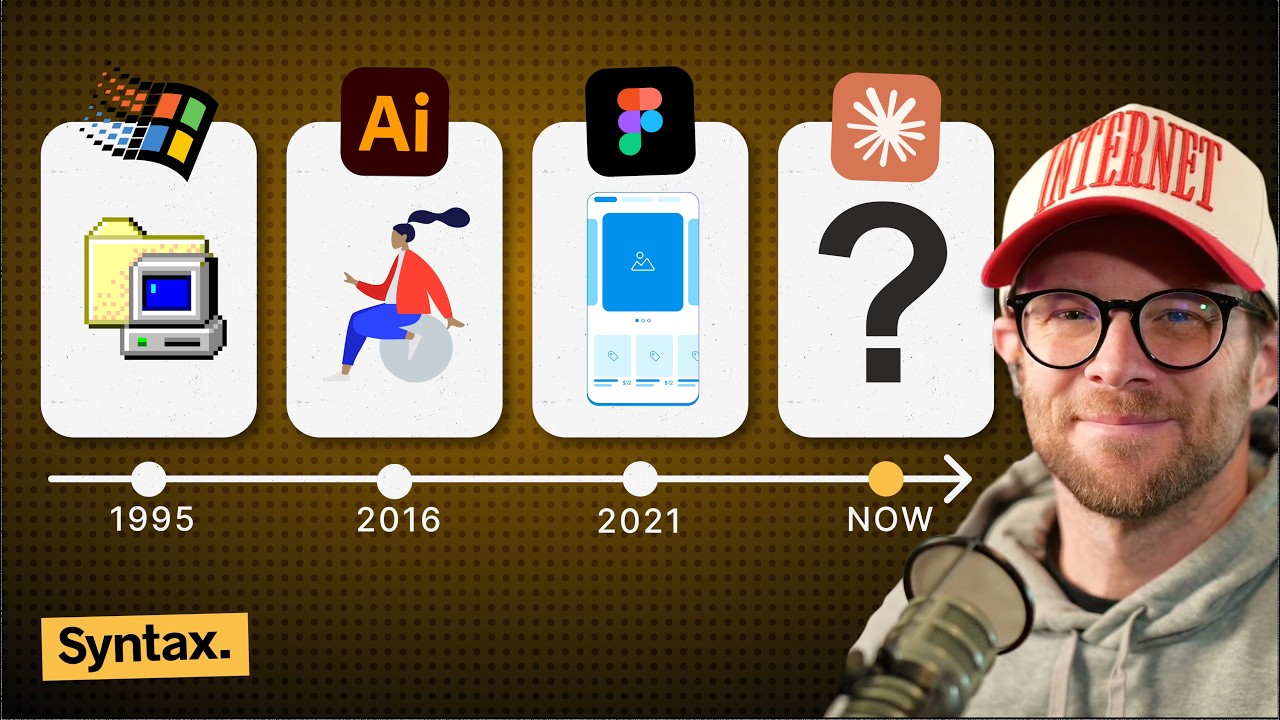
🔗 **Source:** [Can AI Make Good Design?](https://www.youtube.com/watch?v=KWXCkg6qYGA)
> [!note]+ Document Notes
> tags: [ai-design, user-experience, design-systems, design-tools, creative-workflows, ai-creativity]
> author: [MISSING]
> source: Syntax
> reference: https://www.youtube.com/watch?v=KWXCkg6qYGA
> date created: {{date:YYYY-MM-DD}} {{time:HH:mm}}
>
> # 🏷️ Title: Can AI Make Good Design?
>
<!-- deep-read:sections start -->
## 🧭 Table of Contents
- [📝 Summary](#-summary)
- [📖 Main Content](#-main-content)
- [🗒️ Notes](#️-notes)
- [📚 References](#-references)
- [🗣️ Paraphrase](#️-paraphrase)
- [📰 Newsletter](#-newsletter)
- [✅ Action Items](#-action-items)
- [🧪 Hypotheses](#-hypotheses)
- [📊 Methodology](#-methodology)
- [❓ Questions](#-questions)
- [🔮 Future Research](#-future-research)
- [💡 Implications](#-implications)
- [🧠 Learning Styles Assessment](#-learning-styles-assessment)
- [📊 Accessibility Assessment](#-accessibility-assessment)
- [🌍 DEIB Assessment](#-deib-assessment)
- [✅ Logical Validity](#-logical-validity)
- [🛡️ DARVO Analysis](#-darvo-analysis)
- [🎯 Conclusion](#-conclusion)
## 📝 Summary
- Syntax podcast hosts Wes and Scott examine whether AI can create genuinely good design that's functional, creative, and user-focused
- Key finding: AI design tools produce recognizable patterns and "tells" that make outputs increasingly homogeneous
- The hosts discovered AI models systematically use identical fake testimonials (like "Sarah Chen") across thousands of websites
- AI excels at busy work and established patterns but fails at creativity, user experience design, and business-specific solutions
- Design quality requires human judgment for taste, user flows, and contextual problem-solving that AI cannot replicate
## 📖 Main Content
The podcast explores several critical questions about AI's role in design creation and enhancement. The hosts begin with a revealing discovery about AI-generated content homogeneity - fake testimonials from "Sarah Chen" and "Marcus Rodriguez" appear across hundreds of AI-generated startup websites, demonstrating how AI produces probabilistic rather than creative outputs.
### Core Design Limitations
AI struggles with genuine creativity because it synthesizes existing training data rather than generating novel ideas. The hosts observe that AI-designed websites, YouTube thumbnails, and marketing materials follow predictable patterns that become "table stakes" - once everyone can generate the same style, it loses effectiveness.
### User Experience Challenges
AI particularly fails at user experience design, which requires understanding specific business contexts, user flows, and friction points. The hosts use U-Haul's poor booking experience as an example of where human UX expertise is irreplaceable - AI cannot understand the nuanced requirements of booking trailers or similar complex workflows.
### Programmatic Design Boundaries
While some design elements can be algorithmic (like text-wrap balance), fundamental aspects like color selection and aesthetic judgment resist programmatic approaches. Tools like Warp Terminal's automated theming demonstrate the limitations of algorithmic design decisions.
### Effective AI Integration
The hosts identify productive AI use cases: background removal, batch image processing, and handling repetitive tasks. Claude's ability to slice, rename, and process multiple icons exemplifies how AI can eliminate busy work while preserving human creative control.
## 🗒️ Notes
#### ⏱️ [00:00:20](https://www.youtube.com/watch?v=KWXCkg6qYGA&t=20) Introduction and AI Design Skepticism
- Not about overhyped "one-shot amazing" AI design claims
- Focus on functional utility, business conversion, and user value
- Current state: apps looking identical with proliferating AI tools
#### ⏱️ [00:03:45](https://www.youtube.com/watch?v=KWXCkg6qYGA&t=225) The Sarah Chen Discovery
- Identical fake testimonials across hundreds of AI-generated websites
- Every major AI model (GPT, Claude, etc.) uses "Sarah Chen" as first testimonial
- Reveals deterministic nature of AI outputs vs. claimed creativity
#### ⏱️ [00:08:30](https://www.youtube.com/watch?v=KWXCkg6qYGA&t=510) AI Creativity Analysis
- AI helps explore ideas but doesn't generate novel concepts
- Mad CSS website example: AI assisted iteration but required human direction
- Output is "mediocre watered down version" of existing training data
#### ⏱️ [00:10:15](https://www.youtube.com/watch?v=KWXCkg6qYGA&t=615) YouTube Thumbnail Saturation
- Gemini can generate Mr. Beast-style thumbnails instantly
- Once everyone adopts same style, it becomes ineffective
- Prediction: YouTube thumbnail trends will shift as AI democratizes current patterns
#### ⏱️ [00:13:22](https://www.youtube.com/watch?v=KWXCkg6qYGA&t=802) Design Extrapolation with Tools
- Google Stitch example: decent results with good templates and rules
- Claude + Google Stitch workflow: describe features without visuals, then generate
- Problem: recognizable patterns emerge after limited use
#### ⏱️ [00:16:45](https://www.youtube.com/watch?v=KWXCkg6qYGA&t=1005) Design.md Specification
- Google's design system documentation standard
- Structured markdown for design tokens, properties, validation
- Concerns about drift between code and documentation
#### ⏱️ [00:19:30](https://www.youtube.com/watch?v=KWXCkg6qYGA&t=1170) UX Design Limitations
- AI fails at context-specific interface design
- U-Haul booking example: requires understanding business-specific user flows
- Good UX needs human understanding of friction points and user goals
#### ⏱️ [00:24:10](https://www.youtube.com/watch?v=KWXCkg6qYGA&t=1450) Programmatic Design Boundaries
- Warp Terminal's automated theming produces poor results
- VS Code's granular control yields better outcomes
- Text-wrap balance as example of successful algorithmic design
#### ⏱️ [00:27:15](https://www.youtube.com/watch?v=KWXCkg6qYGA&t=1635) Data-Driven Design Influence
- AI can influence end goals with sufficient data and AB testing
- TikTok, Twitter algorithms as examples of effective behavioral design
- Marketing claims about replacing humans are overblown
#### ⏱️ [00:32:40](https://www.youtube.com/watch?v=KWXCkg6qYGA&t=1960) Tool Integration Spectrum
- Range from helpful (Photoshop background removal) to harmful (complete brand generation)
- Best designers will use AI for productivity while maintaining creative control
- Claude example: batch icon processing eliminates busy work
## 📚 References
- [Google Design.md Specification](https://design.md)
- [Syntax Podcast](https://syntax.fm)
- [Sentry.io](https://sentry.io/syntax) - Error tracking and user experience monitoring
## 🗣️ Paraphrase
The Syntax podcast hosts examine whether AI can produce genuinely effective design beyond superficial aesthetics. They discovered that AI models systematically use identical fake testimonials across thousands of websites, revealing the probabilistic rather than creative nature of AI outputs. While AI excels at established patterns and busy work, it fails at user experience design, which requires understanding specific business contexts and user needs. The hosts conclude that AI works best as a productivity tool for designers rather than a replacement, handling repetitive tasks while humans maintain creative control and strategic thinking.
## 📰 Newsletter
🎨 **Can AI Actually Design? New Syntax Deep Dive**
The latest Syntax episode tackles the big question: can AI create genuinely good design, or are we just getting a flood of look-alike websites? Wes and Scott discovered something fascinating - every major AI model uses the same fake testimonials (hello, Sarah Chen!) across thousands of generated sites.
**Key takeaways for WordPress developers:**
- AI works great for busy work (batch image processing, background removal)
- Terrible at UX design requiring business context
- Google's new Design.md spec attempts to standardize design system documentation
- Best approach: Use AI as a productivity tool, not a creative replacement
**Tools mentioned:** Claude for image processing, Google Stitch for layout generation, Figma integrations. Perfect timing as WordPress continues evolving its design tools and block editor capabilities!
Worth a listen if you're wrestling with AI tools in your design workflow.
## ✅ Action Items
#### DevRel
- Education: Create workshops on effective AI tool integration for designers
- Developer experience: Document AI tool limitations and best practices
- Developer marketing: Address AI design quality concerns in content strategy
#### WordPress
- Design: Evaluate AI tool integration in block editor and design workflows
- Documentation: Create guidelines for AI-assisted design while maintaining quality standards
- Community: Host discussions on AI design ethics and quality standards
#### Community
- Maintainers: Establish quality guidelines for AI-generated design contributions
- Contributors: Develop training on distinguishing between helpful AI automation and problematic replacement
## 🧪 Hypotheses
- AI design tools will become commoditized within 6 months, forcing differentiation through human creativity
- Websites using AI-generated testimonials face legal liability for fraudulent marketing claims
- Design quality will bifurcate: AI-generated "good enough" for basic needs, human-designed for competitive advantage
- User backlash against AI-generated content will drive preference for obviously human-created design
- AI tools will improve designer productivity by 30% when used for appropriate tasks (busy work, iteration)
### 📊 Methodology
- Comparative analysis of AI vs. human-designed conversion rates across industry verticals
- User preference testing between AI-generated and human-designed interfaces
- Longitudinal study of design trend cycles in AI vs. pre-AI eras
- Survey of designer productivity metrics before and after AI tool adoption
- Legal analysis of fake testimonial liability across jurisdictions
### ❓ Questions
- How do users perceive and respond to AI-designed interfaces in usability testing?
- What percentage of current "viral" design trends originate from AI model training data?
- How will design education adapt to emphasize uniquely human skills?
- What regulatory frameworks will emerge for AI-generated marketing materials?
- How do conversion rates differ between AI-generated and human-designed user flows?
### 🔮 Future Research
- Longitudinal studies of AI design tool impact on creative industry employment
- Development of AI design quality metrics beyond aesthetic assessment
- Investigation of bias propagation through design model training data
- Analysis of user behavior changes in response to AI design proliferation
### 💡 Implications
- **Practice:** Designers must focus on strategy, user research, and contextual problem-solving rather than execution
- **Education:** Design curricula need to emphasize human judgment, ethics, and AI tool literacy
- **Industry:** Clear differentiation emerging between AI-assisted and AI-generated design services
- **Legal:** Potential fraud liability for businesses using AI-generated fake testimonials
- **Technology:** Need for design tools that enhance human creativity rather than replace it
### 🧠 Learning Styles Assessment
Reading level: Grade 10-12 (Flesch-Kincaid). Technical podcast content with industry jargon but conversational delivery.
#### 👀 Visual learners
- Present: Embedded video, examples of AI-generated designs, comparison screenshots
- Improve: Side-by-side before/after design comparisons, AI model output visualization, trend analysis charts
#### 🔊 Aural learners
- Present: Full audio podcast episode, conversational format
- Improve: Chapter markers, key quote highlights, discussion point timestamps
#### 🗣️ Verbal learners
- Present: Clear definitions of technical terms, analogies (AI as "warm stew" of existing ideas)
- Improve: Glossary of AI design terms, expanded analogies for complex concepts
#### 🧩 Kinesthetic learners
- Present: Tool recommendations with specific use cases
- Improve: Step-by-step tutorials for Claude image processing, hands-on AI tool comparisons
#### 🧠 Logical learners
- Present: Structured argument progression, hypothesis-driven analysis
- Improve: Decision trees for AI tool selection, cost-benefit analysis frameworks
#### 🧑🤝🧑 Social learners
- Present: Podcast discussion format, community feedback requests
- Improve: Discussion prompts for design teams, peer review frameworks for AI-assisted work
#### 🧘♀️ Solitary learners
- Present: Individual reflection prompts about AI tool usage
- Improve: Self-assessment rubrics for design quality, personal AI ethics framework development
#### 🌿 Naturalistic learners
- Present: Evolution analogies for design trend cycles
- Improve: Ecosystem thinking about AI tool impact on design industry
### 📊 Accessibility Assessment
#### Screen reader semantics
- Present: Clear heading structure, descriptive link text
- Improve: Alt text for design examples, audio descriptions for visual comparisons
#### Keyboard navigation
- Present: Standard web navigation patterns
- Improve: Skip links for long transcript sections, logical tab order through embedded content
#### Contrast and readability
- Present: Standard text formatting
- Improve: High contrast mode for code examples, larger text options for technical content
#### Text resizing and reflow
- Present: Responsive design
- Improve: Optimal line length at high zoom levels, preserved functionality at 200% zoom
#### Media and captions
- Present: Full transcript provided
- Improve: Synchronized captions for video segments, downloadable transcript option
#### Forms and interactions
- Present: Basic web standards
- Improve: Accessible sharing controls, clear error messaging for broken links
### 🌍 DEIB Assessment
#### Cultural breadth
- Present: US-centric examples and references
- Improve: Global design trend analysis, international AI regulation perspectives
#### Inclusive language
- Present: Generally neutral technical language
- Improve: Avoid assumptions about design skill levels, expand accessibility of technical jargon
#### Neurodiversity support
- Present: Clear section breaks, consistent structure
- Improve: Content warnings for flashing video examples, predictable navigation patterns
#### Representation
- Present: Male-dominated perspective (two male hosts)
- Improve: Include diverse designer perspectives, acknowledge gender representation in design industry
#### Psychological safety
- Present: Professional discussion tone
- Improve: Content warnings for discussion of deceptive practices, clear community guidelines for comments
### ✅ Logical Validity
#### Strong reasoning
- Inductive reasoning: Pattern recognition across multiple AI design tools demonstrates systematic limitations (Sarah Chen testimonial analysis)
- Causal reasoning: Clear connection between AI training data limitations and output homogeneity
- Analogical reasoning: Effective comparison to previous design democratization tools (Dreamweaver, Canva, clip art)
#### Fallacies
- **Hasty generalization (timestamp 00:08:30):** "everything is the same warm stew" - overstates AI output uniformity
- **False dichotomy (timestamp 00:32:40):** Implies binary choice between AI replacement and human control, missing hybrid approaches
- **Appeal to consequences (timestamp 00:10:15):** YouTube thumbnail prediction based on desired outcome rather than evidence
#### Tone of voice
Professional but casual, with skeptical undertone toward AI hype. Uses humor and personal anecdotes to maintain engagement while delivering technical analysis.
### 🛡️ DARVO Analysis
No DARVO patterns detected. The hosts maintain critical but fair analysis of AI design tools without defensive rhetoric or victim/offender reversals.
## 🎯 Conclusion
AI design tools excel at productivity enhancement and established pattern execution but fail at creativity, user experience design, and context-specific problem solving. The proliferation of identical AI outputs (exemplified by ubiquitous fake testimonials) reveals the deterministic nature of these tools rather than genuine creativity. Effective AI integration requires human oversight for strategic decisions, user research, and quality control. Designers should embrace AI for busy work while focusing human effort on areas requiring judgment, taste, and contextual understanding.
## 🧱 Refactor Appendix
### 📚 Literature Split Pad
### AI design tools produce recognizable output patterns
> [!quote] [Can AI Make Good Design?](https://www.youtube.com/watch?v=KWXCkg6qYGA) by [[Syntax Podcast]] via [[YouTube]]. Published 2024. Accessed {{date:YYYY-MM-DD}}.
> "I can feel like I could even tell which model designed something at this point, like there are specific tells for GPT versus Anthropic."
Every AI model has distinctive visual signatures that become apparent with experience, limiting creative uniqueness.
[view highlight](https://www.youtube.com/watch?v=KWXCkg6qYGA&t=225) #xref #articleseed ID:rw_001
### AI models systematically use identical fake testimonials
> [!quote] [Can AI Make Good Design?](https://www.youtube.com/watch?v=KWXCkg6qYGA) by [[Syntax Podcast]] via [[YouTube]]. Published 2024. Accessed {{date:YYYY-MM-DD}}.
> "I went into every other model and every single one had either four out of five had Sarah Chen as the first testimonial."
Demonstrates deterministic rather than creative outputs, raising fraud concerns for businesses using AI-generated content.
[view highlight](https://www.youtube.com/watch?v=KWXCkg6qYGA&t=420) #xref #articleseed ID:rw_002
### Good UX design requires business-specific context understanding
> [!quote] [Can AI Make Good Design?](https://www.youtube.com/watch?v=KWXCkg6qYGA)
> "A designer that understands UX needs to come in and understand what is actually getting done here and figure out the interface and flow."
AI cannot replace human insight into user workflows, business requirements, and friction point identification.
[view highlight](https://www.youtube.com/watch?v=KWXCkg6qYGA&t=1170) #xref ID:rw_003
---
### 🔖 Atomic Split Pad (Zettel Candidates)
#### AI democratization accelerates design trend cycles
- Design patterns become "table stakes" faster when AI enables mass adoption
- Links: [[Design Trends]] [[Technology Adoption Curves]] [[Competitive Advantage]]
#### Programmatic design succeeds only for algorithmic problems
- Text-wrap balance works; color selection and aesthetic judgment fail
- Links: [[Design Systems]] [[Algorithm Design]] [[Human Creativity]]
#### Effective AI integration focuses on productivity not replacement
- Claude's batch image processing exemplifies appropriate AI assistance
- Links: [[Workflow Automation]] [[Creative Tools]] [[Human-AI Collaboration]]
---
### ✏️ Fleeting Queue (Extract by Selection)
- [F1] Investigate legal implications of AI-generated fake testimonials — fraud liability/{ARTICLE_URL} #fleeting #inbox
- [F2] Test Claude vs other tools for design asset processing workflows — productivity comparison/{ARTICLE_URL} #fleeting #inbox
- [F3] Research Design.md adoption rates and developer feedback — Google specification uptake/{ARTICLE_URL} #fleeting #inbox
---
## Full Transcript
[00:00] Welcome to Syntax. We lost the first<br>[00:02] like 20 seconds of this episode on<br>[00:04] Riverside. So, I'm here recording it<br>[00:06] again. I went to find the shirt that I<br>[00:08] was wearing. I spilled schwarma of<br>[00:09] poutine on it, so it's dirty. So, listen<br>[00:12] up. We're going to get the editor to try<br>[00:14] cut it in perfectly and I'm just going<br>[00:17] to start saying what I was saying at the<br>[00:18] beginning of it. We have a show on AI<br>[00:21] design. And don't turn it off just yet<br>[00:23] because this isn't the AI design show<br>[00:25] where guys are like, "Oh, I one-shoted<br>[00:27] this and it looks amazing to me and I<br>[00:29] think designers are toast." No, that's<br>[00:32] not what this show is about. This show<br>[00:33] is about uh we know that AI can write<br>[00:36] pretty good code and and that's great<br>[00:39] cuz it's very deterministic. It's it can<br>[00:41] be tested, things like that. But design<br>[00:43] like can a model create something that<br>[00:44] is good, that is functionally useful,<br>[00:46] that converts well for the business,<br>[00:48] that helps the actual end user. Um,<br>[00:50] we're in this like weird space right now<br>[00:52] where it seems like everybody is just<br>[00:53] ripping each other off. Every app looks<br>[00:56] exactly the same and there's tons of new<br>[00:58] tools to help you. So, in order to get<br>[01:00] to the bottom of this, we're going to<br>[01:01] attempt to answer some of the following<br>[01:02] questions. Can AI be creative? Can it<br>[01:04] make you creative? Can good design be<br>[01:06] extrapolated? Um, what about user<br>[01:09] experience? Can AI make a good user<br>[01:11] experience? You know, does it know about<br>[01:13] all of the complexities of your UI of<br>[01:15] what people are trying to get done? Uh,<br>[01:17] can you make good design programmatic?<br>[01:19] We've talked about this in in the<br>[01:21] previous many episodes of like can you<br>[01:23] programmatically pick good colors like<br>[01:25] with math those things are are kind of<br>[01:27] hard to get to. So we'll answer that<br>[01:29] question. Can I AI make design that<br>[01:32] influences the end goal? So buying<br>[01:34] something, you know, or or helping<br>[01:35] somebody get to the the end use, why are<br>[01:38] they using your application at the end<br>[01:40] of the day? Can you help them with that?<br>[01:41] Um, and then we're going to end it off<br>[01:43] with just like tools and thoughts of if<br>[01:46] you want to design something, whether<br>[01:47] you're designer or not, what tools<br>[01:49] should you be looking at and and how<br>[01:51] should you be thinking about using these<br>[01:54] things? My name is Wes. With me as<br>[01:56] always is Mr. Scott Tinsky. You're ready<br>[01:58] to get into it, Scott? Oh, I'm so ready<br>[02:00] to get into it. I this is a topic that I<br>[02:03] I think a lot about especially given<br>[02:05] just how many<br>[02:07] >> how many vibecoded designs you see and<br>[02:10] it's such a tell. There's so many tells<br>[02:12] these days uh of once you've worked with<br>[02:15] AI I can I feel like I could even tell<br>[02:18] Wes which model design something at this<br>[02:20] point<br>[02:21] >> which<br>[02:23] >> like there are specific tells for for<br>[02:25] GPT verse anthropic etc. So, I I'm<br>[02:28] really interested to hear your thoughts<br>[02:30] on this, but also in general, man,<br>[02:32] design is something that I'm constantly<br>[02:35] looking to get better at and feel like<br>[02:36] I'm constantly not good enough at. So,<br>[02:40] uh let's get into it.<br>[02:42] >> I know sort of an aside from that, but I<br>[02:45] know that there are many architects<br>[02:46] which which can look at a building and<br>[02:48] say, I know which software this building<br>[02:51] was designed in due to the way that the<br>[02:53] the curves fit together. you know, as<br>[02:55] soon as they add a new fillet tool and<br>[02:58] then all of the buildings have that,<br>[02:59] which is absolutely crazy. And I feel<br>[03:01] like I'm going to be on Antiques Road<br>[03:02] Show when I'm older being like, "Well,<br>[03:04] yes, that was<br>[03:05] >> uh that was done with SONNET 45, NOT<br>[03:08] 46." You might be a little bit confused,<br>[03:10] you know?<br>[03:10] >> I'm be able to pick it out. So stay<br>[03:12] tuned for that.<br>[03:13] >> But let's talk about like<br>[03:15] >> Yes, the border left here is indicative<br>[03:17] of the era.<br>[03:20] So, I got onto this whole thing because<br>[03:22] I get these emails every single day from<br>[03:26] these like slopcoded startups and they<br>[03:29] say like here check it out like let me<br>[03:31] know if you if you want to use it and I<br>[03:35] always click through to the website and<br>[03:36] see what it is and it's it's the same<br>[03:38] thing of everything, right? where<br>[03:39] someone just logged into VZero or<br>[03:42] Lovable or Claude or whatever and typed<br>[03:44] like make me a business, make no<br>[03:45] mistakes, and it shhat out some uh<br>[03:48] business out the other end. And what's<br>[03:51] interesting is that on all of these I<br>[03:53] see the same name over and over again. I<br>[03:56] see Sarah Chen on there and I was like,<br>[03:58] where is Sarah Chen coming from? And I I<br>[04:02] was like, I got to get to the bottom of<br>[04:03] this. So, first of all, I thought like<br>[04:04] maybe this is just the same person doing<br>[04:06] this over and over again. And and it<br>[04:08] turns out that wasn't the case. It was<br>[04:10] many websites. So I was like, where is<br>[04:12] Sarah Chen coming from? Like maybe it's<br>[04:14] coming from like one of these like site<br>[04:17] builders, you know, maybe they have like<br>[04:18] seated it with a template that has Sarah<br>[04:21] Chen as a testimonial and just uses<br>[04:22] that. And I looked into it and it didn't<br>[04:24] seem to be the case because all of the<br>[04:26] examples that I had found I looked on<br>[04:28] GitHub and the use of Sarah Chen in the<br>[04:30] last year has just skyrocketed and and<br>[04:34] they were all from like different<br>[04:35] generators you know some of it was in<br>[04:38] like PHP code some of it was in like<br>[04:41] markdown documents and and PowerPoint<br>[04:43] slides and there there didn't seem to be<br>[04:44] any commonality between them all. So<br>[04:47] finally I went into chat GBT and I said<br>[04:49] give me a list of like five random<br>[04:51] testimonials or not random five<br>[04:53] testimonials and Sarah Chen bam first<br>[04:55] one and I went into every other model<br>[04:57] and every single one had<br>[05:00] >> either I think four out of five had<br>[05:01] Sarah Chen as the first and then<br>[05:03] somewhere in there it had a variation of<br>[05:06] Sarah Chen in there which was absolutely<br>[05:08] wild. So every single model is using<br>[05:10] Sarah Chen as it and and I I thought<br>[05:12] like hm if you think AI is is making you<br>[05:15] creative it's it's not. That's making<br>[05:16] you like what programmatically what what<br>[05:18] what did I what was I saying it was<br>[05:20] called? Hold on.<br>[05:21] >> Yeah, you're it's making you probable or<br>[05:23] likely. I got to ask how how did you<br>[05:26] notice Sarah Chen for because for me my<br>[05:30] brain just glosses over that stuff. You<br>[05:32] know the times that I don't or when I<br>[05:34] see my good buddy Wes up there, I'm<br>[05:36] like, "Hey, that's Wes. He's got a<br>[05:38] little Wes."<br>[05:39] >> But I don't think I would have noticed<br>[05:40] any rainbow.<br>[05:41] >> Like this guy emailed me and says like,<br>[05:42] "Hey, we are a business." And then I<br>[05:43] like go to his website and it says Sarah<br>[05:45] Chen and then there's like a obviously<br>[05:47] an AI photo and I was like that's not<br>[05:50] Sarah Chen. And so I Googled it. There<br>[05:52] was another one like Marcus Rodriguez<br>[05:54] was the one the other one um that kept<br>[05:56] showing up. So I I Googled Marcus<br>[05:58] Rodriguez<br>[05:59] >> and testimonial and I found I'm not<br>[06:02] kidding. I probably found two or 300<br>[06:06] >> like startups.coms<br>[06:08] that had him as a thing and in in many<br>[06:11] cases his like attribution of the<br>[06:14] >> um well company he's associated with was<br>[06:16] also the same it was like info tech or<br>[06:18] something like that. Uh so I like just<br>[06:20] by googling it I found like man this<br>[06:22] Marcus Rodriguez and then beside it was<br>[06:24] always Sarah Chen was used over and over<br>[06:26] and over again. So it's just<br>[06:28] deterministic right. Did you did you<br>[06:31] respond to uh the uh people who emailed<br>[06:36] you asking you Sarah?<br>[06:37] >> So I first thought like oh I'm on to<br>[06:39] some like slo ring you know and I'm<br>[06:41] going to I'm going to infiltrate the slo<br>[06:43] ring. So I emailed him and I was like<br>[06:44] hey can we can we jump on a call? I<br>[06:46] would love to do a a syntax episode on<br>[06:48] this. And he's like yeah absolutely<br>[06:50] let's talk right now. And then I<br>[06:52] realized like no it's not a slobbering<br>[06:54] it's just that everybody's using the<br>[06:55] same Sarah Chen testimonial.<br>[06:58] So<br>[06:59] >> I feel like I feel I feel like that is<br>[07:03] fraud.<br>[07:04] >> That is fraud.<br>[07:05] >> Yes.<br>[07:06] >> Oh, absolutely.<br>[07:06] >> I would say that is fraud. Yes. Yeah.<br>[07:09] That's crazy.<br>[07:10] >> So all of that to say like can AI make<br>[07:13] you creative? I I think like if you are<br>[07:15] expecting it to do all of the work of<br>[07:19] making you something beautiful,<br>[07:21] something creative, something that goes<br>[07:23] into whatever, it's not going to happen,<br>[07:24] right? I think that it can certainly<br>[07:27] help you explore ideas with the Mad CSS<br>[07:31] website, right? We we had these like<br>[07:33] super silly like '9s basketball photos,<br>[07:38] which one person asked if we like took<br>[07:41] those, which was like, of course not. We<br>[07:43] those are we didn't travel back to the<br>[07:45] '9s and take like NCAA photos. And and<br>[07:47] me at my my you know massive height of 5<br>[07:50] foot seven I I can certainly dunk like<br>[07:54] that. You best believe uh I am good on<br>[07:58] the trampoline but not that good.<br>[08:00] >> But when I was designing that thing I<br>[08:02] went through I don't know probably like<br>[08:04] 20 or 30 different like iterations of<br>[08:06] what we could do. And it it certainly<br>[08:08] helped me explore different areas. And I<br>[08:12] think that AI can help you do that. But<br>[08:14] at the end of the day, it's not coming<br>[08:17] up with with new ideas. It's all been<br>[08:19] trained on stuff that has been done<br>[08:20] before, which is maybe not necessarily a<br>[08:23] bad thing, but I I don't think it's<br>[08:24] actually making you creative, and it's<br>[08:26] just making everything some disgusting<br>[08:29] warm stew that is just all of the ideas<br>[08:31] that have been done before, all of the<br>[08:33] stuff that's been trained on, and it's<br>[08:35] all sort of just this mediocre sort of<br>[08:38] watered down version of that. But what<br>[08:40] about these design tools that create<br>[08:42] really good design?<br>[08:44] >> Well, we'll talk about that because like<br>[08:45] you you see a lot of these design tools<br>[08:47] that put out seemingly decent looking<br>[08:50] websites. We'll talk about that in just<br>[08:52] a sec, but let's talk about YouTube<br>[08:53] thumbnails for a second. The latest<br>[08:55] Gemini can crank out like a Mr. Beast<br>[08:58] style thumbnail, which is like super<br>[09:01] high um high HDR. It widens eyes. does<br>[09:06] all the like stupid YouTube thumbnail<br>[09:08] stuff that like we do it as well, right?<br>[09:10] Because why? Because it works, right?<br>[09:12] But now that it they're able to just<br>[09:15] simply you can just type type and it<br>[09:17] cranks out what you used to pay hundreds<br>[09:20] of dollars for to a designer for this<br>[09:22] type of thumbnail. Now, everybody every<br>[09:24] single thumbnail is like that on<br>[09:26] YouTube, right? It's the the wow face,<br>[09:29] all of that. It's the the the blue<br>[09:32] versus red, the thing down the middle,<br>[09:34] big letters on top. That is now table<br>[09:38] stakes. And I think that now that is<br>[09:40] table stakes, it's going to stop working<br>[09:42] in the next two or 3 weeks. I guarantee<br>[09:44] you because everyone has figured out,<br>[09:46] oh, I don't need to like previously it<br>[09:48] was somebody like Mr. Beast. They had<br>[09:50] somebody on staff figuring out these and<br>[09:53] then other people started to copy those<br>[09:55] and now it's simply just like a prompt<br>[09:57] away and every single thumbnail looks<br>[09:59] like that.<br>[10:00] >> Now it's going to stop working because<br>[10:02] it's table stakes. Everybody can do it,<br>[10:04] right? And now we're going to have to<br>[10:05] guarantee we're going to see like a<br>[10:07] shifting of YouTube thumbnails to<br>[10:09] something else. And I don't know what<br>[10:10] that something else is, but we will see.<br>[10:14] Yeah, I know. It's a YouTube thumbnails<br>[10:16] are a whole thing in general. Even like<br>[10:18] thinking about that wow face. I hate the<br>[10:20] wow face, but it works. And I'll tell<br>[10:21] you why it works. It's psychology.<br>[10:23] People recognize faces and expressions<br>[10:25] better than they recognize text or<br>[10:27] images like that. So, uh, the faces work<br>[10:30] even though I hate them and they're<br>[10:32] ugly, but we got to do it. The next<br>[10:35] question here is, can good design be<br>[10:37] extrapolated? Meaning that if you were<br>[10:39] to provide it with a list of examples, a<br>[10:43] list of rules, colors, spacing, type,<br>[10:46] all of that stuff, if you sort of make a<br>[10:49] good base of design, can it then be<br>[10:51] extrapolated into to something larger?<br>[10:54] Um, and I I think partially yes. That's<br>[10:56] what we're seeing now with tools like<br>[10:58] Google Stitch where you go into it and<br>[11:01] you you tell it what you want. And in my<br>[11:03] case, I found what was helpful is I<br>[11:05] asked Claude to summarize all of the<br>[11:08] features and all of the the layouts and<br>[11:11] whatever that needs to happen without<br>[11:14] describing what it looks like.<br>[11:15] >> And then I took that copy pasted that<br>[11:17] into Google Stitch and it cranked out<br>[11:19] like a decent looking design. But after<br>[11:23] using it three or four times, you can<br>[11:25] clearly tell that they have have seated<br>[11:28] it with some good stuff, right? They<br>[11:30] have a whole bunch of templates. They<br>[11:32] have a whole bunch of good fonts. They<br>[11:33] have a whole bunch of rules about what<br>[11:34] colors work well with each other. They<br>[11:36] probably have a massive prompt of like<br>[11:38] these are the things that look good. And<br>[11:40] then out the other end, you you the user<br>[11:44] can say, "All right, well, I want it to<br>[11:46] to do this, right? I need form inputs or<br>[11:49] sliders, all that stuff. Then I want to<br>[11:51] use these colors." And then it can it<br>[11:53] can take those things and sort of<br>[11:55] extrapolate that into something that is<br>[11:57] looking halfdeent. But even after it's<br>[12:00] been out for what, like a month or two,<br>[12:02] I can now eyeball one of these Google<br>[12:05] Stitch designs no problem because they<br>[12:07] all start to look the same after after a<br>[12:09] while. I think that goes along very<br>[12:12] nicely and and nicely in a a sense where<br>[12:15] like even with development I a lot of<br>[12:18] people feel like AI is really helpful in<br>[12:20] green field in general but the times<br>[12:23] where I find it to be the most helpful<br>[12:26] are with established patterns taking<br>[12:29] care of tasks that you uh is like mostly<br>[12:33] just regurgitating either patterns that<br>[12:35] you've already done or re-implementing<br>[12:37] those same patterns but without those<br>[12:39] established patterns left to its own<br>[12:41] devices, it's way less effective. So I<br>[12:45] think extrapolating good design to me<br>[12:48] falls under that same category of<br>[12:51] established patterns and extrapolating<br>[12:54] on those established patterns with hard<br>[12:57] rules about how to extrapolate on those<br>[13:00] patterns. I you know especially when you<br>[13:02] get into CSS stuff whether that is like<br>[13:04] >> not adding new new CSS varss without<br>[13:08] approval etc. And there's probably<br>[13:10] people screaming at the the radio right<br>[13:12] now being like, "That's what a design<br>[13:14] system is, you dummy." And like we've<br>[13:16] had this before we've had AI and that is<br>[13:18] a system of rules and pieces that you<br>[13:21] can sort of put together, but there<br>[13:23] there is a limit to it as well, right?<br>[13:24] Because like we had Bootstrap, we had<br>[13:27] have set Shad CN and those things look<br>[13:30] really good out of the box, but at a<br>[13:34] certain point you can't just click them<br>[13:36] together like they're Lego. You have to<br>[13:38] have a little something that is a little<br>[13:40] bit higher. Uh you have to be able to<br>[13:42] figure it out. And that's what my next<br>[13:43] point is is can AI make a good UX? But<br>[13:46] before we get into that, let's talk real<br>[13:47] quick about this like design. MD. So<br>[13:50] this is a Do you want to give a quick<br>[13:52] explanation of what it is? Yeah. So uh<br>[13:55] what is it like a couple weeks ago?<br>[13:57] Google came out with their design.mdspec<br>[14:00] which the idea for the design.mdspec<br>[14:04] is that you are putting it it's kind of<br>[14:08] like your agents.md or any of these uh<br>[14:11] steering documents that you have inside<br>[14:13] of your codebase but only for design<br>[14:16] patterns and when I first saw design<br>[14:20] I was looking at it and it's basically<br>[14:23] what it's a markdown file with front<br>[14:25] matter uh about your design tokens, your<br>[14:29] properties.<br>[14:30] >> It's a parser as well and like a<br>[14:31] llinter. So, it is a lot more structured<br>[14:34] than just a markdown file, but it you're<br>[14:36] right, it is a steering document,<br>[14:38] >> right? And and so there are those<br>[14:40] aspects of it too, right? Where where<br>[14:42] there is<br>[14:43] >> validation involved in this document,<br>[14:46] but it is really and my my initial<br>[14:50] reaction was like this this looks like<br>[14:52] just a root CSS declaration.<br>[14:55] >> Yeah. There are more things in here, but<br>[14:58] it feels like prime territory for drift<br>[15:01] for kind of<br>[15:04] it's like duplication of ideas that are<br>[15:06] expressed in code already. Uh but the<br>[15:09] idea is is that your AI uses this as<br>[15:13] essentially a design document. This is<br>[15:15] the rules of this library. If you're<br>[15:18] adding uh design to this, it's following<br>[15:21] these dang rules. Whether that is the<br>[15:25] colors, fonts, all that stuff, the<br>[15:27] naming of things, uh what belongs to<br>[15:29] what, with the spacing, rounded corner<br>[15:31] spacing. Again, yeah, I still don't<br>[15:34] necessarily<br>[15:36] get it get the need for it. But I<br>[15:39] >> I think the big play here is that like<br>[15:41] it's a standard that can be translated<br>[15:45] between things. So like if you have a<br>[15:48] Figma that can output this and then like<br>[15:51] you have like a like a tailwind it can<br>[15:54] be converted from one to another. Um but<br>[15:57] first of all I wonder like do we do we<br>[15:59] need this rigidness and second of all I<br>[16:02] say if there is rigidity<br>[16:05] >> I feel like I would rather do this in<br>[16:07] like a CSS file with comments maybe<br>[16:12] >> I would love I know this is not going to<br>[16:13] happen. And I would love a standard way<br>[16:15] of just defining CSS variables because<br>[16:17] that's really kind of what this is cuz<br>[16:19] like spacing, rounded, all that stuff.<br>[16:21] Just just come up with a standardized<br>[16:23] name for all this stuff in your root CSS<br>[16:25] declaration. Point it there. Add some<br>[16:27] comments about the overview or whatever.<br>[16:30] Bingo bingo. Now you're not having a AI<br>[16:32] document and a code document that could<br>[16:34] get out of sync.<br>[16:35] >> The drift kills me. I think there's<br>[16:37] there's a different world for this as<br>[16:38] well where the whole design tokens<br>[16:40] folks, you know, where you you're<br>[16:42] Salesforce and you have 40 different<br>[16:43] implementations of your design. But I'm<br>[16:46] curious to see if there's any any<br>[16:47] uptake. I certainly don't want another<br>[16:49] file in my my root of my repo.<br>[16:53] Oh, yeah. Right. Another another root in<br>[16:56] my repo. Yeah. The next one is, can AI<br>[16:58] make good UX? Um, so much of design is<br>[17:01] is not just making it look good. It's<br>[17:02] it's about making an interface that is<br>[17:04] consistent. It's something that has<br>[17:05] clear purpose, low friction to the user,<br>[17:08] right? And quite honestly, I don't think<br>[17:09] AI is very good at this. I think it's<br>[17:12] great at throwing buttons on there. I<br>[17:14] think it's good at um having cards and<br>[17:16] putting cards inside of cards, but when<br>[17:18] it comes down to<br>[17:21] this is our specific app and we are<br>[17:24] doing this one thing, right? Like we are<br>[17:26] booking trailers, you know, we are<br>[17:28] U-Haul. That maybe that's a good<br>[17:30] example. I freaking hate U-Haul.<br>[17:33] U-Haul's app is absolutely awful. The UX<br>[17:35] is I makes me want to kill myself and it<br>[17:38] just the worst.<br>[17:40] >> You could say that. You could say I<br>[17:42] think<br>[17:44] >> the UX makes me want to die and it just<br>[17:48] it drives me nuts. Right. And what needs<br>[17:50] to happen there is that a designer that<br>[17:53] understands UX needs to come in and<br>[17:55] understand what is actually getting done<br>[17:57] here and figure out both the interface<br>[18:00] as well as the flow for for actually<br>[18:02] booking a trailer on U-Haul, right? And<br>[18:05] I don't know that if you were to give AI<br>[18:09] these problems, it that it would make a<br>[18:11] good thing because it it just really<br>[18:13] doesn't understand. Maybe you could, I<br>[18:15] don't know, take a whole bunch of user<br>[18:17] feedback and like and pipe that in and<br>[18:19] summarize it and stuff, but I think at a<br>[18:21] certain point you still need somebody<br>[18:23] who understands the stuff and has a good<br>[18:25] UX because it's just you're going to get<br>[18:28] these awful interfaces at the end of the<br>[18:31] day. Yeah, I find most the the UX work<br>[18:34] that AI does even with strict rules and<br>[18:36] you can download a UX skill from skills<br>[18:39] whatever that malware and throw it on<br>[18:42] your system and and prompt away make<br>[18:45] this UX more user friendly and like it<br>[18:47] just flat out is bad at that there like<br>[18:50] I have such strict UX rules in mind and<br>[18:52] it still just like falters with that. I<br>[18:54] I always I find I find myself saying<br>[18:56] move move out of the way let me do it<br>[18:59] like way more than ever these days. I<br>[19:00] even think just like so much of that is<br>[19:02] just subjective, you know, like, oh, I'm<br>[19:06] taste.<br>[19:06] >> I hate that like taste thing so much,<br>[19:08] but yeah, it makes sense. It's just like<br>[19:09] somebody needs to<br>[19:10] >> taste<br>[19:11] >> use this thing and go, oh, you know<br>[19:13] what? when I selected my location and<br>[19:16] then the trailer wasn't available, there<br>[19:19] should be a very good UX for being able<br>[19:21] to realize, oh, there is a similar<br>[19:23] trailer at a different place nearby or<br>[19:26] there are this is a trailer that I could<br>[19:28] get that is similar at this location and<br>[19:32] yeah, there's just there's so much to<br>[19:34] it. So, not good at UXMO.<br>[19:37] So, if you have AI designing your app,<br>[19:39] you're going to want to make sure that<br>[19:40] you have Sentry because why? They have<br>[19:44] rage click detection. Because when AI<br>[19:46] designs your crappy user experience,<br>[19:49] users are going to be clicking on stuff<br>[19:51] and being like, why doesn't this work<br>[19:52] right? Or, uh, why isn't this doing what<br>[19:55] I'm expecting it to? And then you're<br>[19:56] going to get those reports in your<br>[19:59] dashboard in Sentry, and you're going to<br>[20:01] be able to see exactly who's having<br>[20:03] issues. You can also collect user<br>[20:05] feedback for when users feel like this<br>[20:08] thing might suck. Uh there's a lot of<br>[20:10] great stuff here too, like outages and<br>[20:13] being able to track errors from your<br>[20:16] slopcoded mess. So check it out at<br>[20:18] century.io/sintax.<br>[20:21] Sign up, get two months for free using<br>[20:24] the coupon code tasty treat. Trust me,<br>[20:26] this is a tool that is going to help you<br>[20:29] at every single<br>[20:30] >> rage clicks and dead clicks as well.<br>[20:32] That's if you're interested in the<br>[20:33] difference between the two. A rage click<br>[20:35] is where someone clicks multiple times<br>[20:37] and is is raging out. And a dead click<br>[20:39] is where somebody clicks on something<br>[20:41] that is seemingly interactive like a<br>[20:44] button or a link. And then after a<br>[20:47] threshold, I think it's like 200<br>[20:48] milliseconds or something, nothing<br>[20:50] happens, right? And uh if nothing<br>[20:52] happens, that's a dead click. I have a<br>[20:54] sick shirt from Sentry that says dead<br>[20:56] click on it. So, take your dead clicks,<br>[20:58] pipe them back into your AI, and uh<br>[21:01] >> get Sentry to fix it. Can good design be<br>[21:04] programmatic? This is kind of an<br>[21:06] interesting one. And we've asked this<br>[21:07] many times to many of our guests over<br>[21:09] the years of<br>[21:10] >> can you programmatically pick good<br>[21:13] colors? And and I think the answer to<br>[21:15] that is is no. So, like I think like<br>[21:17] Warp Terminal is a good example of this.<br>[21:19] They have this concept of themes<br>[21:22] >> and<br>[21:23] >> you give them I don't know three or four<br>[21:26] colors of of what you want it to do and<br>[21:28] then it tries to to skin the entire<br>[21:31] terminal based on those programmatically<br>[21:34] lighter darker contrast you know all<br>[21:37] that stuff and it just it doesn't it's<br>[21:39] not a good-look terminal I don't think<br>[21:40] so it just doesn't look very good<br>[21:42] whereas if you look at something like<br>[21:44] like a VS Code terminal where you can<br>[21:46] control absolutely every little thing<br>[21:48] looks a lot better Right. I don't think<br>[21:50] you can programmatically pick good<br>[21:51] design. And then also you have this this<br>[21:53] aspect of colors are trendy. What what<br>[21:57] comes and goes is is very trendy. And<br>[21:59] now as everybody's ripping each other<br>[22:01] off, those trends move so much faster<br>[22:04] than they previously were. So I don't<br>[22:06] think it can be programmatic in that<br>[22:07] regard. But I do think it can be<br>[22:09] programmatic in other ways. Like text<br>[22:12] wrap balance, right? text wrap balance<br>[22:15] in the browser makes if you have<br>[22:18] >> two lines of of like an H2<br>[22:20] >> and it will figure out how to balance<br>[22:22] those things. That is an algorithm,<br>[22:24] right? The the browsers implement those<br>[22:26] and they figure out how wide the letters<br>[22:28] are and whatnot. So, I think like that<br>[22:30] can be programmatically done. A lot of<br>[22:32] design can be programmatically done, but<br>[22:35] a lot of it can't be as well. Yeah, I I<br>[22:39] agree on on most accounts and I'm the<br>[22:41] type of person like I we've talked about<br>[22:43] this before where my design inclination<br>[22:46] is to make a system and follow that<br>[22:48] system. Like I that is just how my brain<br>[22:50] works and then you come in with your<br>[22:52] paintbrush and you're like f your system<br>[22:55] and it always looks better. So I I tend<br>[22:58] to agree with you on this. But for my<br>[23:00] ego, I'm gonna say that it can be<br>[23:03] programmatic just because otherwise I<br>[23:06] can't design for<br>[23:08] >> programmatic and maintainable are<br>[23:09] different things here, Scott,<br>[23:12] >> because often the like just tweaking it<br>[23:16] here and there and and adding your own<br>[23:18] little flare to things to look good. It<br>[23:21] it looks good initially, but then all of<br>[23:24] a sudden your your spacing is<br>[23:26] inconsistent. your font sizes are are<br>[23:28] not the same across the board and then<br>[23:30] it becomes a little bit harder to<br>[23:32] maintain over time because everything<br>[23:33] has been tweaked a little bit. That's<br>[23:35] why people are so strict about their<br>[23:37] design systems because you're not going<br>[23:40] to like let somebody add their little<br>[23:42] bit of flare or change the blue or add a<br>[23:44] gradient here or there because then it<br>[23:45] just becomes a mess over time and things<br>[23:47] drift. Yeah. Yeah. I I like my design<br>[23:50] systems because once I have a plan in<br>[23:52] place, I do not like that plan to<br>[23:53] change. I like this. This was my plan.<br>[23:57] >> Uh, can AI make a design that influences<br>[24:01] an end goal? For example, buying<br>[24:03] something or trying to book a flight or<br>[24:06] like whatever the end goal of your<br>[24:08] application is. And that's kind of an<br>[24:11] interesting question to me because I<br>[24:13] think with enough data, yes, the reason<br>[24:17] why like Tik Tok, Twitter, all these<br>[24:19] things are are so addicting is because<br>[24:21] they have these algorithms that are able<br>[24:23] to figure out like what you actually<br>[24:26] like and then like with enough AB<br>[24:28] testing um you can figure out what all<br>[24:30] the dark patterns are or what are all<br>[24:33] the best patterns, you know, like we had<br>[24:34] Travis on who works at Google and he he<br>[24:37] does exactly that is like He does design<br>[24:40] for what happens when there's a tornado<br>[24:43] and someone Googles tornado, what should<br>[24:46] pop up on Google? And like that's kind<br>[24:48] of timesensitive, right?<br>[24:50] >> So, I'm sure they're they're very data<br>[24:54] heavy on that type of thing. And I don't<br>[24:56] I don't necessarily know if that that<br>[24:58] pushes itself into AI, but certainly you<br>[25:00] could you can start pushing that into<br>[25:02] algorithms. So, I think yes, but then I<br>[25:06] think about like like marketing. I saw<br>[25:08] this tweet the other day where someone's<br>[25:09] like, "I replaced a social media person<br>[25:12] that was $500 an hour with this one<br>[25:14] skill." And it's like, "No, you didn't.<br>[25:16] No, you didn't. You're not."<br>[25:18] >> Yeah. No, you didn't.<br>[25:19] >> Again, we're talking about table stakes.<br>[25:21] As soon as people figure out what works<br>[25:24] in marketing, that changes, right? And<br>[25:27] it's just this constantly evolving<br>[25:29] thing. Like and now we're starting to<br>[25:31] see I don't know if you saw this or not<br>[25:33] but Grock's like imagine where they can<br>[25:36] make video of somebody like sitting in<br>[25:37] front of a camera talking and it is<br>[25:41] >> almost indistinguishable so good. And I<br>[25:45] I asked myself like why do we need this?<br>[25:47] >> But I also was thinking about that. And<br>[25:49] I'm like, man, we're going to have to<br>[25:50] get rid of our like nice cameras and<br>[25:52] lights because as soon as everyone<br>[25:55] starts using these like AI generated<br>[25:58] influencers, I'm just going to scroll<br>[26:00] past as soon as I my brain detects nice<br>[26:03] lighting, nice camera, good microphone.<br>[26:06] It's too good. Swipe past, you know.<br>[26:09] >> Yeah.<br>[26:10] >> So, we got to get here.<br>[26:12] >> Please,<br>[26:15] I think that's a a good point. I mean,<br>[26:17] as we uh when I interviewed Sarah Bird<br>[26:19] at Microsoft, she said that the things<br>[26:23] that she's most interested in now are<br>[26:24] like the things that are like the most<br>[26:26] human and imperfect, like Japanese<br>[26:28] pottery and stuff like that because<br>[26:30] she's been working in machine learning<br>[26:31] for so long.<br>[26:32] >> And I do think that that is going to be<br>[26:35] an aesthetic push back to this glossy<br>[26:39] fake looking everything. Yeah. So, I'm<br>[26:42] sorry folks that I look too good that<br>[26:43] you might think I'm AI.<br>[26:45] >> He's not. say that. I'm not sorry.<br>[26:49] Comment down below who is more AI<br>[26:51] looking, Scott or I or me. I I can't<br>[26:54] even.<br>[26:54] >> Somebody did think I look like AI in one<br>[26:57] of my videos and they were being<br>[26:58] serious.<br>[26:59] >> Why is this video so weird? Are you AI?<br>[27:01] But it was an audio desync issue that<br>[27:03] caused it to be I think.<br>[27:05] >> Yeah. Well, even like my little<br>[27:06] >> uncanny valley. Every time someone is<br>[27:09] either on a green screen or something is<br>[27:11] too produced, they start saying that's<br>[27:14] AI,<br>[27:15] >> you know, and we're like, no. Like we<br>[27:17] were watching a baseball game and they<br>[27:19] had like the<br>[27:20] >> they had the interviewer and the the<br>[27:22] player so well lit that like like it was<br>[27:24] dark outside and he was so well lit and<br>[27:26] my my kids immediately were like,<br>[27:28] "That's AI." And we're like, "No, it's<br>[27:29] it's not. He's just well lit. It's just<br>[27:32] good photography." you know, little<br>[27:34] bouquet in the background of the thing<br>[27:37] and they immediately were just like,<br>[27:38] "No, it's too good." So, with all this<br>[27:41] said, design and AI should and can<br>[27:45] designers actually use AI and have it<br>[27:50] enhance your abilities rather than turn<br>[27:52] you into a mindless kind of slot factory<br>[27:55] of the same stuff.<br>[27:58] >> I think there is a range, right? There's<br>[28:01] like a tool aspect to it which is like I<br>[28:03] am simply just using these as tools to<br>[28:06] help me get my work done more<br>[28:09] productively, help me be able to<br>[28:11] research it. Just whatever your end game<br>[28:14] is, these tools can certainly help you.<br>[28:16] Like on one end of the spectrum, there<br>[28:18] is background removal in Photoshop. And<br>[28:21] I don't think there's anybody out there<br>[28:24] that like as as much as many of the<br>[28:26] designers hate AI, I don't think there's<br>[28:28] anyone be like, you know what, we should<br>[28:30] be using the like pen tool or the little<br>[28:34] transform selection tool and like cut<br>[28:35] out around like I'd spent my time doing<br>[28:37] that and cutting backgrounds out. I'll<br>[28:39] take the AI background removal any day,<br>[28:43] you know? That's so important for me.<br>[28:45] >> Yeah. Yeah. I mean, those types of<br>[28:46] algorithm people act like that's just<br>[28:48] completely unrelated, but it's not.<br>[28:50] Yeah. Well, I think like<br>[28:53] >> that one seems relatively harmless,<br>[28:55] whereas some of the like on the other<br>[28:58] side like there's a the complete brand<br>[29:00] design, you know, like I'm starting to<br>[29:02] spot like I always think about plumbers<br>[29:04] like you see a truck driving around your<br>[29:06] neighborhood which is a plumber and you<br>[29:08] can again get you can almost eyeball<br>[29:11] which model they use to create their<br>[29:13] plumbing logo, you know, like you can<br>[29:15] you can start seeing the ones that are<br>[29:16] like 2 years old and you can just tell<br>[29:19] what it is. And now you're starting to<br>[29:21] see them and they have that like sort of<br>[29:22] like um that orange yellow haze to it um<br>[29:27] that all these like chat GBT images that<br>[29:29] get kicked out are. And I I think there<br>[29:32] there certainly is a space for it. I<br>[29:33] think the best designers are going to<br>[29:35] figure out how to use this to create<br>[29:38] good experience to create beautiful<br>[29:39] things but not just actually do the dumb<br>[29:42] brain stuff for you. And like we've seen<br>[29:44] this over the years, right? We had clip<br>[29:46] art and then you had these like<br>[29:47] corporate blobby people on all these<br>[29:49] websites and then we had these like pre<br>[29:51] purchased packs. Something you may not<br>[29:54] see but you'll probably notice it now is<br>[29:56] if you ever see if you ever see like an<br>[29:59] an inanimate object, you know, like a<br>[30:01] heart or a burger and then they put<br>[30:04] fried they put legs on it and it's like<br>[30:06] it's like a burger that walks. Like the<br>[30:08] mascot for my new burger shop is a<br>[30:10] burger that walks or like the mascot for<br>[30:12] my new coffee shop is a coffee cup with<br>[30:15] legs and a little eyeballs and it's just<br>[30:18] walking. You know, like I've I have<br>[30:20] stickers that do exactly that. And that<br>[30:23] has become such like a trope that like<br>[30:25] you can just go online and purchase like<br>[30:27] 100 eyeballs and legs and then you can<br>[30:30] just add them to whatever it is that you<br>[30:32] want. You know, I'm a lawyer. I'm going<br>[30:34] to take the gavvel and put put legs on<br>[30:36] it. But then everybody started doing<br>[30:38] that and now I I can't unsee it every<br>[30:40] time I see that we have Canva, you know,<br>[30:42] Canva<br>[30:43] brought decent design to absolutely<br>[30:46] everyone. Before we had Canva, it was<br>[30:48] just word art, clip art, bad stuff that<br>[30:52] people could sort of just put together<br>[30:54] and then Canva came out with like<br>[30:56] halfdeent looking stuff. You can still<br>[30:58] spot it, but is that bad?<br>[31:00] >> You can spot it a mile away. Yeah, you<br>[31:02] can spot it in a mile away. I mean, I<br>[31:03] think with any of this stuff that like<br>[31:06] your in and that same line that you're<br>[31:08] drawing, your AI logo<br>[31:12] and a lot of that stuff is word art.<br>[31:16] It's<br>[31:17] >> clip art. It is that. It's just the 2026<br>[31:20] version of that.<br>[31:21] >> And and if it's not, then it's probably<br>[31:24] derivative or it's just a copy paste of<br>[31:27] some other basic logo. Ben, that's a<br>[31:30] that's a genre of Twitter that drives me<br>[31:32] nuts is people being like, "AI is<br>[31:34] changing everything. I made this<br>[31:36] incredible logo." And it's like,<br>[31:37] "Brother,<br>[31:38] >> this logo sucks."<br>[31:41] >> That's the most frustrating thing. And<br>[31:42] and also like, do regular people care.<br>[31:46] >> They probably don't. I'm going to be<br>[31:48] honest. Yeah, they probably<br>[31:49] >> One thing that drives me baddy is that I<br>[31:51] get all these Tik Toks for Msuno metal<br>[31:54] core, you know, like like AI music and<br>[31:57] all the comments are just like, I don't<br>[31:59] care that it's AI. It's a it's a banger.<br>[32:01] And like the country music has had this<br>[32:02] for a long time. Like they know people<br>[32:04] know programmatically what makes a good<br>[32:06] catchy riff and like what will people<br>[32:09] sing out and what will be a good bar<br>[32:11] song and people don't necessarily care<br>[32:14] because it's just<br>[32:16] >> I don't know. I I I I find myself<br>[32:18] >> slop for the masses.<br>[32:19] >> Slop for the masses. So that's that's<br>[32:21] another that's another aspect of it as<br>[32:23] well. Like I I hate to be the guy who's<br>[32:25] like, "No, uh you won't do that." Cuz<br>[32:28] like we had those people with with<br>[32:30] Dreamweaver, right? Don't use<br>[32:31] Dreamweaver. It kicks out crappy code.<br>[32:35] You know,<br>[32:35] >> I did use Dreamweaver. Yes, I know.<br>[32:38] Yeah,<br>[32:38] >> that's a a kind of a interesting part.<br>[32:41] But here we are. Before we get into our<br>[32:43] final thoughts here, let's talk real<br>[32:44] quick about like just like tools that<br>[32:46] that people are using. Figma, MCP,<br>[32:48] Paper, Pencil, Claude is surprisingly a<br>[32:51] very good design tool. Like the other<br>[32:53] day I had a grid of I think 12 icons,<br>[32:58] right? And it was on a white background<br>[33:01] and I needed to programmatically I<br>[33:04] needed to like remove the background. I<br>[33:05] needed to slice them up into their own.<br>[33:07] I needed to trim them. And normally I<br>[33:09] would go into Photoshop and I would<br>[33:11] slice and dice and remove the background<br>[33:13] and then put everything in in a layer<br>[33:14] and then export them. And that would<br>[33:16] probably take me, I don't know, 20 22<br>[33:19] minutes or so. Um, but in my case, I<br>[33:21] just told Claude, "Hey,<br>[33:24] >> slice and dice, remove the background,<br>[33:26] trim transparent pixels, and rename each<br>[33:30] of the icons to what they actually are."<br>[33:33] And it just looked at the thing and put<br>[33:35] gave a perfect name for it. just<br>[33:37] beautiful icons out the other end. All<br>[33:40] nicely in a folder, all exactly the same<br>[33:42] size. And that was just such a good use<br>[33:46] case of using these tools rather than<br>[33:48] having to like spend time clicking<br>[33:50] buttons cuz like being a designer is not<br>[33:54] about knowing which buttons to click,<br>[33:56] you know? It's not about the medium, not<br>[33:58] about the tools. It's it's about the<br>[34:00] endgame of what you're trying to<br>[34:01] actually get done. I think that's such a<br>[34:03] good because it's what you just said<br>[34:04] there is you outsourced the busy work to<br>[34:08] AI. The stuff that is obnoxious, the<br>[34:11] stuff that takes forever. You're<br>[34:13] clicking around. You're I love that take<br>[34:16] in terms of like that's the stuff that<br>[34:18] AI is the best at. Again, established<br>[34:21] patterns or established workflows,<br>[34:23] moving through it. the creative stuff.<br>[34:26] Maybe it's good for people who don't<br>[34:28] have any design creativity at all, but<br>[34:31] you're not going to get anything<br>[34:33] unique out of it or genuine unless<br>[34:36] you're really really top tier maybe. I<br>[34:39] don't even know. Yeah, let us know down<br>[34:41] below. We'll we'll end it with this is<br>[34:43] let us know down below what you think.<br>[34:44] Can AI make good design? And if so, how<br>[34:49] do you make AI give you good design?<br>[34:52] Peace. Peace.
<!-- deep-read:sections end -->
📄 **Full text:** ![[Full Document Contents/Articles/Can AI Make Good Design.md|Can AI Make Good Design? by YouTube]]
## Highlights
- to get into it. I this is a topic that I I think a lot about especially given just how many >> how many vibecoded designs you see and it's such a tell. There's so many tells these days uh of once you've worked with AI I can I feel like I could even tell Wes which model design something at this point >> which >> like there are specific tells for for GPT verse anthropic etc. So, I I'm really interested to hear your thoughts ([View Highlight](https://read.readwise.io/read/01ks5dt1a88b12xs8aypf7hp3q))
- Note: AI design tools produce recognizable output patterns
- Tags: atom/literature/h1
- last year has just skyrocketed and and they were all from like different generators you know some of it was in like PHP code some of it was in like markdown documents and and PowerPoint slides and there there didn't seem to be any commonality between them all. So finally I went into chat GBT and I said give me a list of like five random testimonials or not random five testimonials and Sarah Chen bam first one and I went into every other model and every single one had >> either I think four out of five had ([View Highlight](https://read.readwise.io/read/01ks5dt8kndv4gmzg1gfsjtmyt))
- Note: AI models systematically use identical fake testimonials
- Tags: atom/literature/h2
- example. I freaking hate U-Haul. U-Haul's app is absolutely awful. The UX is I makes me want to kill myself and it just the worst. >> You could say that. You could say I think >> the UX makes me want to die and it just it drives me nuts. Right. And what needs to happen there is that a designer that understands UX needs to come in and understand what is actually getting done here and figure out both the interface ([View Highlight](https://read.readwise.io/read/01ks5dthbqszfqvwtg02nz1q2b))
- Note: Good UX design requires business-specific context understanding
- Tags: atom/literature/h3