Charismatic Sermons: Faith, Emotion, and Persuasion
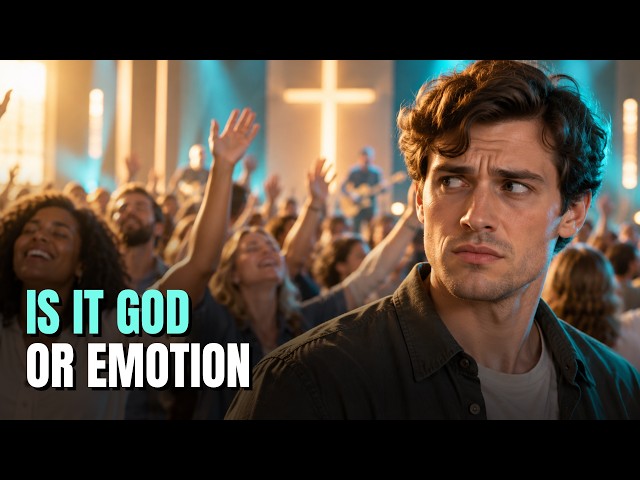
🔗 **Source:** [Charismatic Sermons: Faith, Emotion, and Persuasion](https://www.youtube.com/watch?v=dNT5La9buHk)
> [!note]+ Document Notes
> tags: [charismatic-movement, emotional-manipulation, religious-branding, prophetic-words, faith-deconstruction]
> author: Leaving the Message
> source: Leaving the Message (YouTube)
> reference: https://www.youtube.com/watch?v=dNT5La9buHk
> date created: 2026-09-28 09:03
>
> > [!info] Generated analysis — not the author's words. Sections below are machine-written
> > from the captured source. Only text inside `> [!quote]` blocks is verbatim from the author.
> > Do not quote or attribute any other line to the named author.
>
> > [!warning] Auto-caption artifacts and unresolved names. The transcript never names either
> > speaker on camera, so this analysis refers to them by a trait each one states about themself:
> > "the German speaker" (uses German vocabulary, says "in Germany" repeatedly) and "the American
> > speaker" (says "in the States," "in the United States"). "Sarah Young was one of the fellows
> > here in Germany selling a books like my love letters to Jesus" ([00:04:21]) does not match the
> > public record — Sarah Young is an American author of the devotional "Jesus Calling," not a
> > Germany-based seller of a book by that exact title — so this line is likely a caption or
> > mid-sentence garble conflating two different figures; treat the Germany/title detail as
> > unverified. "Branham Core headquarters" ([00:07:18]) likely refers to sites associated with
> > William Branham's "Message" movement, the subject the channel is named for, but the exact
> > proper noun is unconfirmed. "Legal bow casting" ([00:02:52]) is unclear as transcribed and may
> > be a mishearing.
>
> # 🏷️ Title: Charismatic Sermons: Faith, Emotion, and Persuasion
>
<!-- deep-read:sections start -->
## 🧭 Table of contents
- [📝 Summary](#-summary)
- [📖 Main content](#-main-content)
- [🗒️ Notes](#️-notes)
- [📚 References](#-references)
- [🗣️ Paraphrase](#️-paraphrase)
- [📰 Newsletter](#-newsletter)
- [✅ Action items](#-action-items)
- [🧪 Hypotheses](#-hypotheses)
- [📊 Methodology](#-methodology)
- [❓ Questions](#-questions)
- [🔮 Future research](#-future-research)
- [💡 Implications](#-implications)
- [🧠 Learning styles assessment](#-learning-styles-assessment)
- [📊 Accessibility assessment](#-accessibility-assessment)
- [🌍 DEIB assessment](#-deib-assessment)
- [✅ Logical validity](#-logical-validity)
- [🛡️ DARVO analysis](#️-darvo-analysis)
- [🎯 Conclusion](#-conclusion)
- [🔄 Refactor Appendix](#-refactor-appendix--charismatic-sermons-faith-emotion-and-persuasion)
## 📝 Summary
- **What happened.** An 8-minute, two-person discussion on the channel Leaving the Message (published 2026-09-27) about how charismatic sermons build emotional experience through structured language, using German charismatic figure Johannes Hartl, devotional author Sarah Young, and William Branham's "Message" movement as recurring examples.
- **The claim.** Both speakers argue that a sermon's emotional payoff (the "charismatic climax") is produced by the arrangement of words, not by God or scripture, and that stamping vague, emotionally loaded language with the name "Jesus" is what makes it read as Christian rather than any doctrinal content.
- **Why it matters.** The speakers connect this to real financial and psychological stakes: media, "prophetic words," and life-story products sold within these movements, and the difficulty of applying false-advertising standards to spiritual claims.
- **Key stakeholders.** Named as examples, not as parties to the conversation: Johannes Hartl (described as a German charismatic figure), Sarah Young (author of a Jesus-themed devotional), William Branham and the "Message" movement associated with this channel's name. The German speaker also gives a firsthand account of receiving a "prophetic word" at a congregation event.
- **Risks and tradeoffs.** The American speaker names a real regulatory gap: false-advertising law does not reach claims framed as spiritual experience, even when attached to sold physical products (books, DVDs). Neither speaker offers a source for the numbers or characterizations they give; this is commentary and testimony, not documented research.
- **Bottom line.** A short, dense critique arguing that emotionally engineered language, not doctrine, is what makes charismatic sermons feel Christian and effective, illustrated with a German consumer-fraud analogy and one speaker's own account of being on the receiving end of a "prophetic word."
## 📖 Main content
- **The opening claim: language does the work, not doctrine.** The German speaker opens mid-argument that charismatic leaders "engage with charismatic teens because they are uneducated and they live by euphoria," and that terms like "coming to your power" or "get into resonance" are "void language" that nonetheless "sounds exciting" and lets a listener "project" their own sense of God onto the words ([00:00:00]).
- **The moral-goodness distinction.** The German speaker separates being a morally good person from being Christian, naming Johannes Hartl specifically: whether or not Hartl is morally good is irrelevant to whether Hartl's language is Christian. The speaker's own definition of Christian is narrow and total: someone "enslaved to Christ and to Christ only," with everything else called "circus" and "fireworks" ([00:00:43]). This is a strong claim stated as a hard boundary, not argued from a text or tradition on camera.
- **"An open mold of religions."** The American speaker extends the point: swap the name Jesus for any other religious figure and the same structure "fits" ([00:01:27]). The argument is that the emotional design is portable across religions, which implies the design itself, not the content, produces the feeling.
- **Children can't tell the difference.** Both speakers argue that young or "not well Christian educated" listeners equate "hearing Christian speech" with something being biblical, without a mechanism for distinguishing the two ([00:02:10], [00:06:35]). This is presented as an observation about audience composition, not a measured finding.
- **"Cult of emotions."** The American speaker names specific emotional states the structure can induce — euphoria, mourning, a sense of needing help — and frames the sermon's climax as produced by "the way that they have structured the words," explicitly not by God or the Bible ([00:02:10]-[00:02:52]). The claim that "you can take any religious leader you want, stick him in that frame, and you would have people devoted to that cause" is stated as a general rule with no example given beyond the hypothetical swap already discussed.
- **The packaging-fraud analogy.** The German speaker introduces two German terms: "Etikettenschwindel" (packaging fraud) and "Zusatznutzen im Sinne des Marketings" (an added feature only in the marketing sense, not a real one), illustrated with a bio/vegan-labeled banana that costs triple the price of an identical unlabeled one ([00:03:36]). The argument by analogy: stamping "Jesus" on otherwise vague ("esoteric, void, fantastic, firework") language works the same way — it adds no real feature, but changes what people are willing to pay in attention, money, or devotion ([00:04:21]).
- **Sarah Young reference — flagged for accuracy.** The transcript describes "Sarah Young" as "one of the fellows here in Germany selling a books like my love letters to Jesus, angels were talking to me" ([00:04:21]). Sarah Young is the American author of the devotional "Jesus Calling," which describes writing down what they experienced as Jesus speaking to them — not a German seller of a book titled "my love letters to Jesus." This line is treated in this analysis as likely garbled (caption error or a speaker misstatement caught mid-sentence), and the "here in Germany" and exact title details are not treated as established fact.
- **Firsthand account: the "prophetic word."** The German speaker describes attending a "prophetic picture evening" at a congregation, personally, and asking for "a prophetic word," receiving in reply: "I have a revelation. I see you as a beautiful flower and your smell attracts people" ([00:05:06]). The speaker states, "wasn't laughing then," and was present specifically to observe and later discuss the practice with people in the congregation, some of whom were friends who reacted with "Guys, what are you doing?" ([00:05:51]). This is presented as the speaker's own firsthand experience, not a general claim, and this analysis treats it as such.
- **"Back to business": branding as trademark.** The German speaker characterizes this kind of ministry as "just a business," using "every label, every feature that's morally good in the eyes of the people, like any trademark" — comparing it to clothing branded for identity appeal ("soldier clothes, hyper attractive women clothes") ([00:05:51]-[00:06:35]). This is characterization of Johannes Hartl and similar figures by the speaker, not a documented finding.
- **The false-advertising gap.** The American speaker draws a direct parallel to US law: false advertising is illegal and penalized when the product is tangible, but "the product they're selling isn't a tangible product. It's a spiritual product," which existing law is not written to reach — even though churches also sell tangible products (books, DVDs) that carry spiritual claims such as people who "saw angels" ([00:06:35]-[00:07:18]).
- **The Branham "life story" claim — unsourced number, flagged.** The German speaker introduces "Heilsversprechen" (literally "you promise the person the Heil/salvation") and the American speaker states that at "Branham Core headquarters," life-story materials about William Branham are sold where "maybe five out of 50 details that are true in it. The whole rest of it is fiction" ([00:07:18]). No source, document, or method is given for this ratio; it is presented as the speaker's own estimate ("maybe"), and this analysis flags it as an unsourced number rather than a documented fact.
- **Closing: freedom versus regulatory gap.** The video ends on the German speaker's observation that this legal latitude is "a huge kind of freedom" in the US and simultaneously "a huge problem," cut off by the video's end before the reason is completed ([00:08:04]).
## 🗒️ Notes
#### ⏱️ [00:00:00](https://www.youtube.com/watch?v=dNT5La9buHk&t=0) Void language and the Hartl example
- Charismatic outreach to "uneducated" or emotionally driven teens uses "void language" (e.g. "coming to your power," "get into resonance") that sounds exciting without semantic content.
- The German speaker frames this as letting listeners project their own identity or sense of God onto the words, shaping their experience of "the Holy Spirit," the church, and the movement.
- Named example: Johannes Hartl. The speaker separates moral goodness from being Christian: a morally good person is not automatically Christian by this definition.
> [!quote]
> A morally good person is not Christian. A Christian person is someone that is um excuse my harsh language there, but is enslaved to Christ and to Christ only.
#### ⏱️ [00:01:27](https://www.youtube.com/watch?v=dNT5La9buHk&t=87) An open mold of religions
- The American speaker argues the structure is portable: swap Jesus for another religious figure and it still "fits."
- Both speakers agree the emotional design, not the content, is what draws and holds an audience.
- Children and less-educated listeners are said to equate hearing Christian-sounding speech with the speech being biblical, with no distinguishing mechanism named.
> [!quote]
> If you can make the audience feel good and entertained, they're going to come and listen. It doesn't matter what you say.
#### ⏱️ [00:02:10](https://www.youtube.com/watch?v=dNT5La9buHk&t=130) Cult of emotions and the structured climax
- The sermon is described as engineering specific emotional states (euphoria, mourning, a sense of needing help) through word choice.
- The climax of a charismatic sermon is attributed to the structure of the language, explicitly not to divine or scriptural content.
- Claim that this structure would produce devotion around any religious leader placed inside it — stated as a general rule, no comparative example given.
> [!quote]
> This is our church. We're hearing Christian speech, so therefore it must be biblical.
> [!quote]
> It isn't the God. It isn't the Bible. It's really the way that they have structured the words.
#### ⏱️ [00:03:36](https://www.youtube.com/watch?v=dNT5La9buHk&t=216) The packaging-fraud analogy
- German term "Etikettenschwindel" (packaging fraud): a "bio"/"vegan" label triples the price of an otherwise identical banana.
- German term "Zusatznutzen im Sinne des Marketings": a feature that exists only in the marketing sense, not as a real inherent property.
- Applied to religious language: stamping "Jesus" onto vague, emotionally loaded ("esoteric, void, fantastic, firework") language is argued to work the same way.
> [!quote]
> It's the same banana, but if there's a label on it that says bio and vegan, it's triple the price and has this special kind of feature.
> [!quote]
> You you take whatever is esoteric, void, fantastic, firework language and put the stamp Jesus on it. And in that moment, it it becomes Christian.
#### ⏱️ [00:04:21](https://www.youtube.com/watch?v=dNT5La9buHk&t=261) Sarah Young reference and a firsthand account
- Reference to "Sarah Young" and a book described as "my love letters to Jesus, angels were talking to me" — flagged above as likely garbled; does not match the public record for the American author of "Jesus Calling."
- The German speaker then shifts to a firsthand account: attending a congregation's "prophetic picture evening" and personally asking for a "prophetic word."
- The speaker reports the reply verbatim as reported speech, and states they did not find it funny at the time; they were there to observe and later discuss the practice with congregation members, including friends.
> [!quote]
> I have a revelation. I see you as a beautiful flower and your smell attracts people.
#### ⏱️ [00:05:51](https://www.youtube.com/watch?v=dNT5La9buHk&t=351) Branding as trademark, then the legal gap
- Friends' reaction to the "prophetic word" episode: "Guys, what are you doing?" — presented by the German speaker as evidence others in the room also found it absurd.
- The speaker characterizes this style of ministry as "just a business" using morally appealing labels the way a clothing brand uses identity-based branding.
- The American speaker introduces the US false-advertising comparison: illegal and penalized for tangible products, but churches sell claims about a "spiritual product" the law is not written to reach, even while also selling tangible items (books, DVDs) carrying spiritual claims.
> [!quote]
> We have the same thing in the States. It's called false advertisement. You advertise something, but what you're advertising isn't true and so therefore it is illegal in the United States.
#### ⏱️ [00:07:18](https://www.youtube.com/watch?v=dNT5La9buHk&t=438) Heilsversprechen, the Branham claim, and the close
- German term "Heilsversprechen" (a promise of salvation/healing) introduced as the same phenomenon applied to what is promised rather than what is labeled.
- Claim, presented as the speaker's own estimate with "maybe," that life-story materials sold at "Branham Core headquarters" are mostly fabricated ("maybe five out of 50 details that are true"). No source given; flagged as unsourced.
- The video ends mid-thought on the tension between US regulatory freedom for religious speech and the problem that freedom creates, cut off before the sentence completes.
> [!quote]
> None of it's true. I mean, there there are maybe five out of 50 details that are true in it. The whole rest of it is fiction.
> [!quote]
> on the one hand, it's a huge kind of freedom that you have there in in the USA. On the other hand, it's a huge problem because
## 📚 References
The transcript itself contains no links; the following come from the video description or are primary sources for named entities.
- Channel: [Leaving the Message](https://www.youtube.com/watch?v=dNT5La9buHk) (YouTube) — video published 2026-09-27, per the captured metadata; the channel name indicates its subject is departure from William Branham's "Message" movement.
- Johannes Hartl — named as a German charismatic figure; discussed by characterization only, no source cited in the transcript for Hartl's teaching or organization.
- Sarah Young — named as the author of a Jesus-themed devotional; the author's best-known published work is "Jesus Calling." The transcript's description of the book and the author's location is flagged above as likely inaccurate; no primary source is cited on camera.
- William Branham — named via "Branham Core headquarters" ([00:07:18]); the exact site or organization referenced is not confirmed by the transcript. Branham (1909-1965) was a Pentecostal preacher whose teachings are the subject this channel is named against.
## 🗣️ Paraphrase
- **The setup.** Charismatic outreach to emotionally driven, less-educated listeners uses exciting-sounding but semantically empty ("void") language that listeners fill in with their own sense of God.
- **The moral/Christian split.** Being a morally good person and being Christian are treated as separate categories; the German speaker's definition of Christian is total devotion to Christ alone, with everything else called circus and fireworks.
- **Portability of the structure.** Swap the name Jesus for another religious figure and the same emotional design still works — evidence, in the speakers' view, that the design produces the feeling, not the doctrine.
- **Audience composition.** Children and less-instructed listeners cannot distinguish "sounds Christian" from "is biblical," so hearing familiar religious language inside a church is taken as proof the group's teaching is Christian.
- **Cult of emotion.** The sermon's structure is described as engineering specific emotional states, and the climactic feeling is attributed to word arrangement rather than to God or scripture.
- **The banana analogy.** A German consumer-fraud term describes a bio/vegan label tripling a banana's price without changing the banana; the same mechanism is applied to stamping "Jesus" on vague spiritual language.
- **A garbled reference.** A mention of Sarah Young and a devotional book is likely mistranscribed or misspoken; treat the specific claim as unverified rather than as fact.
- **A firsthand account.** The German speaker personally received a "prophetic word" comparing them to a flower whose "smell attracts people," and reports not finding it funny at the time, attending specifically to observe and later discuss the practice.
- **Business framing.** The speaker frames this ministry style as branding: using morally appealing labels the way a clothing brand markets identity.
- **The legal gap.** US false-advertising law reaches tangible products but not claims framed as spiritual experience, even when attached to sold books and DVDs.
- **The Branham claim.** An unsourced, hedged estimate that most "life story" material sold about William Branham is fabricated.
- **The unfinished close.** The video ends on the tension between US regulatory freedom for religious speech and the problem that same freedom creates, cut off before the thought is finished.
## 📰 Newsletter
**Two speakers on Leaving the Message spend eight minutes arguing that a sermon's emotional payoff is engineered by word structure, not doctrine — and the case is stronger than the runtime suggests.**
The German speaker opens mid-argument: charismatic outreach to emotionally driven audiences uses "void language" — phrases like "coming to your power" that sound exciting and let listeners "project" their own sense of God onto them. The speaker draws a hard line between moral goodness and being Christian, naming German charismatic figure Johannes Hartl specifically:
> "A morally good person is not Christian. A Christian person is someone that is... enslaved to Christ and to Christ only."
The American speaker sharpens the portability claim: swap Jesus for any other religious figure and the same structure still "fits" — "an open mold of religions." Neither speaker treats this as hypothetical only; they extend it to children and less-instructed listeners, who take hearing Christian-sounding speech as proof a group's teaching is biblical.
**The best transferable idea is a German consumer-fraud analogy.** "Etikettenschwindel" — packaging fraud — describes a bio/vegan-labeled banana costing triple an identical unlabeled one. Applied to religious language: stamping "Jesus" on vague, emotionally loaded speech works the same way, adding no real feature but changing what an audience is willing to pay in attention, money, or devotion.
**One reference doesn't check out as stated.** The transcript names "Sarah Young" as selling a book "here in Germany" titled something like "my love letters to Jesus." Sarah Young is an American author best known for the devotional "Jesus Calling." This looks like a caption or mid-sentence garble conflating figures, so this analysis flags rather than repeats the specific claim.
**The most concrete moment is a firsthand account.** The German speaker describes attending a congregation's "prophetic picture evening," asking for a "prophetic word," and being told:
> "I have a revelation. I see you as a beautiful flower and your smell attracts people."
The speaker reports not finding it funny at the time — they were there to observe and later discuss the practice with the congregation, including friends who reacted with visible discomfort. This is their own testimony, not a general claim about the movement, and it is treated that way here.
The American speaker then draws the sharpest legal point: false advertising is illegal and penalized in the US when the product is tangible, but "the product they're selling isn't a tangible product, it's a spiritual product" — a gap the law is not written to close, even though churches also sell tangible books and DVDs carrying spiritual claims. The German speaker adds a matching German term, "Heilsversprechen" (a promise of salvation), and the American speaker offers an unsourced, hedged estimate that materials sold about William Branham's life story are mostly fabricated — "maybe five out of 50 details" true. No source is given; treat it as an estimate, not a documented figure.
The video cuts off mid-sentence on the tension between US regulatory freedom for religious speech and the problem that freedom creates — an honest, unresolved ending rather than a tidy one.
Channel: [Leaving the Message](https://www.youtube.com/watch?v=dNT5La9buHk)
## ✅ Action items
#### DevRel
- Developer advocacy: not applicable to this source.
- Developer experience: not applicable to this source.
- Developer marketing: the packaging-fraud analogy (a real label changing price without changing the product) is a genuine, transferable caution for any marketing that adds emotionally resonant labels without a corresponding real feature. Worth a note, not a program.
- Community management: not applicable to this source.
- Education: not applicable to this source.
- Cross-project: not applicable to this source.
#### OSPO
- Policy & Governance: not applicable to this source.
- License Compliance: not applicable to this source.
- Security Management: not applicable to this source.
- Software Inventory: not applicable to this source.
- Developer Support: not applicable to this source.
- Community Engagement: not applicable to this source.
- Strategic Alignment: not applicable to this source.
#### Community
- Maintainers: not applicable to this source.
- Contributors: not applicable to this source.
- Sponsors: not applicable to this source.
- Ecosystem: not applicable to this source.
#### WordPress
- Core: not applicable to this source.
- Core Performance: not applicable to this source.
- Core AI: not applicable to this source.
- Core Program Team: not applicable to this source.
- Mobile: not applicable to this source.
- Playground: not applicable to this source.
- Community: not applicable to this source.
- Training: not applicable to this source.
- Marketing: not applicable to this source.
- Support: not applicable to this source.
- Design: not applicable to this source.
- Documentation: not applicable to this source.
- Photos: not applicable to this source.
- TV: not applicable to this source.
- Polyglots: not applicable to this source.
- Accessibility: not applicable to this source.
- Meta: not applicable to this source.
- CLI: not applicable to this source.
- Hosting: not applicable to this source.
- Tide: not applicable to this source.
- Openverse: not applicable to this source.
- Themes: not applicable to this source.
- Plugins: not applicable to this source.
#### The WPOCC
- Programs: not applicable to this source.
- Projects: not applicable to this source.
- Funding experiments: not applicable to this source.
#### FAIR
- Technical independence: not applicable to this source.
- Policies and covenants: not applicable to this source.
- Productized governance artifacts: not applicable to this source.
## 🧪 Hypotheses
- A sermon's audience-reported emotional intensity correlates with measurable rhetorical structure (repetition, rising cadence, direct address) independent of the specific doctrinal content delivered.
- Listeners with less formal religious education are more likely than doctrinally trained listeners to equate emotionally resonant, Christian-coded language with biblical accuracy.
- "Prophetic word" statements delivered in group settings follow generic, broadly flattering templates (e.g. nature imagery, attractiveness, hidden potential) that would apply to most recipients regardless of individual identity.
- Marketing claims framed as spiritual experience (rather than as product features) face measurably less regulatory or consumer scrutiny than equivalent claims framed as ordinary commercial advertising.
- Biographical or "life story" materials sold by movements built around a single founder contain a higher rate of unverifiable or embellished claims than comparable secular biographical products.
## 📊 Methodology
- **Structure-versus-content test.** Present matched audiences with the same sermon content delivered with high-structure (repetition, rising cadence, climactic pacing) versus flat delivery; measure self-reported emotional intensity and perceived spiritual significance.
- **Prophetic-word genericity test.** Collect a sample of "prophetic words" delivered to different recipients across settings; use blind raters to judge how well each statement would plausibly apply to a randomly chosen other recipient (a Barnum-statement style test).
- **Regulatory comparison.** Compare consumer-complaint and enforcement rates for claims marketed as spiritual products versus equivalent secular claims of similar specificity, using existing consumer-protection agency data where available.
- **Biographical accuracy audit.** Independently fact-check a sample of claims in movement-produced biographical material against external historical records, reporting a verified-claim ratio rather than a speaker's own estimate.
- **Limits.** This episode offers no numbers, no named study, and one hedged personal estimate ("maybe five out of 50"). Everything here is a speaker's characterization or a single firsthand account, not measured data; any of the above would need real data collection this video does not provide.
## ❓ Questions
- What specific teaching or organization did the German speaker mean by "Branham Core headquarters," and is that name accurate?
- What is the actual, verifiable relationship between the transcript's "Sarah Young" reference and the real, US-based author of "Jesus Calling"? Was this a slip of the tongue, a caption error, or a reference to a different person or product entirely?
- On what basis is the "five out of 50 details" estimate for Branham biographical material derived — memory, a specific document, or general impression?
- Does the speakers' "open mold of religions" claim hold up empirically, or is it an assertion based on the two examples discussed (swapping Jesus for another figure)?
- How does the German legal concept of "Etikettenschwindel" actually apply, if at all, to religious speech under German or EU consumer law, versus being used here purely as an analogy?
- What follow-up, if any, did the German speaker or their friends have with the person who delivered the "prophetic word" at the congregation event?
- Is "the government does not want to come into the church" an accurate description of US First Amendment case law on religious-organization speech, or a simplification?
## 🔮 Future research
- Empirical study of "prophetic word" language across charismatic settings for genericity and applicability (the Barnum-statement question raised above).
- Comparative regulatory analysis of how different jurisdictions (US, Germany, EU) treat commercial claims that are framed as religious or spiritual experience.
- Independent fact-checking of biographical materials produced by single-founder religious movements, as a general category beyond the one example named here.
- Audience research on whether doctrinal education measurably changes a listener's ability to separate "sounds Christian" from "is biblically supported."
- A corrected, verified account of the Sarah Young reference in this transcript, since the current wording does not match the public record for that author.
## 💡 Implications
- **Practice.** For anyone doing pastoral or educational work with people exiting high-emotion religious environments: naming the specific mechanism (structured language producing a feeling that gets mistaken for spiritual confirmation) may be more useful than arguing doctrine, since the speakers here argue the feeling would occur regardless of doctrinal content.
- **Policy.** The false-advertising gap the American speaker names — spiritual framing shielding a claim from ordinary consumer-protection scrutiny even when a tangible product is sold — is a real and specific policy question, not resolved here and worth checking against actual First Amendment and consumer-protection case law.
- **Security.** Not directly applicable; the closest analog is the personal-safety dimension of one-on-one "prophetic word" practices directed at individuals in group settings, which the firsthand account illustrates but does not generalize from.
- **Education.** The claim that less-educated or younger listeners cannot distinguish Christian-sounding language from biblical content argues for religious literacy education specifically, rather than general education, as the missing variable.
- **Funding.** Not applicable to this source; no funding mechanism is discussed.
## 🧠 Learning styles assessment
- Reading level estimate: conversational speech, Flesch-Kincaid grade approximately 8-9. Both speakers use long, self-interrupting sentences with mid-thought corrections and untranslated German terms given brief in-line glosses.
#### 👀 Visual learners
- Present: none. This is an audio conversation with no on-screen text, slides, or diagrams referenced.
- Improve: even a single on-screen definition card for each German term ("Etikettenschwindel," "Heilsversprechen") as it's introduced would anchor the analogy for a visual learner.
#### 🔊 Aural learners
- Present: strong. Two voices in genuine back-and-forth, including audible laughter, a cleared throat, and reported speech performed with a different cadence ("I have a revelation...").
- Improve: crosstalk and overlapping "not >>" fragments near [00:01:27] make attribution hard to follow by ear alone.
#### 🗣️ Verbal learners
- Present: good. Both speakers reason in analogy (the banana, the trademark) rather than jargon, which makes the argument followable without prior theological vocabulary.
- Improve: German terms are glossed once each but not repeated, so a listener who misses the gloss the first time has no second chance at the definition.
#### 🧩 Kinesthetic learners
- Present: minimal. Nothing to do or replicate; this is a spoken argument, not a demonstration.
- Improve: not clearly improvable given the format; a companion piece with the banana-label comparison shown as an actual side-by-side image would give something concrete to examine.
#### 🧠 Logical learners
- Present: the episode's core strength. The moral-goodness-versus-Christian distinction, the open-mold argument, and the packaging-fraud analogy are all reasoned from a stated mechanism, not just asserted.
- Improve: zero sourced data anywhere. Every claim about audiences, percentages, or "cult" dynamics is an assertion or a single hedged estimate, not a citation.
#### 🧑🤝🧑 Social learners
- Present: moderate. The firsthand account includes other people reacting ("Guys, what are you doing?"), giving a social dimension to the testimony.
- Improve: no invitation to viewer discussion or comment is present in the 8 minutes captured; unclear if this is mid-episode or a clip from a longer conversation.
#### 🧘♀️ Solitary learners
- Present: good. Short (8 minutes) and self-contained enough to follow alone without external context, though named figures (Hartl, Branham) benefit from independent background reading.
- Improve: no chapter markers or on-screen topic labels for a solitary viewer to navigate by.
#### 🌿 Naturalistic learners
- Present: none directly, though the banana analogy incidentally uses a food/agriculture example.
- Improve: not a natural fit for this content; no improvement suggested.
## 📊 Accessibility assessment
#### Screen reader semantics
- Present: not evaluable for a video artifact.
- Improve: a text description separating the two named examples (Hartl/emotional-language critique and Branham/biographical-fraud critique) with timestamps would help a screen-reader user jump to the relevant half.
#### Keyboard navigation
- Present: inherits YouTube's player controls.
- Improve: no chapter markers across the two distinct examples discussed (Hartl-focused language critique, then Branham-focused product critique).
#### Contrast and readability
- Present: not applicable; no on-screen text or graphics are referenced in the transcript.
- Improve: not applicable for the same reason.
#### Text resizing and reflow
- Present: not applicable to this audio-only-in-content video.
- Improve: not applicable.
#### Media and captions
- Present: auto-generated captions carry real errors on load-bearing content: the Sarah Young reference is likely garbled, "Branham Core headquarters" is an unconfirmed proper noun, and German terms are inconsistently rendered.
- Improve: a corrected transcript with the German terms spelled and glossed consistently, and the Sarah Young and Branham references checked against public sources, would materially improve usefulness for anyone trying to follow up on the named entities.
#### Forms and interactions
- Present: not applicable to this source video.
- Improve: not applicable.
#### Standards reference
- WCAG 2.2 AA notes: 1.2.2 Captions appear met only nominally, given the garbled proper nouns identified above (Sarah Young reference, "Branham Core"). 2.4.5 Multiple Ways is unmet: no chapters, no transcript, no on-screen outline for an 8-minute video covering at least two distinct examples.
## 🌍 DEIB assessment
#### Cultural breadth
- Present: genuinely present. A German speaker brings specific German consumer-protection vocabulary and a Germany-based example (Johannes Hartl) into direct comparison with a US speaker's American legal frame (false advertising, First Amendment-adjacent church/state boundaries).
- Improve: the discussion assumes familiarity with Western Christian charismatic movements specifically; a viewer outside that frame gets no orientation to what "charismatic" means in this context.
#### Inclusive language
- Present: the German speaker explicitly flags their own language as potentially "harsh" before using it ([00:00:43]), showing some self-awareness about tone.
- Improve: language describing affected audiences as "uneducated" ([00:00:00]) and "not well Christian educated" ([00:06:35]) risks reading as classist or condescending toward the people the speakers otherwise present as being taken advantage of; a version naming the manipulation tactic without characterizing the audience's education level would land the same critique more evenly.
#### Neurodiversity support
- Present: minimal but not actively hostile. Pace is conversational and unhurried.
- Improve: heavy crosstalk and interrupted sentences (especially [00:01:27]) with no visual cues make speaker-tracking difficult; captions with clear speaker labels would help.
#### Representation
- Present: two speakers, one German-inflected and one American-inflected, both apparently speaking from personal history with charismatic or "Message"-adjacent movements.
- Improve: the entire critique is delivered by two speakers about movements and figures with no additional voice represented on camera, notably including commentary about Sarah Young's work without the author's own framing present.
#### Psychological safety
- Present: strong on the firsthand account. The German speaker openly narrates being on the receiving end of a manipulative-sounding "prophetic word" and states plainly, "wasn't laughing," at the time, modeling that this kind of experience is worth taking seriously rather than only mocking in retrospect.
- Improve: none identified; this is the episode's clearest strength.
## ✅ Logical validity
#### Strong reasoning
- **The moral-goodness/Christian distinction ([00:00:43]).** A clear, stated definitional argument: moral goodness and a specific theological definition of "Christian" are different categories, and the speaker applies it consistently to a named figure rather than leaving it abstract.
- **The packaging-fraud analogy ([00:03:36]-[00:04:21]).** Reasoned from a concrete, checkable mechanism (identical product, different price, due only to a label) before being applied to the religious-language claim — a genuine structural analogy, not just a comparison for effect.
- **The firsthand account, reported as such ([00:05:06]-[00:05:51]).** The German speaker is careful to frame this as their own experience and their own reaction ("I wasn't laughing then"), rather than generalizing it into a universal claim about all "prophetic words."
- **The false-advertising gap ([00:06:35]-[00:07:18]).** A real, specific legal observation: existing consumer-protection law is built around tangible-product claims and does not have a clean mechanism for spiritual-experience claims, even when a tangible product (a book) carries them.
#### Fallacies
- **No True Scotsman ([00:00:43]).** *Location:* "A Christian person is someone that is... enslaved to Christ and to Christ only. That's what makes a Christian... And everything else is just circus." *Weakness:* this defines "true Christian" so narrowly that any emotionally engaging or structurally effective ministry is excluded by definition, which makes the claim unfalsifiable rather than argued. *Fix:* state this as the speaker's own theological standard rather than as the definition of the category.
- **Hasty generalization ([00:02:52]).** *Location:* "you can take any religious leader you want, stick him in that frame, and you would have people devoted to that cause." *Weakness:* asserted from the two examples already discussed (swap Jesus for another figure), with no additional case tested. *Fix:* name it as a hypothesis (see Hypotheses section) rather than a settled rule.
- **Unsourced statistic presented with a hedge ([00:07:18]).** *Location:* "maybe five out of 50 details that are true in it." *Weakness:* no document, source, or method is given; "maybe" signals the speaker's own uncertainty, but the ratio is still stated as if counted. *Fix:* treat as a personal impression, not a figure, which this analysis does throughout.
- **Weak analogy risk (the banana, [00:03:36]).** *Location:* the packaging-fraud comparison. *Weakness:* a labeled banana and a sermon's spiritual claims differ in that the banana's "feature" is verifiably absent, while a spiritual claim's truth is not independently verifiable the same way — the analogy illustrates a marketing mechanism well but does not, by itself, prove the spiritual claim is false. *Mitigation:* the speakers use it illustratively rather than as a formal proof, which limits the damage.
#### Tone of voice
- Direct, aggrieved, and occasionally self-flagging ("excuse my harsh language," [00:00:43]). The register is closer to two people processing shared frustration than a formal debate; both speakers use profanity-adjacent bluntness and humor (laughter at the "flower" line) alongside a serious firsthand account. The tone is consistent throughout: skeptical of charismatic leadership figures, sympathetic to the audiences described as targets rather than as at fault, though occasionally undercut by language ("uneducated") that characterizes those audiences in terms that could read as condescending.
## 🛡️ DARVO analysis
- **Deny:** Not present. Neither speaker denies wrongdoing or a prior claim; the German speaker's firsthand account is an admission of their own presence and reaction, not a denial.
- **Attack:** Not present as a defensive tactic by either speaker. The closest adjacent pattern is the speakers' own critique of Johannes Hartl and unnamed "Message"-adjacent figures, but this is offered as argued critique with reasoning (see Strong reasoning above), not as a deflection from an accusation made against the speakers themselves.
- **Reverse victim/offender:** Not present. No one in the conversation is accused of wrongdoing and then reframes themself as the victim; the speakers instead describe others (Hartl, unnamed "prophetic word" deliverers, Branham-related sellers) as the parties exercising influence over an audience.
- **Assessment:** DARVO patterns are absent from this conversation. Both speakers are critiquing rhetorical and marketing tactics used by others, not responding to an accusation directed at themselves, so the DARVO frame does not have an accusation-response cycle to apply to. Retained per template requirement; the finding is a clean negative.
## 🎯 Conclusion
- **Bottom line.** Two speakers argue, using a German consumer-fraud analogy and one speaker's firsthand account, that a charismatic sermon's emotional climax is produced by structured language rather than doctrine, and that stamping vague language with "Jesus" functions like a marketing label rather than a real feature.
- **The idea worth keeping.** The packaging-fraud analogy: a real feature (or lack of one) versus a label that changes price and perception without changing the underlying thing. It generalizes past this specific content to any claim that trades on a resonant label.
- **The claim to treat carefully.** "Maybe five out of 50 details are true" about Branham biographical material is the speaker's own hedged estimate, not a documented figure, and the Sarah Young reference likely contains a caption or speech error that does not match the public record — both are flagged above rather than repeated as fact.
- **The part worth sitting with.** The firsthand account of receiving a "prophetic word" and not finding it funny at the time is the most concrete, checkable-against-lived-experience part of the video, and it is offered as personal testimony rather than a generalized claim about all such practices.
- **Practical next step for a viewer.** Treat the video's named claims about specific figures and percentages as leads to verify independently, not as settled findings; the analytical framework (structure produces feeling, labels are not features) is the more durable and portable part of the argument.
## 🔄 Refactor Appendix — Charismatic Sermons: Faith, Emotion, and Persuasion
> Density: dense argument, short runtime. Five atoms drawn from an 8-minute, two-speaker discussion.
### 📚 Literature Split Pad
#### [H1] Structured language produces the sermon's emotional climax, not doctrine
> [!quote]
> It isn't the God. It isn't the Bible. It's really the way that they have structured the words.
**Context & use**:
- ~[00:02:52], the American speaker's summary claim after describing the "cult of emotions" mechanism.
- The load-bearing claim of the whole video: if true, it separates felt spiritual confirmation from doctrinal content entirely, which is the mechanism the rest of the discussion illustrates.
**Tags**: #xref #articleseed #aphorisms
<!-- atomicity: 1 idea ✓ -->
#### [H2] A label can change price and perception without changing the underlying thing
> [!quote]
> It's the same banana, but if there's a label on it that says bio and vegan, it's triple the price and has this special kind of feature.
**Context & use**:
- ~[00:03:36], the German speaker's "Etikettenschwindel" (packaging fraud) analogy, applied next to stamping "Jesus" on vague language.
- A generalizable marketing-mechanism claim that outlives the specific religious example it was introduced to illustrate.
**Tags**: #xref #articleseed
<!-- atomicity: 1 idea ✓ -->
#### [H3] A firsthand account of receiving a generic "prophetic word"
> [!quote]
> I have a revelation. I see you as a beautiful flower and your smell attracts people.
**Context & use**:
- ~[00:05:06], the German speaker's own testimony from a congregation's "prophetic picture evening," told as personal experience, not as a general claim about the practice.
- The most concrete, personally-verifiable moment in the video; treat as one person's account, not a documented pattern.
**Tags**: #xref
<!-- atomicity: 1 idea ✓ -->
#### [H4] Spiritual framing can shield a commercial claim from false-advertising scrutiny
> [!quote]
> We have the same thing in the States. It's called false advertisement. You advertise something, but what you're advertising isn't true and so therefore it is illegal in the United States.
**Context & use**:
- ~[00:06:35], the American speaker introducing the legal-gap argument that follows.
- A specific, checkable claim about a real regulatory gap between spiritual and commercial framing of the same underlying product claim.
**Tags**: #xref #articleseed
<!-- atomicity: 1 idea ✓ -->
#### [H5] The same emotional structure would work for any named figure, not just this one
> [!quote]
> If you can make the audience feel good and entertained, they're going to come and listen. It doesn't matter what you say.
**Context & use**:
- ~[00:01:27], the American speaker's "open mold of religions" argument.
- Stated as a general rule from two examples; flagged in Logical validity as a hasty generalization worth treating as a hypothesis rather than a settled claim.
**Tags**: #xref #fallacyflag
<!-- atomicity: 1 idea ✓ -->
### 🧠 Atomic Split Pad
#### [P1] A label is not a feature
**Claim** (one sentence, Courtney's voice): When something is priced or trusted because of what it's called rather than what it verifiably does, the label is doing marketing work, not describing a real property.
**Evidence pointer**: [[#H2]]
**Scope & conditions**: Holds wherever a name, brand, or label attaches to a claim that could otherwise be checked directly — organic food, "Christian" content labeling, certification marks. Breaks down where the label itself is the regulated, verified thing (a legally audited certification), in which case the label is the feature.
**Links**:
- [[A count is only a measurement while the counted thing is costly]] — because contrasts on what makes a signal meaningful versus decorative
- [[Faith deconstruction context]] — because applies-in evaluating charismatic and NAR-adjacent language critically
- [[Courtney blog voice register]] — because extends into verifying feature claims against evidence rather than labels
<!-- atomicity: 1 idea ✓ -->
#### [P2] Structure can produce a feeling that gets mistaken for content
**Claim** (one sentence, Courtney's voice): A rhetorical or musical structure can reliably produce a specific emotional state independent of what is actually being said, and that state is easy to mistake for confirmation of the content's truth.
**Evidence pointer**: [[#H1]]
**Scope & conditions**: Holds in any high-arousal group setting with repetition, rising cadence, and a built climax — worship services, rallies, some sales pitches. Weakens for low-arousal, text-based, or solitary content where the structural mechanism has less room to operate.
**Links**:
- [[Faith deconstruction context]] — because applies-in recognizing manipulation patterns from the NAR-adjacent movements Courtney is processing
- [[A label is not a feature]] — because extends the same critique from labels to felt experience
- [[Pronouns in the WordPress community]] — because contrasts on the discipline of not inferring more than a source establishes
<!-- atomicity: 1 idea ✓ -->
### ✏️ Fleeting Queue
- [F1] Verify the Sarah Young reference at [00:04:21] against the author's actual bibliography and nationality before repeating any version of the "here in Germany" claim #fleeting #inbox
- [F2] Look up what "Branham Core headquarters" likely refers to and confirm the correct proper noun #fleeting #inbox
- [F3] The "uneducated"/"not well Christian educated" audience framing is worth a separate note on how deconstruction-adjacent critique can unintentionally reproduce classist framing while criticizing manipulation #fleeting #inbox
### → Things 3 (max 2 actions)
- [ ] Check whether Leaving the Message has a longer version or companion episode covering the same speakers' full conversation, since this 8-minute file ends mid-sentence — personal reading #things
- [ ] Draft the "a label is not a feature" permanent note, tying it to prior faith-deconstruction notes on charismatic labeling #things
<!-- deep-read:sections end -->
📄 **Full text:** [[Full Document Contents/Articles/Charismatic Sermons Faith, Emotion, and Persuasion.md|Charismatic Sermons: Faith, Emotion, and Persuasion by Leaving the Message]]
## Highlights
- >> And you know, that's part of the reason why I question whether some of the groups that have descended from this movement are even Christian because the way that they present themselves. >> not >> If you were to take the name Jesus out and put some other religious figure in. >> Exactly. >> You can make it fit almost It's like a It's like an open mold of of religions, right? You can make anything fit. And it's all about the feel-good aspects of it. If you can make the audience feel good and entertained, they're going to ([View Highlight](https://read.readwise.io/read/01m3m49fsdn2t6nfw96a584722))
- Note: [H5] The same emotional structure would work for any named figure, not just this one
- Tags: atom/literature/h3
- Into the charismatic climax of the sermon, what It's actually the words that brought you into that euphoric state. It isn't the God. It isn't the Bible. It's really the way that they have structured the words. And again, you can take any You can take any religious leader you want, stick him in that frame, and you would have people devoted to that cause. >> Yeah, like a legal bow casting. Like like a I don't know the word for it. Like like legal. Like a recipe. Like uh yeah. Um ([View Highlight](https://read.readwise.io/read/01m3m495yswarezntj97y18w5x))
- Note: [H1] Structured language produces the sermon's emotional climax, not doctrine
- Tags: atom/literature/h1
- label on it that says bio and vegan, it's triple the price and has this special kind of feature. In Germany, we call it Zusatznutzen im Sinne des Marketings. So, there it's it's not a real feature. It's not a real inherent feature. But, in the sense of marketing, you can declare it onto it, so it has this feature for the person you want to catch. So, this is ([View Highlight](https://read.readwise.io/read/01m3m498dbfnwft2rwts41vh45))
- Note: [H2] A label can change price and perception without changing the underlying thing
- Tags: atom/literature/h2
- Jesus, angels were talking to me, I was writing it down. I experienced the same stuff just just for for making fun of it. I was in a congregation that was um having a um prophetic picture evening. And really, I would I went to one of them like, "Ah, please give me a prophetic word." And he was talking to me like, "Um >> [clears throat] >> I have a revelation. I see you as a ([View Highlight](https://read.readwise.io/read/01m3m49aw51jvm3k57exfpmbz8))
- Note: [H3] A firsthand account of receiving a generic "prophetic word"
- Tags: atom/literature/h3
- hyper attractive women clothes. You get it, [laughter] right? It's ridiculous and and the people buy into it, especially because they are young and are not well Christian educated. >> We have the same thing in the States. It's called false advertisement. You advertise something, but what you're advertising isn't true and so therefore it is illegal in the United States. There There are penalties that you face ([View Highlight](https://read.readwise.io/read/01m3m49dbwcbkg5yr67fyngdx5))
- Note: [H4] Spiritual framing can shield a commercial claim from false-advertising scrutiny
- Tags: atom/literature/h3