Christian Music Labels Are Not What You Think
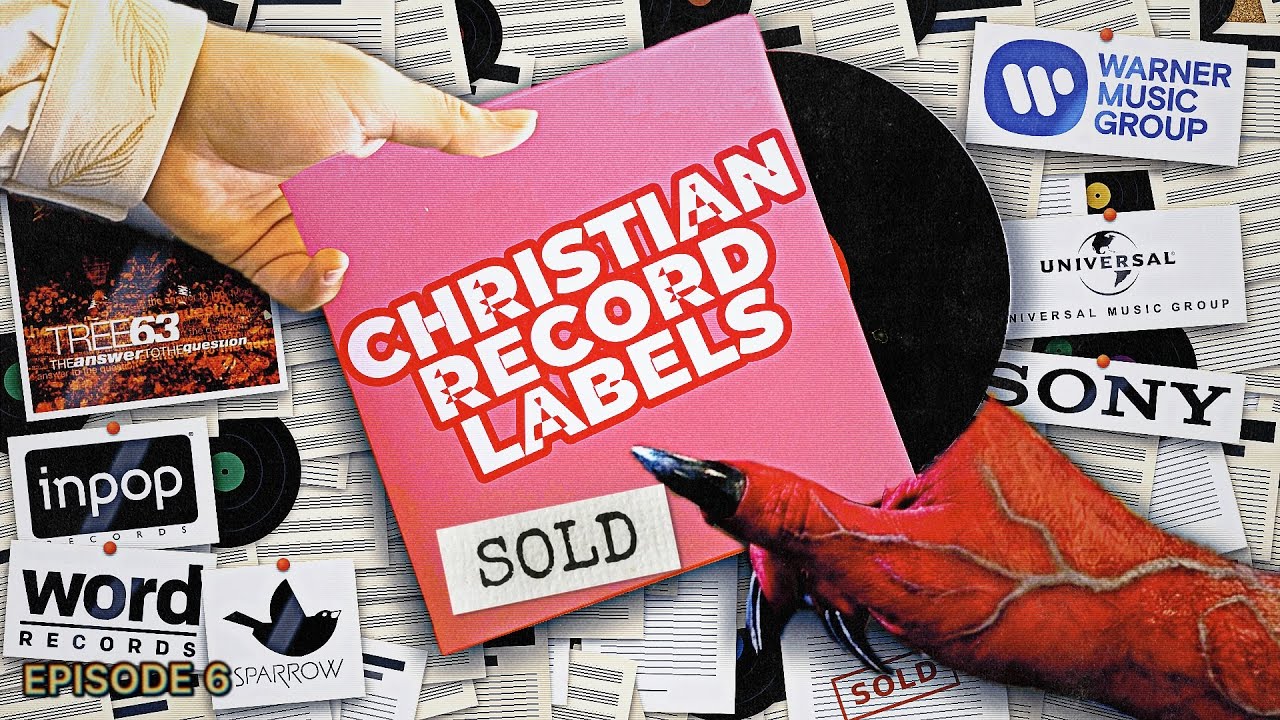
🔗 **Source:** [Christian Music Labels Are Not What You Think](https://www.youtube.com/watch?v=iNDmPwH4H5s)
> [!note]+ Document Notes
> tags: [christian-music-industry, record-label-consolidation, artist-contracts, ccli, payola, worship-industry]
> author: Jonathan Allen Wright
> source: Jonathan Allen Wright
> reference: https://www.youtube.com/watch?v=iNDmPwH4H5s
> date created: 2026-09-10
>
> > [!info] Generated analysis — not the author's words. Sections below are machine-written
> > from the captured source. Only text inside `> [!quote]` blocks is verbatim from the author.
> > Do not quote or attribute any other line to the named author.
>
> # 🏷️ Title: The Truth Behind Every Christian Music Label
>
<!-- deep-read:sections start -->
## 🧭 Table of Contents
- [📝 Summary](#-summary)
- [📖 Main Content](#-main-content)
- [🗒️ Notes](#️-notes)
- [📚 References](#-references)
- [🗣️ Paraphrase](#️-paraphrase)
- [📰 Newsletter](#-newsletter)
- [✅ Action Items](#-action-items)
- [🧪 Hypotheses](#-hypotheses)
- [📊 Methodology](#-methodology)
- [❓ Questions](#-questions)
- [🔮 Future Research](#-future-research)
- [💡 Implications](#-implications)
- [🧠 Learning Styles Assessment](#-learning-styles-assessment)
- [📊 Accessibility Assessment](#-accessibility-assessment)
- [🌍 DEIB Assessment](#-deib-assessment)
- [✅ Logical Validity](#-logical-validity)
- [🛡️ DARVO Analysis](#-darvo-analysis)
- [🎯 Conclusion](#-conclusion)
- [🔄 Refactor Appendix](#-refactor-appendix--the-truth-behind-every-christian-music-label)
### 🔗 References
- [🗒️ Notes — full timestamped ownership chronology](#️-notes)
- [✅ Logical Validity — the fallacies section, on the "every label" and Christian-radio-payola claims](#-logical-validity)
- [🔄 Refactor Appendix — atoms and permanent candidates](#-refactor-appendix--the-truth-behind-every-christian-music-label)
## 📝 Summary
- **What happened.** Jonathan Allen Wright traces who owns each major Christian record label — Word Records (1951), Sparrow Records (1967), and the Brentwood/Reunion/Benson cluster that became Provident — through a chain of acquisitions running from ABC's 1974 entry to a 2002 endpoint where, per the video, every one of those labels sits inside Sony, Warner, or Universal. He interviews John Ellis, frontman of the South African band Tree 63 (also transcribed "363"), who signed to Inpop Records (an EMI imprint) in 2000 and gives first-person testimony about what it felt like to be an artist inside that structure.
- **Why it matters.** The ownership chain — specific companies, specific years, one specific dollar figure ($72 million for Word in 1992) — is the checkable, durable part of the video. It's a corporate-history claim, testable against trade-press M&A records. Separately, the video argues that this ownership determines *outcomes*: contract terms, radio placement, which songs get released. That second claim is interpretation, not corporate record, and the video is built entirely from the host's narration plus one artist's testimony, with no label executive, label spokesperson, or independent corporate filing represented.
- **Key stakeholders.** Named companies: Word Records, Sparrow Records, ABC, Capital Cities, EMI, Thomas Nelson, Zomba, Brentwood, Reunion, Benson, Provident Records, BMG, Gaylord Entertainment, AOL Time Warner, Sony, Universal Music, Inpop Records, the Southern Baptist Convention, Lifeway. Named people: Billy Ray Hearn (Sparrow founder), Peter Furler and Wes Campbell (Inpop founders, both ex-Newsboys), John Ellis (Tree 63).
- **Risks and tradeoffs.** Every date, name, and dollar figure in this note comes from one narrator's voiceover and one artist's recollection — the transcript is the only source and no corporate filing, press release, or second interview corroborates any single transaction. The title claims "every" Christian music label; the video actually traces one lineage plus one alternative (Inpop), not an exhaustive survey.
- **Bottom line.** The specific ownership chain (which company bought which label, and when) is the most durable, most checkable content here and is presented with enough named specificity to verify independently. The video's interpretive layer — what that ownership *means* for artists and for "ministry" — rests on a single artist's testimony and the host's inference about corporate incentives, and should be read as argument, not as established fact, until corroborated.
## 📖 Main Content
Wright opens by promising to show "the buyout" — who owns Christian music now — and hands the story to John Ellis, frontman of Tree 63, speaking from Cape Town (t=0–28). The chronology itself starts in 1951, when Word Records was founded, and 1967, when Billy Ray Hearn left Word to start Sparrow — "two men, two labels, two ministries," in Wright's framing (t=51–60).
The acquisition chain begins in 1974, when ABC (the American Broadcasting Company) buys into Word — described as "the first outsider" (t=60). In 1984, ABC merges into Capital Cities, a media conglomerate that also owns TV stations and newspapers; Word becomes, in Wright's words, "just an asset" rather than a ministry with meetings about its release schedule (t=85–121). 1992 brings a double transaction: EMI, a major British music corporation, buys Sparrow — "now owned from London" — and in the same year Capital Cities sells Word to Thomas Nelson, a Christian book publisher, for $72 million (t=121–169). Two years later, in 1994, Zomba — the company behind Britney Spears and the Backstreet Boys — buys the small Christian label Brentwood, then Reunion, then Benson, and bundles all three into a new label it names Provident Records (t=169–230).
Against that backdrop, Inpop Records launches in 1999 as the stated alternative: an artist-run label founded by Peter Furler (Newsboys frontman) and Wes Campbell (the Newsboys' manager), pitched as independent and artist-first. Tree 63 signs early. Ellis's own route to the label runs through South Africa's re-entry into the international community after 1994, his conversion, and a 1997 record that reached Matt Redman's UK label before Inpop called in 2000 (t=230–479) — this portion is entirely Ellis's personal account, not independently corroborated in the video.
2002 closes the loop on the legacy labels: BMG, a German media conglomerate, buys Zomba (and with it Provident), while Word passes from Thomas Nelson to Gaylord Entertainment — a hospitality company that owns the Grand Ole Opry — which almost immediately sells Word to AOL Time Warner (t=479–541). Wright's resulting map: Sparrow under EMI (itself heading toward a Universal Music acquisition), Word under Warner, and Provident under BMG (heading toward Sony) — "every major Christian label in America now lived inside of one of those three [Sony, Warner, and Universal]" (t=541). That specific three-way endpoint is the video's central, checkable claim. Wright's next line — that none of those parent companies "exist to spread the message of the church," that they exist "to get a return value on shareholders" — is his interpretation of what the ownership fact implies, not a quoted corporate statement (t=541–576).
The video then explains the standard advance/recoupment mechanic: a label's upfront payment is a loan against future royalties, repaid before the artist sees profit (t=711–733). Inpop, per Ellis, had set itself up as "an imprint of EMI," funding a publishing advance through "EMI CMG" (t=750–798) — the underlying mechanic is a documented industry-standard practice; Wright's claim that a shareholder-owned parent has "every reason" to keep an artist unrecouped, versus a founder-run label that might "cut you a break," is inference about incentive, not a quoted policy from any of the named companies (t=798–862).
Ellis then recounts Inpop's end: the label "ceased to exist," Tree 63's catalog disappeared from streaming, and the masters are reportedly now held by an unnamed holding company in New Jersey with no point of contact to inquire about reversion (t=862–963) — again, this is Ellis's personal account, unverified against any public filing in this transcript. Later in the interview, Ellis describes learning that the Southern Baptist Convention owns Lifeway, a Christian retail chain, and that Lifeway would reportedly tell labels what it would or wouldn't stock; he also describes Christian radio DJs dictating lyrical content to labels (t=1034–1084) — both are Ellis's testimony, presented as his own discovery ("I found out later"), not independently documented here.
Wright pivots to payola: paying to get a song played without disclosing the payment, illegal to do secretly, and the subject of a real 2005 New York Attorney General investigation into the broader music business that found "a documented spreadsheet level operation" of payments and bribes for airplay (t=1084–1147). Wright then extends that finding by inference — "Christian radio stations can run the same way many times" — without citing a Christian-radio-specific case (t=1147–1180); this is the weakest evidentiary link in the video and is flagged in Logical Validity below. Ellis closes his portion with the "I Stand for You" anecdote: told that Christian-radio listeners ("Becky... washing the dishes") didn't want a song about the difficulty of being a Christian, pressuring Tree 63 toward safer worship-cover material (t=1244–1364).
Wright's synthesis — "the labels got bought, ministry became an asset, the advance became a burden on the artists" (t=1364) — closes the segment, and the video pivots to a teaser about the next phase: labels learning to sell "the whole experience" (arena worship, sponsorship, the stadium circuit) rather than records (t=1559–1364+).
**Uncertainty flagged directly:** the title says "every Christian music label." The video actually traces one specific lineage (Word → Capital Cities → Thomas Nelson → Gaylord → AOL Time Warner; Sparrow → EMI; Brentwood/Reunion/Benson → Zomba → Provident → BMG) plus one stated alternative (Inpop). It doesn't claim, and doesn't attempt, to cover labels outside that lineage.
## 🗒️ Notes
#### ⏱️ [00:00:00](https://www.youtube.com/watch?v=iNDmPwH4H5s&t=0s) Cold open: "every major label was about to get bought"
- Wright frames the episode as delivering on a prior promise to name who bought every major Christian label.
- Hands off immediately to John Ellis, introduced as being "with the band 363" — an auto-caption rendering of the band name "Tree 63," used correctly later in the transcript ("Tree 63," "Tree63").
- Ellis, speaking from Cape Town, frames his own story as "a naive person in the big bad world."
#### ⏱️ [00:00:51](https://www.youtube.com/watch?v=iNDmPwH4H5s&t=51s) Word Records (1951) and Sparrow Records (1967) founded
- Word Records founded 1951; described as growing into "the biggest Christian label in the country."
- Sparrow founded 1967 by Billy Ray Hearn after he left Word.
- Framed as "two men, two labels, two ministries" — the pre-consolidation baseline the rest of the video measures against.
#### ⏱️ [00:01:00](https://www.youtube.com/watch?v=iNDmPwH4H5s&t=60s) 1974: ABC buys into Word — "the first outsider"
- ABC (American Broadcasting Company) buys into Word in 1974.
- Wright's framing: a boardroom saw the Christian music catalog as "a growth market."
- Named explicitly as the first non-ministry, non-founder owner in the chain — "from here on out, the outsiders never leave."
#### ⏱️ [00:01:25](https://www.youtube.com/watch?v=iNDmPwH4H5s&t=85s) 1984: ABC merges into Capital Cities; Word becomes a media-conglomerate asset
- ABC merges with Capital Cities in 1984, a media conglomerate that also owns TV stations and newspapers.
- Wright's characterization: no meetings "praying over their release schedule" — "it's just an asset."
- Sets up the structural argument used throughout the rest of the video: ownership by a company with no ministry mandate changes incentives.
#### ⏱️ [00:02:01](https://www.youtube.com/watch?v=iNDmPwH4H5s&t=121s) 1992: EMI buys Sparrow
- EMI, described as "one of the biggest [British music corporations] on Earth," buys Sparrow in 1992.
- Wright's line: "Billy Ray Hearn's little shop is now owned from London."
- First of two 1992 sales covered in the same breath (see next entry).
#### ⏱️ [00:02:14](https://www.youtube.com/watch?v=iNDmPwH4H5s&t=134s) 1992: Capital Cities sells Word to Thomas Nelson for $72 million
- Same year as the EMI/Sparrow sale, Capital Cities sells Word to Thomas Nelson, described as "a Christian publisher," for $72 million.
- Wright's framing: "two of the three pillars of Christian music... changed hands in the same 12 months."
- This is the one specific dollar figure named anywhere in the transcript.
#### ⏱️ [00:02:49](https://www.youtube.com/watch?v=iNDmPwH4H5s&t=169s) 1994: Zomba buys Brentwood, Reunion, and Benson, forms Provident Records
- Zomba — introduced as "the machine behind Britney Spears" and the Backstreet Boys — buys the small Christian label Brentwood in 1994.
- Zomba then buys two more small Christian labels, Reunion and Benson, and bundles all three into a new label it names Provident Records.
- Wright's summary of the state of the field at this point: "Sparrow is EMI, Word is now Thomas Nelson, and Provident absorbs a whole bunch of them and... is Zomba."
#### ⏱️ [00:03:50](https://www.youtube.com/watch?v=iNDmPwH4H5s&t=230s) 1999: Inpop Records launches; John Ellis and Tree 63's path onto the label
- Inpop launches in 1999, founded by Peter Furler (Newsboys frontman) and Wes Campbell (the Newsboys' manager), pitched as an artist-run label — "an artist starting a label for artists."
- Tree 63 signs on early, among a stack of other acts.
- Ellis's personal account (unverified beyond his own telling): a 1997 recording reached Matt Redman's UK label; Inpop's Wes Campbell and Peter Furler personally recruited him by phone and in-person visit to South Africa; Tree 63 flew to the US in summer 2000.
#### ⏱️ [00:07:59](https://www.youtube.com/watch?v=iNDmPwH4H5s&t=479s) 2002: BMG buys Zomba/Provident; Word passes to Gaylord, then AOL Time Warner
- BMG, a German media conglomerate, buys Zomba in 2002, which means it now owns Provident and everything Zomba had bundled into it.
- Separately in 2002, Word passes from Thomas Nelson to Gaylord Entertainment — described as "a hotel company" that owns the Grand Ole Opry and runs convention centers.
- Gaylord almost immediately sells Word to AOL Time Warner the same year.
#### ⏱️ [00:09:01](https://www.youtube.com/watch?v=iNDmPwH4H5s&t=541s) The final map: Sparrow, Word, and Provident all inside Sony, Warner, or Universal
- Wright's stated endpoint: Sparrow under EMI (itself en route to a Universal Music acquisition), Word under Warner (via AOL Time Warner), Provident under BMG (en route to Sony).
- Direct claim: "Every major Christian label in America now lived inside of one of those three" — Sony, Warner, Universal.
- Wright's interpretive add-on, kept separate here as argument rather than fact: those parent companies exist "to get a return value on shareholders," not to spread a church's message.
#### ⏱️ [00:11:51](https://www.youtube.com/watch?v=iNDmPwH4H5s&t=711s) How advances work — and why recoupment becomes leverage under a shareholder-owned label
- Standard mechanic explained: a signing advance is a loan, repaid out of the artist's own royalties before any profit reaches the artist — "It's a loan."
- Inpop, per the video, set itself up as "an imprint of EMI" because it lacked its own funding; a publishing advance to Tree 63 came "out of EMI CMG."
- Wright's argument (flagged as inference, not documented policy): a founder-run label could "cut you a break" on debt; a global, shareholder-owned corporation has "every reason to keep you in that spot" unrecouped.
#### ⏱️ [00:14:22](https://www.youtube.com/watch?v=iNDmPwH4H5s&t=862s) Inpop's collapse; Tree 63's masters held by an unreachable NJ holding company
- Ellis's account: Inpop "ceased to exist," and Tree 63's catalog was recently pulled from streaming platforms with no notice.
- He says the label "has been sold twice" and the masters are now held by "a holding company in New Jersey," with no contact point to ask about reversion or recoupment status.
- Wright interjects a fairness caveat here: not every label executive is "twirling their little mustache" — "a lot of them really love music," but "good intentions don't rewrite a contract."
#### ⏱️ [00:17:14](https://www.youtube.com/watch?v=iNDmPwH4H5s&t=1034s) The Southern Baptist Convention, Lifeway, and Christian radio as gatekeepers
- Ellis says he later learned, while living in Nashville, that the Southern Baptist Convention owns Lifeway, a Christian retail chain, and that Lifeway would tell labels it wouldn't stock a release that didn't fit its sound.
- He separately describes Christian radio DJs at high-listenership stations dictating lyrical content — "if you want your next single on this playlist, better not say this, and this."
- Both claims rest on Ellis's own testimony ("I found out later on... I didn't realize"); no second source or documentation is presented in the transcript.
#### ⏱️ [00:18:04](https://www.youtube.com/watch?v=iNDmPwH4H5s&t=1084s) Payola, the 2005 New York Attorney General investigation, and the CCLI feedback loop
- Payola defined: a label pays to get a song on the radio and hides the payment — illegal to do secretly, and historically routed through "independent promoters" as a workaround.
- Wright cites a real, named investigation: in 2005, "the Attorney General of New York" found "a documented spreadsheet level operation" — payments, golf trips, bribes for airplay — across the broader music business.
- Wright then extends this to Christian radio by inference, not by citing a Christian-format-specific case: "Christian radio stations can run the same way many times." He ties this to the CCLI chart, arguing paid radio placement can seed the chart activity that later looks like organic congregational popularity.
#### ⏱️ [00:20:44](https://www.youtube.com/watch?v=iNDmPwH4H5s&t=1244s) "I Stand for You": label pressure to avoid songs about hard Christian experience
- Ellis describes being told by "people in the industry, including our label" that Christian-radio listeners didn't want to hear a song about the difficulties of being a Christian.
- Quoted (via Ellis, attributed to the label): "Becky doesn't want to hear that. Becky's washing the dishes."
- Ellis frames this as the moment the label pushed Tree 63 toward becoming "a worship cover band" rather than continuing its own songwriting.
#### ⏱️ [00:22:44](https://www.youtube.com/watch?v=iNDmPwH4H5s&t=1364s) Synthesis — "the labels got bought, ministry became an asset" — and the pivot to stadium worship
- Wright's closing synthesis ties the ownership chain, the advance/recoupment mechanic, and the radio/CCLI feedback loop into one argument: "the machine doesn't care what you sing about, just that it makes money."
- Ellis's own retrospective (t=1378–1591) is more personal and less certain than Wright's synthesis — he describes the period as confusing and costly ("I'm not sure how much of the cost was worth paying") while affirming his faith survived it.
- Video ends teasing the next installment: labels learning to sell "the whole experience" — venues, screens, tour buses, a "sponsor economy" — rather than records, as CCM gives way to modern worship as a stadium-scale business.
## 📚 References
- [The Truth Behind Every Christian Music Label — Jonathan Allen Wright](https://www.youtube.com/watch?v=iNDmPwH4H5s)
- Named entities in the transcript, not independently verified against external corporate records in this pass (no network access was used to produce this note): Word Records, Sparrow Records, ABC (American Broadcasting Company), Capital Cities, EMI, Thomas Nelson Publishers, Zomba, Brentwood Music, Reunion Records, Benson Music Group, Provident Music Group, BMG, Gaylord Entertainment, AOL Time Warner, Sony Music, Universal Music Group, Inpop Records, the Southern Baptist Convention, Lifeway Christian Resources.
- The 2005 New York Attorney General payola investigation into the recording industry is cited by name in the video but not linked to a specific case number or press release in the transcript; verifying the primary filing is listed under Future Research.
## 🗣️ Paraphrase
Wright's argument is that Christian record labels didn't stay independent ministries — they got bought, repeatedly, by the same handful of secular media conglomerates that own the rest of the music business, until by 2002 every major label in his chain (Word, Sparrow, and the Provident cluster) answered to Sony, Warner, or Universal. He treats that ownership fact as the hinge for everything downstream: an advance becomes a loan that keeps an artist obligated to a company with no ministry mandate, and radio placement becomes something labels can buy rather than something congregations simply discover.
John Ellis supplies the artist's-eye account of what that structure felt like from inside Inpop Records — an EMI imprint that signed his band Tree 63 in 2000. His testimony covers being steered away from songs about the difficulty of Christian life, watching a final record get "despicably" dumped into the market after he declined to re-sign, and later discovering his own catalog's masters sitting with an unreachable New Jersey holding company. Wright is careful to separate the structural claim (labels answer to shareholders) from a personal-blame claim (individual executives are villains) — he states directly that many label people "really love music" and "mean well," and argues the contract terms, not individual intent, are what produce the outcomes Ellis describes.
## 📰 Newsletter
This one's for anyone who's ever wondered who actually owns the worship music on Sunday's setlist. Jonathan Allen Wright lays out a specific, checkable ownership chain — Word Records to Capital Cities to Thomas Nelson to Gaylord to AOL Time Warner; Sparrow to EMI; Brentwood/Reunion/Benson to Zomba to Provident to BMG — that lands, by 2002, with every named label inside Sony, Warner, or Universal Music. The corporate-history part is the strongest, most durable material in the video. The interview with Tree 63's John Ellis is the emotional core: an artist's account of what a shareholder-owned imprint actually asked of him, from steering him away from harder lyrics to (per his account) losing track of his own masters after the label changed hands twice. Worth a watch alongside the rest of Wright's series on the Christian music industry if you're trying to separate the documented facts about who owns what from the argument about what that ownership means.
## ✅ Action Items
#### DevRel
- Not applicable to this source — a music-industry-ownership history and artist interview, with no developer-relations, SDK, or community-program content.
#### OSPO
- Not applicable to this source — no open-source governance, licensing, security, or SBOM content appears in the transcript.
#### Community
- Not applicable in the literal sense (no software community content); loosely relevant to worship-community discernment work if this series' ownership findings get cross-referenced against songs used in a specific congregation's rotation — noted in the Fleeting Queue below rather than forced into this rubric.
#### WordPress
- Not applicable to this source across all subteams (Core, Core Performance, Core AI, Core Program Team, Mobile, Playground, Community, Training, Marketing, Support, Design, Documentation, Photos, TV, Polyglots, Accessibility, Meta, CLI, Hosting, Tide, Openverse, Themes, Plugins) — the video never mentions WordPress or any WordPress product.
#### The WPOCC
- Not applicable to this source — no fellowship, funding, or governance content; unrelated to The WPOCC's remit.
#### FAIR
- Not applicable to this source — no federation, provenance, or governance-artifact content.
## 🧪 Hypotheses
- H1: By the end of 2002, no major English-language Christian record label named in this lineage (Word, Sparrow, Provident) remained outside the "big three" secular conglomerates (Sony, Warner, Universal).
- H2: Labels operating as imprints of a major conglomerate (e.g., Inpop under EMI) carry measurably less favorable recoupment or catalog-reversion terms for artists than pre-1992, founder-run labels did.
- H3: Christian-format radio playlist placement correlates more strongly with label-promoter relationships than with independent listener request or purchase data, mirroring the pattern the 2005 New York Attorney General investigation documented for the broader (secular) music business.
- H4: CCLI Top chart placement functions in part as a lagging indicator of label promotional spend rather than a leading indicator of organic congregational adoption.
- H5: Artists signed to a Christian imprint that later changes corporate ownership two or more times face a materially higher risk of catalog/master-rights disputes than artists whose label ownership stayed stable, consistent with the Inpop/Tree 63 case Ellis describes.
### 📊 Methodology
- H1: build a year-by-year parent-company dataset for every English-language CCM/worship label active 1990–2010, sourced from trade press (Billboard, MusicRow) and public M&A filings rather than this video alone; compute the share under Sony/Warner/Universal vs. independent per year.
- H2: collect publicly available contract terms (via artist lawsuits, trade-press reporting, or artist public statements) for labels split by decade and by parent-company type (founder-run vs. conglomerate-owned imprint); compare recoupment and reversion clauses.
- H3: search for any state Attorney General or FCC payola inquiry that named a Christian-format station or promoter specifically; absent one, this hypothesis stays an untested extension of the 2005 NY case, not an established finding.
- H4: cross-reference historical CCLI Top 25 entries against any publicly disclosed label promotional campaign dates or budgets.
- H5: survey or interview artists formerly signed to labels that changed corporate ownership two or more times, coding outcomes for catalog access, master-rights disputes, and time-to-resolution.
### ❓ Questions
- Did the 2005 New York Attorney General payola investigation ever name a Christian-format station or promoter specifically, or is the extension to Christian radio in this video purely inferential?
- What contract terms actually changed for Tree 63 when Inpop became "an imprint of EMI" — royalty rate, reversion timeline, approval rights — or did only the funding source change while contract terms stayed the same?
- Who currently controls the New Jersey holding company Ellis says now owns Inpop's catalog, and is there a documented, public path for an artist in that position to petition for master reversion?
- How many Christian labels existed outside the Word/Sparrow/Provident/Inpop lineage this video traces, and would including them change the "every major label" framing in the title?
### 🔮 Future Research
- No independent corporate-record citation (SEC filing, press release, trade-press M&A report) is offered for any transaction in the video — every date and dollar figure rests on the narrator's account or Ellis's recollection alone, and would need outside sourcing before being treated as fully established rather than plausible retelling.
- No before/after contract-term comparison is offered for any acquisition — the video asserts an incentive shift (founder-run leniency vs. conglomerate rigidity) without documenting an actual clause change at any of the named labels.
- The Southern Baptist Convention/Lifeway claim and the Christian-radio-payola extension are both single-source testimony with no second corroborating source anywhere in this transcript.
### 💡 Implications
- **Practice.** An artist negotiating with any Christian imprint should ask directly who holds the parent company and what happens to masters and catalog access if that parent is later sold — Tree 63's experience, per Ellis, shows this isn't hypothetical.
- **Policy/governance.** None proposed in the source; no regulatory or oversight response is discussed.
- **Security.** Not applicable — no data-security content.
- **Education.** For a discernment process around music from a specific label or publisher, this argues for treating "who owns and licenses this song" as a legitimate, separate question from whether the song's content feels spiritually genuine — the two aren't the same test.
- **Funding models.** The advance-as-loan mechanic (t=711–733) generalizes past Christian music to any creative-industry advance; worth naming plainly to any musician or worship leader before they sign a publishing or licensing deal, regardless of genre or denomination.
### 🧠 Learning Styles Assessment
- **Reading level estimate:** Flesch-Kincaid Grade Level ≈ 8. Basis: mostly short declarative clauses and frequent contractions in the narration, mixed with longer, less structured run-on sentences in Ellis's unscripted spoken interview segments — consistent with a scripted voiceover interleaved with an unscripted conversation.
#### 👀 Visual learners
- **Present:** the physical prop shown on camera (the "Worship Volume 1" CD, t=1244) and the split format (narrated chronology intercut with a face-to-face interview).
- **Improve:** a static acquisition-chain diagram (three parallel timelines for Word, Sparrow, and Brentwood/Reunion/Benson, each ending at Sony/Warner/Universal) would make the consolidation pattern legible without needing to track 14 named companies by ear.
#### 🔊 Aural learners
- **Present:** the entire video is spoken narration and interview audio, with no dependency on unread on-screen text for the argument to land.
- **Improve:** a standalone audio-only cut of just the ownership chronology (without the interview) would serve listeners who want the corporate-history spine on its own.
#### 🗣️ Verbal learners
- **Present:** plain-language definitions supplied on the fly for industry terms — "advance," "recoupment," "payola," "independent promoter" are each explained before being used.
- **Improve:** an explicit glossary distinguishing "advance" from "recoupment" from "reversion" (rights returning to the artist) would help, since the video uses the first two but never actually defines "reversion" despite Ellis asking about it.
#### 🧩 Kinesthetic learners
- **Present:** none — no exercise, checklist, or reproducible task is offered.
- **Improve:** a one-page "questions to ask before you sign" checklist, built directly from the video's own advance/recoupment/reversion discussion, would turn the argument into something an artist could actually use before signing.
#### 🧠 Logical learners
- **Present:** a strict chronological structure (1951 → 1967 → 1974 → 1984 → 1992 → 1994 → 1999 → 2002) that a logical learner can follow as a timeline without needing the emotional interview content.
- **Improve:** a table mapping label → year of each ownership change → resulting parent company would make the branching acquisitions (especially the two-in-one-year 1992 sales) far easier to hold than prose alone.
#### 🧑🤝🧑 Social learners
- **Present:** the interview format itself is a real conversation, including the host's visible care in handling Ellis's emotional disclosure about the "Sunday" record (t=1616, "I'm sorry to dig it back up").
- **Improve:** a discussion prompt inviting viewers to check who publishes or licenses songs in their own church's rotation would extend the video's method into a shared, social exercise rather than a passive watch.
#### 🧘♀️ Solitary learners
- **Present:** the corporate-history segments are dense enough to support solo, repeated review (re-checking which company bought which label and when).
- **Improve:** a self-check quiz ("name the parent company for Sparrow, Word, and Provident as of 2002") would help a solitary viewer confirm they retained the chain correctly.
#### 🌿 Naturalistic learners
- **Present:** none — no ecological or systems-in-nature framing appears anywhere in the transcript.
- **Improve:** not a natural fit for this content; no changes recommended.
### 📊 Accessibility Assessment
*Assessed from the transcript only. These are auto-generated captions (confirmed by the file's own gaps and mistranscriptions below), not human-corrected; no video-frame review of on-screen contrast, focus order, or visual layout was performed for this note.*
#### Screen reader semantics
- **Present:** the transcript carries clear chronological segmentation by year (1951, 1967, 1974, 1984, 1992, 1994, 1999, 2002) that would map cleanly to heading structure if this were republished as a written timeline.
- **Improve:** if repurposed as an article, map each acquisition year to its own heading landmark (WCAG 2.2 SC 1.3.1 Info and Relationships; SC 2.4.6 Headings and Labels).
#### Keyboard navigation
- **Not observed** — no interactive elements in the video itself; not applicable without a companion interactive page (would map to SC 2.1.1, 2.4.3 if one existed).
#### Contrast and readability
- **Not observed** — no on-screen text or lower-third contrast was visually verified for this note (WCAG 2.2 SC 1.4.3, SC 1.4.11 would need a direct frame-by-frame review).
#### Text resizing and reflow
- **Not observed** — no reflow-relevant UI described in the transcript (SC 1.4.4, SC 1.4.10 apply to a companion written page, not the raw video).
#### Media and captions
- **Present:** a full timestamped transcript exists (the source of this note), satisfying the base text-alternative requirement (WCAG 2.2 SC 1.2.2 Captions).
- **Gap, confirmed from the transcript itself:** these are auto-generated captions, not human-corrected. Evidence: the band name "Tree 63" is captured as "363" at t=18 ("I'm with the band 363") despite being correctly captured elsewhere; a Nashville-era touring reference is captured as "the Say Festival con Dios" (t=1069), which reads as a garbled proper noun — likely a festival name — left uncorrected here per instruction rather than silently guessed; and a line at t=1034 reads "I out later on in my time in Nashville," almost certainly a dropped word from "I found out later on."
- **Improve:** human-reviewed captions, especially for proper nouns (label names, festival names, band names), would materially improve comprehension for a viewer relying on captions or this transcript alone rather than the audio track.
#### Forms and interactions
- **Not applicable** — no forms or interactive input in the video itself.
#### Standards reference
- Gaps above map to WCAG 2.2 AA: 1.2.2, 1.2.4 (caption accuracy — the auto-caption garbles above are exactly what SC 1.2.4 exists to catch for live/near-live content), 1.3.1, 1.4.3, 1.4.4, 1.4.10, 1.4.11, 2.1.1, 2.4.3, 2.4.6. Most non-caption items require direct frame-by-frame review of the published video to confirm or close.
### 🌍 DEIB Assessment
#### Cultural breadth
- **Present:** the featured interview subject, John Ellis, is South African, and brings a non-US perspective explicitly grounded in his country's 1994 political transition and his band's experience as "newbie South Africans" inside a US-centered industry.
- **Improve:** the corporate-ownership chronology itself is entirely US/UK/German corporate history (ABC, Capital Cities, EMI, BMG, AOL Time Warner) — a companion segment on how this consolidation affected non-US Christian music markets would broaden the frame beyond one artist's account.
#### Inclusive language
- **Present:** narration is gender-neutral and direct throughout.
- **Improve:** the "Becky doesn't want to hear that. Becky's washing the dishes" line (t=1264) — attributed by Ellis to a label executive's reported words, not to the host's own framing — leans on a reductive, gendered domestic-labor stereotype to stand in for "the average listener." Worth naming as the label's reported framing, not the video's own voice, when this note is used in further writing.
#### Neurodiversity support
- **Present:** the strict year-by-year structure of the ownership chronology aids retention for a viewer tracking a long causal chain.
- **Improve:** the interview segments run as a single long unbroken conversation with no spoken recap markers ("that's Inpop's story, now here's what changed in 2002") — explicit verbal signposting between the chronology and the interview would help a viewer relying on audio structure alone.
#### Representation
- **Present:** named founders and executives across the whole transcript (Billy Ray Hearn, Peter Furler, Wes Campbell) are all men; the sole named artist voice is also a man.
- **Improve:** the only invoked woman in the transcript is "Becky," a fictional demographic stand-in rather than a named figure. Given this is one of thirteen videos in a series on the same industry, worth checking across the set whether any named woman executive, founder, or artist appears anywhere, or whether the representation gap is a pattern across the whole series.
#### Psychological safety
- **Present:** the host handles Ellis's unscripted emotional disclosure about the "Sunday" record with visible care — "I'm sorry to dig it back up" (t=1636) — rather than pushing past it.
- **Improve:** none needed for this segment; the exchange models a respectful pace around a real disclosure of professional heartbreak.
### ✅ Logical Validity
#### Strong reasoning
- **Chronological/causal reasoning on the ownership chain (t=60–541):** naming specific companies, specific years, and one specific dollar figure in a coherent sequence from 1951 to 2002 is a documented-history-style argument, internally consistent and falsifiable against trade-press records — the strongest-supported claim in the video.
- **First-person testimonial evidence for the artist-side power dynamic (Ellis, t=711–963):** direct, specific testimony from someone who held a contract inside the exact structure being described is appropriately strong evidence for "how this felt from inside" claims, though it remains single-source and unverified against the label's own account.
#### Fallacies
- **Hasty generalization — extending a documented finding to an uncited domain.** Location: t=1147, "Christian radio stations can run the same way many times." The 2005 New York Attorney General investigation Wright cites by name documented payola in the broader (secular) music business; no Christian-format-specific case is cited anywhere in the transcript. Why it's weak: the extension is plausible but asserted as description rather than flagged as an untested hypothesis. Fix: state it as "if the same incentive exists, it would likely work the same way" rather than "can run the same way," and cite a Christian-format-specific case if one exists.
- **Composition/overgeneralization in the title.** Location: the title, "The Truth Behind Every Christian Music Label," versus the actual scope: one lineage (Word/Capital Cities/Thomas Nelson/Gaylord/AOL Time Warner; Sparrow/EMI; Brentwood-Reunion-Benson/Zomba/Provident/BMG) plus one alternative (Inpop). Why it's weak: the video doesn't address labels outside that lineage, so "every" overstates the survey's actual coverage. Fix: "the major-label consolidation pattern" is the claim the video actually supports.
- **Leaning on general corporate motive to explain specific outcomes (t=576–598, t=908).** "Not one of those parent companies exist to spread the message of the church... it's just what corporations do" is a defensible general premise about shareholder-owned firms, used across the video to explain specific downstream events (radio pressure, the "Sunday" record's release, contract terms) without label-specific documentation for each. Wright partially self-corrects at t=908 ("I'm not telling you that every label executive is out there twirling their little mustache") — a fair concession — but the broader inference still substitutes a general premise for case-specific evidence in several places.
#### Tone of voice
- Wright's narration: measured, documentary-style, declarative, with occasional dry understatement ("not much of a ministry," "it's just an asset"). Ellis's interview segments: candid and reflective, shifting from wry self-deprecation ("I was too much the innocent and not enough the serpent") to direct emotional disclosure (the "Sunday" record).
### 🛡️ DARVO Analysis
DARVO names a move made by an *accused party* — deny the act, attack the accuser's credibility, reverse who counts as victim and offender. No accused party speaks in this video: no label executive, label spokesperson, or corporate representative appears, so there is no one present making a DARVO move to identify. Applying the DARVO frame here would mischaracterize what the video is actually doing, which is closer to a structural/systems critique made entirely by the critic and one former artist.
- **Deny:** Not applicable — no accused party is present to deny anything.
- **Attack:** Not applicable — if anything, the host does the opposite of DARVO's attack move: he explicitly declines to attack individual executives ("I'm not telling you that every label executive is out there twirling their little mustache... a lot of them really love music," t=908), redirecting the critique from people to structure.
- **Reverse victim/offender:** Not applicable — no accused party appears to recast themselves as victim. The video's own framing runs the opposite direction, casting "the structure" itself as the offender rather than any named individual ("the structure again is doing what the structure does," t=923; "maybe we should be mad that worship was so easily for sale," t=1539) — a systemic-cause argument, not a personal victim/offender reversal.
- **Actual rhetoric present instead:** a deliberate structural-cause framing that routes responsibility away from named individuals and onto ownership incentives. This is a legitimate rhetorical move worth naming on its own terms — it lets the video hold "a lot of these people mean well" and "the system produced this outcome anyway" at the same time — rather than forcing it into a DARVO shape it doesn't fit.
## 🎯 Conclusion
The durable, checkable content here is the ownership chain: Word Records and Sparrow Records, founded independently in 1951 and 1967, both end up by 2002 inside one of three secular conglomerates — Sony, Warner, or Universal — by way of a specific, named sequence of acquisitions (ABC, Capital Cities, Thomas Nelson, Gaylord Entertainment, AOL Time Warner, EMI, Zomba, BMG). That's a corporate-history claim, verifiable against trade-press M&A records independent of this video. Layered on top of it is an interpretive argument — that this ownership structure predictably produces the outcomes John Ellis describes from inside Inpop Records — which rests on his single testimony and the host's inference about corporate incentive, not on any label's own account or documented policy. A practical next step for verification: check any one of the named transactions (start with the $72 million Word/Thomas Nelson sale, since it carries the most specific figure) against an independent trade-press source before treating the full chain as settled.
## 🔄 Refactor Appendix — The Truth Behind Every Christian Music Label
> Density: 5 Literature atoms (H4), 2 Permanent candidates (H4).
> Konik claim-header rules: present tense, declarative, ≤10 words when possible, searchable, unique.
> Atomicity: one declarative sentence per atom. "and"/"also" → split.
### 📚 Literature Atoms (H4)
#### [H1] ABC merges into Capital Cities, absorbing Word Records
> [!quote]
> So 1984, ABC merges with a broadcasting giant called Capital Cities.
**Context & use**:
- [00:01:25](https://www.youtube.com/watch?v=iNDmPwH4H5s&t=85s) — second step in the Word Records ownership chain, following ABC's 1974 entry.
- Turns Word from a founder-adjacent label into an asset inside a media conglomerate that also owns TV stations and newspapers.
**Tags**: #xref
<!-- atomicity: 1 idea ✓ -->
#### [H2] EMI buys Sparrow Records in 1992
> [!quote]
> Billy Ray Hearn's little shop is now owned from London.
**Context & use**:
- [00:02:01](https://www.youtube.com/watch?v=iNDmPwH4H5s&t=121s) — EMI described as "one of the biggest [British music corporations] on Earth."
- First of two 1992 sales in the chain; Sparrow later moves toward Universal Music when EMI is acquired.
**Tags**: #xref
<!-- atomicity: 1 idea ✓ -->
#### [H3] Thomas Nelson buys Word for $72 million in 1992
> [!quote]
> book publisher called Thomas Nelson, which is a Christian publisher, for 72 million dollars.
**Context & use**:
- [00:02:14](https://www.youtube.com/watch?v=iNDmPwH4H5s&t=134s) — same year as the EMI/Sparrow sale; the video's one specific dollar figure.
- Sold by Capital Cities, which had absorbed Word via the 1984 ABC merger (see [[#H1]]).
**Tags**: #xref
<!-- atomicity: 1 idea ✓ -->
#### [H4] Zomba bundles three labels into Provident Records
> [!quote]
> They buy Brentwood in 1994, then they buy another small label called Reunion, then they buy another one called Benson.
**Context & use**:
- [00:02:49](https://www.youtube.com/watch?v=iNDmPwH4H5s&t=169s) — Zomba is introduced elsewhere in the video as "the machine behind Britney Spears" and the Backstreet Boys.
- Provident becomes the third of the three "pillars" that later lands under BMG, then Sony.
**Tags**: #xref
<!-- atomicity: 1 idea ✓ -->
#### [H5] Provident ends up owned by BMG, en route to Sony
> [!quote]
> is now owned by BMG, which is by the way on its way to Sony.
**Context & use**:
- [00:09:01](https://www.youtube.com/watch?v=iNDmPwH4H5s&t=541s) — closes the ownership chain begun at [[#H4]]; paired in the same breath with Sparrow landing at EMI/Universal and Word at Warner.
- Anchors the video's central claim: by 2002 every named label sits inside Sony, Warner, or Universal.
**Tags**: #xref #aphorisms
<!-- atomicity: 1 idea ✓ -->
### 🧠 Permanent Candidates (H4)
#### [P1] A label advance is debt, not a gift, and debt is leverage
**Claim** (Courtney's voice): A record-label advance is a loan against future royalties, so until an artist recoups it, the party holding that debt — not the artist — holds the leverage in the relationship.
**Evidence pointer**: quote: "It's a loan." ([00:12:13](https://www.youtube.com/watch?v=iNDmPwH4H5s&t=733s)) — no dedicated Literature atom above covers the advance mechanic; the five atoms are scoped to the ownership chain.
**Scope & conditions**: The mechanic itself (advance = loan against royalties) is standard, documented industry practice. Whether a *shareholder-owned* parent specifically has more incentive to delay recoupment than a founder-run label did is the video's own inference (t=798–862), not a quoted policy from any named company — hold the mechanic and the incentive claim as separately-weighted.
**Links** (≥1 with annotation):
- [[Worship industry consolidation]] — because extends: the same 2002 ownership endpoint ([[#H5]]) is what makes this incentive claim apply to nearly every major Christian label at once, not just one.
- [[Artist contract discernment]] — because applies-in: a concrete question to ask before signing any publishing or licensing deal, regardless of genre.
<!-- atomicity: 1 idea ✓ -->
#### [P2] By 2002 the major Christian labels sit inside three conglomerates
**Claim** (Courtney's voice): By 2002, the three legacy Christian-label lineages this video traces — Word, Sparrow, and the Brentwood/Reunion/Benson-built Provident — had each become a subsidiary of one of the same three conglomerates that dominate secular recorded music: Sony, Warner, or Universal.
**Evidence pointer**: [[#H5]], read together with [[#H1]] through [[#H4]] for the full chain.
**Scope & conditions**: This is the checkable structural fact — hold it separately from the video's argument about what that ownership *implies* for artists' sincerity or ministry motive, which is interpretation, not corporate record. Not verified here against an independent trade-press source; see Future Research.
**Links** (≥1 with annotation):
- [[Corporate-owned religious media]] — because extends: parallels the Southern Baptist Convention/Lifeway example in the same video, where a denomination-adjacent institution gatekeeps content through ownership rather than doctrine.
- [[Worship industry consolidation]] — because evidence-for: directly grounds the video's closing pivot toward the "stadium worship" sponsor economy as the next stage after catalog ownership consolidated.
<!-- atomicity: 1 idea ✓ -->
### ✏️ Fleeting Queue
- [F1] Check whether any of the other twelve videos in this creator's Christian-music-industry series name a woman executive, founder, or artist — this episode's only named women-adjacent reference is a fictional demographic stand-in ("Becky"). — https://www.youtube.com/watch?v=iNDmPwH4H5s #xref
- [F2] Verify the $72 million Word/Thomas Nelson 1992 sale and the 2005 NY AG payola investigation against independent trade-press sources before treating either as fully established. — #xref
### → Things 3 (max 2 actions)
- [ ] Cross-reference this episode's ownership chain (Word/Sparrow/Provident → Sony/Warner/Universal) against an independent trade-press source before citing it as established fact elsewhere — context #verification #things
- [ ] When the rest of this 13-video series is processed, check whether the "Becky" domestic-stereotype example and the all-male named-executive pattern repeat across episodes — context #deib-series-check #things
<!-- deep-read:sections end -->
📄 **Full text:** [[Full Document Contents/Articles/Christian Music Labels Are Not What You Think.md|Christian Music Labels Are Not What You Think by YouTube]]
## Highlights
- I told you that every major music label in Christian music was about to get bought. I wasn't just being dramatic for clicks. Before I could show you who ([View Highlight](https://read.readwise.io/read/01m0p022g9x5vnhcyfjfgehvvr))
- Note: Opening hook — sets up the consolidation thesis this episode then documents (1974-2002, Word/Sparrow/Provident into Sony/Warner/Universal).
- Tags: atom/literature/h5, ccm-history
- those parent companies exist to spread the message of the church. They exist to get a return value on shareholders. And I don't even say that it's just an insult. It's just what the corporations do. And the Christian music world sold, and they let that happen. ([View Highlight](https://read.readwise.io/read/01m0p0a3s8zdj50p1vqv2csr83))
- Note: Payoff of the 1974-2002 acquisition timeline: Sparrow→EMI/Universal, Word→Warner, Provident→BMG/Sony. Verify the underlying dates independently — captions garble proper nouns.
- Tags: label-consolidation, ccm-history, atom/literature/h1
- with a common bond, it's leverage against you. Because as long as you're unrecouped, you're not free. You owe them. And a company optimizing for profit has every reason to keep you in that spot, never quite making what you need to be freed of their torment. ([View Highlight](https://read.readwise.io/read/01m0p0ad5br4exsh89b1qk8x51))
- Note: The central structural mechanism: the contract didn't change, the owner's incentive did. Most transferable idea in the piece.
- Tags: atom/literature/h2, worship-economics, artist-contracts
- sentiment of the song. The label [music] goes, "Becky doesn't want to hear that. Becky's washing the dishes." So now I'm going, "I'm not allowed to write this kind of song?" What? And I as far as I was concerned, I got into music to ([View Highlight](https://read.readwise.io/read/01m0p0aqcj3qhg3qnthmh8eq88))
- Note: John Ellis on being told a song about the difficulty of Christian life was unplayable. The condescension toward the audience is the industry's, quoted — not the narrator's.
- Tags: artist-contracts, articleseed, atom/literature/h3
- I repeat, don't care about your ministry. The system didn't reward the truest worship. It rewards the best funded and the most used worship. [music] It's kind of hard to unsee that. ([View Highlight](https://read.readwise.io/read/01m0p0b1dv02mh81h7tf7zccx6))
- Note: Thesis statement of the episode, arrived at after the CCLI loop is laid out. The line to cite if citing only one.
- Tags: worship-economics, atom/literature/h4, aphorisms