Claude Opus 4.7 Is a REVELATION for Authors
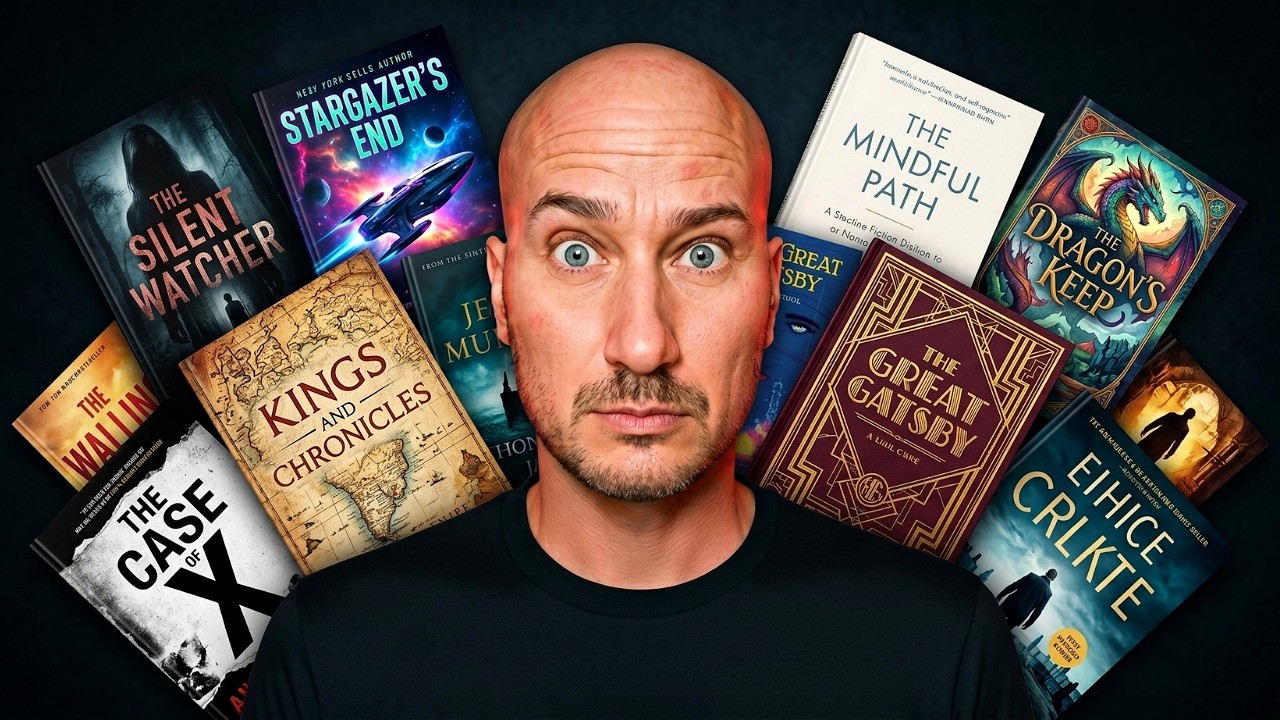
🔗 **Source:** [Claude Opus 4.7 Is a REVELATION for Authors](https://www.youtube.com/watch?v=MaGY-fqf5Mc&t=219s)
> [!note]+ Document Notes
> tags: #artificial-intelligence #writing #claude #ai-tools #content-creation #web-development #fiction-writing
> author: Christopher Kakoski
> source: YouTube
> reference: https://www.youtube.com/watch?v=MaGY-fqf5Mc
> date created: 2024-12-19 14:30
>
> # 🏷️ Title: Claude Opus 4.7 is a REVELATION for Authors (Full Demo)
>
<!-- deep-read:sections start -->
## 🧰 Action Inbox
- [H1] Test Claude Opus 4.7 for book premise generation and market research — 00:00-03:23 #ai-tools
- [H2] Experiment with multiple outline formats for novel structure — 03:23-08:45 #writing
- [H3] Evaluate AI-generated short story quality and originality — 08:45-13:30 #fiction-writing
## 🧭 Table of Contents
- [[#📝 Summary]]
- [[#📖 Main Content]]
- [[#🗒️ Notes]]
- [[#📚 References]]
- [[#🗣️ Paraphrase]]
- [[#📰 Newsletter]]
- [[#✅ Action Items]]
- [[#🧪 Hypotheses]]
- [[#📊 Methodology]]
- [[#❓ Questions]]
- [[#🔮 Future Research]]
- [[#💡 Implications]]
- [[#🧠 Learning Styles Assessment]]
- [[#📊 Accessibility Assessment]]
- [[#🌍 DEIB Assessment]]
- [[#✅ Logical Validity]]
- [[#🛡️ DARVO Analysis]]
- [[#🎯 Conclusion]]
### 🔗 References
- [Claude Opus 4.7 Demo Video](https://www.youtube.com/watch?v=MaGY-fqf5Mc)
- [Anthropic Claude](https://claude.ai)
## 📝 Summary
- Christopher Kakoski tests Anthropic's new Claude Opus 4.7 model across three key areas: book premise generation, story outlining, and website development
- The AI demonstrates improved capabilities in market research, generating "The Widow's Tide" as a commercially viable horror premise combining multiple trending genres
- Claude creates 10 different outline formats for the same story concept, from three-act structure to Save the Cat beat sheets with visual diagrams
- A complete 1,400-word short story showcases original language and metaphors, though the reviewer notes it didn't emotionally impact him as much as previous AI-generated stories
- Website development shows significant improvement, creating an interactive author portfolio with micro-animations and original content from minimal direction
- Mixed community feedback suggests varied experiences with the model's performance compared to Claude 4.6
## 📖 Main Content
Claude Opus 4.7 represents Anthropic's latest advancement in AI capabilities, particularly targeting what they call "agentic coding and tool use." The model promises improvements in self-correction, code review, and handling long-running tasks - features particularly valuable for authors managing complex projects like novel outlines, editing workflows, and book launch protocols.
The demonstration focuses on three core author use cases: commercial premise development, story structuring, and web presence creation. For premise generation, Claude analyzes current market trends to identify low-competition, high-potential genres including horror, romance, cli-fi (climate fiction), and dark academia. The AI's synthesis produces "The Widow's Tide," a Scottish horror premise that combines multiple successful elements.
In story structuring, the model generates ten distinct outline formats from the same source material, including classical approaches like the three-act structure and hero's journey alongside more specialized frameworks like the snowflake method and scene-sequel grids. Each outline includes visual diagrams and specific story beats, demonstrating the AI's ability to translate abstract narrative concepts into concrete planning tools.
The creative writing assessment involves a complete short story generation, where Claude produces "The Weight of Small Kitchens," a 1,400-word piece structured in four movements. The story demonstrates original metaphorical language and avoids obvious clichés, though the reviewer notes varying emotional impact compared to previous AI-generated fiction.
Website development showcases perhaps the most significant improvement, where Claude creates a fully interactive author portfolio from basic image inputs. The resulting site includes micro-animations, responsive design elements, and original content creation including author bio, book descriptions, and newsletter concepts.
## 🗒️ Notes
#### ⏱️ [00:00](https://youtu.be/MaGY-fqf5Mc?t=0) — [H1] Introduction to Claude Opus 4.7 capabilities
- Key idea: New model promises step-change improvements in agentic coding and long-running tasks for authors
- Evidence: "It's supposedly a lot better at catching its own faults, at reviewing code, at building things"
#### ⏱️ [00:45](https://youtu.be/MaGY-fqf5Mc?t=45) — [H2] Testing commercial premise generation
- Key idea: AI tasked with researching bestseller trends and generating commercially viable book ideas
- Evidence: Asked to find "what's working right now in bestsellers, what's a best-selling genre, what has low competition"
#### ⏱️ [01:30](https://youtu.be/MaGY-fqf5Mc?t=90) — [H1] AI identifies trending low-competition genres
- Key idea: Model synthesizes market research to identify horror, romance, cli-fi, and dark academia as opportunities
- Evidence: "The bestselling genres with lowest competitions in 2026 right now are horror, romance, water-based romanty, a sci-fi, a cli"
#### ⏱️ [02:15](https://youtu.be/MaGY-fqf5Mc?t=135) — [H1] "The Widow's Tide" premise generation
- Key idea: AI creates compelling horror premise combining multiple successful elements
- Evidence: "On a remote Scottish aisle where every husband eventually walks into the sea, a young widow discovers the ocean is not claiming the men. It is being fed them"
#### ⏱️ [03:23](https://youtu.be/MaGY-fqf5Mc?t=203) — [H2] Multiple outline format generation test
- Key idea: Claude creates 10 different structural approaches to the same story concept
- Evidence: "I've asked Opus 4.7 to take an idea and illustrate it in 10 different kinds of outlines"
#### ⏱️ [04:15](https://youtu.be/MaGY-fqf5Mc?t=255) — [H3] Visual diagram creation for story structures
- Key idea: Model generates visual representations alongside textual outlines
- Evidence: Creates diagrams for three-act structure, Save the Cat beat sheet, hero's journey, and story circle
#### ⏱️ [06:30](https://youtu.be/MaGY-fqf5Mc?t=390) — [H2] Detailed 30-chapter outline with Save the Cat structure
- Key idea: AI provides comprehensive chapter-by-chapter breakdown with multiple structural elements
- Evidence: "Each chapter has a story. We have the day, the opening image, the scene, the disaster, the sequel hook, the craft notes"
#### ⏱️ [07:45](https://youtu.be/MaGY-fqf5Mc?t=465) — [H3] Flexible writing approach recommendations
- Key idea: Claude suggests modular writing strategy based on energy and mood
- Evidence: "Romance on romantic days, hunts on action days, spine on structural days. The book assembles itself around the anchors"
#### ⏱️ [08:45](https://youtu.be/MaGY-fqf5Mc?t=525) — [H2] Complete short story generation test
- Key idea: Testing creative writing capabilities with micro short story commission
- Evidence: "I want to see what it comes up with. I was really impressed with 4.6 writing. Let's see if 4.7 is better, the same, or maybe even worse"
#### ⏱️ [09:30](https://youtu.be/MaGY-fqf5Mc?t=570) — [H2] "The Weight of Small Kitchens" story structure
- Key idea: 1,400-word story with circular four-movement structure
- Evidence: "Kitchen, garage, attic, kitchen again. Opus 4.7 shows a circular structure. The ending lands on a changed understanding of the same room"
#### ⏱️ [10:45](https://youtu.be/MaGY-fqf5Mc?t=645) — [H3] Original metaphorical language assessment
- Key idea: Story demonstrates creative descriptions and avoids clichés
- Evidence: "Her hair, once the color of bread crust, is now the color of an underside of bread" - described as original phrasing
#### ⏱️ [12:30](https://youtu.be/MaGY-fqf5Mc?t=750) — [H3] Emotional impact evaluation
- Key idea: Story quality good but less emotionally moving than previous AI fiction
- Evidence: "I wasn't moved as much as I was with something that I read from Opus 4.6, but I get the sense of the story and I like it"
#### ⏱️ [13:30](https://youtu.be/MaGY-fqf5Mc?t=810) — [H1] Website development test using 2026 best practices
- Key idea: Testing improved coding capabilities with modern web development
- Evidence: "I'm asking the model to make me a website using these images, and I wanted to use 2026 modern website best practices"
#### ⏱️ [14:15](https://youtu.be/MaGY-fqf5Mc?t=855) — [H1] Interactive website features demonstration
- Key idea: Created site includes micro-animations, responsive design, and cursor effects
- Evidence: "It moves. That's cool. It has this nice little cursor red dot... It's interactive. It's got these micro interactions"
#### ⏱️ [16:00](https://youtu.be/MaGY-fqf5Mc?t=960) — [H2] Original content generation for website
- Key idea: AI created all text content including author bio and book excerpts without source material
- Evidence: "It wrote these. It didn't have the actual files from the book. So what it did was it actually wrote these little excerpts"
#### ⏱️ [17:45](https://youtu.be/MaGY-fqf5Mc?t=1065) — [H3] Mixed community feedback on Claude 4.7
- Key idea: Initial user reactions vary significantly on model performance
- Evidence: "People love it and say it's game changers... Other people say it's terrible and 4.6 has been regressing"
## 📚 References
- [Claude Opus 4.7 Demo Video](https://www.youtube.com/watch?v=MaGY-fqf5Mc)
- [Anthropic Claude AI](https://claude.ai)
- [Save the Cat Beat Sheet](https://savethecat.com/)
- [Snowflake Method](https://www.advancedfictionwriting.com/articles/snowflake-method/)
## 🗣️ Paraphrase
- Claude Opus 4.7 shows measurable improvements in generating commercially viable book concepts by analyzing market trends and combining successful genre elements into original premises
- The model excels at translating single story concepts into multiple structural frameworks, providing authors with diverse approaches to organizing their narratives from classical three-act structures to specialized beat sheets
- While creative writing quality remains solid with original language and metaphors, the emotional impact may vary, and the most significant improvements appear in technical tasks like web development where the AI creates sophisticated, interactive sites from minimal input
## 📰 Newsletter
**Claude Opus 4.7: A Game-Changer for Author Workflows?**
Anthropic's latest Claude model shows promising advances for writers tackling complex projects. In this comprehensive test, author Christopher Kakoski explores three key capabilities that could revolutionize how authors approach book development.
**Key Highlights:**
- **Market-Driven Premise Generation**: Claude analyzes bestseller trends to identify low-competition genres and creates "The Widow's Tide," a Scottish horror concept combining multiple successful elements
- **Multi-Format Story Planning**: Generate 10 different outline structures from a single concept, complete with visual diagrams and detailed chapter breakdowns
- **Interactive Web Development**: Create professional author websites with micro-animations and original content from basic image inputs
The model particularly excels at technical tasks, producing sophisticated websites that would typically require significant development time. For creative writing, quality remains strong with original metaphors and cliché-free prose, though emotional impact may vary.
**Practical Applications:**
- Use multiple outline formats to find the structure that best fits your story
- Leverage market research capabilities for genre and premise validation
- Streamline author platform development with AI-assisted web creation
**Community Resources:** Connect with fellow authors exploring AI tools in writing communities, and consider how these capabilities might enhance rather than replace your creative process.
Resources: [Claude AI](https://claude.ai), [Save the Cat](https://savethecat.com/), [Advanced Fiction Writing](https://www.advancedfictionwriting.com/)
## ✅ Action Items
#### Content Creation
- Premise development: Test Claude for market-driven book concept generation with genre analysis
- Structural planning: Experiment with multiple outline formats for current projects
- Web presence: Explore AI-assisted author website development and content creation
- Quality assessment: Compare AI-generated content emotional impact across different models
#### Writing Process
- Template creation: Build reusable prompt structures for consistent outline generation
- Market research: Develop systematic approaches to genre trend analysis
- Revision workflow: Integrate AI feedback loops for self-correction and review cycles
- Portfolio management: Automate content updates and bio refreshes across platforms
#### Professional Development
- Tool evaluation: Benchmark Claude 4.7 against other AI models for writing tasks
- Skill building: Learn prompt engineering techniques for creative writing applications
- Community engagement: Share experiences and best practices with AI writing tools
- Ethics consideration: Develop guidelines for AI-assisted vs. original content attribution
## 🧪 Hypotheses
- Claude Opus 4.7 demonstrates superior performance in technical tasks like web development compared to pure creative writing
- Multiple outline format generation helps writers identify optimal story structures more efficiently than single-format approaches
- Market-driven premise generation produces more commercially viable concepts than traditional brainstorming methods
- AI-assisted author platform development significantly reduces time-to-launch for professional web presence
### 📊 Methodology
- A/B testing between Claude 4.6 and 4.7 for equivalent writing tasks
- Comparative analysis of AI-generated vs. traditionally developed book premises using sales data
- Time-motion studies of outline generation across different structural frameworks
- User experience testing of AI-generated websites vs. professionally developed sites
### ❓ Questions
- How does emotional impact in AI-generated fiction correlate with commercial success metrics?
- What combination of outline formats produces the most coherent final manuscripts?
- How do readers respond to AI-assisted vs. purely human-generated author content?
### 🔮 Future Research
- Longitudinal studies of author productivity gains using AI outline generation
- Market performance analysis of books developed using AI premise generation
- Integration patterns between AI tools and traditional writing software workflows
### 💡 Implications
- Practice: Authors may need to reframe AI as a structural and research assistant rather than creative replacement
- Education: Writing curricula should incorporate AI tool literacy alongside traditional craft instruction
- Industry: Publishing houses may develop new evaluation criteria for AI-assisted manuscripts
- Technology: Demand for specialized writing AI tools may drive further model refinement in creative domains
### 🧠 Learning Styles Assessment
Reading level estimate: 10th Grade (Flesch-Kincaid)
#### 👀 Visual learners
- Present: Video demonstration with screen captures of AI outputs, visual outline diagrams
- Improve: Side-by-side comparisons of different outline formats, flowcharts of AI workflow
#### 🔊 Aural learners
- Present: Video narration with detailed explanations of each test
- Improve: Audio-only summary version, podcast discussion of implications
#### 🗣️ Verbal learners
- Present: Clear explanations of technical terms, analogies for AI capabilities
- Improve: Glossary of AI writing terminology, comparison frameworks
#### 🧩 Kinesthetic learners
- Present: Step-by-step demonstration of using Claude for writing tasks
- Improve: Interactive checklist for testing AI models, hands-on prompt templates
#### 🧠 Logical learners
- Present: Systematic testing methodology, clear before/after comparisons
- Improve: Scoring rubrics for AI output quality, decision trees for tool selection
#### 🧑🤝🧑 Social learners
- Present: Community feedback discussion, varying user experiences
- Improve: Writing group discussion prompts, collaborative evaluation frameworks
#### 🧘♀️ Solitary learners
- Present: Individual testing approach,
---
## Full Transcript
[00:00] Anthropic just released Claude Opus 4.7<br>[00:03] and I'm so excited to test it because<br>[00:05] it's supposedly a step change in agenic<br>[00:09] coding and tool use. Apparently, it's a<br>[00:12] lot better at catching its own faults,<br>[00:15] at reviewing code, at building things.<br>[00:17] We're talking automations and longunning<br>[00:20] tasks, which is great for an author<br>[00:22] who's trying to build out an outline for<br>[00:24] a novel or edit a novel or build a<br>[00:27] website or a book launch protocol.<br>[00:29] Here's what it's supposedly really good<br>[00:30] at. All these office tasks, vision,<br>[00:34] document reasoning. This is really key<br>[00:36] here for authors. Long context<br>[00:38] reasoning. This is also great for<br>[00:40] developing a whole book bible or a book<br>[00:43] series. Let's test this thing. I'm<br>[00:44] asking Claude Opus 4.7 to come up with a<br>[00:48] commercially successful premise. I'm<br>[00:50] asking it to research what's working<br>[00:51] right now in bestsellers, what's a<br>[00:54] best-selling genre, what has low<br>[00:55] competition, and to come up with an<br>[00:57] idea, a set of ideas that it thinks will<br>[01:00] be commercially successful, then pick<br>[01:01] the best one and explain why. Here we<br>[01:04] go. It's saying based on market research<br>[01:06] synthesis, the bestselling genres with<br>[01:08] lowest competitions in 2026 right now<br>[01:11] are horror, romance, water-based<br>[01:13] romanty, a sci-fi, a cli, what is a<br>[01:16] clifi? It doesn't even explain what that<br>[01:18] is. Somebody's going to have to explain<br>[01:19] what that is. Historical mysteries, dark<br>[01:21] academia. Here's the 10 premise<br>[01:23] contenders. And then it's saying, this<br>[01:25] is the winning premise. The widow's<br>[01:27] tide. Oneline pitch. On a remote<br>[01:29] Scottish aisle where every husband<br>[01:31] eventually walks into the sea, a young<br>[01:33] widow discovers the ocean is not<br>[01:35] claiming the men. It is being fed them.<br>[01:37] And the ancient thing beneath the waves<br>[01:38] has chosen her as its next bride. Here's<br>[01:41] the extended premise and why it's<br>[01:43] supposedly going to be successful. I<br>[01:46] think it came up with a good premise and<br>[01:47] it had great reasons behind it. Let's<br>[01:50] move on to the next test. Now, I've<br>[01:51] asked Opus 4.7 to take an idea and<br>[01:55] illustrate it in 10 different kinds of<br>[01:57] outlines that would actually help a<br>[01:59] writer to write the novel or idea<br>[02:01] themselves. So, first we have the<br>[02:03] three-act structure. It's a classic<br>[02:05] pyramid. It's creating the diagram right<br>[02:07] now so that we can see what it looks<br>[02:09] like visually. It's not the best<br>[02:11] diagram, but it's pretty cool to have a<br>[02:13] diagram of the outline. Let's go to the<br>[02:15] save the cat beat sheet. Something for<br>[02:17] screen plays. All right, so we have the<br>[02:18] same kind of diagram here. I don't love<br>[02:21] this imaging. I don't think it looks<br>[02:23] that great, but I do like that it's<br>[02:25] creating these images one after another<br>[02:27] for us just like I asked. We have in<br>[02:29] different colors. This is good. It's<br>[02:32] creating the whole thing, which is<br>[02:33] pretty cool. And it's putting the actual<br>[02:35] story idea into these beats, which is<br>[02:38] This next one is the hero's journey.<br>[02:40] This is Dan Harmon's story circle.<br>[02:42] Again, these are just the big moments<br>[02:44] and sections. There's even a little<br>[02:46] draft tip down here, which is kind of<br>[02:47] cool. Okay, we have the snowflake<br>[02:49] method. This is a little bit more<br>[02:51] detailed, but again, some of the<br>[02:53] sentences are going off of the page,<br>[02:55] which isn't great. All right, seven<br>[02:57] point story structure. What's next? Fre<br>[02:59] tags pyramid. This one looks familiar.<br>[03:02] We have Fitchten curve, a series of<br>[03:04] escalating crisis spikes. Here are the<br>[03:07] crisis spikes. Number 10, scene SQL<br>[03:10] grid. Swain Bickman. I have that book.<br>[03:13] So, I'm going to ask it to pick one and<br>[03:14] give me a very detailed outline because<br>[03:16] I got to see if it can do that. Here is<br>[03:19] the detailed chapter outline for the<br>[03:21] last bookshop at the end of the world<br>[03:23] using the Save the Cat beat sheet<br>[03:24] applied to 30 chapters. Act one. Each<br>[03:27] chapter has a story. We have the day,<br>[03:29] the opening image, the scene, the<br>[03:30] disaster, the sequel hook, the craft<br>[03:32] notes. That's cool. I like it. So, we're<br>[03:34] going to keep going down here. We have<br>[03:35] chapter three, opening image. We have<br>[03:38] the disaster craft notes. Looks like for<br>[03:40] all 30 chapters we have the structural<br>[03:43] clock, the mirror pairs, the seven<br>[03:45] escape pacing, the romance beats, draft<br>[03:48] order recommendation. So it's actually<br>[03:50] going to say do the spine first. That's<br>[03:52] interesting. The romance break, the<br>[03:54] hunt, the connective tissue. This<br>[03:56] approach lets you write to your energy.<br>[03:57] Romance on romantic days, hunts on<br>[04:00] action days, spine on structural days.<br>[04:02] The book assembles itself around the<br>[04:03] anchors. I don't know how I would feel<br>[04:05] about writing a story that way. Let me<br>[04:07] know in the comments if you have ever<br>[04:08] done that. Now, what we really want to<br>[04:09] know is, can this thing write? And to<br>[04:11] figure out how Opus 4.7 thinks about<br>[04:14] stories, I'm asking for a complete micro<br>[04:17] short story. I want to see what it comes<br>[04:19] up with. I was really impressed with 4.6<br>[04:22] writing. Let's see if 4.7 is better, the<br>[04:24] same, or maybe even worse. Opus 4.7 is<br>[04:27] back saying, "The story is called The<br>[04:29] Weight of Small Kitchens. It's about<br>[04:31] 1,400 words." That's a short story. It's<br>[04:33] structured in four movements. Kitchen,<br>[04:35] garage, attic, kitchen again. Opus 4.7<br>[04:37] shows a circular structure. I didn't ask<br>[04:39] it to, but it did. So, the ending lands<br>[04:42] on a changed understanding of the same<br>[04:43] room, which is the story's whole point.<br>[04:45] Robin hasn't moved, but her measurement<br>[04:47] has. Robin must be the name. Probably<br>[04:50] Robin Ashby. All right, let's read this<br>[04:52] story, or at least some of it. The<br>[04:53] weight of small kitchens. The kitchen is<br>[04:55] smaller than I remember. This is what<br>[04:57] everyone says about childhood kitchens,<br>[04:59] so I try not to say it out loud. My<br>[05:01] mother is at the stove stirring<br>[05:02] something that does not need stirring.<br>[05:04] Her back is to me. She's wearing the<br>[05:05] blue apron. my father gave her for an<br>[05:07] anniversary. And her hair, once the<br>[05:08] color of bread crust, is now the color<br>[05:10] of an underside of bread. The color of<br>[05:12] bread crust, that's something I've never<br>[05:14] heard in any novel. Maybe you have, but<br>[05:16] I think it's quite original and I like<br>[05:17] it. She is 63. She has been 63 for<br>[05:20] weeks. You're thinner, she says without<br>[05:22] turning around. I can tell from the back<br>[05:23] of your neck. I sit at the table where I<br>[05:25] have set most of my life. The table has<br>[05:27] a burn mark on it from when I was 19 and<br>[05:29] set down a pan I should not have set<br>[05:31] down. She has never replaced the table.<br>[05:32] She has never sanded the mark. I like<br>[05:34] those little details, actually. So far,<br>[05:36] you know, I like it. It hasn't moved me<br>[05:38] as much as other stories have moved me<br>[05:39] in the past with like Opus 4.6, but I'm<br>[05:42] along for the ride. I'm still here in<br>[05:43] the story. I think we're going to jump<br>[05:45] down toward the end to see how it closes<br>[05:47] this out. In the kitchen, which is<br>[05:49] smaller than I remember because I am<br>[05:50] larger than I was. My mother has set out<br>[05:52] three mugs. My father has used the<br>[05:54] cream, which he is not supposed to use.<br>[05:56] They are standing on either side of the<br>[05:57] table the way they have stood my whole<br>[05:59] life, orbiting it, orbiting me. a small<br>[06:02] crooked solar system that I have spent<br>[06:04] 34 years resenting for not being around.<br>[06:06] That's another sentence that speaks to<br>[06:08] me. I like that. Uh I know we missed<br>[06:10] probably emotional change in here. Let<br>[06:12] me scroll through it as I talk in case<br>[06:14] you want to screenshot and actually read<br>[06:16] this whole thing. I think maybe it'd be<br>[06:18] worth it. I don't think I can put this<br>[06:19] whole thing in the video description,<br>[06:21] but maybe I'll try. Anyway, I like the<br>[06:23] writing. Again, I wasn't moved as much<br>[06:25] as I was with something that I read from<br>[06:27] Opus 4.6, six, but I get the sense of<br>[06:30] the story and I like it. I think it's<br>[06:33] good. One thing I really like is so far<br>[06:36] I haven't read any kind of cliche, at<br>[06:38] least that I'm aware of. I'm not the<br>[06:40] biggest fan of first person, but I know<br>[06:41] that's very popular, so I'm probably in<br>[06:43] a minority there. But I like the<br>[06:44] original descriptions. I think they're<br>[06:46] good. So, I think this is fine. I don't<br>[06:47] think this is like, whoa, it didn't blow<br>[06:49] me away. It didn't make me cry. And<br>[06:51] other stories have in the past written<br>[06:54] by AI. This one hasn't, but maybe<br>[06:56] because I didn't read the whole thing,<br>[06:57] just the first and last part. Um, but<br>[06:59] anyway, I think it's good. I like the<br>[07:01] original language and analogies probably<br>[07:03] the most. What this is supposed to be<br>[07:06] the best at is coding and long tasks.<br>[07:10] Now, I'm asking the model to make me a<br>[07:12] website using these images, and I wanted<br>[07:14] to use 2026 modern website best<br>[07:17] practices. I'll be honest, I don't know<br>[07:18] what all of those are, but we're going<br>[07:20] to hope Opus 4.7 does. And I hope that<br>[07:23] it makes a really good site. All right,<br>[07:24] we have a design approach that's<br>[07:26] supposedly using the images front-end<br>[07:28] design skill for modern website best<br>[07:30] practices. Let's see. This is pretty<br>[07:33] good. I do like the color scheme. It<br>[07:35] used the image I gave it. And look, it<br>[07:38] moves. That's cool. It has this nice<br>[07:40] little cursor red dot, which is kind of<br>[07:43] interesting. I like that. Let's go down<br>[07:45] here. Browse the shelf. Look, it has a<br>[07:47] little movable like type down here. I<br>[07:50] like it. Three books, three different<br>[07:52] weathers. Yep. Here are the book covers.<br>[07:54] And now it didn't create these book<br>[07:55] covers. I gave that to it. But yeah, I<br>[07:57] like how it moves. That's cool. It's<br>[07:58] interactive. It's got these micro<br>[08:00] interactions. We have this little I<br>[08:02] guess it's what a flashlight by my<br>[08:04] cursor now. Okay, we can read more. Now<br>[08:07] we have a little bit about each book.<br>[08:08] And here we have from chapter 1. He had<br>[08:11] spent his whole life shelving other<br>[08:12] people's stories he had never expected<br>[08:14] to find his own in the 1600s under a<br>[08:17] number that was not supposed to exist. I<br>[08:19] think it made that up, but it's pretty<br>[08:20] cool. Open any book anywhere. The<br>[08:22] decimal, the pigeon prophet. It wrote<br>[08:25] these. It didn't have the actual files<br>[08:26] from the book. So, what it did was it<br>[08:28] actually wrote these little excerpts and<br>[08:31] it did all of this as well. I think it<br>[08:33] made all this up, but it's pretty cool.<br>[08:36] All right, let's just go through here.<br>[08:37] The writer, the desk, the patients,<br>[08:39] 420,000 readers on the list, which is<br>[08:42] not true. That's made up. Three novels<br>[08:44] published, seven years of drafts. That's<br>[08:46] realistic. One opinion-hated pigeon.<br>[08:49] That's actually funny. It did this all<br>[08:51] by itself. Okay, let's see what it says<br>[08:53] because I did not give it any of this.<br>[08:54] Christopher Kakoski writes fiction that<br>[08:56] moves slowly and lands exactly. I would<br>[08:58] hope so. Notes on crafts, books, the<br>[09:01] slow work. What is this? Short essays on<br>[09:03] writing. It totally came up with this by<br>[09:05] itself. Let's see. Is that going to take<br>[09:07] us anywhere? No, it's just on James. The<br>[09:09] shape of good interruption and why the<br>[09:11] best pros ambushes you from the left<br>[09:13] side of the page. The letter arrives on<br>[09:15] Sunday morning. So it's little<br>[09:16] newsletter sign up. This is good. Look<br>[09:18] at this. Elsewhere, Medium, Substack,<br>[09:20] Instagram, Goodreads, Write Speaking.<br>[09:23] You want to hire me? Press inquiries.<br>[09:26] That's funny, too. This is just a front<br>[09:27] end of the website. All right. Honestly,<br>[09:29] I like it. I think this is the best job<br>[09:31] it's done with just a oneshot, really no<br>[09:34] direction for the website. I think it<br>[09:36] does a great job at this. So, I'm<br>[09:38] thinking that it's true that Opus 4.7 is<br>[09:40] probably better at coding tasks. And<br>[09:42] this wasn't even a long one really. Even<br>[09:44] though it made up a lot of stuff, it did<br>[09:46] pretty well. I should mention that<br>[09:48] feedback on Opus 4.7, at least initial<br>[09:51] feedback, is pretty mixed, but it<br>[09:52] usually is right. People love it and say<br>[09:54] it's game changers. Kind of like I am. I<br>[09:56] think it's pretty good. Other people say<br>[09:58] it's terrible and 4.6 has been<br>[10:00] regressing and there's all kinds of<br>[10:02] complaints here about usage liage cost,<br>[10:05] major regression, claude code is busted,<br>[10:08] and then teasing mythos. That is<br>[10:10] somewhat true, it seems. But I've had<br>[10:12] some good use cases with 4.6 still<br>[10:15] working for me. 4.7. So overall, what do<br>[10:18] I I think overall that this is a good<br>[10:20] model. Uh I'm unsure how much better it<br>[10:23] is for authors in terms of writing and<br>[10:25] writing related tasks, but I think that<br>[10:27] it's on par with 4.6. It should still<br>[10:31] get things done. I still think it's<br>[10:33] probably the best set of models or model<br>[10:35] that's out for coding task making<br>[10:37] websites. I think it is a lot better to<br>[10:39] be honest for a oneshot website. It<br>[10:41] created something. At least a front end<br>[10:43] of it is really good. I can't wait to<br>[10:45] dig deeper and use 4.7 on some of my<br>[10:48] other coding projects because I have so<br>[10:50] many and I'm working on a ton. That's it<br>[10:52] for this video. Let me know what you<br>[10:53] think in the comments. Thanks for<br>[10:54] watching.
<!-- deep-read:sections end -->
📄 **Full text:** ![[Full Document Contents/Articles/Claude Opus 4.7 Is a REVELATION for Authors.md|Claude Opus 4.7 Is a REVELATION for Authors by YouTube]]
## Highlights
- on structural days. The book assembles itself around the anchors. I don't know how I would feel about writing a story that way. Let me know in the comments if you have ever done that. Now, what we really want to know is can this thing write? And to figure out how Opus 4.7 thinks about stories, I'm asking for a complete micro short story, I want to see what it comes up with. I was really impressed with 4.6 writing. Let's see if 4.7 is better, the same, or maybe even worse. Opus 4.7 is back saying the story is called The Weight of Small Kitchens. ([View Highlight](https://read.readwise.io/read/01kpm4sf2m5ty1719q9zfdmgb1))
- Tags: 👻 ai highlighted
- it, orbiting me, A small, crooked solar system that I have spent thirty-four years resenting for not being round. That's another sentence that speaks to me. I like that. I know we missed probably emotional change in here. Let me scroll through it as I talk in case you wanna screenshot and actually read this whole thing. I think maybe it'd be worth it. I don't think I can put this whole thing in the video description, but maybe I'll try. Anyway, I like the writing. Again, I wasn't moved as much as I was with something that I read from Opus 4.6, but I get the sense of the story, ([View Highlight](https://read.readwise.io/read/01kpm4sf3wm4zp15mxvwzvc7tq))
- Tags: 👻 ai highlighted