Codex and Claude Shipped Browser Updates. This Changes Everything.
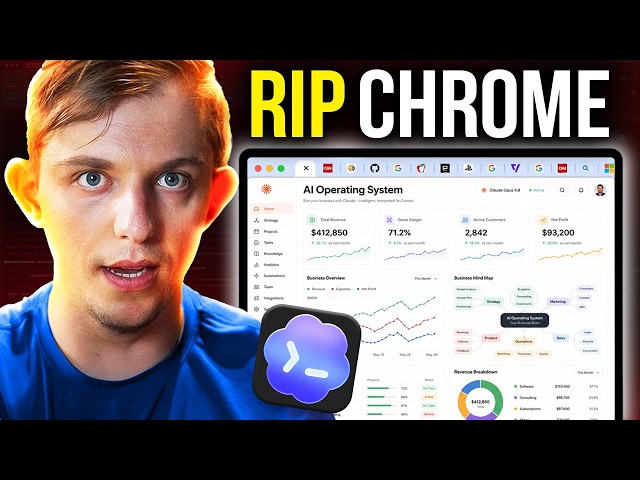
🔗 **Source:** [Codex and Claude Shipped Browser Updates. This Changes Everything.](https://www.youtube.com/watch?v=juPDqb89dew)
> [!note]+ Document Notes
> tags: [ai-agents, browser-automation, developer-tools, codex, claude-code]
> author: Riley Brown
> source: Riley Brown (YouTube)
> reference: https://www.youtube.com/watch?v=juPDqb89dew
> date created: {{date:YYYY-MM-DD}} {{time:HH:mm}}
>
> # 🏷️ Title: Codex and Claude Shipped Browser Updates. This Changes Everything.
>
<!-- deep-read:sections start -->
## 🧭 Table of Contents
- [📝 Summary](#-summary)
- [📖 Main Content](#-main-content)
- [🗒️ Notes](#️-notes)
- [📚 References](#-references)
- [🗣️ Paraphrase](#️-paraphrase)
- [📰 Newsletter](#-newsletter)
- [✅ Action Items](#-action-items)
- [🧪 Hypotheses](#-hypotheses)
- [📊 Methodology](#-methodology)
- [❓ Questions](#-questions)
- [🔮 Future Research](#-future-research)
- [💡 Implications](#-implications)
- [🧠 Learning Styles Assessment](#-learning-styles-assessment)
- [📊 Accessibility Assessment](#-accessibility-assessment)
- [🌍 DEIB Assessment](#-deib-assessment)
- [✅ Logical Validity](#-logical-validity)
- [🛡️ DARVO Analysis](#-darvo-analysis)
- [🎯 Conclusion](#-conclusion)
### 🔗 References
- [Claude Code](https://www.anthropic.com/claude-code) — the Anthropic CLI/desktop agent that gained the in-app browser.
- [OpenAI Codex](https://openai.com/codex/) — the ChatGPT-merged agent app with the equivalent browser feature.
- [HubSpot + Futurepedia AI agents cheat sheet](https://www.hubspot.com/) — sponsor resource referenced mid-video.
## 📝 Summary
- What happened: OpenAI (Codex) and Anthropic (Claude Code / Claude desktop) shipped near-identical in-app browser updates on the same day, letting an agent open and control multiple real browser tabs inside a single chat session.
- Why it matters: The browser stops being a place you navigate manually and becomes a surface the agent drives — opening research, drafts, dashboards, and social posts in tabs you review rather than assemble.
- Key stakeholders: Solo operators, marketers, and content creators running knowledge work through these tools; the two vendors competing on agent UX; anyone doing browser-automation / computer-use work.
- Risks and tradeoffs: This is a hype-forward demo reel ("This Changes Everything") from a creator who admits the features are two to three days old. Reliability, security of agent-driven browsing, and how well any of this generalizes past the presenter's curated setup are unaddressed.
- Bottom line: A real, concrete capability shift — agent-controlled in-app tabs — wrapped in speculative framing about operating systems and "agent native" work. The demos are live; the sweeping claims are not yet verified.
## 📖 Main Content
- Core claim: both Codex and Claude Code now embed a full browser that the agent can open, populate, and act inside, replacing the older behavior where an agent spun up an external Chrome window or (for Claude Code) could only open localhost links.
- The presenter argues the browser is the "most underrated interface" for AI agents because it already sits on top of nearly every tool, so giving the agent memory, context, and the ability to act turns it into a workspace rather than a destination.
- Four demonstrated ways to use the Codex browser: (1) open it manually with command-T, (2) tell the agent to open one thing, (3) ask the agent to open many tabs at once, (4) wire browser-opening into a reusable skill (e.g., an email-draft skill that opens each drafted reply in its own tab, nothing sent).
- The presenter repeatedly favors Codex over Claude Code for this: Codex lets you open the browser before a chat starts, has stronger plugin/connector integration (Notion, Google Drive, Google Docs), and — in his framing — knows him better because he routes "nearly everything" through it. This is a personal-preference claim, not a benchmark.
- Terms to define: "agent native" (the presenter's phrase for running work through AI agents by default); "skill" (a saved, referenceable workflow the agent can invoke, e.g., `/draft email draft`); "sub-agents" (parallel agent processes shown spinning up to open tabs concurrently).
- Contested / unverified: the "operating system" framing, the Jack Dorsey quote used as supporting authority, the implied generality of workflows tuned to one creator's Notion/Drive/email stack, and any claim that this "changes everything" for business use.
### 🗒️ Notes
#### ⏱️ [00:00](https://www.youtube.com/watch?v=juPDqb89dew&t=0) Same-day browser updates on Codex and Claude
- Framing claim: OpenAI and Anthropic made "the same update on the same day" to Claude desktop and the Codex app — an in-app browser with multiple tabs per chat session.
- Cold-open demo: a Codex prompt opens YouTube analytics, a Notion video DB, X notifications, five key emails, and a soccer score as separate tabs, using sub-agents.
#### ⏱️ [01:50](https://www.youtube.com/watch?v=juPDqb89dew&t=110) Agents act, then surface results in tabs
- The pitch: agents "can take actions for you and then open them up in different tabs" — including a generated document (a support-ticket summary) opened in its own tab.
- Positions browsers as central to "AI-powered super apps."
#### ⏱️ [02:42](https://www.youtube.com/watch?v=juPDqb89dew&t=162) Claude Code lifts the localhost-only limit
- Before ~3 days prior, Claude Code's browser could only open a localhost link (for locally built apps); now it can open real sites.
- Complaint: Claude Code opens links one at a time rather than in the background. Presenter says he doesn't use Claude Code for knowledge work — he uses Codex.
#### ⏱️ [04:25](https://www.youtube.com/watch?v=juPDqb89dew&t=265) Annotation tool and Codex browser hands-on
- Anthropic's new annotation tool (compared to Excalidraw) lets you select part of any page, add a comment, and push it into the chat.
- In Codex, command-T opens a browser tab before typing; the agent writes directly into an open Google Doc via the Docs plugin because it "knows exactly what's open at all times."
- Demo: Codex drafts three tweet variants, each pre-filled in its own tab under an "Agent Native" account, posting nothing (44 seconds).
#### ⏱️ [07:54](https://www.youtube.com/watch?v=juPDqb89dew&t=474) Sponsor break — HubSpot / Futurepedia
- Paid placement for a free "AI agents cheat sheet" (seven agent tools, setup difficulty, cost, when to use/skip, copy-paste starter prompts). Disclose as advertising, not editorial evidence.
#### ⏱️ [10:34](https://www.youtube.com/watch?v=juPDqb89dew&t=634) Four ways to use the browser in Codex
- Manual (command-T), single open, many-tabs open, and skill-embedded. Demo opens all ~16 in-progress Notion videos as tabs at once.
- Claims Codex is "pretty far ahead" of Claude Code on browser usefulness and plugins (e.g., @-mentioning Google Drive). Preference claim, not measured.
#### ⏱️ [11:56](https://www.youtube.com/watch?v=juPDqb89dew&t=716) Skills that auto-open tabs (email draft)
- The most-favored pattern: a skill that says "anytime X happens, open X in the browser."
- `/draft email` skill reads each support thread, saves replies, verifies them, and opens each draft in its own Codex tab — "Nothing will be sent."
#### ⏱️ [14:27](https://www.youtube.com/watch?v=juPDqb89dew&t=867) Browser as personal operating system (Jack Dorsey)
- Cites a Jack Dorsey tweet: shifting "from telling agents what to do to asking them what to do and pulling the best thread."
- Demo: agent reads calendar, Notion, and email, recommends the next task, then opens all supporting docs, guest LinkedIns, and a prior podcast for prep. Authority-by-quotation; treat as rhetoric.
#### ⏱️ [17:04](https://www.youtube.com/watch?v=juPDqb89dew&t=1024) Workflow — Google Images B-roll search
- Codex reads a script line by line, decides search terms, and opens Google Images tabs in on-screen order so the creator can pick B-roll. Runs "in the background," fast.
#### ⏱️ [18:32](https://www.youtube.com/watch?v=juPDqb89dew&t=1112) Workflow — queue tweets from local assets
- Codex reads images from a local downloads folder, writes captions, uploads each into its own tweet tab "ready to press send." Same pattern extendable to Instagram.
#### ⏱️ [19:34](https://www.youtube.com/watch?v=juPDqb89dew&t=1174) Workflow — three parallel Codex research threads
- One prompt spawns three separate Codex sessions: video hook analysis (with a Google Doc + video tabs), Windows/vMix PC product research, and 10 ideal podcast guests with per-guest justification tabs and timestamped video links.
#### ⏱️ [23:13](https://www.youtube.com/watch?v=juPDqb89dew&t=1393) Why a full in-app browser matters + wrap-up
- Thesis restated: an agent that can do "almost anything" needs a full in-app browser; being kicked out to external Chrome is the annoyance being solved.
- Caveat in his own words: the updates are only two days old, so his workflows will "drastically" change. Closes on "agent native" mission.
## 📚 References
- [Claude Code — Anthropic](https://www.anthropic.com/claude-code)
- [OpenAI Codex](https://openai.com/codex/)
- [Jack Dorsey (Block)](https://block.xyz/) — source of the "pulling the best thread" quote paraphrased in the video.
- [HubSpot](https://www.hubspot.com/) / [Futurepedia](https://www.futurepedia.io/) — sponsor cheat-sheet.
## 🗣️ Paraphrase
- Two rival AI coding agents shipped the same feature at the same time: a browser built into the app that the agent can open, fill with tabs, and act inside, so you review finished work instead of assembling it by hand.
- The creator walks through four usage patterns and several marketing/content workflows, argues the tool is becoming his "operating system," and repeatedly prefers Codex over Claude Code for integrations — while noting the features are days old and his approach will keep changing.
## 📰 Newsletter
- If you do browser-automation or computer-use work in WordPress DevRel, this one's squarely in your lane: Codex and Claude Code both grew an in-app browser the agent can drive across multiple tabs. For WP folks, the interesting parallel is how this compares to Claude in Chrome and MCP-driven browser control — same "agent acts, you approve" pattern, different host. Worth a hands-on to see whether tab-per-draft review beats an external Chrome handoff. Keep a skeptic's hat on: the video's a two-day-old demo reel, so treat the "operating system" talk as vibes and the tab demos as the actual news.
## ✅ Action Items
#### DevRel
- Developer advocacy: draft a short comparison demo of Claude Code's in-app browser vs. Claude in Chrome for a WP audience; measure setup steps and failure modes.
- Education: office-hours segment on "skills that open browser tabs" as a safe, review-before-send pattern.
- Developer experience: document the localhost-only → any-URL change in Claude Code and what it unlocks for local WP dev previews.
- Developer marketing: capture a before/after clip of agent-driven tab review vs. manual tab assembly.
- Community management: solicit real workflows from the community (the video ends by asking exactly this).
- Internal/external/cross-project: compare notes with the MCP/computer-use track on approval-gating agent browser actions.
#### OSPO
- Policy & Governance: define guardrails for agents that open/act in browser tabs on a maintainer's behalf (what may auto-open, what needs approval).
- License Compliance: note that B-roll-via-Google-Images workflows raise image-licensing questions; add a review step.
- Security Management: threat-model an agent with local file-system read (downloads folder) plus browser upload rights.
- Software Inventory: track which connectors (Notion, Drive, Docs) are wired into agent browsers.
- Developer Support: consultation hours on connector/skill setup differences between Codex and Claude Code.
- Community Engagement: not applicable to this source — the video is a solo creator demo, not a community program.
- Strategic Alignment: not applicable to this source — no org-level KPIs discussed.
#### Community
- Maintainers: not applicable to this source — no maintainer governance content.
- Contributors: not applicable to this source.
- Sponsors: note the HubSpot/Futurepedia placement as a disclosure model for sponsored dev content.
- Ecosystem: watch whether other agent tools copy the same-day in-app-browser pattern.
#### WordPress
- Core: not applicable to this source — no WP core content.
- Core Performance: not applicable to this source.
- Core AI: relevant analogy — agent-driven browser actions map to Core AI's responsible-AI guardrail questions; log it as prior art.
- **Core Program Team:** not applicable to this source.
- Mobile: not applicable to this source.
- Playground: reproducible idea — a Playground lab showing an agent opening a local WP preview now that Claude Code can open non-localhost URLs.
- Community: not applicable to this source.
- Training: lesson idea on "review-before-send" agent patterns for content teams.
- Marketing: the tab-per-draft social workflow is directly reusable for WP marketing content.
- Support: the email-draft skill (draft, verify, open, never auto-send) is a support-response pattern worth piloting.
- Design: not applicable to this source.
- Documentation: document the connector setup gap Riley hits (Claude Code @drive does nothing; Codex works).
- Photos: image-sourcing/licensing caution as above.
- TV: caption-quality reminder for any republished demo clips.
- Polyglots: not applicable to this source.
- Accessibility: flag that the video itself relies on visual demos with sparse narration of on-screen state (see Accessibility Assessment).
- Meta: not applicable to this source.
- CLI: Claude Code is a CLI-adjacent tool; note the browser feature for any CLI UX docs.
- Hosting: not applicable to this source.
- Tide: not applicable to this source.
- Openverse: relevant — Openverse could be the licensed alternative to Google-Images B-roll scraping.
- Themes: not applicable to this source.
- Plugins: not applicable to this source.
#### The WPCC
- Programs: not applicable to this source — no funding/fellowship content.
- Projects: not applicable to this source.
- Funding experiments: not applicable to this source.
### FAIR
- Technical independence: not applicable to this source — no metadata/provenance content.
- Policies and covenants: not applicable to this source.
- Productized governance artifacts: not applicable to this source.
## 🧪 Hypotheses
- Agent-controlled in-app tabs reduce task-switching time for content/marketing work versus manual browser navigation.
- Codex's tighter connector integration produces fewer failed browser actions than Claude Code for the same prompts (as of mid-July 2026).
- The "skill that opens tabs" pattern increases user trust because nothing is sent/posted without review.
- Parallel sub-agent sessions opening tabs scale to N tasks without proportional user-attention cost.
- Lifting Claude Code's localhost-only browser restriction measurably increases its use for non-coding knowledge work.
### 📊 Methodology
- Time-on-task study: same set of research/drafting tasks done manually vs. agent-tab-driven, measured across multiple users.
- Reliability logging: run identical prompts on Codex and Claude Code, count successful vs. failed tab opens and connector calls.
- Trust survey: pre/post measure of willingness to let an agent act, with and without the review-before-send tab pattern.
- Load test: scale parallel sessions and count tab-open latency and error rate.
### ❓ Questions
- How is agent browser access sandboxed — what can it read (local files, cookies, logged-in sessions) and what needs consent per action?
- Does "nothing was posted" hold under adversarial prompts, or only in the demoed happy path?
- How portable are these workflows to someone without a fully wired Notion/Drive/email stack?
- What is the actual reliability delta between Codex and Claude Code, measured rather than asserted?
### 🔮 Future Research
- Security review of agent-driven browsers with authenticated sessions and local file access.
- Comparative UX study of in-app browser vs. external-Chrome handoff (including Claude in Chrome / MCP).
- Licensing-safe B-roll pipelines (Openverse-backed) as a replacement for Google-Images scraping.
### 💡 Implications
- Practice: "agent acts, you approve in tabs" could become a default content/support workflow.
- Policy: orgs need rules for what agents may auto-open vs. auto-send.
- Security: authenticated in-app browsing plus local file read is a meaningful new attack surface.
- Education: teach review-gated agent patterns, not just prompt tricks.
- Funding models: not applicable to this source — none discussed.
### 🧠 Learning Styles Assessment
- Reading level estimate: transcript is conversational; approximate Flesch-Kincaid Grade ~7–8 (short sentences, common words, heavy discourse markers). Formula: Flesch-Kincaid Grade Level.
#### 👀 Visual learners
- Present: continuous screen-recorded demos of tabs opening, drafts appearing, annotation tool.
- Improve: an architecture diagram of agent → sub-agents → tabs; before/after of manual vs. agent workflow.
#### 🔊 Aural learners
- Present: full spoken narration throughout (it's a talking-head + screencast video).
- Improve: a 2–3 minute audio recap of the four usage patterns.
#### 🗣️ Verbal learners
- Present: analogies ("operating system," "super app," Excalidraw comparison).
- Improve: a short glossary defining skill, sub-agent, connector, agent native.
#### 🧩 Kinesthetic learners
- Present: step-by-step live command-T demos are quasi-hands-on.
- Improve: a copy-paste prompt list and a reproducible skill file.
#### 🧠 Logical learners
- Present: an explicit "four ways to use the browser" taxonomy.
- Improve: a decision tree for when to use manual vs. single vs. many-tab vs. skill.
#### 🧑🤝🧑 Social learners
- Present: closing call for viewers to share workflows in comments.
- Improve: a community prompt library with attribution.
#### 🧘♀️ Solitary learners
- Present: self-paced screencast format.
- Improve: a self-check "try this yourself" task list.
#### 🌿 Naturalistic learners
- Present: none.
- Improve: note the compute/energy cost of spawning many parallel sub-agents.
### 📊 Accessibility Assessment
#### Screen reader semantics
- Present: not applicable — it's a video, not a semantic document; YouTube provides structural chrome only.
- Improve: a text companion post with headings mirroring the four patterns.
#### Keyboard navigation
- Present: not applicable to a video source.
- Improve: n/a beyond YouTube player defaults.
#### Contrast and readability
- Present: on-screen UI is small dark-mode app text.
- Improve: zoom/highlight the active tab and cursor for low-vision viewers.
#### Text resizing and reflow
- Present: not applicable to a video source.
- Improve: provide a resizable text transcript (this note serves that role).
#### Media and captions
- Present: auto-captions exist (this transcript is caption-derived, with run-together artifacts like "Coda-X").
- Improve: human-corrected captions; a downloadable transcript; describe on-screen state aloud more consistently.
#### Forms and interactions
- Present: not applicable to a video source.
- Improve: n/a.
#### Standards reference
- Gaps map to WCAG 2.2 AA 1.2.2 (Captions), 1.2.5 (Audio Description — on-screen tab actions are often unnarrated), and 1.4.3 (Contrast) for the small UI.
### 🌍 DEIB Assessment
#### Cultural breadth
- Present: single US creator, English only.
- Improve: examples beyond one creator's marketing stack; localized captions.
#### Inclusive language
- Present: generally plain and neutral.
- Improve: define jargon ("agent native," "pulling the best thread") for newcomers.
#### Neurodiversity support
- Present: consistent segment structure and a clear taxonomy.
- Improve: chapter markers and a written outline reduce working-memory load.
#### Representation
- Present: limited — solo presenter; guests referenced are tech-industry figures.
- Improve: showcase varied roles/industries using the same tools.
#### Psychological safety
- Present: low-stakes, friendly tone; repeated "nothing was sent" reassurances.
- Improve: explicit caution about agent permissions before recommending broad automation.
### ✅ Logical Validity
#### Strong reasoning
- Inductive, well-grounded: the four-usage taxonomy is supported by live demos of each mode — the strongest, most verifiable part of the video. Clarify further by publishing the exact prompts/skills.
- Causal, plausible: "external-Chrome handoff is annoying → in-app browser removes the context switch" is a reasonable, demonstrated mechanism.
#### Fallacies
- Appeal to authority: the Jack Dorsey quote (~14:27) is used to lend weight to the "operating system" thesis; a founder's tweet is not evidence the pattern works generally. Fix: replace with measured outcomes.
- Hasty generalization / overclaim: the title "This Changes Everything" and "becoming my personal operating system" extrapolate from days-old features and one curated setup. Fix: scope claims to demonstrated tasks and state sample size (n=1 creator).
- Anecdotal evidence: Codex-over-Claude-Code superiority rests on personal familiarity ("I just know it a lot better"), not comparison. Fix: run identical prompts on both and report results.
- Survivorship/demo bias: only successful runs are shown; failure rate is unknown. Fix: include the takes that broke.
#### Tone of voice
- Enthusiastic, promotional, first-person hype ("massive," "the most useful and the most fun," "This Changes Everything"), tempered by occasional honest caveats ("only 2 days old," "my workflows are going to be drastically changed"). Net: hype-forward creator content with real demos underneath.
### 🛡️ DARVO Analysis
- Deny: not applicable to this source — there is no accusation, wrongdoing, or defense at issue. This is a product-demo video, so the DARVO frame (deny/attack/reverse victim-offender) has nothing to operate on.
- Attack: not applicable — mild competitive framing of Claude Code vs. Codex is product preference, not an attack on an accuser.
- Reverse victim/offender: not applicable — no victim/offender dynamic present.
## 🎯 Conclusion
- Bottom line: the concrete, verifiable news is that Codex and Claude Code both added an agent-driven, multi-tab in-app browser (and Claude Code dropped its localhost-only limit). The "operating system / changes everything" framing is speculation layered on top.
- Next steps for readers: try the four patterns yourself, especially the review-before-send skill; compare the in-app browser against Claude in Chrome / MCP for your own stack; and pressure-test the security and reliability the demos gloss over before wiring agents into real accounts.
## 🔄 Refactor Appendix — Codex and Claude Shipped Browser Updates
> Density: 2–5 Literature atoms (H3), 0–3 Permanent candidates (H4).
> Defaults: 3 Literature, 1 Permanent. Resonance filter: if you can't
> articulate in one line why a claim matters, drop it.
### 📚 Literature Atoms (H3)
#### [H1] Codex and Claude ship in-app browsers same day
> [!quote] ID:rw_pending
> Open AI and Anthropic made the same update on the same day to the Claude desktop app and the Codex app
**Context & use**:
- ~00:00 cold open.
- The load-bearing factual claim of the video: two rivals converged on an in-app agent browser simultaneously.
**Tags**: #xref
**Highlight**: [view highlight](readwise://pending)
<!-- atomicity: 1 idea ✓ -->
#### [H2] Claude Code browser now opens any site, not just localhost
> [!quote] ID:rw_pending
> before 3 days ago, you could not open up this browser to anything except for a localhost link
**Context & use**:
- ~02:42.
- Marks the specific capability change that makes Claude Code's browser useful for non-coding work.
**Tags**: #xref
**Highlight**: [view highlight](readwise://pending)
<!-- atomicity: 1 idea ✓ -->
#### [H3] In-app browser opens multiple tabs per chat session
> [!quote] ID:rw_pending
> you can open up multiple tabs in every chat session, which is especially useful if you use these tools for running a business
**Context & use**:
- ~00:10.
- The core UX shift: many agent-driven tabs inside one session, pitched at business/marketing users.
**Tags**: #xref
**Highlight**: [view highlight](readwise://pending)
<!-- atomicity: 1 idea ✓ -->
#### [H4] Skills can auto-open browser tabs on trigger
> [!quote] ID:rw_pending
> the last way to use the browser inside Codex is the most useful and the most fun
**Context & use**:
- ~11:56, leading into the email-draft skill demo.
- The most reusable pattern: "anytime X happens, open X in the browser," with review before send.
**Tags**: #xref #articleseed
**Highlight**: [view highlight](readwise://pending)
<!-- atomicity: 1 idea ✓ -->
#### [H5] Agents take actions, then open results in tabs
> [!quote] ID:rw_pending
> these AI agents inside Codex and Claude code can take actions for you and then open them up in different tabs
**Context & use**:
- ~01:50.
- Summarizes the interaction model — act-then-surface — that the whole video demonstrates.
**Tags**: #xref
**Highlight**: [view highlight](readwise://pending)
<!-- atomicity: 1 idea ✓ -->
### 🧠 Permanent Candidates (H4)
#### [P1] The browser is the agent's action surface, not a destination
**Claim** (one sentence, Courtney's voice): When an agent can open and act inside its own browser tabs, the browser becomes a review surface for completed work rather than a place you navigate.
**Evidence pointer**: [[#H5]]
**Scope & conditions**: Holds when the agent has connectors/context to real tools and a review-before-send gate; breaks when actions auto-execute without approval or when connectors are missing (Riley's Claude Code @drive no-op).
**Links**:
- [[Computer-use and browser automation]] — because extends
- [[Claude in Chrome vs in-app agent browsers]] — because contrasts on host
- [[Review-before-send agent patterns]] — because applies-in content/support workflows
<!-- atomicity: 1 idea ✓ -->
### ✏️ Fleeting Queue
- [F1] Compare Claude Code in-app browser vs. Claude in Chrome / MCP for a WP audience — https://www.youtube.com/watch?v=juPDqb89dew #fleeting #inbox
- [F2] Openverse as licensed replacement for Google-Images B-roll scraping — video ~17:04 #fleeting #inbox
### → Things 3 (max 2 actions)
- [ ] Test Claude Code's non-localhost browser open on a local WP preview — DevRel bench #things
- [ ] Draft the "review-before-send agent skill" explainer for WP content teams — content pipeline #things
```
Processed: Codex and Claude Shipped Browser Updates. This Changes Everything.
- Literature atoms: 5 / 5 cap
- Permanent candidates: 1 / 3 cap
- Fleeting items: 2
- Things 3 actions: 2 / 2 cap
- Konik tags used: [#xref, #articleseed]
- Triage callouts populated: [Cross Reference, Article Ideas]
- Quality gates: [verbatim ✓ | atomicity ✓ | link-annotation ✓ | YAML-hygiene ✓ | Konik-triage ✓ | view-highlight-pending ✗ (no Readwise IDs yet)]
- Override conditions triggered: [5 Literature atoms — 5 distinct demonstrated claims]
```
<!-- deep-read:sections end -->
📄 **Full text:** [[Full Document Contents/Articles/Codex and Claude Shipped Browser Updates. This Changes Everything..md|Codex and Claude Shipped Browser Updates. This Changes Everything. by Riley Brown]]
## Highlights
- Open AI and Anthropic made the same update on the same day to the Claude desktop app and the Codex app. And I ([View Highlight](https://read.readwise.io/read/01kxvgdkqzxwn030p53fhz3tf2))
- Note: H1 (~0:00) — the framing claim: both rivals shipped an in-app agent browser the same day. Verify the "same day" convergence against release notes.
- Tags: atom/literature/h1
- ChatGPT app, you can open up multiple tabs in every chat session, which is especially useful if you use these tools for running a business, doing marketing, ([View Highlight](https://read.readwise.io/read/01kxvgdrqy2w3a3j0mxyn1jaen))
- Note: H2 (~0:15) — the core UX shift: multiple browser tabs per chat session, pitched at business/marketing users.
- Tags: atom/literature/h2
- these AI agents inside Codex and Claude code can take actions for you and then open them up in different tabs. So, in ([View Highlight](https://read.readwise.io/read/01kxvge061h18wmqgbxd38bsh2))
- Note: H2 (~1:50) — the interaction model the whole video demonstrates: agents take actions, then surface results in tabs (act-then-surface).
- Tags: atom/literature/h2
- updates to Claude Code. So before 3 days ago, you could not open up this browser to anything except for a localhost link. ([View Highlight](https://read.readwise.io/read/01kxvgdp9jxbz2ts57jw1ewfdh))
- Note: H1 (~2:42) — the concrete capability change: Claude Code's browser lifted its localhost-only limit and now opens any site.
- Tags: atom/literature/h1
- that I'm filming right now. And the last way to use the browser inside Codex is the most useful and the most fun. And ([View Highlight](https://read.readwise.io/read/01kxvgdvvdkrh7gaw3zp0d6f9y))
- Note: H3 (~11:56) — the payoff demo: a skill that auto-opens each email draft in its own tab before send. Skills triggering browser tabs on demand.
- Tags: atom/literature/h3