Devrelshow Episode 47 - Phil Leggetter From Hookdeck
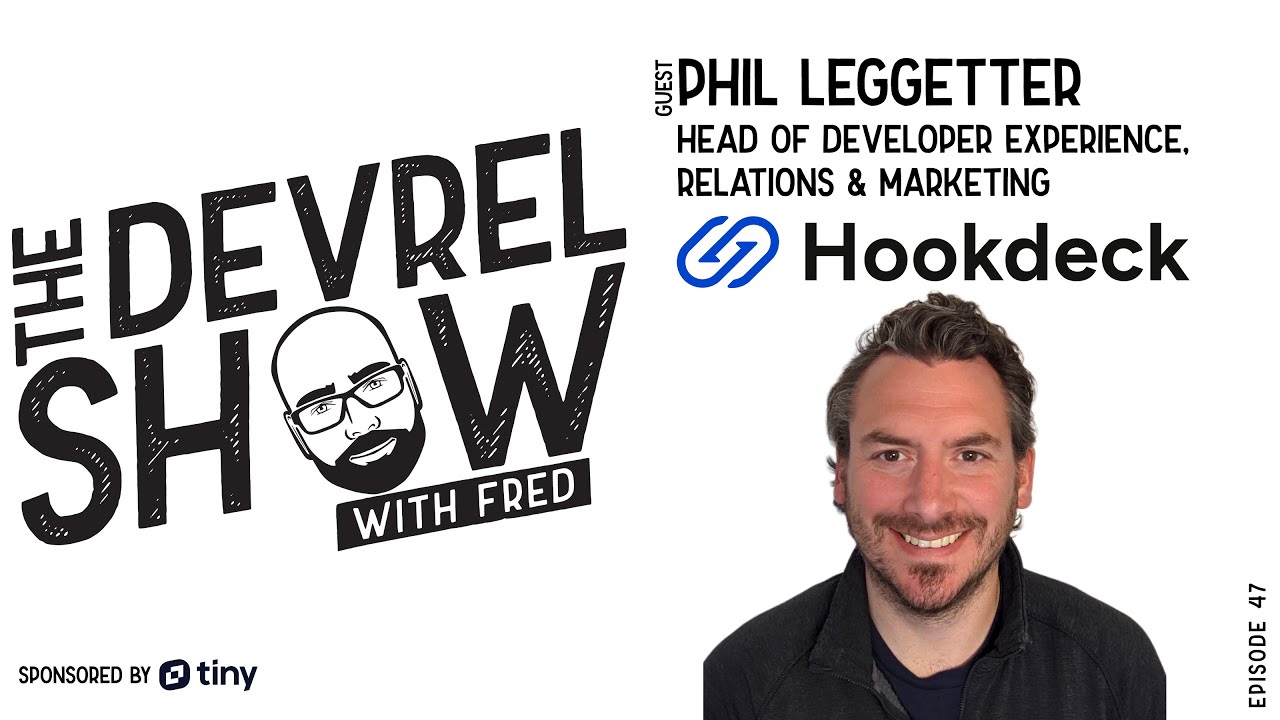
🔗 **Source:** [Devrelshow Episode 47 - Phil Leggetter From Hookdeck](https://www.youtube.com/watch?v=aY5SWnLO_9c)
> [!note]+ Document Notes
> tags: #developer-experience #developer-relations #ai-agents #documentation #developer-marketing
> author: DevRel Show
> source: YouTube
> reference: https://www.youtube.com/watch?v=aY5SWnLO_9c
> date created: 2025-01-09 14:30
>
> # 🏷️ Title: DevRel Show Episode 47 - Phil Leggetter from Hookdeck
>
<!-- deep-read:sections start -->
## 🧰 Action Inbox
- [H1] Implement LLM.txt files for better agent discovery — 00:00-30:00 #documentation
- [H2] Build server-side analytics for agent interaction tracking — 45:23 #analytics
- [H3] Create progressive content discovery for API documentation — 52:15 #api-design
## 🧭 Table of Contents
- [[#📝 Summary]]
- [[#📖 Main Content]]
- [[#🗒️ Notes]]
- [[#📚 References]]
- [[#🗣️ Paraphrase]]
- [[#📰 Newsletter]]
- [[#✅ Action Items]]
- [[#🧪 Hypotheses]]
- [[#📊 Methodology]]
- [[#❓ Questions]]
- [[#🔮 Future Research]]
- [[#💡 Implications]]
- [[#🧠 Learning Styles Assessment]]
- [[#📊 Accessibility Assessment]]
- [[#🌍 DEIB Assessment]]
- [[#✅ Logical Validity]]
- [[#🛡️ DARVO Analysis]]
- [[#🎯 Conclusion]]
### 🔗 References
- [Hookdeck](https://hookdeck.com)
- [LLMS.txt specification](https://llms-txt.org)
- [DevRel Foundation](https://devrel.org)
## 📝 Summary
- Phil Leggetter discusses his role as Head of Developer Experience, Relations, and Marketing at Hookdeck
- Focus on building agent-friendly documentation and tracking AI interactions
- Hookdeck provides event gateway and webhook infrastructure for distributed applications
- Discussion covers the evolution of developer relations roles and the challenge of inconsistent definitions
- Exploration of new requirements for developer experience in the age of AI agents
## 📖 Main Content
Phil Leggetter shares his journey from Scotland-based developer to leading developer experience at Hookdeck, a company building tools for distributed applications and asynchronous systems. The conversation explores both personal career evolution and technical approaches to serving AI agents alongside human developers.
Hookdeck offers multiple products including an event gateway for ingesting webhooks from services like GitHub and Stripe, processing billions of events monthly. Their newer Outpost product handles outbound webhooks for SaaS platforms wanting to expose events to external applications.
The discussion highlights ongoing challenges in defining developer relations roles, with Phil noting the Developer Relations Foundation's attempt to create canonical definitions. Both hosts acknowledge the field's maturity challenges despite 15+ years of evolution.
A significant portion covers emerging requirements for "agentic experience" - optimizing developer tools and documentation for AI agents rather than just humans. This represents a fundamental shift in how developer-facing companies must think about content structure, discoverability, and measurement.
## 🗒️ Notes
#### ⏱️ [00:00](https://youtu.be/aY5SWnLO_9c?t=0) — [H1] Introduction and DevRelCon discussion
- Key idea: Fred discusses missing DevRelCon twice due to flight delays and job loss
- Evidence: "My flight got delayed and delayed and delayed and at some point I was like I was able to arrive like at the midday of the last day"
#### ⏱️ [05:30](https://youtu.be/aY5SWnLO_9c?t=330) — [H2] Phil's background and philosophy
- Key idea: Starting with personal identity before professional role shows healthy work-life balance
- Evidence: "I'm from Scotland. I live in Scotland... married, three kids, two chocolate Labradors"
#### ⏱️ [12:45](https://youtu.be/aY5SWnLO_9c?t=765) — [H1] Journey into developer relations
- Key idea: DevRel attracts people with natural empathy and desire to help others succeed
- Evidence: "There's got to be an underlying feeling that you want to help people"
#### ⏱️ [18:20](https://youtu.be/aY5SWnLO_9c?t=1100) — [H2] Early realtime web technology experience
- Key idea: Built real-time browser interactions before WebRTC and WebSockets existed
- Evidence: "We were doing real-time updates in the web browser back in 2001"
#### ⏱️ [25:15](https://youtu.be/aY5SWnLO_9c?t=1515) — [H3] Transition to developer evangelist at Pusher
- Key idea: First official DevRel role came through demonstrating passion for sharing technology
- Evidence: "Pusher said, 'Hey, why don't you join as a developer evangelist?'"
#### ⏱️ [32:40](https://youtu.be/aY5SWnLO_9c?t=1960) — [H1] Current role scope and challenges
- Key idea: Small company roles require wearing multiple hats beyond traditional DevRel
- Evidence: "Head of developer experience relations and marketing... we're only nine people"
#### ⏱️ [38:50](https://youtu.be/aY5SWnLO_9c?t=2330) — [H2] Hookdeck product overview
- Key idea: Event gateway processes billions of webhook events with reliability features
- Evidence: "We ingest billions of events a month and reliably queue them, transform them, filter them"
#### ⏱️ [42:10](https://youtu.be/aY5SWnLO_9c?t=2530) — [H3] Developer relations definition challenges
- Key idea: Industry still lacks consensus on DevRel role definitions after 15+ years
- Evidence: "We still can't agree totally on what is it... when you look for a developer advocate role... it's something different depending who you're talking to"
#### ⏱️ [45:23](https://youtu.be/aY5SWnLO_9c?t=2723) — [H1] Agentic experience layers introduction
- Key idea: New framework needed for optimizing developer experience for AI agents
- Evidence: "More and more you've got to think about is your product accessible, usable, clear by an agent"
#### ⏱️ [48:35](https://youtu.be/aY5SWnLO_9c?t=2915) — [H2] Information layer requirements
- Key idea: Documentation, API specs, and types become critical for agent understanding
- Evidence: "There's things that we've like from the API space... documentation, API specs... really now really important for agents"
#### ⏱️ [52:15](https://youtu.be/aY5SWnLO_9c?t=3135) — [H2] Progressive content discovery
- Key idea: Large API documentation needs chunking for agent context management
- Evidence: "When you've got these ginormous pages... For an AI, you're just using up context"
#### ⏱️ [55:40](https://youtu.be/aY5SWnLO_9c?t=3340) — [H1] Agent analytics and measurement
- Key idea: Traditional client-side analytics fail for agents, requiring server-side tracking
- Evidence: "An agent likely doesn't run JavaScript... you're going to need server analytics"
#### ⏱️ [58:20](https://youtu.be/aY5SWnLO_9c?t=3500) — [H3] User agent tracking for AI
- Key idea: Server logs can identify different AI agents accessing documentation
- Evidence: "This one's actually Mozilla ChatGPT. So you can get an idea here of what agents you've got"
#### ⏱️ [61:45](https://youtu.be/aY5SWnLO_9c?t=3705) — [H2] LLM version preferences discussion
- Key idea: AI models may prefer older, more stable documentation versions
- Evidence: "For stability reason, not that your latest version isn't stable, but the other one is there for a longer time"
## 📚 References
- [Hookdeck Platform](https://hookdeck.com)
- [LLMS.txt Specification](https://llms-txt.org)
- [Developer Relations Foundation](https://devrel.org)
- [Christian Heilmann's Developer Handbook](https://developer.mozilla.org/en-US/docs/Web/Guide)
## 🗣️ Paraphrase
- Phil emphasizes the importance of empathy and human connection as core drivers for successful developer relations work
- Hookdeck provides infrastructure for managing webhook events and distributed application communication at scale
- The developer relations field continues struggling with role definition consistency despite decades of evolution
- AI agents require fundamentally different content structure and measurement approaches than traditional human-focused developer experience
## 📰 Newsletter
🤖 **AI-First Developer Experience: New Rules for Agent-Ready Documentation**
The developer experience landscape is shifting as AI agents become primary consumers of our documentation and APIs. Phil Leggetter from Hookdeck shares practical insights on building for both human developers and AI agents.
**Key takeaways:**
- Implement LLM.txt files as entry points for agent discovery
- Structure large documentation with progressive disclosure to manage context limits
- Deploy server-side analytics since agents bypass traditional JavaScript tracking
- Consider content versioning preferences of different AI models
**Essential resources:**
- [LLM.txt specification](https://llms-txt.org) for agent-friendly documentation structure
- Progressive API documentation chunking strategies
- Server-side analytics implementation for agent interaction tracking
The challenge: maintaining excellent human experience while optimizing for AI consumption. The opportunity: reaching developers through their AI assistants and creating seamless workflows across both interfaces.
## ✅ Action Items
#### DevRel
- Developer experience: Implement LLM.txt files and progressive documentation discovery
- Documentation: Structure content for both human and agent consumption patterns
- Analytics: Deploy server-side tracking for agent interactions and usage patterns
- Community engagement: Share best practices for agent-ready developer experience
#### OSPO
- Documentation strategy: Develop guidelines for AI-accessible technical content
- Developer support: Create training materials for agent-friendly API design
- Community engagement: Establish standards for agentic experience implementation
#### Community
- Maintainers: Provide templates and tools for implementing agent-ready documentation
- Contributors: Develop guidelines for writing content that serves both humans and AI
- Ecosystem: Coordinate cross-project standards for agent discoverability
#### WordPress
- Documentation: Implement LLM.txt files across DevHub and HelpHub properties
- Core AI: Establish content structure guidelines for agent consumption
- Developer tools: Optimize WP-CLI documentation and API specs for agent usage
## 🧪 Hypotheses
- LLM.txt files improve agent discoverability but lack clear effectiveness measurement
- Progressive content disclosure reduces agent context usage while maintaining human usability
- Server-side analytics can effectively track and attribute agent interactions to eventual human users
- AI models show preference for older, stable documentation versions over latest releases
### 📊 Methodology
- A/B testing of documentation structure for agent vs. human consumption patterns
- Server log analysis comparing user agents and access patterns across content types
- Conversion tracking from agent documentation access to human account creation
- Content freshness impact studies on AI model recommendation preferences
### ❓ Questions
- How can we measure the actual effectiveness of agent-optimized content structures?
- What attribution models work best for connecting agent interactions to human user conversion?
- Should documentation be split between human and agent consumption, or can unified approaches succeed?
- How do different AI models vary in their content preferences and access patterns?
### 🔮 Future Research
- Standardization efforts for agent-readable documentation formats across the developer tools industry
- Impact of agent-optimized content on human developer experience and task completion
- Evolution of agent capabilities and their changing requirements for developer tool interaction
### 💡 Implications
- Practice: Developer relations teams must now optimize for AI agents alongside human developers
- Policy: Need for industry standards around agent-accessible documentation and API design
- Security: Agent authentication and usage tracking require new approaches to prevent abuse
- Education: Training needed for technical writers and DevRel professionals on agent experience design
### 🧠 Learning Styles Assessment
Reading level estimate: Grade 12-14 (technical professional content)
#### 👀 Visual learners
- Present: Screenshots of documentation examples and analytics dashboards
- Improve: Flowcharts showing agent vs. human content consumption paths
#### 🔊 Aural learners
- Present: Conversational podcast-style discussion format
- Improve: Audio summary highlighting key technical implementation points
#### 🗣️ Verbal learners
- Present: Clear definitions and examples of technical concepts
- Improve: Glossary of agentic experience terminology
#### 🧩 Kinesthetic learners
- Present: Practical code examples and implementation strategies
- Improve: Step-by-step guides for implementing LLM.txt and analytics
#### 🧠 Logical learners
- Present: Structured framework for agentic experience layers
- Improve: Decision trees for choosing agent optimization strategies
#### 🧑🤝🧑 Social learners
- Present: Interview format with industry practitioner insights
- Improve: Community discussion prompts for implementation experiences
#### 🧘♀️ Solitary learners
- Present: Detailed technical explanations for independent study
- Improve: Self-assessment checklist for agent-ready documentation
#### 🌿 Naturalistic learners
- Present: Ecosystem perspective on developer tool evolution
- Improve: Analogies connecting agent experience to natural information flow patterns
### 📊 Accessibility Assessment
#### Screen reader semantics
- Present: Clear heading structure and timestamp navigation
- Improve: Alt text for technical diagrams and code examples
#### Keyboard navigation
- Present: Video player controls and transcript access
- Improve: Skip links to major technical discussion sections
#### Contrast and readability
- Present: High contrast video interface
- Improve: Transcript formatting with clear speaker identification
#### Text resizing and reflow
- Present: Responsive video player and description text
- Improve: Scalable technical diagram presentations
#### Media and captions
- Present: Full transcript available
- Improve: Technical term pronunciation guides and acronym expansion
#### Forms and interactions
- Present: Simple video controls
- Improve: Interactive timestamp navigation
### 🌍 DEIB Assessment
#### Cultural breadth
- Present: International perspectives from Scotland and Montreal
- Improve: Examples from diverse global developer communities
#### Inclusive language
- Present: Professional, jargon-explained technical discussion
- Improve: Plain language summaries of complex concepts
#### Neurodiversity support
- Present: Clear topic transitions and structured conversation
- Improve: Visual topic markers and concept relationship diagrams
#### Representation
- Present: Experienced practitioners from different regions
- Improve: Diverse examples in technical implementations
#### Psychological safety
- Present: Supportive, non-judgmental discussion of career challenges
- Improve: Acknowledgment of different learning and implementation approaches
### ✅ Logical Validity
#### Strong reasoning
- Deductive strength: Clear framework for agentic experience requirements based on AI limitations
- Inductive strength: Practical examples support general principles about agent optimization
- Causal reasoning: Links agent content consumption patterns to necessary documentation changes
- Analogical strength: Effective comparison between human and agent information needs
#### Fallacies
- Bandwagon appeal: "Everyone's implementing LLM.txt" - but acknowledges uncertainty about effectiveness
- Appeal to novelty: Slight bias toward newer approaches without full validation
#### Tone of voice
- Overall tone: Collaborative, practical, and appropriately uncertain about emerging practices
### 🛡️ DARVO Analysis
- Deny: No problematic denial patterns observed
- Attack: No attacks on individuals or groups
- Reverse victim/offender: No victimization reversals present
- Emotional cues and rhetoric: Professional, supportive discourse throughout
## 🎯 Conclusion
This conversation highlights a critical inflection point in developer relations: the need to serve AI agents alongside human developers. Phil Leggetter's practical framework for "agentic experience" provides actionable guidance for teams navigating this transition.
Key takeaways include implementing structured entry points like LLM.txt files, redesigning content for progressive discovery, and establishing server-side analytics to understand agent interactions. The challenge lies in optimizing for AI consumption without degrading human experience.
For the WordPress ecosystem and broader developer tools community, this represents both an opportunity to reach developers through their AI assistants and a requirement to evolve content strategies for an increasingly automated landscape.
## 🧱 Refactor Appendix
### 📚 Literature Split Pad
Purpose: Stage CEE units that become Literature notes.
Split level: H3
### [H1] Agent-friendly documentation requires different structure than human
---
## Full Transcript
[00:00] Heat.<br>[00:19] Heat.<br>[00:31] Hello, hello lovely people. Welcome to<br>[00:33] another episode of the Devil Show.<br>[00:36] Always happy to be here. I'm also uh<br>[00:39] really happier that um happy that I was<br>[00:41] able to continue to go back to my<br>[00:43] initial schedules of trying to have<br>[00:45] those episodes every two weeks. Uh<br>[00:47] because with the travel comfort season<br>[00:50] that was a little bit harder, but I<br>[00:51] changed how many yet. I think I told you<br>[00:53] last time. Anyway, uh happy to be here.<br>[00:57] Excited to have another episode. Quite<br>[01:00] happy about my guest, too. I know I say<br>[01:02] that for every guest, but uh uh my guest<br>[01:04] today, we've known each other for a<br>[01:06] while now. Uh I don't think we had that<br>[01:08] many chances though to like speak in<br>[01:10] person or even I don't think we've ever<br>[01:13] met in person either.<br>[01:16] >> Devil con maybe. Have you been at a<br>[01:17] devil con at all or?<br>[01:19] >> No, actually I have a whole story about<br>[01:22] decon where like I was supposed to be<br>[01:25] there the last two ones and and things<br>[01:27] happened. I mean actually the first the<br>[01:29] first one in New York. So not the<br>[01:31] previous one in other countries but the<br>[01:32] first one in New York I booked my trip.<br>[01:34] I had my ticket. I was not speaking. I<br>[01:37] missed the CFP but anyway I was like I<br>[01:39] need to go there. Like I usually don't<br>[01:40] attend conferences but this is devil<br>[01:42] account. like this is the the only<br>[01:44] conference that is for me as a devil<br>[01:47] person and uh my flight got delayed and<br>[01:50] delayed and delayed and at some point I<br>[01:52] was like I was able to arrive like at<br>[01:54] the midday of the last day of the<br>[01:56] conference and I was like okay I'm not<br>[01:58] going to travel to go for like three<br>[02:00] hours of the conference and come back.<br>[02:02] So I just decided to cancel it and I was<br>[02:06] also booked for last year but I lost my<br>[02:08] job and I was like you know what I don't<br>[02:10] know how long it is going to take for me<br>[02:11] to find another job and since the<br>[02:13] company I did not bought my travel<br>[02:16] before I was like I will have to do pay<br>[02:18] them for myself and I was like I don't<br>[02:20] know when I'm going to get a job so much<br>[02:22] as I want to go I'm going to keep my<br>[02:24] money and be sure that like you know I<br>[02:26] can survive the longest I can before<br>[02:28] going. So, crossing my finger, this year<br>[02:31] I submit a talk and even if I even if it<br>[02:34] does not get accepted, uh I'm still<br>[02:36] going to go uh as a attendee. So, long<br>[02:39] story short, hopefully I'm going to be<br>[02:41] able to attend this year. Uh but with<br>[02:44] that said, uh great promotion from DevO<br>[02:46] actually. If you're a DevOp person,<br>[02:48] please go. Uh last week, uh two weeks<br>[02:50] ago, uh my um guest Joey uh will also be<br>[02:55] there. I submitted a panel with Joey and<br>[02:57] and Twitter people. Chris De Mars and<br>[02:59] Eder uh to you know a big ask me<br>[03:02] anything but like for people doing their<br>[03:04] for a long time so should be<br>[03:06] interesting. Uh anyway um<br>[03:09] Phil<br>[03:11] how are you? Who are you?<br>[03:14] >> I'm really good. Thank you. Uh yeah,<br>[03:16] thank you very much for inviting me.<br>[03:18] Yeah, I was thinking whether we'd met in<br>[03:19] person. I've got a feeling we might have<br>[03:21] done once.<br>[03:22] >> I think so. I've got a feeling of a loud<br>[03:24] shirt as well, but um maybe that's<br>[03:27] wrong. I I I don't know. I don't know.<br>[03:29] Uh it's funny because you meet so many<br>[03:31] people, don't you? Uh during different<br>[03:33] operations and<br>[03:34] >> I feel bad and I'm happy.<br>[03:37] >> Sorry. I was going to say I'm happy that<br>[03:39] you're not sure also because most of the<br>[03:41] time it's only me like people like hey<br>[03:42] Fred it's been a while. I'm like, "Hey,<br>[03:44] sometimes I don't even remember the<br>[03:46] person and I feel so bad about it<br>[03:48] because I'm like, hey, you and like<br>[03:51] unless we we really had like a super<br>[03:53] long discussion because I talked to so<br>[03:55] many people and I really have bad memory<br>[03:57] with names or or even sometime faces,<br>[04:00] there's there's a small chance that I<br>[04:01] may not remember that we talked, but I<br>[04:03] was like, if I met you, I'm pretty sure<br>[04:05] like I would remember, but I'm glad that<br>[04:08] I'm not the only one right now who<br>[04:10] doesn't remember. But anyway, uh, sorry<br>[04:12] about that. I'm blabbering. Um I told<br>[04:14] you before we start the show, the show<br>[04:15] is just like it's really laidback. It<br>[04:17] can goes in all direction, but I will go<br>[04:19] back to my first questions. Um who are<br>[04:22] you<br>[04:22] >> or who am I? Yes. So I'm Phil Leer. Um<br>[04:26] what defines me? That's a really good<br>[04:28] question. I don't know we're going to go<br>[04:29] so uh existential straight away. Um I<br>[04:33] I'm I'm from Scotland. I live in<br>[04:34] Scotland. I'm working from Scotland<br>[04:35] right now. This is a new house why I've<br>[04:37] got these blankets on the windows rather<br>[04:40] than proper uh blinds. And I'm married,<br>[04:43] three kids, um, two chocolate Labradors<br>[04:46] that just chased a bird out of the house<br>[04:48] before we jumped on the show. So<br>[04:50] thankful for that. And, uh, yeah, I've<br>[04:52] been working in tech since 200,<br>[04:56] let me get this right. When did I<br>[04:58] graduate? 2001,<br>[05:00] uh, in London and then,<br>[05:04] uh, found my way into Devil around 2010.<br>[05:07] um and then been working in developer<br>[05:10] relations type roles. We can go into how<br>[05:13] you define deell. I'm sure you've only<br>[05:15] had that conversation as many episodes<br>[05:17] of you as you've had uh kind of on and<br>[05:19] off until now. Um and still I mean I I<br>[05:24] focus more on developer what I would say<br>[05:26] is developer experience now but<br>[05:27] obviously do things like this<br>[05:28] occasionally do talks occasionally do<br>[05:30] events. Um a little less community a<br>[05:33] little less outreach marketing. Um,<br>[05:38] yeah. I mean, I'm happy to happy to go<br>[05:40] on a bit longer, but I don't want to<br>[05:42] bore you.<br>[05:43] >> No, it's good it's good. You can share<br>[05:45] as as much as you want. All the<br>[05:47] questions you're going to see that I<br>[05:48] talked a lot, so it's good if the guest<br>[05:50] talked too. Uh, with that said though, I<br>[05:52] I I love your intro. Um, I had a a<br>[05:56] philosophical discussion with someone<br>[05:59] about that and you know when you ask<br>[06:00] people like who are they or you ask them<br>[06:03] like so what do you do in life? like the<br>[06:06] initial answer and and and I do the<br>[06:08] same. The initial answer is like oh this<br>[06:10] is what I do for work and I really love<br>[06:12] that you started about like hey this is<br>[06:14] where I live like this is I have kids<br>[06:17] and dogs and after that you were like oh<br>[06:19] yeah and also you know I work in de and<br>[06:23] I think it's just fantastic. I know it<br>[06:24] may seems like a small thing but um as<br>[06:27] much as I love my work at the end of the<br>[06:29] day it's work and like like as a person<br>[06:33] you're so much more than your work. I<br>[06:35] know sometimes it can be difficult to<br>[06:37] separate both especially when you do<br>[06:38] developer relation because quite often<br>[06:40] your job is related to a little bit who<br>[06:42] you are and your online and offline<br>[06:44] presence but anyway super long comment<br>[06:47] to say love that you started with from<br>[06:49] my point of view what is the most<br>[06:51] important in one's person life<br>[06:54] >> when I when I worked at at vonnage we<br>[06:56] built quite a big team there and one of<br>[06:57] the things in interviews was I try and<br>[07:00] try and lead with finding out about<br>[07:01] person as an individual because as you<br>[07:03] say obviously ly in that context of of a<br>[07:05] job, people want to just share what<br>[07:06] they've done and and have the criteria<br>[07:09] that they feel like lines up with your<br>[07:10] job spec. But it's really important to<br>[07:13] for them to know who you are. So sharing<br>[07:16] things like that, but also try and get a<br>[07:17] little bit of from them. Obviously, it's<br>[07:18] up to the individual whether how much<br>[07:20] they want to share, but you know,<br>[07:22] fundamentally we're human beings first.<br>[07:24] And it's funny as you were talking<br>[07:25] through that, I was thinking, why did I<br>[07:27] get into Devril? And it it is that<br>[07:29] empathy, right? It's like you you want<br>[07:31] to help human beings. They're<br>[07:33] developers, but there's got to be an<br>[07:35] underlying feeling that you want to help<br>[07:37] people. So, I think that's I think<br>[07:39] that's a big part of hopefully who I am.<br>[07:43] But then that's why develop relations is<br>[07:45] I feel a reasonably good career path for<br>[07:48] me and how I found my way there.<br>[07:50] >> That that's interesting. You know,<br>[07:52] usually the second question I ask my<br>[07:54] guest is like I just start with what is<br>[07:56] your actual role right now? What are you<br>[07:58] doing? Where you work? And also it helps<br>[08:00] us define what is devel as you said like<br>[08:04] or developer experience because there's<br>[08:06] like different definitions in in the in<br>[08:08] the industry but also like uh because<br>[08:10] you already talk about the fact that you<br>[08:12] know uh part of of what you think makes<br>[08:15] sense for that role is the desire to<br>[08:17] help people and um I'm really happy for<br>[08:21] you if you started with that like if I<br>[08:23] want to be honest a part of me was<br>[08:25] always to help people being successful<br>[08:27] but when I started it is mostly my ego<br>[08:30] if I really want to be honest. Uh we<br>[08:32] talked right before we we went live on<br>[08:35] the fact that like you were not really<br>[08:37] that much into or or maybe I<br>[08:38] misunderstood it like that much into<br>[08:40] public speaking and like public facing<br>[08:42] stuff<br>[08:43] >> and and from my point of view that is a<br>[08:46] lot about public facing and like not<br>[08:49] necessarily public speaking but like<br>[08:51] it's about connecting with the human and<br>[08:53] to being able to connect to the human.<br>[08:54] People need to see you. So a whole lot<br>[08:57] of my career was about putting my face<br>[08:59] out there either with live stream or or<br>[09:02] webinar or like writing article or<br>[09:04] putting my pictures in places where if I<br>[09:06] want to be an at the beginning a big<br>[09:08] part was my ego like I want to be<br>[09:10] outstage and I want to be the expert. I<br>[09:12] want people to know me and appreciate me<br>[09:14] obviously always with the desire to help<br>[09:16] people being successful. I'm not that of<br>[09:18] a empty person but still when I started<br>[09:22] like like many years ago doing Dell it<br>[09:24] was that but I'm really curious to<br>[09:25] understand like your point of view on<br>[09:28] that or like how you started to be dev<br>[09:30] because as most people it was not your<br>[09:32] first job in tech like you were doing<br>[09:34] something else before and you moved to<br>[09:36] developer relations. So how did that<br>[09:39] that go?<br>[09:41] Yeah. So the jobs that I had previously<br>[09:43] were all were actually about building<br>[09:45] demos, SDKs, writing documentation, um<br>[09:48] dealing with support calls<br>[09:51] and and then I found I actually read a<br>[09:54] book um and I can't remember what it's<br>[09:55] called now. It's by Gary Vaynerchuk. Um<br>[09:59] it had a green cover. I actually got him<br>[10:00] to sign it.<br>[10:01] >> Oh,<br>[10:02] the money economy or<br>[10:04] >> was it was before it was it was the<br>[10:06] thank you economy. So there was that and<br>[10:07] there was also an author called Ian<br>[10:09] Sanders.<br>[10:10] um who wrote a book on uh it was like<br>[10:13] jump and leap and you know ditch your<br>[10:15] day job and embrace your plurality,<br>[10:17] embrace who you are and and and uh you<br>[10:20] know have a job that represents you. So<br>[10:23] a combination of those things made me<br>[10:24] realize that I it wasn't just a I didn't<br>[10:27] feel like I was just a software engineer<br>[10:29] because I was like okay what does the<br>[10:30] career look like there? I'd made my way<br>[10:32] way to like you know team lead and<br>[10:34] development line manager and and things<br>[10:36] like that. I guess I had some empathy,<br>[10:38] so hopefully I was good at helping<br>[10:40] others and also some level of<br>[10:42] intelligence that I could help guide<br>[10:43] technically what was what was going on,<br>[10:46] but I didn't feel like it it was fully<br>[10:49] me and that if that's all I was doing, I<br>[10:51] didn't think I would be fulfilled. So,<br>[10:53] at a company I was at Kathleen Systems,<br>[10:55] I you know, I was saying, "Hey, we've<br>[10:57] we're doing all this cool tech. We<br>[10:58] should be having we should have a blog.<br>[11:00] Um, we should be sharing what we're<br>[11:02] doing." I mean as as an example we were<br>[11:04] doing you know real-time updates in the<br>[11:05] web browser<br>[11:07] back in 2001<br>[11:09] um and then we built something called<br>[11:11] RTSL realtime scripting layer which was<br>[11:13] like jQuery now imagine if we open<br>[11:16] sourced jQuery I mean I don't even know<br>[11:18] where we would have put it at that time<br>[11:21] >> you know something like that um so I<br>[11:24] felt I don't know I had this need or<br>[11:26] this desire to kind of share<br>[11:29] I'm going to put that down to wanting to<br>[11:30] share and help other developers succeed<br>[11:32] Well, I think was probably part of I<br>[11:34] want to share that what we're doing is<br>[11:36] cool. What we're doing is<br>[11:38] >> edge and I genuinely believe at that<br>[11:40] time at capitalist systems we were doing<br>[11:42] that<br>[11:43] >> but then that that led to um a bunch of<br>[11:47] things. One of the things was I was<br>[11:48] really our tech was realtime technology<br>[11:50] as I said flashing stuff in a browser<br>[11:52] and you could do interactive things<br>[11:54] between different browsers via the<br>[11:55] server in a real-time communication<br>[11:57] before WebRTC before websocket actually<br>[12:00] was even around. Um, and I thought that<br>[12:02] was great. I wanted to demonstrate what<br>[12:03] was possible with that. But our product<br>[12:05] was finance focused. It was um, a<br>[12:08] replacement for something called the<br>[12:09] Reuters Traders Workstation. So, we sold<br>[12:12] into finances and and they they had an<br>[12:15] SDK. Their development team would build<br>[12:16] things out, but I wanted it to be like<br>[12:18] in the hands of everybody.<br>[12:20] >> I had this idea of putting our tech in<br>[12:22] the cloud. I wasn't the first one to to<br>[12:23] do that or to have that idea. Um, and I<br>[12:28] was going to leave and be a real-time<br>[12:29] web evangelist. So, I'd seen people like<br>[12:31] Christian Hullman. I'd read his<br>[12:33] developer handbook. I was like, "That's<br>[12:35] what I want to be, but I don't know how<br>[12:36] you make money doing that." Um, I'd seen<br>[12:39] Microsoft evangelists,<br>[12:41] >> but I think that could be a job for me.<br>[12:43] I thought they were super clever. I'm<br>[12:44] like, I'm not quite that clever, but I<br>[12:46] can write blog post, build demos.<br>[12:47] >> I can tell you they they're not all that<br>[12:49] clever. I worked there. I was a<br>[12:51] technical evangelist at Microsoft. Some<br>[12:53] of them were, but I was not.<br>[12:57] >> But it, you know, it was an inspiration<br>[12:58] to me. So I was going to leave Kaplan<br>[13:02] and they said well why don't you work<br>[13:04] like in on a side project of putting our<br>[13:07] product in the cloud and the things that<br>[13:10] I wasn't like at the time this was<br>[13:11] before NodeJS was really a thing. It was<br>[13:13] like when Ruby on Rails was taking off<br>[13:16] and I just could not get my head around<br>[13:18] Ruby. So I went and built a website<br>[13:20] innet like as ASP.NET um was it MVC? It<br>[13:25] wasn't even an MVC it was forms ASP.NET<br>[13:28] forms something like that. And then I<br>[13:30] was writing the back end and I was<br>[13:31] running services on window, you know,<br>[13:33] Windows servers deployed to AWS<br>[13:38] and it was kind of I was plugging it<br>[13:39] together. It was doing okay. But I was<br>[13:41] but the docs were great. The SDKs were<br>[13:43] great. The demos I was building were<br>[13:45] good. Putting stuff on Twitter at the<br>[13:46] time, you know, had real traction, real<br>[13:49] visibility. It felt like you could, you<br>[13:51] know, message anybody. Yeah. And so if<br>[13:53] you built something cool you especially<br>[13:55] like um during say the World Cup soccer<br>[13:58] I built like a a game uh sorry yeah<br>[14:01] something that I I worked with Opa<br>[14:03] Sports and and built this demo and had<br>[14:05] real time data about what was going on.<br>[14:08] You know got this data for free that<br>[14:09] they charge a lot of money for because<br>[14:10] they thought it was cool. Um I did a you<br>[14:13] know a um a competition and it was all<br>[14:15] demonstrating that our technology and<br>[14:17] that did well online. It's actually a<br>[14:19] guy called Gersley who's uh really well<br>[14:22] thought of right now. I can't say his<br>[14:23] surname. Pragmatic engineer is it? He<br>[14:27] worked at Skyscanner at the time and<br>[14:28] would an iPad off me, you know. So, it<br>[14:31] had real reach like this sort of stuff.<br>[14:34] Um but they decided not to continue<br>[14:36] doing that. So, I was kind of like a<br>[14:38] product engineer, kind of like a<br>[14:39] founder. I did a lot of work working out<br>[14:41] like uh pricing structures and things<br>[14:43] like that, but I couldn't get the<br>[14:45] company to back me to just do that and<br>[14:48] get additional funding and more people<br>[14:49] in. So uh companies called like Pusher<br>[14:52] and PubNub came around at the time uh<br>[14:55] which were websockets as a service. And<br>[14:58] as Katlin decided to fold that, Pusher<br>[15:01] said, "Hey, why don't you join as a as a<br>[15:03] developer evangelist?" So that was my<br>[15:05] first official role as an evangelist. So<br>[15:09] I wandered my way into it through, you<br>[15:12] know, eventually knowing that there was<br>[15:13] such a role as a developer evangelist<br>[15:15] and I know we've kind of moved away a<br>[15:16] little bit from that term, but um it<br>[15:19] felt like it gave me that plurality,<br>[15:21] that ability to do some of the things<br>[15:23] that I liked. And obviously I accepted<br>[15:25] when I read Christian's handbook that I<br>[15:27] had to do talks as well, though I wasn't<br>[15:29] naturally inclined to do that. I liked<br>[15:31] all of the other stuff, not so much the<br>[15:34] talks. Um, I obviously got into the, you<br>[15:37] know, going to meetups, hackathons again<br>[15:39] because you're standing next to someone<br>[15:40] helping them build something. That<br>[15:42] definitely fueled my, uh, passion for<br>[15:44] helping people.<br>[15:45] >> And I used to love saying late like and<br>[15:47] they'd go, "Wow, you're still here. It's<br>[15:49] 2:00 in the morning." I go, "Yeah." And<br>[15:50] then you'd help them build something and<br>[15:52] it's difficult because you obviously<br>[15:54] you're pushing your tech into people and<br>[15:56] you don't don't actually like doing<br>[15:58] that, but you try and help them solve a<br>[16:00] general problem. You go, "Oh, that one<br>[16:01] you could actually use our our product<br>[16:03] for that." So um<br>[16:05] >> yeah I like<br>[16:06] >> yeah so that's how I got into it.<br>[16:08] >> Yeah I like that approach uh you know to<br>[16:10] not like I always say like yes of course<br>[16:13] I want people like my job is to help<br>[16:14] people being successful developers being<br>[16:16] successful and I hope they're going to<br>[16:18] be successful with my product but at the<br>[16:20] same time uh like I'm not a salesperson.<br>[16:23] If I do my job well uh they're going to<br>[16:25] end up like using your product or paying<br>[16:27] for your product but that's going to be<br>[16:29] like a positive side effect of my job.<br>[16:31] what I'm doing is as I said helping<br>[16:33] people being successful. So if my<br>[16:35] product is not the right one for you uh<br>[16:37] it's fine. Uh if it doesn't make sense<br>[16:39] for you right now it's fine too but<br>[16:41] because I'm building relation with<br>[16:43] people because I'm like creating that<br>[16:45] connection with people<br>[16:47] >> hopefully maybe in the future my product<br>[16:49] is going to be right for you uh and<br>[16:50] you're going to be able to use it but<br>[16:52] like yeah no pushing people or like<br>[16:54] forcing people to try to use our stuff.<br>[16:56] I don't think it makes sense. And I I<br>[16:58] love that also you find what makes sense<br>[17:00] for you too because like Deell I always<br>[17:03] say like it's it's 20 plus role into one<br>[17:07] because there's so many things you can<br>[17:08] do. Uh at some companies you don't have<br>[17:11] the choice. You need to do the 20 plus<br>[17:12] but like at many other places you can<br>[17:14] pick and choose what makes sense for you<br>[17:16] where you're good and and work with like<br>[17:18] the you know your strength or your<br>[17:20] weaknesses um and and decide what makes<br>[17:23] sense for you or not. For me, uh, as<br>[17:25] example, public speaking was always<br>[17:27] something that I enjoyed doing. Uh, I'm<br>[17:29] a big extrovert social. As I said, I<br>[17:32] started, it was mostly my ego. I was<br>[17:33] like, yes, like I'm going to be on<br>[17:35] stage, people's going to see me. It's<br>[17:36] not the case anymore. Uh, if I can put<br>[17:38] somewhere else on the someone else on<br>[17:40] the stage instead of me, I would be glad<br>[17:42] uh to do it. I want to empower people.<br>[17:44] But at the same time, uh, for me, it's<br>[17:46] still something that I really enjoy to<br>[17:48] do. As I said, right now, less for the<br>[17:50] exposure and I would say even less for<br>[17:52] the talks themselves. uh because that's<br>[17:54] the short part of what I do when I go to<br>[17:56] a conference like yes I'm on the stage<br>[17:58] for 15 minutes to one hour depending on<br>[18:00] the length of the talk but for me it's<br>[18:02] everything around it's connecting with<br>[18:04] the people after and before and and it's<br>[18:06] mingling and creating a network and and<br>[18:09] it's really the part that like I usually<br>[18:11] don't even attend other talks I'm just<br>[18:13] like spending my times and talking to<br>[18:15] people and connecting with people so<br>[18:17] this is the part that I still enjoy so<br>[18:19] much to do but yeah I'm glad that you<br>[18:21] found what makes sense for you and right<br>[18:23] Now, uh you're the head of developer<br>[18:25] experience relations and marketing.<br>[18:27] That's first. That's a huge title. But<br>[18:29] before I finish with my question, I just<br>[18:31] forgot. Uh just say, uh hi to nightfly<br>[18:35] 89. Uh another episode. Let's go. Thanks<br>[18:37] for joining again. Always happy to see<br>[18:40] uh just the fact that you're here and<br>[18:42] say hi. Thanks for being here. So uh<br>[18:44] question for you. What does that mean<br>[18:47] being the head of developer experience<br>[18:49] relation and marketing? because that<br>[18:51] seems I just said like just being a<br>[18:53] developer advocate there's like 20 roles<br>[18:55] in one. It seems like you have three<br>[18:57] titles here. So I'm curious to know a<br>[18:59] little more about like what's the role<br>[19:01] right now uh that you're doing and maybe<br>[19:04] maybe for people that are not aware if<br>[19:06] you can also talk about like what's the<br>[19:08] difference between you know developer<br>[19:10] relation and developer experience and<br>[19:12] maybe even like marketing in general<br>[19:14] because I assume many people have an<br>[19:17] idea of the difference but if some of<br>[19:18] the listener don't really know that<br>[19:21] >> can you can you give us a little more<br>[19:22] about that? Well, let's give a product<br>[19:24] pitch first, right? To to contextualize<br>[19:26] the role. Um, so yeah, I work at a<br>[19:28] company called Hook Deck. We we build<br>[19:32] tools and uh platforms that help<br>[19:34] developers build applications like<br>[19:36] distributed applications, asynchronous<br>[19:38] applications. To simplify that, we've<br>[19:41] got we haven't doesn't really simplify.<br>[19:43] We've got a bunch of products. Got one<br>[19:44] which is called an event gateway. The<br>[19:46] most common use case is actually to<br>[19:47] ingest events, web hooks from thirdparty<br>[19:50] services. So, GitHub, Stripe, Twilio,<br>[19:52] Shopify, we ingest um billions of events<br>[19:55] a month and reliably like cue them,<br>[19:58] transform them, filter them, fan them<br>[20:01] out, and deliver them to the<br>[20:02] destinations, the applications that<br>[20:04] developers are building. Um, so that's<br>[20:06] the first product. Today, we're actually<br>[20:08] on product hunt. I should have provided<br>[20:10] you with the link. Uh, we're about I<br>[20:13] think about 15th at the minute. Um,<br>[20:15] anyway, so our new product is called<br>[20:17] Outpost. It's actually the GA of<br>[20:19] something called Outpost, which is<br>[20:20] outbound web hooks. So, you know, you're<br>[20:22] building a SAS, you're building a<br>[20:23] platform as a service, um you're<br>[20:25] building a an API platform, and you want<br>[20:27] to be be able to expose events.<br>[20:29] Something happens within your system.<br>[20:31] So, you're building next Stripe, a<br>[20:32] payment happens, you're building the<br>[20:34] next Twilio, an SMS is received, and you<br>[20:37] want to be able to push that event to<br>[20:40] applications that developers are<br>[20:41] building. Um, that's something called<br>[20:43] Outpost. We've got an open source<br>[20:44] version uh Apache 2 license and today<br>[20:47] we've announced the managed hosted<br>[20:49] version of that which is a really good<br>[20:51] free tier. Uh but the interesting thing<br>[20:53] with that is that it's not just web<br>[20:54] hooks. We'll deliver the events directly<br>[20:56] to Rab MQ um Amazon event bridge GCP<br>[21:00] pubsub SQS there's about eight or nine<br>[21:05] different event destinations. So that's<br>[21:06] an idea that stripes come up with event<br>[21:08] destinations. So not just web hook<br>[21:09] delivery but also event destinations.<br>[21:12] We've got a CLI product which lets you<br>[21:14] do enrock like things so you can but<br>[21:16] connects to our system. We receive a web<br>[21:18] hook delivers to your local host. Um and<br>[21:20] we've also got something called console<br>[21:22] which we're going to have to rename<br>[21:24] which is like HTTP bin which still<br>[21:26] exists but isn't as good as it was<br>[21:28] anymore but you know you you get a<br>[21:29] public URL you can throw um requests at<br>[21:32] it and it captures it. You can then use<br>[21:34] our CLI and deliver them locally as well<br>[21:35] and that's entirely free. So, we've got<br>[21:38] a lot of products, but we're only nine<br>[21:41] people. Um, hence the silly job title<br>[21:45] because when I joined,<br>[21:48] the goal was really a more marketing<br>[21:50] related goal. Although they they wanted<br>[21:52] a kind of head of Devril role, they<br>[21:55] needed positioning feedback. They<br>[21:56] needed, you know, a new website. They<br>[21:58] had this idea of an event gateway. They<br>[21:59] went, "Okay, we want to create a product<br>[22:01] category. Um, we want to do some devil<br>[22:04] stuff. We want something that's<br>[22:05] technical." It was a pretty<br>[22:07] stereotypical you know devro role we<br>[22:09] want some to do 20 different things but<br>[22:11] it was I was trying to go okay well what<br>[22:13] am I focusing on right it is really the<br>[22:15] marketing side of things but over time<br>[22:19] we have we have brought someone else<br>[22:21] someone called Gareth who's now a<br>[22:22] product marketer so my role is<br>[22:23] definitely more head of developer<br>[22:25] experience at the minute um with some<br>[22:26] devril parts but the past kind of six<br>[22:31] months I've done you know created some<br>[22:33] con we had uh new products out there.<br>[22:36] I've created videos, you know, written<br>[22:38] content, both documentation, but also<br>[22:40] more um here's the art of the possible<br>[22:43] type things, you know, built demos, that<br>[22:45] kind of combination of things. Um but<br>[22:47] also spent a lot of time working on the<br>[22:48] product. So being in the dashboard,<br>[22:51] thinking about the onboarding flow,<br>[22:52] helping developers succeed as quickly as<br>[22:54] possible, you know, time to activation,<br>[22:56] time to what we're calling using, like<br>[22:57] meaningful use. Uh I've built out our<br>[23:00] CLI that um with the help of AI um to<br>[23:03] provide a whole bunch of kind of CRUD<br>[23:05] functionality. So it's a first class<br>[23:07] citizen product. Now it isn't just<br>[23:09] listen to receive events locally. It<br>[23:11] lets you manage the platform. Um I've<br>[23:14] built, you know, agent skills. Um<br>[23:17] changed our documentation platform,<br>[23:20] changed the website, you know, all sorts<br>[23:21] of stuff. So it it's definitely more at<br>[23:23] the minute developer experience but who<br>[23:25] knows what it'll be in 6 months time and<br>[23:29] by I mean my definition developer<br>[23:30] experience is definitely like our<br>[23:32] outpost product I've helped build our<br>[23:33] SDKs<br>[23:35] um thought about documentation structure<br>[23:38] thought about API design provided<br>[23:40] feedback on some of that I have built<br>[23:42] some of the little bits of the core<br>[23:44] because AI allow although I don't really<br>[23:46] write code in go AI lets us do that and<br>[23:49] do that as long as we we engineer it<br>[23:51] properly<br>[23:52] um make sure we're building good<br>[23:54] products.<br>[23:55] >> No, makes sense. Makes sense. My my my<br>[23:57] my I think from my definition, I might<br>[23:59] be wrong, but yeah, developer<br>[24:00] experience, developer relation are quite<br>[24:02] close. Uh some people use them like has<br>[24:06] like the exact same things, just<br>[24:08] different names. Um I I think usually<br>[24:11] developer experience is going to focus a<br>[24:12] little more of like the internal quality<br>[24:15] of tools like the usability, the<br>[24:17] documentation like what people needs to<br>[24:19] use like to be successful with your<br>[24:20] product which also includes a little bit<br>[24:22] what Devil does but like Devril is going<br>[24:24] to focus maybe a little more external<br>[24:26] things. So like creating the content and<br>[24:28] like getting some more exposure building<br>[24:29] engagements community but at the end of<br>[24:32] the day I've seen people who call<br>[24:34] themselves uh you know uh being part of<br>[24:36] developer experience team they're<br>[24:38] basically doing developer advocacy and<br>[24:39] the other way around so I think those<br>[24:41] like like kind of like terms are are<br>[24:44] interchangeable<br>[24:45] uh two things<br>[24:46] >> what's the umbrella what's the umbrella<br>[24:48] term is quite an interesting one you um<br>[24:50] I was part of the uh dev deil foundation<br>[24:53] which is a Linux foundation initiative<br>[24:56] And one of the things we talked about<br>[24:57] there is you know should we define it<br>[24:59] should it should we be pulling in from I<br>[25:01] mean we tried to pull in external ser<br>[25:02] external resources and say this is the<br>[25:04] canonical source of truth<br>[25:06] >> it lives over there but this is the the<br>[25:08] place where you that points to it now um<br>[25:10] but I don't and and there was a<br>[25:12] definition that developer relations was<br>[25:14] going to be the was the umbrella term<br>[25:16] contained you know developer education<br>[25:18] developer success developer advocacy uh<br>[25:20] developer experience community<br>[25:24] but I think many companies<br>[25:26] And people put the umbrella in different<br>[25:29] places.<br>[25:29] >> Yeah. Yeah. And and and<br>[25:33] that's one of the thing I like and I<br>[25:34] hate about de and all those things that<br>[25:36] like I've I've been doing that for for<br>[25:38] as long as you I started um yeah started<br>[25:41] doing dev in 2011 maybe. Uh and and it<br>[25:44] was not as popular. There was the big<br>[25:46] companies uh that were doing that. uh<br>[25:48] but it's been at least I would say 20<br>[25:52] years now that like it's a thing more<br>[25:54] popular in the last 15 years way more<br>[25:56] popular in the last 5 to 10 years<br>[25:58] >> we still can't agree totally on what is<br>[26:00] it I mean like if you're looking for a<br>[26:02] role for like a software developer you<br>[26:04] know what it is the technology will<br>[26:06] change the product you're going to build<br>[26:07] would change maybe the best practices<br>[26:09] will change a little bit depending on<br>[26:10] the company what they think is good or<br>[26:12] not but you are building software<br>[26:14] actually maybe it's not true anymore<br>[26:15] with AI and everything like your jobs<br>[26:17] changed so much but let's say in the<br>[26:18] past it was clear it's this is what<br>[26:20] you're going to do when you look for a<br>[26:22] developer advocate role or whatever the<br>[26:24] title that is like around there well<br>[26:28] it's uh something different depending<br>[26:30] who you're talking to like sometimes I<br>[26:32] was like yeah you know what from my<br>[26:33] definition is like it's support<br>[26:34] engineering or for my definition it's<br>[26:36] more traditional marketing or from my<br>[26:38] definition is like it's a sales role uh<br>[26:40] and and like it's it's really harder and<br>[26:43] that annoy me so much that we're not<br>[26:45] about to have like a clear definition So<br>[26:47] the industry can align to it. But also<br>[26:50] like the fact that like when I when I<br>[26:52] need to find a new role and hopefully<br>[26:54] that won't happen for a long time now,<br>[26:55] but when I have when I have to find a<br>[26:57] new role, I can basically set my<br>[26:59] expectation because I'm like that now I<br>[27:01] have like a clear vision after doing<br>[27:03] that all these years about what I think<br>[27:05] is developer relation, what I think<br>[27:06] makes sense for me, what I think makes<br>[27:08] sense for the enterprise and this is<br>[27:09] what I bring to the table. So I'm really<br>[27:11] clear about that and nothing is kind of<br>[27:13] like forced on me. so I can decide like<br>[27:15] if the fit is good or not for me. But uh<br>[27:17] anyway, I'm blabbering now. Um you need<br>[27:20] to be careful.<br>[27:20] >> But again, this was one of the things<br>[27:22] that developer relations foundation<br>[27:23] probably should have done, but I think<br>[27:24] we were a bit when we announced the<br>[27:27] developer relations foundation, there<br>[27:28] was quite a lot of push back, not like<br>[27:30] people in deval to have opinions and<br>[27:32] think they should have been involved and<br>[27:34] you know,<br>[27:36] but I think actually it could have been<br>[27:37] it could and I don't know what's<br>[27:38] happening with it. I haven't seen an<br>[27:39] update for a while, but I think it could<br>[27:41] have been a force for good if it if it<br>[27:42] really were adopted and like those sorts<br>[27:44] of things were okay well even if we<br>[27:46] disagree<br>[27:48] even if even if there's some<br>[27:49] disagreement let's just have some roles<br>[27:51] defined canonical source of truth for<br>[27:53] those role types. Y<br>[27:55] >> because then at least there would have<br>[27:56] been some level of<br>[27:59] something to point to whereas at the<br>[28:01] minute you know like<br>[28:04] do you know of the if you go right where<br>[28:06] where do I go to you probably written<br>[28:08] the post yourself to find developer<br>[28:10] relations you probably go my my<br>[28:12] definition you the one you wrote up<br>[28:13] maybe is I'd go well I wrote one like<br>[28:16] 2016 or something that's the one I'd<br>[28:19] probably look at but then I remember I<br>[28:21] did a talk which is developer experience<br>[28:23] engineer developer relations engineer<br>[28:25] uh developer educator. I think that's<br>[28:28] actually a better evolved definition,<br>[28:29] but it was in a slide deck that I<br>[28:31] presented once somewhere. There isn't, I<br>[28:34] don't think, a canonical source of truth<br>[28:35] for it, unfortunately.<br>[28:37] >> Yeah. No, that's true. Uh couple of<br>[28:40] things. First, um I know I know<br>[28:44] especially on Twitch there's a lot of<br>[28:45] like spammer. I don't show those<br>[28:47] comments, but like if you're on Twitch,<br>[28:48] you're seeing them. Unfortunately, I'm<br>[28:50] using Streamyard. Actually fortunately<br>[28:52] and unfortunately I really love the<br>[28:53] tool. I'm using Streamyard which helped<br>[28:55] me to uh live stream on different<br>[28:57] platform at once. So right now it's on<br>[28:59] Facebook, LinkedIn, YouTube, Twitch and<br>[29:01] and Twitter. Yes, I still call it<br>[29:03] Twitter. I won't call it X. Uh but um<br>[29:06] that's super useful for me as a streamer<br>[29:08] but there is also some limitations. So I<br>[29:10] cannot ban or report people on Twitch.<br>[29:12] So if you see those spammer please do it<br>[29:14] for me. And the second thing, uh, Phil,<br>[29:16] now you need to be careful about what<br>[29:18] you say because, uh, the CEO is, uh,<br>[29:21] watching the live stream right now. So,<br>[29:22] Alexandra Sha, which sounds really a<br>[29:25] French name though. Uh, sounds like uh,<br>[29:27] Alex.<br>[29:28] >> Yeah, he's in Montreal.<br>[29:30] >> Is he? Okay. I'm in Montreal. So, uh,<br>[29:32] yeah, he said like you're 12 people now.<br>[29:35] So, um, but as you said,<br>[29:37] >> well, too slow.<br>[29:41] So uh you know um but as you define your<br>[29:44] role also uh it's usually the case in<br>[29:47] any smaller company where no matter your<br>[29:49] title you just do what you have to do to<br>[29:52] help the company being successful. So<br>[29:54] there's pro and cons and like being in<br>[29:56] smaller like bigger uh company but um I<br>[29:59] love that we're able to focus on also<br>[30:01] what's important you know for um the<br>[30:04] company to be successful and uh yeah<br>[30:07] sounds good. So, um I mean we could<br>[30:10] probably talk forever.<br>[30:13] I mean to the real people we tend to<br>[30:15] talk to a lot. I always say that I'm<br>[30:16] being paid to talk um in different<br>[30:18] fashion. Either write things down or uh<br>[30:21] Yeah. Hey, I have a have a professional<br>[30:24] date now with Alexa. He said uh we're<br>[30:27] going to go for a coffee. So, yes. Yes.<br>[30:29] Um it's in French. Sorry people, but<br>[30:31] this is what Alexon said. Uh we're going<br>[30:33] to go for a coffee at some point. Um I<br>[30:35] live just on the suburb of Montreal now.<br>[30:37] was still in Montreal because nobody<br>[30:38] that is not living here know where I<br>[30:40] live. But I moved out of the city to<br>[30:42] have a little more u a little more<br>[30:43] green, a little less a little less noise<br>[30:46] uh little more quiet and also a little<br>[30:49] more affordable houses than uh than<br>[30:52] Montreal. But uh yeah, Montreal is still<br>[30:54] my place. I'm a Montreal pe person and<br>[30:56] France is my first language. So Oh, I<br>[30:58] didn't know. Uh that's pretty nice. Uh<br>[30:59] yes, let's do that. Alexa, so uh on that<br>[31:02] note, as I was saying, uh we talk a lot.<br>[31:05] Uh we've been talking for about 30<br>[31:07] minutes. Not that you're not<br>[31:08] interesting. Uh but I think it's the<br>[31:10] time for us to move to the second part<br>[31:12] of the show. Uh where there is some kind<br>[31:14] of like demos uh for the audience. And<br>[31:17] um if I really want to be honest, I<br>[31:18] remember yours was about AI, but have a<br>[31:23] really bad trip like travel trip<br>[31:26] recently. I'm so tired. My flight got<br>[31:28] delayed. I didn't sleep much for the<br>[31:30] last like 52 hours. So I really can't<br>[31:33] remember exactly your old presentation.<br>[31:36] So I'm gonna let you introduce the<br>[31:38] technical part yourself and uh we'll go<br>[31:41] we'll go from there.<br>[31:42] >> Sure.<br>[31:43] >> Sorry about that.<br>[31:44] >> No, no, not at all. Um the synopsis is<br>[31:47] that um well actually I think uh Joey<br>[31:50] who was on your your uh show in the last<br>[31:54] show briefly talked about um you know<br>[31:57] documentation for AI the way things have<br>[31:58] shifted that you know we're I mean even<br>[32:00] interoper relations right there's an<br>[32:02] interesting shift at the minute that you<br>[32:03] were building and having empathy for the<br>[32:06] human uh now the one of the things<br>[32:10] that's interacting with the platform the<br>[32:12] product you're building is the agent<br>[32:14] It's AI. So that's one of the shifts in<br>[32:17] my role over the past six to<br>[32:20] six to no in fact six months no probably<br>[32:22] three months probably three months start<br>[32:24] of the year um has been thinking about<br>[32:26] the agentic experience and I know AX was<br>[32:28] defined sometime last year by Netlefi<br>[32:31] and there's<br>[32:32] >> an aentic experience definition and all<br>[32:35] that sort of stuff. Um but more and more<br>[32:38] you've got to think about is your<br>[32:40] product accessible, usable, clear? um by<br>[32:45] an agent. So that's what I wanted to<br>[32:47] talk about. Um from in fact, let me<br>[32:49] share my screen. I changed camera<br>[32:51] because I noticed it was flickering a<br>[32:52] little bit. Anyway, but um<br>[32:56] >> sounds good. Yeah. No, I just gave a<br>[32:58] talk about actually what I was talking<br>[33:00] with Joey, how to build great<br>[33:02] documentation, which I've I've gave<br>[33:03] before uh but the last time I gave it AI<br>[33:06] was not really popular or a thing. So it<br>[33:08] was just about like how to build great<br>[33:09] documentation. Now I still kept my talk<br>[33:12] about how to build great documentation<br>[33:13] and just had like a couple of tips about<br>[33:16] how make it like agent friendly but I<br>[33:18] really want like from my point of view I<br>[33:20] really wanted people to continue to<br>[33:21] build great documentation for human but<br>[33:24] while you do it well uh if you do it<br>[33:27] well it's going to be beneficial also<br>[33:28] for LLMs that going to like you know<br>[33:30] crawl your docs and like use it to give<br>[33:32] to uh give the information to the<br>[33:34] people. But I'm really curious to uh<br>[33:35] learn more about uh you know your your<br>[33:38] vision not just about docs but like<br>[33:39] about like everything uh about the<br>[33:42] experience and keeping<br>[33:43] >> Yeah. I mean it's so funny. I've always<br>[33:45] thought that tech technical writers were<br>[33:46] really really valuable people like you<br>[33:48] know thinking about how you structure<br>[33:50] content thinking about how it reads that<br>[33:53] you're consistent and they seem to be<br>[33:55] really undervalued. Now I hear that<br>[33:56] they're really really valuable but not<br>[33:59] not for creating content for humans but<br>[34:00] for creating content for agents. So it's<br>[34:02] well structured,<br>[34:03] >> you know, proper linked. Anyway, so<br>[34:06] that's just where we are now. Um, and I<br>[34:08] think you're right. I think that there's<br>[34:10] actually a bit of a struggle at the<br>[34:12] minute and I've even looked at it today.<br>[34:15] When you're creating content, you're<br>[34:16] going, am I creating content here that<br>[34:17] the human needs to see or am I creating<br>[34:19] content here that guides the agent? So<br>[34:22] there might be a bit of a split. At the<br>[34:23] minute, our approach to documentation is<br>[34:25] anyway is just we present it in a<br>[34:26] different way that I'll show, but the<br>[34:28] content is mostly the same. Um but maybe<br>[34:31] there is a bit of a shift around the<br>[34:34] content. I mean there are layers as<br>[34:35] well, right? So there's you know the<br>[34:36] readme in a repo for a human. There's<br>[34:39] agents.mmd<br>[34:41] >> for the agent. What is the documentation<br>[34:44] reference to that? I mean um<br>[34:45] representation of that. So I mean these<br>[34:47] these are the hook dogs. We've got as I<br>[34:49] mentioned mult multiple products kind of<br>[34:51] along the top. Um and the things I<br>[34:53] wanted to talk about I actually talk<br>[34:55] about this DX layers. Um,<br>[34:59] so there's like an information layer. So<br>[35:01] there's things that we've<br>[35:03] like from the API space, we've been<br>[35:05] talking about the importance of them for<br>[35:06] a long time, but now even more important<br>[35:08] than ever like documentation, API specs.<br>[35:11] Um, we were, you know, the shift towards<br>[35:14] TypeScript, the importance of types and<br>[35:17] clarity within within your IDE and, you<br>[35:19] know, autocomplete and all that sort of<br>[35:20] stuff. Again, really now really, really<br>[35:23] important for agents to have that<br>[35:24] information to be able to work with your<br>[35:26] SDKs and understand what's what's<br>[35:28] possible with the platform. There's MD<br>[35:31] versions of all your docs. And then<br>[35:33] there's the LLM.ext, which I actually<br>[35:35] should have had kind of before the the<br>[35:36] MD versions. And then there's these kind<br>[35:38] of actions where a human wants to start<br>[35:42] feeding information to the agent.<br>[35:44] >> Mh.<br>[35:44] >> So there's copy page, and I'll show this<br>[35:46] in a minute, you know, center claude and<br>[35:47] all that sort of stuff. Then we got like<br>[35:50] a a guidance layer and I talked I was<br>[35:52] talking there about um some content for<br>[35:54] agents, some content for humans docs and<br>[35:58] how to you know talk walking through<br>[35:59] certain scenarios that's useful for both<br>[36:01] both the human and uh and the agent<br>[36:04] certain scenario. Okay, we want to solve<br>[36:06] that. It should have the content that<br>[36:07] let me walk through that. But then<br>[36:08] there's specifically agent skills which<br>[36:10] are obviously built instructional sort<br>[36:13] of how-to type content for agents. And<br>[36:17] then there's this action layer which is<br>[36:18] you know APIs,<br>[36:20] SDKs, the CLI which is a really big<br>[36:23] thing in a minute you'll see a lot of<br>[36:24] you know was MCP was the the real big<br>[36:26] thing and now people are finding you<br>[36:28] know if you build stuff<br>[36:30] >> the the agent almost defaults to wanting<br>[36:33] to use the CLI to achieve its goals<br>[36:37] and I've never really been a big big MCP<br>[36:39] user whereas I you know I'm using GH all<br>[36:41] the time Sentry um Hookex CLI you<br>[36:47] that seems to be the way that things are<br>[36:48] going. Apparently, there's a big thing<br>[36:49] about context usage in with MCP servers.<br>[36:52] So, this is this is for me these are<br>[36:54] like the table stakes of where you need<br>[36:57] to be<br>[36:59] at the moment to be agent ready though I<br>[37:01] think things are shifting and I'll talk<br>[37:02] about that and then so what that looks<br>[37:04] like from uh from our implementation<br>[37:07] perspective is you know an entry point<br>[37:09] LLM.ext I think this is one of the first<br>[37:11] things to come along right saying you<br>[37:14] need an LLM.ext text which is like a<br>[37:16] reference a pointer. We've got one at<br>[37:17] the website level actually and then<br>[37:19] we've got one specifically in our docs<br>[37:21] and we've got one actually at the<br>[37:23] outpost level in our docs as well for<br>[37:25] that specific product. And this just<br>[37:27] tells you what the resources are points<br>[37:29] to the MDs. I don't actually know if you<br>[37:31] need to point to the MD here because I<br>[37:32] think it will default to trying to get<br>[37:33] that and then gives you an idea of what<br>[37:36] the content is. So a quick quick look<br>[37:39] the agent can see this and and it's not<br>[37:42] it shouldn't be too big, right? because<br>[37:43] context is important. It's just a<br>[37:45] pointer. This is an entry point.<br>[37:47] >> Yeah. And if you uh if you don't know<br>[37:50] exactly what Phil is talking about, I<br>[37:52] would suggest to go on llms txt.org<br>[37:57] which kind of like a reference that<br>[37:58] explain you like the LM LMS<br>[38:01] oh my god llms.txt<br>[38:04] or the llms uh-fold.txt.<br>[38:07] Yeah. The only thing about it I I would<br>[38:09] like I'm curious to to to hear your<br>[38:11] opinion because from what I've heard is<br>[38:13] that everybody's doing that because we<br>[38:14] think this is how LLMs are like that's<br>[38:17] going to amplify or not amplify but like<br>[38:20] make it easier for them to get your<br>[38:22] information but nobody is able to really<br>[38:25] say if it's working correctly. So<br>[38:27] everybody's doing it because we think<br>[38:29] it's the way to go but we don't have<br>[38:31] clear you know guidance from like I<br>[38:35] don't know the open AI entropics of this<br>[38:37] world about like yeah you definitely<br>[38:38] need to do that to be successful or am I<br>[38:40] missing something or or like did I<br>[38:43] understood that correctly?<br>[38:45] >> So I my next point is is on that<br>[38:48] measurement and observability I'll if<br>[38:49] you don't mind I'll quickly show the<br>[38:50] little pieces. Yeah. No you're totally<br>[38:53] free to absolutely right. You're<br>[38:54] absolutely right. Um, so then there's<br>[38:56] the the MD versions, right? So every<br>[38:58] piece of content has an MD version.<br>[39:00] There's also I talked a little bit about<br>[39:02] the um, you know, the changing of<br>[39:05] content depending on what's been access.<br>[39:07] So for instance, our API spec,<br>[39:10] if I can find I need to go back to the<br>[39:12] top main docs. Um,<br>[39:15] oh, we've moved it to the top. API<br>[39:17] reference where down here API reference<br>[39:21] is massive.<br>[39:23] Um, this is actually look. So it it's<br>[39:25] really really big. So this is this is<br>[39:27] our rendered version of it obviously. So<br>[39:29] what we don't want to do is when people<br>[39:31] put an MD on that like for instance uh<br>[39:34] an an agent will really struggle<br>[39:35] downloading our API spec and working<br>[39:37] with it because it's it's big um and<br>[39:40] it'll instead parse it and there's no<br>[39:42] point in requesting it every time it has<br>[39:43] to download it. So what we do instead is<br>[39:45] when we render our API um content as MD<br>[39:49] we really um we break it down into these<br>[39:52] different sections.<br>[39:53] >> Okay. So there's this idea of I think<br>[39:55] it's progressive discovery or so, you<br>[39:57] know, only give agents what they need<br>[39:59] and let them link through into the drill<br>[40:02] down into the content that they really<br>[40:04] need. So I think that's a really<br>[40:06] important takeaway that when you've got<br>[40:08] these ginormous pages when when it's a<br>[40:10] AI that's referring it, looking at it,<br>[40:13] you know, sometimes it's nice for a<br>[40:14] human to have a big page and they can<br>[40:16] navigate through it. For an AI, you're<br>[40:17] just using up context because they're<br>[40:19] having to load that in. So I think<br>[40:20] that's really important. And then<br>[40:22] there's this thing that we've all seen,<br>[40:23] right? Copy is markdown, viewers,<br>[40:24] markdown, opening cursor and and skills.<br>[40:28] So to your point on observability,<br>[40:31] um you're right, Google has been in the<br>[40:35] past reasonably transparent, hasn't it,<br>[40:36] about create this content, structure in<br>[40:38] this way, this is how it gets picked up.<br>[40:40] As you say, the different providers<br>[40:43] uh are treating it's a black box. I<br>[40:46] haven't seen anything public about this.<br>[40:49] I mean, it's great that there's loads of<br>[40:50] products out there. We use something<br>[40:52] called with gauge. There's another one<br>[40:55] that's I think even better well known<br>[40:57] that will, you know, you'll define<br>[40:59] certain queries and you'll kind of work<br>[41:00] out whether or not you're now appearing<br>[41:03] for those prompts,<br>[41:06] but you don't know what people are<br>[41:07] searching for still. It's not like<br>[41:08] >> exactly,<br>[41:09] >> you know, that these, you know, Open AI<br>[41:11] and Anthropic aren't going, well, these<br>[41:12] are the things that people are searching<br>[41:13] for and you're appearing in these<br>[41:14] results. You're having it's it's<br>[41:17] backwards at the minute. So<br>[41:18] >> yeah and you never know.<br>[41:20] >> Yeah, you never know. So your question<br>[41:22] like okay is anything actually accessing<br>[41:24] it? Um, one of the interesting things is<br>[41:29] with analytics,<br>[41:30] we've moved very much to the client,<br>[41:32] right? So, we use Postto Hog. Um,<br>[41:34] there's uh what's the other one? There's<br>[41:36] a really well known I mean, obviously<br>[41:38] Google Analytics.<br>[41:40] Most of this stuff's blocked now, right?<br>[41:42] Plus, an agent likely doesn't run<br>[41:46] JavaScript. Don't I don't know for sure.<br>[41:48] Depends the context, you know, that it's<br>[41:50] running it in, but it's not going to<br>[41:51] load the JavaScript. So you're not going<br>[41:52] to get your client side analytics.<br>[41:55] >> So you're going to need server analytics<br>[41:57] and you're going to need okay are what<br>[41:59] is accessing<br>[42:01] MD files what is accessing your<br>[42:02] LLM's.ext<br>[42:04] or LLM's fs.ext<br>[42:06] um the other entry points and usage<br>[42:09] points for your agent. There's MCP<br>[42:13] usage. Are they using the CLI?<br>[42:16] um are people install it or is an agent<br>[42:19] sorry is people is a person installing<br>[42:20] the skill or is an agent installing the<br>[42:22] skill and are they using it so our<br>[42:24] approach to this has been we actually<br>[42:27] deploy to versel so vers's got something<br>[42:30] called I think they called drains now<br>[42:32] they used to be called log drains um so<br>[42:34] we pipe all of the they expose them as<br>[42:37] web hooks those access you know<br>[42:38] someone's accessed these files in in<br>[42:40] batch so we actually pipe those um into<br>[42:43] hook deck we filter out the well we<br>[42:46] filter in basically MD LLMs and we then<br>[42:51] um push that into postg as an event. So<br>[42:55] and and from that information I've<br>[42:57] actually created a blog post on it. I<br>[42:58] don't know whether I brought it up here.<br>[43:00] >> While while you look at it I just want<br>[43:02] to say Jimmy you said hey<br>[43:05] >> and Helvis said loving the UK deck CLI.<br>[43:10] >> Oh<br>[43:11] massive champion of ours. Thank you very<br>[43:13] much Elvis. really appreciate um the<br>[43:15] support you give us. Um yeah, so so this<br>[43:18] is this is but obviously anything that<br>[43:20] exposes serverside logs if you can get<br>[43:22] access that information and then there<br>[43:24] are there was a transformation that I<br>[43:26] wrote somewhere.<br>[43:31] So this is the information we get from<br>[43:33] Versell and there's stuff that helps you<br>[43:35] identify the client. There is there is a<br>[43:36] user agent in here somewhere. So this<br>[43:38] one's actually misilla chatgbt. So you<br>[43:41] can get an idea here of what agents<br>[43:44] you've got. So we've got some um<br>[43:46] analysis running in Postto that lets us<br>[43:49] know okay what types of agents and<br>[43:51] there's some also some funky stuff you<br>[43:52] can do in here that obviously as an<br>[43:54] agent traverses and goes through those<br>[43:56] links. There is a way of tracking it.<br>[43:58] >> You can some of this information in here<br>[44:00] you can kind of hash<br>[44:02] >> so you can follow what that agent did<br>[44:04] through your documentation.<br>[44:07] The tricky thing is jumping between, oh,<br>[44:09] did it then go and use the CLI? Did it<br>[44:11] then access an account via an API key<br>[44:15] like that isn't something we've solved<br>[44:17] yet, but uh I mean something we're<br>[44:19] thinking about through um things like<br>[44:23] if you allow this if you allow the agent<br>[44:25] to sign up and this is one of the things<br>[44:27] I'll like talk about the end if we get<br>[44:28] if we get to it. if you allow an agent<br>[44:31] actually to sign up. Now, now I know we<br>[44:32] spent years and years and years trying<br>[44:34] to stop bots doing things.<br>[44:37] But now if you can allow an agent to<br>[44:38] sign up and then eventually that kind of<br>[44:41] sign up needs to be tagged and and<br>[44:42] mapped to a user you can then go okay<br>[44:45] well this agent's interactions with our<br>[44:49] um I mean obviously if if it's using an<br>[44:52] API key you can start to do that anyway<br>[44:54] but even the pre-authenticated<br>[44:57] and uh usage can be mapped to a user so<br>[45:01] you can understand okay well they were<br>[45:03] using claw desktop they performed some<br>[45:06] sort of query they landed here within<br>[45:08] that probably wouldn't be that maybe<br>[45:11] would be within like co-work then built<br>[45:13] something in co-work used the CLI signed<br>[45:16] up and then you can tie those pre um and<br>[45:20] then then the user goes yeah okay well<br>[45:22] this is my account there's a possibility<br>[45:24] of signing that agent usage attributing<br>[45:27] that agent usage<br>[45:29] >> through to the the user that eventually<br>[45:32] signs up and you know I guess takes<br>[45:34] ownership of the the account.<br>[45:36] >> Yeah, that's good because we lost we<br>[45:38] lost all that tracking and those those<br>[45:41] KPIs when like people stop coming on the<br>[45:43] website directly. Um we lost a lot of<br>[45:46] like like power and and also controls<br>[45:49] about stuff. Uh as you said like like<br>[45:51] even the LLM texts were like hey we<br>[45:53] think this is what needs to be done but<br>[45:55] we're not quite sure. I was doing an<br>[45:56] exercise. I think I I said it on a<br>[45:58] previous episode, but I was doing an<br>[45:59] exercise or something when I was going I<br>[46:01] think it was with Claude and it was like<br>[46:03] hey tell me about like how like can I do<br>[46:05] that with Tiny MC or like like please<br>[46:07] let like create that like JavaScript<br>[46:10] code to to use Tiny MC to do that and it<br>[46:12] gave me like a whole version and I was<br>[46:15] like yeah that version is like three<br>[46:17] four years old like I I would expect you<br>[46:19] to give me like the latest version and<br>[46:21] so I was like what is the last time you<br>[46:23] crawl or docs or website and it was like<br>[46:26] after the last version were released. I<br>[46:28] was like, "Okay, why didn't you give me<br>[46:30] like the latest version?" It was like,<br>[46:32] "Uh, you know, like for stability<br>[46:34] reason, not that your latest version<br>[46:36] isn't stable, but the other one is there<br>[46:37] for a longer time. This is the one that<br>[46:39] I propose more often. So, this is what<br>[46:41] I'm proposing to people." And I was<br>[46:42] like,<br>[46:43] >> "Oh, interesting.<br>[46:44] >> I don't want to I don't want you to do<br>[46:45] that. I want people to use the latest<br>[46:47] version.<br>[46:47] >> Please remember this for everybody.<br>[46:49] >> For everyone, for the rest of the world<br>[46:50] proposed that." So, like we lost a lot<br>[46:52] of like that control. So being able to<br>[46:54] at least get that data to really<br>[46:56] understand what's happening I think is<br>[46:58] pretty good. Uh and I love this is like<br>[47:00] everything you're you're like maybe not<br>[47:01] everything you're showing but you show a<br>[47:03] couple of links. Uh things are like like<br>[47:05] public like people can get that<br>[47:07] information after the episode.<br>[47:09] >> Yeah, I'll I'll share I only I mean I<br>[47:11] generated it yesterday um as I was<br>[47:14] thinking about what you know what we<br>[47:16] talk through. Um but yeah, absolutely.<br>[47:17] I'll um I'll put this one. I was<br>[47:19] thinking of making it like an<br>[47:20] interactive blog post or something<br>[47:21] people click through and<br>[47:23] >> I think you should<br>[47:25] >> that or a talk because um there's a<br>[47:28] little bit of like a little bit of those<br>[47:29] information a little bit everywhere but<br>[47:31] maybe there is because I don't also<br>[47:33] spend my time trying to find resources<br>[47:35] about that but like I feel like like<br>[47:37] what you're showing so far and what I<br>[47:39] know you're going to show next like it's<br>[47:40] a it's a whole package that should be<br>[47:42] together and that people should have<br>[47:44] that information to be successful. So,<br>[47:47] uh, I know you said on LinkedIn before<br>[47:48] the show or yesterday or I can't<br>[47:50] remember if it was this morning, like<br>[47:51] you probably prepared too stuff for too<br>[47:53] much stuff for the show, but I think<br>[47:55] it's still really great content that<br>[47:57] like should be seen way more than like<br>[47:59] just on my episode. So, basically, I'm<br>[48:01] saying thumbs up. Please make that<br>[48:03] content available. I think it's great.<br>[48:04] >> Yeah, I will do. I mean, I'll definitely<br>[48:05] blog it and try and make it actionable<br>[48:07] as well rather than just go, "Hey,<br>[48:08] here's some conceptual stuff because<br>[48:10] obviously we, you know, develop<br>[48:11] relations, you work with dev tools,<br>[48:12] developer products. Um, a lot of this is<br>[48:15] just a lot of the the content is angled<br>[48:18] towards generally using agents,<br>[48:21] >> not really developer tools. You've got<br>[48:24] agents using you. What are the best<br>[48:26] practice? You know, I'm not I'm not<br>[48:28] exactly I'm not trying to be a thought<br>[48:29] leader on this at all because the<br>[48:30] content is out there, but but<br>[48:32] positioning it in the developer tools<br>[48:34] space and making it actionable, usable,<br>[48:36] I think I I struggle to find the content<br>[48:39] a little bit around that. So, I'm<br>[48:41] pleased that it seems useful.<br>[48:44] Yeah, I mean you kind of feeding into<br>[48:46] the, you know, is an agent using it.<br>[48:50] That definitely feeds into this idea of<br>[48:51] a valves, right? So you've got um an<br>[48:54] entry point into using an agent<br>[48:58] normally normally a prompt. Um<br>[49:01] but then how do you know if it actually<br>[49:03] does what you expect it to do? So this<br>[49:05] idea of a vows is is the next kind of<br>[49:08] thing.<br>[49:09] It's the one of the things I've been<br>[49:10] working on for you month or two now. Um,<br>[49:13] and again, I'm sure it's been around for<br>[49:14] quite a long time, but from a developer<br>[49:15] tools perspective, it's like, okay,<br>[49:17] well,<br>[49:18] if I ask Claude to uh, you know, receive<br>[49:22] web hooks from Shopify,<br>[49:25] what will it do? Will it pull will it<br>[49:27] try and will it hallucinate? Will it<br>[49:29] will it um try and point, you know,<br>[49:32] during development, will it try and<br>[49:33] point at local host and and register<br>[49:35] that web hook with Shopify, which<br>[49:37] obviously doesn't work. um will it<br>[49:39] authenticate the uh inbound request from<br>[49:42] from Shopify?<br>[49:45] You know, will it run the right<br>[49:46] commands? Will it when it's trying to<br>[49:48] create the connection within Hooked<br>[49:50] Tech, we have sources, destinations, and<br>[49:52] and rules along the uh the the line that<br>[49:56] joins the the sources and destination.<br>[49:58] You like filter, transform, and so on.<br>[50:01] You know, will it set that up correctly?<br>[50:02] Will it use the right uh API version?<br>[50:05] Will it try and use the CLI? Will it<br>[50:07] just give instructions to the user to<br>[50:09] you know will it stop actually building<br>[50:11] something and just say hey you need to<br>[50:12] go to the hook dashboard and do these<br>[50:14] things. So that's what so one of the<br>[50:16] things you can kind of do is go okay<br>[50:17] well within a value you can go okay<br>[50:19] here's the prompt here's the input and<br>[50:21] here are my expectations of the output<br>[50:24] and then you can fire that thing at uh<br>[50:26] at the agent and you need a framework<br>[50:28] around this right but fire the thing at<br>[50:29] the agent look at the output and then go<br>[50:31] okay did it meet so that did it match so<br>[50:34] there's you know agent plus task there's<br>[50:35] all these things it's going to use in<br>[50:37] the middle and that's that you know is<br>[50:38] it going to use our documentation is it<br>[50:40] going to use our SDK is it going to use<br>[50:42] our API um which resources is it going<br>[50:45] to access which commands is it going to<br>[50:46] run<br>[50:48] and then the output of that you have to<br>[50:49] get the transcript from the the agent<br>[50:52] you'll get the assets it creates so this<br>[50:54] is the idea here I'll probably make that<br>[50:56] a bit bigger um there's kind of this<br>[50:58] deterministic scoring idea so you look<br>[51:00] at the output and you just run kind of<br>[51:02] like unit tests um although it seems to<br>[51:06] be rejects that are recommend you know<br>[51:07] does the transit script contain these<br>[51:10] phrases these words um is this asset<br>[51:13] created<br>[51:15] uh all those sorts of things. So there's<br>[51:17] these um deterministic we call them<br>[51:20] uristics or I I've called them uristics<br>[51:22] in the stuff that I've created. Then<br>[51:24] quite commonly there's then you use<br>[51:28] another agent to go okay here's what it<br>[51:30] was prompted here's our expectation of<br>[51:32] what it should have done review the<br>[51:34] output and report back and it can you<br>[51:37] know again given a rubric it can kind of<br>[51:39] go okay yeah it did this or or it didn't<br>[51:41] do this and then the other thing on the<br>[51:43] deterministic side is if you're building<br>[51:46] like an app or you're building a script<br>[51:48] or something you've asked the agent<br>[51:49] sorry prompted build an app build a<br>[51:51] script you can run what it's done right<br>[51:53] you can go okay let's actually run this<br>[51:55] and see if it works. So that's that's<br>[51:57] some of the stuff that I've built. I've<br>[51:58] kind of gone, okay, well, I want that<br>[52:00] deterministic scoring on the out the<br>[52:02] prompt, the goals, did it meet the goals<br>[52:04] from a deterministic perspective, the<br>[52:07] LLM as judge perspective, but also if I<br>[52:09] execute that script, and if Alex is<br>[52:11] still watching, this is why this is why<br>[52:13] our CI CI goes red so much because it's<br>[52:18] an AI and you run the same prompt and it<br>[52:21] behaves differently sometimes. So this<br>[52:23] is where you and so from this you need<br>[52:25] to iterate. You go okay what did it look<br>[52:27] at the transcript? What did it access?<br>[52:28] What resources did it access? What<br>[52:30] mistakes did it made make? Are there<br>[52:32] changes I need to make to my my<br>[52:34] documentation or the agent skills? If<br>[52:36] I've, you know, loaded the agent skills<br>[52:38] up um and then I've sent Claude off<br>[52:41] doing something. What changes do I need<br>[52:43] to make to actually get to the result<br>[52:44] that I wanted? Uh but then sometimes it<br>[52:47] just works differently. So this is I<br>[52:49] spend quite a bit of time at the minute.<br>[52:50] Oh, with CI's broken running our, you<br>[52:53] know, create a curl. You know, the<br>[52:55] prompt is something like, you know, um,<br>[52:56] in fact, I'll show you because we're<br>[52:59] running out of time. I'll jump ahead a<br>[53:00] little bit. But if I go to<br>[53:03] our if I go to dashboard,<br>[53:07] um, I need to go to an outpost project<br>[53:11] examples. So, this is a hook dashboard.<br>[53:13] I've got a test outpost project. In our<br>[53:17] getting started, we actually have this<br>[53:19] thing at the top which is copy a prompt<br>[53:21] and you can feed that into an agent. So<br>[53:24] I can just say to um I won't do this now<br>[53:27] because it it can take forever. You know<br>[53:30] I can this big prompt. It's it's like a<br>[53:33] 22 kilobyte prompt.<br>[53:37] But but we've got I've got a valves to<br>[53:39] go okay given this prompt and whatever<br>[53:42] the user says like oh just give me a<br>[53:44] shell script example or I'm just<br>[53:46] building something in typescript or I've<br>[53:48] got an existing nextg SAS application I<br>[53:51] want you to integrate it. So I've<br>[53:52] created 10 different scenarios.<br>[53:55] This prompt plus some little feed in<br>[53:57] data which is you know I've got an<br>[53:59] existing SAS. Here's the criteria that I<br>[54:02] expect it to meet. And we've got this<br>[54:03] I've got this working reasonably well.<br>[54:05] It'll create a good kill script. It'll<br>[54:07] create a simple TypeScript example.<br>[54:09] It'll create a Go script. It'll create a<br>[54:10] Python script. They'll use our SDKs. Um,<br>[54:15] and even even down to the NextJS SAS or<br>[54:18] a Python SAS, it will integrate add<br>[54:21] event destination support. Uh, you know,<br>[54:24] the ability to create new destinations<br>[54:26] from a single prompt, but it takes 30<br>[54:28] minutes. So, you're sitting there,<br>[54:30] you've given this prompt to an agent and<br>[54:32] it's taking 30 minutes. So, the next<br>[54:33] thing there is, okay, that's too long.<br>[54:36] Can I speed that up? So that's going<br>[54:38] back again to<br>[54:41] um this idea of<br>[54:44] like looking at the transcript and<br>[54:46] actually there's something called<br>[54:47] trajectory analysis which I've only just<br>[54:48] discovered but you can look at uh um<br>[54:51] those you know what paths does it follow<br>[54:54] what uh what API calls does it make what<br>[54:57] CLI commands does it execute and you can<br>[54:59] then identify where it went wrong and<br>[55:01] try and go okay why did it go wrong<br>[55:03] there was there a broken link in the<br>[55:05] dock was the CLI command broken. You<br>[55:07] know, could it find product problems? Or<br>[55:10] it can just be you've got some uh text<br>[55:12] in your documentation that isn't quite<br>[55:14] right and it went the wrong way. But<br>[55:15] again, you go, okay, well, I can improve<br>[55:17] that text. But the tricky thing is you<br>[55:19] don't want to start injecting prompts<br>[55:21] into your documentation to guide an<br>[55:24] agent in a certain scenario. So actually<br>[55:26] getting that balance right is is quite<br>[55:29] difficult. Uh so that's that's the thing<br>[55:31] I'm want. I've got these evals running,<br>[55:33] but I need to understand the decisions<br>[55:35] that an agent's making and make changes<br>[55:37] to the documentation, the initial<br>[55:39] prompt. Um, and sometimes, I got to be<br>[55:42] honest, the framework that I've created<br>[55:43] is a bit wonky. So, I need to go, okay,<br>[55:45] my framework isn't quite because there's<br>[55:47] a thing where you can like leak context<br>[55:49] from your framework into the agent and<br>[55:52] you have you have to stop that<br>[55:53] happening, right? The agent should only<br>[55:55] know I've got this initial prompt, what<br>[55:57] the user wanted, and and any context for<br>[55:59] the scenario, and that's it. So, um it's<br>[56:03] it's really interesting, but um and then<br>[56:06] I've I've done it across uh our agent<br>[56:10] skills. So, we've got<br>[56:14] uh we've got some agent skills which<br>[56:16] are, you know, textual in instructions.<br>[56:18] Sorry, I'll make that bigger. Um you<br>[56:20] know, you we use MPX to install skills,<br>[56:22] but there are other ways to install<br>[56:24] skills there in skills. So, we've got an<br>[56:27] event gateway skill. Uh we've got hookex<br>[56:30] hook deck skill which is actually more<br>[56:32] of a pointer. It's like llm's.ext<br>[56:34] but in the skill it points to these<br>[56:36] other skills that are available. Um and<br>[56:39] we've got an out outpost skill. But in<br>[56:41] here as well I've got this you know<br>[56:43] framework to do the aval on it. Um and<br>[56:46] then we've got web hook skills which is<br>[56:48] a place to put um loads of different<br>[56:50] provider skills. Again I've got these<br>[56:52] avals that run there to make sure that<br>[56:54] they actually you know you say um I'm<br>[56:56] working with Shopify Express.js JS and<br>[56:59] it will make sure it generates an<br>[57:01] ExpressJS application that authenticates<br>[57:03] the web hook. Um it's got unit tests in<br>[57:07] there, but also it's got that kind of a<br>[57:08] val scenario testing as well. Um<br>[57:13] yeah, and I I do I mean I know we're<br>[57:15] well over time, you know, got some<br>[57:16] examples of where I've run these and<br>[57:18] it's kind of gone, okay, this was a<br>[57:20] received web hooks with express that we<br>[57:22] ran. It created a basic application. It<br>[57:24] created a um a web endpoint.<br>[57:28] I think that it created a server.js<br>[57:31] um and it provided readme instructions.<br>[57:33] And I actually inject a little bit here<br>[57:35] in the avel to go<br>[57:38] in the skill. I say if someone uses the<br>[57:40] skill, make sure it's included in the<br>[57:41] readme because otherwise it's very<br>[57:44] difficult to assess whether or not the<br>[57:46] skill was actually used because quite<br>[57:47] often for common scenarios like receive<br>[57:50] web books from Shopify, it's already in<br>[57:52] the training data.<br>[57:54] So,<br>[57:56] uh, it will just generate it unless you<br>[57:59] you want you need to make sure it's used<br>[58:00] your skill if you pre-loaded that. So,<br>[58:02] there's all sorts of tips and tricks and<br>[58:04] and wonderful things that I'm I'm coming<br>[58:07] across as I build this, but it is<br>[58:09] genuinely really interesting and<br>[58:11] mindbending.<br>[58:14] Oh, I can't I can't hear, Fred. I know.<br>[58:16] Is that me or is that you?<br>[58:17] >> No, it's me. Technology is hard. unmute<br>[58:19] myself because I was coughing and and<br>[58:21] forgot to unmute myself. Uh, super. So,<br>[58:25] you missed all my Oh, yeah. Uhhuh.<br>[58:26] Uhhuh. I was leaving all those<br>[58:30] encouraged me on. I'm disappointed.<br>[58:32] >> Uh, yeah. No, I had a I had a<br>[58:34] nontechnical question about that. Um,<br>[58:37] you know, I felt like always part of the<br>[58:40] devil role is to to learn stuff because<br>[58:43] you need to know what's up and what's<br>[58:44] coming and what's the what are the cool<br>[58:46] kids uh doing and and you need to learn<br>[58:49] things to prepare demos or update the<br>[58:51] docs or know your product or being able<br>[58:53] to talk to developers about your stuff.<br>[58:56] And uh I learned the hard way that like<br>[58:59] it's impossible to learn everything like<br>[59:01] I I I wanted to but like tech is going<br>[59:04] so fast but right now<br>[59:06] like like like we're both in tech for a<br>[59:09] long time so we've seen a lot of things<br>[59:10] and and it it went faster and faster<br>[59:13] like the the iteration and the new<br>[59:15] frameworks and new programming language<br>[59:17] and new everything. But with AI right<br>[59:20] now the pace is is unsustainable at so<br>[59:24] many levels. So, I'm just like super<br>[59:27] long intro to the questions about like<br>[59:30] everything you shown us right now.<br>[59:32] There's a couple of things that I known,<br>[59:34] a couple of things that were new to me<br>[59:35] and I'm just like, yeah, I should know<br>[59:37] those things, but I did not know those<br>[59:39] things. And with everything I have on my<br>[59:42] plate right now, I don't have as much<br>[59:44] time as I would like to learn stuff. So,<br>[59:46] I'm just curious like how do you manage<br>[59:47] that that learning part? Is it because<br>[59:49] it's so specific about your focus at<br>[59:53] hook deck right now that you have to<br>[59:55] learn those thing while you're building<br>[59:57] or deploying or creating or upgrading or<br>[60:00] or is it like are you able to just set<br>[60:03] time aside and like hey because this is<br>[60:06] now in the future I need to learn about<br>[60:08] it to be able to do a great job or like<br>[60:10] I don't know if it makes sense. I was<br>[60:11] super clear in my head while I started<br>[60:13] to say those words but now I'm not sure.<br>[60:15] >> Yeah. Abs. Absolutely. I mean again and<br>[60:17] you've got life, haven't you? So you've<br>[60:18] got, you know, family and friends and so<br>[60:23] do you put time? No, I'm I'm very<br>[60:24] fortunate at the minute that this is a<br>[60:26] focus. You know, I think this as I kind<br>[60:28] of as I've said that the developer tools<br>[60:31] companies I feel need to be spend I<br>[60:34] personally feel and we've agreed within<br>[60:35] the the company at Hootech that this is<br>[60:37] really important. We you know the way<br>[60:40] that technology is going<br>[60:43] we've been building for the human and<br>[60:44] now we have to build for the agent. So<br>[60:46] if we don't do this work then we know<br>[60:50] we're not going to succeed as a<br>[60:51] business. So<br>[60:54] and and I'm lucky enough that I'm like<br>[60:55] okay well this is developer experience.<br>[60:56] It's documentation access. It's um<br>[60:59] sample code. It's you know a lot of the<br>[61:02] devrildx<br>[61:04] stuff. So it's fallen in in my court.<br>[61:07] But as I said it before you know the<br>[61:08] 10-minute chat before the show I was<br>[61:11] doing some of this stuff without knowing<br>[61:12] it was a<br>[61:13] >> val.<br>[61:15] So, you know, I think I think there's a<br>[61:16] it would be great to go, do you know<br>[61:18] what? I've got, you know, a day a week<br>[61:20] that I go and in investigate AI and what<br>[61:23] the following trends are. And don't get<br>[61:25] me go wrong, I get emails and I<br>[61:26] occasionally look at them and but the<br>[61:28] Val had come ac across a little bit.<br>[61:30] There's a company called Tesls.<br>[61:34] They're very cutting edge. Um, one of<br>[61:37] the founders of Snick Snake<br>[61:40] is G. Is it Guy Padowski? Um, anyway,<br>[61:44] He's the founder of Tesla. So I'm kind<br>[61:45] of aware of that<br>[61:46] >> age,<br>[61:47] >> right? So I had a little bit of an<br>[61:48] awareness of Aval, but it wasn't until I<br>[61:51] kind of really looked into it and even,<br>[61:53] you know, I was like, I've got to share<br>[61:54] this. So being a a devil type person, I<br>[61:56] was like, okay, well, exactly what<br>[61:58] you're saying, I wanted to kind of share<br>[61:59] this, create the content, enable others<br>[62:01] to to do this, even though it's not,<br>[62:04] yes, there's some marketing value,<br>[62:05] right? There's some some devil value in<br>[62:07] creating and sharing this, but also you<br>[62:09] want other people to succeed and do this<br>[62:10] sort of thing as well. Um it wasn't<br>[62:12] until I dug into it like oh okay the<br>[62:14] name for that thing that I've been doing<br>[62:17] >> is eval oh there are things called um<br>[62:21] there's something called tra trajectory<br>[62:23] analysis I'm like I didn't you know I<br>[62:25] had no idea that was a thing until I was<br>[62:27] going I could really do with<br>[62:28] understanding the path that the agent<br>[62:30] takes through our assets and then then<br>[62:33] investigate oh okay so I'm kind of to<br>[62:37] directly answer your point I'm learning<br>[62:38] as I'm doing and I'm just very fortunate<br>[62:40] that this<br>[62:41] where I have to focus right now. I'm<br>[62:45] probably missing loads of other things,<br>[62:46] but I do I think this is genuinely<br>[62:49] valuable for the company right now.<br>[62:51] >> No, makes sense. Makes sense. And and<br>[62:53] this is mostly always how I learn stuff<br>[62:56] since I'm doing Devril is really to, you<br>[62:59] know, just uh I'm going to give a talk<br>[63:02] about that. I decide I submit a talk to<br>[63:04] a conference and I've got accepted. I'm<br>[63:06] like, "Oh yeah, now I need to be a quote<br>[63:08] unquote expert on that topic." and that<br>[63:09] kind of like forced me to learn stuff.<br>[63:11] So this is what I'm doing with AI right<br>[63:12] now. Um it used to be a time depending<br>[63:14] on a job where like I I was able to<br>[63:16] dedicate you know like one day a week<br>[63:19] that's my learning moment and I can<br>[63:22] learn about anything or I can create<br>[63:24] cool demos about everything. So that's<br>[63:26] also one of the way I learn not just<br>[63:28] reading but like creating stuff. So like<br>[63:30] I can create that but it's not always<br>[63:31] the case. sometime you have like like so<br>[63:33] much to do or like you have like defined<br>[63:37] goals that like doesn't always give you<br>[63:39] the time. So I was just curious about<br>[63:40] that. So thanks uh thanks for sharing.<br>[63:42] >> Yeah, I mean I I don't think I'd have<br>[63:43] written this up and created a<br>[63:45] presentation style with it unless this<br>[63:47] show was on.<br>[63:48] >> So thank you to you for inviting me<br>[63:50] because it's made me spend yesterday,<br>[63:52] you know, on it and then thinking, okay,<br>[63:53] I've got to visualize this. If we're on<br>[63:55] a on a call, we've got to have a visual<br>[63:58] representation of some of this sort of<br>[63:59] stuff to talk through. I probably flew<br>[64:01] over it because it is quite dense but<br>[64:03] >> and you had a lot more content uh to<br>[64:06] share but um as you said you're probably<br>[64:08] going to like write a blog post or<br>[64:10] something about it. Uh let me know<br>[64:11] because I would like to first for myself<br>[64:13] selfishly uh read that um because<br>[64:15] there's things that I learned and still<br>[64:17] that things that I continue and I need<br>[64:19] to continue to learn. So that would be<br>[64:21] useful for me but I would like to share<br>[64:22] with with the ended notes of uh that<br>[64:25] episode.<br>[64:26] >> Absolutely.<br>[64:26] >> Yeah. And uh Nightflight said, "Amazing<br>[64:29] amazing insights as always. Uh really<br>[64:32] interesting episode." I mean, I always<br>[64:34] say those uh episodes are all about the<br>[64:36] guest. They're the one who are making<br>[64:38] this interesting. If it was not from<br>[64:40] you, Phil and guest, that show would not<br>[64:42] exist. And uh this one's for me. Great<br>[64:45] question. Yeah, learning how to learn is<br>[64:47] an amazing exercise. That's true. And um<br>[64:50] sorry, go ahead.<br>[64:52] >> No, no, you're you're absolutely right.<br>[64:53] Learning how to learn. Yeah, and<br>[64:55] >> it's very meta, but it's very important.<br>[64:57] Yeah,<br>[64:57] >> it's not easy. I talk with a lot of<br>[64:59] people um or mostly software developers<br>[65:01] in tech and they're like, "Hey, how do I<br>[65:04] spend time learning about stuff and and<br>[65:06] or they feel like imposter syndrome or<br>[65:08] they feel like, you know, they're not<br>[65:09] able to to learn everything they want<br>[65:11] to?" And I always tell them it is I I<br>[65:15] feel like it's part of the definition of<br>[65:17] my job to be able to learn new things<br>[65:19] because if I don't, I will be<br>[65:20] irrelevant. I won't be able to do my job<br>[65:22] at some point. And even myself, I<br>[65:25] struggle to learn just a little bit of<br>[65:28] like the things that I want to learn<br>[65:29] because again, it goes so fast. There's<br>[65:31] so many new things, especially right now<br>[65:32] with AI. It's like what you said today<br>[65:34] may not be true tomorrow and it may<br>[65:36] change the day after. Uh so you never<br>[65:39] know. So uh keep your cool about those<br>[65:41] things. Try to focus on what you think<br>[65:43] makes sense or is exciting for you or<br>[65:46] would bring value to your actual work or<br>[65:48] the next jobs you want to have. try to<br>[65:50] focus on that and just make peace with<br>[65:53] the fact that like everything else needs<br>[65:54] to be set aside because it's impossible<br>[65:57] it's impossible to learn everything that<br>[65:59] is out there. So that would be my uh<br>[66:01] unsolicited advice about learning.<br>[66:04] >> Well I mean the deell role I used to<br>[66:06] have a little bit of a motto learn<br>[66:08] create share. I've seen um James Q has<br>[66:10] got a similar kind of motto that he uses<br>[66:14] but that's one of the reasons I thought<br>[66:16] develop relations was great because you<br>[66:17] get to learn new things get to create<br>[66:19] something with it demonstrate the art of<br>[66:20] apostle and share it with others to to<br>[66:22] help them succeed. Um but as you say we<br>[66:25] don't always get the time to do<br>[66:27] everything we would like. It's got to<br>[66:28] fit in with life and it's got to fit in<br>[66:30] with the role and and the needs of the<br>[66:32] business.<br>[66:32] >> True that. Through that. So uh on that<br>[66:35] note I think it brings us to the end of<br>[66:37] the show. Uh thanks again for being a<br>[66:40] guest, Phil. Uh that was a pleasure<br>[66:41] having you and finally have the time to<br>[66:44] talk live but still have a chat<br>[66:47] together, you know, about their real<br>[66:48] life and everything. And um any<br>[66:50] >> and you're going to meet Alex before me.<br>[66:52] I' I've worked at Hooktech for two and a<br>[66:53] half years<br>[66:54] >> and I've never met Alex in person, but I<br>[66:56] will meet him next month, but you'll<br>[66:58] probably meet him before me. So hope you<br>[67:00] enjoy.<br>[67:01] >> We'll see. We'll see because uh you may<br>[67:03] meet him uh before me because you know<br>[67:05] it's conference season so I'm not often<br>[67:07] here. I'm traveling a lot but there is a<br>[67:10] chance though. I'm sure that's going to<br>[67:11] be faster for me to meet but uh that's<br>[67:13] nice because like I've been remote for<br>[67:15] the last 14 15 years now and um I love<br>[67:20] it because you know I don't have to go<br>[67:21] to the office. I miss people but still<br>[67:23] love it. But um I've been working for<br>[67:26] mostly people that are like people that<br>[67:28] are not local to me. So it always takes<br>[67:31] a little bit of time before I meet<br>[67:32] people in person, but it really changed<br>[67:34] the relation you have with people once<br>[67:35] you met in person. So I think that's<br>[67:37] going to be amazing for you to be able<br>[67:39] to do that. So on that note, any uh last<br>[67:42] word, anything else you want to share<br>[67:44] before we uh we close the show?<br>[67:46] >> Uh no, just thank you to you, Fred. It's<br>[67:48] great that you're you're having these<br>[67:49] conversations and uh continuing to<br>[67:51] champion develop relations when it's<br>[67:53] going through a tough time. So uh thank<br>[67:56] you very much for for everything you do<br>[67:57] and thanks for having me on. My<br>[67:59] pleasure. My pleasure. And uh yes, I<br>[68:02] have another episode scheduled for Damn,<br>[68:04] I should probably know those things when<br>[68:07] I start talking about my own show. But I<br>[68:10] have one scheduled in one actually three<br>[68:14] weeks the next one. Uh I try to do them<br>[68:16] every two weeks, but um I'm going to be<br>[68:19] I think I'm going to be in Amsterdam for<br>[68:21] JS World uh great conference in two<br>[68:24] weeks. So in three weeks I have Boaz uh<br>[68:27] Zinnamon. that's going to be my guest<br>[68:29] for the next ever show. So, uh on that<br>[68:31] note folks, uh thanks for joining us<br>[68:33] live. Always a pleasure to have your<br>[68:35] questions or comments. It just make it's<br>[68:37] a live stream. It needs to be live. We<br>[68:38] need to have comments and questions from<br>[68:40] people. Also, thanks to the people who<br>[68:42] watched the episode and see you in three<br>[68:45] weeks for the next episode of the DevOp<br>[68:47] Show. Have a good one, folks.
<!-- deep-read:sections end -->
📄 **Full text:** ![[Full Document Contents/Articles/Devrelshow Episode 47 - Phil Leggetter From Hookdeck.md|Devrelshow Episode 47 - Phil Leggetter From Hookdeck by YouTube]]
## Highlights
- was great. I wanted to demonstrate what was possible with that. But our product was finance focused. It was um, a replacement for something called the Reuters Traders Workstation. So, we sold into finances and and they they had an SDK. Their development team would build things out, but I wanted it to be like in the hands of everybody. >> I had this idea of putting our tech in the cloud. I wasn't the first one to to do that or to have that idea. Um, and I was going to leave and be a real-time web evangelist. So, I'd seen people like ([View Highlight](https://read.readwise.io/read/01kq2qy85k7spa5pmwhs9z11cq))
- Tags: 👻 ai highlighted
- it and it captures it. You can then use our CLI and deliver them locally as well and that's entirely free. So, we've got a lot of products, but we're only nine people. Um, hence the silly job title because when I joined, the goal was really a more marketing related goal. Although they they wanted a kind of head of Devril role, they needed positioning feedback. They needed, you know, a new website. They had this idea of an event gateway. They went, "Okay, we want to create a product ([View Highlight](https://read.readwise.io/read/01kq2qy89wgkkxjv6v0adh66ad))
- Tags: 👻 ai highlighted
- category. Um, we want to do some devil stuff. We want something that's technical." It was a pretty stereotypical you know devro role we want some to do 20 different things but it was I was trying to go okay well what am I focusing on right it is really the marketing side of things but over time we have we have brought someone else someone called Gareth who's now a product marketer so my role is definitely more head of developer experience at the minute um with some devril parts but the past kind of six ([View Highlight](https://read.readwise.io/read/01kq2qy8cd60z80qexdjeedbaz))
- Tags: 👻 ai highlighted
- months I've done you know created some con we had uh new products out there. I've created videos, you know, written content, both documentation, but also more um here's the art of the possible type things, you know, built demos, that kind of combination of things. Um but also spent a lot of time working on the product. So being in the dashboard, thinking about the onboarding flow, helping developers succeed as quickly as possible, you know, time to activation, time to what we're calling using, like meaningful use. Uh I've built out our ([View Highlight](https://read.readwise.io/read/01kq2qy8f5q0kxwndjn2m9669p))
- Tags: 👻 ai highlighted
- CLI that um with the help of AI um to provide a whole bunch of kind of CRUD functionality. So it's a first class citizen product. Now it isn't just listen to receive events locally. It lets you manage the platform. Um I've built, you know, agent skills. Um changed our documentation platform, changed the website, you know, all sorts of stuff. So it it's definitely more at the minute developer experience but who knows what it'll be in 6 months time and by I mean my definition developer ([View Highlight](https://read.readwise.io/read/01kq2qy8gx02ha2pe0evd1qqk3))
- Tags: 👻 ai highlighted
- experience is definitely like our outpost product I've helped build our SDKs um thought about documentation structure thought about API design provided feedback on some of that I have built some of the little bits of the core because AI allow although I don't really write code in go AI lets us do that and do that as long as we we engineer it properly um make sure we're building good products. >> No, makes sense. Makes sense. My my my my I think from my definition, I might be wrong, but yeah, developer ([View Highlight](https://read.readwise.io/read/01kq2qy8q584ap6fe68bck8t98))
- Tags: 👻 ai highlighted
- with Joey, how to build great documentation, which I've I've gave before uh but the last time I gave it AI was not really popular or a thing. So it was just about like how to build great documentation. Now I still kept my talk about how to build great documentation and just had like a couple of tips about how make it like agent friendly but I really want like from my point of view I really wanted people to continue to build great documentation for human but while you do it well uh if you do it well it's going to be beneficial also for LLMs that going to like you know ([View Highlight](https://read.readwise.io/read/01kq2qy8wk2wmsnfy7fbztk5kk))
- Tags: 👻 ai highlighted
- versions of all your docs. And then there's the LLM.ext, which I actually should have had kind of before the the MD versions. And then there's these kind of actions where a human wants to start feeding information to the agent. >> Mh. >> So there's copy page, and I'll show this in a minute, you know, center claude and all that sort of stuff. Then we got like a a guidance layer and I talked I was talking there about um some content for agents, some content for humans docs and how to you know talk walking through certain scenarios that's useful for both ([View Highlight](https://read.readwise.io/read/01kq2qy91a2vb1rs24h2zrxf6s))
- Tags: 👻 ai highlighted
- saying thumbs up. Please make that content available. I think it's great. >> Yeah, I will do. I mean, I'll definitely blog it and try and make it actionable as well rather than just go, "Hey, here's some conceptual stuff because obviously we, you know, develop relations, you work with dev tools, developer products. Um, a lot of this is just a lot of the the content is angled towards generally using agents, >> not really developer tools. You've got agents using you. What are the best practice? You know, I'm not I'm not exactly I'm not trying to be a thought leader on this at all because the ([View Highlight](https://read.readwise.io/read/01kq2qy9jsd7xxf027an8xxmkf))
- Tags: 👻 ai highlighted
- content is out there, but but positioning it in the developer tools space and making it actionable, usable, I think I I struggle to find the content a little bit around that. So, I'm pleased that it seems useful. Yeah, I mean you kind of feeding into the, you know, is an agent using it. That definitely feeds into this idea of a valves, right? So you've got um an entry point into using an agent normally normally a prompt. Um ([View Highlight](https://read.readwise.io/read/01kq2qy9wvv25qf0rscbrdmah2))
- Tags: 👻 ai highlighted