Devrelshow Episode 48 - Boaz Ziniman From SpeakUp
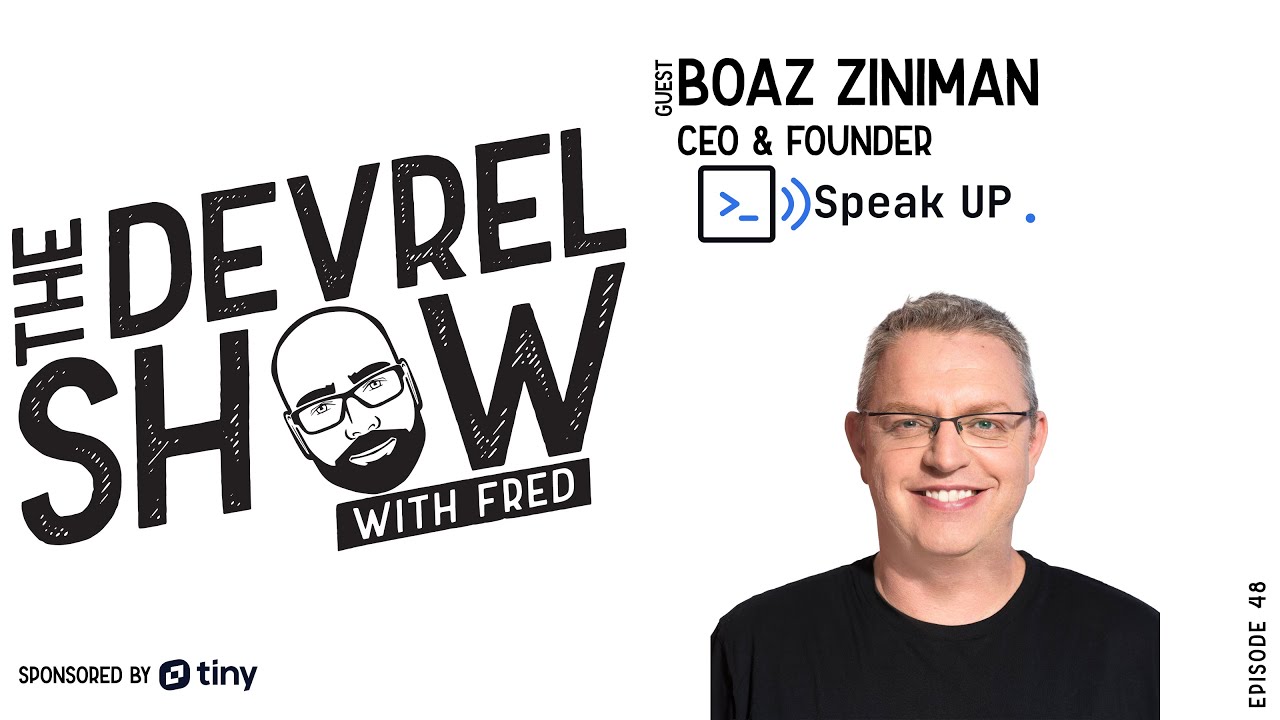
🔗 **Source:** [Devrelshow Episode 48 - Boaz Ziniman From SpeakUp](https://www.youtube.com/watch?v=qqmsiSkZM3M)
> [!note]+ Document Notes
> tags: #developer-relations #public-speaking #technical-communication #professional-mentoring #career-development #event-marketing #lead-generation #bootloader #startup-tools #devrel-strategy
> author: devrelshow
> source: YouTube
> reference: https://www.youtube.com/watch?v=qqmsiSkZM3M
> date created: 2024-12-19 10:30
>
> # 🏷️ Title: devrelshow episode 48 - Boaz Ziniman from SpeakUp
>
<!-- deep-read:sections start -->
## 🧰 Action Inbox
- [H1] Try bootloader.com for next event booth engagement — gamified lead qualification #event-marketing
- [H2] Consider speaker coaching for technical presentations — SpeakUp service #public-speaking
- [H3] Implement localization strategy for regional developer communities — language/cultural approach #localization
## 🧭 Table of Contents
- [[#📝 Summary]]
- [[#📖 Main Content]]
- [[#🗒️ Notes]]
- [[#📚 References]]
- [[#🗣️ Paraphrase]]
- [[#📰 Newsletter]]
- [[#✅ Action Items]]
- [[#🧪 Hypotheses]]
- [[#📊 Methodology]]
- [[#❓ Questions]]
- [[#🔮 Future Research]]
- [[#💡 Implications]]
- [[#🧠 Learning Styles Assessment]]
- [[#📊 Accessibility Assessment]]
- [[#🌍 DEIB Assessment]]
- [[#✅ Logical Validity]]
- [[#🛡️ DARVO Analysis]]
- [[#🎯 Conclusion]]
### 🔗 References
- [bootloader.com](https://bootloader.com)
- [SpeakUp LinkedIn](https://linkedin.com/company/speakup)
- [Boaz's Hebrew blog](https://blog.ziniman.com)
## 📝 Summary
- Developer Relations veteran Boaz Ziniman transitioned from 10-year AWS DevRel role to launching SpeakUp coaching business
- Created bootloader.com - gamified booth engagement tool for event lead qualification
- Emphasizes importance of localization in DevRel and technical communication value over personal branding
- Demonstrates how career evolution can combine technical expertise with business innovation
- Key insight: Most people do DevRel activities before knowing it's a paid profession
## 📖 Main Content
Boaz Ziniman brings a decade of AWS Developer Relations experience to discuss his career transition and new ventures. His journey illustrates the common DevRel path - starting with community contributions (blogging since 2011, conference speaking) before discovering it was a profession.
As head of AWS DevRel for EMEA region, he managed diverse markets from technical hubs to emerging economies. This experience reinforced his belief in localization importance - writing technical content in Hebrew despite dramatically smaller audience, recognizing that native language communication creates deeper community connections.
His new business SpeakUp addresses a critical gap: helping technical people communicate effectively to both technical and non-technical audiences. The service ranges from single session talk reviews to long-term messaging strategy consulting.
The bootloader.com tool tackles event ROI challenges by gamifying booth interactions. Instead of collecting basic contact information, it captures qualified leads through skill-based games, providing scored prospects for post-event follow-up.
## 🗒️ Notes
#### ⏱️ [00:00](https://youtu.be/qqmsiSkZM3M?t=0) — [H1] Introduction and energy setup
- Key idea: Setting energetic tone for developer relations discussion
- Evidence: "I like the music at the beginning. Good energy"
#### ⏱️ [03:15](https://youtu.be/qqmsiSkZM3M?t=195) — [H2] Background - AWS DevRel journey
- Key idea: Discovered DevRel as career after doing activities naturally
- Evidence: "I was doing DevRel before joining AWS. I just didn't know that"
#### ⏱️ [07:30](https://youtu.be/qqmsiSkZM3M?t=450) — [H1] Career transition to entrepreneurship
- Key idea: Moving from AWS management role to startup and consulting
- Evidence: "Right now I'm starting a new phase in my career... working on a new startup, building stuff"
#### ⏱️ [10:45](https://youtu.be/qqmsiSkZM3M?t=645) — [H2] Common DevRel origin story
- Key idea: Many people do DevRel activities before knowing it's a profession
- Evidence: "That was certainly my story where I was starting to speak at conferences... I did not know I could be paid to do that"
#### ⏱️ [15:20](https://youtu.be/qqmsiSkZM3M?t=920) — [H1] Regional DevRel management challenges
- Key idea: EMEA region presents diverse market and cultural challenges
- Evidence: "So diverse that almost every day you learn about something new in terms of your customers, in terms of the challenges"
#### ⏱️ [22:10](https://youtu.be/qqmsiSkZM3M?t=1330) — [H1] Localization importance in DevRel
- Key idea: Native language communication creates deeper community connections
- Evidence: "I made the decision to write it in Hebrew knowing that I'm basically cutting my target audience into a fraction of a percent"
#### ⏱️ [26:45](https://youtu.be/qqmsiSkZM3M?t=1605) — [H2] Cultural and technical market differences
- Key idea: Regional specialization affects DevRel approach and content
- Evidence: "Going to Germany and seeing the manufacturing industry there and then going to the Nordics and see all the startups, all the gaming companies"
#### ⏱️ [29:30](https://youtu.be/qqmsiSkZM3M?t=1770) — [H1] SpeakUp business model
- Key idea: Bridging gap between technical innovation and communication
- Evidence: "Huge gap between technology and what people are doing with technology and their ability to explain it to others"
#### ⏱️ [35:15](https://youtu.be/qqmsiSkZM3M?t=2115) — [H2] Value-first speaking approach
- Key idea: Focus on audience value rather than personal or company promotion
- Evidence: "Make sure that it's not only about myself... what will be the value at the end of the talk for people that are attending"
#### ⏱️ [42:20](https://youtu.be/qqmsiSkZM3M?t=2540) — [H1] Event ROI measurement challenge
- Key idea: Traditional booth engagement provides poor lead qualification
- Evidence: "You have a list of names and emails and maybe companies and titles, but not more than that"
#### ⏱️ [45:30](https://youtu.be/qqmsiSkZM3M?t=2730) — [H2] Bootloader gamification concept
- Key idea: Games serve as qualification filters for event leads
- Evidence: "By designing those games, you basically creating the filters"
#### ⏱️ [50:10](https://youtu.be/qqmsiSkZM3M?t=3010) — [H3] Booth engagement scaling problem
- Key idea: Physical booth interactions don't scale with attendance
- Evidence: "That's a scaling issue. That's classic scaling issue"
#### ⏱️ [55:45](https://youtu.be/qqmsiSkZM3M?t=3345) — [H2] Demo walkthrough and features
- Key idea: System provides scored leads with qualification metrics
- Evidence: "It's not only the lead itself. It's coming with a score"
## 📚 References
- [bootloader.com](https://bootloader.com)
- [SpeakUp LinkedIn](https://linkedin.com/company/speakup)
- [Boaz's Hebrew Technical Blog](https://blog.ziniman.com)
- [DevRel Show YouTube Channel](https://youtube.com/devrelshow)
## 🗣️ Paraphrase
- Career evolution often involves discovering that passion activities can become professions, as both speakers experienced transitioning from volunteer community work to paid DevRel roles
- Regional developer relations requires deep cultural understanding and localization, even when it significantly limits audience reach, because native language communication creates stronger community bonds
- Technical communication value comes from audience benefit rather than speaker expertise demonstration, requiring careful preparation and clear value proposition for time investment
## 📰 Newsletter
**DevRel Career Evolution: From Community Passion to Business Innovation**
Boaz Ziniman's journey from AWS DevRel manager to SpeakUp founder illustrates how developer relations expertise can evolve into specialized business solutions. His emphasis on localization - writing Hebrew technical content despite smaller audiences - demonstrates the power of native language community building.
Two key tools emerge: SpeakUp for technical communication coaching and bootloader.com for gamified event lead qualification. Both address scaling challenges in developer relations and event marketing.
**Key Takeaway:** The best DevRel professionals often start as community contributors before discovering it's a career, then leverage that experience to solve industry challenges.
Resources: [Learn WordPress](https://learn.wordpress.org/), [Developer Docs](https://developer.wordpress.org/), [WP-CLI](https://wp-cli.org/)
## ✅ Action Items
#### DevRel
- Developer advocacy: Implement localization strategy for regional markets, create native language technical content
- Education: Develop speaker coaching programs, focus on value-first presentation approach
- Developer experience: Use gamification for booth engagement, improve event ROI measurement
- Developer marketing: Apply bootloader methodology to lead qualification at conferences
- Community management: Create mentorship programs for technical speakers
#### OSPO
- Community Engagement: Establish speaker coaching for open source project maintainers
- Strategic Alignment: Measure event ROI through qualified lead scoring rather than volume metrics
#### Community
- Contributors: Provide presentation skills training for first-time conference speakers
- Maintainers: Support technical communication workshops for project leadership
#### WordPress
- Community: Implement speaker mentorship programs for WordCamps, create multilingual speaker resources
- Marketing: Develop gamified booth experiences for WordCamp sponsor engagement
## 🧪 Hypotheses
- Gamified booth interactions generate higher quality leads than traditional badge scanning
- Native language technical content creates stronger community engagement than English alternatives
- Technical speaker coaching improves both presentation quality and business outcomes
- Event ROI measurement through skill-based qualification provides better conversion rates
### 📊 Methodology
- A/B test gamified vs traditional booth engagement at conferences
- Survey community response to native language vs English technical content
- Track conversion rates from skilled-qualified leads vs traditional event leads
- Measure presentation quality improvements through before/after speaker coaching assessment
### ❓ Questions
- How do cultural differences in technical communication affect DevRel strategy effectiveness?
- What gamification mechanics work best for different types of technical audiences?
- How can speaker coaching be scaled to serve the growing need for technical communication skills?
### 🔮 Future Research
- Impact of AI-generated content on localized technical blogging
- Virtual event engagement strategies combining gamification with remote participation
- Correlation between technical speaking skills and career advancement in developer roles
### 💡 Implications
- Practice: Event marketing strategies need qualification mechanisms beyond contact collection
- Policy: Regional DevRel programs should prioritize native language content creation
- Education: Technical communication should be core curriculum for developer career development
- Funding: Event sponsorship budgets should include post-event lead qualification systems
### 🧠 Learning Styles Assessment
Reading level estimate: 12th grade
#### 👀 Visual learners
- Present: Dashboard screenshots, QR codes for interactive demos
- Improve: Event booth layout diagrams, gamification flow charts
#### 🔊 Aural learners
- Present: Full podcast episode with conversational learning
- Improve: Audio snippets of key coaching tips
#### 🗣️ Verbal learners
- Present: Speaking tips, presentation advice, communication strategies
- Improve: Glossary of DevRel and event marketing terms
#### 🧩 Kinesthetic learners
- Present: Interactive QR code demo, hands-on bootloader trial
- Improve: Step-by-step booth setup guides, presentation practice checklists
#### 🧠 Logical learners
- Present: ROI calculations, scoring systems, lead qualification metrics
- Improve: Decision trees for event strategy, cost-benefit analysis templates
#### 🧑🤝🧑 Social learners
- Present: Community discussion about DevRel careers, networking insights
- Improve: Peer coaching frameworks, speaking club formation guides
#### 🧘♀️ Solitary learners
- Present: Self-assessment tools for speaking skills, individual coaching options
- Improve: Personal development worksheets, solo practice exercises
#### 🌿 Naturalistic learners
- Present: Career ecosystem evolution, community growth patterns
- Improve: Industry lifecycle analogies, organic community development models
### 📊 Accessibility Assessment
#### Screen reader semantics
- Present: Clear heading structure, descriptive link text
- Improve: Alt text for dashboard screenshots, transcription of video segments
#### Keyboard navigation
- Present: Standard navigation patterns
- Improve: Skip links for long transcript sections
#### Contrast and readability
- Present: Standard text contrast ratios
- Improve: High contrast mode for code examples
#### Text resizing and reflow
- Present: Responsive design accommodating zoom
- Improve: Ensure QR codes remain scannable at high zoom levels
#### Media and captions
- Present: Full transcript provided
- Improve: Timestamp accuracy, speaker identification in transcript
#### Forms and interactions
- Present: Clear bootloader demo instructions
- Improve: Error handling for QR code scanning issues
### 🌍 DEIB Assessment
#### Cultural breadth
- Present: Discussion of EMEA regional diversity, Hebrew content creation
- Improve: Examples from more global regions, multilingual resource links
#### Inclusive language
- Present: Gender-neutral references to developers and speakers
- Improve: Avoid assumptions about conference accessibility or travel ability
#### Neurodiversity support
- Present: Structured conversation format, clear topic transitions
- Improve: Content warnings for discussion of career transitions, job changes
#### Representation
- Present: Two experienced DevRel professionals sharing authentic experiences
- Improve: Include perspectives from underrepresented groups in tech speaking
#### Psychological safety
- Present: Supportive discussion of career challenges and transitions
- Improve: Resources for managing career change anxiety, imposter syndrome
### ✅ Logical Validity
#### Strong reasoning
- Deductive strength: Clear cause-effect relationships between localization effort and community engagement
- Inductive strength: Personal experience examples support broader DevRel career patterns
- Causal reasoning: Well-established connections between event engagement quality and ROI
- Analogical strength: Effective comparisons between traditional and gamified lead generation
#### Fallacies
- Survivorship bias: Focus on successful DevRel transitions may not represent typical outcomes
- Appeal to authority: Reliance on AWS experience without acknowledging different company contexts
#### Tone of voice
- Overall tone: Conversational and encouraging, balancing professional expertise with personal authenticity
### 🛡️ DARVO Analysis
- Deny: No concerning denial patterns observed
- Attack: No attacks on accusers present
- Reverse victim/offender: No victim/offender role reversals identified
- Emotional cues and rhetoric: Positive, supportive discussion focused on professional growth
## 🎯 Conclusion
Boaz Ziniman's career evolution from AWS DevRel manager to entrepreneur demonstrates how deep industry experience can identify and solve systemic problems. His emphasis on localization and value-first communication provides actionable strategies for DevRel professionals, while his bootloader tool addresses a genuine pain point in event marketing ROI measurement.
The conversation reinforces that the best developer relations work often starts as genuine community passion before becoming professional expertise, and that cultural understanding remains crucial even in our globally connected industry.
## 🧱 Refactor Appendix
### 📚 Literature Split Pad
### [H1] Localization creates deeper community engagement than English-only content
> [!quote] [devrelshow episode 48](https://youtu.be/qqmsiSkZM3M) by Boaz Ziniman via YouTube. Published 2024. Accessed 2024-12-19.
> "I made the decision to write it in Hebrew knowing that I'm basically cutting my target audience into a fraction of a percent from what it can in English because it was really important for me to create content for the local community"
Native language technical content sacrifices reach for depth of community connection and accessibility.
[view highlight](https://youtu.be/qqmsiSkZM3M?t=1330#H1) #xref #articleseed ID:rw_localization_devrel
### [H2] Event booth engagement doesn't scale with attendance volume
> [!quote] [devrelshow episode 48](https://youtu.be/qqmsiSkZM3M)
> "That's a scaling issue. That's classic
---
## Full Transcript
[00:10] Heat. Heat.<br>[00:31] Hello. Hello lovely people. Welcome to<br>[00:34] another episode of Devil's Show. Always<br>[00:37] happy to be here. Uh it's a little bit<br>[00:39] early for me in the morning. It's<br>[00:41] usually when I start my day, but you<br>[00:43] know, it's not that early actually. It's<br>[00:45] just it's usually the time I start my<br>[00:46] day. So you know I start I just woke up<br>[00:50] not long ago full of energy ready to do<br>[00:52] live stream instead of like usually most<br>[00:55] of the time that's going to be meeting<br>[00:57] because our team are a little bit<br>[00:58] distributed. So usually most of my<br>[01:00] meetings happen uh in the morning. So<br>[01:03] yeah happy to be here. Uh always uh<br>[01:07] always happy to have amazing guests too<br>[01:09] which is no different today. I have Boz<br>[01:12] with me. How are you?<br>[01:14] >> Good Fred. Good. I I like the music at<br>[01:16] the beginning. Good energy.<br>[01:18] >> I like it. I uh I was looking for<br>[01:20] something that had a little bit of<br>[01:21] energy and I found that uh you know um<br>[01:24] creative common music at the beginning<br>[01:26] and usually I always dance like when the<br>[01:29] music is coming and like it it's just<br>[01:31] not that I need to be pumped out. I'm<br>[01:33] usually someone who is just excited and<br>[01:35] when I do those things I have like a lot<br>[01:37] of energy but that music just had a<br>[01:39] little bit of like you know let's get<br>[01:41] the thing started and do that.<br>[01:43] >> Let's get started.<br>[01:44] >> Exactly. Exactly. So first question for<br>[01:47] you. Who are you?<br>[01:49] >> So I sorry I'm bos uh I'm a developer<br>[01:53] advocate for many many years from Tel<br>[01:56] Aiv Israel. Uh until<br>[01:59] a month ago I was part of the AWS deil<br>[02:02] team in EMIA. I was the developer<br>[02:05] advocate for Israel for many years and<br>[02:07] in the last few years I've been managing<br>[02:09] the team in in the AWS devil team in<br>[02:12] EMIA. I was actually doing devil before<br>[02:15] joining AWS. I just didn't know that. I<br>[02:18] I wasn't aware that this is actually<br>[02:19] what I'm doing. But uh when when I<br>[02:22] joined AWS back in<br>[02:25] 2016<br>[02:27] 17 I think. Uh I I basically started uh<br>[02:31] doing that full-time. But I I always<br>[02:35] enjoy this part of uh bridging between<br>[02:38] technology and the users of the<br>[02:41] technology, creating content, uh talking<br>[02:44] on stages. Uh I I always liked it. I've<br>[02:48] been writing my own blog since uh I<br>[02:51] think 2011<br>[02:54] or something like that, like many many<br>[02:55] years ago.<br>[02:57] >> Actually, I'm sharing it right now. Uh<br>[02:59] >> disclaimer, it's in Hebrew, so use<br>[03:01] Google Translate if you want to read the<br>[03:02] articles. I I'm still writing there, not<br>[03:04] as much as I want to, but uh I I still<br>[03:06] post there from time to time. Uh topics<br>[03:09] that I just found interesting or things<br>[03:11] I'm working on. Uh so I'm I'm sharing<br>[03:13] people. Um and uh right now I'm starting<br>[03:17] a new phase in my career. Uh doing a lot<br>[03:19] of different things. uh working on a new<br>[03:22] startup, building stuff for me for devil<br>[03:25] and I<br>[03:27] starting to do more of something I<br>[03:30] really enjoy and this is mentoring<br>[03:32] technical speakers. Um and this is<br>[03:35] something I've been doing as part of the<br>[03:37] work with the local community for many<br>[03:39] years. And right now I I find a bigger<br>[03:43] need especially in startups and uh<br>[03:46] smaller companies to bridge the gap<br>[03:48] between their great amazing idea that<br>[03:50] they just developed and how people are<br>[03:52] actually using it or how developers are<br>[03:54] integrating it into their day-to-day. So<br>[03:56] I've been doing that uh I won't say<br>[03:58] full-time. I'm trying to rest a bit to<br>[04:00] slow down but uh I'm spending a lot of<br>[04:02] time on the on SpeakUp. Uh this is the<br>[04:06] the business I'm starting that is<br>[04:08] helping technical people to tell a<br>[04:11] better story.<br>[04:14] That's amazing. Like you said so many<br>[04:16] interesting things that I'm like okay<br>[04:17] for once and like I just opened VS Code<br>[04:20] and I was trying to take notes of things<br>[04:21] that I wanted to come back because like<br>[04:23] there's so so many things I want to come<br>[04:25] back that that resonate with me. Uh let<br>[04:28] let me just add a comment about like um<br>[04:30] you know when you said like you were<br>[04:31] doing developer relation even before<br>[04:33] doing developer relation or actually<br>[04:34] being paid to do that. Uh I think it's<br>[04:37] the that's the story of like many people<br>[04:39] like that was certainly my story where I<br>[04:41] was starting to speak at conferences and<br>[04:44] I started to organize meetup and I<br>[04:46] started to blog and I did not know I<br>[04:48] could be paid to do that like in my mind<br>[04:50] I was just doing that because I like to<br>[04:52] do those things because I like to share<br>[04:54] and help other people and uh you know<br>[04:57] give back to the community. All those<br>[04:58] things I was doing them on my free time<br>[05:01] until um I went to an event and there<br>[05:04] were those uh Microsoft um they were<br>[05:07] called technical evangelists or<br>[05:08] developer evangelists at the time and<br>[05:11] that was their title and I was like oh<br>[05:13] what the heck is that? I talked to them<br>[05:15] and I'm like wait a minute you're being<br>[05:16] paid to do most of the things I do on my<br>[05:19] free time for fun which you know it<br>[05:22] depends on how you see it. Maybe you<br>[05:23] still want to continue it continue to do<br>[05:25] it just for fun and not being paid for<br>[05:27] it. does not become a job. But for me, I<br>[05:30] was like, no, I want to be like I want<br>[05:31] to continue to do it and still have fun.<br>[05:33] But like if there's a way for me also to<br>[05:35] get paid to do those kind of things,<br>[05:37] that would be nice. But um that was at a<br>[05:39] time where where the role was still not<br>[05:41] super popular. So I was really amazed as<br>[05:44] like oh my god that ex that exists like<br>[05:46] that's a thing. So<br>[05:48] >> that was the same the same situation for<br>[05:50] me like uh starting with blogging then<br>[05:53] doing some local meetups then an event<br>[05:56] then traveling abroad to talk at an<br>[05:58] event and then suddenly finding myself<br>[06:00] having a talk opportunity<br>[06:03] from never to like 10 times a year and<br>[06:07] uh then finding this posting about AWS<br>[06:10] is looking for a full-time developer<br>[06:13] advocate it was technical evangelist<br>[06:14] back then in Israel And uh the rest of<br>[06:18] the rest is history. But uh yeah, as as<br>[06:20] you said, I think a lot of people are<br>[06:23] very active uh in their day-to-day in<br>[06:26] all kind of communities creating great<br>[06:27] content and they're doing other things<br>[06:29] as their main job. And I think this is<br>[06:32] one of the biggest powers of the<br>[06:33] community that people that are in the<br>[06:35] business that are still full-time<br>[06:37] developers or architects or DPAs or AI<br>[06:40] engineers or anything like that and they<br>[06:42] contribute to the community. So I think<br>[06:44] there is a great balance always between<br>[06:47] those that are doing that as as<br>[06:49] full-time job and those that are<br>[06:50] actually<br>[06:52] um working with the community and<br>[06:55] contributing.<br>[06:56] >> Yeah.<br>[06:56] >> And yes I<br>[06:59] >> I absolutely support that. Uh<br>[07:01] >> a dream job for many people and<br>[07:04] >> was really hard decision uh to do<br>[07:06] something else right now.<br>[07:08] >> I agree. I mean I always say because I<br>[07:11] started my career as a software<br>[07:12] developer and engineer for the first 10<br>[07:14] years I was building software and I love<br>[07:17] it and I always tell people like I miss<br>[07:20] coding full-time because I didn't left<br>[07:23] the software developer role because I<br>[07:24] didn't like it. I left it because I<br>[07:28] thought I would like a little more doing<br>[07:30] developer relation and I was right<br>[07:31] because like I as I said I love coding<br>[07:34] full-time but I'm also like a super<br>[07:36] social extrovert person who talk way too<br>[07:39] much in life even if you're not paying<br>[07:41] me to do it. So I was like wait there is<br>[07:43] a job where I can do that. So I<br>[07:46] >> that's great.<br>[07:47] >> Yeah. Exactly. And and and it's still a<br>[07:50] technical job. So I still call myself a<br>[07:51] developer. are still code but I don't<br>[07:54] like put on production anymore when I do<br>[07:56] those are demos or like they're not like<br>[07:58] uh software for someone to use them like<br>[08:01] uh every day. So I don't put stuff in<br>[08:04] production anymore but I still code. is<br>[08:06] still a technical role, but I miss<br>[08:08] coding full-time. But yeah, when I put<br>[08:10] those like in a scale, I'm like, yeah,<br>[08:12] no, I don't know what else I would do.<br>[08:15] Uh, if it was not<br>[08:16] >> I did I did the full cycle of being a<br>[08:18] full-time developer, then going a bit<br>[08:20] through the the more uh business<br>[08:22] development, technical business<br>[08:24] development, partnership things, which I<br>[08:26] did not code almost at all at that part.<br>[08:28] Then going to evangelism to devil<br>[08:31] actually opened a new world for me<br>[08:35] regarding uh being able to to write code<br>[08:37] again to do demos to try new<br>[08:39] technologies basically every day and uh<br>[08:43] make sure that I understand them right<br>[08:45] so I can share the message with others<br>[08:48] uh but it it always stayed on the level<br>[08:50] of demos or PC's or working with<br>[08:54] somebody else on a talk or something<br>[08:55] like that and now when I'm basically<br>[08:58] doing my own stuff. I'm I'm back to full<br>[09:00] cycle of not a full-time developer, but<br>[09:03] these days completely different job<br>[09:05] developing code, but I'm back to<br>[09:08] actually writing code and deploying in<br>[09:10] production. Something I missed a lot for<br>[09:12] many, many years.<br>[09:14] >> Yeah, I heard you. And and if I really<br>[09:16] want to be honest, I mean, I always say<br>[09:18] I'm still technical and I am, uh, but<br>[09:20] I'm not as technical as I used to. And I<br>[09:23] just think it's like at the beginning I<br>[09:25] was feeling like oh my god maybe there's<br>[09:27] something I don't do well enough or like<br>[09:29] it's just because like it's it's I don't<br>[09:31] as you said like I don't push in<br>[09:33] production anymore. I don't code<br>[09:34] full-time anymore. So I'm still<br>[09:36] technical but not like when it was my<br>[09:38] full-time job. The only thing I was<br>[09:40] doing was coding. So I can still talk<br>[09:42] tech. I can still code. I can still do<br>[09:44] demos. Uh but I lost it a little bit.<br>[09:47] I'm not as technical as I used to. I I<br>[09:49] would say technical enough to be able to<br>[09:51] do the job, be credible, have discussion<br>[09:53] with developers. But I feel like because<br>[09:56] especially because I've been doing that<br>[09:57] job for uh I think it's 14 years, 15<br>[10:00] years now uh doing Devril. So yeah, the<br>[10:03] last time I pushed something in prod<br>[10:06] like really like like all week long was<br>[10:08] like 15 years ago. So yeah, there's a<br>[10:11] there's a big difference about that. But<br>[10:13] um I would be curious on your side. uh<br>[10:14] you know uh you just uh I know it's it's<br>[10:17] it's the past now but still it's<br>[10:19] interesting you've been at AWS for about<br>[10:21] nearly 10 years um two question for you<br>[10:24] so just curious about you know uh<br>[10:27] explaining a little bit like what was a<br>[10:28] role of head of developer relation that<br>[10:31] are specific to one region and my second<br>[10:34] question is like um were you reporting<br>[10:36] to uh to my friend Jeff<br>[10:38] >> uh Jaba<br>[10:40] >> no so Jeff is part of the team but he's<br>[10:43] is not directly managing<br>[10:44] any of us.<br>[10:46] >> Uh so I don't know if it's a good or bad<br>[10:49] thing, but I I worked a lot with Jeff. I<br>[10:50] actually know him before AWS. I I<br>[10:53] brought him to one of the conferences I<br>[10:55] was doing uh many years before I joined<br>[10:58] AWS and he's a great guy and did a lot<br>[11:00] for this profession of evangelism and de<br>[11:04] so a lot of respect to Jeff. uh but to<br>[11:07] your question so uh running an developer<br>[11:10] relation organization in in a region is<br>[11:14] a is a super challenging and super<br>[11:16] interesting job because uh when you are<br>[11:19] working in a certain region or even<br>[11:21] multiple regions which are more or less<br>[11:23] similar um the cases you're running into<br>[11:27] the people you meet are more or less the<br>[11:29] same<br>[11:30] >> and when you're running on a region<br>[11:32] especially MIA which is so different uh<br>[11:34] with crazy technical hubs from one end<br>[11:38] into emerging markets uh on another hand<br>[11:41] huge industries uh both technical and<br>[11:45] manufacturing and tons of other things.<br>[11:48] This is so diverse that almost every day<br>[11:51] you learn here about something new in<br>[11:54] terms of your customers in terms of the<br>[11:56] challenges. So this is something that uh<br>[11:59] made me really enjoy this part. Of<br>[12:02] course the team uh I assume you know<br>[12:05] this some of my colleagues in EMIA and<br>[12:07] this is something that I really really<br>[12:09] enjoy working with this team um with the<br>[12:12] different developer advocates in the<br>[12:13] different regions learning from them<br>[12:15] like every one-on-one was uh basically<br>[12:18] an opportunity to learn about their<br>[12:20] market about their customers about their<br>[12:22] challenges and after spending a lot of<br>[12:24] years in Israel with the the great<br>[12:26] ecosystem we have here uh the the<br>[12:29] startup nation as some of people called<br>[12:32] Israel. Uh<br>[12:34] hearing other things uh dealing with<br>[12:37] other type of markets was something that<br>[12:39] I really really enjoyed and uh I think<br>[12:41] this is something that um I'm not sure<br>[12:43] it's super unique to EMIA but but the<br>[12:45] diversity is huge. I assume in APJ there<br>[12:49] are other types of diversity. The<br>[12:51] Americas once again a huge continent. So<br>[12:55] a lot of things to learn, a lot of<br>[12:56] different type of customers and a lot of<br>[12:58] problems.<br>[12:59] >> Yeah. and and as you said it it comes<br>[13:01] with challenges but also um I assume<br>[13:04] because there's some similarities it<br>[13:06] comes with with uh sometimes some<br>[13:08] advantages like in my case depending on<br>[13:11] the role right now I'm basically going a<br>[13:13] little bit everywhere I'm doing a a lot<br>[13:15] more things in Europe but also covering<br>[13:16] North America and you know markets are<br>[13:19] different and and sometimes when you try<br>[13:21] to do uh multiple things in multiple<br>[13:23] places uh you're never really part of a<br>[13:26] community you're you're part of a little<br>[13:28] bit of those community because not<br>[13:29] always at the same place. So I guess<br>[13:31] there's that kind of like benefits also<br>[13:33] to have someone local, someone who is<br>[13:35] part of like those specific region or<br>[13:37] community. uh because I remember um I<br>[13:40] often talk about Microsoft uh it's it's<br>[13:43] not about sentimentality sentimentality<br>[13:45] it's just because that was my first role<br>[13:47] and when they approached me uh the<br>[13:49] reason they approached me for um joining<br>[13:52] the team as a developer advocate it's<br>[13:54] because where where I live in Canada I'm<br>[13:56] in the east part of Canada where in<br>[13:58] Quebec where um the first language is<br>[14:00] French but like many people are<br>[14:02] bilingual but depending where you live<br>[14:05] uh like in Montreal which is a big city<br>[14:07] like people will understand if you speak<br>[14:08] in English or if you speak a broken<br>[14:10] French, they're going to be good. But<br>[14:12] like if you go in Quebec City, uh it's a<br>[14:14] lot more difficult if you don't speak<br>[14:16] French. And it's also difficult if you<br>[14:18] are someone who speak English and have<br>[14:20] French as a second language because<br>[14:22] there's that like it's easier to<br>[14:24] approach people there if French is your<br>[14:25] first language. So they were looking for<br>[14:27] someone bilingual that speak French<br>[14:29] first so they can really connect with<br>[14:31] that local community that was harder for<br>[14:34] other people to connect uh that didn't<br>[14:36] have like in my case like French as a<br>[14:38] first language.<br>[14:40] >> Yeah. So I have a very strong opinion<br>[14:41] about uh localization and deil and how<br>[14:45] we should approach that. I absolutely<br>[14:46] agree that to be a part of the community<br>[14:49] an active part of a community you need<br>[14:51] to actually be there. You need to be<br>[14:53] there physically. You need to speak the<br>[14:55] language. You need to know the people.<br>[14:56] You need to join<br>[14:59] um events which are not necessarily uh<br>[15:02] promoting the product you you're<br>[15:05] evangelizing. That's that that the mean<br>[15:08] of being part of the community. And I<br>[15:10] can tell you that uh part of my decision<br>[15:13] for example to write a blog a technical<br>[15:14] blog in Hebrew was that at that time and<br>[15:17] even today u I can count a handful of uh<br>[15:21] deep technical blogs in Hebrew uh<br>[15:23] covering topics like cloud AI<br>[15:26] similar topics and I made the decision<br>[15:30] to write it in Hebrew knowing that I'm<br>[15:32] basically cutting my target audience<br>[15:35] into uh a fraction of a percent from<br>[15:38] what it can<br>[15:39] in English or even other languages. Uh I<br>[15:42] think there are numbers are like maybe<br>[15:44] there are 12 million people speaking<br>[15:46] Hebrew or reading Hebrew in the world<br>[15:48] totally uh which is a very low number<br>[15:50] because I I it was really important for<br>[15:53] me to create content for the local<br>[15:55] community because they can find great<br>[15:56] content, amazing content in English.<br>[15:58] Jeff Bar is writing in English so I I<br>[16:00] don't want to compete with Jeff Bar. I<br>[16:02] want to create content for people that<br>[16:03] are feeling more comfortable. And<br>[16:05] another thing I learned during the years<br>[16:07] is when you are speaking in the local<br>[16:09] language, especially in events, people<br>[16:11] feel more comfortable to approach you,<br>[16:13] to ask questions at the end of the<br>[16:15] session or even during the session um<br>[16:17] talk to you at the coffee break and this<br>[16:21] is changing their experience<br>[16:22] dramatically. And when no matter if the<br>[16:26] speak a great speaker comes from abroad<br>[16:28] speaks in English people will understand<br>[16:30] the the content in especially in Israel<br>[16:32] like there is no problem to present in<br>[16:34] English but the communication or the<br>[16:37] nonofficial channels will be much weaker<br>[16:40] than somebody that you can approach in<br>[16:42] your native language and as you said<br>[16:45] like city centers large cities all over<br>[16:48] so it doesn't matter if it's Paris or or<br>[16:51] Amsterdam or many other cities when you<br>[16:54] can do English events with with no<br>[16:56] issues but then when you're moving out<br>[16:59] of the centers especially uh some areas<br>[17:02] in the world more some areas in the<br>[17:04] world in the world a bit less uh<br>[17:07] locality is super super important I<br>[17:09] strongly believe in that not only the<br>[17:11] language of course uh other things like<br>[17:13] uh cultural ch differences<br>[17:17] um history even technical history<br>[17:20] industry like going to Germany and<br>[17:23] seeing the manufacturing industry there<br>[17:25] and then going to to the Nordics and see<br>[17:27] all the startups, all the gaming<br>[17:28] companies. It's it's very different. You<br>[17:29] need to understand those different<br>[17:31] markets.<br>[17:36] >> Fred, I lost you. You I don't know if<br>[17:38] you're on mute.<br>[17:38] >> Yeah, I know. Technology is hard. I was<br>[17:40] coughing earlier, so I mute myself and I<br>[17:42] forgot to I need I need I need like a<br>[17:45] big red button or lights that just flash<br>[17:48] with Yeah. Yeah, that happens to me all<br>[17:51] the time. And I look stupid all the<br>[17:53] time. But you know, as I always say,<br>[17:55] technology is hard. So I always forgot<br>[17:56] to unmute myself. But I was I I was just<br>[17:58] saying like um I agree with what you<br>[18:00] said. Uh and I forgot the other thing<br>[18:03] that I wanted to had about that. But um<br>[18:06] I assume it was something brilliant and<br>[18:08] I just forgot about it. But with that<br>[18:10] said,<br>[18:12] >> you'll remember later.<br>[18:15] >> Sorry. With that said though, uh I would<br>[18:18] like to to uh talk a little bit about uh<br>[18:20] speak up uh you know the the new<br>[18:23] business. I know the startup uh folks if<br>[18:25] you're watching this or you're watching<br>[18:26] the recording I tried to get Buzz to<br>[18:29] open up about the startup but it's still<br>[18:31] sealed mode. So we won't have any uh<br>[18:34] anything about it right now but I tried<br>[18:36] I tried. Uh so still we're going to talk<br>[18:38] about uh speak up. Uh just curious a<br>[18:40] little bit about uh about that like new<br>[18:42] endeavor, that new business actually. Is<br>[18:44] it Yeah, you started that uh about 4<br>[18:46] months ago. So um you talked a little<br>[18:49] bit about it, but like is there anything<br>[18:51] else you want to share? Like I'm just<br>[18:53] curious about the business itself like<br>[18:54] how is it working?<br>[18:57] >> Yeah. So, as I said before, I I see a<br>[19:02] huge gap between technology and what<br>[19:05] people are doing with technology and<br>[19:07] their ability to explain it to others.<br>[19:10] And explaining to others can be<br>[19:11] technical people and can be nontechnical<br>[19:13] people. And sometimes it's even even<br>[19:15] harder when you're super technical to to<br>[19:17] come up with a non-technical message. Uh<br>[19:19] so it articulates well what you're doing<br>[19:22] for somebody not from your industry. Uh<br>[19:24] I I mostly focus on more techtoe uh<br>[19:28] working with people uh mostly speaking<br>[19:30] in technical conferences or founders<br>[19:32] that are doing their pitches to VCs<br>[19:35] which at least in Israel are super<br>[19:36] technical and what I'm trying to do is<br>[19:39] to bridge the gap. So that can be<br>[19:41] something as simple as coming for hour<br>[19:44] and a half doing a dry run for your next<br>[19:46] talk in your next event and finding the<br>[19:50] three or five things that we can improve<br>[19:52] to make it a better talk and then I I'm<br>[19:55] leaving you're doing the talk and and we<br>[19:56] are done. But usually the the<br>[19:59] interaction is much deeper in terms of<br>[20:01] uh working with people for long term<br>[20:04] helping them to build the the messaging<br>[20:05] to build the content to improve it and<br>[20:07] eventually do the the speaker training<br>[20:09] part which a lot of people are doing but<br>[20:11] I I don't think this is the the main<br>[20:13] part uh of what I'm good at or my<br>[20:18] experience is coming. Yes, I I did a lot<br>[20:20] of talks. I spent a lot of hours on<br>[20:23] stages the biggest stages developer<br>[20:25] advocate can can imagine. I I delivered<br>[20:28] the keynote in the Tel Aiv summit which<br>[20:30] is one of the biggest summit of AWS for<br>[20:32] two years in a row. So I I know how to<br>[20:34] do it uh end to end. But I think the<br>[20:37] part of taking the technology taking the<br>[20:40] story or not even the story the the the<br>[20:43] bits and pieces the the Lego bricks you<br>[20:45] have that you're building with and<br>[20:47] creating a story out of it. This is<br>[20:49] something I really enjoy<br>[20:52] >> working with customers about. And of<br>[20:54] course there are longer term<br>[20:56] relationships when I'm basically<br>[20:58] becoming part of the team and doing some<br>[21:00] uh consulting work for long term for<br>[21:02] every feature for every release trying<br>[21:05] to make sure that the messaging is right<br>[21:06] that it's right for the right people<br>[21:08] finding the the right events uh creating<br>[21:10] content for them and so on.<br>[21:13] >> I like that. I like that. Um I I do it<br>[21:16] once in a while uh more like in uh you<br>[21:18] know giving back to the community. So<br>[21:20] it's not a business for me and I don't<br>[21:22] have time to do it often. So I like that<br>[21:24] there are people like you say like hey<br>[21:25] you know what like if you take this like<br>[21:27] seriously to the next level. Let's do an<br>[21:29] exchange like give me pay me to do that<br>[21:31] but like you're going to get out you're<br>[21:33] going to get something really amazing<br>[21:34] out of it. Uh because I always say and<br>[21:36] feel free to disagree but I always say<br>[21:38] that like everybody can be a public<br>[21:39] speaker. It doesn't mean that everybody<br>[21:40] is good at being a public speaker but<br>[21:42] like everybody can go on the stage. If<br>[21:44] you're good that's a different story but<br>[21:47] I still feel it's important. Um you know<br>[21:49] um I really try to be honest right now<br>[21:51] about that. you know, when I started as<br>[21:53] a developer advocate, um that was my<br>[21:55] ego. Like I wanted to be on stage<br>[21:56] because of my ego. I mean, like people's<br>[21:58] going to see me, I'm going to be the<br>[21:59] expert. I was going to develop my<br>[22:01] personal branding and and those were all<br>[22:03] true. Uh obviously, I wanted to help<br>[22:05] people to like I'm not just like super<br>[22:07] narcissistic about those things like not<br>[22:09] not just my ego, but like that was part<br>[22:10] of it. But um I also still firmly<br>[22:13] believe that uh it's important to have<br>[22:16] visibility not just online but also<br>[22:19] offline. answer for a company, for a<br>[22:20] startup, you can have the best product<br>[22:22] out there, you can have the best uh<br>[22:24] service out there if people do not know<br>[22:26] that you exist, uh you're not going to<br>[22:29] be successful. And uh as much as I I as<br>[22:33] much as I think it's easier to scale<br>[22:35] online, uh and you still can create<br>[22:37] connection with people online, the as an<br>[22:40] example, we're talking about Jeff. I I<br>[22:42] quote unquote know Jeff for more than 10<br>[22:43] years. We met for the first time in<br>[22:45] person like a month ago because we were<br>[22:47] never in the same city but we're<br>[22:49] connected online. I consider him like<br>[22:51] someone I know but we never met in<br>[22:53] person. So there's a way for you to<br>[22:54] build relation online but once you<br>[22:56] connect with people offline this is<br>[22:58] where I think the the connection goes to<br>[23:01] the next level. So for a company for a<br>[23:03] startup being on stage being visible<br>[23:05] even if you don't talk about your<br>[23:06] product even if it's because most<br>[23:08] conferences don't like product pitches.<br>[23:10] Even if you talk about something else<br>[23:11] that is useful for the audience, you<br>[23:13] know, when I do that, I'm still Fred<br>[23:15] from Tiny MCE. Even when I do<br>[23:18] non-technical talks at events like last<br>[23:21] um and I stopped talking about that<br>[23:22] because I want your opinion on this but<br>[23:24] um you know two like I think last week I<br>[23:26] forgot my schedule but I think last week<br>[23:28] yeah I was in Amsterdam um I speak I<br>[23:30] spoke at uh React Amsterdam meetup and<br>[23:34] um they asked me to do uh talk about<br>[23:36] mental health which is not technical at<br>[23:38] all but it is something that I like to<br>[23:39] talk once in a while when um<br>[23:42] organization give me the opportunity to<br>[23:43] do that and uh there was not even that<br>[23:46] was nontechnical that was not even about<br>[23:48] tech that was not even targeted<br>[23:50] specifically to tech people even if I<br>[23:52] had like a part about AI uh at the end<br>[23:54] of the day that was unrelated at all<br>[23:56] that was mental health but I was still<br>[23:58] Fred from Tiny MCE and I still brought<br>[24:00] benefits to my employer to my company of<br>[24:03] doing that so just saying uh I think<br>[24:07] it's important for a company to be out<br>[24:08] there uh go to conferences have booth<br>[24:11] sponsor but also do public speaking and<br>[24:13] there's not only conferences there's<br>[24:14] meetups too there's like all the meetups<br>[24:16] are there's look they're looking for<br>[24:17] someone new nearly every month uh at<br>[24:20] least one two three speakers per month<br>[24:22] so yeah just reach out and and and try<br>[24:24] it<br>[24:25] >> yeah mean the the meetup uh<br>[24:28] like ecosystem uh is is is huge<br>[24:33] in Tel a Viv the probably five technical<br>[24:36] meetups every every night<br>[24:41] >> so if you're looking for places to to<br>[24:43] start your speaking career I think this<br>[24:44] is<br>[24:45] a great opportunity. Uh I I just want to<br>[24:48] go back to few things that you just<br>[24:50] said. Um I I think uh it's not only<br>[24:55] stages. I think that co taught us a big<br>[24:58] lesson about uh being uh good in in<br>[25:02] online as well. Uh I I still remember<br>[25:05] myself switching like 100% from a busy<br>[25:07] schedule, six months ahead of travel to<br>[25:10] events to zero travel and uh eight eight<br>[25:14] hours a day in the studio just talking<br>[25:15] to a camera to myself.<br>[25:17] >> Oh yeah, you're right. You're right.<br>[25:18] >> Uh so<br>[25:21] doing it right, like delivering the<br>[25:22] right message on video is important as<br>[25:24] well. I think I learned so much in those<br>[25:26] two years about how to produce myself.<br>[25:29] Uh hopefully like the video is nice, the<br>[25:32] sound is nice. uh I I I learned how to<br>[25:34] do it right uh and that helps a lot of<br>[25:37] people as well. So not only stages like<br>[25:39] stage is not the only place to deliver<br>[25:41] your message and actually videos,<br>[25:44] podcasts which I really enjoy doing uh<br>[25:48] everything eventually you need to come<br>[25:50] prepared. I think this is a very<br>[25:53] important part of what I'm trying to to<br>[25:56] bring to my customers that uh that there<br>[25:58] is no shortcut. There are no shortcuts.<br>[26:01] You need to work hard. You need to<br>[26:02] prepare. You need to know what you're<br>[26:04] saying, what you're doing, and what's<br>[26:06] the value for your uh your audiences.<br>[26:09] And I think that the value is the bottom<br>[26:12] line. Like uh as you said, there are a<br>[26:14] lot of people that can talk, should<br>[26:16] talk, know how to talk, do better, do it<br>[26:18] worse. I constantly try to make sure<br>[26:21] that it's not only about myself. It's<br>[26:24] not me talking about the great product I<br>[26:26] deliver I developed or delivered. It<br>[26:29] doesn't really matter. And and by the<br>[26:31] way, as you said, it doesn't have to be<br>[26:32] pitching my company. I can go to a super<br>[26:34] technical CNCF conference, talk about uh<br>[26:37] a nice trick of Kubernetes that I<br>[26:39] discovered and we are deploying it with<br>[26:42] millions of containers in production.<br>[26:44] uh the the the trick there is to make<br>[26:47] sure that it's I'm not talking about how<br>[26:49] great I am that I discover it and I'm<br>[26:51] deploying it to production but what will<br>[26:52] be the value at the end of the talk for<br>[26:54] people that are attending and spending<br>[26:56] their very precious time like those 40<br>[26:59] 45 minutes<br>[27:00] >> uh talking uh listening to me talk uh<br>[27:04] it's super critical and this is where<br>[27:06] I'm trying to make it uh as accurate as<br>[27:09] possible.<br>[27:10] >> Yeah. No, I agree and uh you're totally<br>[27:12] right. I default to stages because this<br>[27:14] is one of the thing I like to do them I<br>[27:16] like to do a lot and this is what I'm<br>[27:17] doing a lot right now in my current row<br>[27:19] but yeah any places podcast live stream<br>[27:21] webcam uh like just video recording that<br>[27:24] you're going to publish on YouTube like<br>[27:26] all those places are uh public speaking<br>[27:28] uh all those places are like how you can<br>[27:31] help other to like educate them about<br>[27:34] specific topics share about your own<br>[27:36] product share about your own services<br>[27:38] and um yeah the difference is as you<br>[27:40] said like people the the the only real<br>[27:43] currency that we all have that is like<br>[27:45] really finite is time. So why should uh<br>[27:48] what should why should I give you 45<br>[27:50] minutes of your of my time? Why should I<br>[27:53] watch your video even if it's just five<br>[27:54] minutes? Why should I give you five<br>[27:56] minutes of my time? Like what's in for<br>[27:57] me? So this is always how I approach<br>[27:59] like when I personally when I create a<br>[28:01] talk or video is like okay what are the<br>[28:04] benefits of like watching this or<br>[28:06] listening to me like what the people<br>[28:08] will get at the end of like whatever I'm<br>[28:11] doing right now and I think that I think<br>[28:12] that's a great approach.<br>[28:14] >> Yeah.<br>[28:15] >> Yeah. And I I think it's something that<br>[28:18] people connect really well to this<br>[28:20] message. uh especially people that doing<br>[28:22] it for the first time or not very<br>[28:24] experienced like doing it as as as their<br>[28:28] day job. Uh so this is something that I<br>[28:30] found that there is a gap and people<br>[28:34] want to close this gap. That's that<br>[28:36] that's the interesting part.<br>[28:38] >> Yeah. And uh I don't want to talk for<br>[28:40] you but like for me as much as I still<br>[28:43] love doing that uh I mean people must be<br>[28:46] bored to always see my whole face on the<br>[28:48] stage or on the videos. like I would<br>[28:50] like to have like other people do that.<br>[28:52] So I'm trying to like bring other people<br>[28:54] on the stage, bring other people in<br>[28:56] front of the camera. Uh because yeah,<br>[28:57] you know, people have like different<br>[28:59] approach, a different personality, have<br>[29:01] a different story to tell. And uh so<br>[29:04] there's space for everyone. Um as I said<br>[29:06] before, like you know, you can like even<br>[29:08] if you think you're you maybe not the<br>[29:10] best expert about a topic, even if you<br>[29:12] think you may not be the best person,<br>[29:14] you need to start somewhere. You should<br>[29:15] have seen the first talks that I've<br>[29:17] gave. They were terrible. But you need<br>[29:19] to start somewhere and you you get<br>[29:21] better at it and you get some experience<br>[29:22] and at some point you get better and<br>[29:24] there's always someone better than you<br>[29:26] about something but like do you have<br>[29:28] enough knowledge that you can share it<br>[29:29] with someone else? If the answer is yes<br>[29:31] it's fine. So u one last thing about<br>[29:34] that is yes do that.<br>[29:36] >> Yeah<br>[29:38] exactly. So uh one last question about<br>[29:40] that uh because you know it's it's your<br>[29:43] business. So um what would you say to<br>[29:46] someone who would like to start like is<br>[29:48] there a tips you want to share just like<br>[29:52] >> so I'm actually sharing a lot so you<br>[29:54] already showed on the screen the link to<br>[29:56] to the LinkedIn page of speak up and I<br>[29:59] actually post u at least once a month<br>[30:02] sometimes more sometimes a bit less<br>[30:04] depending on how busy I am. Uh I post on<br>[30:06] LinkedIn uh articles about public<br>[30:08] speaking. The last one I did was<br>[30:10] actually as a result of a meetup I went<br>[30:12] to two weeks ago watching some people<br>[30:14] doing like there were three talks. All<br>[30:16] of them did the demo and I had something<br>[30:17] to say about each of these demos. So I<br>[30:19] just wrote a post and actually spoke<br>[30:21] with some of the speakers uh to give<br>[30:23] them feedback. Uh and not necessarily<br>[30:26] that they didn't do that but it gave me<br>[30:28] like the the right perspective of what<br>[30:29] you should focus on demo. So that's the<br>[30:31] right piece I did. So, if you're doing a<br>[30:32] demo um in in the next talk or in the<br>[30:36] near future, uh go read this post uh<br>[30:39] like three very short tips about what<br>[30:42] you should focus on when doing the right<br>[30:44] uh doing the demo and making sure that<br>[30:45] you deliver the right message to your<br>[30:47] audiences. Um and actually most of it is<br>[30:50] based on uh things that I constantly see<br>[30:53] on events, people doing the same<br>[30:56] mistakes. Once again, like usually it's<br>[30:58] it's not like a big foul, but it can be<br>[31:01] much much better and give you more time<br>[31:03] and in live especially in live demos<br>[31:06] give you the confidence that it actually<br>[31:08] going to work the way you want it and<br>[31:10] not risk it too much. I I I love live<br>[31:13] demos. Like I want to be clear about it.<br>[31:15] I'm doing a lot of live demos, but uh<br>[31:18] there are some tricks and there are some<br>[31:19] things you should do to make it safer<br>[31:21] for you and and for the audience.<br>[31:23] >> Yeah. Yeah. I agree because I I I um I<br>[31:26] like doing live demos. I usually don't<br>[31:28] do super long live demos because uh<br>[31:31] different reasons almost so not someone<br>[31:34] who's going to watch the people code on<br>[31:36] Twitch or something like that. I don't<br>[31:37] like that. But like during a talk like<br>[31:39] part of your talk there's demo and it's<br>[31:41] live instead of you recording like a<br>[31:43] video or display video that you recorded<br>[31:45] before. I like that. Uh but yeah,<br>[31:47] there's so many things that can go wrong<br>[31:49] and um there's nothing that is a bigger<br>[31:53] waste of my time as an attendee that<br>[31:55] watch you debug your stuff for 15<br>[31:57] minutes. So like put some self fail safe<br>[32:01] and and have like a plan B if something<br>[32:03] goes wrong because yeah, it's like I<br>[32:05] don't want unless your talk is about<br>[32:06] debugging and testing. I don't want you<br>[32:09] I don't want you to see like debugging<br>[32:10] stuff on the stage like just show me how<br>[32:12] it's working. Just show me your demo.<br>[32:14] This is what I want to see when you do<br>[32:15] live coding. Yeah. And from the other<br>[32:17] end like uh when when people are going<br>[32:20] on stage and showing code and they want<br>[32:22] to focus on two or three lines of the<br>[32:24] code and they're showing you a full<br>[32:26] screen of boilerplate uh loading<br>[32:28] functions and doing uh CSS which has<br>[32:30] nothing to do with what you're trying to<br>[32:32] actually show them. Uh that that's that<br>[32:34] doesn't work as well. I don't want to<br>[32:35] scare people about doing live demos the<br>[32:37] opposite. Uh but even when you're doing<br>[32:40] that it has to have a purpose. It has to<br>[32:42] have a value that you deliver to your<br>[32:44] audience and it should be very very<br>[32:45] clear value.<br>[32:46] >> Yeah. Yeah. Because you can be sure that<br>[32:48] like if you have like I don't know like<br>[32:50] 30 lines of code and you just want to<br>[32:52] show two three lines, people will check<br>[32:54] the 30 lines of code and during that<br>[32:56] time they won't listen to what you want<br>[32:57] to talk about. So this is the same thing<br>[32:58] when I coach people and like they have<br>[33:00] slides with all those bullet points. I'm<br>[33:02] like first why are you on stage if I can<br>[33:04] read your slides? like you're not<br>[33:06] useful. And secondly, while you're<br>[33:08] trying to tell me other stuff that are<br>[33:11] not on their slides, I'm reading the<br>[33:13] slides because you put that in my face<br>[33:14] with text, I'm going to read them. So<br>[33:16] anyway, uh I I I would assume we could<br>[33:19] do a whole show about like speaker tips.<br>[33:21] Uh it's something that I think we should<br>[33:24] >> Yeah, actually I think we should. Uh<br>[33:26] with that said though, uh you know, two<br>[33:28] developer relations people talking. We<br>[33:30] can do that forever. Uh I think it's<br>[33:32] time for us to move to the demo part and<br>[33:35] I'm really looking forward to it uh<br>[33:37] because it it could relate it could be a<br>[33:39] tool that I could use uh in my<br>[33:41] day-to-day you know uh going in events<br>[33:43] uh sponsoring events having boots we<br>[33:45] always try to find ways to like get<br>[33:48] people excited to come talk to us even<br>[33:49] if they have no idea who we are or no<br>[33:51] idea what we do. Uh so you're gonna talk<br>[33:53] about boot loader. Um<br>[33:56] >> yes I am. Uh actually something that I<br>[34:00] created just recently.<br>[34:02] Um and I I think that the the origin<br>[34:06] story is uh my dayto-day as a as a de<br>[34:10] events and working with a lot of<br>[34:12] marketing teams about uh what's the ROI<br>[34:15] of going to this event? What are we<br>[34:17] getting out of it? Should we go? Should<br>[34:19] we send more people? Should we send less<br>[34:20] people? Should we invest more in the<br>[34:23] booth or other activities in swag and<br>[34:26] and everything around that? I I I did<br>[34:28] countless number of events in in the<br>[34:30] last 10 years and even before that and<br>[34:33] eventually<br>[34:36] I was con constantly trying to find<br>[34:39] better ways to to engage people and I<br>[34:43] saw some activities and some of the<br>[34:46] things others are doing and connected<br>[34:49] everything I learned in the last few<br>[34:51] years h into a system that was at the<br>[34:54] beginning it was an excuse for me to<br>[34:57] to actually go work with cloud code. Uh<br>[35:00] which is something that I did less when<br>[35:02] I was in AWS. I was using mostly Kira.<br>[35:04] So I wanted to learn<br>[35:06] >> a bit about other tools. So I tried<br>[35:08] cursor and then I focused on cloth code<br>[35:11] and I was just looking for an excuse to<br>[35:13] build something and then I came up with<br>[35:14] this idea of uh actually building a<br>[35:16] system uh system for people going to<br>[35:18] events uh for marketing teams for devil<br>[35:21] that are going to events and usually<br>[35:23] what happening in those events that uh<br>[35:25] you have a boot you you spent a lot of<br>[35:27] money on those boots uh I I put 75k but<br>[35:30] uh if you went to one of the large<br>[35:32] conferences like I don't know we are<br>[35:34] developers or reinvent reinvent uh you<br>[35:37] probably talking in uh six figures,<br>[35:39] >> a lot of money,<br>[35:40] >> high six figures uh for for a<br>[35:43] medium-sized book, not even the largest<br>[35:44] ones.<br>[35:46] >> And you spend a lot of money on that and<br>[35:48] then the outcome of it. Uh so there is a<br>[35:50] brand awareness, which is great. Uh but<br>[35:53] uh these days, people want to see how<br>[35:55] people want to see ROI. People want to<br>[35:57] see what is the value of spending those<br>[35:59] ridiculous amounts of money on going to<br>[36:01] an event, all the travel, all the time.<br>[36:03] So it's not only the the direct cost,<br>[36:05] it's everything around that. And usually<br>[36:07] you're coming back with a list of leads.<br>[36:10] And if you have a very good sales team<br>[36:12] on site, like on the floor of the event,<br>[36:15] they will talk to some people, they will<br>[36:17] qualify them or semi-qualify them during<br>[36:19] the event. But the number of people they<br>[36:21] can approach is very very limited.<br>[36:23] >> So even if they're talking eight hours a<br>[36:25] day, and I I know some of those<br>[36:27] salespeople that can do that, and then<br>[36:30] they can't speak for for a week because<br>[36:32] of that after event. uh you're getting<br>[36:36] very basic information about the people<br>[36:38] that that visit you. You scan you scan<br>[36:41] badges, you maybe collect business<br>[36:43] cards, maybe doing something else, but<br>[36:46] at the end of the day, you have a list<br>[36:47] of names and emails and maybe companies<br>[36:49] and titles, but not more than that. And<br>[36:51] then when you want to start measuring<br>[36:54] the the ROI, you need to start calling<br>[36:57] those people and create opportunities<br>[36:58] and convert them into leads and and so<br>[37:00] on so forth. And this is very hard work<br>[37:03] because going to a large event, you can<br>[37:05] come up with, I don't know, 2,000 people<br>[37:08] in in your leads list and then who do<br>[37:12] you call first? Who is the highest<br>[37:14] potential for uh for something like<br>[37:17] that? And this is exactly why I created<br>[37:19] the bootloader. Uh so bootloader is a<br>[37:23] system that I wrote to go and create a<br>[37:27] gamified experience in your boot and<br>[37:31] then basically to connect the lead<br>[37:33] capturing which is part of the<br>[37:34] experience and the skills or whatever<br>[37:37] you want to get out of the participant<br>[37:40] and connect them into something that you<br>[37:42] can actually then see what's what's the<br>[37:45] value. So, it's not only uh a lead, a<br>[37:48] name, um title, and uh and company. It's<br>[37:52] actually coming with a score. And the<br>[37:53] score is super relevant to what you're<br>[37:56] looking for. So, if you're a development<br>[37:57] company and looking for people with<br>[37:59] experience with Python or you are<br>[38:03] you want to uh filter out developers out<br>[38:06] of other roles or something like that,<br>[38:08] you create activity that the activity is<br>[38:11] the filter itself. And then at the end<br>[38:14] of the day, what you're coming out of<br>[38:15] the event is not just a list of people.<br>[38:18] It's list of people with their matching<br>[38:22] score or a flag, an indicator regarding<br>[38:26] the option that they are going to be the<br>[38:29] right people to go back to them at the<br>[38:31] end of the event. So this is the the<br>[38:34] basic idea. I created a series of games<br>[38:37] uh that they are actually the filters.<br>[38:39] So you can do a trivia, you can do a<br>[38:40] code challenge, a binary classifier and<br>[38:43] and some others. And by designing those<br>[38:46] games, you basically creating the<br>[38:48] filters. So each customer that is going<br>[38:50] to an event can design his own game, can<br>[38:53] adjust it to whatever needs uh possible<br>[38:56] that will give him the those markers<br>[39:00] that uh eventually will say if this is a<br>[39:03] good lead or not a good lead and then<br>[39:06] deploy it as part of the booth. those<br>[39:10] activities, those games can be played uh<br>[39:12] on on any device. So you can put<br>[39:14] tablets, laptops, last TVs or anything<br>[39:17] like that. You can do it even on<br>[39:19] participants mobile phones uh by<br>[39:22] providing them a QR code and then during<br>[39:25] the during the event people are<br>[39:27] participating they're playing they<br>[39:29] leaving their leads and their knowledge<br>[39:33] and you're going back with much better<br>[39:36] information to follow up from this event<br>[39:38] and improving the ROI uh and something<br>[39:41] that you can actually prove because yeah<br>[39:43] we we know that those events have ROI<br>[39:46] it's very hard to put a number on it. So<br>[39:48] there are all kinds of ways to estimate<br>[39:50] it. Uh how accurate they are really<br>[39:53] depends. Here you're getting something<br>[39:55] that helps you to make it much more<br>[39:57] accurate and uh allow you to actually<br>[40:02] come up come back with better<br>[40:03] information. I I'm just going to show a<br>[40:05] few few screens uh from from the<br>[40:09] dashboard of bootloadader. Uh so<br>[40:12] basically it's a very simple system. You<br>[40:13] can set it up for an event in in<br>[40:15] probably less than 10 minutes. Uh as a<br>[40:18] customer, you have a dashboard uh which<br>[40:21] is not loading. Now it's loading. This<br>[40:22] is my dashboard. I have all my events<br>[40:24] here. I have my leads. Uh I have status<br>[40:28] and then I have the event page itself.<br>[40:32] So I created here a test event in London<br>[40:34] on May 13. And I have activities in this<br>[40:37] event which are actually the game. Uh<br>[40:40] this is the game definition. You can<br>[40:42] actually go and set it up. There are<br>[40:45] links here. There are links to<br>[40:46] leaderboard and uh I I try to provide<br>[40:50] things that I as somebody running boots<br>[40:54] all over the world run into like privacy<br>[40:56] policy. Uh you need to provide a privacy<br>[40:58] policy. You need to make sure that this<br>[41:00] privacy policy is the right for the<br>[41:02] location of the of the event. There are<br>[41:04] things you can do in the in the US that<br>[41:06] you can't do in Europe or other parts of<br>[41:08] the world. So uh you can generate your<br>[41:12] uh your privacy policy here. You can<br>[41:14] adjust it. You can upload your own. You<br>[41:16] can brand the the activity with your<br>[41:18] logo and with your with your colors. And<br>[41:21] eventually at the end of the day, you're<br>[41:22] going to get some leads. So I'm I'm the<br>[41:24] only player here. So uh that's that's<br>[41:27] the only information. But as you can<br>[41:28] see, it's not only the lead itself. It's<br>[41:30] coming with a score. So, I know I'm 820,<br>[41:34] which doesn't mean anything right now,<br>[41:35] but in a second it will hopefully make<br>[41:38] some more sense.<br>[41:38] >> I mean, that sounds good.<br>[41:41] >> Yeah. And you can actually go and and<br>[41:43] and start calling people back based on<br>[41:46] this list. I I created for this uh for<br>[41:49] this show a game. So, if you scan this<br>[41:53] QR code, uh you can actually go and play<br>[41:56] one of the games. It's a binary<br>[41:57] classifier to you're getting a snippet<br>[42:00] of code that was generated by AI and you<br>[42:03] should say if you accept or reject this<br>[42:05] code. Once again very short uh six uh<br>[42:09] questions uh yes no or accept reject.<br>[42:12] You're getting a score. The score is<br>[42:13] based on the right or wrong answer and<br>[42:16] the speed of your answer. So there is a<br>[42:18] there is an element of uh competition<br>[42:21] there. And then after you're actually<br>[42:24] playing this game, uh there is a<br>[42:25] leaderboard which I can show you over<br>[42:29] here. I'm the only one right right now,<br>[42:31] but I I I would be more than happy to<br>[42:34] see people uh breaking this uh amazing<br>[42:37] 820 score that I got, but I know the<br>[42:39] answers. So uh so feel free to play. Uh<br>[42:45] and I'm right now I'm in a phase when<br>[42:47] I'm trying to figure out what to do with<br>[42:50] this. So I basically give it away for<br>[42:52] people to try for free. So if you're<br>[42:54] going to an event, you want to have a<br>[42:56] gaming activity and this is something<br>[42:58] that looks interesting to you, contact<br>[43:01] me. Uh we'll talk I'll I'll share with<br>[43:04] you uh how to go on the platform and<br>[43:07] start using it. Uh<br>[43:10] next steps uh TBD<br>[43:13] if it will become a product, a business<br>[43:16] or something else. I I don't know yet.<br>[43:18] But uh I I really enjoyed the process of<br>[43:21] building it, getting feedback, adjusting<br>[43:23] it. I have few friends that already<br>[43:24] playing with it for the last few uh few<br>[43:27] months. It's been around for the last uh<br>[43:29] two and a half, three months. Uh I I<br>[43:32] keep updating the the system with their<br>[43:34] feedback. I keep uh doing uh new types<br>[43:38] of activities. Somebody came to me and<br>[43:40] say look this is great but if you go to<br>[43:43] executive event no CO<br>[43:47] we go and play a trivia game. So I did a<br>[43:50] survey. So now there's an option to do<br>[43:51] surveys which is pretty straightforward.<br>[43:53] You can do a demo which is basically<br>[43:55] capturing the lead and sending the the<br>[43:57] attendee somewhere else on your platform<br>[44:00] so they can actually do a demo. Uh so it<br>[44:02] connects the demo with the lead. So you<br>[44:03] know this person actually did the demo<br>[44:05] and this is all the information about<br>[44:06] him. uh you can have even do spin the<br>[44:08] wheel something we did last year in AWS<br>[44:10] in many events for for prizes and then<br>[44:13] the question is why you doing that what<br>[44:15] what what is the indicator your lead<br>[44:17] indicator in spin the wheel so the<br>[44:19] answer is if you're planting inside the<br>[44:22] spin the wheel things like 10% discount<br>[44:24] or 20% discount and people actually<br>[44:26] using this discount<br>[44:28] >> know this is a great indicator for them<br>[44:30] to become a customer so a lot of options<br>[44:36] Uh that<br>[44:37] >> I like that<br>[44:40] >> to make your uh to make your boot much<br>[44:43] more interesting and loud. Think about<br>[44:45] putting this uh leaderboard on a large<br>[44:48] TV and giving at the end of each every<br>[44:51] day if you are in m multiple day event a<br>[44:54] huge Lego for the winner and then the<br>[44:56] next day starting again. Uh this is<br>[44:58] something that works. I saw it many many<br>[45:00] times. If you're doing it right, it will<br>[45:02] create the buzz. we bring people and it<br>[45:04] will eventually spread across the event<br>[45:06] about as something that worth trying.<br>[45:10] >> Yeah, I like that. Uh hopefully when you<br>[45:14] go to the dashboard, you're going to see<br>[45:15] that my score is zero because I didn't<br>[45:17] like I was trying to like I scanned the<br>[45:19] badge. I was looking at you listening<br>[45:20] and I was like, "Oh there's a<br>[45:21] timer." Like I didn't even had the time<br>[45:23] to check the timer just bonus, by the<br>[45:25] way. You can you can uh the timer can<br>[45:27] end. It won't progress to the next one.<br>[45:29] The timer is just a bonus. So don't<br>[45:30] don't get<br>[45:31] >> Okay, good, good, good. Uh, no, I like<br>[45:33] that and and especially because you have<br>[45:35] um different ways to do that because I<br>[45:37] was listening to you and I was like,<br>[45:38] "Oh, that's a great product may not<br>[45:40] apply to me because um at Tiny MC right<br>[45:45] now like the the end users are not<br>[45:47] developers." uh meaning that like<br>[45:50] they're for people that like it's a rich<br>[45:51] text editor wizwick. So uh you know the<br>[45:54] end user is going to be the people who<br>[45:56] create the content uh but it's targeted<br>[45:59] to developer in the sense that like hey<br>[46:01] if you need in your application that<br>[46:03] you're building to have your end users<br>[46:05] creating rich text content you don't<br>[46:06] want to build that yourself. So you just<br>[46:08] had to two three lines of JavaScript and<br>[46:10] you're good to go. But because it's<br>[46:12] JavaScript it doesn't really matter if<br>[46:14] you understand JavaScript. doesn't<br>[46:16] really matter the language you're using<br>[46:17] as long as you can use like even if you<br>[46:19] build with PHP you can have JavaScript<br>[46:21] you can use tiny MC so for me it's less<br>[46:23] about the skills of like the people talk<br>[46:26] to the skills of the developer which was<br>[46:29] different when let's say when I was in<br>[46:30] the cloud native space where like I<br>[46:32] wanted someone who had knowledge around<br>[46:34] communities because I'm like oh yeah it<br>[46:35] makes sense for me to use my product but<br>[46:37] right now it's not the case<br>[46:38] >> but I still need to understand like if<br>[46:41] there is some interest to you so as you<br>[46:43] said with the quiz or like even the spin<br>[46:46] the wheel which makes sense like if you<br>[46:48] spin the wheel you have like a rebate or<br>[46:49] coupon code and you use it to try the<br>[46:51] product you're like okay there is<br>[46:53] interest to you versus the uh the rest<br>[46:55] of the people and the thing with events<br>[46:58] uh if if you're listening to us and you<br>[47:00] don't do a lot of events um is that yeah<br>[47:03] there is so many attendees and sometimes<br>[47:05] you can talk to most sometimes you can<br>[47:07] talk to most of the people that come to<br>[47:08] your booth depending on the attendance<br>[47:10] depending on the popularity of your<br>[47:11] booth but last week we're at JS uh we<br>[47:15] were four people at the booth and it's<br>[47:16] not even like a AWS reinvent. It's a big<br>[47:19] JavaScript conference but it's not a<br>[47:20] huge conference and on the first day<br>[47:23] with four people at the booth we were<br>[47:25] not able to have all the discussion that<br>[47:27] we wanted with people because it was so<br>[47:29] popular. We had so many people. So, we<br>[47:31] end up with a list of leads and we were<br>[47:34] able to qualify some leads or some cold<br>[47:36] leads with the people we talked to. But<br>[47:38] there's also a bunch of people that are<br>[47:41] just like generic leads that we have<br>[47:43] basically no idea if they're really<br>[47:45] interested or not because yeah, there's<br>[47:47] a limit to like how many people you can<br>[47:49] talk in advance no matter how many<br>[47:50] people you have at your booth because<br>[47:52] there's always more attendees than there<br>[47:53] is people at boot duty.<br>[47:56] >> That's a scaling issue. That's classic<br>[47:57] scaling issue. like you can bring more<br>[47:59] people but there is a probably a cap for<br>[48:02] the number of people you can bring<br>[48:04] number of people that can be in the<br>[48:05] booth. So something like that can scale<br>[48:08] your event 10x easily in terms of<br>[48:12] qualifying leads and the comment earlier<br>[48:15] regarding is it uh developers or not I I<br>[48:19] got it a lot at the beginning and with<br>[48:22] some discussions I had with uh potential<br>[48:24] customers. uh at the end you can<br>[48:28] probably create activities that will<br>[48:31] allow you to<br>[48:34] better understand your customers even if<br>[48:37] they are not developers.<br>[48:38] >> Mhm.<br>[48:39] >> So it's it's basically around the<br>[48:41] question you ask them and the exact type<br>[48:43] of game you're playing. So like think<br>[48:46] about this binary classifier. It can be<br>[48:48] yes no questions regarding something<br>[48:50] that's related to your domain. Now one<br>[48:53] of a after having this discussion and<br>[48:56] actually people having an aha moment<br>[48:57] saying oh yeah I can I can ask anything<br>[48:59] it doesn't have to be a code uh there is<br>[49:02] a code challenge by the way there is a<br>[49:03] specific game for code challenge because<br>[49:05] it's very popular but uh people<br>[49:07] understand that that they can ask<br>[49:09] anything then they say okay so now the<br>[49:12] heavy lifting is actually creating the<br>[49:13] game like writing the questions doing<br>[49:15] the answers so I I I did not implement<br>[49:18] like a full uh LLM backend support for<br>[49:21] that But I have skill files you can just<br>[49:23] download. I can I can share the people<br>[49:26] for each one of the games that will walk<br>[49:28] you through creating the game. We'll ask<br>[49:29] you the right questions like how many<br>[49:31] questions for who the game is. Uh what's<br>[49:34] the level of the questions like deep<br>[49:37] tech or non tech or anything like that.<br>[49:40] Then they will create a JSON file that<br>[49:42] you just copy paste into the dashboard<br>[49:44] and uh you're done like using using<br>[49:48] code assistance or any LLM out there to<br>[49:51] create those challenges and which save<br>[49:53] you time and you know today it's not a<br>[49:55] big challenge to implementing the<br>[49:56] system. I just didn't have the time to<br>[49:59] do that uh and dive deep into it. Uh,<br>[50:04] another thing I have on my to-do list is<br>[50:05] to have uh something like uh base 44<br>[50:08] lovable style mechanism to allow people<br>[50:11] to create their own activities.<br>[50:13] >> Okay, I love that. So, yeah. No, there's<br>[50:16] a I like that first you just had fun to<br>[50:18] do it. So, hopefully you're going to be<br>[50:20] successful, but even if it's not the<br>[50:22] case, at least like you know, you have<br>[50:23] pleasure to build it. I think that's a<br>[50:25] great tool. Um, as we talked before, now<br>[50:28] you just need to continue to promote it<br>[50:29] so people know that it exists. Uh so<br>[50:32] that's great. Um and yeah, as you said,<br>[50:35] um I think just the the scalable part is<br>[50:37] super important. even even without<br>[50:39] qualifying the lease like just a uh<br>[50:41] scalable part is important because we're<br>[50:43] talking about like a like even if you<br>[50:45] bring more people to the booth the last<br>[50:47] uh CNCF uh events I've done um like AWS<br>[50:52] as example had like a huge booth with I<br>[50:54] don't know 15 people 20 people and they<br>[50:57] they they were I'm pretty sure I can say<br>[50:59] with confidence that they were not able<br>[51:01] to have all the discussion that they<br>[51:02] wanted with everybody because there is<br>[51:04] still a lot more attendees and it's a<br>[51:06] big event but also the qualification of<br>[51:08] the lead, which is like probably what is<br>[51:11] even more important for people like<br>[51:12] having like a good way to qualify people<br>[51:14] a little bit more easily than let's have<br>[51:16] like a 10-minute discussion uh about<br>[51:18] about whatever you do and what you need.<br>[51:21] So, love it people give it a try. Uh<br>[51:23] it's bootloadader.com.<br>[51:25] If you have any question, you know how<br>[51:27] to reach out my friend here.<br>[51:30] >> He's on LinkedIn. It's going to be able<br>[51:31] to answer your question. And on that<br>[51:34] note, I think it brings us to the end of<br>[51:37] the show. So, thanks a lot for being a<br>[51:40] guest. Uh that was a pleasure having<br>[51:41] you. I know it was due for a long time,<br>[51:44] but uh<br>[51:44] >> we for more than a year, I think.<br>[51:47] >> I know. And and now I feel bad because I<br>[51:49] still promote like, hey, you know, if<br>[51:51] you want to be a guest on the show, just<br>[51:52] let me know because um always nice to<br>[51:54] connect with other developer advocates<br>[51:56] whether I know them in person or not.<br>[51:58] But right now, um, I have about two<br>[52:01] years of wait list of like guests for<br>[52:03] the show, which is, don't get me wrong,<br>[52:05] it's a bragging moment.<br>[52:07] >> It's a bragging moment. It's it's it's a<br>[52:09] good problem to have. It just sucks<br>[52:11] because when people are like, "Hey,<br>[52:12] Fred, I saw the de show. Would like to<br>[52:14] be a guest." I'm like, "Cool. Can you<br>[52:16] wait about two years?" Um, like at some<br>[52:20] point maybe like my goal was to do this<br>[52:22] every other weeks. Now with because I<br>[52:24] travel a lot more since I joined uh Tiny<br>[52:27] MC, I started to travel again a lot<br>[52:28] more. So it's not always every two weeks<br>[52:30] and also delay stuff. Uh maybe I just<br>[52:34] try to I don't want to do it when I'm<br>[52:36] traveling, but maybe I should just try<br>[52:37] to do it um even every week when I'm at<br>[52:41] home so I can have more guests. Uh<br>[52:43] because it's not that much work for me.<br>[52:45] If I want to be honest, the show is like<br>[52:47] the guests are doing all the work with<br>[52:49] like answering my my question. We have<br>[52:51] discussion doing the demo. For me, it's<br>[52:53] just creating the thumbnail doing the<br>[52:54] promotion, but we'll see. Anyway, uh<br>[52:57] thanks for uh being on the show. It was<br>[52:58] a pleasure to have you. Uh any last word<br>[53:02] you want to share with uh with people?<br>[53:04] >> No, it was really fun. I really enjoyed<br>[53:06] it. I'm happy it finally happened. Uh<br>[53:09] that's uh I I I like the concept of of<br>[53:12] talking about something I really really<br>[53:13] enjoy. uh the the Devril the community<br>[53:17] is very big part of what I'm doing and<br>[53:20] uh part of my success and why I'm still<br>[53:24] waking up in the morning. So thank you<br>[53:26] very much for having me.<br>[53:28] >> That's amazing. So I wish you uh you<br>[53:30] know good luck with bootloadader with<br>[53:32] speakup with the new startup that we<br>[53:34] don't know anything about yet but I'm<br>[53:36] really excited. I'm excited. I know<br>[53:39] nothing about it. I'm just like I'm just<br>[53:40] waiting for you to drop some like uh<br>[53:43] some some something like when when it's<br>[53:45] gonna go public.<br>[53:46] >> So yeah, wish you good luck with that.<br>[53:48] And on that note, uh thanks everybody<br>[53:50] who joined us live. I know uh that was a<br>[53:52] little bit earlier uh than usually, but<br>[53:54] you know, always try to adapt with the<br>[53:55] cast. I didn't want Boaz to join us at<br>[53:57] like 3:00 a.m. uh for the show. Wouldn't<br>[54:00] make sense this time. Uh so thanks for<br>[54:02] joining us live. Uh, and thanks<br>[54:04] obviously also to the people who's going<br>[54:06] to watch the recording and I wish you<br>[54:08] all a great rest of the day and I think<br>[54:12] I should probably note those things but<br>[54:14] uh I think the the next episode's going<br>[54:17] to be let me check on my stuff. It's<br>[54:18] going to be in June only. So because I<br>[54:20] have other trips in between and I was<br>[54:22] not supposed to do that. So the next<br>[54:23] episode is going to be on June 4 with<br>[54:25] Nihal Dhan as my guest. So folk see you<br>[54:30] in about three weeks. Bye everyone.
<!-- deep-read:sections end -->
📄 **Full text:** ![[Full Document Contents/Articles/Devrelshow Episode 48 - Boaz Ziniman From SpeakUp.md|Devrelshow Episode 48 - Boaz Ziniman From SpeakUp by YouTube]]
## Highlights
- not that I need to be pumped out. I'm usually someone who is just excited and when I do those things I have like a lot of energy but that music just had a little bit of like you know let's get the thing started and do that. >> Let's get started. >> Exactly. Exactly. So first question for you. Who are you? >> So I sorry I'm bos uh I'm a developer advocate for many many years from Tel Aiv Israel. Uh until a month ago I was part of the AWS deil ([View Highlight](https://read.readwise.io/read/01krnvb50yja5chw4dm1gemnh5))
- Tags: 👻 ai highlighted
- really enjoy and this is mentoring technical speakers. Um and this is something I've been doing as part of the work with the local community for many years. And right now I I find a bigger need especially in startups and uh smaller companies to bridge the gap between their great amazing idea that they just developed and how people are actually using it or how developers are integrating it into their day-to-day. So I've been doing that uh I won't say full-time. I'm trying to rest a bit to ([View Highlight](https://read.readwise.io/read/01krnvb51516w7qdjtgn93xaa6))
- Tags: 👻 ai highlighted
- slow down but uh I'm spending a lot of time on the on SpeakUp. Uh this is the the business I'm starting that is helping technical people to tell a better story. That's amazing. Like you said so many interesting things that I'm like okay for once and like I just opened VS Code and I was trying to take notes of things that I wanted to come back because like there's so so many things I want to come back that that resonate with me. Uh let let me just add a comment about like um ([View Highlight](https://read.readwise.io/read/01krnvb51he4rvj391k8b8egcv))
- Tags: 👻 ai highlighted
- having a talk opportunity from never to like 10 times a year and uh then finding this posting about AWS is looking for a full-time developer advocate it was technical evangelist back then in Israel And uh the rest of the rest is history. But uh yeah, as as you said, I think a lot of people are very active uh in their day-to-day in all kind of communities creating great content and they're doing other things as their main job. And I think this is ([View Highlight](https://read.readwise.io/read/01krnvb52004wd2xegf6y3arjq))
- Tags: 👻 ai highlighted
- in technical conferences or founders that are doing their pitches to VCs which at least in Israel are super technical and what I'm trying to do is to bridge the gap. So that can be something as simple as coming for hour and a half doing a dry run for your next talk in your next event and finding the three or five things that we can improve to make it a better talk and then I I'm leaving you're doing the talk and and we are done. But usually the the interaction is much deeper in terms of ([View Highlight](https://read.readwise.io/read/01krnvb55bskjdrzqmscy2mrk4))
- Tags: 👻 ai highlighted
- uh working with people for long term helping them to build the the messaging to build the content to improve it and eventually do the the speaker training part which a lot of people are doing but I I don't think this is the the main part uh of what I'm good at or my experience is coming. Yes, I I did a lot of talks. I spent a lot of hours on stages the biggest stages developer advocate can can imagine. I I delivered the keynote in the Tel Aiv summit which ([View Highlight](https://read.readwise.io/read/01krnvb57t7e0q2s2znq0txeex))
- Tags: 👻 ai highlighted
- uh consulting work for long term for every feature for every release trying to make sure that the messaging is right that it's right for the right people finding the the right events uh creating content for them and so on. >> I like that. I like that. Um I I do it once in a while uh more like in uh you know giving back to the community. So it's not a business for me and I don't have time to do it often. So I like that there are people like you say like hey you know what like if you take this like seriously to the next level. Let's do an exchange like give me pay me to do that ([View Highlight](https://read.readwise.io/read/01krnvb5aemyn3m5f9xxtvn0vn))
- Tags: 👻 ai highlighted
- talk or video is like okay what are the benefits of like watching this or listening to me like what the people will get at the end of like whatever I'm doing right now and I think that I think that's a great approach. >> Yeah. >> Yeah. And I I think it's something that people connect really well to this message. uh especially people that doing it for the first time or not very experienced like doing it as as as their day job. Uh so this is something that I ([View Highlight](https://read.readwise.io/read/01krnvb5gv1bbqwgpgbtwjx3np))
- Tags: 👻 ai highlighted
- don't do a lot of events um is that yeah there is so many attendees and sometimes you can talk to most sometimes you can talk to most of the people that come to your booth depending on the attendance depending on the popularity of your booth but last week we're at JS uh we were four people at the booth and it's not even like a AWS reinvent. It's a big JavaScript conference but it's not a huge conference and on the first day with four people at the booth we were not able to have all the discussion that we wanted with people because it was so popular. We had so many people. So, we ([View Highlight](https://read.readwise.io/read/01krnvb5v507g63b26g5d07gsb))
- Tags: 👻 ai highlighted
- and also delay stuff. Uh maybe I just try to I don't want to do it when I'm traveling, but maybe I should just try to do it um even every week when I'm at home so I can have more guests. Uh because it's not that much work for me. If I want to be honest, the show is like the guests are doing all the work with like answering my my question. We have discussion doing the demo. For me, it's just creating the thumbnail doing the promotion, but we'll see. Anyway, uh thanks for uh being on the show. It was a pleasure to have you. Uh any last word ([View Highlight](https://read.readwise.io/read/01krnvb6bvp4qxyraeaybatzns))
- Tags: 👻 ai highlighted