Did Jesus Make the Old Testament Obsolete?
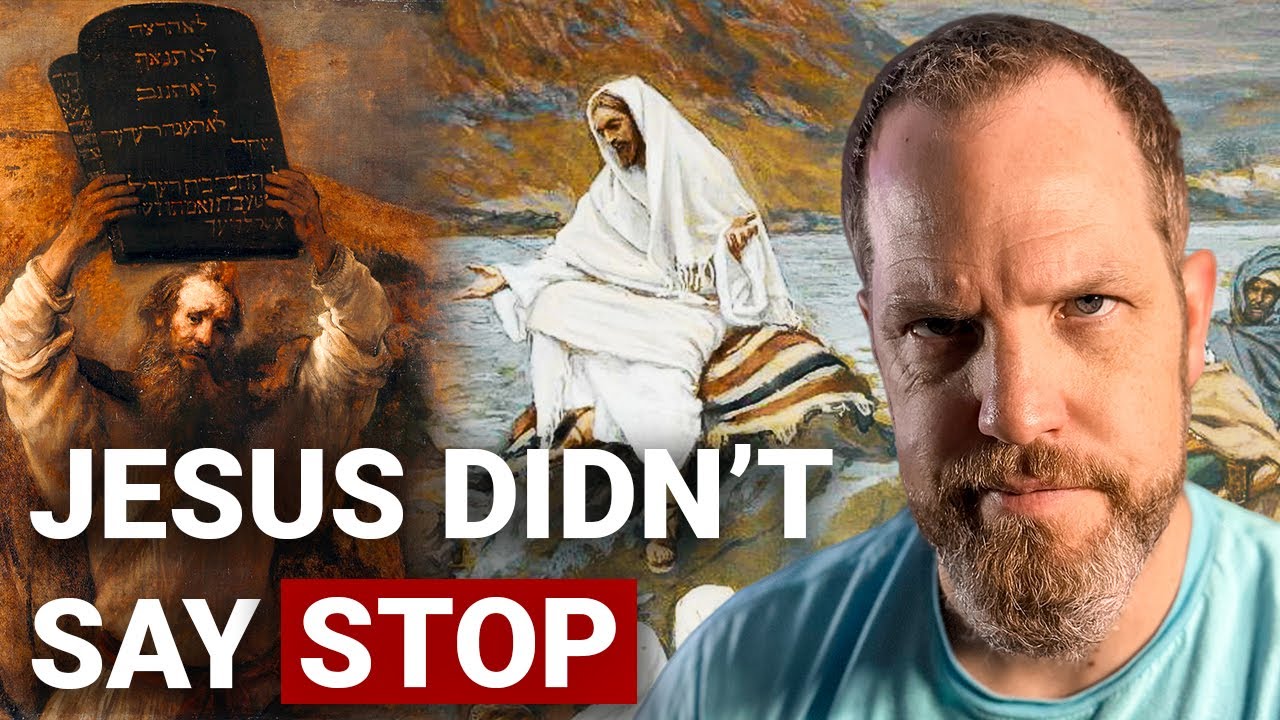
🔗 **Source:** [Did Jesus Make the Old Testament Obsolete?](https://www.youtube.com/watch?v=xS17Zs8etJg)
> [!note]+ Document Notes
> tags: [biblical_studies, matthew_gospel, law_fulfillment]
> author: Data Over Dogma
> source: YouTube
> reference: https://www.youtube.com/watch?v=xS17Zs8etJg
> date created: 2024-12-19 14:30
>
> # 🏷️ Title: Did Jesus make the Old Testament Obsolete?
>
<!-- deep-read:sections start -->
## 🧰 Action Inbox
- [H1] Examine Matthew 5:17-20 in original Greek context — 03:45 #biblical_studies
- [H2] Compare Matthew's fulfillment language with Luke's version — 12:30 #gospel_comparison
- [H3] Research historical tensions between Jewish Christians and Pauline communities — 18:45 #early_christianity
## 🧭 Table of Contents
- [📝 Summary](#-summary)
- [📖 Main Content](#-main-content)
- [🗒️ Notes](#️-notes)
- [📚 References](#-references)
- [🗣️ Paraphrase](#️-paraphrase)
- [📰 Newsletter](#-newsletter)
- [✅ Action Items](#-action-items)
- [🧪 Hypotheses](#-hypotheses)
- [📊 Methodology](#-methodology)
- [❓ Questions](#-questions)
- [🔮 Future Research](#-future-research)
- [💡 Implications](#-implications)
- [🧠 Learning Styles Assessment](#-learning-styles-assessment)
- [📊 Accessibility Assessment](#-accessibility-assessment)
- [🌍 DEIB Assessment](#-deib-assessment)
- [✅ Logical Validity](#-logical-validity)
- [🛡️ DARVO Analysis](#-darvo-analysis)
- [🎯 Conclusion](#-conclusion)
### 🔗 References
- [Matthew 5:17-20 Analysis](https://youtu.be/xS17Zs8etJg?t=225)
- [Gospel Comparison Discussion](https://youtu.be/xS17Zs8etJg?t=750)
## 📝 Summary
- Biblical scholars examine whether Jesus abolished Old Testament law in Matthew 5:17-20
- Why different Christian traditions selectively apply some biblical laws while ignoring others
- Key stakeholders include Christian denominations, biblical scholars, and religious practitioners
- Risk of oversimplified theology that ignores textual contradictions between gospel accounts
- Bottom line: Matthew's Jesus explicitly says the law remains until "heaven and earth pass away"
## 📖 Main Content
The hosts explore the common Christian claim that Jesus "fulfilled" the Old Testament law, making it obsolete. They examine Matthew 5:17-20 where Jesus states he came "not to abolish but to fulfill" the law. The Greek word "pledo" suggests completion or bringing to designed end, but Jesus adds two chronological markers: until "heaven and earth pass away" and "until all is accomplished."
The scholars argue these must be synonymous apocalyptic events, not historical completion through Jesus's sacrifice. They note Matthew's Jesus explicitly warns against breaking even minor commandments and demands righteousness exceeding that of Pharisees. This contrasts with Paul's more permissive stance toward Gentile converts regarding circumcision and dietary laws.
The discussion highlights how different gospel authors had varying theological agendas, with Matthew likely pushing back against Pauline communities that abandoned certain Jewish laws. Rather than forcing biblical unity, the hosts advocate recognizing legitimate theological disagreements within scripture.
## 🗒️ Notes
#### ⏱️ [00:00](https://youtu.be/xS17Zs8etJg?t=0) — [H1] Introduction to Law Fulfillment Question
- Key idea: Christians selectively follow Old Testament laws while claiming Jesus fulfilled them all
- Evidence: "Why is one law still very much in effect and why is another law... okay to eat shellfish now"
#### ⏱️ [03:45](https://youtu.be/xS17Zs8etJg?t=225) — [H2] Matthew 5:17-20 Text Analysis
- Key idea: Jesus explicitly states he came not to abolish but fulfill the law
- Evidence: "Do not think that I have come to abolish the law or the prophets. I have come not to abolish, but to fulfill"
#### ⏱️ [05:30](https://youtu.be/xS17Zs8etJg?t=330) — [H3] Greek Word "Pledo" Meaning
- Key idea: Fulfill means to bring to completion or designed end, not to eliminate
- Evidence: "To bring to completion that which was already begun. Complete. Finish... to fulfill a prophecy, an obligation, a promise, a law"
#### ⏱️ [07:15](https://youtu.be/xS17Zs8etJg?t=435) — [H2] Dual Chronological Markers Problem
- Key idea: Jesus gives two time conditions that must be synonymous apocalyptic events
- Evidence: "Till heaven and earth pass away... until all is accomplished... we've got dual chronological markers here"
#### ⏱️ [09:00](https://youtu.be/xS17Zs8etJg?t=540) — [H3] Laws Still Required According to Matthew
- Key idea: Verse 19 explicitly condemns breaking commandments, contradicting fulfillment-as-abolishment
- Evidence: "Whoever breaks one of these will be called the least in the kingdom of God"
#### ⏱️ [11:45](https://youtu.be/xS17Zs8etJg?t=705) — [H2] Pharisees as Loose Law Followers
- Key idea: Historical Pharisees were actually criticized for being too lenient, not too strict
- Evidence: "When you look at some of the other literature from early Judaism, the Pharisees were kind of mocked as kind of relaxed loose followers"
#### ⏱️ [12:30](https://youtu.be/xS17Zs8etJg?t=750) — [H2] Luke vs Matthew on Law Duration
- Key idea: Luke emphasizes difficulty rather than timeline for law's continuation
- Evidence: "What Luke has Jesus say is it would be easier for heaven and earth to pass away than for one jot or tit of the law to fail"
#### ⏱️ [14:20](https://youtu.be/xS17Zs8etJg?t=860) — [H3] Law and Prophets as Scripture Division
- Key idea: This phrase referred to genre divisions of Jewish scripture, not just moral law
- Evidence: "The Tanakh... Torah, the Nevim, and the Ketuim... the Torah, which would be the law, the Nevim is the prophets, and the Ketuim are the writings"
#### ⏱️ [16:45](https://youtu.be/xS17Zs8etJg?t=1005) — [H1] Fulfillment as Apocalyptic Completion
- Key idea: Laws remain until eschatological end when context for law no longer exists
- Evidence: "Everything is going to be completed, fulfilled when the heaven and earth pass away... there's no more reason for the law"
#### ⏱️ [18:45](https://youtu.be/xS17Zs8etJg?t=1125) — [H1] Matthew vs Paul on Gentile Requirements
- Key idea: Matthew likely responds to Pauline communities relaxing Jewish law for converts
- Evidence: "Paul was... that was Paul's big challenge decades before these texts were written... bringing Gentiles in... what's required of them"
#### ⏱️ [21:30](https://youtu.be/xS17Zs8etJg?t=1290) — [H2] Matthew's Continued Law Emphasis
- Key idea: Matthean Jesus consistently upholds detailed law observance unlike other gospels
- Evidence: "You should make sure you do these without leaving the other undone... you still tithe your mint and your dill"
#### ⏱️ [23:15](https://youtu.be/xS17Zs8etJg?t=1395) — [H1] Biblical Texts as Theological Conversation
- Key idea: Gospels represent competing theological positions rather than unified doctrine
- Evidence: "It should be seen as a conversation more than anything declarative or final"
#### ⏱️ [25:00](https://youtu.be/xS17Zs8etJg?t=1500) — [H2] Problems with Imposed Unity
- Key idea: Forcing biblical agreement does violence to authors' intended meanings
- Evidence: "The presupposition of univocality... basically says I'm in charge of what this is allowed to say"
## 📚 References
- [Matthew 5:17-20 Greek Analysis](https://youtu.be/xS17Zs8etJg?t=330)
- [Luke 16:17 Comparison](https://youtu.be/xS17Zs8etJg?t=750)
- [Tanakh Structure Explanation](https://youtu.be/xS17Zs8etJg?t=860)
## 🗣️ Paraphrase
- Matthew's Jesus explicitly maintains all Old Testament laws remain binding until apocalyptic end times
- The Greek term "fulfill" means completion at designed endpoint, not elimination through substitution
- Gospel authors had competing theological agendas regarding law observance for early Christian communities
## 📰 Newsletter
**Biblical Law and Christian Practice: What Did Jesus Really Say?**
A fascinating discussion emerged about one of Christianity's most persistent questions: Did Jesus abolish Old Testament law? The Data Over Dogma podcast tackled this head-on by examining Matthew 5:17-20, where Jesus declares he came "not to abolish but to fulfill" the law.
The key insight? Matthew's Jesus actually strengthens law observance rather than weakening it. The text provides two chronological markers—"until heaven and earth pass away" and "until all is accomplished"—that point to apocalyptic completion rather than historical fulfillment through Jesus's ministry.
This creates tension with Paul's more permissive approach to Gentile converts, suggesting early Christian communities had genuine theological disagreements about law observance. Rather than forcing artificial unity, we might better understand these as legitimate competing perspectives preserved in scripture.
**For deeper study:** Compare Matthew's approach to law with Paul's letters, and consider how different Christian traditions navigate these textual tensions today.
Resources: [Academic Bible Study](https://learn.wordpress.org/), [Text Analysis Tools](https://developer.wordpress.org/), [Community Discussion](https://wp-cli.org/)
## ✅ Action Items
#### DevRel
- Developer advocacy: Create accessible biblical studies content for technical audiences
- Education: Develop workshops on textual analysis methodologies for religious communities
- Community management: Moderate discussions between different theological perspectives
#### Community
- Maintainers: Support open-source biblical text analysis tools and databases
- Contributors: Encourage scholarly contributions to religious studies platforms
- Ecosystem: Foster dialogue between academic and popular religious education
#### WordPress
- Documentation: Improve accessibility of theological education content on WordPress sites
- Community: Support interfaith dialogue and educational initiatives through meetups
- Accessibility: Ensure religious education materials meet WCAG standards
## 🧪 Hypotheses
- Matthew's Gospel was specifically written to counter Pauline communities' relaxed law observance
- Early Christian theological diversity was greater than later orthodoxy suggests
- Forced biblical harmonization obscures original authorial intentions
- Different gospels reflect competing early Christian community practices
### 📊 Methodology
- Comparative textual analysis between Matthew and Luke's parallel passages
- Historical-critical examination of early Christian community tensions
- Greek lexical analysis of key theological terms like "pledo" (fulfill)
### ❓ Questions
- How did early Christian communities practically navigate conflicting scriptural guidance on law observance?
- What role did political factors play in later canonical decisions about competing theological positions?
- How might modern Christian communities benefit from acknowledging internal biblical disagreements?
### 🔮 Future Research
- Comprehensive analysis of law-related passages across all four gospels
- Investigation into rabbinic literature's portrayal of Pharisaic law interpretation
- Sociological study of how different Christian denominations handle scriptural contradictions
### 💡 Implications
- Practice: Religious educators should acknowledge textual tensions rather than forcing harmony
- Policy: Denominational statements might benefit from recognizing legitimate theological diversity
- Education: Biblical studies curricula should include discussion of authorial disagreements
- Community: Interfaith dialogue improved by recognizing internal scriptural complexity
### 🧠 Learning Styles Assessment
Reading level estimate: College level (14-16 Flesch-Kincaid Grade Level)
#### 👀 Visual learners
- Present: Discussion format with clear structural divisions
- Improve: Timeline diagrams of gospel composition, textual comparison charts
#### 🔊 Aural learners
- Present: Podcast format with conversational explanation style
- Improve: Audio highlight reel of key theological concepts
#### 🗣️ Verbal learners
- Present: Clear definitions of Greek terms and theological concepts
- Improve: Glossary of technical terms, analogy-based explanations
#### 🧩 Kinesthetic learners
- Present: Step-by-step textual analysis methodology
- Improve: Interactive biblical text comparison tools, hands-on research exercises
#### 🧠 Logical learners
- Present: Chronological framework of gospel composition and theological development
- Improve: Decision trees for textual interpretation approaches
#### 🧑🤝🧑 Social learners
- Present: Conversational podcast format modeling respectful disagreement
- Improve: Discussion guides for community study groups
#### 🧘♀️ Solitary learners
- Present: Detailed textual analysis suitable for independent study
- Improve: Self-assessment questions, reflection prompts
#### 🌿 Naturalistic learners
- Present: Historical context connecting texts to real community situations
- Improve: Case studies of how different communities applied these teachings
### 📊 Accessibility Assessment
#### Screen reader semantics
- Present: Clear heading structure, conversational format accessible to audio processing
- Improve: Transcript formatting with speaker identification, theological term pronunciation guides
#### Keyboard navigation
- Present: Standard podcast player controls
- Improve: Chapter markers for topic navigation, transcript search functionality
#### Contrast and readability
- Present: Audio format eliminates visual contrast issues
- Improve: High-contrast transcript formatting, adjustable text sizing
#### Text resizing and reflow
- Present: Responsive audio player interface
- Improve: Transcript reflowing at various zoom levels
#### Media and captions
- Present: Full transcript available
- Improve: Time-stamped captions, downloadable transcript formats
#### Forms and interactions
- Present: Simple podcast interface
- Improve: Accessible feedback forms, subscription options with clear labels
### 🌍 DEIB Assessment
#### Cultural breadth
- Present: Focus on academic biblical studies accessible to multiple Christian traditions
- Improve: Include perspectives from Jewish scholarship, global Christianity contexts
#### Inclusive language
- Present: Gender-neutral terms, defined technical vocabulary
- Improve: Acknowledge cultural assumptions in Western academic approach
#### Neurodiversity support
- Present: Conversational pace allows processing time, clear topic transitions
- Improve: Content warnings for challenging theological concepts, summary sections
#### Representation
- Present: Academic approach respecting different theological positions
- Improve: Include diverse scholarly voices, acknowledge power dynamics in biblical interpretation
#### Psychological safety
- Present: Respectful discussion of differing viewpoints
- Improve: Explicit encouragement of questions, resources for further support
### ✅ Logical Validity
#### Strong reasoning
- Deductive strength: Greek lexical analysis supports conclusions about "fulfill" meaning
- Inductive strength: Pattern recognition across gospel differences suggests competing theologies
- Causal reasoning: Historical timeline explains Matthew's response to Pauline communities
- Analogical strength: Comparison between gospel authors and modern theological debates
#### Fallacies
- False dichotomy: Avoided by acknowledging spectrum of early Christian positions rather than simple Matthew vs. Paul opposition
- Appeal to authority: Mitigated by acknowledging limitations of their expertise and encouraging further research
#### Tone of voice
- Overall tone: Scholarly but accessible, respectfully challenging traditional interpretations while maintaining intellectual humility
### 🛡️ DARVO Analysis
- Deny: No denial patterns present—hosts acknowledge uncertainties and limitations
- Attack: No attacks on religious communities, though gentle criticism of forced harmonization
- Reverse victim/offender: Not applicable to this academic discussion
- Emotional cues and rhetoric: Tone remains respectful and curious rather than manipulative
## 🎯 Conclusion
Matthew 5:17-20 presents Jesus as strengthening rather than abolishing Old Testament law, with fulfillment occurring only at apocalyptic completion when "heaven and earth pass away." This directly contradicts common Christian claims that Jesus's sacrifice eliminated law requirements. The tension with Pauline theology suggests early Christian communities had legitimate disagreements about law observance that were later artificially
---
## Full Transcript
[00:02] Hey everybody, I'm Dan Mlelen and I'm<br>[00:04] Dan Beecher<br>[00:05] >> and this is Data Over Dogma where we<br>[00:08] increase public access to the academic<br>[00:10] study of the Bible and religion and we<br>[00:11] combat the spread of misinformation<br>[00:14] about the same. How are things today<br>[00:15] Dan?<br>[00:16] >> Things are good, things are fine. Uh,<br>[00:18] >> excellent.<br>[00:19] >> As as as addressing one of the comments<br>[00:22] in our uh YouTube channel, I will I will<br>[00:26] ask you Dan, h how are you doing? Uh,<br>[00:30] I'm doing well. We've got uh we've got<br>[00:32] some normal uh high school student drama<br>[00:34] going on at my house, but nothing uh<br>[00:36] nothing that we can't handle. We're just<br>[00:38] we're just trying to get a kid to<br>[00:40] successfully graduate, which uh which<br>[00:43] I've I've always marveled that that that<br>[00:45] has been difficult for other folks. And<br>[00:48] uh<br>[00:50] so uh but I mean<br>[00:52] >> you're talking to a guy who did who<br>[00:54] didn't manage to graduate. So,<br>[00:57] >> I uh I I I mean, I got a I eventually<br>[01:00] got the equivalent of a high school<br>[01:03] education,<br>[01:05] >> the proverbial GED.<br>[01:06] >> I did. I I took that test. Uh that was<br>[01:09] easy. Uh I think everyone should just do<br>[01:12] that. It's silly how easy it is.<br>[01:15] >> And uh and then I Yeah, but I dropped<br>[01:17] out of high school. I'm a dropper outer.<br>[01:19] I'm good at it.<br>[01:20] >> Go with what you know. That's what I've<br>[01:22] always said. Anyway, uh that's enough of<br>[01:24] us blathering. And that, by the way,<br>[01:26] everybody, is why when Dan says how are<br>[01:29] asks me how I'm doing, I don't ask him<br>[01:31] back because we're just doing<br>[01:33] pleasantries here. We're not actually<br>[01:34] trying to get into our real lives.<br>[01:38] >> This is this is all part of the podcast<br>[01:39] magic. Uh where we we're just performing<br>[01:43] concern for each other's well-being.<br>[01:44] >> Yeah, we don't really care. Uh anyway,<br>[01:47] well, we we do care about each other,<br>[01:50] but that's neither here nor there. what<br>[01:51] is here nor there is what we're going to<br>[01:53] be talking about right now and that is a<br>[01:55] chapter and verse about the fulfillment<br>[01:59] of the law as uh as Matthew has Jesus<br>[02:03] saying. So<br>[02:04] >> I've I've heard lots of different things<br>[02:06] about it and uh and I think we should<br>[02:09] dive right in.<br>[02:10] >> Let's do it.<br>[02:13] >> Okay. So the reason Dan that I wanted to<br>[02:17] do this uh topic is because I have heard<br>[02:21] I've been told by multiple people<br>[02:25] uh from different religious backgrounds<br>[02:28] all Christian but different Christian<br>[02:29] backgrounds and I've asked about you<br>[02:32] know a question about why is one law<br>[02:36] still very much in effect and why is<br>[02:38] another law you know why is it okay to<br>[02:41] eat shellfish now and okay to blah blah<br>[02:44] blah, but you know, obviously we can't,<br>[02:47] you know, stone our wives if they are<br>[02:50] whatever or, you know, sell our girl our<br>[02:53] daughters off into slavery or any of<br>[02:55] those sorts of things.<br>[02:56] >> Mhm.<br>[02:56] >> Just because it feels like there's a,<br>[02:58] you know, that's a hypocrisy or or<br>[03:00] that's a question that needs answering<br>[03:03] uh in in a modern Christian context.<br>[03:06] Mhm.<br>[03:06] >> And a lot of the time what I got back<br>[03:08] was this idea that well Jesus fulfilled<br>[03:12] the old law, the law of Moses, the<br>[03:15] whatever. And that means that it doesn't<br>[03:18] apply anymore.<br>[03:20] >> And then I would ask, okay, but why do<br>[03:22] you want why do you care then about<br>[03:25] things like the Ten Commandments or<br>[03:27] whatever? And then they're like, oh, but<br>[03:29] that's still good law. And it it just<br>[03:30] gets very confusing to me. I don't know<br>[03:32] what's happening. Uh so so I I'm going<br>[03:35] to make you talk about it and figure out<br>[03:38] what Jesus is actually saying in Matthew<br>[03:41] 5.<br>[03:42] Yeah. And this is just one of multiple<br>[03:44] different ways that people have tried to<br>[03:46] to rationalize the fact that Christians<br>[03:49] are really not hip to uh a lot of the<br>[03:52] legislation that is in the Hebrew Bible.<br>[03:54] And and I think you're you're going to<br>[03:56] bring up the division of the law into<br>[03:58] different categories and stuff like<br>[03:59] that. Um because I I think you said you<br>[04:02] told me that uh you saw somebody who was<br>[04:04] trying to explain the fulfill along<br>[04:06] those lines that there are some laws<br>[04:08] that were that were there to be<br>[04:10] fulfilled the entire time.<br>[04:12] >> Yeah. Yeah. And maybe we need to save<br>[04:13] the the the idea of the ceremonial laws<br>[04:16] versus the moral laws for for its own<br>[04:19] segment. I don't know. Maybe maybe that<br>[04:21] should be a thing.<br>[04:22] >> I I thought we had done a segment on<br>[04:24] that already.<br>[04:25] >> Oh, maybe we did. I don't know. I gosh,<br>[04:28] >> I' I've got the the the pleasure of uh<br>[04:31] having a parallel social media life<br>[04:34] >> to the podcast and uh after uh years of<br>[04:38] doing this, they begin to blend<br>[04:41] together.<br>[04:42] But I mean, you know, if we retread a<br>[04:44] little bit of ground, we're only helping<br>[04:46] you remember it better, right? Please<br>[04:49] don't hold it against us. Um, so we're<br>[04:52] in Matthew 5, which is the the grand<br>[04:55] sermon on the mount. Uh,<br>[04:57] >> oh yeah, it's a good one.<br>[04:58] >> We've just uh got done with the<br>[05:00] biatitudes.<br>[05:01] >> His sermon in the hole was no good at<br>[05:03] all, but once he got on the mount, it<br>[05:05] was great.<br>[05:05] >> Yeah.<br>[05:06] >> Um, and we've talked about the salt of<br>[05:09] the earth, the light of the world, and<br>[05:10] on and on. And then we get to uh verse<br>[05:13] 17. I want to read 17 through 20.<br>[05:16] >> Yeah.<br>[05:16] >> And then talk a little bit about what's<br>[05:17] going on here. Do not think that I have<br>[05:20] come to abolish the law or the prophets.<br>[05:23] I have come not to abolish, but to<br>[05:26] fulfill. For truly I tell you, until<br>[05:29] heaven and earth pass away, not one<br>[05:31] letter, not one stroke of a letter, will<br>[05:34] pass from the law until all is<br>[05:36] accomplished.<br>[05:38] Therefore, whoever breaks one of the<br>[05:40] least of these commandments and teaches<br>[05:41] others to do the same will be called<br>[05:43] least in the kingdom of heaven. But<br>[05:45] whosoever does them and teaches them<br>[05:47] will be called great in the kingdom of<br>[05:49] heaven. For I tell you, unless your<br>[05:51] righteousness exceeds that of the<br>[05:52] scribes and Pharisees, you will never<br>[05:55] enter the kingdom of heaven. And then it<br>[05:58] goes on to uh have the um the the<br>[06:03] antithesis where where Jesus says,<br>[06:05] "You've heard that Moses wrote, you<br>[06:07] shall not do this while I say unto you."<br>[06:10] Uh and then he escalates things, right?<br>[06:12] It's not it's not just you you shall not<br>[06:15] uh murder.<br>[06:17] You can't even get angry. You can't even<br>[06:20] um accuse your your brother of uh of<br>[06:23] being a bad person or something like<br>[06:25] that. And and it's that first verse that<br>[06:28] a lot of people seem to get snagged on<br>[06:31] >> and they don't seem to move past it. But<br>[06:34] um one thing that I've pointed out in in<br>[06:36] a number of videos that is that if<br>[06:39] you're trying to rationalize why<br>[06:40] Christians don't need to follow the law,<br>[06:42] you run into a problem with with Matthew<br>[06:44] 5 because it certainly sounds like Jesus<br>[06:47] is saying, "Yeah, you do need to follow<br>[06:51] all the law." Yeah. I mean, I guess one<br>[06:54] of the I guess sort of a lot of it<br>[06:56] hinges on this question of what the heck<br>[06:59] does he mean by I have come not to<br>[07:03] abolish but to fulfill. Like what does<br>[07:06] that even mean? I don't like in terms of<br>[07:08] a law. I know what it means if it's like<br>[07:11] fulfill a promise or fulfill a you know<br>[07:14] an order of French fries or something.<br>[07:17] >> Yeah. Um<br>[07:19] um I and the the the Greek word here is<br>[07:23] um pledo which uh I'm looking in the uh<br>[07:28] theological dictionary of the new test.<br>[07:30] No, I'm looking at bag, not tdt. I'm<br>[07:32] looking in bag. Uh to make full to fill.<br>[07:35] Probably not that. To complete a period<br>[07:37] of time, fill up complete. Probably not<br>[07:39] that. Um to bring to completion that<br>[07:42] which was already begun. Complete.<br>[07:45] Finish. Yeah, we're getting we're<br>[07:46] getting closer. Uh and then to bring to<br>[07:49] a designed end to fulfill here like a a<br>[07:52] prophecy, an obligation, a promise, a<br>[07:55] law, a request, a purpose. So in in<br>[07:58] other words, if one of these things<br>[08:01] suggest this is the this is the<br>[08:04] circumstance we're trying to arrive at<br>[08:06] or this is how things are going to be<br>[08:08] until this moment. Uh it seems to be<br>[08:11] that.<br>[08:14] But Jesus also and and what I hear a lot<br>[08:17] of people say cuz Jesus says um<br>[08:20] till heaven and earth pass away not one<br>[08:23] letter not one stroke of a letter and in<br>[08:25] the KJV this is jot and tit these are<br>[08:27] little little flourishes on on the<br>[08:29] letters uh will pass from the law until<br>[08:32] all is accomplished and and what I hear<br>[08:35] people say is well Jesus accomplished<br>[08:39] everything that was supposed to be<br>[08:40] accomplished and so that's the time when<br>[08:44] when everything is uh fulfilled or<br>[08:47] something like that. But we've got two<br>[08:51] chronological markers here.<br>[08:53] >> Okay.<br>[08:54] >> Cuz it doesn't just say until everything<br>[08:55] is accomplished. It says till heaven and<br>[08:57] earth pass away. So it sounds like<br>[09:00] >> Yeah, that's a different thing.<br>[09:02] >> Yeah, we've got we've got dual<br>[09:03] chronological markers here. And I think<br>[09:06] the we really have to assume that these<br>[09:09] are supposed to be synonymous events.<br>[09:12] the heaven and earth passing passing<br>[09:14] away is supposed to correspond to all<br>[09:17] being accomplished.<br>[09:19] >> Yeah.<br>[09:19] >> Which suggests um apocalyptics uh an<br>[09:23] apocalyptic vision. This is about<br>[09:25] everything wrapping up at some point in<br>[09:27] the future. It really sounds like uh<br>[09:31] Matthew has Jesus saying none of this is<br>[09:34] going away. But some people think, well,<br>[09:38] Jesus did accomplish all. And so like<br>[09:40] all of the requirements are subsumed in<br>[09:43] in Jesus and they're still they still<br>[09:46] exist. They're still active, but Jesus<br>[09:49] like holds them all within him and no,<br>[09:52] you're not getting away. And oh, this is<br>[09:53] all I<br>[09:55] >> the laws are bouncing around inside of<br>[09:57] him and can't get to us some.<br>[09:59] >> Yeah. So for some for some arbitrary<br>[10:01] reason they still need to exist but they<br>[10:04] need to exist entirely uh consumed by<br>[10:07] Jesus's righteousness. The the notion<br>[10:09] that you know this event the the<br>[10:12] atonement his sacrifice once and for all<br>[10:15] kind of trapped the laws within his<br>[10:18] being and and they are still in force<br>[10:22] but within a a limited scope or or<br>[10:26] something silly like that like that.<br>[10:28] That's a I think that's a rather<br>[10:30] ridiculous way to think about what's<br>[10:31] going on here because if you do think of<br>[10:34] it that way that the laws are, you know,<br>[10:36] the the no jot or tit has uh has been<br>[10:40] loosed or passed from the law, we just<br>[10:43] don't have to obey them anymore. If you<br>[10:45] want to interpret it like that, that<br>[10:47] kind of renders meaningless verse 19<br>[10:49] where Jesus says, "Whoever breaks one of<br>[10:52] these will be called the least in the<br>[10:54] kingdom of God." and and whoever teaches<br>[10:57] others to break them uh will be called<br>[11:00] least in the in the kingdom of God. So<br>[11:03] it seems that what Jesus is saying here<br>[11:05] is that you have to continue to follow<br>[11:08] these laws until heaven and earth pass<br>[11:11] away. Uh and that it's not just this<br>[11:14] notion that his sacrifice subsumes all<br>[11:17] of the law and and frees us from the<br>[11:20] expectation of following them. Jesus<br>[11:22] quite explicitly says, "No, you still<br>[11:24] have to follow them."<br>[11:25] >> Yeah.<br>[11:26] >> So, I don't I don't think that reading<br>[11:28] makes much sense. And then he goes on to<br>[11:31] uh like we said, escalate things saying,<br>[11:34] "You have to be you have to be better<br>[11:35] followers of the law than the<br>[11:37] Pharisees." And um<br>[11:39] >> right,<br>[11:39] >> and this is something interesting. We we<br>[11:41] >> and presumably the Pharisees were really<br>[11:44] good at following the law.<br>[11:46] >> Well, that's that's the thing. The New<br>[11:47] Testament tries to make the in some<br>[11:49] parts tries to make it seem like the<br>[11:51] Pharisees were like the super strict<br>[11:53] followers of the law. But when you look<br>[11:55] at uh some of the other literature from<br>[11:58] early Judaism, the Pharisees were were<br>[12:00] kind of mocked as as kind of um relaxed<br>[12:04] loose followers.<br>[12:05] >> Oh, or if not interpreters uh of the<br>[12:09] law. And and which is probably one of<br>[12:11] the reasons that Jesus is saying<br>[12:13] Pharisees are not good enough. You got<br>[12:14] to be better than the Pharisees. uh<br>[12:16] those slouches, they're not they're not<br>[12:19] gonna make it into the kingdom of<br>[12:20] heaven. Um<br>[12:22] >> but at least it's a lower bar to clear.<br>[12:24] So that's nice if it if they're if<br>[12:27] they're not like super if you know I was<br>[12:30] thinking we got<br>[12:31] >> Oh, the Pharisees. Yeah, we got<br>[12:33] >> Oh, yeah. I can do better than I look,<br>[12:34] I'm not great, but I can do better than<br>[12:36] one of those Pharisees.<br>[12:37] >> Yeah, as long as you're not talking<br>[12:38] about the Essenes. Like I don't I don't<br>[12:40] want to mess with with them. Um but the<br>[12:43] Pharisees, I think we can swing<br>[12:45] Pharisees. Um uh and so yeah, the I<br>[12:49] don't think that reading makes much<br>[12:51] sense. Uh it it it certainly seems to me<br>[12:56] to be an attempt to try to harmonize<br>[12:58] what's going on with Matthew uh with<br>[13:01] what's going on in the other gospels uh<br>[13:04] particularly Luke because we have the<br>[13:06] sermon on the plane in Luke. But what uh<br>[13:10] what Luke has Jesus say is not that uh<br>[13:14] not one jot or tit will fail until<br>[13:18] heaven and earth pass away. What what<br>[13:19] Luke has Jesus say is it would be easier<br>[13:24] for heaven and earth to pass away than<br>[13:26] for one jot or tit of the law to fail.<br>[13:30] >> Interesting.<br>[13:30] >> And and that's a that's a different uh<br>[13:33] kind of dimension here. We're not<br>[13:35] talking about time. We're talking about<br>[13:37] difficulty. And that's something that<br>[13:39] you could argue Jesus is able to do um<br>[13:43] because as the creator of heaven and<br>[13:45] earth um ostensibly or at least the the<br>[13:49] mechanism for the creation of heaven and<br>[13:51] earth if that if that understanding of<br>[13:53] Jesus's role in creation already obtains<br>[13:56] within Luke uh he has the authority to<br>[14:00] end heaven and earth. So it it alters<br>[14:04] things a little bit, but if you demand<br>[14:06] that they all agree, then you really<br>[14:09] have to squint at Matthew until the<br>[14:12] edges blur and begin to run together<br>[14:14] with with Luke and the others.<br>[14:18] >> It's a it I I do want to understand what<br>[14:22] Matthew is saying, though. I think<br>[14:23] you're right that it doesn't make sense<br>[14:25] to say those laws don't don't count<br>[14:28] anymore because somehow Jesus<br>[14:32] Jesus I don't know what like followed<br>[14:35] them so perfectly that they're done.<br>[14:37] Like how do you like I understand the<br>[14:40] fulfillment of a law<br>[14:42] if it's a law that says you know X Y and<br>[14:45] Z need to happen and then that is<br>[14:47] fulfilled but the filament of a law<br>[14:49] that's like don't do X Y or Z don't<br>[14:52] murder don't you know steal or whatever<br>[14:56] >> you can't fulfill a negative you can't<br>[14:58] you can't you can just keep not doing it<br>[15:01] >> but like you can't<br>[15:03] >> it doesn't end so any I don't I don't<br>[15:05] know that doesn't make sense one of the<br>[15:06] things I wanted to ask about you ask<br>[15:08] about was<br>[15:11] uh I do I I have don't think that I've I<br>[15:14] have come to abolish the law or the<br>[15:16] prophets. Uh, I saw somewhere in in my<br>[15:20] reading about this that the law or and<br>[15:23] the prophets as a as a unit was sort of<br>[15:27] how they referred to the Hebrew Bible<br>[15:31] just that is that true or or did I just<br>[15:34] like did they call it the law and the<br>[15:36] prophets or or something like that?<br>[15:38] >> So th this gets into a a complex<br>[15:40] discussion of how of the concept of<br>[15:43] scripture and the concept of canon. you<br>[15:45] do have either a two uh part or a<br>[15:48] threepart concept of scripture in in<br>[15:52] this period within Judaism where it's<br>[15:54] either the law and the prophets or the<br>[15:57] law of the prophets and the psalms<br>[15:59] >> and and so um this it's probably not<br>[16:03] indicative of a closed complete cannon<br>[16:06] but it it does seem to be indicative of<br>[16:08] a kind of general genre division of uh<br>[16:13] of the different types of um uh of<br>[16:17] literature that that make up the early<br>[16:19] Jewish scriptures.<br>[16:21] >> So in the same way that we would refer<br>[16:23] to an old and a new testament, it would<br>[16:26] would it have been a common practice to<br>[16:28] refer to one sort of subdivision of old<br>[16:32] scripture as the law and another<br>[16:34] subdivision as uh the as the prophets.<br>[16:38] Is that what you're saying?<br>[16:39] >> Something like that. because you would<br>[16:41] you would look at the penetuk and um<br>[16:43] there there are a few different<br>[16:45] divisions. You have like the uh like the<br>[16:48] word Tanakh uh that's that's how many<br>[16:51] modern um Jewish folks refer to their<br>[16:53] Bible and it's an acronym um for uh the<br>[16:58] Torah, the Nevim, and the Ketuim. And so<br>[17:01] that would be the Torah, which would be<br>[17:03] the law, the Nevim is the prophets, and<br>[17:06] the Ketuim are the writings. Okay? And<br>[17:08] so that would that would be a<br>[17:09] three-part. And then you have some<br>[17:12] Christians who come in and say, "No,<br>[17:13] it's four-part. It's the law, the<br>[17:16] prophets, the writings, and the<br>[17:18] histories." Because you have folks who<br>[17:21] take like 1 and 2 Samuel and 1 and 2<br>[17:23] Kings, and that would be lumped in with<br>[17:25] the prophets. But for a lot of<br>[17:29] Christians and uh you they look at that<br>[17:31] and they're like, "It's different<br>[17:32] enough. It should have its own<br>[17:33] category." And so we would say no, those<br>[17:35] are those are the histories, not not<br>[17:37] part of the prophets. Uh and so yeah, it<br>[17:41] it's a it's a division of the genre<br>[17:45] based division of uh the Jewish<br>[17:47] scriptures. And and yeah, the the idea<br>[17:50] is that this is Jesus is addressing what<br>[17:54] is the relevance of all of the<br>[17:55] instruction, all the law that has been<br>[17:59] passed down to us in the Jewish<br>[18:01] scriptures. do we still have to follow<br>[18:03] all of this?<br>[18:04] >> Because it's not just the ten<br>[18:06] commandments. Um, and you know, they<br>[18:08] count up like 613<br>[18:10] >> laws, but you can also find all kinds<br>[18:13] of, you know, you look in the Proverbs<br>[18:14] and you've got all kinds of uh wisdom<br>[18:17] that is probably could be leveraged as<br>[18:21] uh something authoritative or at least<br>[18:23] prescriptive. A lot of people do that<br>[18:26] today, talking about why it's good or<br>[18:28] bad to do this or that because, you<br>[18:30] know, they'll appeal to a psalm or a<br>[18:32] proverb or something like that. Not one<br>[18:34] of the 613<br>[18:37] uh commandments of the halaka, but um or<br>[18:40] at least the uh commandments that are<br>[18:41] interpreted within the halaka, but or uh<br>[18:45] halakot, but it's uh it's just good<br>[18:48] advice and it's in the scriptures, so<br>[18:50] therefore it should be authoritative.<br>[18:52] Um, and and I think what what Matthew<br>[18:55] has Jesus doing is is saying, "No, this<br>[18:57] is we're all we're still sticking to all<br>[19:00] of this." Um, and and I think the idea<br>[19:02] of fulfill is is<br>[19:05] >> it's everything is going to be<br>[19:07] completed, fulfilled when the heaven and<br>[19:09] earth pass away.<br>[19:11] >> And so at that point, there's no more<br>[19:14] context for the law. There's no more<br>[19:16] reason for the law. And so the law wraps<br>[19:20] up and it's finished. Uh, and so I I<br>[19:23] think that's that's probably what's<br>[19:26] what's going on here. Um, it's all done.<br>[19:29] We've we've completed our our uh turn in<br>[19:33] this mortal coil and uh and so there's<br>[19:36] no more uh reason to have a law. I think<br>[19:40] that's probably what's going on there.<br>[19:41] Uh, I don't think we can superimpose<br>[19:44] upon the author of the Gospel of Matthew<br>[19:46] our own notion of of eternity of heaven,<br>[19:49] the way we think about it as um,<br>[19:52] strumming harps in the clouds or or<br>[19:53] whatever uh, the reformed folks have<br>[19:56] turned it into these days.<br>[19:58] >> I wonder if maybe in light of what you<br>[20:00] just said, um, because one of my<br>[20:04] questions is what what what question is<br>[20:06] he trying to answer with this? Mhm.<br>[20:09] >> Uh and I wonder if maybe it's being<br>[20:12] asked of him as a prophet uh in a time<br>[20:17] when it seems like esquetology is sort<br>[20:20] of heavy on the minds of people. Uh I<br>[20:24] wonder if it's being asked are you uh<br>[20:27] bringing about I mean he he talks about<br>[20:29] himself bringing about the end times<br>[20:33] right or or somebody talks about him<br>[20:35] doing that. So,<br>[20:36] >> well, well, yeah, you you've got Matthew<br>[20:38] has a a pretty escortical outlook or at<br>[20:41] least there's an escaton off in the in<br>[20:43] the future. However, the I we're we're<br>[20:46] kind of presupposing that this might be<br>[20:48] historical when we say Jesus might be<br>[20:50] responding to a question asked of him. I<br>[20:52] think more than likely what we have is<br>[20:54] the author aware that there are<br>[20:56] followers of Jesus out there saying,<br>[20:58] "Hey, guess what? We don't have to keep<br>[20:59] all the law anymore." And Matthew's<br>[21:01] like, "Oh, we'll see about that." Okay.<br>[21:03] um way do you get to this part of what<br>[21:05] I'm writing? And I'm going to have Jesus<br>[21:08] say this, that, and the other. And you<br>[21:10] know, it's uh it's like if you know, you<br>[21:13] can imagine uh Jesus being like, "And<br>[21:15] some guy named Dave will borrow<br>[21:18] something from Matthew and not give it<br>[21:21] back." And that guy sucks. Like,<br>[21:24] it's not because somebody asked Jesus<br>[21:26] about this. It's because the author<br>[21:29] wants to achieve something with their<br>[21:32] composition. And uh and so this is this<br>[21:34] is the perfect opportunity to to slide<br>[21:37] this into uh the narrative when he's on<br>[21:40] his his uh sermonizing soapbox.<br>[21:43] >> But I guess it doesn't actually matter<br>[21:45] to me for the purposes of my question<br>[21:47] whether this is just the author of<br>[21:50] Matthew sort of making this up, putting<br>[21:53] some words into Jesus's mouth to<br>[21:55] conveniently serve a a need, you know,<br>[21:58] some sort of theological need that he<br>[22:00] needs to convey. or if it's actually a<br>[22:03] historical thing that happened and that<br>[22:04] Jesus said like to my mind it doesn't<br>[22:06] actually matter. Uh because the because<br>[22:09] what I'm still trying to get at is like<br>[22:13] is he is is he Yeah. I mean, it's it's<br>[22:16] that it's like people are starting to<br>[22:17] think in their minds,<br>[22:20] maybe this is the end of maybe maybe,<br>[22:23] you know, Jesus represents<br>[22:26] the the cataclysm, the end of<br>[22:28] everything, and we can just relax on all<br>[22:31] of the laws. And Jesus is saying, "Nope.<br>[22:35] Sorry. You you can't relax on the laws.<br>[22:38] Uh, I'm going to make them even harsher,<br>[22:41] even more."<br>[22:42] >> Yeah. And it and at the time that this<br>[22:44] is being written, the the gospel is<br>[22:46] already being shared um among the<br>[22:49] Gentiles. And so you got a lot of<br>[22:50] Gentiles coming in and they're the ones<br>[22:52] who were like, "Don't like that<br>[22:53] circumcision thing. I'm going to can I<br>[22:56] can I not do that?" And uh and and<br>[22:59] that's what Paul was uh that was Paul's<br>[23:02] big challenge decades before these texts<br>[23:04] were written. And so I think it's it's<br>[23:07] not so much an inner Jewish<br>[23:10] exeetical thing where Jewish folks were<br>[23:14] like, "Well, now that we have Jesus, I<br>[23:16] guess we don't need any of the other<br>[23:18] stuff. I it's a social thing. It's<br>[23:20] because we're now bringing Gentiles in<br>[23:22] and to make to open the door to<br>[23:24] Gentiles, we have to consider what's<br>[23:27] what's required of them." And and I<br>[23:30] think you have people um scattered<br>[23:32] across the entire spectrum of yes, they<br>[23:34] must keep every last law all the way to<br>[23:37] no, they don't have to keep any law. And<br>[23:39] >> I I was going to bring that up. That is<br>[23:41] fasc because I did remember like Paul<br>[23:44] talking about you don't have to keep the<br>[23:47] kosher eating laws and you don't have to<br>[23:50] do the Gentiles have to get circumcised.<br>[23:52] It's probably fine. And so and and I<br>[23:55] what's funny is that in my mind probably<br>[23:58] just because of the order that the books<br>[24:00] are in in the book I was thinking of<br>[24:04] Matthew as predating Paul but obviously<br>[24:07] not. So is Matthew is the author of<br>[24:10] Matthew trying to refute Paul's<br>[24:12] assertion that it's okay for the<br>[24:14] Gentiles not to follow some of these<br>[24:16] laws?<br>[24:17] >> I think that's a reasonable way to<br>[24:19] interpret what's going on. Matthew is<br>[24:21] coming around 80 80 to 90 CE somewhere<br>[24:25] around there. Paul was in the was mostly<br>[24:28] active in the 50s and early 60s CE. And<br>[24:32] so Paul's the followers of Paul are<br>[24:34] probably um getting pretty large. Uh and<br>[24:37] I think the Gospel of Matthew is<br>[24:39] probably pushing back from the other end<br>[24:41] of the spectrum<br>[24:42] >> saying no it turns out Jesus doesn't<br>[24:45] want you to um uh to not follow these<br>[24:49] laws. and anybody who teaches you<br>[24:51] otherwise<br>[24:53] um you know is going to be least in the<br>[24:55] kingdom of he like I I think that's a<br>[24:56] reasonable understanding of of the<br>[24:58] background of this. I I would have to<br>[25:00] I'm sure there are New Testament<br>[25:02] scholars out there who would know a lot<br>[25:03] better than me where this this<br>[25:04] discussion stands precisely. Uh but but<br>[25:08] I think that's probably a reasonable<br>[25:10] question to ask. Uh and and it makes<br>[25:13] sense to me. Uh and and we have, you<br>[25:15] know, in the other gospels, they're a<br>[25:17] little closer to Paul than than the<br>[25:19] Gospel of Matthew is, but Matthew is the<br>[25:21] place where you find a lot of stuff<br>[25:23] about making sure you keep the law. So,<br>[25:25] for instance, um when when Matthew has<br>[25:28] Jesus um scold the Pharisees, saying you<br>[25:31] tithe um dill and cumin uh and uh you<br>[25:36] know, you you neglect the weightier<br>[25:38] matters of the law, justice,<br>[25:40] righteousness, and mercy. He says the uh<br>[25:43] you should make sure you do these<br>[25:46] without leaving the other undone. In<br>[25:48] other words, the the Mathean Jesus is<br>[25:52] still saying, "Yes, you still tithe. You<br>[25:54] still have to do the tithe. So, go ahead<br>[25:56] and tithe your mint and your dill, but<br>[25:58] just make sure you're being exactly as<br>[26:00] precise uh with the other weightier uh<br>[26:05] matters of the law." And and there's no<br>[26:07] part of Matthew where Jesus actually<br>[26:10] endorses<br>[26:12] the just straight up rejection of uh any<br>[26:15] Mosaic law. He there are<br>[26:17] reinterpretations, but not as a way to<br>[26:19] say we're we're um getting away, you<br>[26:22] know, we're doing away with this, but<br>[26:23] oh, you guys have been understanding it<br>[26:25] wrong. It's actually like this. There's<br>[26:27] there's still always going to be an<br>[26:28] expectation that that uh the person is<br>[26:31] to meet. It just might not be the way it<br>[26:33] is has been traditionally interpreted.<br>[26:36] So that you find that throughout<br>[26:38] Matthew. Yeah. You don't find it in the<br>[26:40] others. Uh you don't have references to<br>[26:42] continuing to to tithe dill and cumin<br>[26:44] and stuff like that in the other<br>[26:46] gospels. I guess you know I think that<br>[26:49] one of the things about this discussion<br>[26:51] that<br>[26:52] is something that we circle back to a<br>[26:55] lot which is that there is you know the<br>[26:58] tension between that I described early<br>[27:00] on with me having conversations with<br>[27:02] Christians about things that seem to be<br>[27:05] conflicting uh in their theology.<br>[27:09] I think that it's very clear that the<br>[27:11] Bible itself has plenty of those<br>[27:13] tensions where it is not clear one book<br>[27:16] to the next what the what like you have<br>[27:20] to bend it to come up with a biblical a<br>[27:23] unified biblical theology.<br>[27:25] >> Mhm. where where you know<br>[27:28] probably the the the more the more<br>[27:32] honest look at it and and maybe the more<br>[27:34] useful but more complicated look at at<br>[27:38] the theology of the Bible is just that<br>[27:40] uh it's not it's it's it's not clear. It<br>[27:45] it argues with itself about it.<br>[27:47] >> Yeah. And and it should be seen as a<br>[27:49] conversation more than anything<br>[27:52] declarative declarative or or or or<br>[27:55] final.<br>[27:56] >> Yeah. I I think the reason Matthew<br>[27:57] writes a gospel or whoever the author of<br>[27:59] the Gospel of Matthew was, it's not<br>[28:01] because Mark got everything right.<br>[28:03] >> It's precisely because wait, what about<br>[28:05] all this other stuff and oh, I disagree<br>[28:07] about that. And so Matthew is really it<br>[28:10] it is putting up another it's a volley.<br>[28:13] It's kind of a a discursive volley.<br>[28:15] Mark's like, ha. And Matthew goes and<br>[28:18] they're they're kind of going back and<br>[28:20] forth and and suddenly Luke drops onto<br>[28:22] the court and goes, "Haha." And and then<br>[28:25] John is like, "I got you all beat." And<br>[28:28] >> John's just sitting in the back with a<br>[28:30] cigarette waiting.<br>[28:31] >> Yeah. In the shadows.<br>[28:36] Um but but yeah, I I think what happens<br>[28:38] is you've got all these folks making<br>[28:41] their case for a way of thinking about<br>[28:43] Jesus's identity and mission and the<br>[28:46] responsibility of those who are going to<br>[28:47] follow Jesus and their different cases.<br>[28:50] And then when that was all done, all the<br>[28:53] followers of Jesus were like, "We need<br>[28:55] to come together, guys. Why can't we all<br>[28:57] just get along?" And they took the the<br>[28:59] the texts and went, "Okay, now they're<br>[29:02] all one collection. Now, let's figure<br>[29:05] out the one thing that they all mean.<br>[29:07] And they didn't mean one thing. They<br>[29:09] meant a bunch of different things. And<br>[29:10] and so now we we look back at the text<br>[29:13] and we impose this unifying framework of<br>[29:16] of inspiration, inherency, univocality,<br>[29:19] historicity, and you have no choice but<br>[29:22] to just meddle with and do violence to<br>[29:26] what the authors were trying to get<br>[29:29] across and what they were trying to<br>[29:30] accomplish. And uh and I think that's<br>[29:32] one of the biggest problems with the<br>[29:34] presupposition of univocality is that it<br>[29:36] it basically says I'm in charge of what<br>[29:39] this is allowed to say. And uh and you<br>[29:41] know if James says I disagree with Paul,<br>[29:45] we got to we got to figure out a way to<br>[29:47] um to screw with James's text until we<br>[29:50] can understand it as being in perfect<br>[29:52] harmony with Paul. Uh and that's I think<br>[29:55] that's problematic.<br>[29:57] >> Yeah. It's it's it's just so much like<br>[29:59] you're just going to do your own brain a<br>[30:02] a big favor if you just relax and go,<br>[30:04] "Okay, they disagree. So, I'm gonna<br>[30:07] figure out what me what's meaningful to<br>[30:09] me and make it work in my mind." But<br>[30:11] like<br>[30:12] >> it's just like the cognitive dissonance<br>[30:14] is is too painful. It's too just<br>[30:17] >> So, yeah. I don't know.<br>[30:18] >> Just treat yourself. Just<br>[30:21] >> like let that weight just vanish.<br>[30:24] >> Yeah. And you know there there are a lot<br>[30:26] of things that that people are are white<br>[30:28] knuckling because they it's tied up with<br>[30:32] that conception of scripture. But um<br>[30:35] good golly uh you're going to shorten<br>[30:38] your lifespan if not the just the acid<br>[30:40] reflux that you're going to cause by<br>[30:43] just bearing down on this this<br>[30:45] understanding of scripture for all that<br>[30:48] is good and holy. Just let the text be<br>[30:51] what they were intended to be. Uh it<br>[30:54] it's so much it's so much easier and<br>[30:57] also I think more interesting.<br>[30:59] >> Yeah.<br>[30:59] >> Because if if you get to say, "Wow, what<br>[31:01] is what is this author trying to do<br>[31:04] here?" without saying whatever it is, it<br>[31:07] has to agree with everything that I'm<br>[31:09] bringing to the text and my pastor and<br>[31:11] my parents and my wife are telling me<br>[31:13] I'm not allowed to to deviate from. You<br>[31:16] know, you it's it's pretty milktoast.<br>[31:18] It's pretty bland. But but if it can be<br>[31:20] whatever it the author wanted it to be,<br>[31:22] I think it's just so much more<br>[31:23] fascinating<br>[31:25] >> and and intellectually honest.<br>[31:27] >> So, but you know, that's just me.<br>[31:29] >> Us. It's just we. It's just the official<br>[31:33] position of this podcast.<br>[31:35] >> The royal we, if you will.<br>[31:37] >> It is. It is the royal. It is us. All<br>[31:40] right. Well, that was fun.<br>[31:42] >> Uh I enjoyed that. Uh listen, if you've<br>[31:45] enjoyed what you've seen, like, comment,<br>[31:48] subscribe, do all of those things. It's<br>[31:50] really important. Just hit the subscribe<br>[31:52] button. It doesn't hurt. And if you want<br>[31:54] to be extra special supportive of us,<br>[31:56] you can join us over on patreon.com/data<br>[32:01] overdogma where you can become a part of<br>[32:03] uh keeping this thing going. We really<br>[32:06] appreciate our patrons. There's also<br>[32:08] bonus uh content every week that you<br>[32:11] won't get anywhere else. Uh, so head<br>[32:13] over there and become one of our<br>[32:14] patrons. Thanks so much to Roger Gaudy<br>[32:16] for editing the show and we will talk to<br>[32:18] you again next time. Bye everybody.
<!-- deep-read:sections end -->
[[3. Resources/Readwise/Full Document Contents/Articles/Did Jesus Make the Old Testament Obsolete|Full Document Contents]]
## Document Notes
---
tags: #biblical_studies #matthew_gospel #law_fulfillment
author: Data Over Dogma
source: YouTube
reference: https://www.youtube.com/watch?v=xS17Zs8etJg
date created: 2024-12-19 14:30
---
# 🏷️ Title: Did Jesus make the Old Testament Obsolete?
## 🧰 Action Inbox
- [H1] Examine Matthew 5:17-20 in original Greek context — 03:45 #biblical_studies
- [H2] Compare Matthew's fulfillment language with Luke's version — 12:30 #gospel_comparison
- [H3] Research historical tensions between Jewish Christians and Pauline communities — 18:45 #early_christianity
## 🧭 Table of Contents
- [[#📝 Summary]]
- [[#📖 Main Content]]
- [[#🗒️ Notes]]
- [[#📚 References]]
- [[#🗣️ Paraphrase]]
- [[#📰 Newsletter]]
- [[#✅ Action Items]]
- [[#🧪 Hypotheses]]
- [[#📊 Methodology]]
- [[#❓ Questions]]
- [[#🔮 Future Research]]
- [[#💡 Implications]]
- [[#🧠 Learning Styles Assessment]]
- [[#📊 Accessibility Assessment]]
- [[#🌍 DEIB Assessment]]
- [[#✅ Logical Validity]]
- [[#🛡️ DARVO Analysis]]
- [[#🎯 Conclusion]]
### 🔗 References
- [Matthew 5:17-20 Analysis](https://youtu.be/xS17Zs8etJg?t=225)
- [Gospel Comparison Discussion](https://youtu.be/xS17Zs8etJg?t=750)
## 📝 Summary
- Biblical scholars examine whether Jesus abolished Old Testament law in Matthew 5:17-20
- Why different Christian traditions selectively apply some biblical laws while ignoring others
- Key stakeholders include Christian denominations, biblical scholars, and religious practitioners
- Risk of oversimplified theology that ignores textual contradictions between gospel accounts
- Bottom line: Matthew's Jesus explicitly says the law remains until "heaven and earth pass away"
## 📖 Main Content
The hosts explore the common Christian claim that Jesus "fulfilled" the Old Testament law, making it obsolete. They examine Matthew 5:17-20 where Jesus states he came "not to abolish but to fulfill" the law. The Greek word "pledo" suggests completion or bringing to designed end, but Jesus adds two chronological markers: until "heaven and earth pass away" and "until all is accomplished."
The scholars argue these must be synonymous apocalyptic events, not historical completion through Jesus's sacrifice. They note Matthew's Jesus explicitly warns against breaking even minor commandments and demands righteousness exceeding that of Pharisees. This contrasts with Paul's more permissive stance toward Gentile converts regarding circumcision and dietary laws.
The discussion highlights how different gospel authors had varying theological agendas, with Matthew likely pushing back against Pauline communities that abandoned certain Jewish laws. Rather than forcing biblical unity, the hosts advocate recognizing legitimate theological disagreements within scripture.
## 🗒️ Notes
#### ⏱️ [00:00](https://youtu.be/xS17Zs8etJg?t=0) — [H1] Introduction to Law Fulfillment Question
- Key idea: Christians selectively follow Old Testament laws while claiming Jesus fulfilled them all
- Evidence: "Why is one law still very much in effect and why is another law... okay to eat shellfish now"
#### ⏱️ [03:45](https://youtu.be/xS17Zs8etJg?t=225) — [H2] Matthew 5:17-20 Text Analysis
- Key idea: Jesus explicitly states he came not to abolish but fulfill the law
- Evidence: "Do not think that I have come to abolish the law or the prophets. I have come not to abolish, but to fulfill"
#### ⏱️ [05:30](https://youtu.be/xS17Zs8etJg?t=330) — [H3] Greek Word "Pledo" Meaning
- Key idea: Fulfill means to bring to completion or designed end, not to eliminate
- Evidence: "To bring to completion that which was already begun. Complete. Finish... to fulfill a prophecy, an obligation, a promise, a law"
#### ⏱️ [07:15](https://youtu.be/xS17Zs8etJg?t=435) — [H2] Dual Chronological Markers Problem
- Key idea: Jesus gives two time conditions that must be synonymous apocalyptic events
- Evidence: "Till heaven and earth pass away... until all is accomplished... we've got dual chronological markers here"
#### ⏱️ [09:00](https://youtu.be/xS17Zs8etJg?t=540) — [H3] Laws Still Required According to Matthew
- Key idea: Verse 19 explicitly condemns breaking commandments, contradicting fulfillment-as-abolishment
- Evidence: "Whoever breaks one of these will be called the least in the kingdom of God"
#### ⏱️ [11:45](https://youtu.be/xS17Zs8etJg?t=705) — [H2] Pharisees as Loose Law Followers
- Key idea: Historical Pharisees were actually criticized for being too lenient, not too strict
- Evidence: "When you look at some of the other literature from early Judaism, the Pharisees were kind of mocked as kind of relaxed loose followers"
#### ⏱️ [12:30](https://youtu.be/xS17Zs8etJg?t=750) — [H2] Luke vs Matthew on Law Duration
- Key idea: Luke emphasizes difficulty rather than timeline for law's continuation
- Evidence: "What Luke has Jesus say is it would be easier for heaven and earth to pass away than for one jot or tit of the law to fail"
#### ⏱️ [14:20](https://youtu.be/xS17Zs8etJg?t=860) — [H3] Law and Prophets as Scripture Division
- Key idea: This phrase referred to genre divisions of Jewish scripture, not just moral law
- Evidence: "The Tanakh... Torah, the Nevim, and the Ketuim... the Torah, which would be the law, the Nevim is the prophets, and the Ketuim are the writings"
#### ⏱️ [16:45](https://youtu.be/xS17Zs8etJg?t=1005) — [H1] Fulfillment as Apocalyptic Completion
- Key idea: Laws remain until eschatological end when context for law no longer exists
- Evidence: "Everything is going to be completed, fulfilled when the heaven and earth pass away... there's no more reason for the law"
#### ⏱️ [18:45](https://youtu.be/xS17Zs8etJg?t=1125) — [H1] Matthew vs Paul on Gentile Requirements
- Key idea: Matthew likely responds to Pauline communities relaxing Jewish law for converts
- Evidence: "Paul was... that was Paul's big challenge decades before these texts were written... bringing Gentiles in... what's required of them"
#### ⏱️ [21:30](https://youtu.be/xS17Zs8etJg?t=1290) — [H2] Matthew's Continued Law Emphasis
- Key idea: Matthean Jesus consistently upholds detailed law observance unlike other gospels
- Evidence: "You should make sure you do these without leaving the other undone... you still tithe your mint and your dill"
#### ⏱️ [23:15](https://youtu.be/xS17Zs8etJg?t=1395) — [H1] Biblical Texts as Theological Conversation
- Key idea: Gospels represent competing theological positions rather than unified doctrine
- Evidence: "It should be seen as a conversation more than anything declarative or final"
#### ⏱️ [25:00](https://youtu.be/xS17Zs8etJg?t=1500) — [H2] Problems with Imposed Unity
- Key idea: Forcing biblical agreement does violence to authors' intended meanings
- Evidence: "The presupposition of univocality... basically says I'm in charge of what this is allowed to say"
## 📚 References
- [Matthew 5:17-20 Greek Analysis](https://youtu.be/xS17Zs8etJg?t=330)
- [Luke 16:17 Comparison](https://youtu.be/xS17Zs8etJg?t=750)
- [Tanakh Structure Explanation](https://youtu.be/xS17Zs8etJg?t=860)
## 🗣️ Paraphrase
- Matthew's Jesus explicitly maintains all Old Testament laws remain binding until apocalyptic end times
- The Greek term "fulfill" means completion at designed endpoint, not elimination through substitution
- Gospel authors had competing theological agendas regarding law observance for early Christian communities
## 📰 Newsletter
**Biblical Law and Christian Practice: What Did Jesus Really Say?**
A fascinating discussion emerged about one of Christianity's most persistent questions: Did Jesus abolish Old Testament law? The Data Over Dogma podcast tackled this head-on by examining Matthew 5:17-20, where Jesus declares he came "not to abolish but to fulfill" the law.
The key insight? Matthew's Jesus actually strengthens law observance rather than weakening it. The text provides two chronological markers—"until heaven and earth pass away" and "until all is accomplished"—that point to apocalyptic completion rather than historical fulfillment through Jesus's ministry.
This creates tension with Paul's more permissive approach to Gentile converts, suggesting early Christian communities had genuine theological disagreements about law observance. Rather than forcing artificial unity, we might better understand these as legitimate competing perspectives preserved in scripture.
**For deeper study:** Compare Matthew's approach to law with Paul's letters, and consider how different Christian traditions navigate these textual tensions today.
Resources: [Academic Bible Study](https://learn.wordpress.org/), [Text Analysis Tools](https://developer.wordpress.org/), [Community Discussion](https://wp-cli.org/)
## ✅ Action Items
#### DevRel
- Developer advocacy: Create accessible biblical studies content for technical audiences
- Education: Develop workshops on textual analysis methodologies for religious communities
- Community management: Moderate discussions between different theological perspectives
#### Community
- Maintainers: Support open-source biblical text analysis tools and databases
- Contributors: Encourage scholarly contributions to religious studies platforms
- Ecosystem: Foster dialogue between academic and popular religious education
#### WordPress
- Documentation: Improve accessibility of theological education content on WordPress sites
- Community: Support interfaith dialogue and educational initiatives through meetups
- Accessibility: Ensure religious education materials meet WCAG standards
## 🧪 Hypotheses
- Matthew's Gospel was specifically written to counter Pauline communities' relaxed law observance
- Early Christian theological diversity was greater than later orthodoxy suggests
- Forced biblical harmonization obscures original authorial intentions
- Different gospels reflect competing early Christian community practices
### 📊 Methodology
- Comparative textual analysis between Matthew and Luke's parallel passages
- Historical-critical examination of early Christian community tensions
- Greek lexical analysis of key theological terms like "pledo" (fulfill)
### ❓ Questions
- How did early Christian communities practically navigate conflicting scriptural guidance on law observance?
- What role did political factors play in later canonical decisions about competing theological positions?
- How might modern Christian communities benefit from acknowledging internal biblical disagreements?
### 🔮 Future Research
- Comprehensive analysis of law-related passages across all four gospels
- Investigation into rabbinic literature's portrayal of Pharisaic law interpretation
- Sociological study of how different Christian denominations handle scriptural contradictions
### 💡 Implications
- Practice: Religious educators should acknowledge textual tensions rather than forcing harmony
- Policy: Denominational statements might benefit from recognizing legitimate theological diversity
- Education: Biblical studies curricula should include discussion of authorial disagreements
- Community: Interfaith dialogue improved by recognizing internal scriptural complexity
### 🧠 Learning Styles Assessment
Reading level estimate: College level (14-16 Flesch-Kincaid Grade Level)
#### 👀 Visual learners
- Present: Discussion format with clear structural divisions
- Improve: Timeline diagrams of gospel composition, textual comparison charts
#### 🔊 Aural learners
- Present: Podcast format with conversational explanation style
- Improve: Audio highlight reel of key theological concepts
#### 🗣️ Verbal learners
- Present: Clear definitions of Greek terms and theological concepts
- Improve: Glossary of technical terms, analogy-based explanations
#### 🧩 Kinesthetic learners
- Present: Step-by-step textual analysis methodology
- Improve: Interactive biblical text comparison tools, hands-on research exercises
#### 🧠 Logical learners
- Present: Chronological framework of gospel composition and theological development
- Improve: Decision trees for textual interpretation approaches
#### 🧑🤝🧑 Social learners
- Present: Conversational podcast format modeling respectful disagreement
- Improve: Discussion guides for community study groups
#### 🧘♀️ Solitary learners
- Present: Detailed textual analysis suitable for independent study
- Improve: Self-assessment questions, reflection prompts
#### 🌿 Naturalistic learners
- Present: Historical context connecting texts to real community situations
- Improve: Case studies of how different communities applied these teachings
### 📊 Accessibility Assessment
#### Screen reader semantics
- Present: Clear heading structure, conversational format accessible to audio processing
- Improve: Transcript formatting with speaker identification, theological term pronunciation guides
#### Keyboard navigation
- Present: Standard podcast player controls
- Improve: Chapter markers for topic navigation, transcript search functionality
#### Contrast and readability
- Present: Audio format eliminates visual contrast issues
- Improve: High-contrast transcript formatting, adjustable text sizing
#### Text resizing and reflow
- Present: Responsive audio player interface
- Improve: Transcript reflowing at various zoom levels
#### Media and captions
- Present: Full transcript available
- Improve: Time-stamped captions, downloadable transcript formats
#### Forms and interactions
- Present: Simple podcast interface
- Improve: Accessible feedback forms, subscription options with clear labels
### 🌍 DEIB Assessment
#### Cultural breadth
- Present: Focus on academic biblical studies accessible to multiple Christian traditions
- Improve: Include perspectives from Jewish scholarship, global Christianity contexts
#### Inclusive language
- Present: Gender-neutral terms, defined technical vocabulary
- Improve: Acknowledge cultural assumptions in Western academic approach
#### Neurodiversity support
- Present: Conversational pace allows processing time, clear topic transitions
- Improve: Content warnings for challenging theological concepts, summary sections
#### Representation
- Present: Academic approach respecting different theological positions
- Improve: Include diverse scholarly voices, acknowledge power dynamics in biblical interpretation
#### Psychological safety
- Present: Respectful discussion of differing viewpoints
- Improve: Explicit encouragement of questions, resources for further support
### ✅ Logical Validity
#### Strong reasoning
- Deductive strength: Greek lexical analysis supports conclusions about "fulfill" meaning
- Inductive strength: Pattern recognition across gospel differences suggests competing theologies
- Causal reasoning: Historical timeline explains Matthew's response to Pauline communities
- Analogical strength: Comparison between gospel authors and modern theological debates
#### Fallacies
- False dichotomy: Avoided by acknowledging spectrum of early Christian positions rather than simple Matthew vs. Paul opposition
- Appeal to authority: Mitigated by acknowledging limitations of their expertise and encouraging further research
#### Tone of voice
- Overall tone: Scholarly but accessible, respectfully challenging traditional interpretations while maintaining intellectual humility
### 🛡️ DARVO Analysis
- Deny: No denial patterns present—hosts acknowledge uncertainties and limitations
- Attack: No attacks on religious communities, though gentle criticism of forced harmonization
- Reverse victim/offender: Not applicable to this academic discussion
- Emotional cues and rhetoric: Tone remains respectful and curious rather than manipulative
## 🎯 Conclusion
Matthew 5:17-20 presents Jesus as strengthening rather than abolishing Old Testament law, with fulfillment occurring only at apocalyptic completion when "heaven and earth pass away." This directly contradicts common Christian claims that Jesus's sacrifice eliminated law requirements. The tension with Pauline theology suggests early Christian communities had legitimate disagreements about law observance that were later artificially
---
## Full Transcript
[00:02] Hey everybody, I'm Dan Mlelen and I'm<br>[00:04] Dan Beecher<br>[00:05] >> and this is Data Over Dogma where we<br>[00:08] increase public access to the academic<br>[00:10] study of the Bible and religion and we<br>[00:11] combat the spread of misinformation<br>[00:14] about the same. How are things today<br>[00:15] Dan?<br>[00:16] >> Things are good, things are fine. Uh,<br>[00:18] >> excellent.<br>[00:19] >> As as as addressing one of the comments<br>[00:22] in our uh YouTube channel, I will I will<br>[00:26] ask you Dan, h how are you doing? Uh,<br>[00:30] I'm doing well. We've got uh we've got<br>[00:32] some normal uh high school student drama<br>[00:34] going on at my house, but nothing uh<br>[00:36] nothing that we can't handle. We're just<br>[00:38] we're just trying to get a kid to<br>[00:40] successfully graduate, which uh which<br>[00:43] I've I've always marveled that that that<br>[00:45] has been difficult for other folks. And<br>[00:48] uh<br>[00:50] so uh but I mean<br>[00:52] >> you're talking to a guy who did who<br>[00:54] didn't manage to graduate. So,<br>[00:57] >> I uh I I I mean, I got a I eventually<br>[01:00] got the equivalent of a high school<br>[01:03] education,<br>[01:05] >> the proverbial GED.<br>[01:06] >> I did. I I took that test. Uh that was<br>[01:09] easy. Uh I think everyone should just do<br>[01:12] that. It's silly how easy it is.<br>[01:15] >> And uh and then I Yeah, but I dropped<br>[01:17] out of high school. I'm a dropper outer.<br>[01:19] I'm good at it.<br>[01:20] >> Go with what you know. That's what I've<br>[01:22] always said. Anyway, uh that's enough of<br>[01:24] us blathering. And that, by the way,<br>[01:26] everybody, is why when Dan says how are<br>[01:29] asks me how I'm doing, I don't ask him<br>[01:31] back because we're just doing<br>[01:33] pleasantries here. We're not actually<br>[01:34] trying to get into our real lives.<br>[01:38] >> This is this is all part of the podcast<br>[01:39] magic. Uh where we we're just performing<br>[01:43] concern for each other's well-being.<br>[01:44] >> Yeah, we don't really care. Uh anyway,<br>[01:47] well, we we do care about each other,<br>[01:50] but that's neither here nor there. what<br>[01:51] is here nor there is what we're going to<br>[01:53] be talking about right now and that is a<br>[01:55] chapter and verse about the fulfillment<br>[01:59] of the law as uh as Matthew has Jesus<br>[02:03] saying. So<br>[02:04] >> I've I've heard lots of different things<br>[02:06] about it and uh and I think we should<br>[02:09] dive right in.<br>[02:10] >> Let's do it.<br>[02:13] >> Okay. So the reason Dan that I wanted to<br>[02:17] do this uh topic is because I have heard<br>[02:21] I've been told by multiple people<br>[02:25] uh from different religious backgrounds<br>[02:28] all Christian but different Christian<br>[02:29] backgrounds and I've asked about you<br>[02:32] know a question about why is one law<br>[02:36] still very much in effect and why is<br>[02:38] another law you know why is it okay to<br>[02:41] eat shellfish now and okay to blah blah<br>[02:44] blah, but you know, obviously we can't,<br>[02:47] you know, stone our wives if they are<br>[02:50] whatever or, you know, sell our girl our<br>[02:53] daughters off into slavery or any of<br>[02:55] those sorts of things.<br>[02:56] >> Mhm.<br>[02:56] >> Just because it feels like there's a,<br>[02:58] you know, that's a hypocrisy or or<br>[03:00] that's a question that needs answering<br>[03:03] uh in in a modern Christian context.<br>[03:06] Mhm.<br>[03:06] >> And a lot of the time what I got back<br>[03:08] was this idea that well Jesus fulfilled<br>[03:12] the old law, the law of Moses, the<br>[03:15] whatever. And that means that it doesn't<br>[03:18] apply anymore.<br>[03:20] >> And then I would ask, okay, but why do<br>[03:22] you want why do you care then about<br>[03:25] things like the Ten Commandments or<br>[03:27] whatever? And then they're like, oh, but<br>[03:29] that's still good law. And it it just<br>[03:30] gets very confusing to me. I don't know<br>[03:32] what's happening. Uh so so I I'm going<br>[03:35] to make you talk about it and figure out<br>[03:38] what Jesus is actually saying in Matthew<br>[03:41] 5.<br>[03:42] Yeah. And this is just one of multiple<br>[03:44] different ways that people have tried to<br>[03:46] to rationalize the fact that Christians<br>[03:49] are really not hip to uh a lot of the<br>[03:52] legislation that is in the Hebrew Bible.<br>[03:54] And and I think you're you're going to<br>[03:56] bring up the division of the law into<br>[03:58] different categories and stuff like<br>[03:59] that. Um because I I think you said you<br>[04:02] told me that uh you saw somebody who was<br>[04:04] trying to explain the fulfill along<br>[04:06] those lines that there are some laws<br>[04:08] that were that were there to be<br>[04:10] fulfilled the entire time.<br>[04:12] >> Yeah. Yeah. And maybe we need to save<br>[04:13] the the the idea of the ceremonial laws<br>[04:16] versus the moral laws for for its own<br>[04:19] segment. I don't know. Maybe maybe that<br>[04:21] should be a thing.<br>[04:22] >> I I thought we had done a segment on<br>[04:24] that already.<br>[04:25] >> Oh, maybe we did. I don't know. I gosh,<br>[04:28] >> I' I've got the the the pleasure of uh<br>[04:31] having a parallel social media life<br>[04:34] >> to the podcast and uh after uh years of<br>[04:38] doing this, they begin to blend<br>[04:41] together.<br>[04:42] But I mean, you know, if we retread a<br>[04:44] little bit of ground, we're only helping<br>[04:46] you remember it better, right? Please<br>[04:49] don't hold it against us. Um, so we're<br>[04:52] in Matthew 5, which is the the grand<br>[04:55] sermon on the mount. Uh,<br>[04:57] >> oh yeah, it's a good one.<br>[04:58] >> We've just uh got done with the<br>[05:00] biatitudes.<br>[05:01] >> His sermon in the hole was no good at<br>[05:03] all, but once he got on the mount, it<br>[05:05] was great.<br>[05:05] >> Yeah.<br>[05:06] >> Um, and we've talked about the salt of<br>[05:09] the earth, the light of the world, and<br>[05:10] on and on. And then we get to uh verse<br>[05:13] 17. I want to read 17 through 20.<br>[05:16] >> Yeah.<br>[05:16] >> And then talk a little bit about what's<br>[05:17] going on here. Do not think that I have<br>[05:20] come to abolish the law or the prophets.<br>[05:23] I have come not to abolish, but to<br>[05:26] fulfill. For truly I tell you, until<br>[05:29] heaven and earth pass away, not one<br>[05:31] letter, not one stroke of a letter, will<br>[05:34] pass from the law until all is<br>[05:36] accomplished.<br>[05:38] Therefore, whoever breaks one of the<br>[05:40] least of these commandments and teaches<br>[05:41] others to do the same will be called<br>[05:43] least in the kingdom of heaven. But<br>[05:45] whosoever does them and teaches them<br>[05:47] will be called great in the kingdom of<br>[05:49] heaven. For I tell you, unless your<br>[05:51] righteousness exceeds that of the<br>[05:52] scribes and Pharisees, you will never<br>[05:55] enter the kingdom of heaven. And then it<br>[05:58] goes on to uh have the um the the<br>[06:03] antithesis where where Jesus says,<br>[06:05] "You've heard that Moses wrote, you<br>[06:07] shall not do this while I say unto you."<br>[06:10] Uh and then he escalates things, right?<br>[06:12] It's not it's not just you you shall not<br>[06:15] uh murder.<br>[06:17] You can't even get angry. You can't even<br>[06:20] um accuse your your brother of uh of<br>[06:23] being a bad person or something like<br>[06:25] that. And and it's that first verse that<br>[06:28] a lot of people seem to get snagged on<br>[06:31] >> and they don't seem to move past it. But<br>[06:34] um one thing that I've pointed out in in<br>[06:36] a number of videos that is that if<br>[06:39] you're trying to rationalize why<br>[06:40] Christians don't need to follow the law,<br>[06:42] you run into a problem with with Matthew<br>[06:44] 5 because it certainly sounds like Jesus<br>[06:47] is saying, "Yeah, you do need to follow<br>[06:51] all the law." Yeah. I mean, I guess one<br>[06:54] of the I guess sort of a lot of it<br>[06:56] hinges on this question of what the heck<br>[06:59] does he mean by I have come not to<br>[07:03] abolish but to fulfill. Like what does<br>[07:06] that even mean? I don't like in terms of<br>[07:08] a law. I know what it means if it's like<br>[07:11] fulfill a promise or fulfill a you know<br>[07:14] an order of French fries or something.<br>[07:17] >> Yeah. Um<br>[07:19] um I and the the the Greek word here is<br>[07:23] um pledo which uh I'm looking in the uh<br>[07:28] theological dictionary of the new test.<br>[07:30] No, I'm looking at bag, not tdt. I'm<br>[07:32] looking in bag. Uh to make full to fill.<br>[07:35] Probably not that. To complete a period<br>[07:37] of time, fill up complete. Probably not<br>[07:39] that. Um to bring to completion that<br>[07:42] which was already begun. Complete.<br>[07:45] Finish. Yeah, we're getting we're<br>[07:46] getting closer. Uh and then to bring to<br>[07:49] a designed end to fulfill here like a a<br>[07:52] prophecy, an obligation, a promise, a<br>[07:55] law, a request, a purpose. So in in<br>[07:58] other words, if one of these things<br>[08:01] suggest this is the this is the<br>[08:04] circumstance we're trying to arrive at<br>[08:06] or this is how things are going to be<br>[08:08] until this moment. Uh it seems to be<br>[08:11] that.<br>[08:14] But Jesus also and and what I hear a lot<br>[08:17] of people say cuz Jesus says um<br>[08:20] till heaven and earth pass away not one<br>[08:23] letter not one stroke of a letter and in<br>[08:25] the KJV this is jot and tit these are<br>[08:27] little little flourishes on on the<br>[08:29] letters uh will pass from the law until<br>[08:32] all is accomplished and and what I hear<br>[08:35] people say is well Jesus accomplished<br>[08:39] everything that was supposed to be<br>[08:40] accomplished and so that's the time when<br>[08:44] when everything is uh fulfilled or<br>[08:47] something like that. But we've got two<br>[08:51] chronological markers here.<br>[08:53] >> Okay.<br>[08:54] >> Cuz it doesn't just say until everything<br>[08:55] is accomplished. It says till heaven and<br>[08:57] earth pass away. So it sounds like<br>[09:00] >> Yeah, that's a different thing.<br>[09:02] >> Yeah, we've got we've got dual<br>[09:03] chronological markers here. And I think<br>[09:06] the we really have to assume that these<br>[09:09] are supposed to be synonymous events.<br>[09:12] the heaven and earth passing passing<br>[09:14] away is supposed to correspond to all<br>[09:17] being accomplished.<br>[09:19] >> Yeah.<br>[09:19] >> Which suggests um apocalyptics uh an<br>[09:23] apocalyptic vision. This is about<br>[09:25] everything wrapping up at some point in<br>[09:27] the future. It really sounds like uh<br>[09:31] Matthew has Jesus saying none of this is<br>[09:34] going away. But some people think, well,<br>[09:38] Jesus did accomplish all. And so like<br>[09:40] all of the requirements are subsumed in<br>[09:43] in Jesus and they're still they still<br>[09:46] exist. They're still active, but Jesus<br>[09:49] like holds them all within him and no,<br>[09:52] you're not getting away. And oh, this is<br>[09:53] all I<br>[09:55] >> the laws are bouncing around inside of<br>[09:57] him and can't get to us some.<br>[09:59] >> Yeah. So for some for some arbitrary<br>[10:01] reason they still need to exist but they<br>[10:04] need to exist entirely uh consumed by<br>[10:07] Jesus's righteousness. The the notion<br>[10:09] that you know this event the the<br>[10:12] atonement his sacrifice once and for all<br>[10:15] kind of trapped the laws within his<br>[10:18] being and and they are still in force<br>[10:22] but within a a limited scope or or<br>[10:26] something silly like that like that.<br>[10:28] That's a I think that's a rather<br>[10:30] ridiculous way to think about what's<br>[10:31] going on here because if you do think of<br>[10:34] it that way that the laws are, you know,<br>[10:36] the the no jot or tit has uh has been<br>[10:40] loosed or passed from the law, we just<br>[10:43] don't have to obey them anymore. If you<br>[10:45] want to interpret it like that, that<br>[10:47] kind of renders meaningless verse 19<br>[10:49] where Jesus says, "Whoever breaks one of<br>[10:52] these will be called the least in the<br>[10:54] kingdom of God." and and whoever teaches<br>[10:57] others to break them uh will be called<br>[11:00] least in the in the kingdom of God. So<br>[11:03] it seems that what Jesus is saying here<br>[11:05] is that you have to continue to follow<br>[11:08] these laws until heaven and earth pass<br>[11:11] away. Uh and that it's not just this<br>[11:14] notion that his sacrifice subsumes all<br>[11:17] of the law and and frees us from the<br>[11:20] expectation of following them. Jesus<br>[11:22] quite explicitly says, "No, you still<br>[11:24] have to follow them."<br>[11:25] >> Yeah.<br>[11:26] >> So, I don't I don't think that reading<br>[11:28] makes much sense. And then he goes on to<br>[11:31] uh like we said, escalate things saying,<br>[11:34] "You have to be you have to be better<br>[11:35] followers of the law than the<br>[11:37] Pharisees." And um<br>[11:39] >> right,<br>[11:39] >> and this is something interesting. We we<br>[11:41] >> and presumably the Pharisees were really<br>[11:44] good at following the law.<br>[11:46] >> Well, that's that's the thing. The New<br>[11:47] Testament tries to make the in some<br>[11:49] parts tries to make it seem like the<br>[11:51] Pharisees were like the super strict<br>[11:53] followers of the law. But when you look<br>[11:55] at uh some of the other literature from<br>[11:58] early Judaism, the Pharisees were were<br>[12:00] kind of mocked as as kind of um relaxed<br>[12:04] loose followers.<br>[12:05] >> Oh, or if not interpreters uh of the<br>[12:09] law. And and which is probably one of<br>[12:11] the reasons that Jesus is saying<br>[12:13] Pharisees are not good enough. You got<br>[12:14] to be better than the Pharisees. uh<br>[12:16] those slouches, they're not they're not<br>[12:19] gonna make it into the kingdom of<br>[12:20] heaven. Um<br>[12:22] >> but at least it's a lower bar to clear.<br>[12:24] So that's nice if it if they're if<br>[12:27] they're not like super if you know I was<br>[12:30] thinking we got<br>[12:31] >> Oh, the Pharisees. Yeah, we got<br>[12:33] >> Oh, yeah. I can do better than I look,<br>[12:34] I'm not great, but I can do better than<br>[12:36] one of those Pharisees.<br>[12:37] >> Yeah, as long as you're not talking<br>[12:38] about the Essenes. Like I don't I don't<br>[12:40] want to mess with with them. Um but the<br>[12:43] Pharisees, I think we can swing<br>[12:45] Pharisees. Um uh and so yeah, the I<br>[12:49] don't think that reading makes much<br>[12:51] sense. Uh it it it certainly seems to me<br>[12:56] to be an attempt to try to harmonize<br>[12:58] what's going on with Matthew uh with<br>[13:01] what's going on in the other gospels uh<br>[13:04] particularly Luke because we have the<br>[13:06] sermon on the plane in Luke. But what uh<br>[13:10] what Luke has Jesus say is not that uh<br>[13:14] not one jot or tit will fail until<br>[13:18] heaven and earth pass away. What what<br>[13:19] Luke has Jesus say is it would be easier<br>[13:24] for heaven and earth to pass away than<br>[13:26] for one jot or tit of the law to fail.<br>[13:30] >> Interesting.<br>[13:30] >> And and that's a that's a different uh<br>[13:33] kind of dimension here. We're not<br>[13:35] talking about time. We're talking about<br>[13:37] difficulty. And that's something that<br>[13:39] you could argue Jesus is able to do um<br>[13:43] because as the creator of heaven and<br>[13:45] earth um ostensibly or at least the the<br>[13:49] mechanism for the creation of heaven and<br>[13:51] earth if that if that understanding of<br>[13:53] Jesus's role in creation already obtains<br>[13:56] within Luke uh he has the authority to<br>[14:00] end heaven and earth. So it it alters<br>[14:04] things a little bit, but if you demand<br>[14:06] that they all agree, then you really<br>[14:09] have to squint at Matthew until the<br>[14:12] edges blur and begin to run together<br>[14:14] with with Luke and the others.<br>[14:18] >> It's a it I I do want to understand what<br>[14:22] Matthew is saying, though. I think<br>[14:23] you're right that it doesn't make sense<br>[14:25] to say those laws don't don't count<br>[14:28] anymore because somehow Jesus<br>[14:32] Jesus I don't know what like followed<br>[14:35] them so perfectly that they're done.<br>[14:37] Like how do you like I understand the<br>[14:40] fulfillment of a law<br>[14:42] if it's a law that says you know X Y and<br>[14:45] Z need to happen and then that is<br>[14:47] fulfilled but the filament of a law<br>[14:49] that's like don't do X Y or Z don't<br>[14:52] murder don't you know steal or whatever<br>[14:56] >> you can't fulfill a negative you can't<br>[14:58] you can't you can just keep not doing it<br>[15:01] >> but like you can't<br>[15:03] >> it doesn't end so any I don't I don't<br>[15:05] know that doesn't make sense one of the<br>[15:06] things I wanted to ask about you ask<br>[15:08] about was<br>[15:11] uh I do I I have don't think that I've I<br>[15:14] have come to abolish the law or the<br>[15:16] prophets. Uh, I saw somewhere in in my<br>[15:20] reading about this that the law or and<br>[15:23] the prophets as a as a unit was sort of<br>[15:27] how they referred to the Hebrew Bible<br>[15:31] just that is that true or or did I just<br>[15:34] like did they call it the law and the<br>[15:36] prophets or or something like that?<br>[15:38] >> So th this gets into a a complex<br>[15:40] discussion of how of the concept of<br>[15:43] scripture and the concept of canon. you<br>[15:45] do have either a two uh part or a<br>[15:48] threepart concept of scripture in in<br>[15:52] this period within Judaism where it's<br>[15:54] either the law and the prophets or the<br>[15:57] law of the prophets and the psalms<br>[15:59] >> and and so um this it's probably not<br>[16:03] indicative of a closed complete cannon<br>[16:06] but it it does seem to be indicative of<br>[16:08] a kind of general genre division of uh<br>[16:13] of the different types of um uh of<br>[16:17] literature that that make up the early<br>[16:19] Jewish scriptures.<br>[16:21] >> So in the same way that we would refer<br>[16:23] to an old and a new testament, it would<br>[16:26] would it have been a common practice to<br>[16:28] refer to one sort of subdivision of old<br>[16:32] scripture as the law and another<br>[16:34] subdivision as uh the as the prophets.<br>[16:38] Is that what you're saying?<br>[16:39] >> Something like that. because you would<br>[16:41] you would look at the penetuk and um<br>[16:43] there there are a few different<br>[16:45] divisions. You have like the uh like the<br>[16:48] word Tanakh uh that's that's how many<br>[16:51] modern um Jewish folks refer to their<br>[16:53] Bible and it's an acronym um for uh the<br>[16:58] Torah, the Nevim, and the Ketuim. And so<br>[17:01] that would be the Torah, which would be<br>[17:03] the law, the Nevim is the prophets, and<br>[17:06] the Ketuim are the writings. Okay? And<br>[17:08] so that would that would be a<br>[17:09] three-part. And then you have some<br>[17:12] Christians who come in and say, "No,<br>[17:13] it's four-part. It's the law, the<br>[17:16] prophets, the writings, and the<br>[17:18] histories." Because you have folks who<br>[17:21] take like 1 and 2 Samuel and 1 and 2<br>[17:23] Kings, and that would be lumped in with<br>[17:25] the prophets. But for a lot of<br>[17:29] Christians and uh you they look at that<br>[17:31] and they're like, "It's different<br>[17:32] enough. It should have its own<br>[17:33] category." And so we would say no, those<br>[17:35] are those are the histories, not not<br>[17:37] part of the prophets. Uh and so yeah, it<br>[17:41] it's a it's a division of the genre<br>[17:45] based division of uh the Jewish<br>[17:47] scriptures. And and yeah, the the idea<br>[17:50] is that this is Jesus is addressing what<br>[17:54] is the relevance of all of the<br>[17:55] instruction, all the law that has been<br>[17:59] passed down to us in the Jewish<br>[18:01] scriptures. do we still have to follow<br>[18:03] all of this?<br>[18:04] >> Because it's not just the ten<br>[18:06] commandments. Um, and you know, they<br>[18:08] count up like 613<br>[18:10] >> laws, but you can also find all kinds<br>[18:13] of, you know, you look in the Proverbs<br>[18:14] and you've got all kinds of uh wisdom<br>[18:17] that is probably could be leveraged as<br>[18:21] uh something authoritative or at least<br>[18:23] prescriptive. A lot of people do that<br>[18:26] today, talking about why it's good or<br>[18:28] bad to do this or that because, you<br>[18:30] know, they'll appeal to a psalm or a<br>[18:32] proverb or something like that. Not one<br>[18:34] of the 613<br>[18:37] uh commandments of the halaka, but um or<br>[18:40] at least the uh commandments that are<br>[18:41] interpreted within the halaka, but or uh<br>[18:45] halakot, but it's uh it's just good<br>[18:48] advice and it's in the scriptures, so<br>[18:50] therefore it should be authoritative.<br>[18:52] Um, and and I think what what Matthew<br>[18:55] has Jesus doing is is saying, "No, this<br>[18:57] is we're all we're still sticking to all<br>[19:00] of this." Um, and and I think the idea<br>[19:02] of fulfill is is<br>[19:05] >> it's everything is going to be<br>[19:07] completed, fulfilled when the heaven and<br>[19:09] earth pass away.<br>[19:11] >> And so at that point, there's no more<br>[19:14] context for the law. There's no more<br>[19:16] reason for the law. And so the law wraps<br>[19:20] up and it's finished. Uh, and so I I<br>[19:23] think that's that's probably what's<br>[19:26] what's going on here. Um, it's all done.<br>[19:29] We've we've completed our our uh turn in<br>[19:33] this mortal coil and uh and so there's<br>[19:36] no more uh reason to have a law. I think<br>[19:40] that's probably what's going on there.<br>[19:41] Uh, I don't think we can superimpose<br>[19:44] upon the author of the Gospel of Matthew<br>[19:46] our own notion of of eternity of heaven,<br>[19:49] the way we think about it as um,<br>[19:52] strumming harps in the clouds or or<br>[19:53] whatever uh, the reformed folks have<br>[19:56] turned it into these days.<br>[19:58] >> I wonder if maybe in light of what you<br>[20:00] just said, um, because one of my<br>[20:04] questions is what what what question is<br>[20:06] he trying to answer with this? Mhm.<br>[20:09] >> Uh and I wonder if maybe it's being<br>[20:12] asked of him as a prophet uh in a time<br>[20:17] when it seems like esquetology is sort<br>[20:20] of heavy on the minds of people. Uh I<br>[20:24] wonder if it's being asked are you uh<br>[20:27] bringing about I mean he he talks about<br>[20:29] himself bringing about the end times<br>[20:33] right or or somebody talks about him<br>[20:35] doing that. So,<br>[20:36] >> well, well, yeah, you you've got Matthew<br>[20:38] has a a pretty escortical outlook or at<br>[20:41] least there's an escaton off in the in<br>[20:43] the future. However, the I we're we're<br>[20:46] kind of presupposing that this might be<br>[20:48] historical when we say Jesus might be<br>[20:50] responding to a question asked of him. I<br>[20:52] think more than likely what we have is<br>[20:54] the author aware that there are<br>[20:56] followers of Jesus out there saying,<br>[20:58] "Hey, guess what? We don't have to keep<br>[20:59] all the law anymore." And Matthew's<br>[21:01] like, "Oh, we'll see about that." Okay.<br>[21:03] um way do you get to this part of what<br>[21:05] I'm writing? And I'm going to have Jesus<br>[21:08] say this, that, and the other. And you<br>[21:10] know, it's uh it's like if you know, you<br>[21:13] can imagine uh Jesus being like, "And<br>[21:15] some guy named Dave will borrow<br>[21:18] something from Matthew and not give it<br>[21:21] back." And that guy sucks. Like,<br>[21:24] it's not because somebody asked Jesus<br>[21:26] about this. It's because the author<br>[21:29] wants to achieve something with their<br>[21:32] composition. And uh and so this is this<br>[21:34] is the perfect opportunity to to slide<br>[21:37] this into uh the narrative when he's on<br>[21:40] his his uh sermonizing soapbox.<br>[21:43] >> But I guess it doesn't actually matter<br>[21:45] to me for the purposes of my question<br>[21:47] whether this is just the author of<br>[21:50] Matthew sort of making this up, putting<br>[21:53] some words into Jesus's mouth to<br>[21:55] conveniently serve a a need, you know,<br>[21:58] some sort of theological need that he<br>[22:00] needs to convey. or if it's actually a<br>[22:03] historical thing that happened and that<br>[22:04] Jesus said like to my mind it doesn't<br>[22:06] actually matter. Uh because the because<br>[22:09] what I'm still trying to get at is like<br>[22:13] is he is is he Yeah. I mean, it's it's<br>[22:16] that it's like people are starting to<br>[22:17] think in their minds,<br>[22:20] maybe this is the end of maybe maybe,<br>[22:23] you know, Jesus represents<br>[22:26] the the cataclysm, the end of<br>[22:28] everything, and we can just relax on all<br>[22:31] of the laws. And Jesus is saying, "Nope.<br>[22:35] Sorry. You you can't relax on the laws.<br>[22:38] Uh, I'm going to make them even harsher,<br>[22:41] even more."<br>[22:42] >> Yeah. And it and at the time that this<br>[22:44] is being written, the the gospel is<br>[22:46] already being shared um among the<br>[22:49] Gentiles. And so you got a lot of<br>[22:50] Gentiles coming in and they're the ones<br>[22:52] who were like, "Don't like that<br>[22:53] circumcision thing. I'm going to can I<br>[22:56] can I not do that?" And uh and and<br>[22:59] that's what Paul was uh that was Paul's<br>[23:02] big challenge decades before these texts<br>[23:04] were written. And so I think it's it's<br>[23:07] not so much an inner Jewish<br>[23:10] exeetical thing where Jewish folks were<br>[23:14] like, "Well, now that we have Jesus, I<br>[23:16] guess we don't need any of the other<br>[23:18] stuff. I it's a social thing. It's<br>[23:20] because we're now bringing Gentiles in<br>[23:22] and to make to open the door to<br>[23:24] Gentiles, we have to consider what's<br>[23:27] what's required of them." And and I<br>[23:30] think you have people um scattered<br>[23:32] across the entire spectrum of yes, they<br>[23:34] must keep every last law all the way to<br>[23:37] no, they don't have to keep any law. And<br>[23:39] >> I I was going to bring that up. That is<br>[23:41] fasc because I did remember like Paul<br>[23:44] talking about you don't have to keep the<br>[23:47] kosher eating laws and you don't have to<br>[23:50] do the Gentiles have to get circumcised.<br>[23:52] It's probably fine. And so and and I<br>[23:55] what's funny is that in my mind probably<br>[23:58] just because of the order that the books<br>[24:00] are in in the book I was thinking of<br>[24:04] Matthew as predating Paul but obviously<br>[24:07] not. So is Matthew is the author of<br>[24:10] Matthew trying to refute Paul's<br>[24:12] assertion that it's okay for the<br>[24:14] Gentiles not to follow some of these<br>[24:16] laws?<br>[24:17] >> I think that's a reasonable way to<br>[24:19] interpret what's going on. Matthew is<br>[24:21] coming around 80 80 to 90 CE somewhere<br>[24:25] around there. Paul was in the was mostly<br>[24:28] active in the 50s and early 60s CE. And<br>[24:32] so Paul's the followers of Paul are<br>[24:34] probably um getting pretty large. Uh and<br>[24:37] I think the Gospel of Matthew is<br>[24:39] probably pushing back from the other end<br>[24:41] of the spectrum<br>[24:42] >> saying no it turns out Jesus doesn't<br>[24:45] want you to um uh to not follow these<br>[24:49] laws. and anybody who teaches you<br>[24:51] otherwise<br>[24:53] um you know is going to be least in the<br>[24:55] kingdom of he like I I think that's a<br>[24:56] reasonable understanding of of the<br>[24:58] background of this. I I would have to<br>[25:00] I'm sure there are New Testament<br>[25:02] scholars out there who would know a lot<br>[25:03] better than me where this this<br>[25:04] discussion stands precisely. Uh but but<br>[25:08] I think that's probably a reasonable<br>[25:10] question to ask. Uh and and it makes<br>[25:13] sense to me. Uh and and we have, you<br>[25:15] know, in the other gospels, they're a<br>[25:17] little closer to Paul than than the<br>[25:19] Gospel of Matthew is, but Matthew is the<br>[25:21] place where you find a lot of stuff<br>[25:23] about making sure you keep the law. So,<br>[25:25] for instance, um when when Matthew has<br>[25:28] Jesus um scold the Pharisees, saying you<br>[25:31] tithe um dill and cumin uh and uh you<br>[25:36] know, you you neglect the weightier<br>[25:38] matters of the law, justice,<br>[25:40] righteousness, and mercy. He says the uh<br>[25:43] you should make sure you do these<br>[25:46] without leaving the other undone. In<br>[25:48] other words, the the Mathean Jesus is<br>[25:52] still saying, "Yes, you still tithe. You<br>[25:54] still have to do the tithe. So, go ahead<br>[25:56] and tithe your mint and your dill, but<br>[25:58] just make sure you're being exactly as<br>[26:00] precise uh with the other weightier uh<br>[26:05] matters of the law." And and there's no<br>[26:07] part of Matthew where Jesus actually<br>[26:10] endorses<br>[26:12] the just straight up rejection of uh any<br>[26:15] Mosaic law. He there are<br>[26:17] reinterpretations, but not as a way to<br>[26:19] say we're we're um getting away, you<br>[26:22] know, we're doing away with this, but<br>[26:23] oh, you guys have been understanding it<br>[26:25] wrong. It's actually like this. There's<br>[26:27] there's still always going to be an<br>[26:28] expectation that that uh the person is<br>[26:31] to meet. It just might not be the way it<br>[26:33] is has been traditionally interpreted.<br>[26:36] So that you find that throughout<br>[26:38] Matthew. Yeah. You don't find it in the<br>[26:40] others. Uh you don't have references to<br>[26:42] continuing to to tithe dill and cumin<br>[26:44] and stuff like that in the other<br>[26:46] gospels. I guess you know I think that<br>[26:49] one of the things about this discussion<br>[26:51] that<br>[26:52] is something that we circle back to a<br>[26:55] lot which is that there is you know the<br>[26:58] tension between that I described early<br>[27:00] on with me having conversations with<br>[27:02] Christians about things that seem to be<br>[27:05] conflicting uh in their theology.<br>[27:09] I think that it's very clear that the<br>[27:11] Bible itself has plenty of those<br>[27:13] tensions where it is not clear one book<br>[27:16] to the next what the what like you have<br>[27:20] to bend it to come up with a biblical a<br>[27:23] unified biblical theology.<br>[27:25] >> Mhm. where where you know<br>[27:28] probably the the the more the more<br>[27:32] honest look at it and and maybe the more<br>[27:34] useful but more complicated look at at<br>[27:38] the theology of the Bible is just that<br>[27:40] uh it's not it's it's it's not clear. It<br>[27:45] it argues with itself about it.<br>[27:47] >> Yeah. And and it should be seen as a<br>[27:49] conversation more than anything<br>[27:52] declarative declarative or or or or<br>[27:55] final.<br>[27:56] >> Yeah. I I think the reason Matthew<br>[27:57] writes a gospel or whoever the author of<br>[27:59] the Gospel of Matthew was, it's not<br>[28:01] because Mark got everything right.<br>[28:03] >> It's precisely because wait, what about<br>[28:05] all this other stuff and oh, I disagree<br>[28:07] about that. And so Matthew is really it<br>[28:10] it is putting up another it's a volley.<br>[28:13] It's kind of a a discursive volley.<br>[28:15] Mark's like, ha. And Matthew goes and<br>[28:18] they're they're kind of going back and<br>[28:20] forth and and suddenly Luke drops onto<br>[28:22] the court and goes, "Haha." And and then<br>[28:25] John is like, "I got you all beat." And<br>[28:28] >> John's just sitting in the back with a<br>[28:30] cigarette waiting.<br>[28:31] >> Yeah. In the shadows.<br>[28:36] Um but but yeah, I I think what happens<br>[28:38] is you've got all these folks making<br>[28:41] their case for a way of thinking about<br>[28:43] Jesus's identity and mission and the<br>[28:46] responsibility of those who are going to<br>[28:47] follow Jesus and their different cases.<br>[28:50] And then when that was all done, all the<br>[28:53] followers of Jesus were like, "We need<br>[28:55] to come together, guys. Why can't we all<br>[28:57] just get along?" And they took the the<br>[28:59] the texts and went, "Okay, now they're<br>[29:02] all one collection. Now, let's figure<br>[29:05] out the one thing that they all mean.<br>[29:07] And they didn't mean one thing. They<br>[29:09] meant a bunch of different things. And<br>[29:10] and so now we we look back at the text<br>[29:13] and we impose this unifying framework of<br>[29:16] of inspiration, inherency, univocality,<br>[29:19] historicity, and you have no choice but<br>[29:22] to just meddle with and do violence to<br>[29:26] what the authors were trying to get<br>[29:29] across and what they were trying to<br>[29:30] accomplish. And uh and I think that's<br>[29:32] one of the biggest problems with the<br>[29:34] presupposition of univocality is that it<br>[29:36] it basically says I'm in charge of what<br>[29:39] this is allowed to say. And uh and you<br>[29:41] know if James says I disagree with Paul,<br>[29:45] we got to we got to figure out a way to<br>[29:47] um to screw with James's text until we<br>[29:50] can understand it as being in perfect<br>[29:52] harmony with Paul. Uh and that's I think<br>[29:55] that's problematic.<br>[29:57] >> Yeah. It's it's it's just so much like<br>[29:59] you're just going to do your own brain a<br>[30:02] a big favor if you just relax and go,<br>[30:04] "Okay, they disagree. So, I'm gonna<br>[30:07] figure out what me what's meaningful to<br>[30:09] me and make it work in my mind." But<br>[30:11] like<br>[30:12] >> it's just like the cognitive dissonance<br>[30:14] is is too painful. It's too just<br>[30:17] >> So, yeah. I don't know.<br>[30:18] >> Just treat yourself. Just<br>[30:21] >> like let that weight just vanish.<br>[30:24] >> Yeah. And you know there there are a lot<br>[30:26] of things that that people are are white<br>[30:28] knuckling because they it's tied up with<br>[30:32] that conception of scripture. But um<br>[30:35] good golly uh you're going to shorten<br>[30:38] your lifespan if not the just the acid<br>[30:40] reflux that you're going to cause by<br>[30:43] just bearing down on this this<br>[30:45] understanding of scripture for all that<br>[30:48] is good and holy. Just let the text be<br>[30:51] what they were intended to be. Uh it<br>[30:54] it's so much it's so much easier and<br>[30:57] also I think more interesting.<br>[30:59] >> Yeah.<br>[30:59] >> Because if if you get to say, "Wow, what<br>[31:01] is what is this author trying to do<br>[31:04] here?" without saying whatever it is, it<br>[31:07] has to agree with everything that I'm<br>[31:09] bringing to the text and my pastor and<br>[31:11] my parents and my wife are telling me<br>[31:13] I'm not allowed to to deviate from. You<br>[31:16] know, you it's it's pretty milktoast.<br>[31:18] It's pretty bland. But but if it can be<br>[31:20] whatever it the author wanted it to be,<br>[31:22] I think it's just so much more<br>[31:23] fascinating<br>[31:25] >> and and intellectually honest.<br>[31:27] >> So, but you know, that's just me.<br>[31:29] >> Us. It's just we. It's just the official<br>[31:33] position of this podcast.<br>[31:35] >> The royal we, if you will.<br>[31:37] >> It is. It is the royal. It is us. All<br>[31:40] right. Well, that was fun.<br>[31:42] >> Uh I enjoyed that. Uh listen, if you've<br>[31:45] enjoyed what you've seen, like, comment,<br>[31:48] subscribe, do all of those things. It's<br>[31:50] really important. Just hit the subscribe<br>[31:52] button. It doesn't hurt. And if you want<br>[31:54] to be extra special supportive of us,<br>[31:56] you can join us over on patreon.com/data<br>[32:01] overdogma where you can become a part of<br>[32:03] uh keeping this thing going. We really<br>[32:06] appreciate our patrons. There's also<br>[32:08] bonus uh content every week that you<br>[32:11] won't get anywhere else. Uh, so head<br>[32:13] over there and become one of our<br>[32:14] patrons. Thanks so much to Roger Gaudy<br>[32:16] for editing the show and we will talk to<br>[32:18] you again next time. Bye everybody.
## Highlights
- gets very confusing to me. I don't know what's happening. Uh so so I I'm going to make you talk about it and figure out what Jesus is actually saying in Matthew 5. Yeah. And this is just one of multiple different ways that people have tried to to rationalize the fact that Christians are really not hip to uh a lot of the legislation that is in the Hebrew Bible. And and I think you're you're going to bring up the division of the law into different categories and stuff like that. Um because I I think you said you ([View Highlight](https://read.readwise.io/read/01kfbdtavkv524hg5hbed7bjmd))
- Tags: 👻 ai highlighted
- Matthew has Jesus saying none of this is going away. But some people think, well, Jesus did accomplish all. And so like all of the requirements are subsumed in in Jesus and they're still they still exist. They're still active, but Jesus like holds them all within him and no, you're not getting away. And oh, this is all I >> the laws are bouncing around inside of him and can't get to us some. >> Yeah. So for some for some arbitrary ([View Highlight](https://read.readwise.io/read/01kfbdtawe185xjvs2qsmnkcsf))
- Tags: 👻 ai highlighted
- end heaven and earth. So it it alters things a little bit, but if you demand that they all agree, then you really have to squint at Matthew until the edges blur and begin to run together with with Luke and the others. >> It's a it I I do want to understand what Matthew is saying, though. I think you're right that it doesn't make sense to say those laws don't don't count anymore because somehow Jesus ([View Highlight](https://read.readwise.io/read/01kfbdtayvtqv40r8mpzae59p9))
- Tags: 👻 ai highlighted
- right or or somebody talks about him doing that. So, >> well, well, yeah, you you've got Matthew has a a pretty escortical outlook or at least there's an escaton off in the in the future. However, the I we're we're kind of presupposing that this might be historical when we say Jesus might be responding to a question asked of him. I think more than likely what we have is the author aware that there are followers of Jesus out there saying, "Hey, guess what? We don't have to keep all the law anymore." And Matthew's ([View Highlight](https://read.readwise.io/read/01kfbdtb1cxcy661yt9w91ejkv))
- Tags: 👻 ai highlighted
- so Paul's the followers of Paul are probably um getting pretty large. Uh and I think the Gospel of Matthew is probably pushing back from the other end of the spectrum >> saying no it turns out Jesus doesn't want you to um uh to not follow these laws. and anybody who teaches you otherwise um you know is going to be least in the kingdom of he like I I think that's a reasonable understanding of of the background of this. I I would have to ([View Highlight](https://read.readwise.io/read/01kfbdtb5beycw561faxwkat7d))
- Tags: 👻 ai highlighted
- precise uh with the other weightier uh matters of the law." And and there's no part of Matthew where Jesus actually endorses the just straight up rejection of uh any Mosaic law. He there are reinterpretations, but not as a way to say we're we're um getting away, you know, we're doing away with this, but oh, you guys have been understanding it wrong. It's actually like this. There's there's still always going to be an expectation that that uh the person is ([View Highlight](https://read.readwise.io/read/01kfbdtb7kex6k9jw3vgqg97at))
- Tags: 👻 ai highlighted
## New Highlights added 2026-02-28 at 7:49 PM
- gets very confusing to me. I don't know what's happening. Uh so so I I'm going to make you talk about it and figure out what Jesus is actually saying in Matthew 5. Yeah. And this is just one of multiple different ways that people have tried to to rationalize the fact that Christians are really not hip to uh a lot of the legislation that is in the Hebrew Bible. And and I think you're you're going to bring up the division of the law into different categories and stuff like that. Um because I I think you said you ([View Highlight](https://read.readwise.io/read/01kfbdtavkv524hg5hbed7bjmd))
- Tags: 👻 ai highlighted
- Matthew has Jesus saying none of this is going away. But some people think, well, Jesus did accomplish all. And so like all of the requirements are subsumed in in Jesus and they're still they still exist. They're still active, but Jesus like holds them all within him and no, you're not getting away. And oh, this is all I >> the laws are bouncing around inside of him and can't get to us some. >> Yeah. So for some for some arbitrary ([View Highlight](https://read.readwise.io/read/01kfbdtawe185xjvs2qsmnkcsf))
- Tags: 👻 ai highlighted
- end heaven and earth. So it it alters things a little bit, but if you demand that they all agree, then you really have to squint at Matthew until the edges blur and begin to run together with with Luke and the others. >> It's a it I I do want to understand what Matthew is saying, though. I think you're right that it doesn't make sense to say those laws don't don't count anymore because somehow Jesus ([View Highlight](https://read.readwise.io/read/01kfbdtayvtqv40r8mpzae59p9))
- Tags: 👻 ai highlighted
- right or or somebody talks about him doing that. So, >> well, well, yeah, you you've got Matthew has a a pretty escortical outlook or at least there's an escaton off in the in the future. However, the I we're we're kind of presupposing that this might be historical when we say Jesus might be responding to a question asked of him. I think more than likely what we have is the author aware that there are followers of Jesus out there saying, "Hey, guess what? We don't have to keep all the law anymore." And Matthew's ([View Highlight](https://read.readwise.io/read/01kfbdtb1cxcy661yt9w91ejkv))
- Tags: 👻 ai highlighted
- so Paul's the followers of Paul are probably um getting pretty large. Uh and I think the Gospel of Matthew is probably pushing back from the other end of the spectrum >> saying no it turns out Jesus doesn't want you to um uh to not follow these laws. and anybody who teaches you otherwise um you know is going to be least in the kingdom of he like I I think that's a reasonable understanding of of the background of this. I I would have to ([View Highlight](https://read.readwise.io/read/01kfbdtb5beycw561faxwkat7d))
- Tags: 👻 ai highlighted
- precise uh with the other weightier uh matters of the law." And and there's no part of Matthew where Jesus actually endorses the just straight up rejection of uh any Mosaic law. He there are reinterpretations, but not as a way to say we're we're um getting away, you know, we're doing away with this, but oh, you guys have been understanding it wrong. It's actually like this. There's there's still always going to be an expectation that that uh the person is ([View Highlight](https://read.readwise.io/read/01kfbdtb7kex6k9jw3vgqg97at))
- Tags: 👻 ai highlighted