Fear and Loathing at OpenAI | the Vergecast
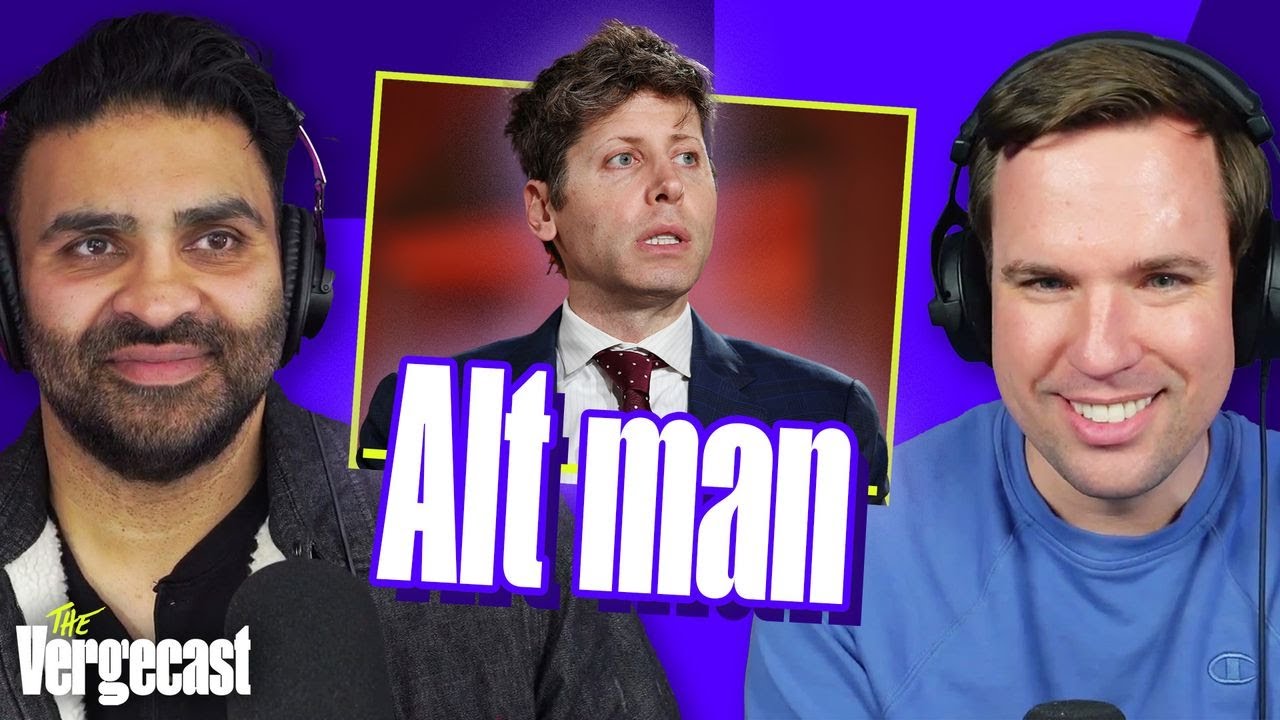
🔗 **Source:** [Fear and Loathing at OpenAI | the Vergecast](https://www.youtube.com/watch?v=leuWbaMUieg)
> [!note]+ Document Notes
> tags: #openai #ai-governance #technology #journalism #workplace-culture
> author: The Verge
> source: The Vergecast
> reference: https://www.youtube.com/watch?v=leuWbaMUieg
> date created: 2024-11-30 15:30
>
> # 🏷️ Title: Fear and loathing at OpenAI | The Vergecast
>
<!-- deep-read:sections start -->
## 🧰 Action Inbox
- [H1] Read New Yorker OpenAI profile and prepare questions for Ronan Pharaoh interview — Decoder podcast #openai
- [H2] Explore AI coding tools for workflow automation projects — personal productivity #ai-tools
- [H3] Submit questions for upcoming Vergecast meta episode via hotline/email — community engagement #vergecast
## 🧭 Table of Contents
- [[#📝 Summary]]
- [[#📖 Main Content]]
- [[#🗒️ Notes]]
- [[#📚 References]]
- [[#🗣️ Paraphrase]]
- [[#📰 Newsletter]]
- [[#✅ Action Items]]
- [[#🧪 Hypotheses]]
- [[#📊 Methodology]]
- [[#❓ Questions]]
- [[#🔮 Future Research]]
- [[#💡 Implications]]
- [[#🧠 Learning Styles Assessment]]
- [[#📊 Accessibility Assessment]]
- [[#🌍 DEIB Assessment]]
- [[#✅ Logical Validity]]
- [[#🛡️ DARVO Analysis]]
- [[#🎯 Conclusion]]
### 🔗 References
- [New Yorker OpenAI Profile](URL)
- [The Vergecast](https://theverge.com/vergecast)
## 📝 Summary
- The Vergecast hosts discuss personal AI coding projects and major tech news
- David Pierce built a comprehensive productivity app using AI coding tools
- Nilay Patel automated his Samsung Frame TV controls through Python scripts
- Major discussion of New Yorker profile on Sam Altman and OpenAI's internal culture
- Coverage of Super Mario movie success and Artemis 2 space mission highlights
- Both hosts demonstrate AI's current state: powerful for technical users, not yet mainstream
## 📖 Main Content
This episode explores the current state of AI-assisted development through personal projects before diving into broader industry analysis. The hosts share detailed accounts of using AI coding tools to solve specific automation challenges, revealing both the potential and limitations of current technology.
The conversation transitions to analyzing OpenAI's organizational challenges through a major New Yorker investigation, suggesting systemic issues within the company despite its public success. The episode balances technical experimentation with critical journalism about AI industry leadership.
## 🗒️ Notes
#### ⏱️ [00:00](https://youtu.be/leuWbaMUieg?t=0) — [H1] Introduction and housekeeping
- Key idea: Podcast positioning and upcoming events
- Evidence: "flagship podcast of being unconstrained by truth"
#### ⏱️ [02:30](https://youtu.be/leuWbaMUieg?t=150) — [H2] Webbies voting campaign
- Key idea: Community engagement for podcast recognition
- Evidence: "I would like to win in a way that hurts everyone else's feelings"
#### ⏱️ [04:15](https://youtu.be/leuWbaMUieg?t=255) — [H3] Movie night and meta episode announcements
- Key idea: Building community beyond podcast content
- Evidence: "IFC Center had to bump us to the bigger theater"
#### ⏱️ [07:00](https://youtu.be/leuWbaMUieg?t=420) — [H1] Nilay's iMac monitor conversion saga
- Key idea: Complex hardware modification using Chinese retrofit boards
- Evidence: "Stone Taskin R1820, which is now a model number that I know"
#### ⏱️ [12:45](https://youtu.be/leuWbaMUieg?t=765) — [H2] Firmware update challenges
- Key idea: International hardware requires Windows-specific tools and troubleshooting
- Evidence: "very blurry video of how to update the firmware using software that only runs on Windows"
#### ⏱️ [18:20](https://youtu.be/leuWbaMUieg?t=1100) — [H3] Display port access and Chinese interface
- Key idea: Physical constraints and language barriers in hardware modification
- Evidence: "sitting there with Gemini taking pictures of the display, translating menus"
#### ⏱️ [25:30](https://youtu.be/leuWbaMUieg?t=1530) — [H1] David's AI-powered productivity app
- Key idea: Building custom software through AI coding assistance
- Evidence: "I have finally built my dream productivity tool which no one is going to care about"
#### ⏱️ [32:00](https://youtu.be/leuWbaMUieg?t=1920) — [H2] AI coding challenges and mistakes
- Key idea: AI tools make powerful errors including accessing wrong repositories
- Evidence: "pulled an entirely different Vercel web app and compiled it onto my desktop"
#### ⏱️ [38:45](https://youtu.be/leuWbaMUieg?t=2325) — [H3] Nilay's Samsung Frame TV automation
- Key idea: Using AI to solve consumer electronics limitations
- Evidence: "Smart Things as a platform in particular is very bad"
#### ⏱️ [44:20](https://youtu.be/leuWbaMUieg?t=2660) — [H2] Consumer vs enthusiast technology adoption
- Key idea: AI coding remains hobbyist territory despite powerful capabilities
- Evidence: "most people cannot describe the problems they have in terms of software"
#### ⏱️ [48:00](https://youtu.be/leuWbaMUieg?t=2880) — [H1] Hype Desk: Super Mario Galaxy movie
- Key idea: Successful but critically panned sequel follows reference-heavy approach
- Evidence: "370 million opening weekend but critics are angry"
#### ⏱️ [55:30](https://youtu.be/leuWbaMUieg?t=3330) — [H2] Artemis 2 mission updates
- Key idea: Space mission humanized through technical difficulties and social media
- Evidence: "You are go for all types of use of the toilet"
#### ⏱️ [62:15](https://youtu.be/leuWbaMUieg?t=3735) — [H3] Space photography and internet culture
- Key idea: Modern space missions blend inspiring imagery with meme culture
- Evidence: "beautiful moment where they're naming a crater after one of the astronauts late wife and a bottle of Nutella floats by"
## 📚 References
- [New Yorker OpenAI Profile](URL)
- [Better Display Software](URL)
- [Stone Taskin Display Boards](URL)
- [Artemis 2 Mission Updates](URL)
## 🗣️ Paraphrase
- AI coding tools enable technical users to solve specific problems but require significant technical knowledge and troubleshooting skills
- Hardware modification communities provide powerful solutions but involve complex international supply chains and language barriers
- Current AI development represents a transition period where enthusiasts can accomplish previously impossible tasks while mainstream adoption remains distant
## 📰 Newsletter
This week's episode showcases the current reality of AI-powered development tools. While David and Nilay successfully automated complex tasks using AI coding assistants, their experiences highlight both the potential and current limitations.
David built a comprehensive productivity dashboard combining multiple APIs, while Nilay automated his Samsung Frame TV through Python scripts. Both projects required significant technical knowledge, troubleshooting, and manual oversight - demonstrating that AI coding remains in enthusiast territory.
The conversation also covers major industry news, including analysis of OpenAI's organizational challenges and positive coverage of the Artemis 2 space mission's cultural impact.
Key takeaway: AI tools are becoming powerful enablers for technical users willing to iterate and troubleshoot, but we're still far from mainstream consumer adoption.
Resources: [Learn WordPress](https://learn.wordpress.org/), [Developer Docs](https://developer.wordpress.org/), [WP-CLI](https://wp-cli.org/)
## ✅ Action Items
#### DevRel
- Developer education: Document AI coding workflows, common pitfalls, security practices
- Developer experience: Create safer sandboxes for AI experimentation
- Community engagement: Foster AI coding communities with proper mentorship
#### OSPO
- Security Management: Establish guidelines for AI-generated code review and validation
- License Compliance: Monitor AI tools for potential license violations in generated code
- Developer Support: Provide training on responsible AI coding practices
#### Community
- Contributors: Create onboarding paths for AI-assisted development workflows
- Maintainers: Develop standards for AI-generated code contributions
- Education: Build resources distinguishing enthusiast vs consumer-ready AI tools
## 🧪 Hypotheses
- AI coding tools will remain in enthusiast/professional territory for 2-3 years before meaningful consumer adoption
- Hardware modification communities will increasingly leverage AI for complex integration projects
- Consumer electronics companies will face pressure to provide better APIs as AI automation grows
- Space missions' social media integration represents new model for public science communication
### 📊 Methodology
- Longitudinal tracking of AI coding tool adoption across technical skill levels
- Analysis of consumer electronics API development in response to automation demand
- Content analysis of space mission social media engagement vs traditional coverage
### ❓ Questions
- How will consumer electronics manufacturers respond to AI-driven automation pressure?
- What security frameworks will emerge for AI-generated code in production systems?
- Can the gap between AI coding capability and mainstream usability be bridged?
### 🔮 Future Research
- Enterprise adoption patterns for AI coding tools
- Consumer product API evolution driven by automation demand
- Social media's role in modern scientific communication
### 💡 Implications
- Practice: Technical teams need new workflows for AI-assisted development and code review
- Policy: Organizations require guidelines for AI-generated code security and compliance
- Security: New attack vectors emerge from AI coding tools accessing wrong repositories or credentials
- Education: Technical education must incorporate AI tool literacy and limitations
- Funding: Investment patterns may shift toward AI-enabled automation rather than pure AI research
### 🧠 Learning Styles Assessment
Reading level estimate: 10-12th grade
#### 👀 Visual learners
- Present: Technical diagrams, screenshots of interfaces
- Improve: Workflow diagrams, API architecture visuals, before/after comparisons
#### 🔊 Aural learners
- Present: Podcast format with detailed verbal explanations
- Improve: Audio examples of error messages, command sequences
#### 🗣️ Verbal learners
- Present: Technical terminology explained, step-by-step narratives
- Improve: Glossary of AI coding terms, analogy-rich explanations
#### 🧩 Kinesthetic learners
- Present: Hands-on coding examples, practical troubleshooting
- Improve: Interactive coding sandboxes, step-by-step tutorials
#### 🧠 Logical learners
- Present: Sequential problem-solving, cause-and-effect relationships
- Improve: Decision trees for tool selection, troubleshooting flowcharts
#### 🧑🤝🧑 Social learners
- Present: Community discussion, shared experiences
- Improve: Collaborative coding exercises, peer review protocols
#### 🧘♀️ Solitary learners
- Present: Individual project narratives, self-directed exploration
- Improve: Self-assessment checklists, reflection prompts
### 📊 Accessibility Assessment
#### Screen reader semantics
- Present: Clear headings, descriptive link text
- Improve: Alt text for technical diagrams, ARIA labels for code blocks
#### Keyboard navigation
- Present: Standard web navigation patterns
- Improve: Skip links for long code examples, keyboard shortcuts for common actions
#### Contrast and readability
- Present: Standard text contrast ratios
- Improve: High contrast mode for code syntax highlighting
#### Text resizing and reflow
- Present: Responsive design for various screen sizes
- Improve: Scalable code block presentation, flexible layout for technical content
#### Media and captions
- Present: Audio content with potential for transcription
- Improve: Synchronized captions for technical discussions, visual descriptions
### 🌍 DEIB Assessment
#### Cultural breadth
- Present: Focus on English-speaking technical communities
- Improve: International hardware communities, non-English developer resources
#### Inclusive language
- Present: Gender-neutral technical terms
- Improve: Avoid assumptions about technical background, define jargon consistently
#### Neurodiversity support
- Present: Structured technical explanations
- Improve: Multiple learning modalities, chunked information presentation
#### Representation
- Present: Male-dominated technical discussion
- Improve: Diverse voices in technical examples, inclusive project scenarios
### ✅ Logical Validity
#### Strong reasoning
- Deductive strength: Clear progression from specific AI coding experiences to broader conclusions about adoption
- Inductive strength: Personal anecdotes support general claims about AI tool limitations
- Causal reasoning: Direct connection between technical barriers and mainstream adoption timeline
- Analogical strength: Effective comparisons between consumer electronics and software complexity
#### Fallacies
- Survivorship bias: Focus on successful AI coding projects may underrepresent failures
- Hasty generalization: Limited personal experiences generalized to entire market segment
#### Tone of voice
- Overall tone: Conversational and technical, balancing enthusiasm with realistic assessment
### 🛡️ DARVO Analysis
- Deny: No significant denial patterns observed
- Attack: Mild criticism of consumer electronics manufacturers' API limitations
- Reverse victim/offender: No reversal patterns present
- Emotional cues: Balanced technical excitement with practical frustration
## 🎯 Conclusion
This episode demonstrates the current reality of AI-powered development: powerful capabilities available to technical users willing to invest time in learning and troubleshooting, but still far from mainstream consumer adoption. The gap between AI coding potential and practical usability remains significant, requiring technical expertise, manual oversight, and iterative problem-solving.
The hosts' projects showcase both the promise and limitations of current AI tools, while broader industry coverage reveals ongoing organizational challenges in the AI sector itself. The combination suggests a technology in transition, with clear value for technical early adopters but requiring significant maturation before broader accessibility.
## 🧱 Refactor Appendix
### 📚 Literature Split Pad
### [H1] AI coding tools enable complex automation for technical users
> [!quote] Fear and loathing at OpenAI | The Vergecast via The Verge. Published 2024. Accessed 2024-11-30.
> "I have finally built my dream productivity tool which no one is going to care about"
Demonstrates current AI coding capabilities and limitations for enthusiast users.
[view highlight](https://youtu.be/leuWbaMUieg?t=1530#H1) #xref #articleseed ID:rw_ai_coding_reality
### [H2] Consumer software problems require technical abstraction thinking
> [!quote] Fear and loathing at OpenAI | The Vergecast
> "most people cannot describe the problems they have in terms of software"
Critical gap between AI capabilities and mainstream adoption potential.
[view highlight](https://youtu.be/leuWbaMUieg?t=2660#H2) #xref ID:rw_software_abstraction_barrier
### [H3] Hardware modification communities benefit from AI integration
> [!quote] Fear and loathing at OpenAI | The Vergecast
> "sitting there with Gemini taking pictures of the display, translating menus"
International hardware communities using AI to overcome language and technical barriers.
[view highlight](https://youtu.be/leuWbaMUieg?t=1100#H3) #xref ID:rw_hardware_ai_integration
---
### 🔖 Atomic Split Pad (Zettel Candidates)
#### [Z1] AI coding requires extensive manual oversight and debugging
- Scope: Current generation AI coding assistants like Claude
- Pointer: Multiple examples throughout David's productivity app development
- Links: [[AI-Development-Workflows]] [[Technical-Literacy-Requirements]]
#### [Z2] Consumer electronics APIs lag behind automation demand
- Scope: Smart home and consumer devices with limited automation capabilities
- Pointer: Nilay's Samsung Frame TV automation challenges
- Links: [[Consumer-Hardware-Design]] [[API-Development-Practices]]
#### [Z3] Space missions now integrate social media as primary communication channel
- Scope: Modern NASA missions using internet culture for public engagement
- Pointer: Artemis 2 toilet problems and meme culture integration
- Links: [[Science-Communication]] [[Social-Media-Strategy]]
---
### ✏️ Fleeting Queue
- [F1] Research Better Display software capabilities and limitations — automation tools #fleeting #inbox
- [F2] Investigate Stone Taskin display board compatibility across iMac generations — hardware
---
## Full Transcript
[00:02] Welcome to the Vercast, the flagship<br>[00:04] podcast of being unconstrained by truth,<br>[00:07] which is what we do here on the<br>[00:08] broadcast.<br>[00:09] >> Wow.<br>[00:10] >> I'm your friend David Pierce Neil tells<br>[00:11] you in this media environment that we<br>[00:13] are the flagship podcast of that cuz I<br>[00:15] don't RFK started a podcast this week.<br>[00:18] You know what I mean?<br>[00:18] >> It is in a very high bar for being<br>[00:20] unconstrained by truth on a podcast. But<br>[00:22] we're here here today. We're going to do<br>[00:23] our very best.<br>[00:24] >> The webbby for being unconstrained by<br>[00:26] truth. The voting is now open.<br>[00:27] >> It's beautiful. That of course is a line<br>[00:30] from a New Yorker profile of Sam Alman<br>[00:33] that is deeply fascinating and has been<br>[00:34] making the rounds this week. We're going<br>[00:36] to talk about it. There's another big<br>[00:38] story about Satoshi Nakamoto, the<br>[00:39] founder of Bitcoin that's been going<br>[00:41] around that we're going to talk about.<br>[00:42] We have some Brendan stuff to talk<br>[00:43] about. We have some anthropic stuff to<br>[00:45] talk about. We have a lot to talk about.<br>[00:46] All that is much less important than<br>[00:48] weird things Neil and David have been<br>[00:49] doing on their computers this week. We<br>[00:51] also have uh a couple of housekeeping<br>[00:53] items for you. One is uh please vote for<br>[00:55] us in the Webbies. The voting is open<br>[00:57] until next Thursday. We are currently<br>[00:59] winning for best technology podcast, but<br>[01:01] it's too close and it's making me<br>[01:02] uncomfortable.<br>[01:03] >> Yeah, we're not winning by enough.<br>[01:04] >> I would like to win in a way that hurts<br>[01:06] everyone else's feelings. Do you know<br>[01:07] what I mean?<br>[01:08] >> I Yeah, I'd like to win in a way that we<br>[01:10] have to be good winners.<br>[01:12] >> Do you know what I mean?<br>[01:13] >> Right. It becomes incumbent on us to<br>[01:15] like give a nice speech acknowledging<br>[01:16] the others.<br>[01:17] >> Yeah. Like if if if like I was like, "Oh<br>[01:20] my god, I'm so happy I won." Like if you<br>[01:22] win by enough, if you don't nail the<br>[01:24] speech, you're a jerk. And I want to be<br>[01:27] in that position. I want that level of<br>[01:28] stress and pressure on the fiveword<br>[01:31] webbby acceptance speech. I respect<br>[01:33] that. I would like to be required. I<br>[01:36] want I want the like Tom Brady, Michael<br>[01:38] Jordan level of success where where we<br>[01:41] do so well that we still find haters and<br>[01:44] everybody's like, "Wow." the the amount<br>[01:47] of rage and anger that you have to have<br>[01:49] to still find haters amongst all this<br>[01:51] success. That's what I want for us<br>[01:52] >> and then thrive on them,<br>[01:54] >> right?<br>[01:55] >> I I think it's clear that I thrive on my<br>[01:57] haters, David. I don't I don't know that<br>[01:58] we need to find any more.<br>[01:59] >> It's true. People have been saying this<br>[02:00] about you. Um also, um the Verge movie<br>[02:02] night on April 27th is already sold out.<br>[02:05] Um not only did the IFC Center have to<br>[02:07] bump us to the bigger theater to go see<br>[02:09] sneakers with all of you, it's already<br>[02:11] sold out. So, a very excited to see a<br>[02:14] bunch of you for sneakers in a couple of<br>[02:15] weeks. B, um I think this is officially<br>[02:17] a thing we're going to have to do again.<br>[02:19] So, keep an eye out. We're going to do<br>[02:20] more of these. It's going to be very<br>[02:21] fun. Uh last one in two Tuesdays, I<br>[02:25] think April 21st. Uh we're going to do a<br>[02:27] whole Vergecast about the Verge and the<br>[02:29] Vergecast, the media business and<br>[02:31] journalism and AI and our feelings about<br>[02:33] everything. Um so, you and I are going<br>[02:35] to spend a whole episode answering as<br>[02:36] many questions as we can. We're going to<br>[02:38] loop in Helen have like our publisher to<br>[02:40] talk about the business a little bit.<br>[02:41] Um, if you have questions about the<br>[02:44] Verge or the Vergecast or the state of<br>[02:46] media or why NLI is like this, um, you<br>[02:49] can always call the hotline 86611. Email<br>[02:52] us vergecast theverge.com. Send all that<br>[02:54] stuff in. We're going to answer as many<br>[02:55] of those as we can in two Tuesdays. So,<br>[02:58] you've got a little bit of time, but not<br>[02:59] too much. Get all that stuff in as<br>[03:01] quickly as you can. That ends up being,<br>[03:02] I think, one of my favorite episodes to<br>[03:03] make. We do this like once a year, I<br>[03:05] would say, on average. Uh, it's very<br>[03:07] fun. Get all your questions in. David, I<br>[03:09] have this like old school journalism,<br>[03:11] don't do inside baseball and make the<br>[03:13] story about yourself. And then you look<br>[03:15] at every famous creator and influencer,<br>[03:17] and they're like, here's what I wore<br>[03:18] today, and we we're just going to try to<br>[03:22] we're going to try to thread that needle<br>[03:23] a little bit more.<br>[03:24] >> Yep. 100%. Um, but all of the news this<br>[03:28] week, I think, is is demonstrabably less<br>[03:30] important than weird stuff that Neili<br>[03:32] and David have been doing on their<br>[03:33] computers this week.<br>[03:34] >> Let's make the show about ourselves. As<br>[03:36] I was saying,<br>[03:36] >> let's just let's just do it. Um, let's<br>[03:38] start with you, Neili, because you, I<br>[03:39] think, owe us updates on a couple of<br>[03:42] different projects. Um, starting with<br>[03:44] your iMac as monitor saga, which has<br>[03:47] become, it has been elevated to the<br>[03:49] level of a saga here on the Vergecast.<br>[03:51] >> It is a little bit of a saga. It's not<br>[03:52] so much of a saga, but it's a little bit<br>[03:54] of one.<br>[03:54] >> I believe where we left off was um you<br>[03:57] were going to try some wacky firmware<br>[03:59] shenanigans.<br>[04:00] >> Yes.<br>[04:01] >> What's What's been going on? So, I<br>[04:02] bought uh the Stone Taskin R1820, which<br>[04:05] is now a model number that I know and<br>[04:06] talk about as though everyone cares<br>[04:08] about iMac display retrofit boards.<br>[04:10] Yeah,<br>[04:11] >> there is a community and I that<br>[04:12] community is great and they have been<br>[04:14] working on this for years. You can you<br>[04:15] can go read those threads. They were<br>[04:16] literally years long on various forms.<br>[04:18] So, I bought the newest board because<br>[04:20] you got to buy the newest one, not the<br>[04:21] one everyone's been using for years that<br>[04:22] obviously works, right? You have to buy<br>[04:25] the newest one.<br>[04:26] >> Uh the 1811 is one that everyone's using<br>[04:28] for years that already works, but I<br>[04:29] bought the 1820 cuz it's new. You<br>[04:31] understand what I'm saying?<br>[04:31] >> Sure.<br>[04:32] >> So 1820 I came to my house, opened the<br>[04:34] iMac. It was harrowing in its way, but<br>[04:38] not as hard as people say. Um, put the<br>[04:41] board in. Kind of did a bad job. I call<br>[04:43] that Snazzy Labs. They needed a way<br>[04:45] better job. Go watch that video. It's<br>[04:47] It's way more impressive than whatever I<br>[04:49] did. Um, set it all up. It works. It<br>[04:52] lights up. It looks beautiful. Well, I<br>[04:53] have a a little color calibrator so that<br>[04:56] you know when the screen when the<br>[04:58] display is in an iMac, Apple controls<br>[05:01] the color so it's like perfect in the<br>[05:02] way that Apple color is perfect. When<br>[05:03] it's just running native off some board<br>[05:05] you bought from China, it's just sort of<br>[05:07] a little green. So, I color calibrated<br>[05:09] it, made it look good, and then the you<br>[05:12] install this software called better<br>[05:13] display to control the brightness with<br>[05:14] the keyboard, which you obviously have<br>[05:16] to do.<br>[05:17] >> I mean, how could you not? Mhm.<br>[05:18] >> And that the backlight mapping was<br>[05:22] inaccurate. And so as you stepped up the<br>[05:24] brightness, it would get to 100 and then<br>[05:26] reset like halfway through and then do<br>[05:28] it again. And this<br>[05:29] >> okay,<br>[05:30] >> so one, this is not a problem because<br>[05:32] you can just set it to 100. You can set<br>[05:34] it to its obvious brightest setting and<br>[05:36] leave it alone.<br>[05:37] >> But I cannot do that.<br>[05:39] >> Like it has to principle.<br>[05:40] >> So I find myself emailing with Stone<br>[05:42] Tasking. And just as a customer, they<br>[05:44] don't know who I am. They were very<br>[05:45] responsive. Feel great about that. They<br>[05:46] sent me a very blurry video of how to<br>[05:49] update the firmware using a piece of<br>[05:52] software that only runs on Windows and<br>[05:54] only addresses the card over display<br>[05:56] port.<br>[05:56] >> Oh lord.<br>[05:57] >> Now, here's problem one.<br>[06:00] >> Uh, all of my Windows PCs don't have<br>[06:02] display ports. Like, they're all<br>[06:03] ancient. The only one in our house that<br>[06:04] does is Becky's work computer, which she<br>[06:06] would not allow me to install Chinese<br>[06:08] firmware updators on.<br>[06:10] >> Fair. Uh, two, I never anticipated using<br>[06:14] the display port on this thing and the<br>[06:16] board is now sealed inside the iMac<br>[06:18] whose screen has been glued back on.<br>[06:20] >> Right? Cuz I you get to the end of this<br>[06:22] process and you're like, I am never<br>[06:23] going to open<br>[06:24] >> HDMI port setup. It's plugged into the<br>[06:26] Mac Studio. By the time I buy a new<br>[06:28] computer, this adventure will have to<br>[06:31] come to some sort of conclusion, right?<br>[06:33] This display will be like 20 years old<br>[06:34] and I will have to buy a new one. I made<br>[06:37] it work in this setup and that's how<br>[06:38] long it's going to take. Now I need the<br>[06:40] display port. So I the only way to I'm<br>[06:43] not going to cut the display open again.<br>[06:44] So I have to dig around the memory<br>[06:46] access door with a display port cable<br>[06:50] and try to get it in the board. So<br>[06:52] that's one. And then two, I was like, I<br>[06:54] need a computer with a display port. And<br>[06:56] we looked in the reviews closet, I said<br>[06:58] last week, and we found a Surface laptop<br>[07:00] from like 2019 with a mini display port.<br>[07:02] And I took it and I took it out of the<br>[07:04] reviews closet. I put it on my desk in<br>[07:05] my office. And then I promptly left the<br>[07:07] office without it. So, now what am I<br>[07:08] going to do? I installed Windows 10 on<br>[07:11] Becky's old Intel MacBook Air, which has<br>[07:13] been sitting on a shelf for ages with a<br>[07:15] USBC to display port. Figured it all<br>[07:17] out. Downloaded the weird software.<br>[07:19] Watched a very blurry video that was the<br>[07:22] software is in Chinese. Part of there's<br>[07:24] a lot going on in this video. Nailed it.<br>[07:27] Nailed it out the gate in one.<br>[07:28] Terrifying. The MacBook Air has now been<br>[07:30] reset because it had a Chinese firmware<br>[07:32] update or installed in Windows on it.<br>[07:34] So, that is no longer doing whatever it<br>[07:36] may have been doing to my house. And<br>[07:37] then I booted it all up and it worked<br>[07:39] great. And the entire interface of this<br>[07:41] monitor is now in Chinese.<br>[07:47] >> Okay.<br>[07:48] >> I mean, I hate to say you both deserve<br>[07:49] this and should have seen it coming. You<br>[07:52] know, it's excellent customer service.<br>[07:53] Just one last step that I needed to<br>[07:55] resolve. So, I ended up sitting there<br>[07:57] with Gemini taking pictures of the<br>[08:00] display, translating menus until I found<br>[08:03] the one. I mean, this is like if you<br>[08:05] look at the buttons, it's just a raw PCB<br>[08:07] that sticks out of the back of the iMac<br>[08:09] casing on a ribbon cable<br>[08:11] >> and it just has some unlabeled buttons<br>[08:13] on it.<br>[08:14] >> So, there's just a lot of mistakes to be<br>[08:15] made as you navigate sort of backwards<br>[08:17] on the front of the thing in Chinese<br>[08:19] with Gemini in your hand. Like, none of<br>[08:20] that was elegant, I would say.<br>[08:23] >> But, I feel like monitored interface is<br>[08:24] like four buttons, right? It's like you<br>[08:26] can figure out which icon means contrast<br>[08:27] and which icon means brightness and then<br>[08:29] you just move it to the thing and it's<br>[08:30] fine. Right<br>[08:31] >> there. I would say that they did not use<br>[08:34] icons. The universal language of<br>[08:37] graphics is not present in this inter<br>[08:39] contrast. You have the dark half and the<br>[08:41] light half. Brightness is the sun. like<br>[08:43] it's it's we've I was trying to change<br>[08:45] it to English, which is<br>[08:48] >> like I think in the grand scheme of all<br>[08:50] language settings, the fact that the one<br>[08:51] that lets you change the language is<br>[08:53] always in the language you don't<br>[08:54] understand.<br>[08:55] >> Yeah.<br>[08:55] >> Like that's how that goes.<br>[08:56] >> Uh anyhow, I figured it out. It's in<br>[08:58] English now. It works. The only thing is<br>[09:01] uh when you turn on the computer and it<br>[09:02] wakes from sleep, um it lights up and<br>[09:05] then it turns off and it thinks real<br>[09:07] hard and then it comes back again and<br>[09:08] it's fine for the day.<br>[09:09] >> Okay. It's this is one little problem is<br>[09:11] it does a little handshaky weirdness but<br>[09:14] like totally acceptable to have an<br>[09:15] excellent looking 5K display connected<br>[09:17] to my Mac Studio.<br>[09:18] >> This is now a what is Nei's threshold<br>[09:20] for solving this problem question<br>[09:21] because are you going to do that for 10<br>[09:24] days and then be like I could fix this<br>[09:25] and and go through this again or have we<br>[09:27] officially reached I'm never touching<br>[09:29] this thing ever again.<br>[09:31] >> We're never touching it. It's it is<br>[09:32] buttoned back up. There's a display port<br>[09:34] uh extension coming out of it. I I as<br>[09:36] long as I was fishing, I put a USBC<br>[09:38] extension in the back of there. Uh,<br>[09:40] we're done. We're We're super done.<br>[09:42] >> How upset do you think Johnny IV would<br>[09:44] be if you showed him the inside of your<br>[09:46] iMac now?<br>[09:47] >> I think the part where I grabbed the<br>[09:49] main logic board of an iMac and just<br>[09:53] yanked it out of Johnny Ives's carefully<br>[09:56] constructed, exquisitely packaged<br>[09:58] internals because I was like, it doesn't<br>[10:00] matter if this breaks. And I just yanked<br>[10:02] it. I literally thought about Johnny Ibe<br>[10:04] in that moment. I was like, "Someone<br>[10:06] worked on this very hard because you<br>[10:08] know it's it's like it's beautiful in<br>[10:10] the Apple way. You open it and it is<br>[10:12] beautiful inside." And I was like, "Huh,<br>[10:14] that sucks for you." And it just started<br>[10:16] pulling out stuff<br>[10:19] cuz what you need is an empty case to<br>[10:21] fit the board in. Uh anyway, it's done.<br>[10:23] It we're gonna leave it alone. The other<br>[10:24] hilarious thing about better display<br>[10:26] that I should say, uh, my other monitor,<br>[10:29] my Zoom monitor, my Google Meet video<br>[10:31] conferencing monitor is the sort of<br>[10:33] infamous Samsung Curve TV that I bought<br>[10:35] almost a decade ago now.<br>[10:36] >> Amazing.<br>[10:37] >> Because it's all you need. You just need<br>[10:39] a 40-in screen over there to run some<br>[10:40] video conferencing software on. Um, and<br>[10:43] there's like a a webcam in front of it.<br>[10:45] It's better display can talk to that<br>[10:47] screen over Wi-Fi, over the internet.<br>[10:50] >> Oh. So it when I turn on my computer, it<br>[10:53] now because that's a TV and it doesn't<br>[10:55] respect sleep commands. So it's like,<br>[10:57] okay, I found that display, you know, I<br>[10:59] fixed its IP address on my router. Um,<br>[11:02] and it it just turns it on and off with<br>[11:04] a computer now over over the network.<br>[11:06] >> I've never been happier with like a<br>[11:08] little thing, like an unnecessary little<br>[11:10] feature.<br>[11:10] >> Yeah,<br>[11:10] >> I used to have to turn on that thing<br>[11:11] with the remote every day and now it's<br>[11:13] like the computer is like, I see it,<br>[11:14] I'll just send the packet to it and it<br>[11:16] just does it. It's amazing.<br>[11:17] >> The software is like wild. is not<br>[11:20] complete software. Like it's obviously<br>[11:22] made by people who care a lot about<br>[11:23] displays in very nerdy ways and assume<br>[11:25] you know everything that they know.<br>[11:27] >> Sure.<br>[11:28] >> But when you figure it out, it works<br>[11:30] amazing.<br>[11:30] >> That is pretty cool. I just realized a<br>[11:33] we need to do like a Nei Patel studio<br>[11:35] tour thing. Uh, but B, my picture of<br>[11:39] your studio, I'm just realizing this<br>[11:41] right now, is that you essentially are<br>[11:43] in like the back room of a Best Buy with<br>[11:45] just a bunch of like weird old stuff.<br>[11:48] >> Yeah.<br>[11:48] >> That that you've just sort of It's like<br>[11:51] you're like an ongoing Geek Squad<br>[11:53] project that no one wants at the end.<br>[11:57] >> It's not wrong. Uh, except it, you know,<br>[12:00] it's like the attic next to my<br>[12:02] daughter's bedroom.<br>[12:03] >> Nice.<br>[12:03] >> And it is just a mess in here. like<br>[12:06] there's just stuff everywhere. I need to<br>[12:07] clean it up. That's why I was like no<br>[12:08] one wants a studio tour.<br>[12:09] >> People think this is all very glamorous<br>[12:11] and and exciting and I'm like I'm<br>[12:12] staring over my laptop at a just a giant<br>[12:15] pile of unfolded laundry. Like this is<br>[12:17] just what we're doing today.<br>[12:18] >> That's very good.<br>[12:20] >> All right. What's your project?<br>[12:21] >> So I've been claw coding like a like a<br>[12:25] maniac like for months now. Um but I<br>[12:27] have finally built my dream productivity<br>[12:31] tool<br>[12:32] which no one is going to care about. But<br>[12:34] I've had very funny adventures with it<br>[12:36] recently. So, um, Thomas Paul Man, the<br>[12:39] CEO of Raycast, came on this show a<br>[12:41] while ago and told me his big theory of<br>[12:42] AI is that the best thing you can do<br>[12:45] with these generative tools is build<br>[12:47] software because you can do it once and<br>[12:49] when you get the thing to work, then it<br>[12:50] works every time. That like reinventing<br>[12:52] the wheel and having this thing go out<br>[12:54] and do explorations for the same thing<br>[12:55] over and over and over, the sort of<br>[12:57] agentic world we're talking about, is<br>[12:59] the wrong approach. But what you can do<br>[13:00] is you can build specific useful<br>[13:03] software that you can then test and<br>[13:04] verify and once you have that it can<br>[13:06] just be reliable software. So he was<br>[13:08] like he was one of the first people who<br>[13:10] really turned me on to the idea of like<br>[13:11] why like AI software is actually a<br>[13:14] really powerful idea for a lot of<br>[13:15] reasons. So I have set out to build<br>[13:17] myself like my ideal to-do list and<br>[13:21] notes and like like keep all my life<br>[13:23] together tool. I need to write a long<br>[13:25] story about my many adventures, but I<br>[13:27] basically like I tried to build a whole<br>[13:29] thing from scratch, got super far down<br>[13:31] the road, and then got annoyed by all<br>[13:32] the bugs I couldn't figure out how to<br>[13:33] fix and bailed. Uh I then tried to do a<br>[13:35] less ambitious thing that I got bored<br>[13:37] with and bailed. And what I eventually<br>[13:39] found was I use a bunch of different<br>[13:41] services, all of which have built uh MCP<br>[13:44] servers. Uh they've built really robust<br>[13:46] APIs and in many cases they built<br>[13:48] command line interfaces for working with<br>[13:50] AI. So, I was like, "Oh, rather than try<br>[13:52] to like reinvent to-d doist, which I use<br>[13:54] for to-dos, which I think is like a<br>[13:56] really great infrastructure, but a<br>[13:57] really ugly app, I can just build my own<br>[14:00] thing to look at to-d doist." Uh, and so<br>[14:03] now I have a thing that pipes in my<br>[14:04] calendar events from Google, my to-dos<br>[14:07] from to-d doist, my notes from a text<br>[14:10] file, which I sync with Obsidian, and<br>[14:12] then two other services. One Readwise<br>[14:14] Reader, which I use for for saving and<br>[14:16] reading articles, and raindrop.io, which<br>[14:18] I use for bookmarking. And all of this<br>[14:20] just pours into one little web app that<br>[14:22] I've built myself that looks exactly the<br>[14:24] way that I want to and is just full of<br>[14:25] all the things that I make every day.<br>[14:27] And then at the end of every day, I<br>[14:28] export a markdown file with everything I<br>[14:30] did and created that day that now is<br>[14:32] like in a searchable archive of text<br>[14:34] files on my desktop. And it's awesome<br>[14:36] and I love it very much. But the<br>[14:38] funniest thing that has happened to me<br>[14:39] recently is uh I wanted to build this<br>[14:41] thing for mobile, right? It's a web app.<br>[14:43] I can use it as a as a progressive web<br>[14:44] app, but I was like there's some little<br>[14:45] things I want to do. I want to build<br>[14:47] this as like a more robust desktop app<br>[14:50] on my computer. So, I start fussing with<br>[14:52] Electron. We go through this whole<br>[14:53] thing. It's like, okay, I'm just going<br>[14:54] to build this thing as a as a DMG on my<br>[14:56] Mac so that I can pin it on top of other<br>[14:58] apps essentially and like access it with<br>[15:00] global shortcuts and from the menu bar<br>[15:01] and stuff like this. You have to build<br>[15:03] slightly more on top of a tab in order<br>[15:06] to make that work. Um, I told it to just<br>[15:10] do this and it's like, cool, I can do<br>[15:11] that for you. Goes off and does it. It<br>[15:13] pulled an an entirely different Verscell<br>[15:18] web app and compiled it onto my desktop.<br>[15:22] The strangest thing I've ever<br>[15:23] experienced. It was like it was like I'<br>[15:25] I've been doing this thing inside of<br>[15:26] Cloud Code for like 3 weeks now, like<br>[15:29] building and refining this thing. Uh and<br>[15:30] I was like, "Okay, just make this thing<br>[15:32] a DMG." And it was goes great. I've I've<br>[15:33] compiled this for you. It'll run on your<br>[15:34] desktop. So I run it and install it<br>[15:36] completely. I just got somebody else's<br>[15:38] private web app<br>[15:39] >> inside of my thing. And I literally I<br>[15:42] responded to Cloud Code. I was like,<br>[15:43] "Uh, I don't know what this is, but this<br>[15:45] is a completely different app." And it<br>[15:46] goes, "Oh, sorry. Grabbed it from the<br>[15:48] wrong URL."<br>[15:49] >> No.<br>[15:49] >> So, you could just you could just do it.<br>[15:51] Just went and got it for me. And this is<br>[15:53] a thing that has actually happened a few<br>[15:54] times where it it mistakes like it<br>[15:57] guesses what your GitHub link is and<br>[15:59] pulls the wrong thing based on what it<br>[16:00] thinks its name should be. It has tried<br>[16:02] to upload things to the wrong place. It<br>[16:04] at one point made this whole thing<br>[16:06] public and then was like, "Hey, your<br>[16:07] your Google API credentials have just<br>[16:09] been public on GitHub for 5 minutes. um<br>[16:12] hope that's not a problem. And so it's<br>[16:14] just like all of these I know you've<br>[16:16] been you've been using these tools a<br>[16:18] bunch too, but it's like it it has this<br>[16:21] relentless ability to just keep trying<br>[16:23] to do stuff and uh generally speaking,<br>[16:28] I've had to interrupt it a bunch of<br>[16:29] times and be like, "Hey, you need this<br>[16:31] one very small piece of information. I<br>[16:33] can I can just give it to you. Like you<br>[16:35] you don't have to go guess where it<br>[16:36] exists on the internet or try to figure<br>[16:38] it out or do a bunch of weird [ __ ] to go<br>[16:40] find this API." like I I I know the URL.<br>[16:42] I can just tell you what it is. It'll be<br>[16:44] fine. And it's like, oh, that'd be<br>[16:47] great.<br>[16:49] Like, well, didn't you've been you've<br>[16:51] been working for an hour and you know,<br>[16:52] we've we've burned down a rainforest so<br>[16:54] that you could do this. But at the end<br>[16:56] of all of this, I did it. I have I have<br>[17:00] I have vibecoded myself an app that I<br>[17:03] use all day, every day.<br>[17:04] >> And it's just a regular piece of<br>[17:06] software that you made that runs on your<br>[17:08] desktop natively. It's mostly still a<br>[17:10] web app because I wanted to be able to<br>[17:11] use it like a everywhere and b like in a<br>[17:14] browser and pull stuff to it.<br>[17:15] >> Where is the web app hosted?<br>[17:16] >> Versel.<br>[17:17] >> Okay.<br>[17:17] >> And I could tell you the URL, but then<br>[17:19] you'd presumably be able to just use it.<br>[17:21] Yeah,<br>[17:21] >> I should. Can you give me access to I<br>[17:23] feel like I can start assigning you to<br>[17:25] >> I would like you to add things to my<br>[17:26] to-do list. That would honestly be<br>[17:27] helpful for me. But yeah, and it's like<br>[17:29] I feel sort of the way I bet you feel<br>[17:31] about your iMac, which is that like it I<br>[17:34] I did it.<br>[17:36] There's this insane process. It took too<br>[17:38] long. Like, could I have successfully<br>[17:41] used the limited amount of HTML and CSS<br>[17:43] and JavaScript that I have to build this<br>[17:45] myself? Probably. But instead, like last<br>[17:49] night, I spent 3 hours playing video<br>[17:51] games. This is this is a real story. I'm<br>[17:54] sitting there playing FIFA and every<br>[17:55] time the ball would go out of bounds and<br>[17:56] there's like a throw in or halftime or<br>[17:58] whatever, I would just lean over and do<br>[18:00] another command for cloud code and it's<br>[18:01] just sitting there building this thing<br>[18:02] for me as I'm playing video games. And<br>[18:04] I'm like, this this is a future I can<br>[18:05] get behind.<br>[18:06] >> Yeah. I have two thoughts about this<br>[18:08] because I'm gonna talk about my own<br>[18:09] little vibe pony adventure. One, I have<br>[18:11] the same general reaction to all of<br>[18:13] these stories<br>[18:15] that I do when people tell me about<br>[18:16] their dreams. I'm like, this had you had<br>[18:19] real emotions. You felt real feelings. I<br>[18:22] feel nothing because you were describing<br>[18:25] a literal hallucination that your mind<br>[18:27] created while you were asleep. Like I<br>[18:28] I'm sorry. Like I And like some people<br>[18:31] are really into other people's dreams<br>[18:32] and some people aren't. Like actually<br>[18:34] Addy Robertson wrote this headline about<br>[18:36] AI generated art for us like years ago<br>[18:39] because people would make it and they'd<br>[18:40] be so excited about it and as we can all<br>[18:42] tell it like kind of doesn't hit unless<br>[18:45] it's like a dancing baby strawberry and<br>[18:47] you're like something is happening in<br>[18:49] America. That's how I feel about all of<br>[18:50] those.<br>[18:52] >> Um I think that's fine. There's<br>[18:54] something about that that I think is<br>[18:55] really important and it connects to<br>[18:58] how all the software people we know are<br>[19:00] having full emotional crises about the<br>[19:03] nature of software development and<br>[19:04] they're landing on the thing is alive<br>[19:06] and the way open AI and anthropic now<br>[19:08] talk about their coding tools<br>[19:10] specifically<br>[19:12] they just call them AGI we'll come to<br>[19:13] this right like they've arrived at like<br>[19:15] it's obviously AGI is here because it<br>[19:17] can write software for you but then you<br>[19:20] the outputs are like I made myself a<br>[19:22] little piece of software like I I'll<br>[19:24] just I'll say mine like I made myself a<br>[19:26] little piece of software this week. It<br>[19:27] is very stupid. It is so much stupider<br>[19:30] than yours. Um but I defeated the Smart<br>[19:32] Things API on the Frame TV and I'm very<br>[19:34] proud of myself.<br>[19:36] >> Okay. You let the AI control your house<br>[19:38] now.<br>[19:38] >> No, no, no, no. I'm much more of a<br>[19:40] scaredy-cat than you.<br>[19:41] >> Oh. Oh, okay.<br>[19:42] >> So, I have a a MacBook Neo that now has<br>[19:47] Canva on it because uh we got Max a a a<br>[19:50] Cry Cut printer for her birthday. And so<br>[19:53] like we're just going to use it for<br>[19:54] that. But also it's my agentic toy toy<br>[19:57] playground, you know. Uh that's the<br>[19:59] right combination of things.<br>[20:01] >> Yeah.<br>[20:01] >> Let it design school child and open<br>[20:04] claw. What could possibly go wrong?<br>[20:06] >> So just using co-work because coowork is<br>[20:08] a little bit better behaved. Also<br>[20:09] anthropic changed its pricing for<br>[20:11] openclaw. So that's all a mess. Um<br>[20:14] >> but so this week uh and so I just like<br>[20:16] won't let it out of the box. And so I<br>[20:19] really want, you know, we I have two<br>[20:21] shows. You know, I host a coder and we I<br>[20:23] do the Vergecast and I need to change<br>[20:25] the picture on this TV. And then also<br>[20:27] we've decided that gamer lights are<br>[20:28] appropriate for the Vergecast and not<br>[20:31] appropriate for interviewing CEOs. So<br>[20:33] like the lights need to change, like the<br>[20:34] the lighting preset needs to change. I<br>[20:36] bought a Stream Deck, a Stream Deck Neo.<br>[20:38] It's little and cute and it, you know,<br>[20:40] it just has buttons on it. And I was<br>[20:42] like, when I push the button, the lights<br>[20:44] should change and the image on the TV<br>[20:46] should change. And the lights are easy<br>[20:48] because the lights run on a piece of Mac<br>[20:50] desktop software called Amaron Desktop<br>[20:52] which has a Stream Deck plugin. So you<br>[20:54] set up the scene, push the button,<br>[20:56] great, the lights all change.<br>[20:57] >> As someone who has seen you fight with<br>[20:59] just changing the image on the Frame TV,<br>[21:02] this seems very exciting.<br>[21:04] >> Right. So the Frame TV runs Tyizen,<br>[21:07] which is controlled by Smart Things,<br>[21:09] which is software written by Samsung.<br>[21:11] And Samsung I would say has not taken<br>[21:15] advantage of the vibe coding revolution<br>[21:17] to make better software.<br>[21:19] >> Yeah.<br>[21:21] You know that that it just it is the<br>[21:22] thing that is and Smart Things as a<br>[21:24] platform in particular is very bad<br>[21:26] because it from what I can tell the TV<br>[21:29] runs like a little web server that the<br>[21:32] Smart Things app on your phone has to<br>[21:33] connect to a new every time as though<br>[21:36] that it has never even considered this<br>[21:39] opportunity in its life. It's like, "Oh<br>[21:40] my god, I can see your TV. Would you<br>[21:43] like to set it up?" Like every time it's<br>[21:45] like utterly confused about what's going<br>[21:47] on.<br>[21:47] >> And nothing about that API lets you do<br>[21:49] the one thing that you might want to do<br>[21:51] on a Frame TV, which is change the<br>[21:53] artwork,<br>[21:54] >> right?<br>[21:54] >> Or uh importantly, I know you've run<br>[21:56] into this, turn the TV on and off in a<br>[21:58] predictable way.<br>[22:00] >> That is just not a choice you can make<br>[22:02] with a frame.<br>[22:02] >> That's because on and off is not a<br>[22:04] concept the Frame TV understands,<br>[22:06] >> right? There's on. There's kind of on,<br>[22:07] and then there's also off. But off is<br>[22:09] sometimes on, and on is technically also<br>[22:11] off.<br>[22:12] >> Yes, it<br>[22:12] >> everything I just said is accurate.<br>[22:14] >> It's 100% true.<br>[22:15] >> Frame TV users,<br>[22:17] >> you want to turn on a Frame TV into art<br>[22:19] mode, and then set an image.<br>[22:22] You would think this is like the most<br>[22:25] basic thing you would want to automate<br>[22:26] on this TV.<br>[22:27] >> It is possible to light up a Frame TV,<br>[22:30] pick one of Samsung's built-in free<br>[22:32] streaming apps, and like select a<br>[22:34] channel. It is not possible to turn it<br>[22:35] on in art mode and select an image.<br>[22:38] These these things just like don't exist<br>[22:39] in the Smart Things API. So I asked<br>[22:41] Claude to do it. Claude I and you know<br>[22:44] it's like like I don't know like I have<br>[22:46] a little kid. You've got a little kid.<br>[22:47] It's like watching them just fall down<br>[22:49] this like fall off the bed. It's like oh<br>[22:51] don't do that. Oh, you did it. And it's<br>[22:53] like I'm going to use the Smart Things<br>[22:54] API. And I just watched it try to use<br>[22:56] the Smart Things API. Um God and it<br>[22:59] failed. And then it found a bunch of<br>[23:02] Reddit threads that I was also familiar<br>[23:03] with from the past where people have<br>[23:05] discovered the controls to do these<br>[23:08] things with websockets locally on the<br>[23:10] network.<br>[23:11] >> So if and I have never set this up<br>[23:13] because you need like a Raspberry Pi<br>[23:15] like running Python like so like you<br>[23:17] have to you need a little computer<br>[23:19] somewhere on your network that will just<br>[23:21] always talk to this thing.<br>[23:23] >> And I just haven't like gotten all the<br>[23:25] way there. But when you have cloud, it's<br>[23:27] like, "Oh, I wrote a Python script for<br>[23:28] your Mac that sits right in front of the<br>[23:30] TV." And now the Stream Deck just runs<br>[23:32] that Python script and it<br>[23:34] >> and it, you know, it took a long time.<br>[23:36] It had to it had to talk to the TV. It<br>[23:38] had to figure out the file list of all<br>[23:39] the images on the TV and which images I<br>[23:41] wanted and all of this is stuff like<br>[23:43] you're saying before I had children.<br>[23:46] This would have been a somewhat<br>[23:47] frustrating yet ultimately rewarding<br>[23:49] weekend of screwing around in the<br>[23:51] terminal and like reading Reddit<br>[23:52] threads. And instead, it was a somewhat<br>[23:55] frustrating but ultimately rewarding<br>[23:57] like half afternoon in between meetings<br>[24:00] of letting Claude just run at Smart<br>[24:02] Things and watching it happen. And I and<br>[24:05] I don't let Claude use my terminal. Like<br>[24:06] again, I'm I'm much more of a<br>[24:07] scaredy-cat than you are. Yeah. So, I<br>[24:09] was copying and pasting commands and<br>[24:11] code back and forth. um which is slow,<br>[24:13] but like again this is my level of<br>[24:16] understanding. Like I could read the<br>[24:17] code and like make sure and these are<br>[24:19] not long commands, right? I can make<br>[24:21] sure it was doing what I thought it was<br>[24:22] supposed to do. Um again, very very<br>[24:24] basic. I'm not even remotely pretending<br>[24:26] that I'm good at this. I can just read<br>[24:28] three lines of Python and be like,<br>[24:30] "Okay, you're sending a command to the<br>[24:31] TV to get its file list." Like I I know<br>[24:33] I understand what I'm looking at here.<br>[24:35] Yeah.<br>[24:35] >> Um like, "Is there a crypto miner on my<br>[24:37] Frame TV now?" Like I don't know 100%,<br>[24:39] but I'm reasonably confident. Uh anyhow,<br>[24:42] so we we made it made the scripts. They<br>[24:44] are sitting on this machine that I<br>[24:46] podcast from. And when I push the button<br>[24:48] on the stream deck, I'll do it right<br>[24:49] now. Uh it it turns the lights. It does<br>[24:51] a macro. It changes the lights to white.<br>[24:53] It sends the command and picks the image<br>[24:54] on the TV. And this is like a huge<br>[24:56] victory that because I have a baby, uh I<br>[25:00] would have never had a Saturday to be<br>[25:01] able to do. And like I just feel great<br>[25:03] about this. Did I just describe to you a<br>[25:05] dream? Like with the all the emotional<br>[25:07] stakes of describing a dream? I think<br>[25:08] so. But I think you and I both look at<br>[25:10] this, you're like, "Oh, a lot more<br>[25:11] people are going to be able to do a lot<br>[25:12] more things." And that is worth taking<br>[25:14] seriously.<br>[25:15] >> Yes.<br>[25:15] >> Now, I don't think any of this is like<br>[25:18] consumer software, which is the thing I<br>[25:19] keep saying. Like this is we are both<br>[25:22] you and I are like enthusiast hobbyists<br>[25:24] like whatever category of tech nerd we<br>[25:26] are.<br>[25:27] >> Like I could not<br>[25:30] normal person is ripping open their iMac<br>[25:33] and writing Python scripts to change the<br>[25:34] art on their frame. Like it's just we're<br>[25:36] still pretty far away from that. But<br>[25:38] there's a glimmer of something important<br>[25:39] here.<br>[25:40] >> Yeah, I agree. And it's also it it is<br>[25:41] way too much work. Like even even the<br>[25:44] idea that you have to open up the<br>[25:46] terminal and copy and paste a bunch of<br>[25:47] commands. Like just to we should we're<br>[25:50] going to move on from this, but one tiny<br>[25:51] example is a thing I've been thinking<br>[25:53] about a lot is like when you get into<br>[25:54] the terminal, one thing you constantly<br>[25:57] have to do is tell the terminal which<br>[25:59] part of the computer to address, right?<br>[26:01] you you it's it's it's understanding of<br>[26:04] where you are looking and what where<br>[26:06] it's supposed to work from doesn't<br>[26:07] exist. You have to give it all this<br>[26:08] context. Cloud code by default doesn't<br>[26:11] do that. So you're constantly at least<br>[26:13] my experience has been I'm constantly<br>[26:15] running the wrong terminal command and<br>[26:17] then it's like well what where is that?<br>[26:20] I can't find the folder you're looking<br>[26:21] for. And then I have to go back to cloud<br>[26:22] and be like what's what's the address of<br>[26:23] this of this folder again? Give me the<br>[26:25] full thing to ask. And it's just like<br>[26:28] that you've lost people, right? like<br>[26:30] this is no longer a system that just<br>[26:31] works in any meaningful sense of the<br>[26:33] word but the end result is very powerful<br>[26:36] which is you have a problem that no one<br>[26:38] else has and I have a problem that no<br>[26:41] one else has and we have both<br>[26:42] successfully solved that problem and<br>[26:44] that's very powerful because I do think<br>[26:46] everybody has a problem that no one else<br>[26:48] has. So you can like I I I think you're<br>[26:50] exactly right like there is a glimmer of<br>[26:51] something here but it is like we're<br>[26:53] still nowhere near this being mainstream<br>[26:56] consumer technology yet.<br>[26:58] >> And the gap that I would close there is<br>[27:00] most people cannot describe the problems<br>[27:02] they have in terms of software.<br>[27:04] >> Right.<br>[27:05] >> Your problem like it described like very<br>[27:07] abstractly in terms of software is<br>[27:09] there's a bunch of databases that I<br>[27:11] would like to look at all at the same<br>[27:12] time.<br>[27:12] >> Yes. Yeah. Very straightforward<br>[27:14] >> that and like software is made for that.<br>[27:16] >> Yeah. And like most software is look at<br>[27:19] this database. Like we keep having cos<br>[27:21] on decoder and I'm like all right co<br>[27:23] Zillow you made a database and all of<br>[27:25] your money is in the app that looks at<br>[27:27] that database and now someone else might<br>[27:29] just show up and look at that database<br>[27:30] without your app in the way and we've<br>[27:32] just done like a hundred episodes that<br>[27:34] are basically that theme. And something<br>[27:37] about AI is going to upend all of that.<br>[27:39] But for consumers being like so what in<br>[27:40] your life is a database? You just get<br>[27:42] the blank stare. There's no follow-up<br>[27:44] conversation. You're just sitting alone<br>[27:46] at your bar being like, "But databases<br>[27:47] are important."<br>[27:48] >> Which to be clear is good and correct.<br>[27:50] People should not have to think about<br>[27:51] databases in their lives.<br>[27:53] >> Your life is run by databases. That's<br>[27:56] >> that is true.<br>[27:56] >> That what is the frame TV but a database<br>[27:58] of artwork?<br>[28:01] >> Is the database on or is it off? Neil,<br>[28:03] think about that.<br>[28:04] >> That is unclear.<br>[28:07] >> All right, let's turn now to the hype<br>[28:09] desk. Our new segment about what is cool<br>[28:11] and rad in the world.<br>[28:15] Welcome back, Ross Miller and Ashley<br>[28:17] Eskeeta to tell us what is truly hype on<br>[28:20] the internet these days. Ross, Ashley,<br>[28:22] welcome back. Hello.<br>[28:23] >> Thank you for having us again.<br>[28:24] >> Yeah, didn't think we were going to get<br>[28:26] another invitation.<br>[28:26] >> I mean, it's a week to week thing. Uh, I<br>[28:29] would say, but for now, for now, we you<br>[28:30] you barely made it by the skin of your<br>[28:32] teeth. Uh, Ni, you gave a speech last<br>[28:34] time. Do you want to give a shorter<br>[28:35] version of the speech this time about<br>[28:36] what the hype desk is? Yeah, the hype<br>[28:38] desk is where uh Ross and Ashley, who<br>[28:40] are our friends who do not work at the<br>[28:41] Verge, come and tell us what's hot in I<br>[28:43] don't know, entertainment, video games,<br>[28:44] cool stuff out in the world. And then<br>[28:47] because they don't work at the Verge, if<br>[28:49] brands want to do brand integrations, uh<br>[28:51] you can buy them because you can't buy<br>[28:52] us. And this makes our ethics policy uh<br>[28:55] stay pure, which is very precious to us.<br>[28:56] My favorite part of the hype desk last<br>[28:59] week is the YouTube audience completely<br>[29:03] understood what was going on and was<br>[29:04] very happy to see Ross and Ashley. And<br>[29:07] the audience that like leaves comments<br>[29:09] on the verge.com was like, "Why do you<br>[29:11] have to make money?"<br>[29:12] >> I literally got an email last week that<br>[29:14] was like, "Why are you guys doing stuff<br>[29:15] that seems like you're trying to make<br>[29:17] money?"<br>[29:17] >> Yeah.<br>[29:17] >> And I was like, "Well, this is<br>[29:18] fascinating and we should talk about<br>[29:20] it." Um, but it is we a thing we will do<br>[29:23] always is try to make very clear what is<br>[29:25] and is not sponsored. uh in the hype<br>[29:27] desk like we what we want to do is we<br>[29:29] want this to be good even when no one's<br>[29:30] paying for it and we want it to also be<br>[29:32] good when someone is paying for it. Uh<br>[29:34] today is is unsponsored<br>[29:37] for flavor. Uh<br>[29:41] fun and not profit.<br>[29:42] >> Exactly. Fun. All fun no profit this<br>[29:45] week. That's what we're doing. Uh Ross<br>[29:46] and Ashley, what have you guys been up<br>[29:47] to? What do you have for us this week?<br>[29:49] >> Oh man. I mean well we've been we've<br>[29:51] been both obsessing over Artemis 2.<br>[29:53] That's like u But before we talk about<br>[29:56] that, Ross, I think we we need to<br>[29:58] discuss<br>[29:59] >> the a terrible uh the terrible tragedy<br>[30:02] that's befallen us named the Super Mario<br>[30:04] Galaxy movie.<br>[30:06] >> Yeah, there there are two through lines<br>[30:08] in both these which I'm very proud of<br>[30:09] and it means this happened. We're going<br>[30:10] to be talking space.<br>[30:11] >> Is it just galaxies?<br>[30:13] >> Yes, we're going to be talking space and<br>[30:15] we're going to be talking plumbers in<br>[30:16] both of these segments<br>[30:17] >> in both stories. Weird overlap works out<br>[30:19] really good.<br>[30:20] >> But first, we're going to talk about the<br>[30:21] Mario Galaxy movie. It had the opening<br>[30:23] weekend, 370 million. It didn't quite<br>[30:26] hit what the first one did, but like<br>[30:27] just barely. I mean, it's going to be a<br>[30:29] billion dollar movie at a time when<br>[30:30] theaters just need that. Like, it's a<br>[30:33] very good thing for film. It's not a<br>[30:35] good film, but it's a great spectacle.<br>[30:38] >> I thought the first one was good.<br>[30:39] >> I I liked it.<br>[30:40] >> Yeah, I thought it was solid. I thought<br>[30:42] it was cute. It was cute, but oh boy.<br>[30:44] Um, the critics don't care for it. They<br>[30:49] are angry. The critics are actually<br>[30:51] furious about it. Somebody said it was<br>[30:53] physically painful to sit through.<br>[30:56] >> Goodness. And so is it just people are<br>[30:58] going to see it because it's something<br>[30:59] to do? I don't because the critic<br>[31:02] like populist gap is bigger than ever in<br>[31:05] in all things lately.<br>[31:06] >> This was also sort of true with the<br>[31:07] first Mario movie which was like critics<br>[31:09] were kind of like me. And audiences<br>[31:11] loved it. I loved it. So I'm like I was<br>[31:13] optimistic coming into this one. I have<br>[31:15] not seen it yet.<br>[31:15] >> I think you will like it too. I enjoyed<br>[31:17] it but I enjoyed it going in with the<br>[31:18] right mindset. like it is not trying to<br>[31:20] make like a narrative brilliant movie.<br>[31:22] It is designed the way you design a<br>[31:24] Nintendo game. There's a bunch of really<br>[31:25] cool scenes that are like very loosely<br>[31:27] connected, right? And it is just like<br>[31:30] break neck pace. Like I remember I was I<br>[31:32] went to see it with a friend this week<br>[31:33] and I looked over a couple times going,<br>[31:35] "How did we get to this point?" Cuz I<br>[31:36] had just forgotten how they jumped<br>[31:38] around. Like the thing that I I cannot<br>[31:40] convey enough is I am struggling to<br>[31:42] think of a Mario game that has not been<br>[31:44] referenced between these two movies.<br>[31:45] It's like Nintendo Illumination thought<br>[31:47] they would get no other chance, so they<br>[31:49] threw every single idea they had.<br>[31:51] >> Did they get to Luigi's Mansion?<br>[31:53] >> The in the first movie, there's like a<br>[31:54] reference to it, and that's as far as<br>[31:56] we've gotten. And if there is a third<br>[31:57] movie,<br>[31:58] >> it I want the spin-off. I want the whole<br>[31:59] I want a whole Luigi's Mansion spin-off.<br>[32:01] I want a whole series.<br>[32:03] >> It feels like they're they're going for<br>[32:04] the Smash Brothers cinematic universe.<br>[32:07] Like, they're just throwing every<br>[32:09] Nintendo idea.<br>[32:10] >> They introduce a lot of characters in<br>[32:11] this one.<br>[32:12] >> Yeah, it's not a spoiler. Star Fox is in<br>[32:15] this.<br>[32:15] >> Star Fox. Yeah.<br>[32:16] >> Star Fox is in the trailers, right?<br>[32:17] Yeah.<br>[32:18] >> Yes.<br>[32:18] >> Yeah. My son uh told me that there was a<br>[32:21] character in it. He's I'm just gonna<br>[32:22] spoil it. I don't care. Uh somebody was<br>[32:24] like he was like, "Mama, guess my my uh<br>[32:28] mother took him to go see it before we<br>[32:30] could see it together, which is great<br>[32:32] offense to me as a as a Nintendo fan."<br>[32:34] But he said, "Oh, mama, Rob is in this<br>[32:37] movie." And I'm like, "What?"<br>[32:40] First of all, huge high five to my<br>[32:42] six-year-old for knowing for remembering<br>[32:44] who Rob is. Uh but yeah, he's like, "Rob<br>[32:46] is in this movie." And I was like, "That<br>[32:48] feels like a lot." Like that feels like<br>[32:51] they really jammed them all in there.<br>[32:53] Phanto is in this movie from Super Mario<br>[32:55] Brothers 2.<br>[32:56] >> Can I put this on like a a spectrum of<br>[32:58] things?<br>[32:59] >> Yeah.<br>[32:59] >> Uh there's I would say the Lego movie,<br>[33:02] the first Lego movie or even the Lego<br>[33:03] Batman movie. Really well done. Lots of<br>[33:06] references.<br>[33:08] >> Very commercial. like the toys are<br>[33:09] alive.<br>[33:10] >> On the other end of the spectrum is I<br>[33:13] don't know, Ready Player One, which is<br>[33:14] just a non-stop sequence of references<br>[33:18] >> hung together in a plot that I think<br>[33:20] ends with being like, "You should not<br>[33:21] trust Mark Zuckerberg." Like something<br>[33:22] happened there.<br>[33:23] >> Um, but like you know, Ready Player even<br>[33:25] the book is just like, "Do you remember<br>[33:27] this? Do you remember this? Do you<br>[33:28] remember this?"<br>[33:28] >> It is.<br>[33:28] >> Wait, this is just a total random side.<br>[33:30] I listened to the audio book of Ready<br>[33:31] Player 1, which is read by Will Weaton<br>[33:33] and is excellent. But there's literally<br>[33:35] there are parts of that book that are<br>[33:38] just several minutes long of him saying<br>[33:40] '8s movies. Like I'm not I'm not<br>[33:41] exaggerating.<br>[33:42] >> No, it's there. Yeah, I remember that.<br>[33:44] >> So this is I'm just this is my my<br>[33:46] spectrum for whatever it's worth. And<br>[33:47] you can argue about what movies,<br>[33:50] >> but you can understand these are like<br>[33:51] they're it's a spectrum.<br>[33:52] >> Quality children's entertainment and<br>[33:54] maybe less quality children.<br>[33:56] >> Quality children's entertainment based<br>[33:57] on toys and not stuff references. Mhm.<br>[34:00] >> Right. Where where is this Mario movie<br>[34:02] >> on the range? Let's let's say from<br>[34:03] Barbie to Ready Player 1 where Barbie<br>[34:05] had a statement and really used the IP<br>[34:07] and has something bigger to say. This is<br>[34:09] closer to Ready Player One. Like<br>[34:10] twothirds of the way on that on that.<br>[34:12] Like it is like it's speedrunning a<br>[34:14] theme park.<br>[34:15] >> Sure.<br>[34:15] >> I'm going to say I'm going to put it it<br>[34:16] squarely around the Minecraft movie,<br>[34:19] which I enjoyed very much. It's a fever<br>[34:21] dream of a film that satisfies the fans<br>[34:25] of the IP that go see it. But also, if<br>[34:29] you are not a huge Nintendo fan, you<br>[34:31] might walk away being like, I don't know<br>[34:33] what happened there, but also it was<br>[34:35] cute<br>[34:36] >> and I had fun. I think if people walk<br>[34:38] away feeling like they had fun, that's<br>[34:40] great. Obviously, I always want like the<br>[34:42] the Lego movies of the world, the<br>[34:44] Barbies, the the K-pop Demon Hunters.<br>[34:46] Like, that's I want those quality<br>[34:49] children. you can make quality things<br>[34:51] for kids. But yeah,<br>[34:52] >> but yeah, I mean I I think if anyone's<br>[34:54] ever played a Mario game, like I don't<br>[34:56] really think that any of those make any<br>[34:58] sort of like major statement. So<br>[35:01] >> the reason I brought up Luigi's Mansion<br>[35:03] is that movie or that game came out when<br>[35:06] I was like in my early 20s and it it<br>[35:08] just made it clear to me that like<br>[35:10] storytelling was a wide open field.<br>[35:12] You're like here's what it is. It's<br>[35:14] Mario's brother and he has a vacuum<br>[35:16] cleaner that sucks up ghosts. You're<br>[35:17] going to play this game for 60 hours.<br>[35:19] And I was like, "Okay, anything is<br>[35:20] possible. My world is cracked open in an<br>[35:22] all new way.<br>[35:23] >> It can do anything."<br>[35:25] >> But it like literally makes no sense.<br>[35:27] >> It does not make any sense. Um,<br>[35:29] >> and that's the movie.<br>[35:30] >> That is the movie. Uh, but do you know<br>[35:32] who else could have used two plumbers<br>[35:34] this week?<br>[35:35] >> Oh my god.<br>[35:36] >> Artemis, too.<br>[35:37] >> Incredible transition. I love it. I love<br>[35:39] them. Great.<br>[35:40] >> So good. Um, they're having a toilet<br>[35:42] problem.<br>[35:44] uh they're they're not able to to<br>[35:47] eject the uh urine from the from the<br>[35:50] bathroom. But Ross, explain this better<br>[35:52] because<br>[35:52] >> they actually Yeah. So they they<br>[35:54] actually fixed it. So Artemis 2, it's<br>[35:56] been an amazing moment for humanity in<br>[35:57] space and I love this and I do want to<br>[35:59] talk a little bit about the toilet<br>[36:00] because it was something that everyday<br>[36:02] press conference came up. Everyone had<br>[36:03] to know what's going on. Hours after<br>[36:05] Artemis 2 launched, the toilet broke.<br>[36:07] The the urine portion of the toilet<br>[36:08] broke. Um, and Christina Cook, uh, one<br>[36:11] of the four, I think she's the mission<br>[36:12] specialist one on that. Uh, she called<br>[36:14] herself a space plumber and she got it<br>[36:16] fixed.<br>[36:16] >> Now, space plumber one.<br>[36:18] >> Then it broke again. This is my favorite<br>[36:19] like weird anecdote. Uh, the frozen<br>[36:21] urine in the exterior vent line was just<br>[36:24] like causing cloggage. So, what they did<br>[36:25] is they took the Orion capsule and they<br>[36:27] decided to rotate the whole capsule<br>[36:29] toward the sun to use solar heat to thaw<br>[36:33] urine blockage and fix the toilet. This<br>[36:35] is like day three or four. This, by the<br>[36:36] way, is the entire thesis of data<br>[36:38] centers in space.<br>[36:39] >> Yeah.<br>[36:39] >> Like we can harness the power of the sun<br>[36:41] to do amazing things.<br>[36:42] >> Yeah. Um and there's this amazing line.<br>[36:44] I think it was Jackie Mhafrey, a mission<br>[36:47] capsule controller uh communicator. She<br>[36:48] said, quote, "You are go for all types<br>[36:51] of use of the toilet." Like just an<br>[36:53] all-time great space quote.<br>[36:55] >> Incredible. The fact that it happened<br>[36:56] right after a launch in that way when<br>[36:58] everyone was paying attention and<br>[37:00] they're like go for toilet and then<br>[37:02] >> like no sad trauma. Amazing actually.<br>[37:06] Like all of this happened. We haven't<br>[37:07] seen a launch of this scale. It's like<br>[37:09] the great victory and it's like<br>[37:10] >> whoops.<br>[37:11] >> Whoops.<br>[37:12] >> Toilet busted.<br>[37:14] >> It's such the most humane thing cuz like<br>[37:16] space is like it's amazing like<br>[37:17] adventure to go out. We've gone farther<br>[37:19] now as humans we've ever done before.<br>[37:21] And this is a very important part of it.<br>[37:23] How do you eat? How do you sleep? How do<br>[37:24] you stay hygienic? And like it seems<br>[37:27] silly to talk about like it is it's<br>[37:29] quite literally toilet humor what we're<br>[37:30] doing but like it is such a vital part.<br>[37:32] And I love how everyone's been kind of<br>[37:34] humanized by going, "We need to know if<br>[37:36] you're okay with with your restroom<br>[37:38] situation."<br>[37:39] >> Yeah.<br>[37:39] >> As a person who lives in a house with<br>[37:41] one bathroom and three people, I<br>[37:43] understand this is that is a critical<br>[37:46] issue that needs to be fixed<br>[37:47] immediately.<br>[37:48] >> Yeah. You can't screw around with that.<br>[37:49] I thought uh right next to it their<br>[37:51] problems with Outlook were very good.<br>[37:53] >> Yes.<br>[37:54] >> Where they like literally the call is<br>[37:55] like we have two copies of Outlook<br>[37:56] running on this computer and we don't<br>[37:57] know why. And it's like no one knows<br>[37:59] why.<br>[37:59] >> No one knows why.<br>[38:00] >> They did solve that as well. It has been<br>[38:02] an extremely internety mission in all of<br>[38:04] the best ways, right? Like the photos<br>[38:05] have been unbelievable. Like<br>[38:07] unbelievable. The photos,<br>[38:09] >> unreal, just gorgeous. It makes me want<br>[38:11] to quit astrophotography cuz it they're<br>[38:13] that good. Like I'm just like I'll never<br>[38:15] What's What was the point of this? I'm<br>[38:17] just taking pictures of what's out<br>[38:18] there, not taking pictures of us.<br>[38:20] >> Well, it's fine. Look, you just get a<br>[38:21] Samsung phone. It'll just generate<br>[38:23] photos of the moon left and right. It's<br>[38:25] going to be fine.<br>[38:26] >> This has been my favorite run of memes<br>[38:27] on the internet has been people being<br>[38:28] like, "Oh, thank god. All of Samsung's<br>[38:30] moon photos are going to get even better<br>[38:31] now because these are so big. Uh uh but<br>[38:34] then there was also like the beautiful<br>[38:35] moment where they're naming a crater<br>[38:37] after one of the astronauts late wife<br>[38:38] and it's this gorge and just a bottle of<br>[38:40] Nutella floats by like so many amazing<br>[38:43] internet moments.<br>[38:44] >> The way that this has just dovetailed<br>[38:47] into the best parts of the internet like<br>[38:50] I think I think sometimes we all miss<br>[38:52] like what sort of this idea of like what<br>[38:54] the internet used to be. It used to be<br>[38:56] this like very fun place and uh and and<br>[38:59] now I think we got like we've been<br>[39:01] reminded of like what that was. We have<br>[39:03] this kind of collective joy at this<br>[39:05] thing that is like really inspiring and<br>[39:08] really moving but also incredibly<br>[39:10] memeable. And it's just been very like<br>[39:12] that's the best time on the internet is<br>[39:14] when something is like<br>[39:16] >> really interesting or or cool or in<br>[39:19] inspiring and then also just imminently<br>[39:22] me memeable. You can just meme it all<br>[39:24] day.<br>[39:25] >> It is beautiful. And and also honestly<br>[39:27] kudos to the astronauts because like<br>[39:28] this is a moment where like everything<br>[39:29] they say is going to matter and they've<br>[39:31] been<br>[39:31] >> all of them surprisingly poetic. Uh<br>[39:34] there was a line I think Victor Glover<br>[39:36] gave on Easter and I just I I want this<br>[39:38] like on a poster like it all this<br>[39:40] emptiness. This is a whole bunch of<br>[39:42] nothing. This thing we call the<br>[39:43] universe. You have this oasis, this<br>[39:46] beautiful place that we get to exist<br>[39:47] together. Like who just drops fire like<br>[39:50] that in the middle of like a press<br>[39:52] conference or an interview with CBS?<br>[39:53] That's so weird. That's how Neili<br>[39:54] describes the Vergecast.<br>[39:56] >> So it's funny because my favorite my<br>[39:58] favorite quote was when they woke them<br>[39:59] up with Pink Pony Club by Chapel Ron and<br>[40:02] then didn't play the chorus and then<br>[40:03] they were like we were all waiting for<br>[40:05] the chorus and the poor the poor flight<br>[40:08] controller was like we'll try again<br>[40:09] tomorrow.<br>[40:11] >> And and the the wake up music there's an<br>[40:13] official Spotify playlist. So, if anyone<br>[40:14] wants to know, at the time of recording,<br>[40:16] Lonesome Drifter by Charlie Crockett was<br>[40:18] the last thing they woke up to.<br>[40:19] >> That's pretty good.<br>[40:20] >> All right, we have to end on hope. We we<br>[40:22] I think we need to I mean, my my rule is<br>[40:24] you can make a little bit of fun<br>[40:25] astronauts and say they're goofy, but<br>[40:26] these photos are incredible.<br>[40:27] >> Amazing.<br>[40:28] >> And also kudos to uh Imar on the Verse<br>[40:31] team who pulled out the XF data. So, we<br>[40:33] know they're using Nikon cameras uh to<br>[40:35] take these amazing photos.<br>[40:37] >> That is cool. They are using Nikon<br>[40:38] cameras and a lot of people have been<br>[40:40] comparing these photos because Hello<br>[40:41] World, which is the new photo of Earth<br>[40:43] from that distance, doesn't quite stack<br>[40:45] up to Blue Marble in like ways and<br>[40:47] everyone's like it's cuz they shot Blue<br>[40:49] Marble on a Hasselblad. No, it's cuz the<br>[40:50] ISO is like cranked. It's like 51,000.<br>[40:53] >> I love this. I love like this is what<br>[40:55] we're doing. They also have a bunch of<br>[40:56] iPhones up there primarily for photo and<br>[40:58] video. They don't have like internet<br>[40:59] access. And I think that's also really<br>[41:01] interesting. Uh because the you know the<br>[41:04] fancy cameras take whatever process and<br>[41:06] I think the iPhones are much more candid<br>[41:07] and seeing the candids making them more<br>[41:10] human in space I think is also very<br>[41:12] important.<br>[41:12] >> Yeah, it is really cool.<br>[41:13] >> It's been very cool. We'll link to some<br>[41:14] of the photos but the the like eclipse<br>[41:16] photos in particular are just every time<br>[41:18] I look at it it it melts.<br>[41:19] >> Blows my mind. It's just so amazing.<br>[41:22] >> It's unbelievable. All right, Ross,<br>[41:23] Ashley, thank you. Uh I think you've<br>[41:25] earned it. You can come back next week.<br>[41:26] This is great.<br>[41:27] >> Good to have you both here. Uh, we're<br>[41:29] going to take a break and we're going to<br>[41:30] come back and talk about some AI news.<br>[41:32] We'll be right back.<br>[41:35] Support for the show comes from Zapier.<br>[41:37] It seems like we can't go a day without<br>[41:40] discussing AI and all the things it<br>[41:42] could be used for. But what does that<br>[41:44] all mean in the real world? Just talking<br>[41:46] about it doesn't actually get things<br>[41:47] done. For that, you need actual tools<br>[41:50] like Zapier. Zapier is a way for you to<br>[41:53] break the hype cycle and put AI to work<br>[41:55] across your company for real. With<br>[41:58] Zapier's AI orchestration platform, you<br>[42:00] can bring the power of AI to any<br>[42:02] workflow so you can do more of what<br>[42:04] matters. It lets you plug leading AI<br>[42:07] models like ChatGpt and Claude into the<br>[42:10] tools your team already uses. So AI<br>[42:12] shows up exactly where it's the most<br>[42:14] useful. And it's built for everyone, not<br>[42:17] just technical teams. In fact, their<br>[42:19] data shows teams have already automated<br>[42:21] more than 300 million AI tasks using<br>[42:24] Zapier. Join the millions of businesses<br>[42:26] transforming how they work with Zapier<br>[42:28] NAI. Get started for free by visiting<br>[42:31] zapier.com/verge.<br>[42:34] That's z a p i e r.com/verge.<br>[42:44] All right, we're back. So, let's talk<br>[42:46] about some news. The biggest thing on<br>[42:47] the internet this week, as has been the<br>[42:49] case for many weeks, the last few years,<br>[42:51] is open AI. Uh, and in particular, this<br>[42:54] big New Yorker story about Sam Alman.<br>[42:56] I'm assuming, Neil, you've you've read<br>[42:58] this story.<br>[42:58] >> Yeah, I did read it. It's really<br>[43:00] interesting. And actually, a little<br>[43:01] decoder preview. Ronan Pharaoh, who<br>[43:03] co-wrote the piece, is on Decoder next<br>[43:05] week talking.<br>[43:06] >> Oh, nice.<br>[43:06] >> So, if you have questions, you can email<br>[43:08] us decodertheverge.com. We really do<br>[43:10] read all the emails, as I keep saying.<br>[43:11] Uh, would love to hear what you want to<br>[43:13] know. Uh, and we'll see if we can get<br>[43:15] Ronin to tell us some stuff that didn't<br>[43:16] make it into print,<br>[43:17] >> which would be astonishing.<br>[43:19] >> Yeah.<br>[43:20] >> Given the length. Yes. given well given<br>[43:21] the length and also given what this<br>[43:23] story is. I mean I think uh I I I tried<br>[43:26] very hard not to see this story as pure<br>[43:30] David confirmation bias. Um but I'm<br>[43:33] starting to feel like that the take that<br>[43:35] I espoused last summer which is that<br>[43:37] OpenAI is a house of cards and is about<br>[43:39] to collapse. uh just can we've been<br>[43:42] talking about this a lot like this<br>[43:44] company feels like a mess<br>[43:45] >> and and in particular I would say the<br>[43:48] the takeaway from this story about Sam<br>[43:50] Alman which is very long but is is<br>[43:52] terrific like it is it is ex exceedingly<br>[43:55] well reported it's full of good data it<br>[43:56] is like I think it's about as measured a<br>[43:59] way of saying Sam Alman is a is a<br>[44:02] sociopath who wants power and will<br>[44:03] destroy the world to get it as you could<br>[44:05] possibly ask for. Uh, people should read<br>[44:08] the piece. But it's it's very hard to<br>[44:10] come out of this piece and not feel like<br>[44:13] when Sam Alman got fired a couple of<br>[44:15] years ago and then came back, OpenAI<br>[44:17] changed forever and and only for the<br>[44:20] worse.<br>[44:21] >> Yeah, I think that's right. Not to talk<br>[44:22] about journalism, but like big features<br>[44:24] like this often just validated the<br>[44:27] feeling that everyone has had with<br>[44:28] rigor.<br>[44:29] >> Yeah.<br>[44:30] >> Do you know what I mean? Like a lot of<br>[44:31] people knew Sam Alman lied. A lot of<br>[44:33] people knew that the weirdness of him<br>[44:35] getting fired and coming back was<br>[44:37] extremely weird. And the inside story of<br>[44:39] that was not a secret. I think in the AI<br>[44:42] community, like uh Ilia left and started<br>[44:45] a new new company and Mera left and<br>[44:47] started a new company and all of the<br>[44:48] players left and started new companies<br>[44:51] and Sam hired lots of new people in<br>[44:53] particular from Meta. And I really feel<br>[44:56] as though<br>[44:58] OpenAI thought it could stumble its way<br>[45:01] into defeating Google.<br>[45:03] like just from like business terms.<br>[45:05] They're like, "We made a thing that<br>[45:06] people like better than Google. Google<br>[45:08] will be slow and flatfooted and captured<br>[45:11] by innovators dilemma and they won't do<br>[45:13] anything and we'll just be the new<br>[45:14] Google and we'll figure out ads and like<br>[45:16] now we're Google and that is one uh been<br>[45:20] hard just in a lot of ways that's been<br>[45:22] hard. Two, Google did not uh just<br>[45:24] concede. They were not that was just not<br>[45:27] a thing they were going to do. And I<br>[45:28] think,<br>[45:29] >> you know, Sundar like shuffled his<br>[45:31] entire executive team and they are<br>[45:34] vastly more competitive now. Uh, and<br>[45:36] their products are good and people like<br>[45:37] them. I think there's a lot of AI slop<br>[45:40] at the top of the search results, but<br>[45:41] like whatever, set that aside. Like they<br>[45:43] they responded to the threat in in<br>[45:45] meaningful and good ways. And then<br>[45:48] there's everything else Opening Eye is<br>[45:51] doing, which is trying to raise money<br>[45:53] endlessly, courting<br>[45:55] Saudi money and Chinese money, like all<br>[45:58] of the stuff in this story that's like<br>[46:00] Sam talks out of both sides of his mouth<br>[46:02] and doesn't feel bad when one side feels<br>[46:04] lied to. One, that is very much the<br>[46:06] heart of why he was fired according to<br>[46:08] uh the reporting in this piece. But two,<br>[46:10] it it's so reflected in everything else<br>[46:12] that has happened. And the idea that<br>[46:15] they could just stumble into a Google<br>[46:17] scale business that would paper over all<br>[46:19] the flaws to to me feels like the story<br>[46:22] of OpenAI. Like you cannot stumble into<br>[46:25] being Google,<br>[46:26] >> right?<br>[46:26] >> And for all of Google's own distraction<br>[46:29] and boy have we talked about Google's<br>[46:30] distraction over the years and the<br>[46:32] products they spin up and kill and and<br>[46:34] their reorganization, Alphabet and are<br>[46:36] they going to make contact lenses that<br>[46:37] detect diabetes? Like there's a lot of<br>[46:39] distraction at Google. They never take<br>[46:42] their eye off the ball of how much money<br>[46:43] is search making.<br>[46:44] >> Is search a good business? Are we<br>[46:46] winning in search? Like they're so good<br>[46:48] at that that it funds all of the noise.<br>[46:50] And OpenAI is nowhere close to that.<br>[46:52] >> Yeah.<br>[46:53] >> That to me was like the big takeaway of<br>[46:54] the story is here's a long story about<br>[46:57] Sam Alman and his personality and what<br>[46:58] they think the technology can do. And<br>[47:01] what it masks is he is not paying any<br>[47:03] attention to the business he's running.<br>[47:05] Like his business is raising money,<br>[47:07] >> right? And I think I I was really struck<br>[47:09] by both the piece and the reaction to<br>[47:12] it, which I think lay out the whole sort<br>[47:15] of AI debate along really correct lines.<br>[47:18] And on the one hand, you can look at<br>[47:20] everything that Sam Alman is doing as<br>[47:22] essentially normal behavior for a<br>[47:25] particular kind of ruthless capitalist,<br>[47:27] right? Like it's it's very robber baron<br>[47:30] activity and and that this is this is a<br>[47:33] thing quote unquote great businessmen<br>[47:35] have done for generations, right? You<br>[47:37] you you play some games. You you tell<br>[47:39] some lies. You say one thing to one<br>[47:41] person because it's what they want to<br>[47:43] hear and you say a different thing to<br>[47:44] somebody else because it's what you want<br>[47:45] to hear. And the ultimate goal is to<br>[47:48] build your business as big as you want<br>[47:49] and then the government fights you in an<br>[47:51] antitrust. And like this is what we do,<br>[47:53] right? Like we have heard stories about<br>[47:55] businessmen who do most of these things<br>[47:58] for a long time. Lots of people lionize<br>[48:00] it and try to be those things. Lots of<br>[48:03] people think it's terrible and those<br>[48:04] people should be put in jail.<br>[48:06] But the piece actually starts with the<br>[48:10] thesis espoused by people like Sam Olman<br>[48:13] 10 years ago that AI is different. That<br>[48:16] if you look at this thing as as<br>[48:20] important and big and transformational<br>[48:22] and literally worldchanging<br>[48:25] as all of these people say that it is<br>[48:27] and have been saying that it is since<br>[48:28] the beginning.<br>[48:30] Does it require a different kind of<br>[48:32] person to lead it a different kind of<br>[48:34] way? And I think that to me is like is<br>[48:37] the question to ask about people like<br>[48:39] Sam Alman and about and and really is<br>[48:41] the foundation of a lot of the stuff<br>[48:42] you're describing, right? Like you you<br>[48:44] covered Sam Alman's firing in very much<br>[48:45] in real time. I think like from lines at<br>[48:47] Disney World uh<br>[48:50] >> the zoo it was the Bron at Disney World<br>[48:52] but yes<br>[48:54] we published I published scoops about<br>[48:56] that from the Bron Zoo on my phone.<br>[48:58] That's a real thing that happened. But<br>[48:59] even then there was this question of<br>[49:00] like we are doing something that<br>[49:03] requires more than a great startup CEO<br>[49:07] that we have we have a moral<br>[49:08] responsibility to the world to do this<br>[49:11] differently and handle it differently.<br>[49:13] And that was a big part of the original<br>[49:15] pitch and corporate structure of OpenAI,<br>[49:17] right? Like there there's a whole<br>[49:18] section in the piece about Google<br>[49:20] offering people these monstrous salaries<br>[49:22] to go do AI work there. And people went<br>[49:24] to OpenAI because they were like, "No,<br>[49:25] no, no. We care about this thing. We we<br>[49:29] are here for moral reasons because we<br>[49:31] want to do the right thing the right way<br>[49:32] with this unbelievably important<br>[49:34] technology that is as important as fire,<br>[49:36] right? Like these are the stakes. If you<br>[49:38] believe these are the stakes, then then<br>[49:40] what we require is a different kind of<br>[49:42] person to run it a different kind of way<br>[49:44] or else all of this is going to [ __ ] and<br>[49:46] we're all going to die. Like those are<br>[49:49] the stakes. Those are the the AI people<br>[49:51] would tell you those are the stakes.<br>[49:52] >> Yes. They love telling you that those<br>[49:54] are the stakes,<br>[49:55] >> right? And and yet what we have<br>[49:57] increasingly and I think there's this<br>[49:59] very telling moment in the story where<br>[50:01] Sam Alman basically is like my job was<br>[50:02] really fun until we launched chat GBT<br>[50:04] and it's and and then it immediately<br>[50:06] changed and I think that's clearly<br>[50:08] correct because at at some point you get<br>[50:11] to run like a a cool frontier research<br>[50:14] laboratory that is doing really<br>[50:15] interesting work that has this huge<br>[50:17] potential to be transformative and then<br>[50:18] you launch the thing and people give you<br>[50:21] money for it and that changes<br>[50:23] everything. And this is a I mean you and<br>[50:25] I have seen this story happen over and<br>[50:27] over and over and over again. This is<br>[50:28] this is what happens in tech. People<br>[50:31] launch a thing, somebody gives them<br>[50:32] money, somebody demands more money for<br>[50:34] their money, the incentives change, the<br>[50:36] business change, and ultimately you end<br>[50:38] up building business software. Like this<br>[50:39] is the AI story again. And I just think<br>[50:42] like again I'm so hung up on if this<br>[50:46] thing is as big as anybody says the idea<br>[50:48] of it being run by quote unquote great<br>[50:51] businessmen should be terrifying. And if<br>[50:55] that is if if that's where we are what<br>[50:57] do we even do? Like do you trust the<br>[51:00] government more with this? Do you trust<br>[51:02] some do you trust the European<br>[51:03] government more with this? Like we're in<br>[51:05] this place of if not Sam Alman then who<br>[51:09] is I I just I don't I ended this piece<br>[51:11] in this place of like how are we how do<br>[51:13] we fix any of this?<br>[51:14] >> I'm a little less nihilistic about<br>[51:18] things than you are. I think<br>[51:19] >> glad to hear that<br>[51:20] >> because I've just come to the conclusion<br>[51:22] that a lot of people got very wealthy<br>[51:26] and very powerful because they had the<br>[51:28] ability to write software.<br>[51:29] >> Sure.<br>[51:30] >> And this is just broadly true, right?<br>[51:31] Right? Like tech bros exist, you know,<br>[51:33] uh and it's because they could write<br>[51:34] software or they were good at managing<br>[51:36] teams of people who could write software<br>[51:38] and software largely controls our world,<br>[51:41] >> right? And that is true to a limit.<br>[51:47] Most people do not perceive most of the<br>[51:49] software that drives their world every<br>[51:51] single day.<br>[51:51] >> Sure.<br>[51:52] >> Right. But I don't know like you can<br>[51:54] take the example of Elon and Doge. Doge<br>[51:56] showed up in the federal government and<br>[51:57] how did it exert power? Well, yeah, it<br>[52:00] fired a bunch of people. It also took<br>[52:01] over databases.<br>[52:02] >> And then Elon got very confused about<br>[52:05] how the databases like the social<br>[52:07] security database had been modified to<br>[52:10] reflect reality,<br>[52:12] >> right? It all the all the dead people<br>[52:13] were just zeroed out columns because<br>[52:16] >> it's easier to change the database than<br>[52:18] change reality. But Elon's brain is<br>[52:20] backwards. He's a software brain and<br>[52:23] he's like the software is real. Reality<br>[52:25] is wrong. And so I just think if you're<br>[52:27] in that mode and a lot of these people<br>[52:28] are very powerful and they have earned<br>[52:31] their wealth and their status because of<br>[52:33] their ability to make software and now<br>[52:35] you have a robot that can just make<br>[52:37] software. It will delete your status,<br>[52:41] right? Or change the way software is<br>[52:42] made forever. This is why they all talk<br>[52:44] about the SAS apocalypse.<br>[52:45] >> Yeah.<br>[52:45] >> This is why they're all thinking about<br>[52:48] whether or not enterprise applications<br>[52:50] are AGI. They're not even kidding about<br>[52:52] that. They changed Fiji CMO's title at<br>[52:55] OpenAI from CEO of applications to CEO<br>[52:58] of AGI deployment<br>[53:00] >> because I think they I think the<br>[53:02] industry has coalesed on the idea that<br>[53:04] being able to write software is AGI.<br>[53:06] Jensen Wong is like AGI is here.<br>[53:07] >> We're going to deploy digital Jesus.<br>[53:10] >> Well, but I don't think that they're at<br>[53:11] the you like they keep setting these<br>[53:14] benchmarks like it's as smart as a PhD<br>[53:15] candidate and it's like a PhD in what?<br>[53:17] And it turns out what they meant is a<br>[53:19] PhD in software development,<br>[53:20] >> right? and they you know you can like<br>[53:22] measure that in some way. You can like<br>[53:23] look at it and say okay this is as good<br>[53:24] as as the people that we have been<br>[53:26] managing and evaluating for years.<br>[53:28] Outside of that I'm not sure that these<br>[53:30] tools can do the things that they<br>[53:32] promised to do. So you just have this<br>[53:36] moment where a lot of people with a lot<br>[53:38] of money and status have made a tool<br>[53:41] that might radically change their money<br>[53:43] and status and cost a lot of money to<br>[53:45] run and a lot of people want to use. and<br>[53:48] you can see the opportunities to find a<br>[53:51] business process that looks like a loop<br>[53:53] in a database and automate that<br>[53:55] yourself. Like that's going to be huge.<br>[53:58] I I have no doubt that that is going to<br>[53:59] be huge. And you can see Anthropic by<br>[54:02] comparison, OpenAI lasered in on that<br>[54:04] opportunity from the very beginning and<br>[54:06] said, "We're going to we're going to<br>[54:07] solve business. We're going to be an<br>[54:09] enterprise software company and they are<br>[54:11] successful." I think Daario likes to<br>[54:13] style himself as being safer and more<br>[54:15] responsible, but the reality is most of<br>[54:17] Anthropic's customers are huge<br>[54:19] businesses that are not out to destroy<br>[54:21] the world. They're out to like do<br>[54:23] logistics a little bit better or like<br>[54:25] connect five databases from three<br>[54:27] different vendors that were acquired<br>[54:28] over 15 different years.<br>[54:29] >> Yeah.<br>[54:29] >> And like Claude can just do that and<br>[54:32] that is amazing. Um I'll give you an<br>[54:33] example just from our own little<br>[54:35] database. Uh the Verge is a database.<br>[54:37] Like what is a website? It's a big<br>[54:38] database full of stories. there's a<br>[54:40] bunch of old features in our database<br>[54:42] that are broken because of successive<br>[54:44] redesigns or web standards changes or<br>[54:46] whatever it is. After 15 years, there<br>[54:47] are stories in our site that are broken.<br>[54:49] I'm like, we should just let Claude fix<br>[54:51] them. This is a classic example of we<br>[54:54] would never pay a human being to go<br>[54:57] through the archive because we'll never<br>[54:58] get enough traffic to pay back the work.<br>[55:00] And it's like I can this is what it's<br>[55:01] for. This is amazing.<br>[55:03] >> Its ability to strip bad HTML and<br>[55:05] replace it with good HTML is like a a<br>[55:07] fundamental capability of cloud code.<br>[55:09] Yeah. And I and I don't have this like<br>[55:11] labor anxiety about it because in no<br>[55:14] world was that ever a good idea to set a<br>[55:16] human upon doing. Like it just<br>[55:17] economically made no sense. And even<br>[55:19] like if you set a human on doing you're<br>[55:20] like is anyone ever going to read this?<br>[55:22] Like this is a real conversation I've<br>[55:23] had.<br>[55:24] >> Like engineers want to make new things<br>[55:25] that people care about. They don't want<br>[55:26] to make old things or fix old things. Uh<br>[55:29] anyhow, so I just see this moment where<br>[55:31] you're describing like should people<br>[55:34] like Sam Alton be in charge of the fate<br>[55:36] of the world? I'm like, I'm not sure<br>[55:37] that this extends<br>[55:40] like the world in so far as it is<br>[55:42] describable by databases. Yeah, we<br>[55:44] should. And I think there is ferocious<br>[55:46] competition to be the leader of that.<br>[55:48] And I think there's a reason Anthropic<br>[55:50] basically markets itself as like we're<br>[55:52] so dangerous,<br>[55:54] right? Like they want the perception of<br>[55:56] that responsibility even as they walk<br>[55:57] back their responsibility pledges,<br>[56:00] >> right?<br>[56:00] >> I think there's a reason Google is like<br>[56:02] constantly talking about how responsible<br>[56:04] they are. So like at least in the the<br>[56:06] spaces where there's product market fit,<br>[56:09] I actually think that there's a<br>[56:10] competition to be the most responsible<br>[56:12] and reliable character, it's do you buy<br>[56:16] that this is going to be so explosive<br>[56:19] everywhere, right? I'm still<br>[56:21] unconvinced. I think in one field in<br>[56:23] software development, it is absolutely<br>[56:25] true that AI will change everything. It<br>[56:27] is not clear that software development<br>[56:30] is all of the human experience. And I<br>[56:33] think a lot of software people are very<br>[56:34] confused about that.<br>[56:36] >> I agree with that. And I think<br>[56:37] ironically your lack of nihilism comes<br>[56:40] from the fact that you don't think the<br>[56:42] ceiling on AI is nearly as high as a lot<br>[56:44] of AI people do. Right.<br>[56:46] >> And I think that ceiling is related to<br>[56:47] do I think software is everything.<br>[56:50] >> Sure. But if you believe software<br>[56:51] literally controls the world, the<br>[56:53] ceiling on AI is AI will control the<br>[56:55] world.<br>[56:56] >> Sort of. AI will build software that<br>[56:59] controls the world is not the same as AI<br>[57:00] will control the world<br>[57:01] >> or use that software.<br>[57:03] >> Sure. No, I again like I think I think<br>[57:05] the ceiling on that is very high. But<br>[57:07] it's it's really if you believe as many<br>[57:10] AI people do and I'm not I'm not<br>[57:12] generalizing. This is a thing I've heard<br>[57:14] people say out loud in the last week<br>[57:16] that the AI that AI will be more<br>[57:18] important and more transformative than<br>[57:19] the than the industrial revolution. If<br>[57:22] you believe that, the stakes are<br>[57:25] different because it it changes the way<br>[57:27] we live our day-to-day lives. Again,<br>[57:29] like you're you're smiling because you<br>[57:30] don't believe that.<br>[57:31] >> No, I'm smiling because I'm thinking<br>[57:32] about Thomas Jefferson and I remember<br>[57:34] you and I once got drunk at a Mexican<br>[57:35] restaurant and talked about Thomas<br>[57:36] Jefferson. That's why I'm smiling.<br>[57:38] >> It happens from time to time.<br>[57:39] >> This is like how David and I live our<br>[57:41] lives. Uh cuz you went to UVA, right?<br>[57:43] >> I did.<br>[57:43] >> Which is Jefferson's university. I<br>[57:45] remember this.<br>[57:46] >> Mr. Jefferson. Uh it's actually we call<br>[57:48] him Mr. Jefferson.<br>[57:48] >> Mr. Jefferson. Very important. Uh you<br>[57:50] can you can tell there's a lot of depth<br>[57:52] to the Verge cast and it's like we got<br>[57:53] drunk over tacos and talked about Thomas<br>[57:55] Jefferson Thomas Jefferson's version of<br>[57:57] America and again Jefferson is<br>[57:59] problematic character in American<br>[58:00] history but he was like we should all be<br>[58:01] independent farmers like this is his big<br>[58:04] agrarian vision of America. Okay maybe<br>[58:07] with AI every single person can run a<br>[58:09] little company because you don't need to<br>[58:11] hire a staff and everybody can sure like<br>[58:14] maybe all that's going to happen. That<br>[58:16] is not Sam Alman being like, "We should<br>[58:19] rewrite the social contract," which is a<br>[58:21] real thing OpenAI published this week.<br>[58:23] >> Yeah.<br>[58:24] >> Right. But maybe the fact that everyone<br>[58:26] can run their own little small business<br>[58:28] because the AI tools will allow you to<br>[58:31] do that in a at a scale that no one<br>[58:33] could ever do before. Yeah, maybe that<br>[58:35] will change all of society. I just don't<br>[58:37] think like<br>[58:39] Sam Alman gets to dictate that.<br>[58:41] >> But like that was a very Jeffersonian<br>[58:42] notion of America.<br>[58:44] >> It just didn't come to pass. And maybe<br>[58:45] it's like we showed TJ some AI, maybe<br>[58:48] he'd be like, "Finally, we can all be<br>[58:49] farmers." But I just I don't think Sam<br>[58:52] Alman gets to say it or make it true.<br>[58:54] And one thing that I think is very true<br>[58:56] about this piece is, like I said, great<br>[58:58] features validate things. A lot of<br>[59:01] people already felt like Sam Alman<br>[59:03] couldn't be trusted. And now they know<br>[59:06] or they are validated in that feeling.<br>[59:08] And they it is no longer a you no longer<br>[59:11] have to go out on a limb to say it<br>[59:12] because there's a big New York piece<br>[59:14] written by Ronan Farah that says it for<br>[59:15] you. And you know Tina win our our DC<br>[59:18] reporter ran around with open ass policy<br>[59:20] proposal this week and asked a bunch of<br>[59:22] DC policy makers and like this would be<br>[59:24] great if it didn't come from open AAI.<br>[59:26] That is the problem for this company.<br>[59:27] >> I think open AI is in the middle of<br>[59:29] digging itself what I would call the<br>[59:32] meta hole. uh where it is it has gone<br>[59:36] from the company that is so obviously<br>[59:38] out in front of this that is kind of the<br>[59:39] the leader and the face of of a movement<br>[59:42] to being a company that I think is going<br>[59:43] to have to fight its reputation at every<br>[59:46] turn in the court of public opinion like<br>[59:48] >> especially if it doesn't have a great<br>[59:49] product and I'm I'm telling you right<br>[59:51] now maybe Codex is a great product that<br>[59:52] will compete with cloud code it's not<br>[59:54] the thing that's going to win public<br>[59:55] opinion<br>[59:56] >> no it's not and I think especially I<br>[59:58] mean the the New Yorker piece ends I<br>[59:59] think in the right place which is with<br>[60:01] the whole battle attle with the<br>[60:03] Pentagon, right, between Anthropic and<br>[60:05] the Pentagon that opening II just sort<br>[60:06] of happily jumped into and they were<br>[60:08] like, "Well, we made a deal." And<br>[60:09] everybody was like, "Well, that actually<br>[60:11] seems like it sucks." And so I think I<br>[60:13] think your point that maybe there is a<br>[60:15] business case to being the responsible<br>[60:16] AI company is a good and hopeful one.<br>[60:20] Um, it feels I don't know it feels it<br>[60:24] feels small as a as a moat right now for<br>[60:26] any of these companies.<br>[60:28] >> It does. And Anthropic keeps walking<br>[60:30] away from its own commitments. which is<br>[60:32] you know basically the through line of<br>[60:33] of the open IP piece or<br>[60:35] >> and do you know why it's all for the<br>[60:37] money this is the point right like the<br>[60:39] the thing that changed was that AI<br>[60:43] became where all of the money went and<br>[60:45] when all the money goes there you have<br>[60:47] to figure out how to pay it off and<br>[60:49] these companies the the race became so<br>[60:51] intense and moved so fast and all of<br>[60:53] these companies got so big so quickly<br>[60:55] and everybody who left OpenAI after the<br>[60:57] the firing which they now call the blip<br>[61:00] uh uh raised billions of dollars, right?<br>[61:03] Like there there were 10 billion dollar<br>[61:05] companies before they ever launched<br>[61:06] anything. Like there is now so much<br>[61:08] money that the the ability to operate on<br>[61:13] like moral let's do what's good for the<br>[61:15] world grounds is just rapidly starting<br>[61:18] to disappear. And ironically, you<br>[61:20] mentioned Google. This puts Google in an<br>[61:22] incredibly powerful position because<br>[61:25] Google has enough money that it can just<br>[61:29] wait everybody else out. Google can<br>[61:31] continue to run the best business in the<br>[61:34] history of the internet and be the good<br>[61:36] guy in the AI world, which I don't<br>[61:38] really I don't think it's exactly doing,<br>[61:39] but it's doing some of it. And I think<br>[61:41] for a long time, student arbit would say<br>[61:43] things about how Google was moving<br>[61:44] slowly and trying to be responsible<br>[61:47] essentially as a a tool for being slow.<br>[61:51] But now it's like that that's an<br>[61:52] opportunity Google has that no one else<br>[61:54] has. And it'll it'll be fascinating to<br>[61:56] see how much Google is willing to play<br>[61:58] the we're the good guys taking our time<br>[62:01] on this card while everybody else just<br>[62:03] trips all over themselves trying to<br>[62:04] figure out how to make money.<br>[62:06] >> Yeah. To me, I feel it feels like Google<br>[62:08] has two fronts. One, it has to respond<br>[62:11] to anthropic and software development,<br>[62:13] which they have talked about, and I<br>[62:15] don't think they're quite as good at<br>[62:16] yet, but presumably they will respond.<br>[62:19] And then two, they have to keep OpenAI<br>[62:21] away in search. And maybe OpenAI has<br>[62:25] pulled some search queries away from<br>[62:27] Google, but it hasn't pulled the money<br>[62:29] away yet,<br>[62:30] >> right? And I don't see that money going<br>[62:32] anytime soon because Open ad products<br>[62:34] are bad, because all of the people are<br>[62:36] gone. Like literally the amount of<br>[62:38] turnover in Open AI as executive ranks<br>[62:40] is like through the roof and Google<br>[62:42] isn't going to sit still and Google has<br>[62:44] the single best distribution in world<br>[62:46] history because it owns search and they<br>[62:48] can just keep putting AI mode in search<br>[62:51] until you just keep using it and using<br>[62:53] chatbt doesn't seem important to you.<br>[62:55] And I think they're just going to keep<br>[62:57] doing that. And the other piece of that<br>[62:59] which I think is super fascinating is<br>[63:01] everyone already expects Google search<br>[63:02] to be littered with ads and as they add<br>[63:05] ads into chat GPT people will perceive<br>[63:08] that experience to be degrading.<br>[63:10] >> So you're saying already having<br>[63:11] initified is actually better than going<br>[63:14] through it publicly. You're probably<br>[63:15] right<br>[63:16] >> and especially if Google uh you know the<br>[63:18] free version chat GB which is<br>[63:19] fundamentally what most people are using<br>[63:21] is like not very good.<br>[63:22] >> No.<br>[63:22] >> Right. They're they're trying to save<br>[63:23] cost there and you can you can see it<br>[63:25] and you can feel it and Google can spend<br>[63:27] a little bit more money because it's<br>[63:28] already monetized.<br>[63:28] >> Yeah.<br>[63:29] >> And so you they there they just have a<br>[63:31] they just have a game to play in<br>[63:33] consumer that I think will ultimately<br>[63:35] lead them to be what Google is, which is<br>[63:37] the default answer engine for most<br>[63:39] people.<br>[63:40] >> Yep. I think you're right. Um all right,<br>[63:42] everybody should go read that piece.<br>[63:43] We'll we'll link to it in the show<br>[63:44] notes. It it it's a long one, so carve<br>[63:46] out an afternoon. Uh we're going to take<br>[63:48] a break.<br>[63:48] >> If you have questions for Ronin<br>[63:49] decoderiththege.com,<br>[63:50] >> decoderiththege.com. Yeah, send him send<br>[63:52] him Nei. Um I have questions for Ronin.<br>[63:55] Most of all are like they're largely<br>[63:57] about his hair, but that's a different<br>[63:58] question. Uh we're going to take a<br>[63:59] break. We're going to come back to the<br>[64:00] lightning round. We'll be right back.<br>[64:06] All right, we're back. It's time for the<br>[64:08] lightning round. Unsponsored again for<br>[64:11] flavor. You see the problem?<br>[64:15] We can't accept the sponsorships,<br>[64:17] right? We had a CFO at Vox Media ages<br>[64:20] and ages ago and he described his job as<br>[64:22] just being in the like ready position in<br>[64:24] a gym class to catch money when it<br>[64:26] arrived, which I've always like I don't<br>[64:28] know how our business works. We're going<br>[64:29] to do the mailbag with Helen. She will<br>[64:31] tell us how it actually works. But<br>[64:32] that's always how I pictured it. And the<br>[64:34] reason I was saying that YouTube<br>[64:36] audience understands it is because every<br>[64:38] YouTuber does brand deals,<br>[64:39] >> right?<br>[64:39] >> And we can't we I just like we won't do<br>[64:41] it. So, we just need to catch the money.<br>[64:44] That's all I'm saying. We're just going<br>[64:45] to catch the money. It's It's waiting<br>[64:46] for us. Uh, I I I actually know for sure<br>[64:50] that it is once again time for America's<br>[64:52] favorite podcast within a podcast cuz I<br>[64:53] know what he did this week. It's time<br>[64:55] for Brenon Car is a dummy.<br>[65:03] >> It's a remix.<br>[65:08] >> You got to be kidding me.<br>[65:12] >> Oh, this is We are We are stacking theme<br>[65:14] songs. This is original Brandon Cars a<br>[65:16] dummy theme by Robert B. Remix by Wesley<br>[65:19] who uh describes it as a new age remix<br>[65:22] inspired by Enigma's 1990 banger<br>[65:24] sadness. Hell yeah everybody.<br>[65:27] >> That was awesome.<br>[65:28] >> Brennan Carr doesn't deserve theme music<br>[65:29] this good. It's a real problem.<br>[65:31] >> We are kind of getting We're giving him<br>[65:33] a little too much but that was awesome.<br>[65:35] >> That was Thank you. What do we have this<br>[65:37] week?<br>[65:38] >> Everyone knows what we have this week.<br>[65:39] >> Yep.<br>[65:40] >> Uh it is very dumb. It is Brendan just<br>[65:43] way out over his skis as usual saying a<br>[65:45] thing that he shouldn't say with power<br>[65:47] that he absolutely does not have. So if<br>[65:51] you are awake in the world, you know the<br>[65:53] United States and Israel have launched a<br>[65:55] war against Iran which is not going<br>[65:57] well.<br>[65:58] >> I would I I think we're safe to say it<br>[66:00] is not going well and no one likes it.<br>[66:02] Uh-huh.<br>[66:04] >> There was an announcement of a two-week<br>[66:06] ceasefire after Trump threatened to<br>[66:09] destroy an entire civilization, which<br>[66:11] scared a lot of people. They've<br>[66:12] announced a two-week ceasefire. Everyone<br>[66:15] claimed victory. Pagath claimed victory.<br>[66:18] The Iranians also notably claimed<br>[66:21] victory. They put out a statement<br>[66:22] saying, "We've won. Here's our 10-point<br>[66:25] proposal that the United States has<br>[66:27] agreed to." And they put it out in their<br>[66:28] official state media channels. News<br>[66:31] organizations across the spectrum<br>[66:32] reported on this statement. It was again<br>[66:34] put out by the Iranian government,<br>[66:36] Iranian officials on Iranian news<br>[66:38] channels. CNN reported on this and it<br>[66:42] says that they've won. Like that's just<br>[66:44] their posture. Like we won like you're<br>[66:46] going to do what we want. You can agree<br>[66:48] or disagree with that, but that is the<br>[66:50] posture that that they are taking.<br>[66:52] >> Yep.<br>[66:52] >> Trump puts out a truth social statement<br>[66:54] only responding to CNN saying the<br>[66:57] alleged statement put out by CNN World<br>[66:58] News is a fraud. as CNN well knows the<br>[67:00] false statement was linked to a fake<br>[67:02] news site from Nigeria. This is not<br>[67:03] true. Immediately picked up by CNN and<br>[67:05] blurred out as legitimate headline. The<br>[67:07] official statement by Iran was just<br>[67:08] released and posted on truth below.<br>[67:10] Authorities are looking to determine<br>[67:11] whether or not a crime was committed on<br>[67:12] the issuance of fake CNN world<br>[67:14] statement. Or was it a sick rogue<br>[67:16] player? First of all, if you just read<br>[67:18] Trump posts for what they are, it is<br>[67:20] clear this man is not well. I I don't<br>[67:22] know what else to say about that. I was<br>[67:23] just about to say I was I assumed you<br>[67:25] read that wrong and then realized I'm<br>[67:27] looking at the screenshot and I was like<br>[67:28] oh no you just he read the words as they<br>[67:30] were presented.<br>[67:31] >> This is how and it ends with CNN is<br>[67:32] being ordered to immediately withdraw<br>[67:33] the state with full apologies for their<br>[67:35] as usual terrible reporting results<br>[67:37] investigation will be announced in the<br>[67:38] near future. Okay. The president of<br>[67:40] United States cannot do this. Can't do<br>[67:42] it. It it turns out uh in America you<br>[67:45] can you can lie. There's a there's an<br>[67:47] amendment. It's actually the first one<br>[67:48] uh and it it protects you from<br>[67:50] consequences of your speech from the<br>[67:52] government. Also importantly, CNN didn't<br>[67:54] >> also importantly remember but<br>[67:56] >> CNN the president is ordering CNN to<br>[67:58] immediately draw out a statement is not<br>[68:00] a power the president has and in fact uh<br>[68:03] the framers of our government the<br>[68:04] founding fathers of this country made<br>[68:06] sure<br>[68:07] >> that that was not a power the government<br>[68:08] has and they put it it's the again I<br>[68:10] it's the first one<br>[68:12] >> it's the first amendment you might<br>[68:13] recall it it has historically been very<br>[68:16] important<br>[68:16] >> right there<br>[68:17] >> so Trump post this and you know the way<br>[68:19] that Trump posts things and people take<br>[68:21] them seriously or not, whatever. Our boy<br>[68:23] Brendan cannot cannot resist<br>[68:27] cannot resist.<br>[68:29] He he gets to be the speech police. He<br>[68:30] loves being the speech police. So he<br>[68:32] quotes it on X and he says, "More<br>[68:34] outrageous conduct from CNN. Fake news<br>[68:35] is bad enough for the country of pushing<br>[68:37] out a hoax headline in such a sensitive<br>[68:38] national security moment is this<br>[68:39] requires accountability. Iran put out an<br>[68:42] official statement that simply cannot be<br>[68:43] squared with the one CNN's false<br>[68:44] headline attributes to them. Time for<br>[68:46] change at CNN."<br>[68:49] So Brendan has no authority over cable<br>[68:51] news networks. None at all. He has no<br>[68:53] authority over the internet. As we've<br>[68:55] discussed on Brendan Car's dummy time<br>[68:57] and time again, his authority is over<br>[68:59] things that use the broadcast spectrum<br>[69:00] that public airwaves which are scarce<br>[69:02] public resource in America. And he's not<br>[69:04] supposed to use that authority to<br>[69:06] control speech on those airwaves. But he<br>[69:08] is doing it right. That's why he's going<br>[69:10] after broadcast networks like ABC and<br>[69:12] CBS and whoever else. CNN does not<br>[69:15] operate on the public airwaves. In fact,<br>[69:17] CNN mostly operates as clips by Aaron<br>[69:20] Rupar on X. Like that's like<br>[69:21] fundamentally where CNN's audience is<br>[69:23] now. Like there's no way that Brendan<br>[69:26] can attack CNN like this. When he says<br>[69:28] time for change, what he very<br>[69:31] specifically means is the Ellison family<br>[69:33] is about to buy Warner Brothers and<br>[69:35] control CNN and he believes and he wants<br>[69:38] CNN to change its programming and he<br>[69:40] thinks that Ellison will change the<br>[69:42] programming. This is very bad. Yep. Like<br>[69:45] it's dumb because Brendan has no<br>[69:47] authority, but now he's not only<br>[69:50] stepping into speech regulation where he<br>[69:51] has no authority. He's saying I think<br>[69:55] our politically aligned billionaire<br>[69:57] donor is going to make the changes that<br>[70:00] I want that the president wants. And<br>[70:02] this is just laying it bare.<br>[70:04] >> Yep.<br>[70:04] >> Even if you report the truth, just the<br>[70:07] dead ahead truth. There was a ceasefire<br>[70:09] called. Here's a statement from our<br>[70:10] government. Here's a statement from the<br>[70:12] Iranian government that CNN went on air<br>[70:14] and defended. They said, "No, we this is<br>[70:16] the right statement." And the Iranian<br>[70:18] government has since repeated it. Even<br>[70:20] if you report the truth, the president<br>[70:22] will attack you for not towing the line.<br>[70:24] And Brendan will show up and say, "I<br>[70:26] might not have the official power, but I<br>[70:29] can say time for change at CNN." And<br>[70:31] everyone knows what I mean is that David<br>[70:33] Ellison is about to buy this network.<br>[70:35] David Ellison controls CBS, which is a<br>[70:37] broadcast network over which I do have<br>[70:39] authority. and I will make sure that<br>[70:41] that authority carries through to CNN.<br>[70:43] That's a real problem. And I think<br>[70:45] Brendan is just such an unsavvy operator<br>[70:47] that he keeps saying it out loud that<br>[70:49] everyone's on notice.<br>[70:50] >> Yeah. I mean, this is a message to David<br>[70:53] Ellison as to like, oh, you want to make<br>[70:54] this merger happen. Here's what you need<br>[70:56] to keep promising me in order to get<br>[70:57] this done. It's a message to everyone<br>[70:59] that here is what's about to happen by<br>[71:01] this merger that I'm going to allow for<br>[71:02] this particular political reason.<br>[71:04] >> Like, it's it's just there.<br>[71:05] >> Yeah. You want there not to be news<br>[71:07] distortion cases of CBS or you want to<br>[71:09] buy a new station or you need more<br>[71:10] bandwidth on the airwaves. Well, I I<br>[71:13] better be happy with CNN as well.<br>[71:15] >> Yep.<br>[71:16] >> And you can already see what's happened<br>[71:17] to CBS News. It's ratings are tanking<br>[71:19] because people do not like the new<br>[71:21] ideological position of CBS News. You're<br>[71:25] going to do it to CNN, too, because it<br>[71:27] might all be run by one news<br>[71:28] organization. This is just<br>[71:30] straightforwardly<br>[71:32] like corruption. Like there's there's no<br>[71:34] other word for it. It is straight up the<br>[71:36] the state trying to corrupt the free<br>[71:39] speech of the media in this country. And<br>[71:40] again, I always think like if Brendan<br>[71:43] was just one turn smarter, he would just<br>[71:46] do this quietly<br>[71:48] and it maybe it would be a scandal if<br>[71:51] people found out, but he just is doing<br>[71:52] it out loud.<br>[71:54] >> Yep. And I think that is giving a lot of<br>[71:56] people cover to not listen because<br>[71:58] they're like, "No, we we'd actually<br>[72:00] don't take our marching orders from the<br>[72:01] government here in this country. We have<br>[72:03] freedom of speech. we have the First<br>[72:04] Amendment. And I don't know, Brandon, I<br>[72:07] think you're a dummy. I'm dying for you<br>[72:09] to come on the show and explain to me<br>[72:11] how you think you can separate<br>[72:14] regulation of CNN from the coming<br>[72:16] regulation of CBS that you you will have<br>[72:18] because they operate on the airwaves and<br>[72:20] how you expect to explain to everyday<br>[72:23] Americans why the government should<br>[72:25] interfere with speech in this way<br>[72:26] because this is this is so far over the<br>[72:28] line. That's like why you came out, you<br>[72:30] said, "I know what it's going to be<br>[72:31] about." Everyone knew this was over the<br>[72:32] line and everyone sent it to us.<br>[72:33] >> Yeah, there there's no, you don't have<br>[72:35] to explain this to anyone. The president<br>[72:37] ordering the investigation of a truthful<br>[72:40] news report is so far over the line,<br>[72:41] it's almost cartoonish. And then of<br>[72:43] course there's Brendan human cartoon.<br>[72:45] Anyhow, that's been Brennan Carr is a<br>[72:46] dummy. Brendan is always You're welcome<br>[72:47] on this show. Really any show uh that<br>[72:49] does the Brennan Carr is a dummy segment<br>[72:51] and I'll be there to tell you're a dummy<br>[72:53] to your face.<br>[72:53] >> It's taken off. The Brennan Carr is a<br>[72:55] dummy cinematic universe continues to<br>[72:57] expand. We we welcome all comers. That's<br>[72:59] when Brandon Car is a dummy, America's<br>[73:00] favorite podcast from the podcast.<br>[73:01] >> It's good stuff. All right, I just have<br>[73:02] one for you. Um, which is, I think, the<br>[73:05] other sort of big journalism moment of<br>[73:07] the week, which is the the purported<br>[73:10] unmasking of Satoshi Nakamoto, the<br>[73:12] creator of Bitcoin, by the New York<br>[73:14] Times. I just need to know what you<br>[73:16] think of this story. So, I I I will just<br>[73:17] frame this for anybody who has not read<br>[73:19] it so far as um it it's set up very much<br>[73:23] like a process story, right? like John<br>[73:26] Keroo, who's the author who is uh was<br>[73:28] right at the forefront of exposing<br>[73:29] Theronos, has won Puliter Prizes, is<br>[73:31] like as as legit as anybody in this<br>[73:33] business doing this stuff. Um starts<br>[73:36] with I went to investigate and then<br>[73:38] walks through all of the steps of his<br>[73:40] investigation of how he decided that<br>[73:41] this guy Adam Back is in fact Satoshi<br>[73:44] Nakamoto. And it ends in a pretty<br>[73:46] conclusive position. He is confident he<br>[73:48] has identified this man Adam back as the<br>[73:50] Satoshi Nakamoto creator of Bitcoin.<br>[73:53] What do you think of this story? Do you<br>[73:54] think Adam Back is Satoshi?<br>[73:56] >> I think Adam Back has issued strong<br>[73:58] denials of the fact that he's Satoshi,<br>[74:00] >> which like you would if you were<br>[74:01] Satoshi.<br>[74:02] >> You would. I Yeah, I mean, look, I<br>[74:04] agree. John Ker is an excellent<br>[74:05] reporter. I've talked to him before.<br>[74:07] He's very diligent, very thorough. He's<br>[74:09] obsessive in the way that obviously<br>[74:11] comes out in a story.<br>[74:12] >> Like, you can't assign a reporter to do<br>[74:15] this.<br>[74:15] >> No, only someone who's compelled to do<br>[74:17] it will will do it to this level of<br>[74:18] detail. I just the parts I found most<br>[74:21] compelling were when he lined up the<br>[74:23] dates of posting and he was like when<br>[74:24] Satoshi was posting a lot, Adam was not.<br>[74:26] When Adam was posting a lot, Satoshi was<br>[74:28] not. Like the ideas all line up like<br>[74:30] these are two people or two characters<br>[74:31] in there that have all the same ideas.<br>[74:33] And then the other most compelling part<br>[74:34] was he kept asking for the email headers<br>[74:37] of specific emails and Adam would<br>[74:39] completely ignore that request. So<br>[74:41] that's fishy in its way. Um, but other<br>[74:44] than that, it it kind of feels like<br>[74:45] every other I've unmasked Satoshi<br>[74:47] expedition that has ever existed. Like I<br>[74:49] read a bunch of stuff on the internet<br>[74:50] and then I read someone else's stuff and<br>[74:52] I did an analysis and I've concluded<br>[74:54] it's you.<br>[74:56] I do think the fact that Adam got his<br>[74:57] photo taken for the times,<br>[75:00] >> right? There are photos in the times.<br>[75:01] >> It's true. Yeah.<br>[75:02] >> Like it's like very there's something<br>[75:04] there uh that I think is interesting.<br>[75:07] Secondarily, and I'm curious for your<br>[75:09] view on this, the idea that there's<br>[75:11] somebody out there who owns this many<br>[75:12] bitcoins that can just upend the Bitcoin<br>[75:15] economy is like perpetually the danger<br>[75:19] in Bitcoin. And so the Bitcoin community<br>[75:22] like they're like, "Stop it." Like we<br>[75:24] don't want to know who this person is,<br>[75:26] >> right?<br>[75:26] >> And like, you know, they run around<br>[75:27] saying, "Everyone is Satoshi." Uh, and<br>[75:30] once you know who the person is and<br>[75:32] there's like secondary markets for<br>[75:33] gambling when these tokens will move,<br>[75:35] the incentives to screw with the Bitcoin<br>[75:37] economy, just keep going up, right?<br>[75:40] Especially if you've like made insider<br>[75:43] trading a valuable thing to do on top of<br>[75:45] owning the bitcoins. And so I kind of<br>[75:47] worry that all of these people who claim<br>[75:49] or don't claim to be Satoshi are they're<br>[75:53] just attracting a kind of attention<br>[75:54] because of the secondary gambling nature<br>[75:56] of things that is like just generally<br>[76:00] not good for money. Do you know what I<br>[76:02] mean? I agree with you completely. I<br>[76:03] mean I I think no matter how you feel<br>[76:06] about crypto and Bitcoin in particular,<br>[76:10] no good comes of knowing who Satoshi is.<br>[76:13] It it kills the mystique of this thing<br>[76:16] that is supposedly bigger than one<br>[76:18] person, right? Like if you believe in a<br>[76:20] trustless system, but you actually have<br>[76:22] to trust this dude named Adam, like it<br>[76:24] it really changes the vibe of the<br>[76:26] system. Um it exposes Adam back to real<br>[76:30] risk. I mean, we've seen horrible<br>[76:32] stories of people getting kidnapped and<br>[76:34] and essentially held captive for their<br>[76:37] Bitcoin passwords. Like it's a it's a<br>[76:39] real sort of physical danger to put this<br>[76:41] person in because we we we know how much<br>[76:43] money they have and we know where it's<br>[76:44] stored. Like this stuff is scary for a<br>[76:47] lot of reasons, but also it does it puts<br>[76:51] this one person in this incredible<br>[76:53] position of power over everyone else's<br>[76:55] money, which is a really unusual<br>[76:57] position for any person to be in because<br>[77:00] it is all so centralized for an a<br>[77:03] decentralized currency. It's all kind of<br>[77:04] centralized around this one entity<br>[77:06] called Satoshi Nakamoto, which is I<br>[77:08] think why a lot of people really want it<br>[77:10] to be a group of people or somebody who<br>[77:13] died.<br>[77:14] >> Yeah. If all those bitcoins start<br>[77:15] moving, we weird stuff starts happening.<br>[77:17] So, they have to stay where they are<br>[77:18] forever,<br>[77:19] >> right? It's actually much better for the<br>[77:21] rest of the ecosystem for none of that<br>[77:23] Bitcoin to ever move again. And the idea<br>[77:26] that it is just this British dude who<br>[77:28] upon being unmasked may have lost his<br>[77:31] motivation to not play the games and<br>[77:34] yeah get go get some of that money. It<br>[77:36] could change in really huge ways. So I<br>[77:38] think I sort of land where you do where<br>[77:40] like I think John Kery did a really good<br>[77:43] really compelling investigation. I don't<br>[77:46] 100%<br>[77:48] clock his certainty at the at the end of<br>[77:50] it. Like I think he got about as far as<br>[77:52] anybody has gotten and I don't feel like<br>[77:53] he found a definitive answer. He seems<br>[77:56] to believe he found a definitive answer<br>[77:57] and I I think John Keroo is is a serious<br>[78:00] journalist who does a good job. So<br>[78:01] that's interesting. But like I was not<br>[78:04] 100% compelled by the story. But I do<br>[78:06] think if it is true and this this person<br>[78:09] has now been definitively unmasked, the<br>[78:11] crypto world is about to change in some<br>[78:13] weird and probably bad ways.<br>[78:15] >> Yeah. As always, I will point out and as<br>[78:17] I've been pointing out in this show and<br>[78:19] decoder for years and years and years<br>[78:21] now, people only care about Bitcoin<br>[78:23] because of dollars. And this story has a<br>[78:26] lot of<br>[78:27] talk about libertarian currency and all<br>[78:30] this other stuff. And Yeah. No, it's<br>[78:32] because it's a lot of dollars.<br>[78:34] >> Yeah.<br>[78:34] >> And it is a lot of dollars.<br>[78:36] >> It is very hard to get anyone to care<br>[78:37] about any of this unless it is worth<br>[78:39] millions of dollars.<br>[78:40] >> Yep.<br>[78:41] >> And that is just the fundamental truth<br>[78:43] of cryptocurrency. never wants to argue<br>[78:45] about everyone wants to argue with me<br>[78:47] about that all the time, but like if<br>[78:49] you're like it's a bunch of it's a bunch<br>[78:50] of stuff on a hard drive and like he has<br>[78:52] a lot of them and you're like how much<br>[78:54] they're worth like 50 cents like no one<br>[78:55] cares like it is dollars<br>[78:57] >> and that is forever going to be the the<br>[78:59] problem that Bitcoin runs into unless<br>[79:01] you're doing crimes in which case it's<br>[79:02] very compelling apparently.<br>[79:04] >> Yeah. Uh yeah, Ben McKenzie uh who wrote<br>[79:07] a book about crypto, he made a<br>[79:09] documentary about crypto. He was also<br>[79:10] Ryan Atwood on the OC if that name rings<br>[79:12] a bell. Uh he's on the show on Tuesday<br>[79:13] talking about a bunch of this stuff too.<br>[79:15] So stay tuned for that. Um Neili, you<br>[79:17] have to go. My internet is barely<br>[79:19] hanging on by a thread. So we should get<br>[79:20] out of here. Uh but just quick reminder<br>[79:23] for everybody who is here, please go<br>[79:24] vote for us in the Webby Awards. The<br>[79:26] award voting is open until next<br>[79:28] Thursday. Please vote for us for best<br>[79:30] technology podcast. Also, uh to<br>[79:32] everybody who's coming to the movies<br>[79:33] with us in a few weeks, we're very<br>[79:34] excited to see you. To everybody who<br>[79:36] wasn't able to get tickets, uh keep an<br>[79:38] eye out. This is a thing we're going to<br>[79:39] do again. It's I'm I'm excited at the<br>[79:41] response we've had so far. I think it's<br>[79:42] going to be very fun. Also, send us<br>[79:44] questions about The Verge and about the<br>[79:46] Vergecast and about all of your feelings<br>[79:47] about the media and journalism and<br>[79:49] everything. We're going to get to as<br>[79:50] many of them as we can in two Tuesdays.<br>[79:52] Call the hotline 86611. Send us an<br>[79:54] email. Vergecast ofthege.com. We love<br>[79:56] hearing from you on that and absolutely<br>[79:58] everything. Until then, we're out of<br>[80:01] here. The Vergecast is Verge Production<br>[80:03] and part of the Fox Media Podcast<br>[80:04] Network. This show is produced by Eric<br>[80:06] Gomez, Brandon Kefir, and Travis Larch.<br>[80:08] We will be back on Tuesday. We're<br>[80:09] talking about crypto with Ben McKenzie<br>[80:11] and we're talking about continuous<br>[80:12] glucose monitors with V Song. Version<br>[80:14] history this week is about the Western<br>[80:16] Electric 500, the the landline phone.<br>[80:20] Next week on Decoder, you can check out<br>[80:21] Ronan Pharaoh talking about more of all<br>[80:23] the OpenAI stuff, plus whatever Neili<br>[80:25] and the team have been cooking up. I'm<br>[80:26] sure it's great. Thank you as always for<br>[80:28] watching and listening. We will see you<br>[80:30] next time. Rock and roll.
<!-- deep-read:sections end -->
📄 **Full text:** ![[Full Document Contents/Articles/Fear and Loathing at OpenAI the Vergecast.md|Fear and Loathing at OpenAI | the Vergecast by YouTube]]
## Highlights
- important than weird stuff that Neili and David have been doing on their computers this week. >> Let's make the show about ourselves. As I was saying, >> let's just let's just do it. Um, let's start with you, Neili, because you, I think, owe us updates on a couple of different projects. Um, starting with your iMac as monitor saga, which has become, it has been elevated to the level of a saga here on the Vergecast. >> It is a little bit of a saga. It's not so much of a saga, but it's a little bit of one. >> I believe where we left off was um you were going to try some wacky firmware shenanigans. ([View Highlight](https://read.readwise.io/read/01kp6bvvf39hs4kjs4em1106yw))
- Tags: 👻 ai highlighted
- having full emotional crises about the nature of software development and they're landing on the thing is alive and the way open AI and anthropic now talk about their coding tools specifically they just call them AGI we'll come to this right like they've arrived at like it's obviously AGI is here because it can write software for you but then you the outputs are like I made myself a little piece of software like I I'll just I'll say mine like I made myself a little piece of software this week. It is very stupid. It is so much stupider than yours. Um but I defeated the Smart ([View Highlight](https://read.readwise.io/read/01kp6bvvf67x24qdpvaq3gvpg0))
- Tags: 👻 ai highlighted
- understood what was going on and was very happy to see Ross and Ashley. And the audience that like leaves comments on the verge.com was like, "Why do you have to make money?" >> I literally got an email last week that was like, "Why are you guys doing stuff that seems like you're trying to make money?" >> Yeah. >> And I was like, "Well, this is fascinating and we should talk about it." Um, but it is we a thing we will do always is try to make very clear what is and is not sponsored. uh in the hype desk like we what we want to do is we want this to be good even when no one's ([View Highlight](https://read.readwise.io/read/01kp6bvvfafgr61n6rsrt1h11v))
- Tags: 👻 ai highlighted
- zapier.com/verge. That's z a p i e r.com/verge. All right, we're back. So, let's talk about some news. The biggest thing on the internet this week, as has been the case for many weeks, the last few years, is open AI. Uh, and in particular, this big New Yorker story about Sam Alman. I'm assuming, Neil, you've you've read this story. >> Yeah, I did read it. It's really ([View Highlight](https://read.readwise.io/read/01kp6bvvfdtf7343sj5g1gt498))
- Tags: 👻 ai highlighted
- and doesn't feel bad when one side feels lied to. One, that is very much the heart of why he was fired according to uh the reporting in this piece. But two, it it's so reflected in everything else that has happened. And the idea that they could just stumble into a Google scale business that would paper over all the flaws to to me feels like the story of OpenAI. Like you cannot stumble into being Google, >> right? >> And for all of Google's own distraction and boy have we talked about Google's ([View Highlight](https://read.readwise.io/read/01kp6bvvfgekys67evc3sab3vq))
- Tags: 👻 ai highlighted
- distraction over the years and the products they spin up and kill and and their reorganization, Alphabet and are they going to make contact lenses that detect diabetes? Like there's a lot of distraction at Google. They never take their eye off the ball of how much money is search making. >> Is search a good business? Are we winning in search? Like they're so good at that that it funds all of the noise. And OpenAI is nowhere close to that. >> Yeah. >> That to me was like the big takeaway of the story is here's a long story about Sam Alman and his personality and what they think the technology can do. And ([View Highlight](https://read.readwise.io/read/01kp6bvvfksjawvhdkrwz91ws0))
- Tags: 👻 ai highlighted
- want to do the right thing the right way with this unbelievably important technology that is as important as fire, right? Like these are the stakes. If you believe these are the stakes, then then what we require is a different kind of person to run it a different kind of way or else all of this is going to [ __ ] and we're all going to die. Like those are the stakes. Those are the the AI people would tell you those are the stakes. >> Yes. They love telling you that those are the stakes, >> right? And and yet what we have increasingly and I think there's this very telling moment in the story where ([View Highlight](https://read.readwise.io/read/01kp6bvvfqp4s22152a62cewge))
- Tags: 👻 ai highlighted
- launch a thing, somebody gives them money, somebody demands more money for their money, the incentives change, the business change, and ultimately you end up building business software. Like this is the AI story again. And I just think like again I'm so hung up on if this thing is as big as anybody says the idea of it being run by quote unquote great businessmen should be terrifying. And if that is if if that's where we are what do we even do? Like do you trust the ([View Highlight](https://read.readwise.io/read/01kp6bvvftwb5vzhd7r8d5n84b))
- Tags: 👻 ai highlighted
- for. This is amazing. >> Its ability to strip bad HTML and replace it with good HTML is like a a fundamental capability of cloud code. Yeah. And I and I don't have this like labor anxiety about it because in no world was that ever a good idea to set a human upon doing. Like it just economically made no sense. And even like if you set a human on doing you're like is anyone ever going to read this? Like this is a real conversation I've had. >> Like engineers want to make new things that people care about. They don't want to make old things or fix old things. Uh anyhow, so I just see this moment where ([View Highlight](https://read.readwise.io/read/01kp6bvvfy9bcwdhhz9z9d1fn1))
- Tags: 👻 ai highlighted
- >> right? And I don't see that money going anytime soon because Open ad products are bad, because all of the people are gone. Like literally the amount of turnover in Open AI as executive ranks is like through the roof and Google isn't going to sit still and Google has the single best distribution in world history because it owns search and they can just keep putting AI mode in search until you just keep using it and using chatbt doesn't seem important to you. And I think they're just going to keep doing that. And the other piece of that which I think is super fascinating is ([View Highlight](https://read.readwise.io/read/01kp6bvvg1chyr1gvdbvy7d0ms))
- Tags: 👻 ai highlighted