Former Bethel Student: Open Letter to Bill Johnson
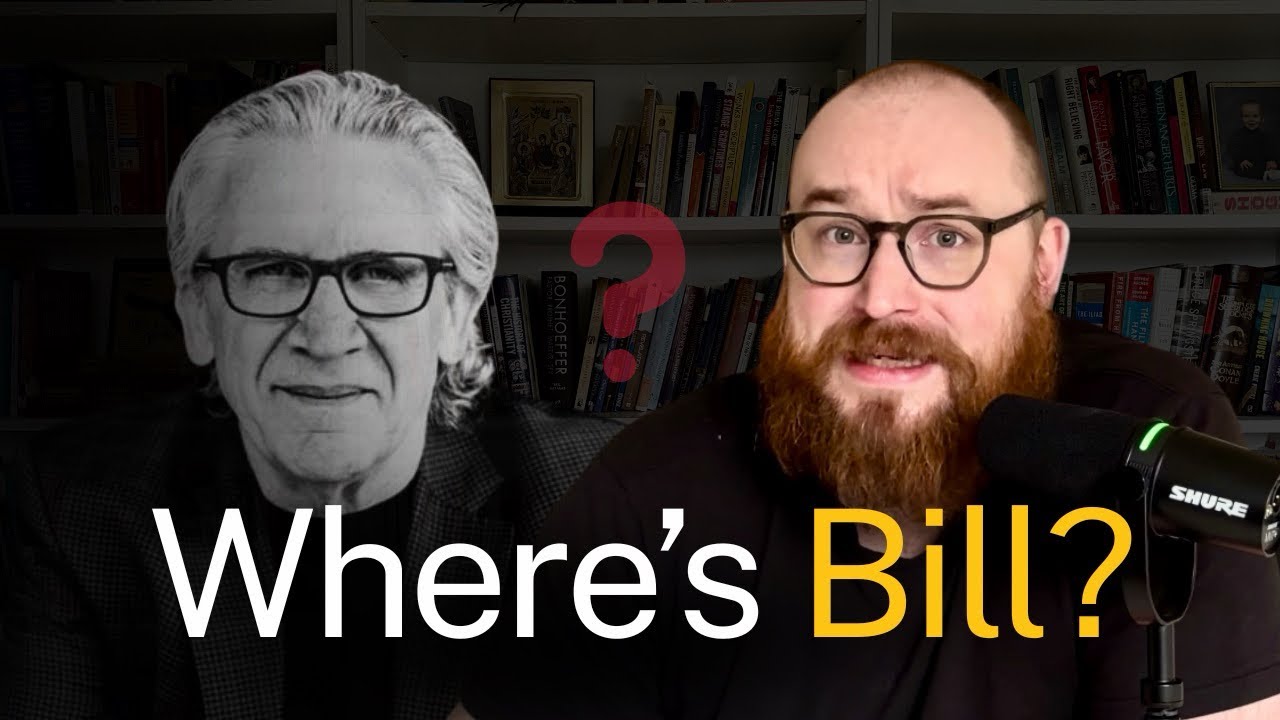
🔗 **Source:** [Former Bethel Student: Open Letter to Bill Johnson](https://www.youtube.com/watch?v=woMRWAM6kq0)
> [!note]+ Document Notes
> tags: #charismatic #church-leadership #accountability #spiritual-abuse #transparency
> author: [MISSING]
> source: YouTube
> reference: https://www.youtube.com/watch?v=woMRWAM6kq0
> date created: 2024-12-19 22:15
>
> # 🏷️ Title: Former Bethel Student: Open Letter to Bill Johnson
>
<!-- deep-read:sections start -->
## 🧰 Action Inbox
- [H1] Establish clear leadership accountability structures — crisis leadership response #church-leadership
- [H2] Create survivor-centered response protocols — genuine vs reactive repentance #spiritual-abuse
- [H3] Implement transparent investigation communication — public trust rebuilding #transparency
## 🧭 Table of Contents
- [[#📝 Summary]]
- [[#📖 Main Content]]
- [[#🗒️ Notes]]
- [[#📚 References]]
- [[#🗣️ Paraphrase]]
- [[#📰 Newsletter]]
- [[#✅ Action Items]]
- [[#🧪 Hypotheses]]
- [[#📊 Methodology]]
- [[#❓ Questions]]
- [[#🔮 Future Research]]
- [[#💡 Implications]]
- [[#🧠 Learning Styles Assessment]]
- [[#📊 Accessibility Assessment]]
- [[#🌍 DEIB Assessment]]
- [[#✅ Logical Validity]]
- [[#🛡️ DARVO Analysis]]
- [[#🎯 Conclusion]]
### 🔗 References
- [Original Video](https://www.youtube.com/watch?v=woMRWAM6kq0)
## 📝 Summary
- A former Bethel School of Supernatural Ministry (BSSM) student directly challenges Bill Johnson's absence during organizational crisis
- Critiques appear to be PR management rather than genuine leadership accountability
- Calls for personal leadership response rather than delegated statements during abuse investigations
- Highlights pattern of reactive rather than proactive transparency in charismatic movements
- Frames this as critical moment to break cycle of failed "God's generals" leadership
## 📖 Main Content
This video presents a direct challenge to Bill Johnson, founder of Bethel Church and BSSM, from someone with insider experience in the movement. The speaker argues that during current crisis involving abuse allegations and investigations, Johnson has been notably absent while others like Chris Vallotton handle public response. The critique centers on whether the organization prioritizes protecting the movement over protecting people, especially survivors of various forms of abuse. The speaker frames this as a pivotal moment where authentic leadership could model genuine repentance and accountability, potentially breaking historical patterns of charismatic leaders who "started strong but didn't finish well."
## 🗒️ Notes
#### ⏱️ [00:00](https://youtu.be/woMRWAM6kq0?t=0) — [H1] Direct challenge to absent leadership
- Key idea: Crisis requires leader's personal voice, not PR teams
- Evidence: "Right now, what many people see coming out of Bethel doesn't feel like leadership. It feels like PR."
#### ⏱️ [01:45](https://youtu.be/woMRWAM6kq0?t=105) — [H2] Trust crisis vs crisis management
- Key idea: Public wants genuine accountability, not legal-approved statements
- Evidence: "They want to hear from the leader. And that leader is you."
#### ⏱️ [03:20](https://youtu.be/woMRWAM6kq0?t=200) — [H3] Pattern of reactive transparency
- Key idea: Apologies only come after public exposure
- Evidence: "Are these apologies happening because they're genuine or because someone got caught?"
#### ⏱️ [04:15](https://youtu.be/woMRWAM6kq0?t=255) — [H2] Alumni page shutdown controversy
- Key idea: Action interpreted as narrative control rather than protection
- Evidence: Two interpretations - protecting people vs managing narrative
#### ⏱️ [05:30](https://youtu.be/woMRWAM6kq0?t=330) — [H1] Leadership responsibility in movements
- Key idea: Movement leaders carry responsibility regardless of formal titles
- Evidence: "Millions of people still see you as the leader of this movement"
#### ⏱️ [06:45](https://youtu.be/woMRWAM6kq0?t=405) — [H3] Delegated accountability concerns
- Key idea: Chris Vallotton taking public heat while Johnson remains absent
- Evidence: "It's not Chris Vallotton's job to take the fall while the leader remains largely absent"
#### ⏱️ [07:20](https://youtu.be/woMRWAM6kq0?t=440) — [H2] Indebtedness dynamics in leadership
- Key idea: Concern about exploiting loyalty for organizational protection
- Evidence: "I hope that you're not taking advantage of the sense of indebtedness that Chris feels"
#### ⏱️ [08:15](https://youtu.be/woMRWAM6kq0?t=495) — [H1] Inconsistent responsibility patterns
- Key idea: Eager to claim success but distance from failures
- Evidence: "You cannot be responsible for the success of a movement without also being responsible for its failures"
#### ⏱️ [10:30](https://youtu.be/woMRWAM6kq0?t=630) — [H3] External pressure driving transparency
- Key idea: Change only happens when outside voices force accountability
- Evidence: "Investigations accelerate when journalists dig. Apologies appear when evidence becomes public"
#### ⏱️ [11:45](https://youtu.be/woMRWAM6kq0?t=705) — [H1] "Worth it" statement controversy
- Key idea: Statement perceived as dismissing survivor harm for movement preservation
- Evidence: "It sounds like the harm that was done became an acceptable casualty"
#### ⏱️ [13:20](https://youtu.be/woMRWAM6kq0?t=800) — [H2] One-way culture of honor
- Key idea: Honor system protects leaders but not congregation
- Evidence: "Honor must mean protecting the flock"
#### ⏱️ [15:10](https://youtu.be/woMRWAM6kq0?t=910) — [H3] Generational price concerns
- Key idea: Young believers worry about cost of movement including covered abuse
- Evidence: "They are worried that the price that was paid may have included covering up abuse"
#### ⏱️ [16:30](https://youtu.be/woMRWAM6kq0?t=990) — [H1] Fork in the road moment
- Key idea: Critical choice between protecting movement vs protecting people
- Evidence: "One path protects the movement. The other protects the people"
#### ⏱️ [17:45](https://youtu.be/woMRWAM6kq0?t=1065) — [H1] Breaking generational failure patterns
- Key idea: Opportunity to model different ending than previous "God's generals"
- Evidence: "There has never been a better moment for you to demonstrate exactly that"
## 📚 References
- [Former Bethel Student: Open Letter to Bill Johnson](https://www.youtube.com/watch?v=woMRWAM6kq0)
## 🗣️ Paraphrase
- A former insider challenges Bill Johnson's leadership absence during Bethel's crisis, arguing that survivors and the broader community need authentic accountability from the top leader, not PR management
- The speaker critiques patterns where charismatic leaders eagerly claim credit for movement success but distance themselves when serious problems emerge, calling for consistency in leadership responsibility
- This moment represents a critical choice between protecting institutional reputation versus protecting people, with potential to break historical cycles of charismatic leaders who failed to finish well
## 📰 Newsletter
**Leadership Accountability in Times of Crisis**
When religious organizations face serious allegations, the response often reveals the true priorities of leadership. A former Bethel student's open letter to Bill Johnson highlights critical questions about authentic versus managed accountability.
Key insights for any organization in crisis:
- Personal leadership presence matters more than committee statements
- Reactive transparency undermines trust in ways that proactive honesty could prevent
- Protecting people must take priority over protecting reputation
- Consistent responsibility means owning failures as readily as claiming successes
The challenge applies beyond religious contexts - any movement or organization must decide whether crisis response serves institutional preservation or genuine accountability to those affected.
Resources: [Organizational Ethics Resources](https://learn.wordpress.org/), [Crisis Communication Best Practices](https://developer.wordpress.org/)
## ✅ Action Items
#### Community
- Maintainers: Develop clear crisis communication protocols emphasizing leader visibility
- Contributors: Create accountability frameworks that prevent delegation during critical moments
- Sponsors: Establish survivor-centered response policies over reputation management
#### DevRel
- Community management: Design transparent investigation update systems
- Education: Develop workshops on authentic vs PR-driven organizational responses
- Developer advocacy: Model consistent responsibility claiming across success and failure cycles
## 🧪 Hypotheses
- Organizations that prioritize reputation management over survivor care lose public trust more severely than those practicing immediate transparency
- Leadership absence during crisis creates power vacuums that damage both accountability and organizational effectiveness
- Reactive transparency patterns indicate deeper cultural issues with proactive ethical responsibility
- "Culture of honor" systems can become mechanisms for protecting hierarchy rather than community wellbeing
### 📊 Methodology
- Comparative analysis of organizational crisis responses measuring transparency timing vs public trust outcomes
- Survey research on survivor experiences with institutional vs personal leadership accountability
- Longitudinal study of charismatic movement leadership patterns and organizational sustainability
### ❓ Questions
- What structural changes prevent leadership absence during organizational crisis?
- How can accountability systems resist capture by reputation management priorities?
- What early warning indicators predict whether organizations will protect people vs protect image?
### 🔮 Future Research
- Develop crisis leadership assessment frameworks for religious and secular organizations
- Study effectiveness of survivor-centered vs institution-centered response protocols
- Investigate correlation between delegation patterns and authentic accountability outcomes
### 💡 Implications
- Practice: Crisis communication must prioritize leader visibility and survivor needs over legal risk management
- Policy: Organizational governance should mandate personal leadership presence during serious allegations
- Education: Leadership training must address tendency to distance from failure while claiming success
- Funding: Support systems for survivors should be independent from organizational reputation concerns
### 🧠 Learning Styles Assessment
Reading level estimate: 12th Grade
#### 👀 Visual learners
- Present: Clear timeline structure, video format
- Improve: Organizational charts showing delegation patterns, accountability flowcharts
#### 🔊 Aural learners
- Present: Direct address video format, personal testimony style
- Improve: Audio-only version, discussion guide for group listening
#### 🗣️ Verbal learners
- Present: Direct quotes, personal narrative, clear definitions
- Improve: Glossary of organizational terms, comparison frameworks
#### 🧩 Kinesthetic learners
- Present: Call-to-action structure, decision framework
- Improve: Interactive accountability assessment tools, response planning worksheets
#### 🧠 Logical learners
- Present: Clear cause-effect arguments, pattern analysis
- Improve: Decision trees, responsibility matrices, outcome prediction models
#### 🧑🤝🧑 Social learners
- Present: Community-focused concerns, collective responsibility themes
- Improve: Group discussion guides, community response frameworks
#### 🧘♀️ Solitary learners
- Present: Individual reflection prompts, personal challenge format
- Improve: Self-assessment tools, private journaling questions
### 📊 Accessibility Assessment
#### Screen reader semantics
- Present: Clear heading structure, descriptive content
- Improve: Transcript with speaker identification, time markers
#### Media and captions
- Present: Video format available
- Improve: Closed captions, downloadable transcript, audio description
### 🌍 DEIB Assessment
#### Cultural breadth
- Present: Addresses broader religious movement patterns
- Improve: Examples from diverse organizational contexts
#### Inclusive language
- Present: Respectful tone toward survivors, clear terminology
- Improve: Define charismatic/religious terms for broader audiences
#### Representation
- Present: Centers survivor voices and experiences
- Improve: Include diverse leadership accountability examples
### ✅ Logical Validity
#### Strong reasoning
- Deductive strength: Strong - if leaders claim success responsibility, they must accept failure responsibility
- Causal reasoning: Well-supported connection between leadership absence and trust erosion
- Analogical strength: Effective comparison to historical "God's generals" patterns
#### Fallacies
- Ad hominem: Minimal - criticism focuses on actions and patterns rather than personal character
- False dilemma: Slight tendency to present binary choice between protecting movement vs people
#### Tone of voice
- Overall tone: Respectful but direct confrontation, personal experience grounding criticism
### 🛡️ DARVO Analysis
- Deny: Notes organizational tendency to delay or minimize through PR rather than direct denial
- Attack: Identifies pattern of distancing from accusers rather than direct attacks
- Reverse victim/offender: Highlights concern about "culture of honor" potentially protecting leaders over survivors
- Emotional cues: Uses personal relationship history to establish credibility and caring motivation
## 🎯 Conclusion
This direct challenge to Bethel leadership represents broader questions about authentic accountability in organizational crisis. The speaker's insider perspective strengthens arguments about the gap between public relations management and genuine leadership responsibility. The call for personal rather than delegated response highlights how crisis moments reveal organizational priorities and values. Whether addressing religious movements or any organization facing serious allegations, the framework demands consistency between claiming success and owning failures, with survivor care taking priority over reputation management.
## 🧱 Refactor Appendix
### 📚 Literature Split Pad
### [H1] Crisis leadership requires personal visibility not PR delegation
> [!quote] [Former Bethel Student: Open Letter to Bill Johnson](https://www.youtube.com/watch?v=woMRWAM6kq0) by [MISSING] via YouTube. Published [MISSING]. Accessed 2024-12-19.
> "Right now, what many people see coming out of Bethel doesn't feel like leadership. It feels like PR."
Former insider challenges absent leadership during organizational crisis, arguing authentic response requires leader's personal voice.
[view highlight](https://www.youtube.com/watch?v=woMRWAM6kq0#H1) #xref #articleseed ID:rw_[MISSING]
### [H2] Reactive transparency indicates deeper accountability problems
> [!quote] [Former Bethel Student: Open Letter to Bill Johnson](https://www.youtube.com/watch?v=woMRWAM6kq0)
> "Are these apologies happening because they're genuine or because someone got caught?"
Pattern analysis showing transparency only emerging after external pressure suggests institutional resistance to proactive accountability.
[view highlight](https://www.youtube.com/watch?v=woMRWAM6kq0#H2) #xref ID:rw_[MISSING]
### 🔖 Atomic Split Pad (Zettel Candidates)
#### [Z1] Organizational honor cultures can protect hierarchy over community
- Applies when loyalty systems insulate leaders from accountability
- Pointer to culture of honor critique section
- Links: [[Religious-Authority]] [[Institutional-Protection]]
#### [Z2] Leadership consistency requires owning failures like claiming successes
- Universal principle for any movement or organization
- Pointer to responsibility pattern analysis
- Links: [[Crisis-Leadership]] [[Authentic-Accountability]]
### ✏️ Fleeting Queue
- [F1] Research historical "God's generals" failure patterns — organizational lifecycle analysis #fleeting #inbox
- [F2] Develop survivor-centered crisis response frameworks — accountability vs reputation management #fleeting #inbox
- [F3] Study delegation dynamics during organizational crisis — authentic vs managed leadership #fleeting #inbox
---
## Full Transcript
[00:00] Bill Johnson, I want to speak to you<br>[00:02] directly because right now the<br>[00:03] charismatic world is watching Bethl and<br>[00:06] many people are asking the same<br>[00:08] question. Where are you? I'm not asking<br>[00:11] that as someone who only knows Bethl<br>[00:13] from YouTube clips. I'm asking that as<br>[00:16] someone who went through BSSM, someone<br>[00:18] who sat under your teaching, someone who<br>[00:20] has even spoken with you personally.<br>[00:22] I've had you pray over me. Someone who<br>[00:25] believed deeply in what this movement<br>[00:27] was about. And that's exactly why this<br>[00:29] moment matters so much. Because right<br>[00:32] now, Bethl isn't just facing criticism.<br>[00:35] It's facing a crisis of trust. And in<br>[00:38] moments like this, people don't want<br>[00:40] statements from teams. They don't want<br>[00:42] secondary voices. They don't want<br>[00:44] verbiage that was pre-approved by legal<br>[00:46] adviserss. They want to hear from the<br>[00:49] leader. And that leader is you.<br>[00:54] Right now, what many people see coming<br>[00:55] out of Bethl doesn't feel like<br>[00:57] leadership. It feels like PR. It appears<br>[01:00] like PR statements are being made to<br>[01:02] protect the movement. It feels like<br>[01:04] there are not fast enough updates on the<br>[01:06] investigations. It feels like the only<br>[01:08] time Bethl is willing to repent is when<br>[01:10] things become public, which makes people<br>[01:13] ask a difficult but honest question. Are<br>[01:16] these apologies happening because<br>[01:17] they're genuine or because someone got<br>[01:19] caught?<br>[01:21] But what people want right now isn't<br>[01:23] carefully managed statements. They want<br>[01:26] clarity. They want honesty. They want<br>[01:28] accountability. And they want<br>[01:29] leadership.<br>[01:31] In the middle of all of this, there are<br>[01:33] still real people, real survivors trying<br>[01:36] to process what happened to them. One<br>[01:39] moment that raised questions recently<br>[01:40] was the shutting down of the BSSM alumni<br>[01:43] page. I want to believe the best about<br>[01:45] that decision. I want to believe that<br>[01:47] maybe you saw the conversations becoming<br>[01:49] toxic and that you were trying to<br>[01:51] protect people while leadership works<br>[01:53] through the overwhelming amount of<br>[01:54] information coming forward during the<br>[01:56] third party investigations.<br>[01:58] That's the charitable interpretation.<br>[02:01] But the other interpretation people have<br>[02:03] is very different. The other<br>[02:05] interpretation is that the page was shut<br>[02:07] down because the conversation was<br>[02:08] getting out of control and leadership<br>[02:10] wanted to manage the narrative.<br>[02:13] And right now, because communication has<br>[02:15] been limited, people are left guessing<br>[02:17] which explanation is true.<br>[02:21] Bill, whether or not you personally call<br>[02:23] yourself an apostle, the reality is is<br>[02:25] that millions of people still see you as<br>[02:28] the leader of this movement. You are<br>[02:30] still seen as the leader of Bethl. And<br>[02:32] when leaders help build movements of<br>[02:34] this size, their voice carries<br>[02:36] responsibility in moments like this.<br>[02:38] When a movement goes through crisis,<br>[02:40] people want to know what the leader has<br>[02:42] to say. The repentance service that<br>[02:44] happened recently was a start, but for<br>[02:47] many people it felt like it fell short.<br>[02:50] And right now it feels like Chris<br>[02:51] Valatin is taking the brunt of the<br>[02:54] public response. But Chris isn't the<br>[02:56] head of the movement. You are. And it's<br>[02:59] not Chris Valatin's job to take the fall<br>[03:02] while the leader remains largely absent<br>[03:04] from the conversation.<br>[03:07] Something else people have noticed, or<br>[03:09] maybe just me, multiple times since<br>[03:12] leadership has spoken about these<br>[03:14] allegations of cover-ups, Chris Valatin<br>[03:16] has mentioned how you believed in him<br>[03:18] when no one else would. And I hope,<br>[03:20] Bill, that you're not taking advantage<br>[03:23] of the sense of indebtedness that Chris<br>[03:25] feels towards you because of that. I'm<br>[03:27] not saying that to defend Chris. I'm<br>[03:30] saying it because it raises a question.<br>[03:32] Why does it appear that Chris is<br>[03:34] functioning as the public face of the<br>[03:35] movement right now instead of you?<br>[03:38] Another thing people are struggling to<br>[03:40] understand is this. In apostolic<br>[03:42] networks connected to leaders like<br>[03:44] Chayon and Bethl, there is no hesitation<br>[03:47] to publicly affirm people's characters.<br>[03:50] There are endorsements, conference<br>[03:51] platforms, uh prophetic recognitions,<br>[03:54] television appearances, book blurbs on<br>[03:57] lucrative book deals, public<br>[03:59] affirmations of someone's character,<br>[04:01] even when allegations have already<br>[04:03] existed. But when overwhelming evidence<br>[04:05] of wrongdoing emerges, suddenly there is<br>[04:08] a shocking distance and unclear<br>[04:10] responsibility.<br>[04:12] How is it that leaders are eager to<br>[04:13] publicly affirm someone's character when<br>[04:15] things are going well? But when serious<br>[04:18] wrongdoing is exposed, responsibility<br>[04:20] becomes difficult to locate.<br>[04:23] You cannot be responsible for the<br>[04:25] success of a movement without also being<br>[04:27] responsible for its failures.<br>[04:30] Another thing people are noticing is<br>[04:32] this. It often seems like Bethl and<br>[04:34] other charismatic movements only become<br>[04:36] open and transparent when outside voices<br>[04:39] force the issue. Investigations<br>[04:42] accelerate when journalists dig.<br>[04:44] Apologies appear when evidence becomes<br>[04:46] public.<br>[04:48] Statements become stronger when outside<br>[04:50] teachers like Mike Winger begin asking<br>[04:52] questions.<br>[04:54] Why does it take outside pressure for<br>[04:55] the truth to come forward? Why does it<br>[04:58] take critics to force hard<br>[04:59] conversations?<br>[05:01] If leadership is already committed to<br>[05:03] transparency, that shouldn't be<br>[05:04] necessary.<br>[05:06] Recently, you said something has deeply<br>[05:08] troubled many people. You said that the<br>[05:10] movement was still worth it. Bill, you<br>[05:14] might want to clarify what you meant by<br>[05:16] that statement because right now it's<br>[05:18] coming across as a slap in the face to<br>[05:20] survivors. It sounds to many people like<br>[05:23] the harm that was done became an<br>[05:25] acceptable casualty in the name of<br>[05:27] preserving a movement.<br>[05:29] There are still survivors coming forward<br>[05:31] with their stories. And when they hear<br>[05:33] it was worth it, they are asking a<br>[05:36] simple question. Worth what?<br>[05:39] Chris Christ never taught that a<br>[05:41] movement was worth it if sheep were<br>[05:42] harmed along the way. Dying for the<br>[05:45] message of the cross as a martyr is one<br>[05:47] thing, but expecting people to suffer or<br>[05:49] endure harm in the name of preserving a<br>[05:51] movement while leadership itself is<br>[05:53] largely absent is something very<br>[05:56] different.<br>[05:58] Bethl has often talked about building a<br>[06:00] culture of honor and the intention<br>[06:02] behind that culture was supposed to be a<br>[06:04] two-way street. But over time, it<br>[06:06] increasingly appears to many people like<br>[06:08] a one-way avenue. A system that has<br>[06:11] built layers that insulate leaders and<br>[06:14] leadership from the responsibility they<br>[06:16] are called to carry.<br>[06:18] And at times it can even look like the<br>[06:20] culture of honor is being used to<br>[06:22] protect you or at least to keep you<br>[06:24] absent from the very accountability that<br>[06:26] leadership requires.<br>[06:28] Honor cannot just mean protecting<br>[06:30] leaders. Honor must mean protecting the<br>[06:32] flock.<br>[06:33] Bill, I remember something you said once<br>[06:36] in class. You said you were worried that<br>[06:39] the next generation of believers might<br>[06:41] not understand the price that was paid<br>[06:43] for us to walk in the things of the Holy<br>[06:45] Spirit as we do now.<br>[06:47] But many young believers have a<br>[06:49] different concern. They are worried that<br>[06:51] the price that was paid may have<br>[06:53] included covering up abuse, sexual<br>[06:56] abuse, spiritual abuse, and protecting<br>[06:58] the reputation of a movement instead of<br>[07:00] protecting the people inside it. That's<br>[07:03] the concern many people are wrestling<br>[07:05] with right now.<br>[07:07] The New Testament often compares<br>[07:09] ministry to running a race, and races<br>[07:11] are meant to be finished victoriously.<br>[07:14] Right now, this moment feels like a fork<br>[07:16] in the road. You have a choice. You can<br>[07:20] spearhead the recovery of this mo of<br>[07:21] this movement and demonstrate to the<br>[07:23] world what real repentance,<br>[07:25] transparency, and accountability looks<br>[07:27] like. Or the movement can continue<br>[07:30] protecting platforms, reputations,<br>[07:33] fortunes, and appearances. You and Chris<br>[07:36] are entering the years where leadership<br>[07:38] transitions begin and retirement is<br>[07:41] somewhere on the horizon. For years,<br>[07:43] Bethl has said that your ceiling would<br>[07:46] become the next generation's floor. But<br>[07:48] if accountability is not strengthened,<br>[07:50] the next generation's floor may look<br>[07:53] more like rock bottom. And that would<br>[07:56] mean starting over instead of building<br>[07:57] forward. If real change doesn't happen<br>[08:00] in quickly, Bethl risks ending in the<br>[08:04] same or similar failure as the generals<br>[08:07] before it.<br>[08:09] And that's why this moment matters so<br>[08:11] much. Bill, there is a fork in the road.<br>[08:14] One path protects the movement. The<br>[08:16] other protects the people. One path<br>[08:18] preserves influence, the other preserves<br>[08:21] integrity.<br>[08:23] And if the church begins to believe that<br>[08:25] what has been called a move of God was<br>[08:28] actually just the ambition of men<br>[08:29] protecting their influence,<br>[08:32] then the very lampstand Christ lit could<br>[08:34] be at risk.<br>[08:37] This moment requires leadership. And<br>[08:39] that leadership has to start with you,<br>[08:42] Bill. I'm asking you to step forward.<br>[08:45] I'm asking you to be present in the<br>[08:47] moment. I'm asking you to be the face of<br>[08:49] repentance.<br>[08:51] I'm asking you to be the face of<br>[08:53] accountability,<br>[08:55] not statements from teams, not Chris<br>[08:57] Valatin, your voice. Because the<br>[09:00] charismatic church doesn't need<br>[09:02] explanations right now. It needs an<br>[09:03] example. an example of what real<br>[09:06] repentance looks like, what real<br>[09:09] accountability looks like, and what<br>[09:11] leadership looks like when a movement is<br>[09:13] forced to face its failures. For years,<br>[09:16] we were taught that this movement was<br>[09:18] about learning from the failures of<br>[09:20] God's generals, about studying where<br>[09:23] they went wrong and where the next<br>[09:25] generation could move forward in greater<br>[09:27] health. Well, Bill, there has never been<br>[09:30] a better moment for you and for Bethl<br>[09:32] Church to demonstrate exactly that, to<br>[09:35] break the pattern of leaders who started<br>[09:37] strong but didn't finish well, to model<br>[09:40] something different. Because if the<br>[09:42] movement you helped build is going to<br>[09:44] recover from this moment, that recovery<br>[09:47] has to start with you.
<!-- deep-read:sections end -->
📄 **Full text:** ![[Full Document Contents/Articles/Former Bethel Student Open Letter to Bill Johnson|Former Bethel Student: Open Letter to Bill Johnson, YouTube]]
## Highlights
- Another thing people are noticing is this. It often seems like Bethl and other charismatic movements only become open and transparent when outside voices force the issue. Investigations accelerate when journalists dig. Apologies appear when evidence becomes public. Statements become stronger when outside teachers like Mike Winger begin asking questions. Why does it take outside pressure for the truth to come forward? Why does it take critics to force hard conversations? ([View Highlight](https://read.readwise.io/read/01kkaf4vcvcwxfv21k8tmy22yk))
- Tags: 👻 ai highlighted
- then the very lampstand Christ lit could be at risk. This moment requires leadership. And that leadership has to start with you, Bill. I'm asking you to step forward. I'm asking you to be present in the moment. I'm asking you to be the face of repentance. I'm asking you to be the face of accountability, not statements from teams, not Chris Valatin, your voice. Because the ([View Highlight](https://read.readwise.io/read/01kkaf4ve143h0jt8q6d6cwfmz))
- Tags: 👻 ai highlighted