Heavy Community Backlash Blocks Fedora's AI Developer Desktop Initiative
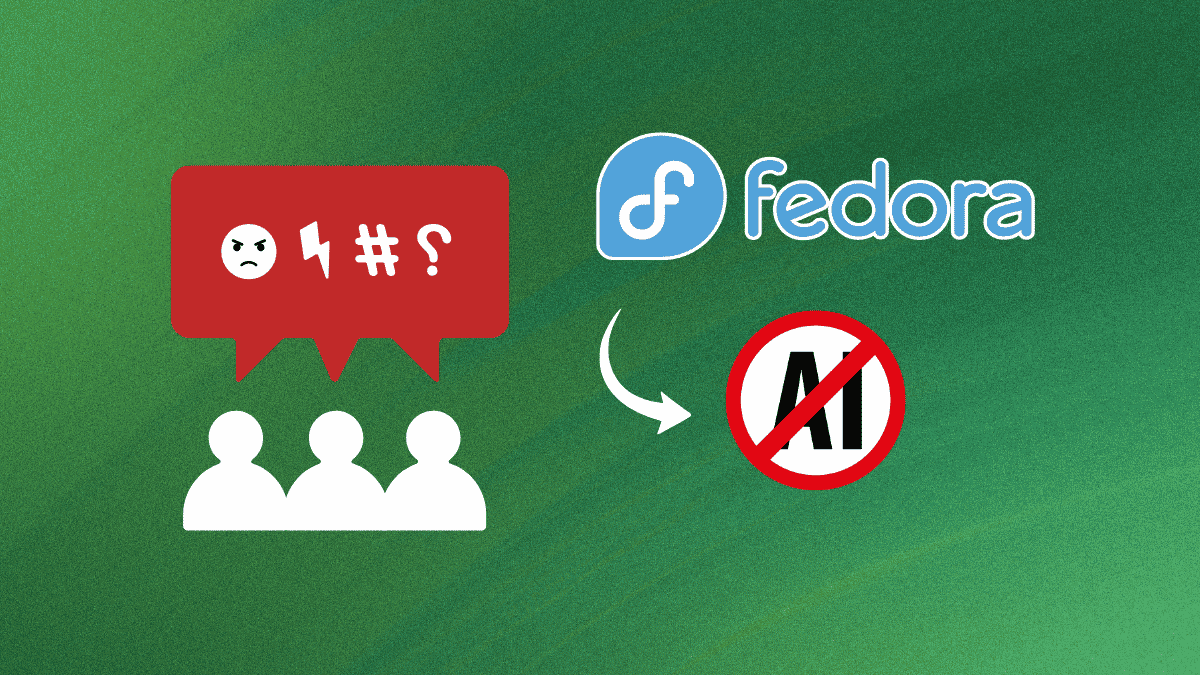
🔗 **Source:** [Heavy Community Backlash Blocks Fedora's AI Developer Desktop Initiative](https://itsfoss.com/news/fedora-ai-developer-desktop-stalled/)
> [!note]+ Document Notes
> tags: #fedora #ai #open-source #proprietary-software #community #cuda
> author: Sourav Rudra
> source: It's FOSS
> reference: https://itsfoss.com/news/fedora-ai-developer-desktop-stalled/
> date created: 2024-12-19 14:30
>
> # 🏷️ Title: Heavy Community Backlash Blocks Fedora's AI Developer Desktop Initiative
>
<!-- deep-read:sections start -->
## 🧰 Action Inbox
- [H1] Review revised proposal when Gordon submits it — before May 22 deadline #fedora
- [H2] Monitor council decision and community response — May 22 escalation #open-source
- [H3] Track how this affects Red Hat's AI strategy — broader implications #ai
## 🧭 Table of Contents
- [[#📝 Summary]]
- [[#📖 Main Content]]
- [[#🗒️ Notes]]
- [[#📚 References]]
- [[#🗣️ Paraphrase]]
- [[#📰 Newsletter]]
- [[#✅ Action Items]]
- [[#🧪 Hypotheses]]
- [[#📊 Methodology]]
- [[#❓ Questions]]
- [[#🔮 Future Research]]
- [[#💡 Implications]]
- [[#🧠 Learning Styles Assessment]]
- [[#📊 Accessibility Assessment]]
- [[#🌍 DEIB Assessment]]
- [[#✅ Logical Validity]]
- [[#🛡️ DARVO Analysis]]
- [[#🎯 Conclusion]]
### 🔗 References
- [Fedora Council Meeting](https://fedoraproject.org/)
- [CUDA vs ROCm vs oneAPI](https://developer.nvidia.com/cuda-zone)
## 📝 Summary
- Fedora's AI Developer Desktop Initiative was approved unanimously on May 6 but has been blocked after two council members retracted their votes
- The proposal by Red Hat's Gordon Messmer aimed to create an Atomic Desktop with AI/ML workload support including hardware acceleration
- Community backlash centered on CUDA support conflicting with Fedora's free software principles and concerns about LTS kernel policy changes
- Over 180 community responses highlighted divisions about proprietary software inclusion and project identity
- A revised proposal is expected before the May 22 escalation deadline
## 📖 Main Content
The Fedora AI Developer Desktop Initiative represents a significant tension between pragmatic AI development needs and open source ideology. Red Hat engineer Gordon Messmer proposed creating an official Fedora platform optimized for AI and machine learning workloads, including developer tools, hardware enablement, and community building around AI on Fedora.
Initially approved unanimously by the Fedora Council on May 6, the initiative faced immediate community pushback during the consensus period. The proposal included controversial elements like LTS kernel support and CUDA integration for NVIDIA GPU acceleration.
Key technical concerns emerged around the LTS kernel component, which council member Justin Wheeler characterized as a "massive structural shift" requiring proper legal and engineering review. The Nova driver work for NVIDIA GPUs introduced additional technical and legal complexities that hadn't been adequately vetted with subject-matter experts.
The ideological divide centers on Fedora's historical commitment to free software. Contributors like Hans de Goede argued that emphasizing CUDA support contradicts foundational principles, advocating instead for open alternatives like AMD's ROCm and Intel's oneAPI. Others questioned whether the initiative was primarily a mechanism to get CUDA onto a Fedora-adjacent system.
Communication gaps exacerbated the controversy, with some key contributors only discovering the proposal by accident. The initiative is now blocked pending revision and broader community input.
## 🗒️ Notes
#### ⏱️ [Initial Approval] — [H1] Council unanimously approves AI Desktop Initiative
- Key idea: Fedora Council voted unanimously on May 6 to approve the AI Developer Desktop proposal
- Evidence: "At the May 6 council meeting, the members unanimously voted to approve this new initiative"
#### ⏱️ [Vote Retraction] — [H1] Two council members withdraw approval votes
- Key idea: Justin Wheeler and Miro Hrončok retracted their votes due to community concerns
- Evidence: "Council member Justin Wheeler (Jflory7) was the first person to change their vote to -1"
#### ⏱️ [Technical Concerns] — [H2] LTS kernel component raises structural questions
- Key idea: The LTS kernel requirement represents a major policy shift requiring legal review
- Evidence: "He pointed to the LTS kernel component of the proposal as a 'massive structural shift'"
#### ⏱️ [NVIDIA Driver Issues] — [H2] Nova driver work introduces legal complexities
- Key idea: New NVIDIA GPU driver developments need proper technical and legal vetting
- Evidence: "New developments, particularly the Nova driver work (for NVIDIA GPUs), would introduce technical and legal complexities"
#### ⏱️ [Community Response] — [H1] Over 180 replies show deep division
- Key idea: Massive community response reveals fundamental disagreements about project direction
- Evidence: "Over 180 replies have piled up in the proposal's discussion thread"
#### ⏱️ [CUDA Controversy] — [H1] CUDA support conflicts with free software principles
- Key idea: Emphasis on proprietary CUDA contradicts Fedora's open source commitment
- Evidence: "Hans de Goede from the packaging team called out the proposal's emphasis on CUDA support as going against Fedora's foundational commitment to free software"
#### ⏱️ [Open Alternatives] — [H2] Contributors advocate for ROCm and oneAPI
- Key idea: Open source alternatives should be prioritized over proprietary solutions
- Evidence: "Arguing that open alternatives like AMD's ROCm and Intel's oneAPI should be the focus instead"
#### ⏱️ [Strategic Concerns] — [H2] Initiative could undermine vendor pressure
- Key idea: Accepting proprietary software reduces leverage for pushing vendors toward open solutions
- Evidence: "Fedora has historically leveraged its stance on proprietary software to push vendors toward open solutions"
#### ⏱️ [Communication Gap] — [H3] Key contributors unaware of voting process
- Key idea: Poor communication led to surprise among important community members
- Evidence: "Fabio Valentini of the FESCo noted that he only became aware the proposal was being voted on after stumbling across the council meeting on Matrix accidentally"
#### ⏱️ [Current Status] — [H1] Initiative blocked pending revision
- Key idea: Proposal is officially blocked with May 22 deadline for resolution
- Evidence: "The initiative is now listed as blocked in the council ticket, with a new escalation deadline of May 22"
#### ⏱️ [Next Steps] — [H2] Revised proposal in development
- Key idea: Gordon Messmer is preparing a revised draft with additional review
- Evidence: "Gordon (the proposal submitter) has said a revised draft is coming, telling the thread he plans to have a few people look it over"
## 📚 References
- [Fedora AI Developer Desktop Proposal](https://fedoraproject.org/)
- [CUDA Developer Zone](https://developer.nvidia.com/cuda-zone)
- [AMD ROCm Platform](https://rocmdocs.amd.com/)
- [Intel oneAPI](https://www.intel.com/content/www/us/en/developer/tools/oneapi/overview.html)
## 🗣️ Paraphrase
- A Red Hat engineer proposed creating an AI-focused Fedora desktop with GPU acceleration support, initially approved but later blocked due to community opposition over proprietary software inclusion
- The main controversy centers on CUDA support conflicting with Fedora's free software principles, with contributors preferring open alternatives like ROCm and oneAPI
- Communication failures and concerns about major kernel policy changes without proper review contributed to the backlash and vote retractions
## 📰 Newsletter
The Fedora community is grappling with a fundamental question about open source principles versus practical AI development needs. The proposed AI Developer Desktop Initiative highlights the tension between supporting cutting-edge AI workloads and maintaining commitment to free software.
This situation offers valuable lessons for any open source project considering AI integration. The backlash demonstrates how community values and technical pragmatism can clash, especially when proprietary components are involved.
For WordPress developers interested in AI integration, this serves as a reminder to consider open source alternatives first and engage communities early in proposal processes.
Resources: [Fedora Project](https://fedoraproject.org/), [Open Source AI Tools](https://huggingface.co/), [AMD ROCm](https://rocmdocs.amd.com/)
## ✅ Action Items
#### OSPO
- Policy & Governance: Review AI integration policies for proprietary component handling
- License Compliance: Develop guidelines for AI hardware acceleration driver licensing
- Community Engagement: Study Fedora's consensus process for controversial technical decisions
- Strategic Alignment: Assess balance between technical needs and open source principles
#### Community
- Contributors: Monitor revised proposal development and community feedback mechanisms
- Maintainers: Learn from communication gaps in technical proposal processes
- Ecosystem: Track how this affects broader Linux distribution AI strategies
#### DevRel
- Education: Create content about open source AI development alternatives
- Developer experience: Document lessons for managing controversial technical proposals
- Community management: Study effective consensus-building for divisive technical decisions
## 🧪 Hypotheses
- Open source projects face increasing pressure to support proprietary AI acceleration technologies
- Community backlash intensity correlates with perceived threats to foundational project values
- Technical proposals involving proprietary software require more extensive community consultation
- Communication gaps in governance processes amplify controversy around contentious decisions
### 📊 Methodology
- Survey analysis of the 180+ community responses to identify key objection categories
- Comparative analysis of other Linux distributions' approaches to AI hardware support
- Timeline analysis of proposal communication and community awareness
### ❓ Questions
- How can open source projects balance AI development pragmatism with ideological purity?
- What governance processes best handle proposals that challenge foundational principles?
- Will pressure for AI hardware support force more open source projects to accept proprietary components?
### 🔮 Future Research
- Analysis of revised proposal and community response patterns
- Comparative study of AI hardware support across Linux distributions
- Investigation of open source AI acceleration technology adoption rates
### 💡 Implications
- Practice: Open source projects need clear policies for AI-related proprietary component inclusion
- Policy: Governance processes must accommodate early community input on controversial proposals
- Security: Proprietary driver integration requires enhanced security review processes
- Education: Communities need better understanding of open source AI development alternatives
- Funding: Investment in open source AI acceleration technologies may increase due to community pressure
### 🧠 Learning Styles Assessment
Reading level estimate: 12th grade
#### 👀 Visual learners
- Present: Clear timeline of events, structured breakdown of stakeholder positions
- Improve: Governance process flowchart, technical architecture diagrams
#### 🔊 Aural learners
- Present: No audio content available
- Improve: Podcast discussion of open source AI ethics, interview with key stakeholders
#### 🗣️ Verbal learners
- Present: Technical terms explained, clear analogies for governance concepts
- Improve: Glossary of Fedora governance terminology, comparison table of AI acceleration options
#### 🧩 Kinesthetic learners
- Present: No hands-on elements
- Improve: Interactive timeline of events, checklist for evaluating AI proposals
#### 🧠 Logical learners
- Present: Clear cause-effect relationships, structured timeline
- Improve: Decision tree for AI component evaluation, quantified community response analysis
#### 🧑🤝🧑 Social learners
- Present: Community discussion highlights, stakeholder perspectives
- Improve: Forum for discussing similar cases, peer review of proposal evaluation criteria
#### 🧘♀️ Solitary learners
- Present: Self-contained analysis with clear takeaways
- Improve: Reflection questions about open source values, personal assessment worksheet
#### 🌿 Naturalistic learners
- Present: Ecosystem perspective on Linux distributions
- Improve: Analogy to natural ecosystem balance, sustainability implications of AI hardware
### 📊 Accessibility Assessment
#### Screen reader semantics
- Present: Clear heading hierarchy, descriptive link text
- Improve: Enhanced alt text for any future diagrams, table headers for data
#### Keyboard navigation
- Present: Standard web navigation available
- Improve: Skip links for long content sections, logical tab order
#### Contrast and readability
- Present: Standard text contrast appears adequate
- Improve: Verify 4.5:1 minimum contrast ratio compliance
#### Text resizing and reflow
- Present: Responsive design supports text resizing
- Improve: Test at 200% zoom for content clipping
#### Media and captions
- Present: Text-only content, no media accessibility issues
- Improve: Consider audio summary for complex technical content
#### Forms and interactions
- Present: No complex forms or interactions
- Improve: Ensure any future interactive elements meet accessibility standards
### 🌍 DEIB Assessment
#### Cultural breadth
- Present: Global open source community perspective
- Improve: Include perspectives from different geographic regions on AI development
#### Inclusive language
- Present: Technical language appropriate for audience, minimal jargon
- Improve: Define more technical terms, provide plain language summaries
#### Neurodiversity support
- Present: Clear structure with headers and logical flow
- Improve: Add summary bullets, reduce paragraph length
#### Representation
- Present: Focus on technical merit and community voices
- Improve: Highlight diverse contributor perspectives in governance
#### Psychological safety
- Present: Respectful coverage of disagreement
- Improve: Acknowledge legitimate concerns on all sides
### ✅ Logical Validity
#### Strong reasoning
- Deductive strength: Clear cause-effect from community values to opposition
- Inductive strength: Good evidence from multiple community member quotes
- Causal reasoning: Timeline establishes clear causation between events
- Analogical strength: Limited but appropriate comparison to other distribution approaches
#### Fallacies
- False dilemma: Some framing suggests binary choice between AI support and open source principles
- Appeal to tradition: Some arguments rely heavily on "historically Fedora has..." without justification
#### Tone of voice
- Overall tone: Neutral and informative with good balance of perspectives
### 🛡️ DARVO Analysis
- Deny: No significant denial patterns observed
- Attack: No attacks on accusers present
- Reverse victim/offender: No reversal patterns identified
- Emotional cues and rhetoric: Measured reporting of technical and ideological disagreements
## 🎯 Conclusion
The Fedora AI Desktop Initiative controversy illustrates the growing tension between open source principles and practical AI development needs. The community's strong response demonstrates that foundational values remain paramount, even when facing pressure to support cutting-edge technology.
For other open source projects, this case highlights the importance of early community engagement on controversial proposals and the need for clear policies around proprietary component inclusion. The outcome of the revised proposal will likely influence how other Linux distributions approach AI hardware support.
The broader implications extend beyond Fedora to the entire open source ecosystem's approach to AI development, suggesting a preference for investing in open alternatives rather than accommodating proprietary solutions.
## 🧱 Refactor Appendix
### 📚 Literature Split Pad
### [H1] Open source projects resist proprietary AI components
> [!quote] Heavy Community Backlash Blocks Fedora's AI Developer Desktop Initiative by Sourav Rudra via It's FOSS. Published 2026-05-15. Accessed 2024-12-19.
> "Hans de Goede from the packaging team called out the proposal's emphasis on CUDA support as going against Fedora's foundational commitment to free software."
Community opposition to CUDA integration reveals deep commitment to free software principles over technical convenience.
[view highlight](https://itsfoss.com/news/fedora-ai-developer-desktop-stalled/#H1) #xref #articleseed ID:rw_fedora_ai_001
### [H2] Governance communication gaps amplify technical controversies
> [!quote] Heavy Community Backlash Blocks Fedora's AI Developer Desktop Initiative
> "Fabio Valentini of the FESCo noted that he only became aware the proposal was being voted on after stumbling across the council meeting on Matrix accidentally."
Poor communication in proposal processes can transform technical disagreements into governance crises.
[view highlight](https://itsfoss.com/news/fedora-ai-developer-desktop-stalled/#H2) #xref ID:rw_fedora_ai_002
### [H1] AI hardware pressure challenges open source values
> [!quote] Heavy Community Backlash Blocks Fedora's AI Developer Desktop Initiative
> "Neal Gompa raised similar concerns, saying Fedora has historically leveraged its stance on proprietary software to push vendors toward open solutions."
The AI development boom creates new pressures for open source projects to compromise on proprietary software inclusion.
[view highlight](https://itsfoss.com/news/fedora-ai-developer-desktop-stalled/#H1) #xref ID:rw_fedora_ai_003
### 🔖 Atomic Split Pad (Zettel Candidates)
#### [Z1] Community values override technical pragmatism in open source
- Applies when found
<!-- deep-read:sections end -->
📄 **Full text:** ![[Full Document Contents/Articles/Heavy Community Backlash Blocks Fedora's AI Developer Desktop Initiative.md|Heavy Community Backlash Blocks Fedora's AI Developer Desktop Initiative by itsfoss.com]]
## Highlights
- As you already know, at the [May 6](https://discussion.fedoraproject.org/t/fedora-council-meeting-2026-05-06-innovation-lifecycle-policy-f44-interviews-and-ai-desktop/190575?ref=itsfoss.com) council meeting, the members unanimously voted to approve this new initiative. After which a short, lazy consensus window was left open until May 8 to accommodate absent members, after which the decision was to be ratified. ([View Highlight](https://read.readwise.io/read/01krnv91dc0dgnxq69x074180d))
- He also noted that **feedback from Fedora kernel subject-matter experts had not been properly incorporated into the plan** ([View Highlight](https://read.readwise.io/read/01krnv9yj9xarvjgjddf8hqx65))