Hegseth's "Send Me" Tour Gets Isaiah 6 Completely Backwards
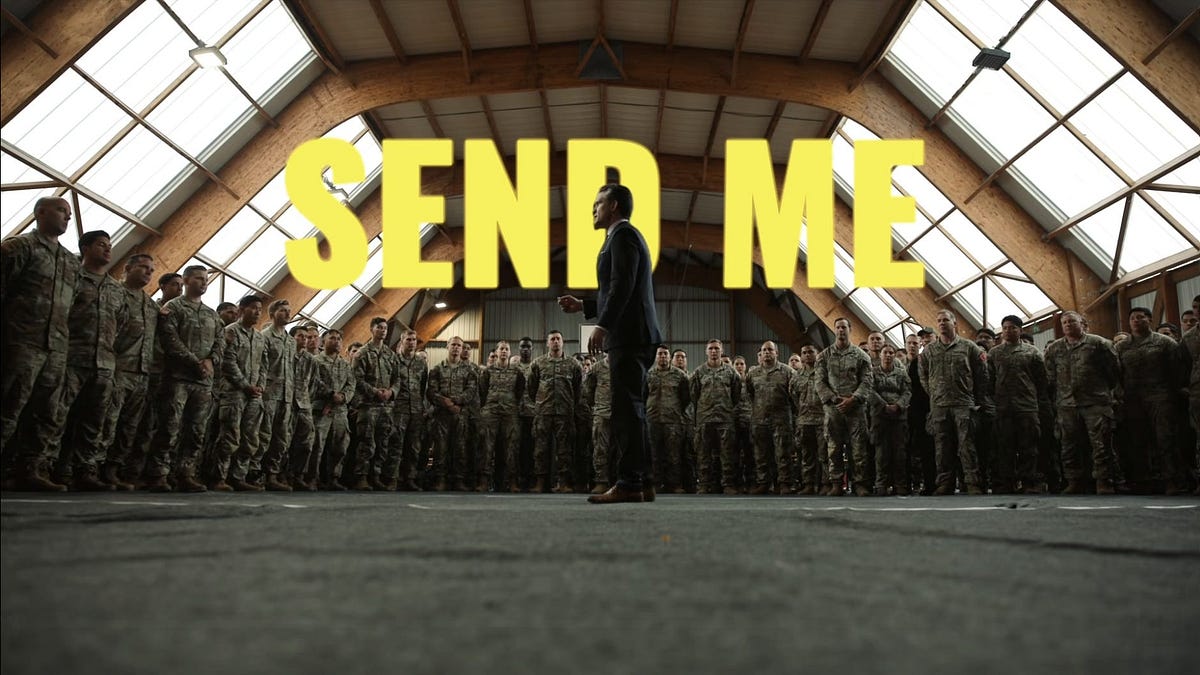
🔗 **Source:** [Hegseth's "Send Me" Tour Gets Isaiah 6 Completely Backwards](https://holypost.substack.com/p/hegseths-send-me-tour-gets-isaiah)
> [!note]+ Document Notes
> tags: [biblical-interpretation, christian-nationalism, religion-and-politics, isaiah-6, military-recruitment]
> author: Esau McCaulley
> source: The Holy Post
> reference: https://holypost.substack.com/p/hegseths-send-me-tour-isaiah
> date created: 2026-09-29 10:29
>
> > [!info] Generated analysis — not the author's words. Sections below are machine-written
> > from the captured source. Only text inside `> [!quote]` blocks is verbatim from the author.
> > Do not quote or attribute any other line to the named author.
>
> # 🏷️ Title: Hegseth's "Send Me" Tour Gets Isaiah 6 Completely Backwards
>
<!-- deep-read:sections start -->
## 🧭 Table of contents
- [📝 Summary](#-summary)
- [📖 Main content](#-main-content)
- [🗒️ Notes](#️-notes)
- [📚 References](#-references)
- [🗣️ Paraphrase](#️-paraphrase)
- [📰 Newsletter](#-newsletter)
- [✅ Action items](#-action-items)
- [🧪 Hypotheses](#-hypotheses)
- [📊 Methodology](#-methodology)
- [❓ Questions](#-questions)
- [🔮 Future research](#-future-research)
- [💡 Implications](#-implications)
- [🧠 Learning styles assessment](#-learning-styles-assessment)
- [📊 Accessibility assessment](#-accessibility-assessment)
- [🌍 DEIB assessment](#-deib-assessment)
- [✅ Logical validity](#-logical-validity)
- [🛡️ DARVO analysis](#️-darvo-analysis)
- [🎯 Conclusion](#-conclusion)
- [🔄 Refactor appendix](#-refactor-appendix--hegseths-send-me-tour-gets-isaiah-6-completely-backwards)
## 📝 Summary
- **What happened.** Esau McCaulley, a New Testament professor at Wheaton College and pastor of All Saints Naperville (per the bio at ¶14), published a 15-paragraph commentary essay on The Holy Post's Substack, dated 2026-09-28. He answers a "Send Me Tour" that Secretary of Defense Pete Hegseth launched to recruit for the US military by comparing enlistment to Isaiah answering God's call (¶0).
- **The claim.** Isaiah 6 does not support military recruitment. Isaiah says "send me" only after he confesses his own sin and the nation's (¶5-¶7), and the mission he receives is to confront Judah's false piety, not to destroy its enemies (¶7). McCaulley then argues that a movement he calls MAGA is the target of that same critique (¶9-¶10).
- **Genre.** This is opinion and pastoral commentary from a named scholar-pastor. It is not news reporting and it is not a peer-reviewed exegesis. It states a political judgment in its own voice ("MAGA, too often, tells us...", ¶9).
- **Why it matters.** It is a compact example of contested scripture use in US politics: the same verse (Isa 6:8) recruits or rebukes depending on which surrounding text you read with it. Readers who work with faith communities, or who track religion in public policy, get a template for checking a proof-text against its context.
- **Key stakeholders.** Hegseth and the Department of Defense (the speaker of the quoted "send me" framing, ¶0); McCaulley and The Holy Post audience; military recruits and chaplains; churches deciding whether to endorse or contest the framing; immigrants and "the vulnerable" the essay says are the targets of the rhetoric (¶9).
- **Risks and tradeoffs.** The essay never quotes Hegseth's own words beyond the phrase "send me," and no link to the tour appears in the captured markup, so his actual argument is known only through McCaulley's paraphrase (¶0). The exegesis leans on Isaiah 58 (¶8) to interpret the Isaiah 6 commission, which is a different chapter. The MAGA generalization at ¶9 is a sweeping characterization with no cited evidence.
- **Bottom line.** The core literary point is sound and checkable: Isaiah 6:5 precedes 6:8, and the commissioning ends in a warning of rejection (6:9), not conquest. The application to a political movement is McCaulley's opinion and carries the usual limits of opinion.
## 📖 Main content
**The occasion (¶0-¶1).** McCaulley reports that Hegseth's "Send Me Tour" likens joining the military to Isaiah volunteering for God. He says the Trump administration often uses the Bible for political and "often violent" goals, and that Isaiah 6 contains a sermon for MAGA, just not Hegseth's.
**Historical setting (¶2).** Isaiah 6 opens in the year King Uzziah died, after a reign of over 50 years. Judah prospered but drifted from God spiritually. McCaulley reads this as a warning that money and political strength are not the measures of national health.
**The vision and the confession (¶3-¶6).** He quotes Isaiah 6:1-4 (the throne, the seraphim, the shaking doorposts) and Isaiah 6:5 ("Woe to me!"). His lesson: usefulness to God starts with humility and admitted need, before any mission.
**The commission reread (¶7-¶9).** The "Whom shall I send?" question comes only after confession. McCaulley argues that "Here I am, send me" is not a volunteering to defeat enemies but a call to confront Judah's own sin, especially religion used as cover for evil. For evidence he quotes Isaiah 58:3-5, where God rejects a fast that coexists with exploitation of workers and violence. From that he infers God would object to scripture used "for decidedly unjust and violent ends" (¶9).
**Application to MAGA (¶9-¶10).** He asserts that MAGA teaches compassion is weakness and portrays immigrants as dangerous or subhuman. He says the movement needs an Isaiah-like voice from inside it.
**The prophet's expected failure (¶11-¶13).** God tells Isaiah the people will hear without understanding (Isa 6:9). McCaulley notes Jesus quotes the passage while predicting his own rejection, and argues the hope is not a persuasive prophet but that everyone, including those "deceived by Hegseth's misuse of Scripture," might meet a God who changes hearts.
**Terms.** *Seraphim*: winged heavenly beings in Isaiah's vision. *Proof-text*: a verse cited to support a claim without its context. *Isaiah 6:8*: "Whom shall I send?... Here I am, send me."
**Contested or unverified in this source.**
- What Hegseth said on the tour: paraphrased at ¶0, no link in the captured markup.
- "Often violent goals" (¶1) and the MAGA characterization (¶9): assertions with no cited evidence.
- Whether Isaiah 58 describes the same audience as the Isaiah 6 commission: the essay assumes it does. Isaiah 58 is a separate chapter, and scholars differ on how the sections of Isaiah relate. That context is this analysis's, not the article's.
## 🗒️ Notes
#### 📄 ¶0-¶1 The tour and the promise of a different sermon
- Hegseth's "Send Me Tour" equates enlisting with Isaiah's "send me" (¶0).
- McCaulley frames the essay as a corrective sermon, not a rebuttal of policy (¶1).
- The claim that the administration uses the Bible to justify "often violent" goals is stated without a source (¶1).
#### 📄 ¶2-¶6 Uzziah, the vision, and humility first
- Uzziah reigned over 50 years; prosperity coexisted with spiritual drift (¶2).
- The vision text is Isaiah 6:1-4 (¶4). Isaiah's "unclean lips" response is 6:5 (¶5).
- Lesson at ¶6: divine usefulness is "rooted in humility" and admitted need for healing.
#### 📄 ¶7-¶10 The commission is a confrontation
- The commission question follows confession (¶7).
- Isaiah 58:3-5 supplies the evidence that God rejects piety paired with exploitation (¶8).
- The inference at ¶9: if God rejects empty piety, God objects to scripture used for unjust ends.
- ¶9-¶10 apply the argument to MAGA and call for a prophet from inside the movement.
#### 📄 ¶11-¶13 Rejection foretold, hope reframed
- Isaiah 6:9 predicts the people will not perceive (¶11).
- Jesus quotes the same passage about his own rejection and goes to the cross for sinners (¶12).
- Closing hope: a God who "changes hearts, contends for justice, and beats swords into plowshares" reaches everyone, including the deceived (¶13).
#### 📄 ¶14 Byline
- Esau McCaulley: associate professor of New Testament at Wheaton College, senior pastor of All Saints Naperville, podcast host, author of *How Far to the Promised Land* (¶14).
## 📚 References
Link list checked. The captured markup contains three image URLs (Substack CDN, no alt text captured) and three text links, all in or near the byline. The article body links to no primary source for its quotations or for the Hegseth tour.
- [Esau McCaulley (Substack profile)](https://substack.com/@esaumccaulley) — anchor "Esau McCaulley," the author's profile.
- [The Esau McCaulley Podcast](https://holypost.substack.com/s/the-esau-mccaulley-podcast) — the podcast named in the bio (¶14).
- [How Far to the Promised Land (Amazon)](https://www.amazon.com/dp/0593241088?lv=shuf&channelId=500&plpRedirect=mhFallback) — the book named in the bio; a retail link, so a commercial link for the author's book.
- [Original article on The Holy Post](https://holypost.substack.com/p/hegseths-send-me-tour-isaiah) — the source, published 2026-09-28.
- Isaiah 6:1-9, Isaiah 58:3-5: quoted in the text with chapter and verse (¶4, ¶5, ¶8, ¶11); no link in the captured markup.
- No link in the captured markup for the Hegseth "Send Me Tour," the claim about the administration's use of the Bible (¶1), or the MAGA characterization (¶9). Find the tour's own recruitment material or a news report before citing McCaulley's paraphrase as Hegseth's position.
- Primary sources for named entities, not linked in the text: the book of Isaiah; Matthew 13 and John 12 (New Testament passages where Jesus and John cite the Isaiah 6 hardening text, per ¶12); Isaiah 2:4 for "swords into plowshares" (¶13). Check verse references against your translation before quoting.
## 🗣️ Paraphrase
Hegseth's recruiting tour borrows Isaiah's "send me" as a slogan. McCaulley says that reads the verse backwards. In Isaiah 6 the prophet sees God, panics about his own uncleanness and his nation's, and is cleansed. Only then does God ask who will go. The job Isaiah gets is to tell Judah it has turned religion into a costume for exploitation, and to expect that nobody will listen.
McCaulley uses that reading as a mirror. He argues a religion that fasts while it exploits workers, or uses scripture for violence, is the target of the prophet's message. He says the current movement ignores the vulnerable and treats immigrants as less than human, and that it needs a voice like Isaiah's from inside. He ends by lowering the stakes on persuasion: the prophet fails, Jesus quotes that failure, and hope rests on God changing hearts, not on a good enough argument.
## 📰 Newsletter
**A verse is not a slogan.** Esau McCaulley's short essay at The Holy Post takes a recruiting campaign's favorite line from Isaiah 6, "Here I am, send me," and puts it back where it came from: after a confession, before a warning that nobody will listen. It's an opinion piece, and it says so in its own voice, but the reading habit it models is useful anywhere people cite documentation: read the sentence before the quote and the sentence after it.
For WordPress readers, the parallel is close to home. A docs snippet pasted into a forum reply loses its preconditions the same way a verse loses its confession. Worth a look if you write handbook pages or answer support threads. Links: [the essay](https://holypost.substack.com/p/hegseths-send-me-tour-isaiah), [the author's podcast](https://holypost.substack.com/s/the-esau-mccaulley-podcast).
## ✅ Action items
#### DevRel
- Developer advocacy: no direct action from this source; nearest relevance: a talk on quoting sources in context, using the Isaiah 6:5 versus 6:8 ordering as a non-technical example.
- Education: no direct action; nearest relevance: a workshop exercise on reading the text before and after a quote before reusing it.
- Developer experience: no direct action; nearest relevance: keep code samples in docs tied to their preconditions.
- Developer marketing: no direct action; nearest relevance: avoid citing religious or political imagery in campaigns without checking the source context.
- Community management: no direct action; nearest relevance: a moderation note for threads where members cite scripture or politics to make a point.
- Internal/external/cross-project: no direct action from this source.
#### OSPO
- Policy and governance: no direct action from this source; nearest relevance: existing rules on political content in project channels.
- License compliance: none from this source.
- Security management: none from this source.
- Software inventory: none from this source.
- Developer support: none from this source.
- Community engagement: none from this source.
- Strategic alignment: none from this source.
#### Community
- Maintainers: no direct action from this source.
- Contributors: no direct action; nearest relevance: a reminder that contributors can hold differing political and religious views under the code of conduct.
- Sponsors: none from this source.
- Ecosystem: none from this source.
#### WordPress
- Core: no action.
- Core Performance: no action.
- Core AI: no action.
- **Core Program Team:** no action.
- Mobile: no action.
- Playground: no action.
- Community: no direct action; nearest relevance: meetup guidance on handling heated political or religious discussion.
- Training: no direct action; nearest relevance: a lesson on citing sources in context.
- Marketing: no action.
- Support: no direct action; nearest relevance: quote the full answer, not the line that suits the reply.
- Design: no action.
- Documentation: no direct action; nearest relevance: link each documented rule to its conditions.
- Photos: no action.
- TV: no action.
- Polyglots: no direct action; nearest relevance: biblical quotations vary by translation, so pin a version when quoting.
- Accessibility: see the Accessibility assessment below; the source page's image alt text is not visible in the captured text.
- Meta: no action.
- CLI: no action.
- Hosting: no action.
- Tide: no action.
- Openverse: no action.
- Themes: no action.
- Plugins: no action.
#### The WPOCC
- Programs: no direct action from this source.
- Projects: no direct action from this source.
- Funding experiments: no direct action from this source.
### FAIR
- Technical independence: none from this source.
- Policies and covenants: no direct action; nearest relevance: neutrality language on political and religious content.
- Productized governance artifacts: none from this source.
## 🧪 Hypotheses
1. Readers who see a proof-text alongside its preceding and following verses rate the political use of that text as less convincing than readers who see the bare verse alone.
2. In a sample of US political speeches from 2020 to 2026 that cite Isaiah 6:8, a majority cite the verse without the confession (6:5) or the warning (6:9).
3. Faith-based op-eds that answer a named official's scripture use get more shares from readers who already disagree with that official than from neutral readers.
4. The MAGA characterization at ¶9 (compassion as weakness, immigrants as subhuman) matches fewer than half of statements in a coded sample of official campaign and administration speech.
5. Readers who share McCaulley's conclusion accept his use of Isaiah 58 for Isaiah 6 at a higher rate than readers who don't, holding exegetical training constant.
## 📊 Methodology
- **H1.** Randomized survey experiment, N of 400 or more, two arms (bare verse versus verse with context). Outcome: a 5-point agreement scale on "this citation supports the speaker's claim." Pre-register the scale and the exclusion rules.
- **H2.** Corpus study. Pull speeches from the Congressional Record and public transcripts, search for Isaiah 6:8 phrases, and code each hit for presence of 6:5 and 6:9 context. Two coders, report inter-rater agreement (Cohen's kappa).
- **H3.** Social analytics from The Holy Post and comparable outlets: shares and comments, segmented by follower alignment where a platform exposes it. Note the limits: segment data is partial and self-selected.
- **H4.** Content analysis of a stratified speech sample against a written codebook for "compassion as weakness" and dehumanizing language. Blind coders, published codebook, disagreement reported.
- **H5.** Short survey pairing agreement with the conclusion and a 5-item biblical-literacy check, then compare acceptance of the cross-chapter argument.
- **Controls throughout.** Fix translation (one version across arms), fix passage length, and separate the exegetical question (what the text says) from the political question (what the movement does).
## ❓ Questions
- What did Hegseth actually say on the tour, and where is the primary recording or text?
- Does the tour's own material cite Isaiah 6 directly, or is the comparison McCaulley's inference from the phrase "send me"?
- Is Isaiah 58 addressed to the same audience as the Isaiah 6 commission, and does that matter for the argument at ¶7-¶9?
- Would McCaulley apply the same test to a progressive or centrist use of the same verse?
- What evidence supports the "often violent goals" claim in ¶1?
- How much of the movement does "MAGA" cover at ¶9-¶10, and who counts as inside it for the "prophet from within" idea?
- Does Isaiah 6:9-13, with its hardening and judgment, undercut the hope McCaulley draws at ¶13, or support it?
- What would count as evidence that the essay changed a reader's mind?
## 🔮 Future research
- **Scripture use in official communication.** A study of how government and military recruiting media cite religious texts, with a coded record of whether context is kept.
- **Cross-tradition readings of Isaiah 6:8.** Compare how Catholic, mainline, evangelical, and Jewish interpreters treat the "send me" verse, since the essay reflects one Protestant evangelical reading.
- **Counter-speech effectiveness.** Test whether corrective religious commentary shifts audience views or mainly reinforces existing ones.
- **The prophet-from-within question.** Look at historical cases where movement insiders challenged their own side and what happened next.
## 💡 Implications
- **Practice.** Anyone quoting a source, in scripture or docs, gains credibility by quoting the sentence before and after. That's a checkable habit.
- **Policy.** Government use of religious language in recruitment raises church-state questions the essay doesn't address. It argues from theology, not from law.
- **Security.** No direct security relevance.
- **Education.** The essay works as a five-minute lesson in proof-texting: same verse, different conclusion once the context returns.
- **Funding.** No direct funding relevance; newsletter-supported media like The Holy Post depend on reader subscriptions, which shapes tone and audience.
## 🧠 Learning styles assessment
- **Reading level estimate.** About grade 10 to 11 by Flesch-Kincaid Grade Level, estimated by hand from sentence length (roughly 20 words per sentence) and scripture vocabulary. Not computed by tool. Block quotations from scripture raise the load.
#### 👀 Visual learners
- Present: three images in the markup (alt text not captured), block quotations of scripture set apart from the prose.
- Improve: a side-by-side of Isaiah 6:5, 6:8, and 6:9 in order would carry the main argument in one glance.
#### 🔊 Aural learners
- Present: the author hosts a podcast, linked in the bio (¶14). No audio version of this essay appears in the captured text.
- Improve: a narrated version of the essay, since the argument is sequential.
#### 🗣️ Verbal learners
- Present: clear thesis, verse quotations, and a plain restatement of the lesson at ¶6.
- Improve: define "seraphim" and "prophet's mission" for readers without a Bible background.
#### 🧩 Kinesthetic learners
- Present: none.
- Improve: a short exercise, such as reading Isaiah 6 straight through and marking what happens before and after verse 8.
#### 🧠 Logical learners
- Present: a stepwise argument, from confession (¶5) to commission (¶7) to application (¶9).
- Improve: label which steps are textual claims and which are political judgments.
#### 🧑🤝🧑 Social learners
- Present: the Substack comment thread, if open (not visible in the captured text).
- Improve: discussion questions for a small group or church class.
#### 🧘♀️ Solitary learners
- Present: short, self-contained, reflective ending at ¶13.
- Improve: a reflection prompt on where the reader's own piety and practice diverge.
#### 🌿 Naturalistic learners
- Present: none beyond the "swords into plowshares" agricultural image at ¶13.
- Improve: none needed for this source.
## 📊 Accessibility assessment
Judged from the captured text and link list only. The rendered page, its heading markup, and contrast are not visible here.
#### Screen reader semantics
- Present: paragraph structure is clean, quotations are separate paragraphs (¶4, ¶8), and links have descriptive anchor text ("The Esau McCaulley Podcast").
- Improve: the three images carry no alt text in the captured markup. If the rendered page has none, that fails WCAG 2.2 AA 1.1.1 (Non-text Content). The article body has no subheadings in the captured text, which weakens 2.4.6 (Headings and Labels) navigation for a 15-paragraph piece. The book link's anchor text is truncated in the capture ("in t"), which needs checking against 2.4.4 (Link Purpose in Context).
#### Keyboard navigation
- Present: cannot be assessed from text. Substack's own template governs this.
- Improve: verify focus visibility and skip links on the live page (2.4.7, 2.4.1).
#### Contrast and readability
- Present: unknowable from captured text.
- Improve: check body and link contrast against 4.5:1 (1.4.3) on the live page.
#### Text resizing and reflow
- Present: unknowable from captured text. Long paragraphs and block quotations are text-based, which resizes.
- Improve: test at 200% zoom and 320px width (1.4.4, 1.4.10).
#### Media and captions
- No media referenced in the captured text. The podcast is linked but not embedded, and the text does not mention captions or transcripts.
#### Forms and interactions
- Present: none in the captured text; a subscribe form and comments likely exist on the live page but are not visible here.
- Improve: verify labels and error handling on those (3.3.2).
#### Standards reference
- Likely gaps against WCAG 2.2 AA: **1.1.1** (image alt text, unverified), **2.4.6** (no interior headings), **2.4.4** (truncated link anchor in capture). Everything else needs the live page.
## 🌍 DEIB assessment
#### Cultural breadth
- Present: a Christian scriptural frame with a US political context. The bio cites a Black Southern family's story (¶14), which places the author in a specific tradition.
- Improve: the essay speaks from one Protestant evangelical reading. Other Jewish and Christian readings of Isaiah 6 are absent, and non-Christian readers get no bridge.
#### Inclusive language
- Present: refers to immigrants and "the vulnerable" with concern rather than derision.
- Improve: the collective label "MAGA" flattens a varied group. "Subhuman" (¶9) is a strong term attributed to the movement without a cited case.
#### Neurodiversity support
- Present: short paragraphs, a clear progression, a stated "The lesson is this" (¶6) that aids comprehension.
- Improve: no subheadings or summary at the top. Add a two-line summary.
#### Representation
- Present: a Black scholar-pastor speaking as an authority on scripture, which is a voice underrepresented in US political-theology coverage.
- Improve: no other voices appear, and no Hegseth quotation is given, so the subject of the critique is not represented in his own words.
#### Psychological safety
- Present: ends with an invitation and hope for everyone, "including those deceived" (¶13), and avoids naming individuals other than Hegseth.
- Improve: the essay tells a large group they are deceived or oppressive. Readers who identify with the movement may read it as an attack. A line separating individuals from the movement would help.
## ✅ Logical validity
This is an opinion and advocacy essay. Its exegetical claims are checkable against the text. Its political claims are argued by assertion.
#### Strong reasoning
- **Sequential reading, ¶5-¶7.** Isaiah's confession (6:5) comes before the commission question (6:8). That order is verifiable in the text, and it supports the claim that humility precedes mission. Strengthen it by quoting verses 6-8, which the essay skips.
- **Contextual reading, ¶7.** "Here I am, send me" answers a commission whose content is stated in 6:9 ("Go and tell this people"), which is a message, not a military campaign. ¶11 quotes it. This is the strongest point in the essay because the counter-reading has to explain that verse.
- **Intertextual link, ¶12.** Jesus's citation of the same Isaiah passage in the Gospels is a real, verifiable connection (see Matthew 13 and John 12), and it supports the rejection theme.
- **Internal consistency, ¶13.** The ending applies the same standard to the author's own side: hope rests on God, not on a persuasive prophet.
#### Fallacies
- **Hasty generalization, ¶9.** "MAGA, too often, tells us that compassion is weakness and that foreigners and immigrants are a danger, subhuman, barely worthy of notice" (paraphrase of the argument). No example, speaker, or statistic is given, and "MAGA" names millions of people. *Fix:* cite specific statements or policies and name who said them.
- **Unsupported assertion, ¶1.** The administration uses the Bible for "often violent" goals. No source or example follows. *Fix:* link one documented instance.
- **Possible straw man, ¶0 and ¶7.** Hegseth's position is paraphrased, and the counterargument is that Isaiah was not volunteering "to destroy Judah's enemies." The essay does not show Hegseth said that Isaiah volunteered for that. *Fix:* quote Hegseth's words and respond to them directly.
- **Cross-chapter inference, ¶7-¶8.** The essay states the commission is to confront false piety, then proves it with Isaiah 58, not Isaiah 6. Isaiah 6:9-13 itself describes a message of judgment and hardening, not specifically a critique of fasting. The inference is plausible but is presented as certain. *Fix:* mark it as an interpretive link and cite a commentary that makes it.
- **Argument by analogy, ¶9-¶10.** Judah's false piety is mapped onto a political movement in a different nation and era. The essay concedes at ¶10 that "MAGA is not the nation of Israel," which limits the analogy, but the argument still runs on it. *Fix:* state which features of Judah's situation carry over and which don't.
#### Tone of voice
- Pastoral and firm. It teaches first ("The lesson is this," ¶6), then rebukes ("Isaiah is quite explicit on this point," ¶7), then consoles (¶13). The verbs at ¶9 ("deeply offended," "unjust and violent ends") are stronger than the evidence offered, which is typical of commentary. The register softens at the close.
## 🛡️ DARVO analysis
Not applicable to this source in the usual sense. DARVO describes a response by an accused party. McCaulley is the critic here, not the accused, and Hegseth's own response is not in the text.
- **Deny.** None from the author. He does not deny holding a partisan view.
- **Attack.** The essay criticizes a named official's use of scripture (¶0, ¶13) and characterizes a political movement (¶9). That is criticism of conduct, not an attack on an accuser's credibility. The "deceived" label at ¶13 is the closest to a credibility charge.
- **Reverse victim and offender.** None. The essay does not cast the author as a victim.
- Note for use: any reply from the Hegseth side could be checked against this pattern, but nothing in the captured text shows one.
## 🎯 Conclusion
McCaulley's textual point holds: Isaiah 6 puts confession before commission and ends the commissioning with a warning of rejection (6:9), so "send me" does not obviously function as a recruitment line. His application to a political movement is opinion, backed by an intertext (Isaiah 58) that supports his reading without proving it, and by a characterization of MAGA (¶9) with no cited evidence.
**Next steps for readers:** read Isaiah 6 through verse 13 and Isaiah 58 yourself. Find what Hegseth actually said on the tour, because the captured article links to none of it. Treat the essay as a well-argued opinion and check the political claims separately.
## 🔄 Refactor Appendix — Hegseth's "Send Me" Tour Gets Isaiah 6 Completely Backwards
> Density: 2–5 Literature atoms (H3 pad), 0–3 Permanent candidates (H4 pad).
> Emitted: 4 Literature, 1 Permanent. Resonance filter applied: the MAGA characterization and the
> "often violent goals" line were dropped as unevidenced in the source.
>
> Konik claim-header rules: present tense, declarative, ≤10 words, searchable, unique.
>
> Atomicity: one declarative sentence per atom. "and"/"also" → split.
>
> Tag pool: #bmf · #addendum · #xref · #articleseed · #storystem · #share · #aphorisms
### 📚 Literature Split Pad
#### [H1] Humility precedes mission in Isaiah 6
> [!quote] [¶6]
> before we can do anything useful for God, we must recognize the gulf between him and us.
**Context & use**:
- ¶6, the lesson McCaulley draws from Isaiah's "Woe to me!" at 6:5.
- The order (confession, then commission) is verifiable in the text and is the load-bearing sequence of the essay.
**Tags**: #xref #aphorisms
<!-- atomicity: 1 idea ✓ -->
#### [H2] The commission confronts Judah, not its enemies
> [!quote] [¶7]
> When Isaiah says, “Here I am, send me,” he is not volunteering to destroy Judah’s enemies.
**Context & use**:
- ¶7, the central rebuttal of the recruiting reading of Isaiah 6:8.
- The essay supports this with Isaiah 58, a different chapter. Keep that caveat next to the claim.
**Tags**: #xref #share
<!-- atomicity: 1 idea ✓ -->
#### [H3] Religious rhetoric without practice fails to persuade God
> [!quote] [¶9]
> In other words, Isaiah says God is not fooled by religious rhetoric or superficial piety.
**Context & use**:
- ¶9, following the Isaiah 58:3-5 quotation at ¶8.
- The bridge from prophetic text to a claim about contemporary scripture use. The bridge is the essay's opinion.
**Tags**: #xref
<!-- atomicity: 1 idea ✓ -->
#### [H4] Hope rests on God, not a persuasive prophet
> [!quote] [¶13]
> Our hope, then, is not that one particularly powerful and persuasive prophet will convince us to stop oppressing the poor
**Context & use**:
- ¶13, the closing reframe after the prediction of rejection at ¶11-¶12.
- Applies the same standard to the author's side: no one's argument is enough on its own.
**Tags**: #xref #articleseed
<!-- atomicity: 1 idea ✓ -->
### 🧠 Atomic Split Pad
#### [P1] Read the sentence before a quoted verse
**Claim** (one sentence, Courtney's voice): A quotation is only as strong as the context it drops, so the sentence before it and the sentence after it are part of the claim.
**Evidence pointer**: [[#H1]] · [[#H2]]
**Scope & conditions**: Holds for scripture, documentation, and policy quotes where preconditions change meaning. Breaks when the surrounding text is genuinely irrelevant or when a source is a standalone aphorism. It also cuts both ways: the essay's own use of Isaiah 58 for the Isaiah 6 commission imports context from a different chapter.
**Links**:
- [[Quoting sources in context]] — because extends
- [[Documentation snippets and preconditions]] — because applies-in technical writing
- [[Opinion versus reporting]] — because contrasts on what evidence the claim needs
<!-- atomicity: 1 idea ✓ -->
### ✏️ Fleeting Queue
- [F1] Find Hegseth's own words from the Send Me Tour and compare them to McCaulley's paraphrase at ¶0 — https://holypost.substack.com/p/hegseths-send-me-tour-isaiah #fleeting #inbox
- [F2] Check whether Isaiah 58 is addressed to the same audience as the Isaiah 6 commission, using two commentaries #fleeting #inbox
- [F3] Read Isaiah 6:9-13 in full and note where the hardening theme complicates the essay's hope at ¶13 #fleeting #inbox
- [F4] Article seed: "A proof-text is a docs snippet without its preconditions," drawing on the verse-in-context habit #fleeting #inbox #articleseed
### → Things 3 (max 2 actions)
- [ ] Locate the primary source for Hegseth's Send Me Tour remarks before citing this essay — research, 15 min #things
- [ ] Read Isaiah 6 through verse 13 and Isaiah 58, and jot where the essay's readings hold or stretch — personal study, 20 min #things
<!-- deep-read:sections end -->
📄 **Full text:** [[Full Document Contents/Articles/Hegseth's Send Me Tour Gets Isaiah 6 Completely Backwards.md|Hegseth's "Send Me" Tour Gets Isaiah 6 Completely Backwards by Esau McCaulley]]
## Highlights
- The lesson is this: before we can do anything useful for God, we must recognize the gulf between him and us. Divine usefulness must be rooted in humility and the recognition that we deeply need God’s healing. ([View Highlight](https://read.readwise.io/read/01m3psbw5qf19q0d20qswykft1))
- Note: [H1] Humility precedes mission in Isaiah 6
- Tags: atom/literature/h1
- Only after Isaiah confesses his sins does God pose the question that Hegseth uses to his own ends, “Whom shall I send? And who will go for us?” When Isaiah says, “Here I am, send me,” he is not volunteering to destroy Judah’s enemies. God is calling him to confront Judah about its own sins, in particular their practice of a false piety that uses religion as a cover for evil. Isaiah is quite explicit on this point: ([View Highlight](https://read.readwise.io/read/01m3psbydnjxsdhch1ze6xfjj7))
- Note: [H2] The commission confronts Judah, not its enemies
- Tags: atom/literature/h2
- In other words, Isaiah says God is not fooled by religious rhetoric or superficial piety. When religion is separated from faithful practice, loving our neighbor, and the pursuit of holiness, God is deeply offended. If that is true, the Lord must surely take issue with using his holy word for decidedly unjust and violent ends. Isaiah called his people to repentance, particularly regarding the vulnerable. MAGA, too often, tells us that compassion is weakness and that foreigners and immigrants are a danger, subhuman, barely worthy of notice, much less compassion. ([View Highlight](https://read.readwise.io/read/01m3psc1a9r1r46pqctm09bb7x))
- Note: [H3] Religious rhetoric without practice fails to persuade God
- Tags: atom/literature/h3
- Our hope, then, is not that one particularly powerful and persuasive prophet will convince us to stop oppressing the poor and to choose to love God over materialism. Our hope is that all of us—including those deceived by Hegseth’s misuse of Scripture—might encounter the God who changes hearts, contends for justice, and beats swords into plowshares. ([View Highlight](https://read.readwise.io/read/01m3psc3m1nekrsyxfmnawehrd))
- Note: [H4] Hope rests on God, not a persuasive prophet
- Tags: atom/literature/h3