Hosting a Mothers Blessing
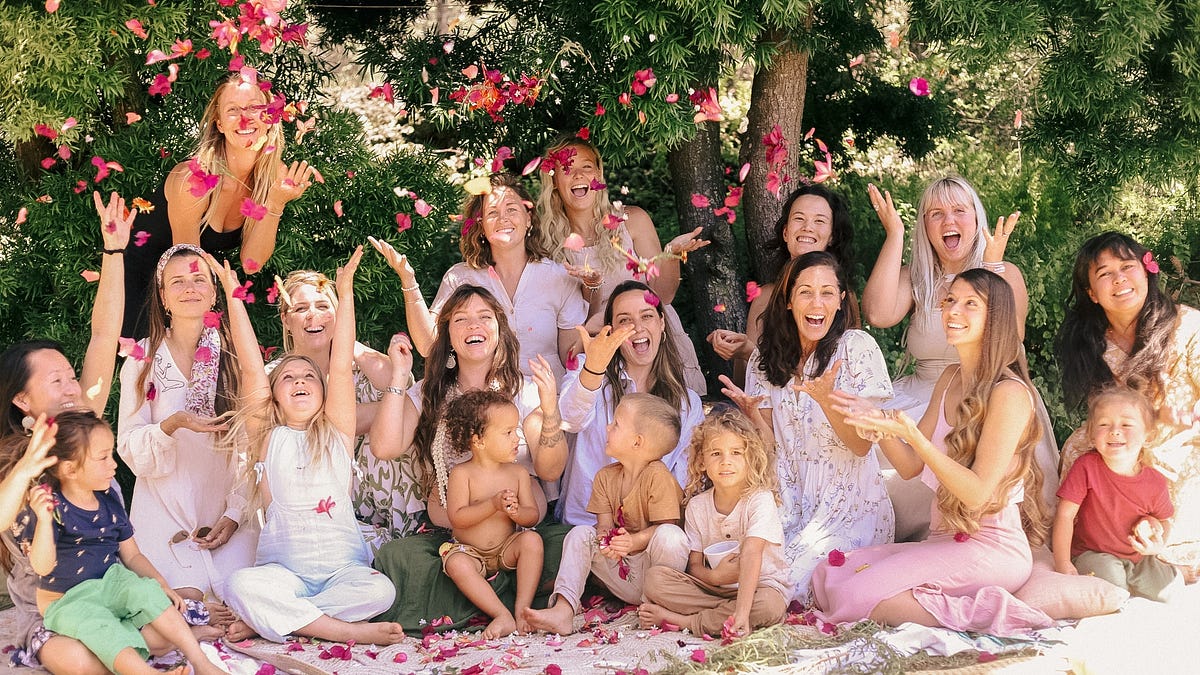
🔗 **Source:** [Hosting a Mothers Blessing](https://ebbymoyer.substack.com/p/hosting-a-mothers-blessing)
> [!note]+ Document Notes
> tags: [mothers-blessing, birth-traditions, postpartum-support, community-ritual, motherhood]
> author: Ebby Moyer
> source: Ebby Moyer's Substack
> reference: https://ebbymoyer.substack.com/p/hosting-a-mothers-blessing
> date created: 2026-08-21 12:35
>
> > [!info] Generated analysis — not the author's words. Sections below are machine-written
> > from the captured source. Only text inside `> [!quote]` blocks is verbatim from the author.
> > Do not quote or attribute any other line to the named author.
>
> # 🏷️ Title: Hosting a Mothers Blessing
>
<!-- deep-read:sections start -->
## 🧭 Table of Contents
- [📝 Summary](#-summary)
- [📖 Main Content](#-main-content)
- [🗒️ Notes](#️-notes)
- [📚 References](#-references)
- [🗣️ Paraphrase](#️-paraphrase)
- [📰 Newsletter](#-newsletter)
- [✅ Action Items](#-action-items)
- [🧪 Hypotheses](#-hypotheses)
- [📊 Methodology](#-methodology)
- [❓ Questions](#-questions)
- [🔮 Future Research](#-future-research)
- [💡 Implications](#-implications)
- [🧠 Learning Styles Assessment](#-learning-styles-assessment)
- [📊 Accessibility Assessment](#-accessibility-assessment)
- [🌍 DEIB Assessment](#-deib-assessment)
- [✅ Logical Validity](#-logical-validity)
- [🛡️ DARVO Analysis](#-darvo-analysis)
- [🎯 Conclusion](#-conclusion)
### 🔗 References
- [Hosting a Mothers Blessing (original post)](https://ebbymoyer.substack.com/p/hosting-a-mothers-blessing)
- Navajo Blessingway / Hózhó (referenced, not linked in source)
- India: vailakappu ceremony (referenced, not linked in source)
- Japan: Satogaeri shussan (referenced, not linked in source)
## 📝 Summary
- **What happened.** Ebby Moyer makes the case for "mothers blessings" — a pre-birth gathering centered on the expectant mother rather than baby gifts — as a modern alternative or companion to the traditional baby shower, then surveys cross-cultural precedents (Navajo Blessingway, Medieval European birth girdles, Indian vailakappu, Japanese Satogaeri shussan, and postpartum rituals from East Africa, Java, Ghana, Hawai'i, Mexico, Southeast Asia, and ancient Greece) before introducing a "Modern Mothers Blessings" framing and a "Planning a Mothers Blessing" section that is gated behind Substack's paid-subscriber paywall.
- **Why it matters.** The piece argues that a mother who feels supported and cared for going into birth has better labor and postpartum outcomes, and is in turn more able to care for her children — positioning ceremony/ritual as a mechanism for community-delivered emotional and practical support, contrasted against a clinical model (routine OB visits, hospital birth, 6-week postpartum check) the author frames as isolating.
- **Key stakeholders.** Expectant mothers; the friends/family "village" organizing and attending the blessing; by extension, the resulting children (framed as beneficiaries of a better-supported mother); doulas/birth-community practitioners who popularize this format; Substack as the publishing/monetization platform gating the practical how-to content.
- **Risks and tradeoffs.** The author flags cultural-appropriation risk directly — she explicitly declines to call her practice a "Blessingway" because that term names a specific sacred Navajo rite — but the broader essay still surveys many distinct sacred and cultural practices (Navajo, Indian, Japanese, Egyptian, Slavic, Indonesian, East African, Javanese, Ghanaian, Hawaiian, Mexican, Southeast Asian, ancient Greek) in a single comparative sweep, which risks flattening distinct traditions into an undifferentiated "worldwide precedent" argument even while disclaiming appropriation of any one of them.
- **Bottom line.** The free content lands the philosophical case and the cross-cultural framing; the actionable "how to plan one" content is paywalled, so this source is best read as a rationale/pitch rather than a how-to guide.
## 📖 Main Content
- **Core argument:** communal, mother-centered ritual before birth changes outcomes at two removes — first for the mother (less fear/isolation, smoother labor/postpartum), then for her children (a "filled up" mother parents better) — and functions as a deliberate rebuild of a "village" support structure the author believes modern life has eroded.
- **Structure the author uses to build the case:** (1) philosophical opening on why it matters, (2) a "History & Culture" section surveying global precedent to establish the practice as universal-human rather than a fad, (3) an explicit disclaimer distinguishing modern mothers blessings from any single sacred tradition (especially the Navajo Blessingway), (4) a "Planning" section that the free excerpt only opens before the paywall cuts in.
- **Terms defined in-text:** "Blessingway" — a specific two-night Navajo ceremony for major life transitions (puberty, marriage, pregnancy), which the author explicitly does NOT use as a synonym for a generic modern mothers blessing. "Vailakappu" — an Indian ceremony adorning the mother with glass bangles and sandalwood. "Satogaeri shussan" — the Japanese practice of a pregnant woman returning to her family home before delivery.
- **Uncertainties / contested framing:** the article treats "the modern OB/hospital model" as uniformly isolating and under-supportive by contrast with historical/ritual models, without citing outcome data (postpartum depression rates, birth satisfaction scores, etc.) for either side — this is asserted, not evidenced, in the free portion.
- **Paywall boundary:** the practical planning content (specific elements, activities, logistics) is not visible in the free tier; this analysis is built entirely from what Reader was able to scrape (the free excerpt), so any assessment of the "how-to" quality of the piece is out of scope here.
### 🗒️ Notes
- The essay opens with a causal chain, not a list of ceremony ideas: mother is cared for → less fear/isolation in birth and motherhood → smoother labor/better postpartum → mother better able to love/care for children → generational ripple effect. This chain is the load-bearing claim of the whole piece.
- The author is careful to decouple "mothers blessing" from "baby shower": she notes explicitly that hosting both is fine, so this is framed as additive, not a replacement or a rejection of gift-giving norms.
- The History & Culture section is a breadth sweep, not a depth study — each culture gets one or two sentences (Navajo, Medieval European, Egyptian/Mesoamerican, Indian, Japanese, plus a general "sacred women's sanctuaries" claim across Egypt/southwest Asia/North America/Indonesia/Slavic cultures, then a postpartum-specific list: East Africa, Java, Ghana, Hawai'i, Mexico, Southeast Asia, ancient Greece).
- The author's disclaimer paragraph is the ethical hinge of the piece: she names the Navajo Blessingway specifically as "a specific, sacred Navajo tradition" she is not replicating, which reads as a direct pre-emption of a cultural-appropriation critique.
- The section ends mid-thought at "Planning a Mothers Blessing" — the paragraph that follows the heading is present, but it is scene-setting ("there are a few elements that work together...") rather than the actual list of elements, which sits behind the paywall.
## 📚 References
- [Hosting a Mothers Blessing — Ebby Moyer](https://ebbymoyer.substack.com/p/hosting-a-mothers-blessing) — primary source for this analysis.
- No external citations, studies, or sources are linked within the free excerpt itself; all cultural claims (Navajo Blessingway, vailakappu, Satogaeri shussan, etc.) are stated without inline sourcing.
## 🗣️ Paraphrase
- Mothers blessings are worth reviving broadly because caring for the mother first has downstream benefits for her children and for the wider community fabric, and this isn't a new idea — it just fell out of practice.
- Historically, nearly every culture surveyed had some ritual for protecting, honoring, or supporting a pregnant or postpartum woman, from physical objects (birth girdles, bangles) to social structures (returning home, communal confinement spaces, elder-provided care).
- The author is explicit that today's version is a clinical, transactional model — a weigh-in, a "you're fine," a 6-week check — that she contrasts unfavorably with the communal ritual model described historically.
- The modern mothers blessing is presented as its own thing, deliberately not a re-enactment of any single sacred tradition (especially not the Navajo Blessingway), and deliberately flexible in form — from an intimate gathering of friends to a more structured ceremony.
- The piece transitions into "how to plan one" but the free content stops just as the practical list begins.
## 📰 Newsletter
- Not applicable to this source — this is a personal/parenting essay on a Substack (Ebby Moyer's), not WordPress, developer tooling, or open-source community content. No WordPress-focused newsletter blurb can be honestly derived from it.
## ✅ Action Items
#### DevRel
- Not applicable to this source — no developer relations, SDK, or advocacy content present.
#### OSPO
- Not applicable to this source — no open-source program office, licensing, or software governance content present.
#### Community
- Not applicable to this source — the "community" discussed is a personal/family support network (a mothers-blessing "village"), not an open-source or developer community; none of the maintainer/contributor/sponsor action patterns apply.
#### WordPress
- Not applicable to this source — no WordPress Core, plugin, theme, or ecosystem content present (Core, Core Performance, Core AI, Core Program Team, Mobile, Playground, Community, Training, Marketing, Support, Design, Documentation, Photos, TV, Polyglots, Accessibility, Meta, CLI, Hosting, Tide, Openverse, Themes, Plugins all N/A).
#### The WPOCC
- Not applicable to this source — no WP Open Community Collective programs, projects, or funding content present.
#### FAIR
- Not applicable to this source — no FAIR governance, federation, or plugin-metadata content present.
## 🧪 Hypotheses
- H1: Expectant mothers who participate in a pre-birth community support ritual (of any culturally-appropriate form) report lower fear/anxiety going into labor than those who do not.
- H2: Mothers who report feeling well-supported in the peripartum period show lower rates of postpartum depression/anxiety symptoms at 6 weeks postpartum than those who report feeling isolated.
- H3: The presence of an organized "support village" (ritual or informal) correlates with higher self-reported parenting capacity/bandwidth in the first postpartum year.
- H4: Framing a pre-birth gathering around "receiving care" (vs. "receiving gifts") changes attendees' post-event engagement (e.g., follow-through on offered postpartum help) relative to a standard baby shower.
- H5: Explicitly naming and disclaiming borrowed cultural terminology (as the author does with "Blessingway") reduces perceived cultural-appropriation criticism of syncretic modern rituals, relative to rituals that adopt sacred terminology without disclaimer.
### 📊 Methodology
- Not a natural fit for the source as written — this is a personal essay making an experiential and historical-survey argument, not a study. To test H1–H4 above: a mixed-methods design (validated prenatal anxiety and postpartum depression scales — e.g., PRAQ, EPDS — administered pre- and post-event, plus semi-structured interviews) comparing mothers who hosted/attended a mothers blessing against a matched cohort who had a conventional baby shower or no pre-birth gathering. To test H5: a survey-experiment presenting vignettes of ritual descriptions with/without a cultural-disclaimer paragraph, measuring perceived appropriateness/appropriation.
- Data sources the author draws on (as presented, uncited): comparative-religion/anthropology-style cultural survey knowledge; personal experience ("I've had the privilege to be a part of a good handful of mothers blessings").
### ❓ Questions
- What specifically differentiates the "modern mothers blessing" format the author practices from the sacred traditions she surveys, beyond terminology — is it the absence of the specific chants/rites, or something structural?
- Does the author (or anyone in this space) track outcomes for mothers who host these vs. those who don't, or is the case entirely experiential/anecdotal?
- What's actually in the paywalled "Planning" section — is it a checklist, a script, vendor/activity suggestions, or something else?
- How do mothers blessing organizers navigate consent and boundaries when a "pamper the mother" format could itself feel exposing or performative to some mothers?
- Is there a version of this practice designed for mothers who lack a "village" to draw on (single mothers, those estranged from family, those new to a city) — and if the whole premise depends on community, what's the on-ramp for someone without one?
### 🔮 Future Research
- A comparative ethnography of "modern mothers blessing" communities (doula-adjacent, crunchy/attachment-parenting-adjacent, church-community-adjacent) to see whether the format and its cultural-borrowing choices vary systematically by subculture.
- Outcome research connecting pre-birth social-support rituals (of any form) to validated postpartum mental-health and breastfeeding/bonding metrics, controlling for baseline social support.
- A cultural-appropriation framework specific to syncretic wellness/birth rituals — the author's own disclaimer-and-decline approach (naming a tradition, explicitly not adopting its sacred terms) could be a case study for a broader "how to borrow structure without borrowing sanctity" guideline.
### 💡 Implications
- **Practice:** doulas, birth workers, and community organizers could use the "care not gifts" reframe as a concrete, low-cost intervention distinct from existing baby-shower norms.
- **Policy:** if H1/H2 held up empirically, this would support policy arguments for community-based (not just clinical) postpartum support infrastructure — e.g., insurance or public-health coverage for postpartum doulas or community support programs, not just medical follow-up visits.
- **Security:** not applicable.
- **Education:** childbirth education curricula could incorporate a "build your support village" module alongside physiological birth prep.
- **Funding models:** the piece itself is monetized via Substack's paywall — the "aspirational/philosophical" content is free, the "actionable" content is paid, which is a common creator-economy pattern worth noting for anyone building a related resource (the free tier alone will not equip a reader to actually plan an event).
### 🧠 Learning Styles Assessment
- Reading level estimate: approximately Flesch-Kincaid grade 8–9 (conversational, run-on sentences, first-person voice, minimal technical vocabulary beyond the named ceremonies).
#### 👀 Visual learners
- Present: none — no diagrams, images beyond a single header photo, or charts in the scraped text.
- Improve: a simple world-map graphic marking each cultural tradition mentioned (Navajo Southwest US, Medieval Europe, India, Japan, Egypt, Slavic regions, Indonesia, East Africa, Java, Ghana, Hawai'i, Mexico, Southeast Asia, ancient Greece) would make the "this is universal" argument land faster than prose alone.
#### 🔊 Aural learners
- Present: none — no audio/podcast version indicated.
- Improve: a short narrated version, or interview-format audio with mothers who've hosted/attended one, would suit this personal-testimony content well.
#### 🗣️ Verbal learners
- Present: the piece already leans verbal/narrative — first-person voice, definitions given inline for each named ceremony (Blessingway, vailakappu, Satogaeri shussan).
- Improve: a short glossary sidebar of the named terms would help verbal learners cross-reference without re-reading paragraphs.
#### 🧩 Kinesthetic learners
- Present: minimal in the free excerpt — the "Planning" how-to (the kinesthetic payoff) is paywalled.
- Improve: once past the paywall, a checklist or template format would serve this learning style; not assessable from the free excerpt alone.
#### 🧠 Logical learners
- Present: a clear if-then causal chain in the opening paragraph (supported mother → smoother birth → better postpartum → better parenting capacity).
- Improve: a simple table (Culture | Ritual element | Purpose) summarizing the History & Culture section would make the comparative structure explicit rather than left implicit in prose.
#### 🧑🤝🧑 Social learners
- Present: the entire premise is social/communal by design (gathering, community, "village").
- Improve: discussion prompts or a companion "how to talk to your community about hosting one for you" script would extend the social angle into actionable social learning.
#### 🧘♀️ Solitary learners
- Present: minimal — the piece assumes a reader who has or wants a community around them.
- Improve: a reflection prompt for readers without an obvious "village" (see the Questions section above) would serve solitary/isolated readers this piece currently doesn't address.
#### 🌿 Naturalistic learners
- Present: none explicit, though several cited traditions reference natural elements (ocean bathing in East Africa, flower petals in Java and India, fire in Southeast Asia).
- Improve: drawing out the natural/elemental thread across traditions (water, fire, flowers, herbs) as its own throughline could resonate with naturalistic learners.
### 📊 Accessibility Assessment
#### Screen reader semantics
- Present: standard heading structure (H2/H3-level section breaks: "History & Culture," "The Modern Mothers Blessings," "Planning a Mothers Blessing") should read reasonably in a screen reader via Reader's scrape.
- Improve: cannot verify alt text on the header image from the scraped text alone; recommend checking the live page directly.
#### Keyboard navigation
- Present: standard Substack post template; no custom interactive widgets present in the free excerpt.
- Improve: not assessable further from scraped content.
#### Contrast and readability
- Present: standard Substack theme (not independently verifiable from scraped text).
- Improve: not assessable from scraped content; check live page.
#### Text resizing and reflow
- Present: standard Substack responsive template.
- Improve: not assessable from scraped content.
#### Media and captions
- Present: one header image; no video/audio in the free excerpt.
- Improve: add descriptive alt text to the header image if not already present (not verifiable from this scrape).
#### Forms and interactions
- Present: a paywall/subscribe gate (not a form in the traditional sense, but an interaction point).
- Improve: ensure the subscribe/paywall prompt is screen-reader accessible and keyboard-operable (standard Substack behavior, not independently verified here).
#### Standards reference
- Given the limited surface area verifiable from scraped text, the main WCAG 2.2 AA-relevant gap this analysis can flag with confidence is heading structure (present, appears compliant) — contrast, focus order, and media alternatives require a live-page check this pipeline did not perform.
### 🌍 DEIB Assessment
#### Cultural breadth
- Present: strong — the piece deliberately surveys traditions from the Navajo Nation, Medieval Europe, ancient Egypt/Mesoamerica, India, Japan, Slavic cultures, Indonesia, East Africa, Java, Ghana, Hawai'i, Mexico, Southeast Asia, and ancient Greece.
- Improve: breadth comes at the cost of depth — each tradition gets a sentence or two with no named source, practitioner voice, or link out to a culture-specific resource; crediting specific scholars/practitioners per tradition would strengthen this considerably.
#### Inclusive language
- Present: gender-neutral where it counts less (the piece is explicitly about "mothers" by design, which is appropriate to its scope) but does not address non-birthing-parent or adoptive-parent variations of the ritual.
- Improve: acknowledge or link to adapted versions of the ritual for adoptive parents, surrogacy arrangements, or non-birthing partners, if such versions exist in the author's broader body of work.
#### Neurodiversity support
- Present: chunked into clearly-headed sections (History & Culture, The Modern Mothers Blessings, Planning).
- Improve: the opening section is a dense multi-sentence paragraph before the first subheading; breaking it up further would help.
#### Representation
- Present: wide geographic/cultural representation in the History & Culture section (see Cultural breadth above).
- Improve: representation is thin on modern practitioners — the free excerpt names no specific communities or individuals currently practicing modern mothers blessings outside the author's own experience.
#### Psychological safety
- Present: the author proactively names and disclaims the cultural-appropriation risk around "Blessingway" specifically, which models good practice.
- Improve: no content-note is present for readers who may find "flexibility of the modern format" ambiguous or overwhelming when planning under time/financial constraints (not addressed in the free excerpt; may be addressed in the paywalled section).
### ✅ Logical Validity
#### Strong reasoning
- The central causal chain (supported mother → better birth/postpartum → better parenting capacity → generational effect) is a coherent, plausible causal chain, even though it is asserted rather than evidenced with citations in the free excerpt — it's internally consistent and matches broader social-support literature in spirit, even if this specific piece doesn't cite it.
- The disclaimer distinguishing the modern practice from the sacred Navajo Blessingway is a strong, specific piece of reasoning — the author doesn't just gesture at "respecting cultures," she names the specific practice, explains why it's different (a "sacred cultural tradition" vs. her own flexible modern format), and explains her resulting naming choice.
#### Fallacies
- **Hasty generalization / appeal to tradition** — located in the "History & Culture" section (paragraphs on Navajo, Medieval European, Indian, Japanese, and the broader "many indigenous cultures worldwide" claim): the argument moves from "many cultures throughout history have had some birth/postpartum ritual" to an implied "therefore modern Western culture should adopt this practice," without addressing why the practice declined in the first place or whether the historical versions were universally experienced as supportive rather than, in some cases, obligatory or restrictive. **Fix:** acknowledge that ritual obligation can also be a source of pressure, not just support, in some historical/cultural contexts, and that "widespread historically" is evidence of importance, not automatically evidence that a specific reader should recreate it.
- **False dichotomy (implicit)** — located in the closing lines of the History & Culture section ("...we tend to send mom off to her gyno visits... just to return to hospital, uninformed and unsupported... then quickly bundled off home"): this frames the choice as ritual-community-care vs. clinical-neglect, when many mothers today combine both community support and clinical care, or receive strong clinical support (e.g., midwifery continuity-of-care models). **Fix:** narrow the claim to "the ritual/community layer is often missing," rather than implying the clinical model is inherently uncaring.
#### Tone of voice
- Warm, first-person, enthusiastic, occasionally informal ("in fat you can absolutely..." — likely a typo for "in fact"; "We're all in this together' type vibes"). The tone is persuasive-advocate rather than neutral-informational, consistent with a personal newsletter/Substack format rather than journalism or research writing.
### 🛡️ DARVO Analysis
- Not applicable to this source — DARVO (Deny/Attack/Reverse-victim-offender) is a framework for analyzing responses to accusation, and this piece contains no accusation, defense, or conflict narrative to analyze. The closest adjacent content — the author's cultural-appropriation disclaimer — is proactive and non-defensive (she raises and addresses the concern before any accusation is made), which is structurally the opposite of a DARVO pattern.
## 🎯 Conclusion
- **Bottom line:** the free portion of this piece makes a coherent, warmly-argued case for community-centered, mother-focused rituals before birth, grounds it in a broad (if shallow) cross-cultural survey, and models good practice by proactively disclaiming appropriation of the specific sacred tradition (Navajo Blessingway) it most closely resembles — but the actionable "how to actually plan one" content sits behind Substack's paywall and is not reflected in this analysis.
- **Practical next steps for readers:** (1) decide whether the philosophical case alone is enough to act on, or whether the paywalled planning content is needed first; (2) if proceeding without the paywalled content, treat the "care not gifts" reframe and the "name what you're not doing" cultural-disclaimer model as the two concrete, reusable takeaways from the free excerpt; (3) if researching further, look for outcome-focused (not just experiential) sources on postpartum social support to substantiate the piece's central causal claim.
## 🔄 Refactor Appendix — Hosting a Mothers Blessing
> Density: 2–5 Literature atoms (H3), 0–3 Permanent candidates (H4).
> Defaults: 3 Literature, 1 Permanent. Resonance filter applied.
### 📚 Literature Atoms (H3)
#### [H1] Mother's care capacity scales with how supported she feels
> [!quote] ID:rw_1
> When the mother is filled up, she is more able to love and care for her children well
**Context & use**:
- Opening thesis paragraph of the piece.
- This is the load-bearing causal claim the whole essay builds on — worth cross-referencing against actual postpartum-support outcome literature rather than taking as given.
**Tags**: #xref #aphorisms
<!-- atomicity: 1 idea ✓ -->
#### [H2] Navajo Blessingway is a two-night rite for major life transitions
> [!quote] ID:rw_2
> The Blessingway is a two-night ceremony that is used for many major life transitions, like puberty, marriage, or pregnancy.
**Context & use**:
- History & Culture section, cited as the most commonly-known root reference for the modern "mothers blessing" trend.
- Useful vocabulary anchor for distinguishing sacred-specific vs. syncretic-modern ritual practice.
**Tags**: #xref
<!-- atomicity: 1 idea ✓ -->
#### [H3] Modern mothers blessings are explicitly not the sacred Navajo rite
> [!quote] ID:rw_3
> that very much is a specific, sacred Navajo tradition and that is not what we are doing here
**Context & use**:
- The author's direct cultural-appropriation disclaimer, explaining why she avoids the word "Blessingway" for her own practice.
- Good model instance for the "name it, then decline it" pattern discussed in the Logical Validity section.
**Tags**: #xref #addendum
<!-- atomicity: 1 idea ✓ -->
### 🧠 Permanent Candidates (H4)
#### [P1] Receiving-care rituals build capacity, not just comfort
**Claim** (one sentence, Courtney's voice): A ritual that lets someone receive care rather than perform gratitude for gifts changes what they're able to give afterward, not just how they feel during it.
**Evidence pointer**: [[#H1]]
**Scope & conditions**: Holds for high-transition life events where isolation is the default failure mode (birth, major illness, grief, caregiving onset); breaks down if the ritual itself becomes performative or gift-centered rather than genuinely care-centered.
**Links** (≥1 with annotation):
- [[Community support rituals]] — because extends
- [[Baby shower]] — because contrasts on focus (gifts-for-baby vs. care-for-mother)
- [[Postpartum support infrastructure]] — because applies-in maternal/postpartum care
<!-- atomicity: 1 idea ✓ -->
### ✏️ Fleeting Queue
- [F1] Is there existing outcome research (not just testimony) linking pre-birth community rituals to measurable postpartum mental-health outcomes? Worth a targeted search. #xref
- [F2] The "name the tradition, then explicitly decline to claim it" pattern the author uses for the Navajo Blessingway could be a reusable template for writing about any borrowed/adjacent cultural practice. #articleseed
### → Things 3 (max 2 actions)
- [ ] Search for postpartum-support outcome research (PRAQ/EPDS-based studies) to substantiate or challenge H1/H2 from this note — context: personal reading backlog #things
<!-- deep-read:sections end -->
📄 **Full text:** [[Full Document Contents/Articles/Hosting a Mothers Blessing.md|Hosting a Mothers Blessing by Ebby Moyer]]
## Highlights
- I’m convinced that hosting Mothers Blessings for expectant moms can change the world. I’m not exaggerating- recreating a norm of communal support and blessing for mothers (and not just excitement for babies) has a generational ripple effect. When the mother is cared for, supported, and enters birth and motherhood without fear and loneliness, she is more likely to have a smooth labor and a better postpartum. When the mother is filled up, she is more able to love and care for her children well, which is life changing for them and creates a better experience of motherhood. A mothers blessing is one way to bring this care and support to the forefront and build a web of female community. ([View Highlight](https://read.readwise.io/read/01m0jjsgxs3zh84dws8gq6g6sa))
- Note: Opening thesis: a supported mother has a smoother labor/postpartum and is better able to care for her children — the load-bearing causal claim of the piece.
- Tags: mothers-blessing, atom/literature/h1
- The most commonly known and what the recent American resurgence often links back to is the Navajo “Blessingway” or Hózhó. The Blessingway is a two-night ceremony that is used for many major life transitions, like puberty, marriage, or pregnancy. It is a sacred ritual with specific chants and stories intended to restore peace, harmony and invite protection to the mother and child. However, this is very different than any modern mothers blessing practice I have heard of, and isn’t really something to emulate as this is a sacred cultural tradition. ([View Highlight](https://read.readwise.io/read/01m0jjsr2avkytb7p122vtq8e7))
- Note: Names the Navajo Blessingway as the most commonly cited root reference — a sacred, specific tradition, explicitly not something to replicate.
- Tags: birth-traditions, atom/literature/h2
- As such, I don’t personally use the word “Blessingway” (although it does roll of the tongue beautifully) because that very much is a specific, sacred Navajo tradition and that is not what we are doing here. ([View Highlight](https://read.readwise.io/read/01m0jjszrj4rrh3s1yv8xncnk1))
- Note: Author's direct cultural-appropriation disclaimer — names the sacred tradition, then explicitly declines to claim it for her modern practice.
- Tags: fallacy/cultural-appropriation-disclaimer, atom/literature/h3