How Latter Rain Divided Pentecostal Churches
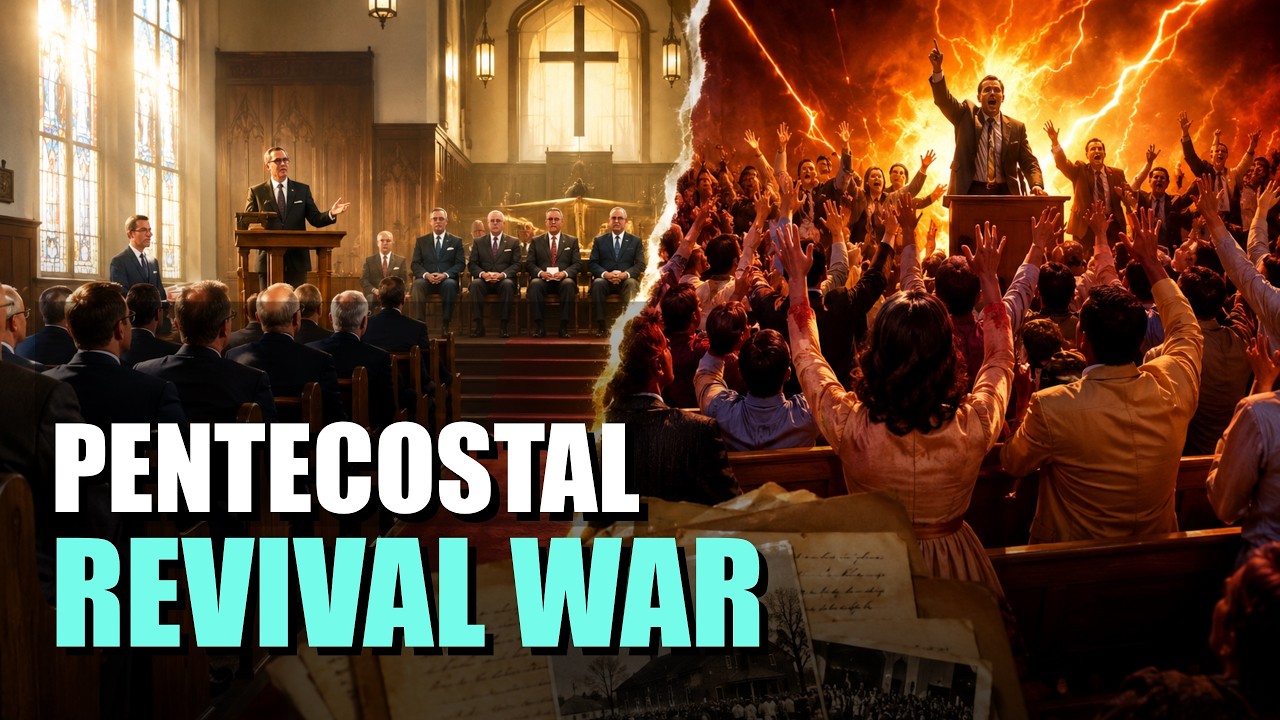
🔗 **Source:** [How Latter Rain Divided Pentecostal Churches](https://www.youtube.com/watch?v=_bFr49FijmU)
> [!note]+ Document Notes
> tags: [pentecostalism, religious-schism, branhamism, latter-rain, assemblies-of-god]
> author: [MISSING]
> source: [MISSING]
> reference: https://www.youtube.com/watch?v=_bFr49FijmU
> date created: {{date:YYYY-MM-DD}} {{time:HH:mm}}
>
> # 🏷️ Title: How Latter Rain Divided Pentecostal Churches
>
<!-- deep-read:sections start -->
## 🧭 Table of Contents
- [📝 Summary](#-summary)
- [📖 Main Content](#-main-content)
- [🗒️ Notes](#️-notes)
- [📚 References](#-references)
- [🗣️ Paraphrase](#️-paraphrase)
- [📰 Newsletter](#-newsletter)
- [✅ Action Items](#-action-items)
- [🧪 Hypotheses](#-hypotheses)
- [❓ Questions](#-questions)
- [🔮 Future Research](#-future-research)
- [💡 Implications](#-implications)
- [🧠 Learning Styles Assessment](#-learning-styles-assessment)
- [📊 Accessibility Assessment](#-accessibility-assessment)
- [🌍 DEIB Assessment](#-deib-assessment)
- [✅ Logical Validity](#-logical-validity)
- [🛡️ DARVO Analysis](#-darvo-analysis)
- [🎯 Conclusion](#-conclusion)
## 📝 Summary
- The Latter Rain movement spread from Canada into US Pentecostal churches, causing doctrinal divisions that nearly destroyed the Assemblies of God denomination in 1949.
- The movement promoted unqualified ministers receiving "new revelation" through prophetic utterances, claiming these superseded biblical authority.
- The Assemblies of God formally rejected Latter Rain doctrine, but the split created the Independent Assemblies of God, which later ordained Jim Jones.
- Cross-pollination between churches made the division confusing, with some congregants unaware their church had switched affiliations.
- The controversy demonstrates how revival networks can spread destructive teachings when there are no effective doctrinal gatekeepers.
## 📖 Main Content
The Latter Rain movement emerged from Canada and infiltrated American Pentecostal churches through revival circuits, creating a crisis that threatened the structural integrity of major denominations. The movement's core doctrine challenged traditional biblical authority by claiming new prophetic revelations could supersede scripture.
### The Doctrinal Crisis
The movement promoted a dangerous precedent: unqualified individuals could become ministers simply through the laying on of hands and prayer. These newly appointed leaders claimed to receive "rhema" or spoken word revelations directly from God, positioning these new utterances as more authoritative than biblical text. This represented a fundamental shift from scripture-based authority to experiential prophecy.
### Institutional Response
In September 1949, the Assemblies of God's 23rd General Council in Seattle formally condemned the movement. Their resolution stated they would not tolerate the "new order of latter rain," recognizing that while hunger for spiritual renewal existed, the movement's "extreme teachings and practices" were "unfounded scripturally" and served only to "break fellowship" and create "confusion and division."
### The Great Split
The condemnation created an immediate schism. The Independent Assemblies of God broke away, led by A.W. Rasmussen (whom William Branham called his "bosom friend") and Joseph Mattson Boze. This splinter group would later ordain Jim Jones, demonstrating the movement's trajectory toward extremism.
### Organizational Chaos
The split created widespread confusion. Many churches changed denominational affiliation without updating their signage, leaving congregants unaware of their church's actual theological position. Ministers continued traveling revival circuits, sometimes moderating their message depending on their audience, which perpetuated cross-pollination of doctrines.
### Regional Resistance
Indiana became a "rogue state" within the Assemblies of God, with First District Superintendent Roy H. Weed successfully defending Branhamism within official denominational structures. Weed's political connections (his son Doug Weed later advised presidents) provided institutional protection that allowed the controversial teachings to persist for years.
## 🗒️ Notes
#### ⏱️ [00:00:00](https://www.youtube.com/watch?v=_bFr49FijmU?t=0) Latter Rain Cross-Pollination
- Movement spread from Canada into US Pentecostal churches
- Affected multiple denominations: Assemblies of God, United Pentecostal, others
- Created doctrinal contamination through revival circuits
#### ⏱️ [00:01:30](https://www.youtube.com/watch?v=_bFr49FijmU?t=90) Unqualified Ministry Problem
- Ministers appointed through prayer and laying on of hands only
- No doctrinal training or biblical knowledge required
- "New revelation" claimed to supersede biblical authority
- Rhema (spoken word) positioned as more powerful than scripture
#### ⏱️ [00:02:15](https://www.youtube.com/watch?v=_bFr49FijmU?t=135) 1949 Assemblies of God Rejection
- 23rd General Council, Seattle, September 9-14, 1949
- Formal resolution condemning "new order of latter rain"
- Acknowledged spiritual hunger but rejected "extreme teachings"
- Cited scriptural unfoundedness and divisive effects
#### ⏱️ [00:04:00](https://www.youtube.com/watch?v=_bFr49FijmU?t=240) Network Connectivity Issues
- New Apostolic Reformation built on similar networks
- Many participants unaware of connections
- History erased or hidden
- No gatekeeping mechanisms against heretical teaching
#### ⏱️ [00:05:30](https://www.youtube.com/watch?v=_bFr49FijmU?t=330) The Great Split
- Split nearly destroyed Assemblies of God
- Independent Assemblies of God formed as breakaway group
- Led by A.W. Rasmussen and Joseph Mattson Boze
- Later ordained Jim Jones, demonstrating trajectory
#### ⏱️ [00:07:00](https://www.youtube.com/watch?v=_bFr49FijmU?t=420) Organizational Confusion
- Churches changed affiliation without updating signage
- Congregants attended wrong denomination unknowingly
- Ministers moderated messages based on audience
- Continued cross-pollination despite formal split
#### ⏱️ [00:09:00](https://www.youtube.com/watch?v=_bFr49FijmU?t=540) Indiana Rogue State
- Roy H. Weed led resistance as First District Superintendent
- Maintained Assemblies of God status while promoting Branhamism
- Political connections (son Doug Weed advised presidents)
- Successfully delayed Branham's final sanctions
## 📚 References
- Assemblies of God 23rd General Council Resolution (1949)
- Independent Assemblies of God organizational records
- William Branham ministry documentation
## 🗣️ Paraphrase
The Latter Rain movement created a religious crisis by promoting the idea that new prophetic revelations could supersede biblical authority. When unqualified ministers claimed divine appointment through simple prayer rituals, established denominations faced an existential threat to their doctrinal foundations. The Assemblies of God's 1949 rejection of these practices triggered a devastating split that created the Independent Assemblies of God, which later embraced even more extreme figures like Jim Jones. The confusion was compounded by churches switching denominations without informing congregants, while traveling ministers spread controversial doctrines across revival circuits regardless of official denominational positions.
## 📰 Newsletter
The early Pentecostal movement faced a crisis that offers important lessons for modern religious communities and organizations. When the Latter Rain movement began promoting unqualified leadership and claimed new revelations superseded established doctrine, it nearly destroyed one of America's largest Pentecostal denominations. The 1949 split shows how quickly institutional authority can erode when gatekeeping mechanisms fail. For WordPress community builders, this historical case study illustrates the importance of maintaining clear governance structures, transparent leadership qualifications, and consistent communication about organizational changes. Whether you're managing a local meetup or contributing to Core, the principles of doctrinal integrity and institutional transparency remain relevant for maintaining healthy community dynamics.
## ✅ Action Items
#### Community
- Research governance failure patterns in religious and secular organizations
- Document clear leadership qualification standards for community groups
- Establish protocols for handling doctrinal or directional disputes
- Create transparency requirements for organizational affiliation changes
#### WordPress
- Community: Develop case studies on maintaining doctrinal consistency in distributed networks
- Training: Create governance workshops for WordCamp organizers
- Documentation: Document clear escalation paths for community conflicts
## 🧪 Hypotheses
1. Revival networks without strong gatekeeping mechanisms are vulnerable to doctrinal contamination
2. Institutional splits create lasting confusion when organizational changes aren't clearly communicated
3. Political connections can provide protection for controversial religious teachings within established denominations
4. Cross-pollination through traveling speakers can undermine formal denominational boundaries
5. The hunger for spiritual renewal makes communities susceptible to authoritarian movements
### 📊 Methodology
- Historical analysis of denominational records and resolutions
- Tracking of ministerial movements through revival circuits
- Documentation of organizational splits and their aftermath
- Analysis of political influence on religious institutional decisions
### ❓ Questions
- How do modern religious movements prevent similar doctrinal contamination?
- What role did media and communication technology play in spreading these divisions?
- How did the split affect local church finances and property ownership?
- What long-term effects did this have on Pentecostal credibility?
### 🔮 Future Research
- Comparative analysis with other religious schisms
- Investigation of Jim Jones's pathway from this network to Jonestown
- Study of Roy Weed family political connections and religious influence
- Analysis of revival circuit economics and ministerial credentialing
### 💡 Implications
The case demonstrates how quickly established institutions can fracture when authority structures are challenged by charismatic movements. For modern organizations, it highlights the importance of clear governance, transparent communication about changes, and robust mechanisms for evaluating new leadership claims.
### 🧠 Learning Styles Assessment
Reading level: College (complex theological and historical concepts)
#### 👀 Visual learners
- Present: Timeline of 1949 split and organizational changes
- Improve: Denominational family tree diagrams, geographic spread maps
#### 🔊 Aural learners
- Present: Video format with clear narration
- Improve: Audio version with enhanced audio quality, chapter markers
#### 🗣️ Verbal learners
- Present: Clear definitions of theological terms, historical context
- Improve: Glossary of Pentecostal terminology, comparative theology explanations
#### 🧩 Kinesthetic learners
- Present: Step-by-step breakdown of institutional processes
- Improve: Interactive timeline, case study worksheets
#### 🧠 Logical learners
- Present: Chronological structure, cause-and-effect relationships
- Improve: Decision trees showing split outcomes, organizational charts
#### 🧑🤝🧑 Social learners
- Present: Discussion of community dynamics and institutional relationships
- Improve: Discussion questions about modern applications
#### 🧘♀️ Solitary learners
- Present: Dense information for independent analysis
- Improve: Reflection prompts on institutional authority and change
#### 🌿 Naturalistic learners
- Present: Organic spread patterns of religious movements
- Improve: Ecosystem analogies for institutional health and contamination
### 📊 Accessibility Assessment
#### Screen reader semantics
- Present: Clear heading structure, descriptive content
- Improve: Alt text for any diagrams, ARIA labels for timestamps
#### Keyboard navigation
- Present: Basic navigation available
- Improve: Skip links to major sections, keyboard shortcuts for timestamps
#### Contrast and readability
- Present: Standard text formatting
- Improve: Higher contrast for timestamp links, larger text options
#### Text resizing and reflow
- Present: Responsive text layout
- Improve: Maintain readability at 200% zoom
#### Media and captions
- Present: Transcript provided for video content
- Improve: Synchronized captions, audio descriptions for visual elements
### 🌍 DEIB Assessment
#### Cultural breadth
- Present: American religious history context
- Improve: International comparative examples, diverse denominational perspectives
#### Inclusive language
- Present: Generally neutral historical language
- Improve: Plain language explanations of theological terms
#### Neurodiversity support
- Present: Clear section headings, structured timeline
- Improve: More frequent subheadings, consistent formatting patterns
#### Representation
- Present: Focus on institutional rather than personal narratives
- Improve: Include perspectives from affected congregants, diverse theological viewpoints
#### Psychological safety
- Present: Academic treatment of controversial topics
- Improve: Content warnings for discussions of religious manipulation
### ✅ Logical Validity
#### Strong reasoning
- Chronological evidence shows clear cause-and-effect relationship between Latter Rain spread and denominational crisis
- Documentary evidence from official Assemblies of God resolutions supports claims about institutional response
- Connection between Independent Assemblies of God and Jim Jones ordination demonstrates trajectory of extremism
#### Fallacies
- Potential guilt by association: implies all Latter Rain adherents were dangerous based on Jim Jones connection
- Post hoc reasoning: suggests all organizational confusion was intentional rather than natural result of rapid change
#### Tone of voice
- Academic and analytical, with occasional humor ("laughter" interjections suggest informal educational setting)
- Generally objective but clearly critical of Latter Rain movement
### 🛡️ DARVO Analysis
- Deny: No clear denial patterns in historical narrative
- Attack: Some implicit criticism of Latter Rain movement as "destructive"
- Reverse: No attempt to reverse victim/offender roles
- The analysis appears to be straightforward historical documentation rather than defensive rhetoric
## 🎯 Conclusion
The 1949 Latter Rain split demonstrates how quickly established religious institutions can fracture when charismatic movements challenge traditional authority structures. The crisis nearly destroyed the Assemblies of God and created lasting organizational confusion that affected thousands of congregants. Most significantly, the breakaway group that formed in response later ordained Jim Jones, illustrating how institutional splits can create pathways for increasingly extreme leadership. For modern organizations, this case emphasizes the critical importance of maintaining clear governance structures, transparent communication about changes, and effective gatekeeping mechanisms to prevent doctrinal or directional contamination.
## 🔄 Refactor Appendix — How Latter Rain Divided Pentecostal Churches
### 📚 Literature Atoms (H3)
#### Revival networks enable rapid doctrinal contamination without gatekeepers
> [!quote] ID:rw_transcript_001
> "There's not There's nothing that says, 'We're not going to let you come preach in our church because you might preach that heresy from the New Apostolic Reformation.'"
**Context & use**:
- Describes institutional vulnerability to traveling speakers
- Explains how cross-pollination occurred despite formal denominational boundaries
**Tags**: #xref #religious-governance
**Highlight**: [view highlight](youtube://watch?v=_bFr49FijmU)
<!-- atomicity: 1 idea ✓ -->
#### Institutional splits create organizational confusion when branding remains unchanged
> [!quote] ID:rw_transcript_002
> "You had all of these different churches who were cross-pollinating... not all of them changed the name of their church on the door."
**Context & use**:
- Documents how congregants attended wrong denomination unknowingly
- Shows importance of transparent organizational communication
**Tags**: #organizational-change #transparency
**Highlight**: [view highlight](youtube://watch?v=_bFr49FijmU)
<!-- atomicity: 1 idea ✓ -->
#### Political connections can shield controversial religious teachings from institutional sanctions
> [!quote] ID:rw_transcript_003
> "Roy H. Weed... was able to successfully defend Branham... his son Doug Weed was an advisor for American presidents"
**Context & use**:
- Demonstrates how external influence protects internal dissent
- Shows intersection of religious and political power
**Tags**: #political-influence #institutional-resistance
**Highlight**: [view highlight](youtube://watch?v=_bFr49FijmU)
<!-- atomicity: 1 idea ✓ -->
### 🧠 Permanent Candidates (H4)
#### Institutional gatekeeping prevents ideological contamination in distributed networks
**Claim**: Organizations without clear mechanisms for evaluating traveling speakers or new teachings become vulnerable to doctrinal drift that can threaten institutional integrity.
**Evidence pointer**: [[#Revival networks enable rapid doctrinal contamination without gatekeepers]]
**Scope & conditions**: Applies to religious, academic, and professional networks; breaks when gatekeeping becomes too rigid and stifles innovation
**Links**:
- [[Distributed governance]] — because applies-in decentralized organizations
- [[Quality control]] — because extends beyond technical contexts
<!-- atomicity: 1 idea ✓ -->
### ✏️ Fleeting Queue
- Historical parallel research: other cases of revival network contamination in 20th century #fleeting #research-queue
- Modern application: how do tech conference circuits prevent similar ideological capture? #fleeting #contemporary-parallels
### → Things 3
- [ ] Research Roy Weed family political connections and timeline — religious authority + political power intersection #things
---
## Full Transcript
[00:00] This influx of all of these latter rain<br>[00:02] affected people started coming down into<br>[00:05] the United States and Canada from<br>[00:07] Canada.<br>[00:08] >> [clears throat]<br>[00:08] >> Spread throughout the United States,<br>[00:10] they're attending Assemblies of God<br>[00:12] churches, Pentecostal United Pentecostal<br>[00:14] churches, all of these different flavors<br>[00:16] of Pentecostalism<br>[00:18] and they're cross-pollinating.<br>[00:20] And the end result was this, the<br>[00:23] doctrine became so destructive from the<br>[00:26] cross-pollination<br>[00:28] that the Assemblies of God themselves<br>[00:30] could no longer put up with it. They<br>[00:32] were watching ministers without any<br>[00:34] qualifications,<br>[00:36] with<br>[00:37] many of which did not even have<br>[00:39] doctrinal training or even understand<br>[00:42] doctrine of the Bible who could become a<br>[00:44] minister or a leader or an evangelist<br>[00:47] simply by having hands laid upon their<br>[00:49] shoulders and praying for them. And the<br>[00:51] way it worked in latter rain, if this<br>[00:54] happened, if you were prayed for, well,<br>[00:56] God was going to speak through your<br>[00:57] mouth and we're going to get a new<br>[00:58] revelation. And it doesn't matter if you<br>[01:00] don't know the old revelation of the<br>[01:02] Bible, the new one, the spoken word, the<br>[01:05] rhema. This is a new thing and it's more<br>[01:07] powerful than the Bible anyway.<br>[01:09] Well, the Assemblies of God just said,<br>[01:11] "No, we're not going to do this. You<br>[01:14] guys are destructive and in the 23rd<br>[01:17] General Council that was held in<br>[01:20] Seattle, Washington from September 9th<br>[01:22] through 14th, 1949,<br>[01:25] the Assemblies of God just fully<br>[01:27] rejected latter rain. And they said that<br>[01:31] we as the Assemblies of God will not put<br>[01:34] up with the {quote} "new order of latter<br>[01:37] rain" and we recognize that yes, there's<br>[01:40] a hunger for this kind of thing, but we<br>[01:43] disapprove of these extreme teachings<br>[01:45] and practices, which being unfounded<br>[01:48] scripturally serve only to break<br>[01:50] fellowship of like precious faith and to<br>[01:53] send confusion and division among<br>[01:56] members of the body of Christ. And<br>[01:58] that's verbatim. I'm reading this<br>[02:00] resolution that was passed.<br>[02:02] So, Branhamism came in, started<br>[02:04] cross-pollinating, other ministers<br>[02:06] started cross-pollinating.<br>[02:07] This mess was happening in this<br>[02:10] particular apostolic network.<br>[02:13] Broadness to today, now the New<br>[02:15] Apostolic Reformation, it's built upon<br>[02:17] all of these similar apostolic networks.<br>[02:21] The Assemblies of God just being one of<br>[02:22] them, and I've talked to Assemblies of<br>[02:25] God ministers or<br>[02:27] uh<br>[02:28] not ministers, but people who are<br>[02:30] affiliated with the Assemblies of God,<br>[02:31] and they say, "We reject the New<br>[02:33] Apostolic Reformation. We don't even<br>[02:34] like it." And I'm scratching my head<br>[02:37] thinking, "Do you not know you're in a<br>[02:39] network?"<br>[02:40] But that's how this works. It's so<br>[02:42] insidious because they're all kind of<br>[02:44] connected, and they don't even know it<br>[02:45] themselves. Because, number one, they're<br>[02:49] erasing their history. Number two,<br>[02:51] they're not transparent if they know<br>[02:53] their history. And number three, it's<br>[02:55] just all connected, and there's no<br>[02:58] gatekeeper that keeps the evil out.<br>[03:01] There's not There's nothing that says,<br>[03:03] "We're not going to let you come preach<br>[03:05] in our church because you might preach<br>[03:07] that heresy from the New Apostolic<br>[03:09] Reformation." Well, [snorts] back in<br>[03:11] this day, we're not going to stop<br>[03:13] William Branham from coming because<br>[03:15] that's not how we work. That's not how<br>[03:17] we operate. He's in our revival circuit.<br>[03:19] And so, they did until it became a<br>[03:21] problem.<br>[03:22] But unfortunately, the problem was too<br>[03:25] late. Once this resolution was passed,<br>[03:28] this caused such a split in the<br>[03:30] Assemblies of God that it's very<br>[03:34] surprising that the Assemblies of God<br>[03:36] actually survived the aftermath of this.<br>[03:39] It drove a wedge right down through the<br>[03:41] middle of the Assemblies of God. And<br>[03:43] what happened was there were other<br>[03:45] Pentecostal organizations that had<br>[03:48] merged into the Assemblies of God to<br>[03:50] form the Assemblies of God.<br>[03:52] One of them, one of the largest, was the<br>[03:54] Independent Assemblies of God.<br>[03:57] And they just decided, "We're going to<br>[03:59] break away because we want to side with<br>[04:01] Branham and the Latter Rain side of the<br>[04:03] split."<br>[04:04] So, you had on the Assembly side, those<br>[04:06] who rejected Latter Rain, who said,<br>[04:09] "This nonsense that's being taught is<br>[04:11] destructive and it's causing divisions<br>[04:13] in the church." Then you had the other<br>[04:15] side that said, "We want the divisions<br>[04:17] in the church."<br>[04:19] Literally, they wanted the divisions and<br>[04:20] they created it. So, they broke away and<br>[04:23] the Independent Assemblies of God was<br>[04:25] formed.<br>[04:26] It was formed by A.W. Rasmussen, who was<br>[04:31] one of William Branham's, I think<br>[04:32] Branham called him his bosom friend.<br>[04:35] And working with closely with Rasmussen<br>[04:37] was Joseph Mattson Boze.<br>[04:40] They were not the only leaders, but they<br>[04:42] were significant leaders in the<br>[04:45] Independent Assemblies of God.<br>[04:47] This was the organization, if you have<br>[04:50] studied the history in our Revival<br>[04:51] History series, this is the organization<br>[04:54] and the men who would later ordain Jim<br>[04:57] Jones into the faith and launch Jim<br>[05:00] Jones and his ministry.<br>[05:02] So, you had that wide of a split. You<br>[05:04] had people saying, "If you do this, it's<br>[05:06] dangerous and you'll cause a division."<br>[05:09] And you had the other side that said,<br>[05:11] "We want the division and we're going to<br>[05:13] invite the danger. We're We're going to<br>[05:14] invite Jim Jones into our fold and make<br>[05:18] him a leader in the sect." That's That's<br>[05:20] how bad this was. So, the split happened<br>[05:23] and<br>[05:24] >> [clears throat]<br>[05:25] >> then beyond that, it got a little bit<br>[05:29] dirty. The water was muddy. I'll say it<br>[05:31] like that. You had all of these<br>[05:33] different Assemblies of God churches,<br>[05:37] many of whom had been recognized for<br>[05:39] years as an Assemblies of God church,<br>[05:42] and then suddenly decided to flip to the<br>[05:44] Independent Assemblies,<br>[05:46] but not all of them changed the name of<br>[05:48] their church on the door.<br>[05:50] >> [laughter]<br>[05:50] >> So, you had people who were attending<br>[05:52] who thought they were<br>[05:53] attending a Assemblies of God church,<br>[05:56] but instead they were attending the<br>[05:57] Independent Assemblies of God. You had<br>[06:00] others who did change the name and they<br>[06:02] denounced it.<br>[06:03] But, the<br>[06:06] the water was so dirty that people did<br>[06:08] not recognize whether or not they were<br>[06:11] part of the split and some of them I<br>[06:13] think just were<br>[06:15] not even fully aware that the split<br>[06:17] happened. So, the end result of this,<br>[06:20] because of all of these Apostolic<br>[06:22] networks, you had all of these different<br>[06:23] churches who were cross-pollinating. You<br>[06:26] had these ministers in the revival<br>[06:27] circuits going around from church to<br>[06:29] church to church.<br>[06:31] And some of these ministers might go to<br>[06:33] an Independent Assemblies of God church<br>[06:36] not preaching the latter rain doctrine<br>[06:39] so that they could stay sanctioned,<br>[06:41] but they're preaching to an IAOG church<br>[06:44] to later go to an AOG church<br>[06:48] and the doctrines were still<br>[06:49] cross-pollinating.<br>[06:50] And so, some of the people in the<br>[06:52] churches<br>[06:53] didn't really understand the difference.<br>[06:56] And I've actually talked to people who<br>[06:58] were in those churches and they said,<br>[07:00] "We had no idea we were Independent<br>[07:01] Assemblies of God. We thought we were<br>[07:03] AOG."<br>[07:04] Then, on the other hand, you had<br>[07:07] AOG churches who were fully adopting the<br>[07:10] latter rain doctrine and Branhamism.<br>[07:13] And you have to ask the question, were<br>[07:16] they really an Assemblies of God church<br>[07:18] or were they simply a church that didn't<br>[07:21] rebrand their organization after the<br>[07:23] split?<br>[07:24] I've come to the conclusion that there<br>[07:26] were certainly Assemblies of God<br>[07:27] churches that stayed with Branhamism<br>[07:30] even after the resolution was passed.<br>[07:34] And I know this because Indiana in the<br>[07:37] Assemblies of God became a rogue state.<br>[07:40] And they just they fully accepted<br>[07:43] Branham because there were ranking<br>[07:46] members of the Assemblies of God who<br>[07:48] were Branhamites and they said we're<br>[07:51] we're going to side with Branham but<br>[07:52] we're still an Assemblies of God church.<br>[07:54] >> [laughter]<br>[07:55] >> And so there's this weird fight that was<br>[07:56] happening. Spearheading the fight for<br>[07:59] Branham against the Assemblies was the<br>[08:02] Assemblies of God first district<br>[08:04] superintendent Roy H. Weed.<br>[08:07] So he was [clears throat] part of the<br>[08:08] Assemblies of God in Indiana but as a<br>[08:11] rogue state Roy Weed said we want<br>[08:14] Branhamism. We want the latter rain<br>[08:17] version of you know Branham's message<br>[08:20] and we still want to be Assemblies of<br>[08:22] God. Now he had such clout in Indiana.<br>[08:25] He was one of the most popular pastors<br>[08:27] in the state that he was able to pull<br>[08:29] this off and he even wrote articles that<br>[08:32] was defending Branham in many of in some<br>[08:34] of the Branham publications.<br>[08:36] Interestingly his son Doug Weed was an<br>[08:39] advisor for American presidents and was<br>[08:42] a special assistant to George H.W. Bush.<br>[08:45] So this was a person who had both<br>[08:47] political clout who had you know as as<br>[08:50] one of the most popular Assemblies of<br>[08:52] God pastors in the state of Indiana he<br>[08:56] had some pull and he was able to<br>[08:58] successfully to some extent defend<br>[09:00] Branham before the Assemblies<br>[09:02] and what happened was<br>[09:04] he and others like him were able to push<br>[09:07] back and let Branham continue<br>[09:11] attending services teaching his his<br>[09:13] Branham specific flavor of Christian<br>[09:16] identity of politics of all of this<br>[09:19] weird weird mixture that Branham had in<br>[09:23] Assemblies of God churches for many<br>[09:25] years until they finally just sanctioned<br>[09:27] Branham altogether and said you're you<br>[09:29] can't come back<br>[09:31] but he was Roy Weed was one of the<br>[09:33] people who was able to push this back.<br>[09:47] >> Mhm.
<!-- deep-read:sections end -->
📄 **Full text:** ![[Full Document Contents/Articles/How Latter Rain Divided Pentecostal Churches.md|How Latter Rain Divided Pentecostal Churches by YouTube]]
## Highlights
- that heresy from the New Apostolic Reformation." Well, [snorts] back in this day, we're not going to stop William Branham from coming because that's not how we work. That's not how we operate. He's in our revival circuit. ([View Highlight](https://read.readwise.io/read/01kt2m7m0az1a9jddav4v8tb76))
- Note: Revival networks lacked gatekeepers — no mechanism to keep heretical teaching (NAR/Branham) out of the circuit.
- Tags: atom/literature/h1
- but not all of them changed the name of their church on the door. ([View Highlight](https://read.readwise.io/read/01kt2m7nq7m93am1hh55e657xv))
- Note: Splits created confusion: churches cross-pollinated doctrinally but kept the same name on the door.
- Tags: atom/literature/h2
- Interestingly his son Doug Weed was an advisor for American presidents and was a special assistant to George H.W. Bush. ([View Highlight](https://read.readwise.io/read/01kt2m7qxzy852bk34pamatnbp))
- Note: Political connections shielded controversial teachers — Roy Weed defended Branham; son Doug Weed advised presidents.
- Tags: atom/literature/h3