How to Respond When Empire Doubles Down on ‘Columbus Day’
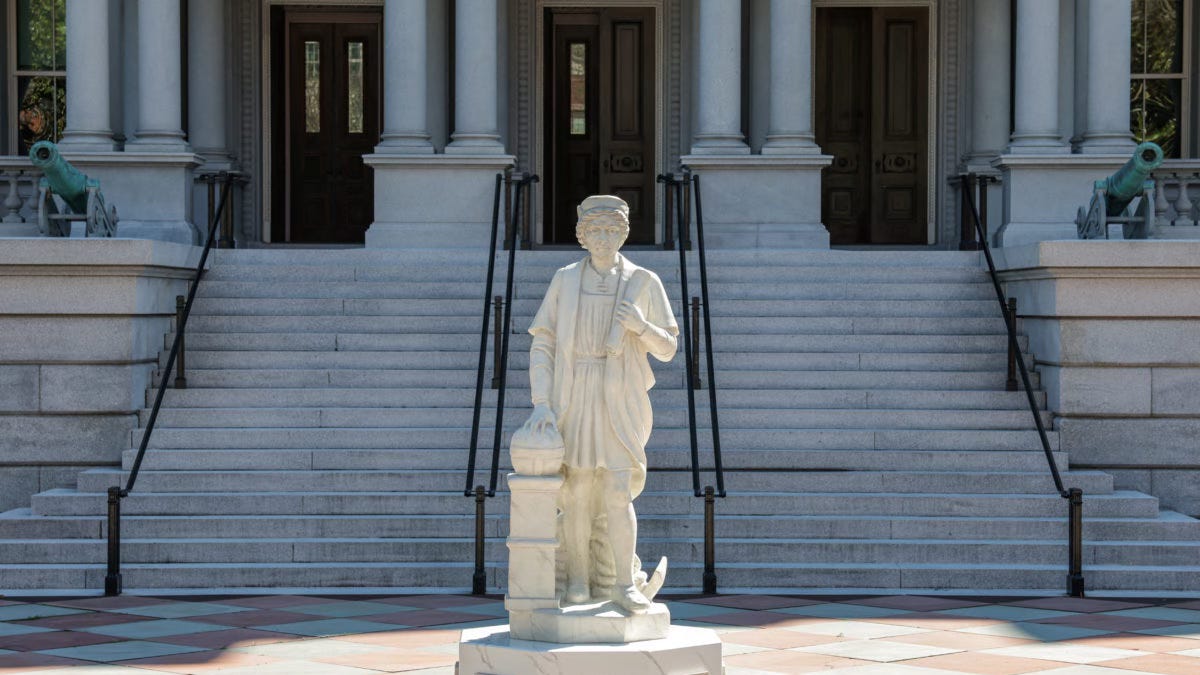
🔗 **Source:** [How to Respond When Empire Doubles Down on ‘Columbus Day’](https://joashpthomas.substack.com/p/how-to-respond-when-empire-doubles?utm_source=email&redirect=app-store-no-desktop&inbox=true&utm_campaign=email-read-in-app&triedRedirect=true)
> [!note]+ Document Notes
> tags: [columbus-day, indigenous-peoples-day, settler-colonialism, christian-ethics, land-acknowledgement, church-giving]
> author: Fr. Joash P. Thomas, OSA
> source: Masala Chai Theology (Substack)
> reference: https://joashpthomas.substack.com/p/how-to-respond-when-empire-doubles
> date created: 2026-10-13 16:58
>
> > [!info] Generated analysis — not the author's words. Sections below are machine-written
> > from the captured source. Only text inside `> [!quote]` blocks is verbatim from the author.
> > Do not quote or attribute any other line to the named author.
>
> # 🏷️ Title: How To Respond When Empire Doubles Down On ‘Columbus Day’
>
<!-- deep-read:sections start -->
## 🧭 Table of contents
- [📝 Summary](#-summary)
- [📖 Main content](#-main-content)
- [🗒️ Notes](#️-notes)
- [📚 References](#-references)
- [🗣️ Paraphrase](#️-paraphrase)
- [📰 Newsletter](#-newsletter)
- [✅ Action items](#-action-items)
- [🧪 Hypotheses](#-hypotheses)
- [📊 Methodology](#-methodology)
- [❓ Questions](#-questions)
- [🔮 Future research](#-future-research)
- [💡 Implications](#-implications)
- [🧠 Learning styles assessment](#-learning-styles-assessment)
- [📊 Accessibility assessment](#-accessibility-assessment)
- [🌍 DEIB assessment](#-deib-assessment)
- [✅ Logical validity](#-logical-validity)
- [🛡️ DARVO analysis](#️-darvo-analysis)
- [🎯 Conclusion](#-conclusion)
- [🔄 Refactor appendix](#-refactor-appendix--how-to-respond-when-empire-doubles-down-on-columbus-day)
## 📝 Summary
This is a partisan opinion and faith-commentary post on the Masala Chai Theology Substack (joashpthomas.substack.com), published about 2026-10-12/13 under the byline Fr. Joash P. Thomas, OSA. It is about 1,300 words in 19 paragraphs. It reacts to a news item about a Christopher Columbus statue at the White House, makes strong claims about named people and a head of state, and then offers three practices for churches: learn who your Indigenous neighbors are, build learning relationships with them, and enter a "Spiritual Covenant" of giving. This analysis reports what the author asserts. It does not adopt the author's characterizations of named people as its own.
The commercial and audience interests are visible in the capture. The opening paragraph (¶1) promotes the author's book, The Justice of Jesus, with a 30% discount and free-shipping link (US only), and invites paid subscriptions. The closing paragraph (¶18) thanks paid subscribers and asks readers to join them. The post is free, and the capture shows no paywall.
- **What happened.** A radio-site story (the only link for the statue claim) is the trigger. The author says the US President erected a Columbus statue as part of Columbus Day events while opposing the day being called Indigenous Peoples' Day (¶3). The author then calls Columbus a white supremacist and violent trafficker of Indigenous children (¶4), ties the US government to his legacy (¶6), and extends the critique to Canadian pipeline and data-center policy (¶7).
- **The claim.** Settler colonialism is ongoing, churches are called to resist "Empire", and the practical response is relationship plus money: know Indigenous neighbors, build learning relationships, and give at least 1% of a church or family budget to a local Indigenous organization (¶11-¶16).
- **Why it matters.** The third practice is concrete and has a described precedent: a Mennonite church in Kitchener, Ontario went first, and about 20 churches brought offerings to Six Nations Polytechnic this year, per the author's first-person account (¶14-¶15, ¶19). The post gives readers something to do beyond a day-name change.
- **Key stakeholders.** Church leaders and book-club readers in the US, Canada and other settler-colonial contexts (¶15), Indigenous communities named in the post (Six Nations), the author's paid subscribers, and, as targets of criticism, a head of state, a prime minister, and unnamed local politicians.
- **Risks and tradeoffs.** Four items: (a) criminal and moral characterizations of Columbus and of named living people are stated flatly with at most one linked document, which by URL is not an obvious fit; (b) the statue story link by its URL says "announces" while the author says "erected" and "placed" (¶2-¶3); (c) the causal claim that Indigenous overrepresentation among unhoused and trafficked people comes from settler colonialism (¶11) has no figure or link at that point; (d) the call to action sits between a book promotion and a subscription ask.
- **Bottom line.** A mobilizing faith essay whose strongest part is the specific, checkable giving practice (¶14-¶16) and whose weakest part is the front half, where historical and political claims about named people carry little visible sourcing. Readers who share the author's theological frame will find a clear action; readers who don't will need the sources before accepting the premises.
## 📖 Main content
**Welcome blurb and image (¶1-¶2).** The post opens with a standing welcome to Masala Chai Theology: "ancient, Empire-resisting, and precolonial Christian ways of understanding God and neighbour" in the author's description. It promotes The Justice of Jesus, calls it bestselling, links to a 30% discount with free US shipping, and describes paid subscribers as an inner circle who support the author's work as a public theologian. A free-subscription offer for those who can't afford one is included. The first image caption describes a replica Columbus statue that the author says the President recently placed at the White House.
**The statue and the claims about Columbus (¶3-¶6).** The author says the "Emperor of the American Empire" erected the statue as part of White House Columbus Day events while opposing the Indigenous People's Day name. The author says primary-source historical research shows Columbus intentionally harmed Indigenous people, and states several characterizations of him as established. Paragraph ¶5 says Europe sent criminals to colonize the world and links that to the President's views of immigrants and refugees. Paragraph ¶6 says Columbus is the original founding father of the American Empire and that his legacy persists in current US government practice.
**Turning the lens on Canada (¶7-¶8).** The author calls the post "equal opportunity" criticism and tells Canadian readers not to look down on Americans. The author says Indigenous neighbors across Canada protest the Prime Minister's pipeline plans, which the author says will keep "conquering" Indigenous land, and that they have concerns about local politicians who back AI data centers near Indigenous lands. The author cites a podcast conversation with SSU colleague Dr. Randy Woodley to say colonization persists in a neocolonial world.
**Three practices (¶9-¶17).** The post says the Church is called to be "a subversive salt, light, and masala to the ways of Empire" (¶9). The three practices follow. First, "Know Thy Neighbour" (¶11), with a Gustavo Gutierrez line and an account of the author's advice to church book clubs: think first of the Indigenous neighbor, because the author says most unhoused and trafficked neighbors in Canada are Indigenous as a result of settler colonialism. Second, learning relationships (¶12): land acknowledgements are only a start, and readers should know names, share hospitality, and support Indigenous organizations. Third, church or family Spiritual Covenants (¶13-¶16): Rev. Adrian Jacobs, described as a Cayuga Elder, has promoted giving at least 1% of budgets to a local Indigenous organization; Stirling Avenue Mennonite Church was first; the author watched about 20 churches bring offerings to Six Nations Polytechnic at a Strawberry Thanksgiving. The post says this means more to Indigenous neighbors than acknowledging the day name (¶16) and closes with Matthew 6:21 (¶17).
**Subscriber appeal and second image (¶18-¶19).** The post says it is free because paid subscribers fund it, calls them a "digital parish community", and asks readers to join. The last caption says the author attended the 2026 Strawberry Thanksgiving where around twenty churches brought cheques and offerings.
## 🗒️ Notes
#### 📄 ¶1-¶2 Standing promotion and statue image
- ¶1: welcome text for the publication, a link to the book with a 30% discount and free shipping (US only), and a paid-subscription pitch. "Bestselling" is the author's word with no source in the capture.
- ¶1: an offer to arrange a subscription for readers who can't afford one.
- ¶2: image caption only. It says a replica Columbus statue was recently placed at the White House by the President. The image alt is empty in the capture.
#### 📄 ¶3-¶6 Statue story, Columbus claims, Empire framing
- ¶3: the author says the statue was erected as part of White House Columbus Day events, while the administration opposes remembering the day as Indigenous People's Day. The word "erected" links to a radio-site story. The author uses "alleged" for the criminal labels, which link to a PDF.
- ¶4: asserts "a ton of primary source, historical research" and flat characterizations of Columbus. No link attaches to this paragraph.
- ¶5: generalizes that Europe sent criminals and traffickers to colonize, and says the President wants that to be true of Black and Brown immigrants and refugees. This ascribes a motive to a named person. Asserted, unsourced in the capture.
- ¶6: "when Empire shows us who they are - believe them." Calls Columbus the original founding father of the American Empire and says his legacy persists in US government today.
#### 📄 ¶7-¶8 Canada and the podcast
- ¶7: tells Canadian readers to examine themselves first. Says Indigenous neighbors protest the Prime Minister's pipeline plans, and links that anchor to a CBC story. The AI-data-center concern has no link in the captured markup.
- ¶7: invokes a parable-like jab ("plank of wood from our own eyes") from the Sermon on the Mount tradition without naming the passage.
- ¶8: cites a Masala Chai Theology podcast conversation with SSU colleague Dr. Randy Woodley. The anchors for "SSU", "Randy Woodley", "Masala Chai Theology" and "podcast conversation" are in the link list. The capture does not expand "SSU" and says nothing about what Woodley said beyond the author's one-sentence summary.
#### 📄 ¶9-¶10 Call to resist
- ¶9: says Empire has an intentional effort to keep oppressing Indigenous peoples, and that the Church is called to be a subversive salt, light and masala. This is a theological and political claim.
- ¶10: promises three peaceful ways to resist "the Jesus Way" this Indigenous People's Day.
#### 📄 ¶11 Practice one: know your neighbor
- Quotes a Gustavo Gutierrez line ("name them") with no source link.
- Reports the author's experience with "dozens (if not hundreds)" of church groups after book clubs read The Justice of Jesus.
- Claims that in Canada the majority of unhoused and trafficked neighbors are Indigenous, and attributes this to settler colonialism that "we're all guilty of". This is stated from experience. No figure or link appears in the paragraph.
- Ends with three questions about whether churches know the history of their land.
#### 📄 ¶12-¶13 Practice two and heading for practice three
- ¶12: says land acknowledgements are often the bare minimum and should shape decolonial living, referencing the Prayer chapter of the book.
- ¶12: says the vast majority of Indigenous neighbors are kind and welcoming, based on the author's experience, and asks readers whether they know names, hospitality and nearby Indigenous organizations to support.
- ¶13: heading text only, "Church / Family Spiritual Covenants".
#### 📄 ¶14-¶17 Practice three: Spiritual Covenant and closing verse
- ¶14: the author describes relationships with Six Nations neighbors and church leaders, a visit to Six Nations Polytechnic's Strawberry Thanksgiving a few months ago, and Rev. Adrian Jacobs (described as Cayuga Elder and community member) mobilizing churches to give at least 1% of budgets to a local Indigenous organization.
- ¶15: Stirling Avenue Mennonite Church in Kitchener was the first church to do this a few years ago, and the author says about 20 churches took part this year. The practice is offered to churches in the US, Canada, Australia, New Zealand, Brazil, Argentina and similar contexts. The "Spiritual Covenant" anchor goes to an mcc.org page.
- ¶16: invites readers who enjoyed the book chapter "Decolonizing Our Budgets" to enter a covenant. States it will mean way more to Indigenous neighbors than renaming the day, which the author calls an important first step.
- ¶17: closes with Matthew 6:21 in the author's wording. The capture names no translation.
#### 📄 ¶18-¶19 Subscriber appeal and second caption
- ¶18: says the free post is funded by paid subscribers, calls them a "digital parish community" and asks readers to join.
- ¶19: caption for a photo of the 2026 Strawberry Thanksgiving at Six Nations Polytechnic with around twenty churches. The alt is empty in the capture.
## 📚 References
Links below come from the captured link list (12 entries, two of them image URLs with no anchor text) and the metadata. I checked the list against each claim. I did not open any target, so I report only the URL and anchor, and what they suggest.
**Article**
- [How To Respond When Empire Doubles Down On ‘Columbus Day’](https://joashpthomas.substack.com/p/how-to-respond-when-empire-doubles), Masala Chai Theology, about 2026-10-12/13, byline Fr. Joash P. Thomas, OSA. Reader saved it from a substack.com inbox link.
**Promotion and publication links**
- [The Justice of Jesus](https://linktr.ee/joashpthomas) (¶1): a Linktree page, which suggests a list of purchase and author links.
- [here for 30% off plus free shipping (US only)](https://bakerbookhouse.com/products/9781587436666_the-justice-of-jesus) (¶1): a Baker Book House product page with an ISBN in the path. This is the discount link for the author's book, a commercial interest.
- [Masala Chai Theology](https://joashpthomas.substack.com/p/how-western-christianity-got-it-wrong) and [podcast conversation](https://joashpthomas.substack.com/p/how-western-christianity-got-it-wrong) (¶8): both anchors point to the same post. By its slug it is an earlier post on Western Christianity, and it is the only source for what was said in the Woodley conversation.
**Claims with a link**
- Statue claim, [erected a statue](https://wabcradio.com/2026/10/10/trump-announces-new-christopher-columbus-statue-at-white-house/) (¶3): the URL is a wabcradio.com page dated 2026/10/10. Its slug says the President "announces" a new statue. The post's wording is "erected" (¶3) and the caption says "placed" (¶2). The slug alone doesn't settle whether it was installed, so this is a point to check.
- Criminal characterizations, [alleged trafficker and pedophile](https://www.vawnet.org/sites/default/files/assets/files/2020-02/NRCDV_ColonizationHomelessnessandProstitution-Jan2020.pdf) (¶3): a PDF on vawnet.org with a file name that reads as a January 2020 paper on colonization, homelessness and prostitution from a domestic-violence resource center. The name doesn't point to a Columbus source, so the fit to the anchor is unclear. It may bear on the ¶11 housing and trafficking claim instead, but the post doesn't place it there.
- Pipeline protests, [protesting Prime Minister Carney's pipeline plans](https://www.cbc.ca/news/politics/pacific-link-indigenous-consultation-oil-pipeline-bc-alberta-9.7373476) (¶7): a CBC politics URL whose slug mentions Indigenous consultation, an oil pipeline, and BC and Alberta. The slug suggests a story about consultation. Whether it reports protests is not visible from the URL.
- Institution and person, [SSU](http://ssu.ca) and [Randy Woodley](https://open.substack.com/users/17427558-randy-woodley?utm_source=mentions) (¶8): a short-domain site and a Substack profile link with mention tracking.
- Covenant practice, [Spiritual Covenant](https://mcc.org/resources/spiritual-covenant-churches-and-first-nations) (¶15): an mcc.org resource page whose slug reads "spiritual covenant, churches and First Nations". This is the best-matched link in the post, and it suggests the practice is documented by a church-affiliated organization.
- Two Substack CDN image URLs with no anchor text, one for the ¶2 statue image and one for the ¶19 event image.
**Claims with no link in the captured markup.** The "primary source, historical research" about Columbus (¶4). The claim that Europe sent criminals (¶5). The characterization of the President's motives toward immigrants (¶5). The administration's opposition to the Indigenous People's Day name (¶3). The AI data-center concern (¶7). The demographic claim about Indigenous overrepresentation among unhoused and trafficked people in Canada (¶11). The Gutierrez quotation (¶11). The Stirling Avenue Mennonite Church history and the Strawberry Thanksgiving event, including the count of about 20 churches (¶14-¶15, ¶19). The "bestselling" label (¶1). What the Woodley conversation covered (¶8) beyond the linked post.
## 🗣️ Paraphrase
Fr. Joash says that when the US President erected a Columbus statue while opposing the name Indigenous Peoples' Day, it showed Empire's character. The post calls Columbus a violent, intentional harm-doer, links that legacy to current US government practice, and turns to Canada, where the author says Indigenous neighbors protest pipeline plans and local data-center support. The Church, the author says, is called to subvert Empire's ways peacefully.
The author's three suggestions are practical. Learn who your Indigenous neighbors are and why most unhoused and trafficked neighbors in Canada are Indigenous, in the author's account. Move past land acknowledgements into relationships: names, hospitality, support for local organizations. And enter a Spiritual Covenant: give at least 1% of a church or family budget to a local Indigenous organization, as about 20 churches did for Six Nations Polytechnic this year. Matthew 6:21 closes the argument: your heart follows your money. The post ends by asking readers to join as paid subscribers.
## 📰 Newsletter
**A priest and author argues that a day-name change is a first step, and gives churches a second one.** Fr. Joash P. Thomas, OSA, writing on Masala Chai Theology, reacts to a Columbus statue story with strong criticism of the US President and Columbus, then pivots to what churches can do. The practical piece is a "Spiritual Covenant": give at least 1% of the budget to a local Indigenous organization. The author says Stirling Avenue Mennonite Church in Kitchener started it and about 20 churches brought offerings to Six Nations Polytechnic this year.
Read it as faith commentary. The call to action is concrete and has a linked description at mcc.org. The front half makes historical and political claims about named people that carry little visible sourcing, and the statue link says "announces" where the post says "erected". The post also promotes the author's book with a discount link and asks for paid subscriptions. Read the original: [Masala Chai Theology](https://joashpthomas.substack.com/p/how-to-respond-when-empire-doubles).
## ✅ Action items
This source is faith and political commentary, not WordPress, documentation or developer-relations material. Items below are the nearest honest relevance. Where there is none, the line says so. Nothing here should be read as WordPress work implied by the post.
#### DevRel
- Developer advocacy: no direct action from this source.
- Education: no direct action from this source; nearest relevance is the post's habit of separating a call to practice (¶11-¶16) from its political framing (¶3-¶9), which is a model for separating checkable facts from advocacy when you cite opinion writing.
- Developer experience: no direct action from this source.
- Developer marketing: no direct action from this source. The post pairs a call to action with a book and subscription pitch (¶1, ¶18); if you borrow that structure, label the commercial ask.
- Community management: no direct action from this source; nearest relevance is the "learning relationships" idea (¶12) of knowing members by name before asking them for anything.
- Internal/external: if you cite this post, attribute claims to the author and don't repeat its characterizations of named people as fact.
#### OSPO
- Policy and governance: no direct action from this source.
- License compliance: no direct action from this source.
- Security management: no direct action from this source.
- Software inventory: no direct action from this source.
- Developer support: no direct action from this source.
- Community engagement: no direct action from this source.
- Strategic alignment: no direct action from this source.
#### Community
- Maintainers: no direct action from this source.
- Contributors: no direct action from this source.
- Sponsors: no direct action from this source; nearest relevance is the fixed-percentage giving idea (¶14), a pledge model some sponsorship programs also use.
- Ecosystem: no direct action from this source.
#### WordPress
- Core: no direct action from this source.
- Core Performance: no direct action from this source.
- Core AI: no direct action from this source. The post mentions AI data centers near Indigenous lands (¶7) as a concern, and says nothing about WordPress.
- Core Program Team: no direct action from this source.
- Mobile: no direct action from this source.
- Playground: no direct action from this source.
- Community: no direct action from this source.
- Training: no direct action from this source.
- Marketing: no direct action from this source; nearest relevance is a caution that holiday names and commemorations differ by country, so check the audience before scheduling date-based campaigns.
- Support: no direct action from this source.
- Design: no direct action from this source.
- Documentation: no direct action from this source.
- Photos: none.
- TV: none.
- Polyglots: none.
- Accessibility: none; the post's own accessibility notes (empty image alt) are in the Accessibility assessment below.
- Meta: none.
- CLI: none.
- Hosting: none.
- Tide: none.
- Openverse: none.
- Themes: none.
- Plugins: none.
#### The WPOCC
- Programs: no direct action from this source.
- Projects: no direct action from this source.
- Funding experiments: no direct action from this source; nearest relevance is the fixed-percentage pledge in ¶14-¶16, an example of a recurring-giving model that a funding experiment could compare against one-time grants.
### FAIR
- Technical independence: no direct action from this source.
- Policies and covenants: no direct action from this source. "Covenant" in this post means a church giving pledge, unrelated to FAIR covenants.
- Productized governance artifacts: no direct action from this source.
## 🧪 Hypotheses
1. Indigenous people are overrepresented among unhoused people in Canadian cities, relative to their share of the population (¶11 claims "the majority" of unhoused neighbors are Indigenous; this tests the claim as stated).
2. Congregations that adopt a fixed percentage-of-budget pledge to a local organization keep giving for three or more years more often than congregations that make one-time offerings.
3. Church groups that pair a land acknowledgement with a named, ongoing relationship with a local Indigenous organization report more sustained contact than groups that do an acknowledgement alone.
4. The linked sources, read in full, support the specific claims they are attached to: the radio story supports "erected" (¶3), the PDF supports the criminal characterization (¶3), and the CBC story supports "protesting" (¶7).
5. Readers who see an advocacy post that mixes a commercial ask with its call to action rate its argument as less trustworthy than readers who see the same text without the ask.
## 📊 Methodology
- **H1.** Pull Statistics Canada census counts and point-in-time homeless counts for 10 cities, divide Indigenous share of the unhoused by Indigenous share of the city, and report the ratio and whether the Indigenous group is the majority. Note that census and point-in-time counts define homelessness differently.
- **H2.** Survey or collect records from churches that joined the covenant, comparing year-over-year giving to the organization for covenant churches against matched churches that give one-time. Treat the sample as self-selected and report that limit.
- **H3.** Interview or survey 15-20 church groups 12 months after a land-acknowledgement program. Code each as acknowledgement-only or acknowledgement plus relationship, and count contacts and hours over the year. Include the organization's view of the contacts.
- **H4.** Open each linked page and PDF and mark each claim as supported, partly supported or unsupported by the page's own text. Add the statue's installation date from a second news source, because the URL slug says "announces".
- **H5.** Run an A/B reader test on two versions of the post (with and without ¶1 and ¶18) and measure trust and agreement ratings with a 5-point scale and an open comment field. Use at least 100 readers per arm.
## ❓ Questions
- Does the linked radio story report that the statue was installed, or that it was announced? The slug says "announces" (¶3), while the caption says "placed" (¶2).
- What does the linked PDF say about Columbus, and does it support the characterization it is anchored to (¶3)? Its file name reads as a paper on colonization, homelessness and prostitution, not on Columbus.
- What primary sources does "a ton of primary source, historical research" (¶4) refer to?
- What figures support the claim that most unhoused and trafficked neighbors in Canada are Indigenous (¶11), and does that figure hold in the churches' own cities?
- What did the CBC story actually report about protests against the pipeline plans (¶7), and does it connect them to a Columbus legacy, as the post does?
- How did the Six Nations Polytechnic and Rev. Adrian Jacobs describe the covenant, and do Indigenous organizations want the 1% model? The post says the covenant "will mean way more" to Indigenous neighbors (¶16) but quotes none of them.
- How much did the roughly 20 churches give in total, and is the 1% a floor or a typical amount (¶14-¶15)?
- What would the author count as evidence against the claim that the President's Columbus statue shows intentional oppression (¶9)?
## 🔮 Future research
- **Source audit.** Read the three linked news and policy documents (statue, PDF, CBC) and publish a claim-by-claim match against the post's anchors.
- **Covenant outcomes.** Track covenant churches over 3-5 years for giving amounts, retention, and the receiving organizations' account of usefulness.
- **Land-acknowledgement follow-through.** Compare acknowledgement-only practice with practice tied to a named relationship, using measures the receiving communities help define.
- **Indigenous perspectives.** Collect Indigenous leaders' own views on commemoration-day naming versus recurring giving, to test the post's ¶16 claim directly.
- **Advocacy plus commerce.** Study how readers weigh a faith or advocacy post that carries a product promotion and subscription ask.
## 💡 Implications
- **Practice.** The covenant model is specific enough to copy: a fixed 1% of budget, a named local recipient, a yearly offering event (¶14-¶15). A church can test it in one budget cycle.
- **Policy.** The post links commemoration naming (¶3), pipeline consultation (¶7) and data-center siting (¶7) under one frame. Policy readers should treat these as three separate questions with different evidence, and check each against its own sources.
- **Security.** No direct security content. If you share the post, note that the saved link came from a substack.com inbox redirect, so share the publication URL instead of an inbox link.
- **Education.** The post's paired structure of claim, question and action (¶11-¶12) is teachable. The sourcing gaps in ¶3-¶6 and ¶11 are also a good exercise in separating checkable facts from characterization.
- **Funding.** The author's work is funded in part by paid subscriptions and book sales (¶1, ¶18). Readers weighing the post should factor in that the call to give sits beside an ask to subscribe.
## 🧠 Learning styles assessment
- **Reading level estimate.** Flesch-Kincaid grade about 11 and Flesch Reading Ease near 48, estimated by hand over roughly 1,300 words. Sentences run long (¶11 and ¶12 each hold several 30-word sentences) and the vocabulary includes "neocolonial", "settler colonialism", "decolonial" and "missional", used without definition.
#### 👀 Visual learners
- Present: two images, both with captions in the text (¶2, ¶19), one of a statue and one of the Strawberry Thanksgiving. Alt text is empty for both.
- Improve: add alt text, and a simple graphic of the three practices.
#### 🔊 Aural learners
- Present: ¶8 points to a podcast conversation with Dr. Randy Woodley, which gives an audio route to the author's ideas.
- Improve: add an audio reading of the post or a short audio summary of the three practices.
#### 🗣️ Verbal learners
- Present: first-person prose with rhetorical questions and a Gutierrez quote (¶11), plus scripture at the end (¶17).
- Improve: define "neocolonial", "settler colonialism" and "missional" at first use.
#### 🧩 Kinesthetic learners
- Present: three concrete practices, including a covenant with a specific 1% rule (¶14).
- Improve: give a one-page template for a covenant: who to ask, how to set the amount, what to say to the recipient.
#### 🧠 Logical learners
- Present: a three-part structure and a clear causal chain in ¶11 (settler colonialism, then displacement, then unhoused and trafficked outcomes).
- Improve: attach a figure or link to the ¶11 demographic claim and to the ¶4 historical claims, so the chain can be checked.
#### 🧑🤝🧑 Social learners
- Present: book-club experiences (¶11), a covenant of about 20 churches (¶15), and a named church community.
- Improve: point to a place where churches considering a covenant can talk to those who have done one.
#### 🧘♀️ Solitary learners
- Present: reflective questions at the end of ¶11 and ¶12 that a reader can answer alone.
- Improve: add a short reflection prompt list for personal use before a congregation decision.
#### 🌿 Naturalistic learners
- Present: "Turtle Island" and "groaning of creation" (¶8) and a Strawberry Thanksgiving (¶14, ¶19) point to land and season.
- Improve: the post doesn't describe the land or the festival's meaning, which a reader could use to connect the practice to place.
## 📊 Accessibility assessment
Judged from the captured text, link list and image-alt list. Rendered contrast, focus order and heading levels can't be seen from this capture.
#### Screen reader semantics
- Present: the capture shows a clear order of paragraphs, a promised three-item list in ¶10 and three list-like items in ¶11-¶13.
- Improve: both images have empty alt text. Each carries content (a statue and an event), and the captions describe them only in general terms. Give the images alt text that says what is shown (WCAG 2.2 AA 1.1.1 Non-text Content). Two anchors in ¶8 ("Masala Chai Theology" and "podcast conversation") go to the same URL, so a link list reads them as two different links (2.4.4 Link Purpose, In Context).
#### Keyboard navigation
- Present: ordinary links as far as the capture shows.
- Improve: can't be verified from text. Substack subscribe and paywall widgets, which the post's subscription asks (¶1, ¶18) suggest, should be checked for keyboard access and focus order (2.1.1, 2.4.3).
#### Contrast and readability
- Present: unknowable from the capture.
- Improve: check the page's link and caption contrast on the rendered page (1.4.3 Contrast, Minimum). Long paragraphs in ¶11 and ¶12 would benefit from breaks.
#### Text resizing and reflow
- Present: text content should reflow as plain paragraphs.
- Improve: the captured text shows the list items in ¶11 and ¶12 running into their headings with no space (a heading, then a quotation mark, then a sentence), which may be a capture artifact or a markup problem. Check list structure on the rendered page (1.3.1 Info and Relationships, 1.4.10 Reflow).
#### Media and captions
- No embedded audio or video appears in the captured text. ¶8 links a podcast conversation, and the capture doesn't say whether a transcript exists.
#### Forms and interactions
- Present: the post offers to arrange a free subscription for readers who can't afford one (¶1), which lowers a cost barrier.
- Improve: the subscription forms aren't in the capture. Check labels and errors (3.3.2 Labels or Instructions).
#### Standards reference
- Likely gaps to verify against WCAG 2.2 AA: **1.1.1** for two images with empty alt. **2.4.4** for two anchors with the same destination and for the "SSU" abbreviation anchor, which the page doesn't expand. **1.3.1** for list items that appear to run together in the capture. **3.1.4** Abbreviations is a Level AAA item, and "SSU" is not expanded in the captured text.
## 🌍 DEIB assessment
#### Cultural breadth
- Present: the post names settler-colonial contexts beyond the US and Canada (Australia, New Zealand, Brazil, Argentina in ¶15), uses "Turtle Island" (¶8), and centers Six Nations, including an event name (Strawberry Thanksgiving) and a Cayuga Elder (¶14).
- Improve: the practice is described from one tradition (a Christian church giving model). The post doesn't say how the covenant adapts for non-Christian readers or for non-church groups.
#### Inclusive language
- Present: "neighbour" is used for Indigenous people throughout, which frames them as members of a shared community. The author offers free subscriptions to those who can't afford one (¶1).
- Improve: "we're all guilty" (¶11) addresses readers as settlers. Indigenous readers, and readers whose families arrived by force or as recent refugees, are folded into a "we" that may not fit. The post also uses "Black & Brown immigrants and refugees" (¶5) in a sentence about a named person's alleged motives, so those groups appear mostly as the subject of a political claim.
#### Neurodiversity support
- Present: a promised three-item structure (¶10) lets readers track the argument, and the post is short at about 1,300 words.
- Improve: idioms and metaphors ("salt, light, and masala", "plank of wood from our own eyes", "Empire shows us who they are") require shared religious and rhetorical context. Long run-on paragraphs in ¶11 and ¶12 raise load.
#### Representation
- Present: names Dr. Randy Woodley, Rev. Adrian Jacobs, Gustavo Gutierrez, Prime Minister Carney, and Stirling Avenue Mennonite Church. The source text gendered only the author, with "his" in ¶1, and no other person, so this analysis uses names and roles for everyone else.
- Improve: the post describes what the covenant means to Indigenous neighbors (¶16) but quotes no Indigenous person directly. Jacobs is described as a Cayuga Elder and community member, yet the capture contains none of Jacobs's words.
#### Psychological safety
- Present: the author turns criticism on Canadian readers too ("equal opportunity offender", ¶7) and invites self-examination with questions (¶11-¶12), which spreads discomfort instead of aiming it at one group.
- Improve: collective guilt framing (¶11) and flat labels for named people (¶3-¶6) can make readers defensive, including readers who might otherwise act on the covenant. The free-subscription offer is inclusive. The post doesn't say how a small church that can't spare 1% should take part.
## ✅ Logical validity
This is partisan opinion and faith commentary, not reporting or research. It argues from the author's theological frame (resistance to "Empire"), from first-person experience ("In my experience", ¶11-¶12) and from a news link. It shares no data in the captured text. It has a visible commercial interest: a discounted book link and two requests for paid subscriptions (¶1, ¶18). It is also an advocacy essay with a call to action, so persuasive moves are expected, and the question is whether the checkable claims are checkable.
I sort the claims into three groups. **Checkable facts:** the statue (link, but see the "announces" note), Columbus's actions (one linked document of unclear fit), pipeline protests (one CBC link), the Six Nations event and the number of churches (first-person, no link), and the demographic claim in ¶11 (no link). **Characterizations and insults:** the imperial titles for a head of state, the criminal and moral labels for Columbus and for named living people, and the motive ascribed to the President in ¶5. All are asserted, unsourced in the capture, and I don't restate them in my own voice. **Theological and ethical claims:** the Church is called to subvert Empire, land acknowledgement should shape life, and money follows heart. These rest on premises a reader either shares or doesn't.
#### Strong reasoning
- **Concrete, replicable action, ¶14-¶16.** A fixed 1% rule, a named recipient, a named first church and an event with a count give a reader something to test. The best-matched link in the post (mcc.org, ¶15) supports that the practice is documented.
- **Self-implicating critique, ¶7.** The author turns the critique on Canadian readers, which lowers the one-sided feel of the piece and widens the audience to which the argument applies.
- **Naming the limit of a gesture, ¶12 and ¶16.** The post says land acknowledgements and a day-name change are first steps, which sets a standard for follow-through.
- **Disclosure of promotion, ¶1 and ¶18.** The book and subscription asks are in plain view, not hidden in the argument.
- **Link to scripture at the end, ¶17.** The verse ties the practical ask (money) to the author's stated theology (heart follows treasure), so the argument is internally consistent for readers who accept the text.
#### Fallacies
No single fallacy runs through the whole post. The weaknesses are mostly evidence gaps and framing. What I checked: whether each factual claim has a link or a stated method, whether each link's URL fits its anchor, whether motives are ascribed to people, and whether the proposed action follows from the stated problem.
- **Sourcing gap on the central historical claims, ¶4.** "a ton of primary source, historical research" has no link in the capture. The only linked document in the area (¶3) has a file name about colonization, homelessness and prostitution. *Fix:* link the primary sources and the specific passages for each claim.
- **Hedge, then flat assertion, ¶3 vs ¶4.** ¶3 uses "alleged" for the criminal labels, and ¶4 states stronger characterizations as established. *Fix:* hold both paragraphs to the same standard.
- **Motive ascription and association, ¶5.** The post says a named person's views of immigrants match a claim about Columbus and Europe's emigrants, and calls Columbus that person's "idol". No source shows the person's views or admiration. This is guilt by association plus mind-reading. Asserted, unsourced in the capture. *Fix:* quote the person's own statements.
- **Hasty generalization, ¶5.** The post says Europe sent criminals and traffickers instead of its best, with no source. *Fix:* cite the history, and state the proportion.
- **Broad category, "Empire", ¶6-¶9.** The word covers US government practice, Canadian pipeline policy and local data-center support, linked by one "legacy of Columbus" (¶7). Whether protesters describe their resistance that way isn't in the capture. *Fix:* separate the cases and give each its own evidence.
- **Anecdote as evidence, ¶11-¶12.** "dozens (if not hundreds) of church groups", "In my experience", and "the vast majority of Indigenous neighbours are incredibly kind" are unquantified. *Fix:* give counts and say how the groups were chosen.
- **Collective guilt, ¶11.** "we're all guilty" assigns guilt by residence on land, without distinguishing readers' histories. *Fix:* separate responsibility for present structures from guilt for past acts.
- **Causal claim without a figure, ¶11.** Settler colonialism is offered as the reason most unhoused and trafficked Canadian neighbors are Indigenous. The demographic premise has no figure or link at that point. *Fix:* state the figure and the mechanism.
- **Source mismatch to check, ¶2-¶3.** The caption says "placed" and the text says "erected", while the linked story's URL says "announces". *Fix:* confirm installation date and wording.
- **Claim about others' preferences, ¶16.** "will mean way more to Indigenous neighbours" speaks for a group, with no Indigenous voice quoted. *Fix:* quote a recipient organization.
- **Commercial interest next to the action, ¶1, ¶18.** The call to give (¶16) sits between a book promotion and a subscription ask. The covenant gift goes to a third party, so it isn't self-serving, and the proximity is a framing issue to weigh.
The captured text and link list contain no instructions addressed to an AI, an assistant or "the reader" beyond ordinary calls to buy the book, subscribe and act as a church (¶1, ¶16, ¶18), which are addressed to human readers.
#### Tone of voice
- Urgent, moral and in-group. The post uses terms its audience shares ("Empire", "the Jesus Way", "masala", "neighbour", "chai") and mixes humor ("equal opportunity offender", ¶7) with prophetic language and personal warmth ("deep honour", ¶14). The appeals are pathos (injustice, guilt), ethos (the author's book, church contacts, a named Indigenous Elder) and scripture. It is persuasive, directive and promotional at the margins.
## 🛡️ DARVO analysis
Not applicable to this source. DARVO (Deny, Attack, Reverse Victim and Offender) describes a response to an accusation, and this post isn't a response to one. Each prong is still checked.
- **Deny.** None. No one has accused the author in the captured text, so there is nothing to deny.
- **Attack.** The post criticizes named people and a head of state with strong characterizations (¶3-¶6), which are asserted and unsourced in the capture. This is advocacy rhetoric, not an attack in reply to an accusation, so it isn't a DARVO pattern.
- **Reverse victim and offender.** None. The self-description as an "equal opportunity offender" (¶7) is a rhetorical frame that widens the target to Canadian readers. It isn't a claim that the author is the victim.
- **Reporter's voice.** Advocacy and exhortation, with a partial self-implicating move in ¶7. The post doesn't invite disagreement and doesn't say what would change the author's mind.
## 🎯 Conclusion
Fr. Joash P. Thomas, OSA, uses the news of a White House Columbus statue to argue that the US government and Columbus's legacy continue to harm Indigenous peoples, widens the critique to Canadian pipeline and data-center policy, and gives churches three practices: know Indigenous neighbors, build learning relationships, and enter a Spiritual Covenant of at least 1% of budgets to a local Indigenous organization. The covenant section is the strongest part, because it has a rule, a first church, an event, a count and a linked description at mcc.org.
What the post doesn't establish in the capture: primary sources for the claims about Columbus (¶4), whether the one linked document fits its anchor (¶3), whether the statue was installed or announced (¶2-¶3, link slug), the motive ascribed to the President (¶5), figures behind the Indigenous-overrepresentation claim (¶11), what protesters and the CBC story say (¶7), and any Indigenous voice on whether the covenant and day-name framing matter more to Indigenous neighbors (¶16). The post also sits beside a book promotion and two subscription asks (¶1, ¶18). Characterizations of named people are asserted, and I haven't repeated them as findings.
**Next steps for readers:** open the three linked sources (statue story, PDF, CBC) and check each against its anchor, read the mcc.org covenant page before deciding on a 1% pledge, and ask the recipient organization what form of support it wants. The post asks readers to buy the book, consider a covenant, and subscribe (¶1, ¶16, ¶18).
## 🔄 Refactor Appendix — How To Respond When Empire Doubles Down On ‘Columbus Day’
> Density: 2–5 Literature atoms (H3 pad), 0–3 Permanent candidates (H4 pad).
> Emitted: 5 Literature, 2 Permanent. Resonance filter applied: claims or framing moves
> were kept, and insults about named people were dropped in favor of neutral quotes.
>
> Konik claim-header rules: present tense, declarative, ≤10 words, searchable, unique.
>
> Atomicity: one declarative sentence per atom. "and"/"also" → split.
>
> Tag pool: #bmf · #addendum · #xref · #articleseed · #storystem · #share · #aphorisms
### 📚 Literature Split Pad
#### [H1] Christians are called to resist Empire's ways
> [!quote] [¶9]
> the Church and followers of Jesus of Nazareth are called to be a subversive salt, light, and masala to the ways of Empire.
**Context & use**:
- ¶9, the author's central theological framing: "Empire" is a category the Church should subvert. The post doesn't define the term, and applies it to the US government, Canadian policy and local politicians.
- Use as the author's thesis statement, attributed, with the caution that it is a values claim and not a checkable fact.
**Tags**: #xref #share
<!-- atomicity: 1 idea ✓ -->
#### [H2] The author blames settler colonialism for Indigenous dispossession
> [!quote] [¶11]
> It’s because of settler colonialism that we’re all guilty of as people living on stolen Indigenous land.
**Context & use**:
- ¶11, the causal claim behind the "know thy neighbour" practice: Indigenous overrepresentation among unhoused and trafficked neighbors in Canada follows from settler colonialism. The paragraph has no figure or link.
- A testable claim. Check the demographic premise against census and point-in-time counts before citing.
**Tags**: #xref #articleseed
<!-- atomicity: 1 idea ✓ -->
#### [H3] Land acknowledgements stop at the bare minimum
> [!quote] [¶12]
> Many of us who do land acknowledgements pat ourselves on the back after doing the bare minimum.
**Context & use**:
- ¶12, the author's critique of symbolic practice, aimed at the readers themselves. The author says acknowledgements were meant to shape decolonial living.
- Use as a bridge to the covenant: the post offers giving as the follow-through.
**Tags**: #xref #aphorisms
<!-- atomicity: 1 idea ✓ -->
#### [H4] A fixed budget share turns solidarity into practice
> [!quote] [¶14]
> give at least 1% of their budgets to a local Indigenous community organization
**Context & use**:
- ¶14, the covenant rule the author attributes to Rev. Adrian Jacobs's work with churches. ¶15 names Stirling Avenue Mennonite Church as first and says about 20 churches took part this year.
- The best-matched link (mcc.org, ¶15) describes the practice. The effect on recipients isn't reported in the capture.
**Tags**: #xref #share #articleseed
<!-- atomicity: 1 idea ✓ -->
#### [H5] Giving counts for more than renaming a holiday
> [!quote] [¶16]
> This will mean way more to Indigenous neighbours than merely acknowledging today as ‘Indigenous Peoples Day’
**Context & use**:
- ¶16, the author's claim about what Indigenous neighbors value. No Indigenous voice is quoted in the capture, so this is the author's inference.
- Use with H3 as the post's stepwise argument: name change, then relationship, then money.
**Tags**: #xref #aphorisms
<!-- atomicity: 1 idea ✓ -->
### 🧠 Atomic Split Pad
#### [P1] Acknowledgement without a costed commitment stays symbolic
**Claim** (one sentence, Courtney's voice): When I want a gesture like a land acknowledgement to count, I attach a recurring, costed commitment to a named recipient, because a statement alone gives the recipient nothing to rely on.
**Evidence pointer**: [[#H3]] · [[#H4]] · [[#H5]]
**Scope & conditions**: Holds where a recipient organization exists and wants the support. Weakens where the recipient prefers other forms of help, and the post quotes no recipient. The 1% rule and the 20-church count are the author's first-person account with no link.
**Links**:
- [[Land acknowledgement practice]] — because extends
- [[Recurring giving versus one-time grants]] — because applies-in
- [[Symbolic versus material solidarity]] — because contrasts on whether a gesture is enough
<!-- atomicity: 1 idea ✓ -->
#### [P2] Sort an advocacy post's claims before sharing it
**Claim** (one sentence, Courtney's voice): Before I share an advocacy post I sort its claims into checkable facts, characterizations and values, because the three need different responses and only the first can be verified.
**Evidence pointer**: [[#H1]] · [[#H2]]
**Scope & conditions**: Holds for any opinion or faith commentary with named people. Weakens when the post links primary sources for each claim. Here the central facts have at most one link each, and one link's URL doesn't clearly fit its anchor.
**Links**:
- [[Reading opinion writing for sources]] — because extends
- [[Link audit before citing]] — because applies-in
- [[Commercial interest in advocacy]] — because evidence-for the need to separate the call to act from the sales ask
<!-- atomicity: 1 idea ✓ -->
### ✏️ Fleeting Queue
- [F1] Check the wabcradio story: does it say the statue was installed or announced (¶3, slug says "announces")? #fleeting #inbox
- [F2] Look up what the vawnet.org NRCDV PDF covers and whether it fits the Columbus anchor (¶3) #fleeting #inbox
- [F3] Read the mcc.org Spiritual Covenant page before judging the 1% model (¶15) #fleeting #inbox
- [F4] Find census or point-in-time figures for Indigenous share of the unhoused in Canadian cities (¶11) #fleeting #inbox
- [F5] Article seed: "Sorting facts, characterizations and values in an advocacy post," using ¶3-¶11 as the worked example #fleeting #inbox #articleseed
### → Things 3 (max 2 actions)
- [ ] Open the three linked sources (statue story, NRCDV PDF, CBC pipeline story) and mark each claim supported or not — before citing the post #things
- [ ] Read the mcc.org Spiritual Covenant page and note what recipients say about the 1% model — check before sharing the practice #things
<!-- deep-read:sections end -->
📄 **Full text:** [[Full Document Contents/Articles/How to Respond When Empire Doubles Down on ‘Columbus Day’.md|How to Respond When Empire Doubles Down on ‘Columbus Day’ by Fr. Joash P. Thomas, OSA]]
## Highlights
- But amid an intentional effort by Empire to continue oppressing Indigenous peoples, the Church and followers of Jesus of Nazareth are called to be a subversive salt, light, and masala to the ways of Empire. ([View Highlight](https://read.readwise.io/read/01m4vh72xw4xp4hr4qqem186he))
- Note: [H1] Christians are called to resist Empire's ways
- Tags: atom/literature/h1
- It’s because of settler colonialism that we’re all guilty of as people living on stolen Indigenous land. ([View Highlight](https://read.readwise.io/read/01m4vh778mvf5846avxzwep5a7))
- Note: [H2] The author blames settler colonialism for Indigenous dispossession
- Tags: atom/literature/h2
- Many of us who do land acknowledgements pat ourselves on the back after doing the bare minimum. ([View Highlight](https://read.readwise.io/read/01m4vh7b9phxmwb6e5f539brdm))
- Note: [H3] Land acknowledgements stop at the bare minimum
- Tags: atom/literature/h3
- give at least 1% of their budgets to a local Indigenous community organization ([View Highlight](https://read.readwise.io/read/01m4vh7f7j231r5nz8jnqg1yxn))
- Note: [H4] A fixed budget share turns solidarity into practice
- Tags: atom/literature/h3
- If you’ve read The Justice of Jesus and enjoyed the chapter on ‘Decolonizing Our Budgets’, I hope you consider entering into a Spiritual Covenant with Indigenous neighbours as a church or family as a way of resisting Empire this ‘Columbus Day’. This will mean way more to Indigenous neighbours than merely acknowledging today as ‘Indigenous Peoples Day’ - an important first step but a first step nonetheless. ([View Highlight](https://read.readwise.io/read/01m4vh7j0cf9h205815ahvhdkc))
- Note: [H5] Giving counts for more than renaming a holiday
- Tags: atom/literature/h3