How to Scale a Business With AI Instead of Employees
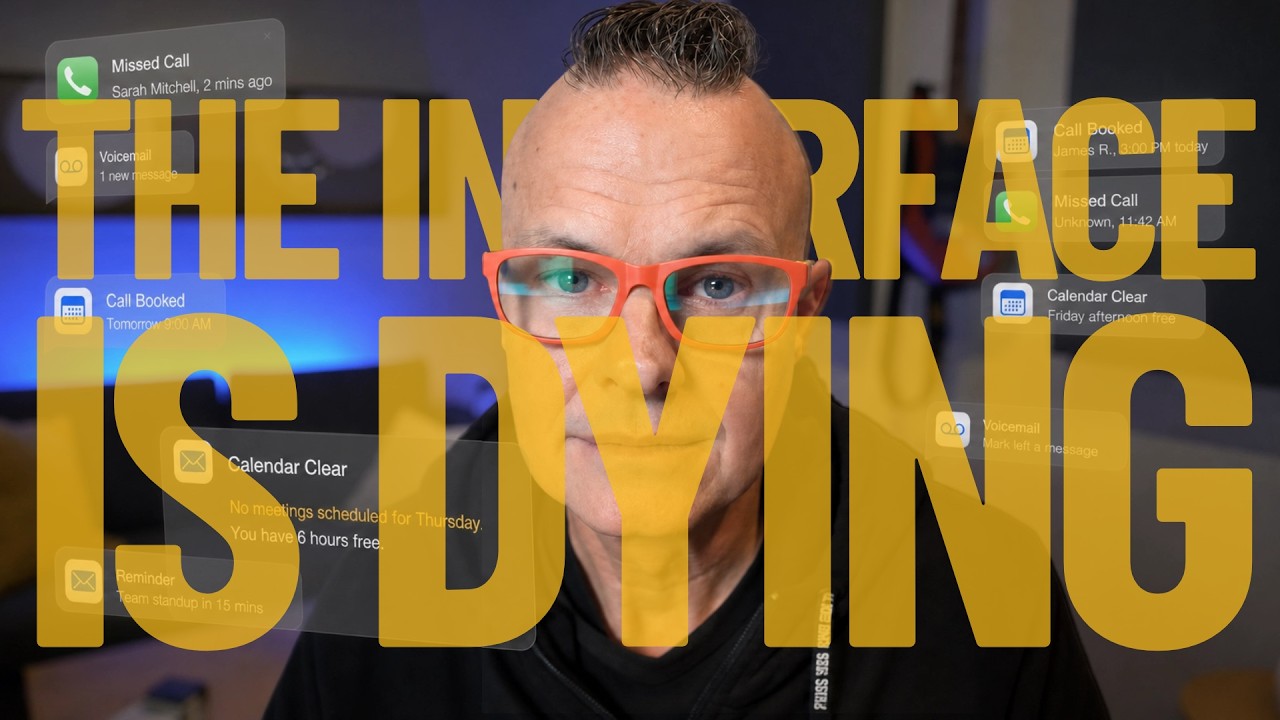
🔗 **Source:** [How to Scale a Business With AI Instead of Employees](https://www.youtube.com/watch?v=JhQfx2dshBQ)
> [!note]+ Document Notes
> tags: [ai-automation, business-optimization, headless-business, workforce-transformation, startup-strategy, remote-work]
> author: Troy Dean
> source: YouTube
> reference: https://www.youtube.com/watch?v=JhQfx2dshBQ
> date created: {{date:YYYY-MM-DD}} {{time:HH:mm}}
>
> # 🏷️ Title: How to Scale a Business With AI Instead of Employees
>
<!-- deep-read:sections start -->
## 🧭 Table of Contents
- [📝 Summary](#-summary)
- [📖 Main Content](#-main-content)
- [🗒️ Notes](#️-notes)
- [📚 References](#-references)
- [🗣️ Paraphrase](#️-paraphrase)
- [📰 Newsletter](#-newsletter)
- [✅ Action Items](#-action-items)
- [🧪 Hypotheses](#-hypotheses)
- [🎯 Conclusion](#-conclusion)
## 📝 Summary
- **What happened**: Troy Dean argues that traditional headcount-focused business models are obsolete, advocating for "headless" businesses that use AI for execution while humans focus on strategy.
- **Why it matters**: Major software companies are implementing headless architectures, enabling one person to produce the value of 10 through AI leverage rather than human hiring.
- **Key stakeholders**: Agency founders, Fortune 500 executives, consultants, and business operators feeling trapped in traditional scaling models.
- **Risks and tradeoffs**: Massive workforce displacement, empty office buildings, but potential for humans to focus on meaningful strategic work rather than clerical tasks.
- **Bottom line**: The next decade's successful businesses will measure value per human, not headcount, as AI handles execution while humans handle strategy.
## 📖 Main Content
Troy Dean presents a manifesto against traditional business scaling through hiring, arguing that AI has made human-heavy business models obsolete. His "headless business" concept separates strategic decision-making (human) from execution (AI), similar to headless software architecture that separates backend logic from user interfaces.
### The Death of Headcount as Success Metric
Dean challenges the conventional wisdom that employee count indicates business success. He argues that a 50-person agency generating $5 million with a burnt-out founder is inferior to a solo operator generating $1 million while maintaining work-life balance. The obsession with headcount has created a culture where businesses optimize for the wrong metrics.
### The Headless Business Model
Drawing parallels to software architecture, Dean defines headless business as decoupling strategic and execution layers. In headless software, the backend (logic/data) operates independently from the frontend (user interface). Similarly, headless businesses let AI handle execution while humans focus on strategy and judgment.
Major technology companies are already implementing this shift:
- Salesforce announced headless 360 with 60 new MCP (Model Context Protocol) tools
- Meta, Google, and Amazon shipped headless advertising platforms
- Anthropic's MCP reached 97 million monthly downloads with backing from major tech companies
### The Failure of Traditional Outsourcing
Dean critiques the Standard Operating Procedures (SOPs) and Virtual Assistant (VA) model popularized by Tim Ferriss's "4-Hour Workweek." He describes the endless cycle of hiring, training, and replacing human workers who quit, take IP with them, or require constant management. This approach treated humans as imperfect machines when actual machines are now available.
### Societal Implications
The shift to headless businesses could transform urban landscapes as office buildings become obsolete. Dean envisions repurposing prime real estate in capital cities for parks, community spaces, and collaborative environments rather than cubicle farms. This represents the natural evolution following interface changes, similar to how railway hotels emptied when cars arrived.
## 🗒️ Notes
#### ⏱️ [00:00:00](https://www.youtube.com/watch?v=JhQfx2dshBQ?t=0) Opening Manifesto
- Traditional office work described as humans doing machine-work in expensive buildings
- Civilization built around an arrangement that no longer makes sense
- Target audience: agency founders and Fortune 500 executives facing the same fundamental problem
#### ⏱️ [00:02:30](https://www.youtube.com/watch?v=JhQfx2dshBQ?t=150) Headcount as False Metric
- Headcount became proxy for success but measures wrong thing
- 50-person agency at $5M with burnt-out founder vs. solo operator at $1M with weekends back
- Every hiring announcement is "a press release for a problem you couldn't solve"
#### ⏱️ [00:05:45](https://www.youtube.com/watch?v=JhQfx2dshBQ?t=345) Critique of Hustle Culture
- "Hustle culture was sponsored content" designed to extract more labor
- Burnout treated as proof of seriousness rather than dysfunction
- Many hustle culture advocates now dead or in therapy
#### ⏱️ [00:09:12](https://www.youtube.com/watch?v=JhQfx2dshBQ?t=552) SOPs and VAs Failed
- 15-year experiment with offshore virtual assistants and documented processes
- Consistent problems: high turnover, training overhead, quality issues
- "Documentation of a system that didn't exist yet"
#### ⏱️ [00:12:20](https://www.youtube.com/watch?v=JhQfx2dshBQ?t=740) Defining Headless Business
- Software analogy: backend logic separated from frontend interface
- AI agents don't need user interfaces—they call functions directly
- Business application: human strategy, AI execution
#### ⏱️ [00:15:30](https://www.youtube.com/Watch?v=JhQfx2dshBQ?t=930) Corporate Headless Adoption
- Salesforce headless 360 with 60 MCP tools at TDX 2026
- Meta, Google, Amazon shipping headless ad platforms
- Model Context Protocol governed by Linux Foundation with major tech backing
#### ⏱️ [00:18:45](https://www.youtube.com/watch?v=JhQfx2dshBQ?t=1125) Value Per Human Metric
- New unit of measurement: one human producing value of 10
- Works at any scale: solo operator to Fortune 500 division
- Examples across industries: government, research, media, consulting
#### ⏱️ [00:22:10](https://www.youtube.com/watch?v=JhQfx2dshBQ?t=1330) Urban Transformation
- Office buildings will empty as headless businesses emerge
- Prime real estate repurposed for parks, community spaces, workshops
- Historical parallel to railway hotels emptying when cars arrived
#### ⏱️ [00:25:00](https://www.youtube.com/watch?v=JhQfx2dshBQ?t=1500) Knowledge Work Redefined
- Past 45 years of "knowledge work" was actually clerical data entry
- Real thinking pushed to edges of day (shower, commute, after work)
- AI handling clerical work allows humans to focus on actual cognitive tasks
#### ⏱️ [00:27:30](https://www.youtube.com/watch?v=JhQfx2dshBQ?t=1650) Target Audience and Call to Action
- For operators who already sensed something was wrong with traditional scaling
- Not for those seeking magic solutions or permission from others
- Building in public for early adopters to witness the transformation
## 📚 References
- [Salesforce TDX 2026](https://www.salesforce.com) - Headless 360 announcement
- [Model Context Protocol](https://github.com/anthropics/mcp) - Anthropic's open-source protocol
- [Linux Foundation MCP Governance](https://www.linuxfoundation.org) - Industry consortium backing
- Tim Ferriss, *The 4-Hour Workweek* - Referenced outsourcing model
## 🗣️ Paraphrase
Troy Dean argues that the traditional business model of scaling through hiring has become obsolete due to AI capabilities. He proposes "headless" businesses that separate human strategic thinking from AI execution, similar to how modern software separates backend logic from user interfaces. Dean criticizes headcount as a success metric, noting that a solo operator generating $1 million while maintaining work-life balance outperforms a 50-person agency generating $5 million with a burnt-out founder.
The speaker traces the failure of previous automation attempts through Standard Operating Procedures and Virtual Assistants, which required constant human management and suffered from high turnover. In contrast, AI systems don't quit, don't take intellectual property when they leave, and consistently follow instructions without the emotional overhead of human management.
Dean envisions broader societal transformation as office buildings become obsolete and prime urban real estate gets repurposed for community spaces. He argues that knowledge workers have spent decades doing clerical work disguised as thinking, and AI will finally allow humans to focus on actual cognitive tasks like strategy, creativity, and judgment.
## 📰 Newsletter
🤖 **AI-Powered Business Transformation**: Troy Dean's latest manifesto challenges everything we thought we knew about scaling. Instead of hiring your way to growth, what if one person could produce the output of 10 through AI leverage?
Dean's "headless business" concept (borrowed from software architecture) separates human strategy from AI execution—and major players like Salesforce, Meta, and Google are already shipping the infrastructure to make it happen. The Model Context Protocol has hit 97 million monthly downloads, backed by a Linux Foundation consortium that reads like a tech industry who's-who.
This isn't just about productivity tools. Dean predicts empty office buildings, repurposed urban real estate, and a fundamental shift from "headcount as success metric" to "value per human." Worth watching whether you're running a 12-person agency or managing a Fortune 500 division.
**Key Resources**: Check out the Model Context Protocol on GitHub and watch how Salesforce's headless 360 platform enables AI agents to bypass traditional user interfaces entirely.
## ✅ Action Items
#### DevRel
- Research Model Context Protocol implementation patterns for developer-facing products
- Create educational content comparing traditional SaaS integration vs. headless/MCP approaches
- Develop AI agent examples that demonstrate value-per-human metrics rather than user-seat licensing
#### Community
- Survey community members on current headcount vs. output ratios to establish baseline metrics
- Document successful headless business case studies within WordPress ecosystem
- Facilitate discussions on AI-augmented workflows vs. traditional outsourcing models
#### WordPress
- **Core AI**: Evaluate headless architecture opportunities for WordPress admin functions
- **CLI**: Extend WP-CLI with AI agent capabilities for automated site management tasks
- **Meta**: Consider .org platform APIs that support AI agent workflows rather than just human interfaces
## 🧪 Hypotheses
- Businesses measuring "value per human" rather than headcount will outperform traditional scaling models within 3 years
- Office real estate values in major cities will decline significantly as headless businesses reduce physical space requirements
- The Model Context Protocol will become the dominant standard for AI agent integration across enterprise software
- Traditional outsourcing to human VAs will collapse as AI agents provide more reliable execution
- Knowledge workers will experience identity crisis as AI handles tasks previously considered "skilled work"
- Small businesses will achieve enterprise-level output through AI leverage, disrupting incumbents who rely on human labor arbitrage
### 📊 Methodology
- Track productivity metrics (revenue per employee) across businesses adopting headless models vs. traditional scaling
- Monitor commercial real estate vacancy rates in major business districts
- Measure MCP adoption rates and compare to traditional API integration patterns
- Survey knowledge workers on task distribution between strategic vs. clerical work before/after AI implementation
### ❓ Questions
- How will employment law adapt to AI-augmented individual contractors competing with traditional companies?
- What new forms of human collaboration emerge when clerical work is automated?
- How do incumbent businesses defend against headless competitors with 10x productivity advantages?
- What happens to professional identity when AI handles tasks that previously defined expertise?
### 🔮 Future Research
- Long-term psychological effects of transitioning from execution-heavy to strategy-focused work
- Economic modeling of mass office real estate repurposing in major cities
- Regulatory frameworks needed for AI agent business operations
- Educational system adaptations to prepare workers for headless business models
### 💡 Implications
- **Practice**: Fundamental shift from managing humans to orchestrating AI systems
- **Policy**: Need for new business structures and taxation models for AI-leveraged operations
- **Security**: AI agents require different security models than human-operated systems
- **Education**: Business schools must teach AI orchestration rather than traditional management
- **Funding**: Venture capital metrics shift from "team size" to "leverage ratio" as success indicators
### 🧠 Learning Styles Assessment
**Reading level estimate**: Grade 12-14 (Flesch-Kincaid). Uses business terminology but maintains accessibility through concrete examples and analogies.
#### 👀 Visual learners
- **Present**: Software architecture diagrams comparing traditional vs. headless models
- **Improve**: Add flowcharts showing human-AI workflow separation, before/after organizational charts
#### 🔊 Aural learners
- **Present**: Video format with strong narrator presence and rhythmic manifesto-style delivery
- **Improve**: Audio-only podcast version, background music during key concepts
#### 🗣️ Verbal learners
- **Present**: Clear definitions ("headless," "value per human"), building metaphors, analogies to software architecture
- **Improve**: Glossary of technical terms, more business case story examples
#### 🧩 Kinesthetic learners
- **Present**: Actionable business model framework, practical transformation steps
- **Improve**: Hands-on worksheets for calculating current value-per-human ratios, AI implementation checklists
#### 🧠 Logical learners
- **Present**: Clear cause-and-effect reasoning, structured argument flow, corporate adoption data
- **Improve**: More specific metrics, ROI calculations, timeline predictions with confidence intervals
#### 🧑🤝🧑 Social learners
- **Present**: Community-building language ("one of us"), shared identity around rejecting traditional models
- **Improve**: Discussion forums, peer accountability groups, case study sharing platforms
#### 🧘♀️ Solitary learners
- **Present**: Self-reflection prompts about current business dissatisfaction, individual decision-making focus
- **Improve**: Private assessment tools, journaling prompts for business model evaluation
#### 🌿 Naturalistic learners
- **Present**: Urban ecosystem analogies (buildings as infrastructure for obsolete needs)
- **Improve**: More biological metaphors, sustainability implications of reduced office energy consumption
### 📊 Accessibility Assessment
#### Screen reader semantics
- **Present**: Video has clear spoken narration, logical content flow
- **Improve**: Transcript with proper heading structure, alt text for any visual elements
#### Keyboard navigation
- **Present**: YouTube player supports standard keyboard controls
- **Improve**: Transcript navigation, chapter markers for key concepts
#### Contrast and readability
- **Present**: High contrast video presentation, clear audio
- **Improve**: Ensure transcript meets 4.5:1 contrast ratio, large text options
#### Media and captions
- **Present**: YouTube auto-captions available
- **Improve**: Professional captions with speaker identification, downloadable transcript
### 🌍 DEIB Assessment
#### Cultural breadth
- **Present**: Global business examples (Manhattan, Tokyo, Singapore real estate)
- **Improve**: Include emerging market perspectives, non-Western business models
#### Inclusive language
- **Present**: Gender-neutral business terms, avoids discriminatory language
- **Improve**: Acknowledge different cultural attitudes toward technology adoption, work-life balance
#### Neurodiversity support
- **Present**: Clear structure, consistent messaging
- **Improve**: Content warnings for job displacement anxiety, alternative career transition resources
#### Representation
- **Present**: Focuses on business operators across different company sizes
- **Improve**: Include diverse founder backgrounds, acknowledge different access to AI tools
### ✅ Logical Validity
#### Strong reasoning
- **Software architecture analogy** (12:20): Effectively explains complex business concept through familiar technical parallel
- **Corporate adoption evidence** (15:30): Cites specific company implementations and adoption metrics to support trend claims
- **Historical precedent reasoning** (22:10): Draws valid parallels between interface changes and infrastructure obsolescence
#### Fallacies
- **False dichotomy** (2:30): Presents only two options (traditional scaling vs. headless) without considering hybrid approaches
- **Appeal to consequences** (5:45): Uses fear of burnout/death to argue against current models rather than addressing their merits
- **Hasty generalization** (9:12): Concludes all SOP/VA approaches fail based on anecdotal evidence
#### Tone of voice
**Manifesto/prophetic**: Uses declarative statements ("We're done," "The world changed"), creates urgency through mortality themes, positions speaker as visionary leader of inevitable transformation.
### 🛡️ DARVO Analysis
- **Deny**: No significant denial patterns detected
- **Attack**: Criticizes "hustle culture" advocates and traditional business consultants but focuses on ideas rather than individuals
- **Reverse victim/offender**: No reversal patterns identified
- **Assessment**: Content is advocacy rather than defensive, so DARVO framework doesn't apply strongly
## 🎯 Conclusion
Troy Dean's headless business manifesto represents a fundamental shift from headcount-based scaling to AI-leveraged productivity. While his predictions about office real estate transformation and workforce displacement may prove accurate, the transition timeline and universal applicability remain uncertain. The core insight—that AI enables strategic humans to achieve enterprise-level output—offers a compelling alternative to traditional scaling models for knowledge work businesses.
Business operators should evaluate their current value-per-human ratios and experiment with AI automation before competitors gain first-mover advantages. However, the human elements of relationship-building, creative problem-solving, and strategic judgment remain irreplaceable, suggesting that successful headless businesses will excel at human-AI collaboration rather than human replacement.
---
## Full Transcript
[00:00] There's a building in every capital city<br>[00:01] that used to make sense. It doesn't<br>[00:03] anymore. It's full of people who'd<br>[00:05] rather be somewhere else doing work a<br>[00:07] machine could do in a building they're<br>[00:09] paying to be inside on someone else's<br>[00:11] schedule in a job they took because<br>[00:13] there wasn't a better option. The lights<br>[00:15] go on at 7:00, the lifts fill at 8:30,<br>[00:18] by 9:00 every floor is humming with the<br>[00:20] sound of humans typing words into<br>[00:22] screens that will be read by other<br>[00:24] humans who will type back on platforms<br>[00:27] that exist because nobody invented<br>[00:29] anything better yet. We built a<br>[00:31] civilization around that arrangement and<br>[00:33] we called it success. We're done. This<br>[00:35] is for the agency founder doing 800<br>[00:37] grand with 12 employees and the<br>[00:39] executive at the Fortune 500 with<br>[00:41] 12,000. The disease is the same [music]<br>[00:44] and the cure is the same. You're running<br>[00:46] out of life and you've been spending it<br>[00:48] inside a model that stopped making sense<br>[00:50] about 18 months ago. I'm 52 and I've<br>[00:53] watched friends die at 46,<br>[00:55] >> [music]<br>[00:55] >> at 52, at 56. They left behind young<br>[00:58] kids, half-built businesses, plans they<br>[01:01] never got around to.<br>[01:02] >> [music]<br>[01:02] >> We're not here to [ __ ] spiders. So,<br>[01:04] here's where we are. Head count is not a<br>[01:06] flex. Somewhere along the way, how many<br>[01:08] people work for you became the proxy for<br>[01:10] how successful are you<br>[01:12] >> [music]<br>[01:12] >> and that question is broken. A 50-person<br>[01:14] agency at 5 million with a burnt-out<br>[01:16] founder is not winning. A 12,000-person<br>[01:19] corporation where 8,000 of those people<br>[01:21] sit in meetings about meetings is not<br>[01:23] winning. A solo operator at a million<br>[01:25] dollars with their weekends back is not<br>[01:27] losing. We've been measuring the wrong<br>[01:29] thing for so long, we forgot we picked<br>[01:31] the metric. Look at how founders<br>[01:33] introduce themselves at events. We're 47<br>[01:35] people now. We just crossed 200. We've<br>[01:37] got three offices in three cities.<br>[01:39] Nobody says our margin is 78% [music]<br>[01:42] or I work 12 hours a week or we ship the<br>[01:44] same output we shipped 2 years ago with<br>[01:46] a third of the staff. Those are the<br>[01:48] numbers that matter. They're also the<br>[01:49] numbers nobody brags about because we've<br>[01:51] trained ourselves to read them as<br>[01:52] somehow less serious. Every head count<br>[01:55] announcement is a press release for a<br>[01:57] problem you couldn't solve. Every "We're<br>[01:59] hiring" post is a confession that<br>[02:01] whatever system you've built doesn't<br>[02:03] work without more humans inside it.<br>[02:05] Hiring is what you do when you run out<br>[02:07] of ideas about how to do it differently.<br>[02:09] Payroll is the most expensive form of<br>[02:11] procrastination ever invented. [music]<br>[02:13] The size of your team is the size of the<br>[02:16] bet you've made against your own<br>[02:17] systems. And for 50 years, that was a<br>[02:20] good bet. The systems weren't there.<br>[02:22] Humans were all you had. If you wanted<br>[02:24] more output, you'll hire more humans and<br>[02:26] you accepted the tax [music] that came<br>[02:28] with them. HR, payroll, recruitment,<br>[02:31] training, performance reviews, exit<br>[02:33] interviews, the org chart, the Christmas<br>[02:35] party, the lawsuit risk, the 30% who<br>[02:38] quit every 2 years and take their<br>[02:39] training with them. Headcount was the<br>[02:41] price of doing business at scale. 12<br>[02:43] months ago, that stopped being true. If<br>[02:45] your business needs 50 people to run,<br>[02:47] you don't have a business. You have a<br>[02:49] job that 50 other people also have and<br>[02:51] you're the one who has to make payroll.<br>[02:52] Hustle culture was sponsored content.<br>[02:55] Rise and grind was a sales pitch dressed<br>[02:57] up in motivational quotes by people who<br>[02:59] needed you to work harder so they could<br>[03:00] get richer. The men who told you to<br>[03:02] sleep when you're dead were either lying<br>[03:04] about how much they slept or actively<br>[03:06] destroying themselves on camera as<br>[03:08] content. Half of them are dead now. The<br>[03:10] other half are in therapy. The deeper<br>[03:12] sin, hustle culture made suffering<br>[03:14] itself the proof of seriousness. If you<br>[03:17] weren't exhausted, you weren't trying.<br>[03:18] If you weren't burnt out, you weren't<br>[03:20] ambitious. If you weren't sacrificing<br>[03:22] your kids' school plays, your wife's<br>[03:23] birthday, your own health, you didn't<br>[03:25] really want it. We just couldn't see it<br>[03:27] because everyone around us was nodding.<br>[03:29] And the wildest part is how many of us<br>[03:31] bought it. Smart people, thoughtful<br>[03:34] people, people who would never tolerate<br>[03:35] this logic in any other domain. If a<br>[03:38] personal trainer told you that the only<br>[03:39] way to get fit was to never sleep and<br>[03:41] resent everyone you loved, you'd find a<br>[03:43] different trainer. Somehow in business,<br>[03:45] it sounded like leadership. Burnout is a<br>[03:47] receipt for time you don't get back. You<br>[03:50] can't expense it, you can't bill for it,<br>[03:52] And you can't tell your kids when they<br>[03:54] grow up that the reason you missed their<br>[03:56] childhood is that you wanted to be the<br>[03:57] kind of person who missed their<br>[03:59] childhood. I have a young family. I<br>[04:01] don't want to work 60 hours a week. I<br>[04:03] don't want to be the guy at the school<br>[04:04] pick up who's there in body and gone in<br>[04:06] his head, mentally running a Q3 forecast<br>[04:09] while his daughter shows him a drawing<br>[04:10] of a dog. I've watched too many people I<br>[04:12] respected do that for 30 years and end<br>[04:14] up with money, a stranger's marriage,<br>[04:16] and kids who don't call. The brag of the<br>[04:18] next decade is the un hurried one.<br>[04:21] Anyone still telling you to grind is<br>[04:23] selling you something. The thing they're<br>[04:24] selling you is your own life back to you<br>[04:26] in installments. SOPs and VAs were a<br>[04:29] workaround. Standard operating<br>[04:31] procedures and virtual assistants. The<br>[04:33] workaround is over. A generation of<br>[04:35] business owners read the 4-Hour Workweek<br>[04:37] and built their entire operating<br>[04:38] philosophy on it. Document everything.<br>[04:40] Hire cheap labor in emerging economies.<br>[04:43] Train them up. Delegate yourself out of<br>[04:44] the business. Live free. It almost never<br>[04:47] worked. Every founder I know who tried<br>[04:49] it has the same stories. The VA who quit<br>[04:51] after 6 months and took the SOPs with<br>[04:53] them. The team in the Philippines that<br>[04:54] need 4:00 a.m. calls and daily<br>[04:56] hand-holding. The Loom videos that no<br>[04:58] one watches. The Notion docs that became<br>[05:00] graveyards. The Trello boards that<br>[05:01] filled up with cards nobody moved. The<br>[05:03] endless cycle of hire, train, hope,<br>[05:06] replace, hire, train, hope, replace that<br>[05:09] ate more founder time than just doing<br>[05:11] the [ __ ] work yourself. I've watched<br>[05:12] it run for 15 years. I've coached agency<br>[05:15] owners through every version of it. I've<br>[05:17] tried every version of it myself. The<br>[05:19] SOPs we wrote were documentation of a<br>[05:21] system that didn't exist yet. They were<br>[05:23] hope dressed up as process. The VAs we<br>[05:26] hired were humans we trained to do work<br>[05:27] that could be done by software. Software<br>[05:29] that doesn't quit, doesn't sleep,<br>[05:31] doesn't take its training with it when<br>[05:32] it leaves, doesn't have a bad week<br>[05:34] because its cat died, doesn't ghost you<br>[05:36] for a slightly better offer in month<br>[05:37] seven. Tim Ferriss wrote a good book,<br>[05:39] and that book was right for 2007. We've<br>[05:42] been running its playbook for 20 years<br>[05:43] because nobody had a better one. Well,<br>[05:45] now we do. You don't need to document a<br>[05:47] single SOP ever again. You need a<br>[05:49] skill.md file and an AI that reads it.<br>[05:52] The AI follows it consistently, doesn't<br>[05:54] argue about it, doesn't lose the link,<br>[05:56] doesn't quit, doesn't take your IP with<br>[05:58] it when it leaves. You spent 15 years<br>[06:00] trying to engineer humans into machines.<br>[06:02] Well, the machines have arrived. They're<br>[06:04] better at being machines than the humans<br>[06:06] ever were. And this is the part that<br>[06:07] most business owners still don't want to<br>[06:09] hear. The thing you've been trying to<br>[06:10] build for two decades, the leveraged<br>[06:12] business you read about in 2007, it's<br>[06:15] finally possible. It's just not possible<br>[06:17] the way we're doing it. The humans you<br>[06:19] spent years training, the SOPs you spent<br>[06:21] months writing, the offshore team you<br>[06:23] spent thousands recruiting, all of it<br>[06:24] was infrastructure for a problem that<br>[06:26] just got solved at a different layer of<br>[06:28] the stack. And that's not your fault.<br>[06:30] You executed a 2007 strategy because it<br>[06:33] was the only strategy available. The<br>[06:35] world changed when you weren't looking.<br>[06:36] Now you get to choose. Keep running the<br>[06:38] work around or build the actual thing.<br>[06:40] So, here's what headless means. We need<br>[06:42] to define this properly because the word<br>[06:44] is doing a lot of work in this manifesto<br>[06:46] and it didn't come from nowhere. In<br>[06:48] software, headless means the back end,<br>[06:50] where the logic and data live, is<br>[06:52] separated from the front end, the screen<br>[06:54] that humans look at. The head is the UI.<br>[06:58] Headless software doesn't need a UI to<br>[07:00] do its job. APIs and protocols let any<br>[07:03] front end connect to the same back end.<br>[07:05] A webpage, a mobile app, a smart watch,<br>[07:08] a voice assistant, an AI agent. For 25<br>[07:11] years, using software meant a human in a<br>[07:15] browser, checking buttons, filling<br>[07:17] forms, reading menus, squinting at<br>[07:19] drop-downs. Every SaaS company on Earth<br>[07:22] spent billions designing screens that<br>[07:24] humans would look at for 8 hours a day<br>[07:26] because humans were the only entity that<br>[07:28] could read the screen and decide what to<br>[07:29] do next. And that's the assumption that<br>[07:31] just died. AI agents don't need to know<br>[07:33] where the button is. They don't<br>[07:34] navigate. They don't scroll. They don't<br>[07:36] squint. They call the function directly.<br>[07:38] The UI becomes one of many ways to<br>[07:40] access the system and increasingly the<br>[07:43] slowest one. This is already published<br>[07:45] company strategy at every major software<br>[07:47] company on the planet right now while<br>[07:49] you read this. Salesforce announced<br>[07:51] headless 360 at TDX 2026. Every layer of<br>[07:55] the platform is now open to AI agents<br>[07:57] through APIs and model context protocol<br>[08:00] servers. They shipped 60 new MCP tools<br>[08:03] at launch. Salesforce co-founder Parker<br>[08:06] Harris said it from the stage, "Headless<br>[08:08] doesn't mean no UI. It means decoupling<br>[08:10] capabilities from the interface." Meta<br>[08:12] shipped its first-party Meta Ads MCP<br>[08:14] server in April. Google shipped Google<br>[08:16] Ads MCP. Amazon shipped Amazon Ads MCP.<br>[08:19] Anthropic created the model context<br>[08:21] protocol in late 2024 and open-sourced<br>[08:23] it. By December 2025, it had 97 million<br>[08:27] monthly SDK downloads and 10,000 active<br>[08:31] servers in production. It's now governed<br>[08:33] by the Linux Foundation. Founding<br>[08:35] members include Anthropic, OpenAI,<br>[08:38] Google, Microsoft, AWS, Block, and PwC.<br>[08:42] When the biggest software companies on<br>[08:43] Earth spend billions removing the<br>[08:46] requirement for a human to click a<br>[08:47] button, they're not making a small bet.<br>[08:50] They're telling you where the work is<br>[08:51] going in the most expensive language<br>[08:53] they have. And here's what that means<br>[08:55] for you. If software is going headless,<br>[08:58] the businesses that run on software go<br>[09:00] headless, too. It's the same<br>[09:02] architectural principle, just one layer<br>[09:04] up. It's to separate the strategic layer<br>[09:06] from the execution layer. Let machines<br>[09:09] handle execution, and let humans handle<br>[09:11] strategy.<br>[09:13] A business is software with humans<br>[09:15] inside it. When the software no longer<br>[09:17] needs humans to operate, the business<br>[09:19] doesn't either. And that's the pattern<br>[09:20] of the next decade. Headless is a unit<br>[09:22] of productivity. Now we can define it<br>[09:24] properly. A headless business decouples<br>[09:27] the strategic layer from the execution<br>[09:29] layer. The human decides what should<br>[09:30] happen. The AI makes it happen. The work<br>[09:33] gets done without humans clicking<br>[09:34] buttons inside it. The unit isn't head<br>[09:37] count. The unit is value per human. One<br>[09:40] human producing the value of 10. That's<br>[09:42] the equation, and that's what every<br>[09:44] business of the next decade is competing<br>[09:46] to become. It [snorts] works at every<br>[09:47] scale. A solo operator running a $1<br>[09:50] million agency with no staff is<br>[09:51] headless. One human, the value of 10. A<br>[09:54] five-person company doing $20 with AI<br>[09:57] doing the work that used to take 50<br>[09:59] people is headless. Five humans, the<br>[10:01] value of 50. A division inside a Fortune<br>[10:04] 500 that delivers the same output with a<br>[10:06] tenth of the head count it had two years<br>[10:08] ago is headless. Whatever the number, 10<br>[10:11] times the leverage per person. A<br>[10:13] government department processing claims<br>[10:15] with three case workers and an AI agent<br>[10:17] instead of 30 case workers in a queue is<br>[10:19] headless. A research lab where one PhD<br>[10:22] with the right tools does the literature<br>[10:24] review and synthesis that used to take a<br>[10:26] team of 15 grad students is headless. A<br>[10:29] media company shipping the daily output<br>[10:31] of 80 journalists with a newsroom of 12<br>[10:33] is headless. The shape of the work is<br>[10:36] the same in every case. Human strategy,<br>[10:38] machine execution, value per human as<br>[10:41] the measure. And this is what every<br>[10:43] business that wants to survive the next<br>[10:45] decade is going to do. Not a lifestyle<br>[10:47] play for tired founders looking to<br>[10:49] downshift. The companies that get there<br>[10:50] first will eat the lunch of the ones<br>[10:52] still hiring like it's 2019. The next<br>[10:55] Fortune 500 will be smaller, faster, and<br>[10:58] worth more than the current one. And<br>[10:59] some of them will fit in a single house.<br>[11:01] Headless is the future of work. If every<br>[11:04] business that can go headless does go<br>[11:06] headless over the next 10 years, the<br>[11:08] second-order consequences are enormous.<br>[11:10] Most of them, I think, are good. Office<br>[11:12] buildings empty out. Not gradually,<br>[11:15] quickly. Once a Fortune 500 no longer<br>[11:17] needs 8,000 of its 12,000 people in<br>[11:20] seats, one floor empties, then another,<br>[11:23] then the building, then the next<br>[11:24] building, then the block. The gleaming<br>[11:27] towers we built to warehouse humans for<br>[11:29] 8 hours a day, the ones that we accepted<br>[11:31] as permanent features of the skyline<br>[11:33] start looking like what they actually<br>[11:35] are, infrastructure for a problem that<br>[11:37] we've just solved. And here's where it<br>[11:38] gets interesting. Those buildings sit on<br>[11:40] some of the most valuable land in every<br>[11:42] capital city on Earth, Manhattan, the<br>[11:44] City of London, Tokyo, Shanghai, Sydney,<br>[11:47] Melbourne, Hong Kong, Singapore. We<br>[11:49] dedicated those parcels to office work<br>[11:51] in the 20th century because that's what<br>[11:53] cities needed to function. They don't<br>[11:55] need to function that way anymore. So,<br>[11:57] tear them down, reclaim the land, turn<br>[12:00] it into parks, public green space,<br>[12:01] community gardens, urban farms, outdoor<br>[12:04] markets, town squares, collaborative<br>[12:06] workshops where humans actually want to<br>[12:08] gather, cities designed around walking,<br>[12:10] eating, talking, making things together<br>[12:13] instead of commuting, sitting, and<br>[12:15] suffering under fluorescent light. This<br>[12:16] isn't science fiction, it's the natural<br>[12:18] consequence of an interface dying.<br>[12:21] Nobody plants a flag and decides to<br>[12:23] demolish a skyline, the buildings just<br>[12:25] empty, the leases lapse, the land gets<br>[12:27] repurposed. It happens building by<br>[12:29] building, block by block, decision by<br>[12:31] decision, the same way the railway<br>[12:33] hotels emptied when cars arrived, the<br>[12:35] same way the factory towns hollowed out<br>[12:37] when the factories closed. The good<br>[12:39] version of that future requires us to<br>[12:41] build it on purpose. The bad version is<br>[12:43] what we got from deindustrialization,<br>[12:45] empty space, ruined towns, and abandoned<br>[12:48] people. We can choose. We've never had<br>[12:50] this much time to see it coming. The<br>[12:52] interface is leaving the desk.<br>[12:55] Wearables, voice, AI agents in your ear.<br>[12:58] Most workers won't need a desk and a<br>[12:59] keyboard. The entire infrastructure of<br>[13:02] office work, the desks, the chairs, the<br>[13:04] monitors, the parking lots, the queue at<br>[13:06] the cafe, the morning traffic, was built<br>[13:08] around an interface we're about to leave<br>[13:10] behind. When AI handles the work that<br>[13:13] drained us, humans get to do the work<br>[13:15] we're actually good at, strategy,<br>[13:17] relationships, creativity, judgment. The<br>[13:20] things that our 20th century jobs were<br>[13:22] too small for us to ever get to,<br>[13:24] climate, biology, housing, education,<br>[13:28] loneliness.<br>[13:29] The kind of work we couldn't afford to<br>[13:30] do because we were too busy doing the<br>[13:32] kind of work a machine can now do for<br>[13:34] us. Knowledge workers have been lazy for<br>[13:36] the last 45 years, not because they're<br>[13:38] lazy people, but because they spent<br>[13:40] every working hour inputting data into a<br>[13:42] computer using a keyboard and a mouse,<br>[13:44] and then waiting for the computer to<br>[13:46] output that data in a different format,<br>[13:48] and we mistook that for thinking. It<br>[13:50] wasn't thinking, it was clerical work in<br>[13:51] a nice outfit. The actual thinking, the<br>[13:54] part that makes a knowledge worker worth<br>[13:55] anything, got pushed to the edges of the<br>[13:57] day, into the shower, into the commute,<br>[14:00] into the third whiskey at 11:00. That<br>[14:02] changes now.<br>[14:03] For the first time in the history of<br>[14:05] office work, the work that requires a<br>[14:07] human gets to expand to fill the day<br>[14:09] instead of getting squeezed into<br>[14:11] whatever's left after the typing is<br>[14:12] done, and that's the gift. We don't know<br>[14:14] what to do with it yet because we've<br>[14:16] spent 45 years deriving our identity<br>[14:18] from typing on keyboards. The next 5<br>[14:20] years are going to be a slow, awkward,<br>[14:22] terrifying, glorious project of figuring<br>[14:25] out what humans are for now that the<br>[14:27] typing is over.<br>[14:28] A lot of people are scared, and that's<br>[14:30] fair. We're losing the version of work<br>[14:33] that defined us. The thing we called our<br>[14:35] job is becoming the thing the machine<br>[14:37] does, and we don't know who we are<br>[14:38] without it. And that's the real reason<br>[14:40] most people are afraid of AI. Not the<br>[14:43] robots, it's the fear of being seen<br>[14:45] properly without the work we were hiding<br>[14:47] behind. So, who's coming? Headless is<br>[14:50] for the operator who already knew<br>[14:51] something was wrong. The agency owner<br>[14:53] with 12 staff who keeps having the same<br>[14:55] conversation about the next hire and<br>[14:57] feeling sick about it. The executive of<br>[14:59] a Fortune 500 with 12,000 people who can<br>[15:01] see what's about to happen to her<br>[15:02] company and would rather be the<br>[15:04] architect of it rather than the<br>[15:05] casualty.<br>[15:06] The consultant who can't believe what AI<br>[15:08] can already do for him and doesn't want<br>[15:10] to wait for his peers to catch up. The<br>[15:12] accountant who knows her practice can be<br>[15:14] three times more profitable and a tenth<br>[15:16] as exhausting if she just stopped doing<br>[15:18] it the way she was taught. The lawyer,<br>[15:20] the financial planner, the property<br>[15:21] advisor, the small business owner, the<br>[15:23] COO, the founder, the freelancer, the<br>[15:25] operator, the ones who looked at the<br>[15:26] standard playbook and felt their soul<br>[15:28] leave their body. If that's you, you're<br>[15:31] already one of us. You've been waiting<br>[15:33] for someone to say it out loud. If<br>[15:35] you're scared of putting yourself out<br>[15:36] there because you're afraid of<br>[15:37] rejection, this isn't going to work for<br>[15:39] you. You should be an employee. There's<br>[15:40] no shame in that. Some of the happiest<br>[15:42] people I know have jobs, but you can't<br>[15:44] run a headless business while waiting<br>[15:45] for permission from someone else. If you<br>[15:47] want a magic prompt or a downloadable<br>[15:49] template that fixes everything in 20<br>[15:51] minutes, this isn't for you, either. The<br>[15:53] thing I'm describing requires you to do<br>[15:54] actual work while the system gets<br>[15:56] trained. After that, the system runs and<br>[15:58] you get your life back, but the work is<br>[16:00] real. If your business plan is to scale<br>[16:03] to another 500 employees and another<br>[16:05] building, more power to you. Go do that.<br>[16:07] It's a different game and I'm not<br>[16:08] playing it. If you can see where the<br>[16:10] work is going and you'd rather be early<br>[16:12] than right, then you're in the right<br>[16:13] place. We've been here. We believe the<br>[16:16] model works and the math holds. The<br>[16:18] companies funding the infrastructure<br>[16:20] aren't slowing down. The interface is<br>[16:22] leaving the desk. The Fortune 500 is<br>[16:24] about to compress. The 50-person agency<br>[16:26] model is on its last legs. There's room<br>[16:29] at the front for the people who saw it<br>[16:30] coming. I'm 52. I'm running out of life.<br>[16:33] I'm building this in public so you can<br>[16:35] watch it happen. If I'm wrong, you'll<br>[16:36] know. If I'm right, you'll have been<br>[16:38] there from the beginning. The book is<br>[16:40] coming. The keynote is touring. The<br>[16:42] model is here. There's no membership<br>[16:43] card and no wait list to feel like this.<br>[16:46] You belong the moment you decide the old<br>[16:48] way isn't yours anymore. Head count used<br>[16:50] to be the measure of a serious business.<br>[16:52] The new measure is value per human.<br>[16:54] We're not optimizing the old world,<br>[16:56] we're building the next one. I'm Troy<br>[16:58] Dean. Let's go headless.
<!-- deep-read:sections end -->
📄 **Full text:** ![[Full Document Contents/Articles/How to Scale a Business With AI Instead of Employees.md|How to Scale a Business With AI Instead of Employees by YouTube]]
## Highlights
- headless, too. It's the same architectural principle, just one layer up. It's to separate the strategic layer from the execution layer. Let machines handle execution, and let humans handle strategy. A business is software with humans inside it. When the software no longer needs humans to operate, the business doesn't either. And that's the pattern of the next decade. Headless is a unit of productivity. Now we can define it properly. A headless business decouples the strategic layer from the execution layer. The human decides what should ([View Highlight](https://read.readwise.io/read/01ktwhe4ej3kkvbzmagn338fnm))
- Tags: 👻 ai highlighted
- is headless. The shape of the work is the same in every case. Human strategy, machine execution, value per human as ([View Highlight](https://read.readwise.io/read/01ktwgspvkn18beecmnd3fgtex))
- Note: "Human strategy, machine execution" — the headless-business pattern: raise value-per-human via AI leverage
- Tags: ai-automation, atom/literature/h1
- Headless is the future of work. If every business that can go headless does go headless over the next 10 years, the second-order consequences are enormous. Most of them, I think, are good. Office buildings empty out. Not gradually, quickly. Once a Fortune 500 no longer needs 8,000 of its 12,000 people in seats, one floor empties, then another, then the building, then the next building, then the block. The gleaming towers we built to warehouse humans for 8 hours a day, the ones that we accepted ([View Highlight](https://read.readwise.io/read/01ktwhe4ffdjpwh3sp09e905th))
- Tags: 👻 ai highlighted
- fair. We're losing the version of work that defined us. The thing we called our job is becoming the thing the machine does, and we don't know who we are without it. And that's the real reason most people are afraid of AI. Not the robots, it's the fear of being seen properly without the work we were hiding behind. So, who's coming? Headless is for the operator who already knew something was wrong. The agency owner with 12 staff who keeps having the same conversation about the next hire and feeling sick about it. The executive of a Fortune 500 with 12,000 people who can ([View Highlight](https://read.readwise.io/read/01ktwhe4h4w7qs1apq8wvv2t49))
- Tags: 👻 ai highlighted