Inside a Church Split: Favoritism, Loyalty, and Blame
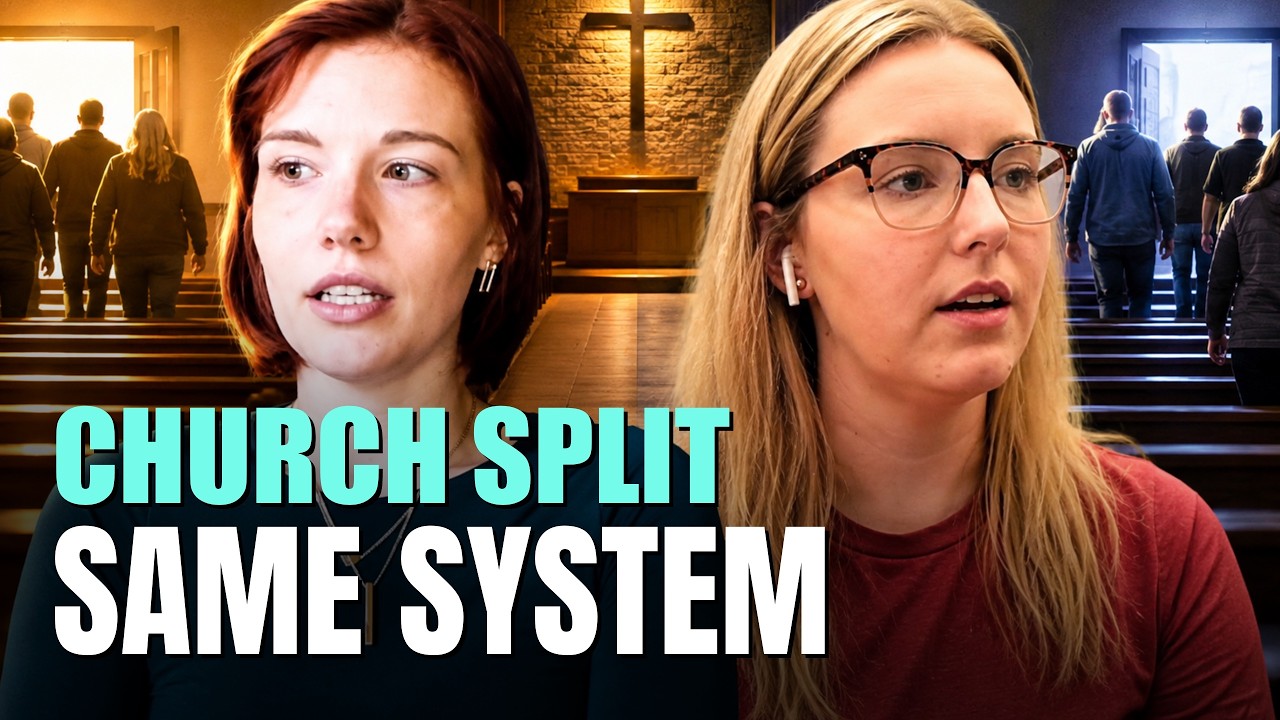
🔗 **Source:** [Inside a Church Split: Favoritism, Loyalty, and Blame](https://www.youtube.com/watch?v=-kzJwm7zKXc)
> [!note]+ Document Notes
> > [!info] Generated analysis — not the author's words. Sections below are machine-written
> > from the captured source. Only text inside `> [!quote]` blocks is verbatim from the author.
> > Do not quote or attribute any other line to the named author.
>
> ---
> tags: [church-split, spiritual-abuse, high-control-groups, favoritism, darvo, william-branham-message]
> author: [MISSING]
> source: YouTube
> reference: https://www.youtube.com/watch?v=-kzJwm7zKXc
> date created: 2026-08-13 11:40
>
> ---
>
> # 🏷️ Title: Inside a Church Split: Favoritism, Loyalty, and Blame
>
<!-- deep-read:sections start -->
## 🧭 Table of Contents
- [📝 Summary](#-summary)
- [📖 Main Content](#-main-content)
- [🗒️ Notes](#️-notes)
- [📚 References](#-references)
- [🗣️ Paraphrase](#️-paraphrase)
- [📰 Newsletter](#-newsletter)
- [✅ Action Items](#-action-items)
- [🧪 Hypotheses](#-hypotheses)
- [📊 Methodology](#-methodology)
- [❓ Questions](#-questions)
- [🔮 Future Research](#-future-research)
- [💡 Implications](#-implications)
- [🧠 Learning Styles Assessment](#-learning-styles-assessment)
- [📊 Accessibility Assessment](#-accessibility-assessment)
- [🌍 DEIB Assessment](#-deib-assessment)
- [✅ Logical Validity](#-logical-validity)
- [🛡️ DARVO Analysis](#-darvo-analysis)
- [🎯 Conclusion](#-conclusion)
### 🔗 References
- Source video: [Inside a Church Split: Favoritism, Loyalty, and Blame](https://www.youtube.com/watch?v=-kzJwm7zKXc)
- William Branham / "The Message" movement — background context for the doctrinal claim referenced at 00:17 (not independently verified in this note; flagged for reader follow-up).
## 📝 Summary
- **What happened.** Three speakers — a host and two guests who each survived a church split — compare their experiences. The host references his grandfather's church, split by "the sons of Branham" over property; the two guests recount a 2018–2019 split inside a congregation associated with "The Message" (the William Branham revivalist movement). One guest lived through the split directly (favoritism among members, a breakaway church, being blamed for the pastor's declining health); the other guest was more peripheral and reflects on the "culty" dynamics of the original church.
- **Why it matters.** The clip is a compact case study in how high-control religious groups manufacture and defend loyalty: unequal enforcement of rules for favored members, reframing departure as betrayal, and shifting blame for institutional harm onto the people who left.
- **Key stakeholders.** The host (interviewer, shares his own family's church-split history); Guest A (lived through the 2018–2019 split, moved to the breakaway church, later blamed for the original pastor's illness); Guest B (more distanced, supported the original "root" church, later reflects critically on its culture); the unnamed pastor and "visiting ministers" whose conduct is described but not defended in the clip; a person named "Sarah," referenced by Guest B as a friend on "the other side" of the split — her relationship to Guest A is not stated in the transcript and should not be assumed.
- **Risks and tradeoffs.** This is one-sided testimony from people who left; there is no representation from the "root church" side in this specific clip, so the fuller picture (whatever the pastor or loyalist members would say) is absent. The Branham quote at 00:17 is asserted, not sourced on-screen — worth independent verification before treating it as established doctrine.
- **Bottom line.** Whether or not "The Message" specifically is named, the mechanics described — favoritism enforced by surname/relationship, spiritualized denial ("word from the Lord"), traitor-framing for leaving, and blaming departed members for a leader's declining health — are generalizable red flags for high-control group dynamics, independent of any particular denomination.
## 📖 Main Content
- The video opens with an unattributed claim that William Branham (the "central figure" of the movement referenced) taught that "the female is less than a dog or a hog," used by the speaker to frame the group's culture as fear-based rather than nurturing ("you don't constantly keep them in fear of the beating").
- The host frames the conversation around a shared experience: his grandfather's church also split, allegedly over "the sons of Branham" taking half the church property — introduced as backstory, not fully explained or resolved in the clip.
- Guest A describes the 2018–2019 split as originating in favoritism: certain people (identified by "specific last names") faced no consequences for behavior that got others "ridiculed" for the same conduct. A minister broke away in February 2019, founding a rival congregation in the same county and taking members with him.
- Guest A initially stayed at the original church, but left after witnessing the church's narrative-control tactics: visiting ministers claimed their remarks were "pure discernment and word from the Lord" while denying prior knowledge of the split — a claim Guest A states directly was untrue ("we all knew that was not true"). Guest A was publicly reprimanded (yelled at) for crying instead of "looking up," and left permanently.
- At the breakaway church, Guest A found "the same people" and dynamics recurring. The pastor of the original church later became seriously ill (attributed on-screen to long-ignored, unnamed chronic disease). When a hospital nurse practitioner listed possible causes including stress, the congregation reportedly blamed the departed members — including Guest A directly — for causing that stress, and by extension the illness.
- Guest B had already distanced from the church before the split and describes a more socially/emotionally detached experience, but independently characterizes the original ("root") church as unusually "culty" — demanding loyalty not just to the broader movement ("the message") but specifically to that one congregation, with departure treated as betrayal ("traitor") and increasing isolation from neighboring churches over time.
- Guest B closes by naming the pattern plainly: "blatant slander for these people who had left" and behavior that was "not Christ-like."
### 🗒️ Notes
#### ⏱️ [00:00](https://www.youtube.com/watch?v=-kzJwm7zKXc&t=0) Cold open — dehumanizing doctrine framing
- Speaker opens with a pet-training analogy contrasted against fear-based "treatment... less than dogs."
- Attributes a specific teaching to William Branham ("the female is less than a dog or a hog") as context for why the environment could not be considered healthy.
#### ⏱️ [01:16](https://www.youtube.com/watch?v=-kzJwm7zKXc&t=76) Guest A introduces the 2018–2019 split
- Frames the origin as "more like a jealousy thing" — competition to be the pastor's "sidekick" / "number one favorite person."
#### ⏱️ [01:39](https://www.youtube.com/watch?v=-kzJwm7zKXc&t=99) Double standard by surname/relationship
- "Certain people with specific last names" faced no consequences for the same conduct that got others "ridiculed."
#### ⏱️ [02:01](https://www.youtube.com/watch?v=-kzJwm7zKXc&t=121) Breakaway church founded
- A minister starts a rival congregation in the same county in February 2019 and takes a portion of the membership.
#### ⏱️ [02:31](https://www.youtube.com/watch?v=-kzJwm7zKXc&t=151) Narrative control via spiritualized denial
- Visiting ministers claim ignorance of the split and frame their remarks as "pure discernment and word from the Lord."
- Guest A states this was known to be false by those present.
#### ⏱️ [03:01](https://www.youtube.com/watch?v=-kzJwm7zKXc&t=181) Public reprimand during emotional moment
- Guest A describes crying in the same seat as always, surrounded by empty seats where friends used to sit, and being yelled at by the minister to "look up and pay attention."
- States this was the last time she/he attended that church.
#### ⏱️ [03:43](https://www.youtube.com/watch?v=-kzJwm7zKXc&t=223) Same dynamics recur at the breakaway church
- Guest A moves to the split-off congregation; describes it as populated by "the same people" behaving the same way.
#### ⏱️ [04:07](https://www.youtube.com/watch?v=-kzJwm7zKXc&t=247) Split reframed as cause of pastor's illness
- The original church reportedly used the split as an explanation for the pastor's declining health, tied to a long-ignored chronic condition.
#### ⏱️ [04:36](https://www.youtube.com/watch?v=-kzJwm7zKXc&t=276) Hospital scene — denial of known risk factors
- A nurse practitioner lists possible causes of the pastor's condition; he denies each ("I don't do that") until stress is raised.
#### ⏱️ [04:43](https://www.youtube.com/watch?v=-kzJwm7zKXc&t=283) Congregation blames departed members for the pastor's stress
- Guest A describes congregants "bashing the people that had left" as the cause of the pastor's stress-induced illness, and directly hearing that blame while sitting in the room, despite having already left.
#### ⏱️ [05:12](https://www.youtube.com/watch?v=-kzJwm7zKXc&t=312) Guest B's more distanced position
- Was not attending regularly at the time of the split; initially supported the "root" church out of disagreement with how the breakaway was handled — a position Guest B says is only partially revised "to this day."
#### ⏱️ [06:04](https://www.youtube.com/watch?v=-kzJwm7zKXc&t=364) Friendship preserved across the split
- Guest B describes remaining friends with a person named "Sarah" despite being on opposite "sides of the story," by mutual agreement not to relitigate it.
#### ⏱️ [06:30](https://www.youtube.com/watch?v=-kzJwm7zKXc&t=390) Naming the pattern: slander and "culty" culture
- Guest B calls the root church's behavior "shameful" and names "blatant slander" against those who left; independently labels the church culture "culty."
#### ⏱️ [06:56](https://www.youtube.com/watch?v=-kzJwm7zKXc&t=416) Loyalty escalated beyond the movement to the specific congregation
- Membership loyalty was demanded not just to "the message" broadly but to "this church" specifically, as if it alone "was doing things correctly."
#### ⏱️ [07:12](https://www.youtube.com/watch?v=-kzJwm7zKXc&t=432) Departure reframed as betrayal
- Anyone who left the church "was seen as a traitor."
#### ⏱️ [07:38](https://www.youtube.com/watch?v=-kzJwm7zKXc&t=458) Growing isolation from neighboring congregations
- Fellowship with nearby churches diminished over time, plausibly linked (per Guest B) to the pastor's unaddressed mental health issues.
#### ⏱️ [08:01](https://www.youtube.com/watch?v=-kzJwm7zKXc&t=481) Closing assessment
- Guest B closes by naming the witnessed behavior as "not Christ-like."
## 📚 References
- No external citations, studies, or documents are referenced on-screen. The Branham teaching cited at 00:17 is unattributed to a specific sermon, book, or date within the clip — treat as an assertion pending primary-source verification (e.g., published Branham sermon transcripts) rather than an established quotation.
## 🗣️ Paraphrase
- **Cold open:** The speaker contrasts positive-reinforcement pet training with the fear-based conditioning she says the group used, tying it to a specific, dehumanizing teaching about women attributed to William Branham.
- **Origin of the split:** Guest A frames the split as rooted in favoritism — a competition for the pastor's favor that hardened into a visible double standard, where connected members escaped consequences that others faced for identical behavior.
- **The breakaway:** A minister formalizes the split by starting a new congregation nearby in February 2019, pulling a portion of the membership away.
- **Leaving the root church:** Guest A stays briefly, witnesses what she calls dishonest narrative control (ministers claiming divine insight while denying prior knowledge), is publicly scolded for an emotional reaction, and leaves for good.
- **The breakaway repeats the pattern:** The new church isn't meaningfully different — same people, same dynamics.
- **Blame redirected onto those who left:** When the original pastor's health declines, the congregation attributes it to stress caused by the people who departed — including blaming Guest A directly, despite Guest A already having left.
- **Guest B's parallel, more distant account:** Less personally invested at the time, Guest B initially sided with the root church out of disapproval of how the split was handled, but in hindsight independently names the same behaviors — slander, "culty" exclusivity, traitor-framing for departure, and escalating isolation — as shameful and un-Christlike.
## 📰 Newsletter
- Not applicable to this source — this is faith/theology testimony content with no WordPress, developer-tools, or community-platform relevance to summarize for a technical newsletter audience.
## ✅ Action Items
#### DevRel
- Not applicable to this source — no developer relations content.
#### OSPO
- Not applicable to this source — no open-source program office content.
#### Community
- Not applicable to this source — content concerns a religious congregation, not an OSS/dev community.
#### WordPress
- Not applicable to this source — no WordPress Core, plugin, hosting, or contributor-team content across any of the 21+ subteams (Core, Core Performance, Core AI, Core Program Team, Mobile, Playground, Community, Training, Marketing, Support, Design, Documentation, Photos, TV, Polyglots, Accessibility, Meta, CLI, Hosting, Tide, Openverse, Themes, Plugins).
#### The WPOCC
- Not applicable to this source — no WP Open Community Collective programs, projects, or funding relevance.
#### FAIR
- Not applicable to this source — no federated/decentralized-governance relevance.
## 🧪 Hypotheses
- H1: Groups that permit visible favoritism (unequal enforcement of behavioral norms by relationship or surname) generate schisms faster than groups with consistently enforced norms.
- H2: Institutional narratives that reframe a leader's stress-related illness as caused by departing members function to suppress future departures by attaching guilt to exit.
- H3: Claims of "discernment" or "word from the Lord" used to explain away factual questions (e.g., "did you know about the split?") correlate with higher reported rates of spiritual abuse in exit-testimony research.
- H4: Congregations that police loyalty to the specific local church (rather than to the broader theological movement) show measurably higher social isolation from geographically proximate congregations of the same movement.
- H5: Breakaway congregations formed via schism tend to reproduce the interpersonal dynamics of the parent congregation rather than resolving them, when leadership and membership overlap substantially.
### 📊 Methodology
- Qualitative: structured interviews or a systematic survey of former members across multiple "Message" (Branham-movement) congregations, coded for favoritism incidents, spiritualized-denial language, and blame-redirection narratives around leader illness.
- Comparative: matched-pair case studies of congregations that split with visible favoritism vs. those that split without it, tracking time-to-schism and post-split attrition.
- Content analysis: sermon/announcement archives (where available) coded for loyalty-to-institution vs. loyalty-to-doctrine language over time, to test H4.
- Mixed-method: exit interviews with departed members, cross-referenced against remaining congregants' stated beliefs about why the split occurred, to measure narrative divergence.
### ❓ Questions
- What became of the original "root" church and its pastor after this account — did the health crisis and blame narrative resolve, escalate, or trigger further departures?
- How does the William Branham teaching cited at 00:17 map onto documented Branham sermon material, and is it representative of mainstream "Message" teaching or a localized/extreme variant?
- Did the breakaway church, having reproduced the same dynamics, itself later split again?
- What role did the pastor's stated "mental health issues" (07:40) play causally versus as a post-hoc explanation offered by Guest B?
- Is "Sarah" the same person as Guest A, a third party, or unrelated to either speaker on camera — and does that ambiguity matter for interpreting the friendship-across-sides claim?
### 🔮 Future Research
- Systematic documentation of "traitor" framing and blame-redirection-onto-departed-members as a recurring feature across high-control religious group exits, beyond this single case.
- Comparative work on how schisms within tightly bounded revivalist movements (Branham-adjacent and otherwise) differ from mainline denominational splits in their use of spiritualized authority claims to suppress dissent.
- Longitudinal tracking of whether breakaway congregations founded during a schism reliably reproduce the parent congregation's dysfunction, and under what conditions (leadership continuity, membership overlap) that reproduction is avoided.
### 💡 Implications
- **Practice (pastoral/organizational):** Congregational leaders and boards handling internal conflict should treat unequal enforcement of norms as an early warning sign of impending schism, not a personnel footnote.
- **Policy (denominational governance):** Movements without external accountability structures (no denominational hierarchy, no outside review of a pastor's conduct) have fewer checks against a local church absorbing "the message" and substituting loyalty to itself for loyalty to the broader theology.
- **Security/safety (spiritual abuse):** Framing departure as betrayal and redirecting blame for a leader's health onto ex-members are documented spiritual-abuse patterns; support resources for people exiting high-control groups should explicitly name these tactics so survivors can recognize them as manipulation rather than personal failure.
- **Education:** This kind of first-person testimony is useful material for pastoral-care and biblical-counseling training on recognizing DARVO dynamics in congregational settings.
- **Funding:** Not directly applicable — no funding or resourcing question is raised in the source.
### 🧠 Learning Styles Assessment
- Reading level estimate: approximately Flesch-Kincaid grade 7–8 (conversational spoken register, short clauses, minimal jargon beyond the proper noun "William Branham" and the phrase "the message").
#### 👀 Visual learners
- Present: none — audio/video testimony only, no on-screen diagrams, charts, or labeled visuals beyond captions.
- Improve: a simple annotated timeline graphic of the split (favoritism → breakaway → blame narrative) would help visual learners track the causal chain described verbally.
#### 🔊 Aural learners
- Present: strong fit — the source is spoken first-person testimony with natural pacing and emotional cues.
- Improve: little needed; a brief spoken recap at the end summarizing the pattern named (favoritism → loyalty test → blame) would reinforce retention.
#### 🗣️ Verbal learners
- Present: concrete examples ("certain people with specific last names") and vivid analogies (pet-training/fear framing) support verbal learners well.
- Improve: a plain-language glossary entry for "the message" / "Branham movement" would help viewers unfamiliar with the tradition follow the specific references.
#### 🧩 Kinesthetic learners
- Present: minimal — no interactive or hands-on element in this format.
- Improve: N/A for this content type; not a natural fit for kinesthetic engagement.
#### 🧠 Logical learners
- Present: the interview structure implicitly builds a cause-and-effect chain (favoritism → tension → breakaway → blame) that logical learners can follow.
- Improve: an explicit timeline or decision-tree overlay (as noted for visual learners) would make the causal structure more legible.
#### 🧑🤝🧑 Social learners
- Present: strong fit — the format is a multi-person conversation comparing shared experience, natural for social learners.
- Improve: a moderated discussion guide (e.g., for a support-group setting) built from this clip's beats would extend the social-learning value.
#### 🧘♀️ Solitary learners
- Present: the emotional first-person testimony invites private reflection.
- Improve: reflection prompts (e.g., "have you witnessed unequal accountability in a group you belonged to?") would support solitary processing.
#### 🌿 Naturalistic learners
- Present: not applicable — no ecological or environmental content.
- Improve: N/A for this content type.
### 📊 Accessibility Assessment
#### Screen reader semantics
- Present: Reader's captured transcript provides linear text content; no headings/landmarks exist in the raw source video itself.
- Improve: if repurposed as an article or clip page, add semantic headings per speaker turn and descriptive labels for each speaker (rather than generic ">>").
#### Keyboard navigation
- Present: not applicable to a passively-consumed video source.
- Improve: N/A — no interactive UI in the source; applies only if this content is later embedded in an interactive page.
#### Contrast and readability
- Present: not assessable from transcript/audio alone; no visual UI captured.
- Improve: N/A at the source level.
#### Text resizing and reflow
- Present: not applicable to video content.
- Improve: N/A.
#### Media and captions
- Present: auto-generated YouTube captions/transcript exist and were successfully captured (198 timestamped segments).
- Improve: speaker labels are inconsistent (only ">>" marks a speaker change, with no names); adding named speaker labels and a downloadable transcript would materially improve accessibility for Deaf/hard-of-hearing viewers and those who prefer reading.
#### Forms and interactions
- Present: not applicable — no forms in this content.
- Improve: N/A.
#### Standards reference
- Primary gap maps to WCAG 2.2 AA 1.2.2 (Captions, Prerecorded) — partially met (auto-captions exist) but speaker identification is not equivalent to a proper transcript per best practice (SC 1.2.9-adjacent guidance for live/prerecorded audio-only alternative is not directly triggered here, but named-speaker transcripts are a widely cited accessibility best practice beyond the letter of 1.2.2).
### 🌍 DEIB Assessment
#### Cultural breadth
- Present: the content surfaces a specific, lesser-known American revivalist religious subculture (the Branham/"Message" movement), which is valuable minority-religious-experience representation.
- Improve: framing the broader movement's demographic and geographic footprint (e.g., where these congregations are concentrated) would help viewers unfamiliar with "The Message" contextualize the account.
#### Inclusive language
- Present: speakers use plain, non-technical language; no exclusionary jargon beyond insider terms ("the message," "root church") that are explained by context.
- Improve: an on-screen or companion glossary for insider terminology would aid viewers outside the tradition.
#### Neurodiversity support
- Present: the conversational, semi-structured interview format is low-friction to follow; no chunked headings exist in the raw video.
- Improve: chaptering (as YouTube supports) at the topic shifts identified in the Notes section above would help neurodivergent viewers track structure.
#### Representation
- Present: the clip foregrounds the testimony of two people (both apparently women, based on speech content referencing being "a female in this thing") who experienced the group's teaching about women directly — significant given the misogynistic teaching cited at 00:17.
- Improve: naming speakers on-screen (rather than anonymizing via ">>") would give due credit and specificity to their testimony rather than flattening it into interchangeable "guest" voices.
#### Psychological safety
- Present: the interview format allows each speaker to tell their story without visible interruption or cross-examination; no content warning is present on-screen.
- Improve: given the subject matter (spiritual abuse, misogynistic doctrine, public humiliation), a brief content note at the start would help viewers with relevant personal history prepare or opt out.
### ✅ Logical Validity
#### Strong reasoning
- **Inductive, from repeated pattern (03:43–04:00):** Guest A's claim that the breakaway church reproduced "the same people" and dynamics is inductively supported by direct, extended personal observation across two congregations — a reasonable basis for the generalization, though a single case.
- **Causal claim, explicitly hedged (05:48–05:53):** Guest B's line that "it's all so wrong that it doesn't really matter who did what or why" is notable for resisting the temptation to assign clean blame despite having a stated side — a mark of epistemic honesty rather than a fallacy.
#### Fallacies
- **Special pleading (01:39–01:52):** "Certain people with specific last names" facing no consequences for conduct that got others "ridiculed" for the identical behavior is a textbook special-pleading double standard — implicit rule ("bad behavior has consequences") suspended for an in-group without principled justification. Fix: name the specific rule and who was exempted, so the inconsistency is falsifiable rather than impressionistic.
- **Appeal to unfalsifiable authority (02:31–02:47):** Visiting ministers' claim that their remarks were "pure discernment and word from the Lord" places the claim beyond ordinary factual challenge — if the claim of ignorance is questioned, the divine-authority framing forecloses further scrutiny. Fix: separate the factual claim ("we did not know about the split") from the spiritual framing; the former is checkable, the latter is not, and conflating them is the fallacy.
- **False dichotomy via "traitor" framing (07:12–07:14):** Treating departure from the specific congregation as betrayal implies only two positions exist — loyal member or traitor — erasing legitimate reasons for leaving (e.g., moving, disagreement, harm). Fix: distinguish disagreement/departure from active sabotage; not all "leaving" is "betraying."
- **Genetic/ad hominem via "blatant slander" (06:38–06:40, per Guest B's characterization):** If the root church's narrative about departed members functioned to discredit their character rather than address their substantive claims (implied by "slander"), that is an ad hominem substitute for engaging the underlying dispute. Fix (for the institution, not the source): respond to specific claims with specific facts rather than reputational attacks.
#### Tone of voice
- Guest A: reflective, at times visibly emotional in recounted memory (03:05–03:11 "tears streaming down my face"), but delivered with narrative composure rather than present-tense distress — consistent with processed, post-hoc testimony.
- Guest B: measured and self-critical, explicitly acknowledging a prior allegiance ("I did support the church that I had grown up in") before pivoting to a critical retrospective assessment — a notably even-handed tone for testimony about a personally significant conflict.
- Host: brief, comparative framing tone, using his own family history to establish rapport before handing off to the guests; no argumentative or evaluative language from the host in this clip.
### 🛡️ DARVO Analysis
- **Deny:** The pastor denies each proposed health-risk factor listed by the nurse practitioner ("I don't do that. I don't do that. I don't do that.") until stress is raised (04:36–04:41) — a denial of personal responsibility for his own health that sets up the subsequent externalization of blame. Separately, visiting ministers deny prior knowledge of the split while claiming spiritual insight (02:31–02:47), which Guest A states directly was false.
- **Attack:** Guest B independently names "blatant slander for these people that had left" (06:38–06:40) — direct testimony of reputational attack against departed members as an institutional response to their leaving, rather than engagement with why they left.
- **Reverse victim/offender:** The clearest instance in the source (04:43–05:10): once stress is identified as a possible cause of the pastor's illness, the congregation redirects blame onto the people who had already left — recasting the institution (via its ailing leader) as the victim of the departed members' "betrayal," rather than examining the favoritism and conduct that caused people to leave in the first place. Guest A is explicitly present for, and named as a target of, this blame despite having already exited the situation being blamed for.
- **Related fallacies/rhetoric:** The reversal is reinforced by the "traitor" framing (07:12–07:14) and the "you need to be in this church" loyalty escalation (06:56–07:00) — together they construct a narrative in which the institution is perpetually the aggrieved party and departure is the precipitating harm, rather than a response to prior harm.
## 🎯 Conclusion
- **Bottom line:** This clip documents a coherent, recognizable pattern of high-control group dynamics — favoritism enforced by relationship rather than rule, spiritualized denial used to shut down factual scrutiny, departure reframed as betrayal, and a leader's declining health used to redirect blame onto people who already left. The pattern holds regardless of whether "The Message"/Branham movement specifically is representative of it.
- **Practical next steps for readers:** (1) If cross-referencing against NAR/charismatic-authority-critique research, this is usable primary-source testimony for the favoritism → loyalty-test → blame-reversal sequence; verify the Branham quote independently before citing it as doctrine. (2) Consider whether "Sarah's" relationship to the two guests needs clarification before this note is used in any downstream synthesis that names her. (3) No WordPress/DevRel/community action items apply — this note is purely informational/theological.
## 🔄 Refactor Appendix — Inside a Church Split: Favoritism, Loyalty, and Blame
> Density: 2–5 Literature atoms (H3), 0–3 Permanent candidates (H4).
> Defaults: 3 Literature, 1 Permanent. Resonance filter: if you can't
> articulate in one line why a claim matters, drop it.
>
> Konik claim-header rules: present tense, declarative, ≤10 words when
> possible, searchable, unique, mirrors annotation focus if present.
>
> Atomicity: one declarative sentence per atom. "and"/"also" → split.
>
> Tag pool: #bmf · #addendum · #xref · #articleseed · #storystem · #share · #aphorisms
### 📚 Literature Atoms (H3)
#### [H1] Favoritism enforced by surname, not rule
> [!quote] ID:transcript_00m43s
> certain people with specific last names did something, there was no consequence to what they would do
**Context & use**:
- [01:39](https://www.youtube.com/watch?v=-kzJwm7zKXc&t=99)
- Core mechanism that seeds the schism — unequal enforcement of behavioral norms by in-group relationship, the seed of every downstream loyalty/blame dynamic in this account.
**Tags**: #xref
**Highlight**: [view highlight](readwise://)
<!-- atomicity: 1 idea ✓ -->
#### [H2] Spiritual authority claims deny known facts
> [!quote] ID:transcript_02m43s
> it was pure discernment and word from the Lord of what they were speaking to us and we all knew that that was not true
**Context & use**:
- [02:31](https://www.youtube.com/watch?v=-kzJwm7zKXc&t=151)
- Names the specific rhetorical move — dressing a checkable factual denial in unfalsifiable spiritual language — that recurs across high-control group testimony.
**Tags**: #xref
**Highlight**: [view highlight](readwise://)
<!-- atomicity: 1 idea ✓ -->
#### [H3] Departed members blamed for pastor's illness
> [!quote] ID:transcript_04m43s
> started like bashing the people that had left for causing his sickness because it caused him stress
**Context & use**:
- [04:43](https://www.youtube.com/watch?v=-kzJwm7zKXc&t=283)
- The clearest DARVO reverse-victim-offender moment in the source; strongest candidate for cross-referencing against other spiritual-abuse case studies.
**Tags**: #xref
**Highlight**: [view highlight](readwise://)
<!-- atomicity: 1 idea ✓ -->
### 🧠 Permanent Candidates (H4)
#### [P1] Loyalty tests reframe exit as betrayal
**Claim** (one sentence, Courtney's voice): High-control groups convert ordinary departure into a moral offense by treating loyalty to the local institution — not the underlying belief system — as the real test of belonging.
**Evidence pointer**: [[#H1]]
**Scope & conditions**: Holds in groups without external denominational accountability, where the local leader/congregation can substitute itself for the broader theology; breaks down where departure is explicitly sanctioned by the group's own doctrine (e.g., theologically-endorsed church shopping).
**Links** (≥1 with annotation):
- [[NAR and charismatic authority critique]] — because applies-in high-control-group analysis
**Optional**: status: seedling
<!-- atomicity: 1 idea ✓ -->
### ✏️ Fleeting Queue
- [F1] Verify the William Branham "female is less than a dog or a hog" quote against primary Branham sermon transcripts before citing it as documented doctrine — https://www.youtube.com/watch?v=-kzJwm7zKXc#t=17 #xref
- [F2] Clarify whether "Sarah" (referenced by Guest B at 06:04) is the same person as Guest A — ambiguous in this transcript, matters for any downstream note that names her #xref
### → Things 3 (max 2 actions)
- [ ] Cross-reference this note's DARVO/favoritism pattern against existing NAR/charismatic-authority-critique vault notes — synthesis backlog #things
<!-- deep-read:sections end -->
📄 **Full text:** [[Full Document Contents/Articles/Inside a Church Split Favoritism, Loyalty, and Blame.md|Inside a Church Split: Favoritism, Loyalty, and Blame by YouTube]]
## Highlights
- If you have a pet and you want your pet to become better, you give them treats. You don't constantly keep them in fear of the beating. But we were raised to be less than dogs. We were treated less than dogs. And if you're a a female in this thing, the central figure, William Branham, even said the female is less than a dog or a hog. So, you're trained and manipulated in that environment, and how can you even consider it a healthy environment? It's not. ([View Highlight](https://read.readwise.io/read/01kzz1nqsqny9hvxas44jszsw3))
- Note: Cold open: dehumanizing doctrinal framing (attributed Branham teaching) used to justify fear-based control.
- Tags: darvo/attack, atom/literature/h1
- And then, um they were realizing that if certain people with specific last names did something, there was no consequence to what they would do. While on the other hand, people would be ridiculed for doing the exact same thing. Um so, ([View Highlight](https://read.readwise.io/read/01kzz1nwgstdztg5f35axwdm1m))
- Note: The favoritism double standard that seeded the schism — special pleading for favored members.
- Tags: fallacy/special-pleading, atom/literature/h1
- congregants were sitting there and started like bashing the people that had left for causing his sickness because it caused him stress was just traumatizing and very hard to hear. And I had already left that church at that point, so it was very awkward sitting there being someone who had left hearing the blame placed upon me for his illness. ([View Highlight](https://read.readwise.io/read/01kzz1p03eeyxaxcp0cxk6t68s))
- Note: Clearest DARVO reverse victim/offender moment: departed members blamed for the pastor's stress-induced illness.
- Tags: darvo/reverse, atom/literature/h1