Is Christianity Really the White Man’s Religion?
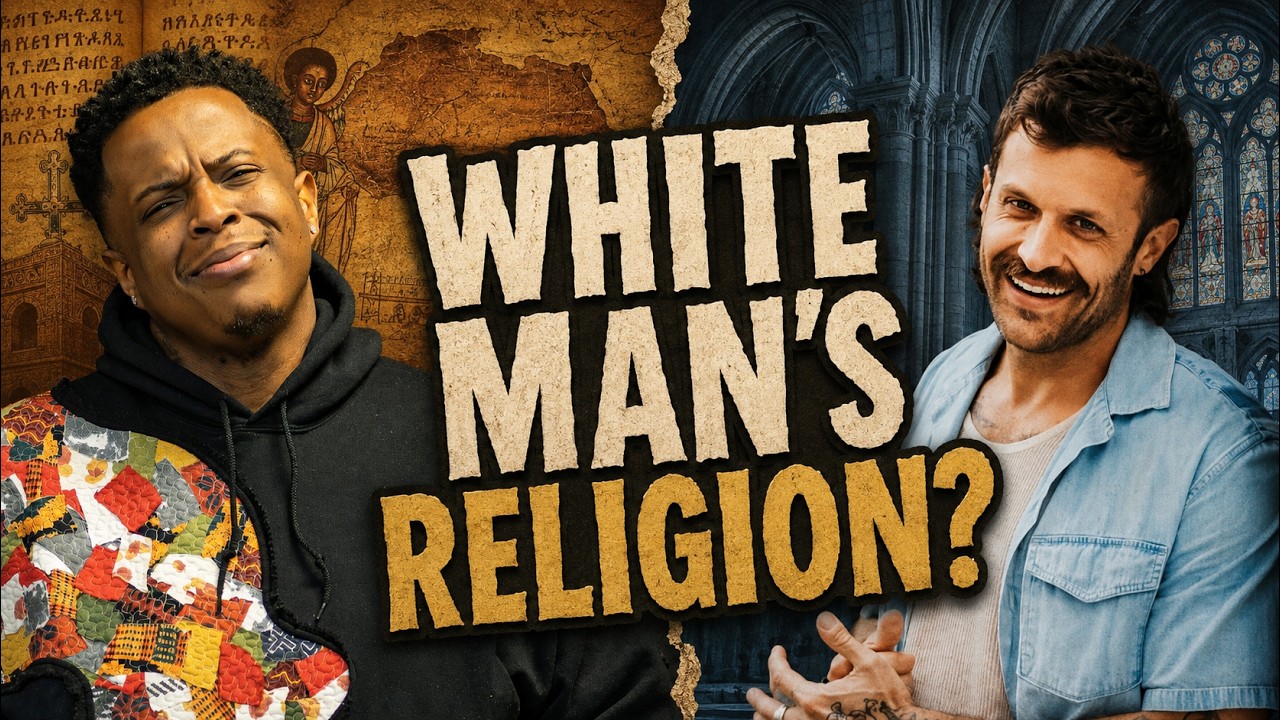
🔗 **Source:** [Is Christianity Really the White Man’s Religion?](https://www.youtube.com/watch?v=_9tt-9qvfUI)
> [!note]+ Document Notes
> > [!info] Generated analysis — not the author's words. Sections below are machine-written
> > from the captured source. Only text inside `> [!quote]` blocks is verbatim from the author.
> > Do not quote or attribute any other line to the named author.
>
> ---
> tags: [church-history, race-and-christianity, christian-supremacy, faith-deconstruction, black-theology, colonialism]
> author: Christian A. Smith
> source: YouTube — Holy Smoke, Cigars, and Spirituality (TFC Live)
> reference: https://www.youtube.com/watch?v=_9tt-9qvfUI
> date created: 2026-08-10
>
> ---
>
> # 🏷️ Title: Is Christianity Really the White Man's Religion?
>
<!-- deep-read:sections start -->
## 🧭 Table of Contents
- [📝 Summary](#-summary)
- [📖 Main Content](#-main-content)
- [🗒️ Notes](#️-notes)
- [📚 References](#-references)
- [🗣️ Paraphrase](#️-paraphrase)
- [📰 Newsletter](#-newsletter)
- [✅ Action Items](#-action-items)
- [🧪 Hypotheses](#-hypotheses)
- [📊 Methodology](#-methodology)
- [❓ Questions](#-questions)
- [🔮 Future Research](#-future-research)
- [💡 Implications](#-implications)
- [🧠 Learning Styles Assessment](#-learning-styles-assessment)
- [📊 Accessibility Assessment](#-accessibility-assessment)
- [🌍 DEIB Assessment](#-deib-assessment)
- [✅ Logical Validity](#-logical-validity)
- [🛡️ DARVO Analysis](#-darvo-analysis)
- [🎯 Conclusion](#-conclusion)
### 🔗 References
- Clip source: Jackie Hill Perry & Preston Perry's podcast, featuring Christian apologist Jerome Gay
- Brian Recker, ebook *Question Your Answers: A Deconstruction Survival Guide*
- Referenced: the "Slave Bible" (1807, missionary-edited Exodus omissions)
- Referenced: the Doctrine of Discovery (15th-century papal bulls)
## 📝 Summary
- What happened: A three-person podcast panel (host Christian A. Smith, co-host "Rich Auntie," and guest Brian Recker, author of a deconstruction-survival ebook) reacts to a viral clip of apologist Jerome Gay arguing that Christianity is not "the white man's religion" — citing African participants at the Council of Nicaea (325 AD), whitewashed depictions of biblical figures, and a close reading of Ephesians 6:5 that distinguishes Paul's *doulos* (indentured servitude) from transatlantic chattel slavery.
- Why it matters: The panel partially agrees with Gay's history (no white people in the Bible; Augustine and many early bishops were African) but rejects his conclusion — that this history obligates Black Americans to remain Christian. They reframe the real target as "Christian supremacy" (the assumption that salvation requires Christian confession), which they argue historically *produced* white supremacy via the Doctrine of Discovery, not the reverse.
- Key stakeholders: Black Christians weighing deconstruction; apologists using church history to counter "white man's religion" claims; deconstruction communities; anyone doing pastoral or DevRel-adjacent work with faith-transition audiences.
- Risks and tradeoffs: The panel's own rhetorical style (mockery, "sunken place," "cooning") sharpens the point for an in-group audience but forecloses persuasion of the apologist camp; conversely Gay's framing ("good slavery," implicitly) is shown by the panel to slide toward minimizing chattel slavery once a text is treated as beyond critique.
- Bottom line: Both "Christianity is a white man's religion" and "Christianity was never white, so stay" are treated as oversimplifications; the panel's actual claim is that the *supremacy structure* (Christian-first, then white-first) is the object worth rejecting, independent of which historical figures were which race.
## 📖 Main Content
- Core argument, pro-Gay position (as presented in the reacted-to clip): Christianity's Eurocentric image is a whitewashing artifact, not an origin fact — African theologians shaped Nicene Christianity, biblical figures (David, Moses, the "Prince of Egypt") were repainted white by later European art, and Paul's slavery language predates and differs from race-based chattel slavery, so leaving the faith over "white man's religion" rests on bad history.
- Core argument, panel's rebuttal: Agreeing that the *history* is more Afro-centric doesn't answer whether *lived, inherited American Christianity* — the version actually handed to Black Americans — has been "wielded as a weapon to keep certain people at the top of the hierarchy." The panel argues the deeper structure under Gay's argument is Christian supremacy (non-Christians are outside God's will, hell-bound), and that this structure, not race, is the actual mechanism of harm — with white supremacy following historically from it (Doctrine of Discovery → colonization → forced conversion → new post-conversion hierarchy needed once converts became "brothers in Christ," hence white supremacy as the next-generation sorting tool).
- Contested/uncertain claims: The panel's causal claim ("Christian supremacy created white supremacy") is asserted, not sourced with named historians in the clip; it is a coherent reading of the Doctrine of Discovery's role in colonization but is presented rhetorically rather than with citation. Similarly Gay's Ephesians 6:5 *doulos* argument is a real position in NT scholarship but is presented in the clip without engaging the counter-literature on how *doulos* passages were nonetheless the primary proof-texts American slaveholders used.
- Terms defined in-video: *doulos* (Paul's term, glossed as indentured servant rather than racial chattel slave); "Slave Bible" (a 1807 missionary edition that reportedly omitted roughly 90% of the Old Testament and most of Exodus, including the Exodus liberation narrative); Doctrine of Discovery (papal sanction for colonizing "pagan" nations); "faith of Jesus" vs. "faith in Jesus" (the panel's distinction between practicing Jesus's stated mission — Luke 4:18, good news to the poor, release for the prisoner — versus doctrinal confession as the marker of belonging).
### 🗒️ Notes
#### ⏱️ [00:00](https://www.youtube.com/watch?v=_9tt-9qvfUI&t=0) Cold open
- Panel previews its thesis with the "good genocides, good slavery" line — a warning that defending a text "at all costs" leads to defending the indefensible.
#### ⏱️ [00:47](https://www.youtube.com/watch?v=_9tt-9qvfUI&t=47) Framing the clip
- Setup: some conclude "Christ is on the side of the oppressor" and leave the faith over it; the panel wants to affirm the underlying concern (whitewashing) while contesting the "walk away" conclusion being treated as automatically wrong.
#### ⏱️ [01:42](https://www.youtube.com/watch?v=_9tt-9qvfUI&t=102) Show intro
- Host Christian A. Smith ("the heretic") opens *Holy Smoke, Cigars, and Spirituality* / TFC Live with co-host Rich Auntie and guest Brian Recker, explaining the episode was requested repeatedly by viewers reacting to Jerome Gay's clip on Jackie Hill Perry and Preston Perry's podcast.
#### ⏱️ [05:19](https://www.youtube.com/watch?v=_9tt-9qvfUI&t=319) Gay's history and Ephesians 6:5 case
- Jerome Gay argues Council of Nicaea (325 AD) had African participants who "helped lay the foundation" of core Christian doctrine, and that Paul's *doulos* in Ephesians 6:5 refers to indentured servitude, written ~60 AD, long before the 1619 transatlantic slave trade — so applying it to chattel slavery is anachronistic.
#### ⏱️ [05:52](https://www.youtube.com/watch?v=_9tt-9qvfUI&t=352) "You can't oppose white supremacy and use their hermeneutics"
- Gay's central rhetorical move: reading Ephesians 6:5 as endorsing chattel slavery means adopting the same interpretive method 19th-century enslavers used to justify slavery from scripture — so, per Gay, deconstructionists who make that reading are (in his framing) siding with the enslavers' hermeneutic.
#### ⏱️ [07:01](https://www.youtube.com/watch?v=_9tt-9qvfUI&t=421) Panel pushback: "no context in which slavery is justifiable"
- Panel calls out the pattern of defending "a version of slavery" once a text is treated as inerrant, sharpening it into the cold-open line about "good genocides... good slavery."
#### ⏱️ [10:36](https://www.youtube.com/watch?v=_9tt-9qvfUI&t=636) Where the panel agrees with Gay
- Panel affirms Christianity has been whitewashed: Augustine was African, many early bishops were African, "there are no white people in the Bible" — but rejects that this obligates anyone to stay, since Black Americans inherited the *American*, weaponized version of Christianity, not the ancient African-inflected one.
#### ⏱️ [14:19](https://www.youtube.com/watch?v=_9tt-9qvfUI&t=859) Naming "Christian supremacy"
- Panel identifies the unstated premise under Gay's whole argument: non-Christians are outside the will of God and headed to hell, which functions as the coercive "infrastructure" holding the argument together even when never stated outright.
#### ⏱️ [16:13](https://www.youtube.com/watch?v=_9tt-9qvfUI&t=973) Push to look before Christianity, not just before colonization
- Call to examine pre-Christian West African spirituality on its own terms rather than only defending or attacking Christianity's racial optics — "we had a relationship with the divine... before Christianity existed."
#### ⏱️ [25:04](https://www.youtube.com/watch?v=_9tt-9qvfUI&t=1504) Christian supremacy → white supremacy, via the Doctrine of Discovery
- Central historical claim: white supremacy is younger than Christian supremacy and was invented as a new hierarchy tool once colonized, converted peoples became "brothers and sisters in Christ" and could no longer be subordinated on purely religious grounds.
#### ⏱️ [28:09](https://www.youtube.com/watch?v=_9tt-9qvfUI&t=1689) "Faith of Jesus" vs. "faith in Jesus"
- Reframes the whole debate: center Jesus's stated mission (good news to the poor, freedom for the prisoner, healing for the sick) rather than doctrinal confession as the test of legitimacy.
#### ⏱️ [30:48](https://www.youtube.com/watch?v=_9tt-9qvfUI&t=1848) Augustine caveat
- Panel qualifies its earlier praise of Augustine: he "worked within the confines of the empire" and supported persecuting dissenters/heretics — an example of how "African" and "liberatory" aren't synonyms in church history.
#### ⏱️ [33:00](https://www.youtube.com/watch?v=_9tt-9qvfUI&t=1980) Closing personal note
- One panelist states she no longer identifies as Christian, closing the loop on the "which conclusion is actually forced by the history" question the episode opened with.
## 📚 References
- [Jackie Hill Perry](https://www.jackiehillperry.com/) — co-host of the reacted-to podcast
- [Preston Perry](https://www.prestonperry.com/) — co-host of the reacted-to podcast
- Doctrine of Discovery — papal decrees (15th century) providing religious sanction for colonization; primary-source background at [Doctrine of Discovery Project](https://www.doctrineofdiscovery.org/)
- "Slave Bible" (1807) — held at Museum of the Bible; background via [Smithsonian coverage](https://www.smithsonianmag.com/smart-news/rare-slave-bible-omitted-key-passages-could-incite-rebellion-180971938/)
## 🗣️ Paraphrase
- Paragraph A: The panel opens by agreeing with an apologist's history lesson — early Christianity had real African leadership, and popular imagery of a blond, blue-eyed Bible is a later European invention, not an original fact. But they refuse the move from "the history is more African than you think" to "therefore you're obligated to remain Christian," arguing lived American Christianity is a different, weaponized inheritance than the ancient record being cited in its defense.
- Paragraph B: Their sharper claim is genealogical: Christian supremacy (the idea that salvation requires Christian confession) is older than and generative of white supremacy, which they say was invented specifically to keep a new racial hierarchy running once colonized converts could no longer be subordinated on religious grounds alone. On that reading, "reject white supremacy but keep Christian supremacy" just swaps which supremacy is doing the sorting — so they push listeners past "is Christianity white" toward "does this structure still require an in-group/out-group hierarchy to function," recommending Jesus's stated mission (help the poor, free the prisoner, heal the sick) as the actual test.
## 📰 Newsletter
- A sharp, unfiltered podcast reaction video worth flagging for anyone doing community or DevRel-adjacent work with faith-transition or identity-and-belonging audiences: it's a live example of two good-faith camps talking past each other because they're answering different questions (historical accuracy vs. lived harm) while thinking they're in the same argument — a pattern worth recognizing in any online debate, not just theological ones.
- Not WordPress/plugin-relevant; filed here for the cross-domain framing pattern (arguing history vs. arguing structure) rather than for tooling or governance content.
## ✅ Action Items
#### DevRel
- n/a — no developer-relations content in this source.
#### OSPO
- n/a — no open-source governance content in this source.
#### Community
- Cross-domain pattern worth reusing in community moderation training: distinguish "is the historical/factual premise accurate" disputes from "is the underlying power structure harmful" disputes — treating them as the same argument (as both sides here partly do) produces talking-past-each-other threads.
#### WordPress
- n/a — no WordPress-specific content in this source.
#### The WPOCC
- n/a — no WPOCC-specific content in this source.
### FAIR
- n/a — no FAIR-specific content in this source.
## 🧪 Hypotheses
- H1: Audiences who accept "Christianity had real African leadership historically" will not uniformly change their stance on "should I stay Christian" — because the second question turns on lived/inherited harm, not historical origin.
- H2: Framing a debate around "Christian supremacy" (in-group/out-group salvation logic) rather than "which race founded this" produces less defensive reactions from listeners already inclined to leave a faith tradition, because it doesn't require litigating personal identity.
- H3: The claim "Christian supremacy predates and generates white supremacy" is falsifiable against the historical record of the Doctrine of Discovery's actual promulgation and use, and against pre-colonial religiously-justified hierarchies within Christendom (e.g., intra-European persecution of heretics, Crusades-era framing) that predate transatlantic colonization.
- H4: Viewers who already hold "faith of Jesus vs. faith in Jesus" framings (liberation theology-adjacent) will find this video confirmatory rather than persuasive, limiting its reach outside an already-sympathetic audience.
- H5: The apologetic move "you can't oppose white supremacy and use their hermeneutics" is more persuasive as an in-group unity appeal (to committed Christians) than as an argument against deconstruction, because it presupposes the text's authority is not itself in question — which is precisely what's contested.
## 📊 Methodology
- H1/H2 testable via message-testing surveys (A/B script framing) with self-identified Black Christian and post-Christian audiences, measuring attitude shift and reactance.
- H3 testable via historical-source review: primary Doctrine of Discovery bulls (Dum Diversas 1452, Romanus Pontifex 1455, Inter Caetera 1493) cross-referenced against documented uses of race-hierarchy theology predating 1452 (e.g., patristic-era anti-Jewish theology, medieval "curse of Ham" interpretive traditions) to test the strict priority claim.
- H4/H5 testable via qualitative interview or comment-sentiment analysis segmented by prior theological stance (orthodox apologist vs. deconstructing vs. post-Christian).
### ❓ Questions
- Does the Doctrine of Discovery's theological justification actually predate all race-hierarchy theology, or did proto-racial hierarchy theologizing (e.g., "curse of Ham" readings) already exist earlier and simply get formalized/weaponized at colonization?
- How does Jerome Gay's own framework handle the panel's specific counter-example — Augustine's support for persecuting Donatist "heretics" — without conceding that African Christian leadership could also reproduce coercive, supremacist structures?
- What would a version of this conversation look like moderated by a historian specializing in both patristics and Atlantic-world slavery, rather than two podcast camps quoting each other secondhand?
### 🔮 Future Research
- A source-checked timeline comparing Doctrine of Discovery-era theology to earlier intra-Christian hierarchy doctrines would settle the panel's strongest empirical claim (H3) rather than leaving it as an assertion.
- Comparative study of how "Christianity is the white man's religion" debates play out in other post-colonial contexts (e.g., within African, Caribbean, or Latin American Christianity) would test whether the panel's US-centered framing generalizes.
### 💡 Implications
- Practice: Faith-transition support work (pastoral counseling, deconstruction communities, campus ministry) benefits from separating "is this claim historically accurate" from "does this structure still function coercively for me today" — conflating them, as both camps in this video partly do, produces unproductive debate rather than either party's stated goal (helping someone stay or helping someone leave with clarity).
- Policy/education: Church-history curricula that foreground African contributions to early Christianity (Nicaea, Augustine, Alexandria) without also naming the coercive uses those same figures and institutions were later put to (or, in Augustine's case, participated in) risk producing a "gotcha" style apologetic rather than an honest history.
- Funding models: n/a — no funding-model content in this source.
### 🧠 Learning Styles Assessment
- Reading level estimate: Flesch-Kincaid approx. grade 7-8 for the spoken transcript (short clauses, conversational register, heavy interjection) — easy to *hear*, but dense in unglossed cultural/theological references (doulos, Doctrine of Discovery, "sunken place," AAVE idiom) that raise the effective comprehension bar for outside audiences.
#### 👀 Visual learners
- Present: none — audio/video talking-head format with no on-screen diagrams, timelines, or text callouts for names/dates cited (325 AD, 1619, 1807, 1452-1493).
- Improve: on-screen timeline graphic for the Nicaea → 1619 → 1807 → Doctrine of Discovery date references, and lower-third name/credential cards when Jerome Gay, Jackie Hill Perry, Preston Perry, and Brian Recker are introduced.
#### 🔊 Aural learners
- Present: full native audio/video format, conversational multi-speaker energy that itself carries emphasis and tone.
- Improve: a clean single-narrator audio digest for listeners who find the overlapping cross-talk (frequent interruptions, simultaneous speakers) hard to parse.
#### 🗣️ Verbal learners
- Present: key terms (doulos, Doctrine of Discovery, Christian supremacy) are defined in-line by the speakers as they're introduced.
- Improve: a glossary card or pinned comment defining doulos, Doctrine of Discovery, syncretism, and AAVE-specific idiom ("sunken place," "cooning") for viewers outside the cultural frame.
#### 🧩 Kinesthetic learners
- Present: none — no interactive exercise, worksheet, or hands-on prompt.
- Improve: a discussion guide with concrete "trace your own inherited theology" prompts, mirroring the panel's own move from history to lived experience.
#### 🧠 Logical learners
- Present: Gay's argument is structured as a clear syllogism (whitewashing ≠ white origin; doulos ≠ chattel slavery; therefore "white man's religion" rests on bad history), which the panel explicitly names and then contests at the premise level (agreeing with the history, contesting the forced conclusion).
- Improve: a simple two-column table (Gay's claim / panel's counter-claim / shared ground) would make the actual point of disagreement — obligation, not history — much clearer than the current interleaved cross-talk.
#### 🧑🤝🧑 Social learners
- Present: the format is inherently a group discussion with visible disagreement and audience-requested topic selection (viewers repeatedly asked for this reaction).
- Improve: a moderated comment thread or live Q&A follow-up would extend the social-learning value beyond passive viewing.
#### 🧘♀️ Solitary learners
- Present: none explicit — no reflection prompts or self-paced pause points.
- Improve: chapter markers at each named argument (history, Ephesians 6:5, Christian supremacy, Doctrine of Discovery, faith of/in Jesus) so a solitary viewer can pause and journal at natural breakpoints.
#### 🌿 Naturalistic learners
- Not applicable to this source — no ecological or systems-in-nature framing present.
### 📊 Accessibility Assessment
#### Screen reader semantics
- Present: standard YouTube player controls; auto-generated captions available via platform.
- Improve: auto-captions on cross-talk-heavy, multi-speaker audio are typically low-accuracy (misheard names like "Jerome Gay," theological terms like "doulos") — a corrected transcript/caption pass would materially improve reliability for screen-reader and caption-dependent users.
#### Keyboard navigation
- Present: standard YouTube player keyboard controls apply (platform-level, not creator-controlled).
- Improve: n/a beyond platform defaults — no custom on-page interactive elements in this content.
#### Contrast and readability
- Not applicable to this source — talking-head video format, no significant on-screen text or UI requiring contrast review.
#### Text resizing and reflow
- Not applicable to this source — no responsive text/UI surface beyond the YouTube player itself.
#### Media and captions
- Present: video has spoken audio and (per Readwise capture) a machine transcript; platform auto-captions likely available.
- Improve: publish a human-corrected transcript given the density of names, dates, and specialized terms (doulos, Doctrine of Discovery) that auto-captioning commonly mangles; add a content note ahead of graphic references to slavery, genocide, and violence given the cold-open's deliberately provocative framing.
#### Forms and interactions
- Not applicable to this source — no forms or interactive elements in the video itself.
#### Standards reference
- Primary gaps map to WCAG 2.2 SC 1.2.2 (Captions, Prerecorded) — accuracy of auto-captions on proper nouns/theological terms — and SC 1.2.4/1.2.9 where a corrected transcript would raise reliability above auto-generated defaults.
### 🌍 DEIB Assessment
#### Cultural breadth
- Present: This is a genuinely multi-viewpoint Black theological conversation, not a single narrative — it stages three distinct positions within Black Christian/post-Christian experience: a reconstructed-but-still-Christian host, a guest advocating deconstruction as a legitimate destination (not just a phase), and a co-host who explicitly departs from Christian identity by the episode's end. It also reaches back before European contact (West African pre-Christian spirituality) and across the diaspora (Santería, home altars) rather than treating "Christian" and "African" as the only two available categories.
- Improve: The conversation stays almost entirely within a US Black Christian/post-Christian frame; it would gain from at least acknowledging how this same "white man's religion" question plays out in African, Caribbean, or Latin American Christianity, where the colonizer-vs-colonized dynamic runs differently (majority-Christian postcolonial nations vs. US racial minority context).
#### Inclusive language
- Present: Panelists use AAVE and community-specific idiom fluently and without translation ("sunken place," "cooning," "kiking over some bull") — authentic to the intended audience rather than a general-audience explainer.
- Improve: For a piece already being processed cross-culturally (added to a personal knowledge base outside the original community context), a short glossary note on these terms would help a reader return to this later without losing the specific cultural charge each carries (e.g., "sunken place" invokes *Get Out*'s metaphor for internalized complicity with one's own oppression; "cooning" is a sharp, contested pejorative for perceived racial self-betrayal — both used here with real interpretive weight, not casually).
#### Neurodiversity support
- Present: none notably — the format is fast, overlapping, high-energy cross-talk with frequent interruption, tangents (an ebook ad mid-argument), and no visual chunking.
- Improve: chapter markers and a structured written recap (as attempted in the Notes section above) would substantially help viewers who process better with linear, chunked argument structure than live overlapping conversation.
#### Representation
- Present: Strong representation specificity — this is a rare case where a single short video holds space for a Black evangelical apologist's citation of African church history, a Black host who stays Christian on altered terms, a Black guest building a deconstruction-support business, and a self-identified queer Black woman co-host who leaves Christianity explicitly linking that decision to safety ("to be the mouthpiece of the thing that will kill you when it obtains its agenda"). That intersection of race, sexuality, and faith trajectory within one conversation is genuinely uncommon and worth flagging as a strength.
- Improve: Women's voices in the conversation (Rich Auntie/Rashanti) get less uninterrupted argument time than the two male voices (host and guest); a follow-up or edited cut foregrounding her fuller reasoning (she is cut off mid-thought at least twice by "praise break" bits) would balance the airtime against the analytical weight already given to her closing line.
#### Psychological safety
- Present: No content warning is given ahead of graphic references (genocide, chattel slavery, lynching, "get out the sunken place") delivered in a joking/sardonic register that some viewers — especially those with religious trauma — may find either cathartic or destabilizing depending on where they are in their own process.
- Improve: A brief spoken or on-screen content note at the top ("this conversation discusses slavery, religious trauma, and includes strong language") would extend the psychological-safety consideration the hosts already show each other ("this is your platform, so I'm going to be respectful") to first-time or vulnerable viewers.
### ✅ Logical Validity
#### Strong reasoning
- Causal/historical reasoning (14:19-16:13): The panel's move from "Gay never says 'non-Christians go to hell' outright" to "but the argument only works if that premise is assumed" is a strong instance of surfacing an argument's unstated premise — a genuinely useful analytical technique, not just a rhetorical jab. It's strong because it's falsifiable: if Gay's argument holds together *without* the salvation-exclusivity premise, the panel's critique fails, and they invite that test by naming the premise explicitly.
- Analogical reasoning (25:04-26:34): Comparing the Doctrine of Discovery's "convert or condemn" logic to the later invention of race-based hierarchy is a coherent historical analogy (colonizers needed a new sorting mechanism once religious conversion removed the old one) — it's strong in that it explains a real historical puzzle (why racial hierarchy theology emerges *after* mass forced conversion rather than before), though it would be stronger with named historical sourcing rather than assertion.
#### Fallacies
- False dilemma (Gay's clip, ~05:19): "You can't oppose white supremacy and use their hermeneutics at the same time" implies only two readings of Ephesians 6:5 exist (Paul-meant-indentured-servitude vs. siding-with-enslavers) when a third option — reading the text as culturally bound and therefore not binding on modern ethics regardless of what Paul "meant" — is available and is in fact closer to the panel's actual position. Fix: state the full range of interpretive options (literalist, contextualist, non-authoritative) before ruling two of three out.
- Genetic fallacy risk (both directions, throughout): Both camps sometimes imply that establishing *where an idea originated* (African bishops at Nicaea; European colonizers' Doctrine of Discovery) settles *whether the idea is currently true or good* — origin doesn't determine current validity or harm in either direction. Fix: keep origin claims (historical) and validity/harm claims (ethical/functional) in separate, explicitly labeled steps, which the panel does better than Gay's clip but still blends at points (e.g., "Augustine was African" offered as if it settles a legitimacy question rather than a demographic one).
- Hasty generalization (panel, ~12:26): "87% of white evangelicals gave us Donald Trump" is used as a stand-alone proof that American Christianity broadly "has been mostly [bad] and evil in this timeline" — a real and citable statistic, but deployed to characterize the entire tradition's moral valence rather than one demographic-political subset's voting behavior. Fix: separate the empirical claim (voting pattern of one subgroup) from the broader evaluative claim (the tradition as a whole), which needs its own argument.
#### Tone of voice
- Registers shift deliberately across the episode: sardonic and performative in the cold open and clip-reaction segments (mocking cadence, "girl, what?"), then earnest and vulnerable in the closing personal-testimony segment ("I don't identify as a Christian anymore"). The tone itself is doing rhetorical work — the mockery lowers the stakes enough to introduce a heavy historical argument, then the sincerity in the close signals this isn't just entertainment but a real, personally costly conclusion for at least one speaker.
### 🛡️ DARVO Analysis
- Deny: Not clearly present as classic DARVO — the panel does not deny that harm from American Christianity occurred; if anything they argue for taking the harm claim more seriously than Gay's clip does.
- Attack: The panel does attack Gay's credibility somewhat personally (mocking his repeated attempts to get the host's attention, "enjoy the 5 seconds of fame") alongside the substantive critique — a discernible tactic worth naming even though it's secondary to the argument itself, since it risks reading as ad hominem to a neutral viewer regardless of whether the substantive critique stands on its own.
- Reverse victim/offender: Not present in the panel's argument. Arguably present *within the reacted-to clip* itself, per the panel's own critique: Gay's framing implicitly casts the deconstructionist (who is naming a harm they experienced) as the one making the "eternal decision" and heading toward danger (hell), which subtly repositions the person naming harm as the one at risk/in error rather than treating their account of harm as data to be taken seriously.
- Emotional cues/rhetoric: Heavy use of AAVE-coded mockery ("kiking over some bull," "sunken place") functions as both an emotional release valve and an in-group solidarity signal; the closing testimonial shifts registers sharply to vulnerability, which is a notable and effective (if unlabeled) rhetorical structure — build solidarity through shared mockery, then earn the right to a costly personal disclosure.
## 🎯 Conclusion
- Bottom line: The video stages a real disagreement inside Black Christian and post-Christian communities that is more precise than its "white man's religion" clickbait framing suggests — the actual fault line is whether accurate history about Christianity's African contributions *obligates* continued adherence, and the panel's sharpest contribution is relocating the argument from race-of-origin to Christian supremacy (in-group/out-group salvation logic) as the structure worth naming and rejecting, with white supremacy analyzed as a downstream invention rather than the root problem.
- Practical next steps for readers: Treat "is this historically accurate" and "is this currently coercive for me" as two separate questions when processing faith-transition content — this source is a clear worked example of what happens when those get collapsed into one debate. For further reading, pair this with a sourced historical treatment of the Doctrine of Discovery and Nicene-era African church leadership to check the panel's strongest empirical claim independently.
## 🔄 Refactor Appendix — Is Christianity Really the White Man's Religion?
> Density: 2–5 Literature atoms (H3), 0–3 Permanent candidates (H4).
> Defaults: 3 Literature, 1 Permanent. Resonance filter: if you can't
> articulate in one line why a claim matters, drop it.
>
> Konik claim-header rules: present tense, declarative, ≤10 words when
> possible, searchable, unique, mirrors annotation focus if present.
>
> Atomicity: one declarative sentence per atom. "and"/"also" → split.
>
> Tag pool: #bmf · #addendum · #xref · #articleseed · #storystem · #share · #aphorisms
### 📚 Literature Atoms (H3)
#### [H1] Defending an inerrant text ends up defending atrocity
> [!quote] ID:rw__9tt9qvfUI_01
> When your starting point is you will defend the text at all costs, you will end up defending some heinous that does not need to be defended. Sometimes there's good genocides, sometimes there's good slavery.
**Context & use**:
- Cold open, 00:00
- Names the mechanism the whole episode critiques: treating a text as beyond critique forces the reader to justify whatever it's used to sanction, however extreme.
**Tags**: #xref #aphorisms
**Highlight**: [view highlight](readwise://)
<!-- atomicity: 1 idea ✓ -->
#### [H2] Opposing white supremacy while using enslavers' hermeneutic is contradictory
> [!quote] ID:rw__9tt9qvfUI_02
> You can't oppose white supremacy and use their hermeneutics at the same time.
**Context & use**:
- Jerome Gay's clip, ~05:52-05:56
- The apologist's central rhetorical pivot on Ephesians 6:5 — reading the slavery passage as endorsing chattel slavery, he argues, means adopting the same interpretive method 19th-century enslavers used.
**Tags**: #xref
**Highlight**: [view highlight](readwise://)
<!-- atomicity: 1 idea ✓ -->
#### [H3] Christian supremacy historically preceded and produced white supremacy
> [!quote] ID:rw__9tt9qvfUI_03
> Christian supremacy created white supremacy. Um, white supremacy actually is not that old compared to Christian supremacy. It was the project of colonization which was given a Christian stamp of approval via the doctrine of discovery.
**Context & use**:
- ~25:04-25:27
- The episode's strongest and most falsifiable causal claim: race hierarchy is framed as a later invention needed once religious hierarchy could no longer justify subordinating converted, colonized peoples.
**Tags**: #xref #articleseed
**Highlight**: [view highlight](readwise://)
<!-- atomicity: 1 idea ✓ -->
#### [H4] Centering the faith of Jesus reframes belonging around mission, not confession
> [!quote] ID:rw__9tt9qvfUI_04
> How can we center our conversation around the faith of Jesus instead of faith in Jesus?
**Context & use**:
- ~28:04-28:13, following a Luke 4:18-style summary of Jesus's stated mission (good news to the poor, release for the prisoner, healing for the sick, liberation for the oppressed)
- The panel's proposed alternative test for legitimacy — practice/mission over doctrinal confession.
**Tags**: #xref #aphorisms
**Highlight**: [view highlight](readwise://)
<!-- atomicity: 1 idea ✓ -->
#### [H5] Whitewashing is real but doesn't obligate staying
> [!quote] ID:rw__9tt9qvfUI_05
> Like it's certainly true that there is more black history like you know, Augustine was African. Many of those early bishops were African. Uh the there are no white people in the Bible.
**Context & use**:
- ~10:44-10:56
- The panel's concession to Gay's history, immediately followed (not quoted verbatim here) by their rejection of the inference that this history obligates continued Christian identification.
**Tags**: #xref
**Highlight**: [view highlight](readwise://)
<!-- atomicity: 1 idea ✓ -->
### 🧠 Permanent Candidates (H4)
#### [P1] Historical origin claims don't settle present obligation or legitimacy questions
**Claim** (one sentence, Courtney's voice): Establishing where an idea, practice, or institution originated is a separate question from whether it's currently true, good, or binding on me — treating origin as settling legitimacy is a genetic-fallacy move regardless of which direction (defensive or critical) it's deployed in.
**Evidence pointer**: [[#H5]] — Augustine's African identity is offered as evidence for Christianity's continued claim on Black identity, when it answers a demographic question, not a legitimacy one.
**Scope & conditions**: Holds whenever an origin fact (who founded it, where it came from, who first believed it) is used as the decisive premise in an argument about present-day obligation, harm, or truth. Breaks down as a critique only if the arguer is making a narrower, explicitly historical claim (e.g., "the popular image of a white Jesus is factually wrong") rather than a legitimacy claim.
**Links** (≥1 with annotation):
- [[Christian supremacy as coercive in-group logic]] — because extends (the same source's H3/H4 atoms)
- [[Ad hominem vs. substantive critique in debate]] — because contrasts on (fallacy-adjacent but distinct failure mode)
<!-- atomicity: 1 idea ✓ -->
### ✏️ Fleeting Queue
- [F1] Check the Doctrine of Discovery's actual promulgation dates (1452 Dum Diversas, 1455 Romanus Pontifex, 1493 Inter Caetera) against earlier race-adjacent hierarchy theology (e.g., "curse of Ham" readings) to test whether Christian-supremacy-preceded-white-supremacy holds as strictly as claimed — https://www.youtube.com/watch?v=_9tt-9qvfUI #xref
- [F2] Look for a sourced, footnoted treatment of African participation at the Council of Nicaea (325 AD) to verify Jerome Gay's specific historical claim independent of both camps' framing — https://www.youtube.com/watch?v=_9tt-9qvfUI #xref
### → Things 3 (max 2 actions)
- [ ] Find a footnoted source on Nicaea-era African church leadership to verify/complicate Gay's claim — church-history research #things
- [ ] Read background on the Doctrine of Discovery's actual theological content before citing the "Christian supremacy created white supremacy" claim elsewhere — church-history research #things
<!-- deep-read:sections end -->
📄 **Full text:** [[Full Document Contents/Articles/Is Christianity Really the White Man’s Religion.md|Is Christianity Really the White Man’s Religion? by YouTube]]
## Highlights
- defend the text at all costs, you will end up defending some heinous that does not need to be defended. Sometimes there's good genocides, sometimes there's good slavery. ([View Highlight](https://read.readwise.io/read/01kzp1wea9xdkrhs61jnzjcw7t))
- Note: Cold open: treating a text as beyond critique forces defending whatever it's used to sanction.
- Tags: atom/literature/h1
- fought for it at the council not seeing 325 AD. [music] This is my challenge to black deconstructionists. You can't oppose white supremacy and use their hermeneutics at the same time. M. ([View Highlight](https://read.readwise.io/read/01kzp1wnsgmx226re8w1pyx9bs))
- Note: Jerome Gay's central rhetorical pivot on Ephesians 6:5 and biblical hermeneutics.
- Tags: atom/literature/h2
- hand, I do agree that Christianity has been whitewashed. Like it's certainly true that there is more black history like you know, Augustine was African. Many of those early bishops were African. Uh the there are no white people in the Bible. the Bible is mostly ([View Highlight](https://read.readwise.io/read/01kzp1ybfns5xm0wdszrtn1m5t))
- Note: Panel's concession to Gay's history — Augustine and many early bishops were African — before rejecting the obligation-to-stay conclusion.
- Tags: atom/literature/h5
- Historically, you don't have white supremacy without Christian supremacy. Christian supremacy created white supremacy. Um, white supremacy actually is not that old compared to Christian supremacy. It was the project of colonization which was given a uh a Christian stamp of approval ([View Highlight](https://read.readwise.io/read/01kzp1xtj4w7a0vq85pbmz3bv1))
- Note: Central historical claim: Christian supremacy predates and produced white supremacy via the Doctrine of Discovery.
- Tags: atom/literature/h3
- the oppressed. So, how can we center our conversation around the faith of Jesus instead of faith in Jesus? ([View Highlight](https://read.readwise.io/read/01kzp1y23wgyme09p1g28bxzqd))
- Note: Panel's alternative test for legitimacy: mission (Luke 4:18) over doctrinal confession.
- Tags: atom/literature/h4
- still in this place of trying to prove yourself to the God in the sky that you've been taught, which is specifically a white supremacist religion. I don't identify as a Christian anymore. ([View Highlight](https://read.readwise.io/read/01kzp1yp9nkrn567m0b9tmp9n6))
- Note: Closing personal testimony — one panelist's departure from Christian identity, tied explicitly to safety as a queer Black woman earlier in the episode.
- Tags: atom/literature/h6
## Links
- [[3. Resources/Permanent Notes/Critical Reading Honors a Text by Refusing Forced Harmonization]] — applies-in: the panel argues that defending a sacred text at all costs can force readers to rationalize slavery or genocide instead of retaining the ethical conflict.