Is God Nonbinary?
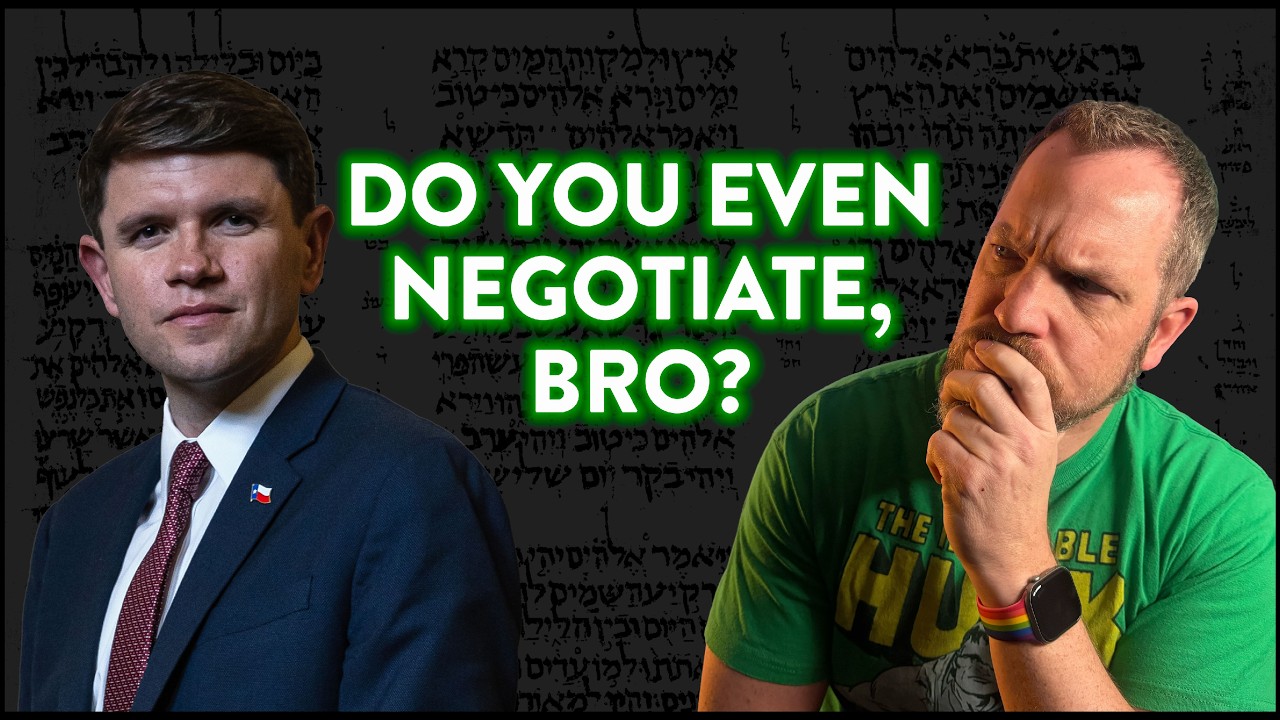
🔗 **Source:** [Is God Nonbinary?](https://www.youtube.com/watch?v=yF2ZatqNcgM)
> [!note]+ Document Notes
> tags: #theology #biblical-studies #gender #christian-nationalism #religious-discourse
> author: Dan McClellan
> source: YouTube
> reference: https://www.youtube.com/watch?v=yF2ZatqNcgM
> date created: 2024-12-28 16:15
>
> # 🏷️ Title: Is God nonbinary?
>
<!-- deep-read:sections start -->
## 🧰 Action Inbox
- [H1] Study theological correctness vs. intuitive anthropomorphism in religious discourse — cognitive science research #theology
- [H2] Analyze how power structures influence biblical interpretation — Christian nationalism context #religious-discourse
- [H3] Examine tradition vs. scripture tensions in religious authority — Catholic catechism examples #biblical-studies
## 🧭 Table of Contents
- [[#📝 Summary]]
- [[#📖 Main Content]]
- [[#🗒️ Notes]]
- [[#📚 References]]
- [[#🗣️ Paraphrase]]
- [[#📰 Newsletter]]
- [[#✅ Action Items]]
- [[#🧪 Hypotheses]]
- [[#📊 Methodology]]
- [[#❓ Questions]]
- [[#🔮 Future Research]]
- [[#💡 Implications]]
- [[#🧠 Learning Styles Assessment]]
- [[#📊 Accessibility Assessment]]
- [[#🌍 DEIB Assessment]]
- [[#✅ Logical Validity]]
- [[#🛡️ DARVO Analysis]]
- [[#🎯 Conclusion]]
### 🔗 References
- [Catholic Catechism](https://www.vatican.va/archive/ENG0015/_INDEX.HTM)
- [Justin Barrett's Theological Correctness Research](https://academic.oup.com/jsr/article-abstract/38/4/584/1645776)
## 📝 Summary
- Biblical scholar Dan McClellan analyzes the controversy over Rep. James Talorico's claim that "God is non-binary"
- While the Bible predominantly presents God as male-presenting and anthropomorphic, mainstream Christian theology actually describes God as transcending gender categories
- Christian nationalist opposition stems more from protecting power structures than from theological consistency
- The debate reveals tensions between biblical literalism, theological tradition, and contemporary identity politics
- McClellan argues Talorico's position aligns better with established theological correctness than his critics' responses
## 📖 Main Content
McClellan examines a theological controversy through multiple lenses: biblical evidence, Christian tradition, and cognitive science. He argues that concepts of God are "discursively reified" - created through community agreement rather than fixed doctrine.
The biblical evidence predominantly shows an anthropomorphic, male-presenting deity. However, mainstream Christian theology, as exemplified by Catholic catechism, explicitly states God "transcends human distinctions between the sexes" and "is neither man nor woman." This creates a paradox where Talorico's "non-binary" description actually aligns better with official theological positions than the anthropomorphic assumptions of his critics.
McClellan draws on cognitive science research showing humans naturally anthropomorphize supernatural agents unless actively prompted toward "theological correctness." Christian nationalist opposition to Talorico's statement appears driven more by protecting social power structures than by consistent theological reasoning.
## 🗒️ Notes
#### ⏱️ [00:00](https://youtu.be/yF2ZatqNcgM?t=0) — [H1] Introduction: The Theological Controversy
- Key idea: Texas State Rep. James Talorico's "God is non-binary" statement sparks Christian nationalist outrage
- Evidence: "Christian nationalists are pulling out their rhetorical fainting couches as conspicuously as they can"
#### ⏱️ [01:15](https://youtu.be/yF2ZatqNcgM?t=75) — [H2] God as Discursive Category
- Key idea: Concepts of God are created through discourse and community agreement
- Evidence: "God is whatever people agree God is... they're just a part of that discursive community"
#### ⏱️ [02:30](https://youtu.be/yF2ZatqNcgM?t=150) — [H3] Biblical Complexity and Interpretation
- Key idea: The Bible presents multiple, non-univocal representations of God requiring interpretive negotiation
- Evidence: "You can't really extract a single authoritative or consistent divine profile from it. It always requires negotiation"
#### ⏱️ [03:45](https://youtu.be/yF2ZatqNcgM?t=225) — [H1] Biblical Evidence: Anthropomorphic Male Deity
- Key idea: Biblical texts predominantly present God as corporeal, anthropomorphic, and male-presenting
- Evidence: "If we want to take the Hebrew Bible as representative God not only is anthropomorphic and corporeal and male presenting but probably has a functioning penis"
#### ⏱️ [04:30](https://youtu.be/yF2ZatqNcgM?t=270) — [H2] Cognitive Science of Religious Anthropomorphism
- Key idea: Humans naturally anthropomorphize supernatural agents unless reminded of theological correctness
- Evidence: "Justin Barrett... experiments about theological correctness... tendency to anthropomorphize fell way off when reminded of theological beliefs"
#### ⏱️ [06:15](https://youtu.be/yF2ZatqNcgM?t=375) — [H1] Catholic Catechism: God Transcends Gender
- Key idea: Official Catholic doctrine explicitly states God transcends sex and gender categories
- Evidence: "God is pure spirit in which there is no place for the difference between the sexes"
#### ⏱️ [07:45](https://youtu.be/yF2ZatqNcgM?t=465) — [H2] Theological Correctness vs. Biblical Literalism
- Key idea: Mainstream Christian theology emphasizes God's transcendence over anthropomorphic biblical descriptions
- Evidence: "We must therefore continually purify our language of everything in it that is limited, image bound, or imperfect"
#### ⏱️ [09:00](https://youtu.be/yF2ZatqNcgM?t=540) — [H3] Non-Binary as Theological Category
- Key idea: Transcending gender binaries legitimately qualifies as a non-binary conceptualization
- Evidence: "God transcends the sex binary or the gender binary... that is a legitimate conceptualization of what it means to be non-binary"
#### ⏱️ [10:15](https://youtu.be/yF2ZatqNcgM?t=615) — [H1] Power Structures Drive Opposition
- Key idea: Christian nationalist opposition stems from protecting power rather than theological consistency
- Evidence: "Christian nationalists overwhelmingly are concerned with structuring power and values and boundaries in ways that serve their interests"
#### ⏱️ [11:30](https://youtu.be/yF2ZatqNcgM?t=690) — [H2] Cultural War Over Theological Correctness
- Key idea: Saying "God is non-binary" creates rhetorical problems for those marginalizing non-binary people
- Evidence: "To give ammunition to this particular cultural war over and against their own interests"
#### ⏱️ [12:45](https://youtu.be/yF2ZatqNcgM?t=765) — [H3] Power Over Theology
- Key idea: Christian nationalists prioritize political power over consistent theological reasoning
- Evidence: "Their access to power and resources is usually going to outweigh their actual concern for theological correctness"
#### ⏱️ [13:30](https://youtu.be/yF2ZatqNcgM?t=810) — [H1] Worship of Power vs. Worship of Jesus
- Key idea: Critics reveal they prioritize power over theological integrity, unlike Talorico's focus on helping vulnerable people
- Evidence: "They are praying on the street corner to be seen of men... James Terico comes closer to being a worshipper of Jesus"
## 📚 References
- [Catholic Catechism paragraphs 42, 239, 370](https://www.vatican.va/archive/ENG0015/_INDEX.HTM)
- [Justin Barrett's theological correctness research](https://academic.oup.com/jsr/article-abstract/38/4/584/1645776)
- Dan McClellan's forthcoming book: "God's Biography of Biblical History" (2027)
## 🗣️ Paraphrase
- Religious concepts exist as community agreements rather than fixed truths, making both sides potentially correct within their interpretive communities
- While biblical texts generally present God in male, anthropomorphic terms, mainstream Christian theology explicitly teaches that God transcends gender categories entirely
- The controversy reveals Christian nationalists abandoning their stated theological principles to maintain social and political power structures against marginalized groups
## 📰 Newsletter
**Theological Discourse Meets Identity Politics: Lessons for Community Building**
This week's exploration into religious interpretation offers fascinating insights for any community grappling with tradition, authority, and inclusion. Scholar Dan McClellan's analysis of the "Is God non-binary?" controversy reveals how communities navigate competing sources of authority - sacred texts, institutional doctrine, and contemporary values.
**Key Learning**: The tension between literal interpretation and theological sophistication mirrors challenges in open source communities between backwards compatibility and progressive innovation.
**Practical Application**: When facing interpretive disputes, examine whether responses stem from principled reasoning or from protecting existing power structures. McClellan's framework helps identify when "theological correctness" (our stated values) conflicts with intuitive assumptions or political interests.
**Community Connection**: Consider how WordPress's approach to backwards compatibility while embracing modern web standards parallels religious communities balancing ancient texts with contemporary theology.
Resources: [Learn WordPress](https://learn.wordpress.org/), [Developer Docs](https://developer.wordpress.org/), [WP-CLI](https://wp-cli.org/)
## ✅ Action Items
#### Community
- Maintainers: Develop frameworks for distinguishing principled disagreements from power-protective responses in governance disputes
- Contributors: Study how cognitive biases (like anthropomorphism) might affect technical decision-making processes
- Sponsors: Examine whether funding decisions align with stated values or unconsciously protect existing hierarchies
#### WordPress
- Community: Create resources for productive theological/philosophical discussions at WordCamps while maintaining inclusivity
- Documentation: Develop guidance on handling controversial topics that intersect technology and identity
- Training: Incorporate bias awareness into community leadership training programs
## 🧪 Hypotheses
- Communities that explicitly address the tension between traditional authority sources and contemporary values will handle controversial topics more productively
- Groups that prioritize power preservation over principled reasoning will show inconsistent application of their stated values
- Cognitive science insights about theological correctness apply broadly to technical and community decision-making processes
- Leaders who acknowledge interpretive complexity foster more inclusive environments than those claiming single authoritative readings
### 📊 Methodology
- Comparative analysis of community responses to controversial statements across religious, open source, and other voluntary communities
- Survey research on how community members navigate competing authority sources in decision-making
- Experimental studies on whether "correctness priming" affects technical judgment similar to theological judgment
### ❓ Questions
- How do open source communities handle tensions between backwards compatibility (tradition) and progressive innovation (contemporary values)?
- What role does power structure preservation play in technical architecture decisions that affect marginalized developers?
- Can cognitive science research on theological correctness inform better practices for technical documentation and community guidelines?
### 🔮 Future Research
- Cross-community analysis of interpretive authority in voluntary organizations
- Application of theological correctness research to technical decision-making processes
- Study of how identity politics intersects with technical governance in open source projects
### 💡 Implications
- Practice: Religious interpretation methods offer frameworks for handling competing sources of technical authority
- Policy: Community governance benefits from explicitly addressing tensions between traditional and progressive values
- Education: Bias awareness training should include cognitive science insights about intuitive vs. reflective reasoning
- Funding: Sponsor decisions should be evaluated for consistency with stated community values rather than power preservation
### 🧠 Learning Styles Assessment
Reading level estimate: 12-14 (Graduate level due to theological and philosophical terminology)
#### 👀 Visual learners
- Present: Clear structure with headers and bullet points
- Improve: Diagram showing relationships between biblical text, theological tradition, and contemporary interpretation
#### 🔊 Aural learners
- Present: Original video format with clear narration
- Improve: Audio highlights of key theological concepts and cognitive science findings
#### 🗣️ Verbal learners
- Present: Rich definitions of theological terms, analogies to community governance
- Improve: Glossary of technical theological vocabulary, more comparative examples
#### 🧩 Kinesthetic learners
- Present: Step-by-step analysis framework for interpretive disputes
- Improve: Interactive exercises applying theological correctness concepts to technical decisions
#### 🧠 Logical learners
- Present: Clear logical progression from cognitive science through biblical evidence to contemporary applications
- Improve: Decision tree for evaluating competing interpretive claims
#### 🧑🤝🧑 Social learners
- Present: Community governance implications and discussion frameworks
- Improve: Group discussion guides for applying insights to local community challenges
#### 🧘♀️ Solitary learners
- Present: Detailed analysis suitable for individual reflection
- Improve: Self-assessment tools for identifying personal biases in interpretation
#### 🌿 Naturalistic learners
- Present: Evolution of religious thought over time
- Improve: Ecosystem metaphors for how interpretive communities develop and interact
### 📊 Accessibility Assessment
#### Screen reader semantics
- Present: Clear heading hierarchy, descriptive section titles
- Improve: More descriptive alt text for any theological concepts that could benefit from visual representation
#### Keyboard navigation
- Present: Logical tab order through timestamped sections
- Improve: Skip links for major sections, keyboard shortcuts for timestamp navigation
#### Contrast and readability
- Present: High contrast text formatting
- Improve: Ensure timestamp links meet 4.5:1 contrast ratio requirements
#### Text resizing and reflow
- Present: Responsive formatting that works at 200% zoom
- Improve: Test with theological terminology at various zoom levels
#### Media and captions
- Present: Full transcript provided for video content
- Improve: Time-synced captions highlighting key theological terms
#### Forms and interactions
- Present: Clear labeling of timestamp links
- Improve: Consistent interaction patterns for all video references
### 🌍 DEIB Assessment
#### Cultural breadth
- Present: Christian theological perspectives from Catholic and Protestant traditions
- Improve: Include Jewish, Islamic, or other theological perspectives on divine gender/transcendence
#### Inclusive language
- Present: Respectful treatment of non-binary identity, clear definition of theological terms
- Improve: More global examples of gender concepts in religious traditions
#### Neurodiversity support
- Present: Well-structured content with clear transitions
- Improve: Visual indicators for major topic shifts, consistent formatting
#### Representation
- Present: Acknowledges marginalized voices (non-binary individuals, Rep. Talorico)
- Improve: Include diverse theological scholars beyond single male perspective
#### Psychological safety
- Present: Respectful framing of controversial religious topics
- Improve: Content warnings for discussions of religious conflict, clearer framing of academic vs. devotional approach
### ✅ Logical Validity
#### Strong reasoning
- Deductive strength: Strong syllogism connecting cognitive science research to theological interpretation patterns
- Inductive strength: Good evidence base from Catholic catechism, biblical scholarship, and experimental psychology
- Causal reasoning: Clear causal claims about power structures driving theological positions
- Analogical strength: Effective analogy between religious interpretation and community governance
#### Fallacies
- Ad hominem: Some characterization of Christian nationalists as primarily power-motivated rather than principle-motivated could be stronger
- False dichotomy: Presentation sometimes oversimplifies complex theological positions into binary choices
#### Tone of voice
- Overall tone: Academic but accessible, with occasional informal expressions ("rhetorical fainting couches") that humanize complex theological concepts
### 🛡️ DARVO Analysis
- Deny: Christian nationalists deny that their opposition stems from power preservation rather than theological principle
- Attack: Attacks on Talorico for making theologically "improper" statements rather than engaging substantive theological arguments
- Reverse victim/offender: Positioning themselves as defenders of theological orthodoxy while abandoning theological correctness for political expediency
- Emotional cues and rhetoric: McClellan identifies performative outrage ("apoplelectic") designed to distract from substantive theological engagement
## 🎯 Conclusion
McClellan's analysis reveals how interpretive communities navigate tensions between traditional sources of authority and contemporary values. The "God is non-binary" controversy demonstrates that Talorico's position actually aligns better with mainstream theological tradition than his critics' responses, suggesting that opposition stems from protecting social power structures rather than consistent theological reasoning.
For practitioners in any interpretive community - whether religious, technical, or cultural - the key insight is examining whether responses to controversial statements stem from principled application of stated values or from preserving existing power arrangements. McClellan's framework offers tools for distinguishing genuine theological engagement from political maneuvering disguised as religious
---
## Full Transcript
[00:00] Is God non-binary?<br>[00:02] Hey everybody, I'm Dan Mlelen. I'm a<br>[00:04] scholar of the Bible and religion. And<br>[00:06] that is something that Texas State<br>[00:08] Representative and current Democratic<br>[00:10] candidate for the US Senate, James<br>[00:12] Talerico, said a while ago. And a bunch<br>[00:15] of Christian nationalists are pulling<br>[00:18] out their rhetorical fainting couches as<br>[00:20] conspicuously as they can and performing<br>[00:23] apoplelexi about the notion that God<br>[00:26] would be non-binary. And a lot of folks<br>[00:29] have been arguing about the theological<br>[00:31] propriety of this claim. And I want to<br>[00:34] point to a few different things to<br>[00:36] consider when talking about this. The<br>[00:38] first is that our concept of God is<br>[00:41] really a conceptual category. It is<br>[00:44] discursively reified, meaning it is<br>[00:47] created by discourse. So God is whatever<br>[00:51] people agree God is. So there's a sense<br>[00:54] in which the folks who insist God is<br>[00:57] non-binary are right for whoever agrees.<br>[01:01] And there's a sense in which those who<br>[01:02] insist God is not non-binary are right<br>[01:05] for whoever agrees because they're just<br>[01:08] a part of the group that agrees with<br>[01:10] that claim. They're a part of that<br>[01:12] discursive community. So there's a sense<br>[01:15] in which they are both right and there's<br>[01:17] a sense in which they are both wrong.<br>[01:19] according to the groups that don't agree<br>[01:21] with that claim. There's another way to<br>[01:24] look at it as well. Who is closer to<br>[01:26] what's going on in the Bible? And<br>[01:29] there's an additional way to look at it<br>[01:31] because the Bible is not univocal. You<br>[01:35] can't really extract a single<br>[01:36] authoritative or consistent divine<br>[01:38] profile from it. It always requires<br>[01:41] negotiation. Which passages and<br>[01:44] conceptualizations are we going to<br>[01:45] center and give priority to? and which<br>[01:48] passages and conceptualizations are we<br>[01:50] going to subordinate to the tradition<br>[01:54] which provides the unifying frameworks<br>[01:56] that we impose upon the Bible in order<br>[01:58] to guide that negotiation. So there is<br>[02:02] not just what's in the Bible, but<br>[02:04] there's also what our tradition tells us<br>[02:06] we're allowed to find in the Bible. And<br>[02:10] what I'm going to suggest is that James<br>[02:13] Tarico's position is not clearly<br>[02:16] represented in the Bible, but is<br>[02:18] actually closer to the unifying<br>[02:21] frameworks of the majority of<br>[02:23] Christians.<br>[02:25] And the folks who are uh nashing their<br>[02:27] teeth at Representative Terarico are<br>[02:30] actually departing from<br>[02:32] the unifying frameworks that they would<br>[02:35] normally assert as governing their<br>[02:38] approach to the Bible. So it's a bit of<br>[02:41] a mess, but I want to start with what's<br>[02:43] going on in the Bible. Again, the Bible<br>[02:45] is not unocal. It does not present a<br>[02:47] single notion of God. It presents a<br>[02:49] variety of different notions of God. In<br>[02:51] fact, that is precisely the topic of the<br>[02:54] trade book that I just started working<br>[02:56] on that's going to be coming out in<br>[02:57] 2027, God's Biography of Biblical<br>[03:00] History, where I'm going to talk about<br>[03:01] how and why the God of the Bible changes<br>[03:03] from the earliest literary layers<br>[03:05] through to the latest literary layers.<br>[03:07] But overwhelmingly, God is represented<br>[03:10] not just as corporeal and<br>[03:12] anthropomorphic, but as male presenting.<br>[03:16] And there are reasons for that,<br>[03:18] including the fact that just intuitively<br>[03:21] we tend to anthropomorphize<br>[03:24] non-natural agents. And this is actually<br>[03:28] something that the cognitive science of<br>[03:30] religion has demonstrated. There's this<br>[03:32] wonderful paper from the '9s by Justin<br>[03:35] Barrett. And it's part of a series of<br>[03:37] experiments about theological<br>[03:39] correctness where Barrett and colleagues<br>[03:43] shared stories about non-natural<br>[03:46] entities that would be rather<br>[03:47] counterintuitive entities, people you<br>[03:50] don't encounter on a day-to-day basis,<br>[03:52] like Superman and a supercomput and God.<br>[03:56] And then they had to recall details<br>[03:58] about it after a certain amount of time<br>[04:00] had passed. And what they were looking<br>[04:02] at was how the u participants recall<br>[04:07] altered the stories whether they<br>[04:10] rendered these individuals more or less<br>[04:12] anthropomorphic. And what they found was<br>[04:15] for uh God particularly<br>[04:18] there was a tendency to anthropomorphize<br>[04:21] to attribute human characteristics and<br>[04:24] features to God. And then they repeated<br>[04:27] these experiments, but then before they<br>[04:29] asked them the follow-up questions about<br>[04:31] their recall, they reminded them about a<br>[04:35] survey that they uh filled out regarding<br>[04:38] their theological beliefs. And the idea<br>[04:40] here was to cue them or prime them to<br>[04:44] these ideas about theological<br>[04:46] correctness to see if their recall was<br>[04:50] tempered or was governed by their belief<br>[04:54] about what was theologically correct.<br>[04:56] And the anthropomorphizing<br>[04:58] fell way off. In other words, uh what<br>[05:01] this experiment demonstrated for uh the<br>[05:05] authors of this study was that when<br>[05:07] we're not actively thinking about what<br>[05:09] is theologically correct based on the<br>[05:12] credences that we have signed on to and<br>[05:14] accepted, our tendency is to think about<br>[05:18] and talk about God in thoroughly<br>[05:20] anthropomorphic terms. But when there is<br>[05:25] a heavy presence of concern for<br>[05:27] theological correctness, when we are<br>[05:29] contemplating what is theologically<br>[05:31] correct, we tend to move away from that<br>[05:33] because most at least Christian and<br>[05:36] Jewish theological correctness tries to<br>[05:39] uh tamp down and subdue and overcome<br>[05:43] that tendency towards anthropomorphism.<br>[05:46] We tend to want a less anthropomorphic<br>[05:48] deity when we're talking about<br>[05:49] theological correctness. So in the Bible<br>[05:52] we actually see representation of all<br>[05:55] sides of this spectrum but the majority<br>[05:57] of the Bible leans in the direction of<br>[05:59] anthropomorphism. In fact if we want to<br>[06:02] take the Hebrew Bible as representative<br>[06:04] God not only is anthropomorphic and<br>[06:06] corporeal and male presenting but<br>[06:08] probably has a functioning penis. Um, in<br>[06:12] fact, there is an early rabbitic<br>[06:14] tradition that when Adam was created,<br>[06:16] Adam was created circumcised<br>[06:19] because Adam was created in the image of<br>[06:22] God. And God has a perfect male body and<br>[06:24] a perfect male body is a circumcised<br>[06:27] body. So, uh, if we're looking at what's<br>[06:31] going on in the Bible, the weight of the<br>[06:34] evidence supports a male presenting<br>[06:36] deity. Now, this would seem to agree<br>[06:39] with the critics of representative<br>[06:41] Talorico. However, those critics are not<br>[06:44] going to endorse a deity with a<br>[06:47] functioning penis. Uh, in fact, they are<br>[06:50] going to vehemently reject that because<br>[06:53] they overwhelmingly think of God as<br>[06:56] transcending that kind of thing, that<br>[06:59] kind of base anthropomorphism,<br>[07:02] corporate reality, uh, and stuff like<br>[07:04] that. In fact, we can look at some<br>[07:06] authoritative literature. For instance,<br>[07:08] here's the official catechism of the<br>[07:10] Catholic Church. We can go to paragraph<br>[07:12] 370. In no way is God in man's image. He<br>[07:16] is neither man nor woman. God is pure<br>[07:19] spirit in which there is no place for<br>[07:20] the difference between the sexes. But<br>[07:23] the respective perfections of man and<br>[07:25] woman reflect something of the infinite<br>[07:27] perfection of God, those of a mother and<br>[07:29] those of a father and husband. And then<br>[07:32] in the margins on the left, you can see<br>[07:34] references to paragraphs 42 and 239.<br>[07:37] Let's check those out. Paragraph 42, God<br>[07:39] transcends all creatures. We must<br>[07:41] therefore continually purify our<br>[07:43] language of everything in it that is<br>[07:45] limited, image bound, or imperfect. If<br>[07:48] we are not to confuse our image of God,<br>[07:50] the inexpressable, the incomprehensible,<br>[07:52] the invisible, the ungraspable, with our<br>[07:55] human representations, our human words<br>[07:57] always fall short of the mystery of God.<br>[08:00] And then we have paragraph 239. By<br>[08:02] calling God father, the language of<br>[08:04] faith indicates two main things. That<br>[08:06] God is the first origin of everything<br>[08:08] and transcendent authority and that he<br>[08:11] is at the same time goodness and loving<br>[08:14] care for all his children. God's<br>[08:16] parental tenderness can also be<br>[08:18] expressed by the image of motherhood<br>[08:20] which emphasizes God's imminence, the<br>[08:22] intimacy between creator and creature.<br>[08:25] The language of faith thus draws on the<br>[08:27] human experience of parents who are in a<br>[08:29] way the first representatives of God for<br>[08:31] man. But this experience also tells us<br>[08:33] that human parents are fallible and can<br>[08:36] disfigure the face of fatherhood and<br>[08:37] motherhood. We ought therefore to recall<br>[08:39] that God transcends the human<br>[08:41] distinctions between the sexes. He is<br>[08:43] neither man nor woman. He is God. He<br>[08:48] also transcends human fatherhood and<br>[08:50] motherhood. Although he is their origin<br>[08:52] and standard, no one is father as God is<br>[08:55] father. So there's a degree to which one<br>[08:58] could say this is a non-binary<br>[09:02] conceptualization of God because God<br>[09:04] transcends<br>[09:07] the sex binary or the gender binary of<br>[09:10] male/female, man/woman.<br>[09:13] God transcends that and that is a<br>[09:16] legitimate conceptualization of what it<br>[09:18] means to be non-binary. even though the<br>[09:21] way it is usually used doesn't uh<br>[09:24] perfectly align with that. So we could<br>[09:26] say that representative Torico's<br>[09:29] position is far closer to what is<br>[09:32] considered theologically correct uh at<br>[09:35] least according to the Catholic Church<br>[09:36] as we see in the catechisms. But this is<br>[09:39] not far off from how most Protestants<br>[09:41] conceptualize God as well. both<br>[09:43] Catholicism and Protestantism ultimately<br>[09:46] are descendants of a philosophical<br>[09:49] tradition of negative theology that God<br>[09:52] transcends these categories and can't<br>[09:54] really be spoken of in ways that<br>[09:57] attribute qualities to God because to<br>[10:00] attribute quality to God is to divide<br>[10:02] God or is to limit God. There are a lot<br>[10:06] of reasons that Christians and also<br>[10:09] Jewish folks over the centuries have<br>[10:11] denied that we can lash God to specific<br>[10:15] qualities or characteristics or<br>[10:17] accidents or even that we can<br>[10:19] conceptualize God's true essence. Uh so<br>[10:23] there's a sense in which representative<br>[10:24] Talorico's claim is far closer to what<br>[10:27] the authoritative tradition says about<br>[10:30] God and gender. So, why would<br>[10:34] people be so upset about Representative<br>[10:36] Talerico saying this? Well, obviously<br>[10:39] because to say God is non-binary is to<br>[10:43] make a statement about God's<br>[10:44] relationship to a specific group of<br>[10:46] people today who are marginalized, who<br>[10:49] are minoritized, who are being oppressed<br>[10:52] by the people who are in authority. and<br>[10:55] Christian nationalists overwhelmingly<br>[10:57] are concerned with structuring power and<br>[10:59] values and boundaries in ways that serve<br>[11:01] their interests. And they are<br>[11:03] overwhelmingly the ones who are at the<br>[11:05] levels of power that are minoritizing,<br>[11:08] marginalizing, and oppressing non-binary<br>[11:12] folks. So for representative Torico to<br>[11:15] say God is non-binary is to create kind<br>[11:19] of a rhetorical problem here for<br>[11:22] Christian nationalists because their<br>[11:24] conceptualization of God is obviously<br>[11:26] far closer to a non-binary concept than<br>[11:29] it is to the notion of God walking<br>[11:31] around with a functioning penis. But to<br>[11:36] say God is non-binary is to give<br>[11:38] ammunition to this particular cultural<br>[11:40] war over and against their own<br>[11:42] interests. And they don't want to do<br>[11:43] that. And so while they are usually<br>[11:47] going to avoid the intuitive uh slippage<br>[11:52] into treating God as anthropomorphic,<br>[11:54] their priority here is structuring power<br>[11:57] and values. It's their identity<br>[11:59] politics. And so their concern for<br>[12:02] protecting their access to power and<br>[12:03] resources is going to take priority. So<br>[12:05] they are going to slip into that more<br>[12:08] intuitive cognition when it comes to<br>[12:10] protecting their boundaries and their<br>[12:13] access to power and resources. So<br>[12:15] there's a sense in which they are<br>[12:18] rejecting what's in the Bible to protect<br>[12:21] their theological correctness. And<br>[12:23] there's another sense in which they are<br>[12:25] rejecting their theological correctness<br>[12:27] and appealing to what's in the Bible in<br>[12:30] order to protect their access to power<br>[12:32] and resources. And when it comes to<br>[12:35] what's more important, their access to<br>[12:37] power and resources is usually going to<br>[12:39] outweigh their actual concern for<br>[12:42] theological correctness. Which makes<br>[12:43] clear that the folks who are<br>[12:46] apoplelectic about Representative<br>[12:47] Talerico saying God is non-binary<br>[12:50] prioritize their access to power and<br>[12:53] resources, their right-wing<br>[12:54] authoritarian identity politics, their<br>[12:56] Christian nationalism over and against<br>[12:58] their theology. they're willing to let<br>[13:01] go of their theology in order to win a<br>[13:04] cultural war. And so in that sense, I<br>[13:06] think Representative Talorico's position<br>[13:09] actually betrays that they are praying<br>[13:12] on the street corner to be seen of men,<br>[13:14] that their concern is power, that they<br>[13:17] are worshippers of power. And James<br>[13:20] Tarico comes closer to being a<br>[13:22] worshipper of Jesus, at least the way<br>[13:25] Jesus has historically been understood.<br>[13:28] When it comes to what's actually in the<br>[13:30] Bible, I would say James Terico is a<br>[13:32] little further away from that. But his<br>[13:35] priority seems to be helping the poor<br>[13:37] and the needy and the vulnerable rather<br>[13:40] than worshiping power. And that's where<br>[13:43] I would fall on that debate. And the fit<br>[13:45] for this video is still the dark knight.
<!-- deep-read:sections end -->
📄 **Full text:** ![[Full Document Contents/Articles/Is God Nonbinary|Is God Nonbinary?, YouTube]]
## Highlights
- History, where I'm going to talk about how and why the God of the Bible changes from the earliest literary layers through to the latest literary layers. But overwhelmingly, God is represented not just as corporeal and anthropomorphic, but as male presenting. And there are reasons for that, including the fact that just intuitively we tend to anthropomorphize non-natural agents. And this is actually something that the cognitive science of ([View Highlight](https://read.readwise.io/read/01kkaf3hq325q64d9tr4bqy03y))
- Tags: 👻 ai highlighted
- correct, we tend to move away from that because most at least Christian and Jewish theological correctness tries to uh tamp down and subdue and overcome that tendency towards anthropomorphism. We tend to want a less anthropomorphic deity when we're talking about theological correctness. So in the Bible we actually see representation of all sides of this spectrum but the majority of the Bible leans in the direction of anthropomorphism. In fact if we want to ([View Highlight](https://read.readwise.io/read/01kkaf3hqj6xrz7d421ywen83b))
- Tags: 👻 ai highlighted
- around with a functioning penis. But to say God is non-binary is to give ammunition to this particular cultural war over and against their own interests. And they don't want to do that. And so while they are usually going to avoid the intuitive uh slippage into treating God as anthropomorphic, their priority here is structuring power and values. It's their identity politics. And so their concern for ([View Highlight](https://read.readwise.io/read/01kkaf3hs4jff3xgxm2db08q3d))
- Tags: 👻 ai highlighted