Is the New Apostolic Reformation (NAR) Broken Beyond Repair?
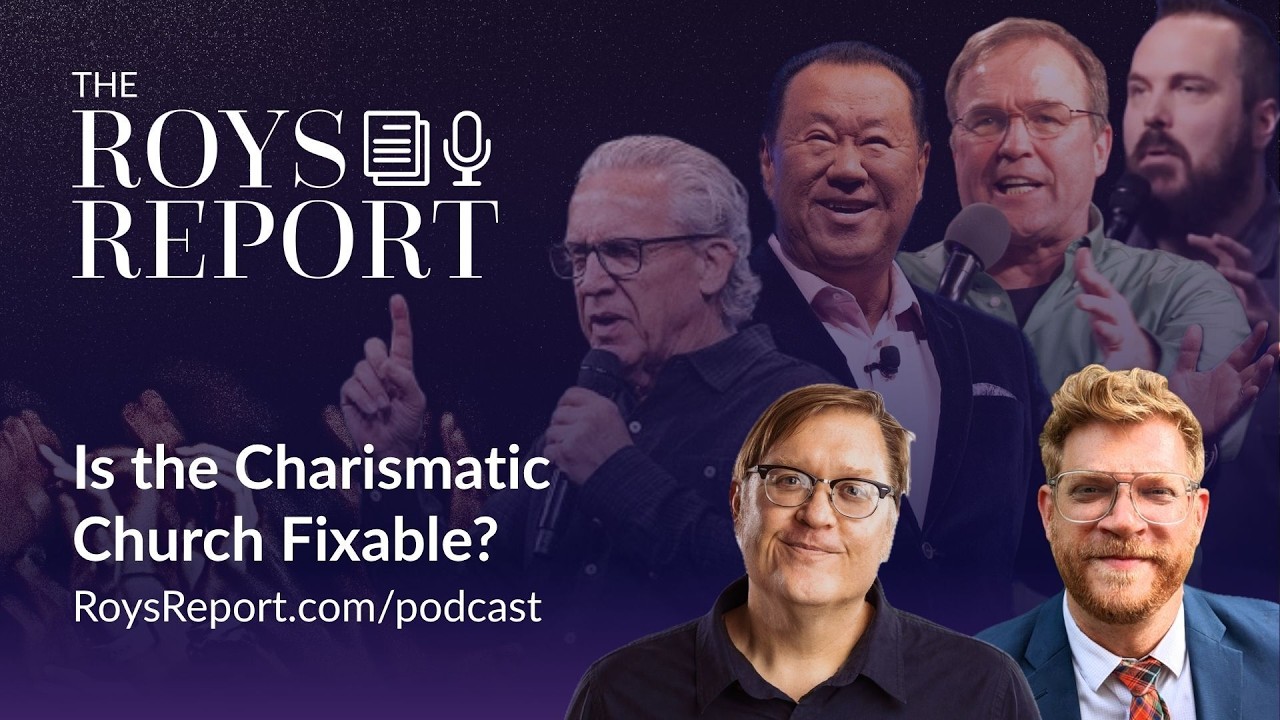
🔗 **Source:** [Is the New Apostolic Reformation (NAR) Broken Beyond Repair?](https://www.youtube.com/watch?v=xEip-R6GJCI)
> [!note]+ Document Notes
> tags: #charismatic-christianity #new-apostolic-reformation #church-governance #religious-abuse #accountability
> author: The Roys Report
> source: YouTube
> reference: https://www.youtube.com/watch?v=xEip-R6GJCI
> date created: 2024-12-19 10:30
>
> # 🏷️ Title: Is the New Apostolic Reformation (NAR) broken beyond repair?
>
<!-- deep-read:sections start -->
## 🧰 Action Inbox
- [H1] Research accountability mechanisms in other religious denominations — comparison study #church-governance
- [H2] Investigate charismatic media ecosystem's role in enabling abuse — media analysis #religious-media
- [H3] Document patterns of spiritual abuse claims in NAR networks — case studies #religious-abuse
## 🧭 Table of Contents
- [[#📝 Summary]]
- [[#📖 Main Content]]
- [[#🗒️ Notes]]
- [[#📚 References]]
- [[#🗣️ Paraphrase]]
- [[#📰 Newsletter]]
- [[#✅ Action Items]]
- [[#🧪 Hypotheses]]
- [[#📊 Methodology]]
- [[#❓ Questions]]
- [[#🔮 Future Research]]
- [[#💡 Implications]]
- [[#🧠 Learning Styles Assessment]]
- [[#📊 Accessibility Assessment]]
- [[#🌍 DEIB Assessment]]
- [[#✅ Logical Validity]]
- [[#🛡️ DARVO Analysis]]
- [[#🎯 Conclusion]]
### 🔗 References
- [The Roys Report](https://www.julieroys.com/)
- [Matthew Taylor's Book: "The Violent Take It by Force"](https://example.com)
## 📝 Summary
- The New Apostolic Reformation (NAR) represents a radical shift in church governance emphasizing modern-day apostles and prophets
- Independent charismatic celebrity culture creates conditions that facilitate clergy sexual abuse and resist accountability
- The movement gained political prominence through connections to Donald Trump, particularly via Paula White Kane
- Structural flaws include autonomous leadership, celebrity culture, and claims of direct divine authority
- Recent scandals at Bethel Church highlight the movement's accountability failures
## 📖 Main Content
The New Apostolic Reformation emerged from 1950s Latter Rain revival movements that taught God would restore the offices of apostle and prophet for end-times revival. Unlike classical Pentecostalism's egalitarian roots, NAR creates hierarchical structures where apostles and prophets claim translocal authority superseding local pastors. This "independent charismatic celebrity culture" combines three problematic elements: non-denominational autonomy, celebrity-driven networks, and claims of direct divine communication. The movement gained political influence when Trump chose Paula White Kane as his religious liaison, leading to widespread prophetic endorsements and January 6th involvement. Accountability mechanisms remain largely horizontal and informal, resembling "Hollywood celebrity culture" more than traditional church governance.
## 🗒️ Notes
#### ⏱️ [00:00](https://youtu.be/xEip-R6GJCI?t=0) — [H1] Introduction to NAR governance crisis
- Key idea: NAR represents the most radical change in church government since Protestant Reformation
- Evidence: C. Peter Wagner quote about "springing off into the 21st century"
#### ⏱️ [05:30](https://youtu.be/xEip-R6GJCI?t=330) — [H2] Bethel Church accountability failures
- Key idea: Recent failures to warn about false prophets demonstrate systemic accountability problems
- Evidence: Secret recording shows leaders unable to articulate any changes after promising accountability
#### ⏱️ [10:45](https://youtu.be/xEip-R6GJCI?t=645) — [H1] Three elements creating abuse-prone culture
- Key idea: Independent + charismatic + celebrity = perfect storm for abuse
- Evidence: "If someone was to sit down in a lab and try and create a religious subculture that would facilitate clergy sexual abuse..."
#### ⏱️ [15:20](https://youtu.be/xEip-R6GJCI?t=920) — [H2] Independent governance problems
- Key idea: Non-denominational autonomy lacks inherited accountability structures
- Evidence: "Building the plane as they fly it" - no generations of lessons learned
#### ⏱️ [18:40](https://youtu.be/xEip-R6GJCI?t=1120) — [H2] Celebrity culture dynamics
- Key idea: Leaders relate as Hollywood celebrities, not accountable colleagues
- Evidence: "Does Matthew McConaughey think he's responsible for Brad Pitt?"
#### ⏱️ [22:15](https://youtu.be/xEip-R6GJCI?t=1335) — [H1] Charismatic authority claims
- Key idea: Leaders claim "superhuman status" and "ontological level of spiritual authority"
- Evidence: Prophets described as "oracles of God" and "channels of divine blessing"
#### ⏱️ [28:30](https://youtu.be/xEip-R6GJCI?t=1710) — [H2] Latter Rain movement origins
- Key idea: 1948 Saskatchewan revival introduced modern apostles/prophets concept
- Evidence: Five-fold ministry based on Ephesians 4, rejected by Assemblies of God in 1950-51
#### ⏱️ [35:10](https://youtu.be/xEip-R6GJCI?t=2110) — [H1] Translocal authority structure
- Key idea: Apostles claim authority superseding local pastors across multiple nations
- Evidence: Ché Ahn's network has 25,000 ministries in 65+ countries - 10x larger than Vineyard
#### ⏱️ [42:00](https://youtu.be/xEip-R6GJCI?t=2520) — [H2] Horizontal accountability failures
- Key idea: Peer accountability works like "accountability partners" - voluntary and informal
- Evidence: When disagreements arise, apostolic council members simply leave rather than enforce discipline
#### ⏱️ [48:25](https://youtu.be/xEip-R6GJCI?t=2905) — [H3] Mafia-like culture comparison
- Key idea: Celebrity culture resembles organized crime more than church governance
- Evidence: "Pay your dues, become a made man or woman, abide by unwritten rules"
#### ⏱️ [52:40](https://youtu.be/xEip-R6GJCI?t=3160) — [H2] Charismatic media ecosystem problems
- Key idea: Movement media enables cover-ups rather than accountability
- Evidence: "Fox News on Christian steroids" - no fact-checking of failed prophecies
#### ⏱️ [58:15](https://youtu.be/xEip-R6GJCI?t=3495) — [H1] Trump connection through Paula White Kane
- Key idea: 2015 Trump campaign elevated charismatic celebrities to national prominence
- Evidence: Paula White Kane became "director of White House faith office" and Trump's primary religious liaison
#### ⏱️ [65:30](https://youtu.be/xEip-R6GJCI?t=3930) — [H1] 2020 election prophecy crisis
- Key idea: Hundreds of prophets predicted Trump victory, creating theological crisis when he lost
- Evidence: Over 60 independent charismatic leaders present at January 6th as "spiritual architects"
#### ⏱️ [72:45](https://youtu.be/xEip-R6GJCI?t=4365) — [H3] Minimal post-January 6th accountability
- Key idea: April 2021 "Prophetic Standards" statement gained few signatures from Trump prophets
- Evidence: Most prophets involved in false Trump prophecies did not sign accountability statement
## 📚 References
- [The Roys Report](https://www.julieroys.com/)
- [Matthew Taylor: "The Violent Take It by Force"](https://example.com)
- [Assemblies of God Statement on Modern Apostles/Prophets (1950-51)](https://example.com)
## 🗣️ Paraphrase
- The New Apostolic Reformation creates a governance structure where self-appointed apostles and prophets claim divine authority over networks of churches, but lack meaningful accountability mechanisms
- This movement combines the worst aspects of celebrity culture, religious authority claims, and institutional independence to create conditions highly conducive to abuse
- Political alignment with Trump elevated previously marginal charismatic leaders to national prominence and created entrepreneurial incentives for increasingly extreme prophetic claims
## 📰 Newsletter
**Church Governance Alert: Understanding NAR Accountability Gaps**
The New Apostolic Reformation represents a significant shift in how some churches approach leadership and authority. Unlike traditional denominational structures with established accountability mechanisms, NAR networks operate through informal celebrity relationships and claims of direct divine authority.
Key concerns include: autonomous leadership structures, horizontal-only accountability, and mixing spiritual authority with political prophecy. Recent events at Bethel Church and post-2020 election prophecy failures highlight these systemic issues.
For church leaders: Consider how your governance structures provide real accountability. For congregants: Understand the difference between spiritual gifting and claims of infallible authority.
Resources: [Learn WordPress](https://learn.wordpress.org/), [Developer Docs](https://developer.wordpress.org/), [WP-CLI](https://wp-cli.org/)
## ✅ Action Items
#### DevRel
- Developer advocacy: Document accountability patterns in open source governance vs. religious movements
- Education: Create workshops on power structures and accountability in distributed organizations
- Community management: Develop frameworks for handling authority claims in technical communities
#### Community
- Maintainers: Research governance templates that prevent single points of failure
- Contributors: Study how celebrity culture affects contribution patterns and project health
- Ecosystem: Analyze cross-project coordination vs. celebrity-driven networks
#### WordPress
- Community: Develop resources on healthy leadership transitions and accountability
- Training: Create lesson plans on power dynamics in volunteer organizations
- Documentation: Update governance documentation to address celebrity culture risks
## 🧪 Hypotheses
- Independent religious movements without denominational oversight are more susceptible to abuse than traditional structures
- Celebrity-driven religious networks create accountability gaps proportional to leader prominence
- Prophetic authority claims reduce effectiveness of peer accountability mechanisms
- Political alignment increases entrepreneurial incentives for extreme religious claims
### 📊 Methodology
- Comparative analysis of abuse rates across different church governance structures
- Network analysis of accountability relationships in charismatic vs. denominational churches
- Content analysis of charismatic media coverage before/after scandals
### ❓ Questions
- What governance structures could provide meaningful accountability for charismatic authority claims?
- How do political alignments affect religious accountability mechanisms?
- Can celebrity-driven religious networks develop effective self-regulation?
### 🔮 Future Research
- Longitudinal study of accountability mechanism effectiveness across religious governance types
- Comparative analysis of similar authority structures in secular organizations
- Investigation of media ecosystem roles in enabling or preventing abuse
### 💡 Implications
- Practice: Religious communities need robust accountability structures independent of celebrity relationships
- Policy: Religious freedom protections may need balance with accountability requirements
- Security: Charismatic authority claims create vulnerabilities exploitable by bad actors
- Education: Religious literacy should include understanding different governance models
### 🧠 Learning Styles Assessment
Reading level estimate: Grade 12-14 (academic interview format)
#### 👀 Visual learners
- Present: YouTube video format with speaker identification
- Improve: Organizational charts showing NAR networks, timeline of movement development
#### 🔊 Aural learners
- Present: Full audio interview available
- Improve: Chapter markers, key concept summaries
#### 🗣️ Verbal learners
- Present: Clear definitions of technical terms, historical analogies
- Improve: Glossary of movement-specific terminology
#### 🧩 Kinesthetic learners
- Present: Interview format allows following logical progression
- Improve: Interactive timeline, case study exercises
#### 🧠 Logical learners
- Present: Historical progression, cause-effect relationships clearly outlined
- Improve: Decision trees showing governance structures, comparison tables
#### 🧑🤝🧑 Social learners
- Present: Interview dialogue format models critical discussion
- Improve: Discussion guides for group analysis
#### 🧘♀️ Solitary learners
- Present: Long-form content suitable for individual study
- Improve: Reflection questions, self-assessment tools
#### 🌿 Naturalistic learners
- Present: Cultural ecosystem analogies used throughout
- Improve: Organizational ecology frameworks
### 📊 Accessibility Assessment
#### Screen reader semantics
- Present: Clear speaker identification in transcript
- Improve: Heading structure for major topic transitions
#### Keyboard navigation
- Present: YouTube standard controls available
- Improve: Timestamp links for section navigation
#### Contrast and readability
- Present: Video meets basic contrast standards
- Improve: High contrast captions option
#### Text resizing and reflow
- Present: YouTube supports zoom functionality
- Improve: Transcript formatting optimization
#### Media and captions
- Present: Full transcript available
- Improve: Professional captions with speaker identification
#### Forms and interactions
- Present: Standard YouTube commenting interface
- Improve: Moderated discussion platform integration
### 🌍 DEIB Assessment
#### Cultural breadth
- Present: Discusses global NAR networks across 65+ countries
- Improve: Include perspectives from non-Western charismatic movements
#### Inclusive language
- Present: Avoids unnecessarily technical jargon, defines key terms
- Improve: Acknowledge positive aspects of charismatic spirituality
#### Neurodiversity support
- Present: Long-form format allows processing at individual pace
- Improve: Content summaries, key point highlighting
#### Representation
- Present: Notes women's leadership roles in NAR
- Improve: Include diverse voices critiquing and defending movement
#### Psychological safety
- Present: Respectful tone toward religious beliefs while critiquing structures
- Improve: Content warnings about abuse discussions
### ✅ Logical Validity
#### Strong reasoning
- Deductive strength: Sound historical progression from Latter Rain to NAR
- Inductive strength: Multiple examples support broader accountability failure pattern
- Causal reasoning: Clear links between structure and abuse vulnerability
- Analogical strength: Hollywood/mafia comparisons illuminate governance dynamics
#### Fallacies
- Possible composition fallacy: Risk of attributing all independent charismatic problems to NAR specifically
- Hasty generalization: Limited discussion of positive accountability examples within movement
#### Tone of voice
- Overall tone: Academic and measured, avoiding sensationalism while maintaining critical stance
### 🛡️ DARVO Analysis
- Deny: NAR leaders deny accountability problems exist or claim persecution
- Attack: Criticism dismissed as "heresy hunting" or anti-charismatic bias
- Reverse victim/offender: Movement portrays itself as persecuted minority
- Emotional cues: Appeals to divine authority shut down criticism
## 🎯 Conclusion
The New Apostolic Reformation's governance structure appears fundamentally flawed due to its combination of celebrity culture, autonomous authority, and claims of direct divine revelation. While individual charismatic practices may be valid expressions of faith, the movement's accountability mechanisms are insufficient to prevent or address abuse. Reform would require either developing institutional structures that constrain celebrity authority or acknowledging that such structures are incompatible with the movement's core theological claims about apostolic and prophetic authority.
## 🧱 Refactor Appendix
### 📚 Literature Split Pad
### [H1] Independent charismatic culture facilitates abuse
> [!quote] Is the New Apostolic Reformation (NAR) broken beyond repair? by The Roys Report via YouTube. Published 2024. Accessed 2024-12-19.
> "If someone was to sit down in a lab and try and create a religious subculture that would facilitate clergy sexual abuse, it'd be hard to do better than independent charismatic celebrity culture."
Combination of autonomy, celebrity status, and divine authority claims creates perfect storm for exploitation.
[view highlight](https://youtu.be/xEip-R6GJCI?t=645) #religious-abuse #accountability
### [H2] NAR represents radical governance shift
> [!quote] Is the New Apostolic Reformation (NAR) broken beyond repair?
> "The new Apostolic Reformation is the most radical change in the way of doing church since the Protestant Reformation."
C. Peter Wagner's movement fundamentally restructures church authority around modern apostles and prophets.
[view highlight](https://youtu.be/xEip-R6GJCI?t=0) #church-governance
---
### 🔖 Atomic Split Pad (Zettel Candidates)
#### [Z1] Celebrity culture undermines religious accountability
- Scope: Independent religious movements without institutional oversight
- Pointer: 18:40 timestamp on Hollywood analogy
- Links: [[Religious-Authority]] [[Accountability-Mechanisms]]
---
## Full Transcript
[00:05] Some churches are governed by bishops,<br>[00:07] some by elders, and some are run by<br>[00:09] their congregation who gather regularly<br>[00:12] and make decisions democratically. But<br>[00:14] since the early 2000s, a growing number<br>[00:17] of charismatic Christians have promoted<br>[00:19] another form of church government,<br>[00:21] apostles and prophets. The<br>[00:23] >> new Apostolic Reformation is the most<br>[00:25] radical change in the way of doing<br>[00:27] church since the Protestant Reformation.<br>[00:29] And that's what we're that's what we're<br>[00:31] dealing with. That's what we're<br>[00:31] springing off into the 21st century.<br>[00:35] >> This idea was popularized by C. Peter<br>[00:37] Wagner, a Fuller theological seminary<br>[00:40] professor who died in 2016. The concept<br>[00:43] of churches governed by special<br>[00:45] supernaturally empowered men and women<br>[00:47] raises lots of theological questions and<br>[00:50] lots of questions about accountability.<br>[00:53] The issue has become especially urgent<br>[00:55] as reports of abuse and cover up have<br>[00:57] multiplied within the movement.<br>[00:59] >> This guy was my white rabbit. He's the<br>[01:02] rabbit I chase down the rabbit hole to<br>[01:03] see how bad things are in the cover up<br>[01:05] culture inside the charismatic church.<br>[01:07] The connections to all these different<br>[01:09] figures and years of stuff, generations<br>[01:13] of abusers.<br>[01:14] >> We've moved to an increase in<br>[01:16] accountability. This morning is about<br>[01:18] >> just last month, Bethl Church in<br>[01:20] Reading, California, promised increased<br>[01:22] accountability after admitting repeated<br>[01:25] failure to warn the church about known<br>[01:27] fake prophet Shawn BS. But then in a<br>[01:30] secret recording of a family meeting<br>[01:33] obtained by the Roy report, the church's<br>[01:35] apostle and prophet couldn't articulate<br>[01:38] any changes. We we absolutely listen bro<br>[01:41] we have don't know the answer to that<br>[01:43] question and this is one of the biggest<br>[01:45] questions we have so this is a great<br>[01:48] question that we are just beginning to<br>[01:50] ask it so we don't have an answer to<br>[01:52] that question and it needs to be<br>[01:53] answered<br>[01:53] >> so what's the history of this radical<br>[01:55] change in church government and can this<br>[01:58] form of church government be checked and<br>[02:00] balanced or is it fundamentally flawed<br>[02:02] and beyond accountability in this<br>[02:05] podcast Daniel Sllamon senior reporter<br>[02:07] and editor at the Royy's report helps us<br>[02:10] answer these questions in an interview<br>[02:12] with Matthew Taylor. Taylor is a<br>[02:14] historian and author of the violent take<br>[02:17] it by force, the Christian movement that<br>[02:19] is threatening our democracy. He's also<br>[02:22] the foremost expert on the charismatic<br>[02:24] Christian movement in America. Welcome<br>[02:26] to the Roy, a podcast dedicated to<br>[02:29] reporting the truth and restoring the<br>[02:31] church. I'm Julie Roy.<br>[02:45] Well, joining me now is one of the<br>[02:46] newest additions to the Roy report,<br>[02:48] Daniel Sllamon. Daniel is not just a<br>[02:51] reporter and editor at the Royport, he's<br>[02:54] also an author and holds a doctorate in<br>[02:56] American studies from the University of<br>[02:58] H Highleberg in Germany. So, Daniel,<br>[03:01] welcome. It's a pleasure to have you<br>[03:02] join me.<br>[03:03] >> Oh, it's great to be on the podcast. and<br>[03:05] this is your first time on the Royy's<br>[03:07] Report podcast. So, this is kind of<br>[03:09] start<br>[03:10] >> your maiden voyage and it is really<br>[03:12] great having you on staff. We've enjoyed<br>[03:14] so much your reporting and your editing<br>[03:17] and now you're uh interviewing and I'm<br>[03:20] just so excited to have somebody too who<br>[03:23] has the historical background that you<br>[03:25] do and I think you're the only Royport<br>[03:28] staff member who actually has a<br>[03:30] doctorate. So, that's kind of a feather<br>[03:31] in your cap. That's it's a bunch of<br>[03:33] work, but I have found it really helpful<br>[03:36] to add context to to the day-to-day<br>[03:39] stuff to know um you know, not just<br>[03:42] what's happening, but have this larger<br>[03:44] picture of where things come from and<br>[03:47] the the old debates that are new again.<br>[03:52] So, when you first mentioned Matthew<br>[03:53] Taylor in I believe it was one of our<br>[03:56] Monday morning editorial meetings and<br>[03:58] Julia Dean, one of our editors, just got<br>[04:01] really excited and animated and the two<br>[04:03] of you were just talking on and on about<br>[04:04] Matthew Taylor and what an expert he is<br>[04:07] in the charismatic movement and how he's<br>[04:10] just this wealth of information. What is<br>[04:13] it about Matthew that makes him such an<br>[04:15] expert and why were you excited to talk<br>[04:18] to him about this? Yeah, he's been<br>[04:20] following this movement and this really<br>[04:23] this wing of the charismatic movement<br>[04:26] that that has this idea of a new new<br>[04:29] church government, new system of<br>[04:30] apostles and prophets. He's been<br>[04:32] following it so closely for a while and<br>[04:36] it's actually kind of hard to follow for<br>[04:38] historians. I think historians love<br>[04:41] primary documents, you know, so old<br>[04:44] texts is really stuff you can find in<br>[04:46] libraries and and this new newer<br>[04:50] movement is really podcasts,<br>[04:53] conferences, ongoing conversations,<br>[04:56] social media. So, it's been a little bit<br>[04:59] a little bit tricky for for a lot of<br>[05:01] historians to kind of get a finger on.<br>[05:03] And Matthew is is a great scholar. He's<br>[05:07] very rigorous. He's very um he's really<br>[05:11] interested in following all the tendrils<br>[05:14] um of of a movement and has just done a<br>[05:17] great job at becoming kind of the go-to<br>[05:21] explainer of the new apostolic<br>[05:23] reformation and and and newer iterations<br>[05:26] of the charismatic movement. He's he's<br>[05:28] been really helpful to me and I think to<br>[05:31] to many people as they try and<br>[05:33] understand um um these folks. I have a<br>[05:37] real appreciation for history. In fact,<br>[05:38] something that people probably don't<br>[05:40] know is that was my major in college at<br>[05:43] Weaten College was history. Although<br>[05:45] some of that was me just figuring out<br>[05:47] how do I get out of college as quickly<br>[05:48] as I can at a certain point after<br>[05:51] changing changing my major like five<br>[05:53] times. I'm like, I just need to graduate<br>[05:55] then. But I had taken all these history<br>[05:57] courses because they tell stories.<br>[05:58] Stories about people that help you<br>[06:00] understand the present. And you really<br>[06:02] can't understand the present unless you<br>[06:04] have it rooted in understanding of the<br>[06:07] past. And so these kind of conversations<br>[06:10] help us kind of put that all together<br>[06:12] and say, "Oh, this is how we arrived at<br>[06:15] this place." and even the new uh<br>[06:17] apostolic, you know, movement which a<br>[06:20] lot of people calling NAR um this whole<br>[06:22] revolution. Um it's something that in<br>[06:25] some ways is very new, but also in some<br>[06:28] ways is just a progression of a lot of<br>[06:31] that's been there before. I'm curious as<br>[06:33] you talk to him, and I know you grew up<br>[06:36] in the charismatic movement, right?<br>[06:38] >> Part of it. Yeah. So, you're you're<br>[06:40] familiar with this movement, but I'm<br>[06:42] curious as you were talking to him, did<br>[06:44] you start to put together some<br>[06:46] connections you had never made before?<br>[06:48] >> You know, history is really good at at<br>[06:50] tracking both change and continuity,<br>[06:52] which just as some anyone living in the<br>[06:55] present. Those can both be really hard<br>[06:58] to get perspective on. Is this brand<br>[07:00] new? Is this has this always been this<br>[07:03] way?<br>[07:04] uh what part of this is old and and and<br>[07:06] and what part of this is new. Um and and<br>[07:10] yeah, I think um you know, I I really<br>[07:14] appreciated Matthew sort of explaining<br>[07:17] to me some of the older histories of<br>[07:20] this debate. So, some of this stuff<br>[07:22] about apostles and prophets goes back to<br>[07:24] the 1950s, which is before my time. And<br>[07:28] I I didn't know um that that history and<br>[07:32] that sort of longer story of the<br>[07:36] question of what does accountability<br>[07:38] look like if you believe that God still<br>[07:42] gives people this kind of this kind of<br>[07:44] gifting.<br>[07:45] >> Well, they're hearing directly from God.<br>[07:46] So why need any accountability, right? I<br>[07:49] mean it's the direct download. So to<br>[07:51] question them is to question God in a<br>[07:54] lot ofa cases. But of course, therein<br>[07:57] lies the problem. Thank you so much for<br>[07:59] putting this uh interview together. I'm<br>[08:02] sure it's going to be fascinating.<br>[08:03] Really looking forward to it.<br>[08:05] >> Thanks.<br>[08:08] >> So, I wonder um if you can just start<br>[08:10] with you you told me when we talked the<br>[08:12] other day, I interviewed you about some<br>[08:14] of the stuff that's going on at at at<br>[08:16] Bethl and and struggles over<br>[08:18] accountability there. And you said if<br>[08:20] someone was to sit down in a lab and try<br>[08:23] and create a religious subculture that<br>[08:25] sort of would facilitate um clergy<br>[08:28] sexual abuse that you know it'd be hard<br>[08:31] to do better than uh independent<br>[08:34] charismatic celebrity culture and I just<br>[08:36] can you unpack that like what is what is<br>[08:39] uniquely<br>[08:41] problematic from your perspective about<br>[08:43] this religious culture every culture has<br>[08:47] uh abuse every religious culture has<br>[08:50] accountability challenges, but but you<br>[08:53] seem to think that this one is uh more<br>[08:55] challenging than most. Can you can you<br>[08:57] talk about that?<br>[08:58] >> Yeah, let me let me unpack it just by<br>[09:00] unpacking that phrase independent<br>[09:02] charismatic celebrity culture because I<br>[09:03] think if if we if we break apart each of<br>[09:06] those words, I think it will help to<br>[09:07] understand. So when we're using<br>[09:09] independent here, it's a basically a<br>[09:10] synonym for non-denominational, right?<br>[09:12] though these are churches, ministries,<br>[09:16] sometimes transnational networks that<br>[09:19] are not structured around traditional<br>[09:22] denominations. And I think a lot of<br>[09:24] times when we think about<br>[09:26] non-denominational, we think of that as<br>[09:27] like the absence of structure. This is<br>[09:29] actually a pretty highly structured<br>[09:31] culture of non-denominationalism.<br>[09:33] But it it it really does emphasize<br>[09:35] autonomy, the autonomy of individual<br>[09:37] leaders, the autonomy of individual<br>[09:39] churches. And the the culture of<br>[09:42] autonomy in that space is really kind of<br>[09:46] built around these kind of celebrity<br>[09:49] characters. And they they are um uh<br>[09:53] there's a whole kind of charismatic<br>[09:55] media ecosystem that supports and<br>[09:58] bolsters that celebrity culture. And so<br>[10:01] you've got um Charisma News, you've got<br>[10:04] uh all these kind of podcasts, all these<br>[10:06] YouTube channels, prophecy channels,<br>[10:08] televangelism channels, a lot of the the<br>[10:11] leaders in that world, the celebrities<br>[10:13] in that world, they they're frequently<br>[10:14] publishing excerpts from their books.<br>[10:16] Their books are getting blurbed by each<br>[10:18] other. And so it's a very kind of<br>[10:19] collaborative chummy almost a Hollywood<br>[10:22] kind of culture among the leaders in<br>[10:25] that kind of independent charismatic<br>[10:27] space. M<br>[10:28] >> and then there's the charismatic piece,<br>[10:30] right? And so the charismatic piece says<br>[10:33] that those leaders are deemed by their<br>[10:36] communities to be especially gifted by<br>[10:38] God, especially to hear directly from<br>[10:41] God. Um and many people in that space<br>[10:43] actually identify explicitly as<br>[10:45] prophets. Not I have a gift of prophecy,<br>[10:48] not oh I sometimes get these little<br>[10:50] insights from God. They they will say I<br>[10:52] am a prophet. I have messages that I<br>[10:55] receive directly from God that I then<br>[10:57] deliver to individuals or communities or<br>[10:59] even to nations. They think about it<br>[11:01] much more akin to the way that most<br>[11:03] Christians would think about the Hebrew<br>[11:04] Bible prophets,<br>[11:06] >> right? As opposed to kind of a New<br>[11:07] Testament. know there there might be<br>[11:09] people with a gift of prophecy in a<br>[11:11] congregation or something that that's<br>[11:12] more kind of traditional Pentecostalism<br>[11:14] where you have prophecy as one gift in a<br>[11:17] kind of constellation of different gifts<br>[11:19] and but but one that is valued and they<br>[11:21] would believe and they would say oh yeah<br>[11:22] some people have a gift of prophecy in<br>[11:24] the independent charismatic space<br>[11:25] especially it's that there are people<br>[11:28] who hold the office of the prophet in<br>[11:32] governing and guiding the church and so<br>[11:34] when you put those three things together<br>[11:36] so already in non-denominational spaces<br>[11:38] there tends to be very poor<br>[11:39] accountability structures because it's<br>[11:40] all ad hoc. It's kind of right. They're<br>[11:42] constantly reinventing the wheel,<br>[11:44] rebuilding the new kind of mega church<br>[11:46] and the governance structures that<br>[11:48] attach to that are not inherited from<br>[11:50] generations and centuries of bad<br>[11:54] experiences leading to different<br>[11:56] lessons, right? It's basically like<br>[11:57] they're just kind of building it as they<br>[11:59] go. They're building the plane as they<br>[12:00] fly it. And so the the the intrinsic<br>[12:03] accountability to any denomination is<br>[12:05] pretty or any individual congregation is<br>[12:07] pretty low. And then you have these<br>[12:08] celebrity leaders who tend to kind of<br>[12:11] exist in this echelon of other<br>[12:13] celebrities who do not see themselves as<br>[12:17] holding those people accountable. Right?<br>[12:19] Does Matthew McConna think he's<br>[12:21] responsible for Brad Pitt? Not really.<br>[12:23] No. But they might work together on some<br>[12:25] things, right? but they don't think of<br>[12:26] themselves as like being a part of the<br>[12:28] same entity or organism that needs to<br>[12:31] kind of hold each other accountable in<br>[12:32] the way that say two pastors at the same<br>[12:34] church might think of that way. And then<br>[12:36] there's that charismatic piece. And a<br>[12:38] lot of times what you see in these um<br>[12:41] scandals that break is yes there's often<br>[12:43] sexual abuse. Yes, there's often<br>[12:45] financial abuse. But almost always<br>[12:46] there's a spiritual component to this<br>[12:49] abuse. And it's often through these<br>[12:52] leaders claiming that they have these<br>[12:54] special gifts from God, the special<br>[12:56] messages from God. And that becomes<br>[12:58] leverage in these power dynamics in<br>[13:02] relationships that they have often with<br>[13:03] people within their congregation who<br>[13:06] have far less power, far less<br>[13:08] connections globally than they do and<br>[13:10] who uh are in some ways in hawk to them.<br>[13:13] They see them as as channels of the<br>[13:16] divine in their lives. And so you've<br>[13:18] elevated people to not just a celebrity<br>[13:21] status, but almost a kind of superhuman<br>[13:23] status, kind of a different onlogical<br>[13:25] level of spiritual authority.<br>[13:27] >> And then there's zero accountability<br>[13:29] structure to hold them in place. And<br>[13:31] then that celebrity culture has tended<br>[13:33] to kind of it's a kind of goal along to<br>[13:35] getalong culture, right? They don't they<br>[13:37] if if you<br>[13:38] >> really between the leaders<br>[13:40] >> among the celebrities. Yeah. Right. Um<br>[13:42] because they're constantly like doing<br>[13:44] these collaborative things and oh, we're<br>[13:45] all going to speak at a conference<br>[13:46] together. Oh, we're all going to blur<br>[13:47] each other's books. And so it's it's<br>[13:49] pretty chummy, but then they they don't<br>[13:52] think of themselves as needing to call<br>[13:53] each other out. Um, and then they're all<br>[13:56] autonomous. And so they're it's a I<br>[13:59] think it really is if if you were trying<br>[14:00] to kind of sit down and and blow out all<br>[14:04] all the kind of structures that tend to<br>[14:06] hold religious leaders accountable.<br>[14:09] I'm not so much in intentionally. I<br>[14:11] don't I don't think there's some great<br>[14:12] intentionality behind this, some great<br>[14:14] plan, but uh that that whole culture has<br>[14:17] kind of evolved or maybe even devolved<br>[14:19] into a a structure and a and a set of<br>[14:23] relationships that I think make clergy<br>[14:26] sexual abuse not only likely but um<br>[14:28] almost inevitable and um that make it um<br>[14:32] very very difficult to police and hold<br>[14:34] accountable when it occurs. Can you<br>[14:36] explain a little bit this this idea that<br>[14:39] leaders have some different spiritual<br>[14:43] status or you you said ontological or<br>[14:46] almost superhuman. I mean obviously<br>[14:49] you know the there's this deep<br>[14:51] reformation idea of a priesthood of all<br>[14:53] believers and and and evangelicalism<br>[14:56] always emphasizes that like everyone has<br>[14:58] to have a personal relationship with<br>[15:00] Jesus. you know, and Pentecostalism as<br>[15:02] as as I've experienced, as I understand<br>[15:04] it, it also has this e sort of even<br>[15:07] emphasizes that, right? Like anybody can<br>[15:09] hear from the spirit. Uh God might give<br>[15:13] a gift to this person who has no<br>[15:17] cultural capital, who has no sort of<br>[15:19] social power. And and there's a there's<br>[15:21] a kind of um kind of history of radical<br>[15:24] egalitarianism in this theology.<br>[15:26] Obviously, that's not the only way to<br>[15:28] read those things, but that's deep in<br>[15:30] there. So, so how can people<br>[15:34] in those movements see a leader as<br>[15:37] somehow of a totally different kind of<br>[15:40] kind of human even?<br>[15:42] >> Yeah, it's it's a great question. I<br>[15:43] think your your description there is<br>[15:45] actually very accurate when it comes to<br>[15:47] classical Pentecostalism.<br>[15:49] >> So, right, so if you think about the<br>[15:50] origins of Pentecostalism, right, it<br>[15:52] starts really on the margins of American<br>[15:54] society, not just margins of American<br>[15:56] society, the margins of Korean society,<br>[15:58] the margins of Swedish society, right?<br>[16:00] like it it kind of Pentecostalism in<br>[16:02] like in the first decade of the 20th<br>[16:03] century just kind of emerges seemingly<br>[16:05] everywhere at once and and then kind of<br>[16:08] spreads around the globe very rapidly.<br>[16:10] Um and yeah, it did have a very<br>[16:12] egalitarian character to it, right?<br>[16:13] Anyone can operate in the spirit,<br>[16:15] especially for early Pentecostalism,<br>[16:17] anyone can be filled with the Holy<br>[16:19] Spirit and speak in tongues, right? And<br>[16:20] there and it has kind of a a dignifying<br>[16:23] quality to it that is accessible to<br>[16:25] especially in the US people of color,<br>[16:27] right? is a very multi-thnic community<br>[16:29] very early on within Pentecostalism.<br>[16:32] Well, a lot of what that we're watching<br>[16:34] happen right now um in the independent<br>[16:37] charismatic space is downstream of<br>[16:39] Pentecostalism, but it's even more<br>[16:41] downstream of a Pentecostal revival<br>[16:44] movement in the mid 20th century called<br>[16:46] the latter rain or the new order of the<br>[16:48] latter reign.<br>[16:49] >> And this is a revival that broke out in<br>[16:52] uh Saskatchewan, Canada uh in 1948. um<br>[16:55] not coincidentally right right around<br>[16:56] the time of the founding of the state of<br>[16:58] Israel right the end of World War II the<br>[17:01] the formation of the UN right it's kind<br>[17:03] of this cataclysmic upheaval moment<br>[17:05] >> prophetic timeline idea<br>[17:06] >> and and the latter rain leaders really<br>[17:08] believed that they were kind of the new<br>[17:10] spiritual Israel right the the physical<br>[17:12] Israel is being reconstituted and they<br>[17:13] believe they were the new spiritual<br>[17:14] Israel and even the name latter rain is<br>[17:16] a reference to weather patterns in<br>[17:18] Israel that are sometimes spoken about<br>[17:19] in the Hebrew Bible um and so the the<br>[17:22] belief though was that this was a<br>[17:23] renewal movement<br>[17:25] that was going to revitalize<br>[17:26] Pentecostalism and really bring about<br>[17:28] this great end times revival that there<br>[17:31] would be this massive upheaval in the<br>[17:33] church that would u bring millions even<br>[17:36] billions of people ultimately into<br>[17:38] charismatic Christianity and one of the<br>[17:41] formulations that became very popular in<br>[17:43] these latter circles it's a it's an<br>[17:45] exogesis of the book of Ephesians<br>[17:48] especially Ephesians chapter 4 where the<br>[17:51] author of Ephesians is describing these<br>[17:54] five kind of roles or or or gifts<br>[17:57] giftings that God gave the church that<br>[17:59] Jesus gave the church upon Jesus's<br>[18:00] ascension to heaven and they are<br>[18:02] apostles, prophets, evangelists,<br>[18:04] pastors, and teachers. Now, most<br>[18:06] Christians have read that for centuries<br>[18:08] and there's not even a speed bump,<br>[18:10] right? Like, oh, oh, okay. Right. Yeah.<br>[18:11] Those are all forms of leadership that<br>[18:13] we have seen in the church. But most<br>[18:15] forms of Christianity would say you have<br>[18:17] evangelists and pastors and teachers.<br>[18:19] Apostles and prophets were something<br>[18:20] special for the early church. But in<br>[18:22] these latter reign circles, they came to<br>[18:24] believe that part of this end times<br>[18:26] revival was that God would reconstitute<br>[18:28] the offices of the apostle and the<br>[18:30] prophet and that those would become new<br>[18:32] leadership roles that would restructure<br>[18:35] and even kind of spur on this great<br>[18:37] revival. And so this ultimately be<br>[18:40] starts getting talked about as the<br>[18:41] five-fold ministry, right? Because<br>[18:42] there's five of these gifts, but it's<br>[18:44] really about the apostles and the<br>[18:45] prophets. The mainstream Pentecostal<br>[18:48] denominations utterly reject this idea.<br>[18:50] In fact, the Assemblies of God, the<br>[18:51] largest global Pentecostal denomination,<br>[18:53] I think it was 1950 or 1951, issues an<br>[18:56] entire statement saying, "We we denounce<br>[18:58] this idea of modern-day apostles and<br>[19:00] prophets." And so, what happened was<br>[19:02] these latter rain leaders left the<br>[19:04] Pentecostal denominations and migrated<br>[19:06] out into these more non-denominational<br>[19:07] spaces. And these latter ideas have just<br>[19:10] fueled all this growth, all this ferment<br>[19:12] in that non-denominational charismatic<br>[19:14] space since the 1950s really. Um and and<br>[19:17] you've got all these leaders who are<br>[19:18] kind of steeped in these ideas, steeped<br>[19:20] in the ideas of apostles and prophets<br>[19:22] and an end times revival. And that has<br>[19:24] kind of become one of the major cultural<br>[19:27] governing and guiding forces of the<br>[19:29] independent charismatic space. Even as<br>[19:31] far like groups like Hillong Church<br>[19:33] downstream of the latter rain, New<br>[19:35] Apostolic Reformation downstream of the<br>[19:37] latter rain, Bethl Church, uh the<br>[19:39] International House of Prayer, Kansas<br>[19:40] City, all very influenced by these<br>[19:42] latter rain ideas. But even if you go<br>[19:45] back and read the the very early latter<br>[19:48] reign documents, they're talking about<br>[19:50] especially the apostles and prophets as<br>[19:52] having an almost a quality of being<br>[19:54] oracles of God,<br>[19:56] >> right? that they they are these channels<br>[20:00] of divine direct channels of divine<br>[20:02] blessing, divine power, divine anointing<br>[20:05] that uh I mean just just think about the<br>[20:08] the the kind of acclaim, the the the<br>[20:11] honor, the dignity that attaches to the<br>[20:13] term apostle in in the Christian<br>[20:15] tradition and then imagine that you're<br>[20:17] not talking about Peter or Paul, but<br>[20:19] you're talking about Joe the pastor down<br>[20:22] the street, right? And so suddenly<br>[20:24] you're you're pushing people up into<br>[20:26] this more divine realm. These people<br>[20:28] almost take on a kind of mediatorial<br>[20:31] quality where they are the person who is<br>[20:34] directly channeling the voice of God to<br>[20:36] their community and they are um at least<br>[20:40] with these circles believed to have also<br>[20:41] miraculous power that attaches to those<br>[20:44] callings and those gifts. And so yeah,<br>[20:47] it it is a different kind of<br>[20:49] countercurrent to the kind of typical<br>[20:51] Protestant priesthood of all believers,<br>[20:54] right? But that's not that unusual<br>[20:56] within Protestantism. I mean, I've been<br>[20:57] in mainline Protestant churches that<br>[20:58] thought you have to be you have to have<br>[21:00] a seminary degree to have any<br>[21:02] theological insights, right? So we we<br>[21:04] always are doing this kind of<br>[21:05] hierarchical thing. For them, it's much<br>[21:07] more structured around charismatic<br>[21:09] gifting and charismatic kind of<br>[21:11] conceptions of anointing. So, one of the<br>[21:13] things you'll hear, I think, especially<br>[21:16] with people talking about themselves as<br>[21:19] apostles or people talking about other<br>[21:20] people as apostles, you'll hear uh about<br>[21:23] the importance of submission and the<br>[21:26] importance of covering. That sounds like<br>[21:30] there should be like more<br>[21:31] accountability. How How does it actually<br>[21:33] work out? Right? If I say like, "Oh, I'm<br>[21:35] under an apostle." I I I I think I would<br>[21:38] be telling you, you know, I'm I'm extra<br>[21:42] accountable. I'm not just out here<br>[21:43] reading scripture on my own like I'm<br>[21:45] submitted to to somebody. What do what<br>[21:47] do we actually see about how authority<br>[21:50] and accountability works uh in these um<br>[21:54] places where there are where there is<br>[21:56] the office of apostle and the office of<br>[21:58] prophet. So I think we need to be<br>[22:00] nuanced and recognize this is always a<br>[22:03] continuum and there there the what<br>[22:05] happened was these latter rain ideas<br>[22:07] kind of filtered down through the<br>[22:09] decades but they got modified and kind<br>[22:12] of tweaked along the way in a lot of<br>[22:14] different directions. And so while that<br>[22:16] kind of deep apostles and prophets<br>[22:19] five-fold ministry current is there,<br>[22:22] it's going into all these different<br>[22:23] tributaries, right? And so Bethl has a<br>[22:25] slightly different version of apostles<br>[22:26] and prophets versus the New Apostolic<br>[22:27] Reformation versus International House<br>[22:29] of Prayer in Kansas City. As far as I<br>[22:31] know, Hillsong never even adopted the<br>[22:32] Apostles and Prophet stuff, but they<br>[22:34] liked a lot of the other Laterine ideas,<br>[22:35] right? So it's it's it it's variable but<br>[22:38] the the the basic conception of it is<br>[22:41] that the apostles and prophets have been<br>[22:44] anointed for the leadership of the<br>[22:47] church in this era and that they their<br>[22:50] authority is transllocal. So it<br>[22:53] supersedes the authority of any given<br>[22:55] pastor. Right? Because the pastor is a<br>[22:58] shepherd of their congregation. The<br>[23:00] teacher teaches the church, maybe a lot<br>[23:03] of different churches, but has kind of a<br>[23:04] a kind of uh informational role, right?<br>[23:07] The evangelist is building the church,<br>[23:09] but then they like to use military<br>[23:11] analogies, and they'll talk about<br>[23:12] apostles as generals in this in this or<br>[23:15] or they'll sometimes use the u the<br>[23:17] analogy of of the hand, right? Because<br>[23:19] it's five-fold ministry, right? And<br>[23:21] you've got the different the different<br>[23:22] fingers, but the apostles the thumb. The<br>[23:24] apostle is the one that touches all the<br>[23:25] fingers, right? Um, and then the<br>[23:27] prophet, again, you got this idea of of<br>[23:31] oracles of God. And sometimes I I've<br>[23:33] even heard some of these prophets use<br>[23:35] that and talk about, I have an oracular<br>[23:37] authority or I am an oracle of God. Um,<br>[23:41] and and so when you start talking that<br>[23:43] way though, suddenly those people are<br>[23:44] elevated. And what often occurs in this<br>[23:47] theology or in the way that it works out<br>[23:49] practically is the apostles and prophets<br>[23:52] tend to be grouped together. They're<br>[23:53] slightly differentiated. The apostles<br>[23:55] tend to be more the big the builders,<br>[23:57] the entrepreneurial figures who are<br>[23:59] always starting new movements, starting<br>[24:01] new churches, starting new uh prayer<br>[24:03] movements or kind they like to have a<br>[24:05] lot of initiatives, a lot of ideas. And<br>[24:07] then the prophets are kind of counselors<br>[24:09] who hear from God, who see and they'll<br>[24:12] often if if if the um apostles are the<br>[24:15] generals, they'll talk about the<br>[24:16] prophets as kind of military<br>[24:18] intelligence, right? They they they get<br>[24:20] to see the plans of the enemy. they they<br>[24:22] see into the spiritual realm, see the<br>[24:24] work of Satan, but then also hear<br>[24:25] directly from God. And when you when you<br>[24:28] conceive of people that way, right?<br>[24:30] Well, if you're a pastor, you just got<br>[24:32] this little local authority. But the<br>[24:34] apostles and prophets, they have this<br>[24:36] translocal, even global authority. And<br>[24:38] you'll hear sometimes even they'll<br>[24:40] they'll talk about somebody has an<br>[24:41] apostolic anointing over a nation,<br>[24:44] right? They are the apostle over that<br>[24:46] nation or apostle over that city, right?<br>[24:48] Right. And so suddenly they they they<br>[24:50] are claiming a level of authority that<br>[24:52] supersedes any other organizational<br>[24:54] church organizational structure within<br>[24:56] that. And some of these apostolic<br>[24:58] networks that they have formed. I mean<br>[25:00] Kayon who is one of the major new<br>[25:02] apostolic reformation apostles who's<br>[25:03] running for governor of California right<br>[25:05] now. He has a network of 25,000<br>[25:08] ministries in his apostolic network. All<br>[25:10] looking to him. They call him Papa Chay<br>[25:12] as their their spiritual father who is<br>[25:14] the apostle over their network. and that<br>[25:16] those those 25,000 ministries are spread<br>[25:19] all over the globe in 65 different<br>[25:21] countries or more, right? And so that is<br>[25:24] an amount of power and authority nested<br>[25:27] in one single person that I don't think<br>[25:30] you can find anywhere in global<br>[25:32] Christianity perhaps outside of maybe<br>[25:34] kind of the different uh orthodox<br>[25:36] churches or the pope in Catholicism. I<br>[25:39] mean, Cheayon has it's just just to give<br>[25:41] you an illustration. Most people have<br>[25:43] heard of the vineyard and Chayon came<br>[25:45] out of the vineyard. The vineyard<br>[25:47] globally has about 25,000 or 2500<br>[25:50] churches.<br>[25:52] Most people have never heard of Harvest<br>[25:53] International Ministry, Chayon's<br>[25:55] apostolic network. It's 10 times the<br>[25:57] size of the vineyard. And all of those<br>[25:59] people are not bound to kind of the the<br>[26:02] governance structures of the vineyard<br>[26:03] church. They're bound to Chayon. And<br>[26:06] they look to him. and he appoints the<br>[26:08] other apostles. And so in that world<br>[26:10] they would say they would look to the<br>[26:12] Bible and say, "Well, apostles are the<br>[26:14] ones who hold other apostles<br>[26:15] accountable." Other people don't hold<br>[26:17] apostles accountable. Apostles hold<br>[26:19] apostles accountable. Prophets hold<br>[26:21] prophets accountable. And so that they<br>[26:23] they emphasize the lateral forms of<br>[26:28] relationship and accountability, but the<br>[26:30] people underneath those people say they<br>[26:32] have authority. And so that it it's not<br>[26:34] a it's not a democratic system in any<br>[26:37] way. In fact, it's much more it's not<br>[26:38] even an authoritarian or autocratic<br>[26:40] system in that there's not just one<br>[26:41] person, right? It's much more of an<br>[26:43] oligarchic system where there are<br>[26:46] certain spiritual oligarchs, these<br>[26:48] apostles and prophets and revivalists,<br>[26:50] the kind of celebrity the A-list<br>[26:52] celebrity class who hold this uh kind of<br>[26:56] superior status and and not not just<br>[27:00] like the community thinks that and<br>[27:01] they're kind of humble people that they<br>[27:02] no, they claim that they they will say<br>[27:05] this is my authority. This is the<br>[27:06] anointing God has put on me. And when<br>[27:09] you have somebody claiming that, right,<br>[27:11] like and then and then they come along<br>[27:12] and they're in a one-on-one conversation<br>[27:15] with an attractive young female and they<br>[27:17] say, "Hey, I have a special word for<br>[27:19] you." Right? You can imagine how easily<br>[27:22] that would spiral out into situations of<br>[27:25] abuse and harm. Um and and and it would<br>[27:29] be very very hard to hold that person<br>[27:30] accountable because you would need to<br>[27:32] unite a bunch of other apostles. And<br>[27:34] even then, what what's the<br>[27:36] accountability mechanism? If if if all<br>[27:38] if a bunch of apostles call that person<br>[27:40] out, they're just calling them out.<br>[27:42] >> And in a horizontal relationship, like<br>[27:45] that's pretty informal in practice<br>[27:48] between a prophet and another prophet or<br>[27:50] an apostle and another apostle. I mean,<br>[27:51] it's interesting all the metaphors you<br>[27:53] use like military intelligence like<br>[27:56] military intelligence sometimes does<br>[27:58] stuff wrong and like there is a<br>[28:01] reporting structure, right? There's a<br>[28:03] there's someone who says, "Hey, military<br>[28:04] intelligence, you are doing a bad job,<br>[28:06] right? or or maybe you're great at<br>[28:08] military intelligence, but we hate, you<br>[28:10] know, your gambling addiction and how<br>[28:12] it's caused other kinds of problems or<br>[28:14] whatever. And even, you know, um<br>[28:18] um in the in the Roman Catholic Church,<br>[28:19] like bishops have apostolic authority.<br>[28:21] That's how they would talk about it. And<br>[28:22] and sometimes are over a whole nation,<br>[28:26] but like there are mechanisms in place<br>[28:29] that that that like a a bishop can be<br>[28:32] reported for something uh in the in the<br>[28:34] Roman Catholic Church. Um,<br>[28:37] uh, how does that how does it work at<br>[28:39] the at the peer-to-peer accountability<br>[28:43] in practice with apostles and prophets?<br>[28:46] >> I mean, again, there's a lot of<br>[28:47] variability, but I would say it works<br>[28:51] the way that many evangelicals will<br>[28:53] think accountability partners work.<br>[28:55] >> It's kind of relational. I'm going to<br>[28:57] sit down over coffee and just tell you<br>[28:59] my concerns and then you can take them<br>[29:00] or leave them. and and and that there is<br>[29:03] there could be a moral or ethical<br>[29:06] obligation for confrontation,<br>[29:09] >> but then there's no nothing no pragmatic<br>[29:12] implementation<br>[29:14] of that beyond<br>[29:16] disassociation,<br>[29:18] right? And so in in that world, in that<br>[29:20] kind of celebrity culture, frankly, it<br>[29:24] it it's become it because there are not<br>[29:26] institutions to structure it.<br>[29:28] >> Mhm.<br>[29:29] >> Because there are not these kind of<br>[29:31] legacy kind of I mean, right, say what<br>[29:34] you will about the the hierarchy of the<br>[29:36] Roman Catholic Church. There's an<br>[29:37] institution with history that attaches<br>[29:40] to that that has certain has evolved<br>[29:42] certain forms of accountability. There<br>[29:44] are no institutions that that branch<br>[29:46] above all of this. And so it really is<br>[29:49] much more ad hoc. And what has evolved<br>[29:52] in that celebrity culture is much less<br>[29:56] like a conventional ecclesiological<br>[29:58] culture and much more the way that many<br>[30:00] of us would think of a mafia culture.<br>[30:02] >> You pay your dues and get in. You become<br>[30:05] one of the celebrity class. You're a<br>[30:07] made man or a made woman. They're very<br>[30:09] open to women in leadership and many of<br>[30:11] the celebrity class are female leaders.<br>[30:14] Um, but then you got to abide by all the<br>[30:17] unwritten rules. And yeah, that they<br>[30:20] would, if you ask them, of course, they<br>[30:22] would frown upon clergy sexual abuse and<br>[30:25] say that is awful and that's harmful and<br>[30:26] that's destructive and we would not<br>[30:28] tolerate that. But their toleration of<br>[30:31] it is or their lack of toleration would<br>[30:34] be basically like we will denounce it<br>[30:36] when we hear about it. H<br>[30:38] >> but there's nothing to displace that<br>[30:41] leader from their ministry unless there<br>[30:42] are internal accountability structures.<br>[30:44] Um and and they don't hold I mean a lot<br>[30:47] of times what these apostles will do is<br>[30:48] they'll say okay well we're going to<br>[30:49] have an apostolic council that will be<br>[30:52] kind of like the governing board of our<br>[30:54] ministry network. But the other the<br>[30:56] apostolic council is appointed by the<br>[30:58] lead apostle<br>[31:00] >> and there other apostles and prophets<br>[31:01] that are friends with the lead apostle.<br>[31:04] And if they if there's ultimately a<br>[31:06] disagreement, their authority is not to<br>[31:08] remove the apostle. They just leave.<br>[31:11] >> Right? And so so what what it sets up is<br>[31:14] this kind of associative culture like a<br>[31:17] tons of association<br>[31:19] with very very little accountability.<br>[31:22] >> Mhm.<br>[31:23] >> Right. Very very little even practical<br>[31:26] ways that people can hold each other<br>[31:28] accountable. And we've seen this<br>[31:29] especially around this recent crack up<br>[31:31] at Bethl Church, right? because they<br>[31:34] they've got these itinerant prophets<br>[31:36] coming through there all the time<br>[31:37] preaching and teaching sometimes even<br>[31:39] teaching classes at their school. But<br>[31:41] then when scandals break around these<br>[31:44] itenerate prophets, the Bethl leadership<br>[31:47] is like that was an independent<br>[31:49] contractor, right? We they came in.<br>[31:51] They're not a member of our<br>[31:52] congregation. They are not under our<br>[31:55] authority. That was just somebody that<br>[31:57] we brought that was like a conference<br>[31:58] speaker that we brought in. And yeah,<br>[32:00] maybe we endorsed them for that purpose,<br>[32:02] but like they they just came in, right?<br>[32:05] And so it it they they have this like<br>[32:08] deeply tied in, deeply affiliated but<br>[32:12] loosely accountable culture.<br>[32:15] >> And so it seems like that sort of final<br>[32:17] two stages of of accountability. One is<br>[32:20] we don't work with that person anymore,<br>[32:22] right? We've disassociated. And the<br>[32:24] second would be some kind of public<br>[32:26] statement like you could which would<br>[32:28] also be true with actors, right? Like we<br>[32:31] know lots of actors, you know, when when<br>[32:34] who said, "Oh, I've heard bad stuff<br>[32:35] about Harvey Weinstein or I've<br>[32:37] personally had bad experiences and and I<br>[32:39] will just not work with that. I will<br>[32:41] just refuse those person's projects."<br>[32:43] And then the sort of second and like<br>[32:44] much more extreme thing is I'm going to<br>[32:47] go to the New York Times or I'm going to<br>[32:48] post something on social media. But but<br>[32:51] is it sort of those are like the final<br>[32:52] two like stages of holding somebody<br>[32:55] accountable when when they even are are<br>[32:57] doing their most to hold someone<br>[32:59] accountable.<br>[33:00] >> Yeah. And and I'll I'll I think it's a<br>[33:02] useful analogy, right? Because we're<br>[33:03] talking about Hollywood celebrity<br>[33:04] culture. I think I think it's useful to<br>[33:06] think about it that way, right? Like all<br>[33:08] these people went along along with<br>[33:09] Harvey Weinstein even though they knew<br>[33:11] there were bad things going on because<br>[33:12] he was really powerful. They didn't<br>[33:14] really want to hold him accountable. I<br>[33:15] will say<br>[33:17] Hollywood gets covered by the so-called<br>[33:19] mainstream media,<br>[33:20] >> right? The legacy media and from the leg<br>[33:23] and there's still that instinct among<br>[33:26] the legacy media to expose these things,<br>[33:29] >> right? If if if if New York Times<br>[33:32] reporters discover that there is a<br>[33:34] figure like a Harvey Weinstein, they're<br>[33:35] going to try to expose that, right?<br>[33:37] Because that's a an interesting story, b<br>[33:39] a huge issue of public accountability,<br>[33:41] right? It's it it's a very important<br>[33:43] thing for them to get to the bottom of.<br>[33:45] That is not the relationship of<br>[33:47] charismatic media, which is really,<br>[33:49] frankly, the only media that covers this<br>[33:51] space with these leaders.<br>[33:54] >> The charismatic media is uh think of<br>[33:57] like Fox News on Christian steroids.<br>[34:00] That's charismatic media, right? It's<br>[34:02] extremely right-wing, extremely united<br>[34:04] around Trump. And it it it it's<br>[34:07] relationship. I mean, go go go if you go<br>[34:09] and read just go read the homepage of<br>[34:10] Charisma News for an hour and you will<br>[34:13] discover there is very little criticism<br>[34:16] going on here. These prophets will come<br>[34:18] in and they'll publish their prophecy<br>[34:21] and there's and there's never like a,<br>[34:22] oh, we we went back and double checked<br>[34:24] and that prophecy never came true,<br>[34:25] right? And and and they're just<br>[34:27] constantly saying, oh, I got a new word<br>[34:28] from God and I'm just going to publish<br>[34:29] it through these kind of charismatic<br>[34:31] media channels. and then they get linked<br>[34:32] in to all the podcasts and get to go on<br>[34:34] all the podcasts and talk about their<br>[34:35] different prophecies and then they get<br>[34:36] to go on their prophecy channels on<br>[34:38] YouTube and maybe they get invited to<br>[34:39] the next prophecy conference, right? And<br>[34:40] so it's a entrepreneurial<br>[34:43] culture of media that is as much staffed<br>[34:48] by and led by that same charismatic<br>[34:51] celebrity class as by independent<br>[34:54] journalists. And so what what's<br>[34:56] happening now is these people have ra<br>[34:58] risen to such a level of prominence that<br>[35:00] larger media whether larger evangelical<br>[35:04] and Christian media or kind of<br>[35:05] mainstream media are actually paying<br>[35:07] attention now. And so these people are<br>[35:09] getting some of that kind of outside<br>[35:10] scrutiny and accountability. But for<br>[35:12] decades they've existed in this kind of<br>[35:15] closed ecosystem that um I I would say<br>[35:18] the media has evolved as much to<br>[35:21] facilitate the cover up as the uh<br>[35:24] culture of the leaders themselves.<br>[35:27] >> You mentioned the sort of new new<br>[35:30] prominence. I I I have the sense that um<br>[35:33] independent charismatics in particular<br>[35:35] sort of became a became a thing on the<br>[35:38] landscape to many people. If you weren't<br>[35:40] in sort of Pentecostal and charismatic<br>[35:42] worlds, if you weren't watching uh<br>[35:45] charismatic Christian television, you<br>[35:47] kind of didn't know about these figures<br>[35:49] until<br>[35:51] um until they became associated with<br>[35:53] Donald Trump. Yeah. Um and so I wondered<br>[35:56] I wanted to start with if you could talk<br>[35:58] about like how did that connection<br>[36:00] happen? These are like pretty marginal<br>[36:03] figures, a pretty sort of um<br>[36:06] small um religious subgroup that then<br>[36:10] became like politically quite potent. So<br>[36:13] like where did that where did that<br>[36:15] connection come from? I think since the<br>[36:18] formation of American evangelical modern<br>[36:21] American evangelicalism in the 1940s um<br>[36:23] with the formation of Christianity today<br>[36:26] and Fuller Seminary, the National<br>[36:28] Association of Evangelicals<br>[36:30] that there's been a kind of mainstream<br>[36:33] evangelicalism<br>[36:34] often superintended by educated white<br>[36:39] elites, right? seminary presidents,<br>[36:42] leaders of parurch organizations,<br>[36:44] seminary professors, Christian college<br>[36:46] leadership, right? And then and then the<br>[36:48] the kind of journalists who work at<br>[36:51] places like Christianity Today, right?<br>[36:53] And then there's been this kind of and<br>[36:55] but there's always been especially since<br>[36:57] the 1970s as you have the emergence of<br>[36:59] kind of televangelism,<br>[37:01] this like more evangelical fringe<br>[37:03] charismatic culture<br>[37:05] >> that is is it had celebrities. There<br>[37:08] were people who were very popular in<br>[37:09] that space, but they were not people who<br>[37:11] could also play in the mainstream<br>[37:14] evangelical spaces, right? And so it was<br>[37:16] kind of its own little uh subculture<br>[37:19] within evangelicalism. And that is where<br>[37:21] a lot of these habits formed was within<br>[37:24] that kind of subcultural moment roughly<br>[37:27] from the 1990s when you start to see the<br>[37:29] real kind of breakthrough of kind of<br>[37:31] charismatic media and the celebrity<br>[37:33] culture up through circa 2015 or so. It<br>[37:37] just so happens that Donald Trump chose<br>[37:41] one of the members of that independent<br>[37:43] charismatic celebrity class to be his<br>[37:46] closest religious adviser, Paula White<br>[37:48] Kane.<br>[37:48] >> And they've been friends since 2001,<br>[37:50] 2002 when Trump saw her preaching on TV<br>[37:53] in Florida and called her up and said,<br>[37:54] "You have the IT factor." And her<br>[37:57] response was, "Sir, we call that the<br>[37:58] anointing." Right? And they became very<br>[38:00] close friends. She became a sort of<br>[38:02] personal pastor to Trump in she was also<br>[38:05] doing that for Pamela Anderson and Kid<br>[38:07] Rock and a bunch of other people, right?<br>[38:09] And and so she when when Trump enters<br>[38:11] the presidential race in 2015, he turns<br>[38:13] to Paul White and says, "I want you to<br>[38:16] be my liaison to the evangelicals,<br>[38:19] but she doesn't know the mainstream<br>[38:21] evangelicals. That's not her world,<br>[38:23] right? She knows the kind of independent<br>[38:24] charismatic celebrity class." And so<br>[38:26] that's who she invites in to start<br>[38:28] meeting with Trump early on in the<br>[38:30] campaign. And in the fall of 2015,<br>[38:31] there's a series of these meetings where<br>[38:33] she's inviting in apostles and prophets<br>[38:35] and messianic rabbis and televangelists<br>[38:38] and megaurch pastors all coming to meet<br>[38:42] with Trump in Trump Tower. And there's a<br>[38:44] series of these meetings and you start<br>[38:45] to see photos emerge from these meetings<br>[38:47] with leaders laying hands on Trump, play<br>[38:50] praying over him, blessing him. These<br>[38:51] are a bunch of the first leaders to<br>[38:53] endorse Donald Trump. And what happened<br>[38:55] in that 2016 campaign, I'd argue, is the<br>[38:59] elite celebrity class of of mainstream<br>[39:03] evangelicalism didn't want anything to<br>[39:04] do with Trump.<br>[39:06] >> They were they they kept him very much<br>[39:07] arms length. They were for Rubio or Cruz<br>[39:10] or<br>[39:12] >> they were off in the sort of<br>[39:13] conservative never Trump group tend for<br>[39:16] the most part.<br>[39:17] >> Like the evangelical never Trump crowd,<br>[39:19] right? And then but but the Trump was<br>[39:22] popular with the grassroots of<br>[39:23] evangelicalism from the start. And so<br>[39:26] the the independent charismatic<br>[39:27] celebrity class kind of wedged<br>[39:29] themselves in between the mainstream<br>[39:31] elites and the grassroots and said we<br>[39:34] will be the Christian leaders who will<br>[39:36] offer theological ration for voting for<br>[39:39] Trump. Often framed around prophecy and<br>[39:41] saying that Donald Trump is Osiris,<br>[39:43] right? This is one of the the maybe the<br>[39:45] most important of these prophecies in<br>[39:46] the 2016 election that Donald Trump is<br>[39:48] like this Persian emperor who's not a<br>[39:51] godly human being but God uses him. God<br>[39:54] anoints him for a purpose of delivering<br>[39:57] God's people from cultural exile. Right?<br>[40:00] And so there's a um these people become<br>[40:04] attached to Trump and in some ways Trump<br>[40:06] kind of starts by riding their coattails<br>[40:08] early on in the campaign. They are the<br>[40:10] the the Christian leaders who are<br>[40:12] vouching for him.<br>[40:13] And then they ride his coattails ever<br>[40:15] since because as he kind of becomes the<br>[40:18] as he is kind of such a a gravitational<br>[40:21] force that he is restructuring the very<br>[40:24] leadership structures of American<br>[40:25] evangelicalism around him. These are the<br>[40:28] people who are being elevated into these<br>[40:30] important roles. They become the<br>[40:32] religious advisers around Trump. Always<br>[40:34] led by Paul White Kane. She is now the<br>[40:36] director of the White House faith<br>[40:37] office. Right? Maybe the most empowered<br>[40:40] Christian in the country. and that they<br>[40:43] and and and what happens is it creates<br>[40:45] this right it's a very entrepreneurial<br>[40:46] and diffused culture<br>[40:48] but people start to realize especially<br>[40:51] over the course of the first Trump<br>[40:52] administration if you want to get ahead<br>[40:55] with this audience you will only offer<br>[40:58] proTrump messages and the more bombastic<br>[41:01] they are the better<br>[41:02] >> right the more the more out there your<br>[41:04] prophecies are about Trump the more wild<br>[41:06] they are the more people will consume<br>[41:08] them and so I think we also have to<br>[41:09] recognize so much emphasis this gets put<br>[41:12] on the celebrity leaders and the the<br>[41:16] kind of supply side of this right and<br>[41:18] that culture and I it's what I study I<br>[41:19] think it's important there's a demand<br>[41:21] side to this stuff too these people have<br>[41:24] the power that they have they have the<br>[41:26] audience that they have because there's<br>[41:29] an eagerness among American Christians<br>[41:31] to hear ardently proTrump messages<br>[41:34] >> and to and and to receive a kind of<br>[41:38] level of charismatic prophetic certainty<br>[41:41] by by following these leaders that this<br>[41:43] this is it's kind of catnip to a certain<br>[41:46] type of evangelical and frankly majority<br>[41:48] of evangelicals who've gotten kind of<br>[41:50] drawn into at least the outer edges of<br>[41:54] this kind of prophetic propaganda<br>[41:56] culture that has shaped itself and<br>[41:58] warped itself around Trump. Trump<br>[42:00] obviously promises uh winning and<br>[42:03] triumph and um you know your best life<br>[42:07] now to borrow a slogan. Um 20 2020 was a<br>[42:11] pretty big setback. Can you talk about<br>[42:13] how charismatics navigated Trump's loss<br>[42:17] of the election and in that<br>[42:19] >> Yeah, I wrote a whole book about it.<br>[42:21] >> Yeah, I know. I know this is a uh Yeah,<br>[42:24] this is a 12-hour topic that I'm asking<br>[42:26] for in a couple of minutes, but briefly<br>[42:28] what happened<br>[42:29] version.<br>[42:30] >> So because that this trend starts in<br>[42:33] 2015 2016 about people prophesying about<br>[42:35] Donald Trump um and and a few people<br>[42:38] including Lance Wall now one of the kind<br>[42:40] of major figures in this space um<br>[42:42] prophesied that Trump would win the 2016<br>[42:44] election and<br>[42:45] >> we get one of these out of Bethl too was<br>[42:47] one of the<br>[42:48] >> I think yeah I think I think Chris<br>[42:49] Valatin might have had some prophecies<br>[42:51] about Trump in 2016. There there were a<br>[42:53] handful of people I think Wallnau was<br>[42:55] the most bold. He published a book right<br>[42:56] before the election in 2016, God's chaos<br>[42:59] candidate, kind of saying Trump is God's<br>[43:02] choice for the presidency and all. Um,<br>[43:04] but those people then um got I mean they<br>[43:07] they skyrocketed in status when Trump<br>[43:10] won the election, right? Because they<br>[43:11] they've just been verified as as kind of<br>[43:13] accurate prophets. Um and they kind of<br>[43:16] were also awarded with access to the<br>[43:19] administration through Paula White Kane<br>[43:20] and some of these evangelical advisory<br>[43:22] circles and um and so that that in an<br>[43:25] entrepreneurial culture where you have<br>[43:27] hundreds of people who are wanting to<br>[43:30] kind of claim their status as a prophet,<br>[43:33] all these people realized the way to get<br>[43:35] ahead is to prophesy about Donald Trump.<br>[43:37] And so what happened was it started out<br>[43:39] as kind of a trickle, but then you start<br>[43:40] to get this cascade of these charismatic<br>[43:43] prophecies about Donald Trump through<br>[43:45] the course of the first Trump<br>[43:46] administration. And almost always when<br>[43:48] these people are referencing the 2020<br>[43:50] election, they are saying, "God has told<br>[43:52] me that Donald Trump is going to win in<br>[43:54] 2020." And each of them is claiming it<br>[43:55] in their own kind of nuanced way, right?<br>[43:57] Oh, I had a vision of Donald Trump<br>[43:59] running a race and he wins the race. I<br>[44:01] had a vision of Donald Trump playing a<br>[44:02] baseball game and he hit a home run,<br>[44:04] right? But all of them are kind kind of<br>[44:06] circling around this very positive frame<br>[44:08] that Donald Trump is God's anointed in<br>[44:10] 2020.<br>[44:11] And when he loses in 2020 and refuses to<br>[44:14] concede, these prophets, I mean, there<br>[44:16] were a handful of them that kind of<br>[44:17] wavered and said, "Oh, maybe I got it<br>[44:19] wrong." Some of them got death threats<br>[44:21] when they did that from their own<br>[44:22] followers. And so what what happened was<br>[44:25] this whole cohort of hundreds of<br>[44:26] prophets basically said, "God's will is<br>[44:30] clear in this election. God has<br>[44:32] determined that Trump is the winner of<br>[44:34] this election. The only thing that is<br>[44:36] stopping him is a demonic conspiracy to<br>[44:38] thwart the will of God. And so we must<br>[44:40] mobilize a spiritual warfare campaign to<br>[44:43] displace these spirits, these demons<br>[44:45] that are stealing our election. All of<br>[44:47] this dovetales with Donald Trump's own<br>[44:50] lies, the stop the steel campaign. And<br>[44:52] the independent charismatics, especially<br>[44:54] the New Apostolic Reformation, who I<br>[44:55] write about in my book, became the the<br>[44:57] the spiritual architects, the<br>[44:59] theological architects of January 6th.<br>[45:02] >> They were the ones pushing Christians to<br>[45:04] be there that day. Many of them were<br>[45:06] there themselves. I've tracked more than<br>[45:07] 60 independent charismatic leaders who<br>[45:09] were in Washington DC for January 6th.<br>[45:12] And it became this kind of subculture<br>[45:14] activation around these ideas of<br>[45:18] prophecy, spiritual warfare, and then<br>[45:21] these Trump prophecies. And many of the<br>[45:24] Christians who participated in January 6<br>[45:26] were there because and saying we we're<br>[45:27] here because we believe the prophecies.<br>[45:29] We we're here because we believe that<br>[45:31] God is going to break through that<br>[45:33] there's going to be a miracle this day<br>[45:35] and the whole world will see that God's<br>[45:37] choice in Trump has been ratified. And<br>[45:40] after that, there was a real uh<br>[45:43] reckoning that happened. And even there<br>[45:45] was a group of these five-fold ministry<br>[45:47] leaders, especially a group of apostles<br>[45:48] that put together this prophetic<br>[45:50] standard statement that came out in<br>[45:51] April of 2021, a few months after<br>[45:53] January 6th. And it got a bunch of<br>[45:55] signitories, a few hundred signatories,<br>[45:57] but most of the prophets who had<br>[46:00] anything to do with Trump and the Trump<br>[46:02] prophecies in 2020 did not sign. And so<br>[46:06] it basically the mainstream if we can<br>[46:09] talk about that in this kind of<br>[46:10] independent charismatic space stuck with<br>[46:12] Trump and there was the there were these<br>[46:13] marginal groups that were criticizing<br>[46:15] from the outside and the only<br>[46:16] accountability they could offer was to<br>[46:17] denounce and then depart.<br>[46:19] >> Can you talk to me about the criticism<br>[46:20] from the outside? I um have been doing<br>[46:23] watchd talk journalism for a while and<br>[46:25] and one of the things you hear anytime<br>[46:27] you sort of report on wrongdoing is is<br>[46:30] sort of um you know well you just you<br>[46:33] just hate these things. you're just you<br>[46:35] you you're anti-urch, you're anti-<br>[46:36] faith, you're anti- the Holy Spirit,<br>[46:39] you're trying to bring it all down. Um,<br>[46:43] you know, you're just it didn't matter<br>[46:47] actually what we did, you you'd be<br>[46:48] hostile to to this. And I wonder how you<br>[46:51] position yourself as a hostile critic as<br>[46:55] a I'm just trying to describe and<br>[46:57] observe or or a or a or friendly crit<br>[47:00] critic who um you know maybe shares some<br>[47:05] uh some essential beliefs with with<br>[47:07] these folks but also like differs in<br>[47:09] important ways. How do you how do you<br>[47:11] respond when people are like ah Matthew<br>[47:13] just hates these folks?<br>[47:14] >> Well, I certainly don't hate them. Um,<br>[47:16] and and I don't identify as charismatic,<br>[47:20] but I I am I mean, I grew up in more<br>[47:22] charismatic evangelical circles. I've<br>[47:24] had plenty of experiences that were<br>[47:26] charismatic in my life. And I I am also<br>[47:27] not what they would call a cessationist<br>[47:30] or a heresy hunter. I I I I think that<br>[47:34] most of these people are Christian. Most<br>[47:36] of these people I I I have no objections<br>[47:38] to people being charismatic. And and I<br>[47:41] think that is that all of these kind of<br>[47:42] charismatic expressions are firmly<br>[47:44] within the four corners of Orthodox<br>[47:46] Christianity.<br>[47:47] I I I think the issue that I'm trying to<br>[47:50] highlight here is that there is this the<br>[47:53] this subculture within evangelicalism<br>[47:56] that it it its flaws are metastasizing<br>[48:00] and it it's become um that it it it's it<br>[48:02] it has warped itself around<br>[48:06] Donald Trump and MAGA politics in an<br>[48:08] extremely toxic way. Now, it's possible<br>[48:12] that even if Trump had never come along<br>[48:14] that we would be seeing the same rash of<br>[48:16] clergy sexual abuse, right? That's not<br>[48:18] like some of that is also tied to the<br>[48:21] deep flaws within that system. I think<br>[48:23] part of the problem is a lot of these<br>[48:26] folks who are these celebrities, they<br>[48:29] themselves have not been trained in<br>[48:31] denominational structures and<br>[48:33] seminaries. They have been trained<br>[48:34] through apprenticeship networks<br>[48:36] >> and many of them don't have college or<br>[48:38] education or or other degrees, seminary<br>[48:41] degrees, these sorts of things. And so<br>[48:43] they they are not exposed to the wisdom<br>[48:46] of the broader Christian tradition.<br>[48:48] And so what happens again, they're<br>[48:50] constantly recreating the wheel, right?<br>[48:52] And constantly, oh well, we we don't<br>[48:53] need an a a a board for our church. We<br>[48:57] have an apostolic like council, right?<br>[48:59] is like uh you realize there could be<br>[49:02] some problems in that, right? And so I<br>[49:04] I've more been trying to hold the some<br>[49:06] of these leaders accountable on both a<br>[49:09] civic level for the toxic things they<br>[49:11] are saying in our politics, but also uh<br>[49:13] just holding them to Christian morality.<br>[49:15] I'm a Christian. I expect leaders to<br>[49:18] follow Christian morality, to not abuse<br>[49:19] their power. In fact, I would argue that<br>[49:21] within the life of the early church, and<br>[49:23] this is something that we have largely<br>[49:25] lost today, the abuse of power was one<br>[49:27] of the gravest sins a leader could<br>[49:29] commit<br>[49:30] >> because you are not just harming people.<br>[49:34] You are not just claiming superiority<br>[49:36] over people. You are harming the name of<br>[49:38] God because you're doing this in God's<br>[49:41] name. You are claiming an authority that<br>[49:43] comes directly from God. And you're<br>[49:45] claiming that you speak for God. And so<br>[49:49] I I think this is a a very grave<br>[49:51] circumstance that needs attention and<br>[49:53] needs accountability and needs to be<br>[49:55] paid attention to. And I think there's a<br>[49:56] lot of other um evangelicals and other<br>[49:59] leaders who are looking at this stuff<br>[50:00] and saying, "Yeah, we need to hold this<br>[50:02] stuff accountable. We need to call these<br>[50:03] people out." And and I I think frankly a<br>[50:05] lot of times these folks have been<br>[50:07] treated for so long by these more<br>[50:09] conventional evangelicals as heretics<br>[50:12] that they they're primed to not trust<br>[50:14] voices that do not identify as<br>[50:16] charismatic. And I tried as much as<br>[50:18] possible when I am writing about them,<br>[50:20] when I am interviewing them, when I'm<br>[50:21] talking with them to to understand them<br>[50:23] on their own terms, to characterize them<br>[50:25] on their own terms. I am not out to<br>[50:27] critique their theology per se, at least<br>[50:30] not their charismatic theology. If<br>[50:31] somebody wants to believe in five-fold<br>[50:33] ministry giftings, more power to them. I<br>[50:35] I'm not saying that's not Christian. But<br>[50:38] I do want to highlight that especially<br>[50:41] when taken to certain extremes or when<br>[50:43] when the apostles and prophets are<br>[50:45] elevated above all other forms of<br>[50:47] Christian leadership that that is a<br>[50:50] formula for abuse and a formula for the<br>[50:53] most power-hungry Christians out there<br>[50:56] to gravitate towards and have ambitions<br>[50:58] to fulfill those roles. Because when you<br>[51:01] create a culture like that, the worst<br>[51:04] kind of people are going to try to get<br>[51:05] into those positions of power because<br>[51:07] they can hold this kind of authority and<br>[51:09] wield it in ways that will harm other<br>[51:11] people. And that's all the more reason<br>[51:13] why you need greater accountability.<br>[51:15] We've seen recently some efforts to<br>[51:19] bring accountability, to push for<br>[51:20] accountability from charismatic voices<br>[51:24] themselves. um you know, independent<br>[51:27] Bible teachers and former staff members<br>[51:30] and and you know, people who went to the<br>[51:34] school of the supernatural at at Bethl<br>[51:36] and and um I think especially there's<br>[51:39] been a growth of like podcasts and<br>[51:42] YouTube channels that have that have<br>[51:44] picked up accountability and and the<br>[51:46] sort of watchdog media responsibilities.<br>[51:50] Um does that seem to you like it's<br>[51:53] changing things? Um, have you seen a a a<br>[51:56] shift in the impacts of that kind of<br>[52:00] work?<br>[52:01] >> Yeah, I I think the watershed moment in<br>[52:03] this shift was the exposure of the Mike<br>[52:06] Bickl scandals around the International<br>[52:09] House of Prayer in Kansas City. I think<br>[52:10] that was I believe it was October of<br>[52:12] 2023 that that that all started to<br>[52:14] break. Um, and um that has been again a<br>[52:18] kind of cascading series of scandals. Uh<br>[52:21] I mean when you when you really dig into<br>[52:25] what was happening at the International<br>[52:26] House of Prayer Kansas City, this<br>[52:28] pivotal kind of institution in that<br>[52:31] independent charismatic space, I mean<br>[52:32] one of the most identifiable brands if<br>[52:35] we want to kind of speak in marketing<br>[52:37] terms in the independent charismatic<br>[52:38] space was IHOP KC and Mike Bickl.<br>[52:41] >> And and I mean he was the an A-list of<br>[52:44] the A-list celebrities. And when the<br>[52:46] scandals around him started to break and<br>[52:48] again it was it was like you're saying<br>[52:49] often podcasters and these kind of<br>[52:52] outside forces not some some of them<br>[52:54] charismatic some of them kind of people<br>[52:56] who had come up in these institutions<br>[52:58] and under these leaders but who had kind<br>[53:00] of had their bad experiences and kind of<br>[53:03] gone outside for further reflection. It<br>[53:05] got the attention of a bigger media<br>[53:08] culture, right? And now you have<br>[53:10] Christianity Today and the Royy's report<br>[53:12] and some of these accountability<br>[53:14] podcasts starting to pay attention to<br>[53:15] this stuff. And I think that has changed<br>[53:18] the playing field for a lot of these<br>[53:19] leaders because they were very used to<br>[53:22] having this kind of captive charismatic<br>[53:24] media culture<br>[53:26] >> that they could always kind of play off<br>[53:28] of and and kind of use their charismatic<br>[53:30] kind of gifting claims to kind of<br>[53:33] position themselves within and also used<br>[53:36] to this kind of chummy celebrity culture<br>[53:38] of other independent charismatic<br>[53:40] celebrities. But now they're having to<br>[53:42] interface, right? Because they they<br>[53:43] they've grown in prominence, right? And<br>[53:45] I would argue that um what used to be<br>[53:49] mainstream evangelicalism is now<br>[53:52] marginal<br>[53:53] and now mainstream evangelicalism is at<br>[53:55] least adjacent to this independent<br>[53:58] charismatic space and influenced by it.<br>[54:01] And but that has meant that they're<br>[54:03] suddenly attached to and connected to a<br>[54:05] bunch more um theologies, a bunch more<br>[54:09] frameworks, a bunch more accountability<br>[54:10] structures, a bunch more institutions.<br>[54:12] And right now we're going through this<br>[54:15] moment where they are having to have a<br>[54:18] reckoning with this these outside<br>[54:21] perspectives coming in and also by since<br>[54:24] the Me Too movement and and kind of the<br>[54:26] this this and the child abuse scandals<br>[54:29] in the Roman Catholic and Southern<br>[54:31] Baptist churches, right? We're in a<br>[54:33] moment where clergy sexual abuse is is a<br>[54:36] topic that people are interested in and<br>[54:39] something that people are interested in<br>[54:40] exposing and holding these leaders<br>[54:42] accountable and paying attention to it.<br>[54:44] And so suddenly they are the a lot of<br>[54:47] these institutions like Bethl church,<br>[54:49] like IHOP KC, like some of the N leaders<br>[54:53] that they be they are facing a level of<br>[54:56] criticism that is not purely you all are<br>[54:59] heretics for believing in apostles or<br>[55:01] prophets or you all are heretics because<br>[55:03] you speak in tongues. Suddenly it's<br>[55:05] other charismatics pushing on them and<br>[55:07] saying, "Hold on a minute."<br>[55:09] >> Right? I if if if pastor X over there<br>[55:12] could get taken down with a scandal, why<br>[55:14] isn't pastor Y, who's charismatic, being<br>[55:16] taken down by something way worse,<br>[55:17] right? And I think suddenly there<br>[55:19] there's more there's more overlapping<br>[55:22] circles in the ven diagram and they the<br>[55:26] the more enclosed system that they were<br>[55:28] very used to navigating the rules are<br>[55:30] suddenly out the door. And and are we<br>[55:33] seeing a shift in the rules of sort of<br>[55:35] um like acceptable ways to respond to to<br>[55:39] accusations or to allegations? Is that<br>[55:41] shifting? I mean, it's not like it's not<br>[55:44] like I mean, just look at the recent<br>[55:45] situation with Shawn BS, right? He the<br>[55:48] two things that he was accused of uh<br>[55:50] with, you know, with lots of evidence<br>[55:52] was making up prophecies<br>[55:54] uh and and sexually abusing people that<br>[55:57] worked for him. Neither of these are<br>[55:59] brand new. Even in charismatic<br>[56:01] traditions, I mean, even if you look as<br>[56:03] a historic figure as important as<br>[56:04] someone like Paul Kaine. Yep.<br>[56:06] >> He's actually accused of both of these<br>[56:07] things, right? He supposedly used<br>[56:10] >> genealogy software to manufacture<br>[56:12] prophecies and Shawn BS was using<br>[56:14] Facebook to manufacture words of wisdom.<br>[56:18] Um, so I guess like<br>[56:21] um are we seeing not not that the the<br>[56:25] scandals are new but the available moves<br>[56:28] in responsible in response to the<br>[56:30] scandals or or available moves for<br>[56:32] someone being accountable has that has<br>[56:35] that shifted in this moment?<br>[56:37] >> Yeah, I I think it I think it's in the<br>[56:39] process of shifting right now. Um so I I<br>[56:41] I I I would be cautious about saying it<br>[56:44] has fully shifted just because<br>[56:48] these things are dynamic. They don't<br>[56:51] merely kind of follow linear processes.<br>[56:55] But yeah, that that is what's what's<br>[56:56] changing right now. And just just to<br>[56:57] give some of the history too, right? So<br>[57:00] Paul Kaine was part of a group called<br>[57:02] the Kansas City Prophets. They were the<br>[57:04] ones that Mike Bickl was a central<br>[57:06] figure in and they then founded the<br>[57:08] International House of Prayer in Kansas<br>[57:10] City. And it became one of these kind of<br>[57:11] anchoring subcultural institutions.<br>[57:14] >> Yeah.<br>[57:14] >> But John BS came out of those same<br>[57:16] circles of the Kansas City prophets. I<br>[57:18] don't know how directly influenced he<br>[57:19] was by by Paul Kaine, but B I mean go up<br>[57:22] and go look at what happened with the<br>[57:24] Kansas City prophets. Almost to a person<br>[57:26] there was some form of sexual abuse<br>[57:28] scandal that happened around those<br>[57:29] figures because whether them<br>[57:32] individually or them failing to hold<br>[57:34] others of them accountable, right? But<br>[57:36] but they they all have kind of gotten<br>[57:37] drawn into this stuff. So again, as<br>[57:39] you're saying, it's not new. Um, I think<br>[57:41] what has shifted and you can see the<br>[57:43] shift in real time. So just to take the<br>[57:46] the Shawn BS case study, Shawn BS, one<br>[57:48] of these independent celebrity guys,<br>[57:50] Chummy with all kinds of other A-list<br>[57:53] celebrities. He's more of like a belist<br>[57:54] celebrity, I'd say. Chubby with a whole<br>[57:57] class of these folks, travels around the<br>[57:59] country doing his kind of prophecy show,<br>[58:01] right? Um, frequently speaking at Bethl.<br>[58:04] In fact, they're kind of the main place<br>[58:05] that's kind of vouching for him,<br>[58:07] >> but he's not accountable to them in any<br>[58:09] profound way. And so when the scandal<br>[58:12] breaks and and it's exposed that Bethl<br>[58:14] had still been vouching for him even<br>[58:16] after they learned about some of these<br>[58:18] issues and had been confronted with them<br>[58:20] already internally<br>[58:22] that that if you want to go you can go<br>[58:24] and watch the sermon that Chris Valatin<br>[58:26] the major Bethl prophet gave about this<br>[58:28] where he's kind of saying like look I<br>[58:31] what are we supposed to do? He's not a<br>[58:34] member of our church. He's part of this<br>[58:37] kind of global world that that we're a<br>[58:39] part of. Are we supposed to be holding<br>[58:41] people accountable who are in our<br>[58:42] network who are in South Korea? Are we<br>[58:45] supposed to be holding people<br>[58:46] accountable who happen to listen to our<br>[58:48] podcasts in Australia? Right? So again,<br>[58:50] this kind of distancing very much the<br>[58:52] kind of way the game has been played for<br>[58:54] decades to say like<br>[58:56] >> we're a global brand. How can you hold<br>[58:58] us accountable for how everyone uses our<br>[59:00] logo? Right? But then the more that the<br>[59:04] pressure that they've received because<br>[59:07] Shawn Bulls had been known to do these<br>[59:09] things even in Bethl circles they had<br>[59:11] known about these issues for a long<br>[59:13] time. They had tried to do this kind of<br>[59:15] quiet distancing of themselves from him<br>[59:16] and they're not going to platform him<br>[59:18] anymore even though they never really<br>[59:20] exposed this stuff or really talked<br>[59:21] about it publicly.<br>[59:23] >> Now they're having to reconsider that.<br>[59:25] and he he had to like retract his sermon<br>[59:27] within a week because again there's this<br>[59:30] kind of recognition there's more<br>[59:32] pressure coming on them from outside and<br>[59:33] the old excuses that might have made<br>[59:36] sense to kind of old school charismatics<br>[59:38] who are very used to this ecosystem and<br>[59:40] all it doesn't work anymore and I think<br>[59:42] part of what is shifting is inside that<br>[59:45] system you have to understand how<br>[59:47] powerful the charismatic theology of<br>[59:50] anointing is because in their minds in<br>[59:53] in kind of charismatic theology ology.<br>[59:55] Again, there's variations on this, but<br>[59:57] anointing comes from God and and<br>[59:59] attaches to the person. And there's<br>[60:01] certain people who have a special<br>[60:03] anointing. And if you have that special<br>[60:05] anointing, then even if you sin, even if<br>[60:08] you do something wrong, God still put<br>[60:10] that anointing on you.<br>[60:12] >> And right in Romans, the gifts and the<br>[60:14] calling of God are irrevocable. God has<br>[60:16] put that on you and you and God's not<br>[60:18] going to take it away from you. And so<br>[60:19] this is part of how for for outsiders<br>[60:22] how televangelists can keep coming back<br>[60:25] and coming back and coming back after<br>[60:26] scandals,<br>[60:27] >> right?<br>[60:28] >> Because theologically their followers<br>[60:30] will say, "Yeah, he he may be a<br>[60:32] scoundrel, but the anointing is real on<br>[60:35] him."<br>[60:36] >> No, the evaluation strikes me a little<br>[60:38] bit like we have often, you know,<br>[60:41] historically evaluated talent, right?<br>[60:44] like this person's this person's uh, you<br>[60:47] know, rude, but they're also a genius or<br>[60:49] something like that, right? They're<br>[60:51] they're they're um not nice to be around<br>[60:54] and they're terrible to their wife, but<br>[60:56] man, that person sure can play the<br>[60:58] guitar or something like something like<br>[61:00] that just in terms of<br>[61:02] >> a sort of non-spiritual version of that<br>[61:04] way of evaluating things.<br>[61:07] >> Yep.<br>[61:07] >> Hey, so so I don't want to ask you to<br>[61:09] end here. I don't want to ask you to<br>[61:11] predict what's going to happen next.<br>[61:13] uh as you said, it's very dynamic. Lots<br>[61:16] of lots of factors and lots of stuff uh<br>[61:19] is changing as we speak. Um but I did<br>[61:23] wonder if you could tell listeners like<br>[61:26] what are you paying attention to as you<br>[61:28] watch things evolve or shift or people<br>[61:32] navigate the new the new dynamics? uh<br>[61:35] like what what what are um what are some<br>[61:38] indicators that you might be paying<br>[61:40] attention to of of where these questions<br>[61:43] of accountability might go?<br>[61:45] >> So I I think Sean BS and Bethl situation<br>[61:49] is very very important and the fallout<br>[61:51] from that because what what is emerging<br>[61:53] now is the recognition that BS was not<br>[61:56] the only person doing these kinds of<br>[61:58] things around Bethl. There were internal<br>[62:00] figures who were doing these things.<br>[62:01] There were internal scandals being<br>[62:03] covered up. There were other of these<br>[62:05] kind of more itinerant prophetic figures<br>[62:07] who were circling through Bethl,<br>[62:09] probably also circling through the<br>[62:10] International House of Prayer, Kansas<br>[62:11] City. Frankly, those there were a lot of<br>[62:13] overlap between those those circles. Um,<br>[62:15] but there there are a lot of people<br>[62:17] who've been coming through these spaces<br>[62:18] who have been doing this for a long<br>[62:20] time. Again, you can go back to the 80s<br>[62:23] with Paul Kaine and Bob Jones and some<br>[62:25] of these kind of Kansas City figures.<br>[62:26] And so, um, I think that what is being<br>[62:30] exposed right now and and and Bethl for<br>[62:33] good or for ill is seen as kind of a a<br>[62:36] thought leader or or a kind of front<br>[62:38] lines um kind of organization and kind<br>[62:42] of brand. And so I think watching how<br>[62:45] these things play out there, right? it<br>[62:48] what happened at International House of<br>[62:50] Prayer um is maybe a black swan event in<br>[62:53] this world because right it was it was<br>[62:55] the the A-list celebrity figurehead of<br>[62:58] the whole thing that who was exposed and<br>[63:01] and accused and it was not like a oh it<br>[63:05] was one person will brush it was like<br>[63:06] dozens of women abused by Mike Bickl<br>[63:08] right over the years using these<br>[63:11] prophecies<br>[63:12] covered up by the institution right and<br>[63:14] so it it kind of imploded M that's not<br>[63:17] what's happening at Bethl right now,<br>[63:19] right? It is not the A-list figures.<br>[63:21] It's it's these more kind of belist<br>[63:23] itinerant kind of characters who are<br>[63:25] being exposed right now.<br>[63:27] >> Well, and the question for the people at<br>[63:28] the top at Bethl is what did you do to<br>[63:33] hold people accountable, not not you did<br>[63:36] horrible stuff, right? Which is a you<br>[63:38] know that's a question that like the<br>[63:40] head of every organization or every<br>[63:42] church has had to deal with, right?<br>[63:44] That's a very normal question. So it<br>[63:46] does feel like you know whether<br>[63:49] um whether Bill Johnson or Chris Valatin<br>[63:53] or or anybody else like answer that well<br>[63:55] or poorly is is something that every<br>[63:58] maybe every leader in this movement can<br>[63:59] can can think well how did I how did I<br>[64:02] handle and if the question is good for<br>[64:03] them it might be good for for me too.<br>[64:06] Yeah, absolutely. And and I think again<br>[64:07] they are seen as very much thought<br>[64:08] leaders in this space and I think that<br>[64:10] the<br>[64:12] the solution that Bethl finds in the end<br>[64:16] that satisfies their followers will be<br>[64:19] what others try to imitate and riff on<br>[64:22] in the future.<br>[64:23] >> And I so I think that that's kind of<br>[64:25] what I'm expecting will happen more<br>[64:27] there. The other big thing that you have<br>[64:29] to factor in all the time is all of this<br>[64:31] kind of charismatic celebrity influencer<br>[64:34] culture<br>[64:36] is just kind of one side of the MAGA<br>[64:40] Christian spectrum. M and right now it<br>[64:44] is engaged in a profound kind of intrama<br>[64:48] civil war, theological civil war around<br>[64:51] Christian Zionism and the acceptance of<br>[64:53] anti-semitism and some of these more<br>[64:55] kind of reformed Calvinist Doug Wilson<br>[64:59] and Catholic kind of uh Christian<br>[65:02] supremacy, Christian extremism movements<br>[65:04] that are also kind of far right, also<br>[65:07] aligned with MAGA, also kind of trying<br>[65:08] to position themselves to be the kind of<br>[65:11] guiding spirituality for the future of<br>[65:13] MAGA and and so right they're getting<br>[65:16] kind of pulled in multiple directions.<br>[65:17] There's kind of the internal ferment of<br>[65:19] these scandals that is popping up and<br>[65:21] they're having to kind of figure that<br>[65:22] out even as they're taking these kind of<br>[65:24] external pressures from these the more<br>[65:27] kind of anti-semitic far right the<br>[65:29] Candace Owens and Tucker Carlson's and<br>[65:31] the Nick Fuentes who seem to be kind of<br>[65:33] ascendant within MAGA. I mean, if if the<br>[65:35] story of the first Trump administration<br>[65:37] in terms of evangelicalism was the rise<br>[65:40] of the new apostolic reformation and<br>[65:41] Paula White and this independent<br>[65:42] charismatic celebrity class, I would<br>[65:44] argue the story of the second Trump<br>[65:46] administration so far has been the<br>[65:48] emergence or ascendance of these more<br>[65:50] reformed reconstructionist hardline<br>[65:53] Calvinist evangelicals in league with<br>[65:56] these hardline Catholic integralist<br>[65:58] post-liberal Catholics that that is um<br>[66:01] that has kind of formed these two<br>[66:03] factions.<br>[66:04] within the kind of MAGA influencer<br>[66:08] spirituality celebrity class. And so I I<br>[66:11] think they're kind of coming at it from<br>[66:12] both directions. They the the the the<br>[66:15] people that we're all talking about, the<br>[66:16] independent charismatic celebrity class,<br>[66:18] for instance, they're very on board with<br>[66:20] what's going on in Iran right now and<br>[66:22] and the war and supporting Israel and<br>[66:24] all this stuff. But suddenly they are<br>[66:26] watching as many of the people that they<br>[66:28] thought they were in league with are<br>[66:29] detaching and criticizing that and<br>[66:31] pushing back on that. And so now there's<br>[66:34] this real rivalry going on about well<br>[66:36] what happens when Donald Trump leaves<br>[66:38] the scene is it Trump has kind of been<br>[66:40] the one who's really empowered these<br>[66:42] folks has brought them out of obscurity<br>[66:44] into these positions of power and will<br>[66:46] they recede more when when he disappears<br>[66:49] or will they continue to guide the<br>[66:51] future of whatever the MAGA coalition<br>[66:52] becomes?<br>[66:53] >> We will see what happens.<br>[66:56] Thanks Matthew.<br>[66:57] >> Thank you.<br>[67:06] Well, thanks so much for watching the<br>[67:07] Royy's Report, a podcast dedicated to<br>[67:10] reporting the truth and restoring the<br>[67:12] church. I'm Julie Roy. And just a<br>[67:15] reminder that the Royy's Report is<br>[67:16] viewer supported. So, if you appreciate<br>[67:19] our content, would you please consider<br>[67:21] helping us out with a donation today?<br>[67:23] And when you give $50 or more to the<br>[67:25] Royys Report this month, you can opt to<br>[67:28] receive a copy of Restore Your Life by<br>[67:30] Mary Demouth. Mary is a dear friend of<br>[67:33] the Royport. And if you heard her speak<br>[67:35] at our last Restore conference, you know<br>[67:37] how devastating the past few years have<br>[67:40] been for her. Like many of us, she made<br>[67:42] the painful decision to leave a church<br>[67:44] whose leadership she no longer trusted<br>[67:47] and then was blacklisted as a result.<br>[67:50] These kind of wounds can define us and<br>[67:52] we can get stuck in these cycles of<br>[67:54] pain, regret, and doubt. But thank God,<br>[67:57] Jesus can reframe our past and rewrite<br>[67:59] our present and our future. And in<br>[68:02] Restoring Your Life, Mary invites us<br>[68:04] into this transformative process. And we<br>[68:07] would love to get this great resource in<br>[68:08] your hands. So again, you can get Mary's<br>[68:11] book by going to juliroy spelled ro<br>[68:14] ys.com/donate<br>[68:17] and giving a gift of $50 or more today.<br>[68:20] That's juliroy.com/donate.<br>[68:23] Also, make sure you subscribe to the<br>[68:25] Royport on Apple Podcast, Spotify, or<br>[68:28] YouTube. That way, you'll never miss an<br>[68:30] episode. And while you're at it, I'd<br>[68:32] really appreciate it if you'd help us<br>[68:34] spread the word about the podcast by<br>[68:36] leaving a review. And then please share<br>[68:38] the podcast on social media so more<br>[68:41] people can hear about this great<br>[68:42] content. Thanks so much for watching.<br>[68:45] Hope you are blessed and encouraged.
<!-- deep-read:sections end -->
📄 **Full text:** ![[Full Document Contents/Articles/Is the New Apostolic Reformation (NAR) Broken Beyond Repair|Is the New Apostolic Reformation (NAR) Broken Beyond Repair?, YouTube]]
## Highlights
- rabbit I chase down the rabbit hole to see how bad things are in the cover up culture inside the charismatic church. The connections to all these different figures and years of stuff, generations of abusers. >> We've moved to an increase in accountability. This morning is about >> just last month, Bethl Church in Reading, California, promised increased accountability after admitting repeated failure to warn the church about known fake prophet Shawn BS. But then in a ([View Highlight](https://read.readwise.io/read/01knwy2y9erd8e8pghqjw110rh))
- Tags: 👻 ai highlighted
- relationships that they have often with people within their congregation who have far less power, far less connections globally than they do and who uh are in some ways in hawk to them. They see them as as channels of the divine in their lives. And so you've elevated people to not just a celebrity status, but almost a kind of superhuman status, kind of a different onlogical level of spiritual authority. >> And then there's zero accountability structure to hold them in place. And ([View Highlight](https://read.readwise.io/read/01knwy2yepdtf3rzcjvxbq23nr))
- Tags: 👻 ai highlighted
- very very difficult to police and hold accountable when it occurs. Can you explain a little bit this this idea that leaders have some different spiritual status or you you said ontological or almost superhuman. I mean obviously you know the there's this deep reformation idea of a priesthood of all believers and and and evangelicalism always emphasizes that like everyone has to have a personal relationship with ([View Highlight](https://read.readwise.io/read/01knwy2yfx9s7gq5ysgeb18a0v))
- Tags: 👻 ai highlighted
- prophets." And so, what happened was these latter rain leaders left the Pentecostal denominations and migrated out into these more non-denominational spaces. And these latter ideas have just fueled all this growth, all this ferment in that non-denominational charismatic space since the 1950s really. Um and and you've got all these leaders who are kind of steeped in these ideas, steeped in the ideas of apostles and prophets and an end times revival. And that has kind of become one of the major cultural governing and guiding forces of the independent charismatic space. Even as ([View Highlight](https://read.readwise.io/read/01knwy2yhzjdn07fp8zbq87bbq))
- Tags: 👻 ai highlighted
- blessing, divine power, divine anointing that uh I mean just just think about the the the kind of acclaim, the the the honor, the dignity that attaches to the term apostle in in the Christian tradition and then imagine that you're not talking about Peter or Paul, but you're talking about Joe the pastor down the street, right? And so suddenly you're you're pushing people up into this more divine realm. These people almost take on a kind of mediatorial ([View Highlight](https://read.readwise.io/read/01knwy2ym6bgnz072r5s6py4qx))
- Tags: 👻 ai highlighted
- That's charismatic media, right? It's extremely right-wing, extremely united around Trump. And it it it it's relationship. I mean, go go go if you go and read just go read the homepage of Charisma News for an hour and you will discover there is very little criticism going on here. These prophets will come in and they'll publish their prophecy and there's and there's never like a, oh, we we went back and double checked and that prophecy never came true, right? And and and they're just constantly saying, oh, I got a new word from God and I'm just going to publish it through these kind of charismatic ([View Highlight](https://read.readwise.io/read/01knwy2yqydpamabhchbhsd2x2))
- Tags: 👻 ai highlighted
- prominence. I I I have the sense that um independent charismatics in particular sort of became a became a thing on the landscape to many people. If you weren't in sort of Pentecostal and charismatic worlds, if you weren't watching uh charismatic Christian television, you kind of didn't know about these figures until um until they became associated with Donald Trump. Yeah. Um and so I wondered I wanted to start with if you could talk about like how did that connection ([View Highlight](https://read.readwise.io/read/01knwy2yxez8nz8wz26r7azkst))
- Tags: 👻 ai highlighted
- and saying, "Yeah, we need to hold this stuff accountable. We need to call these people out." And and I I think frankly a lot of times these folks have been treated for so long by these more conventional evangelicals as heretics that they they're primed to not trust voices that do not identify as charismatic. And I tried as much as possible when I am writing about them, when I am interviewing them, when I'm talking with them to to understand them on their own terms, to characterize them on their own terms. I am not out to critique their theology per se, at least ([View Highlight](https://read.readwise.io/read/01knwy2zexbnmes2d988fqjmmc))
- Tags: 👻 ai highlighted
- of had their bad experiences and kind of gone outside for further reflection. It got the attention of a bigger media culture, right? And now you have Christianity Today and the Royy's report and some of these accountability podcasts starting to pay attention to this stuff. And I think that has changed the playing field for a lot of these leaders because they were very used to having this kind of captive charismatic media culture >> that they could always kind of play off of and and kind of use their charismatic ([View Highlight](https://read.readwise.io/read/01knwy3010t04s8j1zcnpd8n48))
- Tags: 👻 ai highlighted
- kind of gifting claims to kind of position themselves within and also used to this kind of chummy celebrity culture of other independent charismatic celebrities. But now they're having to interface, right? Because they they they've grown in prominence, right? And I would argue that um what used to be mainstream evangelicalism is now marginal and now mainstream evangelicalism is at least adjacent to this independent charismatic space and influenced by it. ([View Highlight](https://read.readwise.io/read/01knwy309qjjmyjtmm1c2pbg7z))
- Tags: 👻 ai highlighted