Is the Passion Translation Plagiarized?
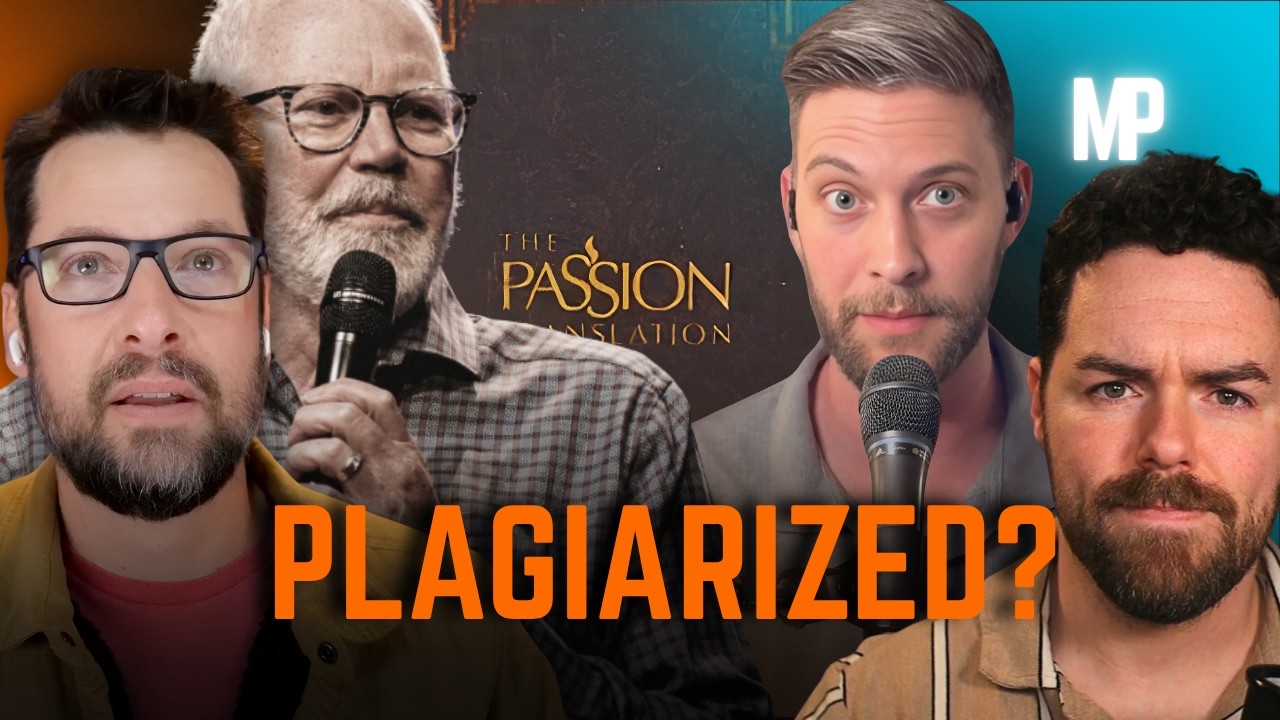
🔗 **Source:** [Is the Passion Translation Plagiarized?](https://www.youtube.com/watch?v=k9--owgBjtA)
> [!note]+ Document Notes
> tags: [bible-translation, religious-fraud, plagiarism, academic-integrity, deception-analysis, religious-authority]
> author: [MISSING]
> source: YouTube
> reference: https://www.youtube.com/watch?v=k9--owgBjtA
> date created: {{date:YYYY-MM-DD}} {{time:HH:mm}}
>
> # 🏷️ Title: Is The Passion Translation Plagiarized?
>
<!-- deep-read:sections start -->
## 🧭 Table of Contents
- [📝 Summary](#-summary)
- [📖 Main Content](#-main-content)
- [🗒️ Notes](#️-notes)
- [📚 References](#-references)
- [🗣️ Paraphrase](#️-paraphrase)
- [📰 Newsletter](#-newsletter)
- [✅ Action Items](#-action-items)
- [🧪 Hypotheses](#-hypotheses)
- [📊 Methodology](#-methodology)
- [❓ Questions](#-questions)
- [🔮 Future Research](#-future-research)
- [💡 Implications](#-implications)
- [🧠 Learning Styles Assessment](#-learning-styles-assessment)
- [📊 Accessibility Assessment](#-accessibility-assessment)
- [🌍 DEIB Assessment](#-deib-assessment)
- [✅ Logical Validity](#-logical-validity)
- [🛡️ DARVO Analysis](#-darvo-analysis)
- [🎯 Conclusion](#-conclusion)
## 📝 Summary
- **What happened**: Investigation reveals Brian Simmons, author of The Passion Translation, systematically plagiarized content, fabricated credentials, and made false claims about divine commissioning.
- **Why it matters**: Millions of Christians use this translation believing it comes from direct divine revelation and scholarly expertise.
- **Key stakeholders**: Brian Simmons, Broadstreet Publishing, endorsing charismatic leaders, unsuspecting Christian readers, legitimate Bible scholars.
- **Risks and tradeoffs**: Spiritual deception vs. translation accessibility; charismatic authority vs. academic integrity.
- **Bottom line**: The Passion Translation appears to be a fraudulent work built on lies about credentials, methodology, and divine authorization.
## 📖 Main Content
This video presents evidence that Brian Simmons, creator of The Passion Translation, engaged in widespread deception about his qualifications, methodology, and divine commissioning. The investigation reveals three major areas of fraud:
### Translation Credentials
Simmons falsely claimed to be a "co-translator" of the Pyakuna New Testament. Wycliffe Bible Translators officially states he was merely an "unofficial comprehension checker" with no formal training, who left six years before the translation was completed. Keith Forester did the actual translating work.
### Academic Qualifications
Early editions listed Simmons as "Dr. Brian Simmons" based on a non-accredited doctorate in prayer from Wagner Leadership Institute. This title mysteriously disappeared from later editions after criticism.
### Divine Commission Claims
Simmons claims Jesus personally appeared to him, touched his forehead, breathed on him, and commissioned the translation. He also claimed an angel named "Passion" appeared to him, then later denied this claim when addressing broader audiences.
### Translation Methodology
Despite claiming to translate "directly from the original Greek and Aramaic texts," evidence suggests Simmons copied extensively from English websites and other translations. Dr. Mark Strauss confirmed Simmons admitted to getting Aramaic insights from websites rather than scholarly sources.
### Aramaic Primacy Deception
Simmons promoted the fringe theory that the New Testament was originally written in Aramaic, not Greek - a position rejected by virtually all scholars. He falsely claimed this was "brand new scholarship" with "hundreds of examples" proving Greek manuscripts are secondary.
## 🗒️ Notes
#### ⏱️ [00:00:00](https://www.youtube.com/watch?v=k9--owgBjtA&t=0) Opening Claims of Fraud
- "The claims are fake. The guy is fake. It's all fake."
- Promise to show "smoking gun" evidence of plagiarism
#### ⏱️ [00:02:15](https://www.youtube.com/watch?v=k9--owgBjtA&t=135) Simmons' Divine Commission Claims
- Claims Jesus walked through walls, breathed on him
- Says he received "secrets of Hebrew language" from above
- Claims brain capacity was supernaturally expanded
#### ⏱️ [00:05:30](https://www.youtube.com/watch?v=k9--owgBjtA&t=330) Andrew Chapman's Discovery
- Found Simmons copying from English websites
- Broadstreet Publishing made some corrections but many remain
- Simmons blocked Chapman on Twitter after confrontation
#### ⏱️ [00:08:45](https://www.youtube.com/watch?v=k9--owgBjtA&t=525) Mike Winger's Background Research
- Hired multiple scholars (Douglas Moo, Craig Blomberg, others)
- Craig Blomberg: "deserves surgeon general's warning"
- Scholars don't typically speak this harshly
#### ⏱️ [00:12:00](https://www.youtube.com/watch?v=k9--owgBjtA&t=720) Angel Named Passion Contradiction
- Told charismatic audiences an angel named "Passion" appeared
- Later denied this to mainstream audiences
- Clear evidence of changing stories for different audiences
#### ⏱️ [00:18:30](https://www.youtube.com/watch?v=k9--owgBjtA&t=1110) Patricia King Interview Analysis
- Introduced as "Dr. Brian Simmons" and "scholar"
- Doctorate was unaccredited degree in prayer
- Title mysteriously disappeared from later materials
#### ⏱️ [00:22:15](https://www.youtube.com/watch?v=k9--owgBjtA&t=1335) Pyakuna Translation Lies
- Claimed to be "co-translator" and create alphabet
- Later admitted he came "at the tail end" with "little input"
- Wycliffe confirms he was only a comprehension checker
#### ⏱️ [00:28:00](https://www.youtube.com/watch?v=k9--owgBjtA&t=1680) Wycliffe Official Statement
- "Inaccurate to describe him as translator or co-translator"
- "Not involved in linguistic analysis or translation"
- Left 6 years before New Testament was published
#### ⏱️ [00:32:45](https://www.youtube.com/watch?v=k9--owgBjtA&t=1965) Translation Claims vs Reality
- Claims translation is "entirely new" from original texts
- Website states it's "not a paraphrase of another existing version"
- Evidence suggests extensive copying from other sources
#### ⏱️ [00:38:20](https://www.youtube.com/watch?v=k9--owgBjtA&t=2300) Mark Strauss Endorsement Attempt
- Simmons sought endorsement from respected scholar
- Strauss found "no basis" for most Aramaic references
- Simmons admitted getting information from websites, not scholarship
#### ⏱️ [00:42:10](https://www.youtube.com/watch?v=k9--owgBjtA&t=2530) Aramaic Primacy Deception
- Claims to be "minority scholar" supporting Aramaic primacy
- Falsely claims "brand new scholarship" proves his position
- Virtually no scholars actually support this view
## 📚 References
- [Wycliffe Bible Translators official statement](referenced in video)
- [Change.org petition to remove Passion Translation from YouVersion](linked in description)
- [Mike Winger's scholarly review series](referenced)
- Dr. Mark Strauss interviews and publications
- Multiple scholar reviews: Douglas Moo, Craig Blomberg, Darrell Bock, others
## 🗣️ Paraphrase
A comprehensive investigation reveals that Brian Simmons, creator of The Passion Translation Bible, has systematically deceived Christians about his qualifications and divine authorization. Despite claiming Jesus personally commissioned him and that he co-translated a previous Bible for an indigenous tribe, evidence shows he was merely a comprehension checker with no formal translation training. His academic credentials are based on a non-accredited doctorate in prayer, and his claims about receiving divine revelations appear fabricated. Most damaging, his translation methodology involves copying from websites and other English translations while claiming to work directly from ancient texts. Multiple respected biblical scholars have condemned the work, yet it continues to be used by millions of Christians who believe they're reading a divinely inspired, scholarly translation.
## 📰 Newsletter
🚨 **Major Bible Translation Scandal Exposed** - New evidence reveals The Passion Translation, used by millions of Christians worldwide, may be built on systematic deception. Creator Brian Simmons falsely claimed divine commissioning, fabricated translation credentials, and appears to have plagiarized extensively from other sources while claiming to translate directly from ancient texts. Multiple biblical scholars have condemned the work, with one saying it "deserves a surgeon general's warning." This investigation should concern anyone interested in biblical integrity, religious authority, and protecting Christian communities from spiritual fraud. Links to detailed evidence and scholar interviews are provided for those wanting to examine the claims themselves.
## ✅ Action Items
#### DevRel
- Developer advocacy: Create educational content about fact-checking religious claims and credentials
- Education: Develop workshops on evaluating source credibility in religious contexts
- Community management: Moderate discussions about religious authority and scholarly credentials
#### Community
- Religious communities: Implement credential verification processes for spiritual authorities
- Academic institutions: Strengthen oversight of religious degree programs and accreditation
- Publishing: Establish stricter fact-checking protocols for religious publications
#### WordPress
- Content creators: Develop guidelines for evaluating religious content and claims
- Educational sites: Create resources for checking academic and religious credentials
## 🧪 Hypotheses
1. **Authority Substitution Hypothesis**: Charismatic religious authority can override scholarly consensus when community trust is established through personal relationships and endorsements.
2. **Credential Inflation Hypothesis**: Religious contexts may have lower standards for credential verification compared to academic or professional settings.
3. **Audience Segmentation Hypothesis**: Religious leaders can maintain contradictory claims by tailoring messages to different audience segments (charismatic vs mainstream).
4. **Divine Commission Shield Hypothesis**: Claims of direct divine authorization make criticism spiritually dangerous, creating protection from scrutiny.
5. **Source Obscurity Hypothesis**: Religious audiences may not verify translation sources as rigorously as they would secular academic work.
### 📊 Methodology
- **Credential verification studies**: Compare claimed qualifications against institutional records
- **Translation analysis**: Computational comparison of text similarities between claimed original work and existing sources
- **Authority network mapping**: Document endorsement patterns and relationship networks in religious communities
- **Audience response surveys**: Measure how different presentation styles affect credibility assessment
- **Longitudinal claim tracking**: Monitor how religious leaders modify claims over time and context
### ❓ Questions
- How do religious communities balance trust in spiritual authority against scholarly verification?
- What mechanisms exist to hold religious publishers accountable for fraudulent claims?
- How does the doctrine of divine revelation affect critical evaluation of religious texts?
- Why didn't endorsing leaders conduct basic due diligence on Simmons' credentials?
- What legal recourse exists for consumers deceived by fraudulent religious products?
### 🔮 Future Research
- Comparative analysis of credential verification across different religious traditions
- Investigation of other questionable religious translations and their methodologies
- Study of how spiritual authority claims affect consumer behavior and critical thinking
- Analysis of correction mechanisms in religious vs academic communities
- Long-term impact studies on communities that used fraudulent religious materials
### 💡 Implications
- **Religious Practice**: Communities may need stronger verification processes for claimed divine revelations and spiritual authority
- **Publishing Standards**: Religious publishers may need enhanced fact-checking and credential verification protocols
- **Education**: Biblical literacy programs should include training on evaluating translation quality and scholarly credentials
- **Legal Framework**: Potential need for consumer protection laws specific to religious products making scholarly or divine claims
- **Community Leadership**: Endorsement culture in religious circles may need reform to prevent amplification of fraudulent claims
### 🧠 Learning Styles Assessment
- **Reading level estimate**: College level (Flesch-Kincaid ~12-14) due to theological terminology and complex argumentation
#### 👀 Visual learners
- **Present**: Video format with speaker segments, text overlays, document screenshots
- **Improve**: Timeline diagrams showing claim evolution, credential verification flowcharts, side-by-side text comparisons
#### 🔊 Aural learners
- **Present**: Interview format with multiple speakers, audio-focused presentation
- **Improve**: Clearer audio separation between speakers, summary podcast version
#### 🗣️ Verbal learners
- **Present**: Extensive verbal explanations, defined terminology, analogies to fraud in other contexts
- **Improve**: Glossary of theological and academic terms, plain-language summary sections
#### 🧩 Kinesthetic learners
- **Present**: Clickable links to source documents, interactive investigation format
- **Improve**: Hands-on credential checking exercises, step-by-step verification processes
#### 🧠 Logical learners
- **Present**: Systematic evidence presentation, logical flow from claims to contradictions
- **Improve**: Decision trees for evaluating religious claims, formal logical fallacy identification
#### 🧑🤝🧑 Social learners
- **Present**: Group discussion format, multiple expert perspectives
- **Improve**: Community discussion guides, collaborative fact-checking frameworks
#### 🧘♀️ Solitary learners
- **Present**: Individual investigation components, personal reflection opportunities
- **Improve**: Self-assessment tools for evaluating spiritual authority claims
#### 🌿 Naturalistic learners
- **Present**: Pattern recognition in deceptive behavior across cases
- **Improve**: Ecosystem thinking about religious authority and community trust networks
### 📊 Accessibility Assessment
#### Screen reader semantics
- **Present**: Video has spoken narration throughout
- **Improve**: Complete transcript with speaker identification, descriptive alt text for document screenshots
#### Keyboard navigation
- **Present**: Standard video player controls
- **Improve**: Timestamped chapter navigation, keyboard shortcuts for jumping between speakers
#### Contrast and readability
- **Present**: Clear speaker visibility, readable document screenshots
- **Improve**: High contrast mode for text overlays, larger text size options
#### Text resizing and reflow
- **Present**: Video format adapts to screen size
- **Improve**: Responsive text overlay sizing, zoomable document images
#### Media and captions
- **Present**: Audio-focused content
- **Improve**: Complete closed captions, audio descriptions for visual elements
#### Forms and interactions
- **Present**: Simple video playback interface
- **Improve**: Accessible petition link interface, form accessibility for further action
#### Standards reference
- Video content should meet WCAG 2.2 AA standards for media accessibility
### 🌍 DEIB Assessment
#### Cultural breadth
- **Present**: Focuses on Western/American Christian context
- **Improve**: Acknowledge global Christian perspectives, translation issues across cultures
#### Inclusive language
- **Present**: Uses technical theological terms without extensive definition
- **Improve**: Plain-language definitions, sensitivity to non-Christian viewers' understanding
#### Neurodiversity support
- **Present**: Long-form content without clear structure breaks
- **Improve**: Chapter markers, content warnings for emotional intensity, summary sections
#### Representation
- **Present**: Multiple male expert voices, some diversity in backgrounds
- **Improve**: Include diverse religious scholars, women's voices in biblical scholarship
#### Psychological safety
- **Present**: Respectful approach to sincere believers who may have been deceived
- **Improve**: Clearer distinction between critiquing fraud vs attacking faith, support resources
### ✅ Logical Validity
#### Strong reasoning
- **Systematic evidence presentation**: Video methodically compares claims against documentation (Wycliffe letter, institutional records)
- **Multiple independent sources**: Corroboration from various scholars and organizations strengthens credibility
- **Primary source documentation**: Uses direct quotes and official statements rather than hearsay
#### Fallacies
- **Ad hominem tendency**: Some personal attacks on Simmons' character beyond the specific fraudulent behaviors
- **Hasty generalization**: May overapply findings to broader charismatic movement rather than limiting to specific case
- **Appeal to authority**: Heavy reliance on scholarly consensus, though appropriate in this academic context
#### Tone of voice
- **Measured outrage**: Speakers express appropriate moral indignation while maintaining investigative objectivity
- **Educational**: Primary focus on informing rather than persuading, letting evidence speak
- **Protective**: Clear concern for preventing harm to Christian communities
### 🛡️ DARVO Analysis
The subject (Brian Simmons) appears to employ DARVO tactics when confronted:
- **Deny**: Claims he never said certain things despite video evidence; dismisses criticism as "rumors"
- **Attack**: Blocks critics on social media; suggests Mike Winger "hired scholars to trash the translation"
- **Reverse victim/offender**: Positions himself as persecuted ("Poor Brian Simmons. He's persecuted") rather than addressing substantive fraud claims
**Emotional cues**: Nervous laughter when denying angel claims; defensive posturing when credentials questioned
**Rhetoric**: Uses spiritual language to deflect ("angels do minister to God's servants") rather than direct answers
**Related fallacies**: Moving goalposts (changing credential claims), red herring (shifting to theological debates rather than addressing fraud)
## 🎯 Conclusion
This investigation provides compelling evidence that The Passion Translation was created through systematic deception rather than legitimate scholarship or divine revelation. Brian Simmons appears to have fabricated his credentials, exaggerated his role in previous translation work, and copied extensively from other sources while claiming divine commissioning. The most troubling aspect is not just the fraud itself, but how it was enabled by religious leaders who prioritized personal relationships over due diligence, potentially exposing millions of Christians to spiritual deception.
For readers, the practical next step is to verify any religious authority's credentials through independent sources and approach claims of special divine revelation with appropriate skepticism. Religious communities should develop stronger accountability mechanisms to prevent such fraud from gaining widespread acceptance.
## 🔄 Refactor Appendix — Is The Passion Translation Plagiarized?
### 📚 Literature Atoms (H3)
#### Religious authority claims require independent verification beyond community endorsement
> [!quote] ID:rw_video_001
> "Brian's one of the chosen ones. We don't touch that guy. Mike is not. We don't listen to that guy."
**Context & use**:
- Demonstrates how personal relationships can override scholarly evidence
- Shows protection of religious figures from legitimate criticism through in-group loyalty
**Tags**: #xref #religious-authority
**Highlight**: Video demonstrates systematic protection of fraudulent religious authority
<!-- atomicity: 1 idea ✓ -->
#### Fraudulent credentials undermine legitimate religious translation work
> [!quote] ID:rw_video_002
> "It would be inaccurate to describe him as a translator or co-translator... he was not involved in linguistic analysis or translation."
**Context & use**:
- Official Wycliffe statement contradicting Simmons' central credential claim
- Pattern of credential inflation across multiple areas (academic, practical, spiritual)
**Tags**: #academic-integrity #fraud
**Highlight**: Institutional verification exposes systematic credential fabrication
<!-- atomicity: 1 idea ✓ -->
#### Claims of direct divine authorization shield deceptive practices from scrutiny
> [!quote] ID:rw_video_003
> "If I lie about Jesus appearing to me, this is a big deal... If Jesus commissions you to write a Bible translation and the scholars are like this is not a translation. Well then what is it?"
**Context & use**:
- Divine commission claims create spiritual barrier to critical evaluation
- Makes questioning the work tantamount to questioning God himself
**Tags**: #spiritual-manipulation #divine-authority
**Highlight**: Religious context creates unique protection for fraudulent claims
<!-- atomicity: 1 idea ✓ -->
### 🧠 Permanent Candidates (H4)
#### Religious credential verification requires institutional confirmation not community endorsement
**Claim**: Religious communities must verify spiritual leaders' academic and professional credentials through independent institutional sources rather than relying on peer endorsements or self-reporting.
**Evidence pointer**: [[#Religious authority claims require independent verification beyond community endorsement]]
**Scope & conditions**:
- Applies when leaders make specific academic or professional qualifications claims
- Particularly critical when those credentials are used to justify doctrinal or textual authority
- Breaks down when institutions are themselves compromised or when verification systems don't exist
**Links**:
- [[Academic integrity standards]] — because extends verification principles to religious contexts
- [[Community trust dynamics]] — because contrasts with relationship-based authority validation
- [[Fraud prevention protocols]] — because applies general consumer protection to religious products
<!-- atomicity: 1 idea ✓ -->
### ✏️ Fleeting Queue
- Research consumer protection laws for religious products making false scholarly claims
- Investigate how other religious traditions handle credential verification
- Examine parallel cases of academic fraud in religious contexts
### → Things 3 (max 2 actions)
- [ ] Research biblical translation evaluation criteria for non-scholars #things
- [ ] Compile checklist for evaluating religious authority claims #things
---
## Full Transcript
[00:00] this thing is fake. The claims are fake.<br>[00:01] The guy is fake. It's all fake. It's<br>[00:03] just a disaster.<br>[00:05] >> He said he was he was getting this from<br>[00:07] others. And he he put down a couple of<br>[00:10] websites.<br>[00:11] >> Now, going down to verse 12, we see a<br>[00:14] very interesting way that Brian begins<br>[00:16] this verse. God's purpose was that we<br>[00:19] Jews who were the first. You'll notice<br>[00:22] this matches exactly with the New Living<br>[00:24] Translation. God's purpose was that we<br>[00:27] Jews who were the first. This is one of<br>[00:31] the craziest smoking guns you could<br>[00:33] possibly have.<br>[00:34] >> Honestly, I I don't know. This is This<br>[00:37] blows my mind. And why has this taken um<br>[00:42] you know, taken a decade? I want to<br>[00:44] press this home. The guy claimed Jesus<br>[00:46] himself appeared to him and commissioned<br>[00:49] him to write this and instead of<br>[00:53] translating I if if it's full chalk full<br>[00:57] of dishonesty I don't think Jesus<br>[01:00] himself commisss people to lie. I<br>[01:02] believe we have conclusively<br>[01:04] demonstrated not just one deception not<br>[01:06] just something over here not just an<br>[01:07] isolated lie a pattern of covering up a<br>[01:10] pattern of deceiving the body of Christ.<br>[01:13] and to do so with the very words of God<br>[01:16] himself.<br>[01:17] I I shudder I shudder to think of what<br>[01:21] it would be like to stand before God and<br>[01:22] to have so twisted his words in the way<br>[01:25] that that the Passion translation is<br>[01:26] done.<br>[01:27] >> Amen. Amen.<br>[01:33] The Passion translation, the revival<br>[01:35] bible that is meant to connect you to<br>[01:37] the heart of God using insights from the<br>[01:41] Hebrew, the Greek, and curiously the<br>[01:44] Aramaic. It is written by this man,<br>[01:47] Brian Simmons. Brian Simmons has claimed<br>[01:50] that Jesus himself appeared to him,<br>[01:52] touched his forehead, expanded his<br>[01:54] capacity and has breathed on him and<br>[01:57] commissioned him personally to write<br>[02:00] this translation of the Bible.<br>[02:02] >> He came again. It was in a dream. Came<br>[02:04] and touched my forehead right here,<br>[02:06] right here, and said, "I'm increasing<br>[02:08] your capacity to know me."<br>[02:11] And then I woke up. We ended up with the<br>[02:13] top brain mapping person in the world. I<br>[02:16] asked her, "If God touched you right<br>[02:19] here at hairline right there, what what<br>[02:21] would that do to your brain?" And she<br>[02:23] said, "No, you don't understand. It<br>[02:25] would enlarge the capacity." The spirit<br>[02:27] of the Lord came upon me. I told you I<br>[02:29] had a visitation from the one I love. He<br>[02:30] walked through my wall and breathed on<br>[02:32] me and released me to do this<br>[02:34] translation project. and he breathed on<br>[02:36] me and he promised me that that he would<br>[02:39] give me help and give me secrets of the<br>[02:41] Hebrew language, secrets of the Bible,<br>[02:44] >> secrets that only come from above.<br>[02:46] >> I discovered and uncovered so many<br>[02:48] mysteries and glory realms. And uh that<br>[02:51] was the beginning of the Passion<br>[02:52] translation project.<br>[02:53] >> But is there evidence of deception that<br>[02:55] goes all the way to the very foundation<br>[02:58] of the Passion translation? My friend<br>[03:01] and my colleague David Fish has found<br>[03:04] shocking evidence that may point to just<br>[03:07] that. He followed the trail of a man<br>[03:09] named Andrew Chapman who discovered that<br>[03:12] some of the insights that Brian Simmons<br>[03:14] was receiving from the Aramaic he was<br>[03:17] copying from an English website and<br>[03:20] pasting nearly verbatim without<br>[03:22] attribution. And when he pressed Brian<br>[03:25] Simmons and Broadstreet Publishing on<br>[03:27] this exact issue, Brian Simmons later<br>[03:30] blocked him on Twitter. He then found<br>[03:33] that some of the instances that he had<br>[03:35] brought to Broadreet were eliminated<br>[03:38] from the next version of the Passion<br>[03:41] translation and yet many instances of<br>[03:44] copying has pervaded the entire<br>[03:46] document. In this video, we are going to<br>[03:48] share with you some shocking evidence<br>[03:50] that it wasn't just a little bit of<br>[03:52] copying, but there's widespread<br>[03:54] corruption and dishonesty that pervades<br>[03:56] the entire Passion translation that<br>[03:59] ultimately makes it a fundamentally<br>[04:01] dishonest document. We are going to<br>[04:03] share that evidence with you. In this<br>[04:06] video, we sit down with Mike Winger, Dr.<br>[04:08] Mark Strauss, who sits on the committee<br>[04:11] translating the NIV. He was actually the<br>[04:13] vice chair of the NIV committee from<br>[04:15] 2011 until 2025. We also sit down with<br>[04:19] Dr. Jeffrey Fish who is a paparologist<br>[04:21] who specializes in Greek and we ask them<br>[04:25] about their opinions of our findings.<br>[04:27] And honestly, their opinions are<br>[04:30] shocking. We also sit down with Andrew<br>[04:32] Chapman, the man who started it all. And<br>[04:35] to be honest, this is a long video, but<br>[04:38] we are sharing all of the evidence with<br>[04:39] you. And linked below, we have some of<br>[04:42] the evidence that David Fish has found.<br>[04:45] And you can look through it yourself and<br>[04:46] see if you're convinced. And if you are,<br>[04:49] there's also a link to a change.org<br>[04:51] petition where we are petitioning<br>[04:54] version to pull the passion translation<br>[04:57] from its platform. We are hoping that<br>[04:58] this petition will do two things. One,<br>[05:00] it will remove the passion translation<br>[05:02] from unsuspecting Christians who don't<br>[05:04] know about the deception that pervades<br>[05:06] the whole document. And two, we want to<br>[05:08] apply public pressure onto Brian Simmons<br>[05:11] and Broad Street Publishing to repent<br>[05:13] for the fraud that they are perpetrating<br>[05:15] upon the body of Christ. Now, my<br>[05:19] opinions on this are strong and my<br>[05:22] emotions are also strong. You will see<br>[05:24] me get rather heated in this video and<br>[05:27] it's because honestly, I cannot believe<br>[05:30] the level of deception. Also, in this<br>[05:33] video, I talked with Brian Simmons, and<br>[05:36] frankly, his admissions to me were<br>[05:38] shocking, and you will be able to see<br>[05:41] them yourself because he asked me to<br>[05:44] share with you his responses to my<br>[05:46] questions. I want to give special thanks<br>[05:48] to David Fish who did so much work<br>[05:50] digging this up. I'd like to make one<br>[05:52] note about the version that we are<br>[05:55] critiquing primarily in this video. It<br>[05:57] is some of the earliest documents of the<br>[05:59] passion translation that we could find<br>[06:01] possibly. The reason why is because we<br>[06:03] wanted to get to the core of Brian's<br>[06:06] methodology. What exactly was he doing<br>[06:09] when he started writing the passion<br>[06:10] translation? But one of the things that<br>[06:12] we found is that even in the modern<br>[06:14] translations, many of these bad examples<br>[06:17] of what looks like just purely copying<br>[06:21] is still present in the version of the<br>[06:24] passion that is on Uver right now. And<br>[06:28] so I just want to make a note about what<br>[06:30] exactly we're critiquing and why. Uh but<br>[06:33] also know that just because we're<br>[06:34] critiquing the earliest version doesn't<br>[06:36] mean that all of these things have been<br>[06:38] fixed. So, without further ado, here's<br>[06:41] the video.<br>[06:45] Mike Winger, so glad to have you on the<br>[06:47] Minor Profits podcast.<br>[06:49] >> Hey man, it's about time. I'm glad I got<br>[06:51] to get get to do this with you and I'm<br>[06:52] glad we have some incredible new<br>[06:55] information to share about this nobody's<br>[06:56] heard before and I think it's going to<br>[06:58] be the end of this spirious work.<br>[07:03] >> Yeah. So, uh, David Fish, uh, my my, uh,<br>[07:07] co-host, he has been digging deep into<br>[07:11] this. I remember he's like texting me.<br>[07:13] I'm like trying to go to bed. He's like,<br>[07:15] I feel like I found the Epstein files of<br>[07:17] the of Bible translation, and I was<br>[07:20] like, whoa, okay, that's pretty big. So,<br>[07:23] but he's found something that honestly,<br>[07:25] like, it is it is very shocking. We're<br>[07:28] gonna get into some of the new<br>[07:29] information that David has has dug up<br>[07:32] and uh you're gonna see some of his<br>[07:34] work. I'm I'm really grateful, David,<br>[07:35] for all the work that you've put into<br>[07:37] this. It's been it's been astounding.<br>[07:40] But before we get into this, uh Mike,<br>[07:42] could you maybe catch us up on where we<br>[07:45] are with the passion translation? You<br>[07:47] did a passion project for like uh it was<br>[07:49] like seven seven, six, seven years ago,<br>[07:52] >> something like that, man. Okay. So I a<br>[07:54] bunch of people kept reaching out to me<br>[07:55] going Mike look into the pastor<br>[07:57] translation it's like growing like<br>[07:59] wildfire and it was endorsed by Bill<br>[08:00] Johnson and uh Brian and Bobby Houston<br>[08:03] so like Hillong Bethl others in the<br>[08:06] charismatic world it was it was moving<br>[08:07] fast and Brian was posturing it and<br>[08:10] shifting so that it could become like<br>[08:12] mainstream a mainstream product that was<br>[08:14] he said he wanted to replace the NIV he<br>[08:17] he said even years ago they had already<br>[08:19] sold millions of literal millions plural<br>[08:21] of copies years ago<br>[08:23] Um, and I looked into it a little bit,<br>[08:26] just a little bit, and I started<br>[08:27] producing some content saying, "Guys,<br>[08:29] this is there's some serious issues with<br>[08:30] this thing." I showed that there's uh<br>[08:32] bad translation practices. He adds to<br>[08:34] the text. He puts theological things<br>[08:36] that are that he cares about into the<br>[08:38] text, buzzwords for the hyperarismatic<br>[08:41] side of movement of things, which if<br>[08:42] those words are in scripture, good,<br>[08:45] fine. Translate them as they are, but<br>[08:47] don't add them where they don't exist.<br>[08:48] Um, so I did a series of videos and I<br>[08:52] thought this should warn everybody. Like<br>[08:54] it's it's it's right in front of you<br>[08:55] guys. There's plenty of evidence here<br>[08:57] and it just made almost no impact from<br>[09:00] what I could tell inside of the actual<br>[09:02] movement because there's these leaders<br>[09:04] people trust who endorse it and that's<br>[09:06] all they need to know. And Bill Johnson,<br>[09:08] like I said, the the whole endorsement<br>[09:10] on the passion translation page has all<br>[09:12] the names. So I hired scholars. I hired<br>[09:16] a host of very good scholars. I'm<br>[09:18] talking like Douglas Moo. I got Daryl<br>[09:21] Bach, Nay Gupta, Craig Blumbberg. I got<br>[09:23] guys who've like Treer Longman who are<br>[09:27] especially known for things like Douglas<br>[09:29] Moo is good at Romans in particular.<br>[09:31] They've all done translating work in<br>[09:33] major translations. I gave them each a<br>[09:35] different book within the Passion<br>[09:36] Translation. I had them write a a full<br>[09:38] paper on it and do an interview and to a<br>[09:41] person they're like, "Yeah, don't read<br>[09:43] this thing. You know this is problems.<br>[09:45] Daryl, I'll just give one quote. Craig<br>[09:47] Blombberg said, "The Passion translation<br>[09:49] deserves a surgeon general's warning<br>[09:52] because of its potential hazards."<br>[09:54] >> Um, now those of you who interact with<br>[09:57] scholars go like scholars don't talk<br>[09:58] like that. Like for them to say<br>[09:59] something that extreme, it's got to be<br>[10:02] pretty bad. That's just how it is.<br>[10:03] Usually, even when they think someone's<br>[10:05] totally wildly wrong, they'll be like,<br>[10:07] "I don't think that the evidence<br>[10:08] warrants such a conclusion." They'll say<br>[10:11] soft stuff. So, I produced these videos,<br>[10:13] put them out, and then ultimately there<br>[10:17] was nothing happening because I would<br>[10:18] argue this is part of the coverup<br>[10:20] culture thing is Brian's one of the<br>[10:22] chosen ones. We don't touch that guy.<br>[10:24] Mike is not. We don't listen to that<br>[10:26] guy. And so, it didn't matter that we're<br>[10:28] all these scholars. Brian at one point<br>[10:30] said that I had hired scholars to trash<br>[10:32] the translation. as if these men for I<br>[10:36] think I think I paid them like 600 bucks<br>[10:38] >> just to give them some something for<br>[10:40] their time, you know, was nothing. Uh<br>[10:42] that they're gonna trash their whole<br>[10:43] reputation in order to attack a<br>[10:45] translate. It just was wild.<br>[10:47] >> So anyways, things have been sitting for<br>[10:49] a long time. The Passion translation<br>[10:50] continues to be used by many people.<br>[10:52] Some people have come against it. And<br>[10:55] today, I think what we're going to share<br>[10:57] uh will reveal what's really been going<br>[10:58] on all along and how there's a bunch of<br>[11:00] leaders<br>[11:02] who just speak beyond their knowledge<br>[11:03] and they endorse things because of<br>[11:05] friendships and not because of the<br>[11:06] benefit it is to the body.<br>[11:08] >> Right? And this isn't just a Bible<br>[11:12] translation that's bad. This is a Bible<br>[11:14] translation that's bad that the author<br>[11:16] of it claims that he was specifically<br>[11:18] commissioned by Jesus himself to<br>[11:20] produce. that Jesus walked through his<br>[11:23] walls, uh, touched him on his forehead,<br>[11:26] breathed on him. I don't know some I<br>[11:28] don't know if that's a changing story or<br>[11:29] if it's like two different stories or if<br>[11:31] it two things happened at the same time,<br>[11:33] you know, whatever. But I'm beginning to<br>[11:35] think Jesus actually never did appear to<br>[11:38] Brian Simmons. Um, but he says that, you<br>[11:41] know, he touched me right here at my<br>[11:42] hairline and that uh it expanded his<br>[11:45] knowledge. started getting downloads and<br>[11:47] God is sharing secrets from from the<br>[11:50] Hebrew and the Greek.<br>[11:52] >> The spirit of the Lord came upon me. I<br>[11:54] told you I had a visitation from the one<br>[11:55] I love. He walked through my wall and<br>[11:57] breathed on me and released me to do<br>[11:59] this translation project.<br>[12:01] >> And he breathed on me and he promised me<br>[12:03] that that he would give me help and give<br>[12:05] me secrets of the Hebrew language,<br>[12:08] secrets of the Bible,<br>[12:09] >> secrets that only come from above. I<br>[12:12] discovered and uncovered so many<br>[12:14] mysteries and glory realms. And uh that<br>[12:16] was the beginning of the passion<br>[12:18] translation project.<br>[12:19] >> And he makes these very strange claims<br>[12:20] about the fact that he's translating<br>[12:23] from quote the Aramaic. Some of these<br>[12:26] claims over time, you're going to see<br>[12:28] David very skillfully shows how some of<br>[12:30] these claims after criticism start to<br>[12:33] get slowly walked back surreptitiously.<br>[12:36] But the reality is that that um this<br>[12:40] these claims actually really matter. And<br>[12:42] if we show that actually not only and<br>[12:46] I'm about to tip my hand here, not only<br>[12:49] is this just not a translation, as uh<br>[12:52] Dr. Daryl Bach said, he he refused to<br>[12:55] call it a a translation. He said it's a<br>[12:58] paraphrase and it's a bad paraphrase. He<br>[13:00] said, I can count on two hands better<br>[13:02] paraphrases. Um but then he so if Jesus<br>[13:07] is commissioning you to write a<br>[13:08] translation and the scholars are like<br>[13:10] this is not a translation. Well then<br>[13:12] what is it? Is something else going on<br>[13:15] here? If Jesus commisss you to to like<br>[13:20] personally appears to you and<br>[13:21] commissions you write a Bible<br>[13:23] translation. the Bible translation is<br>[13:26] not up to snuff and there might be some<br>[13:29] false claims about these the Bible<br>[13:32] translation and some duplicity maybe<br>[13:35] some things that are not exactly above<br>[13:37] board in what's happening with with how<br>[13:40] you are presenting this uh this is a<br>[13:42] serious deal and here's why if I as a<br>[13:46] pastor were to stand up in my church and<br>[13:49] claim to my church Jesus himself<br>[13:51] appeared to me and he told me that I'm<br>[13:54] supposed to do X, Y, or Z and I was<br>[13:56] lying about that. If that was not true,<br>[13:59] I should be barred from ministry forever<br>[14:03] to I mean like that type of claim. It<br>[14:05] doesn't matter what it was about. If I<br>[14:07] lie about Jesus appearing to me, this is<br>[14:10] a big deal. Now,<br>[14:12] uh Brian Simmons does not just talk<br>[14:14] about Jesus appearing to him. Uh Mike,<br>[14:17] you did a video uh saying that there was<br>[14:20] an angel named Passion that appeared to<br>[14:22] Brian Simmons to help him with<br>[14:24] translation, but then he's like, "No,<br>[14:27] the angel named Passion never appeared<br>[14:28] to me." Like, can you give us a little<br>[14:30] bit of background on that?<br>[14:32] >> Well, you have to understand, too, the<br>[14:33] two audiences The Passion has been<br>[14:34] shopped out to. First, it was really<br>[14:36] strong, charismatic audiences. So, he<br>[14:38] would have the strongest claims, wild<br>[14:40] claims. what normal people would normal<br>[14:43] Christians would think, whoa, that's<br>[14:45] kind of spooky. He would have all these<br>[14:47] kind of claims. And so in that stage<br>[14:49] when he's appealing to those people, he<br>[14:50] says, you know, on the Sid Roth show<br>[14:52] that uh when he's asked, why did you<br>[14:54] name it the Passion translation? And he<br>[14:55] goes, oh, well, there's an angel with my<br>[14:56] ministry called the Pass called uh<br>[14:58] Passion. That's the name of the angel.<br>[15:00] And so he names it the Passion<br>[15:02] translation. So it's named after an<br>[15:03] angel. Now you shop that out to the<br>[15:05] wider church. And all of a sudden people<br>[15:07] are like spooked by this. And so he<br>[15:09] later said, "No, I never said that. This<br>[15:11] is a rumor. Why are people making stuff<br>[15:13] up about me? Poor Brian Simmons. He's<br>[15:15] persecuted." Right.<br>[15:16] >> And I' I've been<br>[15:19] accused of, "Well, you had an angel<br>[15:22] named Passion that came to you to help<br>[15:24] you write the Bible." I said, "That's<br>[15:26] news to me. I would wouldn't mind that.<br>[15:29] I mean I angels do minister to God's<br>[15:32] servants and they're in the Bible<br>[15:34] >> and they they brought revelation to<br>[15:36] Daniel to Zachchariah and you know but<br>[15:39] no I have not had any uh angel named<br>[15:43] Passion come and help me and that's not<br>[15:45] why I named it.<br>[15:46] >> We all have access to the same spirit.<br>[15:47] >> We it's the same thing and I get humbled<br>[15:49] every day. I hide myself in Christ the<br>[15:53] wraparound glory of his presence.<br>[15:55] >> So where'd you come up with the word<br>[15:56] passion translation? Well,<br>[16:00] uh, years ago, I saw an angel named<br>[16:02] Passion in our church meeting and, uh,<br>[16:06] the Lord spoke to me, not not audibly,<br>[16:08] but internally and said, "That angel is<br>[16:10] with your ministry. It's the angel of<br>[16:13] passion."<br>[16:14] >> And it turns out that he's just changing<br>[16:16] his story. I I will say on me entirely,<br>[16:19] Brian is a liar who lies through his<br>[16:21] teeth, and I have tons of evidence to<br>[16:23] show it. And um it's related to his<br>[16:25] translation, related to his translating<br>[16:27] uh credentials. He makes claims about<br>[16:29] doing stuff in prior translation work<br>[16:31] that never happened. He says to one<br>[16:32] group of people, I've been I've been<br>[16:34] translating in this field for decades.<br>[16:36] Not remotely true. He's never even been<br>[16:38] in the field of translation as far as<br>[16:40] professionally. That's never happened.<br>[16:42] He is the man is<br>[16:46] is ultimately pushing of lies to the<br>[16:49] body of Christ. And that's why this is a<br>[16:51] big deal. He took the sacred word of God<br>[16:54] and he turned it into his pet project<br>[16:56] with fake revelations and and what we'll<br>[16:59] get to today is stealing content from a<br>[17:01] whole bunch of other people's work<br>[17:03] pretending he's translating. In many<br>[17:04] cases he's not. He's just ripping right<br>[17:06] from the pages of other translations.<br>[17:09] Weird and weird stuff like he picks like<br>[17:11] the worst renderings from weird<br>[17:12] translations and puts them into his<br>[17:14] claiming it's his own work. He he goes<br>[17:17] back and forth and he keeps changing his<br>[17:18] statements. So there's so much that can<br>[17:20] be said about um specifically about this<br>[17:24] idea that he had this angel. Yeah. He<br>[17:25] goes back and forth. When he's in front<br>[17:27] of the charismatic audience, it was an<br>[17:29] angel. That's why I named it passion.<br>[17:30] When he's in front of the the wider<br>[17:31] audience, I want to be the next NIV. Now<br>[17:34] he says, I never I never said that.<br>[17:35] That's crazy. And then laughs it off.<br>[17:38] >> Yeah. Yeah. He's he's like, well, you<br>[17:40] know, angels do appear to people in the<br>[17:42] Bible, but no, that I I never had an<br>[17:45] angel named Passion. He he laughs as<br>[17:47] it's just the most ridiculous absurd<br>[17:50] claim that anybody would accuse him of<br>[17:52] making that claim. And um so as you can<br>[17:54] see, as I've added here in post, uh that<br>[17:58] these are these are claims that are<br>[18:01] contradictory to one another and<br>[18:03] somebody's lying. Either Brian Simmons<br>[18:05] is lying or Brian Simmons is lying. So<br>[18:08] >> [laughter]<br>[18:08] >> um<br>[18:10] so David, man, um you you started on<br>[18:15] this trail. It feels like you did an<br>[18:16] eternity's worth of work in in just a<br>[18:20] short amount of time. And um tell me<br>[18:22] about how you started sniffing out<br>[18:25] something was a miss here.<br>[18:27] >> Yeah. So John Mark, I don't even know if<br>[18:29] I've told you this. I wrote my first<br>[18:32] article. I had a I had a blog. I won't<br>[18:34] tell people the name of the blog because<br>[18:36] I was like 17 years old and um as we<br>[18:39] will discover later, the internet is<br>[18:41] forever folks. So just remember that. So<br>[18:44] somewhere on the in the bowels of the<br>[18:46] internet, I'm sure this blog can be dug<br>[18:47] up. Uh but like right when the passion<br>[18:50] translation was released, I wrote an<br>[18:52] article and um I was very much in the<br>[18:55] midst of that charismatic movement uh at<br>[18:57] the time. And so I was it was a sacred<br>[19:02] cow. I mean, I don't know how many<br>[19:03] people remember when it first came out,<br>[19:05] but it it actually you you'd get in a<br>[19:07] lot of trouble if you really tried to<br>[19:08] poke at it because people, especially<br>[19:10] within the charismatic space, and again,<br>[19:13] we're all continuationists on this<br>[19:14] video. So, for everybody watching, um<br>[19:16] none of us are coming from the<br>[19:18] perspective that um oh, God could could<br>[19:20] never, you know, use any of the<br>[19:22] spiritual gifts or anything like that.<br>[19:24] And that's why I think this video is<br>[19:25] going to be valuable is um it it<br>[19:27] actually has nothing to do with your<br>[19:28] theology on the continuation of the<br>[19:29] gifts as to whether or not this<br>[19:31] translation is good or bad. There's<br>[19:32] continuationists on every committee of<br>[19:35] every translation. That's part of the<br>[19:36] beauty of committee translations is<br>[19:38] there's people on these committees with<br>[19:40] who vary on on secondary matters. So I<br>[19:43] wrote this article, but a lot of people<br>[19:45] had like a visceral reaction to oh no,<br>[19:48] I've encountered God through this so<br>[19:50] therefore you know you can't tell me<br>[19:52] that it's wrong. And so at the time I my<br>[19:55] main angle was hey Syriak is not the<br>[19:58] dialect of Aramaic that Jesus would have<br>[20:00] spoken and you know all that's true and<br>[20:01] so I kind of just went after but I was<br>[20:03] very kind about it you know I was trying<br>[20:04] to really tiptoe and um so over the<br>[20:07] years my opinion has gradually gotten<br>[20:09] stronger and stronger partially through<br>[20:10] Mike's work partially through continuing<br>[20:12] to look into it um myself um and again<br>[20:15] I'm not a scholar I'm not necessarily an<br>[20:17] expert uh in in all of these things but<br>[20:19] everything that I found continually<br>[20:22] testified to me. Um, not only that this<br>[20:25] is a bad translation. Um, I've been kind<br>[20:28] of harsh on the Amplified in the past,<br>[20:30] right? I don't think it's a great<br>[20:31] translation for people to be using. I<br>[20:33] think it can mislead people in the way<br>[20:34] that it frames things. Um, but the<br>[20:37] Amplified is honest in what it claimed<br>[20:39] to do. What we're going to see over and<br>[20:41] over again is the Passion Translation is<br>[20:44] dishonest and therefore Brian Simmons is<br>[20:46] dishonest in what he is claiming to do.<br>[20:49] This shows up in the smallest of<br>[20:51] details, right? So when we talk about<br>[20:53] his translator credentials and and Mike<br>[20:55] really did a lot of the work on this,<br>[20:56] but almost everything Brian has said in<br>[20:59] the early years about his translation<br>[21:01] credentials was just false and there's<br>[21:04] no way to spin it. And so first we<br>[21:06] started with uh co- translator, right?<br>[21:09] And so we had that over and over again.<br>[21:10] This isn't a one-time thing. This was on<br>[21:12] the website and this was specifically<br>[21:14] Brian's way of talking himself up and<br>[21:17] his uh his credentials. He goes on uh<br>[21:19] Patricia King and John Mark. I don't<br>[21:21] know if we want to do a live reaction to<br>[21:23] that clip.<br>[21:23] >> Overlooked.<br>[21:24] >> Wow. It's just awesome. I want you to<br>[21:27] know also that you know Brian Simmons,<br>[21:30] Dr. Brian Simmons is not just a man who<br>[21:33] sat down, but I think I'll just write a<br>[21:35] translation and I'll make it say what I<br>[21:37] want it to say. He is a a scholar in the<br>[21:42] scriptures. So share share with us a<br>[21:44] little bit about your background um your<br>[21:48] your uh story on the mission field and<br>[21:51] that because I want everyone to know who<br>[21:54] you are as a person because you<br>[21:55] >> so here's Patricia King um you know and<br>[21:58] this this video is astonishingly still<br>[22:00] live. Um, I don't know how this I don't<br>[22:03] know how this video is still on the<br>[22:04] internet, but you can see he is a<br>[22:07] scholar and she's going to And by the<br>[22:09] way, he's not going to tell her, "Oh,<br>[22:10] no, you're wrong. You're you're<br>[22:11] overhyping you know what I'm saying."<br>[22:13] But notice this is something that's<br>[22:14] really important. Um, even the word<br>[22:17] doctor put in front of his name. This is<br>[22:20] something that Brian does in every early<br>[22:23] version of the website, all of the early<br>[22:25] editions, the first editions of the<br>[22:27] Passion Translation, the word doctor is<br>[22:28] always in front of Brian's name. Now,<br>[22:31] when you look up Brian's doctorate, it's<br>[22:33] an earned doctorate from Wagner um<br>[22:36] Leadership Institute, which is not an<br>[22:39] earned doctorate. It's not a real<br>[22:40] doctorate. Everybody knows it's not,<br>[22:42] which is why almost every other<br>[22:44] charismatic um well, not not all of<br>[22:46] them. There are many that still do try<br>[22:48] to hawk it, but there's actually many<br>[22:49] charismatics who still have enough<br>[22:51] integrity in that specific area to not<br>[22:54] use doctor in front of their name<br>[22:55] despite having received a doctorate from<br>[22:58] Wagner. So what happens though, this is<br>[23:00] the important part that you need to<br>[23:01] understand. Um, Patricia King and Brian<br>[23:04] himself are using the word doctor over<br>[23:05] and over again. Mysteriously in every<br>[23:09] subsequent edition after about 2018 or<br>[23:11] so and in all the subsequent versions of<br>[23:14] the website, the word doctor disappears<br>[23:16] from Brian's name. So something that had<br>[23:18] been used to establish his credibility<br>[23:20] to the world kind of disappears without<br>[23:22] a trace.<br>[23:24] >> Yeah. That doctorate was in like prayer<br>[23:26] or something like that.<br>[23:28] Yes,<br>[23:30] >> it was in prayer.<br>[23:32] >> It was in prayer. Um, so he actually I<br>[23:34] have a clip where he actually says<br>[23:36] clearly he's not a Greek scholar.<br>[23:39] >> Okay.<br>[23:41] >> And I mean, if you like I can play, but<br>[23:43] we we should probably get through this<br>[23:44] first, but there's a few clips about his<br>[23:45] scholarship I'll I'd like to share with<br>[23:47] you guys after we're done with this<br>[23:48] Patricia King clip.<br>[23:49] >> Yeah.<br>[23:51] are very much in their head but not um<br>[23:54] you know which is a great place to be<br>[23:56] when you're a scholar but it's really<br>[23:58] nice when you can find a scholar who is<br>[23:59] so relational like you are and so giving<br>[24:03] of your heart and so pastoral in your<br>[24:06] you know scholarly insights. So share<br>[24:09] with our audience a bit about who you<br>[24:11] are about your credentials so so to<br>[24:13] speak and about your experiences on the<br>[24:15] mission field.<br>[24:16] >> Well we have had such an amazing<br>[24:19] journey. My wife and I have been married<br>[24:20] almost 47 years and uh we were part of<br>[24:23] the Jesus movement in the early 70s<br>[24:25] 1971. We both met Jesus in a different<br>[24:29] way in a different<br>[24:31] >> identifying with them so that we could<br>[24:33] then give them in their language the pab<br>[24:37] karta the god's word god's trail god's<br>[24:41] book<br>[24:42] >> and uh I was a co-ransator for the kuna<br>[24:45] pakuna passion not passion but new<br>[24:48] >> yeah I I spent a lot of time looking<br>[24:49] into this um he was not a co-ransator um<br>[24:54] I talked to ethnos 360 this is the<br>[24:56] organization that Brian trained with and<br>[24:58] that Brian that that came alongside.<br>[25:01] They didn't even do the translation.<br>[25:02] Like the org that he's with did not do<br>[25:04] the translation, right? Wikliffe did the<br>[25:06] translation. They came alongside<br>[25:08] Wickliffe. Yes, he was involved while<br>[25:10] the translation was being done. Only a<br>[25:12] portion of it. The New Testament was<br>[25:13] completed years after Brian left that<br>[25:16] land. Brian went there, but he has made<br>[25:18] wild claims about the pyuna. And I think<br>[25:19] that's what got him off the ground. Like<br>[25:21] getting off the ground to do your own<br>[25:22] translation, getting enough initial<br>[25:24] support, that's a big deal. And he did<br>[25:26] that based upon lies and and and<br>[25:28] misleading information about his prior<br>[25:30] translating work with the Pyakuna. So he<br>[25:33] was not a translator. This is according<br>[25:35] to his people in his own organization.<br>[25:37] Brian was not a translator. He was not a<br>[25:40] linguist. He was not trained to do those<br>[25:42] things. Um I've tried to get more<br>[25:44] details about what he's done. I've tried<br>[25:46] to get it from him, but it's like it's<br>[25:48] like you're talking to a manipulator.<br>[25:50] I'm sorry, but he's you're talking to a<br>[25:52] guy who will not tell you the truth. He<br>[25:53] won't give you a straight answer. I'm<br>[25:54] like, "How much education do you get?"<br>[25:56] And he says things like, "I had as much<br>[25:57] as they offered."<br>[26:00] Well, I I had as much Greek as they<br>[26:02] offered in elementary school. Does that<br>[26:04] make me [laughter]<br>[26:05] It's such a weird answer, you know? So,<br>[26:08] um I have a little more Greek than that,<br>[26:10] but but just to be clear.<br>[26:12] >> Yeah. I also have, if it's helpful at<br>[26:14] some point in this, the phrase from the<br>[26:16] early FAQ that says, "Several years ago,<br>[26:19] when Dr. Simmons translated the New<br>[26:22] Testament into the language of the<br>[26:24] Pyakuna people. So in that version,<br>[26:27] there's not even a reference to other<br>[26:28] people. It clearly it clearly sounds<br>[26:31] like only he translated. I mean there's<br>[26:33] no other impression that a you know sane<br>[26:36] person could get from that statement,<br>[26:37] >> right? He didn't translate. He his his<br>[26:39] job what I was told by the guys at<br>[26:41] Ethnos 360 is that his job was a<br>[26:44] checker. So that is someone else<br>[26:45] translates. He reads it. He's in a<br>[26:47] village. He lives in a local village.<br>[26:49] He's not sitting at a desk translating<br>[26:50] and he reads to the people and then he<br>[26:52] provides feedback to the translator<br>[26:54] going here's where they didn't<br>[26:55] understand, here's where there was<br>[26:57] confusion and then they're doing<br>[26:58] checking work to say like did it did it<br>[27:00] land did it communicate well what we<br>[27:02] were trying to communicate. But when it<br>[27:04] comes to um other wild claims he's made,<br>[27:06] let's see, he says that um he was the<br>[27:11] first one to ever learn their language.<br>[27:12] Okay. So, this clip is where Brian is<br>[27:15] going to say that he the purpose he was<br>[27:17] sent there, right, was to create an<br>[27:20] alphabet for them. We're talking<br>[27:22] groundbreaking language stuff here.<br>[27:25] >> I was a linguist. I was sent to put<br>[27:27] alphabet to their language. They'd never<br>[27:29] had a one written form ever.<br>[27:32] >> Okay, that's not true. Right. Here's a<br>[27:34] clip of Brian admitting that that's not<br>[27:36] true later on.<br>[27:40] And we lived there in a village with the<br>[27:43] Pyakuna people that uh had never had<br>[27:46] their language in a written form. And we<br>[27:49] came in at the very tail end of the<br>[27:52] finalization of the alphabet. So I had a<br>[27:55] little bit of input into that. Not a<br>[27:57] whole lot.<br>[27:58] >> Yeah. Wait, are you on a mission to give<br>[28:01] them Are you on a mission to give them<br>[28:03] the alphabet they've never had, or did<br>[28:05] you show up at the tail end and have a<br>[28:07] little bit, not a lot? This is just him<br>[28:10] changing his story depending on his<br>[28:11] audience. Here's here's another one<br>[28:13] where he boasts that he ended up<br>[28:15] translating the New Testament for them.<br>[28:19] I I I had it it felt at times in the<br>[28:22] jungle that I had every demon in South<br>[28:24] America that was committed to kill us.<br>[28:27] It felt that way. I heard their voices<br>[28:29] outside our hut at night. Demons talking<br>[28:32] about how they're going to destroy us<br>[28:34] and our family. And there were times<br>[28:36] when it the whole village turned against<br>[28:39] us, told us, "You ought to just go home<br>[28:41] like everybody else. You're so stupid,<br>[28:43] you'll never learn our language."<br>[28:45] Don't say that to me. I'm a competitive<br>[28:48] male.<br>[28:51] I tend to take those words as a<br>[28:52] challenge. Ended up translating the New<br>[28:55] Testament for them.<br>[28:57] >> No, he didn't. He did not translate the<br>[28:59] New Testament for them. That is insane<br>[29:01] that he says this in in an obviously<br>[29:03] arrogant moment. Um, here's another one<br>[29:05] where he makes big overstating claims<br>[29:07] that that are absolutely not true.<br>[29:10] >> We were giving them the gospel, giving<br>[29:12] them the word of God, and with God's<br>[29:14] grace, I was helping translate the New<br>[29:17] Testament into the unwritten language of<br>[29:20] the Pyakuna dialect.<br>[29:22] And it was powerful seeing how the<br>[29:24] scriptures changed their life when they<br>[29:26] had it in their language. Candace, my<br>[29:28] wife, put together a literacy program<br>[29:30] and taught taught them how to read. and<br>[29:32] and of course we want them to read the<br>[29:34] Bible, right, rather than the newspaper.<br>[29:35] USA Today doesn't work too well out<br>[29:38] there. So, uh, they ended up with the<br>[29:43] entire New Testament<br>[29:45] and, uh, I was so happy, so happy to see<br>[29:49] these people that had poisoned me and<br>[29:54] had cursed me and had done, you know, I<br>[29:56] could go on and on, but now to see how<br>[29:58] God changed them.<br>[30:02] the the the the basic lesson here is<br>[30:06] early on Brian Simmons pretended that he<br>[30:08] had done incredible groundbreaking work.<br>[30:10] He was sent to translate. He translated<br>[30:11] he co-transated. He presented them with<br>[30:13] the New Testament. Uh it was started<br>[30:15] before he came. It was finished years<br>[30:18] the New Testament was finished years<br>[30:19] after he left. And I spoke to the bride<br>[30:22] of the man who did the main translating<br>[30:24] work, a guy named Keith Forester. I<br>[30:25] talked to Wilma, his wife, and she was<br>[30:27] grateful that Brian that it was being,<br>[30:30] it was interesting because she's very<br>[30:31] like dispassionate about it, but she was<br>[30:33] just upset because Brian was claiming<br>[30:35] credit for other people's work. And so<br>[30:37] when people like myself and others<br>[30:38] started coming out saying, "Guys, this<br>[30:40] guy didn't even do the pyakuna the way<br>[30:41] he says he did." She reached out just to<br>[30:44] say, "Thank you for helping set the<br>[30:45] record straight." Now imagine this. the<br>[30:48] wife of the now deceased gone to be with<br>[30:50] the Lord man who did the main<br>[30:51] translating work is like thanking us for<br>[30:55] clearing the record because Brian has<br>[30:56] been misleading people about his<br>[30:58] involvement in this translation and so<br>[31:00] yeah he changes the website he keeps<br>[31:02] changing it but his translation I I I<br>[31:04] say this the passion translation never<br>[31:06] would have happened if Brian hadn't<br>[31:08] spread these lies about his prior work<br>[31:10] on the pyakuna and from the people who<br>[31:12] worked with him to the wife of the man<br>[31:13] who did the original translating work<br>[31:16] >> everyone's like Uh, he's not telling the<br>[31:18] truth.<br>[31:19] >> Yeah. And and and not only that, um, and<br>[31:22] I'll get back to you, John, Mark, but I<br>[31:23] I was just going to say, not not only<br>[31:24] that, but on the website, the early<br>[31:26] editions of the Passion translation<br>[31:27] website, not only is he using this as<br>[31:31] the obvious reason why he would be<br>[31:33] qualified and credentialed, you know, to<br>[31:34] to translate. He's he claims that on the<br>[31:38] Passion translation, he used the same<br>[31:40] translation process that he used when<br>[31:42] translating the Pyakuna New Testament.<br>[31:45] So his point is um I've already done<br>[31:48] this before. I have a whole process of<br>[31:50] how to translate and I used that process<br>[31:52] so you can trust it because and again<br>[31:54] Wickliffe walks this back. You know he<br>[31:57] all of the people that actually had the<br>[31:59] credentials and the knowledge have<br>[32:00] walked this back but he wants you to<br>[32:02] think early on that I've been there.<br>[32:04] I've already done this before. I've been<br>[32:06] there done that and so you can trust me<br>[32:08] with this translation.<br>[32:10] >> Yeah. And what's interesting too is uh<br>[32:12] Ethnos 360 says that the Passion<br>[32:14] translation does not follow the<br>[32:15] translating practices that they would be<br>[32:17] approving of.<br>[32:18] >> So they're saying on both ends.<br>[32:19] Wikliff's like, "Yeah, he didn't." Uh<br>[32:22] and and even ethnos goes, "Even his even<br>[32:24] his practices, his methods are not<br>[32:26] actually stuff that we would approve of<br>[32:28] or train anybody to do."<br>[32:30] >> Yeah. Well, here we have the email from<br>[32:33] uh Wikliffe. Dear soando, have no idea<br>[32:37] who that could be. Thank you for your<br>[32:39] email. Brian Simmons was one of several<br>[32:41] expatriate missionaries invited to<br>[32:44] review early translation work on the<br>[32:47] borderuna<br>[32:48] >> review. Yeah, review early translation<br>[32:52] work on the borderuna pyakuna new<br>[32:55] testament in the 1980s. At the time, Mr.<br>[32:58] Simmons was a missionary with New Tribes<br>[33:02] Mission, now Ethnos 360, in Panama,<br>[33:05] where the Kuna reside, and was familiar<br>[33:07] with the local language. It would be<br>[33:10] inaccurate to describe him as a<br>[33:12] translator or co-transator on any<br>[33:15] project supported by Wikliffe USA. as he<br>[33:19] was not involved in linguistic analysis<br>[33:21] or translation. His unofficial role as a<br>[33:23] comprehension checker required<br>[33:25] familiarity with the local language but<br>[33:27] no formal training. Based on our<br>[33:30] understanding, Mr. Simmons left Panama<br>[33:33] and Ethnos 360 6 years before the Border<br>[33:37] Kuna New Testament was published in 1993<br>[33:40] and he would have had no input in the<br>[33:43] final translations. blessings. Vicky<br>[33:46] Mixon, chief communications officer.<br>[33:50] >> Amen. Set the record straight. I'm I'm<br>[33:53] Thank Thank you, Vicki. Thank you,<br>[33:55] Wickliff, for actually saying something.<br>[33:56] You guys have been You could have said<br>[33:57] this years and years ago when he was<br>[34:00] making all these false claims, but I'm<br>[34:01] glad you at least came out and said it<br>[34:02] now cuz this is part of like what I hope<br>[34:04] is happening is we're actually seeing,<br>[34:06] hey, let's not allow frauds. My word<br>[34:09] here, no one else, if he was to sue, he<br>[34:11] could sue me personally for that one,<br>[34:12] right? We don't need to allow frauds to<br>[34:15] be infiltrating the church and rising up<br>[34:18] as like our great apostolic prophetic<br>[34:20] leaders. This is it's disgusting. So,<br>[34:22] I'm grateful. I'm grateful for this.<br>[34:24] This single letter debunks the basis of<br>[34:28] the Passion translation.<br>[34:30] >> Yeah.<br>[34:31] >> Now, it can only be it can only be<br>[34:33] grounded now in private revelation,<br>[34:35] >> right?<br>[34:37] But [laughter]<br>[34:39] but it gets worse because I don't think<br>[34:42] he's got that either.<br>[34:43] >> Yeah. So again, everything in this video<br>[34:45] people need to understand all we're<br>[34:47] doing and all we need to do to show the<br>[34:51] deception and dishonesty of this<br>[34:52] translation is to compare Brian's own<br>[34:55] claims against what we actually see in<br>[34:58] reality. Right? It's just a basic way.<br>[35:00] What does Brian claim? This video is not<br>[35:03] about we think Brian um just has bad<br>[35:05] theology or you know he's part of the N<br>[35:08] and so you know all of that there's tons<br>[35:09] of videos that have been done tons of<br>[35:11] fair critiques but it's important to<br>[35:13] understand that from day one Brian has<br>[35:15] emphatically claimed that the passion<br>[35:18] translation is not a paraphrase and that<br>[35:20] he is working straight from the original<br>[35:23] text. So in the original edition of<br>[35:25] letters to heaven uh letters from heaven<br>[35:27] sorry um which is the Pauline epistles<br>[35:30] right this is the first edition that he<br>[35:31] publishes of of Paul's epistles it says<br>[35:33] quote author's written work has been<br>[35:37] translated directly from the original<br>[35:40] Greek and Aramaic texts so that's the<br>[35:43] claim okay so don't forget that for the<br>[35:45] rest of the video everybody watching<br>[35:46] that's the claim translated directly<br>[35:48] from the original Greek and Aramaic text<br>[35:50] now as of the recording of this video<br>[35:52] the official site Okay. Still says, "The<br>[35:54] Passion Translation is not a revision or<br>[35:56] paraphrase of another existing version<br>[35:58] of the Bible. It is an entirely<br>[36:02] new, okay, let that sit. Entirely new,<br>[36:06] fresh translation using the Hebrew,<br>[36:08] Greek, and Aramaic documents." So, I<br>[36:11] just want to get it ahead before we<br>[36:12] continue that Brian is directly claiming<br>[36:14] that he is not using other translations,<br>[36:16] that he is not consulting any other<br>[36:18] versions of the Bible, that it is<br>[36:20] entirely new and entirely fresh. So<br>[36:23] everything that follows from this point<br>[36:24] on in the video is just us holding<br>[36:26] Brian's own claims against his own work.<br>[36:28] So we don't have to inject any agenda.<br>[36:30] We don't have to eject any preconceived<br>[36:32] notions. We don't have to inject even<br>[36:33] any theological criticisms, although we<br>[36:35] will get to some of those. All we have<br>[36:37] to do is compare Brian's claims with<br>[36:38] Brian's work to see if it's true or not.<br>[36:42] >> Yeah. So, as you're beginning to look<br>[36:44] into to some of those claims, you<br>[36:47] stumbled upon a a post on Facebook and<br>[36:52] you decided to look into this post. Um,<br>[36:55] Brian Simmons, he he cites Mark Strauss,<br>[36:58] Dr. Mark Strauss, who's uh, you know, a<br>[37:00] leading expert in Bible translation, and<br>[37:02] he's talking about idiomatic phrases or<br>[37:05] something like that, and um, you<br>[37:08] commented something on the post. Well,<br>[37:11] okay. So, so, uh, in just a moment, Mike<br>[37:14] could probably add some to this as well,<br>[37:15] but it, um, Brian also routinely does<br>[37:18] this. And folks, there's no other word<br>[37:19] to use than than than dishonest or or<br>[37:22] deceptive. Pick take your pick. When you<br>[37:24] namerop scholars, okay, what you are<br>[37:27] implicitly doing is establishing<br>[37:30] authority for your work. I mean, that's<br>[37:32] it's an appeal to authority, right? And<br>[37:34] that's actually good in scholarly.<br>[37:36] That's what you want to do in scholarly<br>[37:37] work. You want to appeal to scholars.<br>[37:39] The problem is when you appeal to<br>[37:41] scholars as a justification for your<br>[37:43] work, but those own scholars detest your<br>[37:46] work. On the Passion translation<br>[37:48] website, there are references in all of<br>[37:50] the FAQs to um Dr. Craig Keenir um as as<br>[37:54] an authority on Bible translation. Well,<br>[37:57] Dr. uh Craig Keenir has said that there<br>[37:59] is a quote fatal flaw that pervades the<br>[38:02] entire passion translation. Okay, he<br>[38:05] quotes Longman. I mean, Mike, you can<br>[38:08] tell us maybe real quick like what does<br>[38:09] Trier Longman think about the passion?<br>[38:11] >> Trooper Longman, he reviewed some of<br>[38:13] Brian's work and he said that Brian had<br>[38:15] so altered and added to the book of<br>[38:18] Psalms that he changed the genre of<br>[38:20] literature that it sits in. It's it's<br>[38:23] poetry and pros like he he changed the<br>[38:25] genre and it's so much longer than the<br>[38:28] original. Anyway, Trumper goes on and on<br>[38:29] on about it. He talks about Song of<br>[38:31] Solomon. Bryant some of his worst work<br>[38:34] was in Song of Solomon. his Trump<br>[38:35] longman. It's wild to quote these guys<br>[38:38] not on a point of agreement but to quote<br>[38:40] them in ways that are misleading to<br>[38:42] suggest that they agree with you. That's<br>[38:44] the part that is wild.<br>[38:46] >> Exactly. Exactly. And so so this is to<br>[38:48] pick up John Mark where you were leading<br>[38:50] us was um he also quotes multiple times<br>[38:52] on his website Mark Strauss. Now, what<br>[38:56] got me was he made a Facebook post um a<br>[38:58] couple of days ago as of the recording<br>[38:59] of this of this video or or maybe a week<br>[39:01] or two ago. Um and he quotes a long<br>[39:04] quote from Dr. Mark Strauss. He's like,<br>[39:06] "Hey, for anybody who's interested in<br>[39:08] Bible translation, you know, Mark<br>[39:09] Strauss is a he basically touts Mark<br>[39:11] Strauss's credentials as being like,<br>[39:13] hey, this guy's, you know, and it's on<br>[39:16] translation philosophy." So, implicitly<br>[39:18] he's trying to say Mark Strauss is a is<br>[39:20] giving testimony that my philosophy of<br>[39:22] translation is the correct one. So, I<br>[39:24] immediately knew based on Brian's track<br>[39:26] record, um, probably Mark Strauss has<br>[39:28] come out very intensely against the<br>[39:30] Passion Translation, and that's the<br>[39:32] case. And so, I I looked at Mark<br>[39:33] Strauss's book on Bible translation, and<br>[39:36] he just rips the Passion Translation<br>[39:38] apart, tells people not to read it,<br>[39:39] tells people to avoid it. So, not only<br>[39:42] that, I began to try to look for has Dr.<br>[39:45] Mark Strauss ever done any public<br>[39:48] interviews where he mentions the Passion<br>[39:50] Translation? And I found not one but two<br>[39:52] interviews where Dr. Mark Strauss um not<br>[39:56] only, you know, says, "Don't read the<br>[39:58] Passion Translation. It's a bad<br>[39:59] translation." He says, he tells a story<br>[40:01] about how early on in the Passion<br>[40:03] Translation, um Brian Simmons actually<br>[40:05] came to him looking for an endorsement.<br>[40:09] [music]<br>[40:12] We are here with Dr. Mark Strauss. Uh<br>[40:15] Dr. Strauss has served on the<br>[40:18] translation committee for the NIV since<br>[40:21] at least 2011, if not before then. Is<br>[40:23] that right?<br>[40:24] >> Oh, yes. 2005 is when I started. Yeah.<br>[40:27] >> Yeah. But you were vice chair of the<br>[40:29] committee from 2011 to 2024,<br>[40:32] >> right? Yes. 25. Yeah.<br>[40:35] >> 25. And so, uh, this is no slouch. This<br>[40:39] guy knows knows what he's talking about.<br>[40:41] And you have been one of the foremost<br>[40:43] advocates for functional equivalence<br>[40:46] which is sort of the thought forthought<br>[40:49] uh translation methodology of the Bible<br>[40:51] right.<br>[40:52] >> Yes. Focusing on the meaning of the text<br>[40:55] more than its form. Yeah.<br>[40:57] >> Yeah. So um a while back uh Dr. Brian<br>[41:02] Simmons he he reached out to you and he<br>[41:05] wanted to get your endorsement for the<br>[41:08] Passion translation. Can you tell us a<br>[41:10] little bit about what that interaction<br>[41:11] was like?<br>[41:13] >> Sure. It was in 2021 and his publicist<br>[41:16] contacted me and said Brian was going to<br>[41:17] be in San Diego, which is where I live,<br>[41:19] and wanted to meet and and talk about<br>[41:21] it. I had noticed that he used um a<br>[41:25] quote from um Gordon Fee in my book on<br>[41:28] Bible translation um how to choose a<br>[41:31] translation for all it's worth. And so<br>[41:33] he was advocating for a more functional<br>[41:36] equivalent or meaning based translation.<br>[41:37] And I think that's one of the reasons he<br>[41:40] approached me. Um I had looked over the<br>[41:44] the Passion translation before a little<br>[41:46] bit. Um and I responded by saying, you<br>[41:49] know, I'd love to meet love to get to<br>[41:51] know you. Appreciate your focus on um<br>[41:54] communicating God's word clearly and<br>[41:56] accurately in in good contemporary<br>[41:57] English. I appreciate that, but I have<br>[41:59] some really serious problems with what<br>[42:01] I've seen of the the Passion<br>[42:03] Translation. And I pointed out a number<br>[42:05] of things I just said, but especially<br>[42:07] focused on his footnotes that identify<br>[42:10] the Aramaic, saying that this is what<br>[42:12] the Aramaic says in his text. Um,<br>[42:15] because I looked at the Aramaic and<br>[42:17] could find no basis for most of those<br>[42:19] translations. He also had a number of<br>[42:21] allegorical interpretations where he'd<br>[42:23] say the word Nazareth could be<br>[42:25] translated as this or Galilee could be<br>[42:28] translated as this. And first of all, I<br>[42:30] didn't see any basis to that etmology or<br>[42:33] background to the word. But not only<br>[42:35] that, no reader would pick that up<br>[42:37] anyway. So you don't when you see<br>[42:38] Galilee, you think of the lake. You<br>[42:40] don't think of some allegorical meaning<br>[42:42] behind that. So I expressed concerns<br>[42:44] about that as well. um he came back and<br>[42:46] and was quite re receptive and positive<br>[42:49] and said, "Yeah, he's probably going to<br>[42:51] eliminate up to half of his Aramaic<br>[42:53] references, which was shocking to me<br>[42:55] because, you know, to have so to to<br>[42:57] revise it that dramatically based on one<br>[43:00] short email sort of shocked me." Um and<br>[43:02] then he um he he was open to to changes.<br>[43:06] He said after contemplating um the<br>[43:08] footnote in Mark 1:9, which I<br>[43:10] criticized, I've decided to take it out.<br>[43:11] So, he said he dropped that. I don't<br>[43:13] know if he did or not, but so um that<br>[43:16] was the end of the conversation really.<br>[43:18] Um he didn't pursue it any further. I<br>[43:20] didn't make any further comment. Um so<br>[43:23] um after hearing my concerns, he said he<br>[43:27] was open and receptive to dropping some<br>[43:29] of those things, but there was an awful<br>[43:31] lot. I didn't find hardly any of the<br>[43:32] references any of the references to<br>[43:34] Aramaic as being accurate. Just as you<br>[43:37] were saying that I I was curious and so<br>[43:38] so I checked and and the footnote on<br>[43:40] Mark 1:9 that's current in the passion<br>[43:42] translation says it is possible to<br>[43:44] translate the Aramaic as then one day<br>[43:47] Jesus came from victorious revelation to<br>[43:50] be baptized by John. The word Nazareth<br>[43:53] can mean victorious one and the word<br>[43:55] Galilee can be translated the place of<br>[43:57] revelation.<br>[43:59] >> Yeah. Yeah. That's just nonsense as far<br>[44:02] as I I know. And um that was what the<br>[44:05] the line he said. It looked like he was<br>[44:07] going to drop it drop it from the<br>[44:08] translation, but he didn't obviously<br>[44:10] didn't do that.<br>[44:13] >> So he was he was going to make this<br>[44:15] drastic change just based upon one<br>[44:17] exchange with you. I think that maybe<br>[44:21] illustrates the importance of having a<br>[44:23] committee doing translation work.<br>[44:26] >> Yeah. Yeah. Yeah. and to hear other<br>[44:29] voices and particularly those with<br>[44:31] expertise um in the languages you're<br>[44:33] talking about is is always a good idea.<br>[44:37] >> So in his exchange with you though he he<br>[44:40] made kind of a startling confession<br>[44:42] regarding his expertise.<br>[44:45] >> Yeah. He he really didn't know Aramaic.<br>[44:48] He said he was he was getting this from<br>[44:50] others and he he put down a couple of<br>[44:53] websites. um one I [clears throat] think<br>[44:56] it was jesuspoke araic.com or something<br>[44:58] like that. Um and and so it was clear<br>[45:01] that he was someone else was giving him<br>[45:04] this or he was taking this information<br>[45:06] from someone else. Um not from the<br>[45:08] standard Aramaic Bible which is called<br>[45:11] the Pashida.<br>[45:13] But universally or practically<br>[45:14] universally scholars agree that the<br>[45:17] Pashida was translated from the Greek.<br>[45:19] The New Testament of the Pashida was<br>[45:20] translated from the Greek. It wasn't the<br>[45:22] original Aramaic that Jesus spoke. It<br>[45:24] was done in the fifth century. The<br>[45:26] translation was done in the early fifth<br>[45:27] century. So the 400s 400 years after um<br>[45:32] the New Testament was written and or 300<br>[45:35] years or so after the New Testament was<br>[45:36] written. And so, um, the idea that we<br>[45:39] have Jesus's original Aramaic words in<br>[45:42] the Pashida is just not held by scholars<br>[45:44] today,<br>[45:46] >> much less any of the epistles that would<br>[45:49] be written to the church in Galatia<br>[45:52] because he even says Aramaic behind<br>[45:54] Paul's letters. And nobody thinks Paul's<br>[45:56] letters were written in Aramaic.<br>[45:58] >> Yeah. So there that that's problematic.<br>[46:00] He confesses that there's this, you<br>[46:02] know, some of these mysterious websites<br>[46:04] that he is grabbing<br>[46:07] um translations from, you know, Aramaic,<br>[46:11] which is of course not Aramaic, it's<br>[46:14] Syriak, right? Um but they're Syriak<br>[46:17] into into English. And then it seems as<br>[46:20] though he's grabbing those English<br>[46:22] renderings and then importing them into<br>[46:24] his English translation<br>[46:27] just from standard Bible translation<br>[46:31] methodology<br>[46:33] like<br>[46:35] is that is that normal?<br>[46:39] Well, if he said I'm translating the<br>[46:41] Pashida, I'm translating the Aramaic um<br>[46:45] Bible which was done in the fifth<br>[46:47] century into English. That's fine. Just<br>[46:49] so he states that upfront. Um, but he<br>[46:52] also said to me he believes he agrees<br>[46:55] with me. He believes in Greek primacy,<br>[46:57] which means that the gospels and the<br>[46:59] letters of Paul, the whole New Testament<br>[47:01] was originally written in Greek. He<br>[47:02] admitted that and said, but then I think<br>[47:05] it's you can gain lots of insights from<br>[47:08] the Aramaic. Um, and and that's true. I<br>[47:11] mean, there are scholars who devote<br>[47:12] themselves to trying to determine the<br>[47:13] Aramaic behind it. Sometimes a play on<br>[47:16] words, for example, might go back to<br>[47:18] Jesus's original teaching, which was in<br>[47:20] Aramaic. But what we're saying is that<br>[47:23] it was translated into Greek even before<br>[47:24] the Gospels were written. And so they<br>[47:27] were written in Greek and then the<br>[47:28] quotes from Jesus are were taken over<br>[47:31] and brought in in Greek, not in Aramaic.<br>[47:34] So you're guessing in many ways when<br>[47:36] you're trying to determine what the<br>[47:37] Aramaic was behind the Greek,<br>[47:40] >> right? But he's it seems as though he's<br>[47:43] not even reading the Syriak. No,<br>[47:47] >> he's reading English.<br>[47:49] >> Is that right?<br>[47:50] >> Well, evidently he's taking it from the<br>[47:52] footnote from the the website, excuse<br>[47:54] me.<br>[47:55] >> Um, yeah.<br>[47:56] >> In which case, I don't know what he's<br>[47:57] reading. I mean, he may be he may be<br>[47:59] reading someone who's claims to be<br>[48:00] interpreting the Aramaic. I just don't<br>[48:02] see any basis to those interpretations,<br>[48:05] accuracy of of those interpretations<br>[48:08] were translations from the Aramaic<br>[48:11] >> that kind of started us down the<br>[48:13] trajectory that we're we're going to<br>[48:14] follow on on uh the rest of this video.<br>[48:17] >> Yeah. I don't know if we've explained<br>[48:19] the context of this. So Brian has made a<br>[48:22] big point about how what's unique early<br>[48:23] on unique about his translation is he's<br>[48:25] not going from Greek premacy like the<br>[48:27] New Testament is all written in Greek<br>[48:29] and then translated into English but no<br>[48:31] no he's going from Aramaic premisy and<br>[48:33] then scholars generally go there is no<br>[48:35] Aramaic New Testament like it doesn't<br>[48:37] exist the New Testament was translated<br>[48:38] into Aramaic it doesn't come from<br>[48:40] Aramaic like there's later translations<br>[48:41] like the pashita but Brian holds to held<br>[48:45] at the time of his translating of of the<br>[48:47] New Testament right he translates the<br>[48:48] whole New Testament And during that time<br>[48:50] he holds to Aramaic primacy. Let me I<br>[48:53] have a clip from this. Can I share it<br>[48:54] with you guys? All right. He's and he<br>[48:56] actually suggests he's a scholar in this<br>[48:58] clip which again he's not.<br>[48:59] >> Tremendous insights that come when the<br>[49:01] Aramaic text is placed alongside of the<br>[49:03] Greek. And it's a long arduous debate<br>[49:07] and I don't want to get into that with<br>[49:08] you. I am a minority u uh I'm among the<br>[49:12] minority scholars that that believe that<br>[49:15] the original autographs of the New<br>[49:16] Testament for the most part were written<br>[49:18] in Aramaic translated into Greek. And I<br>[49:21] know there's an argument, but don't you<br>[49:23] can come to me and tell me all the<br>[49:24] reasons that I'm wrong. I I've heard it.<br>[49:26] So that's okay. I don't think you'll<br>[49:29] tell me something I haven't yet<br>[49:30] considered.<br>[49:33] the the clown show that you just saw. I<br>[49:35] have to point out there there is no<br>[49:38] nobody thinks Aramaic premacency is is a<br>[49:41] thing. But but he tries to present it<br>[49:43] like it is. Here's another clip where he<br>[49:44] tries to suggest that there is a<br>[49:46] revolution going on in scholarship which<br>[49:47] he implies he's part of. Right? He's not<br>[49:50] a scholar at all. Uh not in any regard<br>[49:52] relating to the New Testament. And<br>[49:54] listen to what he says here. This is<br>[49:55] wild. Especially for those who know this<br>[49:57] this the actual scholarship on this<br>[49:59] stuff. All of our uh Bible commentaries<br>[50:03] and our understanding of the New<br>[50:04] Testament is based on what is called<br>[50:07] Greek primacy, which is that the<br>[50:09] original manuscripts, original<br>[50:10] autographs of the New Testament were all<br>[50:12] written in Greek. Guess what's happened<br>[50:14] in the last five years, this is really<br>[50:17] new, brand new scholarship. Just like<br>[50:19] they discovered things archaeologically<br>[50:21] that are astounding, they have<br>[50:24] discovered and I've I've read the the<br>[50:27] scholarly uh reports, hundreds and<br>[50:31] hundreds of examples where it's been<br>[50:33] proven [clears throat] that the Greek<br>[50:35] manuscripts are secondgen copies of the<br>[50:39] original Aramaic New Testament. that<br>[50:43] virtually all of the New Testament,<br>[50:44] there could be some exceptions, but<br>[50:46] virtually all of the New Testament was<br>[50:48] originally in Aramaic and then copied<br>[50:51] into Greek. This causes all the scholars<br>[50:54] to freak out and go back to the trash<br>[50:56] can into the dusty corners of their<br>[50:57] libraries and pull out all the Greek man<br>[50:59] or all the Aramaic manuscripts and<br>[51:02] realize that they they had thrown away<br>[51:04] the originals.<br>[51:07] >> They had thrown away the originals. This<br>[51:10] is the flat earth theory of the New<br>[51:12] Testament. It is the most wild crazy<br>[51:15] thing. He literally doesn't even have<br>[51:17] any Aramaic that he's taught. There is<br>[51:18] no physical Aramaic. There's no digital<br>[51:21] version of it in Aramaic. When pe when<br>[51:23] he says in footnotes translated from<br>[51:25] Aramaic scholars like uh Daryl Bach, he<br>[51:28] goes, I don't even know what he's<br>[51:30] talking about. Like I don't know what<br>[51:32] he's even referring to in this footnote.<br>[51:34] And so I kept pointing it out when with<br>[51:36] the review like here's another one from<br>[51:37] the Aramaic. and he just says like, "Oh,<br>[51:39] it hurts my head that the year."<br>[51:42] >> There's no revolution in scholarship.<br>[51:43] Now, in recent years, Brian now says, "I<br>[51:46] believe in Greek primacy, but he<br>[51:48] translated his New Testament believing<br>[51:50] in Aramaic premacy and pitching that the<br>[51:52] Aramaic was the key to unlocking secrets<br>[51:55] from the Holy Spirit."<br>[51:56] >> And and not just<br>[51:57] >> that's the background. That's the<br>[51:58] background that we're talking about. And<br>[52:00] and not just like the gospels where<br>[52:02] you're like, "Okay, Jesus spoke Aramaic,<br>[52:04] whatever." But like letters to<br>[52:07] the church in Ephesus, you know, where<br>[52:10] everyone speaks Greek. Why would anybody<br>[52:13] be writing in Aramaic? But he's like,<br>[52:14] "No, the the Aramaic says X, Y, or Z."<br>[52:18] But pay attention to what what David<br>[52:20] just said. David, could you like call<br>[52:23] our attention back to what Mark Strauss<br>[52:25] had to say that Brian's not translating<br>[52:30] from quote the Aramaic?<br>[52:34] Yeah. Yeah. So again, he told Dr.<br>[52:36] Strauss Brian uh admitted that he uses a<br>[52:40] website. Okay. So what why isn't he at<br>[52:44] some museum uh consulting all of the<br>[52:47] brand new discoveries that we've made?<br>[52:48] you know, like why isn't he at the<br>[52:50] Bodian Library in Oxford, you know, with<br>[52:52] a with a microscope, you know, looking<br>[52:54] at some because apparently we've had all<br>[52:56] these new breakthroughs, you know, that<br>[52:57] and again, just so people understand,<br>[52:59] when when anybody actually claims that<br>[53:01] the Aramaic was first, all they're doing<br>[53:03] is hypothesizing<br>[53:05] some kind of well, if Jesus said this in<br>[53:07] Greek, he may have said these words. And<br>[53:09] so, it's all fictitious. It's all in the<br>[53:11] mind of the person that's trying to read<br>[53:14] it behind the text. Um but it gets a<br>[53:17] whole whole lot worse uh in in what<br>[53:20] we're about to share.<br>[53:22] >> Yeah. So uh to catch everybody up to<br>[53:24] speed, we do not have the Aramaic. We<br>[53:27] have Syriak that uh comes years after<br>[53:31] the time of Jesus. We have the the uh<br>[53:34] Syriak Pashita, right? Um there's the<br>[53:37] old Syriak that we have before. Um don't<br>[53:40] look at me like I knew all this stuff.<br>[53:42] David just told me all this stuff as<br>[53:43] he's researching. We do get just just to<br>[53:46] clarify we we do get um some some of the<br>[53:48] pashita in like the second third fourth<br>[53:50] centuries it it slowly kind of develops.<br>[53:52] So so it actually it's the Syriak<br>[53:54] pashita is really valuable in certain<br>[53:56] areas of scholarship. Um but nobody<br>[53:58] claims that it's the original New<br>[54:00] Testament<br>[54:00] >> but the whole the same dialect as they<br>[54:03] would have had the New Testament times<br>[54:04] and it was translated from the Greek<br>[54:06] into so so no it's not a source of it's<br>[54:10] a great source of in interesting<br>[54:11] information. It's not some original<br>[54:14] stuff.<br>[54:15] >> Mhm. It the interesting information that<br>[54:18] it it reveals is what texts early<br>[54:22] Christians had translated into various<br>[54:26] languages. One of those being Syriak.<br>[54:29] >> Um so you mean this is not a perfect<br>[54:33] analogy but it's like consulting the<br>[54:35] Spanish. Um, but then like [laughter]<br>[54:38] but then you find out the guy doesn't<br>[54:40] even speak the Spanish. Actually, he's<br>[54:43] just reading somebody who had translate<br>[54:45] translated from Greek into Spanish and<br>[54:47] that Spanish into English. And now we're<br>[54:50] going to get the insights from the<br>[54:52] Spanish as we're as we're looking at the<br>[54:55] Bible. David, you start looking at the<br>[54:58] pashita and some of the translation<br>[55:00] choices that Brian Simmons is is using<br>[55:04] from the quote the Aramaic and um as you<br>[55:08] start going down this rabbit hole, you<br>[55:10] find some pretty interesting things.<br>[55:12] >> So um yeah, I I begin to uh fall down<br>[55:16] the wormhole of um of the dishonesty and<br>[55:19] deception in the Passion translation.<br>[55:21] And up till the recording of this video,<br>[55:23] I I still have not managed to escape um<br>[55:25] that that we're it goes so deep, guys. I<br>[55:27] mean, you're not going to believe what<br>[55:28] we're going to show you. It's going to<br>[55:29] keep getting worse and worse and worse.<br>[55:31] Just when you think it's at its worst,<br>[55:32] it's going to keep getting worse. I<br>[55:33] promise you. And so, what actually<br>[55:35] happens is I start I start furiously<br>[55:38] like googling and I I run across the<br>[55:41] article of a guy named Andrew Chapman.<br>[55:44] Now, before I go on, I just want to say<br>[55:46] Andrew Chapman is is the GOAT. He is the<br>[55:49] greatest of all time. um a a big<br>[55:50] percentage of what we are going to<br>[55:52] reveal in this video um Andrew Chapman<br>[55:55] had already figured out in 2017.<br>[55:58] >> So this guy had done<br>[56:00] >> a ton of work. Sadly his blog um I guess<br>[56:04] just didn't get the readership um that<br>[56:06] that it deserved. Um because what<br>[56:08] happens is<br>[56:09] >> Andrew Chapman begins to look into these<br>[56:13] Aramaic claims because he like anybody<br>[56:15] else who has a modicum of biblical<br>[56:16] training goes, "Hey, that's that's not<br>[56:19] correct. That's totally that's a totally<br>[56:20] crazy theory. And so in mid 2017, he<br>[56:23] starts posting articles kind of<br>[56:25] outlining his concerns about the Passion<br>[56:27] translation. And this culminates um in<br>[56:30] an article where he draws several<br>[56:33] extremely concerning examples of<br>[56:36] potential copying in the Passion<br>[56:38] translation from a website created by a<br>[56:42] man named Victor Alexander.<br>[56:49] So we are here with Andrew Chapman. Um<br>[56:52] we found the guy Andrew Chapman, the<br>[56:55] blogger who discovered this this<br>[56:58] mystery. And uh so I I reached out and<br>[57:01] he graciously accepted our invitation to<br>[57:04] come and and talk to us about about the<br>[57:07] passion translation and some of the<br>[57:09] discoveries that he has made. So Andrew,<br>[57:12] thank you so much for joining this<br>[57:14] video.<br>[57:15] You're welcome. It's great to be here.<br>[57:17] I'm really happy that you're running<br>[57:20] with the the Batson. I kind of feel I<br>[57:22] passed on to some degree.<br>[57:24] >> Yeah. Well, you have discovered<br>[57:26] something that honestly was quite<br>[57:28] shocking. So, when when David discovered<br>[57:30] your blog, it it sent him down this this<br>[57:33] rabbit hole. How did you discover the<br>[57:35] Passion translation? And why what made<br>[57:38] you care so deeply about this that you<br>[57:39] would you would uh hunt this down?<br>[57:44] Well, I have a sort of I had a couple of<br>[57:46] years ago I spent a long time on a<br>[57:50] translation issue from 1 Timothy 2:12<br>[57:53] and I'd really where I felt people were<br>[57:55] trying to distort the this it's rather<br>[57:58] simple Greek text and people were trying<br>[57:59] to make it mean something different. So<br>[58:00] I had a sort of a bit of a background<br>[58:03] from a couple years before. On this<br>[58:05] occasion, I was just, it was just<br>[58:07] shortly after the end of a church<br>[58:09] service and a dear sister who, you know,<br>[58:12] I love dearly came up and said, "You<br>[58:14] must have a look at the Passion<br>[58:16] Translation." And I'd never heard of it.<br>[58:18] And I was um a little bit skeptical<br>[58:20] straight away cuz she seems so excited<br>[58:22] about it. In my experience, that usually<br>[58:24] means that it's something some novel.<br>[58:27] And uh most often novel things are<br>[58:29] wrong. And um not always of course, but<br>[58:33] uh so I went home and and just Googled<br>[58:35] uh did an internet search for the<br>[58:37] Passion translation and I think maybe<br>[58:40] one of the first things I found was a a<br>[58:42] video of um a Bill Johnson uh quoting<br>[58:46] from it, reading from it. And uh so I<br>[58:49] just thought I'd since that's the first<br>[58:51] thing came up, I just thought I'd have a<br>[58:53] look at that particular um that<br>[58:56] particular scripture and see what it<br>[58:57] said. And and I found it had had changed<br>[59:00] it in a significant way from who is the<br>[59:02] man that fears the Lord to how can a man<br>[59:05] fear fear the Lord. And I argued a that<br>[59:08] it was wrong. And I um I was using this<br>[59:11] some of this um blogging to try and<br>[59:13] improve my Hebrew as well. So I wrote it<br>[59:15] I wrote out the Hebrew text wrote out<br>[59:17] the um meaning of each of there's only<br>[59:20] about four words or five words in the<br>[59:22] Hebrew. I wrote out each one, you know,<br>[59:25] what part of speech they were and and<br>[59:27] just this very simple translation and um<br>[59:31] and just said that's not what it says.<br>[59:33] You know, I noticed that a lot of the<br>[59:35] strangest um renderings he gave were um<br>[59:40] there was a footnote saying as<br>[59:42] translated from the Aramaic or was that<br>[59:44] effect and uh so that attached attracted<br>[59:49] my attention and so then I had to start<br>[59:52] studying a bit of Aramaic. I'd never<br>[59:53] looked at his you know Syriak [laughter]<br>[59:55] rendering of I'd had to learn about the<br>[59:58] pashita a little bit. So the pashita is<br>[59:59] an early um as I most people most<br>[60:03] scholars would agree is a translation of<br>[60:04] the original Greek and and there's<br>[60:06] various online um transl translations<br>[60:10] into English of the pashita<br>[60:13] and and in every case where Simmons had<br>[60:16] come up with something new. The the<br>[60:19] pashittita was very similar to the our<br>[60:21] normal Bibles and to the Greek. So I<br>[60:23] drew a sort of blank really where where<br>[60:25] where this was coming from and at some<br>[60:26] stage with a particularly odd um<br>[60:29] rendering which is from Galatians 3:1<br>[60:31] where he the Bible says before whose<br>[60:34] eyes Jesus Christ was publicly portrayed<br>[60:37] as crucified.<br>[60:39] Um, Simmons talks something about the<br>[60:42] manifestation of wve revealed as the<br>[60:44] manifestation of wisdom or some such.<br>[60:45] And it was so odd that I then just and I<br>[60:49] because I'd drawn a blank from the<br>[60:50] Aramaic. I reached out to him on I think<br>[60:53] Facebook first Twitter and Facebook. I<br>[60:56] got a response on um on Facebook and uh<br>[61:00] he he gave a link to cut a story short<br>[61:02] gave a link to Victor Alexander's New<br>[61:05] Testament<br>[61:06] and I didn't find a solution to that<br>[61:08] particular Galatians 3:1 but I did<br>[61:11] having um I did find a solution to some<br>[61:13] of the other ones. Um, and I think maybe<br>[61:17] the first one was um, Ephesians 5:22<br>[61:20] where instead of saying that um, wives<br>[61:23] should submit their husbands, it says<br>[61:25] um, the wives should be devoted to their<br>[61:27] husbands. And they've been on Sid Roth<br>[61:29] um, you know, making this claim and Sid<br>[61:31] Roth has said that's quite a big<br>[61:33] difference. And he said, "Yes, it is."<br>[61:36] Brian Simmons was telling me at dinner<br>[61:38] last night about some revelations he got<br>[61:41] in translating the Bible about women.<br>[61:45] Tell me one. Well, there is a well-worn<br>[61:49] verse in the Bibles of many men that<br>[61:52] have used this verse and have hurt<br>[61:54] people because of possibly a<br>[61:57] mistransation. And it's Ephesians 5:22.<br>[62:01] Wives, submit yourselves unto your<br>[62:03] husband as under the Lord. That is a<br>[62:06] pretty daunting<br>[62:09] >> uh command. But the Aramaic language<br>[62:12] again Jesus spoke in Aramaic. He taught<br>[62:14] in Aramaic. The apostles taught in<br>[62:17] Aramaic as well. The Aramaic text is<br>[62:21] wives be tenderly devoted to your<br>[62:23] husband as the church is tenderly<br>[62:26] devoted to Christ.<br>[62:28] >> Big difference. Okay.<br>[62:31] How in the world did you get into the<br>[62:33] library room of heaven?<br>[62:34] >> It wasn't in the Bashita, but it was in<br>[62:36] um Victor Alexander's New Testament,<br>[62:40] >> right? And so that that was basically um<br>[62:43] how I how I discovered that. And then I<br>[62:45] in this so I did 10 cases from<br>[62:49] Galatians. I think there might have been<br>[62:50] all the ones in Galatians. I can't<br>[62:51] remember exactly. And uh in six out of<br>[62:54] 10, you could see he had derived his his<br>[62:58] rendering directly from Alexander.<br>[63:00] And um so that was that was sort of a<br>[63:03] discovery<br>[63:04] >> and by derived his renderings it seems<br>[63:07] like almost a verbatim copy in most<br>[63:10] cases.<br>[63:11] >> Yeah. Yeah.<br>[63:13] >> Now remember Strauss says he doesn't<br>[63:15] know Aramaic Aramaic. He uses a website.<br>[63:18] So Andrew Chapman begins to um contact<br>[63:21] Brian Simmons and he's trying to figure<br>[63:23] out hey Brian do do you have an answer<br>[63:25] to this? And so he comments on the<br>[63:28] official Passion translation like<br>[63:30] Facebook page at the time. Again, this<br>[63:31] is like 9 years ago. And he says, "Hey,<br>[63:34] Brian, here's the Syriak um from the<br>[63:36] Pashita that you claimed to be<br>[63:37] translating from because that's what<br>[63:38] Brian claims to use. That's going to be<br>[63:40] really important later on." And he goes,<br>[63:42] "Can you give me a justification from<br>[63:44] the Syriak for why you translated this<br>[63:46] strange version Galatians this<br>[63:48] particular way?" In response, Brian and<br>[63:50] I guess an admin from his team or maybe<br>[63:52] he's commenting from the official<br>[63:53] Passion translation page. They respond<br>[63:55] with three English translations of the<br>[63:58] Aramaic or the the Pashita. Um, now this<br>[64:02] is really important. Okay, none of this<br>[64:04] has anything to do with Chapman's<br>[64:05] question about how Brian is reading the<br>[64:07] Aramaic because he doesn't know Aramaic.<br>[64:10] And so he's not going to answer, "Oh,<br>[64:11] well this, you know, Aramaic Syriak word<br>[64:14] means this." And if you go to this<br>[64:15] lexicon, no, he he replies with three<br>[64:17] English translations. Okay, one of these<br>[64:20] translations is by a guy named Victor<br>[64:22] Alexander, who's going to be a major<br>[64:23] player later on in the video. Um, but we<br>[64:25] also know that Brian was using these<br>[64:28] English translations of the Syriak<br>[64:30] Pashita during his work because in a<br>[64:32] promotional video that was done by his<br>[64:35] publisher in 2014, um, where Brian once<br>[64:38] again lies about his credentials or<br>[64:40] seems to lie about his credentials, um,<br>[64:42] we see these books on his desk. So, not<br>[64:45] only the website versions, we see the<br>[64:47] physical books sitting on his desk.<br>[64:53] Yeah. So you can see right there, the<br>[64:54] top two books are two of the links that<br>[64:57] he uses to reply. So pause right there.<br>[65:00] So that these are these are the very<br>[65:02] books that we're going to see that Brian<br>[65:03] recommends to Andrew Chapman. So we've<br>[65:07] seen that he's recommended these English<br>[65:08] translations. We've seen them on his<br>[65:10] desk. We've seen them in his hands where<br>[65:12] it looks like he's being very scholarly<br>[65:13] and reading the Aramaic, but these are<br>[65:15] actually English uh versions. And so<br>[65:17] there's three versions, Alexander,<br>[65:19] Boscher, and Roth that he recommends.<br>[65:21] And uh two of those, the um Alexander<br>[65:23] and Roth are the ones that are on his<br>[65:25] desk in the promotional uh material. And<br>[65:28] here's what's really interesting. Okay,<br>[65:30] we're going to continue to see cases of<br>[65:32] vanishing information from the FAQs in<br>[65:34] the Passion translation, but early on,<br>[65:36] everybody's rightfully asking, hey, when<br>[65:38] you say original Aramaic, what what is<br>[65:41] that? What are you using? Right?<br>[65:43] Everybody wants to know because is it<br>[65:45] the pashita? Is it something else? And<br>[65:47] so in the early editions, the 2017 uh I<br>[65:50] think I think it's probably from 2015 on<br>[65:52] the earliest version I could find in the<br>[65:53] wayback machine was 2017. Um under the<br>[65:56] question, what textual source materials<br>[65:58] are being used in the passion<br>[66:00] translation? Brian says um you know the<br>[66:02] Hebrew text and the Greek text while<br>[66:04] incorporating insights from the Syriak<br>[66:07] Aramaic Pashittita as well as the Roth<br>[66:10] text. Okay, this is really important.<br>[66:12] From what I can tell from 2015 to 2021,<br>[66:16] the quote Roth text is listed alongside<br>[66:19] the pashita under the question, what<br>[66:21] textual source materials are you using?<br>[66:23] Now, this Roth text is what's called the<br>[66:26] Aramaic English New Testament by a guy<br>[66:28] named Andrew Roth, and it's one of the<br>[66:30] books that Brian's reading in that<br>[66:32] video. It's the brown one. But around<br>[66:34] 2021, the phrase Roth text mysteriously<br>[66:38] vanishes from the FAQ. Uh, and we're<br>[66:40] left only with the pashita. So, what<br>[66:43] happens? Um, just so everybody knows,<br>[66:46] um, we won't get too into the weeds, but<br>[66:47] it is a huge, huge, huge deal for a<br>[66:51] translation to change their source<br>[66:52] materials, right? We're not talking<br>[66:54] about their translation philosophy.<br>[66:55] We're not No, we're talking about change<br>[66:57] what they are translating from. This is<br>[66:59] what one of the things that Brian claims<br>[67:00] to be translating from to get his<br>[67:02] Aramaic and it disappears from the<br>[67:04] website. There's no clarification. We've<br>[67:07] omitted all the places where I<br>[67:08] translated from this Roth text, you<br>[67:10] know, and again, it's not even an<br>[67:12] Aramaic text truly. It's an English<br>[67:13] translation. Um, this would require in a<br>[67:16] normal translation endless committee<br>[67:17] meetings and you know, like this would<br>[67:18] be a huge deal if all of a sudden the,<br>[67:21] you know, NIV said, "We're going to<br>[67:22] completely change the manuscripts that<br>[67:24] we use for our translation." I mean,<br>[67:25] you'd see an announcement. You'd see, it<br>[67:26] would be really big news. Um, but for<br>[67:28] the Passion translation, um, a book that<br>[67:31] was claimed as one of its source<br>[67:32] materials disappears without a trace in<br>[67:34] 2021. So, what happens? Well, this this<br>[67:37] is where things get, um, frankly<br>[67:39] hilarious. The second resource that<br>[67:42] Brian recommended to Andrew Chapman was<br>[67:44] by a guy named David uh, Boscher. Okay,<br>[67:46] David Boscher. I went to his website and<br>[67:49] all of a sudden I stumbled upon him<br>[67:51] talking about this Roth text. Okay, so<br>[67:54] we have one of Brian's translations<br>[67:55] talking about another one of Brian's<br>[67:57] translations that he's using. And this<br>[67:59] guy Boscher writes this. I am absolutely<br>[68:02] sure that Andrew has reproduced two<br>[68:04] other translations in this volume with<br>[68:06] minor revisions of certain words and<br>[68:08] names amounting to changing about 5% of<br>[68:10] the text. The other 95%<br>[68:14] is plagiarized from two other sources,<br>[68:17] Eunan and Murdoch. And this guy Boscher<br>[68:19] ends by saying, "May his own conscience<br>[68:22] judge him and bring him to repentance<br>[68:24] before he stands at the judgment seat of<br>[68:27] our Lord Messiah." That is the book<br>[68:30] that's in Brian's hands in the video.<br>[68:32] That's the book that's on the Passion<br>[68:34] Translation website as one of his<br>[68:35] sources. That's the book that's uh in<br>[68:38] his hands. He's re all of this kind of<br>[68:39] stuff like this. This is one of his main<br>[68:41] things. And it turns out it's actually a<br>[68:42] fraudulent work of plagiarism. So much<br>[68:44] so that the publisher NetSari Press that<br>[68:48] used to publish this Roth text withdraws<br>[68:51] it from publication completely walks<br>[68:53] back all of the claims they had<br>[68:54] originally made about Aramaic primacy<br>[68:57] admits that the Greek is the real<br>[68:58] version and basically banishes this to<br>[69:00] the dustpin of history.<br>[69:03] It's around this time that that uh<br>[69:05] Simmons starts walking back his claims<br>[69:07] about Aramaic primacy as well. Is that<br>[69:09] right?<br>[69:10] >> Yeah. I mean, we're going to see that um<br>[69:13] for sure, you know, as you compare what<br>[69:15] Mike said to what is on the website and<br>[69:17] all that kind of stuff. And now the<br>[69:18] modern video is just I'm a Greek primacy<br>[69:20] guy. Um but yes, he does begin to uh to<br>[69:23] walk that back. But um so yeah, that<br>[69:26] that Go ahead, Mike.<br>[69:27] >> I'm just I [clears throat] want I don't<br>[69:28] want people to to lose this. We're going<br>[69:30] to unpack all of this slowly, but but<br>[69:32] what we're going to see is that Brian is<br>[69:34] um wholesale copy pasting from these<br>[69:38] Aramaic,<br>[69:39] not even really anyways, these<br>[69:41] translations that are in they're<br>[69:42] English. They're in English, right? And<br>[69:43] he's copy and pasting them while telling<br>[69:45] people he's translating from some<br>[69:46] original Aramaic that literally doesn't<br>[69:48] exist. We find out that one of his<br>[69:50] sources is also the same thing Brian has<br>[69:53] done, copy pasted from other<br>[69:56] translations and not from any original<br>[69:58] Aramaic. He is so far removed from the<br>[70:00] work of translation in this case that<br>[70:02] it's it's astonishing and only only<br>[70:06] because of the endorsements of Bill<br>[70:08] Johnson and Brian and Bobby Houston and<br>[70:10] the other list of people on the pass and<br>[70:12] translation website only because of<br>[70:14] their endorsements was he ever able to<br>[70:15] pull this off. It is astonishing how bad<br>[70:19] it is. and and these supernatural claims<br>[70:21] that are used as marketing<br>[70:24] >> that Jesus Jesus appears to him, an<br>[70:27] angel appears to him and then he does<br>[70:29] nearly 2 million in sales in 2020.<br>[70:32] >> See, so here's Brian talking about his<br>[70:34] translating work.<br>[70:35] >> There's not a day goes by I don't<br>[70:38] discover something fresh, new, powerful<br>[70:40] that has changed my life<br>[70:43] and I'm sitting there all by myself.<br>[70:46] Sometimes my wife's in the house,<br>[70:48] sometimes not. But I I'm I'm in my<br>[70:50] office and I'm getting these<br>[70:51] revelations. I'm going, "How can I<br>[70:53] express this? How can I show the world<br>[70:56] these things?" Footnote, son. Footnote.<br>[71:02] >> Yeah. So,<br>[71:03] >> so Brian has said in other places as<br>[71:04] well, he has private revelations. He'll<br>[71:07] put in footnotes. And one of the reasons<br>[71:09] is because people would sometimes go,<br>[71:11] "You can't translate that way." And so<br>[71:13] he'll, I'll just put it in the footnote.<br>[71:16] Yeah. And that that's going to come up<br>[71:17] over and over and over again because<br>[71:19] what we're going to find is things get<br>[71:21] shuffled from the main translation to<br>[71:22] the footnotes. They go they go from<br>[71:24] footnotes to translation. There's all<br>[71:25] sorts of weird ways in which um material<br>[71:27] is shuffled around. Um but what happens<br>[71:30] is this Andrew Chapman guy um God bless<br>[71:32] him. We got a chance to talk to him.<br>[71:34] You'll hear some from him if you haven't<br>[71:35] already in this video. And he keeps<br>[71:38] pushing and he's like, "Brian, you<br>[71:40] haven't answered the question. Where do<br>[71:42] you get this from the the Syriak or the<br>[71:44] Aramaic? And what do you know? Brian<br>[71:48] responds again with Victor Alexander and<br>[71:50] then when Chapman keeps pressing, he<br>[71:51] blocks him. Okay, so Andrew Chapman gets<br>[71:54] the block from um Brian Simmons, but he<br>[71:58] keeps going. This this guy does not quit<br>[72:00] and he continues to investigate and then<br>[72:02] he keeps discovering more connections<br>[72:04] between Brian Simmons and this obscure<br>[72:06] website by Victor um Alexander. So, he<br>[72:10] gets so concerned that he emails the<br>[72:13] editorial administrator um at Authentic<br>[72:16] Media, which is the UK. Andrew's in the<br>[72:18] UK, that's the UK distributor of The<br>[72:20] Passion Translation. And he writes to a<br>[72:22] woman named Becky Faucet. And she<br>[72:23] actually replies and she says, "Thank<br>[72:25] you for your email. We're not the<br>[72:27] publisher. We forwarded your email to<br>[72:30] the author and publisher and await their<br>[72:34] comments." So this is a guy who feels<br>[72:36] like he has uncovered that Brian is<br>[72:38] depending on this website for his<br>[72:41] Aramaic translations. It is according to<br>[72:43] the editorial administer sent directly<br>[72:45] to Brian and to Broadreet which at that<br>[72:48] time was his publisher. Okay. The<br>[72:50] subject line, you need to hear this. The<br>[72:52] subject line of the email to the<br>[72:54] distributor which is forward- forwarded<br>[72:57] according to her own testimony to Brian<br>[72:59] and Broadstreet. The subject line of the<br>[73:01] email is Passion translation. Evidence<br>[73:04] of fraud and deception.<br>[73:07] Evidence of fraud and deception. Okay,<br>[73:10] it gets crazier. On July uh 20 27th<br>[73:13] 2017, the editorial director of<br>[73:16] Broadstreet replies to Andrew Chapman<br>[73:18] and he says this, "Please accept our<br>[73:21] thanks for your comments and be assured<br>[73:24] that we have taken your feedback into<br>[73:26] consideration and have implemented key<br>[73:28] adjustments for the fall release of the<br>[73:30] Passion Translations New Testament with<br>[73:33] Psalms, Proverbs, and Song of Songs." So<br>[73:36] one, this proves some crazy things. It<br>[73:38] proves that an email<br>[73:41] asserting that there was fraud and<br>[73:42] deception in the Passion translation was<br>[73:44] sent to the publisher. Not only that,<br>[73:46] their response proves that they saw it.<br>[73:49] Okay? So, there's no sense, oh well,<br>[73:51] this went to my spam folder. You know, I<br>[73:52] I didn't see any Andrew Chapman email.<br>[73:54] They saw the email. And biggest red flag<br>[73:58] of all, okay, I I hope people hear this,<br>[74:00] especially if you're on the fence about<br>[74:01] the Passion translation. The defense<br>[74:04] that Brian may use, that his publisher<br>[74:06] may use, that might sound like a good<br>[74:08] defense, is well, Brian has has been<br>[74:10] open about that he makes a lot of<br>[74:12] revisions. So, he he's open to changing<br>[74:15] things when he discovers um that he's<br>[74:17] wrong. What you're going to see is<br>[74:18] that's actually one of the most<br>[74:19] incriminating parts of all is the fact<br>[74:22] that when this guy sends an email,<br>[74:24] here's what happens. Um Brian uh Andrew<br>[74:27] Chapman writes on his blog um that on he<br>[74:30] receives the reply from the editorial<br>[74:31] director and there's key uh adjustments<br>[74:34] that are made. But in November 2017,<br>[74:37] okay, Chapman writes again because he<br>[74:39] he's like he keeps finding stuff. He<br>[74:41] writes again to David Sluca who was<br>[74:43] Broad Street's acquisitions and<br>[74:45] editorial director and Sluca this time<br>[74:47] responds to Andrew Chapman personally<br>[74:50] and he says quote Brian is indeed<br>[74:53] working from the original Greek, Hebrew<br>[74:55] and Aramaic manuscripts. So he seems to<br>[74:58] be defending uh Brian's work. Um not one<br>[75:02] of Chapman's points is ever engaged<br>[75:04] directly in an email. So nobody ever<br>[75:06] replies and says here's a defense of why<br>[75:08] Brian did this. Here's where you're<br>[75:10] wrong. Here's where you're inaccurate.<br>[75:12] Um, no. Instead, David Slooka completely<br>[75:16] pivots. I mean, Andrew Chapman writes<br>[75:18] the longest email ever with like 10<br>[75:20] points. Slooka doesn't engage any of<br>[75:22] them. And instead, he says, "I'm curious<br>[75:24] why you're so passionate about this.<br>[75:26] What's your background?"<br>[75:30] Oh, man. This is like when when Brian I<br>[75:32] was conversing with him and it was about<br>[75:34] um me pushing back on fact claims and he<br>[75:37] goes, "Do you speak in tongues?<br>[75:39] >> [laughter]<br>[75:41] >> I was like I told him like no we're not<br>[75:44] we're not even having that conversation<br>[75:46] you know this is not even a conversation<br>[75:47] I'll have with you it was weird but um<br>[75:50] but this is this is wild so the I didn't<br>[75:53] even know a lot of this information<br>[75:54] you're sharing is new to me even so<br>[75:56] you're saying uh Broad Street Publishing<br>[75:59] knew about it made changes to the<br>[76:02] passion which is an admission of the<br>[76:03] validity of at least some of the claims<br>[76:05] the guy was making. Yes. made no public<br>[76:07] confession or statement of wrongdoing.<br>[76:09] Yeah.<br>[76:09] >> Basically, this was like a cover up<br>[76:11] operation. And this is so consistent<br>[76:13] because I had read articles written by<br>[76:15] people who were critical of the passion.<br>[76:17] >> And then they were like, he has this<br>[76:19] practice. Here's two or three examples<br>[76:22] of this practice that pervades the work.<br>[76:24] Brian would in the next edition, he<br>[76:26] would change those two or three<br>[76:27] examples, but he would leave the<br>[76:29] practice pervading the rest of the work.<br>[76:31] >> So this is a in my mind, this is not<br>[76:33] revision. This is cover.<br>[76:35] >> No. And again, right, this this<br>[76:36] >> it's a Go ahead.<br>[76:38] >> Yeah. Yeah. I was just going to say this<br>[76:40] is the same thing with the Roth text,<br>[76:42] right? It's like<br>[76:43] >> we what what verses did you use the Roth<br>[76:47] Roth text to translate and what changes<br>[76:50] were made? Well, I actually just shut<br>[76:53] up. Okay, [laughter]<br>[76:55] >> look over there. No, he's so here<br>[76:58] Chapman actually um writes a whole blog<br>[77:01] article where he shows exactly what<br>[77:03] changes were made versus the verses that<br>[77:05] he sent um to Broad Street. Okay. So,<br>[77:08] they removed seven or eight instances<br>[77:10] from the newer edition where Chapman had<br>[77:13] caught Simmons copying Victor<br>[77:16] Alexander's website. And it gets it gets<br>[77:19] even crazier though because that's not<br>[77:20] the only thing that begins to change<br>[77:21] after Andrew Chapman puts pressure as a<br>[77:24] result of this. the TPT, the passion<br>[77:27] translation copyright section begins to<br>[77:29] change dramatically. Okay, so the first<br>[77:32] copyright sections, this is where an<br>[77:34] author gets to take pride in their work.<br>[77:37] I mean, not in a bad way, like in a good<br>[77:39] way. In your copyright section, that's<br>[77:41] where you say, "Hey, I did this. This is<br>[77:43] my work, right?" And any reasonable<br>[77:45] person would say, "Hey, um, I want to I<br>[77:48] want to be proud of this thing that I've<br>[77:49] published, that I put so much work<br>[77:50] into." And so in the first editions of<br>[77:53] the TPT copyright section, it says<br>[77:56] translated directly from the original<br>[78:00] Greek, Hebrew, and Aramaic text by Dr.<br>[78:04] Brian Simmons. That's the first version.<br>[78:06] Okay. The next edition after Chapman<br>[78:09] begins to press removes the phrase<br>[78:11] directly but keeps translated from<br>[78:14] Hebrew, Greek, and Aramaic text. Now,<br>[78:16] let's pause. How do you translate<br>[78:19] indirectly [laughter]<br>[78:21] from Greek? I mean, I I don't know if<br>[78:23] it's Maybe that's where the angel come.<br>[78:25] Maybe that's why he moved it because the<br>[78:26] angel is<br>[78:26] >> not spiritual enough to understand. You<br>[78:28] don't have enough. You're you're in your<br>[78:30] mind.<br>[78:30] >> Don't you know that the intellect is the<br>[78:32] mark of the beast?<br>[78:34] >> The mark of the beast is the sin nature.<br>[78:36] It's been on every human born in this<br>[78:39] planet and it's on many of us here<br>[78:41] today. It's a mark on our forehead,<br>[78:43] which is our thoughts. Remember, we took<br>[78:45] a lot of time today dealing with the<br>[78:48] true enemy to God is right here. It's<br>[78:51] the mind of man. It's the walled city<br>[78:53] that exalts itself against the knowledge<br>[78:54] of God. It's the Goliath that must be<br>[78:56] decapitated.<br>[78:58] The door to truth is not the intellect.<br>[79:01] The pathway to truth is the spirit.<br>[79:05] And if you're going to try to get God<br>[79:07] into your mind, it's a very tiny place<br>[79:09] to put him.<br>[79:12] The spirit is connected to eternity.<br>[79:14] He's put eternity into our hearts so<br>[79:16] we're able to comprehend and receive<br>[79:17] revelation and truth. We absorb it.<br>[79:19] Truth is absorbed. Yes, it's lived out.<br>[79:22] Yes, it becomes practical. But first, it<br>[79:24] is received. We have to say yes, we buy<br>[79:27] the truth and sell it not. And as we buy<br>[79:29] it, we buy into the truth. We embrace<br>[79:31] it. We It then becomes part of us. David<br>[79:34] said, "I desire uh God, you desire truth<br>[79:36] in my inward parts."<br>[79:39] And the mind is not your inward part.<br>[79:43] So,<br>[79:44] I just took away your antichrist. I hope<br>[79:46] you're happy,<br>[79:49] >> man. Well, that is um unfortunate that<br>[79:53] your ministry is called Bible Thinker,<br>[79:55] Mike.<br>[79:57] [laughter] It's an antichrist.<br>[79:59] >> It's the mark of the beast.<br>[80:01] >> It's the mark of the beast. You got<br>[80:04] >> Yeah. That Well, that explains why<br>[80:06] you're against all the charismatics,<br>[80:07] right? apparently, even though I'm<br>[80:09] sitting over here talking with<br>[80:11] charismatics and stuff, but yeah,<br>[80:12] whatever. [laughter]<br>[80:13] Or at least continuationist. I mean, a<br>[80:15] lot of people are saying that they don't<br>[80:16] want to have the term charismatic, and<br>[80:18] I'm not sure if the label fits me to be<br>[80:20] honest. I always thought it did, but<br>[80:22] then the more I've then I'm I'm like not<br>[80:24] sure anymore either. I don't I think<br>[80:26] maybe not, but continuation is<br>[80:27] nonetheless. Yeah. So I mean just to<br>[80:30] just to wrap that section up with a bow.<br>[80:33] Um the last edition and this is what<br>[80:36] happens currently in the passion<br>[80:38] translation removes all reference to<br>[80:41] anyone translating. So the copyright<br>[80:44] this is what I call the mysterious case<br>[80:45] of the vanishing translator. All of a<br>[80:48] sudden this is called translation. Now<br>[80:50] people have been at war with Brian<br>[80:52] Simmons from the beginning trying to get<br>[80:53] him to not call it a translation. He<br>[80:56] refuses. He adamantly insists this is a<br>[80:58] translation. And yet presumably the<br>[81:02] editorial people at Broadreet start to<br>[81:04] get cold feet. And so either Brian<br>[81:06] himself, I kind of doubt it. I think<br>[81:08] probably I'm speculating here. Broad<br>[81:10] Street begins to say, "Let's make these<br>[81:12] claims a little softer here in the<br>[81:14] copyright page about what's actually<br>[81:15] being done here." So think about this.<br>[81:18] Why would someone who worked hard for<br>[81:21] many years, as Brian claims to have<br>[81:23] done, to translate ancient manuscripts<br>[81:26] from Hebrew, Greek, and Aramaic, why<br>[81:28] would they remove all credit for having<br>[81:31] done so? And how can someone continue to<br>[81:34] refer to a work as a translation if it<br>[81:37] has no translator?<br>[81:39] I don't know if you guys have an answer.<br>[81:41] I don't have an answer.<br>[81:44] >> No.<br>[81:44] >> No. No. and the foundation of the claim<br>[81:46] is a translation. So people said it's a<br>[81:48] paraphrase because um of how loosely he<br>[81:50] handles the text. And he said, "I'm not<br>[81:53] basing my claim off of how loosely I'm<br>[81:55] handling the text. I'm calling it a<br>[81:57] translation because I got it directly<br>[81:58] from the original text and it's not<br>[82:00] based upon like the ESV or the King<br>[82:03] James version or some other version.<br>[82:04] It's not based on anything else. It's<br>[82:06] it's direct from the originals." And<br>[82:08] that's the foundational claim of calling<br>[82:10] it a translation. And it turns out that<br>[82:12] is one of the most misleading things you<br>[82:15] could say.<br>[82:15] >> Yeah. And and this continues to happen<br>[82:18] on the FAQ um pages. So originally on<br>[82:21] the original FAQs we have translated<br>[82:23] from original Hebrew, Greek and Aramaic<br>[82:26] and then mysteriously the word original<br>[82:28] disappears.<br>[82:30] You know just these are weird changes<br>[82:31] that are being made. We go from original<br>[82:33] ancient Aramaic sources to just ancient<br>[82:36] Aramaic sources. Um, in an earlier<br>[82:38] version, he says, "This is the first<br>[82:40] modern English translation to use the<br>[82:42] Aramaic, despite the fact that we're<br>[82:44] going to see he's copied from multiple<br>[82:46] existing English translations of the<br>[82:48] Aramaic." Um, and later he adds the<br>[82:51] word, this is what's crazy, he says he's<br>[82:53] the first person to translate from the<br>[82:54] Aramaic in modern English. Then in the<br>[82:57] next edition of the FAQ, the word<br>[82:59] perhaps is added. He I am perhaps the<br>[83:03] first person to have translated from the<br>[83:05] Aramaic. He goes from reclaiming lost<br>[83:07] Aramaic texts to just saying reclaims<br>[83:10] Aramaic texts. So in the original FAQs,<br>[83:13] he says these were lost and then that<br>[83:15] disappears. So again, the the whole<br>[83:17] point of an FAQ section is something<br>[83:19] unclear, you're clarifying it for<br>[83:21] people. So yeah,<br>[83:24] >> I got I got to share something. Okay,<br>[83:25] this might actually be legally important<br>[83:26] for potential court cases that happen as<br>[83:28] a result of Brian Simmons and the crazy<br>[83:30] things he's done. Um, in my personal<br>[83:33] correspondence with Brian Simmons, I<br>[83:34] mentioned to him, I thought he was<br>[83:36] playing games with me, and I really<br>[83:37] don't like playing games with people.<br>[83:39] So, I I just said, "I know about all the<br>[83:40] FAQ changes." I followed for years. I<br>[83:43] know about all the FAQ changes. And he<br>[83:46] played ignorant, but let me read to you<br>[83:48] what he wrote. This was in our private<br>[83:49] correspondence. Um, but it's about the<br>[83:52] public issues and public matters. He<br>[83:53] knows this is about a public<br>[83:54] accountability. is he messages me. He<br>[83:56] says it on on uh March late March. He<br>[83:59] says, "Not sure why changes on the FAQ<br>[84:03] are out of place since we want to<br>[84:04] adequately reflect the questions people<br>[84:06] have. The oversight of that page is not<br>[84:08] mine, but our publishers."<br>[84:12] So he suggests that the publisher is on<br>[84:14] the hook in particular for the claims<br>[84:16] that are being made on the FAQ site. I<br>[84:18] think that's important for legal for<br>[84:20] legal reasons.<br>[84:21] >> Yeah. And so Brian also, you'll see in<br>[84:24] these modern um videos, the these newer<br>[84:27] videos, he actually kind of derisively<br>[84:29] in my opinion begins to say, "I don't<br>[84:31] know how people ever got this idea that<br>[84:32] I'm a lonewolf translator. I have a<br>[84:35] whole team." And so what you see<br>[84:37] beginning in 2020 is you see Brian<br>[84:39] Simmons and the translation team. Now,<br>[84:44] presumably what he means is he begins to<br>[84:46] send his translations to outside people<br>[84:49] to review. This begins to happen later<br>[84:50] on, but remember the original edition of<br>[84:53] Letters from Heaven says translated from<br>[84:55] the Greek and Aramaic texts by Dr. Brian<br>[84:58] Simmons. There's that his name is front<br>[85:00] and center. He says he translated the<br>[85:02] whole thing and then later on he comes<br>[85:04] and says, "I I just I've never been a<br>[85:05] lone wolf. I've always been working<br>[85:07] alongside a team." In my opinion, as<br>[85:09] we're going to see, I I think that's to<br>[85:12] deflect some of the criticism that we're<br>[85:14] about to um and some of the evidence<br>[85:16] that we're about to unveil about this<br>[85:18] work and try to spread the blame<br>[85:19] potentially among a larger group of<br>[85:21] people. I don't know if you guys have<br>[85:22] another reading of that. No, I' and I've<br>[85:25] I've had a conversation with somebody<br>[85:27] behind the scenes who was one of the<br>[85:29] team members and I asked him one<br>[85:31] question that was burning in my heart<br>[85:33] >> because because basically Brian<br>[85:35] translates then he presents it to them<br>[85:36] and then at least at the time this is<br>[85:38] how was happening and then they provide<br>[85:39] commentary to him on his translation.<br>[85:42] They're not actually right doing it. Um<br>[85:44] I asked do you have oversight or do you<br>[85:47] just have input?<br>[85:49] Right? Because he's said in other places<br>[85:50] like I have to prove my case to them. I<br>[85:53] have to required right and uh it was<br>[85:56] clear very clear in our conversation<br>[85:57] they have no editorial power of any kind<br>[86:01] they do not vote they do not have weight<br>[86:04] they simply are there as a placeholder<br>[86:06] for the impression of accountability<br>[86:08] that's my read on the situation and they<br>[86:10] can't actually control the translation<br>[86:13] and so the the idea of team of<br>[86:15] translators well the way that always<br>[86:17] works is the team has has like weight<br>[86:20] they have authority they have power you<br>[86:21] can't overrule them like a like like the<br>[86:24] like the tyrant translator. But that's<br>[86:26] what Simmons does based on everything<br>[86:28] I've heard.<br>[86:30] >> Well, this fits this fits the pattern,<br>[86:32] right? So, it what what did we point to<br>[86:34] in the beginning? Uh there was an an<br>[86:37] angel that appeared to me and this angel<br>[86:40] named Passion, Sid Roth asks him, "Why<br>[86:43] did you name your your project the<br>[86:47] Passion translation?" And he says,<br>[86:49] "Well, because I was in prayer and an<br>[86:53] angel named Passion appeared and God<br>[86:56] said to me, this angel's named Passion<br>[86:57] and he is assigned to help you with your<br>[86:59] ministry." What's the ministry? The<br>[87:01] translation of the Passion translation.<br>[87:04] And so then he says, "I've been accused<br>[87:08] of having this angel named Passion<br>[87:11] that's helping me to translate." And I<br>[87:14] don't know where people would have<br>[87:15] gotten that. So this is this is uh this<br>[87:18] is the pattern of making such a bold<br>[87:21] claim for the purpose of selling the<br>[87:23] book and then walking back that claim<br>[87:26] dis in dishonest fashion pretending as<br>[87:28] though he's never made it. Um just going<br>[87:32] back uh to history with an eraser. Um<br>[87:35] and it it gets it gets really bad.<br>[87:38] Here's my prediction. I think that the<br>[87:40] name of the Passion translation is going<br>[87:42] to be changed to the Passion<br>[87:46] Yeah. Yeah.<br>[87:47] >> I think that's what's going to happen.<br>[87:49] >> I I'm hoping it gets pulled off of<br>[87:51] shelves. Um it should it should never<br>[87:53] have been created. It should never have<br>[87:55] been done. Brian needs probably<br>[87:57] psychological help more than anything<br>[87:59] else. And this is this is after years of<br>[88:03] looking at this stuff, years of watching<br>[88:04] these things. The the it's it's a<br>[88:07] fraudulent thing that he has done to the<br>[88:09] body of Christ. Yeah.<br>[88:11] >> And it's it's shameful that so many have<br>[88:13] helped him along the way and either<br>[88:15] don't know, in which case they shouldn't<br>[88:17] talk about it because they don't know<br>[88:18] what they're talking about or don't<br>[88:19] care.<br>[88:20] >> We've already proven that Broad Street<br>[88:22] received enough evidence by far, as<br>[88:25] we're going to see. We're going to see,<br>[88:26] we're going to make this really plain.<br>[88:27] They received by far more than enough<br>[88:30] evidence to understand that there was<br>[88:31] deception and very nefarious stuff<br>[88:34] happening in the making of the Passion<br>[88:36] translation. They ignored it. They<br>[88:38] deflected. Um, and as we have already<br>[88:40] seen from from Mike's work and and from<br>[88:42] all of the clips we've played, it<br>[88:44] doesn't seem like they didn't.<br>[88:46] >> Yeah. Yeah. They didn't Yeah. They<br>[88:48] surreptitiously changed it.<br>[88:50] >> Yeah. And so, by the way, just so people<br>[88:52] know, um, when the New International<br>[88:54] Version, for example, just to take a<br>[88:56] big, you know, modern translation, when<br>[88:58] they revised their translation, one, it<br>[89:01] was from 1984 to 2011. Okay? So, we're<br>[89:04] talking like 30 30 years here between<br>[89:07] revisions. two, they have a whole<br>[89:09] committee meeting. There's press<br>[89:10] releases, there's announcements, there's<br>[89:12] it's a huge thing. Um, what we will see<br>[89:15] and what we've already seen in part is<br>[89:17] that because Brian started translating<br>[89:20] in the digital era, he is able to change<br>[89:22] things or his publisher, whoever it is<br>[89:25] that's changing are able to quietly and<br>[89:27] I believe in my opinion deceptively<br>[89:30] change things. And so part of the reason<br>[89:32] we want this video to come out is<br>[89:33] because we want you to know all of this<br>[89:36] information before anything else<br>[89:37] changes. Um before the digital<br>[89:39] footprints are changed or altered or<br>[89:41] erased um altogether. David, you're you<br>[89:44] looking at Andrew Chapman's<br>[89:46] correspondence. He's bringing up um uh a<br>[89:50] whole bunch of stuff. He's talking about<br>[89:52] this guy named Victor Alexander. Then<br>[89:55] you start noticing something about the<br>[89:58] Passion translation. Uh these are claims<br>[90:01] that that Brian has spread abroad<br>[90:04] everywhere. Uh and he says that Jesus<br>[90:08] was offering everyone glory. Do you have<br>[90:12] um some of those clips that you could<br>[90:15] play? All right. So here's this clip.<br>[90:17] And again, when you see this particular<br>[90:18] background, these are the promotional<br>[90:21] videos for the passion translation. So<br>[90:23] these are professionally shot. They've<br>[90:24] invested money in this. this is what<br>[90:26] they want people to know in 2 minutes in<br>[90:29] the year um I think this was 2017. Um<br>[90:32] this is what they want people to hear<br>[90:33] about this amazing translation that<br>[90:35] they're uh that they're marketing. And<br>[90:37] so here's how Brian Simmons um begins to<br>[90:40] promote his translation.<br>[90:41] >> Here's one example in Luke 4:17. It<br>[90:45] says, "Wherever Jesus went, he offered<br>[90:47] everyone glory." I know that sounds<br>[90:50] different than most translations, but<br>[90:52] it's from the Aramaic translation of<br>[90:54] Luke. Now he says Aramaic translation<br>[90:56] there<br>[90:57] >> when Jesus taught it.<br>[90:58] >> So this is back to the Patricia King<br>[91:00] clip. Okay. So the infamous clip that we<br>[91:01] started um and now listen what he tell<br>[91:03] what he tells Petric King here.<br>[91:04] >> It was verbal drops of glory coming from<br>[91:07] his mouth. He offered everyone glory. It<br>[91:10] says in Luke the Aramaic manuscript<br>[91:15] says that they glorified him. It says in<br>[91:18] the Greek but in the Aramaic it says he<br>[91:21] opened his mouth and offered everyone<br>[91:23] glory. Whoa.<br>[91:27] >> One, I want people I do want people to<br>[91:29] uh to see that this is the part of the<br>[91:33] agenda of the Passion translation is to<br>[91:35] elicit those kind of responses from kind<br>[91:37] of charismatically minded people of<br>[91:39] like, oh my goodness, this is such a<br>[91:41] profound revelation. And so I think<br>[91:43] Patricia is kind of um giving a good<br>[91:46] example of the reaction that Brian wants<br>[91:48] to get from people. And that's why again<br>[91:51] Patricia's never heard this before in<br>[91:52] her life. She hasn't heard it because<br>[91:53] it's not in the Bible. But what we're<br>[91:55] going to see is he claims it's from the<br>[91:56] Aramaic manuscript. Now, what you'll see<br>[91:57] here, um, what I have done anytime Brian<br>[92:01] claims to be using the Aramaic, is I've<br>[92:03] looked at all of the recognized<br>[92:05] scholarly translations of the Syriak<br>[92:08] Bashita, which is what Brian claims to<br>[92:10] be using. And almost always, Brian's<br>[92:14] translation that he claims is from the<br>[92:16] Aramaic, is not in any scholarly<br>[92:18] translation of the Pacas. You can see<br>[92:20] here the Antioch Bible. This is well<br>[92:22] known as the most scholarly version.<br>[92:25] Ethridge, Murdoch, Lamsa. Those are<br>[92:26] three older versions. Lamsa was heavily<br>[92:29] criticized. But either way, he's kind of<br>[92:31] an established voice in the whole<br>[92:32] Aramaic discussion for the last couple<br>[92:34] of decades. You'll notice none of them<br>[92:37] say anything remotely. In fact, this is<br>[92:39] what people need to understand. When<br>[92:41] Brian claims to be translating from the<br>[92:42] Aramaic, if you double check it to other<br>[92:45] scholarly Aramaic translations, almost<br>[92:47] every time it's actually nearly<br>[92:49] identical to the Greek. And that's<br>[92:51] because it's being translated from<br>[92:54] Greek. And so we wouldn't have a reason<br>[92:56] for it to be wildly different. And so<br>[92:58] what you're going to find is actually<br>[92:59] it's kind of o underwhelming to look at<br>[93:01] the Syriak pashita because most of the<br>[93:03] time it sticks very close to the Greek.<br>[93:05] And so what what you read here in all<br>[93:06] the other translations is almost<br>[93:08] identical. Everyone is giving glory to<br>[93:11] Jesus. That's the whole point of this<br>[93:13] text. But what's happening? Brian says<br>[93:15] the Aramaic actually flips it and Jesus<br>[93:17] is offering everyone glory which hold<br>[93:21] on.<br>[93:21] >> Yeah, that that is that is a very common<br>[93:25] trend in the passion translation. Brian<br>[93:28] will take things that are it is glory to<br>[93:31] God. Um this is uh in your video uh Mike<br>[93:35] you did uh with uh Daryl Bach. Uh this<br>[93:39] is this is Ephesians chapter 3 um verse<br>[93:42] 19 in the Passion translation. Sorry,<br>[93:44] verse verse 20 in the Passion<br>[93:46] translation. Never doubt God's mighty<br>[93:48] power to work in you and accomplish all<br>[93:50] this. He will achieve infinitely more<br>[93:53] than your greatest request, your most<br>[93:54] unbelievable dream and exceed your<br>[93:56] wildest imagination. He will outdo them<br>[93:59] all for his miraculous power constantly<br>[94:02] uh energizes you. So it's it it went<br>[94:06] from being all about Jesus to being all<br>[94:09] about all about me. Uh, so if you<br>[94:12] compare that to like the Bible, it says<br>[94:16] um, uh, what does it say in the Bible?<br>[94:18] I'm gonna bring this up.<br>[94:19] >> If you compare that to the Bible,<br>[94:21] [laughter]<br>[94:22] >> yeah, I mean, that was Daryl's criticism<br>[94:24] as I recall. Uh,<br>[94:25] >> yeah.<br>[94:25] >> He he was saying that the the problem is<br>[94:27] that not only is this wrong, but you can<br>[94:30] see a particular meaning change,<br>[94:33] transformation that's taking place. It's<br>[94:34] about you now instead of being about the<br>[94:36] Lord. And that of course is is deeply<br>[94:38] problematic. And like you say, it<br>[94:40] totally connects to his bad translation<br>[94:41] here where he Jesus is giving everyone<br>[94:44] glory.<br>[94:45] >> Yes.<br>[94:45] >> Which it again, it makes it about you.<br>[94:47] >> Yeah. So this is what the Bible says.<br>[94:50] Now to him who is able to do far more<br>[94:53] abundantly than all that we ask or think<br>[94:56] according to the power at work within<br>[94:57] us. To him be glory in the church and in<br>[95:01] Christ Jesus throughout all generations<br>[95:03] forever and ever. Amen. And that makes<br>[95:06] me want to praise God. That before it<br>[95:10] made me want to think about me and how<br>[95:12] much like I could vote for Pedro and all<br>[95:14] my wildest dreams would come true. And<br>[95:17] so like this is this is a trend that you<br>[95:20] see. This is one of the ways that this<br>[95:23] is meaningfully changing the text of<br>[95:26] scripture to be from being about Christ<br>[95:29] to now being about me. But David um like<br>[95:33] you you reminded us like he's not<br>[95:37] translating from the peshittita. He's<br>[95:41] not translating from Aramaic. He's<br>[95:43] grabbing from a website, right? Yeah.<br>[95:46] So, so here's so you've seen right here<br>[95:48] on screen you've seen, you know, at<br>[95:49] least four and you could go to every<br>[95:51] single one of them and every single<br>[95:52] scholarly I mean anybody who actually<br>[95:54] knows the language who has translated<br>[95:56] this translates it identically. Um, and<br>[95:58] just to add one more at the very<br>[95:59] beginning of this video, you can rewind<br>[96:01] the video. Um, Brian gives his weird<br>[96:04] translation uh from I guess where is it?<br>[96:06] Philippians 3, where is it? You know,<br>[96:08] um, where Paul says that the peace of<br>[96:10] God which surpasses understanding will<br>[96:12] guard your heart and mind in Christ<br>[96:14] Jesus. But in the clip we just heard<br>[96:16] from Brian, he gives a Aramaic<br>[96:19] translation that, as we're going to see,<br>[96:20] is also copied from this website. But he<br>[96:23] says, "And the God um will make the<br>[96:25] answers known to you." So we go from God<br>[96:29] guarding our heart and mind, which is a<br>[96:30] beautiful promise from scripture um no<br>[96:32] matter if we have the answers or not.<br>[96:34] Right? The Bible never promises all the<br>[96:36] answers in in life. But Brian inserts<br>[96:39] from the Aramaic that God's peace means<br>[96:42] he makes all the answers known to us.<br>[96:43] But as we see, here's what I want to<br>[96:45] show you. As we keep going here, these<br>[96:47] are all the other translations. Now,<br>[96:50] this is from Victor Alexander's website.<br>[96:53] Now, um I actually think we're going to<br>[96:55] probably link to this uh the archives of<br>[96:57] this website in the description so that<br>[96:59] people can explore it. It's um as<br>[97:01] Chapman said, Andrew Chapman is<br>[97:03] disappointed because he can't keep<br>[97:05] double-checking and he's done amazing<br>[97:06] work, but he can't keep double-checking<br>[97:08] and find more examples because around<br>[97:10] 2018, mysteriously, this website<br>[97:13] disappears. Obviously, the internet is<br>[97:15] forever. And so, we found it in the<br>[97:17] wayback machine. But you'll notice there<br>[97:18] in verse 15, what do you see? He taught<br>[97:20] in their synagogues and offered glory<br>[97:24] for every human being. Now, this is not<br>[97:28] a one-time thing that Brian says. If we<br>[97:30] look at the rest of this clip, look what<br>[97:32] we see.<br>[97:32] >> Oh, we got to savor that one for a few<br>[97:35] moments.<br>[97:36] But Luke 4:15 in our Bible says that<br>[97:40] wherever Jesus went, he taught in the<br>[97:42] synagogues and they glorified him.<br>[97:44] Right? But the Aramaic doesn't say that.<br>[97:49] Would you like to know what the Aramaic?<br>[97:51] >> Now, just pause. Do you see this crowd<br>[97:53] work that Brian's doing here? He is like<br>[97:55] le luring people in on a fish hook and<br>[97:58] he's dangling this thing. It doesn't say<br>[98:01] that. Do you want to know what it says?<br>[98:03] And so again, here's this um revelation<br>[98:05] and you see the crowd is like desperate<br>[98:08] to know this mystery, this secret from<br>[98:10] the Bible. And so he goes on<br>[98:12] >> language of Jesus, what the Aramaic text<br>[98:14] says.<br>[98:17] It says when Jesus went in the<br>[98:19] synagogue, he opened his mouth and<br>[98:20] offered everyone glory.<br>[98:23] >> So anyways, this is uh this is just what<br>[98:25] what I wrote. This is what we've what<br>[98:26] we've been saying. Um Brian Simmons not<br>[98:30] only has copied from a website, and<br>[98:32] we're going to go more in depth on that,<br>[98:34] he has not only um inverted the passage,<br>[98:36] he has gone all over, I guess, the<br>[98:39] world. I I I don't know, maybe that was<br>[98:40] just in another um state. Either way,<br>[98:42] he's traveled around saying this over<br>[98:45] and over again. He's used it in all of<br>[98:47] his promotional videos. And then again,<br>[98:50] mysteriously, in the most recent<br>[98:51] edition, it gets pushed to the<br>[98:53] footnotes. So, it's still there, but<br>[98:54] it's in the footnotes. This thing that<br>[98:56] Brian thinks is the most profound thing<br>[98:58] has mysteriously been relegated um to<br>[99:00] the footnotes. A thing that was never in<br>[99:04] the Syriak<br>[99:06] in<br>[99:07] >> it was in this weird website<br>[99:10] >> by this weird guy.<br>[99:12] >> Yeah.<br>[99:13] >> The value of his translation, the value<br>[99:15] of its perceived value is because of<br>[99:17] these deceptions. That is the core of<br>[99:20] it. It's not incidental. It is<br>[99:22] essential. Deceptions about his<br>[99:24] training, deceptions about his<br>[99:26] translation history, deceptions about<br>[99:28] what he's translating from, deceptions<br>[99:30] about how he's translating. It's just<br>[99:33] every aspect of it is just covered and<br>[99:36] soaking and marinating in deception.<br>[99:39] >> So what you need to know about Victor<br>[99:41] Alexander is that his views are I mean<br>[99:44] eccentric would be the the most you know<br>[99:47] the understatement of the century. Okay,<br>[99:50] this website Victor Alexander is for all<br>[99:52] we can tell an amateur filmmaker. He has<br>[99:55] no credentials of any kind, no degree of<br>[99:58] any kind in anything even remotely<br>[99:59] related. He has a BA in film making, I<br>[100:02] believe, from a a university in<br>[100:03] California. His website, I went down the<br>[100:06] rabbit hole deep and this guy basically<br>[100:09] was screaming into the void of the<br>[100:11] internet from about 1995 to 2018. the<br>[100:15] amount of stuff that he wrote and his<br>[100:17] views are absolutely<br>[100:20] uh frankly crazy. I mean he believes<br>[100:22] that not only is Aramaic the language of<br>[100:23] the New Testament, Aramaic is the<br>[100:25] language that Adam and Eve spoke with<br>[100:27] God in the garden. So and he claims this<br>[100:30] is the most important thing that you<br>[100:31] need to understand. He claims he tells<br>[100:33] this story. Okay? And actually what he<br>[100:36] says is that he started off translating<br>[100:40] the Aramaic Pashita. Remember everybody<br>[100:42] you got to keep this in mind. This is<br>[100:44] what Brian on his website to this day<br>[100:46] claims he is using for the Aramaic.<br>[100:48] Victor Alexander on his website tells<br>[100:50] the story about he how he started off<br>[100:52] translating the Aramaic pashita. But<br>[100:54] what happens is he meets this priest<br>[100:56] from the uh ancient church of the east<br>[100:58] which is like a splinter group from the<br>[101:00] Assyrian church of the east. Um and he<br>[101:03] meets this priest<br>[101:04] >> and he's been translating for a year and<br>[101:05] a half from the pashita. And then he<br>[101:07] hears the priest say, "No, no, no. The<br>[101:09] Syriak is all wrong.<br>[101:12] The Syriak is all wrong is what the<br>[101:14] priest tells him. Then this guy is<br>[101:16] obviously a great salesman because what<br>[101:17] the priest does next according to Victor<br>[101:19] Alexander is sells him a copy of the<br>[101:21] true Aramaic which he insists is not the<br>[101:25] Syriak pashita.<br>[101:28] Now this manuscript over time people ask<br>[101:31] Victor Alexander hey can you show us<br>[101:34] what you're working from because you're<br>[101:36] saying it's not the Syriak pashita which<br>[101:38] is what everybody else is using. you're<br>[101:40] saying you have this secret manuscript<br>[101:41] and over and over again, we'll show some<br>[101:43] screenshots um that you can pause and<br>[101:45] view if you really want to dig in, but<br>[101:46] over and over again he says, "No, I'm<br>[101:48] not going to let anybody see this. This<br>[101:49] is my p private manuscript. Nobody else<br>[101:52] gets to see it." Um and then he says,<br>[101:53] "You wouldn't even<br>[101:55] >> man."<br>[101:56] >> Yeah. He's like, "You wouldn't even<br>[101:57] believe me if I showed you the<br>[101:58] manuscript, even if somebody carbon 14<br>[102:01] dated this secret manuscript." And and<br>[102:03] not only that, guys, he claims that this<br>[102:06] is not even Syriak. It's what's what he<br>[102:08] calls a sacred scribal language. Okay.<br>[102:12] Now, why is all of this um important?<br>[102:15] >> It's like reformed Egyptian.<br>[102:17] >> Yeah. Exactly. [laughter]<br>[102:19] >> So, so why does this even matter? Why<br>[102:20] does it why does it matter that this guy<br>[102:22] is extremely eccentric, that he has all<br>[102:23] these weird stories um and weird views?<br>[102:26] Um why does it matter which version of<br>[102:27] the Aramaic he's using? Because Brian<br>[102:30] Simmons has claimed that he is<br>[102:31] translating from original Aramaic<br>[102:33] manuscripts on his website. Um after the<br>[102:37] Roth text was you know surreptitiously<br>[102:39] deleted uh the Syriak Pashittita is the<br>[102:42] only source that Brian gives for his<br>[102:44] translation. Brian and uh Victor<br>[102:48] Alexander their translations from the<br>[102:50] Aramaic match in the original. Now I I<br>[102:53] want to be clear here. What we're<br>[102:55] dealing with are the original versions<br>[102:57] primarily because what we want to see is<br>[103:00] what Brian believed he could get away<br>[103:01] with. So we're not working from kind of<br>[103:04] the sanitized versions. Um, although a<br>[103:06] lot of it remains, by the way, tons of<br>[103:08] it. Almost 90% or so of the time when<br>[103:12] Brian claims to be translating from the<br>[103:14] Aramaic, his translation is very close<br>[103:17] or identical to the website of Victor<br>[103:19] Alexander and is completely different<br>[103:21] from every other translation of the<br>[103:24] Syriak. And again,<br>[103:27] because Victor Alexander claims he's not<br>[103:29] working from the pashita, there is no<br>[103:32] situation in which his translations<br>[103:34] should match Brian's because Brian<br>[103:36] claims he is translating from the<br>[103:38] pashita, right? So, John, if you wrote a<br>[103:41] letter and then I wrote a letter and my<br>[103:44] letter looks exactly like your, right?<br>[103:46] And and uh you you know Mike comes to me<br>[103:49] and Mike goes, "David, your letter looks<br>[103:51] a lot like um John Marks." And I go,<br>[103:53] "Oh, no, no, no. I I wasn't using John<br>[103:55] Mark's letter. I was using this other<br>[103:57] letter. Well, you're not going to<br>[103:59] believe me because my letter looks<br>[104:01] exactly like yours. And so why? Because<br>[104:03] I'm working from this source. Brian<br>[104:06] claims to be working from a different<br>[104:07] source than Victor Alexander, but has<br>[104:09] the same translations.<br>[104:12] This is This is wild. This is like<br>[104:16] the most wild. I knew sketchy stuff was<br>[104:19] going on here. I had read Chapman's<br>[104:20] article years ago and I just didn't have<br>[104:22] the bandwidth to keep going. I'd made a<br>[104:24] bunch of videos about the passion<br>[104:25] translation and I kind of thought, look,<br>[104:27] I gave my contribution. I'm moving on to<br>[104:29] other things. I I don't know what else<br>[104:31] to do here. And I let it go. And then uh<br>[104:34] you reached out recently, David. You<br>[104:36] told me [snorts] uh hey, look what I<br>[104:38] look what Mark Strauss said. And I was<br>[104:40] like, dude, there's so much more here<br>[104:42] you you might want to look into. And<br>[104:44] then you found crazy stuff I had no idea<br>[104:47] about. Um like this. So, Simmons has<br>[104:51] renderings that are copy paste from<br>[104:53] Victor Alexander who says explicitly,<br>[104:56] I'm not using the Pashida. I have my own<br>[104:58] secret language that I won't let anyone<br>[105:01] see. And that's the supposed, in other<br>[105:03] words, a total liar and fraud, right? A<br>[105:05] snake oil salesman. And then Brian goes<br>[105:08] out, pitches this to other people, and<br>[105:10] tells them he translated it personally<br>[105:12] from the Aramaic directly.<br>[105:14] He's holding Victor Alexander's texts in<br>[105:18] the B-roll, selling the as David David<br>[105:22] is like Sherlock Holmes over here. He's<br>[105:24] like going through all the B-roll. He's<br>[105:26] holding Victor Alexander's text in the<br>[105:29] in the such a good video. And don't<br>[105:32] don't forget guys, Bill Johnson said<br>[105:35] that the Passion translation was one of<br>[105:36] the best things to happen to Bible<br>[105:38] translation in his lifetime.<br>[105:40] This is this is why Brian got<br>[105:42] credibility is because trusted leaders<br>[105:46] endorsed the man over and over again.<br>[105:48] And when Bethl did a whole video about<br>[105:51] the passion, right? When they did their<br>[105:53] Bethl uh what do they call it? This this<br>[105:54] series of videos trying to kind of like<br>[105:56] do some damage control stuff.<br>[105:57] >> Rediscovering Bethl.<br>[105:58] >> Rediscovering Bethl series. And they<br>[106:00] talk about the passion. They ignore the<br>[106:01] actual criticisms. They act like we're<br>[106:04] we're saying it's heresy and that's the<br>[106:05] real claim. And they just ignore<br>[106:07] everything. And it's just it is almost a<br>[106:12] depraved indifference towards the truth<br>[106:13] of scripture in that's on display in the<br>[106:16] way that these things have been handled.<br>[106:17] >> Yeah. Yeah. And um just just I I'll<br>[106:20] share just maybe one or two more<br>[106:21] examples and then here's what we're<br>[106:22] going to do. Um we have uh there has<br>[106:26] been now I I mean I've personally found<br>[106:29] hundreds and hundreds and hundreds of<br>[106:30] examples already of this. Um what we're<br>[106:33] going to do is we're going to link a<br>[106:34] document as we begin. And by the way,<br>[106:36] just so you don't click off the video<br>[106:37] now that you've seen this, um the most<br>[106:38] shocking part is actually still to come.<br>[106:40] >> Um this is not the most shocking<br>[106:41] revelation of the video, it get it keeps<br>[106:43] getting worse and worse and worse, but I<br>[106:45] want to show you um real quick. I'm<br>[106:46] going to share my screen.<br>[106:48] >> Um this is the beginning of Hebrews uh<br>[106:50] one. What we see in traditional English<br>[106:52] translations, right? This is a very<br>[106:53] familiar, you know, um uh quote<br>[106:55] quotation from the Old Testament. You<br>[106:56] are my son. Today I've begotten you. You<br>[106:58] know, that's the that's the the normal<br>[107:01] English translation. And you'll notice<br>[107:02] here on the left, this is the original<br>[107:04] edition of Hebrews. Um, done by Brian<br>[107:06] Simmons.<br>[107:08] >> Sorry,<br>[107:09] >> sorry, I was just clarifying that's in<br>[107:11] the Passion.<br>[107:12] >> Yes, Passion's on the left.<br>[107:13] >> So, right here. Yes. So, on the left you<br>[107:15] have the Passion on the right. Now, I<br>[107:16] want you to see the reason I kept it in<br>[107:18] the Wayback Machine is I want you to see<br>[107:19] the date at all times. April 23rd, 2008.<br>[107:22] Um, by the way, you can find archives<br>[107:25] that are even earlier. They just get<br>[107:26] spotty in the Wayback machine. And so,<br>[107:28] I've chosen the later ones. So, just in<br>[107:30] case there's any speculation that<br>[107:31] somehow Brian wrote this, you know, did<br>[107:33] it first and Victor Alexander copied<br>[107:35] him. No, this goes all the way back to<br>[107:36] 1995. You can find archives from 1995.<br>[107:40] So, this has been around. But notice on<br>[107:42] the left, you are my son, my eternal<br>[107:46] genesis. Here on the right is Victor<br>[107:48] Alexander. You are my son, my eternal<br>[107:51] genesis. Now, again, I'm I'm going to<br>[107:53] keep talking to the skeptics as we go<br>[107:55] through this. Well, maybe that's just<br>[107:57] obvious from uh the Aramaic. Well, if we<br>[107:59] go to um this is a great website. It's<br>[108:01] called Ducrana, and you can check the<br>[108:03] three main scholarly translations of the<br>[108:05] Pashita um the the Ethridge, the<br>[108:08] Murdoch, and the Lamsa. And so, if we go<br>[108:10] to Hebrews 1,<br>[108:12] you can edit and clean this some of this<br>[108:14] up, John.<br>[108:15] >> Mhm.<br>[108:17] >> Hebrews 1 verse 5.<br>[108:21] For to which of uh among the angels at<br>[108:23] any time said, "Aloha," thou art my son,<br>[108:26] today I have begotten thee. Thou art my<br>[108:28] son, this day I have begotten thee. Uh,<br>[108:31] you are my son, this day I have begotten<br>[108:33] you. That's exactly what the Greek says.<br>[108:36] There's no difference in this instance<br>[108:39] between the Aramaic and the Greek. And<br>[108:41] yet we get from you are my son today<br>[108:43] I've begotten you to you are my son, my<br>[108:46] eternal genesis,<br>[108:48] >> right? With a capital G. So, it's a<br>[108:51] name.<br>[108:53] It's It's a name with this capital G<br>[108:56] that Brian Simmons has added to it.<br>[108:58] >> Yeah. I I mean, I don't even know. But<br>[109:01] you'll see, by the way, here's what I<br>[109:02] want to show you, too, on the right. Um,<br>[109:04] notice this footnote system. This is<br>[109:07] very similar. And here's what you're<br>[109:08] going to see if you do enough research.<br>[109:10] Sometimes, and this is this is I I don't<br>[109:12] think people you might not even<br>[109:13] understand immediately just how<br>[109:15] incriminating this is. But what happens<br>[109:16] is sometimes Victor Alexander's<br>[109:19] footnotes end up in the main Passion<br>[109:22] translation. Sometimes Victor<br>[109:25] Alexander's main translation, this part<br>[109:27] up here, ends up in Brian's footnotes<br>[109:30] and all of the various permutations. So<br>[109:32] you find Victor's footnotes in Brian's<br>[109:34] translation. You find Victor's footnotes<br>[109:36] in Brian's footnotes. You find Victor's<br>[109:38] translation in Brian's footnotes. And so<br>[109:40] we don't even just have one little slip<br>[109:42] up here. We have what seems to be Brian<br>[109:44] taking Victor Alexander's website and<br>[109:46] effectively cutting it into pieces and<br>[109:48] spreading it around. Okay. So now as you<br>[109:52] look on the left again, Passion<br>[109:53] translation on the left, Brian um says,<br>[109:56] you know, anytime I translate from the<br>[109:58] Aramaic, I'm going to leave you a<br>[109:59] footnote um letting you know. And<br>[110:00] sometimes he only does the Aramaic<br>[110:03] translation um in the footnote. Now,<br>[110:05] what you see in orange, every time you<br>[110:07] see orange on this document on the left,<br>[110:09] it is somewhere where Brian matches<br>[110:12] Victor Alexander and does not match a<br>[110:14] single other Aramaic or Syriak<br>[110:17] translation that I can personally find<br>[110:19] in existence. And so, you'll see all<br>[110:21] over the footnotes, every time he<br>[110:23] translates this, um, this means that<br>[110:25] he's used Victor Alexander. And so, I'll<br>[110:28] pull up Alexander here on the right.<br>[110:30] Okay. So, on the left we have the book<br>[110:32] of Ephesians. You'll notice for on the<br>[110:34] on the footnote for Ephesians 1:13,<br>[110:37] Brian says, "Some Aramaic manuscripts."<br>[110:40] Now, that's a very specific word. Just<br>[110:41] remember that. That implies to any<br>[110:44] normal observer that Brian is sitting<br>[110:46] there<br>[110:46] >> websites. That's what I think of when I<br>[110:48] hear manuscripts. I'm speaking Arabic.<br>[110:50] I'm thinking English websites.<br>[110:52] >> Any normal person imagines again<br>[110:55] somebody in uh like my uncle uh Dr. Jeff<br>[110:59] Fish that you'll hear from uh at various<br>[111:00] points in this video. He actually goes<br>[111:02] to Oxford and puts Greek manuscripts,<br>[111:04] you know, under these complex machines<br>[111:07] to try to read them and decipite. Like<br>[111:08] that's the impression I believe that<br>[111:10] Brian [clears throat] Simmons is giving<br>[111:12] when he says some Aramaic manuscripts.<br>[111:14] He's digging deep in the original. But<br>[111:15] notice<br>[111:16] >> clearly clearly to say this to be<br>[111:18] responsible, you would have had to your<br>[111:20] eyes on multiple different Aramaic<br>[111:24] versions that that say this. Multiple<br>[111:27] some, right? There's there's probably<br>[111:28] more than two even that that add this<br>[111:31] phrase here that that he'd have to have<br>[111:33] seen with his own eyes, but that's<br>[111:36] apparently not the case.<br>[111:37] >> Exactly. And so you'll notice if I go<br>[111:39] down here, this is Victor Alexander's<br>[111:40] website. Here's verse 13. Um, so you may<br>[111:43] hear through him the earnest<br>[111:44] manifestation. You're going to see in<br>[111:46] the first edition of the Passion<br>[111:47] Translation, the word manifestation used<br>[111:50] over and over again as Aramaic each and<br>[111:52] every time. It is only on Victor<br>[111:53] Alexander's website that that word is<br>[111:55] used. Um, but you'll notice right here<br>[111:57] who have been sealed by the Holy Spirit<br>[112:00] and was announced<br>[112:02] by the angels.<br>[112:05] Nowhere in any other Syriak translation<br>[112:09] does that entire phrase, no part of that<br>[112:11] phrase occurs in any version of the<br>[112:13] Syriak, in any manuscript, in anything.<br>[112:16] It only exists on this one website. And<br>[112:18] so now we have Brian in order to sound<br>[112:21] again. We've heard, you know, there's<br>[112:22] clips of Bill Johnson gushing about the<br>[112:24] footnotes of the Passion translation. Oh<br>[112:27] man, what I love is these footnotes.<br>[112:28] Brian gives us these deep insights into<br>[112:30] the original languages. We notice he's<br>[112:33] taken the translation of Victor<br>[112:34] Alexander and and put it in a footnote<br>[112:37] as if he's making this independent<br>[112:39] scholarly um deduction from the text<br>[112:42] that he's not even putting in the<br>[112:43] translation. It's just kind of a a<br>[112:44] nugget for you to chew on, but it's<br>[112:46] actually copied from Victor's website.<br>[112:49] And remember that as Mark Strauss<br>[112:52] pointed out,<br>[112:54] Dr. Mark Strauss says,<br>[112:56] Brian admitted to me he is reading from<br>[112:59] a website.<br>[113:03] >> Yeah. And again, not that we even need<br>[113:04] to do it again, but it goes without<br>[113:06] saying the Holy Spirit who was promised.<br>[113:08] Holy Spirit of holiness who was promised<br>[113:10] sealed with the Holy Spirit that was<br>[113:12] promised. Where do you There's no<br>[113:13] announced. There's no angels. None of<br>[113:15] it. It's completely not it's not in the<br>[113:18] Syriak because Brian at the time of<br>[113:22] doing the first editions at least who<br>[113:24] knows what he's tried to learn in the<br>[113:26] last 10 years or so or tried to work up<br>[113:28] a rudimentary knowledge. What matters is<br>[113:30] what did Brian claim? What were the<br>[113:32] things that he said he was doing and was<br>[113:34] he actually doing that or was he<br>[113:38] deceiving the body of Christ? And and<br>[113:40] that's the question.<br>[113:43] >> Yeah. The original claim was what David<br>[113:46] was translating. This is a fresh<br>[113:48] translation from the original<br>[113:51] >> uh Greek Hebrew and Aramaic.<br>[113:53] >> Yes.<br>[113:54] >> Direct from I think was in the original<br>[113:56] >> both of those both on one. So in one uh<br>[113:59] of the in the copyright section he said<br>[114:00] translated directly from Hebrew, Greek<br>[114:02] and Aramaic. in the FAQ section is when<br>[114:05] he says this is an entirely new fresh<br>[114:08] translation and then he uses he's very<br>[114:10] specific that does not use any other<br>[114:13] existing English translations.<br>[114:16] >> Yeah. So, even if, let me play the<br>[114:18] skeptic for a moment. Even if you're<br>[114:20] here and you go, "Well, maybe Brian<br>[114:22] called up Victor Alexander said,"Hey<br>[114:25] buddy, do you mind if I copy a bunch of<br>[114:28] your Aramaic translations and act like<br>[114:29] an angel was assisting me while doing,<br>[114:31] you know, like even if somehow Victor<br>[114:34] Alexander gave Brian permission to use<br>[114:36] this, it is still does not um remove the<br>[114:40] claim that Brian made that he's the one<br>[114:43] doing this. It doesn't matter if legally<br>[114:45] he's covered. All that matters here is<br>[114:47] that he is not being honest.<br>[114:50] >> Yeah. And this is just one example<br>[114:51] you're giving. There are countless<br>[114:53] examples. If Brian was to make in the<br>[114:55] next edition, he changes this footnote<br>[114:57] or just the ones you happen to see on<br>[114:58] screen here. This would just be more of<br>[115:01] the same. Uh his his so far his emmo is<br>[115:05] whatever the stuff is you found, I'll<br>[115:07] change that. But not actually fixing the<br>[115:10] problem. The problem can't be fixed.<br>[115:11] When when I criticized the passion a<br>[115:13] lot, it was actually weird to think<br>[115:15] about this nowadays, but it was Michael<br>[115:17] Brown who reached out to me and he was<br>[115:18] like, "What would it take for you to be<br>[115:21] okay with this translation?" Like, if he<br>[115:23] took the word translation out of the<br>[115:24] title, if he changed this, if he changed<br>[115:26] that and I said, "No, its foundation is<br>[115:29] deceptive from the from the start,<br>[115:31] nothing will make it okay. Massaging it<br>[115:33] now to make it more palatable or to get<br>[115:35] me to back off of these criticisms is<br>[115:37] just not going to work." And u and that<br>[115:39] was the end of our conversations about<br>[115:40] that.<br>[115:43] That's not weird to think about it now.<br>[115:44] That's infuriating to think about it<br>[115:46] now.<br>[115:47] >> Yeah, it is.<br>[115:48] >> Again, lest we think these are kind of a<br>[115:50] couple isolated examples, some weird<br>[115:52] anomalies. Well, maybe he just came up<br>[115:54] short a couple times while translating<br>[115:56] and and kind of, you know, stole a<br>[115:58] couple readings from this guy, you know?<br>[116:00] I mean, as I scroll down here,<br>[116:01] everything in orange is an example of<br>[116:03] something that Brian seems to have, in<br>[116:06] my opinion, based on this research,<br>[116:08] copied. And so you'll see in the book of<br>[116:09] Ephesians, I mean over almost every<br>[116:12] single footnote, guys, that he claims<br>[116:15] translated from the Aramaic is actually<br>[116:17] something from Victor Alexander. And<br>[116:19] he'll even try to make it really sound<br>[116:21] really important where he'll say like,<br>[116:23] you know, um the Greek manuscripts don't<br>[116:26] have this, but the Aramaic manuscripts<br>[116:27] do. Um and so all of this, I mean, these<br>[116:30] phrases, this phrase right here occurs<br>[116:32] verbatim in Victor Alexander. I mean,<br>[116:34] every single one of these phrases. And<br>[116:36] so here's the thing.<br>[116:38] Guys, I haven't even had time to go<br>[116:41] through nearly the whole New Testament.<br>[116:43] I have gone through the original<br>[116:45] versions of um Ephesians, Philippians,<br>[116:48] Colossians, some of Galatians. I've done<br>[116:51] a little bit of the Gospel of Luke, and<br>[116:53] a little bit of um Hebrews. So, I I I<br>[116:56] can't even state authoritatively just<br>[116:58] how far this goes. All that I know is in<br>[117:00] the Pauline epistles particularly<br>[117:04] almost every let's just say this is an<br>[117:07] approximation every four to five verses<br>[117:10] he is referencing something from Victor<br>[117:11] Alexander he is copying something<br>[117:13] presumably from Victor Alexander<br>[117:16] >> and claiming it's coming from Aramaic or<br>[117:18] or his own translating work when it's<br>[117:20] really coming from a kook who was making<br>[117:22] stuff up with like Joseph Smithlike<br>[117:25] secret documents that really don't<br>[117:28] exist. Let's be honest.<br>[117:30] >> So, so let's just recap where we're are<br>[117:33] where we're at right now. Like we've got<br>[117:36] Brian Simmons. He's claiming Jesus<br>[117:39] appeared to him, walked through his<br>[117:41] walls, touched him right here, expanded<br>[117:44] his capacity to to learn all these<br>[117:47] things. God is sharing all of these<br>[117:49] secrets. And so then what are some of<br>[117:52] the secrets? Well, the New Testament was<br>[117:54] probably written originally in Aramaic.<br>[117:58] And so he's reclaiming all of these<br>[118:00] Aramaic secrets, but what are the<br>[118:03] Aramaic secrets? A website from a guy<br>[118:05] that was made in 1995.<br>[118:08] And he's this is the these are the<br>[118:11] ancient secrets of God that he is not<br>[118:14] just copying uh he's not just drawing<br>[118:18] from those things and writing them in<br>[118:19] his own words. often the times he's just<br>[118:21] wholesale copying phrases and either<br>[118:24] putting them in the footnotes or into<br>[118:26] the text that he is saying is the is the<br>[118:29] revival Bible that came by direct<br>[118:32] inspiration from God in some ways also<br>[118:35] an angel is helping him somehow. So, um,<br>[118:37] it's not just that. It's not just that.<br>[118:40] David, you found that he wasn't only<br>[118:44] copying Victor Alexander.<br>[118:53] So, unbelievably enough, um, this is<br>[118:56] still not the worst of it. Um, now I<br>[118:59] want people to understand hopefully the<br>[119:01] work that we've already shown has been<br>[119:03] convincing because the way that copying<br>[119:07] works is once you've proven that someone<br>[119:11] has done this, then as you continue to<br>[119:14] look at examples, the amount of excuses<br>[119:17] begin to diminish about any kind of<br>[119:20] coincidences, right? Like if somebody<br>[119:22] has already been proven to have um<br>[119:25] copied, you know, like um for example,<br>[119:28] if a song uh has plagiarized uh the<br>[119:32] melody of another song, right, and it's<br>[119:34] been proven in court and you've<br>[119:36] realized, oh yeah, and then you go and<br>[119:37] listen to a song and you find a bunch of<br>[119:39] other melodies that are identical to<br>[119:40] other songs, the excuse of, well, maybe<br>[119:43] that day he just happened to get a<br>[119:45] melody that's those excuses begin to um<br>[119:47] go away. So, based on dozens and dozens<br>[119:50] of hours of research, um, it is my<br>[119:52] opinion, and we're going to show you the<br>[119:54] evidence that Brian Simmons has not only<br>[119:56] copied from the website of, uh, Victor<br>[119:59] Alexander, and again, whether it's the<br>[120:00] website or the print book that he has in<br>[120:02] his hand, it doesn't matter. It's the<br>[120:03] same thing, okay? Um, not only has he<br>[120:06] copied copied from Victor Alexander<br>[120:08] while claiming to be translating from<br>[120:10] the Aramaic, he has also copied from<br>[120:12] numerous English paraphrases mostly.<br>[120:15] Okay, this is really important. really<br>[120:17] really important numerous English<br>[120:19] paraphrases while claiming to translate<br>[120:22] from the Greek. So we've already proven<br>[120:24] hopefully to you and you can see all the<br>[120:26] rest of our evidence in the document.<br>[120:28] We've already proven that he has been<br>[120:30] claiming to translate from Aramaic while<br>[120:32] copying from another version. Well, now<br>[120:34] actually what we're going to see is when<br>[120:36] he's claiming to translate from the<br>[120:37] Greek, he often takes um copies existing<br>[120:41] language from other translations and<br>[120:43] paraphrases without attribution. So<br>[120:46] remember in in a work like the Passion<br>[120:49] translation, it actually would not be<br>[120:51] unheard of for him in the footnotes to<br>[120:54] say, you know, here's what the Greek<br>[120:56] text, you know, says according to the<br>[120:57] ESV or according to the NLT or right,<br>[121:00] all you have to do in a work that<br>[121:03] purports to be a scholarly work is is<br>[121:05] offer attribution. Now the problem is if<br>[121:08] Brian Simmons were to site every time he<br>[121:10] depended or copied someone else's work,<br>[121:13] the footnotes would be so chalk full of<br>[121:15] attributions that people would realize<br>[121:17] that this is not a divine revelation and<br>[121:19] the mystique of the translation would<br>[121:22] wear off. The mystery, the secret<br>[121:24] >> translation.<br>[121:25] >> Yeah. So<br>[121:26] >> at this point, maybe I could just add a<br>[121:28] little flavor to what we're talking<br>[121:30] about. Here's a 13-second clip of Brian<br>[121:33] Simmons in a rare moment acknowledging<br>[121:35] that he does not have credentials and he<br>[121:37] is not a Greek scholar. So, he admitted<br>[121:40] to Strauss he doesn't know Aramaic.<br>[121:42] Well, here's where he admits he's not a<br>[121:43] Greek scholar in a rather old clip that<br>[121:47] he probably wishes I didn't have sitting<br>[121:49] on my computer. Uh, let me share a<br>[121:51] screen with you guys.<br>[121:54] I had brilliant leaders and men of God<br>[121:58] and mighty brainiacs tell me I had no<br>[122:01] business to translate the Bible because<br>[122:02] I was not a Greek scholar. He said,<br>[122:05] "Where are your credentials? Who do you<br>[122:06] think you are?"<br>[122:10] >> So he should have listened to those<br>[122:12] guys. That's<br>[122:13] >> well elsewhere. Elsewhere he says<br>[122:16] openly he basically downplays the idea<br>[122:19] that um any kind of knowledge or<br>[122:21] credentials are important at all. And<br>[122:22] you'll frequently hear him say things<br>[122:23] like, "My credentials are that I love<br>[122:25] God."<br>[122:27] Right? Which again, imagine folks, and<br>[122:29] I'm going to come back to this analogy.<br>[122:31] Imagine somebody is going to uh build a<br>[122:33] bridge in town and you say, "Hey, do you<br>[122:36] have an engineering degree?" "No." "Have<br>[122:38] you built bridges before?" "No." You<br>[122:40] say, "Well, what's your qualifications?"<br>[122:42] "Well, I really love bridges."<br>[122:45] [laughter] Right? You're not going to<br>[122:46] let that guy build the bridge. He<br>[122:48] doesn't have the the knowledge<br>[122:50] necessary. And so, um, basically here's<br>[122:53] I believe based on my research, this is<br>[122:55] my opinion, okay? And I'll let you as<br>[122:57] the audience and Mike and John Mark come<br>[122:59] to their own conclusions as well. I<br>[123:01] believe what Brian has done is<br>[123:03] effectively found a patchwork of<br>[123:05] resources, stitched them together in<br>[123:09] various combinations, and then inserted.<br>[123:11] That's not to say there's nothing<br>[123:12] original. Anytime you find hyperarism<br>[123:16] theology inserted, that's Brian. So you<br>[123:19] can actually begin, I believe, to detect<br>[123:21] the authentic voice of Brian Simmons<br>[123:23] because it's absolutely in there. It's<br>[123:25] not that everything in the Passion<br>[123:26] translation is copied. No, anytime you<br>[123:29] see impartation, anytime you see um lots<br>[123:32] of language about prosperity, anytime<br>[123:34] you see um you know, God uh manifesting<br>[123:37] his glory and all of this kind of stuff,<br>[123:39] that's Brian. And so again, I'm not<br>[123:41] saying that Brian hasn't done any<br>[123:42] original work here. he has. But normally<br>[123:45] it's actually the incidental work of<br>[123:47] just translating a sentence where Brian<br>[123:49] copies from other translations in order<br>[123:52] to kind of um make sense of an original<br>[123:55] language that I do not believe that he<br>[123:57] um knows. So here's the question right<br>[123:59] off the bat. Um English translations<br>[124:02] copy each other all the time, right? And<br>[124:04] so how is this different? How is this<br>[124:07] not just like other English translations<br>[124:09] that have the same uh translation in a<br>[124:12] particular passage as another English um<br>[124:14] translation? Okay, so let's take Psalm<br>[124:17] 23 as an example, right? The Lord is my<br>[124:20] shepherd. I shall not want. Everybody<br>[124:22] who has read the English Bible knows<br>[124:24] that. That's the original kind of King<br>[124:25] James. Um that has become kind of a<br>[124:28] tradition in our culture. that's it's<br>[124:30] something that feels like home to us as<br>[124:32] English speakers, you know, and so other<br>[124:34] translations have used that exact same<br>[124:36] rendering. In fact, I I would say most<br>[124:39] kind of uh word for word translations<br>[124:41] are going to still say, "The Lord is my<br>[124:43] shepherd, I shall not want." So<br>[124:44] therefore, it is not plagiarism if a new<br>[124:47] translation were to come out and in<br>[124:48] Psalm 23:1, they say, "The Lord is my<br>[124:50] shepherd, I shall not want." But here's<br>[124:51] what I want you to think about um as you<br>[124:54] see these examples we're about to uh<br>[124:55] unpack. If almost every English<br>[124:58] translation of Psalm 23:1 says, "The<br>[125:00] Lord is my shepherd, I shall not want,"<br>[125:03] but there is one very quirky paraphrase<br>[125:06] done by a very uh particular individual<br>[125:08] that instead of saying, "The Lord is my<br>[125:10] shepherd, I shall not want," says, "The<br>[125:12] Lord is a happy herder of sheep,<br>[125:15] therefore I have everything that I need<br>[125:16] provided from him."<br>[125:19] Right? And you you go to yourself,<br>[125:20] that's really different. And then all of<br>[125:22] a sudden, 20 years later, another<br>[125:24] translation comes out that says, "My God<br>[125:26] is a happy herder of sheep. Therefore, I<br>[125:28] have everything that I need given to me<br>[125:30] from him." What we're dealing with there<br>[125:33] is not a common sense lining up with an<br>[125:36] original translation that sticks closely<br>[125:37] to the original language. What we have<br>[125:39] there is a completely unique paraphrase<br>[125:42] that has been copied into another<br>[125:44] version. So, that is not the same thing.<br>[125:47] And so I just want to disabuse people of<br>[125:49] the notion that the examples we're about<br>[125:50] to show are just common errors that you<br>[125:53] might commit. Or maybe just he he read<br>[125:55] the message 20 years ago and a phrase<br>[125:57] stuck in his mind and he accidentally<br>[125:58] inserted it um in uh you know you could<br>[126:00] do the same with with um John 11, Jesus<br>[126:04] wept. It's not plagiarism to translate<br>[126:07] that verse Jesus wept even though every<br>[126:10] other translation. Why? Because there's<br>[126:11] two words in Greek and those two words<br>[126:13] are Jesus wept. And so if you're<br>[126:15] actually sticking close to the original<br>[126:17] languages, your translation should look<br>[126:19] very similar to other translations<br>[126:21] because you're just reading the original<br>[126:22] language and often times that original<br>[126:24] language is very clear. However, if<br>[126:26] again one person only one English<br>[126:29] version said Jesus burst into ausive<br>[126:32] tears in John 11:35 and then you said<br>[126:36] Jesus burst into ausive tears. That is<br>[126:39] no longer a common sense um coincidence<br>[126:43] between those two translations. That's<br>[126:44] clear evidence of copying. So in each<br>[126:47] and every Yeah. Go ahead.<br>[126:49] >> Now those aren't actual examples from<br>[126:52] Brian Simmons. No, no. I'm just laying<br>[126:54] out the I'm laying out the methodology<br>[126:55] for everybody here because again, I um<br>[126:58] the likely excuse will be that<br>[127:00] translators do this all the time. Uh and<br>[127:03] Mike, you mentioned that beforehand. You<br>[127:04] might want to give your your take on<br>[127:06] that.<br>[127:07] >> Yeah, that [clears throat] there's this<br>[127:09] is where um handwaving will take over in<br>[127:12] response to a video like this. Let's not<br>[127:14] address the specific examples. Let's not<br>[127:16] address the the the pervasiveness of the<br>[127:19] issues or the right nature the actual<br>[127:21] nature of the issues themselves but I'll<br>[127:23] say actually these guys are criticizing<br>[127:25] me for borrowing from other translations<br>[127:27] but that's standard practice every<br>[127:28] translation borrows at some point<br>[127:30] actually our problem and this is very<br>[127:32] important is we're not suggesting the<br>[127:34] problem is you borrowed borrowing is not<br>[127:36] the problem it's the nature of borrowing<br>[127:38] so for instance if I stole my neighbor's<br>[127:39] car I could say everybody borrows stuff<br>[127:42] from their neighbors and people would<br>[127:44] say Mike you weren't criticized for<br>[127:46] borrowing something from your neighbor.<br>[127:47] It was the particular nature of the way<br>[127:49] you took the thing that's the problem.<br>[127:51] And so that would be the same kind of<br>[127:53] response like you have to look at the<br>[127:54] details. We have to get into the<br>[127:55] nitty-gritty because that's where the<br>[127:57] truth is going to be. And so David,<br>[127:59] you've done the work and you can guide<br>[128:00] us through that.<br>[128:02] >> Yeah. So um let me briefly just very<br>[128:05] briefly lay out how I established a case<br>[128:08] of presumed copying. Okay. What I did<br>[128:11] was um similar. We've already seen it in<br>[128:13] Victor Alexander when I was comparing<br>[128:14] things back and forth. And again, what I<br>[128:16] did with Alexander was I compared<br>[128:18] because I wanted to make sure that other<br>[128:20] translations of the Aramaic or Syriak<br>[128:23] didn't say something similar. And there<br>[128:25] are cases in the Passion translation<br>[128:27] where Brian actually says something and<br>[128:28] says the Aramaic says it and the<br>[128:30] majority of the Aramaic translations or<br>[128:32] Syriak translations say the same thing.<br>[128:34] So, you know, that those are out of<br>[128:36] bounds. What I did though was I went on<br>[128:38] to Bible Gateway and on Bible Gateway<br>[128:40] there's a button where you can click uh<br>[128:42] see all English translations and you can<br>[128:44] see every single um again it's not every<br>[128:46] single English translation ever but it's<br>[128:48] all of the mainstream versions right<br>[128:50] anything you can go out and buy on a<br>[128:51] store pretty much except the passion<br>[128:53] translation because they removed it<br>[128:55] years ago because they didn't trust it<br>[128:57] anymore. Um, so except for the passion<br>[128:59] translation, you can find almost every<br>[129:00] main videos, I think.<br>[129:02] >> Sorry.<br>[129:04] >> In response to Mike Winger's videos, I<br>[129:06] believe.<br>[129:06] >> Yeah. Yeah, they did. Which was great.<br>[129:09] Uver would not remove it. They've been<br>[129:10] appealed to by a million people, and I<br>[129:12] think that it's it's there's something<br>[129:15] going on there. Why wouldn't they do it?<br>[129:17] Why wouldn't they get rid of it? It's<br>[129:18] really weird.<br>[129:18] >> So, U version, uh, if you're watching,<br>[129:20] um, hopefully this video is is the end<br>[129:23] of it. Um, and and we're going to come<br>[129:24] back to that at the end. But here's what<br>[129:26] I did. I I I went to that feature on<br>[129:27] Bible Gateway where there's 60 different<br>[129:29] English versions. Now, some of them are<br>[129:31] ver, you know, in the same family,<br>[129:33] right? So, let's just say there's 40 to<br>[129:35] 50 independent translations there. So,<br>[129:38] we're not talking about the American<br>[129:40] King James and the New King James, which<br>[129:41] are basically like the same thing. Um,<br>[129:43] we're talking about truly unique<br>[129:44] translations. And what I did is when I<br>[129:46] found a unique, quirky phrase, you know,<br>[129:48] from Brian Simmons, I would search it in<br>[129:50] all of those translations. I only<br>[129:53] entertained the idea that Brian Simmons<br>[129:55] was copying from another translation if<br>[129:57] his translation was identical to only<br>[130:00] one other version. Okay? So, even if it<br>[130:03] was two, even if that like there's two<br>[130:05] versions that have the same thing, I<br>[130:06] would say, "Okay, I'm going to I'm going<br>[130:07] to just give Brian the benefit of the<br>[130:09] doubt that actually this was just him<br>[130:11] translating and he and you know, and he<br>[130:12] got it right." And so, what we're going<br>[130:14] to see is I'm going to share my screen.<br>[130:15] Okay, so we've already taken a field<br>[130:19] trip uh to Luke chapter 4 when we saw<br>[130:21] this really strange uh offered everyone<br>[130:24] glory, right? And if you uh if you<br>[130:26] recall um we established that that was<br>[130:28] um copied from the work of Victor<br>[130:31] Alexander. So what I'm going to do is<br>[130:32] I'm going to allow some other colors of<br>[130:35] highlighter to appear on the screen. And<br>[130:39] anything that is light green is<br>[130:42] something that in my opinion based on<br>[130:44] the research has been copied from<br>[130:45] another existing version of the Bible.<br>[130:47] Now before I even read this you need to<br>[130:49] understand remember the claims entirely<br>[130:53] new not using any other English version<br>[130:56] of the Bible. Now again entirely new.<br>[131:01] All we have to do is show that a couple<br>[131:03] of phrases appear identically in other<br>[131:05] translations to disabuse people of that<br>[131:07] claim. because it can't be entirely new<br>[131:09] if it contains a bunch of phrases that<br>[131:11] have been around for 20, 25, 30, as<br>[131:13] we're going to see up to 50 to 60 years<br>[131:16] ago. And here's the second thing.<br>[131:18] Remember that Brian is insistent that<br>[131:21] this is a translation and not a<br>[131:23] paraphrase. If this were true, Brian's<br>[131:26] translation should not match word for<br>[131:29] word tons of phrases from existing<br>[131:32] paraphrases of the Bible. So, just a a<br>[131:35] reminder of Bible translation theory. A<br>[131:38] translation is you're working from the<br>[131:39] original manuscripts. There are<br>[131:41] differences in translation philosophy,<br>[131:43] but even most of the translators from<br>[131:45] the different sides of kind of formal<br>[131:47] equivalence and dynamic equivalence,<br>[131:48] they all have a a general agreement on<br>[131:51] what you're doing when you're doing the<br>[131:52] work of translating. A paraphrase by its<br>[131:55] very nature is the text of scripture put<br>[131:58] into the author's own words. So when I<br>[132:02] am paraphrasing, if I have the David<br>[132:03] Fish paraphrase, those are my unique<br>[132:05] words. I'm no longer even claiming that<br>[132:07] these are the original words. I'm<br>[132:09] claiming that I have taken the original<br>[132:11] words and put them into my unique<br>[132:12] language as David fish. Okay? So that's<br>[132:15] really important for us to realize. And<br>[132:17] so in Luke chapter 4 when we go further<br>[132:20] down, we have this example here. Now,<br>[132:24] first I want to take you to um a nice,<br>[132:27] you know, kind of literal version like<br>[132:30] the ESV. And we'll read it on the right.<br>[132:32] And he said to them, "Doubtless you will<br>[132:34] quote to me this proverb, physician,<br>[132:36] heal yourself. What um what we have<br>[132:39] heard you did at Capernaum, do here in<br>[132:41] your hometown um as well." Now, here's<br>[132:44] what I want you to note, and you'll see<br>[132:45] this in every other English translation.<br>[132:47] The words here that Brian starts with, I<br>[132:49] suppose.<br>[132:51] Here's what happens. If we do a trusty<br>[132:53] command F, and we look for the words I<br>[132:55] suppose already, if you can see up here<br>[132:57] at the top, one out of one. That means<br>[133:00] out of the 60 versions on Bible Gateway,<br>[133:02] these two words I suppose only occur and<br>[133:06] here's what's interesting in the<br>[133:08] message. Now the message is a paraphrase<br>[133:11] written in the very very very unique<br>[133:14] words of Eugene Peterson. So that's<br>[133:17] interesting. So now if we keep going,<br>[133:19] we'll see in the message translation<br>[133:20] right here, things begin to map on very<br>[133:24] close. I suppose you're going to quote<br>[133:26] the proverb. I suppose you'll quote me<br>[133:28] the proverb. Now notice this doctor go<br>[133:31] and heal yourself. Now again as we look<br>[133:35] here doctor<br>[133:38] go.<br>[133:39] So if you look go the word go right here<br>[133:43] only occurs in this one version. No one<br>[133:47] else. The word go is not in the Greek<br>[133:49] anywhere but it's in the message. So<br>[133:51] now, if you're tracking, we have a<br>[133:54] string of words that are in the Passion<br>[133:56] translation and they're in the message,<br>[133:59] but they're not in a single other<br>[134:00] English version of the Bible on Bible<br>[134:03] Gateway. Okay. So, you'll notice, I<br>[134:05] suppose you'll quote me the proverb, um,<br>[134:07] doctor, go and heal yourself. And again,<br>[134:09] message, doctor, go heal yourself. And<br>[134:11] now we see, work the miracles here in<br>[134:13] your hometown that we heard you did in<br>[134:15] Capernaum. Notice, do here in your<br>[134:17] hometown what we heard you did in<br>[134:19] Capernaum. And now notice these words<br>[134:21] again. These are these are Brian's<br>[134:22] tells, okay? These are very unique<br>[134:24] phrases that are not anywhere in the<br>[134:26] Greek. So these are completely added,<br>[134:28] right? But let me tell you now, I think<br>[134:31] you know what's going to happen if I<br>[134:33] search the phrase let me tell you,<br>[134:37] it's nowhere in any other English<br>[134:39] translation. Now, if someone<br>[134:42] accidentally kind of just incorporated a<br>[134:46] phrase from an old translation um that<br>[134:48] they heard back in the day, it would not<br>[134:51] be clustered 2 3 4 5 6 7 eight times in<br>[134:56] a row in the same passage. And I'll go<br>[134:58] ahead and spill the beans. We'll see<br>[135:00] more examples of this, but Brian<br>[135:01] routinely will copy from the same<br>[135:05] English version of the Bible 7, 8, nine<br>[135:08] times in a row, and then the next seven<br>[135:12] to eight instances of copying will be<br>[135:14] from a different version, but they will<br>[135:16] also all be the same version. So<br>[135:19] effectively what we're going to see is<br>[135:20] that you can almost reconstruct what<br>[135:23] Brian has in front of him as he's<br>[135:25] translating the passage because he keeps<br>[135:27] reproducing words and phrases that do<br>[135:30] not occur in a single other English<br>[135:32] version of the Bible. So you'll see<br>[135:34] >> I I just I don't want anyone to miss<br>[135:36] this. This is one of the craziest<br>[135:39] smoking guns you could possibly have<br>[135:42] that reveals what is actually happening<br>[135:44] in his study time when he's getting<br>[135:46] according to him revelations from God,<br>[135:49] right? Where he's getting insights from<br>[135:51] the Holy Spirit. What he promised early<br>[135:52] on go that God would give me secrets of<br>[135:54] Hebrew and Greek. Secrets of Hebrew and<br>[135:57] Greek. I'm unlocking so many secrets. I<br>[135:59] don't even know what to do. You know,<br>[136:01] angry translators make angry<br>[136:03] translations. this is going to<br>[136:04] communicate God's heart of love. The<br>[136:06] Aramaic is the emotional language of<br>[136:08] God's love and it's going to unlock<br>[136:10] things and all this all these claims.<br>[136:13] And then he'll lean on the scholarly<br>[136:15] side of suggesting that, oh, it's it's,<br>[136:17] you know, research and research and<br>[136:18] research. But what looks like it's<br>[136:20] really happening is the dude's got his<br>[136:22] his uh his computer out where he's<br>[136:24] typing out his translation and then he's<br>[136:26] got open in tabs or open on on his desk<br>[136:28] the message and he grabs phrases from<br>[136:30] the message for five verses. Then he<br>[136:32] opens up the Living Bible and he grabs<br>[136:34] phrases from the Living Bible for five<br>[136:35] or six verses. Then he opens up the the<br>[136:38] whatever you you name the other weird<br>[136:40] quirky translation and he grabs phrases<br>[136:42] from that for several verses. This is<br>[136:46] not just a man who is delusional who<br>[136:49] thinks who's trying to work with the<br>[136:50] text and trying to actually translate<br>[136:52] it. It's a guy who through all the<br>[136:55] evidence we're seeing is knowingly<br>[136:57] perpetrating an intentional deliberate<br>[137:00] uh copypaste translation with a bunch of<br>[137:03] deceptions and lies about what it is and<br>[137:05] he's got away with it for years. He sold<br>[137:07] millions of copies and it's like all I<br>[137:10] can say is like huge round of applause<br>[137:12] to David<br>[137:14] >> for figuring that because because<br>[137:15] noticing this that there's a pattern<br>[137:17] several verses clump clustered together.<br>[137:19] Next translation, several verses<br>[137:21] clustered that I I thought when I heard<br>[137:23] this, David, I told you over the phone,<br>[137:25] I remember telling you normal people<br>[137:27] will get this because when I talk about<br>[137:28] the Aramaic, there is no Aramaic. I I'm<br>[137:30] telling you, people's eyes glaze over.<br>[137:32] It's like they don't realize like how<br>[137:33] important that is because understandably<br>[137:36] this just not in their normal, but<br>[137:38] everybody understands copy and pasting<br>[137:40] your work and pretending it's original.<br>[137:41] Everyone gets that. This is this is<br>[137:44] probably the most the most like obvious<br>[137:47] way we can show people that this thing<br>[137:50] is fake. This thing is fake. The claims<br>[137:52] are fake. The guy is fake. It's all<br>[137:54] fake. It's just a disaster.<br>[137:58] So, if we go to Ephesians chapter 1 and<br>[138:00] we read it in a more literal or or uh we<br>[138:04] could say uh formal equivalent<br>[138:06] translation, the English Standard<br>[138:07] Version, we go down to verse four. It<br>[138:09] says, "Even as he chose us in him before<br>[138:12] the foundation of the world." On the<br>[138:15] right is the living Bible. And you'll<br>[138:16] notice the Living Bible adds some words<br>[138:19] that the ESV and uh all other<br>[138:21] translations do not have. God chose us<br>[138:24] to be his very own. And when we go to<br>[138:26] Brian's reading, we see, "He chose us to<br>[138:29] be his very own." God chose us to be his<br>[138:32] very own. That phrase, his very own,<br>[138:35] does not appear in any other<br>[138:36] translation. And I believe that is why<br>[138:38] it was changed in the far right version<br>[138:40] here, which is the 2020 edition of the<br>[138:43] Passion translation. Now, it goes<br>[138:45] without saying that um he continues to<br>[138:48] copy from Victor Alexander over and over<br>[138:49] again, so I won't continue to expound on<br>[138:51] those examples, but we'll notice we've<br>[138:53] already had clear language from the<br>[138:55] Living Bible once. Now, we have clear<br>[138:57] language from the Message Translation,<br>[138:59] the hidden mystery of his long range<br>[139:02] plan. He set it all out before us in<br>[139:05] Christ. a long range plan. Now when we<br>[139:08] go to verse 9, making known to us the<br>[139:11] mystery of his will according to his<br>[139:14] purpose which he set forth in Christ.<br>[139:16] This is a standard translation of<br>[139:20] Ephesians 1:9. Only the message and the<br>[139:23] passion translation share in common this<br>[139:26] very strange phrase long range plan. Now<br>[139:29] going down to verse 12, we see a very<br>[139:31] interesting way that Brian begins this<br>[139:34] verse. God's purpose was that we Jews<br>[139:36] who were the first. You'll notice this<br>[139:39] matches exactly with the New Living<br>[139:41] Translation. God's purpose was that we<br>[139:43] Jews who were the first. Now, if we go<br>[139:46] to the ESV here, so that we who were the<br>[139:48] first to hope in Christ might be to the<br>[139:50] praise of his glory. You notice there's<br>[139:53] no Jews uh here. There's no we Jews so<br>[139:57] that we who were the first to hope in<br>[139:59] Christ. So in other words, what Brian is<br>[140:01] trying to do is insert a clarification<br>[140:03] about who he believes the Wii is in this<br>[140:06] passage. The problem is that that<br>[140:08] clarification matches identically only<br>[140:12] the New Living Translation. So if we go<br>[140:15] to Ephesians 1:12 in all translations on<br>[140:18] Bible Gateway and we start with what we<br>[140:20] see in Brian's translation, God's<br>[140:23] purpose was that already at God's<br>[140:26] purpose was it only matches the New<br>[140:28] Living Translation, but we could<br>[140:30] continue going. God's purpose was that<br>[140:33] we Jews who were the first. So we have 1<br>[140:38] 2 3 4 5 6 7 8 9 10 words in a row<br>[140:43] matched between the New Living<br>[140:45] Translation and the Passion translation.<br>[140:47] But not only that, at the end we have<br>[140:49] this this phrase bring great praise and<br>[140:52] glory to God. Now Brian has added the<br>[140:54] word great here, but we notice it<br>[140:56] matches bring praise and glory to God.<br>[141:00] So if we go to that phrase bring praise<br>[141:03] and notice bring praise occurs in 10<br>[141:06] other versions but bring praise and<br>[141:08] glory doesn't o occur in a single other<br>[141:11] version let alone give bring praise and<br>[141:14] glory to God. So, at this point, we have<br>[141:18] at least from my count, uh, 15 or 16<br>[141:21] words that are identical to the New<br>[141:24] Living Translation in the Passion<br>[141:26] Translation, and none of those words<br>[141:27] match neatly with a single other English<br>[141:30] version of the Bible available on Bible<br>[141:33] Gateway. Now, we've already seen the<br>[141:35] strange word longrange plan that clearly<br>[141:37] comes from the Message Bible. Well, uh,<br>[141:39] Brian is going to do this again, I<br>[141:41] believe, in verse 14. He's given us like<br>[141:43] an engagement ring given to the bride as<br>[141:45] the first installment of what's coming.<br>[141:49] Now, if we go to verse 14 in the English<br>[141:52] Standard Version, we see it says, "Who<br>[141:54] is the guarantee of our inheritance<br>[141:57] until we acquire possession of it to the<br>[141:59] praise of his glory?" The word<br>[142:01] installment, if we go to verse 14, we<br>[142:04] see it occurs in the amplified, it<br>[142:06] occurs in the NAB, and it incurs occurs<br>[142:09] in the NASB. Now the phrase though<br>[142:12] what's coming only occurs in the message<br>[142:17] version. So this is the first<br>[142:19] installment on what's coming and the<br>[142:21] passion translation says the first<br>[142:23] installment of what's coming. Now that<br>[142:26] we have built the pattern you can see it<br>[142:28] begin to develop long range plan first<br>[142:30] installment of what's coming. Which<br>[142:32] means as we continue to go down and<br>[142:34] we've already seen the New Living<br>[142:36] Translation clearly being copied as<br>[142:38] well. So we get again to verse 15. This<br>[142:41] is almost every two or three verses at<br>[142:43] the beginning of uh Ephesians. Because<br>[142:45] of this, since I first heard about your<br>[142:47] strong faith in the Lord Jesus, once<br>[142:50] again, we have a unique phrase here,<br>[142:52] strong faith. If we go to verse 15 in<br>[142:55] the English Standard Version, for this<br>[142:57] reason, because I have heard of your<br>[142:59] faith in the Lord Jesus in the original<br>[143:02] language and that's reflected in the<br>[143:04] English Standard Version, the word here<br>[143:06] is simply faith. However, when we go to<br>[143:09] verse 15 in all of our English<br>[143:11] translations and we look up the phrase<br>[143:14] strong faith, we see it's in the Living<br>[143:17] Bible and the New Living Translation,<br>[143:18] which is an update of the Living Bible.<br>[143:22] So, your strong faith in the Lord Jesus<br>[143:25] since I first heard about your strong<br>[143:27] faith in the Lord Jesus. Now, as if<br>[143:31] long-range plan and first installment on<br>[143:33] what's coming were not enough in a<br>[143:35] single chapter, when we go down to verse<br>[143:38] 23, the Passion translation says, "And<br>[143:40] the completion of him that fills all<br>[143:42] things with his presence." And we see in<br>[143:45] the message, "Fills everything with his<br>[143:48] presence." Now, we see this has been<br>[143:50] modified again, but this is what Brian<br>[143:52] believed he could get away with in the<br>[143:53] original version. So we have longrange<br>[143:56] plan. We have first installment of<br>[143:58] what's coming. And now we have fills<br>[144:00] everything with his presence. Verse 23.<br>[144:04] If we look up in all English<br>[144:05] translations, the word presence, it only<br>[144:08] occurs in the message translation. Fills<br>[144:11] everything with his presence. Fills all<br>[144:13] things with his presence. Not only that,<br>[144:16] when we begin Ephesians chapter 2, we've<br>[144:18] had long-range plan. We've had first<br>[144:20] installment on what's coming. We've had<br>[144:21] fills everything with his presence. Now,<br>[144:23] we have a very idiomatic phrase in<br>[144:25] Ephesians 2:2. It wasn't that long ago<br>[144:28] that. And the message says, "It wasn't<br>[144:30] so long ago that." And if we go to<br>[144:33] Ephesians 2:2, we'll notice a literal<br>[144:38] translation like the ESV uh picks up<br>[144:40] mid-sentence as most of them do in which<br>[144:42] you once walked following the course of<br>[144:44] this world, following the prince of the<br>[144:46] power of the air. So, where are we<br>[144:48] getting it wasn't so long ago that?<br>[144:51] Well, the phrase it wasn't only occurs<br>[144:55] in the message version. It wasn't so<br>[144:58] long ago that. It wasn't that long ago<br>[145:01] that. Now, we get down to verse four.<br>[145:03] We've seen uh Brian clearly likes the<br>[145:06] language of the Living Bible and the New<br>[145:07] Living Translation because he has used<br>[145:09] it quite frequently. In verse 4 of<br>[145:11] Ephesians chapter 2, we uh or verse 5<br>[145:13] rather, it says in the passion<br>[145:15] translation, "Even when we were dead and<br>[145:17] doomed in our many sins." Now, that word<br>[145:21] doomed is the word that sticks out as,<br>[145:24] you know, what Brian is attempting to<br>[145:25] use as his original passionate<br>[145:28] extrapolation of the original Greek text<br>[145:30] that he claims he has right in front of<br>[145:31] him and is translating. When we get to<br>[145:33] Ephesians 2, verse 5, uh again, I'll go<br>[145:36] to uh well, we'll go to a different one<br>[145:38] this time, the Homeman Christian<br>[145:39] Standard Bible. He made us alive with<br>[145:41] the Messiah even though we were dead in<br>[145:43] our trespasses. If I look up the phrase<br>[145:46] doom, it only occurs in the Living<br>[145:49] Bible. Even though we were spiritually<br>[145:51] dead and doomed by our sins, the Passion<br>[145:53] translation says, even when we were dead<br>[145:55] and doomed by our many sins, even in<br>[145:59] other translations, you see, even when<br>[146:00] we were dead in our transgressions, no<br>[146:02] one has been able to find the word<br>[146:04] doomed in the original text. The Living<br>[146:06] Bible, which is a paraphrase, was not<br>[146:08] even attempting to find the word doomed<br>[146:11] in the original text. And yet Brian<br>[146:13] Simmons claims to be translating from<br>[146:15] the original text. And somehow he has<br>[146:17] stumbled upon once again the identical<br>[146:20] word used by an English paraphrase from<br>[146:23] 50 years ago.<br>[146:26] [music]<br>[146:29] Uh Dr. Fish, could you give us a little<br>[146:31] bit of the background on what you do and<br>[146:34] your area of expertise?<br>[146:37] >> Okay. I am by training a paparologist.<br>[146:42] If um<br>[146:44] the day comes when we don't have any<br>[146:46] more paper in the world and everything<br>[146:48] is digital then there will be uh people<br>[146:51] called paperologists<br>[146:53] and they would study writing on uh on<br>[146:56] paper<br>[146:58] uh whether documents that we produce<br>[147:00] little notes to people shopping lists<br>[147:03] uh tax records or something<br>[147:06] um<br>[147:09] people will study those things. Well, in<br>[147:11] paparology, there really two kinds of<br>[147:12] paparologists. There are the documentary<br>[147:14] paparologists, and they would study<br>[147:16] things like uh private letters and tax<br>[147:19] receipts, wills. Uh but I'm a literary<br>[147:23] paparologist and work on um recovering<br>[147:27] lost literature.<br>[147:29] Um some of the literature we have in<br>[147:32] other copies. Uh so I've worked on some<br>[147:36] papyrie of the of the New Testament and<br>[147:39] uh literature related to the New<br>[147:41] Testament and in which we compare the<br>[147:44] text we're finding in a papyrus to to<br>[147:46] the known text that we have. So that's<br>[147:49] the that's the main the bulk of my work.<br>[147:52] So, you know, you're familiar uh with<br>[147:55] some of the things that David has has<br>[147:58] uncovered. And uh by the way, uh Jeff<br>[148:01] Fish and David Fish, no relation, right?<br>[148:05] [laughter]<br>[148:06] [snorts]<br>[148:07] >> Close relation.<br>[148:08] >> Yeah.<br>[148:09] >> Happily.<br>[148:10] >> Yeah. So, uh uh for the viewer, um Dr.<br>[148:15] Fish is actually David's uncle. And uh<br>[148:18] you uh do you teach at Baylor? Do you do<br>[148:21] um uh research at Baylor? Uh what is<br>[148:24] your connection with the the university<br>[148:25] there?<br>[148:26] >> I'm in the department of classics and so<br>[148:28] our focus is um ancient Greek and Roman<br>[148:33] literature and I focus on the on the<br>[148:35] Greek side of things. I feel like I've<br>[148:37] um got a great life here in that not<br>[148:40] only do I get to teach classical Greek<br>[148:42] and take students through Plato for<br>[148:44] instance, but we'll often read large uh<br>[148:47] portions of the New Testament together.<br>[148:49] So,<br>[148:50] um, so I might, you know, read the read<br>[148:54] the entire book of Acts with, uh, with<br>[148:56] students in Greek or take them through a<br>[148:58] letter of, uh, of Paul's. And, uh, I<br>[149:02] particularly, um, appreciate juxtaposing<br>[149:06] something in the New Testament from<br>[149:08] literature that they won't know as well.<br>[149:10] So maybe from the apostolic fathers and<br>[149:12] a corpus of early Christian thought<br>[149:15] that's um<br>[149:17] usually uh dated a little bit after the<br>[149:20] the New Testament but really<br>[149:21] contemporary to some of the things in<br>[149:23] the New Testament or maybe things from<br>[149:25] the Septuagent that they haven't read.<br>[149:27] So I feel like I've got the best of all<br>[149:29] worlds here by exposing them to Greek um<br>[149:32] outside of the New Testament but but<br>[149:34] also in in the New Testament in the<br>[149:36] Septuagent.<br>[149:38] >> So uh Dr. fish as you're you you teach<br>[149:42] uh and you assign homework blocks of<br>[149:44] translation people translating from um<br>[149:48] ancient you know coin a Greek or or you<br>[149:50] know what have you um into into English<br>[149:54] and you'll probably grant uh grading on<br>[149:58] these translations. Is that is that<br>[150:00] accurate?<br>[150:01] >> Right.<br>[150:03] So if if [snorts] somebody were to<br>[150:07] translate the Greek<br>[150:09] and they were to say this, hopefully you<br>[150:12] can see this on on the left here, we<br>[150:15] have Brian Simmons translation, the<br>[150:17] Passion translation. This is Jesus, I<br>[150:19] suppose you'll quote me the proverb,<br>[150:21] doctor, go and heal yourself before you<br>[150:25] try to heal others. and you'll say,<br>[150:27] "Work the miracles here in your hometown<br>[150:30] that we heard you did in Capernaum." But<br>[150:32] let me tell you, no prophet is welcomed<br>[150:35] or honored in his own hometown.<br>[150:38] Isn't it true that there were many<br>[150:40] widows in the land of Israel during the<br>[150:42] days of the prophet Elijah when he<br>[150:45] locked up the heavens for three and a<br>[150:47] half years and brought a devastating<br>[150:50] famine over all the land. And then as<br>[150:53] you're grading this and you just sort of<br>[150:55] notice that there happens to be an<br>[150:58] extant paraphrase called the message<br>[151:02] where he where Eugene Peterson's writes<br>[151:05] this. He answered I suppose you're going<br>[151:08] to quote the proverb doctor go heal<br>[151:10] yourself. Do hear in your hometown what<br>[151:13] we heard you did in Capernaum. Well let<br>[151:15] me tell you something. No prophet is<br>[151:17] ever welcomed in his hometown. Isn't it<br>[151:20] a fact that there were many widows in<br>[151:22] Israel at the time of Elijah during the<br>[151:24] three and a half years of drought when<br>[151:25] famine devastated the land but only uh<br>[151:28] the only widow to whom Elijah was sent<br>[151:31] was uh Serpa in Sidon. What comments in<br>[151:35] what grade would this student get for<br>[151:37] this translation?<br>[151:41] Well, uh,<br>[151:44] the student if the student got a grade,<br>[151:47] um, it would be an F, but the<br>[151:51] conversation that would happen after the<br>[151:54] exam would be, I'm having to refer you,<br>[151:58] uh, to the to the campus committee on on<br>[152:00] plagiarism.<br>[152:02] And uh I you know regret that this has<br>[152:04] happened but the phraseiology<br>[152:07] here um<br>[152:10] is has been lifted and uh I think um the<br>[152:16] pattern there um I suppose you will<br>[152:20] you'll quote the proverb to me uh I<br>[152:23] think I'm remembering right what you had<br>[152:25] up on the on the screen is um you know<br>[152:30] is about three birds uh in Greek if I<br>[152:33] remember right. Um and you know there's<br>[152:37] nothing<br>[152:39] Yeah, it's it's uh you know no doubt you<br>[152:43] will you will say or something to that<br>[152:46] effect. Um I don't have the the Greek in<br>[152:48] front of me. Um, but of course<br>[152:52] paraphrases have things that are<br>[152:56] particular to<br>[152:59] to their own paraphrasing<br>[153:02] and uh they're unique in fact or or<br>[153:05] should be unique. And then when suddenly<br>[153:06] they show up uh then it is indeed a red<br>[153:10] flag and and um you know the times in my<br>[153:13] career in which this has happened it's<br>[153:14] resulted in a conversation<br>[153:17] and uh you know students failing the the<br>[153:19] course and sometimes<br>[153:21] uh even uh having to leave the<br>[153:23] university. It's very sad situation and<br>[153:26] that's why we warn students about this<br>[153:28] before before uh courses before they<br>[153:31] come to the university. their their<br>[153:32] whole university policies on these<br>[153:34] things.<br>[153:36] So um Dr. fish we have here of course on<br>[153:40] the screen that I'm sharing um on the<br>[153:43] right there's the passion on the left<br>[153:46] there is the Greek now I'm I don't speak<br>[153:49] Greek um but you do um how close is the<br>[153:57] uh passion translation here for uh Luke<br>[154:00] 4 23 this it seems the passage the the<br>[154:05] passage we just read that seems eerily<br>[154:08] identical ical to the message. How close<br>[154:11] is that to the actual Greek?<br>[154:16] >> Well, it's you might say it's close in<br>[154:18] spirit. Um it's certainly not close<br>[154:22] to a kind of um to a close rendering of<br>[154:26] the Greek. So verse 23<br>[154:29] would say, "And he said to them," and<br>[154:32] then pantos erete um<br>[154:35] invariably you will say to me or you<br>[154:38] know doubtlessly you will say to me this<br>[154:41] parable and so you know if a student<br>[154:44] said um if a student were to translate<br>[154:49] this I suppose you'll quote me the<br>[154:52] proverb I would think well you know<br>[154:54] where are you where are you heading, you<br>[154:57] know, quote, you know, uh, from Apen<br>[155:01] Prous, you know, he said to them again,<br>[155:05] I mean, that's the kind of thing that a<br>[155:06] paraphrase<br>[155:08] could have. It's not purporting to do a<br>[155:11] close rendering, but this is not not<br>[155:13] close to the original. You'll say to me<br>[155:16] this parable and then I might even say<br>[155:17] well what is your justification for<br>[155:22] translating<br>[155:24] parable lane as uh as as a proverb for<br>[155:28] instance. Um I mean you know and we we<br>[155:31] could get there but but the student<br>[155:33] would have some explaining to do at the<br>[155:36] very least and then uh doctor heal<br>[155:39] yourself. All right. So, uh, I'm sure<br>[155:42] that, you know, 99 out of the hundred<br>[155:44] translations that you could see, uh, you<br>[155:47] know, would say, um, heal yourself.<br>[155:51] Um, and, uh, so go and heal yourself.<br>[155:55] Again, I I would, uh, you know, say,<br>[155:57] well, um, there's a way to say in Greek,<br>[156:00] go and heal yourself.<br>[156:03] But if you're doing a careful rendering<br>[156:05] of the Greek, you would simply say, heal<br>[156:07] yourself.<br>[156:08] Um,<br>[156:10] and so,<br>[156:12] um, that's really just the start of it,<br>[156:14] though. Um, and so if<br>[156:19] their rendering, their very loose<br>[156:21] rendering,<br>[156:23] uh, matched<br>[156:25] some other some other translation<br>[156:28] or a paraphrase, then again, you know,<br>[156:32] uh, that that would be the that would be<br>[156:33] the end. Um, that'd be the end of<br>[156:36] things. um in the the Luke 4:25<br>[156:40] uh segment<br>[156:43] uh which is uh in the<br>[156:48] in the TPT translation and by the way<br>[156:50] it's interesting that the word<br>[156:52] translation is is even allowed to be<br>[156:54] used uh in in this but um<br>[156:57] >> there's no suggestion that this is<br>[156:59] indeed a question um uh whereas that<br>[157:04] begins isn't it Isn't it the case?<br>[157:07] Whereas the Greek uh which I've got on<br>[157:09] my screen, sorry that I'm looking away,<br>[157:11] says um in truth,<br>[157:15] I tell you, there were many widows in<br>[157:19] those days. And so I would I would ask<br>[157:21] my student, how in the world would you<br>[157:25] justify that this is that this is a<br>[157:28] question?<br>[157:30] um you know is there a particle in in<br>[157:32] Greek suggesting to you uh that this<br>[157:36] would be that this would be a question<br>[157:39] um but this is really again the the kind<br>[157:41] of the tip of the iceberg<br>[157:44] um I noticed that in the Ephesians 2:4<br>[157:48] uh which in in the original simply says<br>[157:51] when we were dead in our trespasses that<br>[157:55] um that those uh translators again I I<br>[157:58] have to use quotation marks around that<br>[158:00] say dead and doomed.<br>[158:03] >> Well, if my student had had had said<br>[158:06] that and I found this, you know, in<br>[158:09] another translation or in a paraphrase,<br>[158:12] I would think, well, there's obvious<br>[158:13] cribbing that's been happening. Um, my<br>[158:16] student uh<br>[158:19] has been taught<br>[158:21] uh you know that to say dead uh is is<br>[158:24] really sufficient for for a translation.<br>[158:27] sufficient and accurate, dead and<br>[158:29] doomed, we would say really would be<br>[158:31] would be overransating. Again,<br>[158:33] justifiable in in a paraphrase.<br>[158:35] Um, but not in a translation. And<br>[158:40] therefore, if something particular like<br>[158:42] that were to<br>[158:45] were to be reflected in another<br>[158:47] translation or paraphrase, it it'd be a<br>[158:49] red flag. And the and in this case<br>[158:51] really another nail in the coffin,<br>[158:53] regrettably.<br>[158:54] >> Well, well, Dr. fish. You You may be<br>[158:57] shocked to learn this, but that exact<br>[159:00] phrasiology is actually in [laughter]<br>[159:04] in in a paraphrase. I can't I mean,<br>[159:06] honestly, I I don't know this is this<br>[159:09] blows my mind. And why has this taken um<br>[159:13] you know, taken a decade?<br>[159:16] Um, I mean it makes me very sad that<br>[159:18] people have been trusting in uh in this<br>[159:22] translation<br>[159:24] and that people have not been held<br>[159:26] accountable. Uh, this regrettable. So<br>[159:31] Brian Simmons is on record repeatedly<br>[159:34] saying that God is showing him the<br>[159:36] secrets of the of the Greek and the<br>[159:39] Hebrew<br>[159:40] >> and God is sharing his secrets with me.<br>[159:44] Um,<br>[159:46] as somebody who speaks Greek, uh, does<br>[159:49] that make any sense to you?<br>[159:52] >> Well, I think I would say then why does<br>[159:54] God have to read the message,<br>[159:56] uh, to to speak to you? Why does God<br>[159:59] have to read the the New Living<br>[160:00] Translation? you know, is he trapped<br>[160:04] uh and so small that he's, you know, he<br>[160:08] himself is,<br>[160:10] you know, having to having to pick up<br>[160:11] the message to tell you tell you these<br>[160:14] things,<br>[160:16] >> it's ludicrous. But not only is it<br>[160:18] ludicrous, anytime this has happened to<br>[160:20] me, and I I'm I'm very thankful that<br>[160:22] this is has hardly happened to me. In<br>[160:26] fact, uh, in yeah, this this is this has<br>[160:29] barely happened in in my 30-year career,<br>[160:32] but if I found out that a student were<br>[160:35] somehow making money and were misleading<br>[160:38] people on the basis of uh<br>[160:42] of his of his translation, then uh it<br>[160:45] would be, you know, 10,000 times more<br>[160:49] egregious.<br>[160:53] Well, uh it may shock you to learn that<br>[160:58] actually uh in 2024 alone um Passion and<br>[161:04] Fire Ministries grossed nearly $2<br>[161:08] million<br>[161:10] on on this book, the marketing of which<br>[161:13] is that the Lord Jesus is appearing to<br>[161:15] him, expanding his mind and giving him<br>[161:18] the secrets of the Greek um and uh and<br>[161:22] what have view.<br>[161:23] >> That's crushing.<br>[161:24] >> That's that's it's crushing to think<br>[161:26] that people are profiting<br>[161:29] off of misleading<br>[161:32] people. And it would be one thing to<br>[161:35] mislead people about, you know, a<br>[161:38] translation of Homer or a passage of<br>[161:40] Plato.<br>[161:42] Um but to mislead people about<br>[161:46] about about<br>[161:48] the words that are the most important to<br>[161:51] them and that they hold the dearest<br>[161:54] where you're telling them you're<br>[161:56] misleading them about what Jesus said or<br>[161:59] about what uh what what St. Paul said.<br>[162:02] Uh it's simply wicked<br>[162:04] uh and a vile thing to do to mislead<br>[162:07] people.<br>[162:09] >> So uh Dr. fish. Um, this is from the<br>[162:13] passion translation.com. the uh fre<br>[162:15] frequently asked questions, why is the<br>[162:19] passion translation described as a<br>[162:20] translation rather than a paraphrase? Um<br>[162:24] he goes on to answer the question by<br>[162:26] saying this, there can often be<br>[162:28] confusion in the Christian community<br>[162:29] when it comes to various versions of the<br>[162:31] Bible, particularly the differences<br>[162:32] between translation and paraphrase. A<br>[162:34] paraphrase involves rewriting content<br>[162:38] into the paraphraser's own words. Such a<br>[162:41] version of the Bible utilizes an<br>[162:43] existing English language translation as<br>[162:46] it is ba as its base text. It<br>[162:49] paraphrases one version into more<br>[162:51] contemporary language. For instance, the<br>[162:53] 1971 in 1971 the creator of the living<br>[162:57] bible an interesting choice uh for an<br>[163:00] example paraphrased the existing<br>[163:02] American standard version of 1901 to<br>[163:06] create a new English language Bible<br>[163:09] version. A translation however uses the<br>[163:13] biblical Hebrew, Aramaic and Greek<br>[163:16] manuscripts as the base text for a new<br>[163:20] version of the Bible. It translates<br>[163:22] these original languages into a modern<br>[163:26] language. For example, the translators<br>[163:28] of the New International Version in 1978<br>[163:31] worked off the ancient language<br>[163:33] manuscripts to produce a new English<br>[163:35] Bible by translating those ancient<br>[163:37] languages into the modern language. Um<br>[163:41] so my question to you uh Dr. fish is<br>[163:44] according to these definitions<br>[163:47] in your opinion what is the what is the<br>[163:51] passion translation is it a paraphrase<br>[163:54] is it a translation is it neither<br>[163:59] well the passages that I've seen are<br>[164:02] certainly not uh not a translation<br>[164:06] uh they are a paraphrase and what what I<br>[164:12] would call a very loose paraphrase.<br>[164:15] Um, and<br>[164:19] the passages that I've seen uh<br>[164:21] remarkably<br>[164:24] uh reflect the phrasiology of of two<br>[164:29] paraphrases, the the message and the New<br>[164:31] Living Translation. And so the<br>[164:34] justification is uh is is is I find<br>[164:38] nonsensical.<br>[164:40] um you know, we're using these original<br>[164:43] sources and therefore this is not a<br>[164:47] paraphrase, this is a translation. Well,<br>[164:49] if you're using those original sources,<br>[164:52] then why does this phrasiology<br>[164:56] uh reflect other paraphrases?<br>[165:00] Uh so uh it's uh it's a it's a kind of<br>[165:03] justification<br>[165:06] that that would mislead people and that<br>[165:09] I I would have to say is meant to<br>[165:13] mislead people. If you are borrowing or<br>[165:18] you know in this case I think you know<br>[165:20] lifting stealing<br>[165:23] uh there has to be an acknowledgment<br>[165:26] uh of what the source is<br>[165:30] for that particular phrasiology.<br>[165:33] Um and that's that's a theft plain and<br>[165:37] simple.<br>[165:38] >> Yeah. But the challenge is if there<br>[165:40] would be an acknowledgement of<br>[165:44] It would be an acknowledgement that it<br>[165:45] is not in fact a translation.<br>[165:48] >> Yeah. And not to make the<br>[165:50] acknowledgement is um or to deny is is<br>[165:54] is a lie. Uh which is simply added on to<br>[165:58] this you know pile of fabrications and<br>[166:01] and uh<br>[166:03] um yeah the the the level of fabrication<br>[166:07] is is uh is enormous.<br>[166:13] This is Philippians 2:28.<br>[166:17] Um, and you'll see on the left, the left<br>[166:20] is the Passion translation here, and the<br>[166:23] middle here is the uh uh the message.<br>[166:26] And so this first phrase um in in the<br>[166:30] Greek uh in the translation, so you can<br>[166:32] see why I'm delighted to send him to<br>[166:34] you. Um, as you read uh the Greek of of<br>[166:37] Philippians 2:28, um, does that seem<br>[166:40] like a close rendering of of the Greek<br>[166:43] there?<br>[166:43] >> I mean, the Greek basically says,<br>[166:45] "Eagerly, therefore, I sent him." That's<br>[166:48] what the Greek says.<br>[166:50] >> Okay. So, there's a considerable<br>[166:52] expansion there to say the least.<br>[166:55] >> Um, and so we can see that that that<br>[166:57] matches right here. The message version<br>[166:59] says, "So, you can see why I'm so<br>[167:01] delighted to send him on to you." Um,<br>[167:05] now without without you having to make a<br>[167:07] judgment about whether this was copied,<br>[167:09] um, would you say that that's a um<br>[167:12] that's an alarming level of similarity<br>[167:14] for such an idiosyncratic reading?<br>[167:16] >> Yes. It's a remarkable level of of<br>[167:20] idiomatic language that matches up with<br>[167:23] with the message. Yeah.<br>[167:24] >> Sure. And then and then to follow that<br>[167:26] with people like him deserve and put his<br>[167:29] life on the line. Um, it seems to me,<br>[167:32] I'll I'll state just from my<br>[167:33] conclusions, it seems to me that if one<br>[167:36] were to make uh just coincidentally,<br>[167:40] because obviously we we we talk about<br>[167:42] this at length in our video, um, you<br>[167:44] know, there are dozens of English<br>[167:46] translations that translate Psalm 23,<br>[167:48] the Lord is my shepherd, I shall not<br>[167:50] want. And, uh, it's not at all<br>[167:53] plagiarism for another translation to<br>[167:55] come out tomorrow that says, the Lord is<br>[167:56] my shepherd, I shall not want. Um the<br>[167:58] reasoning behind that would be one it's<br>[168:00] it's fairly close to the original text.<br>[168:03] Um and two we have kind of a venerable<br>[168:05] English tradition of of translating that<br>[168:08] verse in that way. Um so what we don't<br>[168:11] what we cannot conclude is that um any<br>[168:15] similarity in translation is copying<br>[168:18] that would be a totally unjustified uh<br>[168:20] conclusion. However, as I read it when I<br>[168:23] see so you can see why I'm so delighted<br>[168:25] to send him to you. If there were a<br>[168:27] coincidence, I would expect no more um<br>[168:31] concurrence in the rest of the passage<br>[168:33] to that same translation. So, let's just<br>[168:34] say one is translating from the Greek<br>[168:37] and they say, "Oh, I have this wonderful<br>[168:38] new rendering that I'm going to, you<br>[168:40] know, it's very original and it happens<br>[168:41] to match another." Um, would you say it<br>[168:44] it's it's likely that if that were to<br>[168:46] happen, it would happen in more of an<br>[168:48] isolated way. It wouldn't happen<br>[168:49] necessarily four or five times in the<br>[168:51] same passage.<br>[168:53] >> Yeah, that's certainly the case. And I<br>[168:55] think interestingly the example you just<br>[168:57] gave from Psalm 23, if I heard someone<br>[169:00] translate that text and say, "I'm<br>[169:01] translating from the Hebrew," and I say,<br>[169:03] "I shall not want." I would say,<br>[169:05] "There's no way you're translating from<br>[169:07] the Hebrew. You're translating you're<br>[169:08] you're borrowing the the King James<br>[169:10] language." Because no one in English<br>[169:12] today would ever say, "I shall not<br>[169:15] want." They would say, "I have<br>[169:17] everything I need," or, "I lack<br>[169:19] nothing." So there's no doubt that that<br>[169:21] that wording there is not something<br>[169:24] someone would say in English today and<br>[169:26] therefore it must be taken um from the<br>[169:28] King James version or one of the<br>[169:30] translations that follow the King James<br>[169:32] version. And so I think you've got a<br>[169:34] legitimate case saying um in cases like<br>[169:36] these, this is not something that you<br>[169:38] would just say um<br>[169:42] as you're translating directly from the<br>[169:44] from the Greek um even if you're<br>[169:46] paraphrasing<br>[169:47] um if it matches up so closely with what<br>[169:50] someone else has already written.<br>[169:51] >> Yeah. So, so what would be the<br>[169:53] likelihood that Brian Simmons is looking<br>[169:57] at the Greek and he just so happens to<br>[170:00] have almost exactly copied Eugene<br>[170:03] Peterson's the message.<br>[170:05] >> Right. If it happened very occasionally,<br>[170:07] it might be by accident, but if it<br>[170:10] happens a lot, then you have to raise<br>[170:11] the question as to whether this is<br>[170:13] direct borrowing. Yeah.<br>[170:15] And uh and for for for something that<br>[170:17] markets itself as a translation um and<br>[170:21] in fact there's a whole section on on<br>[170:22] the the the Passion translation website<br>[170:24] currently that adamantly rejects the<br>[170:27] label paraphrase um and says no this is<br>[170:30] a translation and not only so it<br>[170:33] recommends the Passion translation for<br>[170:35] uh serious scholarly study and it also<br>[170:37] recommends the Passion translation as a<br>[170:39] pulpit um translation. And so when when<br>[170:43] a translator claims so adamantly to be<br>[170:46] doing a translation, even if it's uh<br>[170:49] functional equivalent, right, that's<br>[170:51] still within the realm of translation.<br>[170:54] Is it correct to say that a translation,<br>[170:57] whether it's uh formal equivalence or<br>[170:59] dynamic equivalence, um if it is<br>[171:01] actually doing the work of translation<br>[171:03] from the original languages, would not<br>[171:05] routinely match paraphrases of the<br>[171:08] Bible. Is that correct?<br>[171:09] >> Yeah, sure. [clears throat] You would<br>[171:10] not expect it to of course<br>[171:13] >> and and and consistently. I mean if<br>[171:15] again if a turn one turn of expression<br>[171:19] might might be by accident but<br>[171:22] um you wouldn't expected that a lot.<br>[171:25] Excuse me.<br>[171:27] >> Yes. So so the next uh example that<br>[171:31] David has here is Philippians 3, right?<br>[171:35] Uh my beloved ones uh don't ever limit<br>[171:38] your joy. Don't uh I don't mind<br>[171:42] repeating what I've already written. And<br>[171:44] in the message I don't mind repeating<br>[171:47] what I have written. Um [snorts] then we<br>[171:51] have several other examples. It seems<br>[171:55] pretty frequently that there are copies<br>[171:58] of these idiomatic phrases from the<br>[172:01] message into the passion translation. If<br>[172:05] you start seeing this over and over<br>[172:07] again, what is the likelihood that<br>[172:10] Brian Simmons is really consulting the<br>[172:13] Greek on this and translating this<br>[172:14] arresh? Is there or would you say maybe<br>[172:18] that's not what's happening?<br>[172:21] Yeah. I mean, it looks suspicious.<br>[172:23] There's no doubt about that.<br>[172:25] >> Yeah.<br>[172:26] >> Yeah. Yeah. Well, we we can we can<br>[172:28] pivot. Um I think I think that's been<br>[172:30] extremely helpful. Um, and and we we<br>[172:32] don't have to keep being a dead horse,<br>[172:33] but but just, you know, for the sake of<br>[172:36] of looking at it, you know, this is uh<br>[172:38] um and this doesn't even have to end up<br>[172:40] in the in the original u you know, the<br>[172:42] the endup interview, but uh what what<br>[172:44] most concerns me is the batching and the<br>[172:48] the fact that um we have message here in<br>[172:51] Luke uh Luke 4 and then we have message<br>[172:54] again in Luke 4. We have message again<br>[172:56] in Luke 4. We have message again in Luke<br>[172:58] 4. We have message again in Luke 4. And<br>[173:00] that that to me was where I started to<br>[173:02] say, you know, why not why not the you<br>[173:06] know, why not the the voice or why not<br>[173:08] uh you know, something else? And then<br>[173:10] what'll happen is it'll shift to seven<br>[173:13] row in a row in the living Bible. And so<br>[173:14] you can see like um for example when we<br>[173:17] get down to um<br>[173:20] somewhere I think in Ephesians maybe<br>[173:22] that we have um or maybe it's uh maybe<br>[173:25] it's down here. Yeah. So, so then we we<br>[173:27] end up here in the book of um the book<br>[173:32] of Ephesians, Ephesians chapter 2. And<br>[173:34] now we get here in Ephesians 2, the<br>[173:36] living Bible. Um and again, the these<br>[173:39] idiomatic he fused us together.<br>[173:42] And then we have the words Jews and<br>[173:45] non-Jews fused together. And it's such a<br>[173:48] particular phrase. And then we go down<br>[173:50] and we see um in Philippians 1, the<br>[173:52] Living Bible, the Living Bible, the<br>[173:54] Living Bible, the Living Bible, the<br>[173:57] Living Bible. Um and then the message<br>[174:00] and then the Living Bible again. And so<br>[174:01] that's like six out of seven. And so<br>[174:03] anyways, you don't even have to comment<br>[174:04] on that if you don't want to, but that<br>[174:05] that's the that's the essence of why we<br>[174:07] are so concerned is um we see it again.<br>[174:10] I'm so delighted to send, you know,<br>[174:12] people like Kim deserve. We went through<br>[174:13] that example, but um just the fact that<br>[174:15] it's over and over again from the same<br>[174:17] paraphrase is just it's really<br>[174:19] concerning to us.<br>[174:21] >> Yeah, it should be. Um and I think the<br>[174:25] presentation of the evidence is what's<br>[174:26] the the most important thing. So by<br>[174:28] putting these side by side, allowing<br>[174:30] readers to read, you know, um each of<br>[174:33] these examples, it it it's a cumulative<br>[174:36] effect um that would will be convincing,<br>[174:40] I think.<br>[174:40] >> Yes. And this is only about 30% of what<br>[174:43] we have. So it's it you can imagine how<br>[174:45] much work it is to get all this pasted<br>[174:47] into the document. Um but but when we<br>[174:49] look at um the other the other document<br>[174:51] that I had um I mean anything in light<br>[174:54] green is somewhere where this has<br>[174:57] happened and and any colors is is what<br>[174:59] we believe to be copying. But um it it's<br>[175:02] it's about every three to four verses<br>[175:05] there's a strong evidence. And I left<br>[175:07] out, even if there's concurrence in two<br>[175:09] existing versions, I didn't consider it.<br>[175:12] I didn't even think about it as an<br>[175:13] example. I only wanted to take seriously<br>[175:16] examples where it only matches one<br>[175:19] existing version and there doesn't seem<br>[175:21] to be any rationale um in the Greek.<br>[175:23] >> You might want to<br>[175:25] do some other comparisons like put the<br>[175:28] message beside Philip's paraphrase or<br>[175:30] whatever and see if this happens. I<br>[175:32] think what you'll find is you'll find<br>[175:34] different very idiomatic language but<br>[175:36] different idiomatic language in each<br>[175:38] case. It doesn't<br>[175:40] >> Yes, we actually have we have done this.<br>[175:42] In fact, there is a what's we we don't<br>[175:45] even have time to get into this today<br>[175:46] and you're probably I don't know if<br>[175:47] you're familiar with something called<br>[175:49] the mirror bible.<br>[175:50] >> Um but it it again was was very popular<br>[175:54] and a very niche segment. It was done by<br>[175:56] a South African man named France Toy. Um<br>[175:59] it's an extremely unorthodox um I<br>[176:02] wouldn't call it a translation.<br>[176:04] >> It's a universalistic<br>[176:05] um sort of propagandistic translation.<br>[176:09] >> Sure. and and but I find it first of all<br>[176:12] Brian also we believe copies from that<br>[176:16] translation and there's some some areas<br>[176:18] for example in the beginning of the book<br>[176:19] of Galatians right you know you have<br>[176:21] >> uh uh Paulos aposto you know Christo you<br>[176:25] know the the standard introduction that<br>[176:26] Paul uses for his for his letters right<br>[176:29] and when Paul writes his name at the<br>[176:32] beginning of his letters he's not<br>[176:33] introducing himself to that church he he<br>[176:36] already knows the Ephesians the<br>[176:37] Ephesians already know him he's just<br>[176:38] saying you know in standard greeting<br>[176:40] form you know I am the one writing this<br>[176:43] letter um whereas in the mirror Bible<br>[176:46] the beginning of Galatians 1 says my<br>[176:48] name is Paul<br>[176:50] um which again sounds like he's<br>[176:51] introducing himself you know<br>[176:52] >> it makes no sense in<br>[176:53] >> it makes no sense and then all of a<br>[176:55] sudden the passion translation says my<br>[176:57] name is Paul the beginning<br>[176:59] >> so that happens over and over again with<br>[177:01] that version but what I looked is I I<br>[177:03] said okay well let's take this other<br>[177:05] very very you know odd idiosyncratic<br>[177:08] version that seems to be highly original<br>[177:10] and let's run the same kind of test. And<br>[177:12] I I didn't run it to near the same<br>[177:13] degree because it kept coming up empty.<br>[177:15] And and perhaps the most uh concerning<br>[177:20] thing about it all actually is when what<br>[177:22] you pointed out earlier on the<br>[177:24] interview, we'll probably uh cut it<br>[177:26] together with another guy who brought<br>[177:27] concerns about this in 2017, Andrew<br>[177:30] Chapman. He sent in eight examples that<br>[177:33] he believed were plagiarized from Victor<br>[177:35] Alexander's website, which is this<br>[177:37] Aramaic website that we've showed you<br>[177:39] already. Um, and they changed every<br>[177:41] single one of the examples in the next<br>[177:43] version,<br>[177:44] >> which again<br>[177:45] >> with no without alerting anyone.<br>[177:47] >> And you mentioned his how strange it was<br>[177:50] that he would just be so willing to say,<br>[177:52] "Okay, well, I'll cut that out or I'll<br>[177:54] change this." and and it and it seems<br>[177:56] maybe like like like humility and and at<br>[177:58] best if a translator has done very<br>[178:02] thorough work in a translation. Um it<br>[178:05] would be odd uh would it not for someone<br>[178:09] to send in 10 examples and say these are<br>[178:12] false translations like not not just um<br>[178:15] you did a bad job or it doesn't make<br>[178:16] sense in English but someone saying um<br>[178:19] what you have said doesn't exist in the<br>[178:21] original language. Um, it would be odd,<br>[178:23] would it not, for then all of those<br>[178:25] examples to be changed in the next<br>[178:27] edition.<br>[178:28] >> Absolutely. You would say, well, you<br>[178:30] weren't doing very serious work if<br>[178:32] everything you simply said, "Oh, okay. I<br>[178:34] guess it's all wrong. I'll take it all<br>[178:36] out." That that's problematic. Um, in<br>[178:39] terms of what the original text was<br>[178:42] presented as, which is a in, you know,<br>[178:44] he presents it as an insightful<br>[178:46] translation that illuminates the Aramaic<br>[178:49] behind the Greek. And then he says,<br>[178:51] "Well, maybe not for all these<br>[178:53] examples." So that's a that's very<br>[178:56] problematic. Yeah.<br>[178:58] >> The rationale that Brian Simmons gives<br>[179:01] for some of his idiosyncratic read uh<br>[179:04] renderings of of you know Greek or<br>[179:06] Aramaic or what have you is um that he's<br>[179:10] giving a functional equivalence. He's<br>[179:13] he's giving you know a thought<br>[179:16] forthought translation. He's really<br>[179:18] trying to draw out the the emotion and<br>[179:21] the passion that was originally there in<br>[179:24] the original languages but gets lost in<br>[179:27] translation in uh in English. Um you<br>[179:31] believe in thought forthought uh<br>[179:33] translation. Is that what Brian Simmons<br>[179:37] is doing in the passion?<br>[179:40] >> No. No, I don't. Yeah. I don't I don't<br>[179:42] >> What do you think um the response of the<br>[179:45] body of Christ should be<br>[179:48] to the profering of this of this Bible?<br>[179:52] I mean, it is selling like gang busters.<br>[179:55] Um and um so what what's really<br>[179:58] concerning to me and you'll have to<br>[180:00] forgive that uh I might become a bit<br>[180:03] passionate here, Dr. Strauss. Um,<br>[180:06] Brian Simmons claims that the Lord Jesus<br>[180:09] himself appeared to him and um<br>[180:13] commissioned him personally to to write<br>[180:17] this translation.<br>[180:19] Um, he claims that a a an angel came to<br>[180:23] help him translate Romans. Um he claims<br>[180:26] that he's getting this supernatural help<br>[180:29] and these supernatural experiences that<br>[180:32] he he traveled to heaven and he saw some<br>[180:34] of these amazing mystical things and<br>[180:37] that these these uh supernatural<br>[180:41] experiences which I I I believe in<br>[180:43] supernatural experiences but he's using<br>[180:46] these supernatural experiences as<br>[180:49] marketing for this for this Bible um<br>[180:53] that he is he's selling and it's selling<br>[180:56] very well. Um, what do you think the<br>[180:59] concern or the response of the body of<br>[181:02] Christ should be for somebody who makes<br>[181:04] those types of claims but then offers a<br>[181:06] product of this quality?<br>[181:08] >> Right?<br>[181:09] >> Um, what would what would your pastoral<br>[181:12] concern be?<br>[181:14] >> For we as Christians need to be seeking<br>[181:16] truth. That's what we need to be<br>[181:17] seeking. Um and so you know when you<br>[181:20] look at a translation and there are<br>[181:22] factual errors throughout it um there<br>[181:25] are claims to truth where he says you<br>[181:28] know the Aramaic says this or the text<br>[181:31] means this and it doesn't that are those<br>[181:34] claims are false. I mean we need to call<br>[181:37] that out. There's there's sadly there's<br>[181:40] way too much of a disconnect between<br>[181:42] what happens in the pulpits and the pews<br>[181:45] um and what scholars would say about the<br>[181:47] text. So I appreciate so much what<br>[181:50] you're doing because because you know if<br>[181:52] this is fraudulent it needs to be<br>[181:54] unmasked because it's deception and it's<br>[181:56] deceiving people. And so I would just<br>[181:59] encourage you to pursue it. Continue to<br>[182:01] pursue this. Um pursue it carefully.<br>[182:04] Pursue it graciously. Pursue it<br>[182:06] honestly. Don't give any examples that<br>[182:09] um you're stretching what he says or<br>[182:11] you're you're altering what he says in a<br>[182:13] way that makes him look bad. Present<br>[182:16] present the truth as you can determine<br>[182:18] it. And um<br>[182:21] hopefully Christians will listen and use<br>[182:23] their minds and not just their hearts uh<br>[182:26] because we need both certainly um to<br>[182:29] discern what is true or not. And um<br>[182:32] yeah, it's if you look at the history of<br>[182:34] the church, there have been frauds and<br>[182:37] fakes and and deceivers throughout the<br>[182:40] throughout the church. And so it's not<br>[182:42] as though this this is the first time<br>[182:44] original if if you prove him to be um<br>[182:48] presenting, you know, false material. Um<br>[182:52] so I think you you know it needs to be<br>[182:55] um unveiled for what it is. Yeah. So<br>[182:59] >> yeah,<br>[183:00] >> keep pursuing it.<br>[183:01] >> Yeah. Thank you so much, Dr. Strauss. I<br>[183:04] cannot tell you how much we appreciate<br>[183:05] your time and uh your attention to this<br>[183:08] matter. Thank you.<br>[183:10] >> My pleasure to be with you.<br>[183:18] >> Yeah. So, as we as we continue again,<br>[183:20] here's the thing. It's actually most<br>[183:22] powerful when you see this at a macro<br>[183:23] level. That's why I'm not going just one<br>[183:26] verse on the left, one verse on the<br>[183:27] right, because what you have to do to<br>[183:28] establish you, you begin to see that in<br>[183:31] entire chapters and entire books of the<br>[183:33] Bible, there are different resources<br>[183:36] being used and they're clustered seven,<br>[183:39] eight times in a row. And so, as we keep<br>[183:40] going, just to give you a couple more<br>[183:42] examples, right? If we go and I'll go<br>[183:44] down to um I'll go to verse uh 24.<br>[183:49] So, we go to all translations here in uh<br>[183:53] verse 24. Notice how he starts this. But<br>[183:55] let me tell you, all I have to do is<br>[183:59] enter in the phrase, "Let me tell you."<br>[184:03] Now, there's one other version uh right<br>[184:06] here that says, "Let me tell you the<br>[184:07] truth." However,<br>[184:09] it's clear based on all of the previous<br>[184:11] examples that he's working from the<br>[184:14] message. Like, we've already established<br>[184:15] that none of these other readings occur<br>[184:16] in that other translation. And so we go<br>[184:19] now it gets gets even better when we go<br>[184:21] down to verse 25<br>[184:24] and in the document that's attached in<br>[184:26] the in the video description. You can<br>[184:28] see example after example um of this and<br>[184:31] you can see in particular this passage<br>[184:33] kind of just sandwiched side by side um<br>[184:36] in a more like visually appealing way.<br>[184:38] But notice we've already seen this is<br>[184:41] completely copied. This is basically<br>[184:43] copied verbatim. the structure of this,<br>[184:45] the structure of this, there are and<br>[184:47] again when we talk about copying, we<br>[184:49] don't have to establish that every<br>[184:50] single word is identical in every single<br>[184:53] example, right? What we have to do is<br>[184:55] just show a statistical um anomaly like,<br>[184:58] hey, there's no chance that this amount<br>[184:59] of words because everybody who's ever<br>[185:01] copied somebody else's work, you change<br>[185:03] a couple words, right? No, nobody's<br>[185:05] brazen enough, usually. Some people are,<br>[185:07] but most people are not brazen enough to<br>[185:09] just click copy paste and forget about<br>[185:11] it. You change a couple conjunctions<br>[185:13] here. you add a little flavor. Um, but<br>[185:15] once you see the pattern, folks, I don't<br>[185:16] think you can unsee it. And so, notice<br>[185:18] here at the beginning of verse 25, isn't<br>[185:22] it true? Now, it goes without saying<br>[185:24] those words, isn't it? Nowhere in the<br>[185:26] Greek. But where are they? They're right<br>[185:29] here in the message. So, now we're<br>[185:31] talking six, seven instances in a row in<br>[185:35] the same passage of scripture that all<br>[185:37] coincide with the message. Well, what<br>[185:38] about this? three and a half years<br>[185:40] brought a devastating famine. Now, the<br>[185:44] word devastating, not in Greek. That's a<br>[185:47] very, very particular way of<br>[185:49] translating. In the original Greek, it<br>[185:50] just means a great famine, right? So,<br>[185:53] that's actually not a terrible way to<br>[185:55] supply some color. Hey, it's it's not<br>[185:56] just a great famine. It was devastating.<br>[185:58] The problem is,<br>[186:01] if I look this up, it occurs in the<br>[186:04] message. The famine devastated the land.<br>[186:09] Now it goes without saying as I say as I<br>[186:11] go here on the left even when we go<br>[186:13] above to the section right before that<br>[186:16] these scriptures came true. So that's<br>[186:18] the message version. Now let me show you<br>[186:20] one more in the same passage just so you<br>[186:21] can see this.<br>[186:23] >> Right. And just point out that's not a<br>[186:25] translation right because devastate<br>[186:27] devastated is a different kind of word<br>[186:29] than great.<br>[186:30] >> Yeah. Yeah. No paraphrase.<br>[186:33] >> Yeah.<br>[186:34] >> Yeah. That is Eugene Peterson's unique<br>[186:36] words to translate this passage. Now,<br>[186:40] Luke 4:21. So, I think hopefully as<br>[186:42] you've seen this, you're already at<br>[186:44] least suspicious. And maybe you're<br>[186:46] somebody who's watching this and you<br>[186:47] still are a fan of the Passion<br>[186:49] Translation. Um, I I could not have<br>[186:52] imagined that Brian Simmons would do<br>[186:54] this, even though I was never a fan of<br>[186:56] the translation. So, nobody needs to<br>[186:57] feel like they were gullible. Um, no one<br>[187:00] with a good heart assumes that someone<br>[187:03] is out to deceptively frame their Bible<br>[187:07] translation as an original work with<br>[187:08] inspiration from God and secrets. Nobody<br>[187:11] with a good heart who believes the best<br>[187:12] in people wants to believe um that what<br>[187:14] they're reading has actually been<br>[187:16] stitched together from other people's<br>[187:17] work. Um, but alas, here we are. And so,<br>[187:20] when we go to Luke 4:21,<br>[187:24] notice this phrase. This is a phrase<br>[187:25] that occurs all over the New Testament,<br>[187:27] right? If you've read the New Testament,<br>[187:28] you've heard it a million times. Um,<br>[187:30] this scripture was fulfilled. You know,<br>[187:32] this these are the kinds of things.<br>[187:33] Matthew, in particular, the Gospel of<br>[187:34] Matthew is a big fan of of this kind of<br>[187:36] phrase. Um, then he added, "These<br>[187:38] scriptures came true." Now, when we look<br>[187:42] up, we have a couple of translations<br>[187:44] that do this, but I want you to notice<br>[187:46] these scriptures came true today.<br>[187:52] These scriptures came true today.<br>[187:57] >> Not the first three words as well.<br>[187:59] >> Exactly. Not one [clears throat] other<br>[188:01] English version of the Bible. And so<br>[188:03] here's what we do. Every time I catch<br>[188:05] something like this, this is not normal,<br>[188:07] folks. It is not normal. The remember<br>[188:09] entirely new. The Living Bible was done<br>[188:12] in if I believe the 1970s.<br>[188:14] So, one of Bryant's claims that he<br>[188:17] frequently makes is the reason the<br>[188:18] Passion translation is so important is<br>[188:20] because language changes over time and<br>[188:22] he makes a big deal about this over and<br>[188:24] over again. He goes, "We we're<br>[188:25] desperately in need of the Passion<br>[188:27] translation because people don't speak<br>[188:28] in that old way that people used to<br>[188:30] translate anymore and we I need to put<br>[188:32] it<br>[188:32] >> point.<br>[188:33] >> I need to put it in the modern language<br>[188:35] and he's using language and by the way,<br>[188:36] the Living Bible is the second most<br>[188:39] copied resource by Brian Simmons." So,<br>[188:41] the second most copied resource um was<br>[188:44] actually the first paraphrase ever done<br>[188:46] in modern English.<br>[188:49] >> What's the first most copied resource?<br>[188:51] >> The message.<br>[188:53] >> Okay, let me just point out on your last<br>[188:54] point.<br>[188:55] >> The message is so colloquial and so<br>[188:59] timetrapped, not only in Eugene<br>[189:02] Peterson's moment in history, but also<br>[189:04] in his locality in the world. That's<br>[189:06] what gives it its unique reading. It's<br>[189:07] like you're talking to some guy that<br>[189:09] just lives in the p a panhandle kind of<br>[189:12] like a little small town, you know?<br>[189:14] That's what it So, it is idiomatically<br>[189:17] trapped in the past and he's borrowing<br>[189:19] from that more than anything else,<br>[189:20] claiming that we need we need to update<br>[189:22] our language.<br>[189:23] >> Yeah, exactly. And and by the way, um<br>[189:26] when you see, for example, a lot of<br>[189:28] similarities between the Living Bible<br>[189:29] and the New Living Translation, that's<br>[189:31] because it's the same publisher and<br>[189:32] they're allowed to do that, right? So<br>[189:34] the the New Living Translation came in<br>[189:35] later and we're like, "Hey, we're going<br>[189:36] to take some of the<br>[189:38] >> the the cool language from the Living<br>[189:40] Bible, but we're going to make it a<br>[189:41] little bit more respectable, you know, a<br>[189:43] little bit more."<br>[189:43] >> Yeah. They brought in some scholars and<br>[189:44] said, "Let's massage this. Let's make it<br>[189:46] more robust and let's make it a<br>[189:47] translation."<br>[189:48] >> Exactly. So So that that's not uh that's<br>[189:50] not any kind of plagiarism. But so as we<br>[189:51] begin to look at that, as we just scroll<br>[189:53] through here, this is the Living Bible.<br>[189:55] This is the message right here. How well<br>[189:57] Jesus spoke. We see how well he spoke.<br>[190:00] Message message. Message message. this<br>[190:03] right here. Oh, this is only in the<br>[190:05] living Bible again. So, what like I just<br>[190:08] wanted one more time, what are the odds<br>[190:11] that he happens to use the same versions<br>[190:14] over and over again in the same passage<br>[190:16] of scripture? And so, this phrase right<br>[190:19] here threw him out in the message over<br>[190:22] and over and over again, we see this in<br>[190:26] this one passage of scripture. Yeah.<br>[190:28] Yeah. And you'll see right here, message<br>[190:31] in front of them all. Now, actually,<br>[190:32] this is a peculiar one. Let let me sit<br>[190:34] on this one cuz again, once you see the<br>[190:36] pattern,<br>[190:37] >> right? I've given you kind of one of the<br>[190:38] big examples. We're going to get to a<br>[190:40] couple more, but you've seen one of the<br>[190:41] big examples. Hopefully, you're starting<br>[190:43] to jump on board. Um, some of you were<br>[190:45] on board before the video even started<br>[190:46] because you you've already seen what the<br>[190:48] Passion translation is, but but some of<br>[190:49] you maybe you're you're more<br>[190:50] progressively working through the<br>[190:52] evidence. Um, it's good to be skeptical.<br>[190:54] You can't just believe, you know, claims<br>[190:55] like this without seeing any evidence.<br>[190:57] And so once though you begin to see the<br>[190:59] pattern, then we go to verse 35. And<br>[191:02] this is important. I want to show you<br>[191:03] what happens. And it and by the way,<br>[191:06] just to reiterate the this edition on<br>[191:08] the left is the first edition because<br>[191:10] what we don't want to see was Brian's<br>[191:12] massaged covered up version. We want to<br>[191:14] see what he actually thought he could<br>[191:15] get away with. Okay? So this on the left<br>[191:17] is what he thought he could get away<br>[191:18] with. So we go to Luke 4:35<br>[191:22] and we see the phrase in front of them<br>[191:25] all. Now, you'll notice some other<br>[191:29] translations have the words in front of<br>[191:30] them. No other translation has the word<br>[191:34] in front of them all. Now, let me show<br>[191:36] you something extremely strange. We're<br>[191:39] going to go to bible.com. This is Uver.<br>[191:41] Hopefully, Uver, you're watching this<br>[191:43] video, somebody from Uver. Um, let's go<br>[191:46] to Luke<br>[191:49] 4. Remember what I said? Um, remember<br>[191:52] when I said only uh in front of them all<br>[191:56] only appears in the message here on the<br>[191:59] left, in front of them all. Notice the<br>[192:01] the updated version in front of them.<br>[192:04] That that's the tiniest little change.<br>[192:07] And and it has no basis. If it was if<br>[192:09] you were reading the Greek and you<br>[192:10] thought it said in front of them all,<br>[192:12] why would you cut that one word out?<br>[192:14] Well, I think it's because maybe<br>[192:16] somebody started to to see, hey, that<br>[192:18] that's that's kind of close to this<br>[192:20] other version. And so you'll see this<br>[192:21] repeatedly happening in the latest<br>[192:22] version where changes are made that seem<br>[192:25] to make no sense, but the changes<br>[192:27] conveniently lessen the resemblance in<br>[192:30] the modern version from other uh<br>[192:32] paraphrases and translations that<br>[192:34] Brian's been copying from.<br>[192:36] >> So that that verse there before, hey,<br>[192:40] you can you scroll up there?<br>[192:42] >> Yeah, that's actually from the NTFE.<br>[192:46] >> NTFE. Is that still there in the modern<br>[192:49] TPT? Yeah, let's look here. Oh, yeah.<br>[192:51] And I can I can show people that as<br>[192:53] well. No, no, we've again<br>[192:57] when folks when when when translations<br>[192:59] make revisions,<br>[193:01] um scholars argue in a room for 30 hours<br>[193:05] about change uh changing one word. And<br>[193:08] yet there seems to just be wholesale<br>[193:11] changes happening. And again, it you can<br>[193:14] start with the narrative, oh well, that<br>[193:15] means Brian has a lot of integrity and<br>[193:17] he just really wants to get things right<br>[193:19] and he just really wants to make sure<br>[193:20] that this version is better than the<br>[193:22] last versions and he's listening to<br>[193:23] scholars and he's taking input um in and<br>[193:26] the truth actually is if we go up here,<br>[193:30] this section, the most incriminating<br>[193:33] section, if we go up here in the New<br>[193:36] Version, it's still there. I suppose<br>[193:40] you'll quote me the proverb, doctor, go<br>[193:42] and heal yourself. Um, and uh, and<br>[193:44] you'll say, "Work the miracles here in<br>[193:47] your hometown that we heard you did in<br>[193:48] Capernaum." Here in your hometown that<br>[193:50] we heard you did in Capernaum. Let me<br>[193:52] tell you, let me tell you, no prophet is<br>[193:54] welcomed or honored in his own hometown.<br>[193:56] No prophet is welcomed or honored in his<br>[193:58] own hometown. So, um, those<br>[194:00] incriminating phrases are actually still<br>[194:02] there. So, I don't know why he changed<br>[194:04] some some and not others. Um, it it<br>[194:06] could be the publisher. I don't know if<br>[194:07] you guys have any theories, but<br>[194:10] >> I [clears throat] mean the the the issue<br>[194:11] is um it doesn't matter what his motives<br>[194:16] were in respect to what we're showing<br>[194:18] here is the the TPT is a bad thing. It's<br>[194:23] bad. It's been bad all along. Brian is<br>[194:25] an untrustworthy man who has tried to<br>[194:28] push deception onto people and we have<br>[194:30] countless examples of it. Um he is<br>[194:34] saying he got things get gets things<br>[194:35] from Aramaic. He doesn't. He's saying he<br>[194:37] gives things from Greek. He doesn't. He<br>[194:39] borrows from people like Victor<br>[194:41] Alexander. Um, and sources that are<br>[194:44] spurious, known to be spurious, and uses<br>[194:47] their work, uh, passing it off as if it<br>[194:49] is his own work, which is<br>[194:52] supremely ironic to be having spirious<br>[194:55] work that you were passing off as your<br>[194:57] own that was plagiarized in the first<br>[194:58] place. Um, or or copied or whatever you<br>[195:00] want to call it from my perspective. So<br>[195:03] the the issue is this is the passion<br>[195:05] translations only move forward is we can<br>[195:09] still save this thing. We're going to<br>[195:11] still save this thing. We're going to<br>[195:13] we're listening to our critics. We so<br>[195:15] appreciate their hard work and their<br>[195:16] voices. We pray for them. The Lord told<br>[195:18] us that we would face persecution, but<br>[195:21] we're also being made stronger by our<br>[195:24] critics. They improve us. They make us<br>[195:26] more godly and better. And for that,<br>[195:28] we're grateful for them. And we've made<br>[195:30] more changes. the the TPT is committed<br>[195:32] to continuingly to continually revising<br>[195:35] because we want to always be open to<br>[195:36] what the Holy Spirit's communicating to<br>[195:38] us and blah blah blah blah. And what<br>[195:40] we're saying is, guys, after like 12<br>[195:42] people in your town die from the snake<br>[195:44] oil salesman, you you don't listen to<br>[195:46] him when he shows up again and says,<br>[195:47] "Don't worry, guys. I have a new<br>[195:49] formula."<br>[195:50] >> Yeah, exactly.<br>[195:51] >> You just you just get rid of the guy.<br>[195:52] >> Well Well, so just imagine this. I I've<br>[195:56] already said this in the video, but I<br>[195:58] want to press this home. The guy claimed<br>[196:01] Jesus himself appeared to him and<br>[196:04] commissioned him to write this and<br>[196:06] instead of translating if if it's full<br>[196:11] chalk full of dishonesty, I don't think<br>[196:14] Jesus himself commisss people to lie.<br>[196:18] And so if that's what's going on, if I<br>[196:21] as a pastor were to stand in the pulpit<br>[196:22] of our church and say Jesus himself<br>[196:25] appeared to me and commissioned me to<br>[196:27] preach this sermon and this sermon is<br>[196:30] full of lies, you I I'd be done. Any<br>[196:35] responsible church would say you will<br>[196:38] not preach in this pulpit again. And any<br>[196:42] responsible movement that claims to be<br>[196:45] Christian will not spend their money or<br>[196:49] give time to somebody who is<br>[196:52] fraudulently<br>[196:53] putting forward this this this thing<br>[196:56] this lie [laughter] of a translation<br>[196:59] that he's that he's perpetrating in the<br>[197:01] name of God claiming all of these<br>[197:03] supernatural experiences and um it and<br>[197:06] we haven't even seen we haven't even<br>[197:08] seen the totality of it. Yeah,<br>[197:10] >> David, how how many of these<br>[197:12] translations is he really plagiarizing<br>[197:15] that that you've caught? I mean, you<br>[197:17] haven't even looked at everything.<br>[197:18] >> Yeah, I I again, it's hard to even<br>[197:21] quantify because I I have the first<br>[197:23] editions which are in separate files. Um<br>[197:25] but like if we just look at my comments<br>[197:28] here on um this one, you see 357.<br>[197:32] So that's the amount of times I've<br>[197:34] highlighted something or left a left a<br>[197:36] comment. So some of the comments are<br>[197:38] highlights, some of the comments are<br>[197:39] words. So those would correspond. So<br>[197:40] let's just say it's<br>[197:41] >> Can I point out, are you gonna talk<br>[197:42] about this later? The mirror that he<br>[197:44] copies from the mirror.<br>[197:45] >> Yes.<br>[197:45] >> Okay, I'll wait then because that is Oh<br>[197:47] my gosh, I can't believe<br>[197:49] >> I'll show some I'll show some clear<br>[197:50] examples um of that. And so it's<br>[197:53] hundreds. And again, I I have this is<br>[197:55] we're talking um Ephesians, Philippians,<br>[197:57] Colossians, some Galatians. Um so these<br>[198:00] 357 represent four books of the Bible.<br>[198:03] and epistles, right, are the smallest<br>[198:06] the smallest books in the Bible are the<br>[198:08] epistles, right? You know, apart from<br>[198:10] some of the minor prophets, but um no<br>[198:12] pun intended, um to the name of the<br>[198:14] podcast, but um and so<br>[198:16] >> subscribe.<br>[198:17] >> That's right. That's right. Everybody<br>[198:18] drop, you know, subscribe, leave a<br>[198:21] comment. Um but here's the thing. Just<br>[198:24] one more time, if someone claimed to be<br>[198:27] an engineer, they were hired to build<br>[198:28] the bridge, the bridge collapses, people<br>[198:31] die. Here's what the city doesn't do.<br>[198:34] They don't call the guy up and say, "You<br>[198:36] need to make this right. You get over<br>[198:38] here right now and rebuild this bridge."<br>[198:41] [laughter]<br>[198:41] >> No, they they like report the guy and<br>[198:43] try to, you know, take legal action<br>[198:45] against him. Right. So,<br>[198:46] >> get rid of his license, man.<br>[198:47] >> When someone has proven that they have<br>[198:50] not told the truth, that they have<br>[198:52] deceived and that they they do not have<br>[198:55] the ability to do what they were<br>[198:56] claiming to do. The next step after this<br>[198:59] video is not, well, let's call Brian and<br>[199:01] see if he can uh put out a cleaned up<br>[199:03] version. If Brian were to remove every<br>[199:07] trace of copying it, it would be a<br>[199:10] completely different book. The entire<br>[199:11] book would be altered. And once again,<br>[199:14] here's the other thing that people need<br>[199:15] to understand. There are tens of<br>[199:17] thousands of copies of these older<br>[199:19] versions out there. In fact, Brian on on<br>[199:22] the uh Broad Street website, they were<br>[199:24] celebrating only the 2020 edition having<br>[199:27] sold over a million copies in in the era<br>[199:30] of digital where this is available on<br>[199:33] Uver. That is an astounding<br>[199:36] amount of sales. I mean, that that's<br>[199:38] crazy. John Mark already mentioned that,<br>[199:40] you know, it looks like there's multiple<br>[199:43] millions of dollars being brought in<br>[199:44] every year. And again, as Mike said, we<br>[199:46] haven't even gotten to the extent of it.<br>[199:48] And so,<br>[199:49] >> yeah, there there needs to be a mass<br>[199:51] recall on every version and every<br>[199:54] edition of The Passion Translation, and<br>[199:56] people should be demanding refunds. The<br>[199:59] the publisher should buy back every<br>[200:01] copy. Um, other publishers, in my<br>[200:03] opinion, should consider whether a<br>[200:05] lawsuit is in order towards Brian<br>[200:07] Simmons or towards others. Uh, this is<br>[200:09] obviously beyond my expertise, but but<br>[200:11] in my opinion, yeah, they should be<br>[200:12] considering these things. And it is just<br>[200:15] devastating, devastating, devastating uh<br>[200:18] that this has been going on. And he even<br>[200:20] quotes from heretical sources, which<br>[200:22] you'll get into later. It's it's nuts.<br>[200:24] >> Yeah. So, here's what I want to do. Um<br>[200:26] we're going to make some version of uh<br>[200:28] this document um hopefully available.<br>[200:31] And again, when I say we haven't even<br>[200:33] begun to, you know, plum the depths of<br>[200:35] this, the next step hopefully is that we<br>[200:37] will continue to to update. um every<br>[200:40] single day I find dozens of examples of<br>[200:43] um of presumed copying. And so what I<br>[200:45] want to do is I want to pull up this<br>[200:46] document and this will help us uh get us<br>[200:48] to the next place. So let's put the<br>[200:49] pieces together because it's not just<br>[200:53] over here he's copying from English<br>[200:55] versions. Over here he's copying from<br>[200:57] Victor Alexander. It's all woven<br>[200:59] together. Again, it the only impression<br>[201:01] I can draw based on my research is um<br>[201:03] it's like a patchwork quilt. It's like<br>[201:05] uh you know paperiermâché where you're<br>[201:07] taking a little uh newspaper article and<br>[201:09] you're cutting it out and you're gluing<br>[201:10] it next to this other thing, right? That<br>[201:11] that's what it looks like. And so when<br>[201:13] we begin to look at um for example, this<br>[201:14] is the book of Philippians. Okay.<br>[201:17] Philippians 1 um 15.<br>[201:19] >> Tell us about the columns real quick.<br>[201:21] >> Yes. Sorry, that's that's good. Thanks,<br>[201:22] Mike. Um the left is the original<br>[201:24] passion translation. Um so uh the 2013<br>[201:27] edition of the uh epistles specifically<br>[201:31] here in the middle are the suspected uh<br>[201:32] sources of copying. And then right here,<br>[201:35] I just wanted to reflect um some of the<br>[201:37] the fascinating areas where he's<br>[201:38] revised. And I also wanted to give uh an<br>[201:41] accurate impression of just how little<br>[201:43] has actually been made right because<br>[201:45] it's not like in the current version,<br>[201:47] everything's been scrubbed and it's all<br>[201:48] fine now. Um in fact, most of it is<br>[201:50] still in there. So right here, verse 15<br>[201:53] of Philippians chapter 1, you see all of<br>[201:56] these phrases occur only in the Living<br>[201:58] Bible. Jealous over the way God has used<br>[202:01] me. Others have pure motives. And then<br>[202:05] notice now he switches to the Aramaic.<br>[202:08] So they preach with grace and love<br>[202:10] filling their hearts because they know<br>[202:12] I've ordained them for the purpose of<br>[202:14] preaching the revelation of God. Now it<br>[202:16] goes without saying I just please people<br>[202:19] hear this. That is not the word of God.<br>[202:21] The Holy Spirit of God did not breathe<br>[202:24] into the Apostle Paul in his jail cell<br>[202:26] as he's writing to the Philippians and<br>[202:28] tell him the word and and inspire him to<br>[202:31] say, "I've ordained them for the purpose<br>[202:32] of preaching the revelation of God."<br>[202:34] These are not the words of God. These<br>[202:36] are the words put into God's mouth by an<br>[202:38] eccentric amateur filmmaker who ran 11<br>[202:41] unsuccessful Indiegogo campaigns to try<br>[202:43] to raise money for a film. That's the<br>[202:45] level of delusion that we're dealing<br>[202:47] with here. And yet when you see Victor<br>[202:49] Alexander, they know that I have<br>[202:50] ordained them for the purpose of<br>[202:52] preaching the revelation of Allaha.<br>[202:54] That's his version of the Aramaic word<br>[202:57] um for God. And then all of a sudden at<br>[202:59] the very end, they just want to add to<br>[203:01] the hardships of my imprisonment. They<br>[203:03] just want to add to the hardships of my<br>[203:05] imprisonment.<br>[203:08] >> Just copying.<br>[203:10] >> Just copying. And and as Mike said, uh<br>[203:13] not only that, um a lot of work has been<br>[203:16] done, including on Mike's channel about<br>[203:18] um the Mirror Bible.<br>[203:19] >> My goodness, The Mirror, I I'll just say<br>[203:21] in short, The Mirror was literally the<br>[203:23] worst translation I've ever looked at.<br>[203:26] Far worse than the Passion overall.<br>[203:27] Worse than the Jehovah's Witnesses New<br>[203:29] World Translation. It was the worst<br>[203:31] translation I've ever seen. He<br>[203:33] deliberately embeds actual heresies into<br>[203:35] the text and alters things to make it<br>[203:38] not only his weird teachings or his<br>[203:39] weird beliefs that are extra biblical.<br>[203:41] That's bad enough, but actual heresy is<br>[203:43] embedded into the text.<br>[203:46] >> And the guy Francis Duttois is his last<br>[203:49] name.<br>[203:50] >> Uh he does not have credentials. He does<br>[203:51] not have education for these things. I<br>[203:53] did the research. I did the video on all<br>[203:55] this stuff. He's he is a wildcard<br>[203:58] uh trying to reshape Christianity to fit<br>[204:01] his universalistic<br>[204:03] anti-penal substitution um just fake<br>[204:08] religion.<br>[204:09] >> Yeah. France toy.<br>[204:11] >> Franuis Toy. There you go. There I mixed<br>[204:13] the Yeah,<br>[204:15] >> that's my French is very good. I don't<br>[204:18] [laughter]<br>[204:19] >> Well, I live in so he's actually South<br>[204:22] Africa, but yeah,<br>[204:23] >> to give you credit, I think your your<br>[204:24] French is better than Brian Simmons<br>[204:25] Aramaic. So, [laughter]<br>[204:28] >> it's a low bar.<br>[204:30] >> And so, as we're pulling up the the<br>[204:33] Mirror Bible here, I think it's<br>[204:35] important to know uh the Mirror is an<br>[204:38] appropriate name for this for this<br>[204:42] translation. uh and translation is not<br>[204:44] the right word either but the mirror it<br>[204:47] is all about you um it is not about it<br>[204:51] is not about God it is not about sin and<br>[204:53] repentance the the whole idea of the<br>[204:55] mirror translation or the mirror Bible<br>[204:58] um it is a perversion of God's word for<br>[205:01] the purpose of promoting the idea that<br>[205:04] you don't need to repent and be born<br>[205:06] again you just need to come to the<br>[205:08] awakening or realization that you're<br>[205:11] already in God there's almost kind of a<br>[205:13] pantheistic<br>[205:15] um I idea that's that that is pervasive<br>[205:19] through the through the philosophy and<br>[205:22] the theology of what of what is being<br>[205:23] taught in this in this aberrant text.<br>[205:28] >> Yeah.<br>[205:28] >> It's likenosticism mixed with like<br>[205:31] manifest sons of God theology.<br>[205:33] >> Exactly. Now, now I want to point out<br>[205:35] something even even more, you know, just<br>[205:37] absurd about this whole thing. Um, I did<br>[205:40] a couple tests just because I wanted to<br>[205:41] see. And the mirror bible is extremely<br>[205:45] unique. Uh, in other words, the mirror<br>[205:48] bible, which I guess would be a, you<br>[205:50] know, onetoone kind of weirdo one person<br>[205:54] translations, you know, um, he doesn't<br>[205:56] copy almost any phrases from a single<br>[205:58] other translation. He he's if whatever<br>[206:00] we want to say about this guy, he's<br>[206:01] doing his own work, which makes it all<br>[206:03] the more incriminating when something so<br>[206:06] off-the-walls begins to appear in the<br>[206:08] Passion translation. So on the left,<br>[206:09] here's what's interesting. Again, we're<br>[206:11] not just dealing with copying in the the<br>[206:14] actual body of the translation. We're<br>[206:16] also looking at the footnotes where<br>[206:18] Brian, it appears to me, wants to sound<br>[206:20] intelligent. And so, look at the claim<br>[206:22] made here in the footnote on Ephesians<br>[206:24] 1:4.<br>[206:26] um one as translated from the Aramaic um<br>[206:29] but then he says and and that's that's<br>[206:30] from Victor Alexander there is an<br>[206:32] alternate Greek translation of the<br>[206:34] unique wording of this verse that could<br>[206:36] be translated he chose us to be a word<br>[206:40] before the fall of the world. Now, once<br>[206:43] again, when I go here and I go to<br>[206:46] Ephesians 1:4,<br>[206:48] I'm going to type in<br>[206:51] the phrase before the fall of the world.<br>[206:56] But<br>[206:57] as we're looking at this, there's an<br>[206:59] alternate Greek translation.<br>[207:03] Your guess is as good as mine about what<br>[207:04] some of this means. I Brian doesn't<br>[207:06] care.<br>[207:07] >> He to be accurate, he could have said an<br>[207:08] alternate translation of Greek, but this<br>[207:10] is isn't even in a translation of Greek.<br>[207:12] >> No, it's a paraphrase.<br>[207:14] >> It's completely non. It just doesn't<br>[207:16] exist. It was invented by Francois DTOY.<br>[207:19] And so again, notice that zer out of<br>[207:20] zero there on Bible gateway. So, so<br>[207:22] you're telling me<br>[207:23] >> this is a alternate Greek translation of<br>[207:26] the unique wording. Now, in any<br>[207:27] scholarly work, if someone says that,<br>[207:30] that's an established fact in the fact<br>[207:31] in the, you know, scholarly translation<br>[207:33] community. Oh yeah, there's this<br>[207:34] alternate thing here that some<br>[207:35] manuscripts say or that someone else has<br>[207:37] translated that's actually a viable<br>[207:39] option. But you'll notice that big fat<br>[207:40] zero out of zero. Not a single of the 60<br>[207:43] translations um were able to key into<br>[207:46] this mysterious insight from uh Brian<br>[207:48] Simmons into the Greek. But if we go to<br>[207:50] the mirror, he associated us in Christ<br>[207:52] before the fall of the world. Now it<br>[207:57] gets even crazier because notice what<br>[207:59] where Brian goes next. The Greek word<br>[208:01] for chose is egoi which is a form of<br>[208:03] Lego. The word for fall is katables<br>[208:07] which can mean falling down but is<br>[208:09] usually translated foundation of the<br>[208:11] world. Now what word study does Francois<br>[208:14] decide to do out of all the words in<br>[208:16] this passage? Katabalo meaning to fall<br>[208:19] away to put in a lower place. Thus<br>[208:21] translated the fall of the world instead<br>[208:23] of the foundation of the world as in<br>[208:26] most other translations. Not only is<br>[208:29] this copied from the mirror Bible, but<br>[208:31] Francois is basically claiming to do<br>[208:34] this, you know, unique, insightful word<br>[208:37] study that then effectively gets lifted<br>[208:39] and transposed into the footnotes of the<br>[208:41] Passion translation.<br>[208:44] So, Francetoy's<br>[208:46] footnotes<br>[208:48] are making its way into Brian Simmons's<br>[208:51] footnotes. That's what it seems to me.<br>[208:54] Again, if if I'll let the audience<br>[208:56] decide as you look at things like this,<br>[208:58] you know, after everything you've seen,<br>[209:00] does this seem like something that just<br>[209:02] happens? Does it seem like something<br>[209:03] that other translations are falling into<br>[209:05] over and over again?<br>[209:08] >> Are there other instances of the of the<br>[209:11] mirror showing up in in the passion?<br>[209:13] >> Absolutely. There are tons. Um, in fact,<br>[209:15] in the book of Galatians,<br>[209:19] um, it seems that he has it in front of<br>[209:21] him um the entire time. And so as we<br>[209:24] begin to go to the book of Galatians,<br>[209:27] each one of the phrases that appear now<br>[209:30] are only in the mirror Bible. The the<br>[209:33] biggest tell again, we look for those<br>[209:34] obvious tells.<br>[209:37] Notice everybody who's read the New<br>[209:39] Testament knows how Paul starts his<br>[209:41] letters. Paul an apostle of Christ Jesus<br>[209:43] or some version of that in Greek. Paulos<br>[209:46] aposto<br>[209:48] and apostle. Now, we have this extremely<br>[209:53] unique way of doing that. My name is<br>[209:55] Paul. You know, here's the Apostle Paul.<br>[209:59] He's putting his hand out to you. Hi, my<br>[210:01] name's Paul. You know, and here we have<br>[210:03] on the left, my name is Paul. Now, I'm<br>[210:06] going to stop because I've done it<br>[210:07] enough times, but I think everybody<br>[210:09] believes me hopefully by this point that<br>[210:10] if I go to Bible Gateway, there's going<br>[210:11] to be a zero out of zero. There's not a<br>[210:13] single other translation that starts the<br>[210:15] book of Galatians, my name is Paul.<br>[210:18] Right now,<br>[210:20] >> if that was all of it, and if you hadn't<br>[210:22] seen what you've already seen in this<br>[210:23] video, again, maybe you're skeptical.<br>[210:24] Okay, so we keep going and now we get to<br>[210:27] verse 9.<br>[210:28] And again, nowhere in the Greek, nowhere<br>[210:31] in any other translation. I will make it<br>[210:33] clear. Let me make it blatant and clear.<br>[210:36] We keep going. And in verse 16, now this<br>[210:40] is the hypercharismatic lingo. And<br>[210:43] Francois I think also I don't know what<br>[210:46] he believes in terms of like what stream<br>[210:48] he is charismatic non-arismatic what I<br>[210:50] do know is the primary place that his<br>[210:52] translation was used<br>[210:54] >> was extremely hyper charismatic people<br>[210:57] um back with the the John Crowder and<br>[211:00] Benjamin Dunn and that entire movement<br>[211:01] that was extremely hyper charismatic at<br>[211:04] that time um they were all running<br>[211:06] around with the mirror Bible. Okay. So<br>[211:09] look at this right here. This is the<br>[211:11] heart of the gospel that I proclaim. It<br>[211:13] began with an unveiling<br>[211:16] of sunship.<br>[211:18] Interesting. Unveiled.<br>[211:21] And I didn't even guys I did I I can't<br>[211:23] even remember to highlight. So I'm I'm<br>[211:25] I'm working right now on the stream.<br>[211:27] [laughter]<br>[211:29] Unveiled and sunship.<br>[211:33] I mean,<br>[211:34] >> draw your own conclusions.<br>[211:37] >> Yep. It's I mean it's it's pretty<br>[211:39] obvious what this means. Yeah.<br>[211:42] >> So let's do maybe one more. This is a<br>[211:45] good one. This is a good one right here.<br>[211:46] >> Yeah. It's a big chunk.<br>[211:47] >> Well, this is Living Bible. This is<br>[211:49] basically copied from the Living Bible.<br>[211:51] >> He he just copy pasted that entire chunk<br>[211:54] of text from the Living Bible.<br>[211:56] >> So you can see hopefully if you're if<br>[211:58] you're able to see that note, uh you<br>[212:00] know, again, if you want to pause, you<br>[212:02] can compare. It's not it's never every<br>[212:04] word. So again, I don't want to make the<br>[212:05] claim more than it is,<br>[212:06] >> but it's clear again, even just the<br>[212:08] structure,<br>[212:10] >> um, the bones are copied because he<br>[212:13] turns, for example, I could go to places<br>[212:15] where he turns a statement in the<br>[212:18] original text into a question and only<br>[212:21] the message in that instance turns a<br>[212:23] statement into a question.<br>[212:25] >> Things like that that just don't happen<br>[212:26] because there's no evidence for it in<br>[212:28] the Greek,<br>[212:28] >> but it conveniently matches. And so when<br>[212:30] we go down here, though, here's what I<br>[212:31] want people to see. Of course. And the<br>[212:32] the message to acknowledge this, the<br>[212:34] message is not presented as a<br>[212:36] translation. It is meant to be an<br>[212:38] idiomatic like for fun. I mean, the<br>[212:41] author's like, I I go to a church and if<br>[212:43] they're teaching from the message, I<br>[212:45] cringe, right? Whereas Brian Simmons, he<br>[212:48] claims that the Bible, the Passion<br>[212:49] translation has claimed this on their<br>[212:50] FAQ that it's a great source for serious<br>[212:53] Bible study, great for people to use as<br>[212:55] their primary study Bible.<br>[212:57] >> And so he's made these claims. So it's<br>[212:59] it's even if so in the context of this<br>[213:02] even if he copied these other<br>[213:03] paraphrases<br>[213:05] >> it's actually worse when he copies it<br>[213:07] apart from the copying it's worse<br>[213:09] because of the claims he makes about the<br>[213:10] text<br>[213:11] >> and again there's still if you go to the<br>[213:12] FAQ right now there's still two<br>[213:14] questions one is explicitly the question<br>[213:17] why do you call this a translation and<br>[213:19] not a paraphrase and so it's his defense<br>[213:21] meanwhile he's pulling from paraphrases<br>[213:23] left and right the second one is uh I'll<br>[213:27] do two um why Why is the Passion<br>[213:29] translation a good Bible for serious<br>[213:31] study? So, he's claiming you should<br>[213:33] seriously study this Bible. The third is<br>[213:35] why is the Passion translation a good<br>[213:37] Bible to use from the pulpit?<br>[213:40] Now, again, you might come from<br>[213:42] different traditions. You might have a<br>[213:44] lower view of preaching. Um, I view when<br>[213:46] someone stands in uh a pulpit and opens<br>[213:50] up the word of God. Um, I I view that as<br>[213:53] the highest form of communication of<br>[213:56] God's word to his people. I I have a<br>[213:59] high view of preaching. So, for me to<br>[214:01] recommend a Bible for preaching that has<br>[214:04] had this level of deception, and we<br>[214:05] haven't, guys, we're like three hours<br>[214:07] into recording this video and we haven't<br>[214:09] even talked about the theology yet. Like<br>[214:12] this is not even the theology. This is<br>[214:15] just the deceptive way that this<br>[214:17] translation was put together. And so we<br>[214:19] see this again in uh verse 5 of<br>[214:21] Galatians. You'll notice<br>[214:23] um or verse four, sorry. You'll notice<br>[214:26] two words here, the word agenda and the<br>[214:31] words legalistic bondage.<br>[214:34] We've already seen my name is Paul. So<br>[214:37] the flag's already up. And now we see<br>[214:39] over and over and over again, no other<br>[214:41] English translation has the word agenda<br>[214:42] here. No other English version has the<br>[214:44] words legalistic bondage. Not a single<br>[214:46] one.<br>[214:46] >> And yet there it is. Passion<br>[214:48] translation. Their agenda was to bring<br>[214:50] us back into the legalistic bondage of<br>[214:54] religion.<br>[214:57] >> Yeah, he's very anti- relligion. Uh<br>[214:59] Brian Simmons adds the word religion.<br>[215:02] Whether he gets them from other<br>[215:03] paraphrases or not, I don't know. But he<br>[215:04] adds the word religion many, many, many<br>[215:06] times in his initial version and always<br>[215:09] in a negative light. And the one time<br>[215:11] the word religion should be translated<br>[215:13] in James, religion that's pure and<br>[215:14] undefiled before God, he won't translate<br>[215:16] it religion because it's I'm thinking<br>[215:18] because it's positive. Uh Brian likes to<br>[215:20] hammer that thing of religion's bad,<br>[215:23] which which is which is very much an a<br>[215:25] new 1970s and later Americanized, you<br>[215:29] know, you know, weird use of the word<br>[215:30] religion<br>[215:31] >> biblically and historically. Religion is<br>[215:34] not bad. It's it's bad religion that's<br>[215:35] bad and good religion that's good.<br>[215:38] >> Mhm.<br>[215:38] >> Yeah. So, I guess if you guys are down,<br>[215:41] we're probably ready to we could<br>[215:43] probably close this section, I bet. I<br>[215:45] mean, well, let's let's look at this<br>[215:46] one.<br>[215:47] >> Um Yeah. So here's first Galatians.<br>[215:49] Again, same book of the Bible, folks.<br>[215:51] This isn't like 12 books away. He also<br>[215:54] uses one phrase from the mirror. There's<br>[215:56] already been, I think, seven times that<br>[215:58] his reading only matches the mirror in<br>[216:00] the book of Galatians alone. And now we<br>[216:02] see this phrase, um, with Abraham there<br>[216:05] was no middleman. With Abraham, there<br>[216:08] was no middleman. I mean, I don't know<br>[216:10] what to say at this point.<br>[216:12] >> Middle. What does it What does it say in<br>[216:15] the Bible? uh mediator.<br>[216:17] >> Again, I I mean, sometimes the Passion<br>[216:19] translation is so far from any other<br>[216:22] English translation that it's it's<br>[216:23] almost impossible to to figure out<br>[216:26] what's going on. I mean, so there was no<br>[216:30] middleman. So 0 out of zero.<br>[216:33] This is 320.<br>[216:35] >> Uh yeah, this is uh Galatians 3:20.<br>[216:39] >> This is this is an example of him<br>[216:40] expanding the the text a lot. You have a<br>[216:43] very very look at those top list of<br>[216:44] translations right there. Like the CE<br>[216:46] says now the mediator does not take one<br>[216:48] side but God is one. So there's a<br>[216:50] there's a a description of what a<br>[216:52] mediator does and there's something said<br>[216:53] about God. But here we have um God<br>[216:57] entering covenant with Abraham.<br>[216:59] Abraham's mentioned middleman is being<br>[217:01] used goetween directly fulfilled it all<br>[217:04] by himself. Uh where it says God is one<br>[217:06] he has directly fulfilled it all by<br>[217:08] himself which is a great expansion of of<br>[217:10] meaning and addition to the text. Yeah,<br>[217:13] >> which is standard fair in much of the<br>[217:14] passion translation. But what we're<br>[217:15] highlighting here, of course, is the the<br>[217:17] copying from other sources,<br>[217:19] >> right? And so, and the way that this<br>[217:21] would be expanded is exactly in line<br>[217:24] with and and verbatim<br>[217:27] with the mirror. So, that that's not<br>[217:30] something that it's it is not reasonable<br>[217:33] to think that if you are going to give a<br>[217:36] paraphrase, which by the way, if you're<br>[217:37] going to call this a translation, it<br>[217:39] fails that test. So, um, uh, you know,<br>[217:43] Daryl Bach, Dr. Daryl Bach was refused<br>[217:45] to call this a a translation.<br>[217:48] >> If this was a paraphrase, it would be it<br>[217:51] would be inconceivable for somebody to<br>[217:53] come up with a paraphrase independently<br>[217:56] that would be that identical, which<br>[217:58] tells us this is just copying. He's got<br>[218:02] the mirror Bible open either on a tab or<br>[218:05] on his desk and he's just typing away at<br>[218:09] his word dock and he's saying with<br>[218:11] Abraham there was no middleman. And<br>[218:14] >> and then he goes out on stage.<br>[218:15] >> That's the case.<br>[218:16] >> Then he goes out on stage in front of<br>[218:17] people and he's like, "God's showing me<br>[218:19] so much. You guys, the Lord's giving me<br>[218:21] secrets of Hebrew and Greek."<br>[218:24] >> He's a fraud. The man is a fraud.<br>[218:26] >> These are God's<br>[218:27] >> Yeah,<br>[218:28] >> it's wild. These are God's words that<br>[218:30] he's perverting and and he's and he's<br>[218:33] and he's looking at the mirror Bible<br>[218:36] which just just it's linked below. Look<br>[218:39] at Mike Mike's video on the mirror<br>[218:40] Bible. Um the whole that is just one of<br>[218:44] the most perverse<br>[218:46] um heretical texts that you could have<br>[218:50] that calls itself a Bible. And to be<br>[218:54] looking at that and claiming that God is<br>[218:56] revealing to you these things and then<br>[218:58] passing it off as a as a as a Bible that<br>[219:02] people can use for their everyday<br>[219:05] um study of the word of God. It is um<br>[219:09] ironically with Abraham there is no<br>[219:12] mediator. Like<br>[219:14] Brian Simmons is positioning his his<br>[219:18] book in between the people of God and<br>[219:21] God himself. Like he is coming in<br>[219:24] between people and God and he's<br>[219:27] profiting off of it.<br>[219:29] >> He's taking you remember like can I just<br>[219:31] call back so people don't think that the<br>[219:32] intro section was meaningless? The the<br>[219:35] reason we brought up the Roth text thing<br>[219:37] is Andrew Roth, the David Boscher guy<br>[219:40] proved that Andrew Roth was<br>[219:41] plagiarizing. And so it's like now that<br>[219:44] you've seen all this evidence, you<br>[219:45] realize Brian Simmons claimed one of his<br>[219:48] sources for the Passion translation was<br>[219:50] a work that turned out to be plagiarism.<br>[219:52] And Brian is copying and whether or not<br>[219:55] it meets the the legal threshold for<br>[219:56] plagiarism, that's not my job to tell.<br>[219:58] There's experts that can look at this<br>[219:59] after after the fact. But the the truth<br>[220:02] is even the sources that he claims to be<br>[220:05] using are fraudulent. So he's copying<br>[220:09] fraudulent sources. He's he's putting<br>[220:11] them into his translation. He's claiming<br>[220:13] to have secrets of Hebrew and Greek. And<br>[220:16] then even when he's not doing the<br>[220:18] Aramaic, he's copying from other<br>[220:19] paraphrases and other translations. And<br>[220:22] you know, before we close out this<br>[220:23] section, like this is this is a document<br>[220:25] and and guys, I haven't I'm like I have<br>[220:27] like 30% of the amount of stuff that I<br>[220:30] found um actually entered into this<br>[220:32] document. But I can start from the top<br>[220:35] and I'll just scroll<br>[220:40] again. You'll see some empty places<br>[220:41] where I haven't been able to hadn't had<br>[220:42] the time. There's a lot of copying<br>[220:44] pasting. I'm going to get carpal tunnel.<br>[220:48] Oh man,<br>[220:50] >> David, good work, man.<br>[220:51] >> Yeah, it's just showing all the copy and<br>[220:53] pasting that's going on here. And and<br>[220:55] the truth is that you you limited<br>[220:56] yourself. Even in these examples, you<br>[220:58] limited yourself. There's there's times<br>[220:59] where he realistically borrowed from<br>[221:01] other people and you didn't include it<br>[221:03] because you felt like h I want to have a<br>[221:05] better example. I want to have a more<br>[221:06] clear example. Um, and these are only<br>[221:09] the sources we're aware of that we<br>[221:11] found. He could have some really weird<br>[221:13] quirky thing that's just not listed on<br>[221:15] websites that he's also copying from. In<br>[221:17] fact, it seems very likely.<br>[221:18] >> Yeah. Look at Colossians 1:7. I can<br>[221:21] always depend on him. The message, I<br>[221:23] could always depend on him. Now, you'll<br>[221:25] see<br>[221:25] >> this is not a translation from Greek.<br>[221:27] This is a copying of a paraphrase.<br>[221:29] >> You'll see on the right,<br>[221:31] >> miraculously in the latest version, a<br>[221:33] completely different translation, not<br>[221:35] even remotely similar,<br>[221:37] >> which maybe maybe he moved it to the<br>[221:39] footnote. He likes he has said he has<br>[221:41] said that when he's been under<br>[221:42] criticism, sometimes he'll move<br>[221:43] something from a translation to a<br>[221:44] footnote,<br>[221:45] >> right? And again, this is all put forth<br>[221:48] under the veil of humility. Now, there<br>[221:51] is nothing humble about this man because<br>[221:53] he has gone, again, we've already shown<br>[221:56] it's gone from Dr. Brian Simmons<br>[221:57] everywhere to Brian Simmons. It's gone<br>[221:59] from translated directly to no no<br>[222:01] reference to him translating at all.<br>[222:02] It's gone from I translated the Pyon New<br>[222:04] Testament to well, I I assisted and<br>[222:06] everybody else really did the work, but<br>[222:08] I'm just humbled that I got a you know<br>[222:09] what you see is humility that I<br>[222:12] >> I gave them their written language. to<br>[222:16] yeah, I kind of helped at the very tail<br>[222:18] end.<br>[222:18] >> Humility when you're caught is not<br>[222:20] humility.<br>[222:21] >> In fact, in one of the advertisements<br>[222:23] for the passion translation, he says u<br>[222:25] my qualifications for making the passion<br>[222:27] are uh you know, if I can say humbly and<br>[222:30] he mentions being humble as he then<br>[222:32] boasts about things he never did. It's<br>[222:34] wild. Here, you guys want a pallet<br>[222:36] cleansing video that will help you hear<br>[222:38] Brian talking about in how he's speaking<br>[222:40] in humility?<br>[222:41] >> Here we go. Here's here's Brian's dream<br>[222:43] about Billy Graham. I just thought it<br>[222:44] was great because he mentions his<br>[222:45] humility here.<br>[222:50] >> The Lord resists the proud. You want God<br>[222:52] to resist you.<br>[222:54] >> And that prideful boast, you know,<br>[222:57] just let righteousness be Christ. Christ<br>[222:59] is our righteousness. He's good enough<br>[223:01] for all of us. I like that. [laughter]<br>[223:06] Billy Graham told me that. He came to me<br>[223:09] and told me in a dream.<br>[223:12] He said, ' Don't be proud, Brian. I had<br>[223:14] just preached<br>[223:16] 20,000 people. It was good and I liked<br>[223:20] it too much. And Billy Graham on the<br>[223:23] front row after I came down for the<br>[223:26] platform, he came, put his hand on my<br>[223:28] shoulder, said, "Don't be proud, Brian.<br>[223:30] >> Jesus makes anyone look good.<br>[223:35] >> He makes anyone look good.<br>[223:39] I'm fully qualified to be humble.<br>[223:43] >> He's just a really humble guy. You guys<br>[223:45] don't understand.<br>[223:47] >> That just makes me upset.<br>[223:50] >> By the way, he didn't he didn't actually<br>[223:52] preach to 20,000 people. I don't if you<br>[223:54] caught that. He had a dream that he<br>[223:55] preached and it was really good and then<br>[223:57] he came off the platform in the dream<br>[223:59] and Billy Graham came to him in the<br>[224:01] dream and he communicated with him. Um,<br>[224:03] but this won't lift him up in any way in<br>[224:05] front of the H-Rock crowd as they're<br>[224:07] like, "Whoa."<br>[224:09] >> It's just the They'll speak of humility.<br>[224:12] Some of these guys, they'll talk about<br>[224:14] humility at exactly the moment when<br>[224:15] they're being the most unhumble<br>[224:17] >> because it's it's somehow disarming and<br>[224:20] jarring and it just<br>[224:22] >> it prevents the criticism that's obvious<br>[224:24] in the moment that you're not being<br>[224:26] humble at all. It and it's I mean the<br>[224:29] way he frames it is as necromancy.<br>[224:32] >> Yep.<br>[224:32] >> Which it's it's not I had a dream of of<br>[224:37] Billy Graham. It is Billy Graham himself<br>[224:41] came to me<br>[224:42] >> in a dream.<br>[224:44] >> Yeah. Well, the number of wild weird<br>[224:46] things he says like that that are dis<br>[224:48] disconcerting type of comments. It's<br>[224:50] just there's a lot.<br>[224:52] >> Yeah. And the people, man, like I guess<br>[224:54] this is what it actually kind of makes<br>[224:56] me emotional because maybe you have a<br>[224:58] similar reaction, David, but like<br>[225:02] I can see myself in that crowd,<br>[225:05] you know, like those are those are the<br>[225:07] those are the crowds I used to be in<br>[225:10] and like the deception<br>[225:14] that it that they are gleefully<br>[225:17] slurping up<br>[225:20] um<br>[225:21] and Like I I don't know. It just it<br>[225:23] actually makes me a little bit upset.<br>[225:26] >> Yeah. And again, sadly, this video is so<br>[225:28] long. I mean, it this would be nine<br>[225:31] hours long if we then started to get<br>[225:32] into the theological issues, but but I I<br>[225:35] I want to point one out because this one<br>[225:36] really stood out to you, John Mark. And<br>[225:39] >> I'll share my screen.<br>[225:40] >> While you're doing that, maybe I can<br>[225:42] just share<br>[225:43] real quick. Yep.<br>[225:45] >> Um, if that's you, if you're part of<br>[225:47] that group, uh,<br>[225:49] there's going to be a temptation to<br>[225:50] double down on your commitment to guys<br>[225:52] like Simmons and Deceptions because you<br>[225:55] feel like you are so committed to that<br>[225:56] thing. But the thing you're committed to<br>[225:58] is Jesus. Okay? The thing you're<br>[225:59] committed to is God's actual word and<br>[226:01] it's the true gospel of Christ. And that<br>[226:02] is the thing we're committed to as well.<br>[226:04] You don't don't let your relationship<br>[226:06] with God be tied to these men. You<br>[226:08] follow only Christ ultimately. And so I<br>[226:12] just please encourage you to to know<br>[226:13] that if you stripped away any deception,<br>[226:16] any misleading, any bad ministry stuff<br>[226:17] that's been poured into your life, you<br>[226:19] would still have this core of the truth<br>[226:21] of Jesus Christ and you would have it in<br>[226:22] in an even more pure and authentic way<br>[226:25] than ever before.<br>[226:26] >> Yeah.<br>[226:27] >> Yeah. Yeah.<br>[226:28] >> Yeah. So, so John Mark, this one really<br>[226:30] stood out to you. Um, in Colossians 3:5,<br>[226:33] um, and again, we don't have time to get<br>[226:34] all to all the bad theology. There is so<br>[226:36] much new apostolic reformation theology<br>[226:39] that's injected into this. Um, by the<br>[226:41] way, Jayon endorsed the um, mirror bible<br>[226:45] in uh, he's one of the front level<br>[226:47] endorsements<br>[226:48] >> on the passion translation website.<br>[226:50] >> Um, on the passion translation website<br>[226:53] >> um<br>[226:54] >> Brian has a whole section where he says<br>[226:56] I mean he very very sarcastically<br>[226:59] derisively it's clearly not his<br>[227:01] publisher by the way when you read that<br>[227:02] one. It's it's absolutely brilliant. And<br>[227:04] he says, "I'm not part of this madeup<br>[227:06] movement that's never existed." Um, and<br>[227:08] yet Chayon endorsed his book. And Chayon<br>[227:11] uses frequently uses the the phrase in a<br>[227:14] positive sense to refer to the the<br>[227:16] movement that's that he's a part of. So<br>[227:18] the dishonesty and and the spin, it just<br>[227:19] doesn't stop. Not just that, Brian<br>[227:21] Simmons is on the on the apostolic<br>[227:25] council of Atroch, you know, like<br>[227:26] >> he's one of a small number of leaders<br>[227:28] that are on the highest level of<br>[227:30] leadership for Chayon's uh organization,<br>[227:34] which which he's the one that stepped<br>[227:35] into C Peter Wagner's footsteps.<br>[227:37] >> Yep. And again, we've proven on uh on<br>[227:40] minor prophets, we have an entire video<br>[227:42] where you can see how much Chayon uh<br>[227:44] uses the term new apostolic reformation<br>[227:45] and says it's the greatest thing ever.<br>[227:47] Um so but again<br>[227:49] >> this theology that is so niche and so<br>[227:52] specific to an extremely hyper<br>[227:54] charismatic worldview is injected left<br>[227:57] and right and there are times when<br>[227:59] frankly it it's completely fabricated.<br>[228:02] So here this is Colossians 3:5. So<br>[228:05] consider your life in this natural realm<br>[228:06] is already dead and buried. Live as one<br>[228:07] who has died to every form of sexual sin<br>[228:10] and impurity. Now that's what the<br>[228:11] passage is actually about.<br>[228:13] >> Well watch what he inserts. live as one<br>[228:16] who died to diseases.<br>[228:22] >> I mean, compare it. John Mark, you can<br>[228:24] comment on it, but people can look as<br>[228:25] we're doing this at the ESV right there.<br>[228:28] >> Now, it's now it's going to be also<br>[228:30] about uh healing and you're and and<br>[228:32] taking a this is a this is a particular<br>[228:35] like word of faith approach towards<br>[228:37] healing where you live as though you've<br>[228:39] died to disease. Even though you still<br>[228:40] have a disease, you sort of act like you<br>[228:41] don't and try to think like you don't<br>[228:43] and try to affirm that you don't, which<br>[228:46] has killed many people because when<br>[228:48] Jesus healed people, they were actually<br>[228:49] healed. They didn't have to pretend<br>[228:51] anything.<br>[228:52] >> And people do get healed today and they<br>[228:53] get really healed, but they don't have<br>[228:55] to go,<br>[228:55] >> I'm in tremendous pain. The cancer is<br>[228:58] still on my scans. It looks like I'm<br>[228:59] dying, but I deny all of that. That's<br>[229:02] that's not what you have to do.<br>[229:04] Well, he continues, "And desires for<br>[229:07] forbidden things," which David you<br>[229:09] mentioned is Victor Alexander because<br>[229:12] that's not in that's that's not in the<br>[229:14] Bible. Um, uh, desires for forbidden<br>[229:17] things, but live as one who died to<br>[229:19] diseases. What what uh, this has<br>[229:22] disappeared from the modern TPT, but<br>[229:26] what do the footnotes say in the old<br>[229:28] TPT?<br>[229:28] >> Right. So, footnote 34. This is only<br>[229:31] found in the Aramaic manuscripts. It is<br>[229:34] omitted in the Greek. Now, there's a<br>[229:37] reason why this isn't highlighted orange<br>[229:39] because I can't find this anywhere. This<br>[229:42] is not even Victor Alexander. I can't<br>[229:44] find any trace of this.<br>[229:46] >> So, either Brian just made it up or he<br>[229:49] found some other aberant, you know,<br>[229:53] online website that claims to be an<br>[229:56] Aramaic translation. Uh but it's it's<br>[229:59] not in the pashita. It's not in it's not<br>[230:01] in anything that you could find. Um but<br>[230:04] he says it is omitted in the Greek<br>[230:06] implying he believes at this point in<br>[230:09] Aramaic primacy.<br>[230:11] >> Right.<br>[230:12] >> Right. It's that's kind of like when<br>[230:13] King James only people say um the uh you<br>[230:17] know the new translations took out blank<br>[230:20] and what they mean is took out of the<br>[230:21] King James<br>[230:23] >> because the whole point of certain<br>[230:25] verses is that they're not in the<br>[230:27] original manuscripts and what we want to<br>[230:28] know is what's in the original. And so<br>[230:30] this is the kind of word games that<br>[230:31] happens when he says omitted. It makes<br>[230:33] him sound really wise and smart and he's<br>[230:35] comparing the manuscripts and he<br>[230:36] realizes um and here's the truth. If we<br>[230:38] go down to um our handy scholarly<br>[230:41] translations, um you'll notice that none<br>[230:43] of that is in the Aramaic either. The<br>[230:46] Syria, it's not there,<br>[230:48] >> right? But as as as Mike said, he's<br>[230:51] willing to lie. I believe this is a lie.<br>[230:54] This is dishonest.<br>[230:56] um he's he's willing to lie about<br>[230:59] whatever the uh Aramaic says in order to<br>[231:02] insert his niche theology<br>[231:06] into the text of scriptures. If you want<br>[231:09] to have niche theology that you derive<br>[231:12] from the text of scriptures, that's one<br>[231:14] thing. Um it is another to claim that<br>[231:18] you are translating the Bible and you're<br>[231:21] commissioned by Jesus to do so. He walks<br>[231:24] into your room and he breathes upon you.<br>[231:26] He touches your forehead. An angel<br>[231:28] appears to you, shakes you awake and<br>[231:31] helps you to translate, you know, but<br>[231:33] then, you know, there is no angel. I<br>[231:36] don't know why I'm being accused of<br>[231:37] that. And then he says, um, he does<br>[231:40] [clears throat] all of this in order to<br>[231:42] pervert the word of God<br>[231:44] to it doesn't matter whether or not you<br>[231:47] believe uh if healing is in the<br>[231:49] atonement, right? That's that is a<br>[231:51] completely different um you know<br>[231:54] theological discussion that you can have<br>[231:57] but to<br>[231:59] the brazeness<br>[232:01] to lie about your source in order to lie<br>[232:06] about what the Bible says.<br>[232:08] >> Yeah. And we can<br>[232:09] >> Yeah. And we can we can literally just<br>[232:10] very very quickly um and if we need to<br>[232:12] cut this we can but um you know you see<br>[232:15] this over and over again. And I have a<br>[232:16] special color for it because again<br>[232:18] you'll see um this is the beginning of<br>[232:20] Ephesians. The father of the Lord Jesus<br>[232:22] Christ released grace over you and<br>[232:24] impart total well-being into your life.<br>[232:28] Again, he's trying to take shalom and<br>[232:30] the idea of peace and transform it into<br>[232:33] this prosperity gospel thing. The word<br>[232:35] impart, that's a that's a hyperarismatic<br>[232:37] buzz word. It's nowhere in the original<br>[232:39] text. And this happens over and over and<br>[232:41] over again. I mean, look at this. This<br>[232:44] is this is crazy, guys. The end of uh<br>[232:48] this is uh Ephesians chapter 6. I I I<br>[232:52] don't have words. I have no words for<br>[232:55] this, guys. The end of this. He's<br>[232:57] talking about um Titus here. And he<br>[233:00] says, I'm sending you Ticus<br>[233:02] and he will also prophesy over you.<br>[233:07] Now, when we go to Ephesians 6 in the<br>[233:10] actual and that footnotes going to say<br>[233:12] that it's in the Aramaic, when we go<br>[233:14] here, as we've done so many times, so we<br>[233:16] don't even have to prove it, but I will<br>[233:17] just one more time. Ephesians 6, when<br>[233:19] Paul talks about sending Titicus, he<br>[233:22] says, um, Titicus, uh, he will make<br>[233:25] known to you, he will acquaint you, he<br>[233:28] will make known to you all things. This<br>[233:29] is about information. He He's like,<br>[233:32] Ticus has some information that he can<br>[233:34] give to you, right? This is not that<br>[233:36] ticus. No, but I I think it probably<br>[233:38] goes without saying that if we go over<br>[233:41] here<br>[233:42] to Victor Alexander and we go to the<br>[233:45] book of Ephesians<br>[233:46] and we walk down to Ephesians chapter 6,<br>[233:51] we will see in verse 22. Now notice<br>[233:57] you don't see the word prophesy. You see<br>[233:59] that? We don't see it over here. But<br>[234:01] then we go down.<br>[234:04] Yep, there it is. In<br>[234:06] >> so literally in the Aramaic according to<br>[234:08] this guy who doesn't actually translate<br>[234:10] from Aramaic. Um it is uh prophesied or<br>[234:14] wait was it Alexander that didn't? Yeah.<br>[234:16] Yeah. Right.<br>[234:17] >> Yeah. He's he claims to be translating<br>[234:18] from a sacred scribal language and he<br>[234:20] claims to not be translating from the<br>[234:21] pashita.<br>[234:22] >> He's translating from his own thing.<br>[234:24] >> And so Brian Simmons<br>[234:26] >> Yeah.<br>[234:27] doesn't actually check any Aramaic when<br>[234:30] he supplies this translation at all. I I<br>[234:34] just want to reiterate this because I<br>[234:35] want to make it really really clear what<br>[234:37] kind of putsy work this guy is actually<br>[234:39] doing.<br>[234:42] >> Yeah. And of course you'll see<br>[234:44] translated literally from the Aramaic.<br>[234:47] >> Yeah. So would you guys agree that the<br>[234:50] most likely explanation for why he<br>[234:52] chooses this but doesn't grab all the<br>[234:54] other<br>[234:55] >> footnotes is because this comports with<br>[234:58] his particular theological bent.<br>[235:00] >> Exactly. And again I I want to stress<br>[235:03] the reason why he doesn't I I think he<br>[235:05] got himself into a huge bind.<br>[235:07] >> This is this is my speculation. I think<br>[235:09] he got his hands on Victor Alexander<br>[235:11] maybe first maybe at the beginning of<br>[235:13] this version uh beginning of this<br>[235:14] journey of the Passion translation. He<br>[235:16] got his hands on that and it was<br>[235:17] groundbreaking and he was finding these<br>[235:20] again mysteries and secrets and he's<br>[235:22] finding the word prophesy in Ephesians<br>[235:24] 6:22 and I think here's what probably<br>[235:27] happened again not probably this is<br>[235:29] again this is pure speculation but I<br>[235:31] could imagine this scenario happening<br>[235:32] that then he starts to look at the<br>[235:34] scholarly versions and let me just tell<br>[235:36] you you can go check my work you can<br>[235:38] check it for yourself the scholarly<br>[235:40] versions are very uninteresting there's<br>[235:42] a couple interesting points but by and<br>[235:44] large the Syriak bashita And thanks be<br>[235:46] to God because he preserved his word in<br>[235:48] so many different languages and it has<br>[235:50] the same the same message. It it hasn't<br>[235:52] been altered tremendously from language<br>[235:54] to language in the early centuries. So<br>[235:56] all these people reading Syriak, they're<br>[235:57] reading the same word of God that every<br>[236:00] Greekeaking Christian was reading. And<br>[236:02] so what I think he probably found was<br>[236:04] that the actual Aramaic, the actual<br>[236:06] Syriak is just not very interesting. It<br>[236:09] doesn't have these things that he found<br>[236:10] in Victor Alexander, but he's already<br>[236:12] gone around the world saying here are<br>[236:13] the secrets. uh offer everyone glory,<br>[236:16] you've died to diseases and all of those<br>[236:18] different things. And it was too late.<br>[236:21] >> Yeah.<br>[236:23] >> Yeah. Because because it was it was the<br>[236:24] selling point.<br>[236:26] >> The worst bits of the Passion<br>[236:27] translation was how he sold it<br>[236:29] initially.<br>[236:30] >> Yeah.<br>[236:30] >> Those things became the liabilities as<br>[236:33] he tries to push it out into a wider<br>[236:34] audience. And so he's it what looks to<br>[236:36] me like he's been trying to thread the<br>[236:37] needle of figuring out how to like keep<br>[236:39] as much of the wacky stuff as possible<br>[236:41] but make enough changes that it's that<br>[236:43] it's able to kind of be more<br>[236:44] mainstreamed. And so it the whole thing<br>[236:46] is is nuts. It's nuts.<br>[236:49] >> And there has to be accountability for<br>[236:51] this. not not just for Brian and his<br>[236:56] book of lies, but for the the people who<br>[237:00] would push this upon the body of Christ<br>[237:04] that would um make this guy a<br>[237:06] multi-millionaire.<br>[237:08] I mean, just 2024 alone, his ministry<br>[237:11] grossed nearly $2 million.<br>[237:15] um like the the idea that<br>[237:20] the this whole thing I this this goes to<br>[237:23] the cover up culture thing that Mike uh<br>[237:25] you've been addressing, we've been<br>[237:27] addressing um there this if it is not<br>[237:32] dealt with, if it is not dealt with, can<br>[237:34] we as charismatics even claim to love<br>[237:37] God if we do not love his word? If we do<br>[237:41] not love what he has given us and guard<br>[237:43] it with jealousy, can can we claim to to<br>[237:47] love God?<br>[237:49] Like, you know, Brian says, uh, well, I<br>[237:52] have the qualifications to maybe I don't<br>[237:56] speak Greek or whatever, but but I love<br>[237:58] God. I don't think so, cuz people who<br>[238:02] love God don't lie. People who love God<br>[238:05] shun evil. They hate evil. that, you<br>[238:07] know, like people who love God will lie<br>[238:10] about what he's said and profited off.<br>[238:13] I'm just I'm so freaking angry. I mean,<br>[238:15] I'm just like justifiable.<br>[238:17] >> Yeah. Think think about what's come out<br>[238:19] recently with the Jeremiah Johnson<br>[238:20] allegations, right? And and people have<br>[238:22] rightfully been been going to, you know,<br>[238:24] Jeremiah 23, you know, where God rebutes<br>[238:26] the prophets for for taking the words<br>[238:28] that he gave to the other prophets. So,<br>[238:30] these aren't even the prophets made up<br>[238:32] words. these are his words and um<br>[238:34] copying them from other people and and<br>[238:36] rightfully there's been outrage that<br>[238:38] there's been this level of copying when<br>[238:40] someone claims to be speaking for God.<br>[238:41] That is a that is someone copying what<br>[238:44] is already a fallible human mode of<br>[238:46] interpretation. I'm not getting into can<br>[238:48] prophets be wrong. I'm my point is just<br>[238:50] it's already not scripture. So<br>[238:52] >> the outrage should should be infinitely<br>[238:55] more when this is the the God breathed<br>[238:59] theopnoas breathed out by God. The<br>[239:02] breathed out word of God that that u men<br>[239:05] and women uh men who were moved by the<br>[239:07] Holy Spirit um spoke from God. They<br>[239:11] spoke very words of God. And Jesus all<br>[239:14] throughout the gospels, he holds the<br>[239:16] Pharisees and other leaders to the the<br>[239:18] scriptures and he says the scriptures<br>[239:20] cannot be broken. And and in the book of<br>[239:22] Revelation, the Apostle John um gives a<br>[239:25] dire warning to his audience saying if<br>[239:27] you add anything to this,<br>[239:29] >> you're going to be cursed.<br>[239:30] >> And I want to just point out one more<br>[239:32] time,<br>[239:33] >> Broad Street,<br>[239:35] um Brian Simmons, if you're watching<br>[239:37] this, Andrew Chapman gave you a chance.<br>[239:40] >> He gave you a chance to come clean. He<br>[239:42] sent you an email in 2017 that said<br>[239:45] evidence of fraud and deception. And he<br>[239:48] pointed out that Brian had been using<br>[239:50] and copying material from Victor<br>[239:52] Alexander's website. He sent you the<br>[239:54] smoking gun. He sent you everything you<br>[239:56] needed to make the to actually pull this<br>[239:58] thing from publication. But what did you<br>[240:00] do? You changed all of the examples he<br>[240:02] sent you, but you didn't address the<br>[240:04] root issue. I can't interpret that as<br>[240:06] anything other than intentional. Um, I<br>[240:10] think that's intentional. I think you<br>[240:12] had the chance because if not then I<br>[240:14] would have expected an email. Why was<br>[240:16] there no email saying, "Hey, shove off<br>[240:17] Andrew Chapman. I'm a professional<br>[240:19] translator. I'm not changing a thing for<br>[240:21] you because I did the hard work. I tr<br>[240:23] the fact that they changed everything is<br>[240:26] an admission in my mind. I'm not saying<br>[240:28] in the legal sense, just in my mind,<br>[240:29] that's an admission of guilt. That's an<br>[240:31] admission that what he said was<br>[240:32] completely accurate. But rather than do<br>[240:34] the right thing, you you did we've<br>[240:36] talked about it time after time. What is<br>[240:38] the essence of coverup culture? only<br>[240:40] repent for what you get caught for.<br>[240:42] >> Listen guys, this is this is good<br>[240:44] because we're talking here about not<br>[240:45] just exposing here's problems, but but<br>[240:47] we're talking about like actually<br>[240:48] addressing the issues behind it, right?<br>[240:50] And I want to mention since John Mark,<br>[240:52] you brought this up. Um I want to read<br>[240:54] if I can some names of people who've<br>[240:56] endorsed and are still right now on the<br>[240:58] endorsements page from the Passion<br>[240:59] Translation website. So, Bill Johnson<br>[241:02] top one because he's the most<br>[241:03] influential charismatic guy around and<br>[241:05] he says one of the greatest things to<br>[241:06] happen with Bible translation in my<br>[241:08] lifetime because Bill is in is says<br>[241:12] crazy stuff all the time about these<br>[241:13] kinds of things. But yeah, he endorsed<br>[241:15] it. They have their own version of it.<br>[241:16] They sell with him writing the forward<br>[241:17] to it. They sell for through Bethl.<br>[241:19] Bobby Houston. I'll read part of hers.<br>[241:21] With my husband Brian and our Hill Song<br>[241:24] Church family, I know these pages will<br>[241:26] bring to life the one whose name is<br>[241:28] Jesus. David Householder who is a<br>[241:31] research associate to the Frederick<br>[241:32] Danker translator Bowers Greek English<br>[241:35] Lexicon. This guy is the only guy on<br>[241:37] Brian's entire list who actually has<br>[241:39] scholarly credentials and some actual a<br>[241:42] little bit of clout because he's worked<br>[241:43] on a seriously respected work. He didn't<br>[241:45] make it. He was trying to translate it<br>[241:47] from one language to another to make it<br>[241:48] more accessible. But this guy has<br>[241:50] endorsed it. Uh Lou Engel, James Gaul,<br>[241:54] John and Lisa Bevere, Dr. Patricia<br>[241:57] Patricia King. She's not a doctor. Heidi<br>[241:59] Baker, Ph.D. Banning Leechshire, Dr.<br>[242:02] Chay on Wesley and Stacy Campbell,<br>[242:04] Graham Cook, Dr. Chuck D. Pierce, Andy<br>[242:08] Andrew, Jake Hamilton, Dr. Dan Wilson,<br>[242:11] Cal Pierce, Lana Voser, Bianca Huarez,<br>[242:15] Alt, excuse me. These are the names of<br>[242:17] those. And then Steve Bossman. Uh these<br>[242:19] are the names of people that are on the<br>[242:20] website alone that have endorsed it and<br>[242:22] have endorsed it for years in the face<br>[242:24] of growing criticism and tons and tons<br>[242:27] of evidence and they've continued to<br>[242:29] support this thing which is a travesty,<br>[242:32] an absolute travesty and it says a lot<br>[242:34] about honestly their reliability for<br>[242:36] those who follow them.<br>[242:37] >> Yeah. And again here's the thing about<br>[242:39] all those names. um obviously very few<br>[242:43] if any of them know the majority of the<br>[242:45] the allegations um you know and and the<br>[242:48] things that we've shown um in this<br>[242:49] video. So it's not necessarily that<br>[242:51] listing those names means they're all<br>[242:53] equally complicit in the deception that<br>[242:55] Brian's put forward. But here's the<br>[242:56] thing. If I were if I were a betting man<br>[242:59] um I would say that not a single one of<br>[243:00] those people is going to speak out after<br>[243:02] this video comes out. And at that point<br>[243:04] you are complicit. No one, right? I'm<br>[243:06] not blaming a single one of those people<br>[243:08] for knowing that uh Brian had<br>[243:11] plagiarized or copied from other, you<br>[243:13] know, existing words or all of that. All<br>[243:15] of that is not the issue. The issue is<br>[243:18] people warned them. I know for I know<br>[243:21] for a fact I I know someone personally<br>[243:23] who has walked up to one of the top<br>[243:26] senior leaders at Bethl and has begged<br>[243:28] him to stop using this translation. and<br>[243:31] the leader behind the scenes said,<br>[243:33] "Yeah, I agree with you, but it's just<br>[243:35] never going to happen."<br>[243:36] >> Yeah, I'm gonna point out, you're right<br>[243:38] that they don't know about all the<br>[243:39] plagiarism stuff that we're exposing for<br>[243:41] the first time in this video.<br>[243:43] >> But there is so much they already knew.<br>[243:45] Bethl did a video defending the Passion<br>[243:48] translation after I did a series of<br>[243:50] videos exposing it, including<br>[243:51] interviewing highle scholars who wrote<br>[243:53] papers about it. Bible Gateway removes<br>[243:55] it from their website. Bethl goes on to<br>[243:57] endorse it and double down. So they<br>[244:00] absolutely knew<br>[244:01] >> way more than uh than than enough to be<br>[244:05] able to say we can't endorse this thing.<br>[244:07] >> Um so I think the culpability is<br>[244:09] actually pretty high at this stage<br>[244:10] already.<br>[244:11] >> Yeah, they they knew enough to so it's<br>[244:15] clear if you go and watch their video<br>[244:17] it's it's absolutely clear they never<br>[244:19] watched your videos, Mike. Um<br>[244:22] >> but they still attempted to refute them.<br>[244:24] >> But they should have. Yeah, they they<br>[244:26] should they they are they are<br>[244:28] responsible for not having what<br>[244:30] responding to your criticisms without<br>[244:32] even knowing what your criticisms are<br>[244:34] and like they knew that there should<br>[244:36] have there was enough um of a stink for<br>[244:40] people to anyone with integrity who said<br>[244:43] I've put my name behind this and enough<br>[244:46] people are speaking up to say maybe I<br>[244:48] should look into this.<br>[244:49] >> Yeah. anyone with any anyone with<br>[244:52] integrity would have done that. And um<br>[244:55] they chose not to. So, you know, I I<br>[244:59] have I have no problem holding them to<br>[245:01] say you are culpable in perpetrating a<br>[245:04] fraud upon the body of Christ and you're<br>[245:07] going to stand before Jesus and you're<br>[245:09] going to give an account. You know the<br>[245:12] scripture says us that um the day of<br>[245:15] fire will come and reveal what type of<br>[245:18] work uh what type of material those who<br>[245:21] build the house of God have been working<br>[245:23] with some gold you know silver precious<br>[245:26] stones others wood straw and stubble and<br>[245:30] the day of fire will come and reveal<br>[245:32] that type of work I think that in one<br>[245:36] sense I think that that day of fire is<br>[245:38] you know the day of the lord it's when<br>[245:39] we stand before Jesus<br>[245:41] But in one sense there is uh a merciful<br>[245:44] day of fire that is that is here today<br>[245:47] that is revealing the fact that this<br>[245:50] this n hyperarismatic<br>[245:53] whatever type of world whatever label<br>[245:55] you want to slap on it it has it is a<br>[245:59] house of cards and is coming down.<br>[246:01] >> Yeah. And you have mercifully by God um<br>[246:06] you have been we have been given an<br>[246:08] opportunity to repent and thank God for<br>[246:11] it. Thank God for it. Yeah.<br>[246:13] >> And if you harden your heart and if you<br>[246:15] stiffen your neck, if you resist the<br>[246:18] voice of the Holy Spirit that is calling<br>[246:20] you right now to repent, you harden your<br>[246:23] heart, you're going to stand before<br>[246:24] Jesus and give an account.<br>[246:25] >> Yeah. So, just to kind of put a bow on<br>[246:27] this, um, I I just want to one more<br>[246:29] time.<br>[246:31] I want to I want to to just summarize<br>[246:34] the deception so that everybody so that<br>[246:36] I mean, there's been so much material.<br>[246:38] This is going to be this this is going<br>[246:39] to be like five hours long, okay? And it<br>[246:42] it won't touch the Welton video, so<br>[246:44] we're good there. But but let me just<br>[246:45] summarize. Brian Simmons claimed that an<br>[246:47] angel named Passion came down,<br>[246:48] commissioned him to translate. Um, then<br>[246:51] he walks this back and he only h, you<br>[246:54] know, he he's only able to respond to it<br>[246:57] properly when he's been caught. And so<br>[246:59] Mike catches him and other people catch<br>[247:01] him. He comes out and does a video.<br>[247:03] Brian Simmons claimed to be Dr. Brian<br>[247:05] Simmons in all of the early versions.<br>[247:07] Then the word doctor disappears. Um,<br>[247:09] Brian Simmons claimed to be co-transator<br>[247:11] of the Pyakuna New Testament. All of the<br>[247:14] information comes out. It turns out<br>[247:16] that's not true. Brian transl uh Brian<br>[247:18] Simmons claimed that his translation was<br>[247:20] entirely new and not based on any<br>[247:22] existing translation, but the evidence<br>[247:24] we've shown you demonstrates that not<br>[247:26] only did he use other translations, he<br>[247:28] copied from them, especially the<br>[247:30] message, the New Living Translation.<br>[247:32] Brian Simmons claimed to be translating<br>[247:33] from original Greek, Hebrew, and Aramaic<br>[247:35] manuscripts, but he told Dr. Mark<br>[247:37] Strauss that he doesn't even know<br>[247:39] Aramaic, and he uses a website. Brian<br>[247:41] Simmons routinely plagiarizes from the<br>[247:43] work of Victor Alexander when he claims<br>[247:45] to be translating from the original<br>[247:46] Aramaic. Brian Simmons and his publisher<br>[247:49] Broadstreet were made aware of at least<br>[247:50] some of these issues in 2017 because of<br>[247:53] the work of Andrew Chapman and quietly<br>[247:55] changed some of the more offensive<br>[247:57] examples without admitting the amount of<br>[247:59] deception and copying and that and the<br>[248:01] fact that that actually invalidates the<br>[248:03] entire translation. I believe we have<br>[248:05] conclusively demonstrated not just one<br>[248:07] deception, not just something over here,<br>[248:09] not just an isolated lie, a pattern of<br>[248:11] covering up, a pattern of deceiving the<br>[248:14] body of Christ and to do so with the<br>[248:17] very words of God himself.<br>[248:19] I I shudder I shudder to think of what<br>[248:23] it would be like to stand before God and<br>[248:25] to have so twisted his words in the way<br>[248:27] that that the Passion translation is<br>[248:28] done.<br>[248:29] >> Amen. Amen.<br>[248:38] Okay, so we are now a few days after<br>[248:41] having recorded everything. Mike<br>[248:42] Winger's already teased the fact that<br>[248:44] this video is coming. And so we're<br>[248:47] really close to publishing this video.<br>[248:50] But because Mike Winger teased the fact<br>[248:51] that this video is coming, Brian Simmons<br>[248:54] has reached out and he's asked that we<br>[248:56] include his responses to some of our<br>[248:59] questions. And so we're going to honor<br>[249:01] his request here. Okay, these are some<br>[249:04] of the DMs. He reached out and initially<br>[249:07] asked for a private conversation. He<br>[249:09] says, "Hello, I understand you're going<br>[249:11] to do a podcast on the Passion<br>[249:13] Translation. I'm wondering if for the<br>[249:15] sake of accuracy, you would be open to a<br>[249:18] private dialogue with me, Brian<br>[249:20] Simmons." To which I responded, "Hi,<br>[249:22] Brian. You claim to be translating from<br>[249:24] the quote Aramaic Pashita. However, many<br>[249:28] of your quote Aramaic translations are a<br>[249:30] verbatim copy of the English website<br>[249:32] from a man named Victor Alexander.<br>[249:35] Victor Alexander emphatically claims he<br>[249:38] is not translating from the Pashittita,<br>[249:40] but is translating from a mysterious<br>[249:42] document that he refuses to show anyone.<br>[249:45] His translations differ significantly<br>[249:47] from the Pashittita at exactly the<br>[249:49] points you quote him nearly verbatim<br>[249:52] without attribution. By the way, how is<br>[249:54] this possible? to which Brian responded,<br>[249:57] "I believe in Greek primacy, not<br>[249:59] Aramaic. I have scrubbed all of those<br>[250:01] references that you mention, the 2028<br>[250:05] edition will have very few references to<br>[250:07] Aramaic. The few that remain have been<br>[250:09] verified by David Householder, who is a<br>[250:12] recognized Greek scholar and one who is<br>[250:15] getting more proficient in Aramaic. I<br>[250:18] thank you for responding and hope you'll<br>[250:21] be honest in your review. I'm praying<br>[250:23] for you. Additionally, we are on the<br>[250:25] record of believing in Greek primacy. 25<br>[250:29] years ago, I did get into Aramaic, but<br>[250:32] have renounced it. But keep in mind,<br>[250:35] there is no original Greek or Aramaic<br>[250:38] autographs, only copies. I'd be glad to<br>[250:41] answer any more questions and hope you<br>[250:44] will be willing to communicate my<br>[250:46] response. Proverbs 18:17. Blessings, my<br>[250:50] brother. Okay, just so we're clear, um<br>[250:53] there's this clip from, I believe, 2012<br>[250:56] of Brian affirming Aramaic primacy.<br>[250:59] >> There are tremendous insights that come<br>[251:02] when the Aramaic text is placed<br>[251:04] alongside of the Greek, and it's a long<br>[251:07] arduous debate, and I don't want to get<br>[251:09] into that with you. I am a minority u uh<br>[251:13] I'm among the minority scholars that<br>[251:15] that believe that the original<br>[251:17] autographs of the New Testament for the<br>[251:19] most part were written in Aramaic<br>[251:21] translated into Greek.<br>[251:22] >> So that clip is far more recent than 25<br>[251:24] years ago. So I'm already thinking that<br>[251:27] this is a bit misleading.<br>[251:29] >> Okay, so in response to what Brian just<br>[251:31] said, I also want to point out um the<br>[251:33] language he uses is very specific. U he<br>[251:35] says, "I did get into Aramaic but have<br>[251:38] renounced it." Now, it's unclear what he<br>[251:41] means. If he just means renounced<br>[251:43] Aramaic primacy, I I guess at some point<br>[251:46] he did. Um although it seems like he was<br>[251:48] pressured into making that decision. Um<br>[251:50] however, he says there will be very few<br>[251:52] references to uh Aramaic and he says<br>[251:55] that he's renounced Aramaic. But then<br>[251:57] when we go to the Passion Translation<br>[251:58] website, there's still an entire section<br>[252:01] why were Aramaic texts used as<br>[252:03] supplemental source material throughout<br>[252:04] the Passion Translation. There is a long<br>[252:06] justification. There is still the<br>[252:08] insistence. Brian Simmons compared both<br>[252:10] Greek and Aramaic translations<br>[252:12] throughout this monumental project.<br>[252:13] They're using the ancient Aramaic<br>[252:15] sources. Um, and this goes on and on and<br>[252:17] on. Same thing in the textual source<br>[252:19] materials. He still says they're<br>[252:20] incorporating insights into the Syriak<br>[252:22] or Aramaic Bashita. Um, if he's<br>[252:25] renounced Aramaic, it wouldn't be<br>[252:26] difficult to either go on the website<br>[252:28] and change it or demand that his<br>[252:29] publisher change it. So, it seems like<br>[252:31] there's there's more deception going on<br>[252:33] here.<br>[252:34] >> Yeah. And listen, I I'm willing to take<br>[252:37] him at his word that he believes in<br>[252:39] Greek primacy, but it does raise<br>[252:41] questions when you follow that up by<br>[252:43] saying,<br>[252:45] but we don't have any Greek or Aramaic<br>[252:48] autographs. So, we don't have the<br>[252:49] originals. And I've heard him say, we're<br>[252:52] taking it on faith that it was in Greek,<br>[252:55] leaving the door open to the idea that<br>[252:57] he still wants to hold on to Aramaic<br>[253:00] primacy. Now, it's neither here nor<br>[253:02] there. whatever Brian wants to believe<br>[253:05] about the original languages, but it<br>[253:07] does go to his translating philosophy.<br>[253:11] And so he's saying he's getting rid of<br>[253:14] uh a lot of these Aramaic uh you know,<br>[253:17] insights, but there seems to be still<br>[253:21] quite a few footnotes appealing to the<br>[253:23] Aramaic throughout uh U version, the the<br>[253:26] version of the passion that is extant on<br>[253:29] on Uver right now. Okay. So, I<br>[253:33] responded, "I'll be sure to communicate<br>[253:34] your responses. How many other resources<br>[253:37] have you copied without attribution?"<br>[253:40] And Brian responds, "Our editorial and<br>[253:43] theological review team is going through<br>[253:44] the document. I know it is flawed like<br>[253:46] every other translation, but we are<br>[253:48] truly taking the time to get it right.<br>[253:50] Thanks for hearing my heart. I really<br>[253:52] want this generation to connect with<br>[253:54] God's word. I want to hear where I can<br>[253:56] do better. It's been a 17-year project.<br>[253:59] Um, this is already kind of admitting<br>[254:02] that I'm right about uh all of these<br>[254:05] things. And now the other thing he's<br>[254:08] saying is it's flawed like every other<br>[254:10] translation, but I don't know of any<br>[254:12] other translation that is flawed in the<br>[254:14] ways that this one is flawed.<br>[254:17] >> People need to understand um not once in<br>[254:19] this uh conversation is uh Brian going<br>[254:22] to say, "No, you're you're wrong. You're<br>[254:24] misrepresenting me. Um I'm not doing<br>[254:26] that. How dare you assert that I did<br>[254:28] that." what you're doing is dishonest.<br>[254:30] None of that. Um all he's going to admit<br>[254:32] every time uh John Mark presses him is,<br>[254:35] "Oh, yes, I'm flawed. I know the<br>[254:37] translation's flawed. I'm trying to do<br>[254:38] my best. I'm bringing in other people."<br>[254:40] And so, you'll already notice um we<br>[254:42] didn't get a chance to comment on it<br>[254:43] yet, but in the previous message, he he<br>[254:45] uses, and I'm trying not to read too<br>[254:47] much into this, but it's an unfortunate<br>[254:48] choice of words for Brian to use that he<br>[254:51] uses the word scrubbed. And he says that<br>[254:54] they're trying to go back and scrub the<br>[254:56] references to the Aramaic. And um<br>[254:58] presumably, although he doesn't say this<br>[255:00] straight out, the plagiarism and copying<br>[255:02] that's gone on.<br>[255:04] >> Right. Right. So I responded to him uh<br>[255:08] where he says, you know, our editorial<br>[255:10] and theological review team is going<br>[255:12] through the document and he knows that<br>[255:14] it's flawed. Um but an editorial and<br>[255:18] theological review team needs to<br>[255:19] understand that there is extensive<br>[255:21] plagiarism that's happening. And so I<br>[255:23] responded, "But Brian, you intentionally<br>[255:25] changed the scriptures according to your<br>[255:27] theological priors. You claimed to have<br>[255:29] been working from manuscripts, but were<br>[255:31] copying from an English website, and I<br>[255:34] see many instances of Alexander that are<br>[255:36] still extant on Uver. I see loads of<br>[255:39] places where you are obviously<br>[255:41] plagiarizing the work of others and<br>[255:43] calling it translation. You claimed that<br>[255:46] Jesus commissioned you to do this work<br>[255:48] by appearing to you, touching your head<br>[255:51] to expand your capacity, breathing on<br>[255:53] you, and giving you secrets from the<br>[255:55] Aramaic, most of which you just said are<br>[255:58] being removed. There are presumably<br>[256:01] millions of people reading these flawed<br>[256:03] documents and believe that they are<br>[256:05] connecting with the word of God, but are<br>[256:07] being deceived. You scrubbed, quote<br>[256:10] unquote, where you admittedly copied<br>[256:12] from Victor Alexander. Did you tell<br>[256:15] those who have read your translation<br>[256:17] that you were copying from a suspicious<br>[256:19] website and the insights you received<br>[256:22] you no longer stand behind? You went<br>[256:24] around the world claiming Jesus quote<br>[256:27] offered everyone glory. This is a quote<br>[256:30] from Alexander. You have removed this<br>[256:32] from the translation, but it is still in<br>[256:34] the footnotes right now. I am honestly<br>[256:37] stunned at the level of dishonesty.<br>[256:39] Fixing this would not just require a<br>[256:42] better translation. It would require<br>[256:44] public repentance.<br>[256:47] Now Brian responds with this. Thanks.<br>[256:50] I'm listening. I am attaching the Luke<br>[256:53] doc that has been gone through and<br>[256:55] edited. You'll see significant changes.<br>[256:59] It's it's just more uh smoking guns of<br>[257:02] of copying and and and the changes that<br>[257:05] we caught have not been caught by his<br>[257:08] editors presently.<br>[257:09] >> Yeah. Um, [clears throat] if I can just<br>[257:12] I'll just jump in really quickly on<br>[257:13] that. I've had a chance to review this<br>[257:16] document and uh I'm not sure if any of<br>[257:19] this will end up in the final video or<br>[257:21] not. Uh, maybe it'll pop up soon. Um<br>[257:24] what I can tell you is not only is there<br>[257:26] still um copying and plagiarism in the<br>[257:30] newest revised scrubbed version um but<br>[257:33] actually there are places where the<br>[257:35] insight or like the footnote that was<br>[257:37] taken from someone else's work. All<br>[257:40] Brian has done is removed the phrase<br>[257:42] Aramaic but kept the copying. So this is<br>[257:46] just one more instance. I'm sad to say<br>[257:48] having read this document. It's one more<br>[257:51] instance of Brian not actually admitting<br>[257:54] that he doesn't know any of these<br>[257:55] languages, that he has not been<br>[257:56] translating, that he's been uh<br>[257:58] plagiarizing other people's work. It's<br>[258:00] just one more effort to wipe the trail<br>[258:03] clean so that he doesn't get caught.<br>[258:05] >> Yeah, you're right. Sadly, he responds<br>[258:09] uh again uh continuing uh his response<br>[258:12] to my most recent communication. I'm not<br>[258:15] sure I can answer all your concerns<br>[258:18] satisfactorily. Our editors and<br>[258:20] theological team have helped me get rid<br>[258:22] of any superfluous or inaccurate<br>[258:24] statements in the text or footnotes. As<br>[258:27] a charismatic, the supernatural realm is<br>[258:29] real to me. The encounter you mentioned<br>[258:31] happened, but you embellished it<br>[258:33] somewhat. Jesus is appearing to Muslims<br>[258:36] around the world as the man in white. To<br>[258:39] me, it is not a stretch to think Jesus<br>[258:42] might come to those who love him. By the<br>[258:44] way, I also am a charismatic. I believe<br>[258:47] in these supernatural types of<br>[258:49] experiences. I just don't believe that<br>[258:51] Jesus commisss people to lie. And um one<br>[258:56] of the things he says that I embellished<br>[258:59] those claims somewhat. Um I'm just going<br>[259:02] to play the clips of Brian saying those<br>[259:04] things himself and I'll let the viewer<br>[259:06] decide for themselves whether or not I<br>[259:08] had embellished.<br>[259:09] >> He came again. It was in a dream. Came<br>[259:11] and touched my forehead right here.<br>[259:13] right here and said, "I'm increasing<br>[259:15] your capacity to know me."<br>[259:18] And then I woke up. We ended up with the<br>[259:20] top brain mapping person in the world. I<br>[259:23] asked her, "If God touched you right<br>[259:26] here at hairline right there, what what<br>[259:28] would that do to your brain?" And she<br>[259:30] said, "Yo, you don't understand. It<br>[259:32] would enlarge the capacity." The spirit<br>[259:34] of the Lord came upon me. I told you I<br>[259:36] had a visitation from the one I love. He<br>[259:37] walked through my wall and breathed on<br>[259:39] me and released me to do this<br>[259:41] translation project. and he breathed on<br>[259:43] me and he promised me that that he would<br>[259:46] give me help and give me secrets of the<br>[259:48] Hebrew language, secrets of the Bible,<br>[259:51] >> secrets that only come from above.<br>[259:53] >> I discovered and uncovered so many<br>[259:55] mysteries and glory realms.<br>[259:57] >> And uh that was the beginning of the<br>[259:59] passion translation.<br>[260:00] >> He uh gives another response about the<br>[260:03] Dropbox doc and it didn't seem to show<br>[260:05] all of the red line correction. I'll<br>[260:07] take a screenshot sample. So there's<br>[260:10] even more correction corrections going<br>[260:12] on in his work than before, which it's<br>[260:15] remarkable to me that he would have to<br>[260:17] boast about how much his work is being<br>[260:19] corrected. That's a sign of a of of not<br>[260:22] very good work.<br>[260:23] >> And again, just one more time for<br>[260:25] everybody watching, you can't correct<br>[260:28] the millions of copies that have already<br>[260:29] been sold.<br>[260:30] >> That's right.<br>[260:31] >> So there's no way to go back and get the<br>[260:33] cat put the cat back in the bag here.<br>[260:35] So, I I responded to Brian saying this,<br>[260:38] Brian. Inaccuracies are forgivable. It's<br>[260:41] the fact that you have been confronted<br>[260:42] about this before by Andrew Chapman. You<br>[260:46] corrected the points he addressed but<br>[260:48] never changed the practice. We caught<br>[260:50] many times that he did not and all of<br>[260:53] those stayed in your document. This is<br>[260:56] not about being wrong. It is about being<br>[260:58] dishonest. It's not enough for you ju to<br>[261:01] just quietly update the document. You<br>[261:03] have to acknowledge that you have been<br>[261:05] copying the work of others, not just<br>[261:07] Alexander. I know about much more<br>[261:10] without attribution and you have<br>[261:13] profited off of it. If Jesus truly did<br>[261:15] appear to you, he would not have<br>[261:17] commissioned you to publish a dishonest<br>[261:19] document. And this is where Brian seems<br>[261:22] to give up the ghost. He says, "Jesus is<br>[261:26] pure and holy. I'm the sinner. I think<br>[261:29] all of us attempt to fulfill the calling<br>[261:31] on our lives. The one who calls us is<br>[261:33] faithful even when I'm not.<br>[261:37] And that was the end of our<br>[261:38] correspondence. I don't know what else<br>[261:39] to say.<br>[261:41] Yeah. I mean, I don't know how Brian or<br>[261:44] Broadreet or anybody is going to try to<br>[261:46] spin this and try to say that he didn't<br>[261:48] mean it, but I just want to point<br>[261:49] people's attention. Not one of the<br>[261:52] specific allegations that John Mark um<br>[261:56] brought up in this entire exchange was<br>[261:59] directly addressed. In fact, there was<br>[262:02] more of the same. There was more of what<br>[262:04] uh Brian's done, as Mike said earlier in<br>[262:06] the video, time and time again,<br>[262:08] deflecting. Do you even speak in<br>[262:09] tongues? I'm I believe in the<br>[262:11] supernatural realm, etc., etc.,<br>[262:13] deflection, and then kind of false<br>[262:16] humility. It that's the way it reads to<br>[262:18] me. There is no true humility<br>[262:21] that does not then make a corresponding<br>[262:24] decision to repent publicly. And as<br>[262:27] Zakius did, right? If there's anybody<br>[262:30] I've defrauded, let me figure out how to<br>[262:33] make this right. And for us, um, that's<br>[262:35] what we're calling Brian and Broadstreet<br>[262:37] and whoever else is complicit in this<br>[262:40] um, to do. That that includes Bill<br>[262:42] Johnson, that includes, um, Bethl. When<br>[262:44] you see this, when you understand the<br>[262:46] gravity of the fact that this man who<br>[262:48] has been endorsed over and over again,<br>[262:50] whose work has been sold over and over<br>[262:51] again from the bookstore has actually<br>[262:54] essentially confessed that he's guilty.<br>[262:57] Because for one thing, there's a very<br>[262:58] particular choice of words at the end.<br>[262:59] The one who calls us is faithful even<br>[263:01] when I'm not. Well, what is<br>[263:03] unfaithfulness?<br>[263:05] Unfaithfulness is dishonesty. It's sin.<br>[263:07] It's duplicity. That's what he's<br>[263:09] confessing to here. And so I can't read<br>[263:11] it as anything other than admission that<br>[263:14] he understands that in some sense the<br>[263:16] jig is up, but maybe in the back of his<br>[263:18] mind he just thinks if I scrub it enough<br>[263:20] it'll be okay.<br>[263:22] >> So uh Broad Street Brian the jig's up.<br>[263:28] It's it's time to repent.<br>[263:35] Okay. So, in in light of everything uh<br>[263:38] we've seen thus far in this video, there<br>[263:42] might be the obvious question that some<br>[263:43] people ask, which is, well, you know,<br>[263:46] you can't copyright the Bible. It's, you<br>[263:48] know, it's God's word. And there's<br>[263:49] different debates we can have about um<br>[263:51] how much original work is being done and<br>[263:53] translating, but um here's what I want<br>[263:55] to leave you with. If maybe that's your<br>[263:57] question here, or maybe you just think<br>[263:59] to yourself, it's really not that big of<br>[264:00] a deal for somebody to look at another<br>[264:02] Bible or another commentary and just<br>[264:05] kind of incorporate those insights<br>[264:06] without attribution. Well, it's a big<br>[264:09] deal to Brian Simmons and Broad Street<br>[264:11] Publishing. So much so that they um<br>[264:14] reserve the right to sue you if you<br>[264:16] quote too much of their work, if you<br>[264:18] quote their work in a certain way<br>[264:19] without permission. Um like so for<br>[264:21] example, here's the copyright section.<br>[264:22] This is on U version right now. It says<br>[264:25] uh one it's copyrighted. It says no part<br>[264:27] of this book may be reproduced in any<br>[264:30] form except as noted below without<br>[264:32] permission in writing from the<br>[264:35] publisher. So 250 verses or less. The<br>[264:38] old editions it was 25 verses or less.<br>[264:41] So they were really restricting how much<br>[264:42] you could quote without written<br>[264:43] permission from uh the publisher. Now we<br>[264:47] go down here. When quoted, one of the<br>[264:50] following credit lines must appear on<br>[264:52] the copyright page of the work.<br>[264:54] Scripture quotations marked TPT are from<br>[264:57] the Passion translation, copyright 2017,<br>[265:00] 2018, 2020 by Passion and Fire<br>[265:02] Ministries, Inc. used by permission, all<br>[265:05] rights reserved. Uh, Brian, Broad Street<br>[265:07] Publishing, where was this line for uh,<br>[265:09] Andrew Roth? Where was this line for<br>[265:11] David Washer on the opening cover of<br>[265:13] your book? Where was this line for<br>[265:14] Victor Alexander or Eugene Peterson or<br>[265:16] uh Kenneth Taylor who wrote the Living<br>[265:18] Bible? I I I I didn't see a long list of<br>[265:21] uh permissions that you sought to use<br>[265:23] other people's work. And yet you demand<br>[265:26] that other people if they use this in<br>[265:28] their book, if they want to quote the<br>[265:29] Passion Translation, they have to put<br>[265:31] your copyright section in their book.<br>[265:35] But not only that, when quotations from<br>[265:38] TPT are used in non salailable meeting<br>[265:41] uh media such as church bulletins,<br>[265:44] sermons, okay, just if you even want to<br>[265:47] preach from the Passion translation,<br>[265:50] here's what they're demanding that you<br>[265:51] do. Uh a complete copyright notice is<br>[265:54] not required, but the initials TPT must<br>[265:57] appear at the end of each quotation.<br>[266:04] This is so dishonest. This is such just<br>[266:08] ridiculous levels of hypocrisy that that<br>[266:13] Brian Simmons has routinely used the<br>[266:15] work of others without so much as even<br>[266:18] putting their names and saying, "I got<br>[266:20] this from soand so. I derived this<br>[266:22] insight from so- and so. Here's a<br>[266:23] footnote referencing the work. Here's<br>[266:25] permission in the front cover to quote<br>[266:27] repeatedly from the same translations<br>[266:28] over and over and over again." In other<br>[266:30] words, Brian Simmons, Broad Street<br>[266:33] Publishing are demanding that other<br>[266:35] people do for their work what they are<br>[266:37] unwilling to do for the work of others.<br>[266:40] >> Right. Right. And you know, it is not<br>[266:43] abnormal. In fact, it's good for, you<br>[266:47] know, a study Bible or any commentary,<br>[266:50] they're going to site all kinds of<br>[266:52] sources. They're going to they're not<br>[266:54] making everything up themselves. They're<br>[266:55] they're pulling from the work of others.<br>[266:57] That's good and scholarly work to do.<br>[267:00] But you cite your sources. You cite your<br>[267:02] sources. So this is the problem when uh<br>[267:06] Brian is taking wholesale certain<br>[267:09] phrases, uh words, uh wording uh<br>[267:13] footnotes, the structure of sentences,<br>[267:15] um certain translational ideas, all of<br>[267:18] these things he is taking from and he's<br>[267:20] claiming he's translating from original<br>[267:23] languages, um quote unquote original<br>[267:25] languages. Uh it's it's absolutely<br>[267:28] absurd. The amount of dishonesty that's<br>[267:30] going on here should bother every<br>[267:33] Christian that is watching.<br>[267:37] Yeah. And and you'll notice not even<br>[267:38] that I I have never before seen a Bible<br>[267:42] translation with this kind of language<br>[267:44] at the bottom. However, all translations<br>[267:46] of the Bible are subject to human<br>[267:48] limitations and imperfections. If you<br>[267:50] find a mistake in the Bible text or<br>[267:52] footnotes, please contact the publisher<br>[267:55] at tbt broadstreetpublishing.com.<br>[267:59] Now again,<br>[268:00] >> we w we will be sending this video to<br>[268:02] Broad Street Publishing.<br>[268:04] >> Yeah. And again, if you found a few<br>[268:07] >> That's right. That's right. [laughter]<br>[268:09] If you didn't know what you already know<br>[268:11] that you've already seen presented in<br>[268:12] this video, the mountains of evidence,<br>[268:15] right? Let me just say it straight up at<br>[268:18] this point in the video. The passion<br>[268:20] translation is the essence of coverup<br>[268:23] culture. Everything that we've seen from<br>[268:25] across the charismatic uh movement,<br>[268:28] hyper charismatic movement, whatever you<br>[268:29] want to call it, whatever terminology<br>[268:31] you want to use, um this is the essence<br>[268:33] of it. I I can't read this as anything<br>[268:35] other than Broad Street and Brian<br>[268:37] saying, "Hey, if you catch something<br>[268:39] suspicious, just reach out to us. We'll<br>[268:42] cover it up silently. We'll make sure<br>[268:44] that it disappears in the next edition.<br>[268:46] We'll make sure the world uh never<br>[268:47] knows. And again, we will paint it as<br>[268:49] humility just like we did with Andrew<br>[268:51] Chapman in 2017 when he caught us and he<br>[268:55] said there was fraud and deception and<br>[268:56] we said, "Thank you so much. Uh, changes<br>[268:58] are being implemented and we hoped that<br>[269:01] he would drop it." Um, and he did<br>[269:03] because he couldn't find the rest of the<br>[269:04] evidence anymore. Um, but the truth is<br>[269:07] now it's too late.<br>[269:09] >> Yeah. Yeah. It's too late.<br>[269:16] >> Okay. So, we want to give some more<br>[269:18] examples just to further demonstrate how<br>[269:22] far this copying goes. So, what we're<br>[269:25] not looking at in the passion<br>[269:26] translation is maybe a couple isolated<br>[269:29] examples. In my opinion, based on what<br>[269:32] you're about to see, it seems as if<br>[269:33] there is a pattern of taking various<br>[269:36] phrases and footnotes and insights and<br>[269:39] research from others and placing it in<br>[269:41] the patch and translation without any<br>[269:43] attribution and intentionally<br>[269:45] intentionally creating the perception<br>[269:48] that Brian has done some kind of<br>[269:50] groundbreaking insightful original<br>[269:52] research in the manuscripts. And it<br>[269:54] seems uh based on this that that's not<br>[269:57] actually true. All right. So on screen<br>[270:00] what you will see is Luke 24 the story<br>[270:03] of the road to Emmas and in verse 32<br>[270:08] this is uh in the actual translation of<br>[270:10] the passion translation here we see what<br>[270:12] is a pretty typical version although of<br>[270:15] course exaggerated a bit um were not our<br>[270:17] hearts burning within us is the typical<br>[270:19] translation and Brian says weren't our<br>[270:21] hearts burning with flames of holy<br>[270:22] passion but he gives us a footnote here<br>[270:25] so when we go to footnote 7 of Luke<br>[270:27] chapter 4:32 we see in the footnote as<br>[270:31] translated from the Greek text the<br>[270:33] Aramaic manuscript. So once again that<br>[270:36] term implies Brian is looking at a<br>[270:38] manuscript with Syriak or Aramaic<br>[270:40] writing on it to make this observation<br>[270:42] that he's making. He says the Aramaic<br>[270:44] manuscript reads quite differently<br>[270:46] stating we're not our hearts dull as he<br>[270:48] taught us. This is also the translation<br>[270:50] of the Latin text. The Aramaic word for<br>[270:52] burning and dull are almost identical.<br>[270:56] Now, one of the sources that we know<br>[270:58] Brian was using based on his comment to<br>[271:00] Andrew Chapman in 2017 was David<br>[271:03] Boscher's Aramaic translation. When we<br>[271:06] go to David Boscher's translation here<br>[271:08] on the right, we see a very clear<br>[271:11] footnote uh or or comment rather on the<br>[271:14] exact same verse. You see uh and they<br>[271:17] were saying to one another, "Were not<br>[271:19] our hearts dull within us? Were not our<br>[271:22] hearts dull as he taught us?" So there's<br>[271:25] a again always a slight change. I cannot<br>[271:27] find a single other Aramaic or Syriak<br>[271:30] translation that says the word dull in<br>[271:32] this instance. Not only that, the<br>[271:34] observation that Brian goes on to make<br>[271:36] and again there's no attribution. It it<br>[271:38] it is absolutely clear that the<br>[271:40] perception here on the left is that<br>[271:42] Brian is making an original observation.<br>[271:44] This is also the translation of the<br>[271:46] Latin text. You see here Boscher says<br>[271:49] one old Latin manuscript has uh the word<br>[271:52] dull. the the Aramaic word for burning<br>[271:54] and for dull are almost identical. So<br>[271:57] again, just one more time, it seems<br>[271:59] Brian is creating the perception that he<br>[272:01] is looking at these Aramaic words and<br>[272:02] telling you that they look the same. But<br>[272:04] right here on the right, you see David<br>[272:07] Boscher here is dull in Aramaic. Here is<br>[272:09] burn in Aramaic. Hard to tell the<br>[272:11] difference, isn't it? All of the details<br>[272:14] in Brian's footnote here on the left are<br>[272:17] directly in Boscher's comment on the<br>[272:19] right. Now, not only that, if we just<br>[272:22] scroll further down on the same exact<br>[272:25] page, the next footnote, which comes in<br>[272:28] verse 38, says, "Why would you be so<br>[272:31] frightened? Don't let doubt or fear<br>[272:33] enter your hearts, for I am." Now, when<br>[272:37] we go to footnote 9, the words, "I am<br>[272:40] the living God. Don't be afraid," are<br>[272:43] only found in the Aramaic text and the<br>[272:45] Latin Vulgate. The Greek text omits this<br>[272:48] sentence. So Brian is claiming that in<br>[272:51] an Aramaic text the words I am the<br>[272:54] living God don't be afraid appear. Now<br>[272:56] when we go down here Boscher is the only<br>[272:58] one that has this exact phrase.<br>[273:03] I am the living God. Be not afraid. And<br>[273:06] what does he notice? A fifth century<br>[273:07] Greek manuscript has the phrase ego amy<br>[273:10] may fobe. Uh it is I do not be afraid. A<br>[273:14] couple of other Greek manuscripts and<br>[273:17] the Latin Vulgate also have the phrase.<br>[273:21] So two footnotes in a row, every single<br>[273:23] detail that Brian claims to observe from<br>[273:24] the Aramaic text is drawn from these two<br>[273:27] comments from David Boscher. There is<br>[273:30] absolutely no attribution given. There<br>[273:32] is no clarification given that this is<br>[273:35] not Brian's original work, but is rather<br>[273:37] taken from an external source. Okay. Now<br>[273:39] we have uh Luke 3:6 and we see this is<br>[273:43] another supposed Aramaic translation. He<br>[273:45] says, "Every deception will be exposed."<br>[273:47] Passion translation on the left. So that<br>[273:48] everyone everywhere will be ready to see<br>[273:51] the life of God. We see right here in<br>[273:54] Boscher's uh interlinear translation<br>[273:57] will see the life of God. But then once<br>[274:00] again we have a footnote placed. Now you<br>[274:02] see on the right David Boscher does not<br>[274:05] make comments all that frequently. he<br>[274:07] will go at least five, six verses,<br>[274:09] sometimes 10, 12 verses without making a<br>[274:11] comment. So, it is extremely interesting<br>[274:14] that Brian is choosing to leave<br>[274:16] footnotes in many of the exact places<br>[274:19] that David Boscher chooses to make a<br>[274:21] comment. I do not believe that is<br>[274:23] accidental. So, in the footnote for the<br>[274:26] translation that already matches David<br>[274:27] Boscher's translation, we see the word<br>[274:30] for life often refers to salvation. Here<br>[274:33] we have in David Boscher kaya usually<br>[274:36] refers to life though sometimes refers<br>[274:38] to salvation. Now we go to Paul's<br>[274:41] epistles and we see this unique thing<br>[274:44] happening in 1 Timothy 3:16. For the<br>[274:46] mystery of righteousness is truly<br>[274:48] amazing. He was revealed as a human<br>[274:49] being and as our great high priest in<br>[274:52] the spirit. Angels gazed upon him as a<br>[274:55] man. And he goes on and on in his<br>[274:57] translation of 1 Timothy 3:16. When we<br>[275:00] go to uh footnote 43, it says as<br>[275:03] translated by the implication of the<br>[275:06] Aramaic. The Greek says justified in the<br>[275:10] spirit. And then he goes into this what<br>[275:12] he calls a deep and beautiful poetic<br>[275:15] artistry in the passage. The word order<br>[275:17] of the Aramaic lines is convincing that<br>[275:19] glorious and hidden truths are tucked<br>[275:21] away in these verses. And what he does<br>[275:24] here is he he points out um two<br>[275:26] different Aramaic words are used for<br>[275:28] righteousness in verse 16. And the one<br>[275:30] of the words is kenot which is uh<br>[275:32] connected to the word for priest. Uh the<br>[275:35] Aramaic or Hebrew reader would clearly<br>[275:37] connect this righteousness to the<br>[275:38] priestly ministry. In poetic and perhaps<br>[275:40] subtle linguistic form, this points us<br>[275:41] to the high priest of our faith. The<br>[275:44] second word that is most often<br>[275:45] translated righteousness is uh atak. The<br>[275:48] word in the line before used for<br>[275:50] messengers is Malika which is a form of<br>[275:52] the word king. To summarize, you have<br>[275:55] the words for great uh high priest king<br>[275:57] and righteousness which is the name for<br>[275:59] mechisedc. Now I won't read through<br>[276:02] everything here but as we look at Roth's<br>[276:04] footnote every single Aramaic term<br>[276:07] including the precise transliterations.<br>[276:10] A transliteration is when someone takes<br>[276:12] a language that's written in a different<br>[276:14] script. So you think about Greek or<br>[276:16] Russian or Arabic. They're written in<br>[276:18] different scripts. So to pronounce them<br>[276:19] in English, we try to change the sounds<br>[276:22] or the letters from one script and turn<br>[276:25] them into uh you know English letters<br>[276:27] that you could read on a page. What is<br>[276:30] interesting is the transliteration at<br>[276:33] Sodok here that Roth uses. Now the first<br>[276:36] thing that's interesting is that every<br>[276:37] single detail that Brian claims to have<br>[276:39] observed in this hidden poetic message<br>[276:42] was first in Roth's text. This seems to<br>[276:46] clearly be uh either Roth's work or<br>[276:48] someone else's work that Roth is copying<br>[276:50] from that Simmons is then copying from.<br>[276:52] But it's very odd that the word atsadak,<br>[276:55] if you were to copy and paste that word<br>[276:57] into Google, the only results that I was<br>[277:00] able to find for that particular word in<br>[277:03] its transliteration as used in Roth's<br>[277:06] footnote was Andrew Roth and Brian<br>[277:08] Simmons.<br>[277:10] And so it seems as if this entire<br>[277:13] paragraph long footnote um has simply<br>[277:16] been copied from Andrew Roth's<br>[277:18] footnotes.<br>[277:23] If there's anything that we've gotten<br>[277:24] wrong in this video, in this research,<br>[277:26] we're absolutely willing to address that<br>[277:27] immediately and publicly, unlike the way<br>[277:30] in which Brian Simmons addresses the<br>[277:31] things he gets Oh.
<!-- deep-read:sections end -->
📄 **Full text:** ![[Full Document Contents/Articles/Is the Passion Translation Plagiarized.md|Is the Passion Translation Plagiarized? by YouTube]]
## Highlights
- this thing. You know this is problems. Daryl, I'll just give one quote. Craig Blombberg said, "The Passion translation deserves a surgeon general's warning because of its potential hazards." ([View Highlight](https://read.readwise.io/read/01ktbv1qtfv56gn7db4zg63bwb))
- Note: Scholarly verdict: Craig Blomberg said The Passion Translation "deserves a surgeon general's warning because of its potential hazards" — unusually harsh language from a Bible scholar.
- Tags: bible-translation, passion-translation, atom/literature/h1, scholarship
- the angel named Passion never appeared to me." Like, can you give us a little bit of background on that? >> Well, you have to understand, too, the two audiences The Passion has been shopped out to. First, it was really strong, charismatic audiences. So, he ([View Highlight](https://read.readwise.io/read/01ktbv2e6n0vp4t5yeek7habdd))
- Note: The audience-switching pattern: the "angel named Passion" story told to charismatic audiences was later denied to mainstream ones.
- Tags: passion-translation, atom/literature/h2, credibility
- Pyakuna people that uh had never had their language in a written form. And we came in at the very tail end of the finalization of the alphabet. So I had a little bit of input into that. Not a ([View Highlight](https://read.readwise.io/read/01ktbv7emcgtzf2z5xhqxm78cf))
- Note: Simmons's own walk-back of the "co-translator" / alphabet-creator claim: "we came in at the very tail end of the finalization of the alphabet. So I had a little bit of input."
- Tags: credentials, passion-translation, atom/literature/h2
- inaccurate to describe him as a translator or co-transator on any project supported by Wikliffe USA. as he was not involved in linguistic analysis or translation. His unofficial role as a comprehension checker required ([View Highlight](https://read.readwise.io/read/01ktbv239kd66wetkek1hwhc9w))
- Note: Wycliffe's own statement contradicts Simmons's "co-translator" claim: "inaccurate to describe him as a translator or co-translator... not involved in linguistic analysis or translation" — only an unofficial comprehension checker.
- Tags: credentials, atom/literature/h1, passion-translation
- paraphrase of another existing version of the Bible. It is an entirely new, okay, let that sit. Entirely new, fresh translation using the Hebrew, Greek, and Aramaic documents." So, I ([View Highlight](https://read.readwise.io/read/01ktbv7xgp7vpvhb6eefchg50h))
- Note: The central claim the video disputes — TPT marketed as "not a paraphrase... an entirely new, fresh translation using the Hebrew, Greek, and Aramaic documents" — versus the evidence of extensive copying.
- Tags: passion-translation, plagiarism, atom/literature/h1
- Brian Simmons. He's claiming Jesus appeared to him, walked through his walls, touched him right here, expanded his capacity to to learn all these things. God is sharing all of these secrets. And so then what are some of ([View Highlight](https://read.readwise.io/read/01ktbv2xf4mhtmd2676ygmpwst))
- Note: The supernatural commissioning claims: Jesus appeared, walked through his walls, touched him, and "expanded his capacity" to learn the secrets behind the translation.
- Tags: passion-translation, divine-claims, atom/literature/h2
- Brian Simmons. He's claiming Jesus appeared to him, walked through his walls, touched him right here, expanded his capacity to to learn all these things. God is sharing all of these secrets. And so then what are some of ([View Highlight](https://read.readwise.io/read/01ktbv38178se50m68szety3py))
- Note: The supernatural commissioning claims: Jesus appeared, walked through his walls, touched him, and "expanded his capacity" to learn the secrets behind the translation.
- Tags: passion-translation, atom/literature/h2, divine-claims
- Brian Simmons. He's claiming Jesus appeared to him, walked through his walls, touched him right here, expanded his capacity to to learn all these things. God is sharing all of these secrets. And so then what are some of ([View Highlight](https://read.readwise.io/read/01ktbv67gzs5v8grxkfht3pdw6))
- Note: The supernatural commissioning claims: Jesus appeared, walked through his walls, touched him, and "expanded his capacity" to learn the secrets behind the translation.
- Tags: passion-translation, atom/literature/h2, divine-claims
- probably the most the most like obvious way we can show people that this thing is fake. This thing is fake. The claims are fake. The guy is fake. It's all fake. It's just a disaster. ([View Highlight](https://read.readwise.io/read/01ktbv3xmcwht8wvsanna7ed03))
- Note: The blunt summary verdict: "This thing is fake. The claims are fake. The guy is fake. It's all fake."
- Tags: verdict, passion-translation, atom/zettel/z1
- is fake. This thing is fake. The claims are fake. The guy is fake. It's all fake. It's just a disaster. ([View Highlight](https://read.readwise.io/read/01ktbv4mtnqece3hc1nfexh06c))
- Note: The blunt summary verdict: "This thing is fake. The claims are fake. The guy is fake. It's all fake."
- Tags: verdict, atom/zettel/z1, passion-translation