Jesus's Relationship to God in John
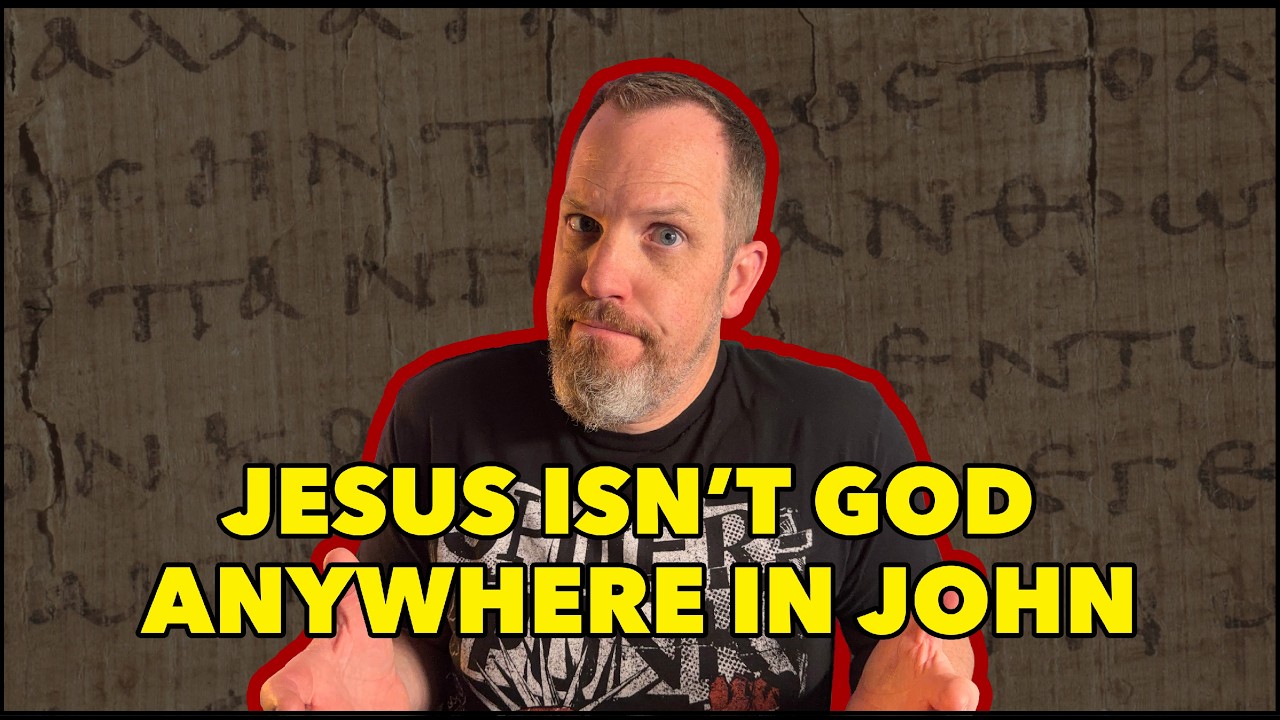
🔗 **Source:** [Jesus's Relationship to God in John](https://www.youtube.com/watch?v=3lLsIEqv2nU)
> [!note]+ Document Notes
> tags: #johannine-christology #logos-theology #biblical-hermeneutics #divine-agency #second-temple-judaism
> author: Dan McClellan
> source: YouTube
> reference: https://www.youtube.com/watch?v=3lLsIEqv2nU
> date created: 2024-12-28 16:45
>
> # 🏷️ Title: Jesus's relationship to God in John
>
<!-- deep-read:sections start -->
## 🧰 Action Inbox
- [H1] Research Philo's logos theology in "On Dreams" and "Questions on Genesis" — foundational pre-Gospel framework #logos-theology
- [H2] Study anarthrous vs. arthrous theos usage patterns — Greek grammatical analysis #biblical-hermeneutics
- [H3] Examine Justin Martyr's divine agency christology — post-Gospel development #patristics
## 🧭 Table of Contents
- [[#📝 Summary]]
- [[#📖 Main Content]]
- [[#🗒️ Notes]]
- [[#📚 References]]
- [[#🗣️ Paraphrase]]
- [[#📰 Newsletter]]
- [[#✅ Action Items]]
- [[#🧪 Hypotheses]]
- [[#📊 Methodology]]
- [[#❓ Questions]]
- [[#🔮 Future Research]]
- [[#💡 Implications]]
- [[#🧠 Learning Styles Assessment]]
- [[#📊 Accessibility Assessment]]
- [[#🌍 DEIB Assessment]]
- [[#✅ Logical Validity]]
- [[#🛡️ DARVO Analysis]]
- [[#🎯 Conclusion]]
### 🔗 References
- [Dan McClellan's YouTube Channel](https://www.youtube.com/@DanMcClellan)
- [Philo of Alexandria: On Dreams](https://www.earlyjewishwritings.com/philo.html)
## 📝 Summary
- Biblical scholar Dan McClellan argues that John's Gospel presents a hybrid logos/image christology rather than trinitarian doctrine
- Key evidence centers on anarthrous (without definite article) vs. arthrous (with definite article) usage of "theos" in Greek
- Jesus is presented as divine agent bearing God's name and presence, not as "the very God of Israel"
- This framework aligns with Second Temple period Jewish concepts of divine mediation and agency
- The interpretation has continuity from Philo (pre-Gospel) through Justin Martyr and Eusebius (post-Gospel)
## 📖 Main Content
The core argument challenges standard trinitarian readings of John's Gospel by examining Greek grammatical constructions and Second Temple Jewish theological concepts. McClellan demonstrates that when John refers to Jesus as "theos" without the definite article (anarthrous), this indicates divinity or deity status rather than identification as "the God of Israel" (ho theos with article).
This distinction appears consistently in Philo of Alexandria's logos theology, where the logos serves as a "second god" - divine but subordinate to the supreme deity. Similar patterns emerge in Justin Martyr's writings, where Christ bears the title "God" (anarthrous) due to unity of will with the Father, not ontological identity.
The "oneness" Jesus claims with the Father (John 10:30) is explained through mutual indwelling language that extends to believers (John 17), suggesting functional rather than essential unity. Thomas's confession "My Lord and my God" (John 20:28) addresses both Jesus as Lord and the Father whose presence Jesus bears as divine image.
## 🗒️ Notes
#### ⏱️ [00:00](https://youtu.be/3lLsIEqv2nU?t=0) — [H1] Introduction: Divine Agency Framework
- Key idea: Hybrid logos/image christology better explains John than trinitarian framework
- Evidence: "There is no part of the Gospel of John that describes Jesus as the very God of Israel"
#### ⏱️ [02:15](https://youtu.be/3lLsIEqv2nU?t=135) — [H1] John 1:1 Anarthrous Theos Analysis
- Key idea: "Theos" without definite article means deity/divine, not "the God of Israel"
- Evidence: "The logos here doesn't mean the God of Israel. It means deity, divine or a god"
#### ⏱️ [04:30](https://youtu.be/3lLsIEqv2nU?t=270) — [H2] Philo's Logos Theology Foundation
- Key idea: Pre-Gospel framework distinguishes logos as "second god" from supreme deity
- Evidence: "He that is truly God is one. But those that are improperly so-called are more than one"
#### ⏱️ [07:45](https://youtu.be/3lLsIEqv2nU?t=465) — [H2] Philo's "Second God" Concept
- Key idea: Logos explicitly called "second God" in Genesis commentary
- Evidence: "Nothing mortal can be made in the likeness of the most high one...but only in that of the second God, who is his logos"
#### ⏱️ [09:30](https://youtu.be/3lLsIEqv2nU?t=570) — [H2] Justin Martyr's Divine Agency Christology
- Key idea: Christ called "God" (anarthrous) due to unity of will, not essence
- Evidence: "Distinct from God the creator...in number but not in mind"
#### ⏱️ [13:15](https://youtu.be/3lLsIEqv2nU?t=795) — [H3] Eusebius Post-Nicene Preservation
- Key idea: Even after Nicaea, distinction between logos and "God overall" maintained
- Evidence: "Not having said, 'And the word was the God'...lest he assert that the word was the God who was over all"
#### ⏱️ [17:00](https://youtu.be/3lLsIEqv2nU?t=1020) — [H1] John 10:30-38 Oneness Analysis
- Key idea: "Father and I are one" explained as mutual indwelling, not ontological identity
- Evidence: "The father is in me and I am in the father"
#### ⏱️ [20:45](https://youtu.be/3lLsIEqv2nU?t=1245) — [H2] Psalm 82 Deification Theology
- Key idea: Jesus argues humans can be "gods" based on receiving God's word
- Evidence: "Your own scriptures say humans can be gods...because they receive the word of God"
#### ⏱️ [23:30](https://youtu.be/3lLsIEqv2nU?t=1410) — [H1] John 14 Image Christology
- Key idea: Seeing Jesus means seeing Father due to divine indwelling as image
- Evidence: "Whoever has seen me has seen the Father...the Father who dwells in me does his works"
#### ⏱️ [26:15](https://youtu.be/3lLsIEqv2nU?t=1575) — [H2] John 17 Extended Oneness Prayer
- Key idea: Believer unity with Jesus parallels Jesus's unity with Father
- Evidence: "That they may all be one. As you father are in me and I am in you, may they also be in us"
#### ⏱️ [28:45](https://youtu.be/3lLsIEqv2nU?t=1725) — [H1] John 20:28 Thomas's Confession
- Key idea: "My Lord and my God" addresses both Jesus and Father whose presence he bears
- Evidence: "Thomas finally gets it and addresses both of them separately"
#### ⏱️ [31:30](https://youtu.be/3lLsIEqv2nU?t=1890) — [H2] Exodus 23 Divine Name Angel
- Key idea: Angels bearing God's name can do what only God does
- Evidence: "Do not rebel against him for he will not pardon your transgression for my name is in him"
#### ⏱️ [35:15](https://youtu.be/3lLsIEqv2nU?t=2115) — [H2] Rabbinic Metatron Traditions
- Key idea: Angel with divine name can be called "Lord" in later Jewish literature
- Evidence: "Angel Metatron, whose name is like the name of his master"
#### ⏱️ [37:45](https://youtu.be/3lLsIEqv2nU?t=2265) — [H2] John 8:58 "I Am" Statement
- Key idea: Coded reference to divine name possession, not identity claim
- Evidence: "Jesus is saying guess who is the authorized possessor or bearer of the divine name"
#### ⏱️ [41:00](https://youtu.be/3lLsIEqv2nU?t=2460) — [H1] Conclusion: Hybrid Framework Summary
- Key idea: Logos theology plus image christology explains all Johannine data
- Evidence: "Jesus is never identified as the very god of Israel...but can take upon himself the title of theos anarthrously"
## 📚 References
- [Philo of Alexandria: On Dreams](https://www.earlyjewishwritings.com/philo.html)
- [Justin Martyr: Dialogue with Trypho](https://www.earlychristianwritings.com/justin.html)
- [Eusebius: Ecclesiastical Theology](https://archive.org)
- [McClellan, Dan: "Adonized Divine Images"](https://www.amazon.com)
## 🗣️ Paraphrase
- John's Gospel uses Greek grammar to distinguish Jesus as divine agent from the supreme God of Israel
- Second Temple Jewish theology provided framework for divine intermediaries bearing God's authority
- The "oneness" between Jesus and Father describes functional unity through mutual indwelling, not essential identity
## 📰 Newsletter
Biblical scholarship reveals fascinating insights about early Christian theology! New research on John's Gospel suggests the author used sophisticated Greek grammatical distinctions to present Jesus as a divine agent rather than "God" in the absolute sense. This "logos/image christology" has roots in Second Temple Judaism and helps explain puzzling passages about Jesus's relationship to the Father.
Key insight: When John calls Jesus "theos" without the definite article, it indicates divine status while maintaining distinction from "ho theos" (the God of Israel). This framework connects to ancient Jewish concepts of divine mediation through angels and intermediary figures.
This research challenges traditional trinitarian readings while revealing the rich theological creativity of early Christian communities.
Resources: [Learn WordPress](https://learn.wordpress.org/), [Developer Docs](https://developer.wordpress.org/), [WP-CLI](https://wp-cli.org/)
## ✅ Action Items
#### DevRel
- Developer advocacy: Create content explaining biblical scholarship methodology for tech audiences
- Education: Develop workshops on ancient language analysis using digital tools
- Community management: Foster respectful dialogue between traditional and critical scholarship approaches
#### OSPO
- License Compliance: Review usage of ancient text databases and translation rights
- Software Inventory: Catalog biblical research tools and their dependencies
- Community Engagement: Support open access biblical scholarship initiatives
#### Community
- Contributors: Help digitize and annotate ancient texts for research access
- Sponsors: Fund translation projects and manuscript digitization efforts
- Ecosystem: Connect biblical studies with digital humanities tools
## 🧪 Hypotheses
- Johannine christology reflects Second Temple Jewish divine mediation concepts rather than later trinitarian development
- Greek grammatical patterns (anarthrous vs. arthrous theos) systematically distinguish divine agents from supreme deity
- Early Christian logos theology developed from pre-existing Philonic frameworks
- Image christology explains mutual indwelling language better than essence-based models
### 📊 Methodology
- Comparative analysis of Greek grammatical constructions across Second Temple literature
- Historical-critical examination of pre- and post-Gospel theological developments
- Cognitive analysis of divine image concepts in ancient Near Eastern contexts
### ❓ Questions
- How did Johannine communities understand the relationship between functional and ontological christology?
- What role did temple destruction play in developing divine mediation theology?
- How do manuscript traditions affect interpretation of key christological passages?
### 🔮 Future Research
- Comparative study of divine agency concepts across Second Temple literature
- Analysis of early Christian reception of Philonic logos theology
- Investigation of image christology in other New Testament texts
### 💡 Implications
- Practice: Biblical interpretation benefits from ancient grammatical and cultural analysis
- Policy: Academic freedom important for challenging traditional theological interpretations
- Education: Need for better training in ancient languages and Second Temple Judaism
- Community: Respectful dialogue possible between confessional and critical scholarship
### 🧠 Learning Styles Assessment
Reading level estimate: Graduate (16+ Flesch-Kincaid Grade Level)
#### 👀 Visual learners
- Present: Greek text examples with highlighting and annotations
- Improve: Timeline diagrams showing theological development, comparison charts
#### 🔊 Aural learners
- Present: Full video lecture format with clear narration
- Improve: Audio-only version with enhanced pronunciation of Greek terms
#### 🗣️ Verbal learners
- Present: Extensive definition of technical terms, multiple examples
- Improve: Glossary of key concepts, analogy-based explanations
#### 🧩 Kinesthetic learners
- Present: Step-by-step textual analysis methodology
- Improve: Interactive Greek parsing exercises, hands-on manuscript analysis
#### 🧠 Logical learners
- Present: Systematic argument structure with evidence progression
- Improve: Decision trees for interpretive options, logical flowcharts
#### 🧑🤝🧑 Social learners
- Present: References to scholarly debates and community discussions
- Improve: Discussion prompts for study groups, peer review activities
#### 🧘♀️ Solitary learners
- Present: Self-contained argument suitable for individual study
- Improve: Reflection questions, self-assessment rubrics
#### 🌿 Naturalistic learners
- Present: Historical context and cultural environment connections
- Improve: Ancient world setting descriptions, archaeological connections
### 📊 Accessibility Assessment
#### Screen reader semantics
- Present: Clear heading structure and logical information hierarchy
- Improve: Alt text for Greek text images, ARIA labels for complex passages
#### Keyboard navigation
- Present: Standard video controls accessible via keyboard
- Improve: Timestamp navigation, transcript search functionality
#### Contrast and readability
- Present: High contrast text in video overlays
- Improve: Adjustable text size options, dark mode compatibility
#### Text resizing and reflow
- Present: Responsive video player design
- Improve: Scalable text overlays, flexible layout adaptation
#### Media and captions
- Present: Auto-generated captions available
- Improve: Professional captions with Greek transliterations, downloadable transcript
#### Forms and interactions
- Present: Basic video interaction controls
- Improve: Accessible annotation system, searchable timestamps
### 🌍 DEIB Assessment
#### Cultural breadth
- Present: Comparative analysis across Jewish and Christian traditions
- Improve: Include Eastern Orthodox perspectives, interfaith dialogue context
#### Inclusive language
- Present: Respectful treatment of different theological positions
- Improve: Acknowledge diverse scholarly backgrounds, avoid insider jargon
#### Neurodiversity support
- Present: Structured argument with clear section breaks
- Improve: Visual organizing aids, processing time considerations
#### Representation
- Present: Scholarly methodology accessible to diverse audiences
- Improve: Highlight contributions from diverse scholars, multiple viewpoints
#### Psychological safety
- Present: Academic tone that respects traditional beliefs while presenting evidence
- Improve: Content warnings for challenges to traditional views
### ✅ Logical Validity
#### Strong reasoning
- Deductive strength: Systematic analysis from grammatical patterns to theological conclusions
- Inductive strength: Multiple examples across centuries supporting framework consistency
- Causal reasoning: Historical development from Philo through early church demonstrates influence
- Analogical strength: Divine agency concepts applied consistently across different texts
#### Fallacies
- Appeal to authority: Relies heavily on scholarly consensus without addressing counter-arguments adequately
- False dichotomy: Presents logos/image vs. trinitarian as only interpretive options
#### Tone of voice
- Overall tone: Scholarly, confident, somewhat dismissive of alternative interpretations
### 🛡️ DARVO Analysis
- Deny: No evidence of denial patterns
- Attack: Some dismissive language toward trinitarian interpretations but within academic bounds
- Reverse victim/offender: Not applicable to this scholarly content
- Emotional cues: Passionate about scholarship but maintains academic tone
## 🎯 Conclusion
McClellan presents a compelling case that John's Gospel employs sophisticated theological concepts
---
## Full Transcript
[00:00] There is no part of the Gospel of John<br>[00:02] that describes Jesus as the very God of<br>[00:05] Israel. Hey everybody, I'm Dan Mlelen.<br>[00:07] I'm a scholar of the Bible and religion.<br>[00:09] And the christoologgical framework that<br>[00:12] makes the most sense of every syllable<br>[00:15] of the Gospel of John is not a<br>[00:17] trinitarian framework. It's not a divine<br>[00:20] identity framework. It's more of a<br>[00:22] divine agency framework. Specifically, a<br>[00:24] hybrid logos/image<br>[00:28] christoologgical framework. And I'm<br>[00:29] going to go through all of the relevant<br>[00:32] passages in the Gospel of John and<br>[00:34] explain why a hybrid logos/image<br>[00:37] Christologology best accounts for all of<br>[00:40] the data. Now, we're going to start at<br>[00:42] the beginning, a very, very fine place<br>[00:45] to start. This is John 1:1. This is the<br>[00:48] translation from the updated edition of<br>[00:49] the New Revised Standard Version. In the<br>[00:51] beginning was the word, and the word was<br>[00:53] with God, and the word was God. Now,<br>[00:56] this is not a great translation because<br>[00:59] it uses capital G god as the predicate<br>[01:02] in this predication and that's not<br>[01:05] really what the Greek is saying. Here's<br>[01:06] the Greek and I've underlined that third<br>[01:09] clause in holos and scholars have noted<br>[01:13] for a long time that theos here is an<br>[01:16] arthurus. I'm going to use that word<br>[01:18] quite a bit in this video and it means<br>[01:19] it does not have the definite article.<br>[01:22] Now, in ancient Greek there was not<br>[01:24] really an indefinite article. You could<br>[01:26] use the word for one to function kind of<br>[01:29] like an indefinite article, but when you<br>[01:32] were referring to the God of Israel,<br>[01:34] except for some syntactical<br>[01:37] constructions, you usually had the<br>[01:39] definite article. Now, this is one of<br>[01:42] those syntactical constructions where<br>[01:44] you can or you should omit the definite<br>[01:47] article when theos is being used<br>[01:49] qualitatively, and that's what the<br>[01:51] majority of scholars agree is going on<br>[01:53] in this passage. So the else here<br>[01:55] doesn't mean the God of Israel. It means<br>[01:57] deity, divine or a god. So the logos,<br>[02:03] the word was deity, was divine or was a<br>[02:07] god would be the three most precise<br>[02:10] translations of what's going on here.<br>[02:13] Now this does not identify the logos as<br>[02:16] the god of Israel. It also doesn't<br>[02:19] identify the logos as God the father.<br>[02:21] Now, there are folks who are going to<br>[02:23] argue like Daniel Wallace and others<br>[02:25] that this is still identifying the word<br>[02:28] as the God of Israel, just not as the<br>[02:31] father. And that requires presupposing<br>[02:36] that the God of Israel exhausted the<br>[02:38] category of deity for first century<br>[02:41] Jewish writers. And we have no data that<br>[02:44] support that conclusion. In fact, this<br>[02:46] passage fits right into a tradition that<br>[02:50] understands the logos, the word of God,<br>[02:53] as a distinct being from the very God of<br>[02:57] Israel. And we see this in Pho of<br>[03:00] Alexandria prior to the writing of the<br>[03:02] gospel of John and even after the<br>[03:03] writing of the gospel of John. We see it<br>[03:05] in Justin Martyr. We see it in origin.<br>[03:07] We even see it in Ucius writing after<br>[03:10] the council of Nika. And let's take a<br>[03:13] look at all of those writings to see if<br>[03:15] we can get a clearer understanding of<br>[03:17] what the author of the Gospel of John<br>[03:20] might be saying by referring to Jesus as<br>[03:22] the logos and saying the logos was theos<br>[03:25] without the definite article was deity<br>[03:28] was divine was a god. So we're going to<br>[03:31] start with pho in a text called on<br>[03:33] dreams. And I've brought this up many<br>[03:35] times. I'm sure there are those of you<br>[03:37] who are sick of seeing this passage. I'm<br>[03:40] sick of sharing this passage, but it's<br>[03:42] something that I think needs to be<br>[03:43] repeated. Now, in this particular<br>[03:46] passage, Pho is talking about Genesis<br>[03:48] 31:13, where God appears to Jacob. And<br>[03:53] in the Septuagent translation, which is<br>[03:56] the Hebrew Bible for Pho because he<br>[03:58] doesn't really understand Hebrew well<br>[04:00] enough to be engaging the text in<br>[04:02] Hebrew. In the Septuagent, it says, "I<br>[04:05] am the God who appeared to you in the<br>[04:08] place of God." And that's a<br>[04:10] headscratcher for Pho. And he asks his<br>[04:12] reader to inquire whether there are two<br>[04:15] gods. For we read, "I am the God that<br>[04:17] appeared to thee, not in my place, but<br>[04:20] in the place of God, as though it were<br>[04:23] anothers." What then are we to say? He<br>[04:26] that is truly God is one. But those that<br>[04:29] are improperly so-called are more than<br>[04:31] one. Accordingly, the holy word in the<br>[04:33] present instance has indicated him who<br>[04:35] is truly God by means of the articles,<br>[04:38] saying, "I am the God." While it omits<br>[04:41] the article when mentioning him who is<br>[04:43] improperly so-called, saying, "Who<br>[04:45] appeared to thee in the place not of the<br>[04:48] God, but simply of God." Here it gives<br>[04:51] the title of God to his chief word not<br>[04:55] from any superstitious nicity in<br>[04:57] applying names but with one aim before<br>[04:59] him to use words to express facts. So<br>[05:03] for Pho the logos is not the god of<br>[05:06] Israel but it can bear the title theos<br>[05:10] as long as it doesn't have the definite<br>[05:12] article to indicate that it is kind of a<br>[05:16] secondary god. In fact, Pho explicitly<br>[05:19] refers to the logos as a second god. In<br>[05:22] another text, questions and answers on<br>[05:24] Genesis uh chapter 2, section 62, he's<br>[05:28] talking about Genesis 9:6. Why does<br>[05:30] scripture say, "As if speaking of<br>[05:33] another God? In the image of God, he<br>[05:35] made man, and not in his own image. Most<br>[05:39] excellently and voraciously or truly<br>[05:42] this oracle was given by God. For<br>[05:44] nothing mortal can be made in the<br>[05:46] likeness of the most high one and father<br>[05:48] of the universe, but only<br>[05:51] in that of the second God, who is his<br>[05:55] logos. So the logos theology that the<br>[06:00] author of the Gospel of John is most<br>[06:01] likely building upon is probably<br>[06:04] informed by Pho's position that when<br>[06:07] you're talking about the God of Israel,<br>[06:09] you include the definite article. When<br>[06:12] you're talking about another deity or<br>[06:15] when you're talking about an entity who<br>[06:17] can be referred to as divine or as deity<br>[06:21] or as a god but is distinct from and<br>[06:23] subordinate to the very god of Israel,<br>[06:26] you omit the article and that clarifies<br>[06:29] for the readership or those hearing that<br>[06:32] this is not a reference to the very God<br>[06:34] of Israel. Now that's somebody writing<br>[06:36] decades prior to the gospel of John.<br>[06:38] Let's take a look at someone writing a<br>[06:40] few decades after the Gospel of John.<br>[06:42] This is Justin Martyr's text, Dialogue<br>[06:45] with Trifo. And one of the things that<br>[06:46] Justin Martyr is trying to do is<br>[06:48] establish that the word and the angel of<br>[06:52] the Lord are references to the<br>[06:55] pre-incarnate Jesus. And we have here<br>[06:58] from scripture I shall attempt to prove<br>[07:00] my assertion namely that there exists<br>[07:03] and is mentioned in scripture another<br>[07:06] God and Lord under the creator of all<br>[07:10] things who is also called an angel<br>[07:13] because he proclaims to man whatever the<br>[07:15] creator of the world above whom there is<br>[07:18] no other god wishes to reveal to them.<br>[07:22] And then a little further down we have<br>[07:24] then I said let us return to the<br>[07:26] scriptures and I shall try to convince<br>[07:28] you that he who is said to have appeared<br>[07:30] to Abraham, Jacob and Moses and is<br>[07:32] called God and by the way that's an<br>[07:36] arthus that is God without the definite<br>[07:38] article is distinct from God the creator<br>[07:41] and there God has the definite article<br>[07:44] distinct that is in number but not in<br>[07:47] mind and the word there for mind is<br>[07:49] gnomi and this is sometimes<br>[07:52] incorrectly translated essence by folks<br>[07:55] who want to read trinitarianism into<br>[07:58] Justin's text. It does not mean essence.<br>[08:01] It means mind, will, or intention.<br>[08:05] Going on, for I state that he never did<br>[08:07] or said anything other than what the<br>[08:09] creator above whom there is no other god<br>[08:12] desired that he do or say. In other<br>[08:15] words, the logos is under the God of<br>[08:20] Israel, the creator of the earth and<br>[08:25] gets that title God because he obeys him<br>[08:28] in all things. He is united in will and<br>[08:31] intent. And then we have further on<br>[08:34] chapter 61. So my friends, I said, I<br>[08:37] shall now show from the scriptures that<br>[08:39] God has begotten of himself a certain<br>[08:42] rational power as a beginning before all<br>[08:45] creatures. The Holy Spirit indicates<br>[08:47] this power by various titles. Sometimes<br>[08:49] the glory of the Lord at other times son<br>[08:52] or wisdom or angel or God, again<br>[08:56] anarthus, no definite article or lord or<br>[08:59] word. He even called himself commander<br>[09:02] and chief when he appeared in human<br>[09:04] guise to Joshua the son of noon. Indeed,<br>[09:08] he can justly lay claim to all these<br>[09:11] titles from the fact both that he<br>[09:14] performs the father's will and that he<br>[09:16] was begotten by an act of the father's<br>[09:19] will. Notice Justin does not say he is<br>[09:23] God. He says he can lay claim to the<br>[09:27] title the anarthus title theos so deity<br>[09:33] because he is born of an act of the<br>[09:36] father's will and the fact that he<br>[09:38] performs the father's will. He is united<br>[09:40] with the father in will and intention.<br>[09:43] So Jesus is a separate distinct being<br>[09:47] who can be referred to as the anarthus<br>[09:51] god. In other words, as divine, as<br>[09:54] deity, as a god, but he is not god<br>[09:57] overall. He is not the creator of the<br>[10:00] universe. He is not God the father. He<br>[10:02] is not the god of Israel. Consistently,<br>[10:06] Justin makes that distinction just like<br>[10:09] Pho did around a century before him.<br>[10:12] Just like the author of the Gospel of<br>[10:14] John is doing between the two. But let's<br>[10:18] go on to Ucius on ecclesiastical<br>[10:21] theology. This is book two, chapter 14<br>[10:23] in the red box. And what beginning he<br>[10:25] attributes to him, he John clarifies<br>[10:29] immediately afterward. Not having said,<br>[10:31] "And the word was the God with the<br>[10:33] addition of the article, lest he assert<br>[10:35] that the word was the God who was over<br>[10:38] all." So for Ucius the logos Jesus is<br>[10:43] not the god overall.<br>[10:46] That would be heresy to call the word<br>[10:49] the god overall. Again we have this<br>[10:51] appeal to the lack of the definite<br>[10:54] article in John 1:1.<br>[10:56] Ucceius is saying John very carefully<br>[10:59] distinguishes the logos from hos from<br>[11:03] the god of Israel from the god overall<br>[11:06] from the creator of the universe. The<br>[11:08] logos is none of those things. The logos<br>[11:11] is deity, is divine, or is a god.<br>[11:15] Further down, but it is necessary to<br>[11:16] confess that that which is beyond the<br>[11:18] universe is one single thing, divine,<br>[11:21] ineffable, good, simple, incomposite,<br>[11:24] something of one form, that is God<br>[11:28] himself. Here we're talking about hos,<br>[11:30] God with the definite article. intellect<br>[11:33] itself, word itself, wisdom itself,<br>[11:36] light itself, life itself, beauty<br>[11:38] itself, goodness itself, and whatever<br>[11:42] one could think is greater than these,<br>[11:44] and rather beyond all knowing and beyond<br>[11:46] all thought and conceiving.<br>[11:49] And one must also confess that the only<br>[11:51] begotten son of this God as if he were<br>[11:54] the image of the father who has been<br>[11:56] brought forth from him and is altogether<br>[11:58] and in every way most like the one who<br>[12:01] has begotten him. And one must confess<br>[12:03] that he too is God and theos and<br>[12:08] intellect and word and wisdom and life<br>[12:11] and light and image of the good and the<br>[12:14] beautiful itself. Not that he himself is<br>[12:17] the father, but that he is the only<br>[12:19] begotten son of the father. Not that he<br>[12:21] himself is the one who is who is<br>[12:24] unbegotten and without source, but the<br>[12:28] one who has been brought forth from the<br>[12:30] latter and who acknowledges as source<br>[12:33] the one who has begotten him. But if<br>[12:36] denying these arguments, Marcellus<br>[12:38] should allege that God and the word<br>[12:39] within him were the same, defining God<br>[12:42] as incomposite and simple, see then how<br>[12:45] he confesses neither the father nor the<br>[12:48] son, but openly either professes what<br>[12:49] Jews believe or introduces sealianism<br>[12:52] because he alleges that the same is<br>[12:55] father and son. So to be the god of<br>[12:58] Israel is to be the father. The word may<br>[13:03] be theos anarthurously deity divine a<br>[13:06] god but the word is not the very god of<br>[13:08] Israel because that is to be the father.<br>[13:11] Further on and indeed John also shows<br>[13:14] this when he says and the word was with<br>[13:17] god. But since it was fitting for us to<br>[13:19] know also to what rank he belonged, he<br>[13:22] necessarily added, "And the word was<br>[13:24] God." And this is the anarthus theos.<br>[13:28] For how was he who was begotten from the<br>[13:31] one and only unbegotten God? That's hos.<br>[13:34] That's theos with the article. That's<br>[13:36] God the father<br>[13:38] not going to be God. And here divine or<br>[13:42] deity would probably be a better<br>[13:44] translation because this is the anarthus<br>[13:47] theos. This is the theos that is<br>[13:50] distinct from hos. For if that which has<br>[13:54] been begotten of the flesh is flesh and<br>[13:56] that which has been begotten of the<br>[13:58] spirit is spirit. Notice we have the<br>[14:01] flesh and the spirit and then flesh and<br>[14:03] spirit. The qualitative use. So we're<br>[14:06] referring to something broader<br>[14:08] distinguished from the single main<br>[14:11] instantiation of these things.<br>[14:15] According to the saving teaching, it<br>[14:17] would follow too that that which has<br>[14:19] been begotten from God hos would be God<br>[14:24] anus theos. For this reason also the<br>[14:28] word was God. Anarus theos even God the<br>[14:32] maker and fashioner of all things. Again<br>[14:35] here, God is an Arthurus. Now, lest you<br>[14:38] get confused by referring to Jesus as<br>[14:42] God, the maker and fashioner of all<br>[14:45] things, the Greek words are distinct<br>[14:47] from the Greek words that are used to<br>[14:49] refer to God the father as the creator<br>[14:52] of all things because we don't have<br>[14:56] petis or poetes<br>[14:59] if you're nasty. What we have in the<br>[15:01] Greek is peticos. And then the word for<br>[15:04] fashioner is not deorgos,<br>[15:07] it's deorgos.<br>[15:09] And this is an adjective and this refers<br>[15:12] to one that has the capacity of. It is<br>[15:15] one characterized by that verbal action.<br>[15:18] So when it refers to Jesus as theos<br>[15:21] without the article and that doesn't<br>[15:24] refer to Jesus as the creator and the<br>[15:27] demi urge of all things but instead the<br>[15:30] one who is capable of making and the one<br>[15:33] who is characterized by fashioning all<br>[15:36] things. It's again distinguishing the<br>[15:39] word from the very god of Israel. So we<br>[15:43] have all the way down in Ucius after<br>[15:46] Nika, we have the preservation of this<br>[15:49] logos theology that understands the<br>[15:51] logos to be subordinate to the God of<br>[15:53] Israel to be a distinct being from the<br>[15:56] God of Israel and we can see it before<br>[15:59] the gospel of John and we can see it<br>[16:00] after the gospel of John. So the best<br>[16:02] reading of the gospel of John based on<br>[16:05] the christoologgical frameworks based on<br>[16:09] the ideas about divine mediation based<br>[16:11] on the ideas about God's nature and<br>[16:13] God's relationship to their creations<br>[16:16] based on all of those things at the end<br>[16:18] of the first century CE when the gospel<br>[16:20] of John was written.<br>[16:22] We have to understand John 1:1 to be<br>[16:24] referring to the logos as theos meaning<br>[16:28] deity divine or a god not the god of<br>[16:32] Israel. Let's move on to John 10. This<br>[16:36] is where in verse 30 we have Jesus<br>[16:38] saying the father and I are one. Let's<br>[16:40] keep going. The Jews took up stones<br>[16:42] again to stone him. Jesus replied I have<br>[16:45] shown you many good works from the<br>[16:46] father. For which of these are you going<br>[16:48] to stone me? The Jews answered, "It is<br>[16:50] not for a good work that we are going to<br>[16:52] stone you, but for blasphemy, because<br>[16:54] you, though only a human, are making<br>[16:56] yourself God. We're going to come back<br>[16:58] to this."<br>[17:00] Jesus answered, "Is it not written in<br>[17:02] your law, I said you are gods? If those<br>[17:06] to whom the word of God came were called<br>[17:09] gods and the scripture cannot be<br>[17:11] enulled, can you say that the one whom<br>[17:13] the father has sanctified and sent into<br>[17:15] the world is blaspheing because I said I<br>[17:17] am God's son. If I am not doing the<br>[17:20] works of my father, then do not believe<br>[17:21] me. But if I do them, even though you do<br>[17:23] not believe me, believe the works so<br>[17:26] that you may know and understand that<br>[17:28] the father is in me and I am in the<br>[17:31] father. So we begin in verse 30 by<br>[17:33] explaining the father and I are one. We<br>[17:35] end in verse 38<br>[17:38] by saying there is a mutual inddwelling.<br>[17:41] Now we're going to see later on that<br>[17:42] this is the nature of that oneness. The<br>[17:45] oneness is not saying I am God. The<br>[17:48] oneness is the father is dwelling in me<br>[17:51] and I am dwelling in the father. And<br>[17:53] that mutual inddwelling has an<br>[17:55] explanation that we're going to get to<br>[17:56] as well. But here I want to talk about<br>[17:59] something going on in the Greek. So,<br>[18:01] here's the Greek of those nine verses.<br>[18:03] Now, I've underlined uh this passage<br>[18:07] here, which is translated because you<br>[18:09] being a man, make yourself God. Capital<br>[18:12] G, God, the God. That's not what's in<br>[18:15] the Greek. Once again, we have the<br>[18:17] anarthus use of theos in the accusative<br>[18:21] theon. And there's no definite article.<br>[18:24] Just like anthropos in the parallel<br>[18:27] clause, you being anthropos are making<br>[18:30] yourself theos. Both of them are<br>[18:32] anarthus. Both of them are intended to<br>[18:35] be understood qualitatively. You being<br>[18:38] human or ahuman are making yourself<br>[18:41] divine or a god. That's the accusation.<br>[18:46] They are not saying you are making<br>[18:48] yourself the very god of Israel. And the<br>[18:52] way Jesus responds confirms that because<br>[18:56] what does Jesus do? Jesus quotes Psalm<br>[18:59] 82 from the Greek translation that is<br>[19:01] underlined you are God's estice<br>[19:07] no definite article.<br>[19:09] So within the logos framework where hos<br>[19:14] is distinct from theos and theos can be<br>[19:17] a title applied to beings that are not<br>[19:20] god and we've already seen that this can<br>[19:24] be the logos but it can also be other<br>[19:26] entities as well. So Jesus is literally<br>[19:30] saying your own scriptures that you<br>[19:33] cannot reject or annull or deny or break<br>[19:37] say that humans can be gods. So your<br>[19:40] accusation, you being a human, make<br>[19:42] yourself a god. That is not blasphemy.<br>[19:46] Your own scriptures say humans can be<br>[19:49] gods. Not the God of Israel can be gods.<br>[19:53] They can have that title applied to<br>[19:56] them. And why are they gods? Well,<br>[19:58] because the word of God came to them.<br>[20:00] And this is making use of an<br>[20:02] interpretation of Psalm 82 that we would<br>[20:04] see popping up in several different<br>[20:06] places in later rebbitic literature<br>[20:08] where Psalm 82 is about the Israelites<br>[20:10] at Sinai. When they received the law of<br>[20:12] Moses, the word of God, they became<br>[20:16] immortal. They were freed from the power<br>[20:17] of the angel of death. They became gods.<br>[20:20] But then upon sinning with the golden<br>[20:22] calf, they were relegated back down to<br>[20:24] mortality. So they're being rendered<br>[20:27] immortal made them gods. And Jesus is<br>[20:32] clarifying for his accusers, humans can<br>[20:35] become gods. Your own scriptures call<br>[20:38] humans gods because they receive the<br>[20:41] word of God. And guess what? That word<br>[20:44] is standing before you right now. That<br>[20:47] word is going to make other humans gods<br>[20:50] as well. John's sotariology is a<br>[20:52] sotariology of divonization. And that's<br>[20:55] what's probably going on in John 1:12,<br>[20:58] giving them power to become the<br>[20:59] technathu, the children of God. And<br>[21:03] we're going to see later on as well that<br>[21:05] salvation is going to involve<br>[21:07] unification with God, becoming one with<br>[21:09] Jesus just as Jesus is one with God. So<br>[21:13] that's all wrapped up in John 10:30<br>[21:16] through38 because Jesus says, "I and the<br>[21:18] father are one." And then explains, "The<br>[21:20] father is in me. I am in the father."<br>[21:22] that mutual inddwelling will be extended<br>[21:24] to Jesus's followers. They will become<br>[21:27] divonized. I talked about this in a<br>[21:29] previous video where I was responding to<br>[21:31] Ali Beth Stucky and Jacob Hansen's<br>[21:33] discussion of theosis or deification or<br>[21:37] divonization. So the gospel of John has<br>[21:40] a divonization sotariology. And Jesus is<br>[21:43] saying you can't say it's blasphemous<br>[21:46] for me to identify as divine because<br>[21:48] your own scriptures say humans can be<br>[21:51] divine. That's what's going on with this<br>[21:53] oneness. Now, let's go look a little<br>[21:56] closer at this mutual inddwelling. We're<br>[21:58] going to John 14. We're going to look at<br>[22:00] verses 5-1. Thomas said to him, "Lord,<br>[22:04] we do not know where you are going. How<br>[22:05] can we know the way?" Jesus said to him,<br>[22:07] "I am the way and the truth and the<br>[22:09] life. No one comes to the Father except<br>[22:10] through me. If you know me, you will<br>[22:12] know my father also. From now on, you do<br>[22:16] know him and have seen him." Philip said<br>[22:19] to him,"Lord, show us the Father, and we<br>[22:21] will be satisfied." Jesus said to him,<br>[22:23] "Have I been with you all this time,<br>[22:25] Philillip, and you still do not know me?<br>[22:27] Whoever has seen me has seen the<br>[22:31] Father?" How can you say, "Show us the<br>[22:33] Father?" Do you not believe that I am in<br>[22:35] the Father, and the Father is in me,<br>[22:37] just like we saw in John 10:38. The<br>[22:40] words that I say to you, I do not speak<br>[22:42] on my own, but the Father who dwells in<br>[22:44] me does his works. believe me that I am<br>[22:47] in the father and the father is in me.<br>[22:49] But if you do not then believe because<br>[22:50] of the works themselves. So Jesus is<br>[22:53] saying basically the same thing that he<br>[22:54] said to his accusers to Thomas and<br>[22:57] Philillip and whoever else was with him.<br>[23:00] But isn't this peculiar that Jesus says<br>[23:04] he who has seen me has seen the father<br>[23:07] because of this mutual indwelling<br>[23:08] because the father dwells in me. This is<br>[23:14] an image christologology because this is<br>[23:17] the intuitive logic of divine images. In<br>[23:19] the ancient world in the time when the<br>[23:21] gospel of John was written long before<br>[23:24] and even after the public space was<br>[23:27] saturated with divine images and other<br>[23:31] material media that could manifest or<br>[23:34] channel or reify divine agency and<br>[23:38] divine power. And to see a divine image<br>[23:41] that represented a specific deity was to<br>[23:44] see that deity. And we're going to go<br>[23:46] into a little more detail, but right now<br>[23:48] I want to go to John 17. We're going to<br>[23:50] talk a little bit more about this<br>[23:51] oneness. And now I am no longer in the<br>[23:54] world, but they are in the world and I<br>[23:56] am coming to you. Holy Father, protect<br>[23:58] them in your name that you have given me<br>[24:02] so that they may be one as we are one.<br>[24:05] Here Jesus is praying that that mutual<br>[24:08] inddwelling, the oneness that Jesus<br>[24:10] asserts with the father in John 10:30 be<br>[24:13] extended to his followers. And then<br>[24:16] we've got verses 20- 23. I ask not only<br>[24:18] on behalf of these, but also on behalf<br>[24:20] of those who believe in me through their<br>[24:22] word that they may all be one. As you<br>[24:25] father are in me and I am in you, may<br>[24:28] they also be in us so that the world may<br>[24:31] believe that you have sent me the glory<br>[24:33] that you have given me. I have given<br>[24:36] them so that they may be one as we are<br>[24:39] one. I in them and you in me that they<br>[24:42] may become completely one so that the<br>[24:45] world may know that you have sent me and<br>[24:47] have loved them even as you have loved<br>[24:51] me.<br>[24:52] So here we get a further clarification,<br>[24:55] a repetition of this notion that Jesus<br>[24:58] wants his followers to become one with<br>[25:00] him exactly as he is one with the<br>[25:02] father. That is the oneness that Jesus<br>[25:04] asserts in John 10:30 that he clarifies<br>[25:07] in verse 38 is a result of this mutual<br>[25:10] inddwelling. And then in John 14 he says<br>[25:12] that mutual inddwelling results in<br>[25:15] seeing the father when you see Jesus.<br>[25:17] And now John 17, that mutual<br>[25:20] inddwelling, that oneness is going to be<br>[25:22] extended to Jesus's followers. He prays<br>[25:25] three different times that his followers<br>[25:28] become one with him precisely as he is<br>[25:31] one with the father. Now let's get to a<br>[25:34] passage that a lot of people think is<br>[25:37] the highest christologology that we have<br>[25:39] in all the New Testament. And this is<br>[25:41] the passage that is always thrown at me<br>[25:44] when folks want to insist that I'm<br>[25:46] wrong. that the Gospel of John never<br>[25:49] represents Jesus as God. That's John 20.<br>[25:52] We're looking at verses 26- 29. A week<br>[25:54] later, his disciples were again in the<br>[25:56] house and Thomas was with them. Although<br>[25:59] the doors were shut, Jesus came and<br>[26:01] stood among them and said, "Peace be<br>[26:03] with you." Then he said to Thomas, "Put<br>[26:06] your finger here and see my hands. Reach<br>[26:08] out your hand and put it in my side. Do<br>[26:10] not doubt, but believe." Thomas answered<br>[26:13] him, "My Lord and my God." Jesus said to<br>[26:16] him, "Have you believed because you have<br>[26:18] seen me? Blessed are those who have not<br>[26:20] seen and yet have come to believe." And<br>[26:24] here's the Greek of this passage, verse<br>[26:26] 28, down at the bottom.<br>[26:31] My Lord and my God. Now, why is Thomas<br>[26:35] calling Jesus,<br>[26:38] my God, the God of me with the definite<br>[26:42] article? Is it because Jesus is hotheos?<br>[26:45] No. It is because Thomas finally gets<br>[26:49] what he saw Philillip fail to get in<br>[26:52] John 14 that to see Jesus is to see the<br>[26:56] father because the father dwells in<br>[26:58] Jesus. Thomas now gets it and addresses<br>[27:02] both of them separately. My lord and my<br>[27:07] god.<br>[27:08] My God is born by my Lord. Is manifested<br>[27:13] by my Lord. I look at my Lord and I also<br>[27:16] see my God. I confess the two of you.<br>[27:22] The Lord who is the image that bears the<br>[27:24] presence of the God. So throughout the<br>[27:29] gospel of John, the word Jesus is<br>[27:32] distinguished from the God of Israel.<br>[27:34] But the word is one the logos which the<br>[27:38] author of the gospel of John is taking<br>[27:39] up from Pho and probably from a broader<br>[27:43] tradition of logos theology and is<br>[27:45] sharing in the same way that it would<br>[27:47] later be shared by Justin Martyr and<br>[27:49] even later by more trinitarian oriented<br>[27:52] thinkers like origin and also we've got<br>[27:55] this image christologology<br>[27:57] that Jesus is the image of God therefore<br>[28:01] bears God's power and presence and<br>[28:03] agency See, and to see Jesus is to see<br>[28:06] God because Jesus bears those things.<br>[28:10] And I wrote a whole book about divine<br>[28:12] images in the Hebrew Bible called<br>[28:13] Adonized Divine Images, a cognitive<br>[28:15] approach where I develop a theoretical<br>[28:17] framework based on the cognitive science<br>[28:20] of religion for what's going on with the<br>[28:23] intuitive logic of divine images. Why do<br>[28:26] divine images work? Why were they so<br>[28:28] ubiquitous? Why are the features that<br>[28:31] made divine images possible still<br>[28:33] bubbling to the surface of our cognition<br>[28:36] even down to today? And one thing that<br>[28:39] Jesus says in John 17 that the father<br>[28:42] has given a divine name to Jesus is a<br>[28:46] critical element of that because we<br>[28:48] already have in the Hebrew Bible a<br>[28:50] divine image who does the same things<br>[28:53] who bears God's name and as a result can<br>[28:56] do things that only God is supposed to<br>[28:57] be able to do. Let's go take a look at<br>[28:59] Exodus 23:es 20 and 21. I am going to<br>[29:02] send an angel in front of you to guard<br>[29:04] you on the way and to bring you to the<br>[29:06] place that I have prepared. Be attentive<br>[29:08] to him and listen to his voice. Do not<br>[29:11] rebel against him for he will not pardon<br>[29:14] your transgression<br>[29:16] for my name is in him. And the idea here<br>[29:19] is that the endowment of the angel with<br>[29:22] divine name, the inddwelling of the name<br>[29:25] in the angel authorizes the angel to do<br>[29:28] the things that only God is supposed to<br>[29:30] be able to do. Because this reference to<br>[29:32] not forgiving your transgression, that<br>[29:34] is word for word, the exact way that the<br>[29:36] author of Joshua 24:19 refers to L as a<br>[29:40] jealous God. He will not forgive your<br>[29:43] transgression. Now, if you go look at<br>[29:45] chapter 5 of my book, I go into a great<br>[29:48] deal of detail regarding where this<br>[29:50] concept of the Malik Adonai, the angel<br>[29:53] of Adonai or the angel of the Lord comes<br>[29:56] from. And I go into a great bit of<br>[29:58] detail about the role of the name in<br>[30:01] authorizing the angel. But we have in<br>[30:05] John this reference to Jesus being given<br>[30:07] the name and also being given God's<br>[30:09] glory and passing on that glory to<br>[30:12] others. And we can see in other second<br>[30:15] temple period Jewish literature the idea<br>[30:18] of angels doing what only God is<br>[30:21] supposed to be able to do because they<br>[30:23] are endowed with the divine name. We see<br>[30:25] that in the apocalypse of Abraham with<br>[30:27] the angel Yahawel. And then in later<br>[30:29] rabbitic literature we've got in<br>[30:31] Sanhedrin 38b the statement the<br>[30:33] Gammorrah relates a certain heretic said<br>[30:36] to Rav Edit it is written in the verse<br>[30:39] concerning God and to Moses he said come<br>[30:41] up to the Lord. This is Exodus 24:1. The<br>[30:44] heretic raised a question. It should<br>[30:46] have stated, "Come up to me." Ravidit<br>[30:49] said to him, "This term, the Lord," in<br>[30:51] that verse is referring to the angel<br>[30:53] Medatron, whose name is like the name of<br>[30:57] his master. As it is written, "Behold, I<br>[31:00] send an angel before you to keep you in<br>[31:02] the way and to bring you to the place<br>[31:03] that I have prepared. Take heed of him<br>[31:04] and obey his voice. Do not defy him, for<br>[31:06] he will not pardon your transgression,<br>[31:08] for my name is in him." So we have this<br>[31:12] passage in later rabbitic literature<br>[31:15] saying, "Hey, the angel who bears God's<br>[31:17] name can be referred to as Adoni, can be<br>[31:22] referred to as the very God of Israel."<br>[31:25] In fact, we have that angel in Exodus<br>[31:27] 3:2 appearing to Moses in the flame of<br>[31:30] fire in the midst of the burning bush.<br>[31:31] Later in verse 6, that angel says, "I am<br>[31:35] the God of your father, the God of<br>[31:37] Abraham, the God of Isaac, the God of<br>[31:39] Jacob." Similarly, in Genesis 31:13,<br>[31:42] that entity that appeared to Jacob and<br>[31:45] said, "I am the God Bethl or the God of<br>[31:47] Bethl, that is supposed to be the<br>[31:50] messenger. That is supposed to be the<br>[31:51] angel." So by virtue of possessing the<br>[31:54] divine name having the divine name<br>[31:57] indwelling the angel or any entity that<br>[32:01] entity can then be referred to as God<br>[32:04] can do what only God is supposed to be<br>[32:06] able to do precisely as Jesus does.<br>[32:10] So we have in the gospel of John a<br>[32:13] hybrid logosimage Christologology where<br>[32:17] Jesus is the logos that pre-existed his<br>[32:20] incarnation in the flesh and enables him<br>[32:24] to be referred to as theos without the<br>[32:25] definite article. But there's also an<br>[32:27] image Christology that facilitates this<br>[32:29] notion that to see Jesus is to see God<br>[32:32] the father because the father dwells<br>[32:33] within Jesus and Jesus dwells within the<br>[32:36] father. And this is what facilitates<br>[32:38] Thomas's confession, my Lord and my God.<br>[32:41] It's not because Jesus is both Lord and<br>[32:44] God. It's because Jesus is Lord and<br>[32:46] bears the presence of God that Thomas is<br>[32:49] also addressing. Now, there's another<br>[32:52] passage that I haven't gotten to, and<br>[32:54] that's John 8:58. Here are verses 56<br>[32:57] through 59. Your ancestor Abraham<br>[32:59] rejoiced that he would see my day. He<br>[33:01] saw it and was glad. By the way, this is<br>[33:04] probably a reference to the apocalypse<br>[33:05] of Abraham. That's where you have this<br>[33:08] notion that Abraham rejoiced about this<br>[33:10] coming day. Anyway, then the Jews said<br>[33:12] to him, "You are not yet 50 years old,<br>[33:14] and have you seen Abraham?" Jesus said<br>[33:16] to them, "Very truly, I tell you, before<br>[33:18] Abraham was, I am." So, they picked up<br>[33:21] stones to throw at him. But Jesus hid<br>[33:24] himself and went out of the temple. Now,<br>[33:26] as a lot of people have pointed out, I<br>[33:28] am egoimi in Greek, as you can see<br>[33:30] underlined here, is a coded reference to<br>[33:33] the divine name. The divine name,<br>[33:36] Adonai, the tetetrogrammaton is not the<br>[33:39] phrase I am. It is not translated egoi<br>[33:43] into Greek. But if we go back to Exodus<br>[33:45] 3:14, when Moses asks God, whom should I<br>[33:49] say has sent me? God says in Hebrew,<br>[33:53] I am who I am or I will be what I will<br>[33:56] be. In the ancient Greek translation,<br>[33:58] the Septuagent here is a translation of<br>[34:00] the Septuagent into English. And God<br>[34:02] said to Moes, I am the one who is. And<br>[34:05] he said, thus shall you say to the sons<br>[34:07] of Israel, the one who is has sent me to<br>[34:10] you. Here is the Greek. God said to<br>[34:12] Moses, ego. So eia has been translated<br>[34:16] into Greek as ego. I am the one who is<br>[34:20] or the being one. And then God goes on<br>[34:23] to say tell him hon<br>[34:26] the being one or the one who is sent<br>[34:29] you. So ego and me here is actually not<br>[34:32] what is presented as the specific name<br>[34:34] of God but it can function as a coded<br>[34:37] reference to the divine name. And we can<br>[34:41] go on to look at places like Deuteronomy<br>[34:44] 32:39 where God says, "See, see see that<br>[34:47] I am and there is no God except me."<br>[34:51] This is in Hebrew anihoo. I am he. But<br>[34:55] it gets translated into Greek as we see<br>[34:57] here as egoimi. So anihoo as well as eia<br>[35:03] are translated into the ancient Greek as<br>[35:06] ego. So it's not the divine name. It's a<br>[35:10] coded reference to the divine name. And<br>[35:12] it happens uh several more times in<br>[35:14] duterro Isaiah. For instance, here<br>[35:16] Isaiah 43:10, be my witnesses. I too am<br>[35:18] a witness says the Lord God and the<br>[35:20] servant whom I have chosen so that you<br>[35:21] may know and believe and understand that<br>[35:23] anihoo I am or as it's translated into<br>[35:27] ancient Greek, ego me. So in John 8:58<br>[35:32] Jesus is saying ego emi which is a coded<br>[35:35] reference to the divine name not because<br>[35:38] Jesus is saying I am the I am but<br>[35:41] because Jesus is saying guess who is the<br>[35:43] authorized possessor or bearer of the<br>[35:46] divine name. Jesus is kind of going<br>[35:49] divine name and winking at the folks to<br>[35:52] indicate he is the one who has been<br>[35:55] endowed with the divine name who is<br>[35:58] indwelled by the divine name who is the<br>[36:00] authorized bearer of the divine name<br>[36:02] based on the conceptual template of the<br>[36:06] messenger of Adonai or the angel of the<br>[36:08] lord and early Christians as we saw with<br>[36:11] Justin martyr and others would identify<br>[36:14] the pre-existent angel of the lord as<br>[36:18] Jesus as the logos but this is just an<br>[36:21] image christologology because the angel<br>[36:24] is functioning as a divine image as I<br>[36:26] discussed in chapter 5 of the book<br>[36:29] Adonai's divine images so from beginning<br>[36:31] to end in the gospel of John Jesus is<br>[36:34] never identified as the very god of<br>[36:36] Israel Jesus is the logos the word who<br>[36:39] can be referred to as theos anarthusly<br>[36:42] without the definite article because the<br>[36:44] word is not the very god of Israel but<br>[36:47] The word can take upon himself the title<br>[36:50] of theos as a distinct entity as a<br>[36:54] second god as pho says as another god as<br>[36:58] Justin Martyr says as a subordinate<br>[37:00] deity who is united with god not in<br>[37:04] number not in being but in gnomi in mind<br>[37:08] will or intent. It's not until the late<br>[37:11] 2nd century where the apologists really<br>[37:13] bring on the Greek philosophy that we<br>[37:15] get these ontological ways of thinking<br>[37:17] about the relationship of Jesus to God<br>[37:21] and we merge them into one being one usa<br>[37:26] that we get the later idea of Jesus as<br>[37:30] the very God of Israel the one and only<br>[37:33] true God that's not anywhere in the<br>[37:35] gospel of John. So we have the logos<br>[37:37] theology and then we have the image<br>[37:39] christologology that is based on the<br>[37:42] idea that an animate being can bear the<br>[37:45] presence and the power and the authority<br>[37:49] of the God that they index and Jesus<br>[37:53] indwwells God. God indwells Jesus. That<br>[37:55] mutual indwelling is basically a an<br>[37:58] incremental conceptual elaboration on<br>[38:01] the idea of the animate divine image<br>[38:03] that we read in the Hebrew Bible. that<br>[38:06] is the messenger of Adonai, the angel of<br>[38:08] the Lord with whom Jesus would later be<br>[38:11] identified. So the christoologgical<br>[38:13] framework that makes the easiest and the<br>[38:16] best sense of every word of the gospel<br>[38:18] of John is a hybrid logos/image<br>[38:21] christologology has nothing to do with<br>[38:23] the trinity. It has nothing to do with<br>[38:24] the notion that Jesus is the very God of<br>[38:27] Israel because the gospel of John does<br>[38:28] not present Jesus as the very God of<br>[38:31] Israel. Jesus has come from the very God<br>[38:33] of Israel. But Jesus is only theos and<br>[38:36] arthrously. And when Thomas says, "My<br>[38:39] Lord and my God," it's not because Jesus<br>[38:42] is Thomas's God. It's because Jesus<br>[38:45] bears the presence of Thomas's God. And<br>[38:48] Thomas finally gets what Philip couldn't<br>[38:50] get in John 14. Sees both of them and<br>[38:53] confesses, "My Lord and my God." That's<br>[38:58] what's going on in the Gospel of John.<br>[38:59] And that's why the Gospel of John does<br>[39:00] not identify Jesus as God.
<!-- deep-read:sections end -->
📄 **Full text:** ![[Full Document Contents/Articles/Jesus's Relationship to God in John.md|Jesus's Relationship to God in John by YouTube]]
## Highlights
- father. And that requires presupposing that the God of Israel exhausted the category of deity for first century Jewish writers. And we have no data that support that conclusion. In fact, this passage fits right into a tradition that understands the logos, the word of God, as a distinct being from the very God of Israel. And we see this in Pho of ([View Highlight](https://read.readwise.io/read/01kr22frkdk4snmwtr8dps59z1))
- Tags: 👻 ai highlighted
- Alexandria prior to the writing of the gospel of John and even after the writing of the gospel of John. We see it in Justin Martyr. We see it in origin. We even see it in Ucius writing after the council of Nika. And let's take a look at all of those writings to see if we can get a clearer understanding of what the author of the Gospel of John might be saying by referring to Jesus as the logos and saying the logos was theos without the definite article was deity was divine was a god. So we're going to ([View Highlight](https://read.readwise.io/read/01kr22frkkx4hd8pe227sewf12))
- Tags: 👻 ai highlighted
- one. Accordingly, the holy word in the present instance has indicated him who is truly God by means of the articles, saying, "I am the God." While it omits the article when mentioning him who is improperly so-called, saying, "Who appeared to thee in the place not of the God, but simply of God." Here it gives the title of God to his chief word not from any superstitious nicity in applying names but with one aim before him to use words to express facts. So ([View Highlight](https://read.readwise.io/read/01kr22frmbfh4b185vt8rf6jv7))
- Tags: 👻 ai highlighted
- "And the word was the God with the addition of the article, lest he assert that the word was the God who was over all." So for Ucius the logos Jesus is not the god overall. That would be heresy to call the word the god overall. Again we have this appeal to the lack of the definite article in John 1:1. Ucceius is saying John very carefully distinguishes the logos from hos from ([View Highlight](https://read.readwise.io/read/01kr22frnt7z9rdhqc6kht1jna))
- Tags: 👻 ai highlighted
- entity can then be referred to as God can do what only God is supposed to be able to do precisely as Jesus does. So we have in the gospel of John a hybrid logosimage Christologology where Jesus is the logos that pre-existed his incarnation in the flesh and enables him to be referred to as theos without the definite article. But there's also an image Christology that facilitates this notion that to see Jesus is to see God ([View Highlight](https://read.readwise.io/read/01kr22frwrx8v2q478s5rh972y))
- Tags: 👻 ai highlighted
- the very God of Israel the one and only true God that's not anywhere in the gospel of John. So we have the logos theology and then we have the image christologology that is based on the idea that an animate being can bear the presence and the power and the authority of the God that they index and Jesus indwwells God. God indwells Jesus. That mutual indwelling is basically a an incremental conceptual elaboration on ([View Highlight](https://read.readwise.io/read/01kr22fs410kcg2g2e9nqq9p3k))
- Tags: 👻 ai highlighted
- the idea of the animate divine image that we read in the Hebrew Bible. that is the messenger of Adonai, the angel of the Lord with whom Jesus would later be identified. So the christoologgical framework that makes the easiest and the best sense of every word of the gospel of John is a hybrid logos/image christologology has nothing to do with the trinity. It has nothing to do with the notion that Jesus is the very God of Israel because the gospel of John does not present Jesus as the very God of ([View Highlight](https://read.readwise.io/read/01kr22fsc8tdephn1kz3j81ndt))
- Tags: 👻 ai highlighted