Just Trying to Figure Out My Job
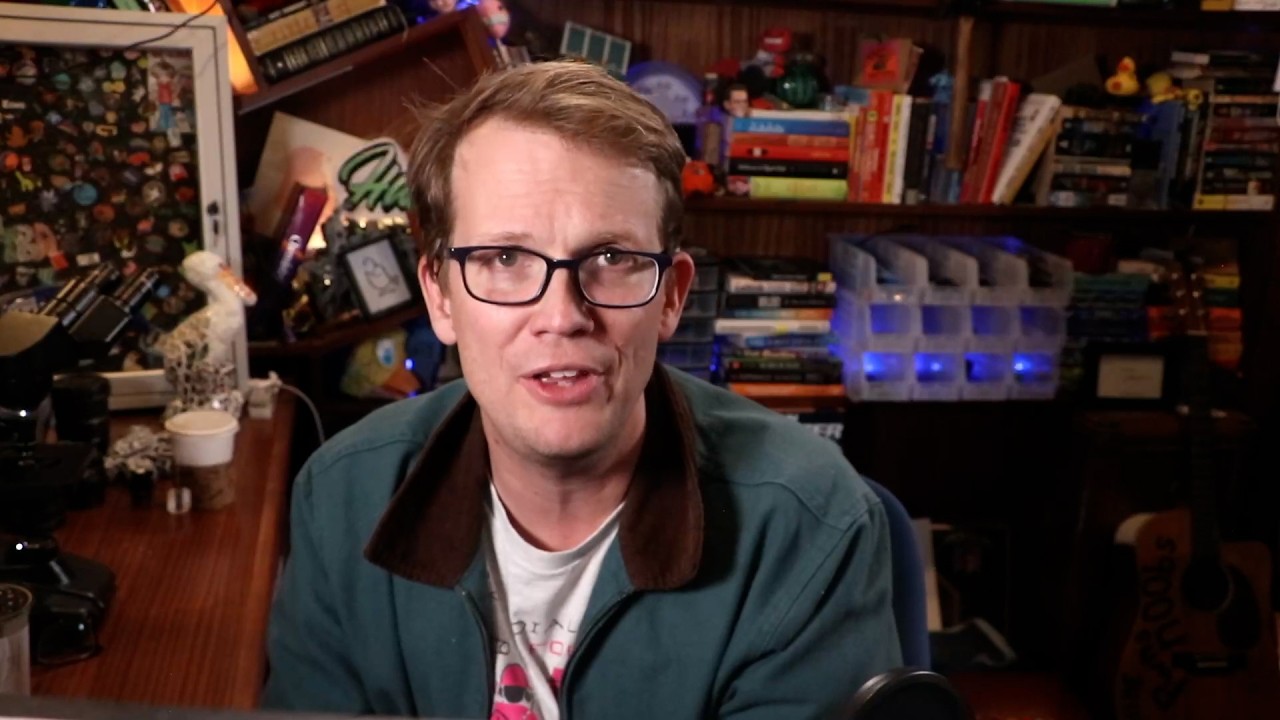
🔗 **Source:** [Just Trying to Figure Out My Job](https://www.youtube.com/watch?v=ssE1rmt3EpE)
> [!note]+ Document Notes
> tags: [audience-capture, ai-policy, creator-accountability, content-creation, media-literacy]
> author: Hank Green
> source: https://www.youtube.com/watch?v=ssE1rmt3EpE
> reference: Hank Green / John Green (Vlogbrothers), audience capture, LLM use disclosure, Complexly AI policy
> date created: 2026-08-08
>
> > [!info] Generated analysis — not the author's words. Sections below are machine-written
> > from the captured source. Only text inside `> [!quote]` blocks is verbatim from the author.
> > Do not quote or attribute any other line to the named author.
>
> # 🏷️ Just Trying to Figure Out My Job
>
<!-- deep-read:sections start -->
## 🧭 Table of Contents
1. References
2. Summary
3. Main Content
4. References (source list)
5. Paraphrase
6. Newsletter
7. Action Items
8. Hypotheses
9. Methodology
10. Questions
11. Future Research
12. Implications
13. Learning Styles Assessment
14. Accessibility Assessment
15. DEIB Assessment
16. Logical Validity
17. DARVO Analysis
18. Conclusion
19. Refactor Appendix
## 🔗 References
- Complexly's public AI policy (referenced, not embedded — linked in the original video description)
- Prior week's public post about LLM enthusiasm/overuse (referenced, not embedded)
## 📝 Summary
A short, personal Vlogbrothers video in which Hank Green responds to a week of public criticism after admitting he had become over-reliant on LLMs for advice, editing, and sourcing. He opens with the "audience capture" concept — creators drifting toward whatever gets the strongest audience reaction until the creator becomes incoherent with their original self — and applies it reflexively to his own recent behavior and to the discourse response he received. The video has two explicit purposes he names directly: (1) an apology to the people who work at Complexly (Crash Course, SciShow, Eons, Eskindar), whose careful, expert-informed work he feels his AI-use controversy put into public question by association; (2) an announcement that he is creating a personal AI-use policy, following Complexly's institutional lead, to constrain his own LLM reliance going forward. Stakeholders: Complexly's staff and creative teams (reputational exposure), his brother/co-creator John Green (the video is addressed to him directly), and the broader audience debating AI use in creative/educational content. Risk/tradeoff acknowledged directly by Green: some of the public response was "silly or bad-faith criticism" based on incorrect premises (e.g., a false claim about Crash Course videos), but he separates that from the substantive part of the criticism, which he accepts.
## 📖 Main Content
### 🗒️ Notes
**Audience capture, applied reflexively:** Green opens by naming the audience-capture dynamic — a creator absorbing audience reaction until they drift from their own coherent perspective — and immediately turns it on himself and on the discourse he's currently inside, rather than using it only to critique others. He explicitly distinguishes "listening to understand where someone is" from "listening to converge everyone onto one correct take," framing healthy community response as the former.
**The apology, specifically scoped:** Green is careful to separate himself (his own AI overuse, his own public statement, his own presence on Twitter) from the Complexly staff whose work he says is being "called into question because of my issue" — despite Complexly's own AI policy being long-standing and, in his words, clear enough that its wording ("barred") dates it. He frames the apology as being about association and public trust, not about Complexly's actual practices.
**The stated policy response:** Green commits to creating a personal AI-use policy (separate from Complexly's institutional one) constraining his reliance on LLMs "for advice, for editing, and for sourcing." He frames having a personal policy — public or private — as broadly good practice he'd recommend to other creators, independent of this specific incident.
**Distinguishing "checking boxes" from wanting to make things:** Green explicitly rejects the audience read that he was using AI to rush through a content quota, countering that his actual problem is the opposite — wanting to make *too much*, across too many simultaneous projects (prototyping games, researching climate regulations, 18th-century organic chemistry, screwdriver history) — and that LLMs made that scattering feel newly possible rather than making him lazier.
## 📚 References
No external citations are embedded in the transcript itself; the video references Complexly's AI policy and Green's own prior public post but does not quote either verbatim in this recording.
## 🗣️ Paraphrase
Opens by defining audience capture and applying it to himself, admitting he has been "searching for certainty" over the past few years amid general destabilization, and framing his worry about audience-capture dynamics against his belief that creators still have some obligation to their audience. States his view of healthy community response: not converging everyone onto one person's take, but each person being genuinely understood in where they are. Thanks John directly for being frustrated with him while remaining kind and compassion-led, and for not adding guilt about timing (a novel release). Recaps the originating incident: he'd posted publicly about being "enticed" by LLMs across many simultaneous projects, acknowledges some response was bad-faith or factually wrong (a false claim that AI was used on Crash Course videos, when Complexly's AI policy long predates the controversy), but states the core criticism landed and is his to own. States the video has two purposes: an apology to Complexly's staff, whose careful expert-informed work he feels got reputationally entangled in his personal controversy; and an announcement that he is building a personal AI-use policy after realizing he'd become over-reliant on LLMs for advice, editing, and sourcing. Frames personal AI policies (public or private) as good practice generally, not just incident response. Pushes back on one specific audience reading — that he was using AI to grind through a content checklist — countering that his actual failure mode is wanting to make too much across too many projects at once, and that AI made that feel newly achievable. Closes without full resolution ("I still don't have the certainty that I would love to have") but states he feels clearer on what his job actually is: to be himself, and to let people trust that his takes are genuinely his own.
## 📰 Newsletter
**A creator's public accountability video, read as a case study in scoped apology.** Hank Green's response to public criticism over LLM overuse does two things worth noting as a pattern: it separates the apology (to Complexly's staff, for reputational spillover) from the self-correction (a personal AI-use policy, distinct from his employer's institutional one), rather than blending them into one generic mea culpa. It also explicitly rejects one specific piece of audience feedback (that he was using AI to rush output) while accepting another (that he'd become over-reliant on LLMs for advice/editing/sourcing) — modeling that accepting criticism doesn't require accepting every claim within it. Relevant to this vault's own running thread on AI-tool disclosure and personal-policy-as-practice.
## ✅ Action Items
Not applicable to this source — a personal creator accountability video with no organizational, WordPress, or DevRel content.
## 🧪 Hypotheses
1. Creators who publish a personal AI-use policy (public or private) will report lower incidence of audience-trust controversies over AI use than creators without a stated policy, independent of actual AI usage level.
2. Public apologies that explicitly separate "what I did wrong" from "what critics got factually wrong" will be received as more credible than apologies that either concede everything or contest everything.
3. The "audience capture" framing, when a creator applies it reflexively to their own recent behavior, correlates with a more measured public response than when it's used only to describe others.
## 📊 Methodology
None — a personal reflective/accountability video, no data collection or study design.
## ❓ Questions
- Does Green's forthcoming personal AI-use policy get published, and if so, does it differ substantively from Complexly's institutional one?
- What was the actual content of the "silly or bad-faith criticism" he references — is the false Crash Course claim traceable to a specific viral post, and did it get corrected?
- Does the "wanting to make too much, not wanting to make things faster" self-diagnosis hold up against his own subsequent output pace?
## 🔮 Future Research
- A comparative study of creator AI-disclosure policies (public vs. private, specific vs. general) and their effect on audience trust metrics over time.
## 💡 Implications
**Practice:** for any organization or individual publishing AI-assisted content, having a stated AI-use policy — even an informal, private one — appears to function as both a personal constraint and a trust signal, independent of the specific incident that prompts it.
**Policy:** Complexly's own AI policy being old enough to still say "barred" is cited approvingly as evidence of a considered, non-reactive institutional stance — a useful contrast case for organizations drafting AI policy under public pressure versus proactively.
**Security:** Not applicable.
**Education:** relevant to any educational content creator (Crash Course's own domain) navigating AI-tool disclosure to an audience that includes students and educators.
**Funding:** Not applicable to this source.
## 🧠 Learning Styles Assessment
- **Visual:** Low — a talking-head video with no supporting visual aids described in the transcript.
- **Aural:** High — spoken, personal, conversational register; tone and pacing carry significant meaning.
- **Verbal:** High — dense, reflective, direct-address prose.
- **Kinesthetic:** Low — no applied or hands-on component.
- **Logical:** Medium — the apology is structured (two explicit stated purposes) but the content is emotionally reflective rather than argumentative.
- **Social:** High — directly addressed to a named individual (John) and explicitly about community/audience relationship dynamics.
- **Solitary:** Medium — a personal, introspective piece, though delivered as public communication.
- **Reading level:** Conversational, roughly grade 8–9 spoken register; transcript retains filler and run-on sentence patterns typical of unscripted speech.
## 📊 Accessibility Assessment (WCAG 2.2 AA)
- **Text alternatives:** N/A — this analysis is based on transcript text; the original video's visual accessibility (captions, etc.) is not assessable from this source alone.
- **Time-based media:** The existence of a transcript at all supports this criterion; no indication of speaker-identified captions in the raw transcript.
- **Adaptable/structure:** Weak in the raw transcript — a single unbroken block with no paragraph or topic-marker structure; this analysis's own paragraph breaks are imposed by the note-taking process, not present in the source.
- **Distinguishable, Keyboard accessible, Enough time, Seizures:** N/A — video content, not independently assessable from transcript.
- **Navigable:** N/A within the transcript itself.
## 🌍 DEIB Assessment
- **Cultural breadth:** Narrow — a personal address within one creator's specific community.
- **Inclusive language:** Neutral and warm throughout; notably models compassionate, non-defensive engagement with criticism.
- **Neurodiversity support:** Not directly addressed.
- **Representation:** Single-speaker content; no representation claims to assess.
- **Psychological safety:** Notably strong — Green explicitly frames his brother's frustration as safe because it's paired with clear compassion, and models receiving criticism without becoming either defensive or self-erasing. Worth holding as a positive case study alongside this vault's other DARVO/accountability content, which more often documents the failure mode than the healthy alternative.
## ✅ Logical Validity
**Strong reasoning:** Green explicitly separates the claims within the criticism he received — accepting the substantive one (LLM over-reliance) while naming and rejecting a specific factual error (the false Crash Course claim) rather than either blanket-accepting or blanket-dismissing the discourse.
**Fallacies:** None significant — this is a personal reflective statement, not an argumentative piece making claims that require fallacy-checking in the traditional sense. The nearest borderline case is a mild self-serving framing risk: separating "my issue" from "Complexly's practices" is accurate as stated, but a skeptical reader might note it also conveniently shields the institution from scrutiny of its own AI policy's substance — though nothing in the transcript suggests bad faith, and Green does not use this framing to avoid his own accountability.
**Tone of voice:** Vulnerable, direct, unpolished (audibly unscripted) — consistent with the video's stated purpose as a personal accountability piece rather than a prepared statement.
## 🛡️ DARVO Analysis
**Not a DARVO case** — worth noting explicitly because the vault tracks DARVO patterns elsewhere and this is a clean contrast case. Green does not deny the substantive criticism, does not attack his critics, and does not reverse victim/offender roles despite acknowledging that some criticism directed at him was factually incorrect. He separates "this specific claim about me was false" from "the underlying concern about me was valid" without using the false claim to discredit the valid concern — the opposite move from a DARVO deflection.
## 🎯 Conclusion
A personal creator-accountability video notable less for its content (a fairly ordinary "I overused a tool, I'm sorry, here's my plan" arc) than for its structure: a scoped apology that doesn't over-claim guilt, paired with acceptance of valid criticism that doesn't concede invalid criticism alongside it. Connects directly to the Curtis McHale article processed earlier this session, which analyzed this same incident (via Matt Birchall's "About the Hank Green Situation") through a coalition-politics and rejection-assimilation lens — this source is Green's own primary account of the event that piece was analyzing secondhand. Next step: check whether the existing vault coverage from the McHale-sourced analysis should link to this primary source directly.
## 🧱 Refactor Appendix
### Literature Split Pad
#### A scoped apology separates "what I got wrong" from "what critics got wrong about me"
> [!quote] ID:rw_hankgreen_justtrying_01
> I appreciate you not saying it. I'm sure you are feeling it.
Where/why: illustrates Green modeling receipt of unstated-but-felt criticism from someone close to him without requiring it be spoken, immediately before the substantive apology.
#### The self-diagnosis: wanting to make too much, not wanting to skip steps
> [!quote] ID:rw_hankgreen_justtrying_02
> It's not that I don't want to make stuff. I want to make too much stuff, and I am convinced that it is possible.
Where/why: directly counters one specific audience-criticism reading (AI as a shortcut to hit a content quota) with an alternative self-diagnosis (AI as enabler of over-scattering across projects) — a claim worth testing against his actual subsequent output pattern.
### Atomic Split Pad
- Zettel candidate: "A personal AI-use policy functions as a trust signal independent of the specific incident that prompts adopting one" — generalizable practice claim.
- Zettel candidate: "Accepting valid criticism doesn't require accepting every claim within it" — the accept-the-core/reject-the-false-specifics move as a general accountability pattern.
### Fleeting Queue
- Cross-link candidate: this primary source ↔ the Curtis McHale Permanent-note material processed earlier this session (currently blocked on vault mirror sync).
- Check whether this vault already has a Permanent note on "personal AI-use policies as trust signals" before creating one from this source.
<!-- deep-read:sections end -->
📄 **Full text:** [[Full Document Contents/Articles/Just Trying to Figure Out My Job.md|Just Trying to Figure Out My Job by YouTube]]
## Highlights
- And that's dumb. ([View Highlight](https://read.readwise.io/read/01kzh02syw6bf0zbad9w3bjqqz))
- Note: test
- Of course, because of how online discourse works, some of the response has been silly or bad-faith criticism. ([View Highlight](https://read.readwise.io/read/01kzh04tkrajfeh1qj0e5cnmb7))
- Note: test3
- No one is using AI to write crash course videos. ([View Highlight](https://read.readwise.io/read/01kzh05hvqkb1gmxvx7z3eqhmb))
- Note: Names a specific false claim within the criticism he received, distinct from the valid criticism he accepts.