Kathryn Roelofs on Leading Worship for Workers
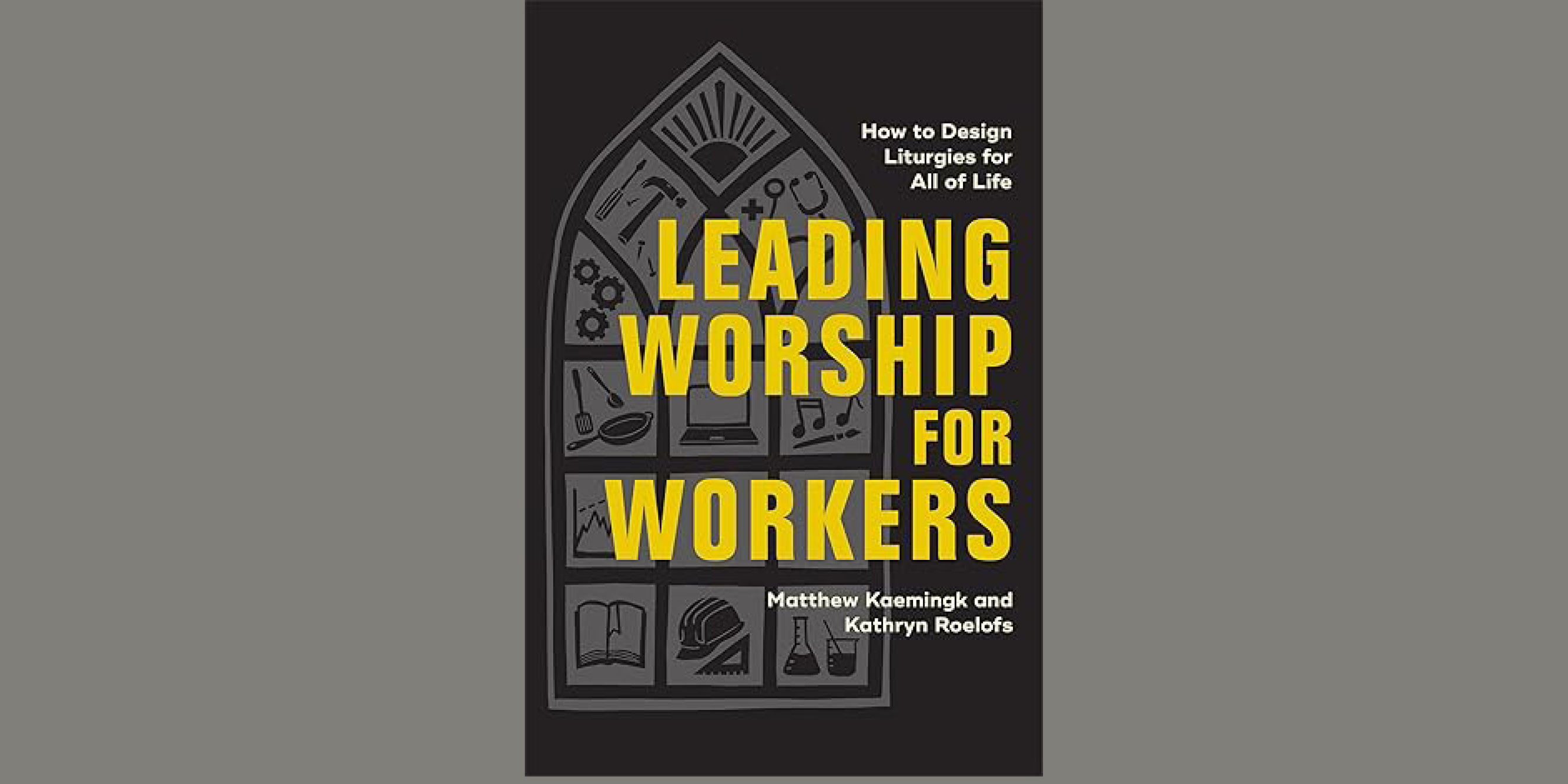
🔗 **Source:** [Kathryn Roelofs on Leading Worship for Workers](https://worship.calvin.edu/resources/articles/kathryn-roelofs-leading-worship-workers)
> [!note]+ Document Notes
> tags: #worship #work #vocation #liturgy #church-ministry
> author: Joan Huyser-Honig
> source: Calvin Institute of Christian Worship
> reference: https://worship.calvin.edu/resources/articles/kathryn-roelofs-leading-worship-workers
> date created: 2024-12-19 14:30
>
> # 🏷️ Title: Kathryn Roelofs on Leading Worship for Workers
>
<!-- deep-read:sections start -->
## 🧰 Action Inbox
- [H1] Audit congregation's worker demographics and vocations — use Made to Flourish Scatter survey #worship #assessment
- [H2] Implement weekly offering cards for praise/laments from work contexts — start with simple written offerings #liturgy #offering
- [H3] Reframe gathering and scattering words to bridge work and worship — adapt Psalm 100 with vocational language #worship-planning
## 🧭 Table of Contents
- [[#📝 Summary]]
- [[#📖 Main Content]]
- [[#🗒️ Notes]]
- [[#📚 References]]
- [[#🗣️ Paraphrase]]
- [[#📰 Newsletter]]
- [[#✅ Action Items]]
- [[#🧪 Hypotheses]]
- [[#📊 Methodology]]
- [[#❓ Questions]]
- [[#🔮 Future Research]]
- [[#💡 Implications]]
- [[#🧠 Learning Styles Assessment]]
- [[#📊 Accessibility Assessment]]
- [[#🌍 DEIB Assessment]]
- [[#✅ Logical Validity]]
- [[#🛡️ DARVO Analysis]]
- [[#🎯 Conclusion]]
### 🔗 References
- [Leading Worship for Workers book](https://worship.calvin.edu/resources/articles/kathryn-roelofs-leading-worship-workers)
- [WorshipforWorkers.com](http://WorshipforWorkers.com)
## 📝 Summary
- Kathryn Roelofs co-authored "Leading Worship for Workers," a practical handbook helping churches connect Sunday worship to congregants' everyday work lives
- The book addresses three barriers: skepticism about sacred/secular divides, unawareness of importance, and pastoral fatigue
- Key recommendations focus on "low-hanging fruit": reframing gathering/scattering words, transforming offering practices, and conducting worker audits
- The approach emphasizes incremental changes rather than wholesale liturgical overhauls
- Bottom line: Churches can honor all vocations through small liturgical adjustments that acknowledge God's presence in daily work
## 📖 Main Content
Kathryn "Katie" Roelofs, along with co-author Matthew Kaemingk, has created a practical guide for worship leaders seeking to bridge the gap between Sunday services and weekday vocations. The book emerges from extensive retreat leadership and builds on Kaemingk and Willson's academic work "Work and Worship: Reconnecting Our Labor and Liturgy."
The authors identify three primary obstacles churches face when incorporating vocational themes: theological skepticism about sacred/secular divisions, pastoral unawareness of the issue's importance, and ministry fatigue preventing new initiatives. However, they argue that honoring work in worship doesn't require stylistic changes—only deeper connections to congregants' lived experiences.
The book offers both comprehensive approaches (full Labor Day services) and incremental strategies (weekly elements). Research backing comes from wide consultation with professors, pastors, and laypeople during manuscript development, extending the writing timeline but strengthening practical applicability.
## 🗒️ Notes
#### Opening Framework — Defining the handbook's scope
- Key idea: Practical guide for engaging workers, students, parents, and retirees in worship
- Evidence: "It's a handbook to help churches engage workers and people with other vocations, such as students, parents, and retirees"
#### Theological Foundation — Sacred/secular integration
- Key idea: Strong divides between sacred and secular prevent authentic worship connection
- Evidence: "Some churches believe in strong sacred/secular divides. They don't think language around work is allowed or holy enough in worship"
#### Barrier Analysis — Three obstacles to implementation
- Key idea: Skepticism, unawareness, and fatigue prevent vocational worship integration
- Evidence: "Three reasons are skepticism, unawareness, and fatigue"
#### Gathering Words Strategy — Bridge-building liturgy
- Key idea: Opening words should acknowledge the week workers bring into worship
- Evidence: "The words of gathering should form a bridge between our work, our worship, and our God"
#### Scattering Emphasis — Connecting Sunday to Monday
- Key idea: Sending words help worshipers connect worship to tomorrow's work contexts
- Evidence: "The final words of worship help worshipers make a critical connection between what they have just done and where they'll be tomorrow"
#### Offering Transformation — Work of our hands
- Key idea: Physical offerings restore ancient Christian practice of bringing work products
- Evidence: "In the early church, many people literally brought in what they'd grown or made to lay on the altar"
#### Offering Cards Innovation — Written worship offerings
- Key idea: Weekly cards allow workers to offer praise, laments, and commitments from their vocations
- Evidence: "We know of churches that use weekly offering cards, where people write their praise/thanks, laments, petitions, or commitments to God"
#### Workplace Intrusions Reframe — Prayer prompts not distractions
- Key idea: Work thoughts during worship become opportunities for prayer rather than spiritual failures
- Evidence: "Rather than seeing them as sinful distractions or evidence of spiritual immaturity, pastors can invite their people to reorient these moments as prompts to prayer"
#### Slow-Drip Approach — Incremental vs comprehensive change
- Key idea: Weekly vocational elements create more formation than occasional themed services
- Evidence: "Matt and I think a slow-drip approach will be more formative over time. The slow approach has more impact because it plants seeds"
#### Worker Audit Methods — Congregation assessment strategies
- Key idea: Pastors need systematic approaches to understanding their members' vocational contexts
- Evidence: "You might start by going through a printed list of church members and noting how they earn money, where they serve, or what they study"
## 📚 References
- [Leading Worship for Workers book](https://worship.calvin.edu/resources/articles/kathryn-roelofs-leading-worship-workers)
- [WorshipforWorkers.com](http://WorshipforWorkers.com)
- [Made to Flourish Scatter Survey](https://madetofourish.org)
- [Theology of Work Project](http://theologyofwork.org)
## 🗣️ Paraphrase
- Churches can honor workers by making small adjustments to existing liturgy rather than requiring complete worship overhauls or style changes
- The key barriers are theological (sacred/secular divides), educational (pastoral unfamiliarity), and practical (ministry fatigue), but all are addressable through gradual implementation
- Most effective strategies focus on gathering words that acknowledge the work week, sending words that commission for Monday vocations, and offering practices that invite physical symbols of daily labor
## 📰 Newsletter
**Bridging Sunday and Monday: Making Worship Connect with Daily Work**
Most of us spend more waking hours at work than anywhere else, yet many church services rarely acknowledge our vocational lives. Kathryn Roelofs and Matthew Kaemingk's new handbook "Leading Worship for Workers" offers hope for churches wanting to honor the whole lives of their people.
**The Challenge**: Three barriers keep churches from connecting worship to work—theological concerns about sacred/secular divides, pastoral unfamiliarity with the issue's importance, and ministry fatigue that resists new initiatives.
**The Solution**: Start small with "low-hanging fruit." Adjust your gathering words to acknowledge the work week people bring into worship. Transform your offering time with cards where people write their workplace praise and concerns. Reframe your sending to commission people for their Monday callings.
**Quick Win**: Try this opening next Sunday: "As God gathers us for worship, reflect on your last week of work, parenting, or daily living. [Silence.] The God who has been present with you through the whole of your week welcomes you to worship."
**Resources**: [WorshipforWorkers.com](http://WorshipforWorkers.com), [Made to Flourish](https://madetofourish.org), [Theology of Work Project](http://theologyofwork.org)
## ✅ Action Items
#### DevRel
- Developer advocacy: Present at WordCamp on technology as Christian vocation, demo worship planning tools
- Education: Workshop on digital ministry tools for church tech teams
- Developer experience: API documentation for church management systems integration
- Developer marketing: Content series on faith-driven open source contribution
- Community management: Moderate discussions on technology ethics in religious contexts
#### Community
- Maintainers: Governance templates for faith-based open source projects
- Contributors: First-issue programs for church website development
- Sponsors: Impact reports showing ministry technology outcomes
#### WordPress
- Community: Meetup kits for church website builders, mentorship for ministry tech teams
- Training: Learning paths for church administrators using WordPress
- Documentation: Style guides for religious organization websites
- Accessibility: WCAG reviews for church website templates
- Themes: Review processes for ministry-focused themes
#### The WPCC
- Programs: Fellowships for faith-based technology initiatives
- Projects: Documentation sprints for church management integration
- Funding: Matched grants for ministry technology development
## 🧪 Hypotheses
- Churches implementing weekly vocational elements will show higher member engagement than those using only occasional themed services
- Pastoral education about work theology reduces resistance to vocational worship integration more than practical training alone
- Congregations with formal worker audits develop more targeted and effective vocational ministry programs
- Physical offering practices create stronger work-worship connections than purely verbal acknowledgments
### 📊 Methodology
- Survey design comparing engagement metrics between slow-drip and comprehensive vocational worship approaches
- Longitudinal study tracking pastoral attitude changes through theological vs practical training interventions
- Qualitative analysis of worker audit implementation and resulting ministry program effectiveness
### ❓ Questions
- How do different denominational traditions affect receptivity to vocational worship integration?
- What specific workplace challenges require liturgical attention in post-pandemic ministry contexts?
- How can digital worship platforms incorporate physical work artifacts and offerings?
### 🔮 Future Research
- Effectiveness measurement frameworks for vocational worship initiatives
- Cross-cultural studies of work-worship integration in global church contexts
- Technology tools development for facilitating worker audit and engagement processes
### 💡 Implications
- Practice: Worship planning must include vocational audits and incremental liturgical adjustments honoring all life contexts
- Policy: Seminary curricula should integrate work theology and practical vocational ministry training for future pastors
- Education: Church leadership development needs resources connecting theological foundations to contemporary workplace realities
- Funding: Grant programs should prioritize initiatives bridging sacred-secular divides in congregational life
### 🧠 Learning Styles Assessment
Reading level estimate: 10th grade
#### 👀 Visual learners
- Present: Clear section headers, bullet points, structured interview format
- Improve: Worship service flow diagrams, sample liturgical order graphics
#### 🔊 Aural learners
- Present: Interview format with quoted responses
- Improve: Audio summary of key implementation strategies
#### 🗣️ Verbal learners
- Present: Extensive examples, specific liturgical language, practical scripts
- Improve: Glossary of vocational ministry terms
#### 🧩 Kinesthetic learners
- Present: Step-by-step audit process, hands-on offering suggestions
- Improve: Interactive checklist for worship leader implementation
#### 🧠 Logical learners
- Present: Clear three-barrier framework, systematic low-hanging fruit approach
- Improve: Decision tree for selecting appropriate vocational elements
#### 🧑🤝🧑 Social learners
- Present: Group discussion guide references, collaborative feedback process
- Improve: Community implementation templates, peer learning frameworks
#### 🧘♀️ Solitary learners
- Present: Reflection prompts, individual assessment tools
- Improve: Personal worship planning worksheets
#### 🌿 Naturalistic learners
- Present: Agricultural offering examples (tomatoes, peppers)
- Improve: Creation care connections in vocational worship
### 📊 Accessibility Assessment
#### Screen reader semantics
- Present: Good heading hierarchy, clear navigation structure
- Improve: Alt text for any embedded images, ARIA landmarks
#### Keyboard navigation
- Present: Standard web navigation, logical tab order
- Improve: Skip links, focus indicators on interactive elements
#### Contrast and readability
- Present: Standard text contrast appears adequate
- Improve: Verify 4.5:1 minimum ratios, optimize line spacing
#### Text resizing and reflow
- Present: Responsive layout supports scaling
- Improve: Test at 200% zoom for content preservation
#### Media and captions
- Present: Text-based content
- Improve: Audio descriptions if multimedia added
#### Forms and interactions
- Present: Standard form elements
- Improve: Clear labels, error handling for contact forms
### 🌍 DEIB Assessment
#### Cultural breadth
- Present: Inclusive language about different vocations, global church references
- Improve: Multi-cultural work examples, international ministry contexts
#### Inclusive language
- Present: Gender-neutral terms, accessible theological language
- Improve: Plain-language explanations of liturgical concepts
#### Neurodiversity support
- Present: Clear structure, consistent formatting
- Improve: More frequent subheadings, visual break elements
#### Representation
- Present: Varied vocation examples (students, parents, retirees, traditional workers)
- Improve: Diverse cultural expressions of vocational ministry
#### Psychological safety
- Present: Respectful treatment of different worship styles and traditions
- Improve: Explicit affirmation of various approaches to ministry
### ✅ Logical Validity
#### Strong reasoning
- Deductive strength: Clear premise that work consumes life → worship should acknowledge work → specific strategies follow
- Inductive strength: Examples from multiple churches support broader implementation principles
- Causal reasoning: Identifies specific barriers and proposes targeted solutions
- Analogical strength: Early church practices inform contemporary offering innovations
#### Fallacies
- Appeal to authority: Heavy reliance on co-author credentials without independent validation
- False dichotomy: Implies only two approaches (slow-drip vs comprehensive) when hybrid models possible
#### Tone of voice
- Overall tone: Encouraging and practical, balances theological depth with accessible application strategies
### 🛡️ DARVO Analysis
- Deny: No denial patterns present
- Attack: No attacks on critics or alternative approaches
- Reverse victim/offender: No victim/offender dynamics identified
- Emotional cues and rhetoric: Positive, solution-focused language without manipulative elements
## 🎯 Conclusion
Churches can meaningfully connect Sunday worship to the work lives that consume most of their members' time through small, intentional liturgical adjustments rather than wholesale worship overhauls. The key insight is that incremental integration of vocational themes—through gathering words, offering practices, and sending liturgy—creates deeper formation than occasional themed services while respecting existing worship traditions and addressing pastoral capacity limitations.
Practical next steps include conducting worker audits to understand congregational vocational contexts, implementing weekly offering cards for workplace concerns and celebrations, and gradually reframing liturgical language to bridge sacred-secular divides. This approach honors both theological integrity and practical ministry constraints while opening new pathways for authentic worship that encompasses all of life.
## 🧱 Refactor Appendix
### 📚 Literature Split Pad
Purpose: Stage CEE units that become Literature notes.
Split level: H3
### [H1] Churches bridge work-worship through incremental liturgical changes
> [!quote] [Kathryn Roelofs on Leading Worship for Workers](https://worship.calvin.edu/resources/articles/kathryn-roelofs-leading-worship-workers) by Joan Huyser-Honig via Calvin Institute of Christian Worship. Published April 9, 2026. Accessed December 19, 2024.
> "Matt and I have no desire to change your styles of worship. Our goal is to help your unique style connect in a deeper way with workers."
Practical approach respecting existing traditions while creating vocational connections.
[view highlight](https://worship.calvin.edu/resources/articles/kathryn-roelofs-leading-worship-workers#H1) #xref #articleseed ID:rw_roelofs001
### [H2] Slow-drip vocational elements outperform comprehensive themed services
> [!quote] [Kathryn Roelofs on Leading Worship for Workers](https://worship.calvin.edu/resources/articles/kathryn-roelofs-leading-worship-workers)
> "Matt and I think a slow-drip approach will be more formative over time. The slow approach has more impact because it plants seeds that start to change people from the inside."
Weekly incremental changes create deeper transformation than occasional labor-focused worship services.
[view highlight](https://worship.calvin.edu/resources/articles/kathryn-roelofs-leading-worship-workers#H2) #xref ID:rw_roelofs002
---
### 🔖 Atomic Split Pad (Zettel Candidates)
Purpose: Promote reusable claims
<!-- deep-read:sections end -->
📄 **Full text:** ![[Full Document Contents/Articles/Kathryn Roelofs on Leading Worship for Workers.md|Kathryn Roelofs on Leading Worship for Workers by worship.calvin.edu]]
## Highlights
- It’s a handbook to help churches engage workers and people with other vocations, such as students, parents, and retirees. We briefly lay out the theology of work and explain how to audit your congregation’s worship practices and main vocations. Our book’s heart and soul invites pastors and worship leaders to experience worship through a worker’s eyes. Chapters on every part of worship offer simple ways to adjust what you already do or to add something new. There’s a section on how to bless and commission specific callings and careers in your church and a section on creative ideas for going deeper. ([View Highlight](https://read.readwise.io/read/01kprfp3688p7vr457ap70c59v))
- Tags: 👻 ai highlighted