Life at/After Automattic
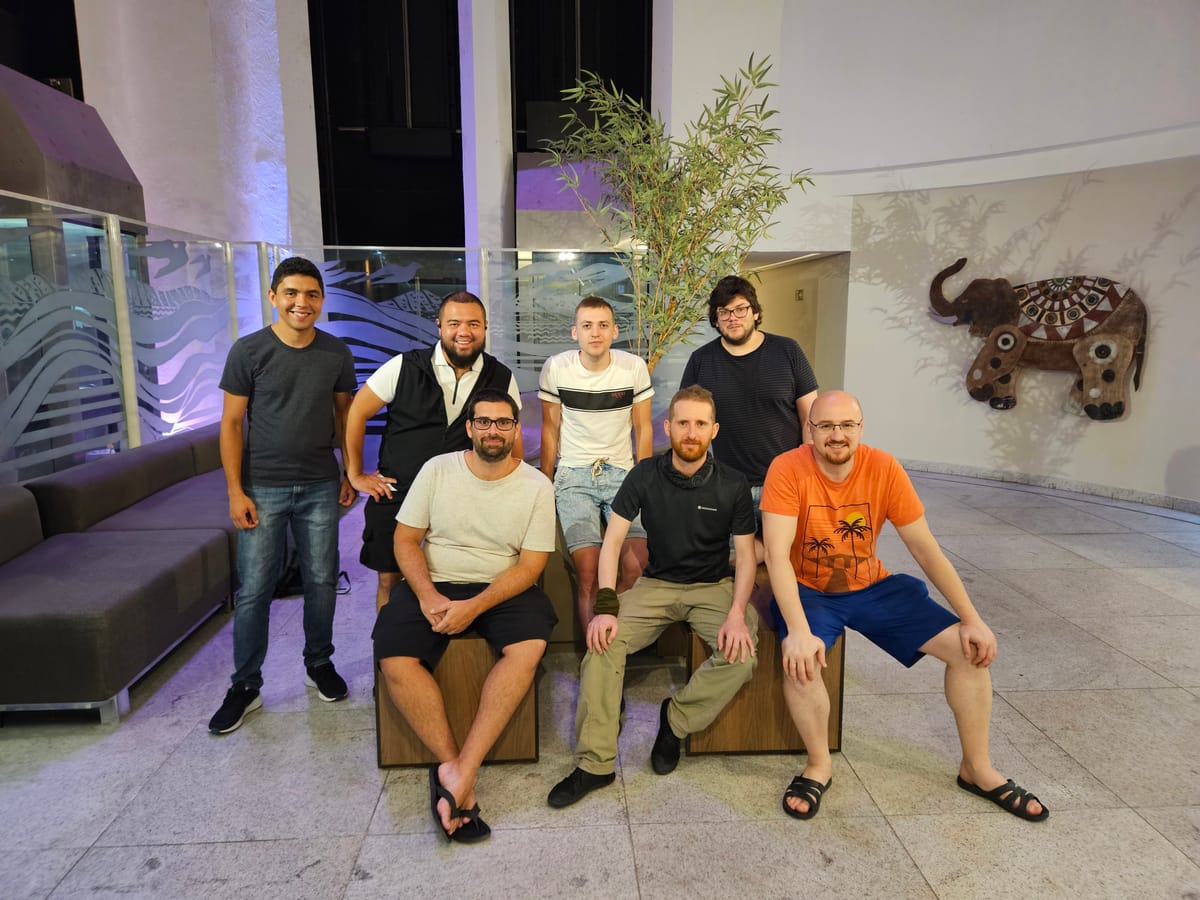
Full Document Contents/Articles/Life atAfter Automattic.md, Life at/After Automattic, Tim Broddin.
> [!note]+ Document Notes
> tags: [#WordPress, #OpenSource, #Leadership, #Contributions, #Automattic]
> Author: [Broddin]
> Source: [Broddin Blog](https://www.broddin.be/life-at-after-automattic/)
> Reference: [Life After Automattic](https://www.broddin.be/life-at-after-automattic/)
> date created: 2025-01-12 16:45
>
> # Title: Life After Automattic: Reflections on Open Source and Contributions
>
<!-- deep-read:sections start -->
## Table of Contents:
- [📝 Summary](#summary)
- [📖 Main Content](#main-content)
- [🗒️ Notes](#notes)
- [📖 References](#references)
- [🗣️ Paraphrase](#paraphrase)
- [📰 Newsletter](#newsletter)
- [✅ Action Items](#action-items)
- [🧪 Hypotheses](#hypotheses)
- [📊 Methodology](#methodology)
- [❓ Questions](#questions)
- [🔮 Future Research](#future-research)
- [💡 Implications](#implications)
- [🧠 Learning Styles Assessment](#learning-styles-assessment)
- [📊 Accessibility Assessment](#accessibility-assessment)
- [🌍 DEIB Assessment](#deib-assessment)
- [✅ Logical validity](#logical-validity)
- [🔍 DARVO Analysis](#darvo-analysis)
- [🔍 SEO Evaluation](#seo-evaluation)
- [🎯 Conclusion](#conclusion)
## 📝 Summary:
The article "Life After Automattic" reflects on the writer’s experiences with Automattic and the open-source ecosystem, detailing the challenges and opportunities that arise when transitioning from such a company. The post critiques the leadership dynamics at Automattic and discusses the state of open-source contributions, the expectations placed on contributors, and how corporate priorities impact the community. It highlights the gap between those who critique from the sidelines and those who are actively contributing and moving projects forward.
## 📖 Main Content:
The article begins with a personal reflection on the author's time at Automattic, focusing on the shifting dynamics within the company and its relationship to the WordPress community. It discusses the growing tensions between corporate priorities and the grassroots nature of open-source projects. The author emphasizes the importance of recognizing long-term contributors, those who do the actual work, rather than focusing only on vocal critics in the community.
The post critiques how Automattic's leadership style has evolved, pointing out that the company’s shift towards corporate-style governance may dilute the open-source ethos that the community values. The article also brings up the need for more sustainable and fair funding mechanisms for open-source projects, criticizing the lack of resources and support for contributors.
In reflecting on what makes effective leadership in the open-source space, the author suggests that transparency, collaboration, and a focus on long-term goals should take precedence over corporate interests. The post calls for a change in how the WordPress community views leadership and contribution, urging people to elevate the voices of those who are actively contributing.
### 🗒️ Notes:
- **Author’s Reflection on Automattic**: The author shares personal experiences from their time at Automattic, focusing on the shift in the company’s priorities and leadership.
- **Challenges in Open Source**: Discusses how corporate influence is affecting the open-source community and the balance between profit and contribution.
- **Critique of Vocal Critics**: Highlights how critics who contribute little to no code dominate the conversation, rather than celebrating those actively working on projects.
- **Sustainable Open-Source Funding**: The author emphasizes the need for better financial support for open-source contributors, recognizing the lack of sustainable funding models.
- **Leadership Dynamics**: Critiques the shift in leadership styles from collaborative, community-driven leadership to more corporate top-down approaches.
- **Call to Action**: The article calls for more recognition of contributors who are actively engaged and moving projects forward.
## 📖 References:
- Broddin Blog: [Life After Automattic](https://www.broddin.be/life-at-after-automattic/)
## 🗣️ Paraphrase:
1. **Original**: "There’s a growing tension between corporate priorities and the grassroots nature of open source, and this shift is evident in Automattic's recent changes."
- **Paraphrase**: "The growing conflict between corporate agendas and the grassroots spirit of open-source projects is clear, especially in the recent shifts at Automattic."
2. **Original**: "It’s easy to criticize, but much harder to actually contribute and push the project forward."
- **Paraphrase**: "While it’s simple to point fingers, making meaningful contributions and advancing the project is far more challenging."
## 📰 Newsletter:
**The Shifting Landscape of Open Source Leadership**
In the latest reflections from the WordPress community, an insightful article dives into the complexities of leadership and contribution after Automattic’s shift in focus. The post highlights how corporate influence is changing the nature of open-source work, urging a shift toward recognizing those who are truly contributing. It also calls for a stronger emphasis on sustainable funding models to support the continued growth of the open-source ecosystem. If you’re interested in open-source sustainability and leadership in the WordPress community, this article offers a thought-provoking look at the challenges we face. [Read the full post here](https://www.broddin.be/life-at-after-automattic/).
## ✅ Action Items:
- Focus on promoting long-term contributors and avoid rewarding vocal critics who do not engage in meaningful work.
- Advocate for sustainable and fair funding solutions for open-source contributors, ensuring they receive the support they need.
- Encourage leadership models in open-source communities that prioritize transparency, collaboration, and long-term sustainability.
## 🧪 Hypotheses:
1. Open-source communities that prioritize contributors over critics will see increased collaboration and more sustainable projects.
2. A shift towards transparent, community-driven leadership in open-source projects will help restore the balance between corporate influence and grassroots development.
3. Sustainable funding models will lead to more consistent and reliable contributions from developers in the open-source ecosystem.
### 📊 Methodology:
- Conduct surveys among open-source contributors to assess the impact of corporate influence on their work and morale.
- Analyze the effectiveness of different open-source leadership models, comparing corporate-style governance with community-driven approaches.
- Research funding models that support open-source projects, and evaluate their impact on project sustainability and contributor retention.
### ❓ Questions:
- How can open-source communities better recognize and reward contributors who work behind the scenes?
- What are the barriers to implementing sustainable funding models for open-source projects?
- How can leadership structures in open-source communities evolve to balance corporate priorities with grassroots contributions?
### 🔮 Future Research:
- Investigating the long-term effects of corporate governance on the health and innovation of open-source projects.
- Exploring alternative funding mechanisms for open-source projects and evaluating their effectiveness in supporting contributors.
- Analyzing the role of vocal critics in open-source communities and their impact on project direction and morale.
### 💡 Implications:
Future research into open-source governance and funding could lead to new strategies that empower contributors and ensure the long-term viability of projects. This could also inform policy changes within major open-source platforms, fostering a more inclusive and sustainable ecosystem.
## 🧠 Learning Styles Assessment:
**Readability**: The article is written in an accessible tone with a moderate level of complexity. It is suitable for readers familiar with open-source projects and leadership structures.
**Learning Styles**:
- **Visual Learners**: The article could be enhanced with diagrams illustrating the evolution of leadership models in open-source projects or the flow of funding.
- **Aural Learners**: Providing an audio version of the post or including a podcast discussion about the issues raised could cater to auditory learners.
- **Verbal Learners**: The post’s language is rich with descriptions and thought-provoking ideas, making it ideal for verbal learners.
- **Logical Learners**: The article’s arguments are structured logically, making it appealing to logical learners interested in the connections between leadership, funding, and project sustainability.
## 📊 Accessibility Assessment:
- **Screen Reader Compatibility**: The blog may not fully support screen readers, depending on how it’s formatted, especially if images lack descriptive alt text.
- **Keyboard Navigation**: Ensuring the site is fully navigable via keyboard is crucial for users with mobility impairments.
- **Contrast and Readability**: The contrast between text and background is suitable for most readers but could be tested for users with visual impairments.
- **Text Resizing**: The article should allow users to resize text for better readability without affecting the layout.
### 🌍 DEIB (Diversity, Equity, Inclusion, and Belonging) Assessment:
- **Cultural Relevance**: The article focuses on governance and leadership in open-source projects, but could be more inclusive by addressing global perspectives on open-source contribution.
- **Inclusive Language**: The language is gender-neutral and inclusive, though it could provide more explicit recognition of diverse contributions from underrepresented groups.
- **Neurodiversity Support**: The article is clear and concise, which helps individuals with neurodiverse conditions. However, breaking complex ideas into smaller, simpler sections could improve accessibility.
- **Representation**: The post is centered around leadership in the WordPress community but could include examples from diverse communities within the open-source world.
### ✅ Logical validity:
The article presents a balanced critique of Automattic’s shifting leadership style and its impact on open-source development. The arguments are well-structured, and the logic is consistent. However, further evidence supporting the claims about corporate influence could strengthen the argument.
## 🔍 DARVO Analysis:
- **Deny**: The article does not deny any allegations but rather points out the evolving dynamics of leadership within open-source projects.
- **Attack**: The post subtly critiques the vocal critics who have not contributed meaningfully, though this is not done with malicious intent.
- **Reverse Victim and Offender**: The article does shift focus to elevate the contributions of those who continue to work behind the scenes, indirectly suggesting that critics who do not contribute are at fault for the current state of affairs.
### 🔍 SEO Evaluation:
- **Keywords**: The article contains keywords like “open-source,” “leadership,” and “WordPress” which are relevant to the target audience.
- **Meta Description**: The article lacks a meta description but could benefit from one summarizing the challenges and opportunities within open-source leadership.
- **Title Tag**: The title is clear, though it could be optimized to include keywords like "open-source leadership" or "Automattic."
## 🎯 Conclusion:
The article provides valuable insight into the evolving leadership and contribution dynamics within the WordPress and open-source ecosystems. It urges a reevaluation of how contributors are recognized and emphasizes the need for more sustainable funding and transparent leadership structures.
<!-- deep-read:sections end -->
## Highlights
- Almost everything at Automattic revolves around performance. On the internal pages, there's a table where you can see how you perform compared to your teammates (or anyone at the company). You're assigned a number compromised of code written and shipped, Slack messages, and P2 (intranet) posts. If you or your team goes below the bar, you're given a few weeks to improve your performance drastically — or you're kicked out. ([View Highlight](https://read.readwise.io/read/01jhg68t3m6f4fv7qmcy0npkd3))
- Note: that sounds time consuming and highly competitive. How does this foster team?
- in February 2024 when WordPress.com's leadership moved to a new person.
This person wanted to break with the old. He told us to drop everything, adopt a new project management method, and shift our focus on developers. ([View Highlight](https://read.readwise.io/read/01jhg6d8meh0m714nc1q6ytnvw))
- Note: Daniel Bachuber
- You cannot do a great job if you don't know the people you're working with at least a little. Empathy is the ingredient to success. ([View Highlight](https://read.readwise.io/read/01jhg6ey0n24x7ze9z0fv5pr6r))
- When Matt decided to turn the dial to 11 with his drama, asking us to either side with him or leave, the decision was easy to make. I disagreed with him, and I wanted out because what I was doing was not making me happy anymore. ([View Highlight](https://read.readwise.io/read/01jhg6gg2afqg54ndfjvj7ztfe))
- while many of my contributions were technically open-source, they were only used by Automattic. ([View Highlight](https://read.readwise.io/read/01jhg6hc18heg81asens2tnba4))
- . We were "the newsletter team," and we had all the expertise in that area, but suddenly, another team took over, and we were handed a video plugin we had no clue about. ([View Highlight](https://read.readwise.io/read/01jhg6hnr1ehb1te3z00rhytnm))
- the company expects you to work there and only take 1 "fun day". ([View Highlight](https://read.readwise.io/read/01jhg6j7t4kvztjxyf3rnk7ptd))
- The extreme focus on performance and the quantification of everything. Not everything needs to be data-driven. ([View Highlight](https://read.readwise.io/read/01jhg6jkgmsabd9vg90n7tne0z))
- Note: Wild given the seemingly opposition in .org to any data-driven decisions at all.