Lobster Boil
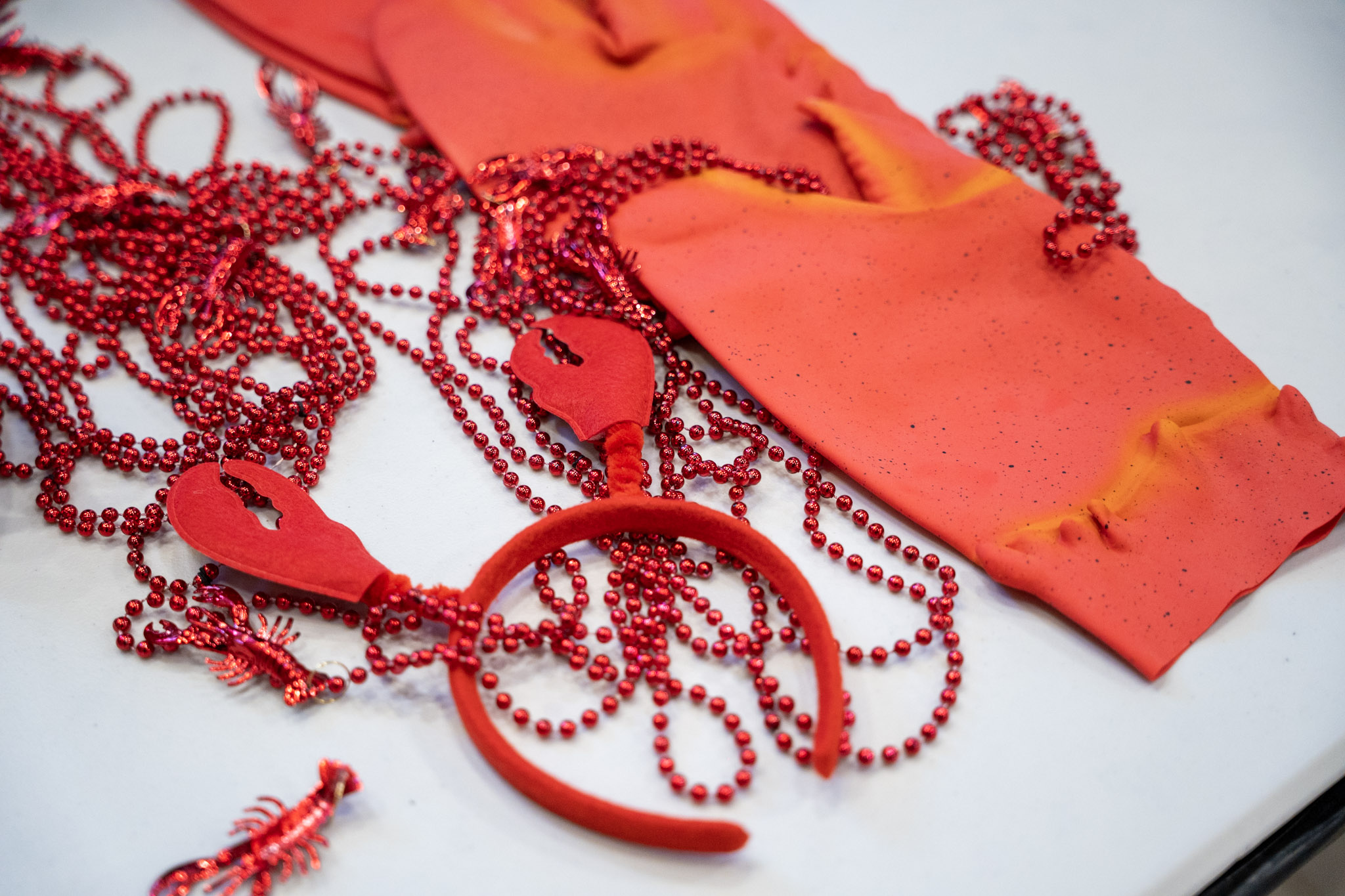
🔗 **Source:** [Lobster Boil](https://om.co/2026/03/16/lobster-boil/)
> [!note]+ Document Notes
> ```markdown
>
> ---
> tags: [AI, open-source, agents]
> author: On my Om
> source: On my Om
> reference: [https://om.co/2026/03/16/lobster-boil/]
> date created: 2026-04-10 00:00
>
> ---
>
> # 🏷️ Title: Lobster Boil
>
<!-- deep-read:sections start -->
## 🧭 Table of Contents
- [📝 Summary](#-summary)
- [📖 Main Content](#-main-content)
- [🗒️ Notes](#️-notes)
- [📚 References](#-references)
- [🗣️ Paraphrase](#️-paraphrase)
- [📰 Newsletter](#-newsletter)
- [✅ Action Items](#-action-items)
- [🧪 Hypotheses](#-hypotheses)
- [📊 Methodology](#-methodology)
- [❓ Questions](#-questions)
- [🔮 Future Research](#-future-research)
- [💡 Implications](#-implications)
- [🧠 Learning Styles Assessment](#-learning-styles-assessment)
- [📊 Accessibility Assessment](#-accessibility-assessment)
- [🌍 DEIB Assessment](#-deib-assessment)
- [✅ Logical Validity](#-logical-validity)
- [🛡️ DARVO Analysis](#-darvo-analysis)
- [🎯 Conclusion](#-conclusion)
### 🔗 References
- Include links cited in or relevant to the article.
## 📝 Summary
- What happened.
- The author explores OpenClaw, an open-source AI agent ecosystem, and the grassroots excitement around it.
- Why it matters.
- It demonstrates a tangible, user-controlled path for “AI agents” that feels real to non-technical people.
- Key stakeholders.
- OpenClaw developers, global users (especially outside US), cloud providers, governments, hardware vendors (Apple/Nvidia).
- Risks and tradeoffs.
- Significant security and safety risk from agentic automation; regulatory and political pushback.
- Bottom line.
- OpenClaw is an early, rough symbol of personal, locally-run AI agents that could democratize action the way WordPress democratized voice.
## 📖 Main Content
- Explain the core arguments in plain language.
- OpenClaw is an open-source, locally-run AI agent you plug into models of your choice and control via everyday messaging apps. It doesn’t just chat; it acts (email, calendars, automations). Its adoption is exploding globally, with vibrant community meetups and strong traction in China and beyond.
- The author draws a parallel to WordPress: WordPress lowered the cost and permission barriers to publishing; OpenClaw may similarly lower the barriers to getting work done by software, especially for people who can’t afford expensive AI subscriptions.
- The core idea: AI can and should be personal—running on your machine, under your control, wired into tools you already use, and not strictly mediated by big centralized platforms.
- Add sourced context and define terms.
- “Agentic system / AI agent”: software that uses models to understand intent, then decomposes tasks, calls tools, and executes actions autonomously (e.g., scheduling, sending messages, managing files).
- The article notes Chinese local models (Qwen, DeepSeek) that run locally, allowing low- or zero-cost setups compared to US SaaS models like OpenAI or Anthropic.
- Nvidia’s Jensen Huang is quoted describing OpenClaw essentially as an “operating system of agentic computers,” underscoring its perceived architectural importance.
- Note uncertainties or contested claims.
- OpenClaw is “not ready for prime time” and acknowledged as dangerous for users who don’t understand command-line tooling.
- It’s unclear how sustainable this ecosystem is under regulatory scrutiny (e.g., Beijing’s “Clip the Claw” order) or corporate co-optation (founder joining OpenAI, foundation governance).
- The scale and durability of democratizing impact (WordPress-level) remain speculative but plausible.
### 🗒️ Notes
- OpenClaw origin and design:
- Built by Austrian developer Peter Steinberger as a weekend project in late 2025, evolving from “Clawdbot” to “Moltbot” to OpenClaw.
- Runs locally on user machines, wired to popular messaging apps like Slack, WhatsApp, Telegram, iMessage, and Discord.
- Unlike standard chatbots that reply with text, OpenClaw performs actions: clearing inboxes, making reservations, tracking calendars, controlling smart devices.
- Adoption dynamics:
- Rapid community growth with “ClawCons” (grassroots meetups/unconferences) attracting both developers and non-technical people like retirees and small business owners.
- Sponsors are keen to associate with the movement, suggesting early ecosystem momentum.
- GitHub stars surpass ~247k by March 2026, signaling intense developer interest; the project transitions to a foundation as its creator joins OpenAI.
- Chinese context:
- In Shenzhen, long lines form outside Tencent HQ where engineers help diverse users set up OpenClaw, coining the term “raise a lobster” for running an agent instance.
- Major Chinese cloud vendors release their own variants (e.g., Tencent WorkBuddy, MiniMax MaxClaw, Moonshot Kimi Claw).
- Local governments in Shenzhen and Wuxi offer grants for startups building atop the platform; MiniMax stock surges.
- Simultaneously, Beijing orders state-linked entities to “Clip the Claw,” showing the technology’s political sensitivity.
- Hardware zeitgeist:
- Mac Mini becomes a symbolic dedicated “agent box,” purchased solely to run OpenClaw separate from primary machines.
- The “Mac Mini bro” meme highlights a new archetype: people with local AI agents as lifestyle infrastructure.
- Ownership and philosophy:
- Example user (Aaron Ng) runs OpenClaw on a Mac Mini to manage email, baby tracking, and smart home control, preferring local control over granting deep access to his main computer.
- The author emphasizes: intelligence living on your machine, under your ownership, no ongoing subscription, no external permission gate.
- Hiten Shah encapsulates it as “(AI) Power to the people.”
- Democratization analogy with WordPress:
- WordPress didn’t invent its underlying stack but assembled it into something accessible to non-technical users, collapsing the gap between wanting to publish and being able to do so.
- A crucial impact was global: people in Jakarta, Manila, Nairobi gained publishing infrastructure comparable to the New York Times, undermining traditional permission structures.
- The author sees OpenClaw as analogous but oriented toward “action” rather than “voice” — closing the gap between intention and execution for more people.
- Economics and global inequality:
- Subscription AI pricing (e.g., $20–200/month) is prohibitively expensive for much of the world, where such costs are not trivial “lattes.”
- Local Chinese models (Qwen, DeepSeek) plus OpenClaw’s model-agnostic design enable powerful setups at near-zero marginal cost for users in Manila, Cairo, Bogotá, etc.
- This suggests a way for non-US, non-wealthy users to access agentic AI capabilities comparable to those in Silicon Valley.
- Safety and risk:
- OpenClaw’s domain is “real-world action,” raising the stakes relative to web publishing: misconfigured or malicious agents can delete data, spam contacts, or perform socially or legally harmful acts.
- Even a core maintainer warns that if users cannot manage a command line, they might find it too dangerous to operate safely.
- The author stresses that OpenClaw is more a symbol of what’s coming than a finished, safe consumer product.
- Concept of personal AI:
- Personal AI is framed not as a centralized cloud “app” but as a local, user-directed agent that:
- Runs on hardware you own.
- Uses models you choose.
- Interacts through interfaces you already use.
- Nvidia’s CEO labels it effectively as an OS for agentic computing, underlining the shift from “applications” to “agents” as a new computing substrate.
- Historical parallels:
- The author notes having lived through multiple tech waves (internet, Web 2.0, social, cloud) and sees similar early “electricity in the air” around OpenClaw.
- The key novelty: for the first time, normal people can feel AI working on their behalf in daily life, albeit in “rough and half-broken” ways.
## 📚 References
- OpenClaw project: http://openclaw.ai
- ClawCons: https://www.claw-con.com
- Nvidia GTC (Jensen Huang keynote): https://www.nvidia.com/gtc
- WordPress: https://wordpress.org
- DeepSeek: https://www.deepseek.com
- Qwen (Alibaba): https://qwen.ai
## 🗣️ Paraphrase
- Paragraph A paraphrase.
- The author describes OpenClaw, a local, open-source AI agent whose enthusiastic global community (from US meetups to lines in China) mirrors past tech inflection points like WordPress and Web 2.0.
- Paragraph B paraphrase.
- They argue that OpenClaw could democratize “getting things done” the way WordPress democratized publishing, especially outside wealthy markets, while warning that present-day tools are risky prototypes signaling a coming era of personal, operating-system-like AI agents.
## 📰 Newsletter
The latest piece from On my Om dives into OpenClaw, a fast-growing open-source AI agent that feels a lot like “WordPress for action.” Instead of yet another chat window, OpenClaw runs on your own machine, plugs into any model you like, and lives inside apps you already use—Slack, WhatsApp, iMessage, and more.
Why it’s interesting for the WordPress crowd: the article draws a clear line between how WordPress collapsed the distance between “I have something to say” and “I can publish it,” and how OpenClaw might similarly close the gap between “I want this done” and “software quietly handles it.” The twist is that this wave is intensely global: from Shenzhen lines outside Tencent HQ to grants for OpenClaw startups and local Chinese models like DeepSeek and Qwen powering zero-cost agents.
Security and safety are very much unsolved—OpenClaw is candidly “not ready for prime time.” But if you’re thinking about what “personal AI” might really look like for site owners, agencies, and users worldwide, this is a compelling early sketch. Worth a read as you imagine what agentic workflows could mean for WordPress dashboards, editorial flows, and automation.
## ✅ Action Items
#### DevRel
- Map OpenClaw-like agent patterns to developer education: create quickstarts showing how agents can orchestrate WordPress tasks (content drafts, moderation queues, backups).
- Develop sample SDKs and code examples for integrating local agents with common developer tooling (CLI, REST APIs, webhooks).
- Run workshops and office hours explaining security implications of agentic automation, focusing on least-privilege and auditability.
- Produce narratives and talks at meetups that compare the WordPress moment to today’s agent moment, highlighting practical next steps for developers.
#### OSPO
- Draft policies for contribution and usage of agent-focused open-source code within the organization, including escalation paths for security issues.
- Establish license compliance checks for bundled models, datasets, and third-party agent frameworks.
- Set up vulnerability intake and embargo processes for agent orchestration tools (e.g., ability to revoke tools or keys).
- Maintain a software inventory/SBOM of agent-related components and dependencies, including models and plugins.
- Offer internal consultation hours on safe deployment of local or hybrid agent stacks.
- Explore partnerships or funding for upstream agent projects that emphasize openness, safety, and governance.
#### Community
- Support maintainers of agent-adjacent plugins and libraries with governance templates and security review checklists.
- Curate “first issue” and pairing programs for contributors interested in building safe tools for automation.
- Encourage sponsors to fund documentation, hardening, and audit work for agent integrations, not just new features.
- Coordinate cross-project incident drills for agent-related mishaps (e.g., mass email, data deletion) and share runbooks.
#### WordPress
- Core:
- Investigate minimal hooks and APIs that agent systems can use safely for publishing and management tasks.
- Integrate guardrails and capability checks for automated actions.
- Core Performance:
- Benchmark performance implications of high-frequency agent interactions (cron-like tasks, batch operations).
- Core AI:
- Define responsible AI policies around agents acting in the dashboard and on user content.
- Maintain evaluation sets for agent outputs involving user data.
- **Core Program Team:**
- Coordinate cross-team discussions on agent use cases, security, and UX.
- Schedule retrospectives after experimental pilots with agent integrations.
- Mobile:
- Explore background-task integrations where local or cloud agents can assist with content creation and notifications.
- Playground:
- Add scenarios where users can safely test agent-driven workflows in a disposable environment.
- Community:
- Create meetup kits and WordCamp sessions explaining agentic automation, with live demos of safe patterns.
- Training:
- Build learning paths on “Agents + WordPress,” from basic automation concepts to advanced tool design.
- Marketing:
- Position WordPress as “agent-ready,” highlighting APIs and tools that support safe automation, not hype.
- Support:
- Prepare support docs and runbooks for diagnosing issues caused by misconfigured agents or automations.
- Design:
- Research UX patterns for clearly indicating when an agent is acting on a user’s behalf, with undo and logs.
- Documentation:
- Document best practices for integrating agents with WP-CLI, REST, and hooks, with explicit security caveats.
- Photos / TV / Polyglots / Accessibility / Meta / CLI / Hosting / Tide / Openverse / Themes / Plugins:
- Each incorporate agent-aware processes: translation prompts, captioning helpers, moderation triage, plugin vetting for automated actions, and telemetry to detect abusive automation.
#### The WPOCC
- Programs:
- Sponsor fellows exploring governance and safety of open, community-driven agent ecosystems.
- Projects:
- Run documentation sprints on “agents in the open web,” including patterns, risks, and design principles.
- Funding experiments:
- Pilot matched grants for maintainers who improve agent safety, observability, and user control.
### FAIR
- Technical independence:
- Encourage local and self-hosted agent setups with verifiable signatures, provenance, and reproducible builds.
- Policies and covenants:
- Codify funding transparency and sunset clauses for agent infrastructure, to avoid corporate capture.
- Productized governance artifacts:
- Publish charters, operator agreements, and scorecards for evaluating agent projects on openness, safety, and user autonomy.
## 🧪 Hypotheses
- H1: Locally-run, model-agnostic agents significantly increase AI adoption in regions where subscription pricing is prohibitive.
- H2: Users perceive locally-controlled agents as more trustworthy than cloud-only AI services, even when functionality is comparable.
- H3: Agent platforms that mirror familiar interfaces (messaging apps) will see higher sustained engagement than standalone AI apps.
- H4: Increased accessibility of agentic automation will exacerbate certain classes of security incidents (e.g., spam, mis-sent messages) before norms and tools mature.
- H5: Open, foundation-governed agent ecosystems will produce more diverse global use cases than closed, single-vendor agents.
### 📊 Methodology
- For H1:
- Cross-regional comparative study of adoption rates for local vs subscription agents, using install counts, active usage metrics, and surveys in low-income markets.
- For H2:
- Controlled experiments where users try both local and cloud agents with similar capabilities; measure reported trust, willingness to delegate tasks, and actual delegation behavior.
- For H3:
- A/B test agent interfaces embedded in messaging apps versus standalone UIs, tracking retention, frequency of use, and task completion rates.
- For H4:
- Collect and analyze incident reports from early adopters; track types and severity of harms and correlate with agent configuration complexity.
- For H5:
- Qualitative/quantitative analysis of project ecosystems (plugins, tools, integrations) across open vs proprietary agent platforms; categorize diversity of domains and geographies.
### ❓ Questions
- How can agent platforms provide strong guardrails and defaults without undermining user autonomy?
- What governance structures best protect foundation-run agent projects from capture or neglect?
- How will regulators respond differently to local versus cloud-deployed personal agents?
- What UI patterns make it clear when “you” acted versus when “your agent” did?
- How can low-cost local models and agent frameworks support users with constrained hardware?
### 🔮 Future Research
- Longitudinal studies of how personal agents change individual productivity, labor patterns, and well-being.
- Comparative legal analysis of liability when agents misbehave across major jurisdictions.
- Techniques for sandboxing agent actions while preserving usefulness (e.g., constrained tool scopes, simulated dry runs).
- Socioeconomic impact assessments of cheap, local agents in emerging markets.
- Metrics and benchmarks for “agent readiness” of platforms like WordPress.
### 💡 Implications
- Practice:
- Developers and product teams must treat agent integrations as high-risk automation, with logging, review, and rollback.
- Policy:
- Regulators may need frameworks distinguishing personal, local agents from centrally-operated AI services.
- Security:
- Threat models must include compromised or misconfigured agents, not just compromised accounts.
- Education:
- Users need accessible training on what delegation to an agent really means and how to control it.
- Funding:
- Philanthropic and public funding could prioritize open, low-cost agent ecosystems to avoid deepening digital divides.
### 🧠 Learning Styles Assessment
- Reading level estimate:
- Approx. Flesch-Kincaid Grade 10–11, with accessible language but some technical and historical references.
#### 👀 Visual learners
- Present:
- Mostly text narrative; visuals implied (Mac Mini, lobster logo) but not shown.
- Improve:
- Add diagrams of agent architecture, model options, and example workflows; include before/after task flows.
#### 🔊 Aural learners
- Present:
- No explicit audio or narration.
- Improve:
- Provide a 3–5 minute audio summary, podcast-style discussion, or TTS reading.
#### 🗣️ Verbal learners
- Present:
- Strong storytelling, analogies (WordPress, lobster, Mac Mini bro), clear definitions.
- Improve:
- Add a small glossary for “agentic system,” “local model,” and related terms.
#### 🧩 Kinesthetic learners
- Present:
- Conceptual examples (getting OpenClaw set up) but no step-by-step tasks.
- Improve:
- Offer a short “try it” guide: install steps, simple first automations, safe testing tasks.
#### 🧠 Logical learners
- Present:
- Historical comparisons and causal claims (pricing → adoption; local models → global access).
- Improve:
- Include explicit timelines, comparison tables (WordPress vs OpenClaw), and cause-effect diagrams.
#### 🧑🤝🧑 Social learners
- Present:
- Emphasis on meetups (ClawCons), community excitement, and anecdotes.
- Improve:
- Add prompts for group discussion and links to community forums or events.
#### 🧘♀️ Solitary learners
- Present:
- Reflective tone and personal narrative invite introspection.
- Improve:
- Add self-reflection questions about readers’ own automation comfort and use cases.
#### 🌿 Naturalistic learners
- Present:
- Indirect ecosystem metaphors (lobster, raising a lobster).
- Improve:
- Explicitly connect to broader digital ecosystems, resource consumption, and sustainability of local hardware vs cloud.
### 📊 Accessibility Assessment
#### Screen reader semantics
- Present:
- Standard article structure likely with headings.
- Improve:
- Ensure proper heading hierarchy, language attributes, and descriptive link text.
#### Keyboard navigation
- Present:
- Basic article likely keyboard-accessible.
- Improve:
- Confirm logical tab order, visible focus indicators, and no keyboard traps if interactive elements exist.
#### Contrast and readability
- Present:
- Depends on site theme; Om’s blog typically has adequate contrast.
- Improve:
- Validate contrast ratios, line height, and font size; offer dark/light modes.
#### Text resizing and reflow
- Present:
- Likely responsive layout.
- Improve:
- Confirm that content reflows at 200% zoom without horizontal scrolling; support prefers-reduced-motion.
#### Media and captions
- Present:
- Primarily text; no media requiring captions.
- Improve:
- If images or embedded video are added, include alt text, captions, and transcripts.
#### Forms and interactions
- Present:
- Minimal or none (maybe comments/newsletter signup).
- Improve:
- Ensure form labels, error messages, and target sizes meet WCAG 2.2 AA.
#### Standards reference
- Map gaps to WCAG 2.2 AA criteria.
- 1.1.1 (Non-text Content), 1.4.x (contrast, resizing), 2.1.x (keyboard), 2.4.x (navigable), 3.3.x (input assistance).
### 🌍 DEIB Assessment
#### Cultural breadth
- Present:
- Examples from the US, China, and cities like Manila, Jakarta, Nairobi, Cairo, Bogotá.
- Improve:
- Include more perspectives from users in those regions, not just references.
#### Inclusive language
- Present:
- Generally neutral, respectful language.
- Improve:
- Minimize idioms (“Mac Mini bro”) or explain them; add brief clarifications where cultural references may be opaque.
#### Neurodiversity support
- Present:
- Clear sections and narrative; no heavy formatting overload.
- Improve:
- Use more bullet points, summaries, and predictable sectioning; avoid long uninterrupted paragraphs.
#### Representation
- Present:
- Anecdotes about different demographics (retirees, students, small business owners).
- Improve:
- Include more explicit mention or quotes from diverse users where appropriate.
#### Psychological safety
- Present:
- Balanced tone about risks without alarmism.
- Improve:
- Link to community guidelines or best practices for safe experimentation with agents.
### ✅ Logical Validity
#### Strong reasoning
- Historical analogy (WordPress → OpenClaw):
- Uses inductive and analogical reasoning: WordPress democratized publishing; by analogy, OpenClaw could democratize action. Strength lies in clearly mapping cost/permission collapse as the shared mechanism.
- Economic argument:
- Causal reasoning: high subscription prices deter global adoption; local models plus OpenClaw reduce marginal costs, enabling broader access. This is plausible and grounded in price disparities.
#### Fallacies
- Potential overgeneralization:
- The excitement at ClawCons and in Shenzhen may not generalize to all users; anecdotes risk being treated as global proof. Could be mitigated by acknowledging sample limits and adding data.
#### Tone of voice
- Tone:
- Reflective, enthusiastic, slightly humorous, with occasional caution. Uses vivid metaphors (“raise a lobster,” “Mac Mini bro”) and first-person experience to connect emotionally while discussing systemic implications.
### 🛡️ DARVO Analysis
- Deny:
- The article does not deny harms; it explicitly acknowledges security and safety issues.
- Attack:
- No attacks on critics; concerns are surfaced respectfully (e.g., maintainer’s warning quoted verbatim).
- Reverse victim/offender:
- The author does not portray powerful actors as victims; if anything, emphasizes ordinary users gaining power. No DARVO pattern evident.
## 🎯 Conclusion
- Restate the bottom line.
- OpenClaw is an early, imperfect but powerful signal of a shift toward personal, locally-run AI agents that act on users’ behalf, with implications comparable to the rise of WordPress—but in a higher-risk domain of real-world action.
- Note practical next steps for readers.
- Treat agent tools as experimental; explore them in sandboxes, pay attention to security, and start imagining workflows and governance structures that assume agents—not just humans—will be first-class actors in everyday software.
## 🧱 Refactor Appendix (append after 🎯 Conclusion)
### 📚 Literature Split Pad
- Purpose: Stage Konik CEE units that become per-source Literature notes.
- Split level: **H3**.
- Include verbatim quotes under 25 words and a [view highlight] link.
### [H1] OpenClaw signals personal agent era
> [!quote] [Lobster Boil](https://om.co/2026/03/16/lobster-boil/) by [[On my Om]] via [[On my Om]]. Published 2026-03-16. Accessed .
> “OpenClaw is the first very rough sketch of closing that gap for everyone.”
Two lines: context and use. Cite data if relevant.
[view highlight](https://om.co/2026/03/16/lobster-boil/#H1) #xref #articleseed ID:rw_[MISSING]
### [H2] Local agents mirror WordPress’s democratization
> [!quote] [Lobster Boil](https://om.co/2026/03/16/lobster-boil/)
> “WordPress democratized voice. OpenClaw is pointing at something further: action.”
Two lines: context and use.
[view highlight](https://om.co/2026/03/16/lobster-boil/#H2) #xref ID:rw_[MISSING]
---
### 🔖 Atomic Split Pad (Zettel Candidates)
- Purpose: Promote reusable claims into Atomic notes.
- Split level: **H4**.
- Each item: one idea, present tense, specific, testable.
#### [Z1] Local agents democratize access to automation
- Applies when agent frameworks are model-agnostic and run on commodity hardware.
- Pointer to Lobster Boil; examples from China and global South adoption.
- Links: [[AI-Agents]] [[Digital-Divide]]
#### [Z2] Agent safety risks exceed typical plugin risks
- Applies to systems that can execute actions across user accounts and devices.
- Pointer to Lobster Boil; contrast with WordPress plugin failures.
- Links: [[AI-Safety]] [[Automation-Risk]]
---
### ✏️ Fleeting Queue (Extract by Selection)
- Purpose: Capture quick actions or sparks for Fleeting notes.
- Extraction: **Select one line** → “Refactor: Extract selection to new note (content only).”
- Keep each line short and self-contained.
- [F1] Explore a WordPress prototype using a local agent to handle routine editorial tasks—https://om.co/2026/03/16/lobster-boil/ #fleeting #inbox
- [F2] Research governance models for foundation-run AI agent projects—https://om.co/2026/03/16/lobster-boil/ #fleeting #inbox
- [F3] Design UX patterns that clearly show which actions are taken by agents vs humans—https://om.co/2026/03/16/lobster-boil/ #fleeting #inbox
---
# 🏷️ Title: Lobster Boil
## 🧭 Table of Contents
- [📝 Summary](#-summary)
- [📖 Main Content](#-main-content)
- [🗒️ Notes](#️-notes)
- [📚 References](#-references)
- [🗣️ Paraphrase](#️-paraphrase)
- [📰 Newsletter](#-newsletter)
- [✅ Action Items](#-action-items)
- [🧪 Hypotheses](#-hypotheses)
- [📊 Methodology](#-methodology)
- [❓ Questions](#-questions)
- [🔮 Future Research](#-future-research)
- [💡 Implications](#-implications)
- [🧠 Learning Styles Assessment](#-learning-styles-assessment)
- [📊 Accessibility Assessment](#-accessibility-assessment)
- [🌍 DEIB Assessment](#-deib-assessment)
- [✅ Logical Validity](#-logical-validity)
- [🛡️ DARVO Analysis](#-darvo-analysis)
- [🎯 Conclusion](#-conclusion)
### 🔗 References
- Include links cited in or relevant to the article.
## 📝 Summary
- What happened.
- The author explores OpenClaw, an open-source AI agent ecosystem, and the grassroots excitement around it.
- Why it matters.
- It demonstrates a tangible, user-controlled path for “AI agents” that feels real to non-technical people.
- Key stakeholders.
- OpenClaw developers, global users (especially outside US), cloud providers, governments, hardware vendors (Apple/Nvidia).
- Risks and tradeoffs.
- Significant security and safety risk from agentic automation; regulatory and political pushback.
- Bottom line.
- OpenClaw is an early, rough symbol of personal, locally-run AI agents that could democratize action the way WordPress democratized voice.
## 📖 Main Content
- Explain the core arguments in plain language.
- OpenClaw is an open-source, locally-run AI agent you plug into models of your choice and control via everyday messaging apps. It doesn’t just chat; it acts (email, calendars, automations). Its adoption is exploding globally, with vibrant community meetups and strong traction in China and beyond.
- The author draws a parallel to WordPress: WordPress lowered the cost and permission barriers to publishing; OpenClaw may similarly lower the barriers to getting work done by software, especially for people who can’t afford expensive AI subscriptions.
- The core idea: AI can and should be personal—running on your machine, under your control, wired into tools you already use, and not strictly mediated by big centralized platforms.
- Add sourced context and define terms.
- “Agentic system / AI agent”: software that uses models to understand intent, then decomposes tasks, calls tools, and executes actions autonomously (e.g., scheduling, sending messages, managing files).
- The article notes Chinese local models (Qwen, DeepSeek) that run locally, allowing low- or zero-cost setups compared to US SaaS models like OpenAI or Anthropic.
- Nvidia’s Jensen Huang is quoted describing OpenClaw essentially as an “operating system of agentic computers,” underscoring its perceived architectural importance.
- Note uncertainties or contested claims.
- OpenClaw is “not ready for prime time” and acknowledged as dangerous for users who don’t understand command-line tooling.
- It’s unclear how sustainable this ecosystem is under regulatory scrutiny (e.g., Beijing’s “Clip the Claw” order) or corporate co-optation (founder joining OpenAI, foundation governance).
- The scale and durability of democratizing impact (WordPress-level) remain speculative but plausible.
### 🗒️ Notes
- OpenClaw origin and design:
- Built by Austrian developer Peter Steinberger as a weekend project in late 2025, evolving from “Clawdbot” to “Moltbot” to OpenClaw.
- Runs locally on user machines, wired to popular messaging apps like Slack, WhatsApp, Telegram, iMessage, and Discord.
- Unlike standard chatbots that reply with text, OpenClaw performs actions: clearing inboxes, making reservations, tracking calendars, controlling smart devices.
- Adoption dynamics:
- Rapid community growth with “ClawCons” (grassroots meetups/unconferences) attracting both developers and non-technical people like retirees and small business owners.
- Sponsors are keen to associate with the movement, suggesting early ecosystem momentum.
- GitHub stars surpass ~247k by March 2026, signaling intense developer interest; the project transitions to a foundation as its creator joins OpenAI.
- Chinese context:
- In Shenzhen, long lines form outside Tencent HQ where engineers help diverse users set up OpenClaw, coining the term “raise a lobster” for running an agent instance.
- Major Chinese cloud vendors release their own variants (e.g., Tencent WorkBuddy, MiniMax MaxClaw, Moonshot Kimi Claw).
- Local governments in Shenzhen and Wuxi offer grants for startups building atop the platform; MiniMax stock surges.
- Simultaneously, Beijing orders state-linked entities to “Clip the Claw,” showing the technology’s political sensitivity.
- Hardware zeitgeist:
- Mac Mini becomes a symbolic dedicated “agent box,” purchased solely to run OpenClaw separate from primary machines.
- The “Mac Mini bro” meme highlights a new archetype: people with local AI agents as lifestyle infrastructure.
- Ownership and philosophy:
- Example user (Aaron Ng) runs OpenClaw on a Mac Mini to manage email, baby tracking, and smart home control, preferring local control over granting deep access to his main computer.
- The author emphasizes: intelligence living on your machine, under your ownership, no ongoing subscription, no external permission gate.
- Hiten Shah encapsulates it as “(AI) Power to the people.”
- Democratization analogy with WordPress:
- WordPress didn’t invent its underlying stack but assembled it into something accessible to non-technical users, collapsing the gap between wanting to publish and being able to do so.
- A crucial impact was global: people in Jakarta, Manila, Nairobi gained publishing infrastructure comparable to the New York Times, undermining traditional permission structures.
- The author sees OpenClaw as analogous but oriented toward “action” rather than “voice” — closing the gap between intention and execution for more people.
- Economics and global inequality:
- Subscription AI pricing (e.g., $20–200/month) is prohibitively expensive for much of the world, where such costs are not trivial “lattes.”
- Local Chinese models (Qwen, DeepSeek) plus OpenClaw’s model-agnostic design enable powerful setups at near-zero marginal cost for users in Manila, Cairo, Bogotá, etc.
- This suggests a way for non-US, non-wealthy users to access agentic AI capabilities comparable to those in Silicon Valley.
- Safety and risk:
- OpenClaw’s domain is “real-world action,” raising the stakes relative to web publishing: misconfigured or malicious agents can delete data, spam contacts, or perform socially or legally harmful acts.
- Even a core maintainer warns that if users cannot manage a command line, they might find it too dangerous to operate safely.
- The author stresses that OpenClaw is more a symbol of what’s coming than a finished, safe consumer product.
- Concept of personal AI:
- Personal AI is framed not as a centralized cloud “app” but as a local, user-directed agent that:
- Runs on hardware you own.
- Uses models you choose.
- Interacts through interfaces you already use.
- Nvidia’s CEO labels it effectively as an OS for agentic computing, underlining the shift from “applications” to “agents” as a new computing substrate.
- Historical parallels:
- The author notes having lived through multiple tech waves (internet, Web 2.0, social, cloud) and sees similar early “electricity in the air” around OpenClaw.
- The key novelty: for the first time, normal people can feel AI working on their behalf in daily life, albeit in “rough and half-broken” ways.
## 📚 References
- OpenClaw project: http://openclaw.ai
- ClawCons: https://www.claw-con.com
- Nvidia GTC (Jensen Huang keynote): https://www.nvidia.com/gtc
- WordPress: https://wordpress.org
- DeepSeek: https://www.deepseek.com
- Qwen (Alibaba): https://qwen.ai
## 🗣️ Paraphrase
- Paragraph A paraphrase.
- The author describes OpenClaw, a local, open-source AI agent whose enthusiastic global community (from US meetups to lines in China) mirrors past tech inflection points like WordPress and Web 2.0.
- Paragraph B paraphrase.
- They argue that OpenClaw could democratize “getting things done” the way WordPress democratized publishing, especially outside wealthy markets, while warning that present-day tools are risky prototypes signaling a coming era of personal, operating-system-like AI agents.
## 📰 Newsletter
The latest piece from On my Om dives into OpenClaw, a fast-growing open-source AI agent that feels a lot like “WordPress for action.” Instead of yet another chat window, OpenClaw runs on your own machine, plugs into any model you like, and lives inside apps you already use—Slack, WhatsApp, iMessage, and more.
Why it’s interesting for the WordPress crowd: the article draws a clear line between how WordPress collapsed the distance between “I have something to say” and “I can publish it,” and how OpenClaw might similarly close the gap between “I want this done” and “software quietly handles it.” The twist is that this wave is intensely global: from Shenzhen lines outside Tencent HQ to grants for OpenClaw startups and local Chinese models like DeepSeek and Qwen powering zero-cost agents.
Security and safety are very much unsolved—OpenClaw is candidly “not ready for prime time.” But if you’re thinking about what “personal AI” might really look like for site owners, agencies, and users worldwide, this is a compelling early sketch. Worth a read as you imagine what agentic workflows could mean for WordPress dashboards, editorial flows, and automation.
## ✅ Action Items
#### DevRel
- Map OpenClaw-like agent patterns to developer education: create quickstarts showing how agents can orchestrate WordPress tasks (content drafts, moderation queues, backups).
- Develop sample SDKs and code examples for integrating local agents with common developer tooling (CLI, REST APIs, webhooks).
- Run workshops and office hours explaining security implications of agentic automation, focusing on least-privilege and auditability.
- Produce narratives and talks at meetups that compare the WordPress moment to today’s agent moment, highlighting practical next steps for developers.
#### OSPO
- Draft policies for contribution and usage of agent-focused open-source code within the organization, including escalation paths for security issues.
- Establish license compliance checks for bundled models, datasets, and third-party agent frameworks.
- Set up vulnerability intake and embargo processes for agent orchestration tools (e.g., ability to revoke tools or keys).
- Maintain a software inventory/SBOM of agent-related components and dependencies, including models and plugins.
- Offer internal consultation hours on safe deployment of local or hybrid agent stacks.
- Explore partnerships or funding for upstream agent projects that emphasize openness, safety, and governance.
#### Community
- Support maintainers of agent-adjacent plugins and libraries with governance templates and security review checklists.
- Curate “first issue” and pairing programs for contributors interested in building safe tools for automation.
- Encourage sponsors to fund documentation, hardening, and audit work for agent integrations, not just new features.
- Coordinate cross-project incident drills for agent-related mishaps (e.g., mass email, data deletion) and share runbooks.
#### WordPress
- Core:
- Investigate minimal hooks and APIs that agent systems can use safely for publishing and management tasks.
- Integrate guardrails and capability checks for automated actions.
- Core Performance:
- Benchmark performance implications of high-frequency agent interactions (cron-like tasks, batch operations).
- Core AI:
- Define responsible AI policies around agents acting in the dashboard and on user content.
- Maintain evaluation sets for agent outputs involving user data.
- **Core Program Team:**
- Coordinate cross-team discussions on agent use cases, security, and UX.
- Schedule retrospectives after experimental pilots with agent integrations.
- Mobile:
- Explore background-task integrations where local or cloud agents can assist with content creation and notifications.
- Playground:
- Add scenarios where users can safely test agent-driven workflows in a disposable environment.
- Community:
- Create meetup kits and WordCamp sessions explaining agentic automation, with live demos of safe patterns.
- Training:
- Build learning paths on “Agents + WordPress,” from basic automation concepts to advanced tool design.
- Marketing:
- Position WordPress as “agent-ready,” highlighting APIs and tools that support safe automation, not hype.
- Support:
- Prepare support docs and runbooks for diagnosing issues caused by misconfigured agents or automations.
- Design:
- Research UX patterns for clearly indicating when an agent is acting on a user’s behalf, with undo and logs.
- Documentation:
- Document best practices for integrating agents with WP-CLI, REST, and hooks, with explicit security caveats.
- Photos / TV / Polyglots / Accessibility / Meta / CLI / Hosting / Tide / Openverse / Themes / Plugins:
- Each incorporate agent-aware processes: translation prompts, captioning helpers, moderation triage, plugin vetting for automated actions, and telemetry to detect abusive automation.
#### The WPOCC
- Programs:
- Sponsor fellows exploring governance and safety of open, community-driven agent ecosystems.
- Projects:
- Run documentation sprints on “agents in the open web,” including patterns, risks, and design principles.
- Funding experiments:
- Pilot matched grants for maintainers who improve agent safety, observability, and user control.
### FAIR
- Technical independence:
- Encourage local and self-hosted agent setups with verifiable signatures, provenance, and reproducible builds.
- Policies and covenants:
- Codify funding transparency and sunset clauses for agent infrastructure, to avoid corporate capture.
- Productized governance artifacts:
- Publish charters, operator agreements, and scorecards for evaluating agent projects on openness, safety, and user autonomy.
## 🧪 Hypotheses
- H1: Locally-run, model-agnostic agents significantly increase AI adoption in regions where subscription pricing is prohibitive.
- H2: Users perceive locally-controlled agents as more trustworthy than cloud-only AI services, even when functionality is comparable.
- H3: Agent platforms that mirror familiar interfaces (messaging apps) will see higher sustained engagement than standalone AI apps.
- H4: Increased accessibility of agentic automation will exacerbate certain classes of security incidents (e.g., spam, mis-sent messages) before norms and tools mature.
- H5: Open, foundation-governed agent ecosystems will produce more diverse global use cases than closed, single-vendor agents.
### 📊 Methodology
- For H1:
- Cross-regional comparative study of adoption rates for local vs subscription agents, using install counts, active usage metrics, and surveys in low-income markets.
- For H2:
- Controlled experiments where users try both local and cloud agents with similar capabilities; measure reported trust, willingness to delegate tasks, and actual delegation behavior.
- For H3:
- A/B test agent interfaces embedded in messaging apps versus standalone UIs, tracking retention, frequency of use, and task completion rates.
- For H4:
- Collect and analyze incident reports from early adopters; track types and severity of harms and correlate with agent configuration complexity.
- For H5:
- Qualitative/quantitative analysis of project ecosystems (plugins, tools, integrations) across open vs proprietary agent platforms; categorize diversity of domains and geographies.
### ❓ Questions
- How can agent platforms provide strong guardrails and defaults without undermining user autonomy?
- What governance structures best protect foundation-run agent projects from capture or neglect?
- How will regulators respond differently to local versus cloud-deployed personal agents?
- What UI patterns make it clear when “you” acted versus when “your agent” did?
- How can low-cost local models and agent frameworks support users with constrained hardware?
### 🔮 Future Research
- Longitudinal studies of how personal agents change individual productivity, labor patterns, and well-being.
- Comparative legal analysis of liability when agents misbehave across major jurisdictions.
- Techniques for sandboxing agent actions while preserving usefulness (e.g., constrained tool scopes, simulated dry runs).
- Socioeconomic impact assessments of cheap, local agents in emerging markets.
- Metrics and benchmarks for “agent readiness” of platforms like WordPress.
### 💡 Implications
- Practice:
- Developers and product teams must treat agent integrations as high-risk automation, with logging, review, and rollback.
- Policy:
- Regulators may need frameworks distinguishing personal, local agents from centrally-operated AI services.
- Security:
- Threat models must include compromised or misconfigured agents, not just compromised accounts.
- Education:
- Users need accessible training on what delegation to an agent really means and how to control it.
- Funding:
- Philanthropic and public funding could prioritize open, low-cost agent ecosystems to avoid deepening digital divides.
### 🧠 Learning Styles Assessment
- Reading level estimate:
- Approx. Flesch-Kincaid Grade 10–11, with accessible language but some technical and historical references.
#### 👀 Visual learners
- Present:
- Mostly text narrative; visuals implied (Mac Mini, lobster logo) but not shown.
- Improve:
- Add diagrams of agent architecture, model options, and example workflows; include before/after task flows.
#### 🔊 Aural learners
- Present:
- No explicit audio or narration.
- Improve:
- Provide a 3–5 minute audio summary, podcast-style discussion, or TTS reading.
#### 🗣️ Verbal learners
- Present:
- Strong storytelling, analogies (WordPress, lobster, Mac Mini bro), clear definitions.
- Improve:
- Add a small glossary for “agentic system,” “local model,” and related terms.
#### 🧩 Kinesthetic learners
- Present:
- Conceptual examples (getting OpenClaw set up) but no step-by-step tasks.
- Improve:
- Offer a short “try it” guide: install steps, simple first automations, safe testing tasks.
#### 🧠 Logical learners
- Present:
- Historical comparisons and causal claims (pricing → adoption; local models → global access).
- Improve:
- Include explicit timelines, comparison tables (WordPress vs OpenClaw), and cause-effect diagrams.
#### 🧑🤝🧑 Social learners
- Present:
- Emphasis on meetups (ClawCons), community excitement, and anecdotes.
- Improve:
- Add prompts for group discussion and links to community forums or events.
#### 🧘♀️ Solitary learners
- Present:
- Reflective tone and personal narrative invite introspection.
- Improve:
- Add self-reflection questions about readers’ own automation comfort and use cases.
#### 🌿 Naturalistic learners
- Present:
- Indirect ecosystem metaphors (lobster, raising a lobster).
- Improve:
- Explicitly connect to broader digital ecosystems, resource consumption, and sustainability of local hardware vs cloud.
### 📊 Accessibility Assessment
#### Screen reader semantics
- Present:
- Standard article structure likely with headings.
- Improve:
- Ensure proper heading hierarchy, language attributes, and descriptive link text.
#### Keyboard navigation
- Present:
- Basic article likely keyboard-accessible.
- Improve:
- Confirm logical tab order, visible focus indicators, and no keyboard traps if interactive elements exist.
#### Contrast and readability
- Present:
- Depends on site theme; Om’s blog typically has adequate contrast.
- Improve:
- Validate contrast ratios, line height, and font size; offer dark/light modes.
#### Text resizing and reflow
- Present:
- Likely responsive layout.
- Improve:
- Confirm that content reflows at 200% zoom without horizontal scrolling; support prefers-reduced-motion.
#### Media and captions
- Present:
- Primarily text; no media requiring captions.
- Improve:
- If images or embedded video are added, include alt text, captions, and transcripts.
#### Forms and interactions
- Present:
- Minimal or none (maybe comments/newsletter signup).
- Improve:
- Ensure form labels, error messages, and target sizes meet WCAG 2.2 AA.
#### Standards reference
- Map gaps to WCAG 2.2 AA criteria.
- 1.1.1 (Non-text Content), 1.4.x (contrast, resizing), 2.1.x (keyboard), 2.4.x (navigable), 3.3.x (input assistance).
### 🌍 DEIB Assessment
#### Cultural breadth
- Present:
- Examples from the US, China, and cities like Manila, Jakarta, Nairobi, Cairo, Bogotá.
- Improve:
- Include more perspectives from users in those regions, not just references.
#### Inclusive language
- Present:
- Generally neutral, respectful language.
- Improve:
- Minimize idioms (“Mac Mini bro”) or explain them; add brief clarifications where cultural references may be opaque.
#### Neurodiversity support
- Present:
- Clear sections and narrative; no heavy formatting overload.
- Improve:
- Use more bullet points, summaries, and predictable sectioning; avoid long uninterrupted paragraphs.
#### Representation
- Present:
- Anecdotes about different demographics (retirees, students, small business owners).
- Improve:
- Include more explicit mention or quotes from diverse users where appropriate.
#### Psychological safety
- Present:
- Balanced tone about risks without alarmism.
- Improve:
- Link to community guidelines or best practices for safe experimentation with agents.
### ✅ Logical Validity
#### Strong reasoning
- Historical analogy (WordPress → OpenClaw):
- Uses inductive and analogical reasoning: WordPress democratized publishing; by analogy, OpenClaw could democratize action. Strength lies in clearly mapping cost/permission collapse as the shared mechanism.
- Economic argument:
- Causal reasoning: high subscription prices deter global adoption; local models plus OpenClaw reduce marginal costs, enabling broader access. This is plausible and grounded in price disparities.
#### Fallacies
- Potential overgeneralization:
- The excitement at ClawCons and in Shenzhen may not generalize to all users; anecdotes risk being treated as global proof. Could be mitigated by acknowledging sample limits and adding data.
#### Tone of voice
- Tone:
- Reflective, enthusiastic, slightly humorous, with occasional caution. Uses vivid metaphors (“raise a lobster,” “Mac Mini bro”) and first-person experience to connect emotionally while discussing systemic implications.
### 🛡️ DARVO Analysis
- Deny:
- The article does not deny harms; it explicitly acknowledges security and safety issues.
- Attack:
- No attacks on critics; concerns are surfaced respectfully (e.g., maintainer’s warning quoted verbatim).
- Reverse victim/offender:
- The author does not portray powerful actors as victims; if anything, emphasizes ordinary users gaining power. No DARVO pattern evident.
## 🎯 Conclusion
- Restate the bottom line.
- OpenClaw is an early, imperfect but powerful signal of a shift toward personal, locally-run AI agents that act on users’ behalf, with implications comparable to the rise of WordPress—but in a higher-risk domain of real-world action.
- Note practical next steps for readers.
- Treat agent tools as experimental; explore them in sandboxes, pay attention to security, and start imagining workflows and governance structures that assume agents—not just humans—will be first-class actors in everyday software.
## 🧱 Refactor Appendix (append after 🎯 Conclusion)
### 📚 Literature Split Pad
- Purpose: Stage Konik CEE units that become per-source Literature notes.
- Split level: **H3**.
- Include verbatim quotes under 25 words and a [view highlight] link.
### [H1] OpenClaw signals personal agent era
> [!quote] [Lobster Boil](https://om.co/2026/03/16/lobster-boil/) by [[On my Om]] via [[On my Om]]. Published 2026-03-16. Accessed {{date:YYYY-MM-DD}}.
> “OpenClaw is the first very rough sketch of closing that gap for everyone.”
Two lines: context and use. Cite data if relevant.
[view highlight](https://om.co/2026/03/16/lobster-boil/#H1) #xref #articleseed ID:rw_[MISSING]
### [H2] Local agents mirror WordPress’s democratization
> [!quote] [Lobster Boil](https://om.co/2026/03/16/lobster-boil/)
> “WordPress democratized voice. OpenClaw is pointing at something further: action.”
Two lines: context and use.
[view highlight](https://om.co/2026/03/16/lobster-boil/#H2) #xref ID:rw_[MISSING]
---
### 🔖 Atomic Split Pad (Zettel Candidates)
- Purpose: Promote reusable claims into Atomic notes.
- Split level: **H4**.
- Each item: one idea, present tense, specific, testable.
#### [Z1] Local agents democratize access to automation
- Applies when agent frameworks are model-agnostic and run on commodity hardware.
- Pointer to Lobster Boil; examples from China and global South adoption.
- Links: [[AI-Agents]] [[Digital-Divide]]
#### [Z2] Agent safety risks exceed typical plugin risks
- Applies to systems that can execute actions across user accounts and devices.
- Pointer to Lobster Boil; contrast with WordPress plugin failures.
- Links: [[AI-Safety]] [[Automation-Risk]]
---
### ✏️ Fleeting Queue (Extract by Selection)
- Purpose: Capture quick actions or sparks for Fleeting notes.
- Extraction: **Select one line** → “Refactor: Extract selection to new note (content only).”
- Keep each line short and self-contained.
- [F1] Explore a WordPress prototype using a local agent to handle routine editorial tasks—https://om.co/2026/03/16/lobster-boil/ #fleeting #inbox
- [F2] Research governance models for foundation-run AI agent projects—https://om.co/2026/03/16/lobster-boil/ #fleeting #inbox
- [F3] Design UX patterns that clearly show which actions are taken by agents vs humans—https://om.co/2026/03/16/lobster-boil/ #fleeting #inbox
---
<!-- deep-read:sections end -->
📄 **Full text:** ![[Full Document Contents/Articles/Lobster Boil|Lobster Boil, On my Om]]
## Highlights
- Just people showing up in rooms because they want to talk about what OpenClaw makes possible. Developers, yes. But also small business owners, retirees, students, people who have never attended a tech event in their lives. The energy in those rooms, Michael says, is unlike anything he has seen in years. ([View Highlight](https://read.readwise.io/read/01knwwpv96x1x809sfg3atq0fz))
- Tags: 👻 ai highlighted
- It has been almost a month since I published [*How AI Goes To Work*](https://om.co/2026/02/06/how-ai-goes-to-work/). “What OpenClaw shows is how AI will work in the background,” is what I wrote. “And that is what the ‘AI’ future looks like for normal people. Not a separate AI app. Intelligence woven into tools you already use. Doing work you used to do yourself. Or used to hire someone to do, done by software.” ([View Highlight](https://read.readwise.io/read/01knwwpv9khj2dt6cjby343kbv))
- Tags: 👻 ai highlighted
- OpenClaw has that same siren call. Two hundred dollars a month, or even twenty a month, to Anthropic or OpenAI is not a rounding error for most of the world. The world doesn’t pay $10 for lattes. ([View Highlight](https://read.readwise.io/read/01knwwzfmp2w45159vsq6ryp0x))
- [WordPress](https://wordpress.org/) democratized voice. OpenClaw is pointing at something further: action. ([View Highlight](https://read.readwise.io/read/01knwx04yjehey9ww9scxc5b8s))