Major Christian Apologist Wes Huff Is LYING to You
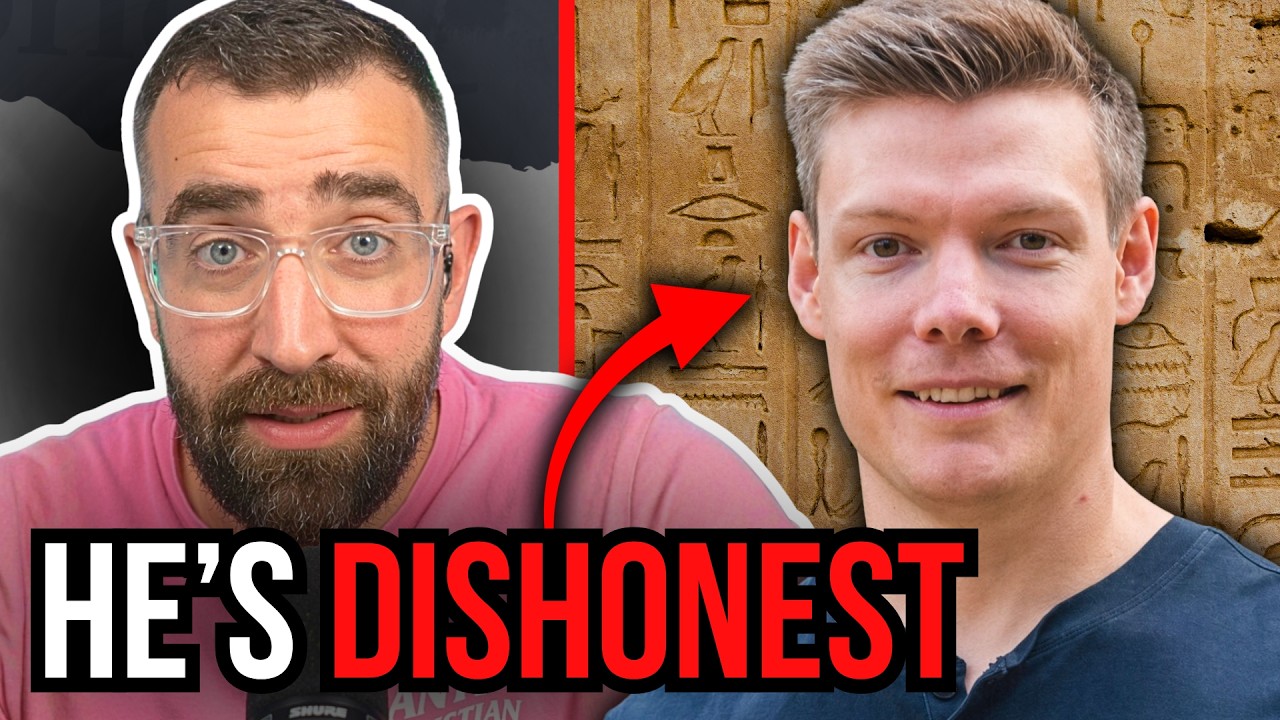
🔗 **Source:** [Major Christian Apologist Wes Huff Is LYING to You](https://www.youtube.com/watch?v=Ka8zAyDRTe8)
> [!note]+ Document Notes
> tags: [apologetics, biblical-historiography, wes-huff, deconstruction, evangelicalism, luke-acts]
> author: [MISSING]
> source: YouTube (channel name not stated in transcript; self-described focus on Christian nationalism/exvangelical commentary)
> reference: https://www.youtube.com/watch?v=Ka8zAyDRTe8
> date created: 2026-08-13 00:00
>
> > [!info] Generated analysis — not the author's words. Sections below are machine-written
> > from the captured source. Only text inside `> [!quote]` blocks is verbatim from the author.
> > Do not quote or attribute any other line to the named author.
>
> # 🏷️ Title: Major Christian Apologist Wes Huff is LYING to You
>
<!-- deep-read:sections start -->
## 🧭 Table of Contents
- [📝 Summary](#-summary)
- [📖 Main Content](#-main-content)
- [🗒️ Notes](#️-notes)
- [📚 References](#-references)
- [🗣️ Paraphrase](#️-paraphrase)
- [📰 Newsletter](#-newsletter)
- [✅ Action Items](#-action-items)
- [🧪 Hypotheses](#-hypotheses)
- [📊 Methodology](#-methodology)
- [❓ Questions](#-questions)
- [🔮 Future Research](#-future-research)
- [💡 Implications](#-implications)
- [🧠 Learning Styles Assessment](#-learning-styles-assessment)
- [📊 Accessibility Assessment](#-accessibility-assessment)
- [🌍 DEIB Assessment](#-deib-assessment)
- [✅ Logical Validity](#-logical-validity)
- [🛡️ DARVO Analysis](#-darvo-analysis)
- [🎯 Conclusion](#-conclusion)
### 🔗 References
- Original clip critiqued: Wes Huff, definitional framing of "true" (fact/reality, accurate communication, honest conveying), source video not linked in transcript.
- Intermediate critique video by a YouTuber identified only as "Derek" — not otherwise named or linked in the transcript. Content and style (systematic rebuttal of a viral apologetics clip, citation of named biblical-studies scholars) are consistent with religion-critique/deconstruction channels such as MythVision Podcast (hosted by Derek Lambert), but the transcript never gives a surname or channel name, so this identification is an inference, not a confirmed fact — flagged here rather than stated as certain.
- Scholars cited (via Derek, secondhand in this transcript, not independently verified against primary publications in this pass): Dr. Loveday Alexander, *The Preface of Luke's Gospel* (Cambridge University Press, 1993); Dr. Zachary Dawson; Dr. Shanna Adams, Journal of Greco-Roman Christianity and Judaism (2006); Dr. Shelly Matthews; Dr. Daniel Marguerat (transcribed "Margaret" — likely a transcription artifact); Dr. Gregory Sterling.
- Comparative text cited: Philostratus, *Life of Apollonius of Tyana* (~220 CE).
- Comparative ancient novels cited: Chariton, *Callirhoe* (~50 CE); Xenophon of Ephesus, *An Ephesian Tale* (2nd century CE).
## 📝 Summary
- **What happened.** An unnamed commentary channel reacts to a second video ("Derek") that itself rebuts a viral clip of apologist Wes Huff. Huff had argued that (1) Luke's gospel prologue uses vocabulary shared with ancient historians (implying reliable historiography) and (2) Luke 3:1–3 contains 22 verifiable historical/geographic references (implying the account sits in a real historical framework, by extension supporting its miracle claims). The reaction layers add running commentary agreeing with and amplifying Derek's rebuttal, plus an editorial claim — asserted directly in the video's title — that Huff is "lying."
- **Why it matters.** This is a template case of the reaction-to-a-reaction genre that dominates religious-apologetics YouTube: none of the three parties (Huff, Derek, this host) are in direct dialogue, so viewers assess a claim about a claim about a claim. The core content — genre criticism of Luke-Acts and the "shared setting doesn't validate miracle claims" parity argument — is a live, real debate in New Testament scholarship, not a fringe position; but the video's title and framing move well past what its own cited evidence supports.
- **Key stakeholders.** Wes Huff (the apologist being critiqued, absent from this video); the intermediate critic "Derek" (making the substantive genre/historiography argument); the host (adding motive-attribution commentary about "evangelical apologists" generally); viewers in active deconstruction or considering it, for whom this kind of content is frequently consumed as identity-forming material.
- **Risks and tradeoffs.** The chain-of-reaction format means viewers never see Huff's original full argument, only a critique of a critique; if Derek's summary of Huff is uncharitable or incomplete, none of this video's own claims correct for that. The title's escalation from "overclaims certainty" (a defensible critique) to "is lying" (an intent claim) is not supported by the transcript's own content and risks training viewers toward character attacks in place of argument evaluation.
- **Bottom line.** The genre-of-Luke-Acts critique and the Apollonius-of-Tyana parity argument are legitimate, well-formed points that any apologist citing "verified historical details" as evidence for miracle-claim reliability needs to answer. The video's own framing (title, "not being honest," "sleight of hand") outruns that legitimate content by imputing deliberate deception rather than demonstrating it.
## 📖 Main Content
- **Core argument thread 1 — "smuggling reliability."** Huff notes Luke's prologue uses a Greek term for "account/narrative" that historians like Josephus and Lucian also used to describe historiography. Derek's rebuttal splits this into two separate, harder questions Huff's single move glosses over: (a) does Luke's prologue actually use historiographical conventions (contested — cites Alexander 1993 arguing it more resembles technical-manual prefaces, versus Dawson and Adams arguing for historiographical convention), and (b) is the genre of Luke-Acts as a whole settled as history (no — cites Matthews, Marguerat, and Sterling, several of whom classify Luke-Acts as history but stress ancient historiography was "selective, rhetorical, apologetic, and identity forming," not neutral reporting).
- **Core argument thread 2 — the Apollonius of Tyana parity test.** Huff's second move: 22 verifiable historical/geographic references in Luke 3:1–3 place the account in a real setting. Derek's rebuttal: ancient fiction routinely embedded real people, places, and rulers (Chariton's *Callirhoe*, Xenophon's *An Ephesian Tale*). He then applies Huff's own inferential standard to Philostratus's biography of Apollonius of Tyana — a real, roughly Jesus-contemporary figure whose biography, set in verifiable real places under named real emperors, also credits him with healing, exorcism, raising the dead, post-death appearances, and ascension. If verified setting validates miracle claims in one case, it validates them in the other; if it doesn't validate Apollonius's miracles, the same reasoning undercuts Huff's inference for Luke.
- **Uncertainties/contested claims worth flagging explicitly.** (1) Everything here about Huff's actual argument is filtered through Derek's summary, which is itself filtered through this host's summary — three removes from Huff's own words within this transcript. (2) The named scholars' positions are asserted, not quoted or cited with locators beyond title/year, so a viewer cannot check them from this video alone. (3) The host's closing generalization that evangelical apologists' claims are "every time... found to be either misleading" is an unqualified, unsourced universal claim layered on top of one case study.
### 🗒️ Notes
#### ⏱️ [00:00](https://www.youtube.com/watch?v=Ka8zAyDRTe8&t=0s) Framing: Huff's three-part definition of "true," and the host's opening characterization
- Huff defines "true" as: in accordance with fact/reality, communicating accurately, conveying honestly.
- Host frames Huff upfront as making "very factual black and white claims" with "no nuance," and previews that the video will show him "not being really that truthful."
- Host raises a broader, structurally separate skeptical point (no original manuscripts, "copies of copies of copies") that is not actually engaged by Derek's specific rebuttal later — a tangent relative to the video's own throughline.
#### ⏱️ [02:38](https://www.youtube.com/watch?v=Ka8zAyDRTe8&t=158s) Derek's rebuttal begins: "smuggling reliability"
- Derek walks through Luke's actual prologue text (the "orderly account... certainty of the things you have been taught" passage).
- Names the core move: Huff cites one shared vocabulary word and concludes historiographical reliability follows. Derek calls this "smuggling reliability in through the back door."
- Cites Loveday Alexander's 1993 Cambridge monograph as showing the prologue resembles technical-manual prefaces more than historians' grand prologues, alongside Dawson and Adams arguing the opposite — presented as a live, two-sided scholarly debate, not a settled matter either way.
#### ⏱️ [06:39](https://www.youtube.com/watch?v=Ka8zAyDRTe8&t=399s) Genre of Luke-Acts as a second, separate, unsettled question
- Derek separates "does the prologue read like historiography" from "is Luke-Acts, as a whole work, history" — flags this as "genuinely unsettled," listing five or six seriously argued genre proposals (biography, collected biography, epic, novelistic prose, apologetic historiography, mixed Greek narrative).
- Cites Matthews (Acts as elite-reassurance narrative, not neutral record), Marguerat and Sterling (scholars who do call it history but define ancient historiography itself as "selective, rhetorical, apologetic, and identity forming").
- Host repeatedly amplifies with motive-attribution commentary ("he's just not being honest about what's going on") rather than adding new argument content at this point.
#### ⏱️ [10:59](https://www.youtube.com/watch?v=Ka8zAyDRTe8&t=659s) The con-artist analogy and the pivot to "22 historical references"
- Derek: shared vocabulary doesn't prove reliability "any more than a con artist using legal language proves he is a lawyer."
- Huff pivots (per the clip Derek is reacting to) to Luke 3:1–3's "22 historical references to locations and people... verified by archaeology and ancient literary sources outside of the Bible," framed as placing the account "within a historical framework."
#### ⏱️ [13:18](https://www.youtube.com/watch?v=Ka8zAyDRTe8&t=798s) The Apollonius of Tyana parity argument — strongest single point in the video
- Derek: ancient fiction (Chariton's *Callirhoe*, Xenophon's *An Ephesian Tale*) routinely used real settings and real rulers as backdrop for invented or embellished narrative.
- Introduces Philostratus's *Life of Apollonius of Tyana* (~220 CE): a real, Jesus-contemporary Pythagorean philosopher, biography set in real cities under real named emperors (Nero, Vespasian, Titus, Domitian), crediting him with healing, exorcism, raising the dead, post-death appearances, and ascension.
- Applies Huff's own standard reflexively: if verified real-world setting validates Luke's miracle claims, it must equally validate Apollonius's; rejecting Apollonius's miracles as "legendary embellishment on a real figure in a real setting" is, by Derek's framing, conceding exactly the critical-scholarship reading of the Gospels.
#### ⏱️ [17:30](https://www.youtube.com/watch?v=Ka8zAyDRTe8&t=1050s) Closing pastoral turn and channel self-identification
- Host pivots to a pastoral register: faith doesn't have to collapse from this, offers a non-inerrantist "wisdom, not objective history" framing of personal belief, and contrasts this against what it frames as the high-stakes, binary psychology of evangelical fundamentalism ("burn in hell forever").
- Host names the channel's usual focus as Christian nationalism and frames this apologetics critique as adjacent/foundational to that project — useful context for reading the video's polemical register as consistent with the channel's stated identity, not a one-off.
## 📚 References
- Philostratus, *Life of Apollonius of Tyana* (~220 CE) — primary comparative text; widely available in the Loeb Classical Library.
- Loveday Alexander, *The Preface of Luke's Gospel* (Cambridge University Press, 1993) — cited as the scholarly source for the "prologue resembles technical-manual prefaces" argument; not independently checked against the primary text in this pass.
- Gregory Sterling — cited for the "apologetic historiography" classification of Luke-Acts and the "shaping the past to define the present" characterization of that genre's function.
- Shanna Adams, Journal of Greco-Roman Christianity and Judaism (2006) — cited as a peer-reviewed response to Alexander; title/issue not given in the transcript, so not locatable from this note alone.
- Gospel of Luke, prologue (Luke 1:1–4) and Luke 3:1–3 — the two primary biblical passages under discussion.
## 🗣️ Paraphrase
- Opening (host): Huff presents contested interpretive claims about the Bible as flat, uncontested fact, without flagging that his framing reflects his own theological tradition rather than settled consensus.
- Huff's move 1 (via Derek): Luke's prologue uses a word ancient historians also used for their own writing, so Luke's account should be read as reliable history.
- Derek's rebuttal to move 1: that inference conflates two separate questions — whether the prologue uses a historiographical convention (contested) and whether the whole work's genre is settled as history (it isn't) — and even scholars who do call it history stress that ancient historiography was persuasive and agenda-driven, not neutral reporting.
- Huff's move 2 (via Derek): Luke 3 contains many archaeologically verifiable historical references, which places the account in a real historical framework.
- Derek's rebuttal to move 2: ancient fiction routinely used real settings and people too; applying Huff's own standard to Philostratus's biography of Apollonius of Tyana would force acceptance of that figure's miracle claims as well, which shows the inference from "real setting" to "reliable miracle claims" doesn't actually hold.
- Closing (host): none of this needs to be faith-destroying — belief can be reframed away from a modernist, fact-checkable model of scripture — but evangelical apologists, as a class, consistently overclaim because they reason from an inerrancy presupposition backward.
## 📰 Newsletter
Not applicable to this source — the pipeline's Newsletter section is written in a WordPress-community, plugin/tooling-adjacent voice for Courtney's professional audience; a theology/apologetics reaction video has no WordPress hook, plugin angle, or developer-community relevance to summarize into that format.
## ✅ Action Items
#### DevRel
Not applicable to this source — no developer relations, SDK, documentation, or developer-community content is present.
#### OSPO
Not applicable to this source — no open-source program office, license, or software-governance content is present.
#### Community
Not applicable to this source — no open-source or software community-management content is present.
#### WordPress
Not applicable to this source — none of the 21+ WordPress subteams (Core, Core Performance, Core AI, Core Program Team, Mobile, Playground, Community, Training, Marketing, Support, Design, Documentation, Photos, TV, Polyglots, Accessibility, Meta, CLI, Hosting, Tide, Openverse, Themes, Plugins) have any actionable connection to a theology/apologetics YouTube reaction video. Marked N/A honestly per explicit instruction rather than force-fit.
#### The WPOCC
Not applicable to this source — no WP Open Community Collective program, funding, or governance connection.
#### FAIR
Not applicable to this source — no FAIR technical-independence, governance-artifact, or funding-covenant connection.
## 🧪 Hypotheses
- H1: If shown Derek's specific two-question decomposition (historiographical-convention vs. settled-genre), Wes Huff would concede the genre of Luke-Acts is contested in current scholarship rather than presenting it as settled — testable only if Huff has since responded publicly.
- H2: Audiences shown the Apollonius-of-Tyana parity argument show a measurable, short-term drop in agreement with "verified historical setting implies reliable miracle claims" as a standalone inference, independent of any change in overall religious belief.
- H3: A systematic side-by-side transcript comparison of Huff's original clip against Derek's summary of it would show Derek's characterization is substantially accurate but omits any qualifying language Huff used (if any) — currently unverifiable without the primary clip.
- H4: The host's claim that evangelical-apologetics claims are "every time... found to be either misleading" does not hold up as a general pattern when tested against a representative sample of apologists' claims (i.e., it's a hasty generalization from a single case), rather than a documented base rate.
- H5: Viewers who already hold high religious certainty/commitment, on exposure to this specific video, are more likely to show a backfire effect (increased certainty) than a belief update, given the video's confrontational framing and the target audience's likely prior exposure to the "faith under attack" schema.
### 📊 Methodology
- H1/H3 (accuracy of the reaction-to-a-reaction chain): direct transcript-to-transcript content analysis comparing Huff's original clip, Derek's rebuttal video, and this reaction video, coding for omission, exaggeration, and fair characterization at each remove.
- H2 (parity-argument persuasion effect): pre/post survey experiment — randomize exposure to the Apollonius segment vs. a control clip, measure agreement with the "verified setting implies reliable miracle claim" inference before and after.
- H4 (generalization across apologists): systematic content analysis of a representative sample of public apologetics talks/debates (not just Huff), coded against an explicit, pre-registered fallacy/omission rubric, to establish an actual base rate rather than a single anecdote.
- H5 (backfire effect): experimental media-effects design with a religious-commitment pretest, randomized exposure, and a delayed belief-certainty posttest to distinguish genuine persuasion from reactance.
### ❓ Questions
- Has Wes Huff responded directly to Derek's critique (the "smuggling reliability" framing and the Apollonius parity argument), and if so, does he concede, qualify, or rebut?
- Who is "Derek," specifically — is this in fact Derek Lambert of MythVision Podcast, and if so, does his channel's broader mythicist/critical-scholarship orientation (a stated interpretive lens) bear on how his framing of the "settled vs. unsettled" genre question should be weighted?
- Does Loveday Alexander's 1993 monograph, read directly, support the strong reading Derek gives it ("more similar to technical manuals than to historians"), or is that a simplification of a more qualified argument?
- What did Huff actually say in the original clip — does he present Luke's genre as flatly settled, or does the reaction chain compress out qualifying language he may have used?
- Is the "22 historical references... verified by archaeology" figure in Luke 3:1–3 accurately characterized, and does Huff (in the source clip) present that as proof of miracle-claim reliability, or only as evidence the narrative is set in a real place and time (a narrower, more defensible claim the reaction video may be overreading)?
### 🔮 Future Research
- A primary-source-anchored comparison (Huff's original clip, timestamped, alongside Derek's and this host's characterizations) to establish how much distortion accumulates across each remove of the reaction chain.
- A reception study of the "reaction to a reaction" apologetics/deconstruction genre generally — does it measurably change viewers' beliefs, or mostly reinforce priors on both sides?
- A survey of current (2026) New Testament genre-criticism scholarship on Luke-Acts, to establish whether the "5-6 seriously argued genre proposals" claim reflects the present state of the field or an older snapshot.
### 💡 Implications
- **Practice (content creators):** Reaction-to-a-reaction content should link or timestamp the original primary source directly; asserting "lying" in a title is a claim requiring evidence of intent, not just evidence of overclaiming or omission.
- **Policy (platform/discourse norms):** Sensational, intent-attributing titles ("is LYING to you") outperform accurate, hedged titles under most recommendation algorithms — a structural incentive toward escalation independent of the underlying argument's actual strength.
- **Education (media/religious literacy):** The genre-criticism content here (contested historiographical conventions, the parity-of-reasoning test) is genuinely useful media-literacy material and could be taught on its own merits without the character-attack framing.
- **Security:** Not applicable to this source.
- **Funding:** Not applicable to this source, beyond noting that polemical titles are plausibly monetization-incentivized (watch-time/engagement optimization) independent of argument quality — asserted here as a plausible general dynamic, not verified for this specific channel.
### 🧠 Learning Styles Assessment
- **Reading level estimate:** Computed directly from the transcript (3,161 words, 232 sentences, 4,744 syllables). Flesch-Kincaid Grade Level ≈ 7.4; Flesch Reading Ease ≈ 66 ("plainly written," conversational spoken register — consistent with unscripted commentary/reaction format).
#### 👀 Visual learners
- Present: none — audio-only reaction commentary over (presumably) an inset clip of the source video; no on-screen diagrams, timelines, or citations shown as text in this transcript.
- Improve: an on-screen citation card for each named scholar (Alexander, Dawson, Adams, Matthews, Marguerat, Sterling) with title/year, and a simple timeline graphic for the ancient texts discussed (Callirhoe ~50 CE, Apollonius biography ~220 CE, Luke-Acts disputed dating).
#### 🔊 Aural learners
- Present: the entire source is audio/spoken-word commentary — strong native fit for this learning style.
- Improve: a tighter, pre-scripted summary of the two-question decomposition (historiographical convention vs. genre) would reduce the repetition/backtracking present in extemporaneous commentary.
#### 🗣️ Verbal learners
- Present: analogies used throughout (con artist/lawyer, Hollywood "based on a true story," movie *300*) aid verbal processing.
- Improve: a plain-language glossary of "historiography," "genre criticism," and "apologetic historiography" would help viewers unfamiliar with biblical-studies jargon follow the core argument.
#### 🧩 Kinesthetic learners
- Present: none — no interactive or hands-on component.
- Improve: a companion worksheet applying the "parity test" (would this evidence validate a claim I don't already believe?) to other real-world apologetics claims would give this style of learner something to do with the argument.
#### 🧠 Logical learners
- Present: Derek's two-question decomposition and the parity-of-reasoning test are genuinely well-suited to logical learners — the argument structure is explicit and reusable.
- Improve: a simple decision-tree graphic (Does X evidence type validate claim type Y? Test against a case you don't already accept) would make the reusable logical structure more explicit and portable.
#### 🧑🤝🧑 Social learners
- Present: the dialogic reaction format (commentary layered on commentary) is itself a social-learning structure.
- Improve: timestamped comment prompts inviting viewers to apply the parity test to a claim of their own choosing.
#### 🧘♀️ Solitary learners
- Present: the closing pastoral turn ("your faith doesn't have to be shattered") functions as a reflection prompt.
- Improve: an explicit set of self-reflection questions (What would change my mind? What is my presupposition here?) applied symmetrically to both religious and skeptical priors, not just the religious side.
#### 🌿 Naturalistic learners
- Present: not applicable — no ecological or environmental content.
- Improve: not applicable to this source's subject matter.
### 📊 Accessibility Assessment
#### Screen reader semantics
- Present: YouTube's auto-generated captions provide a text alternative (source of this transcript).
- Improve: speaker-labeled captions (currently unlabeled `>>` turn markers) would materially improve screen-reader comprehension of who is speaking at each turn.
#### Keyboard navigation
- Present: standard YouTube player keyboard controls apply; nothing source-specific to assess.
- Improve: not applicable beyond platform defaults.
#### Contrast and readability
- Present: not assessable from transcript alone (no visual/on-screen text data captured).
- Improve: not assessable from transcript alone.
#### Text resizing and reflow
- Present: not applicable — audio/video content, no reflowable text UI authored by this creator.
- Improve: not applicable.
#### Media and captions
- Present: auto-generated YouTube captions exist (this transcript is sourced from them) — no evidence of creator-authored, corrected, or downloadable transcripts.
- Improve: creator-published, human-corrected transcripts (auto-captions visibly mis-transcribe "Wes Huff" as "Hoff" and "Marguerat" as "Margaret" in this pass) and speaker labels.
#### Forms and interactions
- Present: not applicable — no forms or interactive elements in this content type.
- Improve: not applicable.
#### Standards reference
- Primary WCAG 2.2 AA gap: 1.2.2 (Captions, Prerecorded) is nominally met via auto-captions but with accuracy errors (misheard proper nouns) that would benefit from creator correction; 1.2.9 (Audio-only, Live equivalent) not applicable since this is video with captions available.
### 🌍 DEIB Assessment
#### Cultural breadth
- Present: engages ancient Mediterranean/Greco-Roman comparative literature (Chariton, Xenophon of Ephesus, Philostratus) alongside biblical text — genuine cross-cultural historical range within its subject area.
- Improve: no representation of non-Western or non-Christian religious-studies perspectives on comparable "sacred biography" genres (e.g., hagiography traditions outside the Greco-Roman/Jewish-Christian sphere) that could contextualize the parity argument even further.
#### Inclusive language
- Present: the closing section explicitly avoids telling viewers their faith is invalid or that they must deconstruct, which is a deliberately inclusive framing toward a religiously diverse/questioning audience.
- Improve: jargon ("historiographical," "apologetic historiography," "presupposition") is used without definition, which is a plain-language/accessibility gap more than an inclusion gap, but affects the same population of less-specialized viewers.
#### Neurodiversity support
- Present: none specifically — unscripted spoken commentary with frequent self-interruption and restart, which can be harder to follow for some neurodivergent viewers than structured, chunked delivery.
- Improve: chapter markers at each of the two main argument threads (prologue/genre; historical-detail/Apollonius) would aid predictable structure.
#### Representation
- Present: cites a religiously and methodologically mixed set of named scholars (both those arguing for and against Luke's historiographical conventions), which is a genuine representational strength.
- Improve: all named scholars are cited secondhand via Derek's summary with no indication of their own religious/institutional positioning, which would help viewers weight the citations appropriately.
#### Psychological safety
- Present: explicit reassurance late in the video ("your faith doesn't have to be shattered... it doesn't mean you can't be a Christian anymore") is a genuine, non-trivial psychological-safety gesture for an audience that may include people actively deconstructing.
- Improve: the video's own title and early framing ("is LYING to you") work against that later psychological-safety gesture — a viewer arriving hostile/alarmed from the title may not reach the more measured closing reassurance in the same emotional state.
### ✅ Logical Validity
#### Strong reasoning
- **Parity-of-reasoning / reflexive-standard test (analogical, [13:18–16:36]).** Derek's Apollonius-of-Tyana argument is a genuinely strong inductive/analogical move: apply the proponent's own inferential rule to a matched case the proponent doesn't already accept, and see if it still holds. This is one of the most reliable tools in comparative-religion and historiography argumentation because it doesn't require the critic to prove a negative — it only requires consistency from the person making the original inference. To strengthen it further: specify explicitly which features of the Apollonius case are meant to be disanalogous (if any), since a fully rigorous parity argument should also address the strongest counter-disanalogy an opponent could raise (e.g., differences in attestation density or dating gap between event and text).
- **Two-question decomposition ([06:39–06:53]).** Separating "does the prologue use a historiographical convention" from "is the genre of the whole work settled as history" is a legitimate and useful logical move — it isolates a compound claim into its component parts so each can be evaluated on its own evidence, rather than letting a strong-sounding answer to one smuggle in an unearned answer to the other.
#### Fallacies
- **Equivocation / unsupported escalation to intent — title and framing ("is LYING to you"; [00:15–00:19] "not being really that truthful"; [09:23–09:34] "he's just not being honest").** The word "lying" requires a claim about Huff's conscious intent to deceive. Nothing in the transcript's own content — including Derek's specific critiques — establishes intent; the substantive critique throughout is that Huff *overclaims certainty* and omits scholarly dissent, which is a claim about argument quality, not mental state. Notably, the video is explicit that the Gospel authors themselves are *not* lying, only "telling stories how they tell stories" [11:15–11:53] — the same interpretive charity is not extended to Huff. **Fix:** retitle/reframe around the actual claim being supported ("overstates certainty," "omits scholarly dissent") rather than an unproven intent claim.
- **Hasty generalization / poisoning the well — [12:36–12:53]: "there's a reason why modern biblical scholarship does not look to evangelical apologists to get their information from because every time it's examined, it's found to be either misleading."** This is an unqualified universal claim ("every time") about an entire class of speakers ("evangelical apologists"), built on a single case study (Huff) presented earlier in the same video. No sampling, count, or citation is given for the "every time" claim. **Fix:** narrow the claim to what's actually supported ("in this case, and in others I could cite specifically...") or drop the universal quantifier.
- **Mislabeled fallacy — [06:33–06:39]: the host calls Huff's prologue-word argument "circular reasoning" ("That's circular reasoning").** Circular reasoning requires the conclusion to appear, disguised, among the premises. What's actually being described (a single shared vocabulary word taken as sufficient evidence for a much stronger conclusion) is more precisely a *hasty generalization* or *equivocation between "uses a genre convention" and "is reliable history"* — not circularity. This is a real instance of imprecise fallacy-naming worth flagging on its own, since correctly naming a reasoning error matters for the critique's own credibility.
- **Loaded comparison — [10:59–11:15]: "any more than a con artist using legal language proves he is a lawyer."** The analogy's logical point (shared vocabulary ≠ credential/reliability) is valid, but framing the comparison object as a "con artist" rather than a neutral non-lawyer imports a prejudicial, dishonesty-coded association into what is otherwise a clean logical point — a smaller-scale version of the same equivocation-with-intent pattern flagged above.
#### Tone of voice
- Confrontational and moralizing in framing (title, "sleight of hand," "not being honest"), shifting to pastoral and reassuring in the final two minutes ([17:30] onward). The tonal shift is genuine and appears sincere, but the video does not reconcile the intent-attribution of its opening/title with the more measured, process-not-deception framing it explicitly applies to the biblical authors themselves in the middle section.
### 🛡️ DARVO Analysis
- **Classic DARVO does not clearly apply here, and it's worth being explicit about why rather than force-fitting the framework.** DARVO (Deny–Attack–Reverse Victim/Offender) describes how an accused party responds *when confronted* with an accusation. Wes Huff is not present in this video and does not respond to anything — there is no primary-source denial, counter-attack, or victim/offender reversal from the accused to analyze. Labeling absence-of-response as "DARVO" would be an unsupported inference about a person who isn't speaking in this source.
- **What is present and worth flagging: an asymmetric-charity pattern that runs in the reverse direction of DARVO's usual analytic target.** The video extends explicit interpretive charity to the ancient Gospel authors — their embellishment/persuasive shaping is framed as normal, non-deceptive storytelling within their cultural context ("that doesn't mean... they're lying... they're just telling history or telling stories how they tell stories," [11:15–11:53]) — while withholding that same charity from Huff, a living person making a comparable persuasive/rhetorical move (selective emphasis in service of a case he's already committed to), who is instead labeled a liar in the title. If Derek's own logic (rhetorical/persuasive shaping ≠ lying) is applied consistently, it would extend to Huff as well.
- **Attack-adjacent element, not full DARVO:** the "evangelical apologists... presupposition... they're going to try to find a way to smooth out that perceived contradiction" framing [12:53–13:16] attacks the *credibility of the category* (motivated reasoning, presupposition-driven) rather than engaging the specific claim on its merits — a real rhetorical move worth naming, but it's the host attacking the critiqued party's class, not the critiqued party defending himself, so it sits outside DARVO's actual scope (which describes the accused's response, not the accuser's opening framing).
- **Conclusion for this section:** apply DARVO to Huff only if and when a video captures his actual response to this critique. In this source, the more accurate finding is a one-directional charity asymmetry plus an accuser-side motive attack — real and worth naming, but not DARVO.
## 🎯 Conclusion
- **Bottom line.** The video's substantive content — the two-question genre decomposition and especially the Apollonius-of-Tyana parity argument — is a legitimate, well-constructed challenge to a specific apologetic inference (verified historical setting → reliable miracle claims). That challenge stands on its own merits and doesn't require the title's escalation to "lying" to be worth taking seriously; if anything, the escalation undercuts the video's own credibility by outrunning its evidence and by applying a double standard of charity (rhetorical shaping = not lying for ancient authors; rhetorical shaping = lying for Huff).
- **Next steps for a reader/viewer.** (1) Locate Huff's original clip directly rather than relying on this third-order summary. (2) Independently check at least one of the named scholarly citations (Alexander 1993 is the most load-bearing and most checkable). (3) Apply the parity test explicitly: for any "verified real-world detail therefore reliable extraordinary claim" argument encountered elsewhere (in any direction, religious or skeptical), test it against a matched case the arguer doesn't already accept before accepting the inference.
## 🔄 Refactor Appendix — Major Christian Apologist Wes Huff is LYING to You
> Density: 2–5 Literature atoms (H3), 0–3 Permanent candidates (H4).
> Override applied: 4 Literature atoms (dense source, 4+ distinct claims worth separating).
> Konik claim-header rules: present tense, declarative, ≤10 words when possible, searchable, unique.
> Atomicity: one declarative sentence per atom. "and"/"also" → split.
### 📚 Literature Atoms (H3)
#### [H1] Real settings don't validate ancient miracle claims
> [!quote]
> By your own standard, by the exact standard you just applied to Luke, should we believe Apollonius of Tyana raised a girl from the dead?
**Context & use**:
- [15:54]–[16:36] — the Apollonius-of-Tyana parity argument, the video's strongest single point.
- Why it matters: this is a reusable reasoning tool (parity/reflexive-standard test) applicable to any "verified real-world detail implies reliable extraordinary claim" argument, not just this one.
**Tags**: #xref #aphorisms
**Highlight**: pushed as Reader-native inline highlight (see Phase 2).
<!-- atomicity: 1 idea ✓ -->
#### [H2] Genre of Luke-Acts remains scholarly unsettled
> [!quote]
> This is where it gets really messy for Hoff, because this question is genuinely unsettled in current scholarship.
**Context & use**:
- [06:39]–[06:53] — introduces the second of Derek's two decomposed questions.
- Why it matters: names the specific move (treating a contested genre question as settled) that the whole critique depends on.
**Tags**: #xref
**Highlight**: pushed as Reader-native inline highlight (see Phase 2).
<!-- atomicity: 1 idea ✓ -->
#### [H3] Shared vocabulary doesn't prove historical reliability
> [!quote]
> does not prove Luke is a reliable historian any more than a con artist using legal language proves he is a lawyer
**Context & use**:
- [10:59]–[11:15] — the core logical point of the "smuggling reliability" critique, stated as an analogy.
- Why it matters: valid logical point (shared vocabulary ≠ credential) but flagged separately in Logical Validity for its prejudicial framing ("con artist").
**Tags**: #xref
**Highlight**: pushed as Reader-native inline highlight (see Phase 2).
<!-- atomicity: 1 idea ✓ -->
#### [H4] Evangelical apologists reason from inerrancy presuppositions
> [!quote]
> if those are your presuppositions, then obviously if there's a contradiction or a flaw, you're going to try to find a way to smooth out
**Context & use**:
- [12:53]–[13:16] — the host's motive-attribution explanation for why apologists overclaim.
- Why it matters: plausible as applied to Huff specifically, but generalized elsewhere in the same video into an unqualified "every time" claim about the whole category (flagged as hasty generalization in Logical Validity).
**Tags**: #xref
**Highlight**: pushed as Reader-native inline highlight (see Phase 2).
<!-- atomicity: 1 idea ✓ -->
### 🧠 Permanent Candidates (H4)
#### [P1] Parity test for evidence-borrowed-credibility arguments
**Claim** (one sentence, Courtney's voice): Testing an apologetic (or any) inference against a matched case the arguer doesn't already accept is the fastest way to expose whether cited evidence is doing real inferential work or only borrowing credibility from surface detail.
**Evidence pointer**: [[#H1]]
**Scope & conditions**: Holds for any argument-by-analogy in comparative-religion, historiography, or general "circumstantial detail implies reliability" reasoning; breaks if the two compared cases differ on an epistemically relevant dimension beyond the surface detail being cited — no such disanalogy was established for the Luke/Apollonius comparison in this video, but a rigorous version of the argument should name and rule one out explicitly rather than leave it implicit.
**Links** (≥1 with annotation):
- [[Argument from authority]] — because contrasts on evidentiary weight (naming scholars vs. testing the inference's structure directly)
- [[Historiographical genre criticism]] — because applies-in ancient-text reliability debates
- [[Charitable interpretation asymmetry]] — because extends into the DARVO/charity-asymmetry finding in this same source
<!-- atomicity: 1 idea ✓ -->
### ✏️ Fleeting Queue
- [F1] Check whether Wes Huff has publicly responded to the "smuggling reliability"/Apollonius critique — https://www.youtube.com/watch?v=Ka8zAyDRTe8 #xref
- [F2] Confirm whether "Derek" is Derek Lambert of MythVision Podcast — not stated in transcript, inferred only from content/style #xref
- [F3] Read Loveday Alexander's 1993 monograph directly rather than relying on Derek's secondhand summary of it #xref
### → Things 3 (max 2 actions)
- [ ] Locate Wes Huff's original source clip and verify the "22 historical references" claim and his exact genre framing against the primary clip, not this third-order summary — apologetics-fact-check #things
- [ ] Read Loveday Alexander, *The Preface of Luke's Gospel* (1993), directly to check whether Derek's characterization of her argument holds up — apologetics-fact-check #things
<!-- deep-read:sections end -->
📄 **Full text:** [[Full Document Contents/Articles/Major Christian Apologist Wes Huff Is LYING to You.md|Major Christian Apologist Wes Huff Is LYING to You by YouTube]]
## Highlights
- pretty much taking him to task for not being really that truthful in the claims that he makes. Wes, as an apologist ([View Highlight](https://read.readwise.io/read/01kzz1vg7t7zrgza98vdvys9z7))
- Note: Opening framing that seeds the title's intent-claim ("lying"/"not truthful") before any evidence is presented -- equivocates argument-quality critique with a claim about conscious deception.
- Tags: fallacy/equivocation, atom/zettel/z1
- Wesley is smuggling reliability in through the back door. And I want to ([View Highlight](https://read.readwise.io/read/01kzz1v315mh1658hkkwzwkd6g))
- Note: Core thesis of the video's first argument thread: shared vocabulary between Luke's prologue and ancient historians is treated as proof of reliability without earning that inference.
- Tags: atom/literature/h2
- This is where it gets really messy for Hoff, ([View Highlight](https://read.readwise.io/read/01kzz1v60w60xkccnar3pnzqqf))
- Note: Introduces the second decomposed question: whether the genre of Luke-Acts as a whole is settled as history (it isn't).
- Tags: atom/literature/h3
- does not prove Luke is a reliable historian any more than a con artist using legal language proves he is a lawyer. The word is a convention. The ([View Highlight](https://read.readwise.io/read/01kzz1v9880r3f7gdd8ym1y7rk))
- Note: Valid logical point (shared vocabulary is not a credential), but the "con artist" comparison imports a prejudicial, dishonesty-coded frame rather than a neutral one.
- Tags: fallacy/loaded-language, atom/literature/h3
- flat. Again, there's a reason why modern biblical scholarship does not look to evangelical apologists to get their information from because every time it's examined, it's found to be either ([View Highlight](https://read.readwise.io/read/01kzz1vcr13wtfk7sxfsfv9rtv))
- Note: Unqualified "every time" universal claim about an entire class ("evangelical apologists") built on one case study presented earlier in the same video.
- Tags: fallacy/hasty-generalization, atom/zettel/z1
- >> By your own standard, by the exact standard you just applied to Luke, should we believe that Apollonius of Tyana raised a girl from the dead? ([View Highlight](https://read.readwise.io/read/01kzz1tyy2186newkjsgvg6wk0))
- Note: Parity-of-reasoning test: applies Huff's own historical-detail-implies-reliability standard to a matched case (Apollonius of Tyana) he wouldn't accept. Strongest single argument in the video.
- Tags: atom/literature/h1