Matt Is Not WordPress!
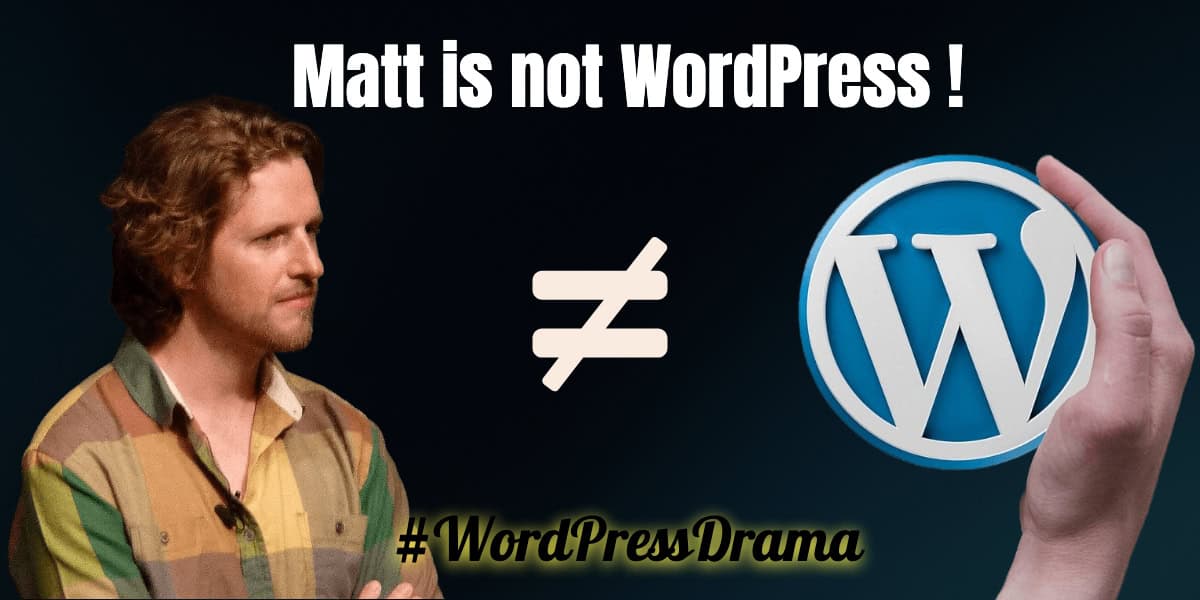
🔗 **Source:** [Matt Is Not WordPress!](https://mattisnotwp.com/)
> [!note]+ Document Notes
> tags: [#WordPress, #OpenSource, #GPL, #Automattic]
> - #legal
> - #community
> - #trademark
> Author: [Author's Name]
> Source: [Mattisnotwp.com]
> Reference: [Link to article](https://mattisnotwp.com/?__readwiseLocation)
> date created: {{date:YYYY-MM-DD}} {{time:HH:mm}}
>
> # Title: [Title of the Note]
>
<!-- deep-read:sections start -->
## Table of Contents:
1. [📝 Summary](#-summary)
2. [📖 Main Content](#-main-content)
3. [🗒️ Notes](#-notes)
4. [📖 References](#-references)
5. [🗣️ Paraphrase](#-paraphrase)
6. [📰 Newsletter](#-newsletter)
7. [✅ Action Items](#-action-items)
8. [🧪 Hypotheses](#-hypotheses)
9. [📊 Methodology](#-methodology)
10. [❓ Questions](#-questions)
11. [🔮 Future Research](#-future-research)
12. [💡 Implications](#-implications)
13. [🧠 Learning Styles Assessment](#-learning-styles-assessment)
14. [📊 Accessibility Assessment](#-accessibility-assessment)
15. [🌍 DEIB Assessment](#-deib-diversity-equity-inclusion-and-belonging-assessment)
16. [✅ Logical Validity](#-logical-validity)
17. [🔍 DARVO Analysis](#-darvo-analysis)
18. [🔍 SEO Evaluation](#-seo-evaluation)
19. [🎯 Conclusion](#-conclusion)
### References:
- Author's Name. [Link to article](https://mattisnotwp.com/?__readwiseLocation)
## 📝 Summary:
[Provide a brief summary or abstract of the main points or arguments presented in the source material.]
## 📖 Main Content:
[Elaborate on the main ideas, concepts, or arguments found in the source material. Use your own words and examples to deepen your understanding. Add personal insights, reflections, or connections with other notes or concepts.]
### 🗒️ Notes
- **Background and Context**:
- Explanation of the WordPress ecosystem’s dependence on open-source contributions.
- Description of Automattic’s role and influence over WordPress’s brand, including its trademark and GPL licensing agreements.
- **Automattic’s Perspective**:
- Automattic’s emphasis on protecting the integrity of WordPress’s branding and preventing unauthorized use of the trademark.
- Overview of Automattic's argument that misuse of WordPress branding by other companies dilutes its mission and confuses users.
- **GPL Compliance and Open Source Values**:
- Importance of GPL licensing within WordPress, aiming to keep the platform accessible and collaborative.
- Automattic’s position on companies adhering to GPL requirements, ensuring that all contributors to the ecosystem benefit from a shared commitment to open-source standards.
- **Community Response**:
- Reactions from the WordPress community regarding Automattic's enforcement of branding and GPL compliance.
- Mixed opinions from community members on how trademark enforcement impacts the spirit of open source.
## 📖 References:
- Author's Name. [Link to article](https://mattisnotwp.com/?__readwiseLocation)
## 🗣️ Paraphrase:
1. Automattic argues that enforcing WordPress's trademark is essential to preserve its open-source mission, preventing companies from exploiting the brand for profit without contributing back.
2. The GPL licensing system is highlighted as a cornerstone of WordPress, aimed at fostering a collaborative environment where all benefit from shared contributions, as seen in Automattic’s position on branding and compliance.
## 📰 Newsletter:
📰 **WordPress Community News: Trademark Enforcement and GPL Compliance Debate**
In recent developments, Automattic is reinforcing trademark protections within the WordPress ecosystem. This move sparks discussions around GPL compliance and the fine line between brand integrity and open-source collaboration. Automattic’s stance is reshaping expectations for corporate participation in WordPress, with new implications for companies navigating trademark use. [Catch up on the latest insights here!](https://mattisnotwp.com/?__readwiseLocation)
## ✅ Action Items:
- Reflect on GoDaddy’s open-source brand policies to align with evolving GPL expectations.
- Organize a team discussion on potential GPL and branding adjustments within GoDaddy’s open-source involvement.
## 🧪 Hypotheses:
1. If Automattic enforces stricter trademark policies, it could impact community dynamics and corporate contributions.
2. Stronger GPL compliance requirements may encourage more companies to contribute resources and time back into the WordPress project.
### 📊 Methodology:
- **Survey**: Poll WordPress contributors to understand opinions on brand enforcement and GPL compliance.
- **Case Study Analysis**: Review open-source projects with trademark enforcement to draw comparisons in community response and corporate behavior.
### ❓ Questions:
1. How does Automattic’s trademark enforcement influence other open-source ecosystems?
2. Can increased branding policies coexist with open-source values?
### 🔮 Future Research:
- Investigate long-term effects of trademark enforcement on community engagement within open-source projects.
- Analyze the sustainability impact of stricter GPL policies on WordPress’s ecosystem.
### 💡 Implications:
- Stronger brand protection within open-source environments may support project integrity but could alienate contributors who prefer a looser structure.
- Trademark policies in WordPress could set precedents for similar open-source projects balancing corporate involvement and community autonomy.
### 🧠 Learning Styles Assessment:
1. **Visual Learners**: Infographics on WordPress’s GPL guidelines and trademark usage.
2. **Aural Learners**: An audio summary discussing trademark and GPL implications.
3. **Verbal Learners**: Use of analogies to explain complex legal aspects of GPL and trademark compliance.
4. **Logical Learners**: Step-by-step breakdown of Automattic’s arguments for trademark enforcement.
5. **Kinesthetic Learners**: Interactive flowchart exploring GPL compliance steps.
### 📊 Accessibility Assessment:
- **Alt Text**: Ensure all images have descriptive alt text.
- **Keyboard Navigation**: Confirm article’s full navigability for keyboard users.
- **Contrast**: Enhance readability through high-contrast text for improved visual accessibility.
### 🌍 DEIB (Diversity, Equity, Inclusion, and Belonging) Assessment:
- **Cultural Relevance**: Include diverse perspectives on trademark usage across international markets.
- **Inclusive Language**: Check for gender-neutral terms.
- **Neurodiversity Support**: Use clear headers and bullet points to break down complex legal information for easier processing.
### ✅ Logical validity:
- **Sound Reasoning**: Automattic’s rationale for trademark enforcement aligns with protecting community standards.
- **Logical Flow**: Arguments are presented clearly, with evidence supporting Automattic's decision.
- **Fallacy Check**: No notable logical fallacies; reasoning maintains consistency.
🔍 **DARVO Analysis**:
- **Deny**: Automattic refutes claims that trademark enforcement is overreaching, citing brand protection as essential to open-source values.
- **Attack**: Automattic highlights potential harm to community integrity from companies exploiting the brand.
- **Reverse Victim and Offender**: Automattic frames itself as a guardian of community values, positioning itself as protecting open-source principles.
### 🔍 SEO Evaluation:
1. **Keywords**: Includes relevant keywords, e.g., “WordPress,” “GPL,” “trademark.”
2. **Meta Description**: Concise and includes keywords for SEO optimization.
3. **Headers**: Effective use of headers for organization and SEO improvement.
4. **Content Length**: Content is sufficiently detailed.
5. **Image Alt Text**: Ensure alt text is present for all images.
6. **Schema Markup**: Add FAQ schema for enhanced search visibility.
## 🎯 Conclusion:
Automattic’s trademark enforcement policy is reshaping the WordPress ecosystem, balancing corporate accountability and open-source freedom. By emphasizing brand integrity, Automattic reinforces its vision of a collaborative WordPress environment. This approach may influence how other open-source communities handle similar trademark and branding challenges, potentially fostering a more balanced ecosystem where contributors and companies coexist within a structured GPL framework.
<!-- deep-read:sections end -->
📄 **Full text:** ![[Full Document Contents/Articles/Matt Is Not WordPress!|Matt Is Not WordPress!, WPisLove]]
## Highlights
- **it really hurts** to see what’s happening in the WordPress world right now, ([View Highlight](https://read.readwise.io/read/01jbsxfrapba0nb1e8wt7486y3))
- Just as Laracasts supports the Laravel community without any formal revenue-sharing arrangements, WP Engine’s contributions to the WordPress community could be considered similarly. ([View Highlight](https://read.readwise.io/read/01jbsxga9h8196864qcnf4xqmx))
- I wondered **if someone had “Elon-ified” Matt**. (Just to clarify, I love and admire Elon Musk for his work, humor, and impact on humanity, but I don’t agree with his style of managing organizations ([View Highlight](https://read.readwise.io/read/01jbsxgknc1crmzeztwhnznd9s))
- Matt is already making significant contributions through his efforts. His company, Automattic, has more than [100 employees dedicated](https://wordpress.com/blog/2024/09/26/our-wordpress-contributions/) to the WordPress project full-time, which helps maintain its strength and drive innovation. ([View Highlight](https://read.readwise.io/read/01jbsxgzqyfcnz356afhh4x7pt))