Member Spotlight: Tia Wood
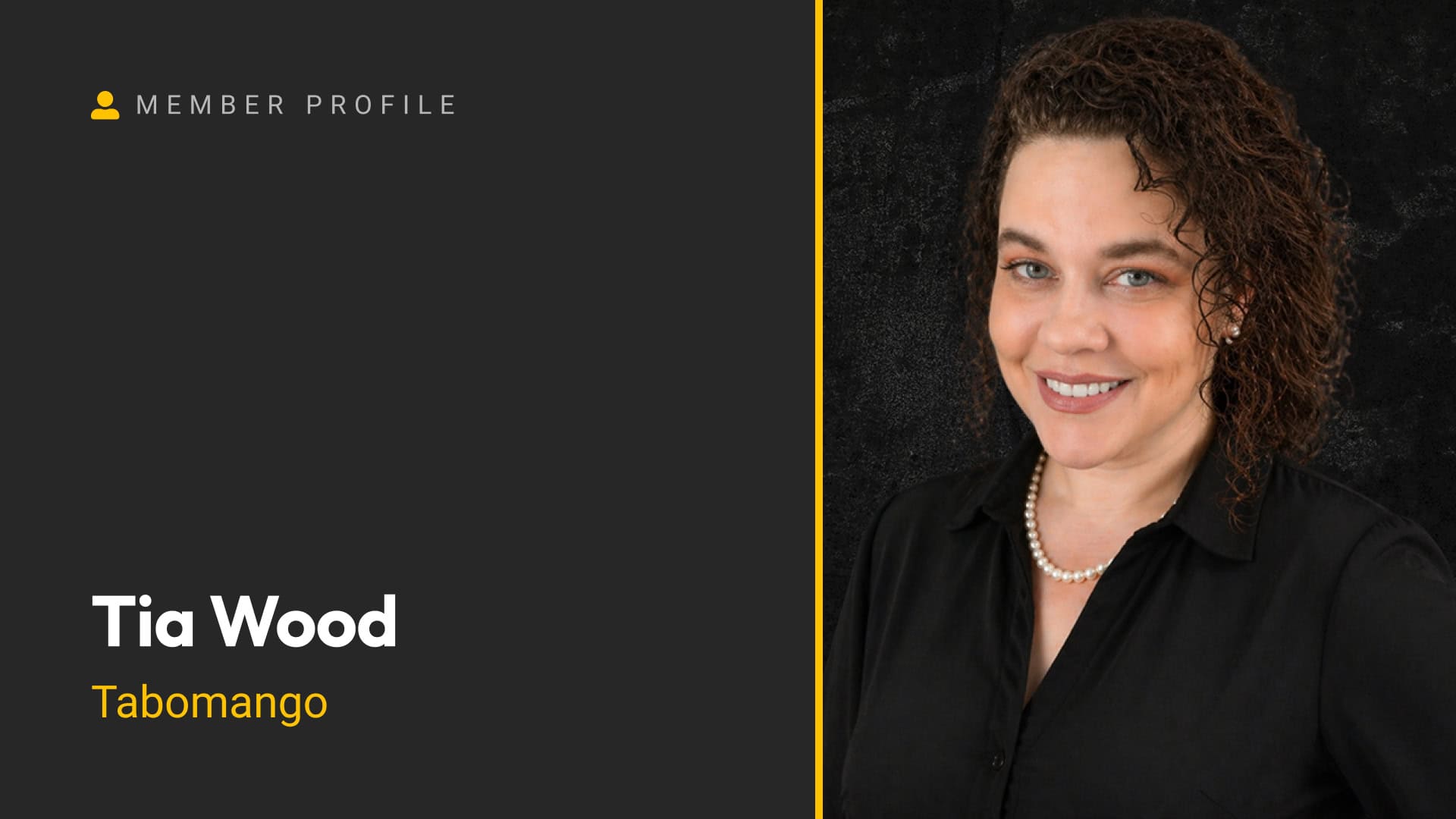
🔗 **Source:** [Member Spotlight: Tia Wood](https://theadminbar.com/member-spotlight-tia-wood/)
> [!note]+ Document Notes
> tags: [wordpress-agencies, white-label-development, entrepreneurship, work-life-balance, ux-design]
> author: [MISSING]
> source: The Admin Bar
> reference: https://theadminbar.com/member-spotlight-tia-wood/
> date created: {{date:YYYY-MM-DD}} {{time:HH:mm}}
>
> # 🏷️ Title: Member Spotlight: Tia Wood
>
<!-- deep-read:sections start -->
## 🧭 Table of Contents
- [📝 Summary](#-summary)
- [📖 Main Content](#-main-content)
- [🗒️ Notes](#️-notes)
- [📚 References](#-references)
- [🗣️ Paraphrase](#️-paraphrase)
- [📰 Newsletter](#-newsletter)
- [✅ Action Items](#-action-items)
- [🧪 Hypotheses](#-hypotheses)
- [📊 Methodology](#-methodology)
- [❓ Questions](#-questions)
- [🔮 Future Research](#-future-research)
- [💡 Implications](#-implications)
- [🧠 Learning Styles Assessment](#-learning-styles-assessment)
- [📊 Accessibility Assessment](#-accessibility-assessment)
- [🌍 DEIB Assessment](#-deib-assessment)
- [✅ Logical Validity](#-logical-validity)
- [🛡️ DARVO Analysis](#-darvo-analysis)
- [🎯 Conclusion](#-conclusion)
### 🔗 References
- [Tabomango](https://tabomango.com/) — Tia Wood's white-label WordPress agency
- [Don't Make Me Think, Rev. 4](https://www.pearson.com/en-us/subject-catalog/p/dont-make-me-think-rev-4-a-common-sense-approach-to-user-experience-design/P200000016545/9780135958728) by Steve Krug
- [Mr. Ballen](https://ballenstudios.com/) podcast
- [Admin Collapse Subpages](https://wordpress.org/plugins/admin-collapse-subpages/) (WordPress.org plugin)
- [Zapier](https://zapier.com/)
- [Tia Wood on Instagram (@metaprinxss)](https://www.instagram.com/metaprinxss/)
- [The Admin Bar — Barfly Membership](https://theadminbar.com/barfly-membership)
## 📝 Summary
- **What happened**: The Admin Bar, a WordPress community/membership site, published a "Member Profile" Q&A spotlighting Tia Wood — a ~15-year WordPress veteran who now runs Tabomango, a white-label WordPress development and marketing shop serving agencies and solopreneurs.
- **Why it matters**: It's a community-building content format (interview spotlight of a paying "Barfly" member) that doubles as light professional advice — on business planning, client delivery, and sustainable work habits — for an audience of freelancers and agency owners in the WordPress space.
- **Key stakeholders**: Tia Wood (interview subject, Tabomango founder); The Admin Bar (publisher, a WordPress community/membership brand under OGAL Web Design); agencies and solopreneurs who might hire Tabomango as a white-label partner; The Admin Bar's "Barfly" members who are the primary readership.
- **Risks and tradeoffs**: None of substance — this is promotional/community content, not investigative or analytical journalism. The main "tradeoff" surfaced in the piece itself is Wood's own point that overworking to grow a business comes at the cost of relationships and mental health.
- **Bottom line**: A short, low-stakes member-spotlight interview whose most transferable content is Wood's framing of business ownership as "structure without someone else designing it" and her explicit warning against burnout.
## 📖 Main Content
- The piece is structured as a introductory framing paragraph by an editor (unsigned in the visible page content) followed by a series of interview questions and Wood's first-person answers — the standard "Member Profile" format this site runs repeatedly (the page itself links to "Become a Barfly" to be featured in a future profile, confirming this is a recurring content series).
- **Background**: Wood entered WordPress around 2010 after working in Joomla, citing content-management ease as the reason for switching. She describes career progression through "senior roles in agencies and commercial plugin companies," moving from support work into running development teams.
- **Business**: Tabomango is explicitly positioned as a white-label vendor — she works "behind the scenes" so that agencies can accept more client work without hiring additional full-time staff. This is a business-to-business (agency-to-agency) service model rather than a direct-to-client shop.
- **Craft preference**: Wood says her favorite phase of a project is early planning — before any pages exist — where she maps how a business works and how users will navigate it. She frames this as pattern-recognition built from experience ("I can usually spot where a site will break or bottleneck before it's built").
- **Motivation**: She frames entrepreneurship as a way to get "structure without someone else designing it for me" — i.e., she wants systems and process, just wants to be the one setting them, which she contrasts with a typical job where you get either freedom or structure but rarely both.
- **Lesson learned**: Her clearest piece of advice is a caution against overworking, framed in terms of relationship erosion and burnout risk rather than productivity loss.
- **Work/life balance**: Concrete, specific habits — several off-screen breaks per day (cleaning, gardening, reading, drawing) and at least one weekly outing in nature.
- **Recommendations**: A UX book (*Don't Make Me Think*), a true-crime podcast (Mr. Ballen), three WordPress plugins (Admin Collapse Subpages, Go Live Update Urls, All in One WP Migration), a physical desk item (a notecard drawer), and a non-WordPress tool (Zapier, valued for connecting services "without using APIs").
- **Note on uncertainty**: The piece contains an internal inconsistency — the intro and first answer both put her WordPress tenure at "about 15 years" (since ~2010), but later in the same interview she says "After 25 years, I can usually spot where a site will break." The 25-year figure isn't reconciled; it may refer to broader web/tech experience predating WordPress, or it may simply be an unedited discrepancy in the copy. No other contested claims appear — everything else is self-reported opinion/preference rather than verifiable fact.
### 🗒️ Notes
- Not a transcript and contains no timestamps, so no timestamped subheadings are used per the template's transcript-mode rule.
- Origin story: "Joomla girlie" → WordPress ~2010, driven by wanting easier client-facing content management than Joomla offered.
- Career arc: support roles → senior agency roles → commercial plugin companies → running dev teams. Frames this progression as exposure to "the platform from a lot of angles," implying breadth (support, product, engineering management) rather than depth in one lane.
- Tabomango's value proposition is capacity-relief for other agencies, not brand differentiation to end clients — a classic white-label/subcontractor niche in the WordPress economy.
- "Projects that light me up are where the people involved are excited to help find a solution" — she frames job satisfaction around collaborative energy and alignment on milestones, not project type, budget, or tech stack.
- Planning-phase enthusiasm is tied explicitly to risk-avoidance ("solving the structural problem before it becomes an expensive one") — she's positioning upfront discovery as a cost-control practice, which is a common agency sales argument but stated here as genuine personal preference.
- Motivation section draws a contrast most solo-business content repeats: a regular job gives you either freedom or structure, rarely both; self-employment (as she frames it) can give both if you build your own systems.
- Burnout lesson is stated in consequence terms (relationships, mental health) rather than output terms (productivity, quality) — a values statement more than a tactical tip.
- Balance routine is concrete and repeatable: multiple micro-breaks per day (specific activities named) + one weekly nature outing, explicitly framed as preventing the workday from becoming "one long blur on a screen."
- Book pick doubles as a UX philosophy statement: she quotes the book's core idea that "good web design should require zero thought from the user" — this is the one place she cites someone else's thesis rather than her own opinion.
- Plugin picks are utilitarian and non-glamorous (subpage collapsing in wp-admin, URL search-and-replace across environments, site migration) — tools for maintenance/ops efficiency rather than front-end features, consistent with her "behind the scenes" self-description.
- Zapier praise centers on no-API automation — she frames it as a way non-developers (or developers avoiding custom integration work) can connect services.
## 📚 References
- [Tabomango](https://tabomango.com/) — Wood's white-label WordPress development/marketing agency
- [Don't Make Me Think, Revisited (4th ed., 2026)](https://www.pearson.com/en-us/subject-catalog/p/dont-make-me-think-rev-4-a-common-sense-approach-to-user-experience-design/P200000016545/9780135958728) by Steve Krug — Pearson product page
- [Mr. Ballen](https://ballenstudios.com/) — Ballen Studios podcast site
- [Admin Collapse Subpages](https://wordpress.org/plugins/admin-collapse-subpages/) — WordPress.org plugin directory listing
- [Zapier](https://zapier.com/) — automation/integration platform
- [Tia Wood — Instagram (@metaprinxss)](https://www.instagram.com/metaprinxss/)
- [Tia Wood — Facebook](https://www.facebook.com/MetaPrinxss)
- [Tabomango — YouTube](https://www.youtube.com/@tabomango)
- [The Admin Bar — Barfly Membership](https://theadminbar.com/barfly-membership) — the community program this profile series promotes
## 🗣️ Paraphrase
- Wood switched from Joomla to WordPress in 2010 because client content management was simpler on WordPress, then spent years moving up through agency and commercial-plugin-company roles, eventually managing development teams — giving her a wide-angle view of the ecosystem rather than a single specialist lane.
- Through Tabomango she now sells that experience back to other agencies as white-label capacity: she does the WordPress build/marketing work quietly so an agency can take on more clients without growing its own headcount, and she says the best projects are the ones where everyone stays aligned and excited through the milestones.
- Her favorite work happens before any pixels exist — mapping how a business and its users actually behave so the site's structure won't buckle later — and she credits years of pattern-matching with letting her spot structural risk early, which she treats as the real cost-saving move in a project.
- She built her own business chiefly to control her schedule and to be the one designing the systems she works inside, and she explicitly warns that chasing growth by overworking is a losing trade: it costs relationships and mental health, so she deliberately breaks up her workday with offline activities and a weekly outdoors trip to keep from dissolving into "one long blur on a screen."
## 📰 Newsletter
Meet Tia Wood, a ~15-year WordPress veteran (agency roles, commercial plugin companies, dev-team leadership) who now runs Tabomango — a white-label WordPress build-and-marketing shop that lets other agencies say yes to more clients without hiring. Her favorite part of any project is the pre-build planning phase, where she maps how a business and its users actually work before a single page goes up. Her hard-won lesson: overworking to grow a business isn't worth what it costs your relationships and mental health, so she builds real breaks — gardening, drawing, a weekly walk outdoors — into every week. Worth borrowing from her toolkit: *Don't Make Me Think, Revisited* (Steve Krug) for UX fundamentals, the WordPress.org plugin **Admin Collapse Subpages** for tidying a bloated wp-admin page list, and **Go Live Update Urls** / **All in One WP Migration** for environment moves. If you want your own team's process spotlighted like this, The Admin Bar runs these Member Profiles for its Barfly community members.
## ✅ Action Items
#### DevRel
- Not applicable to this source — the article is a member-community spotlight interview with no developer-relations program, talk, or advocacy content to act on.
#### OSPO
- Not applicable to this source — no open-source governance, licensing, or software-inventory content appears in the piece.
#### Community
- **Maintainers/Contributors**: The Admin Bar could turn Wood's "planning-first" discovery approach into a shareable checklist or template for its Barfly Slack community, since structured discovery is a recurring pain point for solo/agency WordPress builders.
- **Sponsors/Ecosystem**: None surfaced — no sponsorship, funding, or cross-project coordination content in this piece.
#### WordPress
- **Plugins**: Independently verify Wood's three plugin recommendations (Admin Collapse Subpages, Go Live Update Urls, All in One WP Migration) against current wordpress.org support/update status before recommending them onward, since plugin health can change quickly.
- **Community**: If The Admin Bar wants to build on this format, pairing each Member Profile with a short "systems and tools" follow-up post (expanding on the plugin/tool picks) would give the spotlight series more evergreen SEO value.
- **Support/Design**: Not applicable beyond the above — the piece doesn't touch WordPress core, hosting, accessibility programs, or other listed WordPress subteams.
#### The WPCC
- Not applicable to this source — no fellowship, funding-experiment, or governance-clinic content appears.
### FAIR
- Not applicable to this source — no data-provenance, licensing-covenant, or governance-artifact content appears; this is a personal-profile interview, not a technical or policy document.
## 🧪 Hypotheses
- Agency owners/solopreneurs who deliberately schedule offline breaks (multiple per day, plus a weekly outdoor outing) report lower self-assessed burnout than those who don't structure breaks into the workday.
- Practitioners who spend proportionally more upfront time in discovery/planning (mapping business logic and user needs before building) experience fewer costly mid-build structural revisions than those who begin building sooner.
- White-label WordPress vendors that position themselves as invisible capacity (vs. client-facing brand) see repeat business primarily driven by agency-to-agency referral rather than direct marketing.
- Solo business owners who report having "designed their own structure" (systems, pace, process) report higher job satisfaction than employees in comparably structured but externally-imposed corporate roles.
## 📊 Methodology
- Not applicable in the traditional empirical sense — this is a single self-reported interview, not a study. If The Admin Bar or a researcher wanted to test the hypotheses above, appropriate designs would include: a cross-sectional survey of WordPress agency owners/freelancers correlating self-reported break habits with a validated burnout scale (e.g., Maslach Burnout Inventory); a retrospective project-audit comparing discovery-phase time allocation against downstream scope-change/rework hours; and interview-based case studies of white-label vendors' client-acquisition channels.
## ❓ Questions
- How does Wood's discovery process actually work in practice — what artifacts (sitemaps, user flows, content models) does she produce before "a single page exists"?
- What specific criteria does Tabomango use to accept or decline white-label work from partner agencies?
- Does Wood track any outcome metric (rework hours, client retention, project overruns) that would substantiate her claim about spotting structural problems early?
- How does the "25 years" figure in her planning-phase answer relate to the "about 15 years" WordPress tenure stated earlier in the same piece — different clocks, or an inconsistency?
- What does Tabomango's pricing/engagement model look like for the agencies it supports (retainer, per-project, revenue share)?
## 🔮 Future Research
- A follow-up piece could interview an agency that has actually used Tabomango's white-label services, to corroborate the "behind the scenes" value proposition from the buyer's side.
- Longitudinal tracking of solo WordPress professionals' self-reported burnout and business longevity, segmented by whether they report structured daily/weekly breaks, would give the "avoid overworking" advice empirical weight beyond anecdote.
- A comparative review of the three recommended plugins (Admin Collapse Subpages, Go Live Update Urls, All in One WP Migration) against current alternatives would help readers judge whether the picks are still the best-in-class choice as of 2026.
## 💡 Implications
- **Practice**: The planning-first, structure-spotting approach Wood describes reinforces a broader industry push (echoed by tools like *Don't Make Me Think*) toward UX discovery as risk mitigation rather than a "nice to have" phase.
- **Policy**: None — no regulatory or policy content in this piece.
- **Security**: None directly, though "All in One WP Migration" and "Go Live Update Urls" both touch site-migration workflows, where credential and database handling deserves the same security scrutiny as any other WordPress admin task (not addressed in the article itself).
- **Education**: The interview format itself functions as informal peer education for The Admin Bar's community — modeling business practices (white-labeling, discovery-first process, deliberate rest) for less-experienced agency owners.
- **Funding models**: Illustrates a niche but viable WordPress-economy business model (B2B white-label capacity) as distinct from direct-to-client agency work or product/plugin sales.
### 🧠 Learning Styles Assessment
- **Reading level estimate**: Flesch-Kincaid Grade approximately 7–8 (conversational Q&A prose, short sentences, first-person voice, minimal jargon).
#### 👀 Visual learners
- Present: a single portrait photo of Wood; no diagrams, charts, or screenshots of her actual work.
- Improve: add a before/after example of a site she restructured, or a simple diagram of her discovery-phase process.
#### 🔊 Aural learners
- Present: none — no audio or podcast version of this profile.
- Improve: a short audio clip or narrated version would suit The Admin Bar's community, which already skews toward webinars/hangouts per the site's own membership pitch.
#### 🗣️ Verbal learners
- Present: plain first-person language, concrete analogies ("one long blur on a screen"), no unexplained jargon.
- Improve: define "white-label" explicitly for readers newer to the agency world, since the term is used without explanation.
#### 🧩 Kinesthetic learners
- Present: none — no exercises, checklists, or hands-on steps.
- Improve: a companion "try this" checklist (e.g., a lightweight discovery-phase template) would give readers something actionable to practice.
#### 🧠 Logical learners
- Present: a loose cause-effect thread runs through the piece (overwork → relationship/mental-health cost → deliberate breaks as the fix).
- Improve: a simple before/after table contrasting "overworking habits" vs. "Wood's routine" would make the logic more scannable.
#### 🧑🤝🧑 Social learners
- Present: the interview format itself, plus links to Wood's social accounts and The Admin Bar's community Slack pitch.
- Improve: an embedded comment thread or community discussion prompt tied to the profile would extend the social-learning value.
#### 🧘♀️ Solitary learners
- Present: the piece reads as a reflective, self-paced Q&A that a reader can absorb independently.
- Improve: a short self-check ("How many real breaks did you take this week?") would nudge solitary readers toward self-assessment.
#### 🌿 Naturalistic learners
- Present: Wood's own weekly-nature-outing habit and gardening as a stated break activity.
- Improve: could tie the nature-break habit to broader sustainability/well-being framing for readers who respond to that angle.
### 📊 Accessibility Assessment
#### Screen reader semantics
- Present: standard heading (H1 title) and paragraph structure typical of a WordPress post; the profile photo has a descriptive og:image alt text ("Portrait of Tia Wood smiling, wearing a black top and pearl necklace") captured in page metadata, suggesting alt text is likely present on the visible image too, though this wasn't independently verified against the live DOM.
- Improve: verify all outbound links (Tabomango, Instagram, plugin pages) have descriptive link text beyond bare URLs or "here"-style anchors; confirm the social icon links (Facebook/Instagram/YouTube) carry accessible names, since the scraped content showed them only as generic "(Opens in a new window)" labels with no visible icon-name text.
#### Keyboard navigation
- Present: not independently tested; standard WordPress theme markup typically supports tab order.
- Improve: confirm the social-icon row and "Become a Barfly" CTA are reachable and operable via keyboard alone.
#### Contrast and readability
- Present: not independently tested against the live rendered page.
- Improve: verify body text and link colors meet 4.5:1 contrast, especially on the photo-heavy hero section.
#### Text resizing and reflow
- Present: not independently tested.
- Improve: confirm the profile layout reflows cleanly at 200% zoom, particularly the badge/photo overlay near the headline.
#### Media and captions
- Present: no video or audio embedded in this profile.
- Improve: not applicable — no media requiring captions.
#### Forms and interactions
- Present: no interactive form on this specific page (membership signup lives on a linked page).
- Improve: not applicable to this page directly.
#### Standards reference
- Gaps identified above map to WCAG 2.2 AA criteria 1.1.1 (non-text content/alt text), 2.4.4 (link purpose in context), and 1.4.3 (contrast minimum) — none confirmed as failures, only flagged as unverified from a static content scrape.
### 🌍 DEIB Assessment
#### Cultural breadth
- Present: single-subject, single-region (implicitly US-centric, English-language) profile; no multilingual or multi-region examples.
- Improve: The Admin Bar's spotlight series would benefit from actively sourcing Barfly members across regions and language backgrounds to diversify whose expertise gets modeled.
#### Inclusive language
- Present: gender-neutral, plain-language throughout; Wood's own phrase "Joomla girlie" is casual self-description, not exclusionary.
- Improve: none needed — no jargon requiring a glossary.
#### Neurodiversity support
- Present: short Q&A chunks with clear question/answer breaks support scanning and predictable structure.
- Improve: consistent subheadings for each question (the live page appears to run questions as plain paragraph text rather than true heading elements) would aid readers who rely on heading navigation.
#### Representation
- Present: profiles a woman-owned WordPress business in a technical field where women are often underrepresented in visible leadership roles.
- Improve: continuing to vary the professional background, gender, and business model of future spotlight subjects would strengthen representation over the series.
#### Psychological safety
- Present: respectful, non-confrontational framing throughout; the burnout discussion is handled candidly without judgment.
- Improve: none needed — the tone already models psychological safety around admitting past overwork.
### ✅ Logical Validity
#### Strong reasoning
- Wood's causal claim that upfront discovery prevents costly downstream rework is a plausible inductive generalization from professional experience ("After 25 years, I can usually spot where a site will break or bottleneck before it's built") — it's presented as pattern recognition from repeated cases, which is a reasonable (if unverified) basis for expert judgment in a craft discipline.
- Her contrast between employment (structure OR freedom) and entrepreneurship-with-systems (structure AND freedom, if self-designed) is a clean either/or-vs-both analogical argument that clarifies her personal motivation, though it's stated as a general claim about "a regular job" rather than qualified to her own experience.
#### Fallacies
- Not applicable to this source in any significant way — this is a first-person reflective interview offering opinions and preferences, not an argumentative piece making claims that need to withstand scrutiny for fallacious reasoning. The closest candidate is a mild hasty generalization in "you usually get one or the other, not both" (regarding jobs vs. entrepreneurship), which overstates a general rule from personal experience, but it's clearly offered as personal perspective rather than a rigorous claim.
#### Tone of voice
- Conversational, candid, and reflective — first-person, present-tense where describing ongoing habits, past-tense where recounting career history. Notably direct and unhedged when discussing burnout ("Overworking doesn't lead where you think it should"), which reads as earned/hard-won advice rather than generic productivity-content filler.
### 🛡️ DARVO Analysis
- Not applicable to this source — DARVO (Deny, Attack, Reverse Victim and Offender) is a framework for analyzing responses to accusations of wrongdoing. This is a friendly community-profile interview with no accusation, conflict, denial, or victim/offender dynamic present anywhere in the content.
## 🎯 Conclusion
- Tia Wood's Member Profile is a low-stakes, well-executed piece of community content: a 15-year WordPress veteran turned white-label agency founder shares her planning-first approach to builds and a candid, specific warning against overworking. The most durable takeaways are practical rather than technical — treat discovery as risk mitigation, and build real breaks into the week before burnout forces the issue.
- **Practical next steps for readers**: try mapping a project's business logic and user needs before opening a page builder; audit whether Admin Collapse Subpages, Go Live Update Urls, or All in One WP Migration would simplify a current WordPress workflow; and, per Wood's own advice, schedule at least one recurring offline break (daily or weekly) rather than treating rest as whatever's left over after work.
## 🔄 Refactor Appendix — Member Spotlight: Tia Wood
> Density: 2–5 Literature atoms (H3), 0–3 Permanent candidates (H4).
> Defaults: 3 Literature, 1 Permanent. Resonance filter: if you can't
> articulate in one line why a claim matters, drop it.
>
> Konik claim-header rules: present tense, declarative, ≤10 words when
> possible, searchable, unique, mirrors annotation focus if present.
>
> Atomicity: one declarative sentence per atom. "and"/"also" → split.
>
> Tag pool: #bmf · #addendum · #xref · #articleseed · #storystem · #share · #aphorisms
### 📚 Literature Atoms (H3)
#### [H1] White-label vendors deliver capacity, not client-facing brand
> [!quote] ID:rw_tiawood01
> "Tabomango is white-label WordPress development and marketing for agencies and solopreneurs who need to deliver without hiring full-time."
**Context & use**:
- Stated in the "tell us about your agency" answer, early in the interview.
- Defines a specific WordPress-economy business model: selling delivery capacity to other agencies rather than selling directly to end clients.
**Tags**: #xref
**Highlight**: [view highlight](readwise://)
<!-- atomicity: 1 idea ✓ -->
#### [H2] Discovery-phase planning happens before any page exists
> [!quote] ID:rw_tiawood02
> "My favorite part is the early planning phase, before a single page exists."
**Context & use**:
- From the "favorite part of the website creation process" answer.
- Frames discovery/planning as the highest-value phase of a build, ahead of visual design or development.
**Tags**: #xref #aphorisms
**Highlight**: [view highlight](readwise://)
<!-- atomicity: 1 idea ✓ -->
#### [H3] Overworking costs relationships and mental health, not just time
> [!quote] ID:rw_tiawood03
> "Overworking doesn't lead where you think it should. Create a life balance so your important relationships don't slip away down the road and your mental health doesn't slip when you hit the inevitable burnout."
**Context & use**:
- From the "hard lesson you learned running your business" answer.
- The interview's most directly transferable piece of advice — reframes burnout prevention as relationship/health preservation, not productivity optimization.
**Tags**: #xref #aphorisms
**Highlight**: [view highlight](readwise://)
<!-- atomicity: 1 idea ✓ -->
### 🧠 Permanent Candidates (H4)
#### [P1] Self-employment satisfies both structure and freedom needs
**Claim** (one sentence, Courtney's voice): Entrepreneurship can deliver both the structure and the autonomy that a typical job usually splits between employer-imposed process and individual freedom, but only if the owner actually builds their own systems instead of avoiding structure altogether.
**Evidence pointer**: [[#H1]] — pointer to the Tabomango motivation atom ("What got me here was wanting control over my own time... entrepreneurship gives me structure without someone else designing it for me.")
**Scope & conditions**: Holds when the business owner is willing to invest in designing real systems and process (not just "being their own boss" in name); breaks down for solo owners who avoid structure and end up with neither the stability of employment nor the intentional systems of self-design.
**Links** (≥1 with annotation):
- [[Deliberate rest as a business practice]] — because contrasts on discipline-vs-restraint: one is about building structure to work, the other about building structure to stop working.
- [[White-label agency model]] — because applies-in the specific context of Tabomango's business.
<!-- atomicity: 1 idea ✓ -->
### ✏️ Fleeting Queue
- [F1] Reconcile Wood's "about 15 years" (WordPress) vs. "After 25 years" (planning-phase judgment) — check whether the interview clarifies this elsewhere or if it's an editing inconsistency #xref
- [F2] Verify current wordpress.org status/maintenance activity for Admin Collapse Subpages, Go Live Update Urls, and All in One WP Migration before citing them as current recommendations #xref
### → Things 3 (max 2 actions)
- [ ] Spot-check the three recommended WordPress.org plugins for active maintenance and support status — Tia Wood spotlight follow-up #things
<!-- deep-read:sections end -->
📄 **Full text:** [[Full Document Contents/Articles/Member Spotlight Tia Wood.md|Member Spotlight: Tia Wood by theadminbar.com]]
## Highlights
- Tabomango is white-label WordPress development and marketing for agencies and solopreneurs who need to deliver without hiring full-time. I work behind the scenes so agencies can say yes to more clients without stretching their own team thin. ([View Highlight](https://read.readwise.io/read/01kxh9c1g3m3cmxfnfvvxw28f1))
- Tags: atom/literature/h1
- My favorite part is the early planning phase, before a single page exists. It’s an open puzzle: figuring out how a business actually works, what its users need to find, and how a site’s structure can carry that without getting in the way. ([View Highlight](https://read.readwise.io/read/01kxh9c387vpydr8r6514w60eh))
- Tags: atom/literature/h2
- What got me here was wanting control over my own time. What keeps me here is that entrepreneurship gives me structure without someone else designing it for me. ([View Highlight](https://read.readwise.io/read/01kxh9c5d75ycfd0b2mentzww6))
- Tags: atom/literature/h4
- Overworking doesn’t lead where you think it should. Create a life balance so your important relationships don’t slip away down the road and your mental health doesn’t slip when you hit the inevitable burnout. ([View Highlight](https://read.readwise.io/read/01kxh9c4c0p77sb0qrqtdy087s))
- Tags: atom/literature/h3