NAR Explained: Who Made These Men Apostles?
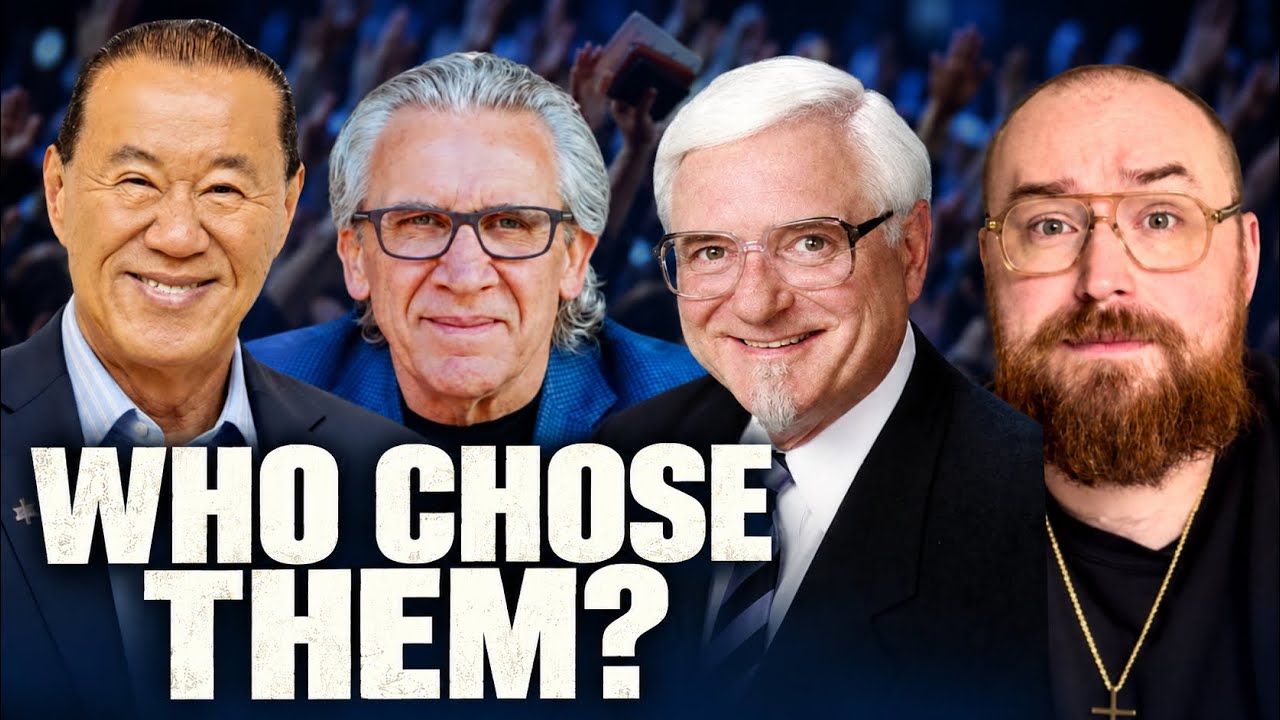
🔗 **Source:** [NAR Explained: Who Made These Men Apostles?](https://www.youtube.com/watch?v=B2fzerzAg84)
> [!note]+ Document Notes
> tags: [new-apostolic-reformation, apostolic-authority, charismatic-christianity, spiritual-accountability, church-history]
> author: Donald Shrode
> source: Donald Shrode (YouTube)
> reference: https://www.youtube.com/watch?v=B2fzerzAg84
> date created: 2026-10-03 20:03
>
> > [!info] Generated analysis — not the author's words. Sections below are machine-written
> > from the captured source. Only text inside `> [!quote]` blocks is verbatim from the author.
> > Do not quote or attribute any other line to the named author.
>
> > [!warning] Auto-caption artifacts. This is a solo, scripted talking-head video by Donald
> > Shrode, a self-described charismatic pastor. The auto-captions garble several names. The
> > speaker's own name appears as "Donald Schroed" (00:00:44) and, in a joke, "Donald Trod"
> > (00:05:47); the channel metadata spells it Donald Shrode. Other likely garbles: "See Peter
> > Wagner" and "Wgner" (C. Peter Wagner), "Jayon" (likely Ché Ahn, one of the three named
> > leaders who laid hands on Todd Bentley), "John Arnot" (John Arnott), "Bethl" (Bethel Church,
> > Redding), "John Whimber" (John Wimber), "Bill Haymon" (Bill Hamon), "New Order of the Latter
> > Reign" (New Order of the Latter Rain), "Adronicus" (Andronicus), "Katherryn Craig" (likely
> > Kathryn Krick), "the dedicay" (the Didache), "shephering movement" (the Shepherding
> > movement), "Bob Munford" (Bob Mumford), "preciding" (presiding), "oludes" (likely
> > "includes"), and "the church in emphasis" (the church in Ephesus, Revelation 2:2). Quotes
> > below keep the caption text exactly as transcribed, including these errors.
>
> # 🏷️ Title: NAR Explained: Who Made These Men Apostles?
>
<!-- deep-read:sections start -->
## 🧭 Table of contents
- [📝 Summary](#-summary)
- [📖 Main content](#-main-content)
- [🗒️ Notes](#️-notes)
- [📚 References](#-references)
- [🗣️ Paraphrase](#️-paraphrase)
- [📰 Newsletter](#-newsletter)
- [✅ Action items](#-action-items)
- [🧪 Hypotheses](#-hypotheses)
- [📊 Methodology](#-methodology)
- [❓ Questions](#-questions)
- [🔮 Future research](#-future-research)
- [💡 Implications](#-implications)
- [🧠 Learning styles assessment](#-learning-styles-assessment)
- [📊 Accessibility assessment](#-accessibility-assessment)
- [🌍 DEIB assessment](#-deib-assessment)
- [✅ Logical validity](#-logical-validity)
- [🛡️ DARVO analysis](#️-darvo-analysis)
- [🎯 Conclusion](#-conclusion)
## 📝 Summary
- **What happened.** Donald Shrode, a charismatic pastor who runs a church-history channel, publishes a 28:48 video on 2026-09-28 as part one of a three-part series on the New Apostolic Reformation (NAR). Part one covers apostles: who they are, how they get the title, and what authority the title carries. Part two (teachings) and part three (effects on churches and members) are announced, not delivered.
- **The claim.** Shrode says apostles are real and apostolic ministry can continue, but the authority some modern apostles claim over churches and networks doesn't follow from the New Testament texts usually cited for it (Ephesians 4, Ephesians 2:20, 1 Corinthians 12:28). The test Shrode proposes is practical: what does the title authorize, who can correct the person, and what happens when they're wrong.
- **Why it matters.** The hook is the 2008 Lakeland Revival, where Shrode says 17 apostles stood with Todd Bentley in a ceremony C. Peter Wagner called "apostolic alignment," weeks before Bentley's marriage separation became public. For a reader leaving an NAR background, this video is an insider's case, made from inside charismatic theology, that asking accountability questions isn't rebellion.
- **Key stakeholders.** C. Peter Wagner and Doris Wagner; Todd Bentley; the three leaders Shrode names as laying hands on Bentley (Ché Ahn, captioned "Jayon"; Bill Johnson; John Arnott); Bethel Church; the International Coalition of Apostolic Leaders (ICAL) and John Kelly; Bill Hamon; John Wimber; Sam Storms; the Assemblies of God (1949 Latter Rain decision); Bob Mumford and the 1970s Shepherding movement; ordinary members of apostolic networks.
- **Risks and tradeoffs.** Shrode cites several primary documents (Wagner's Lakeland report, Wagner's own explanation of the NAR name, ICAL's history page and membership policy) but the video shows none on screen and the description links only to Patreon, where Shrode says research notes live. Dates such as Hamon's 1988/1998 restoration timetable and Wagner becoming ICAL's presiding apostle in 2001 are stated without on-screen sourcing. Shrode's sympathy for the founders' motives (00:07:14) is a stated judgment, not an argued finding.
- **Bottom line.** A fair-minded, scripture-first framing piece from someone who still holds continuationist convictions. It moves the NAR question away from "do apostles exist?" toward "what authority, granted by whom, correctable by whom?" Its evidence is mostly the speaker's reading of named documents and Bible passages; viewers have to go to those documents to check it.
## 📖 Main content
- **The hook and the question (00:00:00–00:01:27).** Shrode opens with Lakeland 2008: 17 apostles, a ceremony Wagner called "apostolic alignment," three leaders laying hands on Bentley to commission him as an evangelist, and Bentley's marriage separation becoming public "within weeks." Shrode says the earlier Lakeland video left one question open: who made those men apostles, what does the title mean, and what responsibility comes with endorsing someone?
- **The series and the speaker's position (00:01:27–00:03:36).** Part one covers apostles, part two NAR teachings, part three effects on churches and people. Shrode identifies as a charismatic pastor who has been around networks others would call NAR, says the label is often used as a "boogeyman" to lump together everyone who believes in prophecy and healing, and states belief that apostles are real and apostolic ministry can continue. Shrode calls this study "sobering," says some of the people involved were personal heroes, and distinguishes this examination from trending "deconstruction," calling it "part of growing up."
- **What NAR is (00:03:36–00:05:47).** Shrode says C. Peter Wagner named the New Apostolic Reformation and describes Wagner's central claim as "apostolic governance": churches and ministries voluntarily connect with an apostle who helps lead or oversee them. Wagner called it a movement, not an organization, so there's no membership list. Shrode proposes judging leaders by their actual claims (what they teach, what they ask churches to do, what authority they say God gave them) rather than by label. Shrode cites Sam Storms, who holds that some form of apostleship continues but rejects the NAR model of apostles governing local churches.
- **Three meanings of "apostle" (00:05:47–00:07:14).** Shrode separates a missionary sent to plant churches, a gifted leader other pastors consult, and someone claiming authority to direct whole churches in a network, and says charismatic speech treats these as one thing. Shrode raises titles as a way of "feeding our own insecurity." Shrode notes that Bill Johnson, called an apostle by others at Bethel, didn't use the title for himself, which looked like humility at the time and now reads to Shrode as a source of confusion.
- **Why restoration language appealed (00:07:14–00:09:23).** Shrode says many founders sincerely wanted unity and safety for an independent charismatic world that "can feel like the wild west," and cites Jesus's prayer for unity and Ephesians 4's call to keep "the unity of the spirit." The concern Shrode raises is structural: well-meaning people can build a system others learn to exploit for control, avoidance of questions, or money.
- **Wagner, Wimber, Hamon (00:09:23–00:10:52).** Shrode describes Wagner as a missionary and church-growth professor at Fuller Seminary who worked alongside John Wimber in the signs and wonders movement, and says Bill Hamon taught that God restored prophets "in 1988 and apostles in 1998." Shrode grants the Ephesians 4 question (why accept pastors and teachers but not apostles and prophets) as fair and long dodged, then asks what exactly was "restored" in 1998.
- **The Latter Rain precedent (00:10:52–00:11:35).** Shrode points to the late-1940s New Order of the Latter Rain in Saskatchewan, which taught that present-day apostles and prophets hold a foundational office over the church, and says the Assemblies of God rejected that teaching in 1949. Shrode's point: Pentecostals who believed in the gifts were already asking what authority these claims carried, and Shrode disclaims any straight-line descent from 1948 to Wagner.
- **How the title is conferred (00:11:35–00:14:30).** Shrode summarizes Wagner's answer: a true apostle doesn't self-appoint; God gives the gift, others see fruit, and respected leaders recognize and commission the person. Shrode finds that partly sensible, then turns to ICAL. Per ICAL's own history (as Shrode reports it), John Kelly organized the coalition and Wagner became its presiding apostle in 2001. Per its membership policy, a joiner must already be recognized as apostolic, is usually nominated by two members, names someone they're accountable to, and is told that joining doesn't make anyone an apostle. Shrode explicitly rejects the "you can buy the title" framing as a bad description of that policy, then asks who can remove a person, who hears someone harmed, and where "primary accountability" sits if ICAL calls itself a secondary form.
- **What the New Testament calls an apostle (00:14:30–00:18:06).** The Twelve (Acts 1: a witness to Jesus's earthly ministry and resurrection, a role no one alive can fill); Paul, outside the Twelve; Paul and Barnabas (Acts 14); Andronicus and Junia (Romans 16), where Shrode states a minority-contested view that Junia was an apostle; and the same Greek word used for a church's messenger. Ephesians 4 grounds continuing ministry but defines its purpose as equipping the church toward maturity. Ephesians 2:20 describes a foundation, which Shrode says isn't relaid with each new room. 1 Corinthians 12:28's "first apostles" doesn't by itself supply rules for governing networks.
- **Authority and character (00:18:06–00:20:15).** Shrode grants that biblical apostles exercised real authority (correcting churches, confronting sin, appointing elders in Acts 14) and that they knew the people they led. Shrode cites Acts 20 (elders watching over the flock, warning that dangerous leaders can arise from within), 1 Timothy's overseer qualifications (mostly character), and 1 Peter 5 (shepherd "without lording it over them"). Shrode adds the Didache, an early Christian document that expected traveling apostles and told churches to test them and appoint trustworthy local leaders.
- **"Covering" and the Shepherding precedent (00:20:15–00:22:27).** Shrode grants that pastors need older leaders who will tell them the truth, then asks what covering means when something goes wrong: can the apostle be challenged, take responsibility for poor judgment, and hear a serious complaint through a real process? Shrode points to Bethel as a live "big question mark." Shrode cites the 1970s Shepherding movement, its emphasis on submission and oversight, the "serious abuses," and Bob Mumford's later apology, while disclaiming that Wagner copied it.
- **Lakeland revisited (00:22:27–00:24:38).** Per Wagner's own report as Shrode summarizes it: Wagner and Doris hadn't met Bentley before the ceremony, met him beforehand, had a small disagreement over the event's wording, and took Bentley's acceptance as a sign of humility. Shrode says one agreeable conversation can't reveal private conduct, corrects a likely misreading (Bentley was commissioned as an evangelist and brought into "apostolic alignment," not made an apostle), and says one failure of judgment doesn't disprove apostles. The questions Shrode leaves open: what did the leaders know, what responsibility did they accept, and what did they tell people afterward?
- **The answer to the title question (00:24:38–00:26:03).** Shrode gives the apostles' own probable answer (God called them, others recognized it, the fruit shows it) and says it deserves to be heard and examined. Shrode cites Jesus commending the church in Ephesus for testing those who claimed to be apostles (Revelation 2:2) and lands on the position that honest questions shouldn't frighten someone with a real calling.
- **Preview, comment prompt, prayer (00:26:03–00:28:48).** Shrode previews part two (new revelation, declarations, the seven mountains idea), names vague stage language without practical application as a long-standing frustration, asks viewers whether apostles continue and what would help them trust someone using the title, and closes with a prayer that the series wouldn't serve as "justification for being bitter."
- **Uncertainty flags.** The figure "17 apostles," the 1994 date for the NAR name, Hamon's 1988/1998 dates, and the 2001 ICAL date are speaker claims tied to named documents that the video doesn't display. The caption at 00:03:36 reads "he tested the name back in 1994," which may be a garble of "settled on" or "coined." None of these are checked here against the primary documents.
## 🗒️ Notes
#### ⏱️ [00:00:00](https://www.youtube.com/watch?v=B2fzerzAg84&t=0) Lakeland hook, the question, and where Shrode stands
- Opens on Lakeland 2008: 17 apostles, Wagner's "public ceremony of apostolic alignment," and three leaders (captioned "Jayon, Bill Johnson, and John Arnot") commissioning Bentley as an evangelist.
- Bentley's marriage separation became public "within weeks" and he left the revival; the full story is in Shrode's previous video.
- The organizing question: what the title means, how someone gets it, what authority comes with it, and what happens when endorsers get it wrong.
- Series plan: apostles (part one), teachings (part two), effects on churches and people (part three). Patreon link for notes.
> [!quote] [00:02:11]
> I believe that apostles are real. I believe apostolic ministry can and should continue.
- Shrode frames the work as "part of growing up," not trending deconstruction, and warns viewers off channels "foaming at the mouth" for takedowns.
#### ⏱️ [00:03:36](https://www.youtube.com/watch?v=B2fzerzAg84&t=216) What NAR is and why "apostle" is muddy
- Wagner named the movement; its core is "apostolic governance," which Shrode glosses as churches voluntarily connecting with an apostle who helps lead or oversee them.
- Movement, not organization: no office, no membership card, no complete list. That's why the label gets applied unevenly, from specific ideas to "flags and tambourines."
- Sam Storms: believes some form of apostleship continues, rejects the NAR model of apostles governing local churches.
- Three distinct claims bundled under one word: church-planting missionary, advisor to pastors, authority over a network.
- Titles can feed insecurity; Bill Johnson never called himself an apostle while others did, which Shrode now reads as adding confusion.
#### ⏱️ [00:07:14](https://www.youtube.com/watch?v=B2fzerzAg84&t=434) Why restoration appealed: unity, Wagner, Hamon, Latter Rain
- Shrode credits founders with sincere desire for unity and safety in a charismatic world that "can feel like the wild west," citing Jesus's prayer and Ephesians 4.
> [!quote] [00:08:39]
> A good intention still leaves us responsible for examining the results.
- Wagner: missionary, Fuller Seminary church-growth professor, worked with John Wimber in signs and wonders.
- Bill Hamon's timetable: prophets restored in 1988, apostles in 1998 (speaker's summary, not sourced on screen).
- 1940s New Order of the Latter Rain (Saskatchewan) taught a foundational apostolic office; the Assemblies of God rejected that teaching in 1949. The debate happened inside Pentecostalism.
#### ⏱️ [00:11:35](https://www.youtube.com/watch?v=B2fzerzAg84&t=695) How the title is conferred: Wagner and ICAL
- Wagner's rule, as Shrode reports it:
> [!quote] [00:11:35]
> A true apostle isn't supposed to appoint themselves.
- God gives the gift, others see fruit, respected leaders recognize and commission.
- ICAL (per its own history as summarized): organized by John Kelly; Wagner presiding apostle from 2001. Membership requires prior recognition, usually two nominating members, and a named accountability partner.
- ICAL says joining doesn't make anyone an apostle. Shrode calls the "buy a title" framing a bad description of the policy.
- Open questions Shrode raises: who removes a leader, who hears a harmed person, and where "primary accountability" sits if ICAL is "secondary."
#### ⏱️ [00:14:30](https://www.youtube.com/watch?v=B2fzerzAg84&t=870) What the New Testament calls an apostle
- The Twelve (Acts 1): witnesses of Jesus's earthly ministry and resurrection, a role no one alive can qualify for.
- Beyond the Twelve: Paul, Paul and Barnabas (Acts 14), Andronicus and Junia (Romans 16, contested; Shrode holds Junia was an apostle).
- The same Greek word covers a church's messenger, which doesn't confer Paul's authority.
- Ephesians 4 ministry exists to equip and mature the church:
> [!quote] [00:15:57]
> Give somebody a title and the rest of you stop asking questions.
- That line is Shrode's paraphrase of what the passage does NOT say.
- Ephesians 2:20 foundation image and 1 Corinthians 12:28 "first apostles": Shrode says neither yields "a complete constitution for modern apostles."
#### ⏱️ [00:18:06](https://www.youtube.com/watch?v=B2fzerzAg84&t=1086) Authority, character, and the Didache
- Biblical apostles had real authority: corrected churches, confronted sin, appointed elders (Acts 14). They knew the people and the people knew them.
- Acts 20 (elders watch over the flock; dangerous leaders arise from within), 1 Timothy (overseer qualifications are mostly character), 1 Peter 5 (no "lording it over them").
- Shrode's practical tests: how does the person treat people, can they be corrected, do they tell the truth.
- The Didache expected traveling apostles, told churches to test them, and told churches to appoint trustworthy local leaders.
#### ⏱️ [00:20:15](https://www.youtube.com/watch?v=B2fzerzAg84&t=1215) "Covering" and the Shepherding precedent
- Shrode grants covering's appeal: church planting is hard, and older leaders who tell you the truth are a gift. The word can also trigger people from abusive churches.
> [!quote] [00:21:00]
> If your apostles say they can guide you, can they also be challenged?
- Shrode asks whether there's "an actual process" for serious complaints and names Bethel as "a big question mark."
- 1970s Shepherding movement: submission and oversight, "serious abuses," Bob Mumford's later apology. Shrode disclaims any claim that Wagner copied it.
#### ⏱️ [00:22:27](https://www.youtube.com/watch?v=B2fzerzAg84&t=1347) Lakeland revisited
- Per Wagner's report as summarized: Wagner and Doris hadn't met Bentley before the ceremony; a small disagreement over wording; Bentley accepted Wagner's decision, which Wagner read as humility.
- Shrode: one conversation can't show private behavior; knowing someone "takes time. It takes honest witnesses."
- Correction to a common telling: Bentley was commissioned as an evangelist and brought into "apostolic alignment," not made an apostle.
- A failure of judgment doesn't disprove apostles. The open questions: what the leaders knew, what responsibility they accepted, what they told people afterward.
- Shrode calls the aftermath "disillusioning" and guesses the motives were "a mixture."
#### ⏱️ [00:24:38](https://www.youtube.com/watch?v=B2fzerzAg84&t=1478) The answer, and the Ephesus test
- The apostles' likely answer: God called them, others recognized it, the fruit shows it. Shrode says it "deserves to be heard" and "deserves to be examined."
- Shrode stays open to apostolic ministry in those who plant churches, strengthen leaders, and go where others won't.
- Rejects being impressed by "a massive brand" or "a big Instagram following," and calls recent conduct by shepherds "infuriating and completely irresponsible."
- Revelation 2:2: Jesus commended the Ephesian church for testing self-described apostles.
#### ⏱️ [00:26:03](https://www.youtube.com/watch?v=B2fzerzAg84&t=1563) Part two preview, comment prompt, closing prayer
- Next question: where these leaders think they're taking the church, and what they teach about hearing God, prophecy, and spiritual warfare.
- Pet peeve named: vague stage language that "gets people hyped up" without practical application.
- Part two will cover new revelation, declarations, and the seven mountains idea; Shrode says leaders "don't all agree."
- Comment prompt: do apostles continue, and what would build trust in someone using the title. A request to avoid snark.
- Closing prayer asks that the series not become "a justification for being bitter."
## 📚 References
The transcript itself contains no links; the following come from the video description or are primary sources for named entities. No URL below beyond the Patreon link was opened or verified during this analysis, which ran under a no-network constraint.
- Video description link: Patreon, where Shrode says research notes and extra videos are posted: https://www.patreon.com/DonaldShrode
- Shrode's previous Lakeland Revival video, referenced at 00:00:00 as "last week"; not linked in the description.
- C. Peter Wagner's report on the 2008 Lakeland ceremony (cited 00:00:00 and 00:22:27). Shrode summarizes it; the video doesn't name its title or venue.
- C. Peter Wagner's explanation of the New Apostolic Reformation name and "apostolic governance" (cited 00:03:36).
- International Coalition of Apostolic Leaders (ICAL): its history page and membership policy, both cited at 00:12:18–00:13:47. Primary source: ICAL's own website.
- Sam Storms, pastor and theologian, cited at 00:05:04 for a continuationist critique of NAR church governance.
- Bill Hamon (captioned "Bill Haymon"), cited at 00:09:23 for the 1988/1998 restoration timetable.
- John Wimber (captioned "John Whimber") and the signs and wonders movement, 00:09:23.
- New Order of the Latter Rain (Saskatchewan, late 1940s) and the Assemblies of God's 1949 rejection of its apostolic-office teaching, 00:10:52. Primary source: Assemblies of God General Council minutes, 1949.
- Bob Mumford and the 1970s Shepherding movement, 00:21:43.
- The Didache (captioned "the dedicay"), 00:19:33.
- Bible passages cited: Acts 1, Acts 14, Acts 20, Romans 16, Ephesians 2, Ephesians 4, 1 Corinthians 12, 1 Timothy (overseer qualifications), 1 Peter 5, Revelation 2:2 (cited as Jesus commending the church in Ephesus). Jesus's prayer for unity (John 17) is alluded to at 00:07:57 without a chapter reference.
- Bethel Church (Redding, California) and Bill Johnson, 00:06:31 and 00:20:58.
- Kathryn Krick (likely the "Katherryn Craig" at 00:19:33), mentioned as a hypothetical edit-in clip of people bowing.
## 🗣️ Paraphrase
- **The frame.** A charismatic pastor who believes apostles still exist asks what the title actually authorizes, using the 2008 Lakeland ceremony as the test case.
- **The label problem.** NAR is a movement Wagner named around "apostolic governance," with no membership list. The useful question isn't whether someone wears the label but what they claim and ask of churches.
- **The word problem.** "Apostle" can mean a church planter, a trusted advisor, or someone ruling a network. These are separate claims and need separate defenses.
- **The sympathy.** The founders wanted unity and safety in a fractured charismatic world. Good intent doesn't excuse a system others can exploit.
- **The history.** Pentecostals already debated foundational apostolic offices in the Latter Rain movement, and the Assemblies of God rejected that teaching in 1949. Charismatics also learned from the 1970s Shepherding movement that oversight language can enable abuse.
- **The recognition process.** Wagner taught that apostles don't self-appoint. ICAL requires prior recognition and a named accountability partner, and calls itself secondary accountability, which leaves the primary layer undefined.
- **The Bible.** The New Testament uses "apostle" for the Twelve, for Paul, Barnabas and likely Junia, and for church messengers. Ephesians 4 points ministry at maturity, Ephesians 2 describes a laid foundation, and leadership texts stress character and accountability over title.
- **Lakeland.** The endorsers met Bentley briefly and read one agreeable conversation as humility. The question isn't whether apostles exist but what responsibility endorsers carry when the story changes.
- **The landing.** Jesus praised Ephesus for testing apostolic claims. Questions shouldn't frighten someone whose calling is real.
## 📰 Newsletter
**A charismatic pastor who believes in apostles asks the question NAR critics and defenders both skip: what does the title actually let someone do?**
Donald Shrode starts where a lot of NAR conversations end: the 2008 Lakeland Revival, where, Shrode says, 17 apostles stood with Todd Bentley in a ceremony C. Peter Wagner called "apostolic alignment," weeks before Bentley's marriage separation went public. Shrode's question isn't a gotcha. It's this:
> "the bigger your claim of authority is, the bigger your responsibility is when people trust you."
What makes the video worth 29 minutes is where Shrode stands. Shrode is a charismatic pastor, still believes apostolic ministry continues, and calls the NAR label a "boogeyman" when it's used to lump together everyone who prays for healing. That position lets Shrode separate three claims that usually travel together: a missionary who plants churches, a leader other pastors go to for advice, and someone who says God gave them authority over a network of churches. Shrode will talk about the first two. The third needs a biblical defense, and Shrode walks through Acts, Romans 16, Ephesians 2 and 4, and 1 Corinthians 12 to argue it doesn't have one.
The history section adds two precedents I hadn't connected. The Assemblies of God rejected a "foundational office" teaching from the Latter Rain movement in 1949, meaning Pentecostals who believed in every spiritual gift were already pushing back on this. And the 1970s Shepherding movement taught submission and oversight, produced "serious abuses," and ended with an apology from Bob Mumford.
Shrode is fair to the International Coalition of Apostolic Leaders: its membership policy says joining doesn't make anyone an apostle, and Shrode calls the "you can buy a title" version a bad description. Then Shrode asks what ICAL's own wording leaves open. If ICAL is a "secondary form of accountability," where is the primary one, and who removes a leader?
The video ends on Revelation 2:2, where Jesus praises the church in Ephesus for testing people who called themselves apostles. If you came out of a network where asking questions felt like rebellion, that's the line Shrode wants you to keep.
Caveat: the documents Shrode leans on (Wagner's Lakeland report, ICAL's policy, Hamon's 1988/1998 timetable) aren't shown on screen or linked. Shrode says the research notes are on Patreon.
## ✅ Action items
#### DevRel
- Developer advocacy: No direct action from this source; nearest relevance: Shrode's habit of stating the speaker's own stake before critiquing (00:01:27) is a disclosure pattern worth copying in advocacy content.
- Education: Shrode splits one overloaded word ("apostle") into three named claims before arguing (00:05:47). Same move applies to overloaded terms in docs and talks ("maintainer," "community," "open").
- Developer experience: No direct action from this source; nearest relevance: none.
- Developer marketing: No direct action from this source; nearest relevance: none.
- Community management: Shrode's covering questions (00:21:00: can the leader be challenged, is there a process for serious complaints) map directly to moderation and code-of-conduct design.
- Internal/external/cross-project: No direct action from this source; nearest relevance: none.
#### OSPO
- Policy & Governance: ICAL describes itself as "secondary" accountability without naming the primary layer (00:13:47). Governance docs that delegate accountability to "your own project" should say who that is and how it works.
- License Compliance: No direct action from this source; nearest relevance: none.
- Security Management: No direct action from this source; nearest relevance: none.
- Software Inventory: No direct action from this source; nearest relevance: none.
- Developer Support: No direct action from this source; nearest relevance: none.
- Community Engagement: No direct action from this source; nearest relevance: endorsement carries responsibility (Lakeland, 00:23:54); public endorsements of projects or people need a stated basis.
- Strategic Alignment: No direct action from this source; nearest relevance: none.
#### Community
- Maintainers: "Who can remove the person from leadership?" (00:13:03) is the unanswered question in many BDFL-style projects. Worth answering in writing before it's needed.
- Contributors: No direct action from this source; nearest relevance: Revelation 2:2 framing that testing leaders' claims is legitimate, not rebellious.
- Sponsors: No direct action from this source; nearest relevance: none.
- Ecosystem: No direct action from this source; nearest relevance: none.
#### WordPress
- Core: No direct action from this source; nearest relevance: none.
- Core Performance: No direct action from this source; nearest relevance: none.
- Core AI: No direct action from this source; nearest relevance: none.
- Core Program Team: No direct action from this source; nearest relevance: none.
- Mobile: No direct action from this source; nearest relevance: none.
- Playground: No direct action from this source; nearest relevance: none.
- Community: Shrode's distinction between a title and what the title authorizes applies to WordPress roles that carry informal authority (team reps, deputies). No specific work implied.
- Training: No direct action from this source; nearest relevance: define overloaded terms before teaching (00:05:47).
- Marketing: No direct action from this source; nearest relevance: none.
- Support: No direct action from this source; nearest relevance: none.
- Design: No direct action from this source; nearest relevance: none.
- Documentation: No direct action from this source; nearest relevance: none.
- Photos: No direct action from this source; nearest relevance: none.
- TV: No direct action from this source; nearest relevance: none.
- Polyglots: No direct action from this source; nearest relevance: none.
- Accessibility: No direct action from this source; nearest relevance: none.
- Meta: No direct action from this source; nearest relevance: none.
- CLI: No direct action from this source; nearest relevance: none.
- Hosting: No direct action from this source; nearest relevance: none.
- Tide: No direct action from this source; nearest relevance: none.
- Openverse: No direct action from this source; nearest relevance: none.
- Themes: No direct action from this source; nearest relevance: none.
- Plugins: No direct action from this source; nearest relevance: none.
#### The WPOCC
- Programs: No direct action from this source; nearest relevance: none.
- Projects: No direct action from this source; nearest relevance: none.
- Funding experiments: No direct action from this source; nearest relevance: none.
### FAIR
- Technical independence: No direct action from this source; nearest relevance: none.
- Policies and covenants: A federated network that admits members on prior recognition by others (the ICAL model, 00:12:18) still needs a stated removal path. Relevant to any FAIR membership or trust-list design.
- Productized governance artifacts: No direct action from this source; nearest relevance: none.
## 🧪 Hypotheses
- Members of apostolic networks who can name the person their apostle is accountable to report higher trust and fewer unresolved complaints than members who can't, holding network size constant.
- Leaders who publicly decline the "apostle" title while accepting the role (Shrode's Bill Johnson example, 00:06:31) receive less scrutiny of their authority than leaders who claim the title, because there's no explicit claim to test.
- Coalitions that describe themselves as "secondary" accountability (ICAL, 00:13:47) resolve fewer misconduct complaints against members than bodies with a defined primary process.
- Public endorsement ceremonies held after a single short meeting with the endorsee (Lakeland, 00:22:27) are followed by public reversals at a higher rate than endorsements after extended relationship.
- Charismatic viewers who encounter the NAR critique from a self-identified continuationist (as here) are less likely to reject it as an attack on spiritual gifts than viewers who encounter it from a cessationist.
## 📊 Methodology
- **Accountability-awareness survey.** Survey members of churches affiliated with apostolic networks; ask whether they can name their apostle's accountability partner and whether they've seen a complaint resolved. Compare complaint resolution rates across networks with and without a written process.
- **Title-claim content analysis.** Code public sermons, bios, and conference materials for leaders described as apostles by others, separating self-claimed from conferred titles, then compare the volume of published critique each group receives.
- **Coalition outcome review.** Collect public records of misconduct allegations against ICAL members and comparable bodies with defined processes; code for whether and how each was resolved.
- **Endorsement-timeline study.** Build a dataset of public commissionings and endorsements of revivalists and ministry leaders since 1990, code for documented prior relationship length, and track public reversals within 24 months.
- **Messenger-effect experiment.** Show charismatic participants the same NAR critique attributed to a continuationist or a cessationist speaker; measure agreement and perceived hostility.
- **Limits.** Most of Shrode's factual claims rest on documents the video names but doesn't show. Any study here should start by pulling Wagner's Lakeland report, ICAL's policy text, and the 1949 Assemblies of God resolution directly.
## ❓ Questions
- What exactly does Wagner's Lakeland report say about the ceremony's wording disagreement, and does it list all 17 apostles Shrode mentions?
- Does ICAL's current membership policy still describe the coalition as "secondary" accountability, and does any ICAL document name what the primary layer must include?
- Did Wagner "coin," "settle on," or "test" the NAR name in 1994? The caption at 00:03:36 is ambiguous, and other accounts date the term differently.
- Where does Bill Hamon state the 1988 (prophets) and 1998 (apostles) restoration dates, and in which book?
- Shrode distinguishes apostolic ministry (planting, strengthening leaders) from apostolic governance. Is there a model in Shrode's own network where the first exists without the second, and how is it governed?
- Did any of the three leaders who laid hands on Bentley (Ché Ahn, Bill Johnson, John Arnott) publish an account of what they knew beforehand or what they told people afterward?
- What does the Didache's test for traveling apostles specify (chapters 11-13), and how would it apply to a modern network apostle who isn't itinerant?
- How does Shrode reconcile the view that apostles are real with the view that no current claimant has shown the authority some claim? Is there a named living example Shrode would accept?
## 🔮 Future research
- Primary-document comparison of the 1949 Assemblies of God resolution on the Latter Rain and Wagner's later writings on apostolic governance, to test how much the arguments overlap.
- Organizational study of accountability structures across apostolic networks (ICAL, Harvest International Ministry, Global Awakening and others), focused on written removal procedures.
- Historical work on the Shepherding movement's apology statements (Mumford and others) as a model for what institutional repentance in charismatic networks has looked like.
- Exegetical survey of how continuationist scholars (Sam Storms and others) separate apostolic function from apostolic office, as a resource for people leaving NAR settings who want to keep charismatic practice.
- Parts two and three of this series, once released, to see whether Shrode's accountability test is applied to named teachers.
## 💡 Implications
- **Practice.** Pastors and members can ask three concrete questions of anyone claiming apostolic authority: what does the title authorize, who can correct this person, and what's the process when someone is harmed. Shrode presents these as compatible with charismatic belief.
- **Policy.** Networks that admit members on recognition should publish removal and complaint procedures. ICAL's "secondary accountability" wording, as Shrode quotes it, leaves the primary layer unstated.
- **Security.** Not applicable to this source in a technical sense; the nearest analogue is that endorsement transfers trust, so an endorser who doesn't verify carries part of the risk (Lakeland, 00:23:54).
- **Education.** The video models separating a contested word into distinct claims before debating it, a method that works for teaching any contested theological or organizational term.
- **Funding.** Shrode's channel is funded through Patreon, which Shrode discloses at 00:00:44. Shrode raises "benefit financially at other people's expenses" (00:08:39) as one way oversight language gets exploited, without naming anyone.
## 🧠 Learning styles assessment
- Reading level estimate: Flesch Reading Ease about 70 and Flesch-Kincaid Grade about 6.7, computed on the 5,236-word transcript (401 sentences) with a vowel-group syllable heuristic, not a dictionary-based tool. Auto-caption sentence breaks are approximate, so treat both as estimates. Plain-English range, with theological terms (apostolic governance, cessation, hermeneutics) explained in place.
#### 👀 Visual learners
- Present: the transcript references one planned visual cut ("cut to a a clip of people bowing," 00:18:50), which suggests some B-roll; the bulk is a talking head.
- Improve: an on-screen timeline (1948 Latter Rain, 1949 AG decision, 1970s Shepherding, 1988/1998 Hamon dates, 1994 NAR name, 2001 ICAL, 2008 Lakeland) and a three-column chart of the three meanings of "apostle" would carry the argument visually.
#### 🔊 Aural learners
- Present: scripted, single-voice narration with clear signposting ("So, let's look at the Bible," "So, let's go back to the moment that started this video").
- Improve: none needed beyond chapter markers to let listeners jump to sections.
#### 🗣️ Verbal learners
- Present: strong. Shrode defines apostolic governance in plain English (00:04:19) and separates three meanings of "apostle" (00:05:47).
- Improve: Greek term behind "messenger" (apostolos) is mentioned but not named, and Bible references are given by chapter only.
#### 🧩 Kinesthetic learners
- Present: the comment prompt (00:27:30) invites viewers to write their own view of what would make an apostle trustworthy.
- Improve: a printable checklist of Shrode's accountability questions would give viewers something to use on their own church.
#### 🧠 Logical learners
- Present: the argument has a clear structure: define terms, give history, read texts, apply to a case, state a conclusion. Shrode anticipates the strongest counterargument ("the apostles in the Bible had authority," 00:18:06) and answers it.
- Improve: the factual premises (dates, ICAL policy wording, Wagner's report) aren't shown, so a logical viewer can't check them without outside research.
#### 🧑🤝🧑 Social learners
- Present: a direct comment prompt with two questions and a request to avoid snark.
- Improve: no pointer to group study use, though the series format suits a small-group discussion.
#### 🧘♀️ Solitary learners
- Present: self-contained; the closing prayer explicitly invites viewers to "think for themselves and to open up their word."
- Improve: a reading list in the description (Storms, Wagner, ICAL, the Didache) would support solo follow-up.
#### 🌿 Naturalistic learners
- Present: the foundation-and-rooms building image (00:16:40) is the one physical analogy.
- Improve: not applicable to this source's subject beyond that analogy.
## 📊 Accessibility assessment
#### Screen reader semantics
- Present: not evaluable for the video itself; YouTube's player exposes standard controls.
- Improve: the description has no headings or section list, so a screen reader user gets one paragraph block with no structure (WCAG 2.2 SC 1.3.1 Info and Relationships, applied to the description text).
#### Keyboard navigation
- Present: inherits YouTube's keyboard controls.
- Improve: no chapters on a 28:48 video with about eight distinct sections, so keyboard users can't jump to "What the Bible says" or "Lakeland revisited" (SC 2.4.5 Multiple Ways is advisory for a single media file, but chapters are the practical fix).
#### Contrast and readability
- Present: not assessable from the transcript; no on-screen text is described.
- Improve: if B-roll or text overlays exist, they'd need 4.5:1 contrast (SC 1.4.3).
#### Text resizing and reflow
- Present: not applicable to video content.
- Improve: applies to the Patreon notes Shrode mentions, which weren't checked.
#### Media and captions
- Present: auto-generated captions only. They garble at least 12 proper nouns, including the speaker's own name, Wagner, Hamon, Wimber, Bethel, the Didache, the Latter Rain, and Ephesus ("the church in emphasis").
- Improve: for a video whose content is a list of named people, movements and documents, uncorrected captions fail SC 1.2.2 Captions (Prerecorded) in substance: a deaf viewer reading "the dedicay" or "Bill Haymon" can't look either up. Uploading a corrected caption file would fix it.
#### Forms and interactions
- Present: not applicable to the source video.
- Improve: not applicable.
#### Standards reference
- WCAG 2.2 AA: SC 1.2.2 Captions (Prerecorded) met nominally, failed on proper-noun accuracy. SC 1.2.5 Audio Description (Prerecorded): mostly talking head, so low need unless the B-roll clip at 00:18:50 carries meaning. SC 2.4.5 Multiple Ways and SC 2.4.6 Headings and Labels: no chapters or structured description. SC 1.3.1 applies to the unstructured description text.
## 🌍 DEIB assessment
#### Cultural breadth
- Present: the history reaches beyond the US (Saskatchewan Latter Rain, 00:10:52) and into the early church (the Didache).
- Improve: the NAR is a global movement with large networks in Africa, Latin America, and Asia; the video treats it through an American charismatic lens only.
#### Inclusive language
- Present: Shrode affirms Junia as an apostle (00:15:15), a position with implications for women in leadership, and acknowledges disagreement respectfully ("A lot of you probably don't. That's okay.").
- Improve: the video discusses apostles almost entirely as men ("these men" in the title, "every man's motives" at 00:08:39) without noting that the NAR also has women apostles and prophets.
#### Neurodiversity support
- Present: clear signposting, a stated three-part series plan, and a short runtime for the density.
- Improve: no chapters and no written outline; Shrode acknowledges the videos "are dense" (00:14:30).
#### Representation
- Present: Shrode names and quotes the NAR's own documents (Wagner, ICAL) and gives their best case before critiquing it.
- Improve: no NAR leader or member speaks in the video; the account of their position is Shrode's summary.
#### Psychological safety
- Present: high. Shrode discloses grief and personal stake (00:02:54), refuses the takedown tone, and frames testing leaders as something Jesus commended. The closing prayer explicitly addresses viewers processing hurt without telling them their questions are bitterness.
- Improve: the line "Half the charismatic audience just logged off" (00:11:35) is a joke that could land as mocking for viewers still inside such networks.
## ✅ Logical validity
#### Strong reasoning
- **Separating the claims (00:05:47).** Shrode breaks "apostle" into three distinct claims (missionary, advisor, network authority) and argues each needs its own defense. This prevents equivocation, where evidence for one meaning gets used to support another.
- **Steelmanning the opposition (00:07:14, 00:18:06).** Shrode states the founders' best motive (unity and safety) and the strongest biblical counterpoint (Paul and Barnabas exercised real authority, appointed elders in Acts 14) before arguing against the modern claim.
- **Precedent from within the tradition (00:10:52, 00:21:43).** The Latter Rain/Assemblies of God case and the Shepherding movement show the concern comes from Pentecostals and charismatics, not only outside critics. That blocks the "you just don't believe in the Spirit" reply.
- **Scoping the Lakeland conclusion (00:23:10).** Shrode states that one failure of judgment doesn't prove apostles don't exist and narrows the claim to endorsers' responsibility. The conclusion matches the evidence.
- **Fair reading of ICAL (00:13:03).** Shrode rejects the "buy a title" caricature before raising questions the policy's own wording leaves open.
#### Fallacies
- **Unshown sources presented as settled (00:00:00, 00:09:23, 00:12:18).** *Location:* "17 apostles," Hamon's "1988 and apostles in 1998," and Wagner becoming ICAL's presiding apostle "in 2001." *Why weak:* each is tied to a named document but not shown or linked, so viewers have to trust the summary. *Fix:* put the source title and year on screen or in the description.
- **Possible argument from motive charity (00:07:14).** *Location:* "I think many of them sincerely wanted to bring unity and safety to the church." *Why weak:* it's a judgment about inner motives that Shrode elsewhere says "I can't know" (00:08:39). Shrode flags this, which limits the damage. *Fix:* frame it as the founders' stated aims, citing where they stated them.
- **Loaded rhetorical question (00:23:54).** *Location:* "were you guys just up there because it looked good and it got your name before a global audience." *Why weak:* it offers a cynical motive as one of two options. Shrode immediately softens it to "probably a mixture," so it's a mild case. *Fix:* the follow-up questions (what did they know, what did they tell people) carry the point without the motive speculation.
- **Checked and not found:** no ad hominem against named leaders; no straw man of ICAL (Shrode corrects one); no slippery-slope claim from the 1940s to Wagner (Shrode disclaims a "straight line" at 00:11:35).
#### Tone of voice
- Measured, pastoral, and first-person. Shrode states a personal stake and grief up front, uses light humor ("Half the charismatic audience just logged off," "Let's go John"), and shifts to frustration once near the end ("infuriating and completely irresponsible of the shepherds," 00:25:20). The register is a pastor teaching a congregation, not a polemicist; Shrode warns viewers away from channels that are "foaming at the mouth."
## 🛡️ DARVO analysis
Not applicable to this source. This is a single-speaker teaching video, not an exchange in which someone responds to an accusation, so the DARVO pattern has no direct target. The three components are addressed briefly below.
- **Deny:** None by the speaker. Shrode reports no denial by the leaders discussed; Wagner's Lakeland report is summarized as an account of the meeting, not a denial. Whether any endorser later denied responsibility is one of Shrode's open questions (00:23:54).
- **Attack:** None. Shrode avoids personal attacks on named leaders, and explicitly rejects portraying them as "wicked men" (00:07:14). The sharpest line ("infuriating and completely irresponsible of the shepherds," 00:25:20) targets unnamed conduct, not people.
- **Reverse victim-offender:** None in the source. Shrode names the risk in the abstract: that members asking "who is responsible when something goes wrong" can be made to feel "rebellious" (00:25:20). That's a description of a reversal pattern inside some networks, not an instance in the video.
- **Assessment:** The relevant pattern here is the one Shrode describes rather than displays: authority structures where questioning the leader gets reframed as rebellion. Shrode's response is to cite Revelation 2:2 as biblical permission to test.
## 🎯 Conclusion
- **Bottom line.** Shrode argues, from inside charismatic belief, that apostles may exist but the network-governing authority claimed by some modern apostles lacks a biblical basis, and that the right response is to ask what the title authorizes and who can correct the person holding it.
- **What holds up.** The three-meanings distinction, the in-tradition precedents (1949 Latter Rain decision, the Shepherding apology), and the narrowly scoped Lakeland conclusion are the strongest parts.
- **What to verify before repeating.** The "17 apostles" count, the 1994 NAR naming date, Hamon's 1988/1998 dates, ICAL's 2001 presiding-apostle date and "secondary accountability" wording, and the details of Wagner's Lakeland report all come from documents the video names but doesn't show.
- **For someone leaving an NAR network.** The transferable piece is Shrode's permission structure: Revelation 2:2 and the Didache both treat testing leaders as normal church practice, and a continuationist can ask these questions without giving up belief in the gifts.
- **Open.** Parts two and three will show whether Shrode applies the same accountability test to named teachers and their teachings (new revelation, declarations, seven mountains).
## 🔄 Refactor Appendix — NAR Explained: Who Made These Men Apostles?
> Density: 2-5 Literature atoms (H3), 0-3 Permanent candidates (H4).
> Defaults: 3 Literature, 1 Permanent. Resonance filter: if you can't
> articulate in one line why a claim matters, drop it.
### 📚 Literature Split Pad
#### [H1] Bigger authority claims carry bigger responsibility
> [!quote] [00:00:44]
> the bigger your claim of authority is, the bigger your responsibility is when people trust you.
**Context & use**:
- ~0:44, Shrode's thesis, set up by the Lakeland endorsement of Todd Bentley.
- A portable test for any leader with a title: scale scrutiny to the size of the claim, not the size of the following.
**Tags**: #xref #aphorisms
<!-- atomicity: 1 idea ✓ -->
#### [H2] A larger title should invite more questions, not fewer
> [!quote] [00:13:47]
> If I called myself an apostle over 20 churches, I would expect people to ask me more questions, not fewer.
**Context & use**:
- ~13:47, right after Shrode asks where ICAL's "primary accountability" sits if the coalition is secondary.
- Inverts the NAR intuition that higher office means less questioning. Useful for anyone told that asking was rebellion.
**Tags**: #xref #articleseed
<!-- atomicity: 1 idea ✓ -->
#### [H3] A foundation is laid once, not relaid
> [!quote] [00:16:40]
> So think about a foundation. It has a unique job. You don't keep relaying the foundation every time you build another room.
**Context & use**:
- ~16:40, Shrode's reading of Ephesians 2:20 against modern claims to foundational apostolic authority.
- Separates continuing apostolic function (planting, strengthening leaders) from a one-time foundational role.
**Tags**: #xref
<!-- atomicity: 1 idea ✓ -->
#### [H4] One pleasant meeting can't vet a leader
> [!quote] [00:22:27]
> But one agreeable conversation can't tell you how somebody behaves in private.
**Context & use**:
- ~22:27, on Wagner reading Bentley's acceptance of a wording decision as humility, weeks before Bentley's separation became public.
- Applies to any endorsement: trust transferred on a short meeting puts the endorser's credibility behind unverified conduct.
**Tags**: #xref #articleseed
<!-- atomicity: 1 idea ✓ -->
#### [H5] Testing apostolic claims is commended, not rebellious
> [!quote] [00:25:20]
> Jesus commended the church in emphasis for testing people who claimed to be apostles.
**Context & use**:
- ~25:20, Shrode's closing anchor in Revelation 2:2 (captions read "emphasis" for Ephesus).
- The biblical permission structure for questioning leaders, coming from a continuationist rather than a critic of the gifts.
**Tags**: #xref #aphorisms
<!-- atomicity: 1 idea ✓ -->
### 🧠 Atomic Split Pad
#### [P1] A title is only as safe as the process for correcting its holder
**Claim** (one sentence, Courtney's voice): The question to ask of any spiritual or community title isn't whether it's real but what it authorizes and who can remove the person holding it.
**Evidence pointer**: [[#H2]]
**Scope & conditions**: Holds for apostolic networks, eldership boards, and open-source or community roles alike wherever authority is conferred by recognition. Weakens where a written, used removal process exists and members can name it.
**Links**:
- [[An unaccountable authority structure predicts abuse independent of theology]] — because extends the structural claim to the specific case of conferred titles
- [[Alarm fatigue before adding alarms]] — because applies-in the pattern of a process that exists on paper without functioning
- [[Faith deconstruction context]] — because applies-in Courtney's own NAR departure
<!-- atomicity: 1 idea ✓ -->
### ✏️ Fleeting Queue
- [F1] Pull Wagner's 2008 Lakeland report and check the "17 apostles" count and the wording-disagreement account #fleeting #inbox
- [F2] Read ICAL's current membership policy for the "secondary form of accountability" wording #fleeting #inbox
- [F3] Sam Storms on apostolic function versus office: possible resource for staying charismatic after NAR #fleeting #inbox
- [F4] Watch for parts two and three of Shrode's NAR series (teachings; effects on churches) #fleeting #inbox
### → Things 3 (max 2 actions)
- [ ] Read ICAL's membership policy and Wagner's Lakeland report to verify Shrode's summaries — NAR series follow-up #things
- [ ] Queue Shrode's NAR part two when it posts — deep-read continuity #things
<!-- deep-read:sections end -->
📄 **Full text:** [[Full Document Contents/Articles/NAR Explained Who Made These Men Apostles.md|NAR Explained: Who Made These Men Apostles? by Donald Shrode]]
## Highlights
- [00:00:00] In 2008, 17 apostles stood with Todd Bentley at the Lakeland Revival. They weren't just there to wish him well. See Peter Wagner called it a public ceremony of apostolic alignment. Three of those leaders, Jayon, Bill Johnson, and John Arnot, laid hands on Bentley and commissioned him as an evangelist. And then within weeks, Bentley's marriage separation became public and he left the revival. Now, I've already done a whole video about Lakeland last week. I'm not going to make you sit through that story all over again. But while I was working on it, I kept getting stuck on one question. Who made those guys apostles? And I don't mean that as a cheap shot. I actually want to know. What does the [00:00:44] title mean? How does somebody get it? How much authority even comes with it? And if you're going to stand on stage and put your spiritual reputation behind somebody, what happens when you get it all wrong? because it seems to me that the bigger your claim of authority is, the bigger your responsibility is when people trust you. And that's what this video is going to be about. So, welcome back everybody. Welcome back to the channel. My name is Donald Schroed. And on this channel, we look at church history, the charismatic world, and the stuff we'd sometimes rather leave unexamined. Now, if you want to support these videos, I encourage you to visit our new Patreon. The link will be down below. There are some extra materials over there, extra videos. We're going to be putting up our notes for the videos up ([View Highlight](https://read.readwise.io/read/01m423r9pj62kbdaqex3sgx00n))
- Note: [H1] Bigger authority claims carry bigger responsibility
- Tags: atom/literature/h1
- [00:13:03] others. Normally, two members nominate them. They also uh name somebody they're accountable to. And ICAL explicitly says joining the coalition doesn't make anyone an apostle. That recognition comes from the person's own ministry or network. So, if somebody tells you there's a fee and therefore you can buy an apostle title, that's a bad way to describe what the policy says. But the policy does raise questions I think that we're allowed and we should ask. What if the original network got it wrong? Who can remove the person from leadership? What if someone is harmed under that person's authority? Who hears that person's side of the story? ICAL says it has a conduct code and an advisory council while describing itself [00:13:47] as a secondary form of accountability. Okay, then where is the primary accountability and how does it work? I'm not asking because I assume everybody involved is crooked. I ask because these are questions I would ask about my own church and that we've been asking about Bethl for a long time now. If I called myself an apostle over 20 churches, I would expect people to ask me more questions, not fewer. So, let's look at the Bible. Like, what does the Bible actually call an apostle? So, when we open the Bible, like, all right, so we need to open the Bible first of all, and we should be this whole time looking at the Bible first and foremost, not YouTube videos. Come on, guys. Like, I'm going to keep this part as clear as I can because there's a ([View Highlight](https://read.readwise.io/read/01m423rcbrp1saaeg2x4t9s982))
- Note: [H2] A larger title should invite more questions, not fewer
- Tags: atom/literature/h2
- [00:15:57] to defend an apostle who rules over a whole network today, you have to explain how you got from one to the other. Now, look at Ephesians 4. Christ gives us apostles, prophets, evangelists, pastors, and teachers to equip the church and help it grow up. That's one reason I believe apostolic ministry can continue. The church still needs to be equipped. We're still growing toward maturity in Christ. But the passage also tells us what the ministry is for. It's supposed to help God's people become mature. It doesn't say, "Give somebody a title and the rest of you stop asking questions." Then Ephesians 2 uses a different image. Paul says, "The church is built on the foundation of the apostles and prophets with Jesus as the [00:16:40] cornerstone." So think about a foundation. It has a unique job. You don't keep relaying the foundation every time you build another room. So here's how I understand the concern. The first apostles helped lay something down for the whole church. Paul had a particular commission and his teaching still shapes Christians or what Christians believe today. So if somebody today says they are doing apostolic work, planting churches, strengthening leaders, being sent into new places, like I can have that conversation. If they mean I have the same kind of foundational authority Paul had, that's a much bigger claim and I need need to show them where the Bible gives I need them to show me where the Bible gives ([View Highlight](https://read.readwise.io/read/01m423revqcma2q62rtn703kky))
- Note: [H3] A foundation is laid once, not relaid
- Tags: atom/literature/h3
- [00:21:43] relationships safer and more honest. We have a warning from charismatic history here. In the 1970s, the shephering movement emphasized submission and spiritual oversight. The relationships could be could begin with sincere desire to help people grow to disciple them. But there were also serious abuses and one of its leaders, Bob Munford, later apologized for the harm. I'm not claiming Wgner copied shephering or that every person who says covering means the same thing. I'm saying charismatic Christians have already learned painfully that good intentions don't answer every question about a spiritual authority. So, let's go back to the moment that started this video. In Wagner's report on Lakeland, [00:22:27] he said that he and his wife Doris had not met Bentley before the ceremony. They met with him beforehand. Wgner described a small disagreement over the wording of the event and said Bentley accepted his decision. Wagner took that as an encouraging sign about Bentley's humility and respect for authority. Now, maybe Bentley was respectful in that conversation. I have no reason to say that he wasn't. But one agreeable conversation can't tell you how somebody behaves in private. We know that. I can't tell you everything you need to know about a marriage or whether a person's account of their life holds up when you speak to the people closest to them. That takes time. It takes honest witnesses. It takes like doing life ([View Highlight](https://read.readwise.io/read/01m423rhefxewbaah27yrbmqak))
- Note: [H4] One pleasant meeting can't vet a leader
- Tags: atom/literature/h3
- [00:24:38] there, but still very disillusioning considering what happened the weeks after with Todd and his wife. So, who made these men apostles? Well, their answer would be that God called them and other Christians recognized that calling. They would probably talk about the fruit of their ministry. Okay. But that answer deserves to be heard. It also deserves to be examined. What did the people recognize? What kind of work was the person doing? What authority did they say followed from it? And could anybody hold them to the same standard they placed on others? I believe that apostles are real. And I'm open to seeing apostolic ministry in people who plant churches, strengthen leaders, and go where other people won't [00:25:20] go. But I don't want us to become so impressed by the word apostle that we stop looking at the person, their teaching, and the way they treat people. It's more than just building a massive brand and having a big Instagram following. I don't want ordinary Christians to feel like they're being rebellious for asking who is responsible when something goes wrong because that's what we've been facing as of late and it's infuriating and completely irresponsible of the shepherds. Jesus commended the church in emphasis for testing people who claimed to be apostles. Think about that. The church was allowed to test the claim. And Jesus thought it was a good thing. And that's where I land. If somebody has a calling from God, honest questions about it ([View Highlight](https://read.readwise.io/read/01m423rm0223z0gxq16mjb2xd2))
- Note: [H5] Testing apostolic claims is commended, not rebellious
- Tags: atom/literature/h3