One Missing Word Changes the Entire Gospel of John
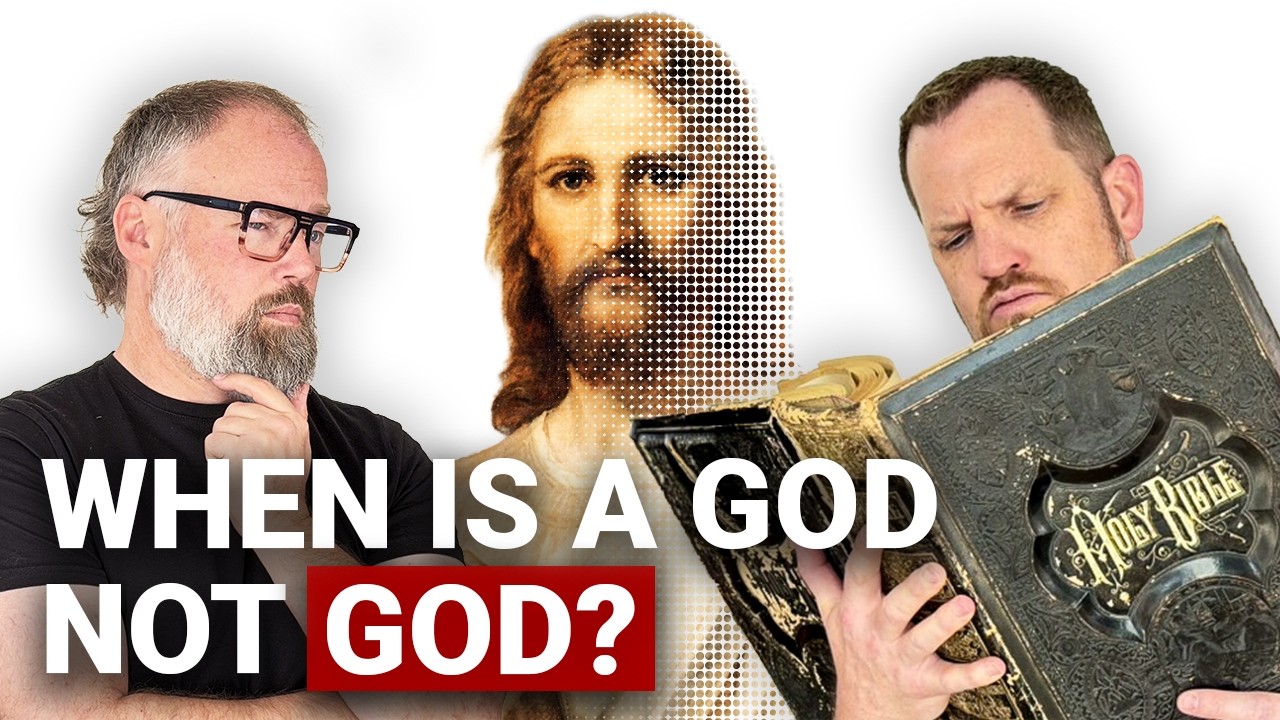
🔗 **Source:** [One Missing Word Changes the Entire Gospel of John](https://www.youtube.com/watch?v=VGtD_oGGDK0)
> [!note]+ Document Notes
> tags: #biblical-studies #new-testament #greek-language #john-gospel #early-christianity #theological-translation
> author: Data Over Dogma
> source: YouTube
> reference: https://www.youtube.com/watch?v=VGtD_oGGDK0
> date created: 2024-12-19 12:00
>
> # 🏷️ Title: One Missing Word Changes the Entire Gospel of John
>
<!-- deep-read:sections start -->
## 🧰 Action Inbox
- [H1] Examine Greek manuscript traditions for definite article patterns — theological translation accuracy #biblical-studies
- [H2] Research Philo's influence on early Christian logos theology — philosophical foundations #early-christianity
- [H3] Compare Trinity development timeline with early patristic writings — doctrinal evolution #theology
## 🧭 Table of Contents
- [[#📝 Summary]]
- [[#📖 Main Content]]
- [[#🗒️ Notes]]
- [[#📚 References]]
- [[#🗣️ Paraphrase]]
- [[#📰 Newsletter]]
- [[#✅ Action Items]]
- [[#🧪 Hypotheses]]
- [[#📊 Methodology]]
- [[#❓ Questions]]
- [[#🔮 Future Research]]
- [[#💡 Implications]]
- [[#🧠 Learning Styles Assessment]]
- [[#📊 Accessibility Assessment]]
- [[#🌍 DEIB Assessment]]
- [[#✅ Logical Validity]]
- [[#🛡️ DARVO Analysis]]
- [[#🎯 Conclusion]]
### 🔗 References
- [Philo of Alexandria: On Dreams](https://example.com)
- [Justin Martyr: Dialogue with Trypho](https://example.com)
- [Origen: Commentary on John](https://example.com)
## 📝 Summary
- Greek grammar patterns in early Jewish and Christian texts reveal theological distinctions
- The presence or absence of the definite article with "theos" (God) indicates different meanings
- Philo, Justin Martyr, and Origen all distinguished between "the God" and "God" without articles
- This pattern suggests John 1:1 identifies Jesus as divine rather than as the God of Israel
- Trinity doctrine developed later than these grammatical distinctions suggest
## 📖 Main Content
The hosts explore how the Greek definite article "the" fundamentally changes theological meaning in early Christian texts. Philo of Alexandria (died ~50 CE) established that "the God" (ho theos) refers to the true God of Israel, while "God" (theos) without the article refers to divine beings that are "improperly so-called" gods - divine but not the ultimate deity.
This grammatical pattern appears throughout early Christian writings. In John 1:1, the phrase "the word was God" (theos) lacks the definite article, suggesting qualitative meaning (divine) rather than identification with the God of Israel. Justin Martyr (150 CE) explicitly calls Jesus "another God" without articles when distinguishing him from "God the creator." Origen (220-230 CE) directly analyzes John's precise use of articles, noting the distinction between "the God" and "God" reflects different theological categories.
The evidence suggests early Christian authors maintained Jewish monotheism while developing sophisticated frameworks for divine intermediaries, preceding later Trinitarian formulations by centuries.
## 🗒️ Notes
#### ⏱️ [00:00](https://youtu.be/VGtD_oGGDK0?t=0) — [H1] Introduction to Greek article mystery
- Key idea: Early authors used Greek grammar to distinguish divine categories
- Evidence: "Sometimes the word God might seem to be referring to somebody else"
#### ⏱️ [02:45](https://youtu.be/VGtD_oGGDK0?t=165) — [H2] Greek definite article patterns
- Key idea: Missing articles in Greek are often syntactically significant choices
- Evidence: "Even personal names most of the time you include the definite article"
#### ⏱️ [04:12](https://youtu.be/VGtD_oGGDK0?t=252) — [H1] Philo of Alexandria's framework
- Key idea: Philo distinguished "the God" from entities "improperly so-called" gods
- Evidence: "He that is truly God is one, but those that are improperly so-called are more than one"
#### ⏱️ [06:30](https://youtu.be/VGtD_oGGDK0?t=390) — [H2] Philo's logos as "second God"
- Key idea: God's word/logos functions as divine intermediary distinct from the God
- Evidence: "Philo explicitly refers to the word of God as a second God"
#### ⏱️ [08:15](https://youtu.be/VGtD_oGGDK0?t=495) — [H1] John 1:1 translation implications
- Key idea: Missing article suggests qualitative rather than identificational meaning
- Evidence: "The word theos is not being used to identify a specific god but is used in the qualitative sense"
#### ⏱️ [11:20](https://youtu.be/VGtD_oGGDK0?t=680) — [H2] John 10:33 parallel structure
- Key idea: Accusation uses parallel qualitative terms without definite articles
- Evidence: "You are human and you're making yourself divine also a qualitative statement"
#### ⏱️ [13:45](https://youtu.be/VGtD_oGGDK0?t=825) — [H1] Justin Martyr's "another God"
- Key idea: Justin explicitly calls Jesus "another God" distinct from the creator
- Evidence: "There exists and is mentioned in scripture another God and Lord under the creator"
#### ⏱️ [15:30](https://youtu.be/VGtD_oGGDK0?t=930) — [H2] Justin's distinction explanation
- Key idea: Divine beings can be called God while remaining distinct from God the creator
- Evidence: "Distinct from God the creator. Distinct that is in number but not in mind"
#### ⏱️ [17:00](https://youtu.be/VGtD_oGGDK0?t=1020) — [H1] Origen's grammatical analysis
- Key idea: Origen recognized John's precise article usage as intentional theological grammar
- Evidence: "John has used the articles in one place and omitted them in another very precisely"
#### ⏱️ [19:15](https://youtu.be/VGtD_oGGDK0?t=1155) — [H2] Origen's prototype theology
- Key idea: The logos serves as archetypal image between the true God and other divine beings
- Evidence: "The archetypal image of the many images is the word with the God"
#### ⏱️ [21:00](https://youtu.be/VGtD_oGGDK0?t=1260) — [H3] Trinity development timeline
- Key idea: Trinitarian doctrine developed long after these grammatical distinctions
- Evidence: "Even after Justin Martyr because he says multiple times the word is another God"
#### ⏱️ [22:30](https://youtu.be/VGtD_oGGDK0?t=1350) — [H2] Proposed translation alternatives
- Key idea: Academic translation should reflect qualitative meaning of theos
- Evidence: "For a general public I would translate it divine"
## 📚 References
- [Philo: On Dreams](https://example.com)
- [Justin Martyr: Dialogue with Trypho](https://example.com)
- [Origen: Commentary on John](https://example.com)
- [Data Over Dogma YouTube Channel](https://www.youtube.com/@DataOverDogma)
## 🗣️ Paraphrase
- Greek grammar in early Jewish and Christian texts used definite articles to distinguish between the ultimate God of Israel and divine intermediary beings
- Philo established a framework where "the God" refers to the true deity while "God" without articles refers to beings that are divine but subordinate
- Early Christian authors including the Gospel of John, Justin Martyr, and Origen employed this same grammatical pattern to describe Jesus and the logos as divine without conflating them with the God of Israel
## 📰 Newsletter
Discover how one missing Greek word reshapes our understanding of early Christian theology! Recent analysis reveals that ancient authors used definite articles with surgical precision to distinguish between "the God" of Israel and divine intermediary beings like the logos.
This grammatical pattern, established by Philo and continued through Origen, suggests John 1:1 identifies Jesus as divine rather than as the God himself - a distinction that preceded Trinity doctrine by centuries.
For content creators and educators, this highlights how linguistic precision shapes theological interpretation across cultures and centuries.
Resources: [Academic Biblical Studies](https://sbl-site.org/), [Digital Humanities](https://digitalhumanities.org/), [Ancient Language Resources](https://www.perseus.tufts.edu/)
## ✅ Action Items
#### DevRel
- Developer advocacy: Create interactive Greek text analysis tools for biblical scholars
- Education: Develop workshops on ancient language processing and semantic markup
- Developer experience: Build APIs for accessing manuscript databases with grammatical annotations
- Developer marketing: Highlight digital humanities applications in ancient text analysis
- Community management: Foster collaboration between technologists and biblical scholars
#### OSPO
- Policy & Governance: Establish open access policies for ancient text digitization projects
- License Compliance: Review licensing for academic databases and manuscript collections
- Security Management: Protect sensitive manuscript digitization and scholarly research data
- Software Inventory: Catalog tools used in digital biblical studies and ancient language processing
- Developer Support: Provide training on open source tools for humanities research
- Community Engagement: Fund partnerships between academic institutions and open source projects
- Strategic Alignment: Align digital preservation efforts with scholarly research priorities
#### Community
- Maintainers: Support maintainers of biblical studies software and digital humanities tools
- Contributors: Create onboarding programs for scholars interested in contributing to digital projects
- Sponsors: Connect academic institutions with funding for open source digital humanities initiatives
- Ecosystem: Coordinate between biblical studies, linguistics, and digital humanities communities
#### WordPress
- Core: Integrate multilingual and ancient script support for scholarly content
- Documentation: Create guides for academic institutions using WordPress for research publications
- Accessibility: Ensure ancient text display meets accessibility standards for screen readers
- Polyglots: Support scholarly communities publishing in multiple languages and scripts
## 🧪 Hypotheses
- Early Christian authors intentionally used Greek grammatical patterns to maintain monotheism while describing divine intermediaries
- The absence of definite articles with theos in early Christian texts indicates subordinationist rather than Trinitarian theology
- Philo's philosophical framework directly influenced Gospel of John's christological language
- Later manuscript traditions added definite articles to align with developing Trinitarian doctrine
### 📊 Methodology
- Comparative analysis of definite article usage across early Jewish and Christian manuscripts
- Statistical analysis of theos constructions in pre-Nicene Christian literature
- Linguistic study tracking grammatical patterns from Philo through Origen
### ❓ Questions
- How did scribal practices change article usage during manuscript transmission?
- What other grammatical patterns reveal theological development in early Christianity?
- How did bilingual Jewish-Christian communities navigate Greek theological terminology?
### 🔮 Future Research
- Digital corpus analysis of all extant pre-Nicene uses of theos with and without articles
- Comparative study of similar patterns in contemporary pagan philosophical texts
- Investigation of how translation practices influenced theological development
### 💡 Implications
- Practice: Biblical translation should reflect ancient grammatical distinctions rather than later theological developments
- Policy: Academic institutions need policies supporting open access to digital manuscript collections
- Security: Digital humanities projects require robust data preservation and access management
- Education: Seminary curricula should include training in digital tools for ancient language analysis
- Funding: Research funding should prioritize collaborative projects between technologists and ancient text scholars
### 🧠 Learning Styles Assessment
Reading level estimate: 12th grade
#### 👀 Visual learners
- Present: None mentioned in current format
- Improve: Grammatical diagrams showing article placement, manuscript comparison images
#### 🔊 Aural learners
- Present: Full audio discussion available via YouTube
- Improve: Chapter markers for key concepts, pronunciation guides for Greek terms
#### 🗣️ Verbal learners
- Present: Clear definitions of theos, logos, qualitative vs. identificational usage
- Improve: Glossary of theological terms, etymological explanations
#### 🧩 Kinesthetic learners
- Present: None in current format
- Improve: Interactive Greek text parsing exercises, manuscript transcription activities
#### 🧠 Logical learners
- Present: Clear chronological progression from Philo through Origen, grammatical rules
- Improve: Decision trees for article usage, comparative charts of author positions
#### 🧑🤝🧑 Social learners
- Present: Dialogue format between two hosts
- Improve: Discussion questions for study groups, collaborative translation exercises
#### 🧘♀️ Solitary learners
- Present: Self-contained explanation suitable for individual study
- Improve: Reflection questions on theological implications, self-assessment quizzes
#### 🌿 Naturalistic learners
- Present: Historical development patterns, evolutionary approach to doctrine
- Improve: Connections to broader patterns in language evolution
### 📊 Accessibility Assessment
#### Screen reader semantics
- Present: Clear spoken content with good heading structure in transcript
- Improve: Proper markup for Greek terms, pronunciation guides
#### Keyboard navigation
- Present: Standard YouTube player controls
- Improve: Chapter navigation, transcript synchronization
#### Contrast and readability
- Present: Clear audio with distinct speakers
- Improve: Visual transcript with high contrast Greek text examples
#### Text resizing and reflow
- Present: Responsive YouTube player
- Improve: Scalable transcript view, adjustable text size for Greek examples
#### Media and captions
- Present: Audio content available
- Improve: Professional captions, visual aids for grammatical concepts
#### Forms and interactions
- Present: Basic YouTube interaction
- Improve: Interactive timeline, searchable transcript
### 🌍 DEIB Assessment
#### Cultural breadth
- Present: Acknowledges Jewish philosophical traditions alongside Christian development
- Improve: Discussion of how these patterns appear in other ancient cultures
#### Inclusive language
- Present: Academic tone avoiding denominational bias
- Improve: Acknowledgment of diverse interpretive traditions
#### Neurodiversity support
- Present: Clear structure with defined segments
- Improve: Visual organization aids, consistent formatting
#### Representation
- Present: Two male hosts discussing Western academic tradition
- Improve: Include perspectives from diverse scholarly traditions, acknowledge limitations
#### Psychological safety
- Present: Respectful treatment of religious topics
- Improve: Content warnings for those with strong theological commitments
### ✅ Logical Validity
#### Strong reasoning
- Deductive strength: Clear logical progression from grammatical rules to theological implications
- Inductive strength: Pattern recognition across multiple ancient authors and texts
- Causal reasoning: Demonstrates influence of Philo on later Christian writers
- Analogical strength: Effective comparison between deity/divine and God/god distinctions
#### Fallacies
- Appeal to authority: Heavy reliance on academic consensus without acknowledging dissenting views
- Post hoc reasoning: Assumes influence without demonstrating direct textual dependence
#### Tone of voice
- Overall tone: Academic, conversational, respectful toward religious traditions while maintaining critical scholarly distance
### 🛡️ DARVO Analysis
- Deny: No defensive patterns observed
- Attack: No attacks on opposing viewpoints
- Reverse victim/offender: No victim/offender dynamics present
- Emotional cues and rhetoric: Neutral academic presentation with enthusiasm for scholarly discovery
## 🎯 Conclusion
The presence or absence of the Greek definite article "the" with theos fundamentally shapes theological meaning in early Christian texts. From Philo through Origen, ancient authors used this grammatical distinction to maintain monotheism while describing divine intermediaries. This suggests John 1:1 and similar passages identify Jesus as divine rather than as the God of Israel himself, predating later Trinitarian formulations by centuries. For modern translators and interpreters, this demonstrates the crucial importance of understanding ancient grammatical patterns within their original philosophical and theological contexts.
## 🧱 Refactor Appendix
### 📚 Literature Split Pad
### [H1] Greek articles indicate theological categories in early Christian texts
> [!quote] One Missing Word Changes the Entire Gospel of John by Data Over Dogma via YouTube. Published 2024. Accessed 2024-12-19.
> "He that is truly God is one, but those that are improperly so-called are more than one."
Philo's framework for distinguishing ultimate deity from divine intermediaries through grammatical precision.
[view highlight](https://youtu.be/VGtD_oGGDK0?t=252#H1) #xref #articles
---
## Full Transcript
[00:02] Hey everybody, I'm Dan Mlelen<br>[00:04] >> and I'm Dan Beecher<br>[00:05] >> and this is Data Over Dogma where we<br>[00:08] increase public access to the academic<br>[00:09] study of the Bible and religion and we<br>[00:11] combat the spread of misinformation<br>[00:13] about the same. How are things today,<br>[00:15] Dan?<br>[00:16] >> Things are good. Things are good. I'm<br>[00:18] excited. We're going to get into one of<br>[00:20] history's mysteries<br>[00:24] today. Uh, and this one's an interesting<br>[00:27] one. We have touched briefly on this<br>[00:31] idea, but I I'm excited to go to dive<br>[00:34] deep with you. I don't 100% know where<br>[00:37] we're going with this because this is<br>[00:39] something that you've been working on.<br>[00:41] >> Uh slaving over a cauldron uh bubbling<br>[00:45] with interesting things like pho and and<br>[00:50] origin and whatever and you know<br>[00:53] >> eye of new and toe of dog or whatever.<br>[00:56] So, uh, so maybe we should just dive<br>[00:58] straight in to, uh, to history's<br>[01:01] mysteries. All right.<br>[01:05] So, guide me in. Where what are we<br>[01:07] doing? What are we talking about? What<br>[01:09] where are we here? We're we're talking<br>[01:11] about a weird um thing that a lot of<br>[01:14] folks have observed in some of the early<br>[01:18] Jewish and Christian discussions about<br>[01:21] God and the use of the Greek word theos<br>[01:24] because we know this this word means God<br>[01:27] and and ostensibly early Jewish and<br>[01:29] Christian authors are all monotheists<br>[01:31] and so there can only be one God. But<br>[01:35] we've got this weird thing where<br>[01:36] sometimes the word God might seem to be<br>[01:40] referring to somebody else. And in some<br>[01:43] places some of these authors write the<br>[01:46] word God without the definite article.<br>[01:49] Now if you don't know biblical Greek<br>[01:52] even personal names most of the time you<br>[01:55] include the definite article. So when<br>[01:57] you see in in your English translation,<br>[02:00] and Jesus said to them, in the Greek, it<br>[02:04] would be and the Jesus said to them, the<br>[02:07] definite article is being used most of<br>[02:09] the time. Now, there are certain<br>[02:11] syntactical circumstances where you<br>[02:13] actually don't use the definite article,<br>[02:16] but in some Greek texts, we have theos<br>[02:20] being used without the definite article<br>[02:22] in other instances where you would<br>[02:24] normally expect it. And a lot of folks<br>[02:29] who think that that the Trinity is in<br>[02:31] the Bible are happy to imagine that this<br>[02:33] is still referring to the God of Israel.<br>[02:35] It's just identifying Jesus as the God<br>[02:38] of Israel because obviously that's what<br>[02:40] the Trinity is, baby. That's okay.<br>[02:42] That's what the Bible is saying. But<br>[02:44] we've got a we got a handful of very<br>[02:46] interesting commentary from people from<br>[02:48] before and after the Gospel of John,<br>[02:52] which is where this is most debated.<br>[02:55] >> Okay. who actually directly address what<br>[02:57] they're doing. And I want to start with<br>[03:00] Pho. Pho of Alexandria was born at the<br>[03:04] end of the first century B.CE. died<br>[03:06] around 50ish 5060 CE. So was alive<br>[03:10] during the life of Jesus. And he wrote a<br>[03:14] lot of texts, way too much. But uh he he<br>[03:18] >> he was Jewish, right?<br>[03:19] >> Uh he Yes. He was an early Jewish<br>[03:22] philosopher. So um he he was<br>[03:25] incorporating a lot of stoic and middle<br>[03:28] platonic philosophy into Judaism kind of<br>[03:31] um it's a little bit syncretatistic but<br>[03:34] basically trying to to show that Judaism<br>[03:37] fits within a Greek philosophical<br>[03:39] worldview but uh he's he talks a lot<br>[03:42] about the logos and the and this is<br>[03:45] translated word most of the time in<br>[03:47] English translations the word of God for<br>[03:49] instance in Greek is logos theu and Um<br>[03:54] uh and<br>[03:56] when he's uh when he's talking about the<br>[03:58] logos, he's largely borrowing this<br>[04:00] framework from Greco Roman philosophy<br>[04:02] because starting with Plato but also<br>[04:04] including uh stoicism, they they had<br>[04:07] this concept of the logos as God's<br>[04:10] rationality and it could be the<br>[04:13] rationality uh that was inside God's<br>[04:16] head. So like you have an idea that's<br>[04:17] inside your head but then when you once<br>[04:19] you speak it it is expressed<br>[04:22] >> and it is now outside of you and it is<br>[04:25] separate from you. And so the logos can<br>[04:27] be can be both things but there's a<br>[04:29] >> mean when when you say that it's like<br>[04:31] rationality then it makes sense to me<br>[04:33] that logos would be the root word of our<br>[04:35] logic.<br>[04:37] >> Yes. Yeah. That's exactly right. So um<br>[04:42] we have pho in a text called on dreams.<br>[04:45] Okay,<br>[04:46] >> like I said, he wrote about too many<br>[04:47] things, but he he's examining a lot of<br>[04:52] uh a lot of different ways that that God<br>[04:54] is is influencing dreams and stuff like<br>[04:56] that. But there's one part where he's<br>[04:57] talking about Genesis 31:13. And this is<br>[05:00] where God well, it says that it's the<br>[05:03] angel of the Lord appears to Jacob and<br>[05:06] then in in verse 13 says, "I am the God<br>[05:10] of Bethl where you anointed the altar<br>[05:13] and all that kind of stuff." And pho is<br>[05:16] quoting the Greek translation which<br>[05:18] doesn't say that. It says, "I am the God<br>[05:23] uh that anointed you uh or that appeared<br>[05:27] to you in the place of God." Because<br>[05:30] Bethl means house of God. And so the<br>[05:32] Greek translators just thought, "Oh,<br>[05:33] this is a sentence, not a name."<br>[05:35] >> And so Pho's like, "Huh, this is weird.<br>[05:39] Let's consider whether there are two<br>[05:41] gods." And and now I'm quoting from uh<br>[05:43] on dreams book one uh section starting<br>[05:47] in section 228. For we read, I am the<br>[05:50] God that appeared to thee not in my<br>[05:53] place, but in the place of God as though<br>[05:57] it were anothers. What are we to say<br>[05:59] then? He that is truly God is one, but<br>[06:02] those those that are improperly<br>[06:04] so-called are more than one.<br>[06:05] Accordingly, the holy word in the<br>[06:08] present instance has indicated him who<br>[06:10] is truly God by means of the articles<br>[06:13] saying I am the God. Definite article<br>[06:16] 'the'. While it omits the article when<br>[06:19] mentioning him who is improperly<br>[06:21] so-called, saying who appeared to thee<br>[06:24] in the place not of the god but simply<br>[06:26] of God. Here it gives the title of God<br>[06:29] to his chief logos, his chief word, not<br>[06:33] from any superstitious nicity in<br>[06:35] applying names, but with one aim before<br>[06:37] him to use words to express facts. And<br>[06:41] so what what Pho is basically saying is<br>[06:43] that you have one entity that is truly<br>[06:48] in essence God and then you have other<br>[06:50] entities that can just be referred to as<br>[06:52] God without actually being God.<br>[06:55] And when the scriptures are referring to<br>[06:58] those entities as God, even though<br>[07:00] they're not God, it omits the definite<br>[07:02] article. And<br>[07:04] >> so they're not the God. They're not the<br>[07:06] God. They're just God.<br>[07:08] >> And that's somehow a lower place in the<br>[07:11] >> Yeah. And and a way to think of it is is<br>[07:13] to understand God here it in the<br>[07:16] qualitate qualitative sense.<br>[07:19] >> Okay. So it would be it would be kind of<br>[07:21] like, you know, another word for God in<br>[07:24] in English coming through different<br>[07:26] roots is deity,<br>[07:27] >> right?<br>[07:28] >> And you could say there's the deity and<br>[07:30] then there's deity,<br>[07:32] >> right?<br>[07:33] >> And so so and so is not the deity. So<br>[07:35] and so is just deity. Um and and so it<br>[07:38] it kind of means divine,<br>[07:41] >> right?<br>[07:41] >> Um and so and and Pho.<br>[07:44] There's a there's a part where uh he's<br>[07:47] talking about um passage in Genesis<br>[07:51] where the he's wondering why God tells<br>[07:54] somebody to um<br>[07:56] uh to come up to God I think it is and<br>[07:59] he says why not come up to to me or<br>[08:01] something like that and he says that uh<br>[08:04] it's not proper to<br>[08:08] refer to uh this entity as uh as the god<br>[08:12] because this is the second god God,<br>[08:16] God's chief logos, God's word. So, Pho<br>[08:19] explicitly refers to the word of God as<br>[08:23] a second God.<br>[08:24] >> Okay?<br>[08:25] >> And so, when when this is being written<br>[08:28] less than a century prior to the gospel<br>[08:30] of John and the Gospel of John seems to<br>[08:32] be relying an awful lot on very similar<br>[08:35] philosophical frameworks. But then we<br>[08:37] get to uh this really interesting<br>[08:40] discussion in Justin Martyr. And Justin<br>[08:42] Martyr is<br>[08:43] >> well we we should mention the part of<br>[08:46] the Gospel of John that<br>[08:47] >> Oh yeah yeah yeah<br>[08:47] >> that we're that that that we're sort of<br>[08:50] talking about which is John 1:1 right<br>[08:52] >> well John 1:1 is the main one but there<br>[08:54] are a few places where you have being<br>[08:57] used without the definite article where<br>[09:00] we might expect the definite article if<br>[09:02] it's referring to the God of Israel but<br>[09:04] yes John 1:1 says in the beginning was<br>[09:06] the word and the word was proton which<br>[09:10] means with God or or toward God or next<br>[09:13] to God. And then it says no logos and<br>[09:16] theos was the word and that's<br>[09:19] traditionally translated and the word<br>[09:22] was God which would identify the word as<br>[09:24] the very God of Israel but there's no<br>[09:26] definite article there and in this<br>[09:28] situation the syntactical relationship<br>[09:32] indicates that the word theos is not<br>[09:34] being used to identify a specific god<br>[09:37] but is used in the qualitative sense to<br>[09:39] mean deity or divine. And so the author<br>[09:45] could be appealing to something very<br>[09:47] close to what what Pho is saying that<br>[09:49] the law<br>[09:50] >> you're saying that that the author of<br>[09:51] the Gospel of John came after Pho the<br>[09:54] gospel was written after so could have<br>[09:56] been aware of Pho's writing.<br>[09:58] >> I I think almost certainly aware of Pho<br>[10:01] writing because there's because the the<br>[10:02] logos theology that we find in John is<br>[10:06] uh resonates quite a lot with what the<br>[10:08] logos theology that we find in Pho.<br>[10:10] >> Okay. So when the author of John<br>[10:13] excludes that definite article, it's<br>[10:15] likely an in an intentional thing that's<br>[10:19] informed by Pho's Pho's ideas of that<br>[10:23] how that definite article operates<br>[10:26] >> in in this particular instance. The we<br>[10:29] wouldn't necessarily expect the definite<br>[10:32] article. So it's it's not definitive<br>[10:35] there.<br>[10:35] >> Okay. But I I think what the author is<br>[10:37] doing is it's using the the word God<br>[10:41] with this understanding that there can<br>[10:43] be the God and then there can be uh<br>[10:46] thing entities that are improperly<br>[10:48] so-called or are people who carry the<br>[10:50] label without being God. So, so you<br>[10:53] could say and the word was with God and<br>[10:56] the word was divine or the word was<br>[11:00] >> also deity in some way but but not<br>[11:03] conflate them as the same thing<br>[11:05] >> right it's not a it's not equating them<br>[11:07] and and there's another interesting<br>[11:10] occurrence in John 10 where a lot of<br>[11:13] people will point out that the<br>[11:15] >> Jesus's Jewish opponents understood that<br>[11:18] he was identifying as the very God of<br>[11:21] Israel when he says I am the father are<br>[11:22] one and they take up rocks to stone him<br>[11:25] and in verse 33 and and Jesus is like ah<br>[11:29] for which of my good works are you<br>[11:30] stoning me and they say we're not<br>[11:33] stoning you for your good works we're<br>[11:34] stoning you because you being human make<br>[11:38] yourself God now if you look in an<br>[11:40] English translation that's capital G God<br>[11:43] >> it makes it sound like they're saying<br>[11:45] you're claiming to be the God of Israel<br>[11:47] >> right<br>[11:48] >> but I don't think that's what's going on<br>[11:50] because in the Greek there should be a<br>[11:52] definite article there and there's not.<br>[11:55] >> Okay.<br>[11:55] >> And so I think and there are a lot of<br>[11:59] later manuscripts that add the definite<br>[12:01] article because they're like, "Huh, why<br>[12:04] doesn't it have a definite?" It should<br>[12:05] have a definite article. Put a definite<br>[12:06] article in there. But without the<br>[12:08] article, if we keep Pho's statement in<br>[12:12] mind, the author of John could be<br>[12:14] representing the Jewish foes of Jesus as<br>[12:18] understanding<br>[12:20] Jesus to be claiming to be not<br>[12:21] necessarily the God of Israel, but at<br>[12:23] least divine,<br>[12:25] >> right?<br>[12:25] >> Much like the logos. And and I think<br>[12:27] there's some parallelism going on here,<br>[12:29] too, because the word anthropos, which<br>[12:32] means human, also does not have a<br>[12:36] definite article. And so I mean just<br>[12:38] this the symmetry of the accusation is<br>[12:41] you are human and that's a qualitative<br>[12:44] uh statement and you're making yourself<br>[12:47] divine also a qualitative statement. So<br>[12:49] it would be it would be uh more parallel<br>[12:52] that way and Jesus's response is nuhuh<br>[12:56] look at Psalm 82 where the scripture<br>[12:59] says you are gods talking to humans.<br>[13:03] It's very clearly not saying you are the<br>[13:05] God of Israel, just that you're your<br>[13:07] divinities, your gods. And and so<br>[13:09] Jesus's defense makes no sense if we<br>[13:13] understand this passage to be talking<br>[13:15] about the accusation that Jesus is<br>[13:18] claiming to be the very God of Israel.<br>[13:20] >> Right?<br>[13:21] And so there are a handful of instances<br>[13:23] in the Gospel of John where we have this<br>[13:27] uh use of theos without the definite<br>[13:29] article that in light of Pho's statement<br>[13:34] probably indicates an intentional<br>[13:36] reference to the logos as divine, not as<br>[13:40] the very God of Israel.<br>[13:42] >> All right. Interesting.<br>[13:44] >> And then you might say, well, that was<br>[13:47] so much later than Pho. John's not doing<br>[13:50] that. But we find uh very similar<br>[13:54] statements<br>[13:55] or discussions in even later authors as<br>[13:58] late as the 3rd century CE. But I want<br>[14:00] to I want to stop first in Justin Martyr<br>[14:03] who's writing around 150 CE. So right<br>[14:06] around the dead center of the 2n century<br>[14:09] CE. And Justin is actually talking to uh<br>[14:13] this is a text called uh dialogue with<br>[14:15] trifo. And it's it's this dialectic back<br>[14:19] and forth between Justin and a Jewish<br>[14:22] thinker. And Justin is just trying to<br>[14:24] prove Christianity true from the Jewish<br>[14:27] scriptures. But he says in this uh in<br>[14:29] this one section, I shall attempt to<br>[14:32] prove my assertion, namely that there<br>[14:34] exists and is mentioned in scripture<br>[14:38] another God<br>[14:40] and Lord under the creator of all things<br>[14:44] who is also called an angel. And we have<br>[14:49] multiple references to Jesus as the<br>[14:52] logos, the angel, and another god. And<br>[14:56] uh a little bit down he says, "Then if I<br>[14:59] could not prove to you from the<br>[15:00] scriptures that one of these three," and<br>[15:02] he's talking about Genesis 18 where the<br>[15:04] three entities appear to Abraham. If I<br>[15:07] could not prove to you from the<br>[15:08] scriptures that one of these three is<br>[15:10] God and yet is termed an angel because<br>[15:13] as stated above, he delivered the<br>[15:14] messages of God, the creator of all to<br>[15:17] whomsoever God desires, and on and on<br>[15:20] and on. So he he's talking about how<br>[15:22] there's a a being that is not God that<br>[15:24] is referred to as God.<br>[15:26] >> Yeah.<br>[15:27] >> Then he says, "Let us return to the<br>[15:29] scriptures and I shall try to convince<br>[15:31] you that he who is said to have appeared<br>[15:33] to Abraham, Jacob, and Moses is called<br>[15:37] God." Now all these times Jesus has been<br>[15:40] referred to as God. Justin Martyr has<br>[15:42] omitted the definite article<br>[15:45] >> and and he says um he who is said to<br>[15:48] have appeared to Abraham, Jacob and<br>[15:50] Moses and is called God is distinct from<br>[15:54] God the creator. Distinct that is in<br>[15:57] number but not in mind. And the word in<br>[16:00] Greek goi which is translated here mind<br>[16:04] is like will intent. It doesn't mean it<br>[16:07] doesn't mean substance or essence. It<br>[16:10] just means in in intent or in will. So<br>[16:13] Justin Martyr is doing the same thing<br>[16:15] that Pho explains<br>[16:18] >> using the word God without the definite<br>[16:20] article to refer to the word of God to<br>[16:24] the logos whom Justin understands to be<br>[16:28] Jesus.<br>[16:29] And then I I think one of the most<br>[16:32] illuminating references comes from<br>[16:34] origin of Alexandria. So this is a<br>[16:36] writer uh a theologian and all um who's<br>[16:41] in Alexandria in the early 3rd century<br>[16:44] CE<br>[16:46] and is talking about John 1:1 and he<br>[16:50] says um John has used the articles in<br>[16:53] one place and omitted them in another<br>[16:57] very precisely and not as though he did<br>[17:00] not understand the precision of the<br>[17:01] Greek language. In the case of the word,<br>[17:04] he adds the article 'the'. But in the<br>[17:07] case of the noun god, he inserts it in<br>[17:10] one place and omits it in another. For<br>[17:12] he adds the article when the noun god<br>[17:15] stands for the unccreated cause of the<br>[17:18] universe, but he omits it when the word<br>[17:21] is referred to as God. And as the God<br>[17:26] and God differ in these places, so<br>[17:29] perhaps the word and word differ. And he<br>[17:32] goes on to talk about for like three<br>[17:35] pages about what it means for uh God and<br>[17:40] the word to be referred to as the God<br>[17:43] versus just God and the word versus just<br>[17:46] word. So<br>[17:48] even as late as the third, this is like<br>[17:50] 220 230 CE. This is almost 200 years<br>[17:54] after Pho is writing. We have multiple<br>[17:57] authors who are who are either mimicking<br>[18:00] what Pho is talking about or are quite<br>[18:02] explicitly addressing what John is<br>[18:06] talking about as reflecting Pho's idea<br>[18:10] that this is there's a distinction to be<br>[18:12] made here between Hos the God and just<br>[18:16] Thausos God. I guess one of the<br>[18:18] questions that that that that origin<br>[18:20] quote brings up for me uh is<br>[18:25] is was the author of the Gospel of John<br>[18:30] a good writer? Like was he was he a<br>[18:32] careful and good writer? Because if so<br>[18:34] then yeah it stands to reason that these<br>[18:37] would be conscious choices that that<br>[18:39] this writer is making.<br>[18:41] >> Yeah. Yeah, if they if they are, you<br>[18:43] know, expert in the language, then it<br>[18:47] makes sense to say that these were<br>[18:49] conscious decisions.<br>[18:51] >> Yeah. The author of the Gospel of John<br>[18:52] is generally treated as a competent<br>[18:55] writer. C certainly not the the most<br>[18:58] flowery pros that has ever posed, but uh<br>[19:01] but is is definitely not a a clumsy or<br>[19:05] an uncareful<br>[19:07] writer. Now, in terms of editing, that's<br>[19:10] another story. uh as we've talked about<br>[19:12] with Hugo Mendes but um but in terms of<br>[19:15] the Greek yeah I think the author is<br>[19:18] considered competent and and I want to<br>[19:20] read one more portion from origin okay<br>[19:23] >> he says the god therefore is the true<br>[19:26] god the others are gods formed according<br>[19:31] to him as images of the prototype but<br>[19:34] again the archet archetypal image of the<br>[19:38] many images is the word with the God who<br>[19:41] was in<br>[19:43] the beginning. By being with the God, he<br>[19:47] always continues to be God<br>[19:51] >> without the definite article. So So very<br>[19:53] clearly origin is is has either noticed<br>[19:58] what Pho is doing and and noticed that<br>[20:00] Jon is doing the same thing or has just<br>[20:03] noticed this pattern in John independent<br>[20:06] of Pho and is arriving at a very similar<br>[20:09] conclusion. I happen to think he<br>[20:11] probably is aware of of Pho and and is<br>[20:14] saying, "Hey, that's that's a framework<br>[20:16] for understanding what the author of the<br>[20:17] gospel is John of John is doing." But<br>[20:20] origin was also uh probably the<br>[20:22] quintessential prototrinitarian who<br>[20:24] thought that that um Jesus was God. So<br>[20:29] we I think what what's happening is is<br>[20:32] this is a discussion about this vestage<br>[20:35] of the way earlier authors are are<br>[20:38] talking about the word as distinct from<br>[20:40] God and and origin is noticing it even<br>[20:43] though uh he's already developing a a<br>[20:46] far more um sophisticated trinitarian<br>[20:49] philosophy even though I think he was a<br>[20:52] bit of a subordinationist and and<br>[20:54] thought that the word and Jesus was less<br>[20:58] than<br>[20:59] >> um even if there there are some scholars<br>[21:00] who argue that he was no<br>[21:02] subordinationist and was one of the<br>[21:03] first true trinitarians, but<br>[21:06] >> that remains to be seen in my opinion.<br>[21:09] >> Well, and it points out that, you know,<br>[21:12] as we discussed the the Trinity and<br>[21:14] whatever, and we've we've talked about<br>[21:15] the Trinity idea before, it it was a<br>[21:18] later innovation. It was not like it<br>[21:20] developed over a long time after all of<br>[21:23] this was written, after after all of the<br>[21:26] >> Yeah. the the books of the New Testament<br>[21:28] were written.<br>[21:29] >> Yeah. And and even after Justin Martyr<br>[21:31] because I think he's he he says multiple<br>[21:35] times the word is another God.<br>[21:37] >> Yeah.<br>[21:37] >> So yeah, you don't have the No, no, it's<br>[21:40] bury God from very God. Um quite yet.<br>[21:44] >> Yeah. Interesting.<br>[21:46] There you go. I you know, I like it when<br>[21:48] we do a little bit of uh a little bit of<br>[21:50] grammatical geek outery. I uh I enjoy<br>[21:53] those those moments that I think that's<br>[21:55] a lot of fun.<br>[21:57] >> I think so too.<br>[21:58] >> If you So, okay. I I want to hear the<br>[22:00] the uh the DMV the Dan Mlelen<br>[22:03] translation of John 11. How would you<br>[22:06] how would you do it?<br>[22:07] >> So, for an academic audience, I would<br>[22:09] say and the word was deity.<br>[22:12] >> Okay.<br>[22:12] >> But I that would require um<br>[22:15] translating that as deity in the other<br>[22:17] places as well. And the word was with<br>[22:19] the deity and the word was deity. I<br>[22:22] think that would be most precise<br>[22:26] >> but deity is a is a pretty cumbersome<br>[22:28] word for a lot of people. So for a the<br>[22:32] general public I would translate it<br>[22:34] divine.<br>[22:35] >> Okay. Okay. So and the word was with God<br>[22:37] and the word was divine.<br>[22:39] >> Yeah.<br>[22:40] >> Okay. Interesting. Well, there you have<br>[22:42] it, friends. Uh, if you would like to<br>[22:45] become a part of making this show happen<br>[22:48] every week, every uh, episode, you can<br>[22:52] go to our Patreon over on<br>[22:54] patreon.com/datoverdogma.<br>[22:56] Sign up there, give us a little bit of<br>[22:58] money. You get access to an early and<br>[23:00] adree version of every episode. You can<br>[23:02] get access to the the afterparty with<br>[23:05] bonus content every week, and you can<br>[23:07] make our hearts swell with joy, and<br>[23:10] that's always nice. Uh, thanks so much<br>[23:12] to Roger Gouty for editing the show.<br>[23:14] Thanks to JJ for being our producer. And<br>[23:18] we'll talk to you all next time. And bye<br>[23:21] everybody.
<!-- deep-read:sections end -->
📄 **Full text:** ![[Full Document Contents/Articles/One Missing Word Changes the Entire Gospel of John.md|One Missing Word Changes the Entire Gospel of John by YouTube]]
## Highlights
- and so there can only be one God. But we've got this weird thing where sometimes the word God might seem to be referring to somebody else. And in some places some of these authors write the word God without the definite article. Now if you don't know biblical Greek even personal names most of the time you include the definite article. So when you see in in your English translation, ([View Highlight](https://read.readwise.io/read/01kqcrecsw6eyqxa4wt6ws7qyj))
- Tags: 👻 ai highlighted
- something like that and he says that uh it's not proper to refer to uh this entity as uh as the god because this is the second god God, God's chief logos, God's word. So, Pho explicitly refers to the word of God as a second God. >> Okay? >> And so, when when this is being written less than a century prior to the gospel ([View Highlight](https://read.readwise.io/read/01kqcrectpcq4fjd9bd4zbb4rh))
- Tags: 👻 ai highlighted
- scriptures that one of these three," and he's talking about Genesis 18 where the three entities appear to Abraham. If I could not prove to you from the scriptures that one of these three is God and yet is termed an angel because as stated above, he delivered the messages of God, the creator of all to whomsoever God desires, and on and on and on. So he he's talking about how there's a a being that is not God that is referred to as God. >> Yeah. >> Then he says, "Let us return to the scriptures and I shall try to convince ([View Highlight](https://read.readwise.io/read/01kqcrecwkc57r7ewfpcwmbnk2))
- Tags: 👻 ai highlighted
- Greek language. In the case of the word, he adds the article 'the'. But in the case of the noun god, he inserts it in one place and omits it in another. For he adds the article when the noun god stands for the unccreated cause of the universe, but he omits it when the word is referred to as God. And as the God and God differ in these places, so perhaps the word and word differ. And he ([View Highlight](https://read.readwise.io/read/01kqcrecxwzzkzkvmb8x5v2x4p))
- Tags: 👻 ai highlighted