Pilate’s Secret Hebrew Message
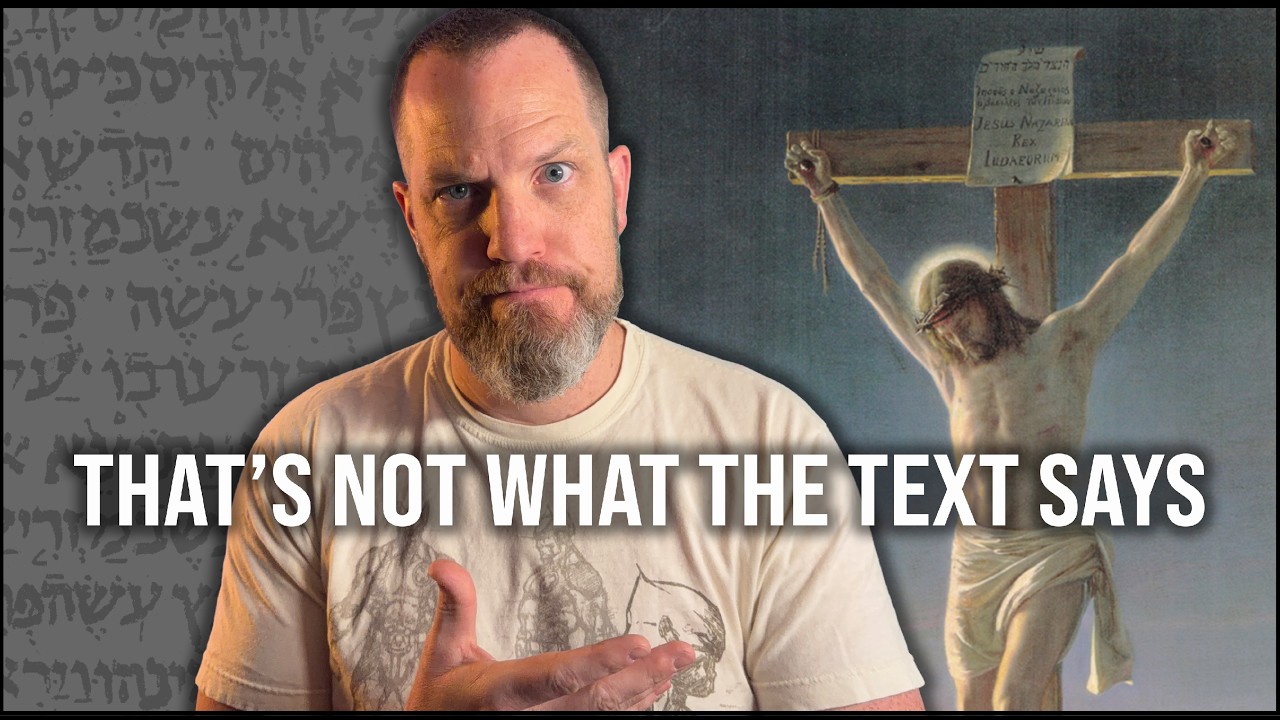
🔗 **Source:** [Pilate’s Secret Hebrew Message](https://www.youtube.com/watch?v=6MzUYeeCXHM)
> [!note]+ Document Notes
> tags: [biblical-criticism, hebrew-textual-analysis, misinformation-analysis]
> author: [MISSING]
> source: YouTube
> reference: https://www.youtube.com/watch?v=6MzUYeeCXHM
> date created: {{date:YYYY-MM-DD}} {{time:HH:mm}}
>
> # 🏷️ Title: Pilate's secret Hebrew message
>
<!-- deep-read:sections start -->
## 🧭 Table of Contents
- [📝 Summary](#-summary)
- [📖 Main Content](#-main-content)
- [🗒️ Notes](#️-notes)
- [📚 References](#-references)
- [🗣️ Paraphrase](#️-paraphrase)
- [📰 Newsletter](#-newsletter)
- [✅ Action Items](#-action-items)
- [🧪 Hypotheses](#-hypotheses)
- [📊 Methodology](#-methodology)
- [❓ Questions](#-questions)
- [🔮 Future Research](#-future-research)
- [💡 Implications](#-implications)
- [🧠 Learning Styles Assessment](#-learning-styles-assessment)
- [📊 Accessibility Assessment](#-accessibility-assessment)
- [🌍 DEIB Assessment](#-deib-assessment)
- [✅ Logical Validity](#-logical-validity)
- [🛡️ DARVO Analysis](#-darvo-analysis)
- [🎯 Conclusion](#-conclusion)
## 📝 Summary
- A viral claim suggests Pilate's sign above Jesus formed a Hebrew acrostic spelling "Yahweh" (YHVH)
- Biblical scholar debunks this by examining the actual Greek texts from all four Gospels
- The claim requires adding words not in the original text and ignoring textual variants
- This represents a pattern of using fabricated "hidden messages" to support supernatural claims
- Critical thinking and expert commentary are essential when evaluating such viral religious content
## 📖 Main Content
The video examines a popular claim circulating on social media about Pilate's inscription above Jesus during crucifixion. The original content creator argues that when "Jesus of Nazareth, King of the Jews" is written in Hebrew, the first letters spell out the tetragrammaton (YHVH), God's sacred name.
The responding biblical scholar systematically dismantles this claim through textual analysis:
### Gospel Variations
Each Gospel records the inscription differently:
- **Mark**: "The King of the Jews"
- **Matthew**: "This is Jesus the King of the Jews"
- **Luke**: "This is the King of the Jews"
- **John**: "Jesus the Nazarene, King of the Jews"
The claim relies exclusively on John's version, despite John being the latest and most literary Gospel, making it least likely to preserve historical details.
### Hebrew Translation Problems
When properly back-translating John's Greek text to Hebrew, the result doesn't yield the tetragrammaton. The viral claim artificially adds a conjunction ("and") before "King" to manufacture the required third letter (vav) of YHVH. This addition has no basis in any Gospel text.
### Historical Context Issues
The scholar notes that:
- Hebrew acrostics in this period were primarily alphabetic, not message-concealing
- The objection came from chief priests, not Pharisees
- Their concern was about endorsing Jesus's kingship claim, not secret messages
## 🗒️ Notes
#### ⏱️ [00:00:12](https://www.youtube.com/watch?v=6MzUYeeCXHM?t=12) Gospel Textual Variations
- Four Gospels record different versions of Pilate's inscription
- Content creator focuses on John's version as "most historical"
- Scholar notes John is actually latest and most literary, thus least historical
#### ⏱️ [00:01:45](https://www.youtube.com/watch?v=6MzUYeeCXHM?t=105) Pharisees vs Chief Priests
- Original claim incorrectly identifies objectors as Pharisees
- John 19:21-22 clearly states it was "chief priests of the Jews"
- Their objection was about endorsing Jesus's kingship, not hidden messages
#### ⏱️ [00:02:30](https://www.youtube.com/watch?v=6MzUYeeCXHM?t=150) Hebrew Acrostic Claims
- Claim suggests Hebrews hid secret codes using first letters of consecutive words
- Scholar notes this is inaccurate for first-century Judaism
- Alphabetic acrostics were common, but not message-hiding techniques
#### ⏱️ [00:03:45](https://www.youtube.com/watch?v=6MzUYeeCXHM?t=225) Translation Manipulation
- Hebrew text shown doesn't match the transliteration provided
- Critical issue: conjunction "and" arbitrarily added before "King"
- Without this addition, the letters don't spell YHVH
- This alteration has no basis in any Gospel text
#### ⏱️ [00:05:00](https://www.youtube.com/watch?v=6MzUYeeCXHM?t=300) Theological Problems
- Even proper back-translation wouldn't yield the tetragrammaton
- Gospel of John doesn't identify Jesus as Adonai (God of Israel)
- No clear New Testament text makes this identification
- Claim based on post-biblical theological developments
## 📚 References
- Gospel of Mark (Greek text)
- Gospel of Matthew (Greek text)
- Gospel of Luke 23:38
- Gospel of John 19:19-22
- Hebrew tetragrammaton (YHVH)
## 🗣️ Paraphrase
A viral social media claim suggests that Pilate's inscription above Jesus, when written in Hebrew, contains a hidden acrostic spelling out God's sacred name (YHVH). A biblical scholar thoroughly debunks this by examining the actual Gospel texts, which vary significantly in their wording. The claim relies on the Gospel of John, ironically the least historically reliable, and requires artificially adding words not present in any Gospel to make the acrostic work. This represents a broader pattern of fabricated "hidden messages" used to support supernatural claims, highlighting the importance of critical evaluation and expert analysis of viral religious content.
## 📰 Newsletter
**🔍 Fact-Checking Biblical Claims: When Viral Content Meets Scholarship**
Ever see those "amazing hidden Bible secrets" posts flooding your social feeds? A recent viral claim about Pilate's inscription containing a secret Hebrew message got the full scholarly treatment, and the results are... illuminating.
The claim? That "Jesus of Nazareth, King of the Jews" in Hebrew forms an acrostic spelling YHVH (God's sacred name). The reality? It requires ignoring three of the four Gospels, mistranslating Hebrew, and adding words that appear nowhere in the original texts.
This serves as a perfect case study in digital literacy for religious content. When something sounds too perfectly aligned with specific theological positions, it's worth checking with actual experts who read ancient languages professionally.
**Key takeaway**: Critical thinking isn't the enemy of faith—it's the enemy of misinformation masquerading as faith.
[Learn more about textual criticism](https://example.com) | [Biblical language resources](https://example.com)
## ✅ Action Items
#### Community
- Develop fact-checking resources for viral biblical claims
- Create accessible guides to textual criticism methods
- Establish networks connecting scholars with popular content creators
- Design workshops on evaluating religious misinformation
#### WordPress
- Documentation: Create guides for religious/educational sites on content verification
- Plugins: Develop fact-checking tools for content creators
- Community: Host discussions on combating misinformation in religious content
## 🧪 Hypotheses
- Viral religious misinformation spreads faster when it confirms existing theological positions
- Visual elements (Hebrew text, fancy graphics) increase perceived credibility of false claims
- Most social media users lack tools to verify claims requiring ancient language expertise
- "Hidden message" narratives appeal to desires for special knowledge or divine confirmation
- Post-biblical theological developments get retroactively projected onto biblical texts
### 📊 Methodology
- Content analysis of viral biblical claims across platforms
- Survey research on factors influencing credibility assessment
- Experimental studies testing intervention effectiveness
- Case studies tracking misinformation lifecycle from creation to debunking
- Expert interview protocols with biblical scholars and digital literacy educators
### ❓ Questions
- What psychological factors make "hidden message" claims particularly appealing?
- How can scholarly expertise be made more accessible to general audiences?
- What role do visual elements play in perceived credibility of textual claims?
- How might platform design changes reduce misinformation spread?
### 🔮 Future Research
- Develop automated detection systems for manipulated ancient text claims
- Study effectiveness of different debunking approaches for religious misinformation
- Create databases of verified vs. fabricated biblical "discoveries"
- Research optimal formats for scholarly response to viral claims
### 💡 Implications
- **Education**: Need for digital literacy programs addressing religious content
- **Platform Policy**: Consider special handling of claims requiring expert knowledge
- **Scholarly Communication**: Scholars need training in public engagement strategies
- **Religious Communities**: Internal fact-checking mechanisms could reduce spread
### 🧠 Learning Styles Assessment
**Reading level**: Graduate level due to technical terminology (15.2 Flesch-Kincaid)
#### 👀 Visual learners
- **Present**: Side-by-side Gospel text comparisons, Hebrew character analysis
- **Improve**: Interactive timeline of Gospel composition, visual flowchart of debunking process
#### 🔊 Aural learners
- **Present**: Video format with spoken explanation
- **Improve**: Audio-only version highlighting key transition points between arguments
#### 🗣️ Verbal learners
- **Present**: Step-by-step textual analysis, clear definitions of technical terms
- **Improve**: Glossary of biblical criticism terms, analogies to familiar concepts
#### 🧩 Kinesthetic learners
- **Present**: Point-by-point examination process
- **Improve**: Interactive exercises in textual comparison, hands-on translation activities
#### 🧠 Logical learners
- **Present**: Systematic refutation structure, evidence hierarchy
- **Improve**: Decision trees for evaluating textual claims, formal logic notation
#### 🧑🤝🧑 Social learners
- **Present**: Scholar-to-audience teaching format
- **Improve**: Discussion prompts for study groups, collaborative fact-checking exercises
#### 🧘♀️ Solitary learners
- **Present**: Individual analysis and reflection opportunities
- **Improve**: Self-assessment checklists for evaluating similar claims
#### 🌿 Naturalistic learners
- **Present**: Historical development patterns in textual analysis
- **Improve**: Ecosystem metaphors for how misinformation spreads and evolves
### 📊 Accessibility Assessment
#### Screen reader semantics
- **Present**: Clear heading structure, descriptive transcript
- **Improve**: Alt text for Hebrew characters, ARIA labels for complex comparisons
#### Keyboard navigation
- **Present**: Standard video controls accessible
- **Improve**: Skip-to-section functionality, keyboard shortcuts for replay
#### Contrast and readability
- **Present**: High contrast text overlays in video
- **Improve**: Adjustable contrast settings, larger text options
#### Text resizing and reflow
- **Present**: Responsive transcript formatting
- **Improve**: Scalable Hebrew character displays, flexible layout grid
#### Media and captions
- **Present**: Full transcript provided
- **Improve**: Synchronized captions with speaker identification
#### Forms and interactions
- **Present**: Basic video interface
- **Improve**: Accessible controls for playback speed, chapter navigation
### 🌍 DEIB Assessment
#### Cultural breadth
- **Present**: Addresses claims affecting multiple Christian denominations
- **Improve**: Include Jewish scholarly perspectives, interfaith dialogue context
#### Inclusive language
- **Present**: Respectful treatment of religious beliefs while correcting misinformation
- **Improve**: Acknowledge legitimacy of faith while promoting accuracy
#### Neurodiversity support
- **Present**: Systematic, structured argumentation
- **Improve**: Visual outlines, predictable format patterns
#### Representation
- **Present**: Academic expertise prioritized appropriately
- **Improve**: Diverse scholarly voices, community leader perspectives
#### Psychological safety
- **Present**: Non-attacking tone toward those who believed false claim
- **Improve**: Explicit affirmation that questioning doesn't threaten faith
### ✅ Logical Validity
#### Strong reasoning
- **Systematic textual analysis**: Examines all four Gospel versions, not cherry-picking
- **Primary source methodology**: Goes directly to Greek texts rather than interpretations
- **Historical contextualization**: Places acrostic claims in proper first-century context
#### Fallacies
- **Original claim - Cherry picking**: Selects only John's Gospel while ignoring variants in other three
- **Original claim - False premise**: Assumes Hebrew acrostics were commonly used to hide messages in first-century Judaism
- **Original claim - Fabrication**: Adds conjunction not present in any Gospel text to force desired result
#### Tone of voice
- **Scholarly but accessible**: "This is misinformation. This is entirely false" - direct but educational
- **Protective**: Warning against manipulation - "don't fall for this kind of stuff"
- **Methodical**: Step-by-step refutation building evidence systematically
### 🛡️ DARVO Analysis
**Not applicable** - The scholar's response is a straightforward academic debunking without defensive rhetoric. The original false claim doesn't appear to employ DARVO tactics either, just misinformation.
## 🎯 Conclusion
This case demonstrates the critical importance of subjecting viral religious claims to scholarly scrutiny. The "Pilate's Hebrew acrostic" claim falls apart under basic textual analysis, requiring multiple fabrications and distortions to maintain its premise.
For readers encountering similar content, the key takeaways are: verify claims against multiple sources, seek expert commentary on technical subjects, and remember that critical analysis strengthens rather than threatens genuine understanding. The tools of biblical scholarship—textual criticism, historical context, and linguistic analysis—serve truth rather than any particular theological agenda.
Most importantly, this analysis reveals how misinformation exploits the desire for confirmation of existing beliefs, packaging falsehoods in authoritative-sounding presentations that bypass critical evaluation.
---
## Full Transcript
[00:00] Here's something a lot of people don't<br>[00:01] know.<br>[00:02] >> All right, let's see it.<br>[00:04] >> Pilate made a sign when Jesus was<br>[00:05] crucified and he placed it right above<br>[00:07] his head. Do you remember what that sign<br>[00:09] said?<br>[00:10] >> Well, that depends entirely on which<br>[00:12] gospel you imagine is most historical<br>[00:15] because they all say different things.<br>[00:18] Here is the Gospel of Mark in Greek. The<br>[00:20] bottom two lines have<br>[00:22] ton that means the king of the Judeans<br>[00:26] or the Jews. So that's what the gospel<br>[00:29] of Mark has. If we go to Matthew, we got<br>[00:31] to look at the bottom three lines<br>[00:36] udeon. This is Jesus the king of the<br>[00:40] Judeans or the Jews. That's what Matthew<br>[00:42] says the sign had. Here we have the<br>[00:44] bottom three lines in the gospel of Luke<br>[00:46] 23:38<br>[00:51] and that means the king of the Judeans<br>[00:54] or the Jews. this is or this is the king<br>[00:57] of the Judeans or the Jews. And then we<br>[00:59] have John 19:19 and this is the one that<br>[01:01] this content creator is going to focus<br>[01:03] on and it reads Isus ho Nazareoson<br>[01:08] and this means Jesus the Nazaren the<br>[01:12] king of the Jews. So it depends on which<br>[01:16] gospel you imagine is most historical<br>[01:19] and the reality is none of these is<br>[01:22] likely to be historical. It said Jesus<br>[01:25] of Nazareth, the King of the Jews.<br>[01:27] >> So, this content creator is giving<br>[01:29] priority to the Gospel of John. And I<br>[01:31] and many other scholars would point out<br>[01:33] as the latest and the most literary and<br>[01:36] the most expansive, the Gospel of John<br>[01:38] is probably the least likely to be<br>[01:40] historical and particularly in those<br>[01:42] places where the author significantly<br>[01:44] expands upon the narratives as they are<br>[01:47] found in this gospel author's sources.<br>[01:50] Now, of course, his intention was to<br>[01:52] mock Jesus. But what's amazing is that<br>[01:54] as soon as the Pharisees saw it, they<br>[01:56] ran to Pilate. They panicked and they<br>[01:59] asked them to take it down. And Pilate<br>[02:01] refused. He said, "What I have written,<br>[02:03] I have written." But why did the<br>[02:06] Pharisees panic? So, a couple of things<br>[02:08] here. It was not the Pharisees. It was<br>[02:11] quite explicitly the chief priests. At<br>[02:13] least according to the Gospel of John.<br>[02:15] And additionally, the Gospel of John<br>[02:18] gives a pretty good idea why this<br>[02:19] happened. Here are the relevant verses.<br>[02:21] We can go down to verses 21 and 22. Then<br>[02:24] the chief priests of the Jews said to<br>[02:26] Pilate, "Do not write the king of the<br>[02:28] Jews." But this man said, "I am king of<br>[02:32] the Jews." So based on this passage, it<br>[02:35] seems pretty clear that the chief<br>[02:36] priests, not the Pharisees, didn't like<br>[02:39] that Pilate seemed to be endorsing<br>[02:42] Jesus's identification as king of the<br>[02:45] Jews. They wanted him to make clear that<br>[02:48] this was something that Jesus claimed,<br>[02:50] but that was not true. That seems to be<br>[02:54] what is at issue, at least according to<br>[02:56] the author of the Gospel of John. And<br>[02:58] once again, the author of the Gospel of<br>[03:01] John is likely creating this story<br>[03:03] themselves. So what they have to say<br>[03:06] about this reasoning is almost certainly<br>[03:09] the actual reasoning<br>[03:11] >> because they saw something in that sign<br>[03:14] that no one else did.<br>[03:16] >> I don't think this is true.<br>[03:18] >> You see, the Hebrews had a tradition of<br>[03:20] hiding secret codes in their writing.<br>[03:22] When they didn't want everyone else to<br>[03:24] understand, they would conceal a message<br>[03:26] inside the Hebrew words. And the way<br>[03:29] they would do it is they would use the<br>[03:30] first letter of consecutive words to put<br>[03:32] together a message.<br>[03:35] >> U so this is not accurate. Acrostics are<br>[03:39] far more common centuries after the<br>[03:41] development of the New Testament in<br>[03:43] languages like Hebrew. But when we see<br>[03:45] them prior to the first century CE, it's<br>[03:48] primarily alphabetic acrostics where the<br>[03:52] first letter of each line is a<br>[03:54] consecutive letter of the alphabet. But<br>[03:56] they tend not to hide words or messages<br>[03:58] or names in acrostics in this period.<br>[04:03] There are ciphers and cryptography and<br>[04:06] things like that that are in use at<br>[04:08] Kuman, but there are very very different<br>[04:11] techniques going on there that don't<br>[04:12] really have much to do with acrostics.<br>[04:14] But also across aren't really about<br>[04:16] hiding things that are secrets so nobody<br>[04:19] else can see them because that's not<br>[04:22] incredibly effective. the message tends<br>[04:25] to sit on the surface. Uh so this is not<br>[04:29] an incredibly accurate description of<br>[04:31] what went on within first century CE<br>[04:33] Judaism and completely unknowingly that<br>[04:36] is exactly what Pilate had done. When<br>[04:39] you write Jesus of Nazareth, the king of<br>[04:41] the Jews in Hebrew and take the first<br>[04:44] letter of each word, it spells out an<br>[04:46] amazing word and that word is Yahweh.<br>[04:51] >> So we got two problems here. One of them<br>[04:54] a pretty small issue, the other utterly<br>[04:57] catastrophic for this claim. So here is<br>[04:59] the image that this content creator put<br>[05:01] on the screen. And in the red in the<br>[05:03] middle you see Hebrew text and then in<br>[05:06] the black underneath you see a<br>[05:08] transliteration<br>[05:09] that is close to that Hebrew text but is<br>[05:12] actually not quite that Hebrew text. And<br>[05:15] the two smaller things going on here.<br>[05:18] One,<br>[05:20] that is not transliterated the way it's<br>[05:22] spelled out below. Hanatare<br>[05:25] would be the masculine plural construct<br>[05:28] form and that's not what's in the<br>[05:31] Hebrew. Additionally, the next line<br>[05:34] begins with vime, but the Hebrew has ume<br>[05:38] because the vav when it is uh put before<br>[05:42] certain consonants, sometimes it changes<br>[05:44] from a consonant to the shurik, the long<br>[05:48] u quality vowel.<br>[05:50] But not a big deal. All that indicates<br>[05:53] is whoever wrote out this<br>[05:54] transliteration<br>[05:55] uh either was not following the Hebrew<br>[05:58] that is shown in this image or didn't<br>[06:00] really know how to transliterate. The<br>[06:03] catastrophic issue is that this text in<br>[06:05] Hebrew does not say Jesus the Nazaren or<br>[06:10] Jesus of Nazareth the king of the Jews.<br>[06:13] This text says Jesus the Nazaren and<br>[06:17] King of the Jews because they have just<br>[06:20] arbitrarily added a conjunction at the<br>[06:23] beginning of Melik to provide the third<br>[06:26] consonant of the tetetrogrammaton<br>[06:28] because if you actually translated<br>[06:31] directly from the Greek back into<br>[06:33] Hebrew, the third consonant would just<br>[06:35] be a mem. it would not be a vav and so<br>[06:38] it would not spell out the<br>[06:39] tetetrogrammaton as this content creator<br>[06:41] is going to suggest the sign spelled<br>[06:44] out. So we've taken what almost spelled<br>[06:48] out the tetetrogrammaton and we've just<br>[06:49] arbitrarily altered it to say something<br>[06:52] entirely different that none of the<br>[06:54] gospels says pilot wrote so that we can<br>[07:00] find this tetra grammaton hidden as an<br>[07:03] acrostic in this text. So this is made<br>[07:06] up. This is entirely false. Uh there is<br>[07:09] no acrostic in what John 19:19 says<br>[07:13] Pilate had written in Hebrew on the sign<br>[07:15] over Jesus's head. What man intended as<br>[07:19] mockery, God turned into a proclamation.<br>[07:22] So the sign that was meant to shame the<br>[07:24] king became a declaration of his eternal<br>[07:27] identity. Even at his darkest hour,<br>[07:30] Jesus was announced God. So again, this<br>[07:34] is not true. Even if you take that sign<br>[07:37] that was almost certainly composed<br>[07:39] originally in Greek by the author of the<br>[07:41] Gospel of John and you back translated<br>[07:43] it to Hebrew, you would not get the<br>[07:45] tetetrogrammaton. And the author of the<br>[07:48] Gospel of John did not identify Jesus as<br>[07:50] Adonai, the very God of Israel. I don't<br>[07:53] think there's any text in the New<br>[07:55] Testament that clearly does that. But<br>[07:58] it's certainly not going on in the<br>[07:59] Gospel of John. And it is certainly not<br>[08:02] indicated by a hidden acrostic in the<br>[08:06] Hebrew of the sign that Pilate was<br>[08:07] supposed to put over Jesus's head.<br>[08:10] That's just not something you can arrive<br>[08:13] at based on any of the four gospels. And<br>[08:16] even if you say we're arbitrarily going<br>[08:18] to take the Gospel of John and say that<br>[08:21] what is written there is what was<br>[08:22] written on the sign and we're going to<br>[08:24] back translate it to Hebrew, we don't<br>[08:25] get the tetetrogrammaton. This is<br>[08:27] misinformation. This is a falsehood<br>[08:30] based on post-biblical identifications<br>[08:33] of Jesus with Adonai, the God of Israel.<br>[08:37] And this is just another attempt to use<br>[08:41] misinformation, use lies, to try to<br>[08:44] plunk the tuning fork in the loins of<br>[08:47] the dogmatism of people out there who<br>[08:49] don't know any better. Um, don't fall<br>[08:52] for this kind of stuff. And when you see<br>[08:54] people sharing stuff on the internet<br>[08:56] that sounds like they're secret hidden<br>[08:58] messages hidden throughout the Bible<br>[09:00] that confirm<br>[09:02] ideologies and dogmas that are unique to<br>[09:05] specific movements within Christianity<br>[09:07] or even within Judaism and those<br>[09:11] movements are overwhelmingly<br>[09:13] post-biblical developments. You need to<br>[09:15] think critically about those things. You<br>[09:17] need to take a harder look at the data<br>[09:19] and you need to go in search of expert<br>[09:22] commentary. So you can see if those are<br>[09:24] actually true because the overwhelming<br>[09:26] majority of the time and particularly<br>[09:28] when they sound like they are confirming<br>[09:30] supernatural claims, they're not true.<br>[09:32] Somebody has just made something up or<br>[09:34] has misunderstood something, which is<br>[09:36] most likely what is the case with this<br>[09:39] particular video. And the fit for this<br>[09:41] video has been the Frank Miller Ben Grim
<!-- deep-read:sections end -->
📄 **Full text:** ![[Full Document Contents/Articles/Pilate’s Secret Hebrew Message.md|Pilate’s Secret Hebrew Message by YouTube]]
## Highlights
- indicated by a hidden acrostic in the Hebrew of the sign that Pilate was supposed to put over Jesus's head. That's just not something you can arrive at based on any of the four gospels. And even if you say we're arbitrarily going to take the Gospel of John and say that what is written there is what was written on the sign and we're going to back translate it to Hebrew, we don't get the tetetrogrammaton. This is misinformation. This is a falsehood ([View Highlight](https://read.readwise.io/read/01kv3sjff8wbbkajead38s2t77))
- Tags: 👻 ai highlighted