Reading Into the New Year: Dismantling White Christian Supremacy
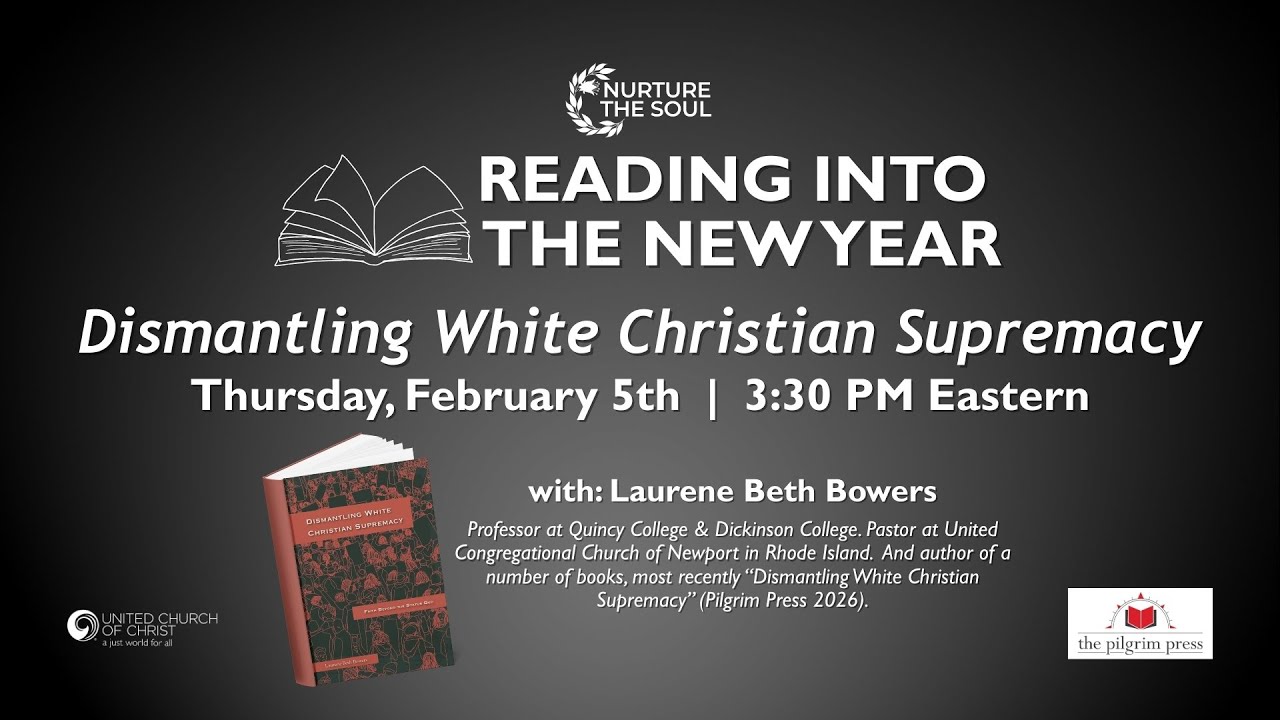
🔗 **Source:** [Reading Into the New Year: Dismantling White Christian Supremacy](https://www.youtube.com/watch?v=-IlCz28kEwY)
> [!note]+ Document Notes
> tags: [white-supremacy, christian-theology, reparations, indigenous-rights, decolonization, racial-justice, church-reform]
> author: United Church of Christ
> source: YouTube
> reference: https://www.youtube.com/watch?v=-IlCz28kEwY
> date created: 2024-12-19 14:30
>
> # 🏷️ Title: Reading Into the New Year: Dismantling White Christian Supremacy
>
<!-- deep-read:sections start -->
## 🧰 Action Inbox
- [H1] Create land acknowledgement with reparations component — churches must move beyond acknowledgment to action #reparations
- [H2] Design repentance rituals for historical harms — indigenous peoples and African-American communities need concrete repair #indigenous-rights
- [H3] Develop church consolidation strategy to fund reparations — sell buildings, consolidate resources for justice work #church-reform
## 🧭 Table of Contents
- [📝 Summary](#-summary)
- [📖 Main Content](#-main-content)
- [🗒️ Notes](#️-notes)
- [📚 References](#-references)
- [🗣️ Paraphrase](#️-paraphrase)
- [📰 Newsletter](#-newsletter)
- [✅ Action Items](#-action-items)
- [🧪 Hypotheses](#-hypotheses)
- [📊 Methodology](#-methodology)
- [❓ Questions](#-questions)
- [🔮 Future Research](#-future-research)
- [💡 Implications](#-implications)
- [🧠 Learning Styles Assessment](#-learning-styles-assessment)
- [📊 Accessibility Assessment](#-accessibility-assessment)
- [🌍 DEIB Assessment](#-deib-assessment)
- [✅ Logical Validity](#-logical-validity)
- [🛡️ DARVO Analysis](#-darvo-analysis)
- [🎯 Conclusion](#-conclusion)
### 🔗 References
- [Dismantling White Christian Supremacy by Rev. Lorine Beth Bower](https://pilgrimpress.com)
- [The Future of American Christianity by Rev. Lorine Beth Bower](https://pilgrimpress.com)
## 📝 Summary
- Rev. Lorine Beth Bower discusses her upcoming book on dismantling white Christian supremacy through theological reconstruction
- She argues that white + Christian supremacy creates a compounded system (1+1=3) that ranks human value with white Christians first
- The conversation covers practical church actions including land acknowledgment, reparations, and structural church reform
- Bower advocates for churches to move beyond charity models toward addressing root causes of inequality
- The discussion includes personal stories about indigenous heritage and the need for truth-telling in church history
## 📖 Main Content
Rev. Lorine Beth Bower, author of multiple books including the upcoming "Dismantling White Christian Supremacy," explains how Christian theology has been used to justify and sustain white supremacy. She argues that white supremacy and Christian supremacy combine to create a system more powerful than either alone.
The conversation explores how churches can move beyond performative acknowledgments toward concrete reparative actions. Bower discusses her personal connection to indigenous heritage through her Iroquois mother's experiences in Catholic orphanages, illustrating how white Christian institutions have historically harmed indigenous communities.
Key theological points include challenging the doctrine of discovery, which deemed any land not occupied by Christians as available for taking, and rethinking charity models that maintain hierarchical relationships between givers and receivers.
## 🗒️ Notes
#### ⏱️ [00:00](https://youtu.be/-IlCz28kEwY?t=0) — [H1] Introduction and author background
- Key idea: Multi-published author discussing third webinar in reading series
- Evidence: "Multi-published author for the third episode of our reading into the new year webinar series"
#### ⏱️ [05:30](https://youtu.be/-IlCz28kEwY?t=330) — [H2] Personal story of writing journey
- Key idea: Author's path from pastor to writer began with high school English teacher who said she couldn't write
- Evidence: "My English teacher wanted me to stay afterwards because she said, 'You're just your writing is horrible, and what are you going to do, you know, for a living?'"
#### ⏱️ [12:15](https://youtu.be/-IlCz28kEwY?t=735) — [H1] Mother's indigenous heritage and book dedication
- Key idea: Author's Iroquois mother experienced Catholic orphanage system that separated indigenous children from families
- Evidence: "My mom was born to an Iroquois woman and her mother died when she was four... they would be put into a Catholic orphanage"
#### ⏱️ [18:45](https://youtu.be/-IlCz28kEwY?t=1125) — [H2] Growing up with racial awareness
- Key idea: Author experienced people commenting negatively about her mother's indigenous appearance
- Evidence: "People coming to my house and seeing my mom and saying, 'Your mom looks like an Indian.' And that not being a good thing"
#### ⏱️ [22:30](https://youtu.be/-IlCz28kEwY?t=1350) — [H1] Churches as spaces for difficult conversations
- Key idea: Churches should create space for disagreement rather than just preaching to the choir
- Evidence: "Wouldn't that be a great church where instead of people are like amending me on Sunday morning, they're like, 'Wait a minute, I object'"
#### ⏱️ [28:00](https://youtu.be/-IlCz28kEwY?t=1680) — [H2] Connection between previous book and current work
- Key idea: Author's thinking about reparations began with suggestion to sell church buildings and give proceeds to historic black churches
- Evidence: "Perhaps when we sell the church these buildings that we give the church the money to historic black churches"
#### ⏱️ [32:15](https://youtu.be/-IlCz28kEwY?t=1935) — [H1] Jesus focused on loving neighbors, not God
- Key idea: Jesus emphasized loving others over loving God because God doesn't need human love
- Evidence: "God is sitting up in the heavens going, 'Stop the loving.' Like, 'Don't love me. Love each other.' Like, I got I don't need your love"
#### ⏱️ [35:45](https://youtu.be/-IlCz28kEwY?t=2145) — [H2] Writing without fear of controversy
- Key idea: Author doesn't worry about controversial topics like reparations because she's open to dialogue
- Evidence: "I just don't think like I don't think about it like that... if anybody wants to dialogue with me"
#### ⏱️ [38:30](https://youtu.be/-IlCz28kEwY?t=2310) — [H1] White Christian savior syndrome critique
- Key idea: Charity work maintains hierarchical structure where whites are givers and others are receivers
- Evidence: "Without needy people in this world, we would not be able to showcase our acts of charity and justice"
#### ⏱️ [42:00](https://youtu.be/-IlCz28kEwY?t=2520) — [H1] White Christian supremacy formula
- Key idea: White supremacy plus Christian supremacy equals something greater than the sum of parts
- Evidence: "If white is one and Christian is one, 1 + 1 in this formula equals three"
#### ⏱️ [45:15](https://youtu.be/-IlCz28kEwY?t=2715) — [H2] Creation theology and human ranking
- Key idea: Theology positions white Christians as the standard model with everyone else as derivatives
- Evidence: "God created this kind of standard model which is a white and Christian and everybody else is a derivative thereof"
#### ⏱️ [52:30](https://youtu.be/-IlCz28kEwY?t=3150) — [H1] Land acknowledgment requires reparations
- Key idea: Land acknowledgment without payment is worse than no acknowledgment at all
- Evidence: "Is there any land acknowledgment without reparation or and repentance? They had to be sitting there going, 'Okay, well, what are you going to pay us for the land?'"
#### ⏱️ [58:00](https://youtu.be/-IlCz28kEwY?t=3480) — [H2] Church building sale strategy
- Key idea: Author convinced church to sell building by asking adult children if they'd pay $168,000 annual maintenance
- Evidence: "I did a group of all of their adult children... 'So tell me, y'all want to contribute to 168,000 after all your parents are gone?' And they're like, 'Yeah, no.'"
#### ⏱️ [65:45](https://youtu.be/-IlCz28kEwY?t=3945) — [H1] Doctrine of discovery and European invasion
- Key idea: Europeans came with doctrine that any land not occupied by Christians was available for taking
- Evidence: "Any land that was not occupied by Christians was available land... I call it by the way the European invasion"
## 📚 References
- [Dismantling White Christian Supremacy - Pilgrim Press](https://pilgrimpress.com)
- [The Future of American Christianity - Pilgrim Press](https://pilgrimpress.com)
- [Say Her Name - book about Black women killed by law enforcement](https://example.com)
- [United Church of Christ Decolonization Priority](https://ucc.org)
## 🗣️ Paraphrase
- Christian theology has been weaponized to create and sustain white supremacy, requiring theological reconstruction to dismantle these systems
- Churches must move beyond charity models that maintain hierarchies toward reparative justice that addresses root causes of inequality
- Land acknowledgments without accompanying reparations are performative and potentially more harmful than no acknowledgment at all
## 📰 Newsletter
Rev. Lorine Beth Bower challenges churches to confront the theological foundations of white supremacy in her upcoming book "Dismantling White Christian Supremacy." Her practical approach includes land acknowledgment with reparations, selling church buildings to fund justice work, and creating spaces for difficult conversations rather than echo chambers.
Key takeaway: White + Christian supremacy creates a compounded system (1+1=3) that ranks human value, requiring both theological reconstruction and concrete actions like reparations to indigenous and Black communities.
Resources: [Pilgrim Press](https://pilgrimpress.com), [UCC Annual Fund](https://ucc.org/giving), [Learn about UCC Decolonization Priority](https://ucc.org)
## ✅ Action Items
#### Community
- Land acknowledgment: Draft statements with concrete reparation components, not just recognition
- Repentance rituals: Design ceremonies that admit historical harms to indigenous and African-American communities
- Truth-telling: Revise church history education to include accurate accounts of colonialism and slavery
- Building consolidation: Explore merging smaller churches to reduce maintenance costs and fund reparations
#### WordPress
- Documentation: Create guides for inclusive language in religious content and community spaces
- Accessibility: Ensure church websites meet WCAG standards for diverse congregations and visitors
#### The WPCC
- Programs: Support community organizing workshops focused on reparative justice in religious contexts
- Funding: Consider grants for churches implementing concrete reparations programs
## 🧪 Hypotheses
- Churches implementing concrete reparations programs will experience increased engagement from younger generations
- Land acknowledgment paired with reparative action creates stronger relationships with indigenous communities than acknowledgment alone
- Theological reconstruction addressing white supremacy leads to more diverse and inclusive congregations
- Church building consolidation strategies can successfully fund reparations while maintaining community worship
### 📊 Methodology
- Survey churches before and after implementing reparations programs to measure community engagement
- Case study analysis of successful land acknowledgment + reparations partnerships
- Theological content analysis comparing traditional vs. reconstructed Christian supremacy narratives
### ❓ Questions
- How can churches measure the effectiveness of their reparations programs beyond financial metrics?
- What theological frameworks best support dismantling white Christian supremacy while maintaining Christian identity?
- How do indigenous communities prefer to receive and structure reparative relationships with churches?
### 🔮 Future Research
- Comparative analysis of church reparations programs across denominations and regions
- Investigation of theological education curriculum changes needed to address white Christian supremacy
- Study of intergenerational attitudes toward church building divestment for justice funding
### 💡 Implications
- Practice: Churches must move beyond performative diversity toward structural reparative justice
- Policy: Denominational policies may need revision to support church building sales for reparations
- Education: Seminary curricula require integration of indigenous perspectives and decolonial theology
- Funding: Traditional church funding models may shift toward justice-focused resource allocation
### 🧠 Learning Styles Assessment
Reading level estimate: 12th grade (Flesch-Kincaid Grade Level)
#### 👀 Visual learners
- Present: Video format with speaker visibility and slide presentations
- Improve: Infographics showing white Christian supremacy systems, timeline of theological development
#### 🔊 Aural learners
- Present: Full audio webinar with clear speaker narration
- Improve: Podcast version, discussion guide audio prompts
#### 🗣️ Verbal learners
- Present: Rich theological vocabulary with contextual definitions
- Improve: Glossary of terms, comparative theology explanations
#### 🧩 Kinesthetic learners
- Present: Action-oriented discussion of concrete church reforms
- Improve: Workshop activities, role-playing scenarios for difficult conversations
#### 🧠 Logical learners
- Present: Clear mathematical metaphor (1+1=3), systematic theological arguments
- Improve: Decision trees for reparations planning, cause-and-effect diagrams
#### 🧑🤝🧑 Social learners
- Present: Interactive Q&A format, community dialogue emphasis
- Improve: Small group discussion guides, peer reflection exercises
#### 🧘♀️ Solitary learners
- Present: Book recommendations for individual study
- Improve: Personal reflection questions, journaling prompts
#### 🌿 Naturalistic learners
- Present: Land acknowledgment connections to environmental stewardship
- Improve: Creation theology environmental implications, indigenous land wisdom
### 📊 Accessibility Assessment
#### Screen reader semantics
- Present: Clear heading structure in transcript, speaker identification
- Improve: ARIA labels for video controls, descriptive timestamps
#### Keyboard navigation
- Present: Standard video player controls accessible via keyboard
- Improve: Skip navigation for lengthy introductions, chapter markers
#### Contrast and readability
- Present: High contrast video display with clear speaker visibility
- Improve: Closed captions with customizable text size and colors
#### Text resizing and reflow
- Present: Responsive video player interface
- Improve: Transcript formatting that reflows at 200% zoom
#### Media and captions
- Present: Full transcript provided, clear audio quality
- Improve: Professional closed captions with speaker identification, downloadable transcript
#### Forms and interactions
- Present: Q&A submission system during live event
- Improve: Alternative submission methods, confirmation messages
### 🌍 DEIB Assessment
#### Cultural breadth
- Present: Indigenous perspectives centered, multiple denominational contexts
- Improve: International church perspectives, non-Christian community voices
#### Inclusive language
- Present: Gender-neutral pronouns, culturally respectful terminology
- Improve: Plain language summaries for complex theological concepts
#### Neurodiversity support
- Present: Well-structured conversation flow, clear transitions
- Improve: Content warnings for traumatic historical material, shorter segment options
#### Representation
- Present: Indigenous author voices, diverse denominational leadership
- Improve: Include more voices from affected communities in reparations discussions
#### Psychological safety
- Present: Respectful framing of difficult historical truths
- Improve: Guidelines for discussing controversial topics in church settings
### ✅ Logical Validity
#### Strong reasoning
- Deductive strength: Clear progression from theological premises to practical applications
- Inductive strength: Personal narrative evidence supporting broader systemic claims
- Causal reasoning: Connects historical doctrine to contemporary church practices
- Analogical strength: Effective metaphors like mathematical formula (1+1=3)
#### Fallacies
- Appeal to emotion: Some personal stories may overshadow systematic analysis, strengthen with additional data
- False dichotomy: Presentation sometimes implies only two options (charity vs. reparations), acknowledge spectrum of approaches
#### Tone of voice
- Overall tone: Conversational yet authoritative, challenging but not confrontational, invites dialogue rather than demands agreement
### 🛡️ DARVO Analysis
- Deny: No evidence of denial patterns; author acknowledges complexity and invites dialogue
- Attack: No attacks on accusers; maintains respectful engagement with different perspectives
- Reverse victim/offender: No victim/offender reversal; clearly identifies historical harms and responsible parties
- Emotional cues
---
## Full Transcript
[00:01] Today we are joined by a multi-published<br>[00:04] author for the third episode of our<br>[00:06] reading into the new year webinar<br>[00:08] series. This extended series occurs at<br>[00:11] the start at every year and we get to<br>[00:14] partner with Pilgrim Press and others to<br>[00:16] invite you to pick up one of these books<br>[00:19] from Pilgrim Press or an independent<br>[00:21] book uh store or a library. Um so you<br>[00:25] can lead a conversation within your own<br>[00:27] congregation or community settings this<br>[00:29] year. Today we are join look I I Pilen<br>[00:33] Press I tell you Pilgrim Press is<br>[00:36] launching all of these amazing authors<br>[00:38] and we're joined by the Reverend Lorine<br>[00:41] Beth Bower. Thank you so much for being<br>[00:44] with us or with us here today. It's such<br>[00:47] an honor. um Loren and you know I start<br>[00:51] every conversation as some of our<br>[00:53] returnees know um really talking about<br>[00:56] how is it with your soul and how is it<br>[00:59] with your body today. So I invite you to<br>[01:02] come off of mute and share how is it<br>[01:05] with your soul and body today.<br>[01:08] Well, thank you for the invitation,<br>[01:10] Ellie. And uh<br>[01:11] >> I feel like my<br>[01:14] uh body and soul are kind of in sync<br>[01:16] with each other, which is always kind of<br>[01:18] good. And uh but it is well with my soul<br>[01:20] today. So, thank you.<br>[01:22] >> I love that. We were singing earlier.<br>[01:24] Well, I was trying to sing. I can't<br>[01:26] sing. We learned also that you have done<br>[01:28] performative arts and and lurggical<br>[01:30] arts, which I love. So, yeah, that's<br>[01:33] wonderful. I'm glad to hear that you<br>[01:35] find yourself in sync today. So, thank<br>[01:37] you for sharing that. You know, I'm<br>[01:40] curious. I think when we first started<br>[01:42] to talk, um, I was like, because you<br>[01:45] didn't refer to yourself as a reverend<br>[01:46] or a pastor or anything like that, but<br>[01:48] getting to know you, of course, reading<br>[01:50] your book, I got to know a different<br>[01:52] side. So, when you talk about the story<br>[01:55] of writing, I'm curious, how did you get<br>[01:57] from pastoring, being a reverend to<br>[02:00] writing, and then to such an easy topic<br>[02:03] as this?<br>[02:05] Well, I've been a pastor for a long<br>[02:07] time. This is I currently serving in my<br>[02:09] seventh church. I've done a lot of other<br>[02:12] things, too. I um was a dancing school<br>[02:15] teacher before I became a pastor and uh<br>[02:18] for eight years in Massachusetts. I saw<br>[02:20] all the girls who um had murdered<br>[02:24] someone and were in lockup. I saw them<br>[02:26] in therapy. So, I I kind of like and and<br>[02:30] have had much experiences being a<br>[02:32] professor. So it was kind of all kind of<br>[02:34] all kind of came together. Um I was<br>[02:38] doing a a workshop for the mass<br>[02:40] conference and I was coming home. This<br>[02:43] was 20 something years ago and I had<br>[02:47] talked about becoming a multicultural<br>[02:48] church and I thought well you know what<br>[02:50] I think I have a book in me about that.<br>[02:52] I think I'll write and that was the<br>[02:53] first book I wrote. Um but if you do<br>[02:56] Google my name I've written lots of<br>[02:57] things in the field of juvenile<br>[02:59] delinquency. So, a lot of times people<br>[03:01] say, "Is that you, too?" And I'm like,<br>[03:02] "Yeah." Um, so I've been a writer for a<br>[03:05] long time. That's been something that's<br>[03:06] been important to me. Um, I will share a<br>[03:10] short story that, uh, when I was in high<br>[03:12] school, my English teacher wanted me to<br>[03:15] stay afterwards and because she said,<br>[03:17] "You're just your writing is horrible,<br>[03:19] and what are you going to do, you know,<br>[03:21] for a living?" And I said, "Well, I'm<br>[03:22] going to go get a bachelor's in social<br>[03:24] work." And she said, "Oh, well, that's<br>[03:26] good because you won't really need to<br>[03:27] know how to write. So, you know, we'll<br>[03:29] just get you through. And uh who knew<br>[03:32] that I was going to end up being a<br>[03:34] writer? So, uh you know, it's been<br>[03:36] something that<br>[03:38] um I really enjoy doing, but it's also<br>[03:41] it's like an exercise. You know, you<br>[03:43] just have to continue to do it to get<br>[03:45] good at it.<br>[03:50] I think you have a story though that you<br>[03:53] wanted to share, kind of a personal<br>[03:55] story. Um can you talk a little bit<br>[03:57] about um how you how do you decide how<br>[04:00] to dedicate your book and why that<br>[04:02] matters?<br>[04:03] >> Right. So um I while I was writing the<br>[04:07] book um really towards the end, it was<br>[04:10] maybe in the last two weeks, my mother<br>[04:13] very unexpectedly died and I decided<br>[04:17] that um I was going to uh have them the<br>[04:20] book in in her memory, which was really<br>[04:22] fitting given uh what she taught me. Um<br>[04:27] my mom was uh born to an Irakcoy woman<br>[04:31] and uh her mother died when she was<br>[04:35] four. And um it was not uncommon that<br>[04:39] when um young women who tribal women or<br>[04:44] young girls uh lost their mother that<br>[04:47] they would be put into a Catholic<br>[04:48] orphanage. So my mother was put into a<br>[04:50] Catholic or orphanage at 4 and um she<br>[04:54] did not have a good experience there<br>[04:58] and um her father u she I think they<br>[05:02] probably um discouraged her father from<br>[05:05] coming but she really uh took that to be<br>[05:09] rejection and so I think that was like<br>[05:12] really difficult for her. Uh when she<br>[05:14] was 13, uh this is a good grace of God<br>[05:17] story. When she was 13, they um decided<br>[05:20] to put her in foster care. They put her<br>[05:22] in foster care with a family that really<br>[05:25] valued education and um paid for my mom<br>[05:30] to go through um getting a bachelor's<br>[05:33] degree, a master's, a doctorate. I mean,<br>[05:36] they paid for everything for my mom at<br>[05:38] Boston College. And then um she spent<br>[05:42] much of her adult years uh delivering<br>[05:44] babies in a place called Mayamba which<br>[05:47] is near Sierra Leon in Africa. She's my<br>[05:50] mom spoke my<br>[05:52] mostly when my kids were little when<br>[05:54] they were growing up and then she uh<br>[05:56] finished her career as the uh professor<br>[05:58] of medicine at Baylor University.<br>[06:02] So uh a lot of that was very influential<br>[06:04] for me. Um, but I I I tell the story<br>[06:07] that I I grew up with people coming to<br>[06:10] my house and seeing my mom and saying,<br>[06:14] "Your mom looks like an Indian." And<br>[06:16] that not being a good thing. So, in my<br>[06:19] own process of becoming, it's been to<br>[06:22] claim uh my um heritage<br>[06:26] uh with indigenous people. And so,<br>[06:30] that's that really has gotten me<br>[06:31] thinking about white Christian<br>[06:32] supremacy. Oh my gosh. Yes. Yes. And you<br>[06:36] know, Lorine, I've been thinking a lot<br>[06:37] about the one of the first times that we<br>[06:39] had a chance to meet and you shared that<br>[06:41] story with me and and we bonded, right?<br>[06:44] Because my mom was a foster child who um<br>[06:47] went to Indian boarding schools and did<br>[06:50] not have a good experience and and never<br>[06:52] had uh somebody believe in her. So there<br>[06:55] was always that sense of abandonment.<br>[06:57] And so we can look at at what the foster<br>[07:00] care system can and can't do for people.<br>[07:02] But that's a whole another book for a<br>[07:04] whole another time. [laughter]<br>[07:06] But yeah, but it was it was nice to know<br>[07:08] that somebody from all the way across<br>[07:10] the country, we have um very similar um<br>[07:13] beginnings. So, you know, the book isn't<br>[07:15] out yet. It's due to come out soon. Um,<br>[07:19] so what are some questions that you want<br>[07:21] us to think about today or or what are<br>[07:24] some questions that you hope folks can<br>[07:26] come into our conversation with?<br>[07:31] >> Well, well, for me, I mean, one of the<br>[07:32] reasons I wrote the book was in just in<br>[07:34] thinking about how specifically<br>[07:37] Christian theology<br>[07:40] s justifies and sustains white Christian<br>[07:42] supremacy. So I really kind of I set out<br>[07:45] on this project really thinking about<br>[07:48] the ways that especially as a pastor I<br>[07:50] mean I'm preaching every Sunday, right?<br>[07:51] So you know what what what am I saying<br>[07:54] that um supports that and and and really<br>[07:59] kind of like take taking stock of that.<br>[08:01] I think that that was really important<br>[08:02] to me. Um,<br>[08:05] so I think that that that was part of<br>[08:07] this project for me as well was in what<br>[08:10] ways um and unfortunately I think and<br>[08:13] it's really true in the churches that um<br>[08:16] you know and probably the people that<br>[08:18] are on the webinar this is true for them<br>[08:19] too is that a lot of times you feel like<br>[08:21] you're preaching to the choir you know<br>[08:23] you're preaching to people who are like<br>[08:25] you know so to speak you're preach you<br>[08:26] know you're talking to people who are<br>[08:28] like you know amening me and you know<br>[08:31] very few people are saying Well, I don't<br>[08:34] see it, Line. I don't see how white<br>[08:35] Christian supremacy, but we don't have<br>[08:38] an opportunity a lot of times to be able<br>[08:40] to answer, you know, to to talk to<br>[08:42] people who might have a different<br>[08:44] perspective on things. And so I think<br>[08:46] that really is a place where the church<br>[08:48] can kind of come into this conversation<br>[08:50] in just in thinking about, you know, we<br>[08:53] so often kind of divide ourselves up by<br>[08:56] liberal churches, conservative churches,<br>[08:58] churches that support Christian<br>[09:00] nationalism, churches that resist<br>[09:02] Christian nationalism. And yet, you<br>[09:04] know, I think the church really could be<br>[09:06] a place where we bring people together<br>[09:10] with um diversity of thought and have<br>[09:14] them share stories and maybe even be so<br>[09:17] bold as saying we can change people's<br>[09:19] minds. I mean, wow, wouldn't that be a<br>[09:21] great church where instead of people are<br>[09:23] like amending me on Sunday morning,<br>[09:26] they're like, "Wait a minute, I object."<br>[09:28] You know? [laughter]<br>[09:29] >> Yeah. and and and having that kind of a<br>[09:32] a a culture within our churches.<br>[09:36] >> Um, and I think that's important because<br>[09:38] because especially as a nation, we've<br>[09:40] become even more divisive and more split<br>[09:43] and you know, we we tend to kind of<br>[09:45] align ourselves um and and feel<br>[09:49] genuinely whatever side we're aligned<br>[09:50] with is being right and the other and<br>[09:53] and my truth should be everybody's<br>[09:55] truth. Um,<br>[09:58] so those are some of the the things that<br>[10:00] I've been thinking and praying about.<br>[10:02] >> Yeah. Yeah. Just I mean just light<br>[10:05] stuff. Light stuff, you know. [laughter]<br>[10:08] You know, I want to talk a little bit. I<br>[10:09] know I don't I don't want to talk about<br>[10:11] your previous book, but I did start our<br>[10:13] webinar sharing with everyone that you<br>[10:15] are you have multiple books that you<br>[10:17] have published. But I know that it being<br>[10:20] in conversation with you and I can tell<br>[10:22] by from reading this book that there<br>[10:23] that it's a that it's a conversation,<br>[10:26] right? It's a continued conversation.<br>[10:28] And so in your previous book, you you<br>[10:32] titled the book was titled The Future of<br>[10:34] American Christianity. And I know that<br>[10:37] you talk a little bit about reparations<br>[10:39] and nationalism in that particular book.<br>[10:43] How has that book informed this book?<br>[10:46] and then later we'll get into what's<br>[10:47] next.<br>[10:50] >> Well, that that's a really good question<br>[10:51] because I have to be honest, sometimes I<br>[10:54] start writing and I don't really know<br>[10:55] what I'm going to write about. Um, and I<br>[10:57] really thank Pilgrim Press for that kind<br>[10:59] of opportunity because I think they must<br>[11:02] read the inquiry and then say, "Okay,<br>[11:04] where's she going with this?" And then<br>[11:06] just trust that I'm going somewhere that<br>[11:08] that will be uh fruitful. And um so when<br>[11:12] I wrote the future of American<br>[11:13] Christianity um I I kind of it was<br>[11:16] really just kind of an opportunity to<br>[11:17] kind of think through some of the things<br>[11:19] that um uh for the future specifically<br>[11:23] of the church. And um I do believe that<br>[11:28] uh the church is like a sinking ship and<br>[11:31] if it's time for us to get our resources<br>[11:35] off that ship before it sinks to the<br>[11:37] bottom and by resources I mean money and<br>[11:39] buildings and uh um membership and<br>[11:43] people you know people will still have<br>[11:45] some energy to do something and um<br>[11:49] either that or I don't know what's going<br>[11:51] to become of the church. And so one of<br>[11:54] the ideas that I had was um perhaps you<br>[11:57] know bringing uh all the you know we<br>[11:59] have all these the uh smaller churches<br>[12:02] that kind of dot our landscape bringing<br>[12:04] them together to form larger churches<br>[12:07] that perhaps worship in a big barn<br>[12:10] and and people would walk into the barn<br>[12:12] and say and you know it'd be really<br>[12:14] rustic and people would say wow here's a<br>[12:17] church that cares about the poor<br>[12:20] you know because they've sold their like<br>[12:22] big mega church that, by the way, the<br>[12:24] these churches that are so expensive to<br>[12:27] heat, to maintain,<br>[12:30] uh what are we doing, you know, with<br>[12:32] with some of these big these big these,<br>[12:35] you know, big churches. And um so I<br>[12:37] suggested at the end of the book that uh<br>[12:39] perhaps when we sell the church these<br>[12:42] these buildings um that we give the<br>[12:46] church the money to historic black<br>[12:48] churches and allow them to make<br>[12:50] decisions about what they would do uh<br>[12:54] with the with that money. And so that<br>[12:56] was really my my first thinking about<br>[12:58] reparation was um you know really how<br>[13:03] doing something very concrete that that<br>[13:06] churches could do that would actually<br>[13:08] benefit them as well because as I say I<br>[13:11] don't think our kids want you know I<br>[13:13] don't think our kids want to maintain<br>[13:15] these these buildings. Um and so you<br>[13:18] know what what would uh the future of<br>[13:21] the of churches look like? So that was<br>[13:23] uh when I wrote the future of American<br>[13:25] Christianity. Um and so that definitely<br>[13:27] got me thinking in terms of um you know<br>[13:31] really what comes next and as I say<br>[13:33] really specifically how our Christian<br>[13:35] theology<br>[13:37] um needs to change but needs to change<br>[13:40] in such such a way that's very<br>[13:42] biblically based and I really focus on<br>[13:44] the the teachings of Jesus which<br>[13:47] >> who said very concretely that we should<br>[13:49] love ourselves and our neighbors and I<br>[13:52] think too often we we follow that up<br>[13:55] with saying you know that we should love<br>[13:56] God. And I think that God is sitting up<br>[13:58] in the heavens going, "Stop the loving."<br>[14:01] Like, "Don't love me. Love each other."<br>[14:04] Like, I got I don't need your love. You<br>[14:07] know, and yet we talk all the time about<br>[14:09] God's love and we're supposed to love<br>[14:10] God and you know. Um<br>[14:13] so, uh yeah. So, that was really my<br>[14:15] thinking in in uh writing white<br>[14:17] Christian supremacy, dismantling it,<br>[14:20] >> you know. Loren, thank you for that. I I<br>[14:23] um I I we could have a whole<br>[14:25] conversation about<br>[14:27] lots of things, but I'm going to I'm<br>[14:29] going to tap on this for a moment. So,<br>[14:31] we last year uh in the spring of last<br>[14:33] year, we had a conversation with<br>[14:35] Reverend Caleb Campbell, who wrote um<br>[14:37] Disarming Leviathan. And um I was on a<br>[14:41] panel with him uh before the end of the<br>[14:44] year, and I I don't remember the<br>[14:46] question, but I remember the answer and<br>[14:48] the the shock on people's faces when I<br>[14:51] said this.<br>[14:54] I think that if we follow Jesus,<br>[15:00] our our movement through the world as<br>[15:02] Christians is different than if we<br>[15:06] follow Christ.<br>[15:08] >> I understand I understand right um why<br>[15:13] that would throw folks for a loop. But I<br>[15:15] found that like reflected in a much more<br>[15:18] coherent way in your book. you you talk<br>[15:20] a lot about um the idea of heaven, the<br>[15:24] idea of God being loved, saying, you<br>[15:27] know, though, you know, kind of<br>[15:28] elaborating what you had just said. It's<br>[15:30] like Jesus is asking us, God is asking<br>[15:33] us to do more here<br>[15:36] um than anywhere else. And so I find<br>[15:38] that really fascinating. And I'm curious<br>[15:40] too, were you worried about writing<br>[15:42] about reparations? because it's like one<br>[15:44] of those words that like like abolish or<br>[15:48] you know, it's just one of those those<br>[15:50] words around that time that you wrote<br>[15:52] that book that was going to set people<br>[15:54] off to another level um and maybe not<br>[15:58] even pay attention to the real words<br>[15:59] behind what you meant by that. Were was<br>[16:02] that is that anything that you ever are<br>[16:04] afraid of writing about?<br>[16:06] >> No,<br>[16:09] I just don't I don't think like I don't<br>[16:11] think about it like that. um you know I<br>[16:15] I if anybody wants to dialogue with me<br>[16:18] and certainly when you know I've done a<br>[16:20] couple of um webinars about the future<br>[16:22] of American Christianity and I found<br>[16:24] that there were some people who were<br>[16:26] very angry that I was suggesting um not<br>[16:28] so much you know where the reparation<br>[16:30] money is going but just the whole idea<br>[16:32] that the the church uh is sinking and um<br>[16:37] we need to pay attention to that and do<br>[16:38] what we can today about it. So, um, but<br>[16:41] I also understand, I mean, you know, as<br>[16:43] I say, I worked for years as a therapist<br>[16:45] that, um, you know, sometimes I can just<br>[16:47] be a lightning rod for what they're<br>[16:48] really angry about is the fact that<br>[16:50] they're really struggling in their own<br>[16:52] church and they're not angry about<br>[16:53] anything that I'm writing. So, um,<br>[16:56] >> yeah.<br>[16:56] >> Yeah, that makes sense. And I love that<br>[16:58] you never seem to um, rest in fear,<br>[17:02] right? And I think we'll we'll delve<br>[17:03] into that probably a little bit later<br>[17:05] here. Um, if I may, on page 120 of your<br>[17:09] book, because I was I was lucky enough<br>[17:11] to have gotten a pre-eread, um, you<br>[17:14] quote, and it's a little bit of a longer<br>[17:15] quote, so I'm going to read this quote<br>[17:17] for those are on the other end.<br>[17:19] >> Um,<br>[17:21] you say on page 120 of your book, "Over<br>[17:23] the years, white Christians have done<br>[17:26] some awesome works to bring about<br>[17:28] justice. We have built institutions of<br>[17:31] higher learning, supported orphanages,<br>[17:33] organized food pantries and shelters. We<br>[17:36] have reached beyond our walls to provide<br>[17:39] humanitarian assistance to those<br>[17:41] stricken by war, famine, and natural<br>[17:44] disasters. When asked on Sunday morning<br>[17:47] for money, we have reached deep into our<br>[17:49] pockets to share our resources with<br>[17:51] those in need. Our compassion and<br>[17:54] generosity is faithful and praiseworthy.<br>[17:57] The issue here is how we ended up in the<br>[18:00] privileged position to be the givers<br>[18:05] while others got stuck being in the<br>[18:07] position to be the receivers.<br>[18:10] Once we made Christianity about being<br>[18:13] superior because of our good works, we<br>[18:16] needed we needed others to need us. And<br>[18:22] such a need sustains that hierarchal<br>[18:24] chain of human value. Without needy<br>[18:27] people in this world, we would not be<br>[18:28] able to showcase our acts of charity and<br>[18:31] justice.<br>[18:34] Can you say more about that?<br>[18:37] Yeah. So, I think that um and I think<br>[18:40] this is especially true in the church,<br>[18:43] uh that we seem to need what I like to<br>[18:46] kind of call the white Christian savior<br>[18:48] syndrome in which we um don't look at<br>[18:53] the fact that we're the privileged ones<br>[18:56] or anything about white privilege. uh we<br>[18:59] look at um what we can do for others and<br>[19:03] that kind of gives us like a purpose and<br>[19:05] a reason for being and a reason to go to<br>[19:07] church and be involved in the church<br>[19:09] instead of looking at the bigger<br>[19:11] structure of how it is that we're in<br>[19:14] that position to begin with. And just to<br>[19:17] say a few words about white Christian<br>[19:19] supremacy. I mean I think white is if<br>[19:22] white is one and Christian is one 1 + 1<br>[19:26] in this formula equals three.<br>[19:30] So white one of the I thought I was<br>[19:32] writing a book about Christian<br>[19:33] supremacy. And I realized that there was<br>[19:35] really no writing about Christian<br>[19:37] supremacy without also addressing white<br>[19:39] supremacy as well which is why I started<br>[19:41] talking about white Christian supremacy.<br>[19:44] Um but I think um we don't realize how<br>[19:48] saturated our culture is with this sense<br>[19:51] of Christian superiority<br>[19:54] and um superiority<br>[19:58] um in terms of um ranking human value.<br>[20:02] So uh we we've set up this kind of<br>[20:05] structure that that ranks human value<br>[20:08] with white Christians first in line. And<br>[20:12] we're not only we not only decide that<br>[20:14] we get to be first in line, but we get<br>[20:16] to decide where everybody else stands.<br>[20:19] So that sense of of social power,<br>[20:23] hoarding social power is why we're so<br>[20:26] consumed with that superiority um<br>[20:30] position.<br>[20:31] >> Yeah.<br>[20:32] >> Um and um that's a problem. So uh u and<br>[20:37] I also talk about in the book you know<br>[20:39] when I I deal with the issue of creation<br>[20:40] I say that um you know we have this<br>[20:43] sense the theologically that um God<br>[20:47] created uh Adam which is in the the<br>[20:51] Bible is really just the word for<br>[20:52] humanity and um that God uh created this<br>[20:56] kind of standard model which is a white<br>[21:00] and Christian and everybody else is a<br>[21:03] derivative thereof. of<br>[21:05] >> and that really plays into this idea<br>[21:07] that uh that of ranking human value.<br>[21:11] >> So that kind of underlies most of the<br>[21:13] things that I talk about um in the book.<br>[21:16] >> Yeah. And I think um I'm I'm actually<br>[21:19] going to jump into a question that<br>[21:21] somebody put into Q&A because I think it<br>[21:23] it it bookends this this conversation<br>[21:26] with you right now. Um, with that real<br>[21:29] quick, everybody, real live author here<br>[21:32] at this moment, put in your questions<br>[21:35] into the Q&A feature. It is the dialogue<br>[21:38] bubble with the question mark in the<br>[21:39] middle. But we have a question that<br>[21:42] says, "Thinking about white supremacy,<br>[21:44] especially in the church, what are your<br>[21:46] thoughts about the rally for resistance<br>[21:48] to authoritarianism<br>[21:51] after the murders of two white people by<br>[21:54] ICE when so many brown and black bodies<br>[21:57] are dead by ICE before this happened?<br>[22:00] How do we resist what's happening in<br>[22:02] worse and worse ways while being aware<br>[22:05] of this disparity?"<br>[22:07] >> Right? So, um, yeah, I mean, it's a good<br>[22:12] comment. I'm not sure it's a question,<br>[22:13] but it's a very good comment and a very<br>[22:15] good observation that, um, yeah, two<br>[22:18] white people get killed and every it's<br>[22:20] all it's it's just all over the news and<br>[22:24] yet ICE has, uh, murdered, uh, many,<br>[22:28] black and brown bodies. Um, which is why<br>[22:32] and even um there's a book called uh Say<br>[22:35] Her Name that really just lists we had a<br>[22:38] ceremony in in my church about just<br>[22:41] saying her name of all of the uh black<br>[22:44] women who had been killed by um law<br>[22:47] enforcement. So, and it was just page<br>[22:49] after page after page. I mean, it's it's<br>[22:51] disgusting. And um but we you know it<br>[22:55] Right. Exactly. uh the much of what we<br>[23:01] think is so mediadriven<br>[23:03] that um<br>[23:06] it it's difficult to take a step back<br>[23:09] and really start kind of thinking some<br>[23:11] of that through<br>[23:14] >> because it is very mediadriven and I say<br>[23:16] the same thing for uh you know people<br>[23:19] who are the targets of um oppression<br>[23:24] that you know one group of people is<br>[23:27] being targeted on the media one week and<br>[23:29] you know that everybody else must be<br>[23:30] going thank god it's not my group you<br>[23:33] know that I identify with.<br>[23:38] >> Yeah. Yeah. Well and I love somebody put<br>[23:41] in the chat is it just media driven or<br>[23:43] is it consumer driven? I mean can they<br>[23:46] be separated anymore? Right.<br>[23:48] >> Right. Probably not.<br>[23:49] >> Yeah.<br>[23:50] >> Yeah. Do you talk about capitalism and<br>[23:52] its impacts on Christianity or vice<br>[23:54] versa in any of your books?<br>[23:57] >> Um, in this book coming up, I do talk<br>[23:59] about um the the issue of wealth and um<br>[24:03] so I'm talking about white Christian<br>[24:05] supremacy, but I'm also drawing<br>[24:08] attention to white Christian um<br>[24:11] supremacy or um people who have uh<br>[24:16] economic resources.<br>[24:18] And uh I I deal a little bit with that<br>[24:21] in the issue of suffering. Um and we<br>[24:25] forget that um just um proportionately<br>[24:30] uh that more white Christians are<br>[24:33] actually poor than people of color. And<br>[24:37] um<br>[24:38] but but it is again that's something<br>[24:41] that I think that media drives that we<br>[24:43] don't really pay attention to what<br>[24:45] actually are the facts. we just whatever<br>[24:47] we've heard kind of thing. Um, and I<br>[24:50] think the churches that don't get their<br>[24:54] facts correct are really kind of feeding<br>[24:56] into that.<br>[24:58] >> Um, which I also think is a problem.<br>[25:01] >> Yeah. Yeah, definitely. You know, I was<br>[25:03] just uh a a guest pastor at a rally uh<br>[25:08] um a vigil and rally um at a detention<br>[25:12] center um where I'm at. And um when<br>[25:16] planning for it, the organizers had had<br>[25:18] asked, "Well, what are some things that<br>[25:20] you suggest?" And I say, "Let's do a<br>[25:21] roll call." And it was a it was a vigil<br>[25:24] to honor honor, you know, um the two<br>[25:27] folks that were murdered. And also, I<br>[25:30] said, "Well, here we are in front of<br>[25:32] this detention center. I can give you a<br>[25:34] dozen names. It doesn't have to be<br>[25:37] during this current administration, but<br>[25:39] you know, ICE has been bad for a really<br>[25:41] long time. It isn't just this<br>[25:43] administration, right, where ice is bad.<br>[25:45] It it's exemplified, right? But so we<br>[25:49] had we went through and they had to give<br>[25:51] an extra 15 minutes onto the vigil time<br>[25:53] for people just to be able to say the<br>[25:56] names that we hadn't heard before,<br>[25:58] right? So it was it was recognizing and<br>[26:01] honoring just the the death machine that<br>[26:04] that um that type of law enforcement<br>[26:07] pretends to be. For sure. You know, I'm<br>[26:10] I'm curious.<br>[26:13] I a point of really what I want to do a<br>[26:15] lot with Nurture the Soul this year is<br>[26:17] to help inform people. Not only do we<br>[26:20] get a chance to read these books and<br>[26:21] learn from them, lead discussions, all<br>[26:23] of that stuff, but I want us to take<br>[26:25] action. And I want us to take action in<br>[26:28] a new way. And so, I'm asking all of our<br>[26:31] panelists this year, what does it mean<br>[26:34] to take action in our churches? What are<br>[26:37] you asking our local churches and<br>[26:40] religiously affiliated communities to<br>[26:42] think about, especially as it relates to<br>[26:45] dismantling this white Christian<br>[26:48] supremacy?<br>[26:50] >> Well, for me, uh, it has really been<br>[26:53] about land acknowledgement.<br>[26:56] Um, so I was in just in a church where<br>[26:59] we did design a land acknowledgement<br>[27:02] statement. It was we had taken the land<br>[27:04] from the Poconomit and the<br>[27:06] counterargument was that um well we<br>[27:10] actually purchased the land for this<br>[27:11] price and like yeah no we took I mean we<br>[27:14] stole the land I mean if you you still<br>[27:16] offer some money that doesn't mean that<br>[27:18] these people didn't once wamp wasn't the<br>[27:22] currency these people were really had no<br>[27:24] other choice other than to give up their<br>[27:25] land we forget that part of the story<br>[27:28] and so the pokenomit um is in Rhode<br>[27:31] Island I'm in Rhode Island and um uh to<br>[27:36] have a land acknowledgement statement.<br>[27:37] So we had a land acknowledgement<br>[27:39] statement. We had a ceremony where we<br>[27:40] invited the Poconom um sacum to come and<br>[27:44] uh you know we we did this whole kind of<br>[27:47] ceremony and it occurred to me<br>[27:48] afterwards that really is there any land<br>[27:52] acknowledgment without reparation or and<br>[27:56] repentance? I mean, I I kind of started<br>[27:58] thinking about this and I thought they<br>[28:00] had to be sitting there going, "Okay,<br>[28:02] well, what are you going to pay us for<br>[28:03] the land? You still owe us." You know,<br>[28:05] if you're at least acknowledging, it's<br>[28:07] almost worse that if we acknowledge that<br>[28:09] we took the land from you, but now we're<br>[28:11] not willing to give you anything for it.<br>[28:13] Um, is really, it kind of got me<br>[28:16] thinking about how uh that all goes<br>[28:18] together. Um, I also think that the<br>[28:21] church needs to create repentance<br>[28:24] rituals.<br>[28:26] um rituals in which we would um<br>[28:31] really admit to<br>[28:35] how sorry we are about what we did to I<br>[28:39] mean I'm in New England to the<br>[28:40] indigenous peoples<br>[28:43] um because most of our churches are<br>[28:46] still operating on this assumption that<br>[28:48] we were like the first<br>[28:49] congregationalists that came with the<br>[28:52] pilgrims and um I had heard that story.<br>[28:55] I can't tell you for years I taught the<br>[28:58] confirmation class that story um until<br>[29:01] you know really the last 10 years where<br>[29:04] a lot of indigenous peoples have been<br>[29:06] writing and saying yeah no that isn't<br>[29:08] exactly the way it went. You weren't all<br>[29:10] the first and you weren't all that. You<br>[29:12] treated us like in our own land like we<br>[29:14] were an unwanted guest. So, um, you<br>[29:18] know, I think that that, uh,<br>[29:20] acknowledgement,<br>[29:21] uh, is a place to, to start, and it<br>[29:23] isn't just about land theft, but labor<br>[29:26] theft as well for for what we did, uh,<br>[29:29] for African to the African-American<br>[29:31] community. Um,<br>[29:34] that those that the church really needs<br>[29:36] to take seriously how we go about um,<br>[29:40] with some of those rituals. And uh and<br>[29:43] as I say the reparation money uh you<br>[29:46] know all the churches so I start talking<br>[29:49] about reparation in churches and people<br>[29:50] are like oh my gosh um we don't have<br>[29:52] money to you know pay we're we're<br>[29:54] debating taking our health insurance<br>[29:56] away from our pastor right because we<br>[29:58] don't have any money. Um so really I<br>[30:01] think you know I hope that this is an<br>[30:03] opportunity<br>[30:05] for if if the church takes this really<br>[30:07] seriously to rethink<br>[30:10] how we organize church. So we you know<br>[30:13] because if reparation is something<br>[30:15] that's really important to us then we<br>[30:17] will really will start thinking about<br>[30:19] you know what is it that that how why we<br>[30:22] want to uh you know continue to pay the<br>[30:24] church. Two churches ago I got the<br>[30:26] church to vote to sell their building.<br>[30:29] And one of the ways I went about doing<br>[30:31] that was that um we<br>[30:35] were paying per year $168,000<br>[30:40] to um sustain that building just for<br>[30:43] building maintenance and and heat. And<br>[30:46] so I did a group of all of their adult<br>[30:50] children and brought them all together.<br>[30:52] None of them go to church. And I brought<br>[30:53] them all together and I said, "So tell<br>[30:55] me, y'all want to contribute to 168,000<br>[30:59] after all your parents are gone?" And<br>[31:01] they're like, "Yeah, no."<br>[31:04] So, you know, what can we do today?<br>[31:07] Um, especially around issues of<br>[31:09] reparation that will get some of our<br>[31:12] young people excited because they think<br>[31:15] that we're really kind of uh taking<br>[31:17] seriously what it means to be church.<br>[31:20] >> Yeah. Yeah. I love that, too. And you<br>[31:22] know, Lorine, uh, a local pastor where<br>[31:24] I'm at was trying to convince the church<br>[31:27] to, uh, to give the land back to the<br>[31:30] indigenous, uh, community that was<br>[31:33] nearby, um, that once inhabited but were<br>[31:36] nearby. And a lot of my a handful of my<br>[31:40] friends, I I actually have I'm I have<br>[31:43] more than one. I have a handful of<br>[31:45] friends who are indigenous um, here<br>[31:48] where I reside. And you know, we were<br>[31:51] having a conversation about it. I'm<br>[31:52] like, what would it look like? Um, the<br>[31:54] city that I reside in had given a piece<br>[31:56] of land in theory back to the indigenous<br>[32:00] culture and and we were looking at the<br>[32:02] comparisons and and the and the folks<br>[32:04] from the tribe were like, um, the land<br>[32:06] is great. The land is great. Where the<br>[32:08] city giving us that land is great<br>[32:10] because this is this is what it means to<br>[32:12] us and so on and so forth. The land over<br>[32:15] there that that church is on, what are<br>[32:16] we going to do with it?<br>[32:17] >> What are we going to do with it? And so<br>[32:19] then that led to the conversation about<br>[32:21] like, well, what does landback mean?<br>[32:23] Because it doesn't mean the same for<br>[32:25] every indigenous culture, right? And so<br>[32:27] what I hear you saying is to be church<br>[32:29] means to be curious first and foremost,<br>[32:32] right? You've you've you've led us in<br>[32:35] that idea of being curious.<br>[32:38] Learning how to take ownership of who we<br>[32:41] are, what we look like, how we present,<br>[32:44] what our role in society is as an<br>[32:47] invitation to curiosity, not fragility.<br>[32:51] You know, it is saying, well, this is<br>[32:52] who I am. This is the role. How can I<br>[32:57] How can we be in conversation with the<br>[33:02] communities that are impacted<br>[33:04] traditionally and historically by and<br>[33:07] we're impacted too, right? Like white<br>[33:09] folks aren't aren't excluded from being<br>[33:11] impacted by this as we well know, but<br>[33:13] how is it that we be in conversation,<br>[33:16] right? And I love that you are inviting<br>[33:19] us into conversation even though you use<br>[33:22] terms that would throw other people just<br>[33:24] out the window, right? They would be<br>[33:25] like, I no, I'm good. I'm good. Right.<br>[33:28] Um and so I really really like your<br>[33:30] approach to that and I want to say thank<br>[33:32] you for that. Um, we had a question that<br>[33:36] came in statement/quest. It says, um, my<br>[33:39] question is, white supremacy seems to<br>[33:42] stem from the initial colonial genocide<br>[33:45] thought in taking away the land from<br>[33:48] Native Americans, then progressing to<br>[33:51] the people of color. Do you feel that is<br>[33:54] the root cause of white supremacy in the<br>[33:56] guise of religion?<br>[33:58] >> Oh, great question. So we came here with<br>[34:03] white Christian supremacy. We from from<br>[34:06] so race is a social construct and it's<br>[34:10] uh uniquely American and but we came the<br>[34:13] euro came<br>[34:15] uh bringing that kind of sense of white<br>[34:18] supremacy with them. They came with<br>[34:20] something what what we call the doctrine<br>[34:22] of discovery which meant that um any<br>[34:26] land that was not occupied by Christians<br>[34:31] was available land. So that's where the<br>[34:33] be so we came with that idea uh when we<br>[34:37] landed here and um but I say in the book<br>[34:41] because I think that and I call it by<br>[34:43] the way the European invasion because<br>[34:46] from another perspective that's how it<br>[34:48] see it looked and or it felt um and um<br>[34:56] because Christianity could be more of a<br>[35:00] fluid category in at um when the<br>[35:04] Europeans invaded uh here because it was<br>[35:08] more of a fluid category. I think that's<br>[35:10] where um we got the idea of having the<br>[35:14] the racial construct. So race was less<br>[35:18] fluid and kind of a more fixed uh<br>[35:21] identity for people that to be able to<br>[35:24] rank them where they where they went.<br>[35:26] And we all know that white Christians<br>[35:28] were the they were the ones who were<br>[35:30] members of a church. you had to be a<br>[35:31] member of church were the only ones that<br>[35:33] were allowed to vote initially. So, um<br>[35:39] anyway, yeah.<br>[35:41] Yeah. Yeah. Yeah. Definitely. We have<br>[35:44] another question. This is an interesting<br>[35:46] one. I I I want to know your answer<br>[35:50] because it might help me do my job<br>[35:52] better. One of the six programmatic<br>[35:54] priorities of the United Church of<br>[35:56] Christ is decolonization.<br>[35:59] Can you suggest some steps in addressing<br>[36:01] dismantling white supremity, white<br>[36:04] supremacy under that priority?<br>[36:09] >> I'd have to think about that to be<br>[36:10] honest.<br>[36:12] >> Likewise.<br>[36:13] >> Yeah, that that's um I'd have to think<br>[36:16] about that.<br>[36:18] >> Yeah. Yeah. What? Don't. So, whoever<br>[36:21] asked that question, hang on to it. And<br>[36:23] if you have ideas, hang on to it. And if<br>[36:26] you have ideas, please, please, please<br>[36:28] send them to us cuz yes. Um, another<br>[36:32] question has come in that has said, "In<br>[36:34] this 250 years of the founding of the<br>[36:37] United States of America, especially in<br>[36:40] this repressive administration, how<br>[36:43] churches acknowledge that anniversary in<br>[36:45] a just way?" Hm. This could be a<br>[36:49] movement.<br>[36:50] >> That could be a movement. Yeah. I think<br>[36:53] um I know it's the 250. I think again<br>[36:57] that that would be an opportunity for us<br>[37:00] to<br>[37:02] um look at our history, how we teach<br>[37:05] history in the school, how we um teach<br>[37:09] history in the church<br>[37:11] and and really um<br>[37:15] you know understanding how white<br>[37:18] Christian supremacy does not benefit<br>[37:21] white Christians. So, and that white<br>[37:24] Christian supremacy is a white Christian<br>[37:28] problem that needs to be solved by white<br>[37:32] Christians.<br>[37:34] So I think um you know as we celebrate<br>[37:38] uh our history and I think really<br>[37:43] being more truth tellers and<br>[37:46] understanding other people's truth in um<br>[37:50] what that was what the last 250 years<br>[37:53] has been like. And as I say I try to<br>[37:55] make the argument in the book that white<br>[37:57] Christian supremacy is not benefiting<br>[37:59] white Christians. And um you know we we<br>[38:03] we've got this kind of idea that like<br>[38:05] hoarding resources because we stand<br>[38:08] first in line kind of enables us to be<br>[38:11] the ones who who decide and who to whom<br>[38:14] it's distributed. Um and the the the<br>[38:17] redistribution of resources should be<br>[38:19] done by all of us. It shouldn't just be<br>[38:22] done by white Christians. So I think<br>[38:24] that that's really part of our<br>[38:26] >> um of celebrating our our history.<br>[38:30] >> Yes. acknowledging Yeah. acknowledging<br>[38:33] some of the things we've done.<br>[38:35] >> Yeah. Yeah. That would be interesting to<br>[38:37] ask, you know, for us to have this this<br>[38:40] campaign, right? To to ask how is it<br>[38:43] that our church, right, who was who was<br>[38:45] a part of the founding of this country<br>[38:47] in a lot of ways, right? If you go back<br>[38:49] to the streams, um what does it mean for<br>[38:52] us all all of these years later, right?<br>[38:55] Um,<br>[38:58] yeah. And how we can continue to move<br>[39:00] forward because I think if anything, our<br>[39:01] denomination has done amazing work,<br>[39:04] right, at at recognizing who we were and<br>[39:08] coming into who we are that God is still<br>[39:11] speaking, right?<br>[39:14] >> Yeah. There it's an exciting time. So,<br>[39:17] what's next? Is there more writing? you<br>[39:19] know, um, again, I I this is about<br>[39:23] Christian supremacy, you know, um, this<br>[39:26] book is, but it's also about being an<br>[39:28] author. So, how is it that if you find<br>[39:31] something you care about, what is the<br>[39:33] some advice you give us to to be able to<br>[39:35] write about it? So, what's next with<br>[39:37] you? And then how do you<br>[39:39] >> Great question.<br>[39:40] >> Yeah. So, I had to really what's next<br>[39:42] for me is I think that the um I I think<br>[39:46] I need to do a better job of talking<br>[39:47] about the role of the church in<br>[39:49] dismantling white Christian supremacy. I<br>[39:52] think that that's kind of where I left<br>[39:54] off and I left off with, you know, like<br>[39:56] a section of the last chapter of of my<br>[39:59] new book, but I really think I need to<br>[40:01] kind of step up and write what are the<br>[40:03] action points? What are the things that<br>[40:05] churches can be doing to dismantle white<br>[40:07] Christian supremacy? As I say, this is a<br>[40:09] book on the on Christian theology and um<br>[40:12] I very intentionally wrote it that way<br>[40:15] because everybody was talking about how<br>[40:18] we need to dismantle uh white supremacy<br>[40:21] uh Christians and Christian supremacy.<br>[40:23] People really weren't putting it<br>[40:24] together and and we need to um re<br>[40:28] theologize and reconstruct our theology<br>[40:30] to be able that that's really the first<br>[40:32] place to to to go to be able to do that.<br>[40:35] So that's why I started with that. But I<br>[40:37] think that I' I'd like to write<br>[40:39] something about something very concrete<br>[40:42] with uh kind of fleshing out a little<br>[40:44] bit the idea of acknowledgement,<br>[40:46] repentance, and reparation and really<br>[40:47] talking about uh church cultures not<br>[40:50] being places where everybody agrees and<br>[40:53] everybody's amening. And all I'm doing<br>[40:56] on Sunday morning is confirming what<br>[40:59] people already believe,<br>[41:00] >> already know,<br>[41:02] you know? I mean, really, what's that<br>[41:04] about? So, I I think you know that that<br>[41:07] probably is is the writing that I' I'd<br>[41:08] like to do next. Um I do have um you<br>[41:13] know I I've been writing for uh my first<br>[41:15] book was Becoming a Multicultural<br>[41:17] Church. Pilgrim Press published that in<br>[41:20] um 2006. I think I wrote that in like<br>[41:22] 2004. So I have been writing for a long<br>[41:25] time. Um I find I can only write from 5<br>[41:28] to 7 in the morning.<br>[41:31] Yeah. So I Yeah. I get up at 5. I make<br>[41:34] my coffee. I have music, a candle. I'm I<br>[41:38] have a place in my house. Um I I um have<br>[41:43] a place in my house where I can write<br>[41:45] and that is like um that's that's so<br>[41:49] it's very structured. I find after 7<br>[41:51] o'clock I I struggle. I'm good for about<br>[41:54] two hours and then I I So I think<br>[41:56] finding the right time has been really<br>[41:59] important for me to to um to learn how<br>[42:01] to be a writer. Um, and and I also, you<br>[42:06] know, I've not only just written, I<br>[42:08] think, uh, this book was my seventh<br>[42:10] book. Um, I've started lots of books, so<br>[42:14] I don't get too bogged down by writing<br>[42:17] and being afraid, oh, whether or not<br>[42:19] this is ever going to get published.<br>[42:20] Just write because you it's your joy. It<br>[42:22] brings you joy in, you know, and just<br>[42:25] keep writing. And it's it's um you know<br>[42:28] I also run on a treadmill. So I I always<br>[42:30] consider it I I compare it to a<br>[42:32] treadmill but I think it's like you know<br>[42:34] it's like anything else. If you do it<br>[42:36] over and over again you get better at<br>[42:38] it. And I sometimes will write and I'll<br>[42:42] have never thought about a subject and<br>[42:43] then I'll say oh wow that's really good.<br>[42:46] And I almost want to say I wish I had<br>[42:48] thought of that. Oh wait a minute. The<br>[42:49] Holy Spirit. I did think of it. Um, so<br>[42:52] it's kind of like it's just it's it's<br>[42:55] really just something that um it's a I<br>[42:57] call it it's really an exercise and um I<br>[43:01] even after all of these years of being a<br>[43:03] parish minister, I still write a new<br>[43:06] sermon every Sunday because that just<br>[43:08] keeps my writing skills I think up to<br>[43:10] par. And um and and I a shout out to<br>[43:14] Pilgrim. I mean they have wonderful<br>[43:16] editors and people who work with me and<br>[43:19] uh a lot of times uh will say you know<br>[43:22] what do you mean when you're you know<br>[43:24] you write this and I'm like I have no<br>[43:26] idea. Okay let me think about that.<br>[43:28] [laughter]<br>[43:29] Um so it isn't just a sole you know you<br>[43:31] sit down and you think you're going to<br>[43:32] like create this this this book. It's<br>[43:35] really it it's a joint collaboration of<br>[43:37] people who you know support you and and<br>[43:40] um really help out. So, I really<br>[43:43] encourage it's really it's a passion of<br>[43:45] mine. I really encourage people to<br>[43:47] write. Um, it's really good for the<br>[43:50] soul.<br>[43:51] >> Yeah. You know what? I sorry I had such<br>[43:53] that embodied reaction when you said<br>[43:55] 5:00 a.m. Like I I'm clearheaded at 5:00<br>[43:59] a.m. Whether or not it it comes out that<br>[44:02] way is, you know, is another way. But<br>[44:05] yeah, as a as a writer myself, setting<br>[44:08] that time aside, setting a different<br>[44:10] spot aside in my house that I I don't<br>[44:13] necessarily use it for anything other<br>[44:14] than the reading and writing is very<br>[44:17] helpful as well. Um,<br>[44:19] >> and I think you actually gave really<br>[44:20] good advice at the beginning, not<br>[44:23] knowing perhaps that you did is<br>[44:24] sometimes I don't know what I'm going to<br>[44:26] write when I sit down, right? So if we<br>[44:29] have that framework, I'm going to write<br>[44:31] about this outside of a sermon, more<br>[44:34] often than not, what actually is<br>[44:36] transferred from our brain into our our<br>[44:38] our body, out our hands, into whatever<br>[44:40] device it is that we're writing in or on<br>[44:43] becomes different.<br>[44:44] >> Exactly.<br>[44:45] >> Yes. Yes. Giving yourself grace in that.<br>[44:48] Yeah.<br>[44:49] >> Absolutely. Absolutely. I mean, I<br>[44:50] thought I was writing a book on<br>[44:51] Christian theology<br>[44:53] only and and as I say, as the more I<br>[44:56] wrote about it, the more I really<br>[44:58] understood what I was writing about. So,<br>[45:00] um yeah.<br>[45:02] >> Well, as somebody who sits in a lot of<br>[45:05] spaces with lay leaders, you know, these<br>[45:08] are the people within the church who<br>[45:10] have said, "We don't have a pastor for<br>[45:12] whatever the reason is. I want I I<br>[45:16] believe in us. I believe in what we are<br>[45:18] about. I want to lead the church in this<br>[45:20] way now. And pastors who have to worry<br>[45:23] about the plumbing, the electrical,<br>[45:26] social media, how they look on camera,<br>[45:28] does everybody have access, pastoral<br>[45:30] care visits, writing a sermon, being<br>[45:32] theologically sound, taking care of<br>[45:34] themselves, loving their spouses,<br>[45:36] raising their kids, doing yard work,<br>[45:38] whatever. I hope that maybe you and<br>[45:42] Pilgrim Press can work on some things<br>[45:44] that will invite us to do critical<br>[45:46] thinking, but maybe be that guide of how<br>[45:49] is it that we what are the questions we<br>[45:51] even need to ask ourselves. Um kind of<br>[45:55] like a choose your own adventure book.<br>[45:56] You remember those when we were kids?<br>[45:58] [clears throat] Like if you ask yourself<br>[45:59] this, go to page 54.<br>[46:02] >> Right. Right. [laughter]<br>[46:04] just because they that I mean and<br>[46:06] especially now right we we have heard<br>[46:08] many in so rights um know this term<br>[46:12] embody this term in traumatic ways but<br>[46:14] behind the fire hose<br>[46:16] >> right right<br>[46:17] >> so how is it that you move forward yeah<br>[46:20] >> yeah I mean write about your passion<br>[46:22] >> write write about what you really you<br>[46:25] know<br>[46:26] >> um and and write about it in such a way<br>[46:29] that you're inviting people into a<br>[46:31] journey that you're really just kind of<br>[46:34] one step ahead<br>[46:36] um than than other people. And um the<br>[46:39] only reason that that I even feel like I<br>[46:41] have the right to be one step ahead is<br>[46:43] because I'm willing to donate 5 to seven<br>[46:46] like for a year every and I mean every<br>[46:49] morning to to to write on it. And yeah<br>[46:53] >> um you know as I say I I never really<br>[46:56] know what I'm write going to write<br>[46:58] about. Um but it somehow seems to kind<br>[47:00] of all come together for me. Yeah. Yeah,<br>[47:04] definitely.<br>[47:05] And I'm I'm grateful for that. I'm<br>[47:07] grateful that you were able to share in<br>[47:09] your presence um and and your process<br>[47:13] and kind of what it is that you're<br>[47:15] thinking about next, the things that<br>[47:17] have guided you. This has just been a<br>[47:19] very well-rounded story. Y'all, I I hope<br>[47:22] you go buy this book. I hope that you<br>[47:24] purchase it from Pilgrim Press, get it<br>[47:26] for your church library,<br>[47:29] have a conversation about it, and then<br>[47:32] feel free to reach out to me and or<br>[47:34] Lorine and and ask questions that might<br>[47:37] come up. You know, even though this this<br>[47:39] conversation will now move into whatever<br>[47:42] iteration comes from this, right? I've<br>[47:44] already had different conversations<br>[47:46] since reading the book. I already have<br>[47:48] different thoughts since being in<br>[47:50] conversation with you and seeing some of<br>[47:52] those questions like there's an action<br>[47:53] step. Who are we as the UCCC? How are we<br>[47:57] going to celebrate<br>[47:59] 2026 250 years of this country founding?<br>[48:02] Right. So, I am just so eternally<br>[48:04] grateful um for you. Um I guess maybe my<br>[48:08] next question and closing us out before<br>[48:10] I I do whatever. What do you hope for<br>[48:16] more just society?<br>[48:19] equity<br>[48:21] uh where people all people are valued<br>[48:24] equally<br>[48:26] uh and we all hold hands instead of<br>[48:29] stand in line and and fight over who<br>[48:32] gets what. Um I think if we're all going<br>[48:36] to the same place, which I do believe in<br>[48:38] universal salvation,<br>[48:40] um I think we all better do a better job<br>[48:42] at trying to get along here while we're<br>[48:44] here on Earth. [laughter]<br>[48:47] Start here for sure. Yes.<br>[48:49] >> Yeah. And and start from that abundance<br>[48:51] mindset is what I hear you inviting us<br>[48:53] to. Right. Yeah. Yeah. I love it. Well,<br>[48:56] thank you Loren for joining us today on<br>[48:59] this webinar. For all of you who have<br>[49:01] joined us live, those who are going to<br>[49:03] watch it in the in the future, and those<br>[49:05] of you who share it, it is such an honor<br>[49:08] and a blessing to be here with you all.<br>[49:10] Thank you for sharing your emoticons,<br>[49:11] your questions. Um to our tech and media<br>[49:15] team for helping to make this and all of<br>[49:17] our webinars possible and to Pilgrim<br>[49:20] Press, thank you for pushing the<br>[49:21] envelope and bringing forth such amazing<br>[49:24] reads this year. Beloveds, our next<br>[49:27] webinar is Thursday, February 19th.<br>[49:31] Look, we needed to take a break after<br>[49:34] these first three reading into the new<br>[49:36] year sessions with all that we have<br>[49:38] covered. We have covered<br>[49:41] uh peace, love, home, dignity, laughter,<br>[49:46] love, uh supremacy, retro, uh uh like<br>[49:51] all of the things, right? You know, like<br>[49:54] all of the things. So, we're going to<br>[49:56] take a week off, but we're going to be<br>[49:59] in conversation on Thursday, February<br>[50:01] 19th with author Steven Law to learn<br>[50:04] more about the story of a a an elder, an<br>[50:09] ancestor in the UCCC community. And the<br>[50:12] book is called The Story of Bob. We're<br>[50:15] going to learn about Reverend Robert W.<br>[50:17] Wood. We'll learn about the limits of<br>[50:20] faith in helping Bob to cope with<br>[50:22] personal loneliness, desire, and the<br>[50:25] impact that fear has on our capacity to<br>[50:29] love. We're going to explore and wonder<br>[50:31] why the Christian landscape it as in its<br>[50:34] impredictability<br>[50:36] can be such a strong force, a strong<br>[50:39] construct in the way that we we live,<br>[50:42] including how we love. And so I look<br>[50:45] forward to seeing you all two weeks from<br>[50:48] now. Um, and I would love to turn it<br>[50:51] back over to you, Reverend Loren Beth<br>[50:54] Bower. How would you like to take us out<br>[50:56] in a benediction?<br>[51:01] >> Let us go forth to dismantle white<br>[51:03] Christian supremacy. Can I get an amen?<br>[51:06] >> Amen.<br>[51:08] [gasps]<br>[51:11] Amen.<br>[51:12] >> Amen. Yeah, beloveds. Thank you.<br>[51:15] Blessings,<br>[51:21] >> siblings in Christ. If you were moved by<br>[51:24] this conversation, if what's been<br>[51:27] offered here [music] has helped enhance<br>[51:28] your ministry or has nurtured your soul<br>[51:31] for the journey, please consider<br>[51:34] donating to the annual fund of the<br>[51:36] United Church of Christ by texting<br>[51:38] [music]<br>[51:38] UCCC to 41444.<br>[51:43] Your support will help to provide<br>[51:45] programs like this which are an<br>[51:47] essential part of our ministries in the<br>[51:48] United Church of Christ. Thank you for<br>[51:51] your support. Be blessed on your journey<br>[51:55] and know that you are not alone. We are<br>[51:58] holding you in prayer. Amen.
<!-- deep-read:sections end -->
[[3. Resources/Readwise/Full Document Contents/Articles/Reading Into the New Year Dismantling White Christian Supremacy|Full Document Contents]]
## Document Notes
---
tags: #white-supremacy #christian-theology #reparations #indigenous-rights #decolonization #racial-justice #church-reform
author: United Church of Christ
source: YouTube
reference: https://www.youtube.com/watch?v=-IlCz28kEwY
date created: 2024-12-19 14:30
---
# 🏷️ Title: Reading Into the New Year: Dismantling White Christian Supremacy
## 🧰 Action Inbox
- [H1] Create land acknowledgement with reparations component — churches must move beyond acknowledgment to action #reparations
- [H2] Design repentance rituals for historical harms — indigenous peoples and African-American communities need concrete repair #indigenous-rights
- [H3] Develop church consolidation strategy to fund reparations — sell buildings, consolidate resources for justice work #church-reform
## 🧭 Table of Contents
- [[#📝 Summary]]
- [[#📖 Main Content]]
- [[#🗒️ Notes]]
- [[#📚 References]]
- [[#🗣️ Paraphrase]]
- [[#📰 Newsletter]]
- [[#✅ Action Items]]
- [[#🧪 Hypotheses]]
- [[#📊 Methodology]]
- [[#❓ Questions]]
- [[#🔮 Future Research]]
- [[#💡 Implications]]
- [[#🧠 Learning Styles Assessment]]
- [[#📊 Accessibility Assessment]]
- [[#🌍 DEIB Assessment]]
- [[#✅ Logical Validity]]
- [[#🛡️ DARVO Analysis]]
- [[#🎯 Conclusion]]
### 🔗 References
- [Dismantling White Christian Supremacy by Rev. Lorine Beth Bower](https://pilgrimpress.com)
- [The Future of American Christianity by Rev. Lorine Beth Bower](https://pilgrimpress.com)
## 📝 Summary
- Rev. Lorine Beth Bower discusses her upcoming book on dismantling white Christian supremacy through theological reconstruction
- She argues that white + Christian supremacy creates a compounded system (1+1=3) that ranks human value with white Christians first
- The conversation covers practical church actions including land acknowledgment, reparations, and structural church reform
- Bower advocates for churches to move beyond charity models toward addressing root causes of inequality
- The discussion includes personal stories about indigenous heritage and the need for truth-telling in church history
## 📖 Main Content
Rev. Lorine Beth Bower, author of multiple books including the upcoming "Dismantling White Christian Supremacy," explains how Christian theology has been used to justify and sustain white supremacy. She argues that white supremacy and Christian supremacy combine to create a system more powerful than either alone.
The conversation explores how churches can move beyond performative acknowledgments toward concrete reparative actions. Bower discusses her personal connection to indigenous heritage through her Iroquois mother's experiences in Catholic orphanages, illustrating how white Christian institutions have historically harmed indigenous communities.
Key theological points include challenging the doctrine of discovery, which deemed any land not occupied by Christians as available for taking, and rethinking charity models that maintain hierarchical relationships between givers and receivers.
## 🗒️ Notes
#### ⏱️ [00:00](https://youtu.be/-IlCz28kEwY?t=0) — [H1] Introduction and author background
- Key idea: Multi-published author discussing third webinar in reading series
- Evidence: "Multi-published author for the third episode of our reading into the new year webinar series"
#### ⏱️ [05:30](https://youtu.be/-IlCz28kEwY?t=330) — [H2] Personal story of writing journey
- Key idea: Author's path from pastor to writer began with high school English teacher who said she couldn't write
- Evidence: "My English teacher wanted me to stay afterwards because she said, 'You're just your writing is horrible, and what are you going to do, you know, for a living?'"
#### ⏱️ [12:15](https://youtu.be/-IlCz28kEwY?t=735) — [H1] Mother's indigenous heritage and book dedication
- Key idea: Author's Iroquois mother experienced Catholic orphanage system that separated indigenous children from families
- Evidence: "My mom was born to an Iroquois woman and her mother died when she was four... they would be put into a Catholic orphanage"
#### ⏱️ [18:45](https://youtu.be/-IlCz28kEwY?t=1125) — [H2] Growing up with racial awareness
- Key idea: Author experienced people commenting negatively about her mother's indigenous appearance
- Evidence: "People coming to my house and seeing my mom and saying, 'Your mom looks like an Indian.' And that not being a good thing"
#### ⏱️ [22:30](https://youtu.be/-IlCz28kEwY?t=1350) — [H1] Churches as spaces for difficult conversations
- Key idea: Churches should create space for disagreement rather than just preaching to the choir
- Evidence: "Wouldn't that be a great church where instead of people are like amending me on Sunday morning, they're like, 'Wait a minute, I object'"
#### ⏱️ [28:00](https://youtu.be/-IlCz28kEwY?t=1680) — [H2] Connection between previous book and current work
- Key idea: Author's thinking about reparations began with suggestion to sell church buildings and give proceeds to historic black churches
- Evidence: "Perhaps when we sell the church these buildings that we give the church the money to historic black churches"
#### ⏱️ [32:15](https://youtu.be/-IlCz28kEwY?t=1935) — [H1] Jesus focused on loving neighbors, not God
- Key idea: Jesus emphasized loving others over loving God because God doesn't need human love
- Evidence: "God is sitting up in the heavens going, 'Stop the loving.' Like, 'Don't love me. Love each other.' Like, I got I don't need your love"
#### ⏱️ [35:45](https://youtu.be/-IlCz28kEwY?t=2145) — [H2] Writing without fear of controversy
- Key idea: Author doesn't worry about controversial topics like reparations because she's open to dialogue
- Evidence: "I just don't think like I don't think about it like that... if anybody wants to dialogue with me"
#### ⏱️ [38:30](https://youtu.be/-IlCz28kEwY?t=2310) — [H1] White Christian savior syndrome critique
- Key idea: Charity work maintains hierarchical structure where whites are givers and others are receivers
- Evidence: "Without needy people in this world, we would not be able to showcase our acts of charity and justice"
#### ⏱️ [42:00](https://youtu.be/-IlCz28kEwY?t=2520) — [H1] White Christian supremacy formula
- Key idea: White supremacy plus Christian supremacy equals something greater than the sum of parts
- Evidence: "If white is one and Christian is one, 1 + 1 in this formula equals three"
#### ⏱️ [45:15](https://youtu.be/-IlCz28kEwY?t=2715) — [H2] Creation theology and human ranking
- Key idea: Theology positions white Christians as the standard model with everyone else as derivatives
- Evidence: "God created this kind of standard model which is a white and Christian and everybody else is a derivative thereof"
#### ⏱️ [52:30](https://youtu.be/-IlCz28kEwY?t=3150) — [H1] Land acknowledgment requires reparations
- Key idea: Land acknowledgment without payment is worse than no acknowledgment at all
- Evidence: "Is there any land acknowledgment without reparation or and repentance? They had to be sitting there going, 'Okay, well, what are you going to pay us for the land?'"
#### ⏱️ [58:00](https://youtu.be/-IlCz28kEwY?t=3480) — [H2] Church building sale strategy
- Key idea: Author convinced church to sell building by asking adult children if they'd pay $168,000 annual maintenance
- Evidence: "I did a group of all of their adult children... 'So tell me, y'all want to contribute to 168,000 after all your parents are gone?' And they're like, 'Yeah, no.'"
#### ⏱️ [65:45](https://youtu.be/-IlCz28kEwY?t=3945) — [H1] Doctrine of discovery and European invasion
- Key idea: Europeans came with doctrine that any land not occupied by Christians was available for taking
- Evidence: "Any land that was not occupied by Christians was available land... I call it by the way the European invasion"
## 📚 References
- [Dismantling White Christian Supremacy - Pilgrim Press](https://pilgrimpress.com)
- [The Future of American Christianity - Pilgrim Press](https://pilgrimpress.com)
- [Say Her Name - book about Black women killed by law enforcement](https://example.com)
- [United Church of Christ Decolonization Priority](https://ucc.org)
## 🗣️ Paraphrase
- Christian theology has been weaponized to create and sustain white supremacy, requiring theological reconstruction to dismantle these systems
- Churches must move beyond charity models that maintain hierarchies toward reparative justice that addresses root causes of inequality
- Land acknowledgments without accompanying reparations are performative and potentially more harmful than no acknowledgment at all
## 📰 Newsletter
Rev. Lorine Beth Bower challenges churches to confront the theological foundations of white supremacy in her upcoming book "Dismantling White Christian Supremacy." Her practical approach includes land acknowledgment with reparations, selling church buildings to fund justice work, and creating spaces for difficult conversations rather than echo chambers.
Key takeaway: White + Christian supremacy creates a compounded system (1+1=3) that ranks human value, requiring both theological reconstruction and concrete actions like reparations to indigenous and Black communities.
Resources: [Pilgrim Press](https://pilgrimpress.com), [UCC Annual Fund](https://ucc.org/giving), [Learn about UCC Decolonization Priority](https://ucc.org)
## ✅ Action Items
#### Community
- Land acknowledgment: Draft statements with concrete reparation components, not just recognition
- Repentance rituals: Design ceremonies that admit historical harms to indigenous and African-American communities
- Truth-telling: Revise church history education to include accurate accounts of colonialism and slavery
- Building consolidation: Explore merging smaller churches to reduce maintenance costs and fund reparations
#### WordPress
- Documentation: Create guides for inclusive language in religious content and community spaces
- Accessibility: Ensure church websites meet WCAG standards for diverse congregations and visitors
#### The WPCC
- Programs: Support community organizing workshops focused on reparative justice in religious contexts
- Funding: Consider grants for churches implementing concrete reparations programs
## 🧪 Hypotheses
- Churches implementing concrete reparations programs will experience increased engagement from younger generations
- Land acknowledgment paired with reparative action creates stronger relationships with indigenous communities than acknowledgment alone
- Theological reconstruction addressing white supremacy leads to more diverse and inclusive congregations
- Church building consolidation strategies can successfully fund reparations while maintaining community worship
### 📊 Methodology
- Survey churches before and after implementing reparations programs to measure community engagement
- Case study analysis of successful land acknowledgment + reparations partnerships
- Theological content analysis comparing traditional vs. reconstructed Christian supremacy narratives
### ❓ Questions
- How can churches measure the effectiveness of their reparations programs beyond financial metrics?
- What theological frameworks best support dismantling white Christian supremacy while maintaining Christian identity?
- How do indigenous communities prefer to receive and structure reparative relationships with churches?
### 🔮 Future Research
- Comparative analysis of church reparations programs across denominations and regions
- Investigation of theological education curriculum changes needed to address white Christian supremacy
- Study of intergenerational attitudes toward church building divestment for justice funding
### 💡 Implications
- Practice: Churches must move beyond performative diversity toward structural reparative justice
- Policy: Denominational policies may need revision to support church building sales for reparations
- Education: Seminary curricula require integration of indigenous perspectives and decolonial theology
- Funding: Traditional church funding models may shift toward justice-focused resource allocation
### 🧠 Learning Styles Assessment
Reading level estimate: 12th grade (Flesch-Kincaid Grade Level)
#### 👀 Visual learners
- Present: Video format with speaker visibility and slide presentations
- Improve: Infographics showing white Christian supremacy systems, timeline of theological development
#### 🔊 Aural learners
- Present: Full audio webinar with clear speaker narration
- Improve: Podcast version, discussion guide audio prompts
#### 🗣️ Verbal learners
- Present: Rich theological vocabulary with contextual definitions
- Improve: Glossary of terms, comparative theology explanations
#### 🧩 Kinesthetic learners
- Present: Action-oriented discussion of concrete church reforms
- Improve: Workshop activities, role-playing scenarios for difficult conversations
#### 🧠 Logical learners
- Present: Clear mathematical metaphor (1+1=3), systematic theological arguments
- Improve: Decision trees for reparations planning, cause-and-effect diagrams
#### 🧑🤝🧑 Social learners
- Present: Interactive Q&A format, community dialogue emphasis
- Improve: Small group discussion guides, peer reflection exercises
#### 🧘♀️ Solitary learners
- Present: Book recommendations for individual study
- Improve: Personal reflection questions, journaling prompts
#### 🌿 Naturalistic learners
- Present: Land acknowledgment connections to environmental stewardship
- Improve: Creation theology environmental implications, indigenous land wisdom
### 📊 Accessibility Assessment
#### Screen reader semantics
- Present: Clear heading structure in transcript, speaker identification
- Improve: ARIA labels for video controls, descriptive timestamps
#### Keyboard navigation
- Present: Standard video player controls accessible via keyboard
- Improve: Skip navigation for lengthy introductions, chapter markers
#### Contrast and readability
- Present: High contrast video display with clear speaker visibility
- Improve: Closed captions with customizable text size and colors
#### Text resizing and reflow
- Present: Responsive video player interface
- Improve: Transcript formatting that reflows at 200% zoom
#### Media and captions
- Present: Full transcript provided, clear audio quality
- Improve: Professional closed captions with speaker identification, downloadable transcript
#### Forms and interactions
- Present: Q&A submission system during live event
- Improve: Alternative submission methods, confirmation messages
### 🌍 DEIB Assessment
#### Cultural breadth
- Present: Indigenous perspectives centered, multiple denominational contexts
- Improve: International church perspectives, non-Christian community voices
#### Inclusive language
- Present: Gender-neutral pronouns, culturally respectful terminology
- Improve: Plain language summaries for complex theological concepts
#### Neurodiversity support
- Present: Well-structured conversation flow, clear transitions
- Improve: Content warnings for traumatic historical material, shorter segment options
#### Representation
- Present: Indigenous author voices, diverse denominational leadership
- Improve: Include more voices from affected communities in reparations discussions
#### Psychological safety
- Present: Respectful framing of difficult historical truths
- Improve: Guidelines for discussing controversial topics in church settings
### ✅ Logical Validity
#### Strong reasoning
- Deductive strength: Clear progression from theological premises to practical applications
- Inductive strength: Personal narrative evidence supporting broader systemic claims
- Causal reasoning: Connects historical doctrine to contemporary church practices
- Analogical strength: Effective metaphors like mathematical formula (1+1=3)
#### Fallacies
- Appeal to emotion: Some personal stories may overshadow systematic analysis, strengthen with additional data
- False dichotomy: Presentation sometimes implies only two options (charity vs. reparations), acknowledge spectrum of approaches
#### Tone of voice
- Overall tone: Conversational yet authoritative, challenging but not confrontational, invites dialogue rather than demands agreement
### 🛡️ DARVO Analysis
- Deny: No evidence of denial patterns; author acknowledges complexity and invites dialogue
- Attack: No attacks on accusers; maintains respectful engagement with different perspectives
- Reverse victim/offender: No victim/offender reversal; clearly identifies historical harms and responsible parties
- Emotional cues
---
## Full Transcript
[00:01] Today we are joined by a multi-published<br>[00:04] author for the third episode of our<br>[00:06] reading into the new year webinar<br>[00:08] series. This extended series occurs at<br>[00:11] the start at every year and we get to<br>[00:14] partner with Pilgrim Press and others to<br>[00:16] invite you to pick up one of these books<br>[00:19] from Pilgrim Press or an independent<br>[00:21] book uh store or a library. Um so you<br>[00:25] can lead a conversation within your own<br>[00:27] congregation or community settings this<br>[00:29] year. Today we are join look I I Pilen<br>[00:33] Press I tell you Pilgrim Press is<br>[00:36] launching all of these amazing authors<br>[00:38] and we're joined by the Reverend Lorine<br>[00:41] Beth Bower. Thank you so much for being<br>[00:44] with us or with us here today. It's such<br>[00:47] an honor. um Loren and you know I start<br>[00:51] every conversation as some of our<br>[00:53] returnees know um really talking about<br>[00:56] how is it with your soul and how is it<br>[00:59] with your body today. So I invite you to<br>[01:02] come off of mute and share how is it<br>[01:05] with your soul and body today.<br>[01:08] Well, thank you for the invitation,<br>[01:10] Ellie. And uh<br>[01:11] >> I feel like my<br>[01:14] uh body and soul are kind of in sync<br>[01:16] with each other, which is always kind of<br>[01:18] good. And uh but it is well with my soul<br>[01:20] today. So, thank you.<br>[01:22] >> I love that. We were singing earlier.<br>[01:24] Well, I was trying to sing. I can't<br>[01:26] sing. We learned also that you have done<br>[01:28] performative arts and and lurggical<br>[01:30] arts, which I love. So, yeah, that's<br>[01:33] wonderful. I'm glad to hear that you<br>[01:35] find yourself in sync today. So, thank<br>[01:37] you for sharing that. You know, I'm<br>[01:40] curious. I think when we first started<br>[01:42] to talk, um, I was like, because you<br>[01:45] didn't refer to yourself as a reverend<br>[01:46] or a pastor or anything like that, but<br>[01:48] getting to know you, of course, reading<br>[01:50] your book, I got to know a different<br>[01:52] side. So, when you talk about the story<br>[01:55] of writing, I'm curious, how did you get<br>[01:57] from pastoring, being a reverend to<br>[02:00] writing, and then to such an easy topic<br>[02:03] as this?<br>[02:05] Well, I've been a pastor for a long<br>[02:07] time. This is I currently serving in my<br>[02:09] seventh church. I've done a lot of other<br>[02:12] things, too. I um was a dancing school<br>[02:15] teacher before I became a pastor and uh<br>[02:18] for eight years in Massachusetts. I saw<br>[02:20] all the girls who um had murdered<br>[02:24] someone and were in lockup. I saw them<br>[02:26] in therapy. So, I I kind of like and and<br>[02:30] have had much experiences being a<br>[02:32] professor. So it was kind of all kind of<br>[02:34] all kind of came together. Um I was<br>[02:38] doing a a workshop for the mass<br>[02:40] conference and I was coming home. This<br>[02:43] was 20 something years ago and I had<br>[02:47] talked about becoming a multicultural<br>[02:48] church and I thought well you know what<br>[02:50] I think I have a book in me about that.<br>[02:52] I think I'll write and that was the<br>[02:53] first book I wrote. Um but if you do<br>[02:56] Google my name I've written lots of<br>[02:57] things in the field of juvenile<br>[02:59] delinquency. So, a lot of times people<br>[03:01] say, "Is that you, too?" And I'm like,<br>[03:02] "Yeah." Um, so I've been a writer for a<br>[03:05] long time. That's been something that's<br>[03:06] been important to me. Um, I will share a<br>[03:10] short story that, uh, when I was in high<br>[03:12] school, my English teacher wanted me to<br>[03:15] stay afterwards and because she said,<br>[03:17] "You're just your writing is horrible,<br>[03:19] and what are you going to do, you know,<br>[03:21] for a living?" And I said, "Well, I'm<br>[03:22] going to go get a bachelor's in social<br>[03:24] work." And she said, "Oh, well, that's<br>[03:26] good because you won't really need to<br>[03:27] know how to write. So, you know, we'll<br>[03:29] just get you through. And uh who knew<br>[03:32] that I was going to end up being a<br>[03:34] writer? So, uh you know, it's been<br>[03:36] something that<br>[03:38] um I really enjoy doing, but it's also<br>[03:41] it's like an exercise. You know, you<br>[03:43] just have to continue to do it to get<br>[03:45] good at it.<br>[03:50] I think you have a story though that you<br>[03:53] wanted to share, kind of a personal<br>[03:55] story. Um can you talk a little bit<br>[03:57] about um how you how do you decide how<br>[04:00] to dedicate your book and why that<br>[04:02] matters?<br>[04:03] >> Right. So um I while I was writing the<br>[04:07] book um really towards the end, it was<br>[04:10] maybe in the last two weeks, my mother<br>[04:13] very unexpectedly died and I decided<br>[04:17] that um I was going to uh have them the<br>[04:20] book in in her memory, which was really<br>[04:22] fitting given uh what she taught me. Um<br>[04:27] my mom was uh born to an Irakcoy woman<br>[04:31] and uh her mother died when she was<br>[04:35] four. And um it was not uncommon that<br>[04:39] when um young women who tribal women or<br>[04:44] young girls uh lost their mother that<br>[04:47] they would be put into a Catholic<br>[04:48] orphanage. So my mother was put into a<br>[04:50] Catholic or orphanage at 4 and um she<br>[04:54] did not have a good experience there<br>[04:58] and um her father u she I think they<br>[05:02] probably um discouraged her father from<br>[05:05] coming but she really uh took that to be<br>[05:09] rejection and so I think that was like<br>[05:12] really difficult for her. Uh when she<br>[05:14] was 13, uh this is a good grace of God<br>[05:17] story. When she was 13, they um decided<br>[05:20] to put her in foster care. They put her<br>[05:22] in foster care with a family that really<br>[05:25] valued education and um paid for my mom<br>[05:30] to go through um getting a bachelor's<br>[05:33] degree, a master's, a doctorate. I mean,<br>[05:36] they paid for everything for my mom at<br>[05:38] Boston College. And then um she spent<br>[05:42] much of her adult years uh delivering<br>[05:44] babies in a place called Mayamba which<br>[05:47] is near Sierra Leon in Africa. She's my<br>[05:50] mom spoke my<br>[05:52] mostly when my kids were little when<br>[05:54] they were growing up and then she uh<br>[05:56] finished her career as the uh professor<br>[05:58] of medicine at Baylor University.<br>[06:02] So uh a lot of that was very influential<br>[06:04] for me. Um, but I I I tell the story<br>[06:07] that I I grew up with people coming to<br>[06:10] my house and seeing my mom and saying,<br>[06:14] "Your mom looks like an Indian." And<br>[06:16] that not being a good thing. So, in my<br>[06:19] own process of becoming, it's been to<br>[06:22] claim uh my um heritage<br>[06:26] uh with indigenous people. And so,<br>[06:30] that's that really has gotten me<br>[06:31] thinking about white Christian<br>[06:32] supremacy. Oh my gosh. Yes. Yes. And you<br>[06:36] know, Lorine, I've been thinking a lot<br>[06:37] about the one of the first times that we<br>[06:39] had a chance to meet and you shared that<br>[06:41] story with me and and we bonded, right?<br>[06:44] Because my mom was a foster child who um<br>[06:47] went to Indian boarding schools and did<br>[06:50] not have a good experience and and never<br>[06:52] had uh somebody believe in her. So there<br>[06:55] was always that sense of abandonment.<br>[06:57] And so we can look at at what the foster<br>[07:00] care system can and can't do for people.<br>[07:02] But that's a whole another book for a<br>[07:04] whole another time. [laughter]<br>[07:06] But yeah, but it was it was nice to know<br>[07:08] that somebody from all the way across<br>[07:10] the country, we have um very similar um<br>[07:13] beginnings. So, you know, the book isn't<br>[07:15] out yet. It's due to come out soon. Um,<br>[07:19] so what are some questions that you want<br>[07:21] us to think about today or or what are<br>[07:24] some questions that you hope folks can<br>[07:26] come into our conversation with?<br>[07:31] >> Well, well, for me, I mean, one of the<br>[07:32] reasons I wrote the book was in just in<br>[07:34] thinking about how specifically<br>[07:37] Christian theology<br>[07:40] s justifies and sustains white Christian<br>[07:42] supremacy. So I really kind of I set out<br>[07:45] on this project really thinking about<br>[07:48] the ways that especially as a pastor I<br>[07:50] mean I'm preaching every Sunday, right?<br>[07:51] So you know what what what am I saying<br>[07:54] that um supports that and and and really<br>[07:59] kind of like take taking stock of that.<br>[08:01] I think that that was really important<br>[08:02] to me. Um,<br>[08:05] so I think that that that was part of<br>[08:07] this project for me as well was in what<br>[08:10] ways um and unfortunately I think and<br>[08:13] it's really true in the churches that um<br>[08:16] you know and probably the people that<br>[08:18] are on the webinar this is true for them<br>[08:19] too is that a lot of times you feel like<br>[08:21] you're preaching to the choir you know<br>[08:23] you're preaching to people who are like<br>[08:25] you know so to speak you're preach you<br>[08:26] know you're talking to people who are<br>[08:28] like you know amening me and you know<br>[08:31] very few people are saying Well, I don't<br>[08:34] see it, Line. I don't see how white<br>[08:35] Christian supremacy, but we don't have<br>[08:38] an opportunity a lot of times to be able<br>[08:40] to answer, you know, to to talk to<br>[08:42] people who might have a different<br>[08:44] perspective on things. And so I think<br>[08:46] that really is a place where the church<br>[08:48] can kind of come into this conversation<br>[08:50] in just in thinking about, you know, we<br>[08:53] so often kind of divide ourselves up by<br>[08:56] liberal churches, conservative churches,<br>[08:58] churches that support Christian<br>[09:00] nationalism, churches that resist<br>[09:02] Christian nationalism. And yet, you<br>[09:04] know, I think the church really could be<br>[09:06] a place where we bring people together<br>[09:10] with um diversity of thought and have<br>[09:14] them share stories and maybe even be so<br>[09:17] bold as saying we can change people's<br>[09:19] minds. I mean, wow, wouldn't that be a<br>[09:21] great church where instead of people are<br>[09:23] like amending me on Sunday morning,<br>[09:26] they're like, "Wait a minute, I object."<br>[09:28] You know? [laughter]<br>[09:29] >> Yeah. and and and having that kind of a<br>[09:32] a a culture within our churches.<br>[09:36] >> Um, and I think that's important because<br>[09:38] because especially as a nation, we've<br>[09:40] become even more divisive and more split<br>[09:43] and you know, we we tend to kind of<br>[09:45] align ourselves um and and feel<br>[09:49] genuinely whatever side we're aligned<br>[09:50] with is being right and the other and<br>[09:53] and my truth should be everybody's<br>[09:55] truth. Um,<br>[09:58] so those are some of the the things that<br>[10:00] I've been thinking and praying about.<br>[10:02] >> Yeah. Yeah. Just I mean just light<br>[10:05] stuff. Light stuff, you know. [laughter]<br>[10:08] You know, I want to talk a little bit. I<br>[10:09] know I don't I don't want to talk about<br>[10:11] your previous book, but I did start our<br>[10:13] webinar sharing with everyone that you<br>[10:15] are you have multiple books that you<br>[10:17] have published. But I know that it being<br>[10:20] in conversation with you and I can tell<br>[10:22] by from reading this book that there<br>[10:23] that it's a that it's a conversation,<br>[10:26] right? It's a continued conversation.<br>[10:28] And so in your previous book, you you<br>[10:32] titled the book was titled The Future of<br>[10:34] American Christianity. And I know that<br>[10:37] you talk a little bit about reparations<br>[10:39] and nationalism in that particular book.<br>[10:43] How has that book informed this book?<br>[10:46] and then later we'll get into what's<br>[10:47] next.<br>[10:50] >> Well, that that's a really good question<br>[10:51] because I have to be honest, sometimes I<br>[10:54] start writing and I don't really know<br>[10:55] what I'm going to write about. Um, and I<br>[10:57] really thank Pilgrim Press for that kind<br>[10:59] of opportunity because I think they must<br>[11:02] read the inquiry and then say, "Okay,<br>[11:04] where's she going with this?" And then<br>[11:06] just trust that I'm going somewhere that<br>[11:08] that will be uh fruitful. And um so when<br>[11:12] I wrote the future of American<br>[11:13] Christianity um I I kind of it was<br>[11:16] really just kind of an opportunity to<br>[11:17] kind of think through some of the things<br>[11:19] that um uh for the future specifically<br>[11:23] of the church. And um I do believe that<br>[11:28] uh the church is like a sinking ship and<br>[11:31] if it's time for us to get our resources<br>[11:35] off that ship before it sinks to the<br>[11:37] bottom and by resources I mean money and<br>[11:39] buildings and uh um membership and<br>[11:43] people you know people will still have<br>[11:45] some energy to do something and um<br>[11:49] either that or I don't know what's going<br>[11:51] to become of the church. And so one of<br>[11:54] the ideas that I had was um perhaps you<br>[11:57] know bringing uh all the you know we<br>[11:59] have all these the uh smaller churches<br>[12:02] that kind of dot our landscape bringing<br>[12:04] them together to form larger churches<br>[12:07] that perhaps worship in a big barn<br>[12:10] and and people would walk into the barn<br>[12:12] and say and you know it'd be really<br>[12:14] rustic and people would say wow here's a<br>[12:17] church that cares about the poor<br>[12:20] you know because they've sold their like<br>[12:22] big mega church that, by the way, the<br>[12:24] these churches that are so expensive to<br>[12:27] heat, to maintain,<br>[12:30] uh what are we doing, you know, with<br>[12:32] with some of these big these big these,<br>[12:35] you know, big churches. And um so I<br>[12:37] suggested at the end of the book that uh<br>[12:39] perhaps when we sell the church these<br>[12:42] these buildings um that we give the<br>[12:46] church the money to historic black<br>[12:48] churches and allow them to make<br>[12:50] decisions about what they would do uh<br>[12:54] with the with that money. And so that<br>[12:56] was really my my first thinking about<br>[12:58] reparation was um you know really how<br>[13:03] doing something very concrete that that<br>[13:06] churches could do that would actually<br>[13:08] benefit them as well because as I say I<br>[13:11] don't think our kids want you know I<br>[13:13] don't think our kids want to maintain<br>[13:15] these these buildings. Um and so you<br>[13:18] know what what would uh the future of<br>[13:21] the of churches look like? So that was<br>[13:23] uh when I wrote the future of American<br>[13:25] Christianity. Um and so that definitely<br>[13:27] got me thinking in terms of um you know<br>[13:31] really what comes next and as I say<br>[13:33] really specifically how our Christian<br>[13:35] theology<br>[13:37] um needs to change but needs to change<br>[13:40] in such such a way that's very<br>[13:42] biblically based and I really focus on<br>[13:44] the the teachings of Jesus which<br>[13:47] >> who said very concretely that we should<br>[13:49] love ourselves and our neighbors and I<br>[13:52] think too often we we follow that up<br>[13:55] with saying you know that we should love<br>[13:56] God. And I think that God is sitting up<br>[13:58] in the heavens going, "Stop the loving."<br>[14:01] Like, "Don't love me. Love each other."<br>[14:04] Like, I got I don't need your love. You<br>[14:07] know, and yet we talk all the time about<br>[14:09] God's love and we're supposed to love<br>[14:10] God and you know. Um<br>[14:13] so, uh yeah. So, that was really my<br>[14:15] thinking in in uh writing white<br>[14:17] Christian supremacy, dismantling it,<br>[14:20] >> you know. Loren, thank you for that. I I<br>[14:23] um I I we could have a whole<br>[14:25] conversation about<br>[14:27] lots of things, but I'm going to I'm<br>[14:29] going to tap on this for a moment. So,<br>[14:31] we last year uh in the spring of last<br>[14:33] year, we had a conversation with<br>[14:35] Reverend Caleb Campbell, who wrote um<br>[14:37] Disarming Leviathan. And um I was on a<br>[14:41] panel with him uh before the end of the<br>[14:44] year, and I I don't remember the<br>[14:46] question, but I remember the answer and<br>[14:48] the the shock on people's faces when I<br>[14:51] said this.<br>[14:54] I think that if we follow Jesus,<br>[15:00] our our movement through the world as<br>[15:02] Christians is different than if we<br>[15:06] follow Christ.<br>[15:08] >> I understand I understand right um why<br>[15:13] that would throw folks for a loop. But I<br>[15:15] found that like reflected in a much more<br>[15:18] coherent way in your book. you you talk<br>[15:20] a lot about um the idea of heaven, the<br>[15:24] idea of God being loved, saying, you<br>[15:27] know, though, you know, kind of<br>[15:28] elaborating what you had just said. It's<br>[15:30] like Jesus is asking us, God is asking<br>[15:33] us to do more here<br>[15:36] um than anywhere else. And so I find<br>[15:38] that really fascinating. And I'm curious<br>[15:40] too, were you worried about writing<br>[15:42] about reparations? because it's like one<br>[15:44] of those words that like like abolish or<br>[15:48] you know, it's just one of those those<br>[15:50] words around that time that you wrote<br>[15:52] that book that was going to set people<br>[15:54] off to another level um and maybe not<br>[15:58] even pay attention to the real words<br>[15:59] behind what you meant by that. Were was<br>[16:02] that is that anything that you ever are<br>[16:04] afraid of writing about?<br>[16:06] >> No,<br>[16:09] I just don't I don't think like I don't<br>[16:11] think about it like that. um you know I<br>[16:15] I if anybody wants to dialogue with me<br>[16:18] and certainly when you know I've done a<br>[16:20] couple of um webinars about the future<br>[16:22] of American Christianity and I found<br>[16:24] that there were some people who were<br>[16:26] very angry that I was suggesting um not<br>[16:28] so much you know where the reparation<br>[16:30] money is going but just the whole idea<br>[16:32] that the the church uh is sinking and um<br>[16:37] we need to pay attention to that and do<br>[16:38] what we can today about it. So, um, but<br>[16:41] I also understand, I mean, you know, as<br>[16:43] I say, I worked for years as a therapist<br>[16:45] that, um, you know, sometimes I can just<br>[16:47] be a lightning rod for what they're<br>[16:48] really angry about is the fact that<br>[16:50] they're really struggling in their own<br>[16:52] church and they're not angry about<br>[16:53] anything that I'm writing. So, um,<br>[16:56] >> yeah.<br>[16:56] >> Yeah, that makes sense. And I love that<br>[16:58] you never seem to um, rest in fear,<br>[17:02] right? And I think we'll we'll delve<br>[17:03] into that probably a little bit later<br>[17:05] here. Um, if I may, on page 120 of your<br>[17:09] book, because I was I was lucky enough<br>[17:11] to have gotten a pre-eread, um, you<br>[17:14] quote, and it's a little bit of a longer<br>[17:15] quote, so I'm going to read this quote<br>[17:17] for those are on the other end.<br>[17:19] >> Um,<br>[17:21] you say on page 120 of your book, "Over<br>[17:23] the years, white Christians have done<br>[17:26] some awesome works to bring about<br>[17:28] justice. We have built institutions of<br>[17:31] higher learning, supported orphanages,<br>[17:33] organized food pantries and shelters. We<br>[17:36] have reached beyond our walls to provide<br>[17:39] humanitarian assistance to those<br>[17:41] stricken by war, famine, and natural<br>[17:44] disasters. When asked on Sunday morning<br>[17:47] for money, we have reached deep into our<br>[17:49] pockets to share our resources with<br>[17:51] those in need. Our compassion and<br>[17:54] generosity is faithful and praiseworthy.<br>[17:57] The issue here is how we ended up in the<br>[18:00] privileged position to be the givers<br>[18:05] while others got stuck being in the<br>[18:07] position to be the receivers.<br>[18:10] Once we made Christianity about being<br>[18:13] superior because of our good works, we<br>[18:16] needed we needed others to need us. And<br>[18:22] such a need sustains that hierarchal<br>[18:24] chain of human value. Without needy<br>[18:27] people in this world, we would not be<br>[18:28] able to showcase our acts of charity and<br>[18:31] justice.<br>[18:34] Can you say more about that?<br>[18:37] Yeah. So, I think that um and I think<br>[18:40] this is especially true in the church,<br>[18:43] uh that we seem to need what I like to<br>[18:46] kind of call the white Christian savior<br>[18:48] syndrome in which we um don't look at<br>[18:53] the fact that we're the privileged ones<br>[18:56] or anything about white privilege. uh we<br>[18:59] look at um what we can do for others and<br>[19:03] that kind of gives us like a purpose and<br>[19:05] a reason for being and a reason to go to<br>[19:07] church and be involved in the church<br>[19:09] instead of looking at the bigger<br>[19:11] structure of how it is that we're in<br>[19:14] that position to begin with. And just to<br>[19:17] say a few words about white Christian<br>[19:19] supremacy. I mean I think white is if<br>[19:22] white is one and Christian is one 1 + 1<br>[19:26] in this formula equals three.<br>[19:30] So white one of the I thought I was<br>[19:32] writing a book about Christian<br>[19:33] supremacy. And I realized that there was<br>[19:35] really no writing about Christian<br>[19:37] supremacy without also addressing white<br>[19:39] supremacy as well which is why I started<br>[19:41] talking about white Christian supremacy.<br>[19:44] Um but I think um we don't realize how<br>[19:48] saturated our culture is with this sense<br>[19:51] of Christian superiority<br>[19:54] and um superiority<br>[19:58] um in terms of um ranking human value.<br>[20:02] So uh we we've set up this kind of<br>[20:05] structure that that ranks human value<br>[20:08] with white Christians first in line. And<br>[20:12] we're not only we not only decide that<br>[20:14] we get to be first in line, but we get<br>[20:16] to decide where everybody else stands.<br>[20:19] So that sense of of social power,<br>[20:23] hoarding social power is why we're so<br>[20:26] consumed with that superiority um<br>[20:30] position.<br>[20:31] >> Yeah.<br>[20:32] >> Um and um that's a problem. So uh u and<br>[20:37] I also talk about in the book you know<br>[20:39] when I I deal with the issue of creation<br>[20:40] I say that um you know we have this<br>[20:43] sense the theologically that um God<br>[20:47] created uh Adam which is in the the<br>[20:51] Bible is really just the word for<br>[20:52] humanity and um that God uh created this<br>[20:56] kind of standard model which is a white<br>[21:00] and Christian and everybody else is a<br>[21:03] derivative thereof. of<br>[21:05] >> and that really plays into this idea<br>[21:07] that uh that of ranking human value.<br>[21:11] >> So that kind of underlies most of the<br>[21:13] things that I talk about um in the book.<br>[21:16] >> Yeah. And I think um I'm I'm actually<br>[21:19] going to jump into a question that<br>[21:21] somebody put into Q&A because I think it<br>[21:23] it it bookends this this conversation<br>[21:26] with you right now. Um, with that real<br>[21:29] quick, everybody, real live author here<br>[21:32] at this moment, put in your questions<br>[21:35] into the Q&A feature. It is the dialogue<br>[21:38] bubble with the question mark in the<br>[21:39] middle. But we have a question that<br>[21:42] says, "Thinking about white supremacy,<br>[21:44] especially in the church, what are your<br>[21:46] thoughts about the rally for resistance<br>[21:48] to authoritarianism<br>[21:51] after the murders of two white people by<br>[21:54] ICE when so many brown and black bodies<br>[21:57] are dead by ICE before this happened?<br>[22:00] How do we resist what's happening in<br>[22:02] worse and worse ways while being aware<br>[22:05] of this disparity?"<br>[22:07] >> Right? So, um, yeah, I mean, it's a good<br>[22:12] comment. I'm not sure it's a question,<br>[22:13] but it's a very good comment and a very<br>[22:15] good observation that, um, yeah, two<br>[22:18] white people get killed and every it's<br>[22:20] all it's it's just all over the news and<br>[22:24] yet ICE has, uh, murdered, uh, many,<br>[22:28] black and brown bodies. Um, which is why<br>[22:32] and even um there's a book called uh Say<br>[22:35] Her Name that really just lists we had a<br>[22:38] ceremony in in my church about just<br>[22:41] saying her name of all of the uh black<br>[22:44] women who had been killed by um law<br>[22:47] enforcement. So, and it was just page<br>[22:49] after page after page. I mean, it's it's<br>[22:51] disgusting. And um but we you know it<br>[22:55] Right. Exactly. uh the much of what we<br>[23:01] think is so mediadriven<br>[23:03] that um<br>[23:06] it it's difficult to take a step back<br>[23:09] and really start kind of thinking some<br>[23:11] of that through<br>[23:14] >> because it is very mediadriven and I say<br>[23:16] the same thing for uh you know people<br>[23:19] who are the targets of um oppression<br>[23:24] that you know one group of people is<br>[23:27] being targeted on the media one week and<br>[23:29] you know that everybody else must be<br>[23:30] going thank god it's not my group you<br>[23:33] know that I identify with.<br>[23:38] >> Yeah. Yeah. Well and I love somebody put<br>[23:41] in the chat is it just media driven or<br>[23:43] is it consumer driven? I mean can they<br>[23:46] be separated anymore? Right.<br>[23:48] >> Right. Probably not.<br>[23:49] >> Yeah.<br>[23:50] >> Yeah. Do you talk about capitalism and<br>[23:52] its impacts on Christianity or vice<br>[23:54] versa in any of your books?<br>[23:57] >> Um, in this book coming up, I do talk<br>[23:59] about um the the issue of wealth and um<br>[24:03] so I'm talking about white Christian<br>[24:05] supremacy, but I'm also drawing<br>[24:08] attention to white Christian um<br>[24:11] supremacy or um people who have uh<br>[24:16] economic resources.<br>[24:18] And uh I I deal a little bit with that<br>[24:21] in the issue of suffering. Um and we<br>[24:25] forget that um just um proportionately<br>[24:30] uh that more white Christians are<br>[24:33] actually poor than people of color. And<br>[24:37] um<br>[24:38] but but it is again that's something<br>[24:41] that I think that media drives that we<br>[24:43] don't really pay attention to what<br>[24:45] actually are the facts. we just whatever<br>[24:47] we've heard kind of thing. Um, and I<br>[24:50] think the churches that don't get their<br>[24:54] facts correct are really kind of feeding<br>[24:56] into that.<br>[24:58] >> Um, which I also think is a problem.<br>[25:01] >> Yeah. Yeah, definitely. You know, I was<br>[25:03] just uh a a guest pastor at a rally uh<br>[25:08] um a vigil and rally um at a detention<br>[25:12] center um where I'm at. And um when<br>[25:16] planning for it, the organizers had had<br>[25:18] asked, "Well, what are some things that<br>[25:20] you suggest?" And I say, "Let's do a<br>[25:21] roll call." And it was a it was a vigil<br>[25:24] to honor honor, you know, um the two<br>[25:27] folks that were murdered. And also, I<br>[25:30] said, "Well, here we are in front of<br>[25:32] this detention center. I can give you a<br>[25:34] dozen names. It doesn't have to be<br>[25:37] during this current administration, but<br>[25:39] you know, ICE has been bad for a really<br>[25:41] long time. It isn't just this<br>[25:43] administration, right, where ice is bad.<br>[25:45] It it's exemplified, right? But so we<br>[25:49] had we went through and they had to give<br>[25:51] an extra 15 minutes onto the vigil time<br>[25:53] for people just to be able to say the<br>[25:56] names that we hadn't heard before,<br>[25:58] right? So it was it was recognizing and<br>[26:01] honoring just the the death machine that<br>[26:04] that um that type of law enforcement<br>[26:07] pretends to be. For sure. You know, I'm<br>[26:10] I'm curious.<br>[26:13] I a point of really what I want to do a<br>[26:15] lot with Nurture the Soul this year is<br>[26:17] to help inform people. Not only do we<br>[26:20] get a chance to read these books and<br>[26:21] learn from them, lead discussions, all<br>[26:23] of that stuff, but I want us to take<br>[26:25] action. And I want us to take action in<br>[26:28] a new way. And so, I'm asking all of our<br>[26:31] panelists this year, what does it mean<br>[26:34] to take action in our churches? What are<br>[26:37] you asking our local churches and<br>[26:40] religiously affiliated communities to<br>[26:42] think about, especially as it relates to<br>[26:45] dismantling this white Christian<br>[26:48] supremacy?<br>[26:50] >> Well, for me, uh, it has really been<br>[26:53] about land acknowledgement.<br>[26:56] Um, so I was in just in a church where<br>[26:59] we did design a land acknowledgement<br>[27:02] statement. It was we had taken the land<br>[27:04] from the Poconomit and the<br>[27:06] counterargument was that um well we<br>[27:10] actually purchased the land for this<br>[27:11] price and like yeah no we took I mean we<br>[27:14] stole the land I mean if you you still<br>[27:16] offer some money that doesn't mean that<br>[27:18] these people didn't once wamp wasn't the<br>[27:22] currency these people were really had no<br>[27:24] other choice other than to give up their<br>[27:25] land we forget that part of the story<br>[27:28] and so the pokenomit um is in Rhode<br>[27:31] Island I'm in Rhode Island and um uh to<br>[27:36] have a land acknowledgement statement.<br>[27:37] So we had a land acknowledgement<br>[27:39] statement. We had a ceremony where we<br>[27:40] invited the Poconom um sacum to come and<br>[27:44] uh you know we we did this whole kind of<br>[27:47] ceremony and it occurred to me<br>[27:48] afterwards that really is there any land<br>[27:52] acknowledgment without reparation or and<br>[27:56] repentance? I mean, I I kind of started<br>[27:58] thinking about this and I thought they<br>[28:00] had to be sitting there going, "Okay,<br>[28:02] well, what are you going to pay us for<br>[28:03] the land? You still owe us." You know,<br>[28:05] if you're at least acknowledging, it's<br>[28:07] almost worse that if we acknowledge that<br>[28:09] we took the land from you, but now we're<br>[28:11] not willing to give you anything for it.<br>[28:13] Um, is really, it kind of got me<br>[28:16] thinking about how uh that all goes<br>[28:18] together. Um, I also think that the<br>[28:21] church needs to create repentance<br>[28:24] rituals.<br>[28:26] um rituals in which we would um<br>[28:31] really admit to<br>[28:35] how sorry we are about what we did to I<br>[28:39] mean I'm in New England to the<br>[28:40] indigenous peoples<br>[28:43] um because most of our churches are<br>[28:46] still operating on this assumption that<br>[28:48] we were like the first<br>[28:49] congregationalists that came with the<br>[28:52] pilgrims and um I had heard that story.<br>[28:55] I can't tell you for years I taught the<br>[28:58] confirmation class that story um until<br>[29:01] you know really the last 10 years where<br>[29:04] a lot of indigenous peoples have been<br>[29:06] writing and saying yeah no that isn't<br>[29:08] exactly the way it went. You weren't all<br>[29:10] the first and you weren't all that. You<br>[29:12] treated us like in our own land like we<br>[29:14] were an unwanted guest. So, um, you<br>[29:18] know, I think that that, uh,<br>[29:20] acknowledgement,<br>[29:21] uh, is a place to, to start, and it<br>[29:23] isn't just about land theft, but labor<br>[29:26] theft as well for for what we did, uh,<br>[29:29] for African to the African-American<br>[29:31] community. Um,<br>[29:34] that those that the church really needs<br>[29:36] to take seriously how we go about um,<br>[29:40] with some of those rituals. And uh and<br>[29:43] as I say the reparation money uh you<br>[29:46] know all the churches so I start talking<br>[29:49] about reparation in churches and people<br>[29:50] are like oh my gosh um we don't have<br>[29:52] money to you know pay we're we're<br>[29:54] debating taking our health insurance<br>[29:56] away from our pastor right because we<br>[29:58] don't have any money. Um so really I<br>[30:01] think you know I hope that this is an<br>[30:03] opportunity<br>[30:05] for if if the church takes this really<br>[30:07] seriously to rethink<br>[30:10] how we organize church. So we you know<br>[30:13] because if reparation is something<br>[30:15] that's really important to us then we<br>[30:17] will really will start thinking about<br>[30:19] you know what is it that that how why we<br>[30:22] want to uh you know continue to pay the<br>[30:24] church. Two churches ago I got the<br>[30:26] church to vote to sell their building.<br>[30:29] And one of the ways I went about doing<br>[30:31] that was that um we<br>[30:35] were paying per year $168,000<br>[30:40] to um sustain that building just for<br>[30:43] building maintenance and and heat. And<br>[30:46] so I did a group of all of their adult<br>[30:50] children and brought them all together.<br>[30:52] None of them go to church. And I brought<br>[30:53] them all together and I said, "So tell<br>[30:55] me, y'all want to contribute to 168,000<br>[30:59] after all your parents are gone?" And<br>[31:01] they're like, "Yeah, no."<br>[31:04] So, you know, what can we do today?<br>[31:07] Um, especially around issues of<br>[31:09] reparation that will get some of our<br>[31:12] young people excited because they think<br>[31:15] that we're really kind of uh taking<br>[31:17] seriously what it means to be church.<br>[31:20] >> Yeah. Yeah. I love that, too. And you<br>[31:22] know, Lorine, uh, a local pastor where<br>[31:24] I'm at was trying to convince the church<br>[31:27] to, uh, to give the land back to the<br>[31:30] indigenous, uh, community that was<br>[31:33] nearby, um, that once inhabited but were<br>[31:36] nearby. And a lot of my a handful of my<br>[31:40] friends, I I actually have I'm I have<br>[31:43] more than one. I have a handful of<br>[31:45] friends who are indigenous um, here<br>[31:48] where I reside. And you know, we were<br>[31:51] having a conversation about it. I'm<br>[31:52] like, what would it look like? Um, the<br>[31:54] city that I reside in had given a piece<br>[31:56] of land in theory back to the indigenous<br>[32:00] culture and and we were looking at the<br>[32:02] comparisons and and the and the folks<br>[32:04] from the tribe were like, um, the land<br>[32:06] is great. The land is great. Where the<br>[32:08] city giving us that land is great<br>[32:10] because this is this is what it means to<br>[32:12] us and so on and so forth. The land over<br>[32:15] there that that church is on, what are<br>[32:16] we going to do with it?<br>[32:17] >> What are we going to do with it? And so<br>[32:19] then that led to the conversation about<br>[32:21] like, well, what does landback mean?<br>[32:23] Because it doesn't mean the same for<br>[32:25] every indigenous culture, right? And so<br>[32:27] what I hear you saying is to be church<br>[32:29] means to be curious first and foremost,<br>[32:32] right? You've you've you've led us in<br>[32:35] that idea of being curious.<br>[32:38] Learning how to take ownership of who we<br>[32:41] are, what we look like, how we present,<br>[32:44] what our role in society is as an<br>[32:47] invitation to curiosity, not fragility.<br>[32:51] You know, it is saying, well, this is<br>[32:52] who I am. This is the role. How can I<br>[32:57] How can we be in conversation with the<br>[33:02] communities that are impacted<br>[33:04] traditionally and historically by and<br>[33:07] we're impacted too, right? Like white<br>[33:09] folks aren't aren't excluded from being<br>[33:11] impacted by this as we well know, but<br>[33:13] how is it that we be in conversation,<br>[33:16] right? And I love that you are inviting<br>[33:19] us into conversation even though you use<br>[33:22] terms that would throw other people just<br>[33:24] out the window, right? They would be<br>[33:25] like, I no, I'm good. I'm good. Right.<br>[33:28] Um and so I really really like your<br>[33:30] approach to that and I want to say thank<br>[33:32] you for that. Um, we had a question that<br>[33:36] came in statement/quest. It says, um, my<br>[33:39] question is, white supremacy seems to<br>[33:42] stem from the initial colonial genocide<br>[33:45] thought in taking away the land from<br>[33:48] Native Americans, then progressing to<br>[33:51] the people of color. Do you feel that is<br>[33:54] the root cause of white supremacy in the<br>[33:56] guise of religion?<br>[33:58] >> Oh, great question. So we came here with<br>[34:03] white Christian supremacy. We from from<br>[34:06] so race is a social construct and it's<br>[34:10] uh uniquely American and but we came the<br>[34:13] euro came<br>[34:15] uh bringing that kind of sense of white<br>[34:18] supremacy with them. They came with<br>[34:20] something what what we call the doctrine<br>[34:22] of discovery which meant that um any<br>[34:26] land that was not occupied by Christians<br>[34:31] was available land. So that's where the<br>[34:33] be so we came with that idea uh when we<br>[34:37] landed here and um but I say in the book<br>[34:41] because I think that and I call it by<br>[34:43] the way the European invasion because<br>[34:46] from another perspective that's how it<br>[34:48] see it looked and or it felt um and um<br>[34:56] because Christianity could be more of a<br>[35:00] fluid category in at um when the<br>[35:04] Europeans invaded uh here because it was<br>[35:08] more of a fluid category. I think that's<br>[35:10] where um we got the idea of having the<br>[35:14] the racial construct. So race was less<br>[35:18] fluid and kind of a more fixed uh<br>[35:21] identity for people that to be able to<br>[35:24] rank them where they where they went.<br>[35:26] And we all know that white Christians<br>[35:28] were the they were the ones who were<br>[35:30] members of a church. you had to be a<br>[35:31] member of church were the only ones that<br>[35:33] were allowed to vote initially. So, um<br>[35:39] anyway, yeah.<br>[35:41] Yeah. Yeah. Yeah. Definitely. We have<br>[35:44] another question. This is an interesting<br>[35:46] one. I I I want to know your answer<br>[35:50] because it might help me do my job<br>[35:52] better. One of the six programmatic<br>[35:54] priorities of the United Church of<br>[35:56] Christ is decolonization.<br>[35:59] Can you suggest some steps in addressing<br>[36:01] dismantling white supremity, white<br>[36:04] supremacy under that priority?<br>[36:09] >> I'd have to think about that to be<br>[36:10] honest.<br>[36:12] >> Likewise.<br>[36:13] >> Yeah, that that's um I'd have to think<br>[36:16] about that.<br>[36:18] >> Yeah. Yeah. What? Don't. So, whoever<br>[36:21] asked that question, hang on to it. And<br>[36:23] if you have ideas, hang on to it. And if<br>[36:26] you have ideas, please, please, please<br>[36:28] send them to us cuz yes. Um, another<br>[36:32] question has come in that has said, "In<br>[36:34] this 250 years of the founding of the<br>[36:37] United States of America, especially in<br>[36:40] this repressive administration, how<br>[36:43] churches acknowledge that anniversary in<br>[36:45] a just way?" Hm. This could be a<br>[36:49] movement.<br>[36:50] >> That could be a movement. Yeah. I think<br>[36:53] um I know it's the 250. I think again<br>[36:57] that that would be an opportunity for us<br>[37:00] to<br>[37:02] um look at our history, how we teach<br>[37:05] history in the school, how we um teach<br>[37:09] history in the church<br>[37:11] and and really um<br>[37:15] you know understanding how white<br>[37:18] Christian supremacy does not benefit<br>[37:21] white Christians. So, and that white<br>[37:24] Christian supremacy is a white Christian<br>[37:28] problem that needs to be solved by white<br>[37:32] Christians.<br>[37:34] So I think um you know as we celebrate<br>[37:38] uh our history and I think really<br>[37:43] being more truth tellers and<br>[37:46] understanding other people's truth in um<br>[37:50] what that was what the last 250 years<br>[37:53] has been like. And as I say I try to<br>[37:55] make the argument in the book that white<br>[37:57] Christian supremacy is not benefiting<br>[37:59] white Christians. And um you know we we<br>[38:03] we've got this kind of idea that like<br>[38:05] hoarding resources because we stand<br>[38:08] first in line kind of enables us to be<br>[38:11] the ones who who decide and who to whom<br>[38:14] it's distributed. Um and the the the<br>[38:17] redistribution of resources should be<br>[38:19] done by all of us. It shouldn't just be<br>[38:22] done by white Christians. So I think<br>[38:24] that that's really part of our<br>[38:26] >> um of celebrating our our history.<br>[38:30] >> Yes. acknowledging Yeah. acknowledging<br>[38:33] some of the things we've done.<br>[38:35] >> Yeah. Yeah. That would be interesting to<br>[38:37] ask, you know, for us to have this this<br>[38:40] campaign, right? To to ask how is it<br>[38:43] that our church, right, who was who was<br>[38:45] a part of the founding of this country<br>[38:47] in a lot of ways, right? If you go back<br>[38:49] to the streams, um what does it mean for<br>[38:52] us all all of these years later, right?<br>[38:55] Um,<br>[38:58] yeah. And how we can continue to move<br>[39:00] forward because I think if anything, our<br>[39:01] denomination has done amazing work,<br>[39:04] right, at at recognizing who we were and<br>[39:08] coming into who we are that God is still<br>[39:11] speaking, right?<br>[39:14] >> Yeah. There it's an exciting time. So,<br>[39:17] what's next? Is there more writing? you<br>[39:19] know, um, again, I I this is about<br>[39:23] Christian supremacy, you know, um, this<br>[39:26] book is, but it's also about being an<br>[39:28] author. So, how is it that if you find<br>[39:31] something you care about, what is the<br>[39:33] some advice you give us to to be able to<br>[39:35] write about it? So, what's next with<br>[39:37] you? And then how do you<br>[39:39] >> Great question.<br>[39:40] >> Yeah. So, I had to really what's next<br>[39:42] for me is I think that the um I I think<br>[39:46] I need to do a better job of talking<br>[39:47] about the role of the church in<br>[39:49] dismantling white Christian supremacy. I<br>[39:52] think that that's kind of where I left<br>[39:54] off and I left off with, you know, like<br>[39:56] a section of the last chapter of of my<br>[39:59] new book, but I really think I need to<br>[40:01] kind of step up and write what are the<br>[40:03] action points? What are the things that<br>[40:05] churches can be doing to dismantle white<br>[40:07] Christian supremacy? As I say, this is a<br>[40:09] book on the on Christian theology and um<br>[40:12] I very intentionally wrote it that way<br>[40:15] because everybody was talking about how<br>[40:18] we need to dismantle uh white supremacy<br>[40:21] uh Christians and Christian supremacy.<br>[40:23] People really weren't putting it<br>[40:24] together and and we need to um re<br>[40:28] theologize and reconstruct our theology<br>[40:30] to be able that that's really the first<br>[40:32] place to to to go to be able to do that.<br>[40:35] So that's why I started with that. But I<br>[40:37] think that I' I'd like to write<br>[40:39] something about something very concrete<br>[40:42] with uh kind of fleshing out a little<br>[40:44] bit the idea of acknowledgement,<br>[40:46] repentance, and reparation and really<br>[40:47] talking about uh church cultures not<br>[40:50] being places where everybody agrees and<br>[40:53] everybody's amening. And all I'm doing<br>[40:56] on Sunday morning is confirming what<br>[40:59] people already believe,<br>[41:00] >> already know,<br>[41:02] you know? I mean, really, what's that<br>[41:04] about? So, I I think you know that that<br>[41:07] probably is is the writing that I' I'd<br>[41:08] like to do next. Um I do have um you<br>[41:13] know I I've been writing for uh my first<br>[41:15] book was Becoming a Multicultural<br>[41:17] Church. Pilgrim Press published that in<br>[41:20] um 2006. I think I wrote that in like<br>[41:22] 2004. So I have been writing for a long<br>[41:25] time. Um I find I can only write from 5<br>[41:28] to 7 in the morning.<br>[41:31] Yeah. So I Yeah. I get up at 5. I make<br>[41:34] my coffee. I have music, a candle. I'm I<br>[41:38] have a place in my house. Um I I um have<br>[41:43] a place in my house where I can write<br>[41:45] and that is like um that's that's so<br>[41:49] it's very structured. I find after 7<br>[41:51] o'clock I I struggle. I'm good for about<br>[41:54] two hours and then I I So I think<br>[41:56] finding the right time has been really<br>[41:59] important for me to to um to learn how<br>[42:01] to be a writer. Um, and and I also, you<br>[42:06] know, I've not only just written, I<br>[42:08] think, uh, this book was my seventh<br>[42:10] book. Um, I've started lots of books, so<br>[42:14] I don't get too bogged down by writing<br>[42:17] and being afraid, oh, whether or not<br>[42:19] this is ever going to get published.<br>[42:20] Just write because you it's your joy. It<br>[42:22] brings you joy in, you know, and just<br>[42:25] keep writing. And it's it's um you know<br>[42:28] I also run on a treadmill. So I I always<br>[42:30] consider it I I compare it to a<br>[42:32] treadmill but I think it's like you know<br>[42:34] it's like anything else. If you do it<br>[42:36] over and over again you get better at<br>[42:38] it. And I sometimes will write and I'll<br>[42:42] have never thought about a subject and<br>[42:43] then I'll say oh wow that's really good.<br>[42:46] And I almost want to say I wish I had<br>[42:48] thought of that. Oh wait a minute. The<br>[42:49] Holy Spirit. I did think of it. Um, so<br>[42:52] it's kind of like it's just it's it's<br>[42:55] really just something that um it's a I<br>[42:57] call it it's really an exercise and um I<br>[43:01] even after all of these years of being a<br>[43:03] parish minister, I still write a new<br>[43:06] sermon every Sunday because that just<br>[43:08] keeps my writing skills I think up to<br>[43:10] par. And um and and I a shout out to<br>[43:14] Pilgrim. I mean they have wonderful<br>[43:16] editors and people who work with me and<br>[43:19] uh a lot of times uh will say you know<br>[43:22] what do you mean when you're you know<br>[43:24] you write this and I'm like I have no<br>[43:26] idea. Okay let me think about that.<br>[43:28] [laughter]<br>[43:29] Um so it isn't just a sole you know you<br>[43:31] sit down and you think you're going to<br>[43:32] like create this this this book. It's<br>[43:35] really it it's a joint collaboration of<br>[43:37] people who you know support you and and<br>[43:40] um really help out. So, I really<br>[43:43] encourage it's really it's a passion of<br>[43:45] mine. I really encourage people to<br>[43:47] write. Um, it's really good for the<br>[43:50] soul.<br>[43:51] >> Yeah. You know what? I sorry I had such<br>[43:53] that embodied reaction when you said<br>[43:55] 5:00 a.m. Like I I'm clearheaded at 5:00<br>[43:59] a.m. Whether or not it it comes out that<br>[44:02] way is, you know, is another way. But<br>[44:05] yeah, as a as a writer myself, setting<br>[44:08] that time aside, setting a different<br>[44:10] spot aside in my house that I I don't<br>[44:13] necessarily use it for anything other<br>[44:14] than the reading and writing is very<br>[44:17] helpful as well. Um,<br>[44:19] >> and I think you actually gave really<br>[44:20] good advice at the beginning, not<br>[44:23] knowing perhaps that you did is<br>[44:24] sometimes I don't know what I'm going to<br>[44:26] write when I sit down, right? So if we<br>[44:29] have that framework, I'm going to write<br>[44:31] about this outside of a sermon, more<br>[44:34] often than not, what actually is<br>[44:36] transferred from our brain into our our<br>[44:38] our body, out our hands, into whatever<br>[44:40] device it is that we're writing in or on<br>[44:43] becomes different.<br>[44:44] >> Exactly.<br>[44:45] >> Yes. Yes. Giving yourself grace in that.<br>[44:48] Yeah.<br>[44:49] >> Absolutely. Absolutely. I mean, I<br>[44:50] thought I was writing a book on<br>[44:51] Christian theology<br>[44:53] only and and as I say, as the more I<br>[44:56] wrote about it, the more I really<br>[44:58] understood what I was writing about. So,<br>[45:00] um yeah.<br>[45:02] >> Well, as somebody who sits in a lot of<br>[45:05] spaces with lay leaders, you know, these<br>[45:08] are the people within the church who<br>[45:10] have said, "We don't have a pastor for<br>[45:12] whatever the reason is. I want I I<br>[45:16] believe in us. I believe in what we are<br>[45:18] about. I want to lead the church in this<br>[45:20] way now. And pastors who have to worry<br>[45:23] about the plumbing, the electrical,<br>[45:26] social media, how they look on camera,<br>[45:28] does everybody have access, pastoral<br>[45:30] care visits, writing a sermon, being<br>[45:32] theologically sound, taking care of<br>[45:34] themselves, loving their spouses,<br>[45:36] raising their kids, doing yard work,<br>[45:38] whatever. I hope that maybe you and<br>[45:42] Pilgrim Press can work on some things<br>[45:44] that will invite us to do critical<br>[45:46] thinking, but maybe be that guide of how<br>[45:49] is it that we what are the questions we<br>[45:51] even need to ask ourselves. Um kind of<br>[45:55] like a choose your own adventure book.<br>[45:56] You remember those when we were kids?<br>[45:58] [clears throat] Like if you ask yourself<br>[45:59] this, go to page 54.<br>[46:02] >> Right. Right. [laughter]<br>[46:04] just because they that I mean and<br>[46:06] especially now right we we have heard<br>[46:08] many in so rights um know this term<br>[46:12] embody this term in traumatic ways but<br>[46:14] behind the fire hose<br>[46:16] >> right right<br>[46:17] >> so how is it that you move forward yeah<br>[46:20] >> yeah I mean write about your passion<br>[46:22] >> write write about what you really you<br>[46:25] know<br>[46:26] >> um and and write about it in such a way<br>[46:29] that you're inviting people into a<br>[46:31] journey that you're really just kind of<br>[46:34] one step ahead<br>[46:36] um than than other people. And um the<br>[46:39] only reason that that I even feel like I<br>[46:41] have the right to be one step ahead is<br>[46:43] because I'm willing to donate 5 to seven<br>[46:46] like for a year every and I mean every<br>[46:49] morning to to to write on it. And yeah<br>[46:53] >> um you know as I say I I never really<br>[46:56] know what I'm write going to write<br>[46:58] about. Um but it somehow seems to kind<br>[47:00] of all come together for me. Yeah. Yeah,<br>[47:04] definitely.<br>[47:05] And I'm I'm grateful for that. I'm<br>[47:07] grateful that you were able to share in<br>[47:09] your presence um and and your process<br>[47:13] and kind of what it is that you're<br>[47:15] thinking about next, the things that<br>[47:17] have guided you. This has just been a<br>[47:19] very well-rounded story. Y'all, I I hope<br>[47:22] you go buy this book. I hope that you<br>[47:24] purchase it from Pilgrim Press, get it<br>[47:26] for your church library,<br>[47:29] have a conversation about it, and then<br>[47:32] feel free to reach out to me and or<br>[47:34] Lorine and and ask questions that might<br>[47:37] come up. You know, even though this this<br>[47:39] conversation will now move into whatever<br>[47:42] iteration comes from this, right? I've<br>[47:44] already had different conversations<br>[47:46] since reading the book. I already have<br>[47:48] different thoughts since being in<br>[47:50] conversation with you and seeing some of<br>[47:52] those questions like there's an action<br>[47:53] step. Who are we as the UCCC? How are we<br>[47:57] going to celebrate<br>[47:59] 2026 250 years of this country founding?<br>[48:02] Right. So, I am just so eternally<br>[48:04] grateful um for you. Um I guess maybe my<br>[48:08] next question and closing us out before<br>[48:10] I I do whatever. What do you hope for<br>[48:16] more just society?<br>[48:19] equity<br>[48:21] uh where people all people are valued<br>[48:24] equally<br>[48:26] uh and we all hold hands instead of<br>[48:29] stand in line and and fight over who<br>[48:32] gets what. Um I think if we're all going<br>[48:36] to the same place, which I do believe in<br>[48:38] universal salvation,<br>[48:40] um I think we all better do a better job<br>[48:42] at trying to get along here while we're<br>[48:44] here on Earth. [laughter]<br>[48:47] Start here for sure. Yes.<br>[48:49] >> Yeah. And and start from that abundance<br>[48:51] mindset is what I hear you inviting us<br>[48:53] to. Right. Yeah. Yeah. I love it. Well,<br>[48:56] thank you Loren for joining us today on<br>[48:59] this webinar. For all of you who have<br>[49:01] joined us live, those who are going to<br>[49:03] watch it in the in the future, and those<br>[49:05] of you who share it, it is such an honor<br>[49:08] and a blessing to be here with you all.<br>[49:10] Thank you for sharing your emoticons,<br>[49:11] your questions. Um to our tech and media<br>[49:15] team for helping to make this and all of<br>[49:17] our webinars possible and to Pilgrim<br>[49:20] Press, thank you for pushing the<br>[49:21] envelope and bringing forth such amazing<br>[49:24] reads this year. Beloveds, our next<br>[49:27] webinar is Thursday, February 19th.<br>[49:31] Look, we needed to take a break after<br>[49:34] these first three reading into the new<br>[49:36] year sessions with all that we have<br>[49:38] covered. We have covered<br>[49:41] uh peace, love, home, dignity, laughter,<br>[49:46] love, uh supremacy, retro, uh uh like<br>[49:51] all of the things, right? You know, like<br>[49:54] all of the things. So, we're going to<br>[49:56] take a week off, but we're going to be<br>[49:59] in conversation on Thursday, February<br>[50:01] 19th with author Steven Law to learn<br>[50:04] more about the story of a a an elder, an<br>[50:09] ancestor in the UCCC community. And the<br>[50:12] book is called The Story of Bob. We're<br>[50:15] going to learn about Reverend Robert W.<br>[50:17] Wood. We'll learn about the limits of<br>[50:20] faith in helping Bob to cope with<br>[50:22] personal loneliness, desire, and the<br>[50:25] impact that fear has on our capacity to<br>[50:29] love. We're going to explore and wonder<br>[50:31] why the Christian landscape it as in its<br>[50:34] impredictability<br>[50:36] can be such a strong force, a strong<br>[50:39] construct in the way that we we live,<br>[50:42] including how we love. And so I look<br>[50:45] forward to seeing you all two weeks from<br>[50:48] now. Um, and I would love to turn it<br>[50:51] back over to you, Reverend Loren Beth<br>[50:54] Bower. How would you like to take us out<br>[50:56] in a benediction?<br>[51:01] >> Let us go forth to dismantle white<br>[51:03] Christian supremacy. Can I get an amen?<br>[51:06] >> Amen.<br>[51:08] [gasps]<br>[51:11] Amen.<br>[51:12] >> Amen. Yeah, beloveds. Thank you.<br>[51:15] Blessings,<br>[51:21] >> siblings in Christ. If you were moved by<br>[51:24] this conversation, if what's been<br>[51:27] offered here [music] has helped enhance<br>[51:28] your ministry or has nurtured your soul<br>[51:31] for the journey, please consider<br>[51:34] donating to the annual fund of the<br>[51:36] United Church of Christ by texting<br>[51:38] [music]<br>[51:38] UCCC to 41444.<br>[51:43] Your support will help to provide<br>[51:45] programs like this which are an<br>[51:47] essential part of our ministries in the<br>[51:48] United Church of Christ. Thank you for<br>[51:51] your support. Be blessed on your journey<br>[51:55] and know that you are not alone. We are<br>[51:58] holding you in prayer. Amen.
## Highlights
- >> Well, well, for me, I mean, one of the reasons I wrote the book was in just in thinking about how specifically Christian theology s justifies and sustains white Christian supremacy. So I really kind of I set out on this project really thinking about the ways that especially as a pastor I mean I'm preaching every Sunday, right? So you know what what what am I saying that um supports that and and and really kind of like take taking stock of that. ([View Highlight](https://read.readwise.io/read/01kjbc0e46nj9ys2n5crp4d8cc))
- Tags: 👻 ai highlighted
- right? And I think we'll we'll delve into that probably a little bit later here. Um, if I may, on page 120 of your book, because I was I was lucky enough to have gotten a pre-eread, um, you quote, and it's a little bit of a longer quote, so I'm going to read this quote for those are on the other end. >> Um, you say on page 120 of your book, "Over the years, white Christians have done some awesome works to bring about justice. We have built institutions of ([View Highlight](https://read.readwise.io/read/01kjbc0e6ngg7s641xrdj2m4hg))
- Tags: 👻 ai highlighted
- panelists this year, what does it mean to take action in our churches? What are you asking our local churches and religiously affiliated communities to think about, especially as it relates to dismantling this white Christian supremacy? >> Well, for me, uh, it has really been about land acknowledgement. Um, so I was in just in a church where we did design a land acknowledgement ([View Highlight](https://read.readwise.io/read/01kjbc0e90bvne1yhaawra2kgz))
- Tags: 👻 ai highlighted
- they're like, "Yeah, no." So, you know, what can we do today? Um, especially around issues of reparation that will get some of our young people excited because they think that we're really kind of uh taking seriously what it means to be church. >> Yeah. Yeah. I love that, too. And you know, Lorine, uh, a local pastor where I'm at was trying to convince the church to, uh, to give the land back to the ([View Highlight](https://read.readwise.io/read/01kjbc0eerrrpc9x4n8d9fk29h))
- Tags: 👻 ai highlighted
- forward because I think if anything, our denomination has done amazing work, right, at at recognizing who we were and coming into who we are that God is still speaking, right? >> Yeah. There it's an exciting time. So, what's next? Is there more writing? you know, um, again, I I this is about Christian supremacy, you know, um, this book is, but it's also about being an author. So, how is it that if you find ([View Highlight](https://read.readwise.io/read/01kjbc0ek6fdks4k6t76f7jmj2))
- Tags: 👻 ai highlighted
- something you care about, what is the some advice you give us to to be able to write about it? So, what's next with you? And then how do you >> Great question. >> Yeah. So, I had to really what's next for me is I think that the um I I think I need to do a better job of talking about the role of the church in dismantling white Christian supremacy. I think that that's kind of where I left off and I left off with, you know, like a section of the last chapter of of my new book, but I really think I need to ([View Highlight](https://read.readwise.io/read/01kjbc0ev1w847wmd54rseyp7w))
- Tags: 👻 ai highlighted
- kind of step up and write what are the action points? What are the things that churches can be doing to dismantle white Christian supremacy? As I say, this is a book on the on Christian theology and um I very intentionally wrote it that way because everybody was talking about how we need to dismantle uh white supremacy uh Christians and Christian supremacy. People really weren't putting it together and and we need to um re theologize and reconstruct our theology ([View Highlight](https://read.readwise.io/read/01kjbc0eznrmwewexcz68k3q0e))
- Tags: 👻 ai highlighted
- to be able that that's really the first place to to to go to be able to do that. So that's why I started with that. But I think that I' I'd like to write something about something very concrete with uh kind of fleshing out a little bit the idea of acknowledgement, repentance, and reparation and really talking about uh church cultures not being places where everybody agrees and everybody's amening. And all I'm doing on Sunday morning is confirming what people already believe, ([View Highlight](https://read.readwise.io/read/01kjbc0f9es6zdyt7dgw226033))
- Tags: 👻 ai highlighted
- of all come together for me. Yeah. Yeah, definitely. And I'm I'm grateful for that. I'm grateful that you were able to share in your presence um and and your process and kind of what it is that you're thinking about next, the things that have guided you. This has just been a very well-rounded story. Y'all, I I hope you go buy this book. I hope that you purchase it from Pilgrim Press, get it for your church library, have a conversation about it, and then ([View Highlight](https://read.readwise.io/read/01kjbc0fn0rh46zvz2jmev79dh))
- Tags: 👻 ai highlighted