Reclaiming Evangelism From Fundamentalism | Blair Trygstad Stowe | TNE Podcasts
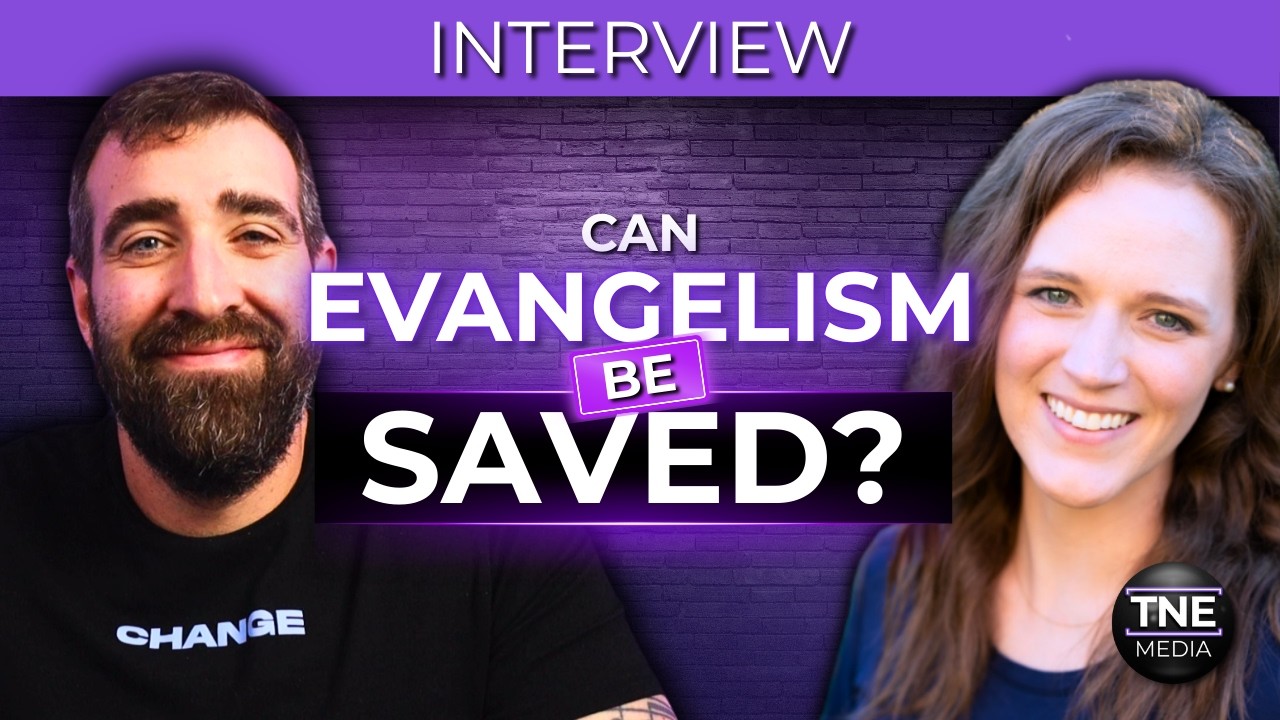
🔗 **Source:** [Reclaiming Evangelism From Fundamentalism | Blair Trygstad Stowe | TNE Podcasts](https://www.youtube.com/watch?v=0B-Yh5tIK-4)
> [!note]+ Document Notes
> tags: #evangelism #progressive-christianity #orthodoxy #orthopraxy #deconstruction #spiritual-formation #missions #worship-music #church-community #spiritual-direction
> author: The New Evangelicals
> source: YouTube
> reference: https://www.youtube.com/watch?v=0B-Yh5tIK-4
> date created: 2024-12-28 15:30
>
> # 🏷️ Title: Reclaiming Evangelism from Fundamentalism | Blair Trygstad Stowe | TNE Podcasts
>
<!-- deep-read:sections start -->
## 🧰 Action Inbox
- [H1] Explore spiritual direction as trauma-informed faith healing — for those wounded by high-control Christianity #spiritual-direction
- [H2] Develop progressive worship with high-quality music production — address the "good theology vs good music" divide #worship-music
- [H3] Practice relational evangelism through service — focus on human dignity over conversion quotas #evangelism
## 🧭 Table of Contents
- [[#📝 Summary]]
- [[#📖 Main Content]]
- [[#🗒️ Notes]]
- [[#📚 References]]
- [[#🗣️ Paraphrase]]
- [[#📰 Newsletter]]
- [[#✅ Action Items]]
- [[#🧪 Hypotheses]]
- [[#📊 Methodology]]
- [[#❓ Questions]]
- [[#🔮 Future Research]]
- [[#💡 Implications]]
- [[#🧠 Learning Styles Assessment]]
- [[#📊 Accessibility Assessment]]
- [[#🌍 DEIB Assessment]]
- [[#✅ Logical Validity]]
- [[#🛡️ DARVO Analysis]]
- [[#🎯 Conclusion]]
### 🔗 References
- [Spiritual Directors International](https://www.sdiworld.org/)
- [The Loft Church, Los Angeles](https://www.theloftchurch.com/)
## 📝 Summary
- **What happened**: Rev. Blair Trygstad Stowe, a progressive pastor and mission studies PhD, discusses reclaiming evangelism from fundamentalism
- **Why it matters**: Many progressives avoid evangelism due to trauma from coercive Christian practices, but healthy evangelism can create transformative community
- **Key stakeholders**: Progressive Christians, deconstructing evangelicals, church leaders, seminary students
- **Risks and tradeoffs**: Balancing invitation vs. coercion, maintaining orthodoxy while adapting to new contexts, rebuilding trust after religious trauma
- **Bottom line**: Evangelism as invitation rather than forced conversion can heal communities while maintaining authentic Christian witness
## 📖 Main Content
Rev. Blair Trygstad Stowe brings unique credentials to progressive Christianity: ordained United Methodist elder, PhD candidate in practical theology focusing on evangelism and mission studies, and feminist queer-affirming pastor. Her work addresses why progressive Christians often avoid evangelism despite having "good news" worth sharing.
She distinguishes between **orthodoxy** (right belief) and **orthopraxy** (right practice), arguing both must align for authentic Christianity. Historical orthodoxy shows surprising consistency with progressive values: caring for marginalized people, economic justice, and radical inclusion. The "orthodoxies" (plural) of different Christian traditions all contain this DNA of human dignity.
The conversation tackles evangelical objections to social programs by emphasizing relationship before policy: "Don't form an opinion about a social policy without getting to know the people it affects." True pro-life stance requires supporting foster care, healthcare access, and pregnancy support—not just opposing abortion.
Stowe reframes **evangelism** as proclamation of good news rather than coercive proselytism. Her complex systems approach includes: understanding salvation, creating spaces for divine encounter, allowing autonomous response to God's call, and mutual incorporation where newcomers transform existing communities.
## 🗒️ Notes
#### ⏱️ [00:00](https://youtu.be/0B-Yh5tIK-4?t=0) — [H1] Progressive Pastor Studies Evangelism
- Key idea: United Methodist pastor with PhD in evangelism serves progressive churches uncomfortable with traditional Christianity
- Evidence: "My PhD work is in practical theology with a focus in evangelism and mission studies...which is really weird as a feminist queer affirming woman clergy person"
#### ⏱️ [05:23](https://youtu.be/0B-Yh5tIK-4?t=323) — [H2] Orthodoxy as Historical Patterns, Not Absolute Truth
- Key idea: Orthodox Christianity means consistent patterns across time/place, not universal objective truth
- Evidence: "There are some key ideas like the fact that we use scripture as a source of divine knowledge that is consistent across every practice of Christianity in every time and place"
#### ⏱️ [12:45](https://youtu.be/0B-Yh5tIK-4?t=765) — [H3] Multiple Orthodoxies Reflect Cultural Contexts
- Key idea: Different Christian traditions have legitimate "orthodoxies" shaped by their historical trajectories
- Evidence: "We should say orthodoxies...because there are many strands of right belief based on a particular cultural tradition and historical trajectory"
#### ⏱️ [18:30](https://youtu.be/0B-Yh5tIK-4?t=1110) — [H1] Consistent Orthopraxy: Caring for the Marginalized
- Key idea: Throughout history, Christians are known for serving those society deems "less than human"
- Evidence: "Christians become known for taking care of people nobody else cares about...the widow, the orphan, the immigrant"
#### ⏱️ [25:15](https://youtu.be/0B-Yh5tIK-4?t=1515) — [H2] Relationship Before Policy Critique
- Key idea: Social policy opinions must be informed by relationships with affected populations
- Evidence: "Don't form an opinion about a social policy without getting to know the people it affects"
#### ⏱️ [32:40](https://youtu.be/0B-Yh5tIK-4?t=1960) — [H3] Pro-Life Consistency Requires Comprehensive Support
- Key idea: Authentic pro-life stance must address poverty, healthcare, and family support systems
- Evidence: "If you're not solving those issues, then you're not really pro-life...if you think everyone should have healing, then it shouldn't matter how that gets paid for"
#### ⏱️ [38:20](https://youtu.be/0B-Yh5tIK-4?t=2300) — [H1] Progressive Churches Avoid Evangelism Due to Trauma
- Key idea: Progressive Christians resist sharing faith due to moral injury from coercive Christian practices
- Evidence: "We're just all suffering from like a little bit of moral injury...we don't want to be people who cause harm to others"
#### ⏱️ [45:10](https://youtu.be/0B-Yh5tIK-4?t=2710) — [H2] Evangelism vs. Proselytism Distinction
- Key idea: True evangelism invites response without coercion, unlike forced conversion proselytism
- Evidence: "Proselytism is forced conversion...Evangelism is the proclamation of the good news...it acknowledges that the Holy Spirit is the one who actually convicts and converts"
#### ⏱️ [52:30](https://youtu.be/0B-Yh5tIK-4?t=3150) — [H2] Complex Systems Approach to Evangelism
- Key idea: Evangelism includes soteriology, proclamation/service, conversion opportunity, and mutual incorporation
- Evidence: "I like to think of evangelism as a complex system...includes how we think about salvation...creating spaces for people to experience that good news"
#### ⏱️ [58:45](https://youtu.be/0B-Yh5tIK-4?t=3525) — [H3] Incorporation Changes Both Newcomers and Community
- Key idea: As new people join Christian communities, both the individuals and the community transform
- Evidence: "As people come into the community of believers...how we function as a community has to shift and change based on who has joined us"
#### ⏱️ [65:20](https://youtu.be/0B-Yh5tIK-4?t=3920) — [H2] Progressive Churches Can Combine Good Theology and Music
- Key idea: Progressive communities are discovering they can invest in powerful worship experiences that heal and transform
- Evidence: "You don't have to choose between good theology and good music...if music can heal, then is it a good use of our money to pay good musicians"
#### ⏱️ [72:10](https://youtu.be/0B-Yh5tIK-4?t=4330) — [H1] Spiritual Direction for Religious Trauma Recovery
- Key idea: Spiritual directors provide therapeutic support for relationship with God outside traditional church structures
- Evidence: "It's essentially a therapist for your relationship with God...help you ask the right questions about what you need in your relationship to the divine"
## 📚 References
- [Spiritual Directors International (SDI)](https://www.sdiworld.org/)
- [The Loft Church, Los Angeles](https://www.theloftchurch.com/)
- Acts 2:42-45 - Early Christian community practices
- United Methodist Church ordination standards
## 🗣️ Paraphrase
- Progressive Christianity often avoids evangelism due to trauma from coercive religious practices, but authentic evangelism as invitation rather than forced conversion can heal communities
- Orthodox Christian belief should be understood as historical patterns across cultures rather than universal absolute truths, with multiple legitimate "orthodoxies"
- True Christian orthopraxy consistently involves caring for marginalized populations—immigrants, poor, outcasts—throughout history and across cultures
## 📰 Newsletter
**Progressive Pastors Are Reclaiming Evangelism—And It's Not What You Think**
What if the word "evangelism" didn't make you cringe? Rev. Blair Trygstad Stowe, a United Methodist pastor with a PhD in mission studies, is helping progressive Christians rediscover authentic evangelism as invitation rather than coercion.
**Key insight**: True evangelism creates spaces for divine encounter without forcing outcomes. It's about proclaiming good news, not proselytizing for conversions. Progressive churches can embrace this while maintaining their commitment to justice and inclusion.
**Practical application**: Before forming opinions on social policies, build relationships with affected communities. True pro-life stances require comprehensive support systems, not just opposition to abortion.
**Community connection**: For those healing from religious trauma, spiritual direction offers therapeutic support for your relationship with God outside traditional church structures.
Resources: [Spiritual Directors International](https://www.sdiworld.org/), [Progressive Christian Resources](https://progressivechristianity.org/), [The Wild Goose Festival](https://wildgoosefestival.org/)
## ✅ Action Items
#### Community
- **Support trauma-informed faith communities**: Fund pastoral care training for religious trauma recovery, create safe spaces for questioning and healing
- **Develop progressive worship experiences**: Invest in high-quality music and arts programs that combine excellent theology with transformative worship
- **Practice relational evangelism**: Build authentic relationships before advocating policy positions, prioritize service over conversion metrics
#### WordPress
- **Accessibility**: Ensure church websites meet WCAG standards for disabled community members, provide multiple ways to access sermon content
- **Community**: Create online discussion forums for progressive theology exploration, moderate spaces for healthy theological dialogue
## 🧪 Hypotheses
- Progressive churches that invest in high-quality worship experiences will attract more participants seeking authentic spiritual community
- Spiritual direction practices reduce religious trauma symptoms better than traditional counseling alone
- Communities practicing relational evangelism show higher retention and deeper social justice engagement than conversion-focused ministries
- Churches that embrace theological questioning create stronger long-term faith formation than those requiring doctrinal certainty
### 📊 Methodology
- **Study design**: Compare progressive churches with traditional/contemporary worship styles on attendance, giving, and community engagement metrics
- **Data sources**: Survey religious trauma survivors before/after spiritual direction interventions using validated trauma assessment tools
- **Experiments**: Pilot "orthodoxy/orthopraxy alignment" workshops in mainline denominations measuring behavior change outcomes
### ❓ Questions
- How can progressive Christian communities scale authentic worship experiences without losing theological integrity?
- What specific training do spiritual directors need to effectively support religious trauma recovery?
- Which elements of traditional evangelism can be redeemed versus which require complete abandonment?
### 🔮 Future Research
- **Theological education reform**: How do seminaries prepare pastors for post-evangelical contexts and religious trauma-informed ministry?
- **Interfaith evangelism**: Can progressive Christians engage in authentic witness while respecting other faith traditions' integrity?
- **Digital discipleship**: What online tools best support spiritual formation for geographically dispersed progressive communities?
### 💡 Implications
- **Practice**: Progressive pastors need training in both trauma-informed care and authentic evangelistic practices
- **Policy**: Church denominational policies should address religious trauma as legitimate pastoral concern requiring specialized response
- **Education**: Seminary curricula must include mission studies that acknowledge colonial harm while reclaiming healthy witness
- **Funding**: Progressive churches should budget for quality worship experiences as legitimate justice expenditure, not luxury
### 🧠 Learning Styles Assessment
Reading level estimate: 12th Grade (Complex theological concepts explained accessibly)
#### 👀 Visual learners
- Present: Video format allows seeing speaker's passion and authenticity
- Improve: Add infographics comparing evangelism vs. proselytism, orthodoxy/orthopraxy alignment diagrams
#### 🔊 Aural learners
- Present: Extended audio discussion format with engaging conversation flow
- Improve: Create 5-minute audio summary highlighting key distinctions between healthy/harmful evangelism
#### 🗣️ Verbal learners
- Present: Rich theological vocabulary with definitions, analogies to trauma recovery
- Improve: Develop glossary of technical terms (orthodoxy, orthopraxy, proselytism, spiritual direction)
#### 🧩 Kinesthetic learners
- Present: Practical examples of serving marginalized communities, policy engagement
- Improve: Create experiential workshops for spiritual direction, evangelism practice exercises
#### 🧠 Logical learners
- Present: Historical analysis of Christian practices, systematic approach to evangelism
- Improve: Develop decision trees for healthy vs. harmful religious practices, cause-effect diagrams
#### 🧑🤝🧑 Social learners
- Present: Community-focused solutions, relationship-based approaches to social issues
- Improve: Facilitate small group discussions on orthodoxy/orthopraxy alignment, peer support for religious trauma
#### 🧘♀️ Solitary learners
- Present: Spiritual direction as individual practice, personal reflection on faith journey
- Improve: Provide journaling prompts for processing religious trauma, self-assessment tools
#### 🌿 Naturalistic learners
- Present: Organic community development metaphors, ecosystem thinking about church health
- Improve: Connect environmental stewardship to Christian orthopraxy, creation care as evangelism
### 📊 Accessibility Assessment
#### Screen reader semantics
- Present: Video has spoken content accessible to audio-only consumption
- Improve: Provide detailed transcript with speaker identification, time stamps for navigation
#### Keyboard navigation
- Present: YouTube player supports keyboard controls for playback
- Improve: Ensure embedded players have visible focus indicators, skip-to-content options
#### Contrast and readability
- Present: Video content relies on audio rather than visual text
- Improve: Add closed captions with high contrast, readable font sizes for any overlay text
#### Text resizing and reflow
- Present: Platform handles text scaling in video descriptions
- Improve: Ensure supplementary materials support 200% zoom without horizontal scrolling
#### Media and captions
- Present: Full audio content available
- Improve: Professional captions with theological terms spelled correctly, downloadable transcript
#### Forms and interactions
- Present: Standard YouTube comment system
- Improve: Provide alternative ways to engage (email, accessible contact forms) for those unable to use video platform
### 🌍 DEIB Assessment
#### Cultural breadth
- Present: Discusses global Christianity, acknowledges colonial harm in missions
- Improve: Include more voices from Global South Christianity, non-Western theological perspectives
#### Inclusive language
- Present: Uses gender-neutral terms, defines technical theological language
- Improve: Provide plain-language summaries for complex concepts, avoid academic jargon
#### Neurodiversity support
- Present: Long-form discussion allows processing time, conversational rather than lecture format
- Improve: Add chapter markers for easier navigation, provide key points summary
#### Representation
- Present: Features queer-affirming female pastor, challenges male-dominated evangelical spaces
- Improve: Include diverse voices in future episodes, acknowledge various gender expressions in ministry
#### Psychological safety
- Present: Acknowledges religious trauma, validates questioning and doubt
- Improve: Provide trigger warnings for religious trauma content, include resource links for support
### ✅ Logical Validity
#### Strong reasoning
- **Deductive strength**: Premises about historical Christianity lead logically to conclusions about authentic practice
- **Inductive strength**: Multiple
---
## Full Transcript
[00:00] What's up, friends? Welcome back to the<br>[00:01] podcast. In March, we are doing women<br>[00:04] leaders in the church, and I'm so<br>[00:06] honored to bring on Reverend Blair<br>[00:08] Trigstad Stowe. She's been on uh TN<br>[00:11] Connect, our community hub, a few times.<br>[00:13] She did a whole class on the Bible. It<br>[00:15] was fantastic. And today is going to<br>[00:17] blow your mind because she is a<br>[00:19] progressive church pastor, also a<br>[00:21] theologian, and believes in evangelism.<br>[00:24] Oh yeah. Are you triggered yet? Don't<br>[00:26] be. It's okay. We talk about it. I this<br>[00:29] conversation kind of blew my mind. I<br>[00:30] think you're really going to enjoy it. I<br>[00:32] Blair is so wise and it's like I just<br>[00:34] love what she has to say. So check out<br>[00:36] this conversation. Let us know what you<br>[00:37] think and yeah, I'll talk to you all<br>[00:39] next time. See you.<br>[01:07] Well, this will be a treat. Reverend<br>[01:10] Blair Tri. No, I messed it up. I said it<br>[01:13] before we started recording. Let me try<br>[01:14] it again.<br>[01:16] >> Reverend Blair Trigstat. There we go.<br>[01:19] Yes. It's good to have you on the<br>[01:21] podcast. Thanks for making time. It<br>[01:22] means the world.<br>[01:23] >> Yeah. I'm glad to be with you.<br>[01:25] >> You did a um a class for our TN connect<br>[01:30] community uh that I was like just kind<br>[01:33] of hosting and it was so good. It was so<br>[01:36] fantastic and kind of just like just<br>[01:38] like the history of kind of I don't know<br>[01:41] just like<br>[01:42] it gave me like a real sense of context<br>[01:45] for kind of like where we're sitting and<br>[01:46] like how biblical inherency has just how<br>[01:49] so many of these things have developed<br>[01:50] over time. give me, you know, give the<br>[01:52] audience a little bit of background like<br>[01:53] what got you into this work? I'm just so<br>[01:55] curious.<br>[01:56] >> Yeah. So, my<br>[01:59] role in the world is twofold. I'm a<br>[02:02] pastor and I'm a theologian. And my<br>[02:06] pastoral work is within the United<br>[02:08] Methodist tradition. I'm an ordained<br>[02:09] elder. I've served in local church<br>[02:11] ministries. I've planted churches. I've<br>[02:13] served in small rural churches and big<br>[02:15] city churches. Um, and so every setting<br>[02:19] that I've been in,<br>[02:20] >> people aren't sure what to do with the<br>[02:22] Bible, particularly in<br>[02:24] >> right<br>[02:25] >> um, more progressive church spaces,<br>[02:28] which is where I come from. That's the<br>[02:30] church I was raised in, and that's the<br>[02:31] church kind of spaces that I serve in.<br>[02:34] >> And discomfort with the Bible is just<br>[02:37] one piece. I' I've also found there's a<br>[02:40] lot of just discomfort with traditional<br>[02:42] Christianity in general and wanting to<br>[02:46] be followers of Jesus, wanting to be<br>[02:48] part of a church community, wanting to<br>[02:50] be part of a historic tradition, but<br>[02:53] then feeling really wonky about the<br>[02:56] things that actually go along with that.<br>[02:58] And so that discomfort led me back to se<br>[03:02] or not to seminary, but to doctoral<br>[03:04] studies. Um, and my PhD work is in<br>[03:06] practical theology with a focus in<br>[03:09] evangelism and mission studies or<br>[03:11] missology,<br>[03:12] which is really weird as a feminist<br>[03:16] queer affirming<br>[03:18] um,<br>[03:19] >> non-eangelical<br>[03:20] >> woman clergy person,<br>[03:22] >> right?<br>[03:22] >> Um, to tell people that I study<br>[03:24] evangelism and mission,<br>[03:26] >> right? I'm like, I have questions.<br>[03:29] >> And what I'm grateful for is in the<br>[03:32] spaces that I've studied. Yeah.<br>[03:34] >> Um, mission in particular, the study of<br>[03:37] mission takes history very seriously<br>[03:40] >> and how we understand the movement of of<br>[03:44] the church around the world, where it<br>[03:46] went wrong and how it went well is what<br>[03:49] guides what we do into the future. And<br>[03:51] so I have training as a historian as<br>[03:54] well as a theologian. And you add that<br>[03:57] on top of the pastoral kind of practices<br>[03:59] and conversations. And I I feel like I<br>[04:04] kind of fit in this nice little niche<br>[04:05] where I can I can or as you said, orient<br>[04:09] us as to how we got here, help us sort<br>[04:12] through what's actually happening around<br>[04:13] us and start to chart a path forward<br>[04:16] that um that feels authentic and um<br>[04:19] spiritually grounded. I mean yeah your<br>[04:21] credentials you know speak for<br>[04:23] themselves and it's it's so needed you<br>[04:26] know one of the things that I am not is<br>[04:28] I am not a scholar I am not an academic<br>[04:31] I was always a creative I did some<br>[04:33] college you know but I like<br>[04:34] conversations and hosting this podcast<br>[04:36] for legitimately now uh five years uh<br>[04:40] this month has put me in conversation<br>[04:43] with so many amazing people who have<br>[04:46] this um this training to help us make<br>[04:50] sense of how we got here. And I think<br>[04:52] one of the things that I learned is that<br>[04:55] evangelicalism, and please push back if<br>[04:57] you think I'm wrong on this. I'm always<br>[04:59] open to to my guests correcting me on<br>[05:00] the show. Um, my flavor of<br>[05:03] evangelicalism was incredibly<br>[05:05] ahistorical,<br>[05:07] >> right? I was never introduced to the<br>[05:09] church calendar. I thought Lent was for<br>[05:12] the Catholics only and like they're<br>[05:13] heretics. I wasn't aware that really<br>[05:16] white evangelical mega megaurch<br>[05:18] structure is pretty recent. It's a<br>[05:21] pretty recent iteration of church of of<br>[05:23] of the church. I mean, even the idea of<br>[05:25] the church growth movement, right? Had<br>[05:27] no clue that it was kind of based on<br>[05:29] like homogyny like homogeneous people<br>[05:32] groups, you know, like, hey, we can grow<br>[05:34] better if we kind of stay in our own<br>[05:35] lanes, you know, ethnically. I'm like,<br>[05:38] whoa, didn't know that. So folks like<br>[05:40] yourself really help us make sense that<br>[05:43] no, there's actually a tradition that<br>[05:45] we're all kind of a part of whether we<br>[05:46] realize it or not. And the question is<br>[05:48] what are we going to do with that<br>[05:49] knowledge once we're aware of it? Does<br>[05:51] that make sense?<br>[05:52] >> Yeah, absolutely. And I think you're<br>[05:53] right that in contemporary western<br>[05:56] evangelicalism<br>[05:57] there is a resistance to history um<br>[06:01] because the history doesn't look good<br>[06:03] like it doesn't feel good. like there's<br>[06:06] a lot of damage and baggage and violence<br>[06:08] that are part of that. And uh if you<br>[06:13] look further back, what you find is<br>[06:16] actually a lot of orthodox Christianity<br>[06:19] looks a lot more like progressive<br>[06:21] Christianity as it's practiced today.<br>[06:23] And folks in more conservative, high<br>[06:27] control camps don't want folks to know<br>[06:29] that.<br>[06:30] Okay, this actually is a great question<br>[06:32] I've always wanted to ask someone and<br>[06:34] you are the person for this question.<br>[06:36] So, you use the term Orthodox<br>[06:37] Christianity in in the spaces I grew up<br>[06:40] in. It's so interesting because a lot of<br>[06:42] people will appeal to being an Orthodox<br>[06:45] Christian as a contemporary evangelical<br>[06:47] in America, which is kind of ironic in a<br>[06:49] lot of ways. What does it mean to be an<br>[06:52] Orthodox Christian? Let me just throw<br>[06:53] out my thesis and have you respond to<br>[06:55] it. The only the only<br>[06:58] um perception I can gather after<br>[07:00] interviewing so many people is that the<br>[07:02] answer to that question is who the hell<br>[07:04] knows like it depends on who you ask at<br>[07:06] what point in church history and what<br>[07:08] culture and what schism etc. So when you<br>[07:10] say that term right orthodox<br>[07:12] Christianity which I think is you know<br>[07:13] it's it's a legit term. What do you mean<br>[07:15] by that and does that mean that for you<br>[07:18] to be considered a Christian you have to<br>[07:20] believe or do these certain things? Is<br>[07:22] that what orthodox means? Break this<br>[07:23] down for me. I've always wanted to ask<br>[07:25] someone and never got the chance to<br>[07:26] until now. So, I'm just so curious.<br>[07:28] >> Yeah. So, orthodox is used uh in two<br>[07:31] different ways. It's it's a concept just<br>[07:33] meaning right belief. Right. Right<br>[07:36] belief um as opposed to or in alignment<br>[07:38] with orthopraxi which is right practice.<br>[07:42] >> And then there's orthodox which is in<br>[07:45] reference to the historical trajectory<br>[07:48] of the eastern branch of Christianity.<br>[07:52] And when I use the term Orthodox, what<br>[07:55] I'm usually referring to is basically as<br>[07:58] far back as we can go in the history of<br>[08:01] Christianity. What do we see as the<br>[08:03] consistent patterns?<br>[08:04] >> Yeah. Okay.<br>[08:05] >> Of of belief. And that may be uh slight<br>[08:10] as you said slightly different in in<br>[08:12] different places and different times.<br>[08:14] But there are some key ideas like the<br>[08:18] fact that we use scripture as a source<br>[08:20] of divine knowledge<br>[08:21] >> that is consistent across every practice<br>[08:24] of Christianity in every time and place.<br>[08:27] And so I would say that is an orthodox<br>[08:29] belief because it carries this<br>[08:31] historical<br>[08:33] tradition and consistency<br>[08:35] across time and place.<br>[08:38] >> Okay. Can I ask you a question about<br>[08:40] that because I'm absolutely again just<br>[08:42] really curious. So are you saying that<br>[08:44] because my understanding is that the<br>[08:45] Catholic tradition has different books<br>[08:48] in their Bibles to a degree and Eastern<br>[08:49] Orthodox can be that way as well. So are<br>[08:51] you saying that like that's a very broad<br>[08:53] term that can be interpreted based on<br>[08:55] the tradition of what they deem their<br>[08:56] their holy scriptures? How does that<br>[08:58] break down? I I love that. That's<br>[08:59] beautiful. What does that mean in the<br>[09:01] grand scheme of like how wide the<br>[09:02] Christian tradition is even in terms of<br>[09:04] the of the of the scriptures?<br>[09:06] >> Yeah. And I I think the idea of the<br>[09:09] scripture is the orthodox piece that we<br>[09:12] all share what we say ecumenically. So<br>[09:14] across denominations.<br>[09:16] >> But then you might say<br>[09:18] >> in Catholic orthodoxy in right belief<br>[09:21] within Catholicism and Catholic<br>[09:23] orthopraxy in the actual practices of<br>[09:26] Catholicism<br>[09:28] this set of books is what they<br>[09:30] acknowledge. But in orthodox uh<br>[09:33] Protestantism, we have a different set<br>[09:35] of books and we don't have the apocrypha<br>[09:37] and we don't acknowledge that as holding<br>[09:39] the same weight uh as the Catholic<br>[09:43] tradition does. And so I think that<br>[09:45] there when anytime someone claim tries<br>[09:48] to claim something for all of<br>[09:49] Christianity,<br>[09:50] >> yeah,<br>[09:50] >> they're probably wrong, right? So there<br>[09:53] even within one even within the use of<br>[09:56] the word orthodox<br>[09:58] there is no one single correct orthodoxy<br>[10:05] because even as I say we all turn to<br>[10:07] scripture there was a period of<br>[10:09] Christian practice where there was no<br>[10:11] new testament<br>[10:12] >> right<br>[10:13] >> right so<br>[10:14] >> right<br>[10:14] >> is<br>[10:15] >> exactly<br>[10:16] >> are there exceptions there basically<br>[10:17] there are always going to be some kind<br>[10:20] of contextual challenge<br>[10:23] to anything we claim as ultimate<br>[10:25] universal or continuous truth. And so we<br>[10:28] do the best we can again in observing<br>[10:32] patterns of consistency, but it doesn't<br>[10:34] mean there's very little within<br>[10:37] Christianity that has a perfect<br>[10:39] consistency.<br>[10:42] >> Okay. You mentioned that that you grew<br>[10:44] up in more progressive church spaces. Is<br>[10:46] that correct? Okay. Yeah. So, let me,<br>[10:48] you know, as you're talking, I just had<br>[10:50] an epiphany that I think is worth<br>[10:52] expressing to the audience because I<br>[10:53] think we we we we missed this. Growing<br>[10:55] up evangelical fundamentalist, what they<br>[10:57] teach you is essentially they b they<br>[10:59] borrow from modernism and they give you<br>[11:01] this idea of like what they're talking<br>[11:03] about is like empirical objective truth<br>[11:06] that exists outside of your mind. Like<br>[11:09] the earth is is round, right? And<br>[11:11] therefore the Bible is inherent. They're<br>[11:13] like the same thing. And so I think for<br>[11:15] for the longest time I was getting<br>[11:17] tripped up on the idea of orthodoxy<br>[11:19] being this objective standard beyond<br>[11:23] anyone's perception that existed in<br>[11:25] Christianity. But what I heard you<br>[11:27] saying and grant please correct me is<br>[11:28] that really orthodoxy is right belief<br>[11:30] given the tradition that we're talking<br>[11:32] about. So what is orthodoxy for the<br>[11:33] Protestant church or for the Catholic<br>[11:35] church whatever it might be. And then we<br>[11:37] can look through the historical<br>[11:39] framework of that and see patterns that<br>[11:41] are like a general rule of thumb with<br>[11:44] given exceptions at any given time. Is<br>[11:46] that a decent way to explain that?<br>[11:49] >> Yeah, I think your acknowledgement too<br>[11:51] that the concept of certainty within<br>[11:53] Christianity is absolutely a a product<br>[11:56] of the enlightenment. Um like we didn't<br>[11:58] have to argue about absolute truths sort<br>[12:01] of prior to that philosophical<br>[12:03] development, right? Um,<br>[12:06] and now we now we need to because we<br>[12:09] have a globalized intercultural<br>[12:12] blended constantly encountering conflict<br>[12:16] world. And so the idea that one<br>[12:20] objective truth exists for all time, in<br>[12:23] all places, for all people, it just<br>[12:25] doesn't work with our lived reality. And<br>[12:28] so that's one of my favorite things<br>[12:30] about being a practical theologian is<br>[12:31] that when I'm trying to figure out what<br>[12:33] is orthodox, I don't just look at what<br>[12:36] have we always taught or what do we<br>[12:37] believe. I also look at what is the<br>[12:39] orthopraxy, what has been the actual<br>[12:41] practice of the church or what is the<br>[12:43] practice of the church today and how are<br>[12:46] those two things interacting with each<br>[12:48] other. And so within practical theology,<br>[12:50] we call that practice. So the<br>[12:52] interaction between beliefs and<br>[12:55] practices and how they inform and change<br>[12:57] each other. And in alignment with that<br>[13:01] >> in the contemporary study of of mission<br>[13:04] mission studies we rarely refer to it as<br>[13:08] uh mission studies anymore especially in<br>[13:11] the more secular spaces we call it world<br>[13:14] Christianity the study of world<br>[13:15] Christianity or world Christianities<br>[13:19] >> because there's an acknowledgement that<br>[13:20] there is no single universal practice of<br>[13:23] Christianity and I would say when we<br>[13:26] think about orthodoxy<br>[13:28] we should say orthodoxies, right?<br>[13:30] Because there are many strands of right<br>[13:34] belief based on a particular cultural<br>[13:37] tradition and historical trajectory of<br>[13:40] people struggling to follow Christ and<br>[13:43] engage in Christian ethics and practices<br>[13:46] in their time and place.<br>[13:48] >> I just had one of those moments where<br>[13:50] it's like duh what what you're saying,<br>[13:53] but I never put it together until you<br>[13:54] said it. I'm like right that makes<br>[13:56] complete sense and I think even<br>[13:58] subconsciously I understood that but it<br>[14:00] didn't click you know consciously and<br>[14:03] that you know I had the pleasure of<br>[14:04] interviewing Dr. Adam Clark, he's over<br>[14:06] at Xavier University, mentored by James<br>[14:08] Cohen directly. And um you know, he's<br>[14:10] become a good friend. And the first time<br>[14:12] I had him on the show, he said that he<br>[14:13] goes, "It's not Christianity, it's<br>[14:15] Christianity." And I was like,<br>[14:17] >> "My mind is blown." Because again, like<br>[14:18] growing up in in what I call is the<br>[14:20] basement of Christianity, this house,<br>[14:22] you you're just taught that like this<br>[14:24] basement that you exist in is all there<br>[14:27] is. And anything above ground is just<br>[14:30] either heretical or it's it's secular or<br>[14:32] it's evil. And it's it's even so many<br>[14:35] years later, I'm still finding roots of<br>[14:36] that in my own psyche of like, you're<br>[14:38] right, Orthodoxies, depending on what<br>[14:40] tradition we're talking about. So maybe<br>[14:42] the next question then naturally would<br>[14:44] be, let's talk about orthopraxy. And I<br>[14:46] love this because I I I often tell<br>[14:48] people I'm very pragmatic, you know,<br>[14:50] okay, if if all we do is talk about this<br>[14:52] stuff and nothing changes, what is the<br>[14:53] point? Like I've I I've kind of gone<br>[14:55] through my phase of sitting around a<br>[14:56] fire with guys and smoking cigars and<br>[14:58] talking about predestination. I've done<br>[15:00] that already. Okay, I get it. But like<br>[15:01] who cares if it's not changing anything,<br>[15:03] right? So, so maybe I I would I I would<br>[15:06] love to hear from you. What are some<br>[15:08] consistent orthopraxes we see throughout<br>[15:11] church history that that are might be<br>[15:13] relevant for us today to think about and<br>[15:15] talk about.<br>[15:17] >> So, the one that always jumps to my mind<br>[15:18] is what we see in the book of Acts right<br>[15:22] after Pentecost as uh Peter preaches to<br>[15:25] the crowd. The next passage, Acts 2<br>[15:29] 42-45, I think, is that the community<br>[15:33] came together and shared in the breaking<br>[15:36] of the bread and shared with one another<br>[15:38] so that none among them had need.<br>[15:41] >> And then we see this consistently<br>[15:43] through these next few chapters of the<br>[15:45] book of Acts. And then we also see this<br>[15:47] consistently as Christianity spreads<br>[15:49] around the world is that Christians<br>[15:51] become known for taking care of people<br>[15:53] nobody else cares about.<br>[15:56] And in that way have started revolutions<br>[16:00] in all sorts of places. Um you know<br>[16:03] revolutions within Indian culture by<br>[16:06] giving humanity back to the dolls the<br>[16:08] the lowest class in the cast system of<br>[16:10] Hinduism. Um by empowering women by uh<br>[16:14] creating uh schools for children in all<br>[16:18] sorts of different places around the<br>[16:20] world. um colony, leper colonies, right?<br>[16:22] Like that they would go into these<br>[16:25] spaces where the rest of the world had<br>[16:27] shoved people aside because they were<br>[16:30] too dangerous and Christians would be<br>[16:32] the ones who would go in and care for<br>[16:34] them and heal their wounds and treat<br>[16:37] them like humans. And so this pursuit of<br>[16:40] human dignity is something that I see as<br>[16:43] really consistent even in the Hebrew<br>[16:45] scriptures, right? The the widow, the<br>[16:47] orphan, the immigrant. That's a constant<br>[16:50] call and refrain that the people of God<br>[16:52] are supposed to care for those groups.<br>[16:54] And then we see that in the New<br>[16:56] Testament and then we see that in early<br>[16:57] Christian practice and then we see that<br>[16:59] in the spread of the mission movement<br>[17:01] all around the world. So<br>[17:04] >> service particularly with those society<br>[17:09] has deemed as less than other or<br>[17:13] nonhuman<br>[17:16] consistently that is where Christians<br>[17:17] show up.<br>[17:19] and gain attention for doing something<br>[17:22] nobody else is doing.<br>[17:26] >> So, I'm going to throw to you the<br>[17:28] objection I hear from my own former<br>[17:31] tribe around what you just said when it<br>[17:33] comes to our current moment. I would<br>[17:34] just I would love your wisdom on this uh<br>[17:37] and how you would respond. And the<br>[17:39] objection goes something like this. Hey,<br>[17:41] I agree. We should do all those things,<br>[17:43] but it's the church's job to take care<br>[17:45] of these people, not the the<br>[17:47] government's job. So, you know, feeding<br>[17:50] hungry kids to the school lunch program,<br>[17:51] not the government's job. It's the<br>[17:53] church's job. Uh, yeah, we should be<br>[17:55] kind to immigrants, but laws still<br>[17:57] matter, right? The government, Romans 13<br>[18:00] bears the sword for for people who are<br>[18:02] breaking the law, but the church should<br>[18:04] still love those people. when you and<br>[18:06] I'm sure you've heard these objections<br>[18:07] or these responses before because you<br>[18:09] are swinging this swing in the same<br>[18:11] American culture I am right now. What do<br>[18:13] you how do you think when you hear that<br>[18:15] what do you think and how do you tend to<br>[18:17] respond to those kinds of objections?<br>[18:22] >> Yeah. The first is don't form an opinion<br>[18:24] about a social policy without getting to<br>[18:27] know the people it affects.<br>[18:29] So if if your stance is that the church<br>[18:32] is the place or the people who should be<br>[18:35] performing acts of charity and service,<br>[18:39] then do that and do it for the good of<br>[18:43] the people who are receiving your<br>[18:45] kindness, not to make yourself feel<br>[18:47] better. And do it based on what the<br>[18:50] people who are most in need, what they<br>[18:53] express as what that care looks like. So<br>[18:56] if you can engage in charity in that way<br>[18:58] where you are humbling yourself,<br>[19:01] listening to the voices of the<br>[19:03] dispossessed, allowing them to guide<br>[19:05] what liberation and recovery looks like.<br>[19:08] >> If you are actively engaged in those<br>[19:10] relationships<br>[19:12] and you still want to hold a policy<br>[19:16] that would punish them,<br>[19:19] >> I don't know what to do with you at that<br>[19:21] point.<br>[19:23] But the the biggest<br>[19:27] ch way to change people's political<br>[19:29] perspectives is to put them in<br>[19:31] relationship with the people that<br>[19:33] policies affect.<br>[19:34] >> Yeah.<br>[19:36] >> So this is where orthodoxy and<br>[19:38] orthopraxy right we have to line them<br>[19:40] up. If you say that the church is the<br>[19:42] place where these people should be<br>[19:43] served then you get out there and serve<br>[19:45] them.<br>[19:47] Show me like put your put your money<br>[19:50] where your mouth is and show me that you<br>[19:52] know how to do it and then come back and<br>[19:55] talk to me about what you think the<br>[19:56] general policy should be. M<br>[19:58] >> and people who do that, like especially<br>[20:01] in the pro-life movement, folks who are<br>[20:04] actively engaged in foster care, in um<br>[20:07] caring for unwed moms, in um child<br>[20:11] advocacy, in uh pregnancy care,<br>[20:15] expanding health care, like doing things<br>[20:17] that actually make it possible to avoid<br>[20:20] abortion as an option. like make it<br>[20:23] possible for people to keep babies that<br>[20:26] want to keep them and they still want to<br>[20:28] hold a pro-life stance politically. Like<br>[20:31] I have much more respect for them<br>[20:34] >> than I do for folks who are trying to<br>[20:37] hold a pro-life stance, but won't do<br>[20:39] anything to actually make it possible<br>[20:42] for folks in poverty or unwed folks or<br>[20:47] whatever other difficult circumstances<br>[20:49] there are that require someone or lead<br>[20:52] someone to turn towards an abortion. If<br>[20:55] you're not solving those issues,<br>[20:58] then you're not really pro-life. So<br>[21:00] there's a there's like a consistency,<br>[21:03] >> right? If you think we should feed kids,<br>[21:05] then it shouldn't matter who feeds them,<br>[21:07] >> right?<br>[21:09] >> Like if you think everyone should have<br>[21:11] healing, then it shouldn't matter how<br>[21:13] that gets paid for.<br>[21:16] >> If you think everyone deserves human<br>[21:18] dignity, then we should offer human<br>[21:20] dignity regardless of some if someone<br>[21:22] has broken the law or not.<br>[21:24] >> Yeah. Yeah.<br>[21:25] >> I mean, the Bible is full of people who<br>[21:26] broke the law. Paul and Peter spend like<br>[21:28] half the book of Acts in jail.<br>[21:30] >> Yep. Yep.<br>[21:31] >> Jesus was executed by the state. Like<br>[21:33] >> Right. Right.<br>[21:34] >> So I when folks are coming with that<br>[21:38] objection,<br>[21:40] then my turn is always to encourage get<br>[21:43] out there and do the practice.<br>[21:45] >> If that's the position you're going to<br>[21:46] hold, then go out there and do the<br>[21:48] practice and then come back and we can<br>[21:49] have another conversation about it.<br>[21:51] >> Yeah, that's that's really good. I think<br>[21:52] this was for a lot of people, including<br>[21:55] myself, one of the things that led us to<br>[21:57] quote unquote deconstruct um right<br>[21:59] >> this kind of theology because it wasn't<br>[22:01] consistent. Like I I had this epiphany.<br>[22:03] I don't know. I I was still in the<br>[22:04] pro-life movement. I even marched for<br>[22:06] life. I used to wear a shirt when I was<br>[22:08] 15 and this is man for people out there<br>[22:10] who know the term rock for life. You're<br>[22:12] going to have a flashback to this.<br>[22:13] There's a whole organization called Rock<br>[22:14] for Life, part of the hardcore like<br>[22:16] Christian underground music scene. And<br>[22:18] they sold this shirt that I wore that<br>[22:21] said, I mean in all caps, you couldn't<br>[22:23] miss it. Abortion is homicide. And on<br>[22:26] the back it had three statements. It<br>[22:28] said, "You will not silence my message.<br>[22:30] You will not mock my God. You will stop<br>[22:32] killing my generation." That was kind of<br>[22:34] the perspective I I grew up in, right?<br>[22:36] And so as I got older, I had this<br>[22:38] thought where I'm like, "Wait a second.<br>[22:39] If we as a church really believed this<br>[22:43] that like you know that there's a<br>[22:44] homicide happening every single time<br>[22:46] pragmatically wouldn't we do whatever we<br>[22:50] could to pass any kind of legislation to<br>[22:54] minimize that from happening even if we<br>[22:57] didn't like it personally. Like, you<br>[22:59] know, if we know that that that poverty<br>[23:02] and access to health care and<br>[23:03] contraceptives all contribute to the<br>[23:05] amount of like unneeded medical<br>[23:07] abortions, so to speak, wouldn't we want<br>[23:10] to promote all those things and and<br>[23:12] solve them and give women<br>[23:14] contraceptives? But no, instead you're<br>[23:16] taught, well, just wait till you're<br>[23:18] married and you'll be all good and let's<br>[23:19] make this illegal. So, I I agree with<br>[23:22] you. Like, a lot of us saw that<br>[23:23] hypocrisy and thought, wait a second, is<br>[23:25] it really about this or is there<br>[23:26] something else going on?<br>[23:28] Right. Yeah. So that is just a<br>[23:32] consistent uh pursuit I think in my<br>[23:37] branch of Christianity having been<br>[23:39] raised in the pro progressive church is<br>[23:41] that we're constantly doing this<br>[23:42] practice process of asking like is the<br>[23:45] thing we're saying does that actually<br>[23:47] make sense on the ground in how people<br>[23:50] are experiencing God and how people are<br>[23:53] experiencing God are we allowing that to<br>[23:54] affect and inform the way that we talk<br>[23:57] about God.<br>[24:00] And if we're not, then our orthodoxy and<br>[24:03] our orthopraxy are probably not aligned.<br>[24:05] >> Yeah. No, that makes a lot of sense. And<br>[24:07] I think a lot of us grew up in a space<br>[24:09] that was so disconnected with those two<br>[24:10] things. Our orthopraxy orthodoxy did not<br>[24:13] really align. And it didn't align with<br>[24:15] like the most basic things I was taught<br>[24:17] as a kid that, you know, to uh that the<br>[24:19] most important thing is to love God and<br>[24:20] love your neighbor as yourself. And I'm<br>[24:22] like,<br>[24:22] >> guys, like wearing a mask is not<br>[24:24] tyranny. It's just me loving my<br>[24:25] neighbor. This isn't a political<br>[24:26] statement. I'm just trying to do<br>[24:27] whatever I can do to, you know, do my<br>[24:29] part, right? So, I am curious and, you<br>[24:32] know, you grew up in this progressive<br>[24:33] tradition, which by the way, props to<br>[24:34] you. No fear of burning in hell forever.<br>[24:36] That must be real nice because a lot of<br>[24:38] us out there woo, let me tell you, we<br>[24:40] had some vivid<br>[24:41] >> other kinds of trauma, just not<br>[24:42] religious drama, you know.<br>[24:44] >> Fair, fair. So, you know, when you see<br>[24:48] what when was the first time you<br>[24:50] encountered the the flavor of<br>[24:53] Christianity that is animating the<br>[24:54] Christian nationalism that we see now?<br>[24:56] Like I'm sure at some point you had to<br>[24:57] encounter it. What was that like and<br>[24:58] what were your first thoughts? I'm so<br>[25:00] curious.<br>[25:01] >> Yeah, I was almost in high school the<br>[25:03] first time I really encountered sort of<br>[25:06] exclusivist Christianity and it actually<br>[25:09] was within my own denomination. So the<br>[25:11] United Methodist Church has famously had<br>[25:13] a a big great divorce over queer<br>[25:16] inclusion.<br>[25:16] >> And I grew up in a community where we<br>[25:19] had queer folks from<br>[25:21] >> my childhood. So, like I've never I<br>[25:23] didn't know a Christianity that didn't<br>[25:24] include gay folks<br>[25:26] >> as I was growing up.<br>[25:27] >> Um, and<br>[25:29] >> it was when I was almost in high school<br>[25:30] that we got noticed that another United<br>[25:32] Methodist Church had reported us to the<br>[25:35] IRS um for being too politically engaged<br>[25:39] because we were flying rainbow flags and<br>[25:41] marching in the pride parade.<br>[25:44] >> And I was I just genuinely I was like,<br>[25:47] what are they mad about? like we're just<br>[25:49] celebrating all God's children. All<br>[25:51] people are welcome here. This is the<br>[25:53] holy ark where all God's people come to<br>[25:55] be known and loved. Like and I I truly<br>[26:00] did not know until I was like 14, 15<br>[26:04] years old that Christians had a problem<br>[26:06] with gay people. And then and then I<br>[26:08] started reading more um evangelical like<br>[26:13] magazines and like I've read Brio<br>[26:15] magazine and I was listening to CCN. So<br>[26:18] like<br>[26:19] >> you know like I started having these<br>[26:20] exposures to like more expansive<br>[26:23] >> experiences of evangelical Christianity<br>[26:25] and then in college<br>[26:27] was in there was no progressive<br>[26:29] Christian ministry on my campus. So, I<br>[26:31] went to Campus Crusade for Christ and<br>[26:33] then the Navigators and I got kicked out<br>[26:35] of both of them for being like, "Why are<br>[26:37] you guys so against gay people? I really<br>[26:39] I really don't understand. Like, I've<br>[26:41] read through all the scriptures that you<br>[26:43] read through and they that doesn't<br>[26:45] actually make any sense." And so, I just<br>[26:47] kept getting kicked out of evangelical<br>[26:49] spaces. Um,<br>[26:51] >> that's so funny.<br>[26:52] >> And then I decided to go to seminary by<br>[26:54] accident and became a pastor. But um<br>[26:59] but it was it was it it just it I guess<br>[27:03] it was sort of like I don't know it was<br>[27:05] an awakening but in the opposite<br>[27:07] direction<br>[27:08] >> and and it helped it actually deepened<br>[27:11] my faith<br>[27:12] >> right<br>[27:13] >> to be challenged in those ways to and I<br>[27:16] did ask myself like am I in the right<br>[27:17] camp? Are queer people really beloved by<br>[27:19] God? Can women really be pastors? Like<br>[27:21] what are the objections if so many<br>[27:24] people hold these objections? Yeah. And<br>[27:26] I went through the work. I did the work.<br>[27:27] I did the Bible study. And I was like,<br>[27:29] "Nah, the way I've been doing it, I<br>[27:32] think is right,<br>[27:33] >> at least for this moment and in this<br>[27:35] place and amongst these people."<br>[27:38] >> And that actually sort of caused me to<br>[27:40] double down and be like, "Hey, this way<br>[27:41] of doing Christianity, I think is really<br>[27:43] important." And not enough people know<br>[27:44] about it.<br>[27:45] >> And we got to figure out as a<br>[27:47] progressive church, why is this the best<br>[27:49] kept secret in town? that there are<br>[27:51] spaces of like genuine love and radical<br>[27:54] inclusion and justice seeking faith that<br>[27:58] that it exists and we're like keeping it<br>[28:00] a secret from everyone. That seems<br>[28:01] really dumb.<br>[28:02] >> Look, that that is that is the<br>[28:04] challenge. I I talked to um Reverend<br>[28:06] Caleb Lions um a few weeks ago and I<br>[28:08] was, you know, we we hit it off and I<br>[28:10] was like, "Look, Caleb, I said this on<br>[28:12] the air. I said, I got to ask you a<br>[28:13] question. Don't take it personal, but I<br>[28:15] said, "Why are progressive churches so<br>[28:17] boring and why aren't you guys out there<br>[28:18] more?" Like I'm just like I I I I fully<br>[28:21] acknowledge as a as a former<br>[28:23] professional drummer who drumed in like<br>[28:25] megaurch world for a little bit in that<br>[28:27] kind of environment. If I could find a<br>[28:29] progressive affirming church that had<br>[28:32] that kind of production, I'd be there<br>[28:34] all the time. I'd be hooked. But and<br>[28:37] again, I'm not knocking the liturgy or,<br>[28:39] you know, tradition. It's a beautiful<br>[28:40] thing. But my brain has already been<br>[28:42] wired and it just it does not do it for<br>[28:44] me. And so I am curious what is because<br>[28:47] you studied missions or I forgot the<br>[28:48] other term that you use but you you<br>[28:50] studied this stuff. Help me understand<br>[28:52] how when you went to that college it was<br>[28:54] only things like crew and there were no<br>[28:57] progressive ministries. Is it because<br>[28:59] progressive Christianity broadly<br>[29:01] speaking doesn't feel the need to<br>[29:02] proilitize like how evangelicals do?<br>[29:05] Like help me understand that riddle<br>[29:06] because I'm with you. I'm like this is<br>[29:07] the best kept secret in town. I don't<br>[29:10] have to give up loving God. I I I I I<br>[29:13] don't have to choose between loving God<br>[29:14] or loving my neighbor. I can integrate<br>[29:15] them. Like, wow. Mind-blowing. Help me<br>[29:18] understand what's going on.<br>[29:20] >> Well, this is actually why I went to do<br>[29:21] a PhD. And the first question in my<br>[29:25] doctoral work is like, why do<br>[29:27] progressive Christians have such an ick<br>[29:29] when we talk about evangelism? And why<br>[29:31] are so many of them resistant to talk<br>[29:33] about their faith<br>[29:34] >> with other people? Um why is like people<br>[29:37] don't even want to say Jesus in some of<br>[29:39] the churches that I've pastored in? Um,<br>[29:41] and like where does that come from? And<br>[29:44] >> it comes from the baggage of the harm<br>[29:47] that has been done in the name of Christ<br>[29:48] in imperial movements. It comes from uh<br>[29:52] vestigages of racism in the white<br>[29:54] American and and western church. Um it<br>[29:57] comes from a high desire for pluralism<br>[30:01] and tolerance in a democratic society<br>[30:04] where uh you know<br>[30:07] we value contextuality and even so like<br>[30:11] I you know we were talking about<br>[30:12] abortion. I'm I'm pro-choice and I<br>[30:15] became even more pro-choice when I had<br>[30:17] babies because of such a life-changing<br>[30:20] event. Um, but like the progressive<br>[30:23] stance is if you don't want an abortion,<br>[30:27] then don't get one, but don't stop other<br>[30:29] people from doing it. And in that same<br>[30:31] way, I think people have come to say<br>[30:32] like, if I want to be a Christian,<br>[30:34] that's fine, but it would actually be<br>[30:36] unethical for me to encourage other<br>[30:38] people to be Christians,<br>[30:40] >> right? And what I think is lost is that<br>[30:43] for so long the most visible version of<br>[30:47] Christianity was a proitizing violent<br>[30:51] Constantinian Christianity.<br>[30:53] >> Yes.<br>[30:53] >> And basically we're just all suffering<br>[30:55] from like a little bit of moral injury.<br>[30:57] It's like a little bit of trauma that we<br>[30:59] carry with us that we don't want to be<br>[31:02] people who cause harm to others. And<br>[31:05] since so much harm has been done in the<br>[31:07] name of Christ, we haven't found a<br>[31:09] middle way to talk about Jesus and to<br>[31:12] talk about our faith and how we practice<br>[31:13] it without causing some kind of<br>[31:17] discomfort or harm. But I think that<br>[31:18] there's a difference between discomfort<br>[31:20] and harm. And that's threading the<br>[31:23] finding the way to thread the needle of<br>[31:25] inviting people into an uncomfortable<br>[31:27] reflection of<br>[31:29] >> what would my life look like in<br>[31:31] fellowship with other Christians? What<br>[31:33] would my life look like if I actually<br>[31:36] follow Jesus? What would my life look<br>[31:37] like if I prioritized uh being part of a<br>[31:40] worshshiping community and acts of<br>[31:42] service? And that honestly spiritual<br>[31:45] formation is not comfortable. Growing,<br>[31:48] learning, changing is not comfortable.<br>[31:51] >> Yeah.<br>[31:51] >> But it doesn't mean it's harmful. And so<br>[31:54] that is where a lot of my work is is how<br>[31:56] can we both invite folks who've come out<br>[31:59] of really harmful Christianity to<br>[32:01] reclaim and rebuild something that is<br>[32:04] beautiful and meaningful and then also<br>[32:06] how can we continue to invite people<br>[32:08] into this great beautiful historical<br>[32:11] mystery of God incarnate who made each<br>[32:15] one of us to be loved and to be known.<br>[32:17] Yeah,<br>[32:18] >> I think that's still a really good and<br>[32:19] important story and I think it's still<br>[32:21] worth telling. How we tell it really<br>[32:24] matters.<br>[32:25] >> Yes. Even like how we use, you know,<br>[32:28] >> even that term when you said missions, I<br>[32:30] was like, "Oh, I did that. I have so<br>[32:32] much guilt." I mean, I have I have the<br>[32:35] picture of holding the children, you<br>[32:37] know, from like a third world country.<br>[32:38] Like it's in my camera roll somewhere<br>[32:40] from two decades ago. I'm just like<br>[32:42] again my intentions were good but the<br>[32:44] system I was a part of was just like<br>[32:46] it's just we know where it comes from<br>[32:48] right and so when I heard missions I'm<br>[32:50] like okay open-minded but also like how<br>[32:52] else I have no other framework to think<br>[32:54] about them other than we go to different<br>[32:56] countries to get people saved into white<br>[32:58] Christianity essentially you know and at<br>[33:00] the same time though I have found this<br>[33:03] Jesus story so compelling because I<br>[33:06] cannot get over the story it tells of<br>[33:08] who God is right that like God the<br>[33:11] creator, the author of all things, all<br>[33:14] powerful, embodies themselves as a baby,<br>[33:18] born into a feeding trough, and then is<br>[33:20] killed. Not even a Roman citizen's<br>[33:23] death, a criminal's death, right? And<br>[33:26] that's how he chooses to be incarnated.<br>[33:29] That's a super powerful story about what<br>[33:31] God is like and who God is going to look<br>[33:34] after and prioritize, right? And how the<br>[33:36] kingdom is so upside down. And so I want<br>[33:38] to invite people into that story without<br>[33:41] overwriting maybe their own sacred held<br>[33:44] uh sacredly held beliefs, right? Maybe<br>[33:46] they're religious themselves. Maybe<br>[33:47] they're Muslim. And I'm like, man, I I<br>[33:49] want to be in a dialogue. Also, I think<br>[33:51] that this Jesus thing is super<br>[33:52] compelling, but I don't want to like<br>[33:54] convert you and make you give up your<br>[33:55] your own faith in case, you know, unless<br>[33:58] you burn in hell forever. So that's<br>[33:59] that's kind of the things that I think<br>[34:01] about where I'm like I I want to invite<br>[34:03] people into this story, but the only way<br>[34:05] I know how is to get them to pray a<br>[34:06] prayer and convert so I could say you<br>[34:08] went from death to life, right? I don't<br>[34:11] think that's the healthiest framework to<br>[34:13] be honest with you, Blair.<br>[34:15] >> No. No, it's not.<br>[34:16] >> Shaking your head.<br>[34:18] >> Absolutely. And um I don't think that's<br>[34:20] even what's modeled as evangelism in<br>[34:23] scripture because you used the word<br>[34:24] proitize earlier and that's a different<br>[34:27] thing. Proatism is not evangelism.<br>[34:30] Proatism is forced conversion.<br>[34:33] It's it's the tea loss of it like the<br>[34:36] end goal is that one must convert. And<br>[34:38] proletism is usually done in a coercive<br>[34:42] way. Yeah.<br>[34:43] >> Uh where one's life or uh livelihood or<br>[34:48] resources are at threat if they do not<br>[34:51] convert.<br>[34:52] >> And that's proletism. Evangelism is the<br>[34:56] proclamation of the good news.<br>[34:59] >> And we have equated pro uh evangelism<br>[35:03] with the church growth movement. Yes.<br>[35:06] With contact evangelism, with this like<br>[35:09] momentary conversionism.<br>[35:12] >> That isn't actually what's modeled in<br>[35:14] the practices of evangelism in the<br>[35:16] scripture. Yes, evangelism invites<br>[35:19] people to a response, but it doesn't<br>[35:22] coers it and it doesn't force it. And it<br>[35:24] acknowledges that the Holy Spirit is the<br>[35:27] one who actually convicts and converts.<br>[35:30] The evangelist is the one who makes<br>[35:32] space for that spiritual process to<br>[35:34] happen.<br>[35:36] >> I mean, hence the term evangelical,<br>[35:38] right? One who brings good news.<br>[35:39] >> Right.<br>[35:40] >> Right. Exactly. And and so um you know I<br>[35:43] am a little e evangelical like I I do<br>[35:46] think that creating space for people to<br>[35:49] meet God is an important part of our<br>[35:52] practice as Christians. I do think that<br>[35:54] there is an orthodox tradition that<br>[35:56] encourages us to do that. Um I and I do<br>[35:59] think that there are ways we can do that<br>[36:01] that are invitational that allow those<br>[36:05] who are experiencing or receiving<br>[36:07] evangelism to maintain their autonomy.<br>[36:09] um that are culturally relevant that<br>[36:13] also engage in practices of repentance<br>[36:15] and forgiveness and also that the good<br>[36:18] news doesn't flow in one direction. It<br>[36:20] doesn't flow from Christians into the<br>[36:22] world. God is at work in the world. And<br>[36:25] evangelism also happens when we<br>[36:28] experience the good work of God in the<br>[36:30] world and it comes back into us as<br>[36:32] Christians and comes back into the<br>[36:34] church. And the the Catholic Church<br>[36:36] talks about it as evangelism add extra<br>[36:39] towards the outside and add intra<br>[36:41] towards the inside. And that evangelism,<br>[36:44] this good news, this constantly<br>[36:46] rediscovered goodness of God is an<br>[36:50] ongoing work of the Holy Spirit in the<br>[36:53] world amongst us.<br>[36:55] >> Well, now that threearters of the<br>[36:57] audience are triggered, let's keep<br>[36:59] going. I love it.<br>[37:03] >> Just kidding out there. I love you all.<br>[37:05] No, they're they they can handle it. I I<br>[37:07] I've primed them for years for this<br>[37:09] moment, you know. Um but um okay, look,<br>[37:12] let's get pragmatic. Let's let's let's<br>[37:13] do some orthopraxy on this. I am<br>[37:15] curious, right? Because again, my only<br>[37:17] framework is you go to the street corner<br>[37:19] and just start preaching the Bible. You<br>[37:21] invite people to receive Christ. You um<br>[37:24] you do a food drive, but really it's<br>[37:26] about getting people to pray the prayer.<br>[37:28] So, you know, in this framework, right,<br>[37:30] let's say I'm like, Blair, I want to<br>[37:32] evangelize today, right? What is it like<br>[37:35] a just live the teachings of Christ out?<br>[37:38] Is it a verbal thing? What is what can<br>[37:41] this look like in this in this way of<br>[37:42] thinking about uh evangelism?<br>[37:45] >> Yeah, I think it's a both and. Um<br>[37:48] there is a big there was a big push to<br>[37:52] uh not do evangelism anymore but to do<br>[37:55] witness or to do testimony or to do<br>[37:57] service and the ecumenical movement that<br>[38:00] was really focused on like decolonial<br>[38:02] processes um that respected when<br>[38:04] missionaries got kicked out of countries<br>[38:06] instead of trying to sneak back in like<br>[38:08] secretly like the churches that<br>[38:10] respected the autonomy of these nations<br>[38:12] and these people um they just really<br>[38:14] shifted away from using the word<br>[38:16] evangelism because of the baggage that<br>[38:17] it carries, right? And and that like I'm<br>[38:19] I acknowledge that like it there is an<br>[38:21] ick there is a something in our bodies<br>[38:23] when when we use that word. Um but I<br>[38:26] like to think of evangelism as a complex<br>[38:28] system and not as a single event or a<br>[38:31] single practice. And that complex system<br>[38:33] includes how we think about salvation.<br>[38:35] So our sotiology, what is it that we<br>[38:38] think happened in this story of God and<br>[38:41] Jesus? um and what do we think can<br>[38:44] happen for us when we become a part of<br>[38:46] that story. So understanding what is it<br>[38:48] you actually believe that's like the<br>[38:50] first that's the starting place<br>[38:51] clarifying that and then what you<br>[38:54] understand about um salvation and<br>[38:57] esquetology what do you think it means<br>[39:00] to be saved that guides the way in which<br>[39:03] you move in the world creating spaces<br>[39:05] for people to experience that good news<br>[39:08] and then that can include things like<br>[39:10] proclamation or service or testimony or<br>[39:14] good works um And any of it can be a a<br>[39:19] testament to God's presence in the<br>[39:21] world. And then there is a you know<br>[39:25] process or opportunity for conversion to<br>[39:28] occur which is conversion comes from the<br>[39:30] Greek metaninoia which means turning or<br>[39:33] transformation where one goes from being<br>[39:36] without God to being with God. And what<br>[39:38] does that look like? And I don't get to<br>[39:41] define that for other people like as an<br>[39:44] evangelist. I I don't get to decide what<br>[39:46] it looks like for your life to be<br>[39:48] changed by the story of God and by<br>[39:50] knowing that you are loved and cared for<br>[39:53] and welcome to be part of community.<br>[39:54] Like you get to decide what that looks<br>[39:56] like and feels like in your relationship<br>[39:58] with God and in your relationship with<br>[40:00] the fellow followers of Christ. Um and<br>[40:04] then the last touch point, I call them<br>[40:06] touch points, the last touch point is um<br>[40:08] incorporation. So talking about like<br>[40:11] it's not just that you convert and<br>[40:13] become a Christian and you follow the<br>[40:15] rules exactly as I prescribed them to<br>[40:16] you because God is both at work in the<br>[40:20] church and beyond the church. As people<br>[40:22] come into the community of believers<br>[40:24] that is the church. How we function as a<br>[40:28] community has to shift and change based<br>[40:29] on who has joined us and how we continue<br>[40:33] to exist in the world has to shift and<br>[40:34] change based on how how we're being<br>[40:37] experienced and how we are experiencing<br>[40:39] the world. And so that process of mixing<br>[40:41] of blending that's I call that<br>[40:43] incorporation because um when you<br>[40:46] incorporate something together usually<br>[40:49] uh it's different than blending where it<br>[40:51] becomes a new substance. Incorporation<br>[40:54] maintains the individual pieces but but<br>[40:57] put the puts them together in the same<br>[40:58] space.<br>[41:00] >> And so I think that process of<br>[41:03] incorporation is is as we're trying we<br>[41:06] started with talking about orthodoxy and<br>[41:07] orthopraxy. Why does our orthodoxy<br>[41:09] change? Because we're constantly<br>[41:11] incorporating new people, new stories,<br>[41:14] new cultures, new experiences into the<br>[41:16] body of Christ. And therefore our earth<br>[41:18] a proxy changes and therefore we have to<br>[41:21] consider is what we have said about God.<br>[41:23] Is that still true in this time and in<br>[41:26] this place?<br>[41:27] >> It's almost like it's almost like how a<br>[41:29] human develops. You know like I'm I've<br>[41:31] always been me but this version of me<br>[41:33] has never existed before. I can tell you<br>[41:35] that. You know me 10 years ago was a<br>[41:37] different person but I'm still me. Like<br>[41:39] there's something there's still an<br>[41:40] essence about me. Right. And I kind of<br>[41:42] heard like some of those echoes in what<br>[41:43] you just said about, you know, like as<br>[41:45] we take on different cultural contexts<br>[41:47] and moments and people like the things<br>[41:48] are going to shift and evolve and maybe<br>[41:50] have a different way of expressing core<br>[41:52] essence, right? But that might that's<br>[41:54] dictated by the body and how the body<br>[41:56] transforms over time and of course just<br>[41:58] how its outside surroundings affect it,<br>[42:00] right? I'm going to be honest, Blair, I<br>[42:02] got to chew on this one for a bit. I<br>[42:03] mean, this is like a new thought for me.<br>[42:05] You know, I I have to meditate and and<br>[42:07] and and let it soak in because<br>[42:09] >> I'm still writing the dissertation, so<br>[42:11] Once it's done<br>[42:12] >> and I can get it out there, we can have<br>[42:15] book studies and we can all grab you<br>[42:17] back on relatively it's a relatively new<br>[42:20] way of thinking about evangelism and the<br>[42:23] movement of God in the world.<br>[42:26] Look, I don't want to I don't want to<br>[42:29] romanticize what you just said in the<br>[42:31] sense of just like, you know, like um<br>[42:32] like make it like, you know, uh there's<br>[42:34] no problems if if we all did this. But<br>[42:37] I've always thought about like if there<br>[42:39] was a for lack of a better term<br>[42:42] progressive church or whatever<br>[42:43] denomination that cut like a worship<br>[42:46] album that sounded like a elevation<br>[42:49] album but was progressive and fully<br>[42:51] affirming and they actually meant the<br>[42:52] words that they sang to include all<br>[42:54] people. Right? That that's why I think<br>[42:56] worship music for so many of us who are<br>[42:58] on the inside are so turned off by it<br>[43:00] now. Not because we don't find it<br>[43:03] beautiful or the lyrics sometimes really<br>[43:05] gorgeous, but because we know that those<br>[43:07] claims about God's unconditional love or<br>[43:09] reckless love only apply to certain<br>[43:12] people in those spaces, right? So, if<br>[43:14] there was a world where a progressive<br>[43:17] mega church was like, we are all in, you<br>[43:20] know, for our neighbors, our immigrant<br>[43:22] neighbor, our queer neighbor. We're<br>[43:23] we're writing this music to express how<br>[43:25] how the Christian tradition understands<br>[43:27] the incarnation, like all this beauty. I<br>[43:29] would be prostitizing all the time. I'D<br>[43:32] BE LIKE, "GUYS, YOU GOTTA CONVERT." But<br>[43:34] no, I mean, in all seriousness, I I I<br>[43:35] would feel like I would want to invite<br>[43:38] people into this way of being because<br>[43:39] what we're advocating for is trying to<br>[43:42] bring, and I don't mean this in the<br>[43:43] evangelical way, but a glimpse of heaven<br>[43:45] to earth, the kingdom to earth, right?<br>[43:47] What would it look like if the kingdom<br>[43:49] as described by Jesus was here? It<br>[43:51] wouldn't look like Christian<br>[43:52] nationalism. It wouldn't look like high<br>[43:53] control, take over the government and<br>[43:55] kick everyone else out. It would looked<br>[43:57] like a it was a pluralistic beautiful<br>[43:59] place where we're all trying to meet the<br>[44:00] needs of our neighbors. And I don't want<br>[44:02] to like I don't want to be hyperbolic<br>[44:04] here, but we live in the world's<br>[44:06] wealthiest country in the history of the<br>[44:09] world. We could solve a lot of these<br>[44:11] problems. We could solve the healthcare<br>[44:13] issue. We could solve global hunger. We<br>[44:15] have the means to do it. We just choose<br>[44:18] not to because we love the<br>[44:19] military-industrial complex and are<br>[44:20] billionaires, right? So, I do think<br>[44:22] there are days where I kind of just<br>[44:23] dream. I just kind of get into my<br>[44:25] creative head space of just dreaming<br>[44:26] like what could be like you know that is<br>[44:28] a really beautiful way of existing even<br>[44:30] if I experienced the dark side of that<br>[44:33] idea for most of my life.<br>[44:36] >> Yeah. Yeah. And I think we are we're<br>[44:38] moving I hope into like a new era of<br>[44:41] church practice where you don't have to<br>[44:43] choose between good theology and good<br>[44:44] music. Like I think I do think it's<br>[44:47] possible to have both.<br>[44:49] >> I I think for a long time Yeah. I think<br>[44:52] for a long time, you know, you asked the<br>[44:53] question is like why why are these<br>[44:55] little progressive churches why are they<br>[44:56] so little and why do they have such bad<br>[44:58] music? Um it's because they don't want<br>[45:01] to spend their money on things they<br>[45:03] don't think are helping people. Yeah.<br>[45:04] >> But as as we re-engage from the<br>[45:08] progressive side with really<br>[45:10] comprehensive and powerful spirituality<br>[45:13] and spiritual practices which have taken<br>[45:15] a backseat to the work of service for a<br>[45:18] long time. There is a new recognition<br>[45:20] that like if music can heal, then is it<br>[45:25] a good use of our money to pay good<br>[45:28] musicians<br>[45:29] >> to lead worship and create music that<br>[45:32] helps people heal and transform?<br>[45:34] >> Yep.<br>[45:34] >> And now that we like have that as a<br>[45:36] science, right? We know we know that<br>[45:37] music actually has neurological<br>[45:39] physiological effects. So that is<br>[45:42] actually a good way to spend our money<br>[45:45] is by creating powerful artistic musical<br>[45:48] experiences that help people connect to<br>[45:50] God and to their to each other. That<br>[45:52] something beautiful happens when we sing<br>[45:55] in community. There is a neurological<br>[45:57] effect when we sing together. That's one<br>[46:00] of the reason those like mega church<br>[46:02] experiences and and how you feel at a<br>[46:05] concert that like communal bliss that<br>[46:07] you experience like that is actually<br>[46:09] helping us connect with our spirituality<br>[46:12] and the thing which is larger than<br>[46:13] ourselves and that that connection to<br>[46:16] the thing which is larger than<br>[46:17] ourselves. That's what allows us to<br>[46:19] persist in the work of justice, in the<br>[46:22] hard work of conflict transformation, in<br>[46:24] the difficult realities of just being in<br>[46:27] relationship with people who are<br>[46:28] different from us, like being connected<br>[46:31] to something bigger is what lets us do<br>[46:33] that well. And we and so we have to put<br>[46:36] time and energy into both.<br>[46:38] >> So keep looking. I mean, I'm very lucky<br>[46:41] to be at the loft here in Los Angeles<br>[46:44] with Dr. Christopher Carter and just<br>[46:46] like a really incredible man.<br>[46:48] >> I just talked to him last last week.<br>[46:50] >> Yeah.<br>[46:51] >> Great. You're over there. Oh, I'm<br>[46:53] jealous. He's awesome.<br>[46:54] >> We're doing Yeah. I mean, every Sunday<br>[46:56] morning is like a And we don't just use<br>[46:59] sacred sacred music because all people<br>[47:01] are sacred and therefore all music can<br>[47:03] be sacred. Um, so you know, we don't<br>[47:06] necessarily rely on the Bethl and the<br>[47:08] Hill songs. And our worship leader,<br>[47:10] Julia Black, is really intentional about<br>[47:12] choosing music that comes from places<br>[47:15] and from people who share our values for<br>[47:17] human dignity and and flourishing. And I<br>[47:21] think I think there's a future there.<br>[47:23] I'm hoping uh that we can continue to<br>[47:25] support artists that are are making<br>[47:27] really beautiful music that is grounded<br>[47:29] in this progressive orthodoxy, this this<br>[47:33] uh commitment to to who God is and how<br>[47:37] God can impact us and transform us and<br>[47:40] empower us um and living that out in<br>[47:42] ways that align with the love of God<br>[47:45] that we profess.<br>[47:46] >> Well, if there was ever a church plant<br>[47:48] of the loft in New Jersey, I'm here. I'm<br>[47:50] ready. I can drum. I will volunteer my<br>[47:52] services. Um, yeah. No, I I I love that.<br>[47:56] Um, man, I I have a lot of thoughts<br>[47:58] maybe for a different conversation about<br>[47:59] especially when it comes to music and<br>[48:01] all that. I last my last thought on this<br>[48:04] and again, Blair, I thank you for making<br>[48:06] time and coming on the show. It's good<br>[48:07] to talk to you. My last thought is that<br>[48:10] as you're talking about the need for<br>[48:11] community and belonging and how music<br>[48:14] can be one of those like social glues<br>[48:16] that kind of does that, it kind of I<br>[48:18] I've thought about this for a while. You<br>[48:20] know, I think one of the gaps that the<br>[48:23] online exfangelical deconstruction space<br>[48:27] just couldn't fill because it's online<br>[48:29] is that sense of belonging community. I<br>[48:31] think what has happened to a lot of us<br>[48:33] and I say this personally as well is<br>[48:35] that we come from this sense of<br>[48:37] belonging<br>[48:38] and we think that we found it and then<br>[48:40] we kind of realize the myth that's going<br>[48:42] on and like the uh we see kind of behind<br>[48:45] the curtain, right? Right? And then we<br>[48:47] have this moment where we realize that<br>[48:49] uhoh, what I've been believing and been<br>[48:51] a part of has actually has actually been<br>[48:52] pretty problematic in society. And then<br>[48:54] we start questioning that and then<br>[48:56] usually we we get kicked out of our<br>[48:57] community for doing that if we speak up,<br>[48:59] right? Or we there's abuse or something<br>[49:00] like that. And then we're kind of left<br>[49:02] in no man's land where we're like, well,<br>[49:04] what do we do? Because we're still kind<br>[49:06] of traumatized, I guess, if you can say<br>[49:08] that word or whatever. We're still kind<br>[49:10] of wounded by that experience. So if we<br>[49:12] if we see that experience again, even if<br>[49:14] it's healthy, like our nervous system<br>[49:16] just isn't there to receive it yet,<br>[49:17] right? So it's not that I don't if I'm<br>[49:20] if I'm speaking just candidly from my<br>[49:21] perspective, it's not that I don't want<br>[49:23] to trust. I just I'm not sure if I can<br>[49:25] trust a community right now because of<br>[49:27] like what has happened to me, right? I<br>[49:28] want to raise my hands in worship to<br>[49:31] progressive theology and music, but also<br>[49:34] I think wait, am I being manipulated?<br>[49:36] Because back then it kind of feels that<br>[49:38] way, right? So, I'm not saying that<br>[49:40] there's a solution to that problem. I<br>[49:41] just think that a lot of people are<br>[49:43] working through this really weird space<br>[49:46] of like I want to be here. I'm not sure<br>[49:48] if I can be here yet, but I want to. And<br>[49:51] also, I'm not sure where where I would<br>[49:52] even turn. And so, I'm just kind of<br>[49:54] online floating around trying to find<br>[49:56] connection, you know? And as someone who<br>[49:58] started the New Evangelicals, I'm happy<br>[50:00] that we did that and that there's a<br>[50:02] digital space like TN Connect for those<br>[50:04] people, but I still think nothing really<br>[50:06] beats that embodiment. Nothing really<br>[50:08] beats that embodied community gathering<br>[50:11] together. It just does something for the<br>[50:14] soul.<br>[50:15] >> Yeah. And I I think a resource that<br>[50:17] people can turn to that I didn't learn<br>[50:19] about until I was in seminary is<br>[50:20] something called spiritual direction.<br>[50:22] And that is a practice that originated<br>[50:24] in the Catholic tradition and is tends<br>[50:27] to be aligned with more uh<br>[50:30] more of our uh woowoo spirituality<br>[50:33] lurggical side of smells and bells<br>[50:35] friends um if you will. Um but a lot of<br>[50:37] episcopal churches a lot of Catholic<br>[50:39] churches will have a spiritual director<br>[50:42] on staff or a spiritual direction<br>[50:43] center. And it's essentially a a<br>[50:45] therapist for your relationship with<br>[50:47] God. Oo.<br>[50:48] >> And the point of spiritual direction is<br>[50:50] not to teach you or instruct you.<br>[50:54] >> It is to help you ask the right<br>[50:56] questions about what you need in your<br>[50:59] relationship to the divine.<br>[51:02] >> And so you can uh look at um spiritual<br>[51:05] directors international SDI. They have a<br>[51:08] um resource list of of qualified<br>[51:11] registered spiritual directors who've<br>[51:13] been gone through training and that you<br>[51:15] can look for in your own community. And<br>[51:17] if you know if you're not ready to step<br>[51:19] into community which is messy and broken<br>[51:23] and human and people make mistakes and<br>[51:25] say the wrong thing and put their foot<br>[51:26] in their mouth or whatever. If you're<br>[51:27] not ready to expand beyond that,<br>[51:29] starting with a spiritual director can<br>[51:30] be a really, really great place to start<br>[51:33] processing what aspects do you want to<br>[51:36] keep of your faith and what do you need<br>[51:38] to let go and how do you do that well to<br>[51:41] begin to process that trauma. Um, and if<br>[51:43] you can't find a spiritual director, I<br>[51:46] come from the mainline tradition.<br>[51:48] 99% of mainline pastors. So that's<br>[51:51] anybody who would ordain women basically<br>[51:54] um the Episcopalians, the Methodists,<br>[51:56] the Presbyterian Church USA, the ELCA,<br>[51:58] the American Baptist, the Cooperative<br>[52:00] Baptist Fellowship, the United Church of<br>[52:01] Christ, Disciples of Christ, um any<br>[52:05] basically any tradition that would<br>[52:06] ordain women, you can send a cold email<br>[52:09] to the local pastor of any of those<br>[52:11] churches and ask them to get coffee and<br>[52:13] most of them would be thrilled, thrilled<br>[52:17] to sit with you in the process of<br>[52:20] understanding ing what the next steps<br>[52:22] might be for your faith.<br>[52:23] >> Love that. That's<br>[52:24] >> And they're being paid by the local<br>[52:26] church to do that work. So, you're not<br>[52:28] wasting their time. Like, this is what<br>[52:31] we are called to do as local church<br>[52:33] pastors. And so, start there and and<br>[52:36] find an individual that you can begin to<br>[52:39] have these conversations with in person<br>[52:41] because that is part of healing the<br>[52:43] somatic realities of trauma is entering<br>[52:46] into somatic embodied spaces with<br>[52:48] others. So just start with one person<br>[52:51] and then you know find your way.<br>[52:54] >> Yeah.<br>[52:54] >> And you you may be surprised there is<br>[52:56] probably a church community close to you<br>[53:00] that would be honored to sit in the in<br>[53:04] the mess and the brokenness with you and<br>[53:06] doesn't care if you come on Sunday<br>[53:08] morning.<br>[53:09] >> They would be glad to be with you in<br>[53:11] small group or in Bible study or or just<br>[53:13] get coffee with you and answer your<br>[53:15] questions or cry with you. like that's<br>[53:17] what ministry is meant to be. Um, and<br>[53:21] it's very, you said, I want a<br>[53:22] progressive mega church. I don't know<br>[53:24] that we'll ever have progressive<br>[53:25] megaurches because part of progressive<br>[53:27] Christianity is the messiness of<br>[53:30] relationship and that's very hard to do<br>[53:32] at scale.<br>[53:35] >> Um,<br>[53:36] >> so progressive churches tend to be<br>[53:38] smaller and that limits again our<br>[53:40] ability to like pay for things like an<br>[53:41] amazing drum kit and amazing vocalists.<br>[53:44] But um when we come together and share<br>[53:48] in those goals, it is possible to create<br>[53:51] spaces where healing um and spiritual<br>[53:54] flourishing are happening together.<br>[53:56] >> Yeah, that's wonderful. Well, Blair, I<br>[53:58] appreciate you coming on. It means the<br>[54:00] world. Um if folks want to find you and<br>[54:02] like your work, where can they look you<br>[54:03] up?<br>[54:04] >> Yeah, on Instagram I'm Blair T Stowe and<br>[54:09] on Tik Tok I'm Mother Blair. Um those<br>[54:12] are kind of my two public facing spaces<br>[54:15] right now. Um and I'm also on faculty at<br>[54:17] the Claremont School of Theology. So you<br>[54:19] can reach out to me through u the<br>[54:20] Claremont website and um come and take<br>[54:24] one of my classes.<br>[54:25] >> Awesome. Love that. Well friends, thanks<br>[54:27] so much for tuning in. It means the<br>[54:28] world. If you're looking for a better<br>[54:29] path forward in your faith, please make<br>[54:30] sure to check out TN Connect. It's our<br>[54:32] free community hub and resource. Blair<br>[54:34] has done classes there before and we<br>[54:36] have all kinds of theologians and<br>[54:37] scholars showing up. So make sure you<br>[54:38] check it out and we'll do this again<br>[54:40] soon. And so Blair, thanks again. We'll<br>[54:42] do it hopefully in the future soon.<br>[54:44] >> Sounds good.
<!-- deep-read:sections end -->
📄 **Full text:** ![[Full Document Contents/Articles/Reclaiming Evangelism From Fundamentalism Blair Trygstad Stowe TNE Podcasts|Reclaiming Evangelism From Fundamentalism | Blair Trygstad Stowe | TNE Podcasts, YouTube]]
## Highlights
- pastor and I'm a theologian. And my pastoral work is within the United Methodist tradition. I'm an ordained elder. I've served in local church ministries. I've planted churches. I've served in small rural churches and big city churches. Um, and so every setting that I've been in, >> people aren't sure what to do with the Bible, particularly in >> right >> um, more progressive church spaces, which is where I come from. That's the church I was raised in, and that's the ([View Highlight](https://read.readwise.io/read/01kk9k6xx0mb4pjzzr20myvwcg))
- Tags: 👻 ai highlighted
- I was always a creative I did some college you know but I like conversations and hosting this podcast for legitimately now uh five years uh this month has put me in conversation with so many amazing people who have this um this training to help us make sense of how we got here. And I think one of the things that I learned is that evangelicalism, and please push back if you think I'm wrong on this. I'm always open to to my guests correcting me on ([View Highlight](https://read.readwise.io/read/01kk9k6xxgck5d50nhdrwywnr7))
- Tags: 👻 ai highlighted
- think is right, >> at least for this moment and in this place and amongst these people." >> And that actually sort of caused me to double down and be like, "Hey, this way of doing Christianity, I think is really important." And not enough people know about it. >> And we got to figure out as a progressive church, why is this the best kept secret in town? that there are spaces of like genuine love and radical inclusion and justice seeking faith that that it exists and we're like keeping it ([View Highlight](https://read.readwise.io/read/01kk9k6y43m0x5chjm98eca720))
- Tags: 👻 ai highlighted
- a secret from everyone. That seems really dumb. >> Look, that that is that is the challenge. I I talked to um Reverend Caleb Lions um a few weeks ago and I was, you know, we we hit it off and I was like, "Look, Caleb, I said this on the air. I said, I got to ask you a question. Don't take it personal, but I said, "Why are progressive churches so boring and why aren't you guys out there more?" Like I'm just like I I I I fully acknowledge as a as a former professional drummer who drumed in like megaurch world for a little bit in that kind of environment. If I could find a progressive affirming church that had ([View Highlight](https://read.readwise.io/read/01kk9k6yb588s9kbd291zrxra7))
- Tags: 👻 ai highlighted
- that kind of production, I'd be there all the time. I'd be hooked. But and again, I'm not knocking the liturgy or, you know, tradition. It's a beautiful thing. But my brain has already been wired and it just it does not do it for me. And so I am curious what is because you studied missions or I forgot the other term that you use but you you studied this stuff. Help me understand how when you went to that college it was only things like crew and there were no progressive ministries. Is it because progressive Christianity broadly ([View Highlight](https://read.readwise.io/read/01kk9k6yjepswfmxhe6y0pmv2a))
- Tags: 👻 ai highlighted
- speaking doesn't feel the need to proilitize like how evangelicals do? Like help me understand that riddle because I'm with you. I'm like this is the best kept secret in town. I don't have to give up loving God. I I I I I don't have to choose between loving God or loving my neighbor. I can integrate them. Like, wow. Mind-blowing. Help me understand what's going on. >> Well, this is actually why I went to do a PhD. And the first question in my doctoral work is like, why do progressive Christians have such an ick when we talk about evangelism? And why ([View Highlight](https://read.readwise.io/read/01kk9k6ys2x2hwa4e3kbzxvp06))
- Tags: 👻 ai highlighted
- world and it comes back into us as Christians and comes back into the church. And the the Catholic Church talks about it as evangelism add extra towards the outside and add intra towards the inside. And that evangelism, this good news, this constantly rediscovered goodness of God is an ongoing work of the Holy Spirit in the world amongst us. >> Well, now that threearters of the audience are triggered, let's keep going. I love it. ([View Highlight](https://read.readwise.io/read/01kk9k6yz2z24wqsfn27gcsdep))
- Tags: 👻 ai highlighted
- let's say I'm like, Blair, I want to evangelize today, right? What is it like a just live the teachings of Christ out? Is it a verbal thing? What is what can this look like in this in this way of thinking about uh evangelism? >> Yeah, I think it's a both and. Um there is a big there was a big push to uh not do evangelism anymore but to do witness or to do testimony or to do service and the ecumenical movement that ([View Highlight](https://read.readwise.io/read/01kk9k6z6rn2ry9tdx1bq8chhd))
- Tags: 👻 ai highlighted
- if I experienced the dark side of that idea for most of my life. >> Yeah. Yeah. And I think we are we're moving I hope into like a new era of church practice where you don't have to choose between good theology and good music. Like I think I do think it's possible to have both. >> I I think for a long time Yeah. I think for a long time, you know, you asked the question is like why why are these little progressive churches why are they so little and why do they have such bad music? Um it's because they don't want ([View Highlight](https://read.readwise.io/read/01kk9k6zmaameg4dp55tgzd02q))
- Tags: 👻 ai highlighted
- progressive theology and music, but also I think wait, am I being manipulated? Because back then it kind of feels that way, right? So, I'm not saying that there's a solution to that problem. I just think that a lot of people are working through this really weird space of like I want to be here. I'm not sure if I can be here yet, but I want to. And also, I'm not sure where where I would even turn. And so, I'm just kind of online floating around trying to find connection, you know? And as someone who started the New Evangelicals, I'm happy ([View Highlight](https://read.readwise.io/read/01kk9k6zx338dg8fdh8s1z7758))
- Tags: 👻 ai highlighted