Responding to Weak Trinitarian Apologetics
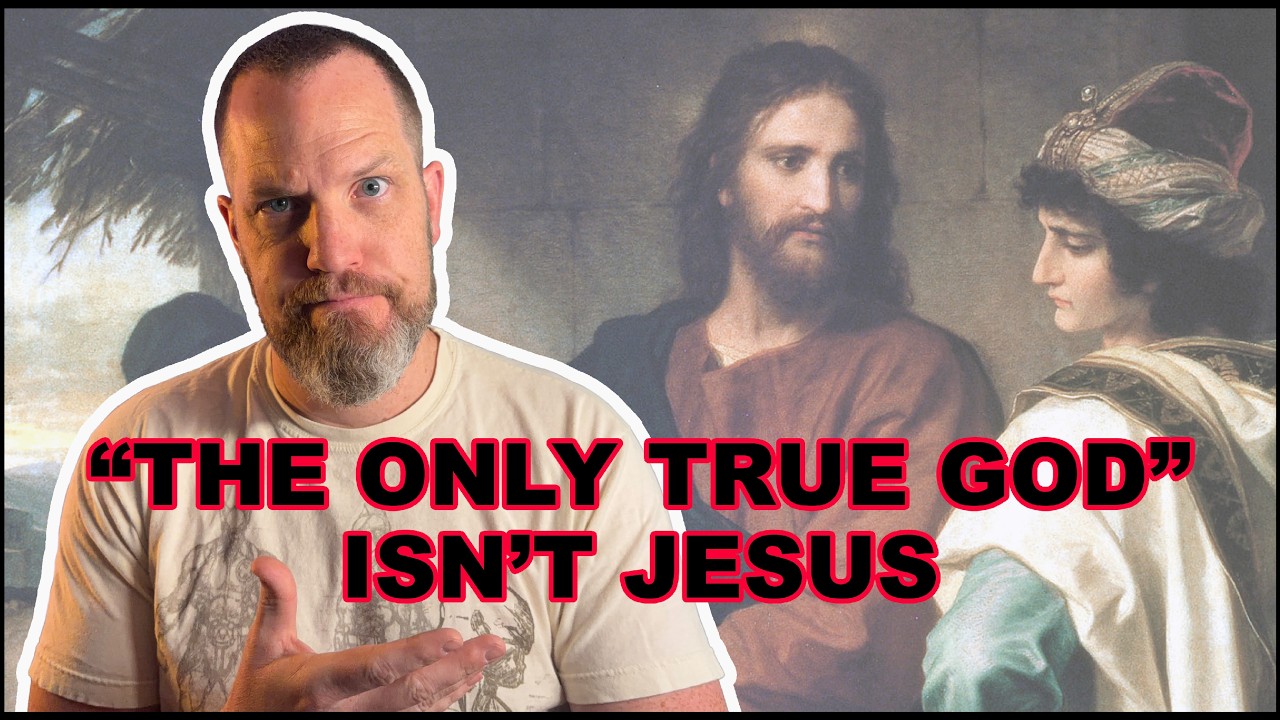
🔗 **Source:** [Responding to Weak Trinitarian Apologetics](https://www.youtube.com/watch?v=GCIs9XZHv8E)
> [!note]+ Document Notes
> tags: #trinitarian-theology #biblical-exegesis #christology #john-gospel #logos-doctrine #patristic-theology
> author: Data Over Dogma
> source: YouTube
> reference: https://www.youtube.com/watch?v=GCIs9XZHv8E
> date created: 2025-01-11 14:45
>
> # 🏷️ Title: Responding to weak trinitarian apologetics
>
<!-- deep-read:sections start -->
## 🧰 Action Inbox
- [H1] Examine monarchical trinitarian scholarship — addresses early Christian understanding #christology
- [H2] Study articular vs anarthrous uses of theos in John — grammatical evidence for distinction #biblical-exegesis
- [H3] Review patristic sources on logos theology — historical development of doctrine #patristic-theology
## 🧭 Table of Contents
- [[#📝 Summary]]
- [[#📖 Main Content]]
- [[#🗒️ Notes]]
- [[#📚 References]]
- [[#🗣️ Paraphrase]]
- [[#📰 Newsletter]]
- [[#✅ Action Items]]
- [[#🧪 Hypotheses]]
- [[#📊 Methodology]]
- [[#❓ Questions]]
- [[#🔮 Future Research]]
- [[#💡 Implications]]
- [[#🧠 Learning Styles Assessment]]
- [[#📊 Accessibility Assessment]]
- [[#🌍 DEIB Assessment]]
- [[#✅ Logical Validity]]
- [[#🛡️ DARVO Analysis]]
- [[#🎯 Conclusion]]
### 🔗 References
- [University of Edinburgh Dissertation on John 17](URL)
- [Raymond Brown Anchor Yale Bible Commentary](URL)
- [Joshua Siguad 2022 Paper on Monarchical Trinitarianism](URL)
## 📝 Summary
- What happened: Academic response to trinitarian apologetic dismissing John 17:3 as evidence against Jesus's divinity
- Why it matters: Challenges oversimplified trinitarian interpretations with early Christian and scholarly evidence
- Key stakeholders: Biblical scholars, theologians, early church historians
- Risks and tradeoffs: Tension between traditional doctrine and historical-critical scholarship
- Bottom line: John 17:3 reflects complex early Christian understanding of Jesus's relationship to "the only true God"
## 📖 Main Content
This video critiques a trinitarian apologist's dismissal of John 17:3 as evidence that Jesus is not God. The respondent argues that the apologist demonstrates "marked lack of awareness" regarding early Christian frameworks for understanding Jesus's relationship to God.
The core argument centers on the Greek grammatical distinction between "ho theos" (the God, with definite article) referring specifically to the Father as the only true God, versus "theos" (without article) applied to Jesus in an extended or qualitative sense meaning "divine" rather than identifying Jesus as "the God."
This interpretation has roots in Philo of Alexandria's logos theology and continues through early Christian writers like Justin Martyr, Origen, and Eusebius. Even within trinitarian frameworks, scholars recognize what's called "monarchical trinitarianism" - the view that the Father alone is "the one God" while the Son is God in a derivative sense.
The respondent cites multiple academic sources demonstrating that John 17:3 was understood by early Christians as distinguishing Jesus from "the only true God," not as irrelevant to christological questions.
## 🗒️ Notes
#### ⏱️ [00:00](https://youtu.be/GCIs9XZHv8E?t=0) — [H1] Initial critique of "proof" language
- Key idea: Agrees that "prove" is inappropriate for ancient text interpretation
- Evidence: "we can't prove the majority of the things that we believe"
#### ⏱️ [01:15](https://youtu.be/GCIs9XZHv8E?t=75) — [H2] Apologist's contextual argument about John 17:3
- Key idea: Claims context is Father vs pagan gods, not trinitarian discussion
- Evidence: "context is we are putting the father up against these other gods"
#### ⏱️ [02:30](https://youtu.be/GCIs9XZHv8E?t=150) — [H1] Academic framework for early Christian theology
- Key idea: First-fourth century CE had operative framework for Jesus-God relationship
- Evidence: "scholarship talks quite frequently about" these frameworks
#### ⏱️ [03:45](https://youtu.be/GCIs9XZHv8E?t=225) — [H1] Raymond Brown commentary on John 17:3
- Key idea: Scholarly recognition that verse distinguishes Jesus from "one true God"
- Evidence: "the quote one true God and quote Jesus Christ are not identified"
#### ⏱️ [04:30](https://youtu.be/GCIs9XZHv8E?t=270) — [H2] Judith Deal's doctoral dissertation findings
- Key idea: Academic consensus that Jesus is not identical to "the only true God"
- Evidence: "Jesus is not god. The son is not the father but is sent by the only true god"
#### ⏱️ [05:15](https://youtu.be/GCIs9XZHv8E?t=315) — [H1] Monarchical trinitarianism explanation
- Key idea: Trinitarian framework recognizing Father as numerically identical to "one God"
- Evidence: "the one God is numerically identical to the first person of the trinity"
#### ⏱️ [07:00](https://youtu.be/GCIs9XZHv8E?t=420) — [H1] Philo's logos theology foundation
- Key idea: First century CE distinction between "the God" and "god" without article
- Evidence: "He that is truly God is one. But those that are improperly so-called are more than one"
#### ⏱️ [09:30](https://youtu.be/GCIs9XZHv8E?t=570) — [H2] Grammatical evidence in John's Gospel
- Key idea: Articular vs anarthrous use of theos indicates different meanings
- Evidence: John 10 - "you being human make yourself divine" (no article)
#### ⏱️ [11:45](https://youtu.be/GCIs9XZHv8E?t=705) — [H2] Justin Martyr's logos christology
- Key idea: Second century understanding of Jesus as "another god" without compromising monotheism
- Evidence: "the word the logos Jesus" can be called God "without the article"
#### ⏱️ [13:15](https://youtu.be/GCIs9XZHv8E?t=795) — [H1] Origen's commentary on John 1:1
- Key idea: Systematic grammatical analysis distinguishing "the God" from "God"
- Evidence: "he adds the article when the noun god stands for the uncreated cause"
#### ⏱️ [16:30](https://youtu.be/GCIs9XZHv8E?t=990) — [H2] Eusebius on John 17:3 specifically
- Key idea: Fourth century trinitarian still distinguishes Jesus from "only true God"
- Evidence: "the father is the only true God" while son is "true God...as in an image"
#### ⏱️ [18:45](https://youtu.be/GCIs9XZHv8E?t=1125) — [H1] Contemporary scholarly consensus
- Key idea: Modern scholarship recognizes John 17:3 as distinguishing Jesus from Father
- Evidence: "many scholars today believe that it distinguishes the logos Jesus from the only true God"
#### ⏱️ [20:00](https://youtu.be/GCIs9XZHv8E?t=1200) — [H3] Final critique of apologist's competence
- Key idea: Apologist lacks knowledge of data, scholarship, and Greek grammar
- Evidence: "doesn't know the data, doesn't know the scholarship, doesn't know the Greek"
## 📚 References
- [Raymond Brown - Anchor Yale Bible Commentary](URL)
- [Judith Deal - University of Edinburgh Dissertation 2007](URL)
- [Joshua Siguad - Monarchical Trinitarianism Paper 2022](URL)
- [Philo of Alexandria - On Dreams](URL)
- [Justin Martyr - Dialogue with Trypho](URL)
- [Origen - Commentary on John](URL)
- [Eusebius - Against Marcellus](URL)
## 🗣️ Paraphrase
- Early Christian writers distinguished between "the God" (Father) and "god" (Jesus) using Greek grammar
- Monarchical trinitarianism recognizes Father alone as "the one God" while Son is divine derivatively
- Academic scholarship broadly supports reading John 17:3 as distinguishing Jesus from "only true God"
## 📰 Newsletter
**Biblical Scholarship Spotlight: The Grammar of Divinity**
Ever wondered why early Christians could call Jesus "God" while maintaining Jewish monotheism? New research reveals they used sophisticated grammatical distinctions - "the God" (with article) for the Father, "god" (without article) for Jesus's divine nature.
This wasn't theological confusion but careful theological expression, rooted in Philo's logos philosophy and continuing through Origen and Eusebius. Even trinitarian scholars recognize this "monarchical" approach.
**Key insight**: Ancient grammar carries theological freight. The presence or absence of Greek articles wasn't accidental but intentional theological communication.
Resources: [Biblical Archaeology Society](https://biblicalarchaeology.org/), [Society of Biblical Literature](https://sbl-site.org/), [Early Christian Studies](https://earlycs.org/)
## ✅ Action Items
#### Community
- Contributors: Create accessible introductions to patristic christology
- Maintainers: Develop theological discussion guidelines respecting scholarship
- Sponsors: Fund digitization of early Christian texts and commentaries
#### WordPress
- Documentation: Style guides for theological content with scholarly citations
- Accessibility: Ensure theological discussions include plain-language summaries
- Community: Moderation guidelines for religious discussions
## 🧪 Hypotheses
- Articular vs anarthrous uses of theos in John reflect systematic theological distinctions
- Monarchical trinitarianism better explains early Christian texts than later formulations
- Patristic exegesis shows more diversity on christology than often acknowledged
- Academic training correlates with nuanced understanding of early christological debates
### 📊 Methodology
- Grammatical analysis of theos usage patterns across Johannine corpus
- Survey of patristic commentaries on John 17:3 from 100-400 CE
- Comparison of academic vs popular apologetic treatments of early christology
### ❓ Questions
- How did the shift from monarchical to equality trinitarianism affect biblical interpretation?
- What role did political factors play in crystallizing later trinitarian formulations?
- How might rediscovering early theological diversity inform contemporary discussions?
### 🔮 Future Research
- Systematic study of logos christology development from Philo through Nicaea
- Analysis of grammatical theology in other early Christian writers
- Investigation of how theological presuppositions shape exegetical methods
### 💡 Implications
- Practice: Encourages more historically-informed biblical interpretation
- Education: Highlights need for patristic literacy in theological studies
- Policy: Supports academic freedom in religious scholarship
- Funding: Justifies investment in early Christian studies and digital humanities
### 🧠 Learning Styles Assessment
Reading level estimate: 14-16 (Graduate level)
#### 👀 Visual learners
- Present: Scripture quotations, academic citations
- Improve: Timeline of christological development, comparative charts of theological positions
#### 🔊 Aural learners
- Present: Video format with clear narration
- Improve: Pronunciation guides for Greek terms and church fathers' names
#### 🗣️ Verbal learners
- Present: Detailed theological argumentation, technical terminology
- Improve: Glossary of terms, analogies for complex concepts
#### 🧩 Kinesthetic learners
- Present: Citation lookup, text comparison exercises
- Improve: Interactive timeline, hands-on manuscript examination
#### 🧠 Logical learners
- Present: Systematic argumentation, chronological development
- Improve: Decision trees for theological interpretation, comparative analysis charts
#### 🧑🤝🧑 Social learners
- Present: Academic community engagement, scholarly dialogue
- Improve: Study group guides, peer review exercises for interpretation
#### 🧘♀️ Solitary learners
- Present: Individual research prompts, reflective analysis
- Improve: Self-assessment questions, independent research pathways
#### 🌿 Naturalistic learners
- Present: Historical development patterns, organic theological evolution
- Improve: Ecosystem thinking about theological development, environmental factors
### 📊 Accessibility Assessment
#### Screen reader semantics
- Present: Clear heading structure, proper citation formatting
- Improve: Alt text for any visual quotations, structured academic references
#### Keyboard navigation
- Present: Standard video controls
- Improve: Timestamped navigation, skip-to-section functionality
#### Contrast and readability
- Present: Standard video formatting
- Improve: High contrast transcript options, adjustable text sizing
#### Text resizing and reflow
- Present: Responsive video player
- Improve: Transcript formatting that maintains readability at 200% zoom
#### Media and captions
- Present: Spoken content
- Improve: Complete captions with theological terms, downloadable transcript
#### Forms and interactions
- Present: Basic video interaction
- Improve: Interactive timeline with theological concepts, accessible citation tools
### 🌍 DEIB Assessment
#### Cultural breadth
- Present: Western Christian tradition focus
- Improve: Eastern Orthodox perspectives, non-Western early Christianity
#### Inclusive language
- Present: Academic theological terminology
- Improve: Gender-inclusive language for divine references where appropriate
#### Neurodiversity support
- Present: Logical argumentation structure
- Improve: Visual organization of complex arguments, consistent terminology
#### Representation
- Present: Male patristic authors primarily
- Improve: Include diverse early Christian voices where available
#### Psychological safety
- Present: Academic tone, respectful scholarly disagreement
- Improve: Content warnings for theological controversy, clear community guidelines
### ✅ Logical Validity
#### Strong reasoning
- Deductive strength: From grammatical patterns to theological conclusions - moderately strong
- Inductive strength: Multiple historical sources supporting pattern - strong
- Causal reasoning: Grammar influences theological expression - plausible
- Analogical strength: Philo-to-John comparison - moderately strong
#### Fallacies
- Ad hominem: Attacks on apologist's competence rather than just arguments
- Appeal to authority: Heavy reliance on scholarly consensus without independent analysis
#### Tone of voice
- Overall tone: Academic, somewhat dismissive of opposing view, confident in scholarly consensus
### 🛡️ DARVO Analysis
- Deny: No clear denial patterns
- Attack: Attacks apologist's competence and knowledge rather than addressing core claims
- Reverse victim/offender: No clear reversal patterns
- Emotional cues: Frustration with "low IQ" rhetoric, appeals to academic authority
## 🎯 Conclusion
The video demonstrates that John 17:3's interpretation as distinguishing Jesus from "the only true God" has substantial support in early Christian sources and contemporary scholarship. The grammatical distinction between articular and anarthrous uses of theos appears to be theologically significant rather than accidental. However, the response could be strengthened by engaging more charitably with opposing arguments rather than dismissing the apologist's competence.
## 🧱 Refactor Appendix
### 📚 Literature Split Pad
### [H1] Patristic sources distinguish Jesus from "only true God"
> [!quote] Responding to weak trinitarian apologetics by Data Over Dogma via YouTube. Published 2025-01-11.
> "Even as late as Eusebius when the trinity is fairly firmly established, Jesus distinguishes himself from the father."
Early Christian writers consistently interpreted John 17:3 as distinguishing the Son from the Father as "only true God."
[view highlight](https://youtu.be/GCIs9XZHv8E?t=1125) #xref #articleseed ID:rw_001
### [H2] Monarchical trinitarianism recognizes Father as numerically identical to one God
> [!quote] Responding to weak trinitarian apologetics
> "According to the doctrine of the monarchy of the father, the one God is numerically identical to the first person of the trinity."
This theological framework attempts to preserve New Testament language about "one God" while maintaining trinitarian structure.
[view highlight](https://youtu.be/GCIs9XZHv8E?t=315) #xref ID:rw_002
---
###
---
## Full Transcript
[00:00] John 17:3 is proof Jesus is not God,<br>[00:04] which is a stupid argument. Can we just<br>[00:05] drop it already?<br>[00:06] >> All right, let's see it.<br>[00:08] >> Why are we still saying prove in 2026?<br>[00:10] Okay, we can't prove the majority of the<br>[00:11] things that we believe with a lot of<br>[00:13] evidence. Prove to me, but we're not a<br>[00:14] matrix. Oh, you can't. Why are you even<br>[00:16] saying the word then? I agree with this.<br>[00:19] A lot of people use the word prove in<br>[00:21] the sense of make a case for when<br>[00:23] usually in the narrow technical sense<br>[00:25] prove means demonstrate conclusively as<br>[00:29] in math and science and things like<br>[00:31] that. So I agree we shouldn't be talking<br>[00:33] about proving things when it comes to<br>[00:35] the interpretation of ancient texts and<br>[00:37] frequently when it comes to the<br>[00:38] reconstruction of ancient history. I<br>[00:41] think we can talk about demonstrates<br>[00:43] suggests the evidence supports the data<br>[00:46] do not support. I think that's better<br>[00:48] language than prove which hopefully you<br>[00:51] very rarely ever hear me say.<br>[00:53] >> Secondly, monos the word for only in<br>[00:56] John 17:3. Look it up in BAG and update<br>[00:58] inlinear not strongs but bag. It's an<br>[01:00] exclusion term. It can also be used to<br>[01:02] exclude based on particular context. And<br>[01:04] what is the freaking context? Okay, the<br>[01:07] context is we are putting the father up<br>[01:10] against these other gods that have the<br>[01:12] potential to be worshiped. Okay, so the<br>[01:13] context, father, other gods. In the<br>[01:17] context of the father being compared to<br>[01:18] other gods, who is the true god in that<br>[01:21] context, it's going to be the father.<br>[01:22] Thank you. That's what he's saying. It's<br>[01:25] not a proof text for unitarianism. It's<br>[01:27] not a proof text for trinitarianism.<br>[01:29] It's not a proof text for anything other<br>[01:30] than<br>[01:32] pagan idols and gods are false. That's<br>[01:34] it. That's it. So I would suggest this<br>[01:37] is problematic for a handful of reasons,<br>[01:39] but mainly because it avinces a marked<br>[01:43] lack of awareness regarding a framework<br>[01:45] for understanding the relationship of<br>[01:47] Jesus to the only true God that was<br>[01:50] operative in the first century and<br>[01:53] second and third and even fourth<br>[01:54] centuries CE. That is also something<br>[01:58] that the scholarship talks quite<br>[01:59] frequently about that this content<br>[02:01] creator seems to be rejecting and<br>[02:03] dismissing as the work of people who are<br>[02:06] low IQ. And I think that's problematic<br>[02:09] because when we look at the academic<br>[02:12] engagement and even the early Christian<br>[02:13] engagement and even the pre-Christian<br>[02:16] Jewish engagement with the concept of<br>[02:19] the logos and its relationship to the<br>[02:22] only true God, we see that the word God<br>[02:25] can be used in different ways. And<br>[02:27] there's a way to refer to God the Father<br>[02:29] as God that makes the father God in a<br>[02:33] distinct manner where applying the word<br>[02:37] God to Jesus is using the word God in a<br>[02:41] distinct way in a different way more<br>[02:43] like divine. But I want to start with<br>[02:46] this 1970 commentary from the anchor<br>[02:48] Yale Bible commentary series by Raymond<br>[02:50] Brown. And just briefly he notes in the<br>[02:53] notes on 17:3 we note that the quote one<br>[02:58] true God and quote Jesus Christ are not<br>[03:01] identified. This verse runs somewhat<br>[03:04] contrary to other verses in John that<br>[03:07] call Jesus God. And then I want to look<br>[03:10] at this doctrinal dissertation from the<br>[03:12] University of Edinburgh from 2007 by<br>[03:14] Judith Deal which is precisely on John<br>[03:17] 17. And in the red box here we have the<br>[03:20] comment first, the only true God is the<br>[03:22] father who is knowable by humanity. To<br>[03:25] know the one who Jesus calls the father<br>[03:28] is to understand that he is the one and<br>[03:30] only true and just god. Jesus is not<br>[03:34] god. The son is not the father but is<br>[03:38] sent by the only true god. Father and<br>[03:42] son are one but they are not identical.<br>[03:44] And then more recently, Joshua Siguad in<br>[03:47] a 2022 paper talking about monarchical<br>[03:52] trinitarianism in the red box explains,<br>[03:54] "According to the doctrine of the<br>[03:55] monarchy of the father, hereafter the<br>[03:57] monarchy, the one God is numerically<br>[04:00] identical to the first person of the<br>[04:02] trinity, the father, in such a manner as<br>[04:04] to establish a hierarchical structure<br>[04:06] within the trinitarian life." This<br>[04:08] specific doctrine furthered the New<br>[04:10] Testament's language about the one God<br>[04:12] as found in various scriptural passages.<br>[04:15] So A is John 17:3 and this is eternal<br>[04:18] life that they know you the only true<br>[04:21] God and Jesus Christ whom you have sent.<br>[04:24] B I am ascending to my father and your<br>[04:27] father to my God and your God. This is<br>[04:30] Jesus saying that the father is Jesus's<br>[04:33] God. The father's relationship to Jesus<br>[04:36] is one of God to adherence or follower.<br>[04:40] C for us there is one God, the father<br>[04:43] and one lord Jesus Christ. That's 1<br>[04:45] Corinthians 8. And then we got a passage<br>[04:47] from 2 Corinthians, the God and father<br>[04:50] of the Lord Jesus Christ. He who is<br>[04:53] blessed forever. These paradigm<br>[04:55] scriptural passages provided a basis for<br>[04:57] the development of the doctrine that the<br>[04:58] one God was simply the father. And then<br>[05:02] we have a quote from another scholar and<br>[05:04] there are a number of scholars who<br>[05:05] endorse this monarchical trinitarian<br>[05:08] framework and it actually has support<br>[05:10] not only among the petristic authors and<br>[05:13] among other contemporary scholars but<br>[05:15] even within early Judaism and early<br>[05:18] Christianity. So I'm going to start with<br>[05:20] on dreams written by Pho of Alexandria<br>[05:23] in the first half of the 1st century CE.<br>[05:26] In the red box at the bottom Philo<br>[05:28] quotes Genesis 31:13 which is where God<br>[05:30] appears to Jacob. And this is the Greek<br>[05:32] translation where God says to Jacob, "I<br>[05:34] am the God who appeared to thee in the<br>[05:37] place of God." And then down at the<br>[05:40] bottom, "And do not fail to mark the<br>[05:41] language used, but carefully inquire<br>[05:43] whether there are two gods, for we read,<br>[05:46] I am the God that appeared to thee, not<br>[05:49] in my place, but in the place of God, as<br>[05:52] though it were anothers." What then are<br>[05:54] we to say? He that is truly God is one.<br>[05:58] But those that are improperly so-called<br>[06:00] are more than one. Accordingly, the holy<br>[06:02] word in the present instance has<br>[06:03] indicated him who is truly God by means<br>[06:06] of the article saying I am the God.<br>[06:10] While it omits the article when<br>[06:12] mentioning him who is improperly<br>[06:14] socalled saying who appeared to thee in<br>[06:16] the place not of the God but simply of<br>[06:19] God. Here it gives the title of God to<br>[06:23] his chief word or logos not from any<br>[06:26] superstitious nicity in applying names<br>[06:29] but with one aim before him to use words<br>[06:31] to express facts. In other words, the<br>[06:34] word theos god with the article the god<br>[06:38] specifies a specific one. Which one? The<br>[06:41] highest one, the only true one. Whereas<br>[06:44] the anarthus use of theos or the use of<br>[06:47] theos without the article is indicative<br>[06:50] of someone who is divine in some sense<br>[06:52] but is not the god. And this is actually<br>[06:56] something we see elsewhere in the gospel<br>[06:58] of John. In defending his identification<br>[07:01] as the son of god in John chapter 10.<br>[07:04] Jesus gets on the case of his enemies<br>[07:07] who say you being human make yourself<br>[07:09] divine. And that should be interpreted<br>[07:12] and translated as divine. not you make<br>[07:14] yourself God because there's no article.<br>[07:17] You make yourself divine. And Jesus<br>[07:19] says, "Wait a minute. Your own scripture<br>[07:20] Psalm 82 says you are God's." And in my<br>[07:24] opinion and the opinion of some other<br>[07:26] scholars, this is a reference to the<br>[07:28] Israelites at Sinai. That's how this<br>[07:30] passage was interpreted. In later<br>[07:32] rabbitic literature, we think it's<br>[07:34] likely in the first century CE that<br>[07:36] interpretation was already popular. So<br>[07:39] basically Jesus is saying so when at<br>[07:42] Sinai they received the law of God they<br>[07:44] were freed from the power of the angel<br>[07:46] of death. They were rendered immortal.<br>[07:47] They were rendered gods. And the<br>[07:48] scripture says you are gods. No article.<br>[07:53] In other words you are divine. You are<br>[07:55] divinities. The title God has been<br>[07:58] extended to you so that you can be<br>[08:00] referred to that way. But you are not<br>[08:02] the true God. So elsewhere within John<br>[08:06] we already have the distinction of hos<br>[08:09] the god the true god the only true god<br>[08:13] from theos or the god or gods in an<br>[08:18] extended sense these are not the true<br>[08:21] god but they are divine they are deity<br>[08:24] they are gods and so even in John 1:1<br>[08:28] that's what we see even in John 1:18 if<br>[08:31] you are choosing to think that the<br>[08:34] author wrote monogos.<br>[08:36] There's no article there.<br>[08:39] The only time where Jesus is in any<br>[08:43] plausible way referred to as Hawthos is<br>[08:45] in John 20:28. And I've discussed in<br>[08:47] other videos at length the fact that<br>[08:49] this is not actually saying Jesus is<br>[08:51] God. It's saying Jesus is manifesting<br>[08:54] the presence of God. Thomas gets what<br>[08:57] Philip did not get in John 14. That to<br>[09:00] see Jesus is to see the father. Not<br>[09:02] because Jesus is the father, but because<br>[09:04] Jesus bears the father's presence and<br>[09:06] manifests the father to the person who<br>[09:09] sees him. And so Thomas finally says,<br>[09:12] "My lord Jesus." Oh, and look, there's<br>[09:16] my God, the father being manifested by<br>[09:19] Jesus. Not because Jesus is haos. Jesus<br>[09:22] is not hos in the gospel of John. Jesus<br>[09:25] is manifesting the presence of hos. Now,<br>[09:28] Pho is not the only one to say this. In<br>[09:30] fact, we have it down into the 4th<br>[09:32] century. Uh Justin Martyr talks about<br>[09:35] the word the logos in his dialogue with<br>[09:38] Trifo as being able to be referred to as<br>[09:41] God without the article<br>[09:44] because he is from God and he is united<br>[09:48] in mind or will with God. So he doesn't<br>[09:50] do anything that is not in accordance<br>[09:52] with the will of God. And as a result,<br>[09:54] the title God can be extended to the<br>[09:57] word the logos Jesus. Although it's just<br>[10:01] the without the article but we have more<br>[10:03] explicit references to this. We can go<br>[10:05] to origin commentary on the gospel<br>[10:07] according to John in I think this is<br>[10:11] book two I don't remember but since the<br>[10:14] proposition in the beginning was the<br>[10:16] word has been placed first perhaps it<br>[10:18] indicates some order in the same manner<br>[10:21] next and the word was with God and third<br>[10:23] and the word was God perhaps he says and<br>[10:26] the word was with God then and the word<br>[10:28] was God that we might understand that<br>[10:30] the word has become God because he is<br>[10:32] with God. John has used the articles in<br>[10:35] one place and omitted them in another<br>[10:37] very precisely and not as though he did<br>[10:40] not understand the precision of the<br>[10:41] Greek language. In the case of the word,<br>[10:43] he adds the article 'the', but in the<br>[10:45] case of the noun God, he inserts it in<br>[10:48] one place and omits it in another. For<br>[10:51] he adds the article when the noun god<br>[10:53] stands for the unccreated cause of the<br>[10:54] universe, but he omits it when the word<br>[10:57] is referred to as God. And as the God<br>[11:01] and God differ in these places, so<br>[11:03] perhaps the word and word differ. For as<br>[11:06] the God who is overall is the God and<br>[11:09] not simply God, so the source of reason<br>[11:12] in each rational being is the word. That<br>[11:16] reason which is in each rational being<br>[11:18] would not properly have the same<br>[11:20] designation as the first reason and be<br>[11:22] said to be the word. Many people who<br>[11:24] wish to be pious are troubled because<br>[11:26] they are afraid that they may proclaim<br>[11:28] two gods and for this reason they fall<br>[11:30] into false and impious beliefs. They<br>[11:33] either deny that the individual nature<br>[11:35] of the son is other than that of the<br>[11:37] father by confessing him to be God whom<br>[11:39] they refer to as son in name at least or<br>[11:42] they deny the divinity of the son and<br>[11:43] make his individual nature and essence<br>[11:45] as an individual to be different from<br>[11:47] the father. Their problem can be<br>[11:49] resolved in this way. We must say to<br>[11:52] them that at one time God with the<br>[11:55] article is very God. Wherefore also the<br>[11:58] savior says in his prayer to the father<br>[12:00] that they may know you the only true<br>[12:03] God. On the other hand, everything<br>[12:06] besides the very true God which is made<br>[12:09] God by participation in his divinity<br>[12:12] would more properly not be said to be<br>[12:13] the God but God. To be sure, his<br>[12:16] firstborn of every creature in as much<br>[12:18] as he was the first to be with God and<br>[12:21] has drawn divinity into himself is more<br>[12:24] honored than the other gods beside him<br>[12:27] of whom God is God. As it is said, the<br>[12:29] God of gods, the Lord has spoken and he<br>[12:32] has called the earth. It was said by his<br>[12:34] ministry that they became gods, for he<br>[12:37] drew from God, that they might be<br>[12:39] deified, sharing ungrudgingly also with<br>[12:42] them according to his goodness. The god<br>[12:46] therefore is the true god. The others<br>[12:49] are gods formed according to him as<br>[12:52] images of the prototype. But again the<br>[12:55] archetypal image of the many images is<br>[12:58] the word with the god who was in the<br>[13:02] beginning. By being with the god he<br>[13:05] always continues to be god. But he would<br>[13:08] not have this if he were not with God.<br>[13:11] And he would not remain God if he did<br>[13:13] not continue in unceasing contemplation<br>[13:16] of the depth of the father. And then we<br>[13:19] can even go as late as you of Cesaria in<br>[13:21] his against Markellis and on<br>[13:23] ecclesiastical theology chapter 14 near<br>[13:27] the bottom. and what beginning he<br>[13:28] attributes to him. He John clarifies<br>[13:31] immediately afterward not having said<br>[13:33] and the word was the god with the<br>[13:35] addition of the article lest he assert<br>[13:37] that the word was the god who is over<br>[13:40] all. So even according to Ucius when<br>[13:43] Jesus refers to the father as the only<br>[13:46] true god Jesus is saying I'm not the<br>[13:49] only true god only the father is the<br>[13:52] only true god that's what origin says<br>[13:54] and while Justin martyr doesn't<br>[13:56] explicitly address John 17:3 Justin<br>[13:59] martyr also quite clearly talks about<br>[14:01] Jesus as being extended the title god<br>[14:04] but not being the only true god not<br>[14:06] being the creator not being the source<br>[14:08] of all it is according to Justin martyr<br>[14:11] and multiple times the logos is another<br>[14:14] god and in pho<br>[14:18] refers to the logos as a second god.<br>[14:21] This does not compromise monotheism.<br>[14:23] This is what origin just said. This does<br>[14:26] not compromise monotheism. Just as Jesus<br>[14:29] saying, "Hey, Psalm 82 calls them gods.<br>[14:32] Why you getting on my case?" doesn't<br>[14:34] compromise what we might call monotheism<br>[14:37] in the first century. Even though the<br>[14:39] way we talk about it, it didn't exist in<br>[14:40] that time period. But let's move on to<br>[14:42] another passage whereius directly<br>[14:45] addresses John 17:3.<br>[14:48] And even if the Savior himself teaches<br>[14:50] that the father is the only true God,<br>[14:53] saying that they may know you, the only<br>[14:55] true God, one should not hesitate to<br>[14:57] confess that he the son is true God and<br>[15:01] that he has this status as in an image.<br>[15:05] So that the addition of the word only<br>[15:07] applies to the father alone as to the<br>[15:10] archetype of the image. And so even as<br>[15:14] late as you when the trinity is fairly<br>[15:17] firmly established,<br>[15:19] Jesus distinguishes himself from the<br>[15:22] father. The father is the only one who<br>[15:24] is the only true god. Jesus is not the<br>[15:27] only true god. So the christologology of<br>[15:31] the gospel of John is not the trinity.<br>[15:33] It's a lot more complex and far more<br>[15:36] interesting than the trinity. And I<br>[15:38] think we see the seeds of it in Pho. And<br>[15:40] we see John who frequently refers to<br>[15:43] Jesus as theos without the definite<br>[15:45] article picking up on what Pho<br>[15:48] regarding the omission or the inclusion<br>[15:50] of the article. We see origin doing the<br>[15:53] same. We see Justin Martyr doing the<br>[15:54] same. We see even doing the same. And<br>[15:57] today we see a lot of scholarship that<br>[15:59] acknowledges that in John 17:3<br>[16:02] when Jesus refers to the father as the<br>[16:04] only true God, Jesus is quite explicitly<br>[16:07] excluding himself from that designation<br>[16:10] as the only true God. And that's the<br>[16:13] root of this theoretical framework of<br>[16:16] monarchical trinitarianism which tries<br>[16:18] to suggest that Jesus is not God the way<br>[16:21] the father is God. Jesus's God in a<br>[16:24] nominal sense or a qualitative sense or<br>[16:27] some kind of extended sense. And so I<br>[16:30] think it is problematic to say you are<br>[16:32] low IQ if you think John 17:3 means<br>[16:36] anything about the trinity. The earliest<br>[16:38] Christians thought that it distinguished<br>[16:41] Jesus from the only true God. Many<br>[16:43] scholars today believe that it<br>[16:45] distinguishes the logos Jesus from the<br>[16:48] only true God. It's not low IQ to be<br>[16:51] informed about not just the Greek<br>[16:53] grammar and syntax and the fact that<br>[16:55] nothing about either<br>[16:57] indicates that Jesus is to be identified<br>[16:59] with the only true God and that most<br>[17:01] likely<br>[17:03] the grammar actually distinguishes Jesus<br>[17:05] from the only true God. But also we can<br>[17:08] look at commentaries from the earliest<br>[17:10] periods of Christianity and from even<br>[17:12] before Christianity where we get a more<br>[17:14] interesting notion of the logos as a<br>[17:17] second god, as another god, as referred<br>[17:19] to as God in some different sense that<br>[17:22] is marked grammatically by the omission<br>[17:24] of the definite article. And we even get<br>[17:27] by later people who are<br>[17:29] prototrinitarians or straight up<br>[17:30] trinitarians an acknowledgment that<br>[17:33] that's going on in places like John<br>[17:35] 17:3. So, uh, this content creator<br>[17:37] doesn't know this issue very well. Is<br>[17:39] just beginning from a dogma and then is<br>[17:42] just trying to imagine what kind of<br>[17:45] rhetoric would most convincingly<br>[17:49] represent that dogma as supported by the<br>[17:51] data. But this content creator doesn't<br>[17:53] know the data, doesn't know the<br>[17:54] scholarship, doesn't know the Greek, is<br>[17:57] just performing this confidence,<br>[17:59] conviction, and academic competence. And<br>[18:03] this content creator is not a very good<br>[18:05] performer in that regard. And the fit<br>[18:07] for this video is my data overdog tea.
<!-- deep-read:sections end -->
📄 **Full text:** ![[Full Document Contents/Articles/Responding to Weak Trinitarian Apologetics.md|Responding to Weak Trinitarian Apologetics by YouTube]]
## Highlights
- exclusion term. It can also be used to exclude based on particular context. And what is the freaking context? Okay, the context is we are putting the father up against these other gods that have the potential to be worshiped. Okay, so the context, father, other gods. In the context of the father being compared to other gods, who is the true god in that context, it's going to be the father. Thank you. That's what he's saying. It's not a proof text for unitarianism. It's not a proof text for trinitarianism. It's not a proof text for anything other ([View Highlight](https://read.readwise.io/read/01kpm53pcfgqqxdexx50s8y441))
- Tags: 👻 ai highlighted
- when Jesus refers to the father as the only true God, Jesus is quite explicitly excluding himself from that designation as the only true God. And that's the root of this theoretical framework of monarchical trinitarianism which tries to suggest that Jesus is not God the way the father is God. Jesus's God in a nominal sense or a qualitative sense or some kind of extended sense. And so I ([View Highlight](https://read.readwise.io/read/01kpm53pe80wbm43ca2ecyw390))
- Tags: 👻 ai highlighted