SOTW 2024: WordPress for Everyone
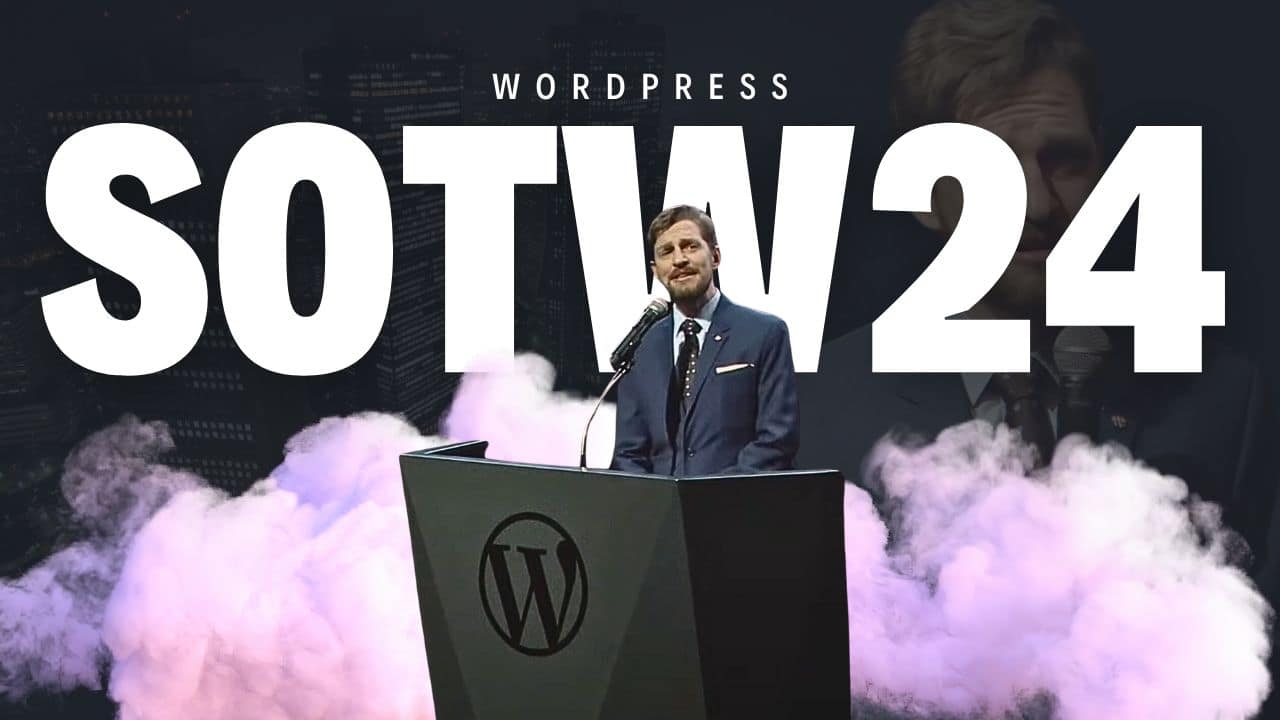
Full Document Contents/Articles/SOTW 2024 WordPress for Everyone.md, SOTW 2024: WordPress for Everyone, ByMatt Medeiros.
> [!note]+ Document Notes
> tags: [#wordpress, #stateoftheword, #gutenberg, #open-source, #collaboration]
> Author: Matt Mullenweg, Matias Ventura
> Source: [The WP Minute](https://thewpminute.com/sotw-2024-wordpress-for-everyone/)
> Reference: [State of the Word 2024]
> date created: 2024-12-16 14:30
>
> # Title: State of the Word 2024 – WordPress for Everyone
>
<!-- deep-read:sections start -->
## Table of Contents:
- [📝 Summary](#-summary)
- [📖 Main Content](#-main-content)
- [🗒️ Notes](#️-notes)
- [📖 References](#-references)
- [🗣️ Paraphrase](#-paraphrase)
- [📰 Newsletter](#-newsletter)
- [✅ Action Items](#-action-items)
- [🧪 Hypotheses](#-hypotheses)
- [📊 Methodology](#-methodology)
- [❓ Questions](#-questions)
- [🔮 Future Research](#-future-research)
- [💡 Implications](#-implications)
- [🧠 Learning Styles Assessment](#-learning-styles-assessment)
- [📊 Accessibility Assessment](#-accessibility-assessment)
- [🌍 DEIB Assessment](#-deib-diversity-equity-inclusion-and-belonging-assessment)
- [✅ Logical Validity](#-logical-validity)
- [🔍 DARVO Analysis](#-darvo-analysis-prompt)
- [🔍 SEO Evaluation](#-seo-evaluation)
- [🎯 Conclusion](#-conclusion)
## 📝 Summary:
The 2024 **State of the Word (SOTW)** showcased the ongoing evolution of WordPress, focusing on **Phase 3: Collaboration** of the Gutenberg project. Led by Matias Ventura, the address emphasized the push toward seamless multi-user workflows, innovative content tools, and an inclusive future aimed at diverse user needs. With the introduction of features like in-editor commenting and the WordPress Playground, the platform reaffirms its mission to cater to everyone—from hobbyists to enterprise developers.
---
## 📖 Main Content:
### 🗒️ Notes:
- **Phase 3: Collaboration**
- Focus on enabling **multi-user workflows**.
- **In-editor commenting** allows real-time feedback on content blocks.
- **Notification framework** ensures contributors stay updated on changes and tasks.
- Collaboration approaches content through four lenses: Write, Design, Build, Develop.
- **User-Centric Enhancements**
- **Write**: Distraction-free modes and intuitive content rearrangements.
- **Design**: New tools like Zoom Out and pattern integration for cohesive visuals.
- **Build**: Advanced features like data bindings, custom fields, and template enhancements.
- **Develop**: The **Interactivity API** delivers fast, responsive client-side functionality.
- **WordPress Playground**
- Provides an **in-browser environment** for WordPress testing and learning.
- Blueprint demos accelerate onboarding and prototyping.
- **Inclusivity and Accessibility**
- Seeks to serve both novices and enterprise users through powerful, user-friendly tools.
---
## 📖 References:
1. [State of the Word 2024 – The WP Minute](https://thewpminute.com/sotw-2024-wordpress-for-everyone/)
---
## 🗣️ Paraphrase:
1. Original: "Ventura emphasized that the new era of WordPress centers on enabling teams to work better together."
Paraphrased: "According to Ventura, the future of WordPress is focused on fostering efficient teamwork among users."
2. Original: "The third phase of Gutenberg focuses on collaboration, but the deeper goal is inclusivity—both in skill level and purpose."
Paraphrased: "While collaboration defines Gutenberg's third phase, its ultimate ambition is to embrace users of varying skills and intents."
---
## 📰 Newsletter:
🎉 **WordPress 2024: Collaboration in Focus!**
This year’s **State of the Word** highlights a new era for WordPress with **Phase 3: Collaboration**. Matias Ventura unveiled tools like in-editor commenting and real-time notifications, enabling seamless teamwork for writers, editors, and developers. The **WordPress Playground** revolutionizes onboarding with an instant, browser-based environment. Whether you’re crafting as a hobbyist or innovating as an enterprise developer, WordPress aims to be **your platform for everyone**. [Explore more](https://thewpminute.com/sotw-2024-wordpress-for-everyone/).
---
## ✅ Action Items:
- Integrate **Phase 3 Collaboration features** into workshops and presentations to showcase real-time editing tools.
- Highlight **Playground**'s potential for contributor onboarding at WordPress events.
- Emphasize the **Interactivity API** for developers in talks about modernizing WordPress workflows.
- Advocate for accessibility improvements aligned with inclusivity goals in the community.
---
## 🧪 Hypotheses:
1. Introducing real-time collaboration tools will significantly increase WordPress adoption among enterprise teams.
2. The WordPress Playground will enhance contributor onboarding and reduce learning curve barriers.
---
## 📊 Methodology:
- Conduct surveys among enterprise teams to gauge the impact of collaborative tools.
- Perform usability tests on WordPress Playground with diverse user groups.
---
## ❓ Questions:
1. How can WordPress balance simplicity for beginners with advanced tools for developers?
2. Will real-time collaboration features attract a broader user base?
---
## 🔮 Future Research:
- Exploring the scalability of WordPress as a collaborative enterprise tool.
- Investigating the impact of Playground on WordPress education and training.
---
## 💡 Implications:
- Strengthened collaboration features can position WordPress as a competitor to enterprise CMS platforms like SharePoint.
---
## 🧠 Learning Styles Assessment:
- **Visual**: Present, but could benefit from additional diagrams or infographics.
- **Aural**: Add podcast summaries or audio walkthroughs.
- **Logical**: Strong logical flow with new tools like the Interactivity API.
---
## 📊 Accessibility Assessment:
- Screen reader compatibility: Needs verification for new tools.
- Improvements: Include alt-text for all visuals and keyboard navigation for new features.
---
## 🌍 DEIB (Diversity, Equity, Inclusion, and Belonging) Assessment:
- **Inclusive language**: Present but could integrate examples from global communities.
- **Representation**: Add diverse case studies showcasing various user demographics.
---
## ✅ Logical Validity:
- **Sound Reasoning**: Clear connections between collaboration tools and user productivity.
- **Fallacy**: No major fallacies detected, but further testing on inclusivity is required.
---
## 🔍 DARVO Analysis Prompt:
- No DARVO elements identified. Content centers on collaborative innovation and inclusivity.
---
## 🔍 SEO Evaluation:
- Keywords: WordPress, collaboration, Gutenberg Phase 3.
- Improvements: Add a meta description with target keywords.
---
## 🎯 Conclusion:
The **2024 State of the Word** demonstrates WordPress’ dedication to evolving as a collaborative and inclusive platform. With tools like in-editor commenting and the WordPress Playground, the CMS is better equipped than ever to serve diverse user needs, from bloggers to enterprise teams.
<!-- deep-read:sections end -->
## Highlights
- 
At this year’s State of the Word, Matt Mullenweg handed the stage to Matias Ventura, the lead architect behind the open-source WordPress project, to highlight the pivotal moments in the project through 2024, while looking ahead to to the future of the platform.
Albeit a bit slow moving, the Gutenberg roadmap has unfolded in phases, each tackling a fundamental component of the publishing ecosystem. After laying the groundwork in editing (Phase 1) and broadening site-wide customization (Phase 2), the project is now stepping confidently into Phase 3: Collaboration.
Here’s a recap of what Ventura had to say during the 2024 WordPress State of the Word.

Phase 3: Collaboration
Ventura emphasized that the new era of WordPress centers on enabling teams to work better together.
Moving from single-author experiences to multi-user editorial workflows, WordPress aims to streamline the content creation process. Thanks to new in-editor commenting, multiple collaborators—be they writers, editors, designers, or clients—can leave feedback directly on specific blocks of content. This makes reviewing, refining, and green-lighting changes more efficient.

Alongside these features, the updated notifications framework keeps everyone in the loop. Contributors get real-time insights into changes, suggestions, and pending tasks without leaving the editor. Together, commenting and notifications represent a meaningful shift toward a platform that is not just powerful for solo publishers, but also conducive to seamless teamwork.
“**We have a lot to go through,**” Ventura said, “**and we want to approach this one through sort of four lenses, and that is Write, Design, Build, and Develop.**” This holistic perspective recognizes that collaboration in WordPress involves more than just leaving notes and suggestions—it’s about integrating every stakeholder’s perspective into the creative flow, from a writer drafting their first headline to a developer fine-tuning the underlying codebase.
> We have a lot to go through, and we want to approach this one through sort of four lenses, and that is Write, Design, Build, and Develop.
>
> Matias Ventura, WordPress Lead Architect
**User Experiences that Speak to All**
One of the more challenging areas of WordPress is identifying who the perfect user of the software *really* is. This SOTW firmly plants their desire to be the platform for everyone.
Ventura framed WordPress’ future around four lenses—Write, Design, Build, and Develop—each reflecting the platform’s depth and breadth of functionality.
• **Write:** Beyond incremental improvements to the distraction-free mode, WordPress now makes it easier to move blocks and images intuitively. Users can quickly rearrange content, experiment with layouts, and see their writing in context within a live template view, removing guesswork from the creative process.
• **Design:** While the freedom of a blank canvas can be liberating, too much complexity can overwhelm. New design-focused modes let you safely refine site visuals without “breaking” established layouts. Meanwhile, features like the Zoom Out tool and a standalone Styles interface help users see their entire creation at a glance. The concept of patterns, which bundle multiple blocks into reusable sections, is now integrated more seamlessly, making it faster to spin up professional-looking designs from scratch.
• **Build:** Developers and advanced site builders gain finer control with data bindings and custom fields integrated directly into block interfaces. These features decouple content structure from presentation, enabling more robust content architectures without sacrificing ease-of-use. New Data Views offer flexible ways to manage and preview site content in lists, tables, or grids. And for those expanding beyond basic pages and posts, enhanced handling of templates—now easier to register, activate, and schedule—opens up new possibilities for dynamic site experiences.
• **Develop:** From a pure engineering perspective, the Interactivity API stands out as a major leap. It brings WordPress into direct competition with modern JavaScript frameworks, delivering instant transitions and even client-side commenting without bloat. Performance wins extend to the server level, with WordPress now rendering only the styles and scripts needed per page. There’s also progress in responsive controls, giving users and developers more nuanced ways to manage content and design across devices.

**Lowering Barriers with Playground**
The [WordPress Playground](https://thewpminute.com/how-wordpress-is-helping-beginner-developers/) has been one of the most innovative advancements for WordPress in the last few years. An in-browser WordPress environment that allows anyone to experiment with WordPress instantly—no installation required.
From creating “Blueprints” that quickly launch pre-configured demos to nesting fully functional WordPress instances inside other WordPress sites, Playground sparks new opportunities for onboarding, training, and rapid prototyping.

This technology has the potential to usher in a new era of accessibility for both learning and contributing to WordPress.
**WordPress for everyone?**
As Ventura emphasized, WordPress aims to be a platform where everyone—from casual bloggers to enterprise-level developers—can “Write, Build, Design, and Develop.”
The interplay of phases, features, and tools aims to close gaps in user experience, streamline collaborative workflows, and reinforce the platform’s standing as a flexible, high-performance CMS for all.
Yet the question remains: as WordPress becomes more powerful and complex, can it still serve the full spectrum of users?
The third phase of Gutenberg focuses on collaboration, but the deeper goal is inclusivity—both in skill level and purpose. WordPress’ evolution is about creating a future where novices, experienced creators, and developers can work together seamlessly.
**Can WordPress be for everyone?** ([View Highlight](https://read.readwise.io/read/01jf8cazpbzwhjndbnebr7fkh6))