Sodom & Gomorrah Is Not About Homosexuality
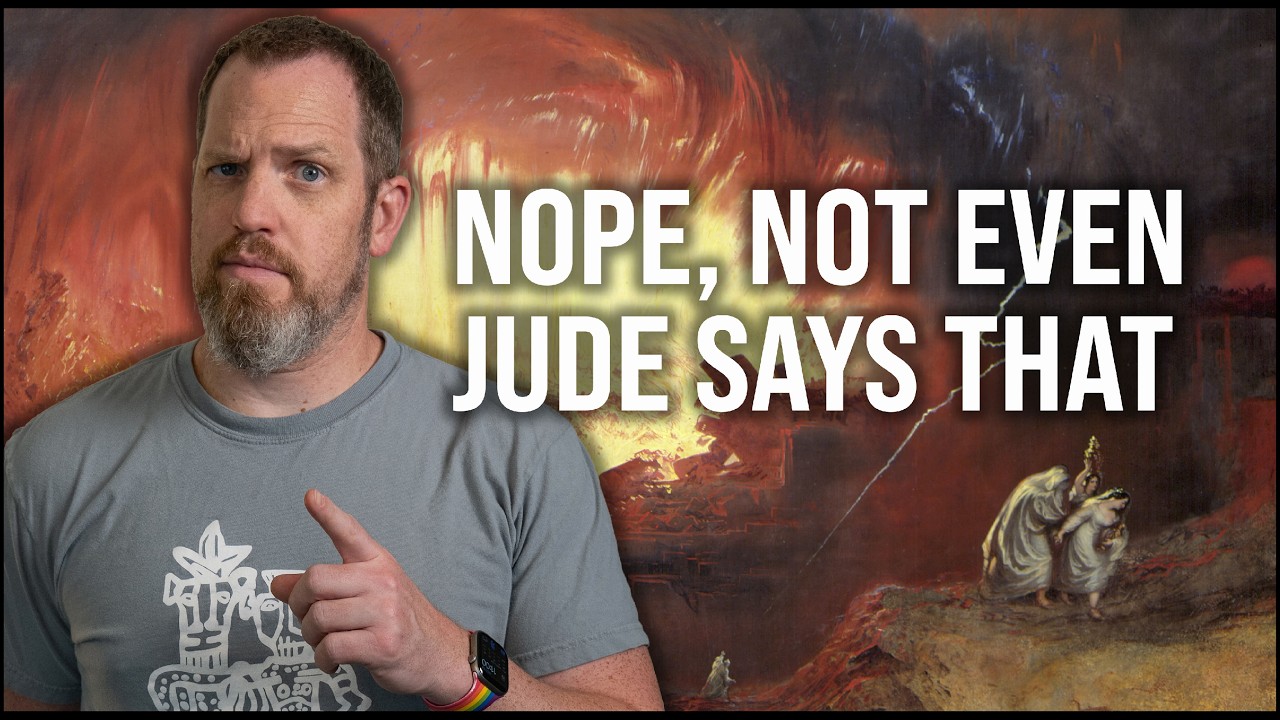
🔗 **Source:** [Sodom & Gomorrah Is Not About Homosexuality](https://www.youtube.com/watch?v=dx3zLFej2Wk)
> [!note]+ Document Notes
> tags: [biblical-interpretation, hospitality-ethics, ancient-sexuality]
> author: Dan McClellan
> source: YouTube
> reference: https://www.youtube.com/watch?v=dx3zLFej2Wk
> date created: {{date:YYYY-MM-DD}} {{time:HH:mm}}
>
> # 🏷️ Title: Sodom & Gomorrah is not about homosexuality
>
<!-- deep-read:sections start -->
## 🧭 Table of Contents
- [📝 Summary](#-summary)
- [📖 Main Content](#-main-content)
- [🗒️ Notes](#️-notes)
- [📚 References](#-references)
- [🗣️ Paraphrase](#️-paraphrase)
- [📰 Newsletter](#-newsletter)
- [✅ Action Items](#-action-items)
- [🧪 Hypotheses](#-hypotheses)
- [🎯 Conclusion](#-conclusion)
## 📝 Summary
- Biblical scholar Dan McClellan argues Genesis 19 (Sodom & Gomorrah) is about inhospitality and sexual assault as power dominance, not homosexuality.
- The ancient world had no concept of sexual orientation as we understand it today—this framework is less than 200 years old.
- The story depicts men threatening to sexually assault male outsiders to assert dominance, emasculate, and feminize them—an act of power, not sexual desire.
- Contemporary usage of this passage as anti-LGBTQ rhetoric serves identity politics rather than biblical understanding.
- Lives are harmed when this passage is weaponized against LGBTQ individuals based on misinterpretation.
## 📖 Main Content
### The Anachronism Problem
McClellan emphasizes that applying modern concepts of homosexuality to ancient texts is anachronistic. The biblical authors had no framework for sexual orientation as we understand it—people who have inherent sexual attractions that form part of their identity. While same-sex intercourse existed in the ancient world, it was conceptualized entirely differently, often as situational, transitional, or related to power dynamics rather than orientation.
### The Power Dynamic Interpretation
The story depicts men of Sodom threatening to sexually assault male visitors. McClellan argues this represents:
- **Dominance assertion**: Using sexual violence to establish power over outsiders
- **Emasculation**: Reducing male status through forced sexual submission
- **Feminization**: Placing men in what was considered the "female" role of being penetrated
He provides a contemporary parallel with Robert O'Neill's social media threat to make young male voters his "concubines"—using sexual domination rhetoric to assert power over perceived social opponents.
### Supporting Evidence
- **Judges 19 parallel**: The same narrative structure where men assault a woman when male victims are unavailable, showing it's about power, not sexual preference
- **Ezekiel 16:49**: Explicitly describes Sodom's sins as pride, abundance without helping the poor—focusing on inhospitality rather than sexuality
- **Ancient hierarchies**: Male penetration violated social conventions about masculine dominance in patriarchal societies
### The Identity Politics Argument
McClellan contends that insisting this passage condemns homosexuality serves contemporary identity politics rather than biblical understanding. He argues people want this interpretation because it functions as:
- A credibility-enhancing display within conservative Christian communities
- A tool for maintaining group boundaries and power structures
- An identity marker that has "taken on a life of its own"
## 🗒️ Notes
#### ⏱️ [00:01:30](https://www.youtube.com/watch?v=dx3zLFej2Wk&t=90) Sexual Orientation Framework
- Modern homosexuality concept involves orientation + behavior
- This framework is less than 200 years old
- Ancient world organized understanding of same-sex intercourse very differently
- Cannot transfer modern categories wholesale to ancient texts
#### ⏱️ [00:04:15](https://www.youtube.com/watch?v=dx3zLFej2Wk&t=255) Contemporary Parallel
- Robert O'Neill's "concubine" threat to young male voters
- Same dynamic: sexual dominance threat against social others
- About power assertion, emasculation, feminization
- Not about sexual desire or orientation
#### ⏱️ [00:07:45](https://www.youtube.com/watch?v=dx3zLFej2Wk&t=465) The Daughters Objection
- Common argument: men refused Lot's daughters, so they were "gay"
- Ancient world shows no evidence of men exclusively attracted to men
- Judges 19 parallel: men assault woman when available
- Lot's daughters needed for narrative conclusion (ancestral origins)
#### ⏱️ [00:10:30](https://www.youtube.com/watch?v=dx3zLFej2Wk&t=630) Jude 7 Analysis
- "Strange flesh" (sarx heteras) refers to angelic-human intercourse
- Parallel to 1 Enoch's angels with human women
- Not about homosexual orientation
- Sexual immorality can include assault for dominance
#### ⏱️ [00:12:20](https://www.youtube.com/watch?v=dx3zLFej2Wk&t=740) Identity Politics Function
- Story used as "rhetorical bludgeon"
- Serves as credibility-enhancing display
- Tool for curating standing within conservative Christian identity
- Has become central identity marker despite harmful effects
## 📚 References
- [Genesis 19 - Sodom and Gomorrah narrative](https://www.biblegateway.com/passage/?search=Genesis+19&version=NRSV)
- [Judges 19 - Parallel narrative](https://www.biblegateway.com/passage/?search=Judges+19&version=NRSV)
- [Ezekiel 16:49 - Sodom's sins described](https://www.biblegateway.com/passage/?search=Ezekiel+16%3A49&version=NRSV)
- [Jude 7 - Reference to Sodom and Gomorrah](https://www.biblegateway.com/passage/?search=Jude+7&version=NRSV)
## 🗣️ Paraphrase
Biblical scholar Dan McClellan challenges the common interpretation that Genesis 19's destruction of Sodom and Gomorrah condemns homosexuality. He argues this reading is fundamentally anachronistic because ancient peoples had no concept of sexual orientation as modern society understands it. Instead, the passage depicts men threatening to sexually assault male visitors as a power play—using sexual violence to dominate, emasculate, and feminize outsiders. This interpretation aligns with the parallel story in Judges 19 and Ezekiel's explicit description of Sodom's sins as pride and failure to help the poor. McClellan contends that insisting on the anti-homosexuality reading serves contemporary conservative Christian identity politics rather than sound biblical interpretation, and that this weaponization of scripture causes real harm to LGBTQ individuals.
## 📰 Newsletter
**Biblical Interpretation Reality Check: What Sodom & Gomorrah Actually Teaches**
Ever wonder if that famous "fire and brimstone" story really means what you've been told? Biblical scholar Dan McClellan drops some serious exegetical knowledge about Genesis 19 that might surprise you. Turns out the destruction of Sodom and Gomorrah isn't about sexual orientation at all—it's about the ancient world's ultimate sin: terrible hospitality mixed with sexual violence as a power play.
The ancient world had zero concept of sexual orientation as we understand it today (that framework is barely 200 years old!). What they did understand was using sexual assault threats to dominate and humiliate outsiders. Think of it as the ancient equivalent of toxic masculinity meets xenophobia.
McClellan's analysis includes contemporary parallels, textual criticism, and a hard look at how this passage has been weaponized in modern identity politics. Whether you're doing biblical studies, community advocacy, or just want to understand how ancient texts get misused today, this scholarship offers crucial context for more thoughtful dialogue.
*Check out the full video for the deep dive into ancient sexual hierarchies, parallel narratives in Judges, and why Ezekiel explicitly describes Sodom's actual sins.*
## ✅ Action Items
#### Community
- Examine how biblical passages are used to justify contemporary social positions
- Develop educational resources about anachronistic biblical interpretation
- Create safe spaces for LGBTQ individuals harmed by weaponized scripture
- Host discussions about responsible biblical hermeneutics in community settings
#### WordPress
- Documentation: Create content guidelines about respectful religious discourse
- Community: Moderate discussions involving biblical interpretation and LGBTQ topics
- Training: Develop resources about historical-critical biblical scholarship methods
## 🧪 Hypotheses
- Ancient audiences understood Genesis 19 primarily as a story about inhospitality rather than sexual behavior
- Modern anti-LGBTQ interpretations of this passage correlate with conservative Christian identity markers rather than textual evidence
- Educational interventions about historical-critical biblical methods could reduce harmful applications of this passage
- The power-dominance interpretation better explains textual details than the sexual-orientation interpretation
### 📊 Methodology
- Comparative analysis with parallel narratives (Judges 19)
- Historical-critical examination of ancient sexual categories and social hierarchies
- Lexical analysis of key terms in Hebrew and Greek texts
- Sociological analysis of how religious texts function as identity markers
### ❓ Questions
- How did ancient Near Eastern cultures conceptualize male-male sexual violence in contexts of war and dominance?
- What evidence exists for the claim that no ancient cultures had concepts analogous to sexual orientation?
- How do other ancient hospitality narratives compare to the Sodom and Gomorrah story?
- What role does confirmation bias play in maintaining traditional interpretations despite scholarly consensus?
### 🔮 Future Research
- Cross-cultural analysis of sexual violence as dominance assertion in ancient texts
- Survey research on how biblical education affects interpretation of contested passages
- Psychological studies on identity-protective cognition in religious interpretation
- Historical analysis of when and why this passage became central to anti-LGBTQ rhetoric
### 💡 Implications
- **Religious education**: Need for historically-informed biblical interpretation training
- **LGBTQ advocacy**: Provides scholarly ammunition against weaponized scripture
- **Interfaith dialogue**: Demonstrates importance of understanding texts in historical context
- **Academic freedom**: Shows tension between scholarly consensus and popular religious belief
### 🧠 Learning Styles Assessment
Reading level estimate: Grade 16 (graduate level) - uses advanced theological and hermeneutical vocabulary.
#### 👀 Visual learners
- Present: None in original video format
- Improve: Timeline of sexual orientation concept development, chart comparing ancient vs. modern sexual categories, diagram of power dynamics in the narrative
#### 🔊 Aural learners
- Present: Video lecture format with clear narration
- Improve: Podcast version, discussion panels with other scholars
#### 🗣️ Verbal learners
- Present: Clear definitions of terms like "anachronistic," extensive analogies
- Improve: Glossary of biblical scholarship terms, more contemporary parallels
#### 🧩 Kinesthetic learners
- Present: None
- Improve: Interactive biblical text comparison tools, hands-on research exercises
#### 🧠 Logical learners
- Present: Sequential argument structure, evidence-based reasoning
- Improve: Formal logic charts showing argument structure, decision trees for textual interpretation
#### 🧑🤝🧑 Social learners
- Present: Addresses community identity dynamics
- Improve: Discussion guides for group study, moderated online forums
#### 🧘♀️ Solitary learners
- Present: Individual video consumption format
- Improve: Self-assessment questions about personal interpretive assumptions
#### 🌿 Naturalistic learners
- Present: None
- Improve: Connections to anthropological studies of sexuality across cultures
### 📊 Accessibility Assessment
#### Screen reader semantics
- Present: Video has clear audio narration
- Improve: Full transcript with proper heading structure, alt text for any graphics
#### Keyboard navigation
- Present: Standard YouTube controls
- Improve: Skip navigation for transcript sections
#### Contrast and readability
- Present: Standard video player interface
- Improve: High contrast transcript option, adjustable font sizes
#### Media and captions
- Present: Auto-generated YouTube captions
- Improve: Professional captions, downloadable transcript
### 🌍 DEIB Assessment
#### Cultural breadth
- Present: References contemporary American political figures
- Improve: Examples from multiple cultures and time periods
#### Inclusive language
- Present: Respectful terminology for LGBTQ individuals, avoids slurs
- Improve: More explicit affirmation of LGBTQ dignity
#### Neurodiversity support
- Present: Clear structure with main points
- Improve: More frequent summaries, visual organization aids
#### Representation
- Present: Centers LGBTQ experiences of harm
- Improve: Include voices of LGBTQ biblical scholars
### ✅ Logical Validity
#### Strong reasoning
- **Historical-critical method**: Properly applies contextual analysis to avoid anachronistic interpretation
- **Comparative analysis**: Uses Judges 19 parallel effectively to support interpretation
- **Linguistic analysis**: Examines original Hebrew and Greek terms rather than relying on translations
#### Fallacies
- **Ad hominem implications**: Suggests opponents are motivated by identity politics rather than engaging their best arguments
- **Hasty generalization**: Claims about "the ancient world" may be overly broad given diverse cultures and time periods
#### Tone of voice
- **Academic authority**: Uses scholarly credentials and consensus to establish expertise
- **Moral urgency**: Emphasizes real-world harm from misinterpretation
- **Confrontational**: Directly challenges viewers' existing beliefs
### 🛡️ DARVO Analysis
- **Deny**: Not applicable - McClellan doesn't deny harmful effects of misinterpretation
- **Attack**: Challenges the credibility of traditional interpretation but focuses on methodology rather than personal attacks
- **Reverse victim/offender**: Not present - maintains that LGBTQ individuals are harmed by misinterpretation
## 🎯 Conclusion
McClellan's analysis demonstrates that the story of Sodom and Gomorrah, when examined through historical-critical methods, is about inhospitality and sexual violence as dominance rather than homosexuality as modern society understands it. His argument rests on solid methodological ground: avoiding anachronistic interpretations, examining parallel texts, and considering the social context of ancient patriarchal hierarchies.
The practical implications extend beyond biblical scholarship to contemporary debates about LGBTQ rights and religious freedom. By showing how this passage has been weaponized based on misinterpretation, McClellan provides tools for more responsible biblical hermeneutics that could reduce harm to LGBTQ individuals while maintaining space for serious religious engagement with scripture.
The most compelling aspect of his argument is the contemporary parallel with Robert O'Neill's rhetoric, which demonstrates that using sexual dominance threats against social others remains a recognizable pattern of behavior distinct from sexual orientation or desire.
---
## Full Transcript
[00:00] A lot of people on the internet are<br>[00:01] still under the gross misapprehension<br>[00:03] that the story of the destruction of<br>[00:05] Sodom and Gomorrah in Genesis 19 is<br>[00:07] intended to be a lesson about the evils<br>[00:09] of homosexuality.<br>[00:11] And it's just not. And y'all have a lot<br>[00:14] to learn about your Bibles. And you<br>[00:16] really need to do better. Hey everybody,<br>[00:18] I'm Dan Mlelen. I'm a scholar of the<br>[00:20] Bible and religion. And the majority of<br>[00:22] scholars agree that the story of the<br>[00:25] destruction of Sodom and Gomorrah in<br>[00:26] Genesis 19 is a lesson about the evils<br>[00:30] of a particular manifestation of<br>[00:32] inhospity<br>[00:34] and not the evils of homosexuality. But<br>[00:38] before we get into the details of the<br>[00:40] story and why it's not about that, we<br>[00:42] need to make a very specific<br>[00:44] clarification. The Bible cannot be<br>[00:47] talking about homosexuality<br>[00:50] because they had no concept of<br>[00:52] homosexuality in that time period that<br>[00:54] has anything at all to do with how we<br>[00:57] think and talk about homosexuality<br>[00:59] today. Because when we use the word<br>[01:02] homosexuality, overwhelmingly we're<br>[01:04] talking about people who have a<br>[01:05] homosexual orientation and then the<br>[01:08] resulting sexual behavior.<br>[01:11] We're talking about sexual orientations,<br>[01:14] which is a framework, a way of thinking<br>[01:17] and talking about and organizing our<br>[01:19] understanding of sexual activity that is<br>[01:22] less than 200 years old. And so they had<br>[01:26] no access to this particular framework<br>[01:28] when the Bible was being written. Now,<br>[01:31] that is not to say that they didn't<br>[01:33] think and talk and organize their<br>[01:35] understanding of same-sex intercourse in<br>[01:39] some way in the ancient world. They did,<br>[01:42] but the ways that they did that don't<br>[01:44] really have much at all to do with the<br>[01:46] ways that we do that with homosexuality<br>[01:49] today. It is anacronistic to talk about<br>[01:53] homosexuality in general in the Bible<br>[01:56] because they did not have that framework<br>[01:58] and the way they thought and talked<br>[02:00] about and organized their understanding<br>[02:02] of human sexuality and what might compel<br>[02:06] people to pursue sexual intercourse with<br>[02:09] members of the same sex is very very<br>[02:12] different and is also way outdated and<br>[02:16] inaccurate.<br>[02:18] So, another thing that I'm not saying is<br>[02:20] that they did not have same-sex<br>[02:22] intercourse in the ancient world or that<br>[02:24] they did not have people with homosexual<br>[02:27] orientations. They very obviously did.<br>[02:29] That happens all around the world all<br>[02:31] throughout time. It is quite common. But<br>[02:36] again, the point is that they thought<br>[02:37] about it. They talked about it. They<br>[02:40] organized their understanding of it in<br>[02:42] vastly different ways. And one of the<br>[02:45] main reasons I'm pointing this out is<br>[02:47] because that means we can't just<br>[02:48] transfer wholesale<br>[02:52] surface level statements about same-sex<br>[02:55] intercourse from the Bible to today<br>[02:57] without significantly distorting what<br>[03:00] they were trying to accomplish by those<br>[03:02] statements. Similarly, we can't just<br>[03:05] transfer frameworks wholesale from today<br>[03:08] into the Bible without significantly<br>[03:10] distorting things. So, that is something<br>[03:13] I need to point out right off the bat<br>[03:15] because Genesis 19 is directly about the<br>[03:19] evils of using the threat of sexually<br>[03:21] assaulting male outsiders, social others<br>[03:24] as a means of asserting dominance over<br>[03:27] them, of emasculating them, and of<br>[03:30] feminizing them. It is an act of power,<br>[03:35] not of sexual desire. And this precise<br>[03:39] act, men who do not necessarily have a<br>[03:42] homosexual orientation, threatening<br>[03:45] other men or carrying out the sexual<br>[03:49] assault of other men for the sake of<br>[03:52] punishing them, asserting dominance over<br>[03:54] them, emasculating them, feminizing<br>[03:56] them. That still goes on around the<br>[03:59] world in different places today. And<br>[04:01] let's take a look at a contemporary<br>[04:04] analog for the men of Sodom. This is a<br>[04:07] man named Robert J. O'Neal who claims to<br>[04:10] have been the one who took out Osama bin<br>[04:13] Laden. And here he's responding to a<br>[04:15] photo posted by Harry Sison. And Sison<br>[04:17] captioned this photo by saying, "We're<br>[04:19] Gen Z voters and we all proudly voted<br>[04:21] for Kla Harris. Real men support<br>[04:24] Harris." And then O'Neal responded,<br>[04:27] "You're not men, you're boys. If there<br>[04:29] was no social media, you would be my<br>[04:32] concubines." Now concubine can mean a<br>[04:35] few different things but fundamentally<br>[04:37] it is someone who is available for sex<br>[04:39] who does not have much agency or say<br>[04:42] regarding when and how that sex takes<br>[04:45] place. So what O'Neal is asserting is<br>[04:48] that in the kind of world he would<br>[04:51] prefer to live in these boys would be<br>[04:54] available to him for sex and they<br>[04:57] wouldn't really have much agency or say<br>[04:59] in the matter. So, he's using the threat<br>[05:03] of sexually assaulting other men,<br>[05:06] specifically the social other, as a<br>[05:09] means of asserting dominance over them,<br>[05:11] as a means of emasculating them, as a<br>[05:13] means of feminizing them. It's the same<br>[05:17] thing. O'Neal is today's man of Sodom.<br>[05:23] And if you think that what O'Neal is<br>[05:25] doing here is bad, is not a good thing,<br>[05:28] that doesn't necessarily mean that you<br>[05:31] think homosexual orientations or samesex<br>[05:34] intercourse are bad or not a good thing.<br>[05:37] It can just mean you think that is an<br>[05:40] inappropriate or an immoral thing to<br>[05:43] threaten another person with or to do to<br>[05:46] another person. So hopefully you're<br>[05:49] beginning to see what's going on with<br>[05:52] the rhetoric in Genesis 19 because what<br>[05:54] the men of Sodom did was threaten to<br>[05:57] sexually assault male outsiders. And<br>[06:00] absolutely nothing in the story<br>[06:02] indicates that this had anything to do<br>[06:04] with sexual desire or anything other<br>[06:07] than a desire to assert dominance over,<br>[06:12] emasculate, and feminize the social<br>[06:15] other. Again, it's a phenomenally common<br>[06:18] thing to do around the world throughout<br>[06:21] time down to today. That's what Genesis<br>[06:25] 19 is about. That's the inhospity<br>[06:29] that is being put on display, that is<br>[06:31] being held up as a gross example of how<br>[06:36] not to treat outsiders. And we have the<br>[06:38] same story in the parallel narrative in<br>[06:41] Judges 19. Now, inevitably, somebody is<br>[06:44] thinking right now,<br>[06:46] well, Lot offered his two daughters and<br>[06:48] they said no. So, they clearly weren't<br>[06:51] sexually attracted to women. So, this is<br>[06:54] about men with a homosexual orientation.<br>[06:56] And that is profoundly misguided and<br>[06:59] mistaken for a few different reasons.<br>[07:02] First, when we talk about how the<br>[07:05] ancient world understood men who sought<br>[07:07] out same-sex intercourse with other men,<br>[07:10] we can't find any indications that there<br>[07:12] were men who were solely and exclusively<br>[07:16] attracted to men and who refused sexual<br>[07:20] intercourse with women. Again, that's<br>[07:22] not how they organized their<br>[07:23] understanding of same-sex intercourse.<br>[07:26] In fact, in the ancient world and in a<br>[07:28] lot of societies around the world today,<br>[07:31] where male samesex intercourse is a<br>[07:33] common part of growing up, female<br>[07:37] samesex intercourse is also a part of<br>[07:39] that.<br>[07:40] It's more of a seasonal transitional<br>[07:43] thing. You don't really have a clear<br>[07:46] representation in the biblical periods<br>[07:49] of anyone who is solely and exclusively<br>[07:53] sexually attracted to men and solely and<br>[07:55] exclusively engages in same-sex<br>[07:57] intercourse with other men to the<br>[08:00] exclusion of intercourse with women. So<br>[08:03] that doesn't make sense of what's going<br>[08:06] on in Genesis 19. It is the imposition<br>[08:09] of an anacronistic interpretive<br>[08:11] framework. But also<br>[08:14] when we look in the parallel story in<br>[08:15] Judges 19, the same thing happens. The<br>[08:19] men shove the Levites concubine outside<br>[08:23] and the men sexually assault the Levites<br>[08:25] concubine all night long. So at least in<br>[08:29] that story that was fine with them<br>[08:31] because this was not about a homosexual<br>[08:34] orientation or sexual attraction only to<br>[08:37] men. It was about power as sexual<br>[08:39] assault overwhelmingly is. And they were<br>[08:42] willing to abuse the man's concubine as<br>[08:47] a consolation prize related to their<br>[08:49] attempts to assert dominance over them<br>[08:52] and emasculate and feminize the Levite<br>[08:55] and the man who owned the house. Why<br>[08:57] didn't that happen in Genesis 19? Well,<br>[09:00] because Lot's daughters were needed for<br>[09:02] the end of the story where the author<br>[09:04] uses them as the aonomous ancestors of<br>[09:11] some people groups that were hated by<br>[09:14] the authors of this particular text. And<br>[09:18] so you needed those people for the<br>[09:21] narrative. So you are not going to have<br>[09:23] them be sexually assaulted to death as<br>[09:26] happens with the concubine in Judges 19.<br>[09:29] That's why the men refused the two<br>[09:33] daughters of Lot. But additionally, how<br>[09:36] do they respond? They say, "We're going<br>[09:38] to treat you worse than we were going to<br>[09:40] treat your visitors." In other words,<br>[09:43] they make clear this is about abusing<br>[09:46] them. They make clear this is about<br>[09:50] power. They make clear this is about<br>[09:52] asserting dominance over them and<br>[09:53] emasculating them and feminizing them.<br>[09:56] There's no case to make that Genesis 19<br>[09:59] is about men who have a homosexual<br>[10:01] orientation trying to gratify sexual<br>[10:03] desire. Very clearly the story is about<br>[10:07] men using the threat of sexually<br>[10:09] assaulting male outsiders, the social<br>[10:11] other, as a means of asserting<br>[10:13] dominance, emasculating them, feminizing<br>[10:16] them. That's what the story is about.<br>[10:18] That's why in Leviticus 18 and Leviticus<br>[10:22] 20, there is so much discussed with the<br>[10:25] notion of a man sexually penetrating<br>[10:27] another man. It's because men were at<br>[10:30] the pinnacle of the socially<br>[10:32] conventionalized hierarchy of domination<br>[10:34] and penetration. And it was a violation<br>[10:36] of that hierarchy for a man to be<br>[10:39] penetrated sexually because men were the<br>[10:42] penetrators, not the penetrated.<br>[10:45] according to this socially<br>[10:47] conventionalized hierarchy of domination<br>[10:50] and penetration. Now whether this is<br>[10:53] consensual, whether this is between<br>[10:55] equal partners is irrelevant. They<br>[10:58] didn't think about it that way. They<br>[11:00] didn't care about it that way. Their<br>[11:01] concern was just with not penetrating<br>[11:05] another man sexually because that<br>[11:08] violated him, that emasculated him, that<br>[11:10] feminized him.<br>[11:13] and that was a violation of his status.<br>[11:16] That's what's going on in this story.<br>[11:18] Now, a lot of people are going to say,<br>[11:20] well, we can go to Jude 7 where it says<br>[11:25] that they engaged in sexual immorality<br>[11:28] and pursued unnatural lust or something<br>[11:31] like that. It's translated a few<br>[11:33] different ways, but this is not talking<br>[11:35] about a homosexual orientation. This is<br>[11:38] not talking about homosexuality as the<br>[11:40] primary problem here.<br>[11:43] to begin the phrase that is usually<br>[11:45] translated unnatural desire or lust or<br>[11:48] something like that. Strange flesh is<br>[11:50] the way one translation renders it. The<br>[11:52] Greek is sarosas. Literally it says<br>[11:55] other flesh. And this is overwhelmingly<br>[11:58] agreed by scholars to be a reference to<br>[12:02] angelic human intercourse which was<br>[12:05] considered inappropriate because it also<br>[12:08] violated those boundaries between these<br>[12:11] two different types of being. And one of<br>[12:14] the reasons we know this is what it's<br>[12:16] about is because we just got done<br>[12:17] talking about first Enoch about the<br>[12:20] angels who had sex with human women. And<br>[12:23] then verse seven says, "In like manner,<br>[12:28] the people of Sodom and Gomorrah pursued<br>[12:30] other flesh." How is it in like manner<br>[12:34] to what happened between the angels and<br>[12:36] the human women in First Enoch? Well,<br>[12:38] it's angelic/human<br>[12:40] intercourse. That's how it's in like<br>[12:42] manner. That's why the overwhelming<br>[12:45] majority of scholars agree that what<br>[12:47] Jude 7 is condemning is angelic/human<br>[12:51] intercourse. That's what unnatural lust<br>[12:54] or strange flesh, sarcoeteras, other<br>[12:57] flesh is referring to. That's the main<br>[13:00] problem for the author of the letter of<br>[13:02] Jude. Now people say, well, what about<br>[13:04] the other word sexual immorality that<br>[13:07] can include threatening men with sexual<br>[13:11] assault<br>[13:13] as a means of asserting dominance over<br>[13:15] them, as a means of emasculating them,<br>[13:18] as a means of feminizing them. That is<br>[13:20] also an act of sexual immorality.<br>[13:22] Absolutely nothing in Jude verse 7<br>[13:25] points in the direction of a homosexual<br>[13:28] orientation even being a possibility<br>[13:32] much less the focus of the passage.<br>[13:35] Again, that's an anacronistic framework.<br>[13:38] It's an anacronistic category. That's<br>[13:40] not how they thought about things. And<br>[13:43] when we look in Ezekiel 16:49, we get a<br>[13:46] pretty explicit description of the sin<br>[13:49] of Sodom and its pride, an overabundance<br>[13:52] of bread, prosperous ease. Yet you did<br>[13:55] not strengthen the hand of the poor and<br>[13:58] the needy, and you wereaughty<br>[14:01] and did abomination before me. Now, the<br>[14:05] people who really, really want this to<br>[14:07] be about homosexuality, and that's the<br>[14:10] main problem. You're not trying to<br>[14:11] understand what's going on in the text.<br>[14:13] You're trying to leverage the text to<br>[14:16] serve the interests that you brought to<br>[14:18] the text. You want it to be about this.<br>[14:22] And the people who want it to be about<br>[14:23] this are going to try to smuggle it into<br>[14:26] that word abomination. But again,<br>[14:28] abomination can describe a lot of<br>[14:30] different things and absolutely can<br>[14:33] include sexually assaulting other men.<br>[14:36] In fact, that could be what Leviticus 18<br>[14:39] and 20 is primarily aimed at avoiding is<br>[14:44] non-consensual<br>[14:46] male same-sex intercourse. I'm not<br>[14:48] saying that's definitely what's going<br>[14:49] on, but I'm saying Ezekiel could be<br>[14:52] referring to Leviticus 18:20 because<br>[14:55] Ezekiel knows that sexually assaulting<br>[14:58] other men would be a violation of that<br>[15:01] law. It doesn't necessarily have to be<br>[15:04] referring to a homosexual orientation<br>[15:07] and consensual same-sex intercourse. In<br>[15:10] fact, we know it's not referring to a<br>[15:12] homosexual orientation, and it's<br>[15:14] definitely not referring to consensual<br>[15:16] samesex intercourse when it comes to<br>[15:18] what's going on in Genesis 19. We<br>[15:20] already know that's not what's going on<br>[15:22] in Genesis 19. We have no reason to<br>[15:24] think that Ezekiel got it so wildly<br>[15:28] incorrect.<br>[15:30] The only reason is that we want it to<br>[15:32] mean something else. And that's what's<br>[15:34] really going on here is that you want it<br>[15:38] to be about homosexuality because you<br>[15:41] want to use this story as a rhetorical<br>[15:43] bludgeon in your own attempts to<br>[15:46] structure power and values and<br>[15:48] boundaries and identities. You want it<br>[15:50] to be a credibility enhancing display.<br>[15:53] You want it to be a tool of costly<br>[15:56] signaling. You want it to be a way you<br>[15:58] can curate your standing within the<br>[16:01] social identities that are important to<br>[16:02] you and your access to power and<br>[16:04] resources within those identities. This<br>[16:08] is why this stupid and this petty<br>[16:11] homophobia continues to be held up as a<br>[16:14] central identity marker for conservative<br>[16:16] Christians. It's because it is an<br>[16:18] effective identity marker.<br>[16:21] Unfortunately, it has taken on a life of<br>[16:23] its own as an identity marker. And so,<br>[16:25] people are compelled to endorse it, sign<br>[16:29] off on it, leverage it as a credence, as<br>[16:32] all of those things, not because there's<br>[16:35] anything good or right about that<br>[16:37] homophobia, but because it is an<br>[16:40] effective identity marker and an<br>[16:42] effective tool for structuring power and<br>[16:45] values and boundaries and identities.<br>[16:49] That's not what the story of Sodom and<br>[16:51] Gomorrah in Genesis 19 is about. You<br>[16:55] really need to get over that. If you<br>[16:58] want it to be about that,<br>[17:01] that's only because you are intuitively<br>[17:05] incentivized<br>[17:07] to think of it that way. There's<br>[17:09] something in your identity politics that<br>[17:11] is compelling you to treat it that way.<br>[17:13] You need to do better. You need to think<br>[17:17] more critically. You need to get over<br>[17:20] prioritizing these identity markers in<br>[17:24] order to curate your standing and your<br>[17:27] access to power and resources within<br>[17:29] those social identities that are<br>[17:31] important to you. Those are not good<br>[17:33] social identities. You can have good<br>[17:36] social identities that are related<br>[17:39] without the hateful and the harmful<br>[17:42] ideologies. You can do better and you<br>[17:45] need to do better and we will get over<br>[17:48] this. I don't know if I will live to see<br>[17:51] it. I don't think I will. I don't think<br>[17:53] my grandchildren will live to see it.<br>[17:55] But we need to get over this and we will<br>[17:57] get over this. And in however many<br>[18:00] generations it takes,<br>[18:03] they will look back on<br>[18:06] the people who were sharing this story<br>[18:08] as if it were a lesson of the evils of<br>[18:10] homosexuality. and they will cringe and<br>[18:14] they will be ashamed that we could have<br>[18:16] done these things. Just like we look<br>[18:18] back on enslavers and people who waved<br>[18:22] the Bible around as their authorization<br>[18:25] to buy, sell, and own other human<br>[18:28] beings, just as we are embarrassed and<br>[18:31] ashamed and disgusted by that behavior,<br>[18:33] the same will be true of this homophobia<br>[18:36] today at some point. It's just a matter<br>[18:38] of time. It's a matter of how long it<br>[18:41] takes people to stop centering this<br>[18:44] ideology as an identity marker and begin<br>[18:47] to think critically about it and<br>[18:49] overcome<br>[18:51] the impulse to leverage this homophobia<br>[18:55] as an identity marker. We can do better.<br>[18:57] We have to do better. This identity<br>[19:00] marker ruins lives and kills people.<br>[19:06] We need to do better than that. We can<br>[19:07] do better than that.<br>[19:09] Now, one other qualification before I<br>[19:12] leave. In no way, shape, or form<br>[19:13] whatsoever am I saying therefore Genesis<br>[19:17] 19 would be supportive of LGBTQIA plus<br>[19:22] identities. I'm not saying that. I'm not<br>[19:25] saying the Hebrew Bible is an ally. It's<br>[19:27] not. There are authors in the Hebrew<br>[19:29] Bible who condemn acts of male same-sex<br>[19:33] intercourse. Now, there's no one<br>[19:35] anywhere in the Hebrew Bible who<br>[19:36] condemns an act of female same-sex<br>[19:39] intercourse. And that is significant<br>[19:43] because among other things, it means<br>[19:45] that this was not simply a matter of,<br>[19:47] oh, there's a created order. Any<br>[19:50] violations of it are abominations.<br>[19:53] Their rationale is based on something<br>[19:56] else. Now, one other thing to say,<br>[19:58] pointing out that Genesis 19 is not a<br>[20:01] lesson of the evils of homosexuality is<br>[20:03] not arguing that Paul is not against<br>[20:07] same-sex intercourse. It's not arguing<br>[20:09] that the authors of Leviticus 18 and 20<br>[20:12] were not against male same-sex<br>[20:14] intercourse. So, when I say Sodom and<br>[20:17] Gomorrah is not about the evils of<br>[20:19] homosexuality, and you say, "What about<br>[20:22] arsonite and 1 Corinthians 6:9?" you are<br>[20:26] demonstrating that you have not listened<br>[20:28] to me and you do not understand the<br>[20:30] point because Sodom and Gomorrah are not<br>[20:33] mentioned in 1 Corinthians 6:9 or in<br>[20:36] Romans 1.<br>[20:38] They don't have anything to do with what<br>[20:40] Paul is saying there. And so saying,<br>[20:43] "Well, Paul was against samesex<br>[20:45] intercourse has no bearing whatsoever on<br>[20:47] whether or not the story of the<br>[20:49] destruction of Sodom and Gomorrah in<br>[20:50] Genesis 19 is a lesson about the evils<br>[20:53] of homosexuality." So you can save those<br>[20:56] comments, too, because that only betrays<br>[20:58] your abject ignorance of what's going on<br>[21:00] here and your refusal to even listen to<br>[21:03] the arguments, much less think<br>[21:05] critically about it. To conclude, the<br>[21:09] story of the destruction of Sodom and<br>[21:10] Gomorrah in Genesis 19 is not a lesson<br>[21:13] about the evils of homosexuality. And if<br>[21:16] you treat it as such and you try to<br>[21:18] argue that it is, you're wrong. And<br>[21:22] you're doing so only because you are<br>[21:23] compelled by your identity politics to<br>[21:26] do so.<br>[21:27] Your identity politics matter more to<br>[21:30] you than what's actually in the Bible.<br>[21:33] Now, I don't think that's necessarily a<br>[21:35] bad thing unless your identity politics<br>[21:38] are rooted in hatred. That's the part<br>[21:42] you need to work on. That's the part you<br>[21:44] need to do better about. That's the part<br>[21:46] we all need to do better about because<br>[21:49] we all have problematic features of our<br>[21:52] identity politics. But it is identity<br>[21:54] politics that allowed us to overcome the<br>[21:57] Bible's appribation of the practice of<br>[22:00] slavery. So there is good that can come<br>[22:02] from this. Allow your identity politics<br>[22:04] to push you in the direction of being a<br>[22:06] better person<br>[22:09] and a better lover of your neighbor and<br>[22:12] a better Christian.<br>[22:14] Don't allow them to push you in the<br>[22:16] direction of more hate and more<br>[22:19] misunderstanding<br>[22:21] and more parochial empathy that is<br>[22:25] antagonistic towards those who are<br>[22:27] labeled the social other. Do better.<br>[22:31] Lives depend upon it. And the food for<br>[22:33] this video has been Adonai and his<br>[22:35] Asher.
<!-- deep-read:sections end -->
📄 **Full text:** ![[Full Document Contents/Articles/Sodom & Gomorrah Is Not About Homosexuality.md|Sodom & Gomorrah Is Not About Homosexuality by YouTube]]
## Highlights
- Sodom and Gomorrah in Genesis 19 is intended to be a lesson about the evils of homosexuality. ([View Highlight](https://read.readwise.io/read/01ktwhe5yssqtv9y17x6w93ndg))
- Note: McClellan's claim under review: Genesis 19 is about inhospitality + sexual-assault-as-dominance, not homosexuality
- Tags: biblical-interpretation, atom/literature/h1
- understanding of sexual activity that is less than 200 years old. And so they had no access to this particular framework ([View Highlight](https://read.readwise.io/read/01ktwhe85gkz0zeahnnft0mpad))
- Note: The category "sexual orientation" is <200 years old; the ancient authors had no access to that framework
- Tags: biblical-interpretation, atom/literature/h2
- feminizing them. It is an act of power, not of sexual desire. And this precise act, men who do not necessarily have a homosexual orientation, threatening ([View Highlight](https://read.readwise.io/read/01ktwheb9vp2xjq9ytg83w2916))
- Note: The threatened assault is about power/emasculation, not desire — a dominance ritual against outsiders
- Tags: biblical-interpretation, atom/literature/h2