Take Better Notes, by Hand
🔗 **Source:** [Take Better Notes, by Hand](https://brianschrader.com/archive/take-better-notes-by-hand/)
> [!note]+ Document Notes
> tags: #note-taking #handwriting #research #productivity
> author: Brian Schrader
> source: BiteofanApple
> reference: https://brianschrader.com/archive/take-better-notes-by-hand/
> date created: 2024-12-28 14:30
>
> # 🏷️ Title: Take Better Notes, By Hand
>
<!-- deep-read:sections start -->
## 🧰 Action Inbox
- [H1] Implement four-part note-taking system — digital tools plus paper notebooks #productivity
- [H2] Add page numbers and index to current notebook — improve findability #organization
- [H3] Try right-page notes, left-page follow-ups technique — maximize limited space #handwriting
## 🧭 Table of Contents
- [[#📝 Summary]]
- [[#📖 Main Content]]
- [[#🗒️ Notes]]
- [[#📚 References]]
- [[#🗣️ Paraphrase]]
- [[#📰 Newsletter]]
- [[#✅ Action Items]]
- [[#🧪 Hypotheses]]
- [[#📊 Methodology]]
- [[#❓ Questions]]
- [[#🔮 Future Research]]
- [[#💡 Implications]]
- [[#🧠 Learning Styles Assessment]]
- [[#📊 Accessibility Assessment]]
- [[#🌍 DEIB Assessment]]
- [[#✅ Logical Validity]]
- [[#🛡️ DARVO Analysis]]
- [[#🎯 Conclusion]]
### 🔗 References
- [Take Better Notes, By Hand](https://brianschrader.com/archive/take-better-notes-by-hand/)
- [Book Tracker App](https://apps.apple.com)
## 📝 Summary
- Brian Schrader outlines a four-part note-taking system combining digital tools with handwritten notebooks
- Paper notebooks offer superior engagement, memory retention, and distraction-free research
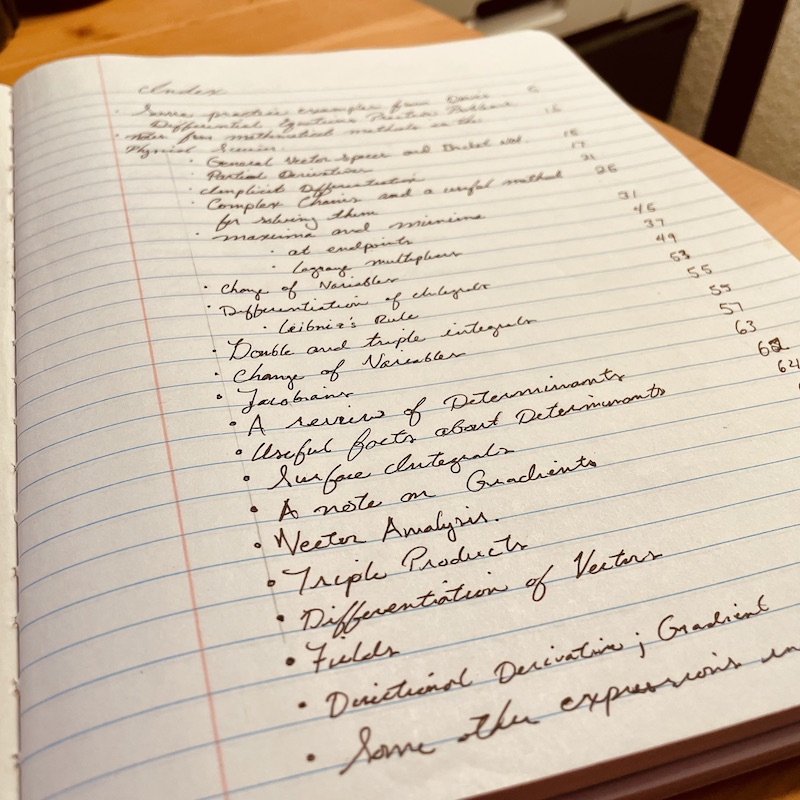
- Key techniques: date everything, number pages, create indices, use right pages for notes and left for follow-ups
- System addresses common problems with physical notebooks like limited space and scattered topics
- Method proven effective across multiple research projects and topics
## 📖 Main Content
Schrader argues that handwritten notes are the most valuable component of his research system, despite digital tools' obvious advantages. The core insight is that writing by hand enhances memory and engagement while being less distracting than digital alternatives.
His system addresses paper notebooks' main limitations through structured techniques: dating all entries, numbering pages, maintaining indices, and using a left-right page system for different types of content. This transforms notebooks from linear documents into searchable knowledge bases.
The approach balances the cognitive benefits of handwriting with practical organization methods that make information retrieval feasible. Schrader uses multiple specialized notebooks for different purposes while maintaining consistent organizational principles across all of them.
## 🗒️ Notes
#### Digital Tools Foundation
- Key idea: Four-part system provides comprehensive research infrastructure
- Evidence: "Pinboard: for links to PDFs & webpages + full-text search. Books.app: the iOS/macOS app for importing PDFs & organizing them into Collections. Book Tracker: an app that's great for saving long quotes via OCR. Good, old-fashioned paper notebooks."
#### Handwriting Advantages
- Key idea: Physical writing enhances memory and focus beyond digital tools
- Evidence: "There is something about writing stuff by hand that not only helps me remember and recall the information, but that helps me better engage with the topic at hand."
#### Dating System
- Key idea: Timestamps transform notebooks into chronological reference systems
- Evidence: "The simplest thing you can do to help yourself better decipher a physical notebook is this: date every page, every entry."
#### Page Numbers and Indexing
- Key idea: Physical notebooks need deliberate organization to become searchable
- Evidence: "If the notebook doesn't have page numbers, add them. I usually only do the odd numbers, starting on the right side. It cuts the task down by half."
#### Left-Right Page Strategy
- Key idea: Spatial organization maximizes limited notebook space and separates content types
- Evidence: "when I take notes, I only write on the right-most page. I write in pen, recording all sorts of quotes, observations, and mid-stream thoughts. However, if I need to puzzle out an idea or go back and point to a newer or relevant page, I can scrawl it, in pencil, either in the margin or on the left page!"
#### Multiple Notebook System
- Key idea: Specialized notebooks for different purposes maintain focus and organization
- Evidence: "I have tons of different notebooks each designated for different purposes: notes on books I'm reading, my random thoughts, writing ideas, specific research projects, and many more."
## 📚 References
- [Take Better Notes, By Hand](https://brianschrader.com/archive/take-better-notes-by-hand/)
- [Pinboard](https://pinboard.in)
- [Apple Books](https://www.apple.com/apple-books/)
## 🗣️ Paraphrase
- Handwritten notebooks outperform digital tools for deep engagement and memory retention during research
- Simple organizational techniques like dating, numbering, and indexing transform physical notebooks into searchable knowledge systems
- The right-page notes, left-page follow-ups method maximizes limited space while maintaining clear content separation
## 📰 Newsletter
**Rediscover the Power of Handwritten Notes for Better Learning**
While we're surrounded by digital tools, Brian Schrader's research system proves that pen and paper still have a crucial role in deep learning. His four-part approach combines digital organization with handwritten engagement for maximum retention.
Key takeaway: Use digital tools for storage and search, but reach for a notebook when you need to truly understand and remember something. The simple act of writing by hand engages your brain differently than typing.
Try this week: Start a research notebook with dated entries, page numbers, and a simple index. Use the right page for main notes and the left for follow-up thoughts and connections.
Resources: [Learn WordPress](https://learn.wordpress.org/), [Developer Docs](https://developer.wordpress.org/), [WP-CLI](https://wp-cli.org/)
## ✅ Action Items
#### DevRel
- Education: Create workshop combining digital documentation with handwritten planning techniques
- Developer experience: Document note-taking workflows for complex API exploration
- Community management: Use notebook system for tracking community feedback themes
#### OSPO
- Policy & Governance: Maintain handwritten notes during stakeholder interviews for better recall
- Developer Support: Combine digital issue tracking with handwritten problem analysis
- Community Engagement: Use notebooks for conference networking and follow-up planning
#### Community
- Contributors: Develop onboarding materials that include note-taking best practices
- Maintainers: Create templates for handwritten project planning alongside digital tools
#### WordPress
- Documentation: Test combining handwritten planning with digital documentation creation
- Training: Integrate note-taking techniques into learning path design
- Community: Recommend notebook techniques for WordCamp session planning
## 🧪 Hypotheses
- Handwritten notes during code reviews improve bug detection compared to digital-only annotation
- Physical notebooks for project planning reduce cognitive load compared to digital task management
- Combining handwritten brainstorming with digital documentation improves content quality
- Dated notebook entries improve retrospective analysis accuracy over time
### 📊 Methodology
- Study design: Compare code review effectiveness with handwritten vs digital note-taking across development teams
- Data sources: Bug detection rates, review completion times, developer satisfaction surveys
- Experiments: A/B test handwritten vs digital planning for documentation projects
### ❓ Questions
- How does handwriting affect retention of technical concepts compared to typing?
- What's the optimal balance between handwritten planning and digital execution?
- Can notebook techniques improve distributed team collaboration?
### 🔮 Future Research
- Integration patterns between handwritten notes and digital knowledge management systems
- Handwriting's impact on creative problem-solving in technical contexts
- Accessibility adaptations for physical note-taking techniques
### 💡 Implications
- Practice: Developers may benefit from hybrid analog-digital workflows for complex problem-solving
- Education: Training programs should include physical note-taking techniques alongside digital tools
- Documentation: Planning phases might benefit from handwritten exploration before digital creation
- Community: Event organizing could improve with notebook-based networking and follow-up systems
### 🧠 Learning Styles Assessment
Reading level estimate: 10th grade (Flesch-Kincaid)
#### 👀 Visual learners
- Present: Photos of notebook pages showing numbering and indexing techniques
- Improve: Diagrams showing the four-part system architecture, before/after notebook comparisons
#### 🔊 Aural learners
- Present: Clear step-by-step verbal instructions for each technique
- Improve: Audio walkthrough of notebook setup process, podcast discussion of handwriting benefits
#### 🗣️ Verbal learners
- Present: Detailed explanations of each method with clear terminology
- Improve: Analogies comparing notebook organization to digital systems, storytelling examples
#### 🧩 Kinesthetic learners
- Present: Step-by-step instructions for hands-on notebook setup
- Improve: Practice exercises for implementing indexing, templates for getting started
#### 🧠 Logical learners
- Present: Numbered system progression from basic to advanced techniques
- Improve: Decision tree for choosing notebook vs digital tools, efficiency metrics
#### 🧑🤝🧑 Social learners
- Present: Author's personal experience and results
- Improve: Community examples, collaboration techniques for shared notebooks
#### 🧘♀️ Solitary learners
- Present: Individual practice techniques and self-assessment methods
- Improve: Reflection prompts for evaluating note-taking effectiveness, personal customization ideas
#### 🌿 Naturalistic learners
- Present: Connection between physical materials and cognitive engagement
- Improve: Discussion of sustainable notebook choices, natural memory patterns
### 📊 Accessibility Assessment
#### Screen reader semantics
- Present: Clear heading structure, good alt text for notebook photos
- Improve: More detailed image descriptions of handwriting techniques
#### Keyboard navigation
- Present: Standard blog navigation, logical reading order
- Improve: Skip links for main content sections
#### Contrast and readability
- Present: Good text contrast on clean background
- Improve: Ensure notebook photo contrast is sufficient for technique visibility
#### Text resizing and reflow
- Present: Responsive design that scales well
- Improve: Test photo scaling at high zoom levels
#### Media and captions
- Present: Photos have contextual descriptions
- Improve: More detailed captions explaining specific techniques shown
#### Forms and interactions
- Present: Simple newsletter signup with proper labeling
- Improve: Error handling and confirmation messaging
#### Standards reference
- Generally meets WCAG 2.2 AA standards with minor improvements needed for image descriptions
### 🌍 DEIB Assessment
#### Cultural breadth
- Present: Universal note-taking concepts applicable across cultures
- Improve: Examples from different educational traditions, multilingual notebook techniques
#### Inclusive language
- Present: Gender-neutral language, accessible vocabulary
- Improve: Define terms like "OCR" for broader audience
#### Neurodiversity support
- Present: Multiple organizational systems to choose from
- Improve: Specific adaptations for different cognitive styles, ADHD-friendly techniques
#### Representation
- Present: Focus on technique over personal identity
- Improve: Acknowledge different learning preferences and physical abilities
#### Psychological safety
- Present: Non-judgmental tone about different approaches
- Improve: Explicit validation of digital-only workflows for those who prefer them
### ✅ Logical Validity
#### Strong reasoning
- Deductive strength: Clear logical progression from problem identification to solution implementation
- Inductive strength: Good use of personal experience to support general principles
- Causal reasoning: Well-established connections between handwriting and memory retention
- Analogical strength: Effective comparison between digital and physical organizational systems
#### Fallacies
- Minor appeal to tradition: Slight over-emphasis on "old-fashioned" methods without full consideration of accessibility barriers
- Hasty generalization: Could better acknowledge that handwriting benefits may vary by individual
#### Tone of voice
- Overall tone: Enthusiastic but practical, sharing personal discoveries without claiming universal applicability
### 🛡️ DARVO Analysis
- Deny: No concerning denial patterns present
- Attack: No attacks on alternative methods or critics
- Reverse victim/offender: No manipulation tactics observed
- Emotional cues and rhetoric: Positive, encouraging tone focused on practical benefits
## 🎯 Conclusion
Schrader's note-taking system demonstrates that handwritten notebooks remain valuable research tools when combined with modern organizational techniques. The key insight is using physical writing for engagement and memory while addressing traditional limitations through systematic approaches like indexing and spatial organization.
For practitioners, the takeaway is experimenting with hybrid workflows that leverage both digital efficiency and handwritten cognitive benefits. The system is particularly valuable for complex research, learning new concepts, or any work requiring deep engagement rather than quick reference.
The broader implication is that effective knowledge work often requires intentionally choosing tools based on cognitive needs rather than just convenience, with handwriting offering unique benefits for comprehension and memory that digital tools can't fully replicate.
## 🧱 Refactor Appendix
### 📚 Literature Split Pad
### [H1] Handwritten notes enhance memory and engagement beyond digital alternatives
> [!quote] [Take Better Notes, By Hand](https://brianschrader.com/archive/take-better-notes-by-hand/) by [[Brian Schrader]] via [[BiteofanApple]]. Published 2026-03-30.
> "There is something about writing stuff by hand that not only helps me remember and recall the information, but that helps me better engage with the topic at hand."
Supports research showing cognitive benefits of handwriting over typing for learning and retention.
[view highlight](https://brianschrader.com/archive/take-better-notes-by-hand/#handwriting-benefits) #xref #articleseed ID:rw_handwriting_memory
### [H2] Physical notebooks require deliberate organization to remain useful
> [!quote] [Take Better Notes, By Hand](https://brianschrader.com/archive/take-better-notes-by-hand/)
> "The simplest thing you can do to help yourself better decipher a physical notebook is this: date every page, every entry."
Addresses primary limitation of paper-based knowledge management through systematic approaches.
[view highlight](https://brianschrader.com/archive/take-better-notes-by-hand/#organization-techniques) #xref ID:rw_notebook_organization
---
### 🔖 Atomic Split Pad (Zettel Candidates)
#### [Z1] Dating notebook entries transforms linear documents into searchable timelines
- Apply to all handwritten notes regardless of content type
- Reference point for chronological research tracking
- Links: [[Note-Taking]] [[Knowledge-Management]]
#### [Z2] Right-page notes with left-page follow-ups maximizes limited notebook space
- Useful when topics span multiple sessions or require iteration
- Odd-numbered pages become primary content indicators
- Links: [[Spatial-Organization]] [[Research-Methods]]
---
### ✏️ Fleeting Queue
- [F1] Test hybrid notebook-digital system for next research project — compare retention #fleeting #inbox
- [F2] Implement page numbering in current notebooks — improve findability #fleeting #inbox
- [F3] Research handwriting vs typing studies for technical learning — validate claims #fleeting #inbox
<!-- deep-read:sections end -->
📄 **Full text:** ![[Full Document Contents/Articles/Take Better Notes, by Hand.md|Take Better Notes, by Hand by brianschrader.com]]
## Highlights
- The simplest thing you can do to help yourself better decipher a physical notebook is this: date every page, every entry. Do this to basically everything you write, not just notes. It's silly, but it works. ([View Highlight](https://read.readwise.io/read/01kr1kfhba62z4cf66hp1mhr6b))
- Tags: 👻 ai highlighted